Brookston Beer Bulletin

Jay R. Brooks on Beer

  • Home
  • About
  • Editorial
  • Birthdays
  • Art & Beer

Socialize

  • Dribbble
  • Email
  • Facebook
  • Flickr
  • GitHub
  • Instagram
  • LinkedIn
  • Pinterest
  • RSS
  • Twitter
  • YouTube

Powered by Genesis

Beer Birthday: Peter Catizone

February 3, 2026 By Jay Brooks

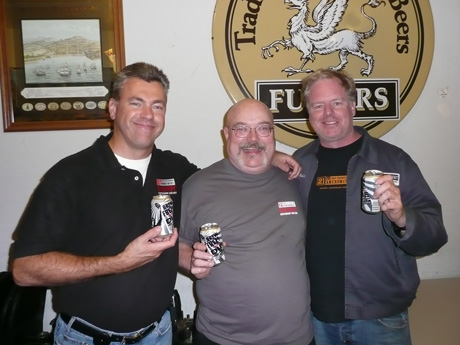
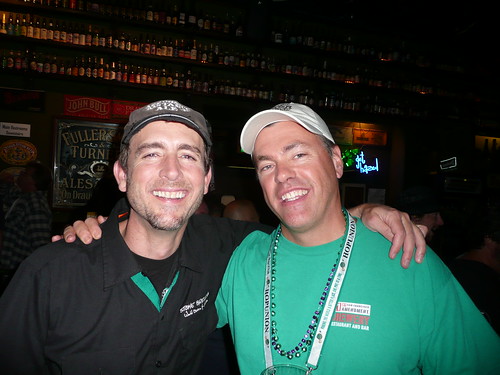
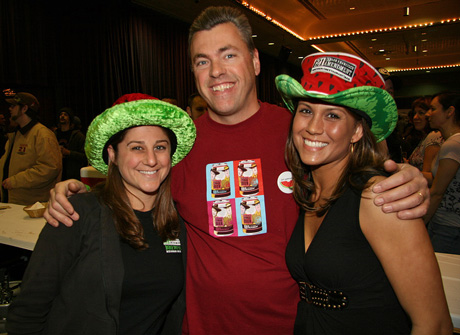
Today is the 67th birthday of Peter Catizone, longtime brewmaster at Faultline Brewing, in Sunnyvale, California. He’s been brewing nearly thirty years in Silicon Valley. He started at Boulder Creek Brewing, where he brewed for ten years, before started at Faultline in 2003, over two decades ago. He’s been making great beer — nothing fancy — in traditional styles all that time, perfecting his craft, an unsung hero. More recently, he’s moved to brewing at Steel Bonnet Brewing in Scotts Valley. Join me in wishing Peter a very happy birthday.
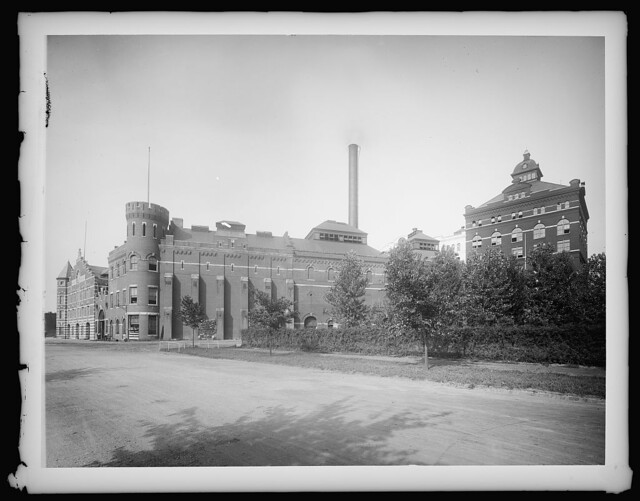
Peter at Steel Bonnet in 2025.
Me and Peter during a visit. to the brewery in 2022.
Peter in the Faultline brewery.

Filed Under: Birthdays, Just For Fun Tagged With: Bay Area, California

Historic Beer Birthday: Julius Stroh

February 3, 2026 By Jay Brooks

Today is the birthday of Julius Stroh (February 3, 1856-June 2, 1939). He was born in Michigan, the son of Bernard Stroh, who founded the Stroh Brewery in Detroit, Michigan in 1850. After his father died, his brother Bernard Jr. took over the brewery, but in 1908 he assumed control of the family brewery.

Julius-Strog-May-10
Julius Stroh in 1933, pouring the first glass of beer after Michigan repealed prohibition.

Given the time he was at the helm of the Stroh Brewery, there’s surprisingly little biographical information or images of him.

Stroh-family-1871
The Stroh family around 1871, with Julius on the far left.

This is what Wikipedia has to say about Stroh’s early days through Julius Stroh’s tenure:

The Stroh family began brewing beer in a family-owned inn during the 18th century in Kirn, Germany. In 1849, during the German Revolution, Bernhard Stroh (1822-1882), who had learned the brewing trade from his father, emigrated to the United States. Bernhard Stroh established his brewery in Detroit in 1850 when he was 28 and immediately started producing Bohemian-style pilsner, which had been developed at the municipal brewery of Pilsen, Bohemia in 1842. In 1865, he purchased additional land and expanded his business and adopted the heraldic lion emblem from the Kyrburg Castle in Germany and named his operation the Lion’s Head Brewery. (The lion emblem is still visible in its advertising and product labels.)

Bernhard Stroh’s original beer selling operation consisted of a basement brewing operation and was then sold door-to-door in a wheelbarrow. The new beer (Stroh’s) sold door-to-door was a lighter-lager beer, brewed in copper kettles.

Stroh-brewery-1864-scan
The Stroh Brewery around 1864.

Bernhard Stroh Jr. took charge of the brewery on the death of his father. He changed the brewery’s name to the B. Stroh Brewing Company. With the introduction of pasteurization and refrigerated rail cars, Stroh was able to ship some of his beer as far as Florida and Massachusetts. In 1893 Stroh Bohemian Beer won a blue ribbon at the Columbian Exposition in Chicago. The company’s name was changed to The Stroh Brewery Company in 1902. In 1908, Bernhard Stroh’s brother Julius Stroh took over the brewery. After a tour of famous European breweries, he introduced the European fire-brewing method in the Stroh brewery. Common in Europe before World War I, the fire-brewing process uses a direct flame rather than steam to heat beer-filled copper kettles. The company claims that the resulting higher temperatures bring out more of the beer’s flavor.

During Prohibition, Julius Stroh operated the business under the name The Stroh Products Company, producing near beer (beer with its alcohol extracted), birch beer, soft drinks, malt products, ice cream, and ice. Though production of most of these items ceased when Prohibition ended in 1933, a special unit of the brewery continued to make Stroh’s Ice Cream (this facility remained in Detroit until February 2007, when the operation was moved to Belvidere, Illinois, though the distribution facility in Detroit still remains).

Upon Julius Stroh’s death in 1939, his son Gari Stroh assumed the presidency.

Strohs-employees-1885
Stroh employees around 1885, with Julius Stroh sitting behind the barrel.

Filed Under: Birthdays, Just For Fun Tagged With: History, Michigan

Beer In Ads #5190: It’s Here! Really Brewed Bock

February 2, 2026 By Jay Brooks

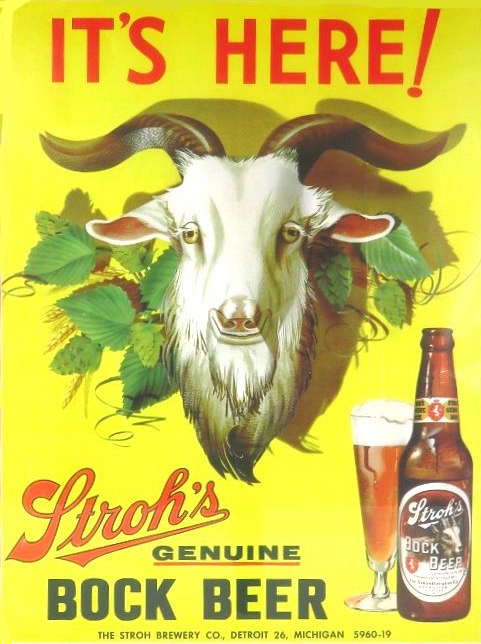
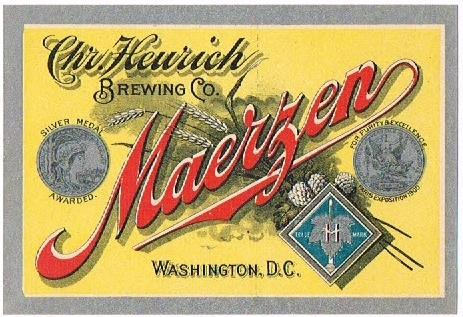
Two years ago I decided to concentrate on Bock ads for awhile. Bock, of course, may have originated in Germany, in the town of Einbeck. Because many 19th century American breweries were founded by German immigrants, they offered a bock at certain times of the year, be it Spring, Easter, Lent, Christmas, or what have you. In a sense they were some of the first seasonal beers. “The style was later adopted in Bavaria by Munich brewers in the 17th century. Due to their Bavarian accent, citizens of Munich pronounced ‘Einbeck’ as ‘ein Bock’ (a billy goat), and thus the beer became known as ‘Bock.’ A goat often appears on bottle labels.” And presumably because they were special releases, many breweries went all out promoting them with beautiful artwork on posters and other advertising.

Monday’s ad is for Utica Club or U.C. Bock Beer, which was published on February 2, 1950.  This one was for Matt Brewing Co., which was located in Utica, New York and was founded by Charles Bierbauer in 1853. Brewmaster F.X. Matt eventually bought the brewery around 1888, and today the fourth generation of the Matt family still runs the brewery. This ad ran in The Plain Speaker, of Hazleton, Pennsylvania.

Filed Under: Art & Beer, Beers, Breweries, Just For Fun Tagged With: Advertising, Bock, History, New York, Pennsylvania

Historic Beer Birthday: Anton Schwarz

February 2, 2026 By Jay Brooks

Today is the birthday of Anton Schwarz (February 2, 1839-September 24, 1895). In addition to having studied law, he also became a chemist and worked for several breweries in Budapest, before moving to the U.S. in 1868. Moving to New York, he got a job working for the magazine/journal American Brewer, which at the time was more like the People magazine of the brewing industry. He was quickly promoted to editor, eventually buying the publication. He turned it into a serious scientific journal, writing many of the articles himself, but is credited with helping the entire industry improve its standards and processes.

Here’s his entry from the Jewish Encyclopedia, published in 1906.

Austrian chemist; born at Polna, Bohemia, Feb. 2, 1839; died at New York city Sept. 24, 1895. He was educated at the University of Vienna, where he studied law for two years, and at the Polytechnicum, Prague, where he studied chemistry. Graduating in 1861, he went to Budapest, and was there employed at several breweries. In 1868 he emigrated to the United States and settled in New York city. The following year he was employed on “Der Amerikanische Bierbrauer” (“The American Brewer”) and soon afterward became its editor. A few years later he bought the publication, remaining its editor until his death. He did much to improve the processes of brewing in the United States, and in 1880 founded in New York city the Brewers’ Academy of the United States.

Schwarz’s eldest son, Max Schwarz (b. in Budapest July 29, 1863; d. in New York city Feb. 7, 1901), succeeded him as editor of “The American Brewer” and principal of the Brewers’ Academy. He studied at the universities of Erlangen and Breslau and at the Polytechnic High School at Dresden. In 1880 he followed his father to the United States and became associated with him in many of his undertakings.

Both as editor and as principal of the academy he was very successful. Many of the essays in “The American Brewer,” especially those on chemistry, were written by him. He was a great advocate of the “pure beer” question in America.

american-brewer-letterhead

When the United States Brewers’ Academy celebrated its 25th anniversary, in 1913, there was a ball where several alumni gave speeches and toasts, mentioning Schwarz’ contributions, including this from Gallus Thomann from Germany:

He also co-wrote the Theory and Practice of the Preparation of Malt and the Fabrication of Beer

Beer Advocate also has a nice story of Schwarz, entitled the O.G. Beer Geek.

Filed Under: Birthdays, Just For Fun Tagged With: Austria, History, Science

Beer Birthday: Luke Nicholas

February 2, 2026 By Jay Brooks

Today is also the 55th birthday of Luke Nicholas, founder/brewer of Epic Brewing in New Zealand (which sadly more recently has closed). Luke brewed for many years in New Zealand before striking out on his own, and also lived in the States for a spell working for RealBeer.com and became fond of hoppy beers. As a result, his beers are some of the hoppiest in New Zealand. He also started a real beer website just for New Zealand, RealBeer.co.nz and was instrumental in starting a Brewers Guild of NZ. Luke was kind enough to show me around the beer scene in Auckland when I was there with my family a few years ago, and we run into one another at beer events surprisingly often. He’s a great beer ambassador not just for his native country, but for great beer everywhere. You can also read about his exploits online at Luke’s Beer. Join me in wishing Luke a very happy birthday.
And at the 2010 Craft Brewers Conference in Chicago.

Me and Luke outside 21st Amendment during a visit to our shores.
P1010866
With Stephen Beaumont at CBC in Washington, DC a few years back.
Luke in New Zealand at Hallertau Brewbar & Restaurant with owner/brewer Stephen Plowman.

Filed Under: Birthdays, Just For Fun Tagged With: New Zealand

Historic Beer Birthday: Frank Senn

February 2, 2026 By Jay Brooks

Today is the birthday of Frank Senn (February 2, 1838-November 8, 1913) who was born in Mechtersheim, Germany, which today is known as Römerberg, but settled in St. Louis, Missouri with his parents in 1853. In Louisville, Kentucky, he opened the Frank Seen Brewery in 1874, but later sold it to his two brothers. In 1877, he took with a partner, Philip Ackermann, he opened a new brewery, the Frank Senn & Philip Ackermann Brewery. In 1892, they shortened it to the Senn & Ackermann Brewing Co., which it remained until being closed by prohibition.

Here’s a short bio, from his obituary, printed in the Western Brewer and Journal for July to December 1913.

Here’s a short history of the brewery, from the Encyclopedia of Louisville:

And another one from Germans in Louisville: A History:

senn-ackermann-history-2

After prohibition began, the building was abandoned, eventually becoming a scrapyard.

Ackerman-and-Senn-abandoned

And this obituary is from the Courier Journal:

Filed Under: Birthdays, Just For Fun Tagged With: History, Kentucky

Beer Birthday: Jamie Floyd

February 2, 2026 By Jay Brooks

Today is the 54th birthday of Jamie Floyd, co-owner/brewer of Ninkasi Brewing in Eugene, Oregon. Jamie has been a fixture in the Oregon brewing scene for many years, having brewed at Steelhead Brewing, also in Eugene, before opening Ninkasi with Nikos Ridge in 2006. Join me in wishing Jamie a very happy birthday.
Jamie at Magnolia for SF Beer Week in 2011.
Jamie with a group of brewers at GABF in 2004.
At the Oregon Brewers Festival in 2006.
Jamie, with John Maier, from Rogue Brewing, and Nikos Ridge, also from Ninkasi, at the Sasquatch Brew Fest in 2007.
Jamie Floyd, from Ninkasi Brewing
Jamie at GABF in 2011.
Justin Crossley (Brewing Network) & Jamie Floyd (Ninkasi)
Justin Crossley, of the Brewing Network, with Jamie at the Opening Gala for the 2010 SF Beer Week.

Filed Under: Birthdays, Just For Fun Tagged With: Oregon

Beer In Ads #5189: The Bock Of The Town

February 1, 2026 By Jay Brooks

Two years ago I decided to concentrate on Bock ads for awhile. Bock, of course, may have originated in Germany, in the town of Einbeck. Because many 19th century American breweries were founded by German immigrants, they offered a bock at certain times of the year, be it Spring, Easter, Lent, Christmas, or what have you. In a sense they were some of the first seasonal beers. “The style was later adopted in Bavaria by Munich brewers in the 17th century. Due to their Bavarian accent, citizens of Munich pronounced ‘Einbeck’ as ‘ein Bock’ (a billy goat), and thus the beer became known as ‘Bock.’ A goat often appears on bottle labels.” And presumably because they were special releases, many breweries went all out promoting them with beautiful artwork on posters and other advertising.

Sunday’s ad is for Iron City Bock Beer, which was published on February 1, 1939.  This one was for Iron City Brewing Co., which was located in Pittsburgh, Pennsylvania and was founded by Edward Frauenheim in 1861. This ad ran in The Pittsburgh Press, also of Pittsburgh, Pennsylvania.

Filed Under: Art & Beer, Beers, Breweries, Just For Fun Tagged With: Advertising, Bock, History, Pennsylvania

Historic Beer Birthday: Leo Van Munching Sr.

February 1, 2026 By Jay Brooks

Today is the birthday of Leo van Munching (February 1, 1901-April 3, 1990). He was born in Harderwijk, Gelderland, in The Netherlands. He started importing Heineken beer under the name “Van Munching & Co., and he and his son, Leo van Munching, Jr., built it into a powerhouse imported beer brand. Sales Agents UK has an overview of their business strategy in a short piece entitled Leo Van Munching – The Story of the US Heineken Mogul.

Here’s his obituary from April 4, 1990’s New York Times

The Van Munching headquarters in New York, in 1948.

Filed Under: Birthdays, Breweries, Just For Fun Tagged With: Heineken, Imports, The Netherlands

Historic Beer Birthday: John Thomas

February 1, 2026 By Jay Brooks

Today is the birthday of John Thomas (February 1, 1847-January 4, 1899). In 1884, his later business parter founded a brewery in Philadelphia, the following year Thomas joined the business, and they called in Welde & Thomas, later adding “Brewing Company” to the name. In 1904, it was consolidated with several other breweries into the Consumers Brewers Co., which remained in business until closed by prohibition in 1920. The brewery reopened after repeal in 1933 as the Trainer Brewing Co., but only lasted one year.

Here’s Thomas’ obituary from the American Brewers Review in 1899:

This biography was printed in the “The Columbian Exposition and World’s Fair Illustrated,” from 1893:

In a biography of his partner John Welde, Thomas naturally gets more than a mention:

In 1884, John Welde, a German immigrant, established a brewery in Philadelphia on the corner of Broad and Christian Streets. A year later, he formed a partnership with John Thomas, a Philadelphia native, who had been a partner in another brewery. Together they created Welde and Thomas, a brewing firm that was later reorganized into the Welde and Thomas Brewing Company. They moved to a new location and modernized the facility with innovative equipment, growing the brewing capacity of the plant to 50,000 barrels per year. In March 1897, Welde and Thomas, along with five other breweries were consolidated under the title of the Consumer’s Brewing Company. The combined breweries were able to produce approximately 300,000 barrels a year.

This description is from an Advertising Print for Welde and Thomas Brewing Co., created around 1895, and now in the collection of the Smithsonian’s National Museum of American History.

This colorful framed print, an ad for the Welde and Thomas Brewing Company, of Philadelphia, also commemorates the 1895 America’s Cup race between the American yacht Defender and the British Valkyrie III. Imagery of the yacht race dominates the print and the American vessel, the ultimate victor in the match, holds primacy of place. Defender’s full sails provide a dramatic canvas for the names of two of the company’s products: Penn and Sanitas Beers. These brands, along with Quaker, were among those brewed by Welde and Thomas.

Three detailed insets border the print. One shows “Penn’s Brewery of 1682” in Pennsbury, Buck’s County; another shows the Welde and Thomas buildings at Juniper and Fitzwater Streets in Philadelphia; and the third is an image of William Penn holding a bottle of beer. The ad deftly aligns Welde and Thomas beer to icons of American success: the very founding of Philadelphia and its early embrace of brewing as well as an American yacht’s triumphant defense of the America’s Cup.

German immigrant John Welde established a brewery in Philadelphia in 1884, forming a partnership with Philadelphia businessman John Thomas the following year. In 1886, they moved to the Juniper and Fitzwater Streets location and invested in new equipment, increasing their capacity dramatically. In 1897, Welde and Thomas consolidated operations with five other breweries, organizing under the name Consumer’s Brewing Company. Thomas died in 1899 and Welde in 1901.

welde-and-thomas-poster

Filed Under: Birthdays, Breweries, Just For Fun Tagged With: History, Pennsylvania, Philadelphia

« Previous Page
Next Page »

Find Something

Northern California Breweries

Please consider purchasing my latest book, California Breweries North, available from Amazon, or ask for it at your local bookstore.

Recent Comments

  • Ernie Dewing on Historic Beer Birthday: Charles William Bergner 
  • Steve 'Pudgy' De Rose on Historic Beer Birthday: Jacob Schmidt
  • Jay Brooks on Beer Birthday: Bill Owens
  • Steve 'Pudgy' De Rose on Beer Birthday: Charles Finkel
  • Steve 'Pudgy' De Rose on Beer Birthday: Bill Owens

Recent Posts

  • Beer In Ads #5125: Bowler Brothers’ Bock February 22, 2026
  • Beer Birthday: Fred Bueltmann February 22, 2026
  • Historic Beer Birthday: John Emmerling February 22, 2026
  • Beer In Ads #5124: Möerlbach Bock February 22, 2026
  • Historic Beer Birthday: George M. Biner February 22, 2026

BBB Archives

Feedback

Head Quarter
This site is hosted and maintained by H25Q.dev. Any questions or comments for the webmaster can be directed here.