Brookston Beer Bulletin

Jay R. Brooks on Beer

  • Home
  • About
  • Editorial
  • Birthdays
  • Art & Beer

Socialize

  • Dribbble
  • Email
  • Facebook
  • Flickr
  • GitHub
  • Instagram
  • LinkedIn
  • Pinterest
  • RSS
  • Twitter
  • YouTube

Powered by Genesis

Session #10: Winter Beers

December 7, 2007 By Jay Brooks

This month’s Session, sponsored by Barley Vine, is Let It Snow: Winter Beers. Of all the seasonal beers, the ones released during winter are my favorites; the ones I look most forward to sampling each and every year. The category of winter beers lacks the tradition of, say for example, oktoberfest beers or springfest beers, both of which owe their existence to the seasons, a lack of technology and brewers having to adapt themselves to the weather. And, of course, even calling them winter beers is a modern conceit to be politically correct and, perhaps more importantly, to try to insure they will continue to sell beyond December 25. Because for the most part, whether we say so or not, most of the “winter beers” are really Christmas beers. And they are, like Christmas itself, largely a modern invention.

For centuries, the most important Christian holiday was Easter, because — as I remember it being explained — the redemption and resurrection it represented was the miracle that made Christianity different from other religions and so it was the centerpiece of an ecumenical year filled with celebrations Sunday after Sunday. Our present calendar system, the Gregorian calendar (named for Pope Gregory) was created precisely to more accurately predict the date when each year’s Easter would be because under the prior system, the Julian calendar (which is still used today by some Christian denominations) had allowed the year to drift by several days because it did not accurately reflect the true length of a year. (For a riveting account of the history of our calendar, read David Ewing Duncan’s Calendar: Humanity’s Struggle to Determine a True and Accurate Year.) The calendar geek in me could go on and on about this but the point is simply that for the majority of Christian history, Easter was the big day. Beginning in the 1840s, things gradually shifted toward Christmas so that now most people would say Christmas is the number one holiday.

The first Christmas beers were most likely brewed in medieval times by monks making a special beer — and stronger — at Christmastime to celebrate the birth of Jesus Christ. But it would take far longer for commercial breweries to begin making and bottling seasonal beer. And while there were breweries in decades past that made a holiday beer (I have, for example a full bottle of Ballantine Christmas Ale that was brewed in 1946 but not bottled until 1957), it was not the big business it is today. In my experience, here in the U.S. Christmas beers were more the exception than the rule until somewhat recently.

Germany has a rich tradition of Weihnachtsbier, as do several other Scandinavian countries. So does Great Britain with winter warmers and Belgium with beers like Delirium Noel and many others. My friend and colleague Don Russell (a.k.a. Joe Sixpack) is currently working on a book about Christmas beer which will be published next year. I can’t wait for it to come out, it should be a very interesting read.

For a time, there were only a few holiday beers, and most of them were quite obviously Christmas beers. Sierra Nevada’s Celebration, Samuel Adams’ Winter Lager and even Noche Buena (from Mexico’s Grupo Model) were all early favorites. Little by little, more breweries began making a holiday beer and by around 1996 practically every brewery made one and a large number bottled it, too. And they all sold pretty well. But oddly enough, the day after Christmas sales would abruptly stop. With the exception of the most popular two or three brands, you could barely give away a Christmas beer once the holiday was over. This made it tricky for retailers trying to balance not running out before Christmas but not wanting any inventory immediately thereafter. When I was a beer buyer, I can’t tell you how many offers at rock bottom bargain prices I would get in the weeks after Christmas by breweries trying to unload their remaining Christmas beer.

So what most breweries did was secularize the beers, calling them names like winter ale or holiday beer. Whatever the name, it de-emphasized Christmas in the hope that the fickle consumer would continue to buy them after December 25. And for the most part the strategy worked and eventually led to many breweries having a seasonal beer year-round, whether four different ones quarterly or more often. The reason for this is more business-related than you might assume at first blush. Most grocery stores have very specific beer sets (which is a schematic layout of what beers they carry and where they will be put on the shelves).

Breweries work very hard to get a slot on a grocery store’s beer set. No one wants to put in the effort to get their Christmas beer in the beer set over the holidays only to lose it as soon December ends. So what many did was get a seasonal sku authorized in the set that would be filled with whatever the seasonal beer happened to be. In other words, the same hole would be filled in summer with a summer seasonal beer, etc. throughout the year. One seasonal release would follow the last so that all year long there would be a rotating beer in that same slot on the store shelf. In that way the brewery would not lose it’s spot on the shelf and as a result, today we all have much more diversity on the shelf, a boon for consumers and breweries alike. Nielsen and IRI data confirms that the category “seasonal beer” is one of the fastest growing and best-selling categories of craft beer today. And this all grew out of Christmas beers and trying to figure out how best to sell them.

In modern times, one of the first and to my mind still one of the best is Anchor’s Christmas Beer. Technically, the name of this beer is not Christmas Ale as it is usually called but it’s more proper name is actually Our Special Ale. The first one was brewed in 1975. While there are certainly many other truly great holiday beers, this is always the one I look most forward to each year. It used to be released the Monday before Thanksgiving each year, making it one of the last Christmas beers to come out. A few years ago they bowed to market pressure and it’s now available in early November, usually the first week. I can’t say I don’t like getting it earlier now, but there was something grand about having to wait for it that built up your anticipation and made it somehow more special.

To me, there are two (or three) other factors to this beer that make it so great. First, they change the recipe each year. So not only is there anticipation about its release generally, but also about what it will taste like this year. How much time have I spent sitting around with friends trying to figure out just what spices are in each year’s version? I know there a lot of people, including many beer enthusiasts and the entire nation of Germany, who don’t like spice in their beer. I am not one of those people. I love spicy beers. Not every day, of course, but the more different types of beer loose in the world, the better off we are. The more choices, the better we can experiment and decide what works best when and with what. And there are times when spices in beer work perfectly. I usually pair my Thanksgiving meal with Anchor Christmas, for example, because the spices work so well with turkey’s modest flavors, making both taste better. In addition, the mashed potatoes, cranberry sauce and stuffing all benefit from being lubricated with a spicy beer.

Second, they change the label each year. Each year it’s a new mini-work of art featuring a different tree (which I confess I’ve always had a thing for: trees, that is). They’re beautiful labels and each year they create a new poster featuring all of the labels from 1975 up to the current year. I have one from a couple of years ago framed and hanging in my kitchen. You can see this year’s poster at Anchor’s website and you can even buy one in their gift shop. That also adds to the anticipation, finding out what tree will be featured on each year’s incarnation. They also do a kick-ass neon sign. But there’s one more thing about this beer that I love. It can be aged.

Despite it’s modest strength and most likely due to the spicing, Anchor’s Christmas Ale can be laid down, usually for almost ten years and still be drinkable. For a time during the late 1990s, when the beer was more heavily spiced, it actually seemed to taste better after being aged for at least a year and I would lay down quite a bit of it to take advantage of that phenomenon. I still have several Magnums from year’s past in one of my beer refrigerators, as well as at least a case of 12-ounce bottles from various years stretching back to the early 1990s. There’s nothing more enjoyable than doing a vertical tasting of Anchor Christmas beers. I’ve done a few myself, at least one at the Celebrator and twice at Anchor Brewing with older beers from their private cellar. It’s great fun to compare both the different year’s recipes and also what the aging process has done to the beer.

Last night was Anchor’s annual Christmas party and it was my first chance to have this year’s Christmas Ale on draft, though I’d had bottles several times. To my mind, this year’s tastes quite similar to last year but I haven’t yet had a chance to do a side-by-side comparison. The spicing is mild, as has been typical in recent years. As a result, it has a wider appeal — though for myself I miss the heavily spiced days — and is still a wonderful beer. I won’t even try to speculate on what spices are there, that’s a better thing to do with friends over a shared pint or bottle.

One last thing about winter ales that is somewhat different from most traditional seasonal beers. Unlike springbocks or marzens, which are distinct styles, holiday beers can be any style that the brewer chooses. This has led to much more diversity in Christmas beers than in any other kind of seasonal. Even summer ales, which have no style attached to them, still tend to be lighter so they’re more appropriate during that season’s warmer weather. This makes tasting all of the holiday beers the most enjoyable one each year, because you never know what you’re going to get. It’s fun seeing what a brewery decided to brew when left to do whatever they fancied. Since brewers under such circumstances tend to make what they like, you can learn different brewers’ personal tastes, which can be useful in evaluating their other efforts. Plus, it’s just plain fun, the best time of the year to try different beers is without question the winter when strong, full-flavored beers of striking diversity are king. It’s the most wonderful season of all.

Holding a cup of Christmas Ale by the Anchor “tree” at their annual Christmas party last night.


Filed Under: The Session Tagged With: California, Ingredients, San Francisco, Seasonal Release

Other Uses For Beer

December 7, 2007 By Jay Brooks

I stumbled on this list of “10 Unexpected Uses for Beer” on the website Gomestic, which as far as I can tell looks like it’s about home and garden issues and related things. It was written by 131242313424, who apparently didn’t get the memo about being a free man and not a number (bonus points if you get that reference). We often hear lots of different things that can be done with beer besides its intended purpose from soup to nuts.

Despite its name, the ten on Gomestic’s list are hardly what I’d call “unexpected” unless you’re one of those people A.E. Housman was talking about when he alluded to “fellows whom it hurts to think.” Apparently it was hard for 131242313424 to stay focused on his theme of the uses being novel because number ten is “drink it,” which has to be the most expected use for beer one could imagine. But usual curmudgeonly grumbles aside, it got me thinking. There are plenty of other uses for beer, expected and unexpected, other than just drinking it. Some make sense and seem obvious, like using it to marinate meat with. Others seem less so, like using it to help dry patches on your lawn grow green again. But let’s start a list, shall we? What other uses for beer have you come across that you could recommend? To get you started, here are the ten from Gomestic and Men’s Health had a list of 33 back in March.

  1. Marinate meat in it
  2. Help grass grow easier
  3. Kill slugs & snails
  4. Kill mice
  5. Calm a stomach-ache
  6. Polish gold
  7. Bathe in it
  8. Polish wood furniture
  9. Cook with it
  10. Drink it!

I’ll begin compiling my list on a page I’ll call Beer’s Other Uses.
 

Filed Under: Just For Fun Tagged With: Related Pleasures, Strange But True

Anchor Christmas Bash 2007

December 7, 2007 By Jay Brooks

Last night was the annual Anchor Christmas Party at the Anchor Brewery in San Francisco. I’ve been going to this party for more than ten years now and it’s always a great event. Anchor puts on a terrific spread of food and all of the Anchor beers are available on tap, including this year’s Christmas Ale. The main floor of the brewery where the taproom is and the beautiful copper kettles are fills up with local beer industry people and other friends of the brewery.

My wife Sarah, beer chef Bruce Paton and Jen Garris, with New Belgium Brewing.

For more photos from this year’s Anchor Christmas Party, visit the photo gallery.
 

Filed Under: Breweries, Events Tagged With: California, Other Events, Photo Gallery, San Francisco

SABMiller Gets A Blue Tongue

December 6, 2007 By Jay Brooks

SABMiller announced yesterday that they are purchasing Australia’s Bluetongue Brewery in a joint venture with Coca-Cola Amatil Limited to be known as Pacific Beverages Pty Limited. The purchase price was not revealed though it is estimated to be around $20 million USD. It has also been reported that they are considering building a greenfield brewery to brew additional brands for distribution by Pacific Beverages in region including Peroni Nastro Azzurro, Pilsner Urquell, Miller Genuine Draft and other Miller brands.

Bluetongue was founded in 2003 in Newcastle, New South Wales. They have an annual capacity of over 50,000 hectolitres and make five different beers: Bluetongue Premium Lager, Bluetongue Premium Light, Bluetongue Traditional Pilsner, Bluetongue Alcoholic Ginger Beer and Bondi Blonde (a low-carb beer). In their four-year history, Bluetongue has shown remarkable growth including 70% over the past year. Earlier this year they even hired Paris Hilton as a spokesperson for Bondi Beer. And Bluetongue is Whale Safe Beer.


According to the press release, here’s the story of the brewery’s name:

Bluetongue’s name originates from the blue-tongued lizard, one of Australia’s favourite native creatures. They are about 30cm long, have a large fierce looking head and are easily recognised by their bright blue tongue which they stick out to warn off predators. Blue-tongues are often found basking in the sun in the Australian bush and in backyards across suburban Australia.


Filed Under: Uncategorized Tagged With: Australia, Business, International, Press Release

Prohibition Returns!

December 5, 2007 By Jay Brooks

Reason Magazine is a fine and well-respected Libertarian magazine that had a very interesting article in last month’s issue. I say fine and well-respected because they saw fit to ask me to write an article for them last year, showing exceptional good taste, and as a result I still get a copy of the magazine each month. The November issue included an article by David Harsanyi, who is a columnist for the Denver Post. Harsanyi is also the author of a recent book called Nanny State, whose subtitle is “How Food Fascists, Teetotaling Do-Gooders, Priggish Moralists, and other Boneheaded Bureaucrats are Turning America into a Nation of Children.” His Reason article, Prohibition Returns! Teetotaling do-gooders attack your right to drink, was adapted from his book and it’s a very interesting read. I wanted to post it when I first read it, but Reason doesn’t put the current issue online instead keeping all but the current issue on the web. As a result I had to wait until now to share it.

One of the most interesting parts of his article involves Candace Lightner, the founder of MADD. She was the original mother against drunk driving who started a crusade. I have on several occasions written unflatteringly about her but what I did not realize is that she’s every bit as disgusted with MADD as I am. For example she told the L.A. Times in 2002 that she realized she was wrong about lowering the blood alcohol level to 0.08% because that strategy “was not a solution to the alcohol problem. The majority of crashes occur with high blood-alcohol levels, the .15, .18 and .25 drinkers.” As a result, Lightner and MADD parted ways in 1985 and she is no longer affiliated with the organization she founded.

From the Reason article:

Lightner has moved on from MADD, and since then has protested the shift from attacking drunk driving to attacking drinking in general. “I worry that the movement I helped create has lost direction,” she told The Cleveland Plain Dealer in 1992. BAC legislation, she said, “ignores the real core of the problem….If we really want to save lives, let’s go after the most dangerous drivers on the road.” Lightner said MADD has become an organization far more “neoprohibitionist” than she had envisioned. “I didn’t start MADD to deal with alcohol,” she said. “I started MADD to deal with the issue of drunk driving.”

I’m afraid I owe her an apology. I take back what I said previously. She has not taken things too far, the people who took over from where she started and fanatically went off to advocate a different agenda have much to answer for, not least of which is that they continue to use the tragedy of her daughter’s death at the hands of a drunk driver in their propaganda despite the fact that know they Lightner no longer agrees with what they’re doing. This also explains to some extent why MADD has gone off in such a radically different direction from the founder’s original intent. Neo-prohibitionists simply took over her organization co-opting it for their own purposes. Given that it’s been 22 years since the founder resigned, they’ve done a pretty good job of keeping that information in the background so that most people — myself included — weren’t even aware that the organization had internally changed so much. MADD’s mission statement changed abruptly in 1985 — the same year Lightner left — and has been changed two more times since then to incorporate the expanding agenda of the organization to include underage drinking and, although not stated explicitly, to end all legal drinking in this country if not the world. I think after learning this I’m even more frightened of MADD than I was when I thought it was still just a pissed-off mother trying to do right by the daughter that was taken from her by a drunk driver. At least I could understand that, even if I didn’t entirely agree with it. Now that I know she’s been gone for more than two decades and in her absence they’ve become more of a neo-prohibitionist organization I confess I can’t understand what they’re doing in the least. Nothing about their current agenda makes any sense whatsoever to me. All I know is we have to do everything we can to make sure they don’t succeed in bringing about another Prohibition.


Filed Under: Editorial Tagged With: National, Prohibitionists

Happy Repeal Day

December 5, 2007 By Jay Brooks

Today is the 74th anniversary of the repeal of national Prohibition in the United States. Bob Skilnik has, naturally, the most complete account at his Beer In Food blog. His piece is called “National Prohibition; Its REAL Anniversary” and goes into great detail about the history swirling about at that time. It’s definitely worth a read.

In addition, Eugene, Oregon bartender Jeffrey Morgenthaler has been leading an effort to make December 5 a holiday and he’s also set up a Repeal Day website. And Dewar’s is also running a Repeal Day promotion to celebrate the day (and sell some whisky, of course). Seems like a good idea to me, we can never have too many holidays to remind us what a bad idea Prohibition was, especially with the neo-prohibitionists of today trying so hard to bring about another one.


Revelers enjoying the repeal of Prohibition in 1933.
 

Filed Under: Events, Just For Fun, Politics & Law Tagged With: History, Law, National, Other Events, Websites

Costa Rica Just Says No to Swiss Beer

December 5, 2007 By Jay Brooks

I guess it’s good to know that other country’s bureaucracies are every bit as irrational as my own, especially when dealing with the regulation of alcohol and other so-called “controlled” substances. It seems the Latin American country of Costa Rica is having issues with a Swiss beer, Hanfblute, because it contains the essence of marijuana to impart the cannabis aroma in the nose. It’s no secret, that information is listed on the label and Hanfblute has been sold in the Central American nation for four years. And, of course, marijuana is also illegal in Switzerland, too, meaning if there were any mind-altering cannabis (or THC) in it, the Swiss would have put the kibosh on the beer long ago. They do use hemp leaves and flowers in the brewing of the beer, but it contains nothing that could get you high.

Guiselle Amador, the head of the Instituto de Alcoholismo y Farmacodependencia (IAFA) — Costa Rica’s pharmaceutical and drug dependency institute — “expressed her concern for the sale of the beer in Costa Rica for its negative implications that it is good for ones health.” The IAFA is asking the health minister to investigate the importer’s permit and take the beer off the market. Despite the fact that the beer contains no marijuana whatsoever, she’s afraid it might persuade people to start smoking pot. Why, you might reasonably ask, would she think that? Apparently there’s a cannabis leaf on the label (pictured below) which she believes is a subliminal message which could entice people to begin smoking weed. I don’t know what Amador is smoking but if she thinks seeing a marijuana leaf on a beer label will lead people to fire up a spleef then clearly her country has more troubles than just this.
 

Here’s one logo:

And here’s the bottle label:


Clearly they’re skating on the periphery of what polite society deems acceptable with their label, but the family owned Brauerei Locher brews at least twenty different beers, of which the Hanfblute is only a small part. This is no hippie commune beer but a serious beer with a nod to a tradition that predates the use of hops in beer. Are they having a little fun with it? Sure, why not? They know the market for their beer. In my experience, hemp enthusiasts are fanatical in their love of the versatile weed. So why not market to a supportive audience?

The first hemp beer I remember was from Frederick Brewing in Maryland. I think it was called Hempen Ale and was made using hemp seeds (I’m shooting on memory here, if anybody knows for sure, let me know). I also remember shortly thereafter having a meeting with Mario Celotto (the former Oakland Raider and now former owner of Humboldt Brewing in Arcata, California) and suggesting to him that with his backyard’s reputation he should make a hemp beer. Several months later (I think around 1998?) Humboldt Hemp Beer made its debut and is still being brewed by Firestone Walker under the same label (they bought the Humboldt brand in 2003).

But I still can’t understand why people in government agencies are convinced that mere labels will corrupt people to the point where they’re afraid to allow citizens to even see something they find objectionable. It’s obviously ridiculous that seeing a cannabis leaf would make someone unable to control the urge to become a drug addict. It’s equally ridiculous that seeing Santa Claus on a label will make kids want to drink beer or seeing nudity on a label will .. well, I don’t really know what the easily offended think seeing nudity will do to harm society, that one will always be a head-scratcher to me. But we see this time and time again in the United States and — as this story makes clear — around the world, too. Most people if asked would probably say the national pastime is baseball and worldwide it has to be football (soccer). Personally, I think the true favorite pastime is trying to control other people in what they think, what they see and what they can do. Determining what is moral or good and trying to impose it on the rest of us seems to occupy a lot of a certain kind of person’s time and energy. The rest of us are just trying to enjoy ourselves and live our lives as best we can. But as long as there are people whose agenda includes stopping people from doing things that they don’t like or making decisions about how to live their lives that they disagree with, the remaining majority of us won’t be able to rest. As for marijuana, my favorite comedian, Bill Hicks, said it best:

Why is marijuana against the law? It grows naturally upon our planet. Doesn’t the idea of making nature against the law seem to you a bit… paranoid? You know what I mean? It’s nature. How do you make nature against the f#%king law? It grows everywhere. Serves a thousand different functions, all of them positive. To make marijuana against the law is like saying God made a mistake.

Which I find doubly ironic since most rabid anti-drug and anti-alcohol organizations seem religiously based or at least motivated by some weird morality that they believe is based on religion. But I also think Hicks’ argument works for beer, as well, which is likewise made from all natural ingredients growing wild on the planet. Ive said it before a million times, but if those of us who just want to be left alone and not told what to do and think, we have to remain ever-vigilant against this kind of nonsense wherever and whenever we can.


Filed Under: Editorial, News Tagged With: Europe, Ingredients, International, Strange But True

Pacific Coast Brewing’s “A Taste of Holiday Beers”

December 4, 2007 By Jay Brooks

The 19th annual holiday beer tasting at Pacific Coast Brewing in Oakland is this Saturday from Noon to 4:00 p.m. Sad to say, I’ve never managed to make it to this one but everybody tells me it’s a great event.


12.8

Pacific Coast Brewing’s Taste of Holiday Beers (19th annual)

Pacific Coast Brewing, 906 Washington Street, Oakland, California
510.836.2739 [ website ]


Filed Under: Uncategorized Tagged With: Announcements, Bay Area, California, Other Event, Press Release, Seasonal Release

Van’s Ned Flanders

December 4, 2007 By Jay Brooks

rock-bottom
John Foyston had a nice piece in the Oregonian yesterday about one of my favorite — and perhaps most underrated — beers to be poured at the Oregon Brewers Festival. It was certainly my favorite the year it appeared, 2006, and as this story attests, people are still talking about it. The beer is Ned Flanders, a sour beer based on the style Flemish Red Ale, of which Rodenbach Red and Duchesse De Bourgogne (another fave of mine) are perhaps the best known examples. I chose it as my buzz beer of the festival that year. Van Havig, then the brewer at Rock Bottom in Portland (and now a regional brewing manager) put quite a bit of effort into the beer, aging it in five different kinds of barrels and then blending it back together. Responding to a question from Foyston, Havig lays out the full story of this beer, and it’s a fascinating account filled with history and chutzpah.

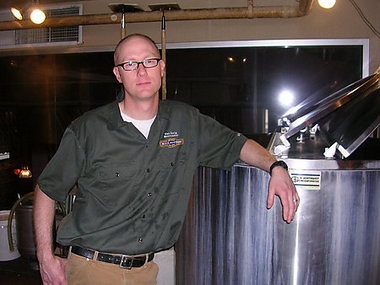
van-havig ned

Will the real Ned Flanders please stand up? Van Havig and his inspiration for Ned Flanders Sour Red Ale.

Filed Under: News Tagged With: History, Ingredients, Oregon, Portland, Science of Brewing

Curing A Hangover

December 3, 2007 By Jay Brooks

I came across this list at Forbes when I was reading the original Forbes story about the world’s heaviest-drinking countries. This is their list of the Top Ten Hangover Cures, which I’ve reprinted below.

  1. Water (Lots of It)
  2. Sports Drinks
  3. Over-the-Counter Pain Relievers
  4. Vitamins B6 and B12
  5. Berocca
  6. Prickly Pear
  7. Tripe Soup
  8. Haejangguk (Korean for “soup for the stomach”)
  9. Rosiglitazone (used by diabetics to boost glucose levels)
  10. Hair of the Dog

In the beginning of the article, however, they begin with this annoying chestnut. “The best—and most painfully obvious—remedy is not to drink yourself into oblivion.” Can it be possible nobody realized that abstinence cannot be a cure since if you never get a hangover there’s nothing to remedy? I know I’m splitting hairs here but I’ve always found the “just say no” mentality a bit overly self-righteous. Nothing ventured, nothing gained I always say. Keep abstaining and you gain no wisdom, no experience, no nothing that you need to grow as a person.

The first four and the last one are old tried and true ones, but five through nine were largely new to me. I wrote a book in the early 1990s that included an appendix of common hangover cures, which I researched pretty thoroughly at the time. When you drink, your body — primarily the liver — begins processing the alcohol. Once it starts working, there’s really nothing you can do to speed things up. All you can do it wait. Alcohol also dehydrates you making you feel dry because when you drink you lose more water than your body replaces until your liver and kidneys finish their work. While the excess alcohol is waiting to be processed, it is stored in your cells, displacing the water that is normally there: this phenomenon is known as “extra-cellular” and it’s what makes you feel dry and crave water. When you drink faster than your liver’s ability to process the alcohol, it gets backed up. That backup is what causes your misery. The medical record I looked at suggested that there is only one thing that will cure a hangover: time. You may be able to ease some of your symptoms, but there’s nothing to any of the supposed cures that will do anything to speed up your recovery. That doesn’t stop anybody from trying, of course, as people — myself included — will do anything in the hopes of eliminating the pain of a hangover.

In my own experience, I’ve found preventative measures are always more effective than anything you can try the morning after. When I put together my appendix, I divided the various methods to keep yourself feeling fit into four categories based on when to administer them.
 

  1. Before Drinking
  2. During Drinking
  3. Before Going To Bed
  4. The Morning After


Naturally, there are exponentially more supposed cures for the morning after than for anytime the night before. I think that’s because the preventative measures involve common sense and a few basic ideas, things that most of us forget to do once we start drinking. My personal regime is to take a vitamin B supplement and two Advil (I used to take Tylenol until I read that it can be hard on your liver) before going to bed. I’ve had a pretty good success rate with that, which is why I still use it. I’ve started reprinting my hangover cure appendix so you can take a look at it. I only have up the first three categories, and a few from the morning after, but little by little I’ll get it all up there.


Filed Under: Just For Fun Tagged With: Health & Beer, Strange But True

« Previous Page
Next Page »

Find Something

Northern California Breweries

Please consider purchasing my latest book, California Breweries North, available from Amazon, or ask for it at your local bookstore.

Recent Comments

  • Bob Paolino on Beer Birthday: Grant Johnston
  • Gambrinus on Historic Beer Birthday: A.J. Houghton
  • Ernie Dewing on Historic Beer Birthday: Charles William Bergner 
  • Steve 'Pudgy' De Rose on Historic Beer Birthday: Jacob Schmidt
  • Jay Brooks on Beer Birthday: Bill Owens

Recent Posts

  • Historic Beer Birthday: Anthony Straub July 17, 2026
  • Historic Beer Birthday: James Pawley Dawes July 17, 2026
  • Historic Beer Birthday: William McEwan July 16, 2026
  • Historic Beer Birthday: Richard L. Yuengling, Sr. July 16, 2026
  • Beer Birthday: Bob Stoddard July 15, 2026

BBB Archives

Feedback

Head Quarter
This site is hosted and maintained by H25Q.dev. Any questions or comments for the webmaster can be directed here.