Brookston Beer Bulletin

Jay R. Brooks on Beer

  • Home
  • About
  • Editorial
  • Birthdays
  • Art & Beer

Socialize

  • Dribbble
  • Email
  • Facebook
  • Flickr
  • GitHub
  • Instagram
  • LinkedIn
  • Pinterest
  • RSS
  • Twitter
  • YouTube

Powered by Genesis

Historical Beer Birthday: John Lofting

June 15, 2025 By Jay Brooks

beer-engine
Today is as good a day as any to celebrate the birthday of John Lofting (1659–June 15, 1742). Like many people born centuries ago who weren’t royal or otherwise well-born, we don’t know the exact day he was born, but we do know that he died today. Lofting was a Dutchman who lived in London as an adult, and patented several devices, the most famous of which was the fire engine, but he may also have been responsible for the beer engine.

Here’s his Wikipedia entry:

Originally Jan Loftingh, John Lofting was an engineer and entrepreneur from the Netherlands. His parents were Herman and Johanna. He moved to London, England, before 1686. He patented two inventions being the “sucking worm engine” (a fire engine) and a horse-powered thimble knurling machine. His mill was set up in Islington, where Lofting Road is named after him. However, in or about 1700, he moved his main operation to Great Marlow in Buckinghamshire to take advantage of the River Thames’ ability to turn a water wheel which improved productivity, enabling the production of over 2 million thimbles per year.
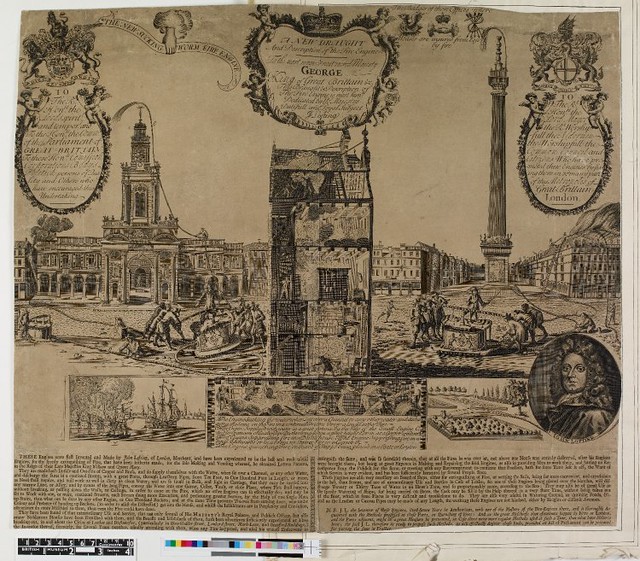
sucking-worm-engine


The Sucking Worm Engine, from the British Museum.

And while Joseph Bramah patented the first practical beer engine, Lofting’s design made it possible for Bramah to build on and create his. Although there’s little I could find specific about Lofting’s invention, it is mentioned in the Wikipedia entry for the beer engine:

A beer engine is a device for pumping beer from a cask in a pub’s cellar.

The beer engine was invented by John Lofting, a Dutch inventor, merchant and manufacturer who moved from Amsterdam to London in about 1688 and patented a number of inventions including a fire hose and engine for extinguishing fires and a thimble knurling machine as well as a device for pumping beer. The London Gazette of 17 March 1691 stated “the patentee hath also projected a very useful engine for starting of beers and other liquors which will deliver from 20 to 30 barrels an hour which are completely fixed with brass joints and screws at reasonable rates.”

The locksmith and hydraulic engineer Joseph Bramah developed beer pumping further in 1797.

The beer engine is normally manually operated, although electrically powered and gas powered pumps are occasionally used; when manually powered, the term handpump is often used to refer to both the pump and the associated handle.

The beer engine is normally located below the bar with the visible handle being used to draw the beer through a flexible tube to the spout, below which the glass is placed. Modern hand pumps may clamp onto the edge of the bar or be mounted on the top of the bar.

A pump clip is usually attached to the handle by a spring clip giving the name and sometimes the brewery, beer type and alcoholic strength of the beer being served through that handpump.

The handle of a handpump is often used as a symbol of cask ale. Keg beer dispensers usually feature illuminated countertop fittings behind which a handle opens a valve that allows the gas pressure in the keg to force beer to the attached spout.
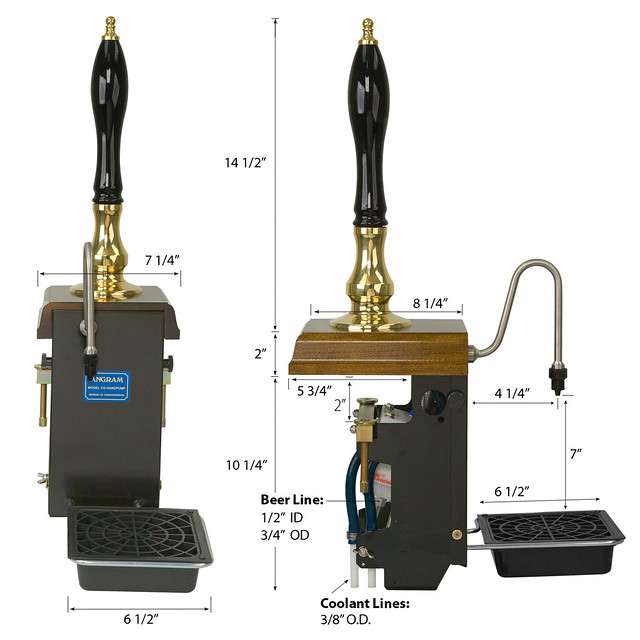
modern-beer-engine


A modern beer engine.

Filed Under: Birthdays, Just For Fun, Politics & Law, Related Pleasures Tagged With: Brewing Equipment, Cask, England, Great Britain, History, Kegs, Patent

Historic Beer Birthday: William Ogden

June 15, 2025 By Jay Brooks

chicago-1

Today is the birthday of William B. Ogden (June 15, 1805-August 3, 1877). Ogden’s biggest claim to fame is being the first mayor of the city of Chicago, elected in 1837. But he was also a businessman, and one of the businesses he was involved in was one of Chicago’s first breweries, Lill & Diversey.

William_B_Ogden_by_GPA_Healy,_1855
A portrait of William B. Ogden, painted by G.P.A. Healy in 1855.

Some sources say it was the very first brewery in Chicago, but either way, it was certainly one of the earliest. It was founded by William Lill, who was later joined by partner Michael Diversey

lilldiversies

Here’s the brewery’s story from One Hundred Years of Brewing, published in 1901:

The immense brewing interests of Chicago had their origin in the persons of William Lill and William Haas. In September, 1839, William B. Ogden, who, two years previously, had been elected mayor of the city, established Mr. Lill in business at the corner of Pine street and Chicago avenue, Mr. Haas being the latter’s assistant. The “plant” was installed in a small tenement building and the first year’s brew was about 450 barrels.

After a few years Michael Diversey formed a partnership with Mr. Lill, when Mr. Ogden withdrew his silent interest in the business. Under the management of Lill & Diversey the so-called Chicago Brewery developed into one of the most extensive establishments of the kind in the west, occupying a portion of the original site, but then covering an entire block. For many years “Lill‘s Cream Ale” was one of the most famous brands in the country. Besides being known as good business men, Lill and Diversey were noted for their benevolence and generosity, the latter being a large benefactor to the German Catholic churches of Chicago.

In 1841, Michael Diversey and William Lill bought the first commercial brewery in Chicago (Haas & Sulzer Brewery) and changed the name to the Lill & Diversey Brewery, also known as the Chicago Brewery. The two men saw huge success and by 1861 were producing 45,000 barrels of beer a year and employing over 75 men. Famous for “Lill’s Cream Ale,” by 1866 the brewery had sprawled to over two acres and four stories high. The Water Tower Pumping Station, which still stands today, was put in directly across the street.

Serving two terms as a Chicago Alderman (1844-45; 1856-1868), Michael Diversey also donated a small plot of land where a Catholic church for fellow German immigrants was built. St. Michael’s was the tallest building in Chicago until 1885 when The Old Chicago Board of Trade building was completed. Known as a great city leader and keeping company with the likes of Joseph Sheffield and William Ogden, Michael Diversey was integral in bringing great growth to Chicago.

However, Diversey died in 1869, and Lill continued to run the brewery. Till the Great Fire of 1871 wiped it out and Lill lost everything. The brewery never re-opened and Lill passed away in 1875.

WB-Ogden

Most of Ogden’s biographies don’t even mention his affiliation with the brewery at all. See, for example his Wikipedia page, the WBEZ Chicago blog and the Encyclopedia of Chicago. His business with the brewery was apparently a pretty minor investment for him, and he was much more heavily involved in many other projects and businesses. Most accounts state that Ogden was a silent partner in the brewer. But in Gregg Smith’s “Beer In America: The Early Years—1587-1840,” he claims “that the mayor was very much involved in the business, and not just a silent partner: he wanted to ensure that the brewery’s hops came from New York’s Finger Lakes region.” Which makes some sense; Ogden was born in upstate New York.

william-b-ogden
A photo of Ogden later in life.

Filed Under: Birthdays Tagged With: Chicago, History, Illinois, New York

Beer Birthday: Ron Lindenbusch

June 15, 2025 By Jay Brooks

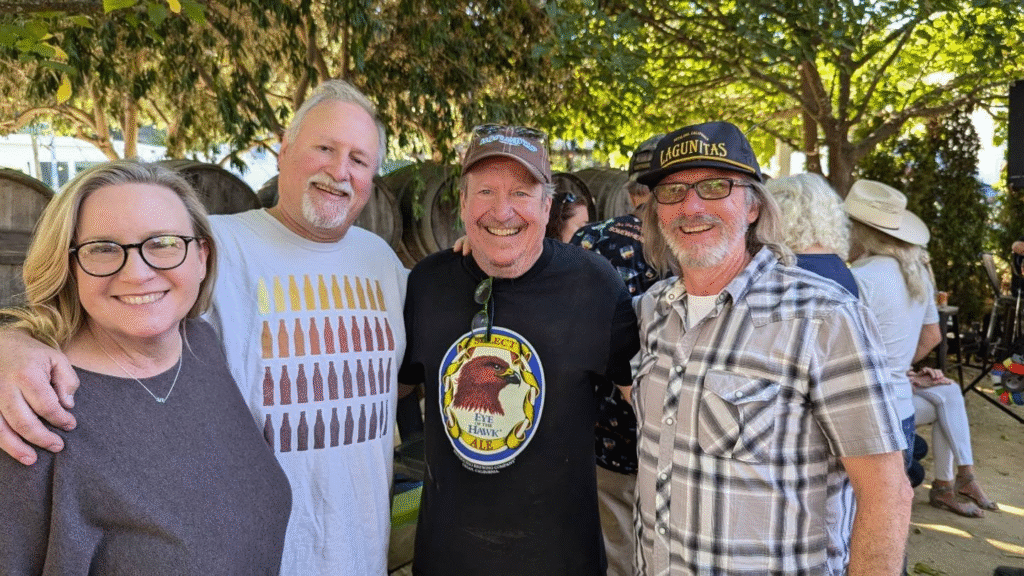
Today is the 64th birthday of Ron Lindenbusch, who had been with the Lagunitas Brewery since the very beginning. I first met Ron and founder Tony Magee when I visited the brewery in its original location in the mid-1990s. Ron had been a huge part of bringing the brewery along to where it is today, and is a terrific person and a good friend. More recently, he’s retired from Lagunitas, and is now full-time at what had originally been a side project, reopening the old location of the original Mendocino Brewing Co. site as the Hopland Tap and Grill in Hopland, California, but even more recently he’s closed that down, as well, and is working with the Best Day Brewing line of N/A beers. Join me in wishing Ron a very happy birthday.

Closing weekend last year at the Hopland Tap & Grill, with my Wife Sarah, Ron, and Pat Mace.
A random run-in during CBC in Nashville.
Another random run-in, this time at my local gas station, of all places.
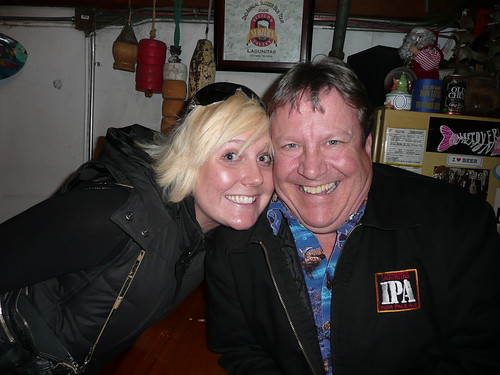
Tweetup organizer Ashley, a.k.a. The Beer Wench, with Ron Lindenbusch, from Lagunitas
The Beer Wench, Ashley Routson, with Ron at a Tweet-Up at Lagunitas a couple of years ago.
horizons-6
At a beer dinner at Horizons in Marin County, with Dean Biersch and Lynn, the chef at Hopmonk Tavern, Dean’s then-new venture in Sebastopol.
P1000119
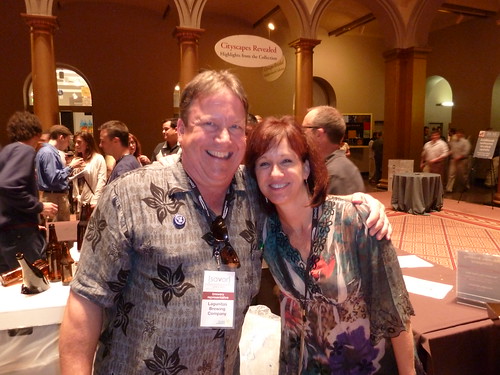
Ron with Lagunitas owner Tony Magee’s sister Karen, who rep’s Lagunitas in the Chicago area, at SAVOR several years ago in Washington, D.C.
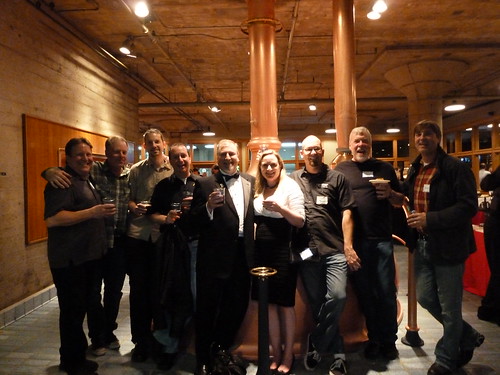
Ron Lindenbusch, Shaun O'Sullivan, Zambo, Rich Rosen, me, Sarah, Lloyd Knight, Dave Suurballe and James Renfrew
Ron, with Shaun O’Sullivan, Zambo, Rich Rosen, me, Sarah, Lloyd Knight, Dave Suurballe and James Renfrew at Anchor’s annual Christmas Party a few years ago.

Filed Under: Birthdays Tagged With: California, Northern California

Beer In Ads #4998: Maier’s Bock Beer

June 14, 2025 By Jay Brooks

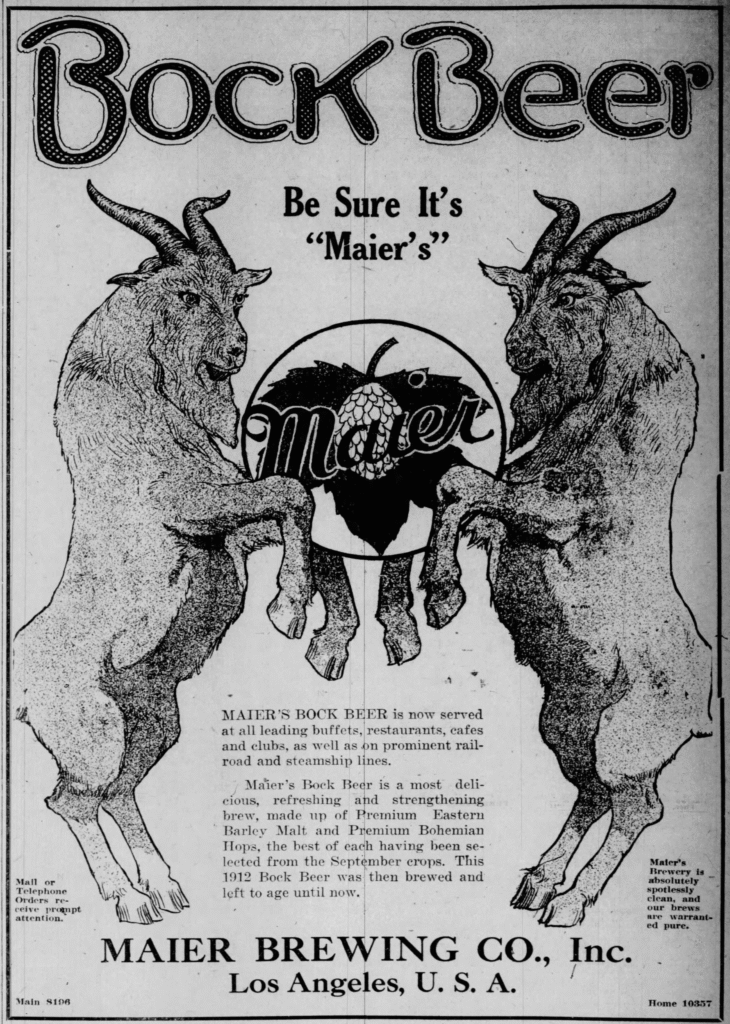
Last year I decided to concentrate on Bock ads. Bock, of course, may have originated in Germany, in the town of Einbeck. Because many 19th century American breweries were founded by German immigrants, they offered a bock at certain times of the year, be it Spring, Easter, Lent, Christmas, or what have you. In a sense they were some of the first seasonal beers. “The style was later adopted in Bavaria by Munich brewers in the 17th century. Due to their Bavarian accent, citizens of Munich pronounced ‘Einbeck’ as ‘ein Bock’ (a billy goat), and thus the beer became known as ‘Bock.’ A goat often appears on bottle labels.” And presumably because they were special releases, many breweries went all out promoting them with beautiful artwork on posters and other advertising.

Saturday’s ad is for Maier’s Bock Beer. The ad was published in 1912. This one was for the Maier Brewing Co., which was located in Los Angeles, California and was originally founded in 1874, though they were known by a variety of names, using Maier Brewing from 1907-1971. This ad ran in the Los Angeles Evening Post Record, also of Los Angeles, California.

Filed Under: Art & Beer, Beers, Breweries, Just For Fun Tagged With: Advertising, Bock, California, History, Los Angeles

Beer In Ads #4997: Magnolia Bock Beer

June 13, 2025 By Jay Brooks

Last year I decided to concentrate on Bock ads. Bock, of course, may have originated in Germany, in the town of Einbeck. Because many 19th century American breweries were founded by German immigrants, they offered a bock at certain times of the year, be it Spring, Easter, Lent, Christmas, or what have you. In a sense they were some of the first seasonal beers. “The style was later adopted in Bavaria by Munich brewers in the 17th century. Due to their Bavarian accent, citizens of Munich pronounced ‘Einbeck’ as ‘ein Bock’ (a billy goat), and thus the beer became known as ‘Bock.’ A goat often appears on bottle labels.” And presumably because they were special releases, many breweries went all out promoting them with beautiful artwork on posters and other advertising.

Friday’s ad is for Magnolia Bock Beer. The ad was published on June 13, 1908. This one was for, I think, the Houston Ice & Brewing Co., which was located in Houston, Texas and was founded by Hugh Hamilton in 1889 and closed in 1918 due to Prohibition, though it opened for only one year afterwards in 1934. They were also known as the Magnolia Brewery. This ad ran in the St. Landry Clarion, of Opelousas, Louisiana. The ad is actually for The Elk Saloon, which was also in Opelousas, Louisiana. Here’s how it was described in an article entitled: What were Opelousas’ first restaurants and bars? “Another early Opelousas saloon was the Elk Saloon, managed by J. Adam Budd Company, which was opened in the downtown area before 1907.”

Filed Under: Art & Beer, Beers, Breweries, Just For Fun Tagged With: Advertising, Bock, History, Louisiana, Texas

Beer In Ads #4996: Our Bock Beer

June 12, 2025 By Jay Brooks

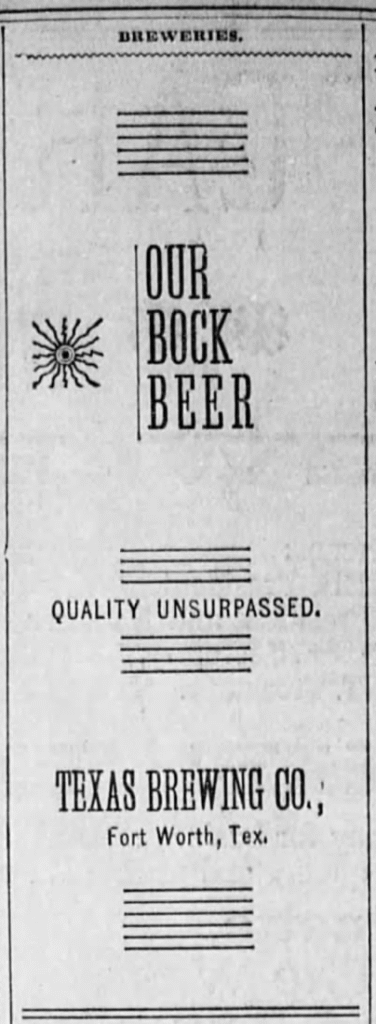
Last year I decided to concentrate on Bock ads. Bock, of course, may have originated in Germany, in the town of Einbeck. Because many 19th century American breweries were founded by German immigrants, they offered a bock at certain times of the year, be it Spring, Easter, Lent, Christmas, or what have you. In a sense they were some of the first seasonal beers. “The style was later adopted in Bavaria by Munich brewers in the 17th century. Due to their Bavarian accent, citizens of Munich pronounced ‘Einbeck’ as ‘ein Bock’ (a billy goat), and thus the beer became known as ‘Bock.’ A goat often appears on bottle labels.” And presumably because they were special releases, many breweries went all out promoting them with beautiful artwork on posters and other advertising.

Thursday’s ad is for Our Bock Beer. The ad was published on June 12, 1895. This one was for the Texas Brewing Co., which was located in Fort Worth, Texas and was founded in 1891 and closed in 1918 due to Prohibition. This ad ran in the Fort Worth Daily Gazette, of Fort Worth, Texas. I love that they used some simple lines to create a minimalist, modern art in 1895.

Filed Under: Art & Beer, Beers, Breweries, Just For Fun Tagged With: Advertising, Bock, History, Texas

Beer In Ads #4995: Bartels Special Bock Beer

June 11, 2025 By Jay Brooks

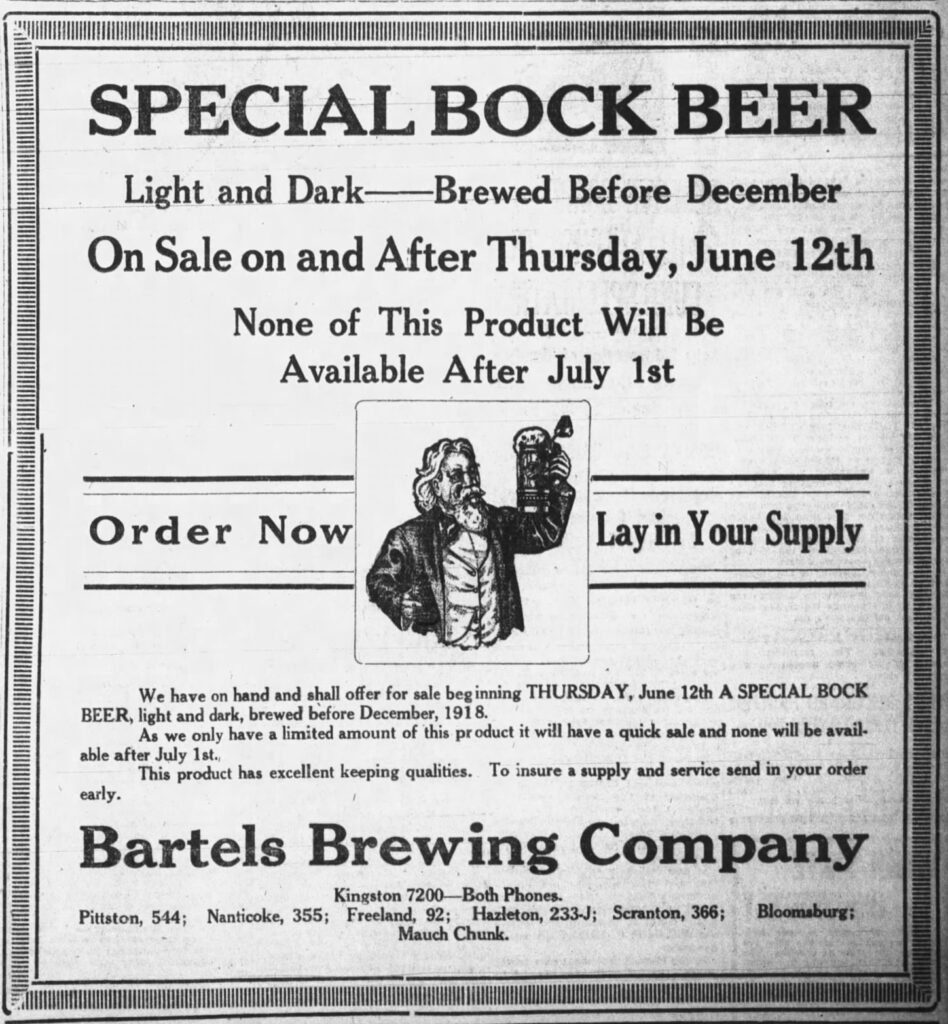
Last year I decided to concentrate on Bock ads. Bock, of course, may have originated in Germany, in the town of Einbeck. Because many 19th century American breweries were founded by German immigrants, they offered a bock at certain times of the year, be it Spring, Easter, Lent, Christmas, or what have you. In a sense they were some of the first seasonal beers. “The style was later adopted in Bavaria by Munich brewers in the 17th century. Due to their Bavarian accent, citizens of Munich pronounced ‘Einbeck’ as ‘ein Bock’ (a billy goat), and thus the beer became known as ‘Bock.’ A goat often appears on bottle labels.” And presumably because they were special releases, many breweries went all out promoting them with beautiful artwork on posters and other advertising.

Wednesday’s ad is for Bartel’s Special Bock Beer. The ad was published on June 11, 1919. This one was for the Bartels Brewing Co., which was located in Wilkes-Barre, Pennsylvania and was founded in 1898. This ad ran in the Wilkes Barre Times Leader, of Wilkes-Barre, Pennsylvania. The ad is advertising that their “Special Bock Beer” is being released tomorrow, Thursday, June 12, which coincidentally is the same in 2025.

Filed Under: Art & Beer, Beers, Breweries, Just For Fun Tagged With: Advertising, Bock, History, Pennsylvania

Beer In Ads #4994: Daufer’s Celebrated Bock Beer Saturday & Monday

June 10, 2025 By Jay Brooks

Last year I decided to concentrate on Bock ads. Bock, of course, may have originated in Germany, in the town of Einbeck. Because many 19th century American breweries were founded by German immigrants, they offered a bock at certain times of the year, be it Spring, Easter, Lent, Christmas, or what have you. In a sense they were some of the first seasonal beers. “The style was later adopted in Bavaria by Munich brewers in the 17th century. Due to their Bavarian accent, citizens of Munich pronounced ‘Einbeck’ as ‘ein Bock’ (a billy goat), and thus the beer became known as ‘Bock.’ A goat often appears on bottle labels.” And presumably because they were special releases, many breweries went all out promoting them with beautiful artwork on posters and other advertising.

Tuesday’s ad is for Daufer’s Celebrated Bock Beer. The ad was published on June 10, 1905. This one was for Daufer & Co., which was located in Allentown, Pennsylvania from 1860 until 1938, although it was known by a variety of names over that time period. This ad ran in The Allentown Leader, also of Allentown, Pennsylvania. It’s curious that it’s available “Saturday and Monday,” meaning no on Sunday, until you realize that at the time in Pennsylvania they had Blue Laws, which prohibited the sale of alcohol on Sundays. They were still in place when I was growing up in Pennsylvania, before moving to California in 1985.

Filed Under: Art & Beer, Beers, Breweries, Just For Fun Tagged With: Advertising, Bock, History, Pennsylvania

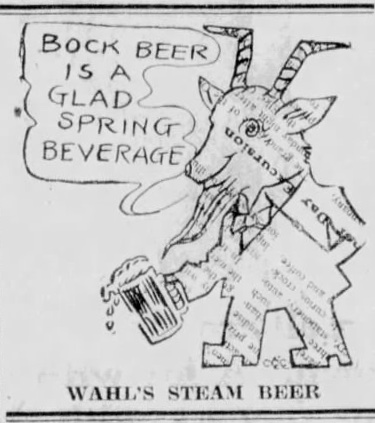
Beer In Ads #4993: Bock Beer Is A Glad Spring Beverage

June 9, 2025 By Jay Brooks

Last year I decided to concentrate on Bock ads. Bock, of course, may have originated in Germany, in the town of Einbeck. Because many 19th century American breweries were founded by German immigrants, they offered a bock at certain times of the year, be it Spring, Easter, Lent, Christmas, or what have you. In a sense they were some of the first seasonal beers. “The style was later adopted in Bavaria by Munich brewers in the 17th century. Due to their Bavarian accent, citizens of Munich pronounced ‘Einbeck’ as ‘ein Bock’ (a billy goat), and thus the beer became known as ‘Bock.’ A goat often appears on bottle labels.” And presumably because they were special releases, many breweries went all out promoting them with beautiful artwork on posters and other advertising.

Monday’s ad is for Wahl’s Bock Beer. The ad was published on June 9, 1917. This one was for Hollister Brewery of Hollister, California, which was originally founded around 1897 by Adolph Wahl (although he appears to have been born Frederick Adolf Wahl). This ad ran in The Hollister Free Lance, also of Hollister, California.

Filed Under: Art & Beer, Beers, Breweries, Just For Fun Tagged With: Advertising, Bock, California, History

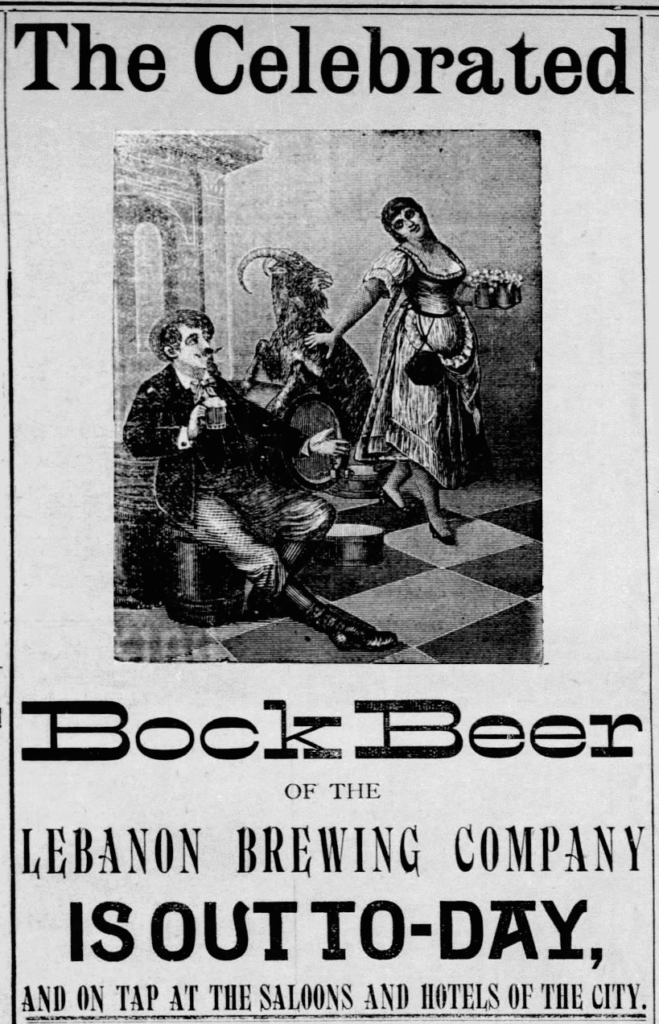
Beer In Ads #4992: It’s The Celebrated Bock Beer Of The Lebanon Brewing Co. Is Out To-Day

June 8, 2025 By Jay Brooks

Last year I decided to concentrate on Bock ads. Bock, of course, may have originated in Germany, in the town of Einbeck. Because many 19th century American breweries were founded by German immigrants, they offered a bock at certain times of the year, be it Spring, Easter, Lent, Christmas, or what have you. In a sense they were some of the first seasonal beers. “The style was later adopted in Bavaria by Munich brewers in the 17th century. Due to their Bavarian accent, citizens of Munich pronounced ‘Einbeck’ as ‘ein Bock’ (a billy goat), and thus the beer became known as ‘Bock.’ A goat often appears on bottle labels.” And presumably because they were special releases, many breweries went all out promoting them with beautiful artwork on posters and other advertising.

Sunday’s ad is for Lebanon Brewing Company Bock Beer. The ad was published on June 8, 1889. This one was for Lebanon Brewing Co. of Lebanon, Pennsylvania, which was originally founded in 1856 by Henry Hartman, but went through several owners and name changes. From 1884-1893 it was the Lebanon Brewing Co. This ad ran in The Daily News, also of Lebanon, Pennsylvania.

Filed Under: Art & Beer, Beers, Breweries, Just For Fun Tagged With: Advertising, Bock, History, Pennsylvania

« Previous Page
Next Page »

Find Something

Northern California Breweries

Please consider purchasing my latest book, California Breweries North, available from Amazon, or ask for it at your local bookstore.

Recent Comments

  • Bob Paolino on Beer Birthday: Grant Johnston
  • Gambrinus on Historic Beer Birthday: A.J. Houghton
  • Ernie Dewing on Historic Beer Birthday: Charles William Bergner 
  • Steve 'Pudgy' De Rose on Historic Beer Birthday: Jacob Schmidt
  • Jay Brooks on Beer Birthday: Bill Owens

Recent Posts

  • Historic Beer Birthday: Bob Brown June 14, 2026
  • Beer Birthday: John Bryant June 14, 2026
  • Beer Birthday: Warren Pawsey June 14, 2026
  • Beer Birthday: James Costa June 14, 2026
  • Beer Birthday: Rick Kempen June 14, 2026

BBB Archives

Feedback

Head Quarter
This site is hosted and maintained by H25Q.dev. Any questions or comments for the webmaster can be directed here.