Friday’s holiday ad is for the William Simon Brewery, of Buffalo, New York. But on closer inspection it turns out to be just another ad dressed up for the holidays.
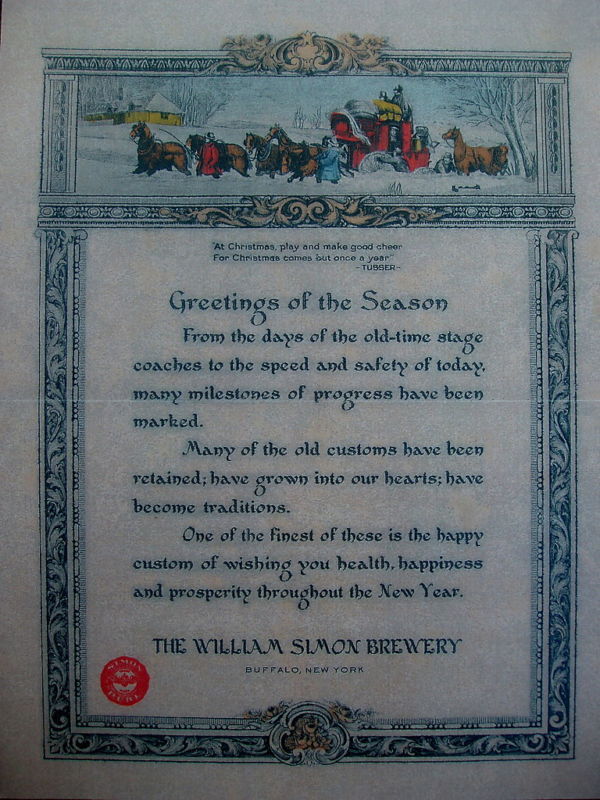

Friday’s holiday ad is for the William Simon Brewery, of Buffalo, New York. But on closer inspection it turns out to be just another ad dressed up for the holidays.

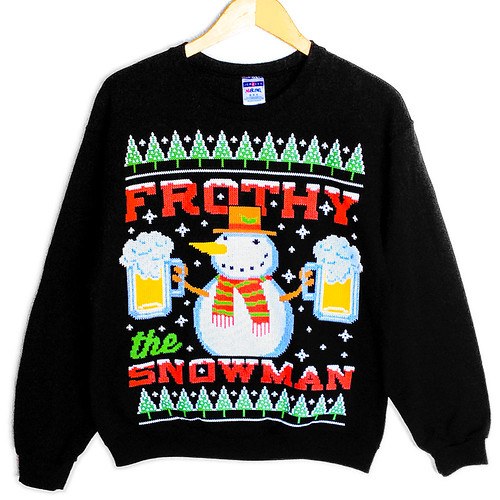
In case you missed it, today was “National Ugly Christmas Sweater Day.” Not surprisingly, a lot of ugly Christmas sweaters involve beer, such as one of my favorites, “Frothy the Snowman.”
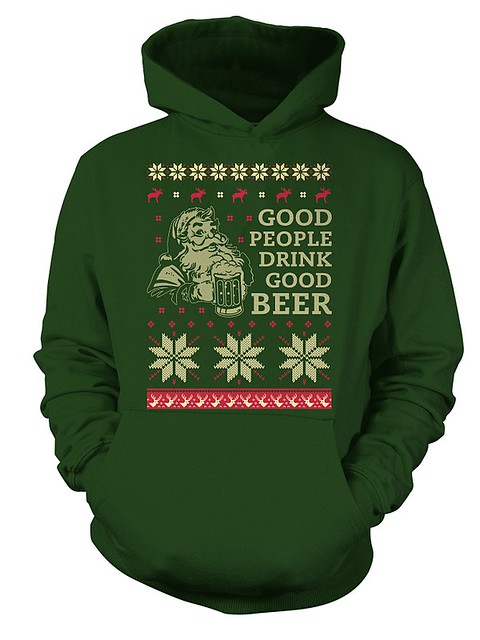
But it’s not too late. There are nine more days until Xmas, plenty of time to pick up your own ugly beer sweater. I found at least thirty different beer-themed ones. You can see them all in the slideshow below. A few of them are t-shirts meant to mimic a sweater, but since their in the same spirit, I’ve included them, as well. Enjoy.

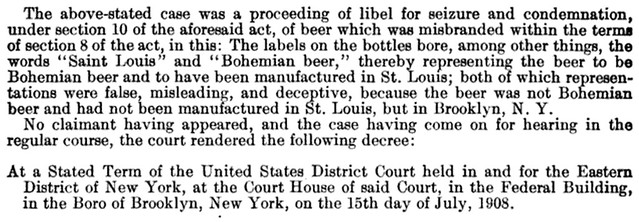
While researching Joseph Fallert, whose birthday was earlier today, I came across an interesting lawsuit they were involved in brought by the Department of Agriculture in U.S. District Court for the Eastern District of New York, which was in Brooklyn. It seems the Joseph Fallert Brewery mislabeled fifty cases of beer they brewed and shipped them to Cuba. Apparently the beer was labeled “St. Louis” and “Bohemian Brewery’s Bottling” with the beer itself called “Brilliant BOHEMIAN Beer,” none of which was true.
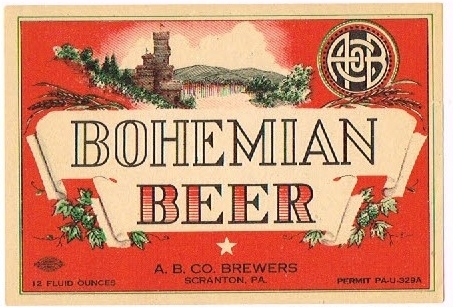
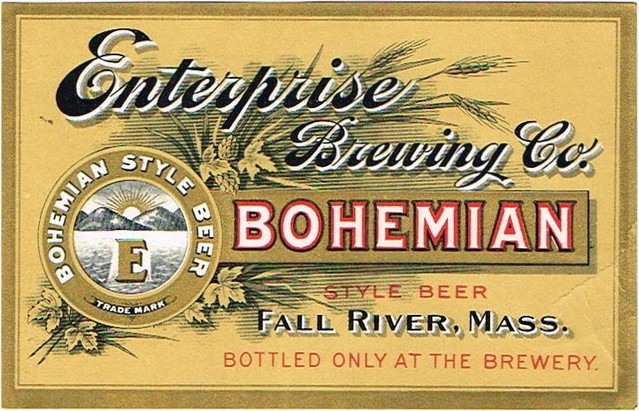
Anyway, below is a report of the adjudication of the case interspersed with beer labels of breweries making Bohemian-Style Beer.
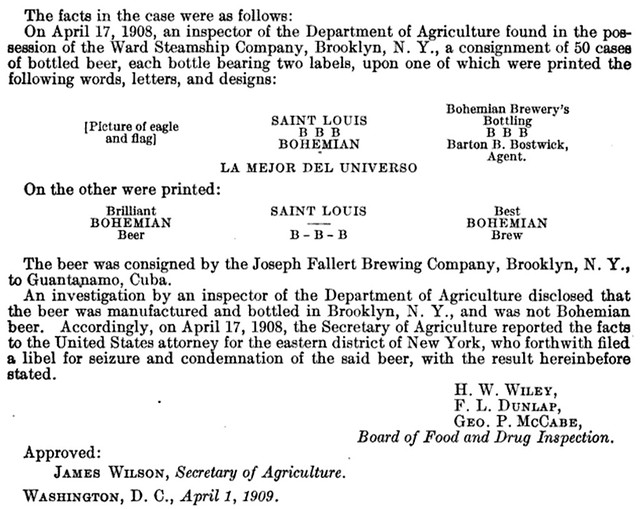
I’m not sure what “Bohemian Beer” was specifically as defined in the early 1900s. There were quite a few beers that called their beer Bohemian, or “Bohemian Style” or “Bohemian Type” beer from that time period up through the 1950s and 60s. But the U.S. Attorney, after an investigation by the Department of Agriculture, alleged the beer brewed by Fallert was not Bohemian.
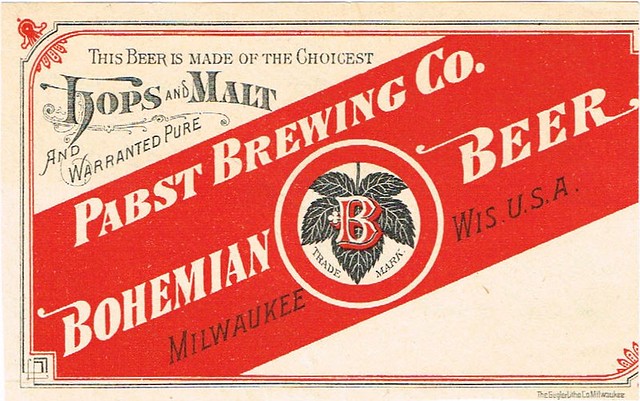
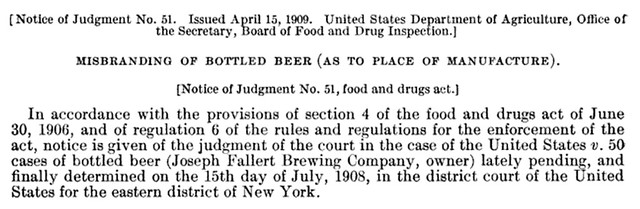
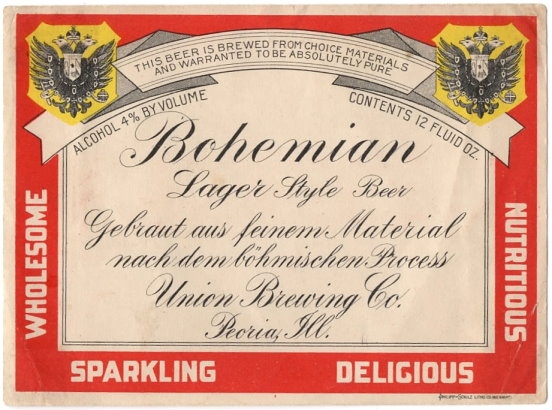
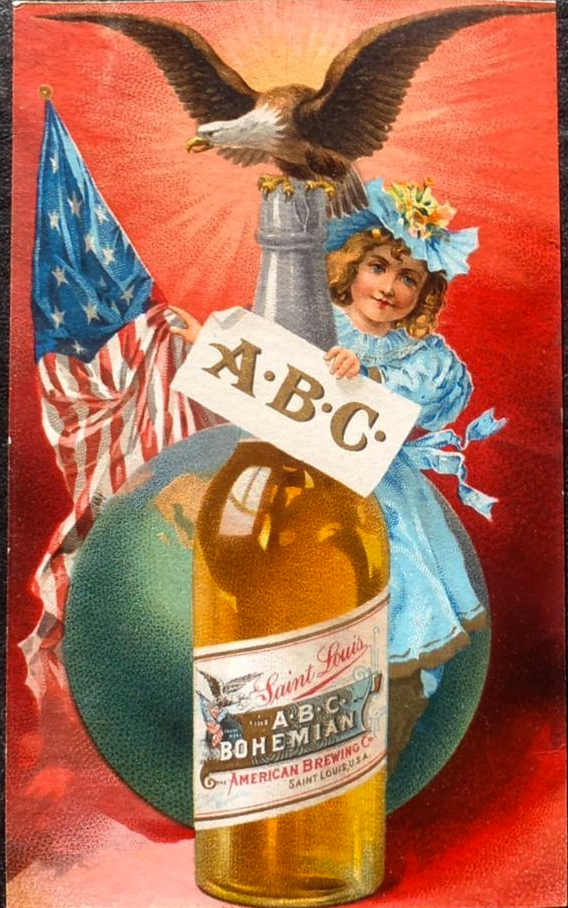
There even was Bohemian Beer brewed in St. Louis by the American Brewing Co.
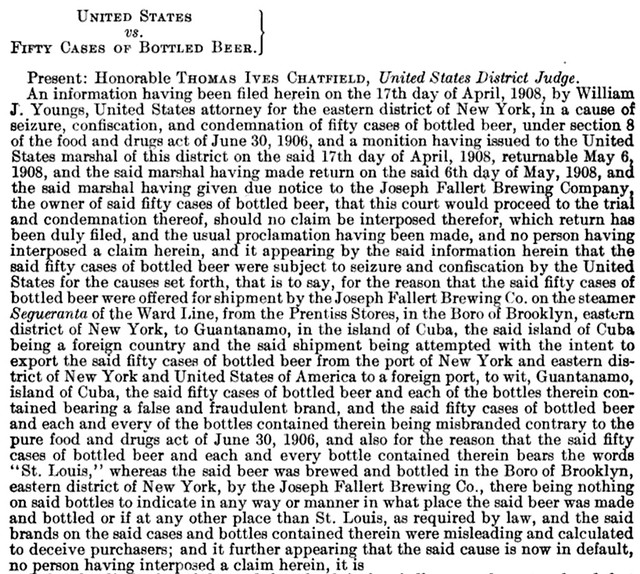
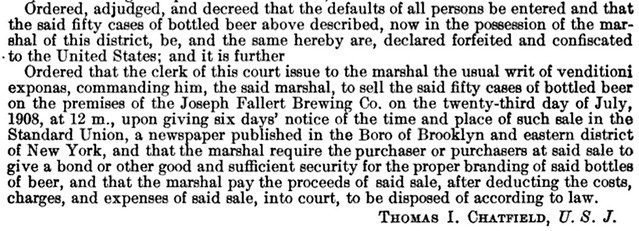
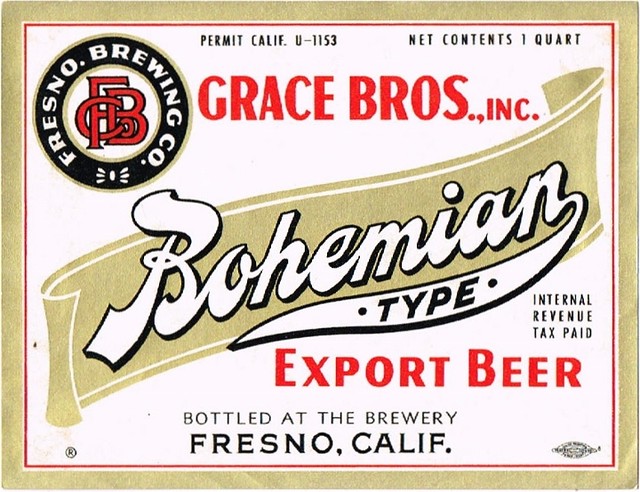

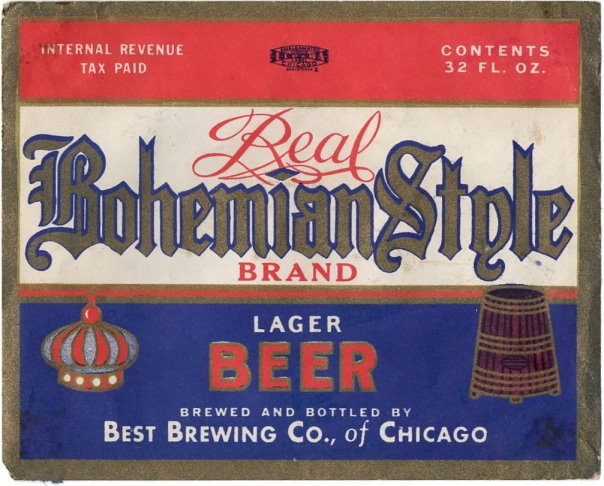
If you read through the case, taken from a “Report of Committee and Hearings Held Before the Senate Committee on Manufactures Relative to Foods Held in Cold Storage,” you may have noticed that judgment was rendered without the Joseph Fallert Brewery having brought a defense or even appearing in court. I guess they figured there really was no legitimate defense they could bring and it appears that only the beer was lost, confiscated and sold at auction, and they weren’t fined or in any other way punished as far as I can tell.

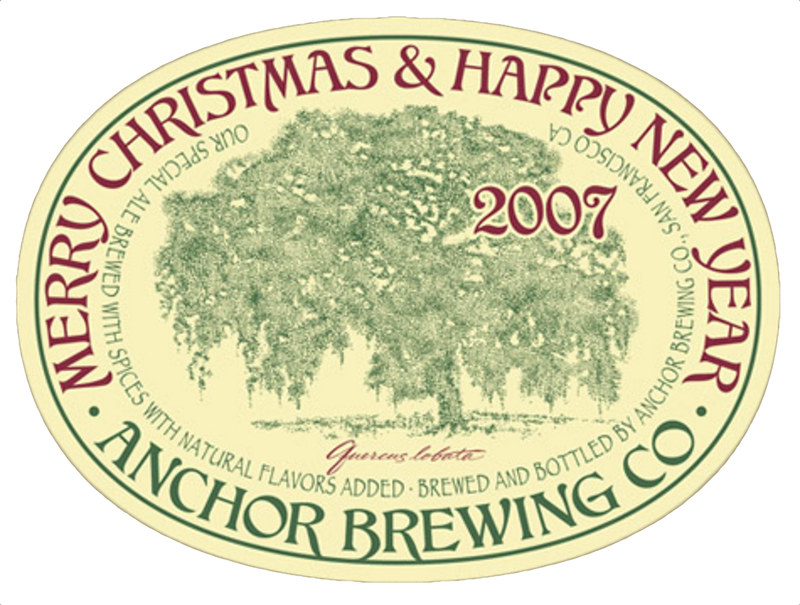
It’s day thirty-three of my trot to Christmas featuring all 42 labels from Anchor’s Christmas Ale — a.k.a. Our Special Ale — all different beers (well, mostly different) and all different labels, each one designed by local artist Jim Stitt, up to and including this year’s label.
2007 was the thirty-third year that Anchor made their Christmas Ale, and from 1987 through the present day, each year Anchor’s Our Special Ale has included spices, a different combination of them every time. Generally the base beer has been a spiced brown ale, although it has been varied from time to time, as well. This thirty-third label was was a “Valley Oak,” or “Quercus lobata.”

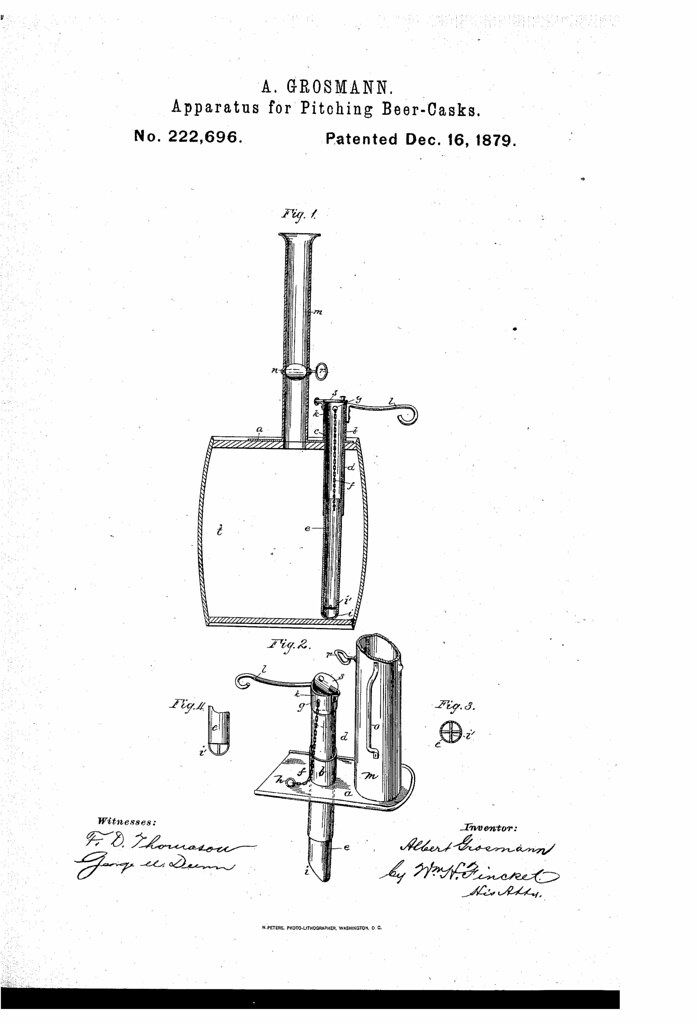
Today in 1879, US Patent 222696 A was issued, an invention of Albert Grossmann, for his “Improvement in Apparatus for Pitching Beer-Casks.” There’s no Abstract, although in the description it includes these claims:
I have invented a new and useful Improvement in Apparatus for Pitching Beer-Casks, of which in the employment, within the keg, cask, or barrel, of a pitch-consuming device, by which the pitch is prepared or melted and fitted for use, the apparatus employed consisting, in the instance here given, of an extensible tube mounted upon a suitable base and adapted to extend to or near the bottom of the keg, cask, or barrel, so as to permit the ingress within the keg of a fire to melt the pitch, a suitable chimney being provided for the escape of the smoke or vapor, and means employed for regulating the extension of the tube and for stopping the consumption of the pitch.
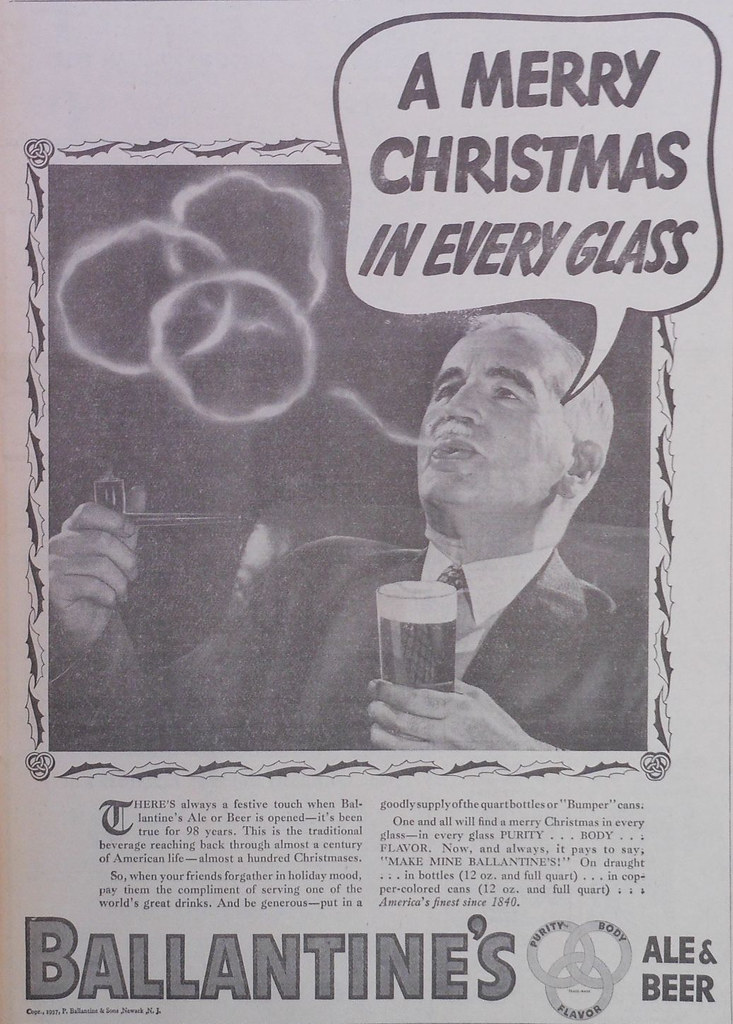
Thursday’s holiday ad is for Ballantine’s, from 1937. A man blows the Ballantine logo smoke rings, while a cartoon balloon contains the words. “A Merry Christmas In Every Glass.” And I love how they try to fit Christmas into the narrative. “There always a festive touch when Ballantine’s Ale or Beer is opened.” So here’s their advice. “So, when your friend foregather in holiday mood, pay them the compliment of serving one of the world’s great drinks. And be generous — put in a goodly supply of the quart bottles or “Bumper” cans.” Who talks that way?
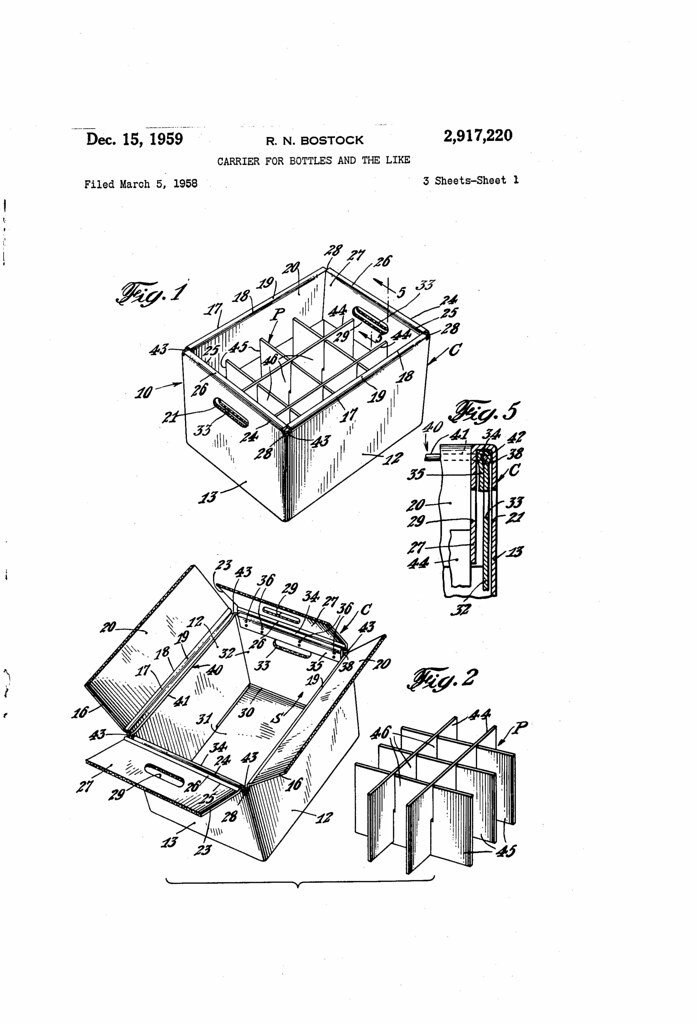
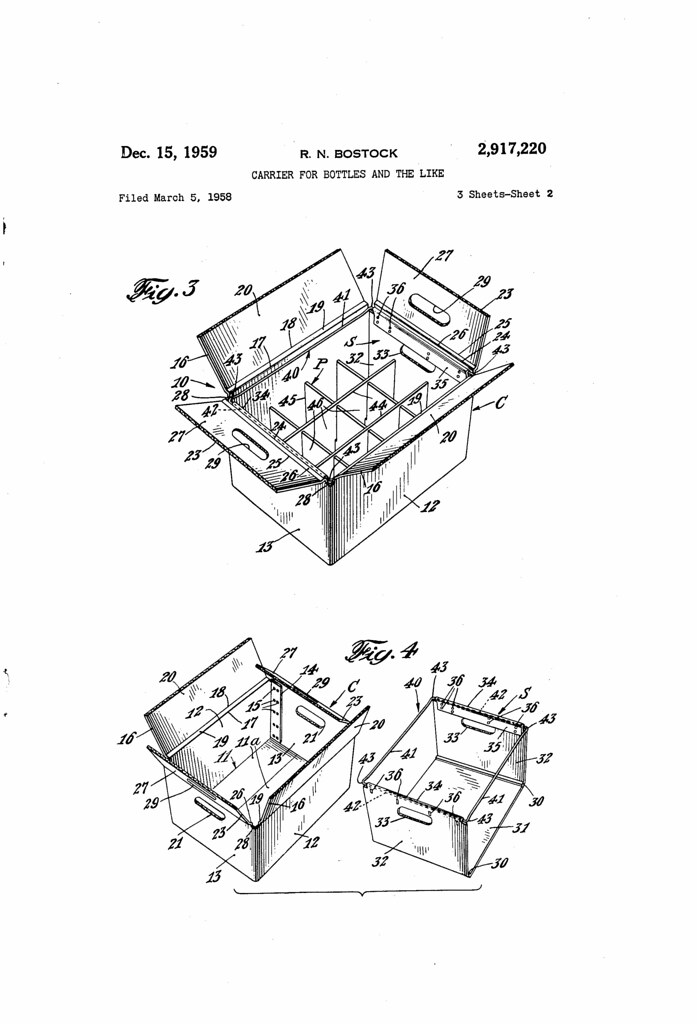
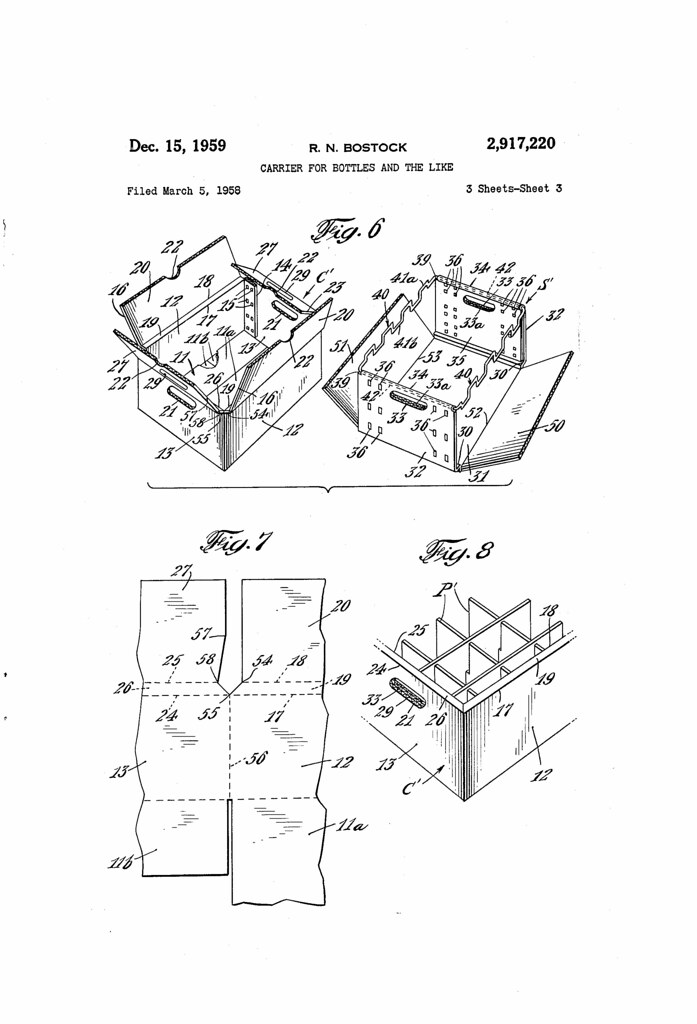
Today in 1959, US Patent 2917220 A was issued, an invention of Raymond N. Bostock, assigned to Ballantine & Sons, for his “Carrier for Beer Bottles and the Like.” There’s no Abstract, although in the description it includes these claims:
Open top cartons, that is cartons having bottom, side and end Walls, but not a top wall or cover, have been used for a number of years for the purpose of storing and transporting Various items of merchandise, including glass bottles containing beer, soft drinks or other liquids. Such cartons are usually provided with partitions that divide their interiors into compartments for receiving individual bottles to prevent the bottles from coming into direct contact with each other, thereby minimizing the possibility of breakage of the bottles in the course of handling.
Due to the weight of the merchandise and the rough handling to which loaded cartons are frequently subjected, present-day open cartons are generally constructed of heavy fibreboard. It is often necessary, in order to provide adequate strength and rigidity, to reinforce the cartons in various ways. As a consequence, such cartons are quite expensive.
container may be made of a relatively lightweight, inexpensive corrugated cardboard. The sling is preferably made of a heavy duty fibreboard, while the partition unit is made of a suitable grade and Weight of fibreboard. Fibreboard is recommended for the sling and partition unit, to provide necessary strength and to permit repeated reuse of the same, with the initial or subsequent outer containers. Also, the sling and partition unit are treated to make them waterproof, thereby protecting them from moisture and prolonging their useful life. It will be understood that the term paperboard, as used hereinafter and in the appended claims, is intended to cover various sheet materials that may be used in the mantufacture of the carrier of this invention, whether corrugated cardboard, fibreboard or other appropriate material.
The primary object of the invention is to provide a carrier for bottles or the like having improved features’ of construction.
Another object of the invention is to provide a bottle carrier having a relatively inexpensive disposable outer container.
Another object of the invention is to provide a bottle carrier having a relatively inexpensive outer container, which may be discarded when scuffed or otherwise rendered unsightly, and a relatively strong reinforced inner container, which may be reused many times with successive outer containers.
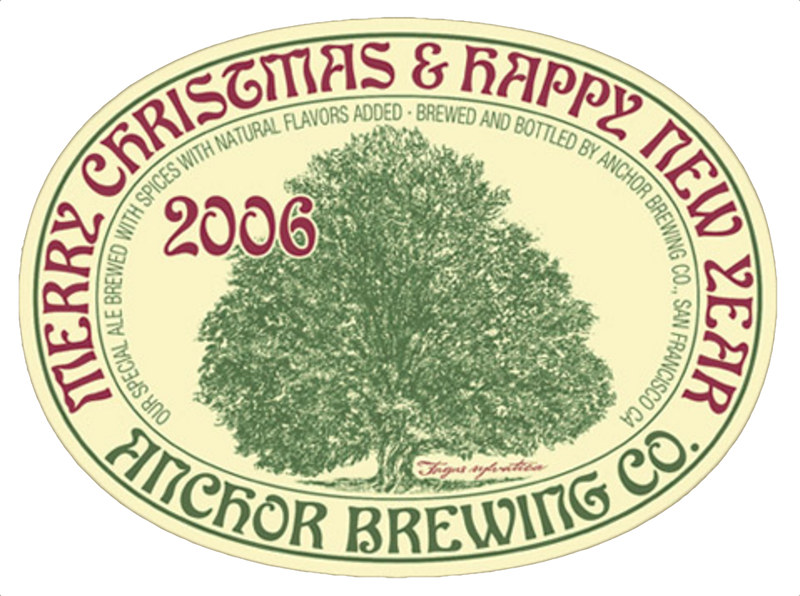
It’s day thirty-second of my scamper to Christmas featuring all 42 labels from Anchor’s Christmas Ale — a.k.a. Our Special Ale — all different beers (well, mostly different) and all different labels, each one designed by local artist Jim Stitt, up to and including this year’s label.
2006 was the thirty-second year that Anchor made their Christmas Ale, and from 1987 through the present day, each year Anchor’s Our Special Ale has included spices, a different combination of them every time. Generally the base beer has been a spiced brown ale, although it has been varied from time to time, as well. This thirty-second label was was a “European Beech,” or “Fagus sylvatica.”
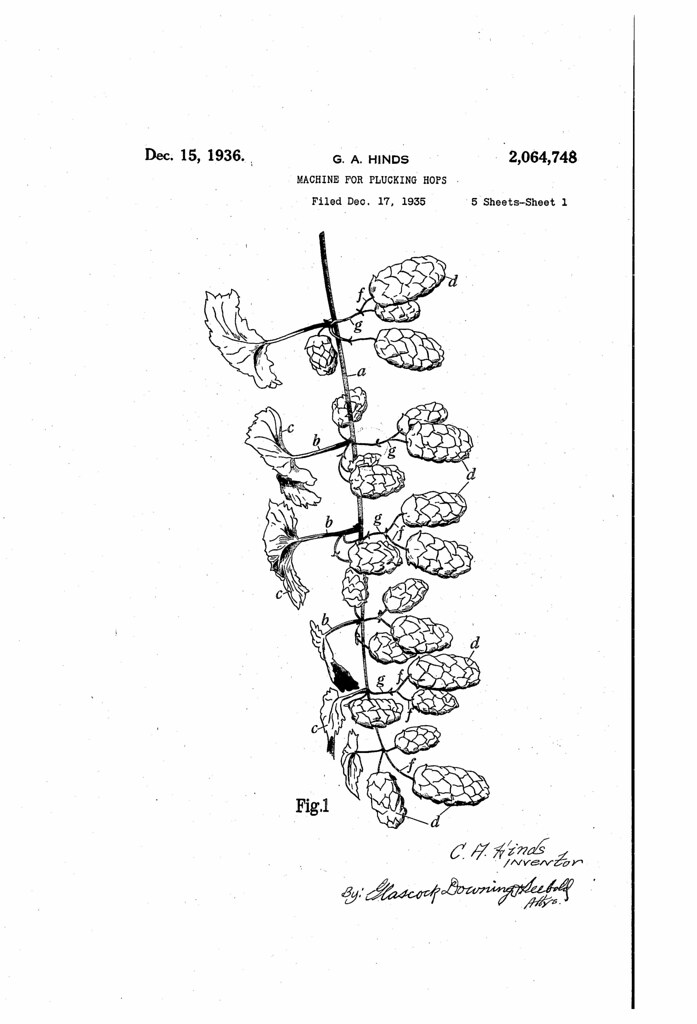
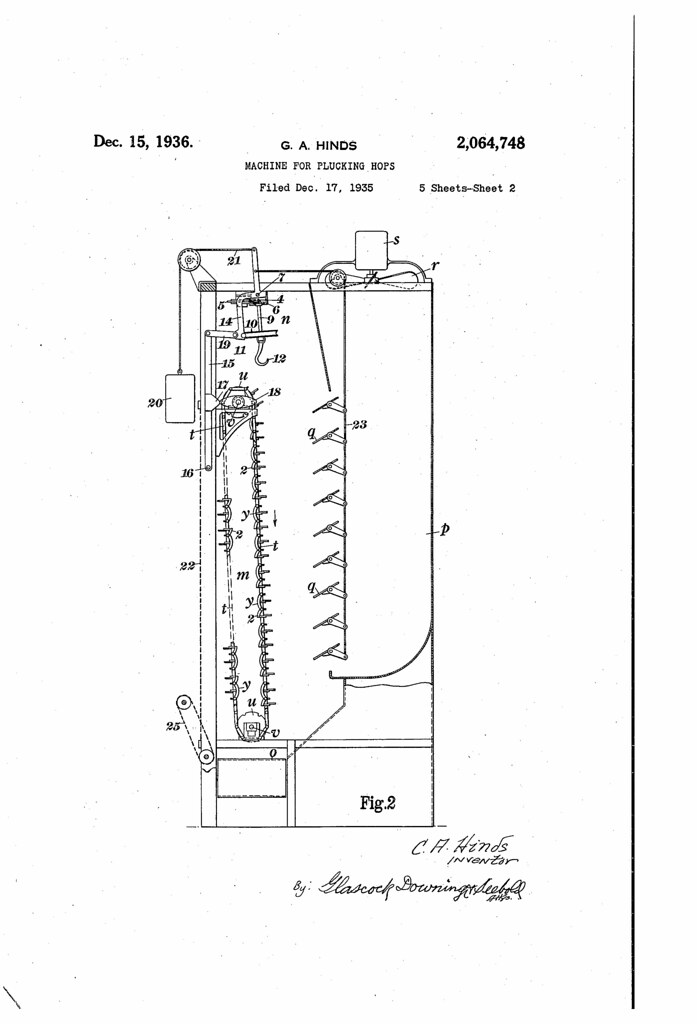
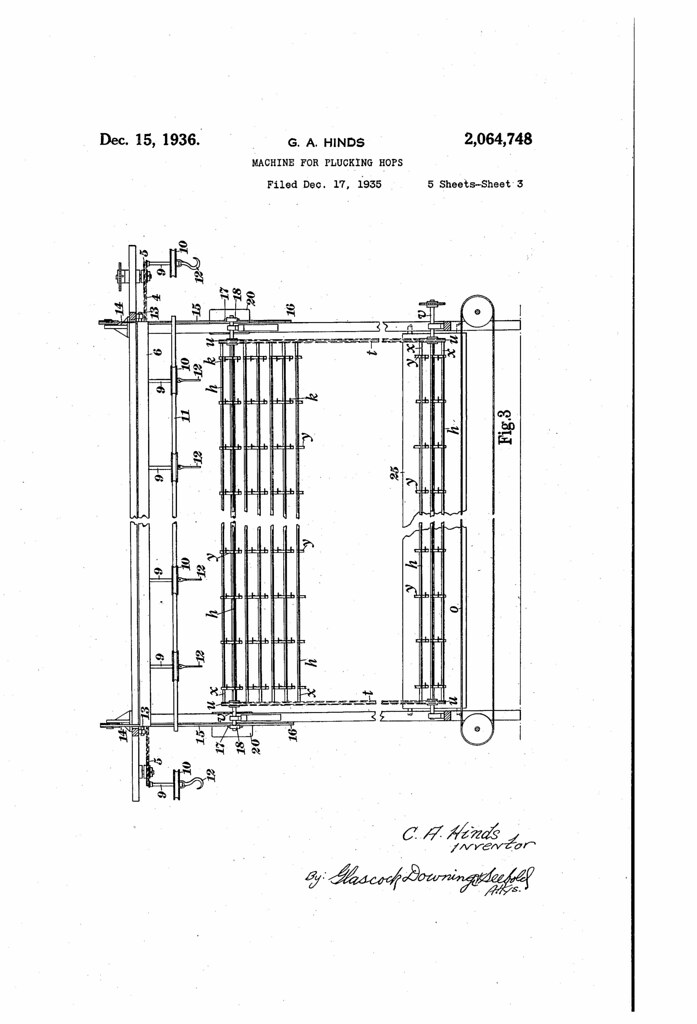
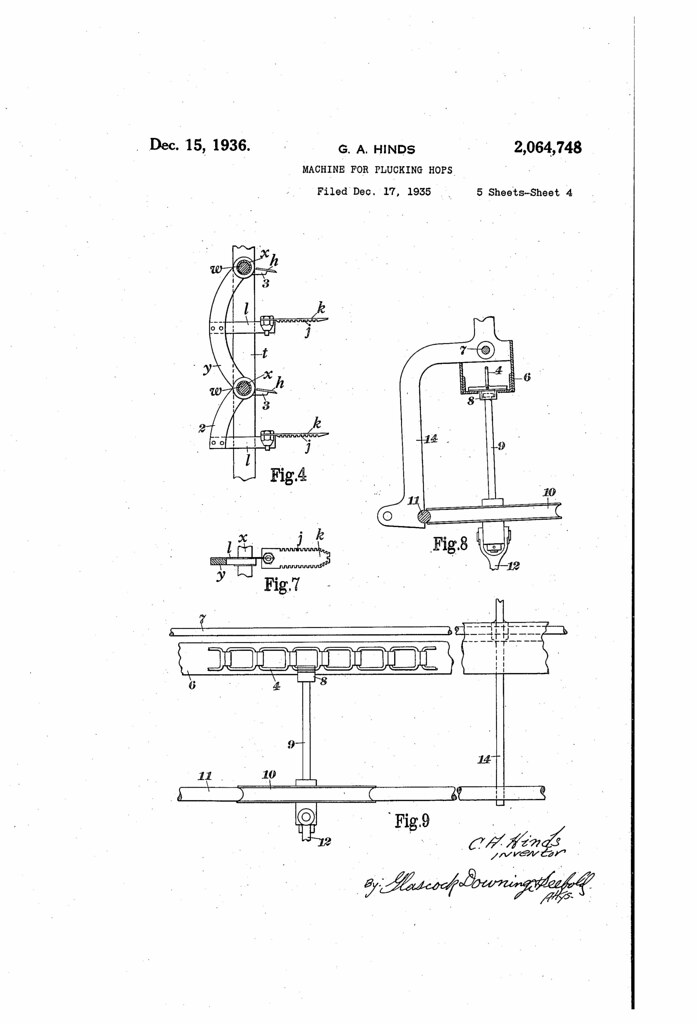
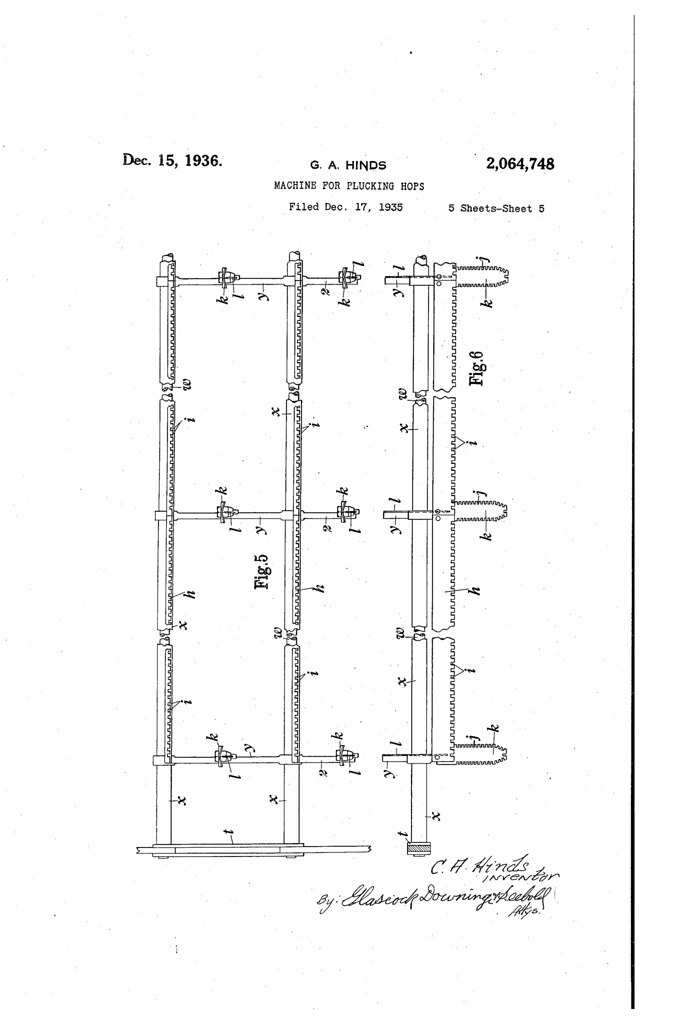
Today in 1871, US Patent 2064748 A was issued, an invention of George Arthur Hinds, for his “Machine For Plucking Hops.” There’s no Abstract, although in the description it includes these claims:
This invention has for its object to provide an improved machine for plucking hops, that is to say for detaching the flowers or cones from the main parts of the plants (commonly termed vines or bines).
The invention comprises, for use in such a machine, a plucker in the form of a comb-like device having notches adapted to be engaged by only the thinner stems of the plants, namely those attached to or in the immediate neighbourhood of the flowers.
The invention also comprises the combination of a plurality of the aforesaid pluckers, movable means on which the pluckers are mounted, means for suspending the hop plants in the inverted condition adjacent to the pluckers, and means for producing relative movements between the pluckers and plants.
In particular the invention comprises the combination of an endless conveyor, pluckers as aforesaid carried on this conveyor, an overhead conveyor fitted with means from which the hop plants can be suspended, the second conveyor being movable in a line parallel with a plane containing the working side of the plucker conveyor, and means for reciprocating or swinging the hop plants towards and away from the working side of the plucker conveyor.
Further the invention comprises the combination with plucker and plant conveyors, of means for producing an air stream whereby the plants are moved towards the pluckers, and means for intermittently interrupting the air stream.
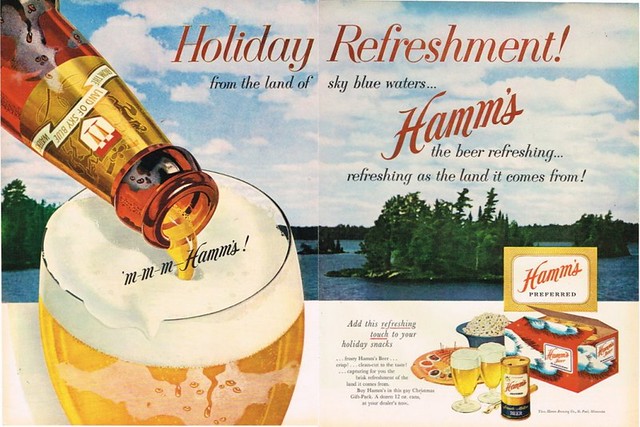
Wednesday’s holiday ad is for Hamm’s, from 1953. Although it’s called “Holiday Refreshment” and makes reference to “your holiday snacks,” the only real signs of Christmas seems to be the case carton, which appears to have some sort of snow scene on it, though I can’t quite make out what it is.