Brookston Beer Bulletin

Jay R. Brooks on Beer

  • Home
  • About
  • Editorial
  • Birthdays
  • Art & Beer

Socialize

  • Dribbble
  • Email
  • Facebook
  • Flickr
  • GitHub
  • Instagram
  • LinkedIn
  • Pinterest
  • RSS
  • Twitter
  • YouTube

Powered by Genesis

Historic Beer Birthday: Julius Zupansky

September 9, 2025 By Jay Brooks

salem-brewery
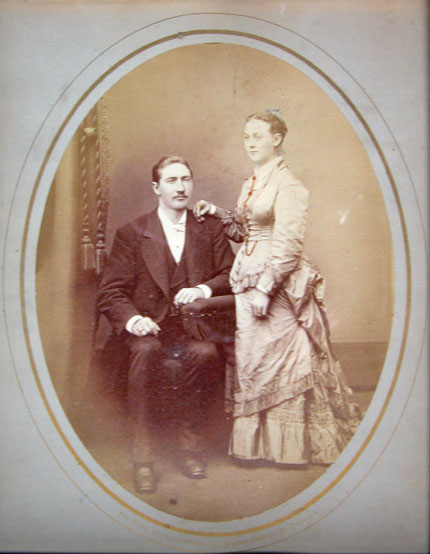
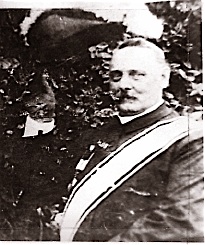
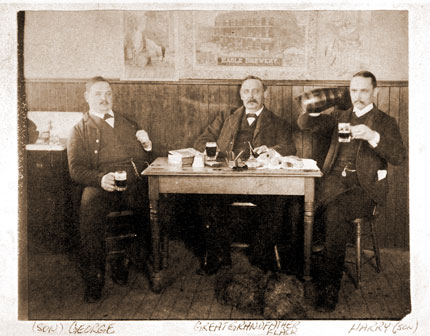
Today is the birthday of Julius Zupansky (September 9, 1850-September 6, 1919). He was born in Bohemia, and came to the U.S. when he was 35, in 1885. He appears to have worked as a brewer throughout Europe before coming to the States, where he secured a job at the Salem Brewery Association. He worked there for a quarter-century, likely retiring when he was sixty. But what position he held there is unclear, which is curious given that he’s referred to as a “pioneer brewer of the Pacific Coast.” Even Gary Flynn’s Brewery Gems doesn’t mention him on his page on the History of the Salem Brewery Association, and his site is easily the most comprehensive on breweries in that part of the U.S.

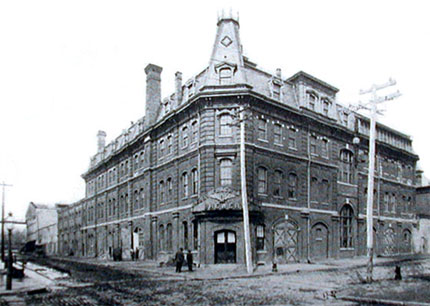
Salem-Brewery-1939
The Salem Brewery Association around 1939.

The Salem Brewery Association was originally founded in 1866 as the Pacific Brewery, but three years later, in 1869 the name was changed to the Salem Brewery. Then in 1885, when Zupansky arrived in America, it was called the Capitol Brewery. In 1903, it again changed its name, this time to the Salem Brewery Association. It stayed with that name until 1943, when another local brewery, Sicks’ Brewing, bought it and operated it for another ten years, closing for good in 1953.

salem-beer-graphic

Zupansky’s name is mentioned several times in the American Brewers’ Review, but the most information is contained in his obituary from American Brewers’ Review, Volume 23:

Full size picture of salem beer on trade street
And this is the brewery from down the street.
Salem-Beer-square-1908

Salem-Beer-Labels-Salem-Brewery-Association-1906

Filed Under: Birthdays, Breweries, Just For Fun Tagged With: Bohemia, History, Washington

Beer In Ads #5074: Salvator

September 8, 2025 By Jay Brooks

Last year I decided to concentrate on Bock ads. Bock, of course, may have originated in Germany, in the town of Einbeck. Because many 19th century American breweries were founded by German immigrants, they offered a bock at certain times of the year, be it Spring, Easter, Lent, Christmas, or what have you. In a sense they were some of the first seasonal beers. “The style was later adopted in Bavaria by Munich brewers in the 17th century. Due to their Bavarian accent, citizens of Munich pronounced ‘Einbeck’ as ‘ein Bock’ (a billy goat), and thus the beer became known as ‘Bock.’ A goat often appears on bottle labels.” And presumably because they were special releases, many breweries went all out promoting them with beautiful artwork on posters and other advertising.

Monday’s poster is for Paulaner’s Salvator Doppelbock, and was published in 1909. This one was made for the Paulanerbrau, or the Paulaner Brewery, of Munich, Germany. The brewery was founded in 1634, and is still in business today. This one is for their Salvator, showing a nobleman and a monk. The monk is holding what is presumably the bock beer, but I’m not sure how to read the expression on their faces. It was created by German artist Moser Heinrich.

Filed Under: Art & Beer, Beers, Breweries, Just For Fun Tagged With: Advertising, Bock, Germany, History

Historic Beer Birthday: Thomas William Everard

September 8, 2025 By Jay Brooks

everards
Today is the birthday of Thomas William Everard (September 8, 1851-January 1, 1925). Thomas William Everard was the son of William Everard, co-founder of what would become known as the Everards Brewery, which is still a going concern today, and is still run by an Everard, who is fifth generation from William, and fourth from Thomas William.

Thomas-William-Everard

Here is Thomas William Everard’s short biography from the brewery website:

Thomas William Everard was born on the 8th of September 1851, the year the Great Exhibition was staged by Prince Albert in Crystal Palace in London. He was the youngest of three children and joined his father’s firm at an early age. Thomas became very involved in his work at the brewery. He was so fond of his work he did not like to take holidays.

In 1890 a new partnership was formed to run the company- Everards, Son and Welldo. The partners were Thomas, his 69 year old father William, and a local wine and spirits merchant. Charles Leeds William Welldon.

Thomas took over the running of the brewery after the death of his father William, in 1892. He married Florence Muriel Nickisson of London on the 28th of September 1888. They had two children-William Lindsay, born in 1891, and his sister Phyllis Muriel, born three years later. William Lindsay would later go onto run the brewery.

Thomas enjoyed both country and urban life and was an active member of the Leicestershire Agricultural Society, as was his father. He continued the Everards tradition of public service and, like his father; he became a J.P. before being made a deputy Lieutenant of the County, and, in 1905, High Sheriff.

New_Everards_brewery_Southgate_St_Leicester_showing_steam_traction_engines_1875 (1)
The brewery, around 1875.

And here’s the basic brewery history from Wikipedia:

The company began as Hull and Everard in 1849 when William Everard, a farmer from Narborough Wood House and brewer Thomas Hull leased the Southgate Street Brewery of Wilmot and Co from the retiring proprietors. Although Hull continued as a maltster, Everard was the driving force behind the business which he managed until his death in 1892.

The business expanded as the company progressively acquired outlets, with over 100 pubs by the late 1880s. In 1875 the company moved to a new state of the art tower brewery designed by William’s nephew architect John Breedon Everard. The brewery, on the corner of Southgate St and Castle St extracted very pure water from wells 300 feet deep beneath the premises and steam engines played a significant part in the mechanisation.

After the death of William, control passed to his son Thomas. The historic centre of the UK brewing industry remained some 40 miles away at Burton-upon-Trent, which by the 1890s produced one tenth of Britain’s beer. Everard’s leased the Bridge Brewery on Umplett Green island in 1895 but its 10,000 barrels per year capacity proved insufficient. It was replaced with the newer Trent brewery in Dale St which became available after going into liquidation in 1898. The Southgate brewery remained the distribution centre to the Leicestershire pubs with beer arriving by rail from Burton. The Trent brewery was purchased outright in 1901. It was renamed the Tiger Brewery around 1970.

everards_tiger


At some point their Tiger Best Bitter became their flagship beer, and I remember really enjoying during my first CAMRA festival in the early 1990s. It was a regional festival in Peterborough, which happened to be going on in later summer at the end of my wife’s summer semester at the University of Durham. So we took the train up to Peterborough from London to attend the festival, and it was great fun. I had many fine beer that night, but for whatever reason I clearly recall liking this one.

Filed Under: Birthdays, Breweries, Just For Fun Tagged With: England, Great Britain, History, UK

Beer Birthday: Agostino Arioli

September 8, 2025 By Jay Brooks

birrifico-italiano

Today is the 60th birthday — The Big 6-O — of Agostino Arioli, who is the founder of Birrifico Italiano. It was one of the earliest craft breweries in Italy when it started in 1996. I first met Agostino in 2013, when he spent the day at Russian River Brewing doing a collaboration beer in with Vinnie and also stayed for the entire day to document the brew. We’ve kept in touch and often see him at the Firestone Walker Invitational Beer Festival at least every other year, which has been great, because he’s a terrific person and brewer. Join me in wishing Agostino a very happy birthday.

P1060774
Agostino, Vinnie Cilurzo and Travis Smith at Russian Liver Brewing for a collaboration day to make La Fleurette in 2013.
Untitled
Agostino with Brian Hunt and another Birrifico Italian brewer at the Firestone Walker Invitational in 2015.
DSCN1192
Pils and Love at the FWIBF in 2013.
IMG_7811
Agostino with Matt Brynildson at another Firestone Walker fest in 2017.
P1060926
Travis, Vinnie, Natalie Cilurzo and Agostino at the end of the collaboration day at Russian River in 2013.
Agostino and me (in the middle) at the Firestone Walker Invitational a few year ago.

Filed Under: Birthdays, Breweries, Just For Fun Tagged With: Italy

Beer Birthday: Terence Sullivan

September 8, 2025 By Jay Brooks

sierra-nevada
Today is the 58th birthday of Terence Sullivan, the former Field Educator and assistant brewmaster at Sierra Nevada Brewing, though he recently had a new title bestowed on him: Product Manager. He’s been with the brewery nearly forever, and in recent years has become one of their ambassadors, traveling the country representing the brewery at numerous events, as well as coordinating Beer Camp. He’s also a terrific person and a great guy to have a pint (or six) with. Join me in wishing Terence a very happy birthday.

Me and Terence at GABF in 2024.
Terence and me at a Sierra Nevada beer dinner a few years ago.
Brian Grossman, Tom Peters and Terence Sullivan outside Monk's
Brian Grossman, Tom Peters and Terence outside Monk’s Cafe during Philly Beer Week 2010.
P1020147
Giving a tour of the brewery during our SF Beer Week beer camp in December 2010.
Pi Bar's Rich Rosen with Sierra Nevada Brewery's Terence Sullivan at Sierra Night
Pi Bar’s Rich Rosen with Terence Sullivan at Sierra Night at Pi Bar during SF Beer Week 2011 (photo purloined from Beer by BART’s Steve & Gail, from their Flickr Photostream).
terence-and-me-2014
Me and Terence on stage at the Chico Beer Camps Across American festival several years ago, raising a toast to Fraggle.
Terence, W. Dan Houck, Dave Suurballe and me at the Boonville Beer Festival in 2013.
Me, Terence and Julian Shrago at Trumer in 2018.

Filed Under: Birthdays Tagged With: California, Northern California, Sierra Nevada

Beer In Ads #5073: Schaffhauser Bock Fest

September 7, 2025 By Jay Brooks

Last year I decided to concentrate on Bock ads. Bock, of course, may have originated in Germany, in the town of Einbeck. Because many 19th century American breweries were founded by German immigrants, they offered a bock at certain times of the year, be it Spring, Easter, Lent, Christmas, or what have you. In a sense they were some of the first seasonal beers. “The style was later adopted in Bavaria by Munich brewers in the 17th century. Due to their Bavarian accent, citizens of Munich pronounced ‘Einbeck’ as ‘ein Bock’ (a billy goat), and thus the beer became known as ‘Bock.’ A goat often appears on bottle labels.” And presumably because they were special releases, many breweries went all out promoting them with beautiful artwork on posters and other advertising.

Sunday’s poster is for Falken Schaffhauser’s Bock, and was published in 1936. This one was made for the Bierbrauerei Falken Schaffhausen, or Falcon Brewery, of Schaffhausen, Switzerland. The brewery was founded in 1799, and is still in business today, and is “considered the only independent brewery in the Schaffhausen region,” and is Switzerland’s 5th largest brewery. This one is for their Schaffhauser Bock and, possibly a Festbier, showing figurines around the top of a Maypole, including a soldier, a bartender, a waitress and a gentleman all surrounding a giant mug of beer. It was created by Swiss artist Arnold Oechslin. This is the last one of these I’ve found by Arnold Oechslin. If you know nof any I missed, please let me know.

Filed Under: Beers

Historic Beer Birthday: Francis Straub

September 7, 2025 By Jay Brooks

Today is the birthday of Francis Straub (September 7, 1877-?). He was the eldest son of Peter Straub, who founded the Straub Brewery in St. Mary’s, Pennsylvania in 1872. Francis was trained as a brewer and took over the duties of brewmaster at the family brewery after his father died in 1913. The brewery is still owned and operated today by the Straub family.

Francis, usually known as Frank, with his wife and family in the early 1900s.

The Straub family had been brewing a local beer for generations. As expected Peter learned a trade important to the brewing art. He became a Cooper, a craftsman who makes wooden barrels. Peter aspired to be a brewer and at the age of 19 in 1869 immigrated to the United States for a better and more prosperous life. Upon his arrival in the United States he found employment at the Eberhardt and Ober Brewing Company in Pennsylvania. Peter admired his employers’ pledge to forfeit $1,000 if any adulteration was found in their beer, and as he honed his brewing skills to a sharp edge, he adhered faithfully to this promise. Eventually he tired of city life and moved north to Brookville, where he perfected his brewing process while working in the Christ and Algeir Brewery.

Peter later moved to Benzinger (St. Marys), where he met and married Sabina Sorg of Benzinger. The couple settled in Benzinger and had ten children: Francis X., Joseph A., Anthony A., Anna M., Jacob M., Peter M. (who died at two years of age), Peter P., Gerald B., Mary C., and Alphons J.

Peter’s employment in Benzinger was with the Joseph Windfelder Brewery and he worked there until he purchased the Benzinger Spring Brewery (founded by Captain Charles C. Volk in 1855) from his father-in-law, Francis Xavier Sorg. It was then that Straub Beer and the Straub Brewery was born.

straub-family-1904
The Straub Family in 1904. Francis is in the second row, the fourth person from the left.

Early on, Peter introduced his sons to the world of brewing. Straub used wooden kegs for his beer. He always placed a red band around his barrels to ensure that people would know they were drinking his beer and so that he would get them back. As a lasting trademark tribute to Peter, the brewery continues to place a bright red band around each of its barrels. Red has become a trademark color for the brewery.

Jacob-Francis-and-Peter-P-Straub
Francis (in the center) with his brothers Jacob and Peter.

Following Peter’s death on December 17, 1913, his sons assumed control of the brewery, renaming it the Peter Straub Sons Brewery. During this time, the brewery produced Straub Beer as well as other beer, such as the pilsner-style Straub Fine Beer and Straub Bock Beer. In 1920, the Straub Brothers Brewery purchased one half of the St. Marys Beverage Company, also called the St. Marys Brewery, where St. Marys Beer was produced. During Prohibition, which lasted from January 29, 1920, until December 5, 1933, the brewery produced nonalcoholic near-beer. On July 19, 1940 they purchased the remaining common stock and outstanding bonds of the St. Marys Beverage Company.

straub-brewery-1895-closeup
The Benzinger Spring Brewery in 1895.

And this account is by Erin L. Gavlock, from 2009, at the Pennsylvania Center for the Book at Penn State:

Straub owned and operated the Benzinger Spring Brewery until he died in 1912 and left the company to his son, Anthony. Anthony Straub changed the name of the brewery to “Peter Straub Sons’ Brewery,” the only alteration he would make to his father’s business. From there, Peter Straub’s beer would become a Pennsylvania legend.

The Bavarian Man, a long-time image of the Straub Brewery that recalls its German roots.
Fast-forward over a hundred years from Straub’s humble beginnings to today and one will find the Straub Brewing pledge remains unchanged. The company still serves only unadulterated beer to its customers, proclaiming to be “The Natural Choice.” “Our all grain beer is brewed from Pennsylvania Mountain Spring water and we don’t add any sugar, salt, or preservatives to our recipes,” brew master Tom Straub told St. Marys’ Daily Press. “You can say our beer is a fresher, healthier choice than many of the selections in the marketplace.” Although time and technology have forced a transformation in brewing techniques and standards, the taste, ingredients, and the location of Straub have remained constant. Still located in St. Marys, the brewery depends upon the same mountain water from the Laurel Run Reservoir to blend with all-natural ingredients of cornflakes (used to produce fermentable sugars), barley and hops. “Our brewing process is virtually unchanged since our great, great, grandfather, Peter Straub, perfected it in 1872,” Straub’s promises. The reason behind sticking to the fresh taste of the original recipe is simple: people like it. Through the century, Straub has grown a dedicated patronage in western Pennsylvania with its traditional flavor. “Our style of brewing has pretty much stayed the same over the years, but what is interesting is that our popularity has grown and the reputation of our hand-crafted beer has increased,” Straub CEO Bill Brock said. “It is nice to know that we are becoming increasingly popular not for something we’ve changed, but rather for something we’ve always done well.”

The choice to protect and maintain the brewing customs has kept Straub a small, family owned brewery. “We’ve always thought small. We’re more about quality than quantity,” Dan Straub, former CEO, told Fredericksburg, Virginia’s Free-Lance Star. Until June 2009, Straub Beer was only distributed in glass bottles throughout Pennsylvania and Ohio. Now Straub is being brewed and distributed in aluminum cans in Rochester, New York at the High Falls Brewery. The recipe and method have not changed in the new setting and are under the careful watch of brew master Tom Straub. Despite the recent company growth, Straub still only produces about 45,000 barrels of beer per year. “We are unique; we are much larger than a micro brewery yet far, far smaller than some of the leading national brands,” said Bill Brock. In the middle ground, the brewery has managed to survive beer tycoons, economic depression, and cultural trends—a tough maneuver for a company exporting from Pennsylvania’s least populated region. “I believe the brewery has survived because of the fact that it is family owned; it is steeped in tradition and we have an absolute passion for making beer and our products,” said Brock. “From my perspective, the company and our traditions are a huge legacy and there is a clear obligation to continue these traditions.” Keeping to the family legacy has allowed Straub to persevere through the years to become the second oldest brewery in Pennsylvania after Yuengling.

Staying small and faithful to the company’s founding principles has enabled Straub to keep traditions that other larger breweries have been forced to abandon. The returnable bottle, an eco-friendly service that allows customers to send glass bottles back to the brewery for recycling, is still offered at Straub. “We stayed with the returnable bottles first of all, and I think this is really important, because we have a really strong customer base and they like the returnables,” Bill Brock said during a 2009 radio broadcast. “Over the years we maintained it while other breweries slowly fazed them out.” For Straub, a successful regional brewery, shipping bottles back to the factory is feasible, where it would create more pollution for national brands to do the same. In the future, Straub hopes to go greener and offer more returnables to customers. “We’d love for it to grow,” Brock said. “We think it is the right thing to do and if we can blend the right thing to do with making our customers happy that’s almost a perfect world.”

straub-family-1900s
The family in the early 1900s. Anthony is the third from the left in the front row.

Another Peter Straub tradition kept to make customers happy is the Eternal Tap, an oasis for Elk County beer drinkers. The Eternal Tap, established long before any of the brewery’s current chief operators were born, is a “thank you” gesture for patrons, daily providing two mugs of complimentary, fresh cold beer to anyone of legal drinking age. “The roots of it go as far back as the brewery itself and I am sure that my great, great, grandfather, his workers and their friends would spend time at the end of the week enjoying a few pints of freshly brewed beer,” Brock said. According to Bloomington, Illinois’ Pantagraph, the Eternal Tap sprang up shortly after Peter Straub received the Benzinger Spring Brewery from his father-in-law as a way to draw beer enthusiasts to the taste of Straub. Since the marketing gimmick started in 1872, the Eternal Tap has not been turned off, giving free beer to customers in good times and bad.

Although Straub has been in operation for more than a century since its founder’s death, if Peter Straub were able to return to his brewery today, he might feel as if he still ran it. The original recipe, the customer appreciation, and the environmental concerns he founded his business upon are still principal brewing laws at Straub today. For the descendants of Peter Straub, keeping the tradition was second nature. “For me, being President/CEO, my job is to be faithful to the traditions and it is really not that difficult,” Brock said. “I have one of the best jobs in the world and I have been given the opportunity to continue an important tradition and legacy.”

straub-and-sons
Peter, in the middle, with his son Francis on the left, and Jacob on the right.

Filed Under: Birthdays, Breweries, Just For Fun Tagged With: History, Pennsylvania

Historic Beer Birthday: Henry Fink

September 7, 2025 By Jay Brooks

finks-keystone
Today is the birthday of Henry Fink (September 7, 1835-January 10, 1898). He was born in Hesse-Cassel, Germany, but settled in Harrisburg, Pennsylvania. In 1862, along with a business partner, Christian Boyer, he bought the Barnitz Brewery (which had been founded around 1854), changing the name to Fink & Boyer, although it was also known as the Keystone Brewery. Later on, it was called the Henry Fink Brewery, then Henry Fink’s Sons and finally Fink Brewing Co., before prohibition shut it down. It reopened briefly in 1933, but closed for good the following year.

henry-fink

According to Otto’s Pub & Brewery:

The Barnitz brewery was started on Forster Street in Harrisburg in 1854, becoming the Fink & Boyer brewery eight years later. The brewery was producing about 4,000 barrels of ale and porter per year. In 1875 Henry Fink became sole proprietor, and in 1881 he built a large modern plant with a capacity of 20,000 barrels of lager beer, ale, and porter annually which he called Fink’s Keystone Brewery. The brewery survived Prohibition and introduced Purple Ribbon Pilsner, Wurzburger Lager, and Derby Ale, but went out of business the following year. Ironically, the building was sold to the Commonwealth of Pennsylvania, and today the building which was subsequently built on the site houses the PLCB.

harrisburgfink

Harrisburg’s Fink brewery was one of many brewers that capitalized on Pennsylvania’s German or “Pennsylvania Dutch” heritage with this “ Schnitzelbank Song” that surely inspired many tavern-goers to break into song. Made like a sampler to teach youngsters the alphabet, it presented Pennsylvania German culture in a novel way. Many Pennsylvania brewers issued similar posters.

PA-FINKS-015

In “Notes and Queries: Historical, Biographical and Genealogical Relating Chiefly to Interior Pennsylvania,” edited by William Henry Engle, published in 1898, has the obituary of Henry Fink:

Fink-bio-1
Fink-bio-2

Finks-Derby-Cream-Ale--Labels-Fink-Brewing-Company

Finks-wurzburger

Finks-Hercules-Porter--Labels-Fink-Brewing-Company

Finks-Derby-Ale--Labels-Fink-Brewing-Company

Finks-Purple-Ribbon-Beer-Labels-Fink-Brewing-Company

Finks-Beer--Labels-Fink-Brewing-Company-pils

Filed Under: Birthdays, Just For Fun Tagged With: Germany, History, Pennsylvania

Beer Birthday: Alan Sprints

September 7, 2025 By Jay Brooks

hair-of-the-dog
Today is the 66th birthday of Alan Sprints. Alan was the founder of Hair of the Dog Brewery in Portland, Oregon. Alan made some of the most unique and wonderful beers, not just in Portland, but anywhere, all the more impressive because he brewed out of an old Campbell’s soup kettle. A few years ago he relocated the brewery, now with a tasting room, to a new location on S.E. Yamhill in Portland. And a couple of years back, he came over to our home and brewed a version of his wonderful Doggie Claws with my son Porter on his brew sculpture. Alan is simply one of the best brewers anywhere and one of my favorite people in the industry. Sadly, he just closed down his brewery although he will continue to do some limited releases and collaborations, at least for the foreseeable future. Join me in wishing Alan a very happy birthday.

Alan and me at OBF in 2011.
Alan, with Portland beer writer Fred Eckhardt, at his annual open house during OBF in 2008.
Alan with his two Washington Cask Festival ribbons at Brouwer’s in Seattle a couple of years ago for the Keene Tasting.
Sean Paxton, the homebrew chef, my son Porter, and Alan, when he brewed a version of Doggie Claws with Porter at my house three years ago.
Alan standing in front of some of his aging beers, in 2007.
SAM_5534
Toasting Fred Eckhardt a few years ago, Alan with the other founders of FredFest.
Fred Eckhardt and Alan at OBF in 2011.

Filed Under: Birthdays Tagged With: Oregon, Portland

Beer In Ads #5072: Schaffhauser Bock Sign

September 6, 2025 By Jay Brooks

Last year I decided to concentrate on Bock ads. Bock, of course, may have originated in Germany, in the town of Einbeck. Because many 19th century American breweries were founded by German immigrants, they offered a bock at certain times of the year, be it Spring, Easter, Lent, Christmas, or what have you. In a sense they were some of the first seasonal beers. “The style was later adopted in Bavaria by Munich brewers in the 17th century. Due to their Bavarian accent, citizens of Munich pronounced ‘Einbeck’ as ‘ein Bock’ (a billy goat), and thus the beer became known as ‘Bock.’ A goat often appears on bottle labels.” And presumably because they were special releases, many breweries went all out promoting them with beautiful artwork on posters and other advertising.

Saturday’s poster is for Falken Schaffhauser’s Bock, and was published in 1936. This one was made for the Bierbrauerei Falken Schaffhausen, or Falcon Brewery, of Schaffhausen, Switzerland. The brewery was founded in 1799, and is still in business today, and is “considered the only independent brewery in the Schaffhausen region,” and is Switzerland’s 5th largest brewery. This one is for their Schaffhauser Bock and shows a soldier standing in the snow, holding a pike, looking up at a glowing mug of beer in the sky above a medieval town like it’s a sign from the heavens. It was created by Swiss artist Arnold Oechslin.

Filed Under: Art & Beer, Beers, Breweries, Just For Fun Tagged With: Advertising, Bock, History, Switzerland

« Previous Page
Next Page »

Find Something

Northern California Breweries

Please consider purchasing my latest book, California Breweries North, available from Amazon, or ask for it at your local bookstore.

Recent Comments

  • Ernie Dewing on Historic Beer Birthday: Charles William Bergner 
  • Steve 'Pudgy' De Rose on Historic Beer Birthday: Jacob Schmidt
  • Jay Brooks on Beer Birthday: Bill Owens
  • Steve 'Pudgy' De Rose on Beer Birthday: Charles Finkel
  • Steve 'Pudgy' De Rose on Beer Birthday: Bill Owens

Recent Posts

  • Beer In Ads #5185: It’s Bock Time January 28, 2026
  • Beer Birthday: Shane McNamara January 28, 2026
  • Historic Beer Birthday: John Goetz January 28, 2026
  • Beer Birthday: Jean-Marie Rock January 28, 2026
  • Beer In Ads #5184: The “B”s Are Here, Bruton Bock Beer January 27, 2026

BBB Archives

Feedback

Head Quarter
This site is hosted and maintained by H25Q.dev. Any questions or comments for the webmaster can be directed here.