Brookston Beer Bulletin

Jay R. Brooks on Beer

  • Home
  • About
  • Editorial
  • Birthdays
  • Art & Beer

Socialize

  • Dribbble
  • Email
  • Facebook
  • Flickr
  • GitHub
  • Instagram
  • LinkedIn
  • Pinterest
  • RSS
  • Twitter
  • YouTube

Powered by Genesis

Beer In Ads #1746: When Do English Majors Say Budweiser?

December 1, 2015 By Jay Brooks


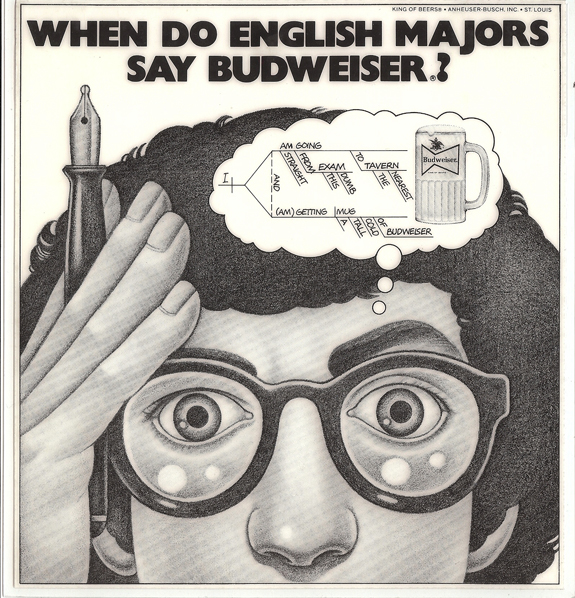
Tuesday’s ad is still another one for Budweiser, again from the late 2000s. Although it’s a recent ad, it has a more vintage feel, and is part of a series that was created for college market newspapers. This one shows a caricature of geeky brain — you can tell he’s smart because he’s wearing glasses and uses a fountain pen — up close, and the thoughts in his head that lead him to drink a beer.
bud-when-do-math-majors

Filed Under: Art & Beer, Beers Tagged With: Advertising, Budweiser, History

Patent No. 3544329A: Electrolysis Of Fermented Beverages

December 1, 2015 By Jay Brooks

patent-logo
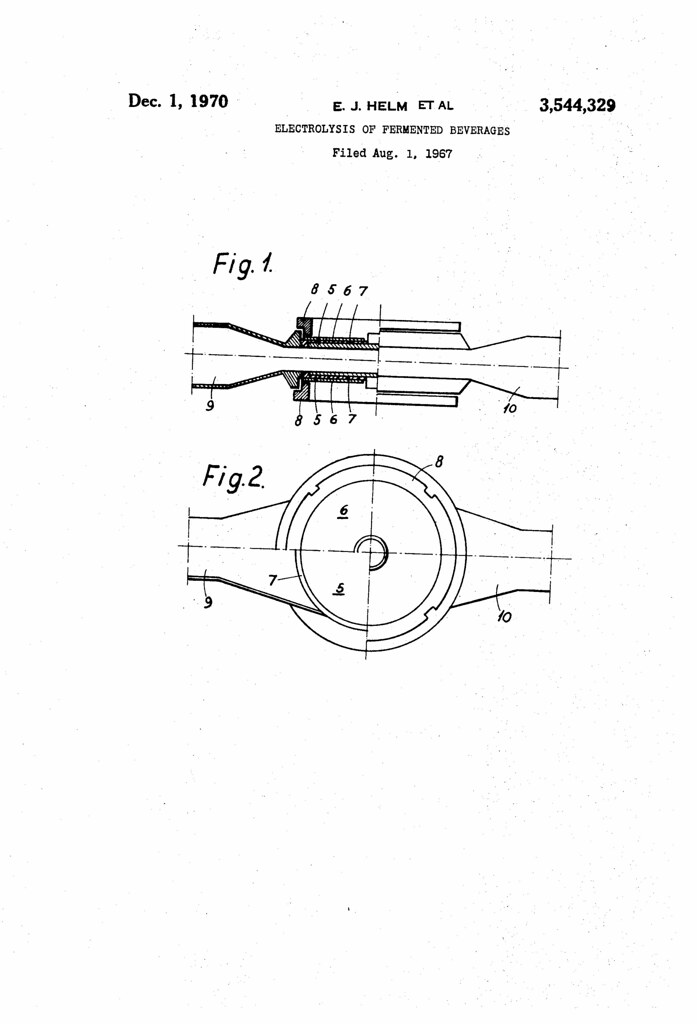
Today in 1970, US Patent 3544329 A was issued, an invention of Erik Johannes Helm and Richard Stanley Wrey Thorne, for their “Electrolysis of Fermented Beverages.” There’s no Abstract, although in the description it includes this summary:

This invention relates to a method and means for the improvement of the flavour of fermented beverages, such as beers, ciders, and wines, by elimination of hydrogen sulphide produced during fermentation.

Hydrogen sulphide is a normal product of yeast metabolism; during fermentation of beverages such as beer it is produced from cysteine by desulphuration and from inorganic sulphate by reduction, and probably from other precursors as well. It is well known to brewers that beer, and particularly newly fermented beer, for this reason often contains so much hydrogen sulphide as seriously to impair its avour, and especially its aroma. Generally speaking, this circumstance applies both to bottom-fermented beers (pilsner and lager types) and to top-fermented beers (ale and stout types).

This hydrogen sulphide may disappear during the maturation of beer, a process which consists essentially of a slow secondary fermentation, the hydrogen sulphide being swept out of the beer by the slowly evolving carbon dioxide. In practice, however, it is often found that for one reason or another the finished beer still retains a sensible concentration of hydrogen sulphide; particularly in the case of pilsner type beers this residual hydrogen sulphide may be sucient to detract from the delicacy of their llavoun The concentration of hydrogen sulphide in iinished beers may vary from inappreciable traces up to about 0.06 p.p.m. Its presence is already perceptible at a concentration of about 0.005 p.p.m.; at this level it is hardly perceived as such, but rather as modifying the general beer aroma. At 0.005 to 0.02 p.p.m. its odour has been described as yeasty or sulphury, i.e. more or less abnormal and undesirable. At about 0.05 p.p.m. it is recognizable as the characteristic hydrogen sulphide stench. Thus, while very low concentrations of hydrogen sulphide, say, less than 0.005 p.p.m. may not be objectionable in beer, and may even contribute a desirable element to its aroma, higher levels than this are definitely undesirable and perceived as a defect.

Accordingly, a process for the elimination of hydrogen sulphide from beer or its reduction to an imperceptible level, a process which might help to abbreviate the economically expensive secondary fermentation, is much to be desired.

The extremely low solubility product of copper sulphide suggests that a very simple means to this end might be to dose small quantities of, for example copper sulphate into beer so as to precipitate all of its hydrogen sulphide in the form of copper sulphide which would be subsequently removed during the regular beer ltration prior to bottling. However, the fact that beers normally contain traces of copper of the order of 0.1 p.p.m. or more which are as a rule more than equivalent to the amount of hydrogen sulphide to be removed, Without any such removal actually taking place, suggests that the problem is not quite so simple as it may at rst sight appear. It is true that the addition of an excess of copper sulphate to beer, of the order of l p.p.m. of copper, does indeed remove all perceptible hydrogen sulphide from it, but the relatively high concentration of residual copper remaining in the beer constitutes such a technical disadvantage that this procedure could not be seriously advocated for practical use. The drawback attaching to soluble copper in beer is that it rather drastically reduces the stability (shelflife) of the beer: copper accelerates the precipitation of proteinaceous material from the beer, rendering it cloudy and unsaleable. Presumably, the small amount of copper normally present in beer is already complexed to proteinaceous material in the beer so that it is unavailable for precipitating the hydrogen sulphide. Similarly, the excessive amount of copper sulphate which is necessary to eliminate hydrogen sulphide from beer must be attributed to most of the copper immediately being complexed, only a minor amount being available to react with the hydrogen sulphide.

The present invention comprises dosing suitably small quantities of copper into beer by means of electrolytic dissolution. Trials have shown that by this procedure the hydrogen sulphide may be removed from beer without causing any appreciable increase in its copper content.

According to this invention, beer, during the course of its passage to the filter, is passed between two electrodes of electrolytic copper, or between two electrodes one of which, the anode, is ot electrolytic copper. By the application of a suitable electromotive force across the electrodes copper passes into solution into the beer; the concentration of copper so dissolved depends only upon (a) the quantity of electricity passing through the beer (measured by the product of current strength and time), and (b) the velocity of the beer flowing past the electrodes. Copper dissolution is therefore precisely controllable by regulating current strength in relation to beer velocity.

Untitled

Filed Under: Beers, Breweries, Just For Fun, Politics & Law, Related Pleasures Tagged With: Brewing Equipment, History, Law, Patent, Science of Brewing

Beer In Ads #1745: When Do Music Majors Say Budweiser?

November 30, 2015 By Jay Brooks


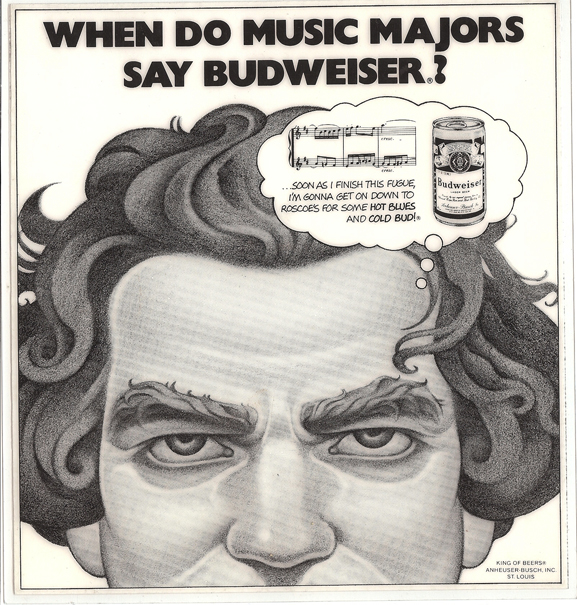
Monday’s ad is still another one for Budweiser, again from the late 2000s. Although it’s a recent ad, it has a more vintage feel, and is part of a series that was created for college market newspapers. This one shows a caricature of composer Ludwig van Beethoven‘s head up close, and the thoughts in his head that lead him to drink a beer.
bud-when-do-music-majors

Filed Under: Art & Beer, Beers Tagged With: Advertising, Budweiser, History, Music

Patent No. 4361080A: Floor For Lautering Vessels

November 30, 2015 By Jay Brooks

patent-logo
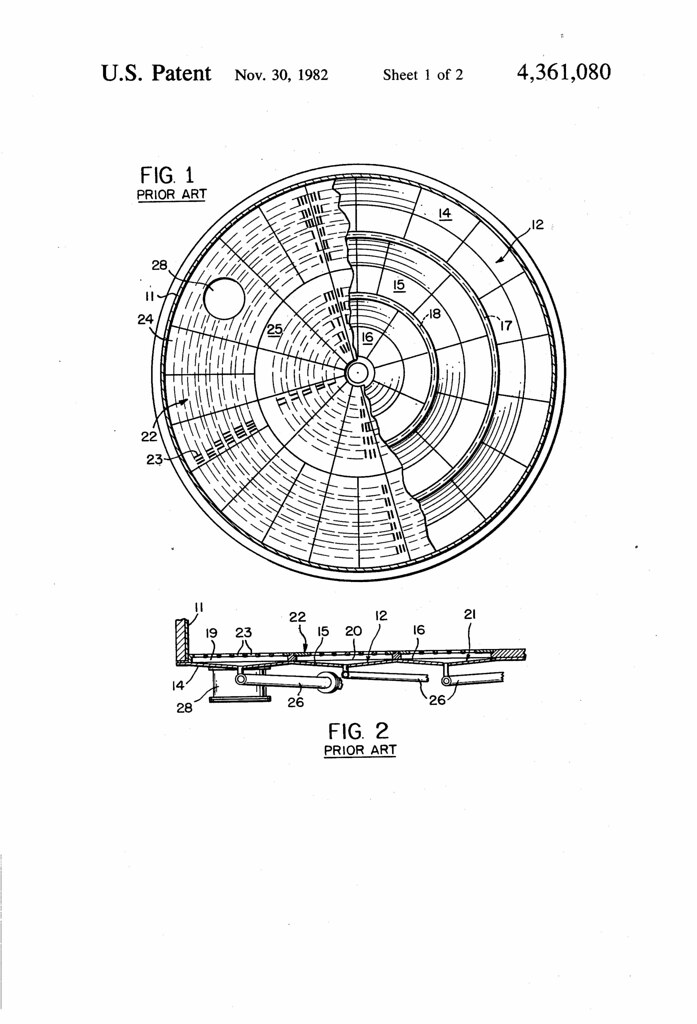
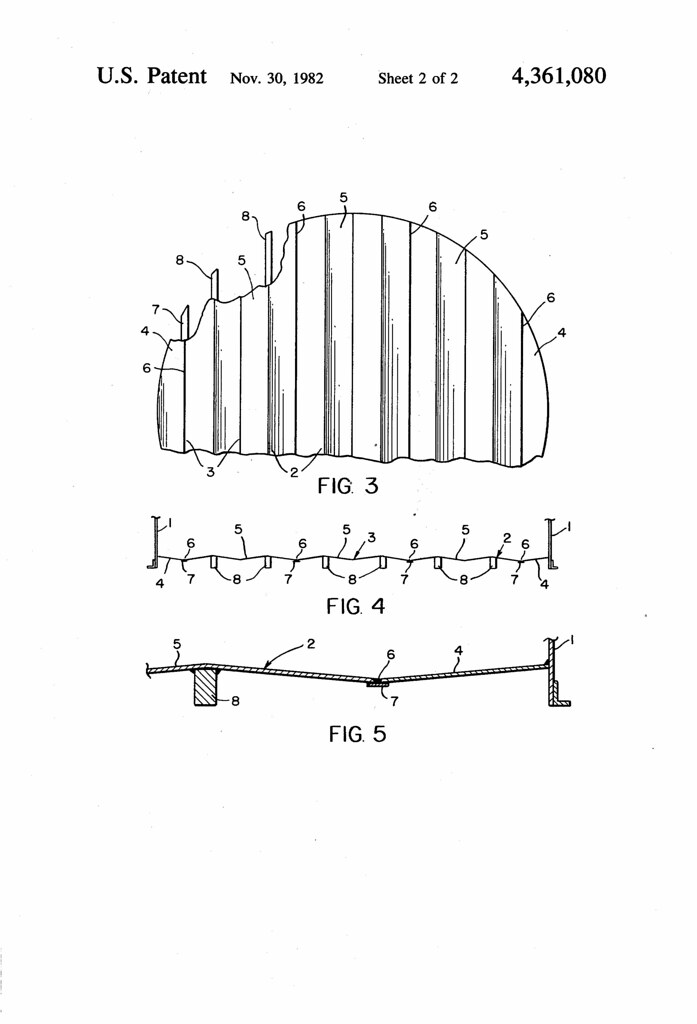
Today in 1982, US Patent 4361080 A was issued, an invention of David K. Smith, Nigel Harlow, and Samuel W. Maxfield, for their “Floor For Lautering Vessels.” Here’s the Abstract:

Disclosed is a real floor for a lauter tun comprising a plurality of elongated linear troughs, each trough extending unobstructed across the bottom of the vessel and each forming a relatively shallow upward opening V-shape. The elements making up the floor are shaped to provide the lauter tun floor with a circular profile.

Untitled
Untitled

Filed Under: Beers, Breweries, Just For Fun, Politics & Law, Related Pleasures Tagged With: Brewing Equipment, History, Law, Patent, Science of Brewing

Patent No. 1162515A: Process For Treating Cement Beer-Fermenting Tanks

November 30, 2015 By Jay Brooks

patent-logo
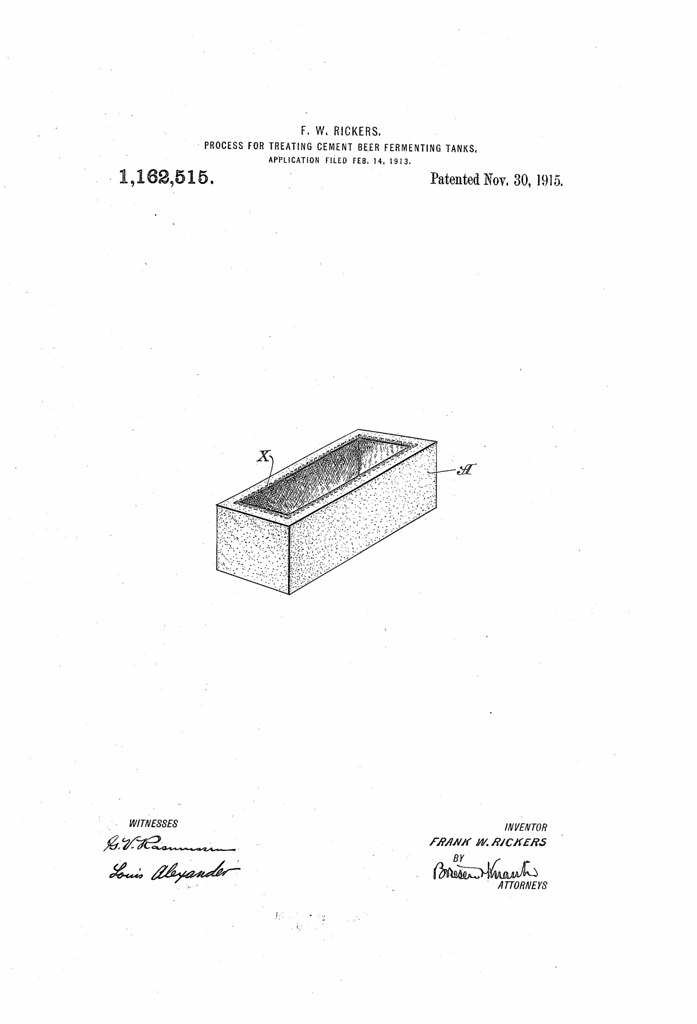
Today in 1915, US Patent 1162515 A was issued, an invention of Frank W. Rickers, assigned to the Schaefer Brewing Co., for his “Process For Treating Cement Beer-Fermenting Tanks.” There’s no Abstract, although in the description it includes this summary:

The object of the present invention is the production of a beer fermenting tank constructed of hydraulic cement or cement concrete or reinforced cement concrete which shall avoid the disadvantages incident to those previously constructed, and which shall be economical to construct, and which shall be substantially permanent when constructed.

Untitled

Filed Under: Beers, Breweries, Just For Fun, Politics & Law, Related Pleasures Tagged With: Brewing Equipment, History, Law, Patent

Beer In Ads #1744: When Do 300 Lb. Lineman Say Budweiser?

November 29, 2015 By Jay Brooks


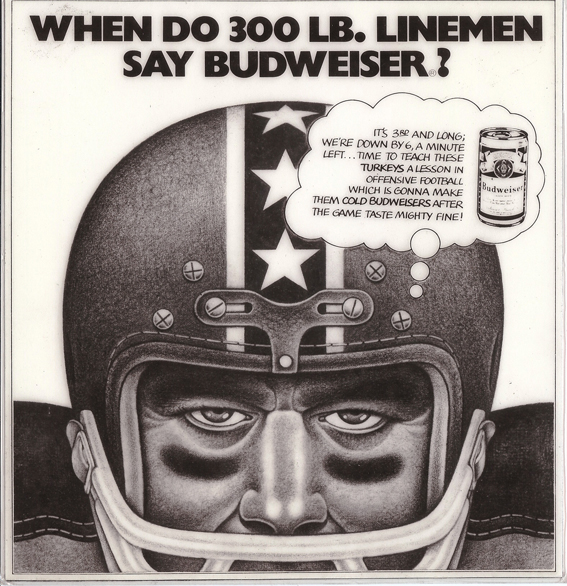
Sunday’s ad is another one for Budweiser, also from the late 2000s. Although it’s a recent ad, it has a more vintage feel, and is part of a series that was created for college market newspapers. This one shows a football player’s head up close, and the thoughts in his head that lead her to drink a beer.

bud-when-do-football

Filed Under: Art & Beer, Beers Tagged With: Advertising, Budweiser, Football, History, Sports

Patent No. 6968773B1: Vessel And Wort Processing Method For Producing Beer

November 29, 2015 By Jay Brooks

patent-logo
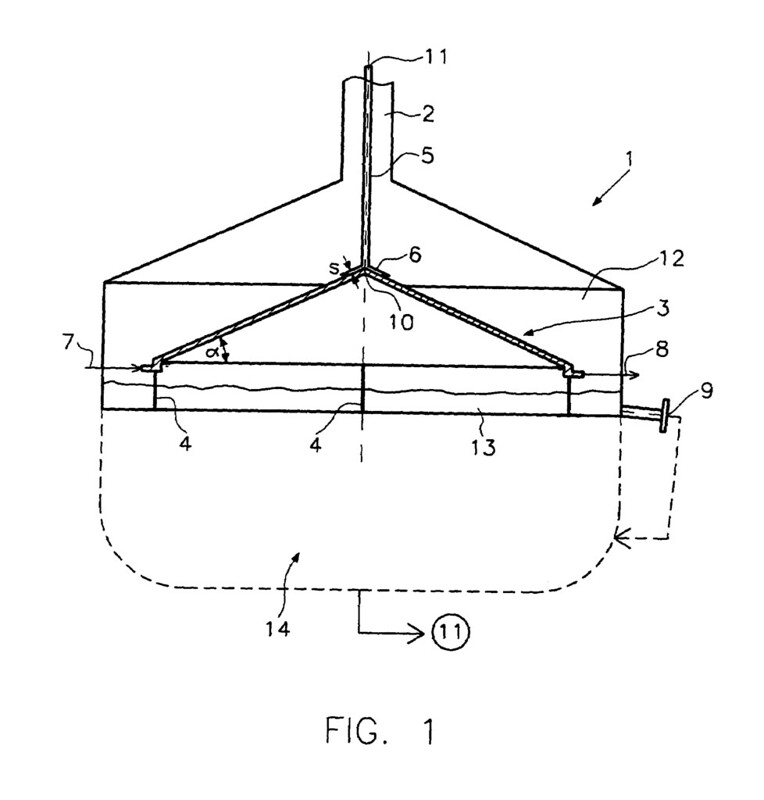
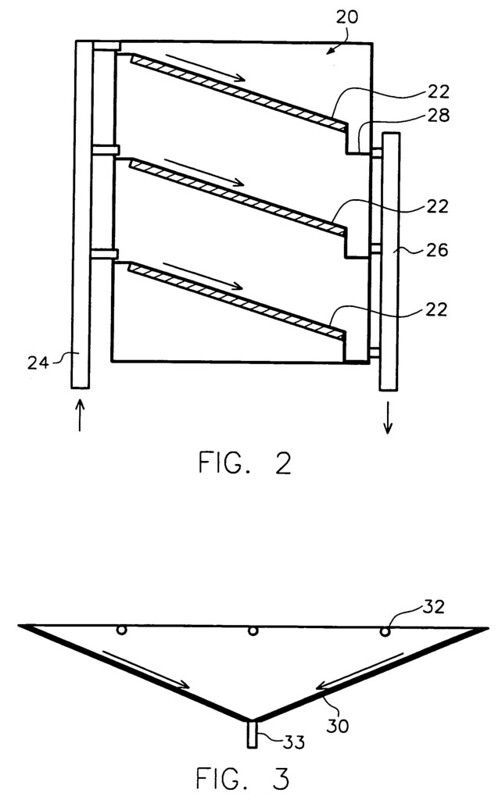
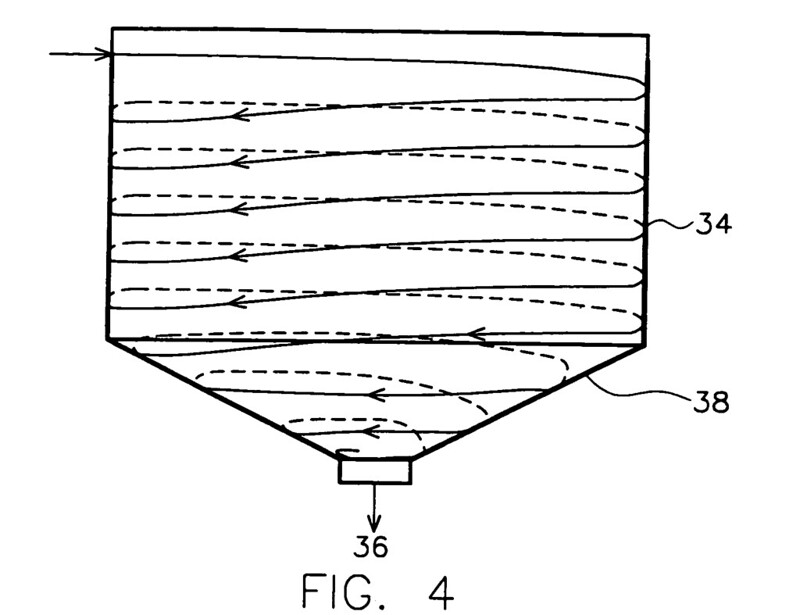
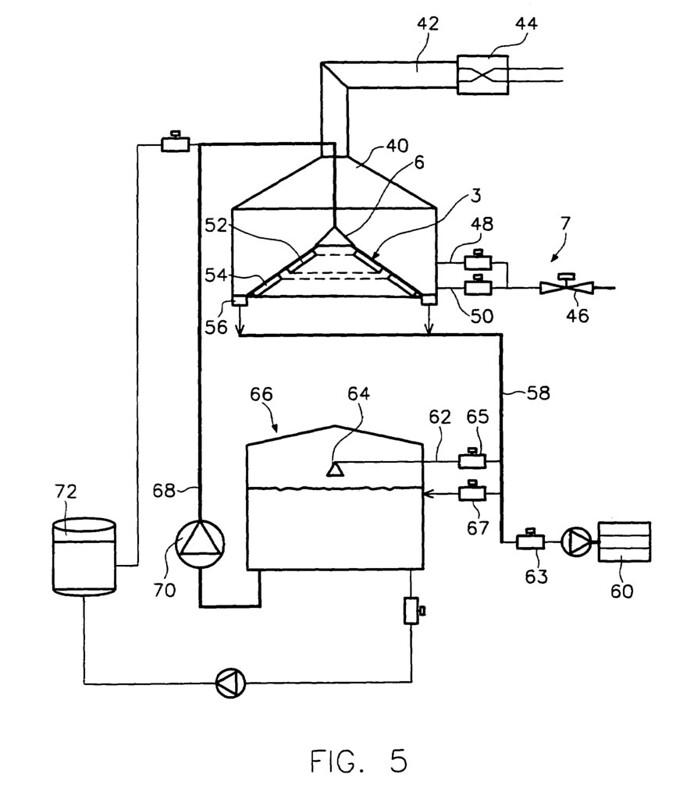
Today in 2005, US Patent 6968773 B1 was issued, an invention of Kurt Stippler and Klaus-Karl Wasmuht, assigned to Anton Steinecker Maschinenfabrik Gmbh, for their “Vessel and Wort Processing Method for Producing Beer.” Here’s the Abstract:

A vessel and a method for thermally treating wort in beer brewing, wherein a wort guiding screen or cone is placed inside the vessel and a feed pipe ending above the wort guiding screen or cone is used to discharge wort from above onto the wort guiding screen or cone. The wort boiling method has the wort discharged onto an inclined, heated guiding surface from which it flows down and spreads into a sheet and is thereby heated.

Untitled

Untitled

Untitled
Untitled

Filed Under: Beers, Breweries, Just For Fun, Politics & Law, Related Pleasures Tagged With: Brewing Equipment, History, Law, Patent, Science of Brewing, Wort

Patent No. 2138529A: Hop Separator

November 29, 2015 By Jay Brooks

patent-logo
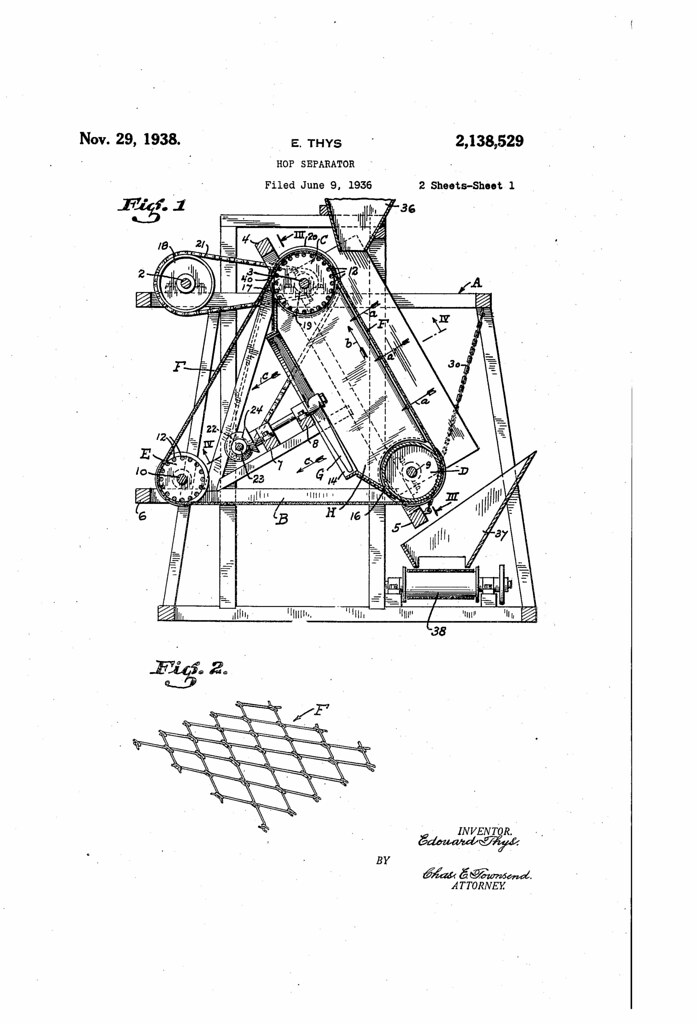
Today in 1938, US Patent 2138529 A was issued, an invention of Edouard Thys, for his “Hop Separator.” There’s no Abstract, although in the description it includes this summary:

This invention relates to separators and especially to a machine for separating leaves and like foreign material from hops, the present application being a continuation in part of my co-pending application entitled Hop picking machine, filed November 13, 1935, Serial Number 49,531.

The picking of hops by means of machinery is now a comparatively old art as machine picking has been in continuous use on a comparatively a large scale in California and other States at least since 1910. The type of machine generally employed consists of a series of revolving drums from the surface of which project V-shaped flexible wire fingers. The vines to be picked are l passed over and under the drums by a conveyor and as the vines pass over and under the drums they are combed by the V-shaped fingers and the hops are removed during the combing operation. A great many leaves and stems are also m removed and some of the hops are broken, thereby forming petals, hence after the picking operation has been completed it becomes necessary’ to separate the hops from the leaves, petals and stems as the cleaner the hops the higher the market value of the same.

The present invention relates. to a machine for separating the hops from the leaves, petals, stems, etc., the object being to improve and simplify the separation of hops of this character; to provide a pervious inclined belt upon which the hops, leaves, etc., are delivered; to provide means in the form of fans, or the like, placed under the belt so as to maintain a sufficient suction to cause the. lighter material, such as leaves, petals, etc., to adhere to the surface of the belt while the inclination of the belt will permit the hops to roll down and off the belt; to arrange the belt in such a manner that the air blast produced by the discharge side of the fans may be utilized to release the leaves, petals, etc., from the belt; and, further, to provide means for adjusting the inclination of the belt to insure rolling and gravity separation of the hops from the leaves and other organic matter.

Untitled
Untitled

Filed Under: Beers, Just For Fun, Politics & Law, Related Pleasures Tagged With: Brewing Equipment, History, Hops, Law, Patent

Beer In Ads #1743: When Do Cheerleaders Say Budweiser?

November 28, 2015 By Jay Brooks


Saturday’s ad is for Budweiser, from the late 2000s. Although it’s a recent ad, it has a more vintage feel, and is part of a series that was created for college market newspapers. This one shows a cheerleader’s head up close, and the thoughts in her head that lead her to drink a beer.

bud-when-do-cheerleaders

Filed Under: Art & Beer, Beers Tagged With: Advertising, Budweiser, History, Sports

Spinning Statistics … Again

November 28, 2015 By Jay Brooks

alcohol-justice-new
A few days ago, I wrote that in my mind, Alcohol Justice, as much as any prohibitionist group, had achieved the status of a cult, given their by-any-means-necessary tactics and casual relationship with the truth. Today presented a perfect example of that, in which they took another “study” and bent it and remolded it into the shape they wanted it to be in order to advance their agenda. This morning they tweeted the following:

AJ-tweet-15-11-28

And there’s certainly some scary claims in that tweet. “Stunning death rate rise for middle-aged white US men,” which is apparently linked to “alcohol” and also “drug misuse.” Or is that misuse of both drugs and alcohol? It could be read either way, and since you rarely here “alcohol misuse” as a term — it’s almost always “alcohol abuse” — I suspect that it was chosen on purpose to give the impression that it was simply drinking alcohol that leads to this “stunning death rate.” But what does the actual “study” claim? The tweet includes a link, which takes you to an article from November 2 in the New York Times, Death Rates Rising for Middle-Aged White Americans, Study Finds. But that title is similarly misleading, because once you actually read it, you’ll discover that it’s not all middle-age white men whose risk is increasing, but a specific subgroup within that cohort. That group is increasing overall, but only because the steepest rise is almost entirely coming from less educated men in that group.

The mortality rate for whites 45 to 54 years old with no more than a high school education increased by 134 deaths per 100,000 people from 1999 to 2014.

I guess that’s statistically significant, but it’s an increase of 0.134%, which doesn’t sound as bad as they’re making it out to be. Later in the article, they say that “[i]n that group, death rates rose by 22 percent while they actually fell for those with a college education.” Of course, I don’t have a Nobel Prize in Economics, as one of the people who conducted the study does, which the article makes a particular point of pointing out. Despite those honors, they’re as flummoxed by the results as apparently everyone else who’s found it’s such a growing problem for “the declining health and fortunes of poorly educated American whites.” adding. “In middle age, they are dying at such a high rate that they are increasing the death rate for the entire group of middle-aged white Americans” and this has been “puzzling demographers in recent years.” Seriously? Let me take a stab at it. The middle class has been eroding for decades, real wages have been stagnating almost as long, people are losing their pension plans, unions are under attack and our government has been co-opted by business interests who have been doing everything possible to keep tax breaks for the wealthy, allow our elections to won by whoever has the most money, and generally make life miserable for every worker below the executive level, the people in the 90%. And which group would you expect that to most affect? I would suggest it’s people in the lower paying jobs, the ones requiring less education, which would go a long way toward explaining why these are the same people drinking themselves into an early grave.

They do finally make some mention of this, but apparently don’t think it was significant enough to “fully account for the effect,” when they earlier cited that middle-aged white men with only a high school diploma have “a more pessimistic outlook among whites about their financial futures.” But doesn’t it seem like one of those “well, duh” moments?

The least educated also had the most financial distress, Dr. Meara and Dr. Skinner noted in their commentary. In the period examined by Dr. Deaton and Dr. Case, the inflation-adjusted income for households headed by a high school graduate fell by 19 percent.

But that can’t be it, they seem to conclude. That wouldn’t cause them to become depressed, which might lead them to drink excessively or take more drugs, is what they’re saying. Why do we continue to go out of our way to insist that the alcohol or drugs, in and of themselves, are the problem, but not the underlying problem or problems that make people reach for them? Remember, the message from Alcohol Justice was that “alcohol and drug misuse” were the link to a “Stunning death rate rise for middle-aged white US men,” but that’s not what the study found, or is even the focus of the article, despite the fact that misleading headline could make you think that was the case, if you didn’t bother to read it. What this study of metadata from the CDC found was that there’s an increase for such men with less education and who abused alcohol, which is very different from what AJ is peddling. And this spin is doubly reinforced by the photo they chose to use with the tweet. It shows two older couples, well-dressed and sipping on champagne. That’s practically the polar opposite of the image one would expect for which group is showing an increase in their risk of death found by the study they’re referring to. And it’s the photo you see first, before you read either the tweet or click on the article. Before you have any facts whatsoever, you’re confronted by this misleading image of well-heeled bubbly revelers.

AJ039G

But that image holds another secret, and one Alcohol Justice probably doesn’t want you to know about, especially as they’ve started tweeting for donations at this, the giving time of the year. The image is actually taken from an article in the British newspaper, the Telegraph, from early September of this year. That piece, entitled Drinkers ‘subsidising’ non-drinkers by £6.5 billion a year, flies right in the face of one of AJ’s most-cherished propaganda lies, the idea of alcohol harm, that people drinking are a drain on the economy, forcing teetotalers to pay for their excesses and strain public resources. It’s one of AJ’s most common arguments for raising taxes on alcohol, under the notion of a “charge for harm” that they’re so fond of insisting. But the subtitle of the Telegraph article is: “A drain on taxpayers? Drinkers pay their dues three times over, new study claims.”

Far from being a financial burden on taxpayers, people who enjoy alcohol pay the cost of dealing with drink-related social problems almost three times over in tax every year, the analysis by the Institute of Economic Affairs, the free-market think-tank, argues.

The paper calculates that the NHS, police, the criminal justice and welfare systems in England collectively spend £3.9 billion a year dealing with the fallout from excessive alcohol consumption.

But that figure is eclipsed by the £10.4 billion a year it says the Treasury gains in alcohol duty in England.
It argues that taxes on drink could be halved and still leave the Government firmly in profit.

They continue:

Christopher Snowdon, author of the report, said: “It is time to stop pretending that drinkers are a burden on taxpayers.

“Drinkers are taxpayers and they pay billions of pounds more than they cost the NHS, police service and welfare system combined.

“The economic evidence is very clear on this – 40 per cent of the EU’s entire alcohol tax bill is paid by drinkers in Britain and, as this new research shows, teetotallers in England are being subsidised by drinkers to the tune of at least six and a half billion pounds a year.”

So that’s where the photo came from that Alcohol Justice used to accompany a misleading tweet about misstated statistics, linking to a somewhat misleadingly titled article. And this is from the organization that claims to be the “industry watchdog,” forcing me to ask, yet again, who’s watching the watchdog? Because left to their own devices, they obviously aren’t terribly concerned with honesty or truthiness. And that makes it increasingly difficult to have any meaningful discussions with them about alcohol policy or indeed believe anything they say or claim.

Filed Under: Editorial, News, Politics & Law Tagged With: Prohibitionists, Science, Statistics

« Previous Page
Next Page »

Find Something

Northern California Breweries

Please consider purchasing my latest book, California Breweries North, available from Amazon, or ask for it at your local bookstore.

Recent Comments

  • Bob Paolino on Beer Birthday: Grant Johnston
  • Gambrinus on Historic Beer Birthday: A.J. Houghton
  • Ernie Dewing on Historic Beer Birthday: Charles William Bergner 
  • Steve 'Pudgy' De Rose on Historic Beer Birthday: Jacob Schmidt
  • Jay Brooks on Beer Birthday: Bill Owens

Recent Posts

  • Historic Beer Birthday: William H. Gerst April 1, 2026
  • Historic Beer Birthday: Carl W. Conrad April 1, 2026
  • Beer In Ads #5198: Heim’s Bock Beer! Ready To-Day April 1, 2026
  • Historic Beer Birthday: August Koch April 1, 2026
  • Historic Beer Birthday: Thomas Fowell Buxton April 1, 2026

BBB Archives

Feedback

Head Quarter
This site is hosted and maintained by H25Q.dev. Any questions or comments for the webmaster can be directed here.