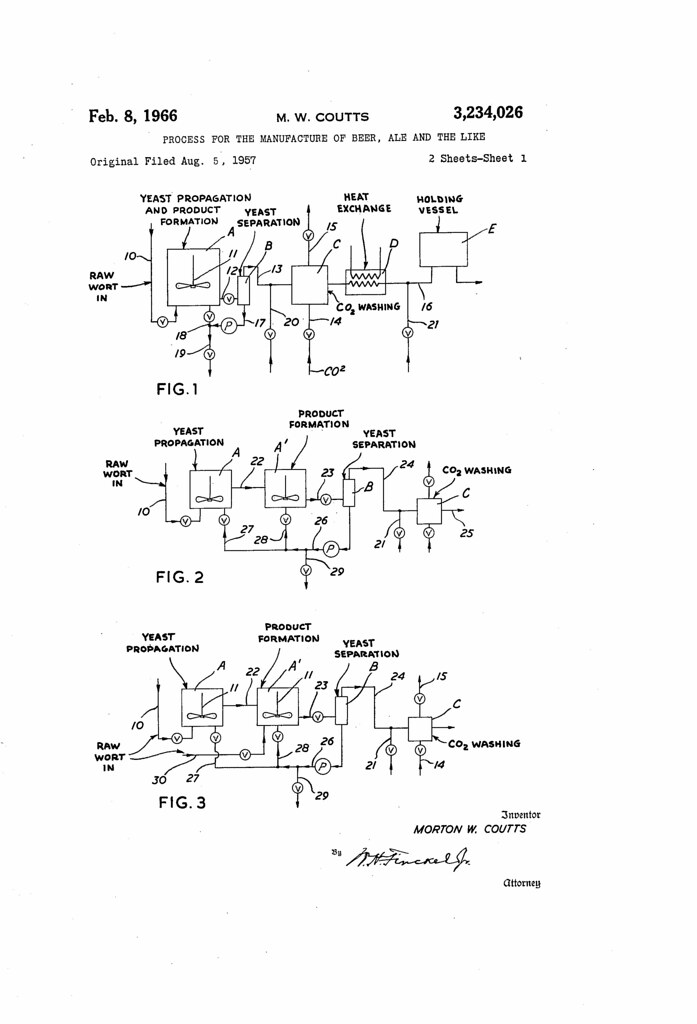
Today in 1966, US Patent 3234026 A was issued, an invention of Morton William Coutts, for his “Process for the Manufacture of Beer, Ale and the Like.” There’s no Abstract, but according to the description, the “invention relates to a continuous method for the fermentation of brewery wort for the production of a portable non-distilled alcoholic beverage product. This application is a continuation of my application Serial No. 676,187, filed August 5, 1957 A major object of the invention is the provision of an improved process for the production of such products which will enable the production thereof with greatly decreased fermenting time than is possible by present processes and which will give better control of flavour at greatly decreased cost of manufacture.”

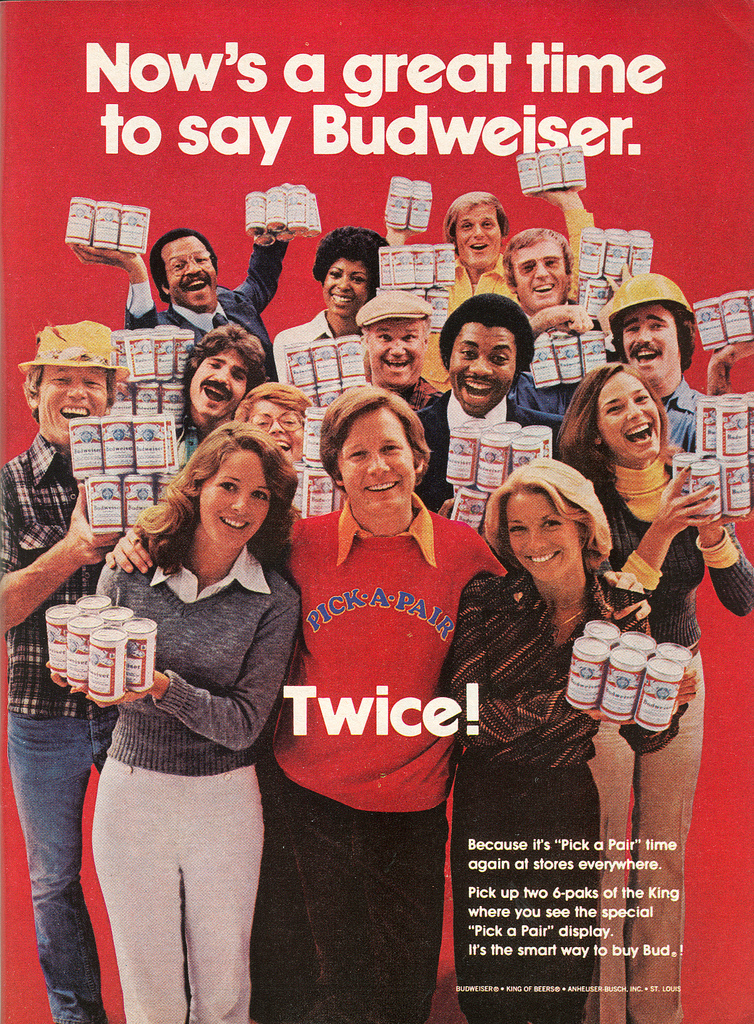
Beer In Ads #1459: Pick-A-Pair Twice!

Saturday’s ad is for Budweiser, from sometime in the 1970s, based on the collars and fashion. The ad is trying to get people to pick-a-pair, that is buy a six-pack, and in fact the ads wants people to do that “Twice!,” that is buy two six-packs. I grew up in a case state with weird, antiquated laws (Pennsylvania) so were twelve-packs not available yet in the 1970s? When did the twelve-pack debut? Anybody know? Because otherwise why not just advertise twelve-packs?
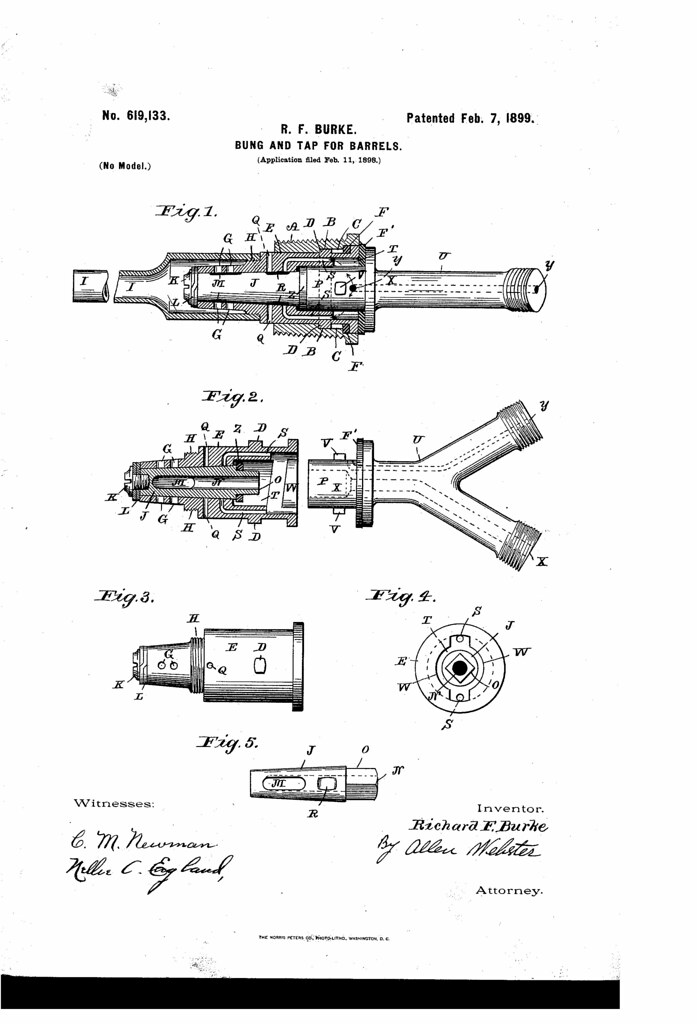
Patent No. 619133A: Bung & Tap For Barrels
Today in 1899, US Patent 619133 A was issued, an invention of Richard F. Burke, for his “Bung and Tap for Barrels.” There’s no Abstract, but according to the description, he’s “invented certain ‘new and useful Improvements in Bungs and Taps for Barrels, of which the following is aspecication, reference being had to the accompanying drawings and letters of reference marked thereon. He continues. “My invention relates to devices adapted to be employed in barrels containing liquids, whether under pressure or otherwise, whereby they may be readily tapped and as readily closed.”
The object of my invention is to produce a device a portion of which may remain permanently in a barrel or cask, the same being so constructed that by the introduction of a key-like faucet an inner core can be turned in a manner to permit the free discharge of the contents and the introduction of air into the cask. Said discharge is effected through a special device for the purpose which will be comparatively inexpensive in cost of manufacture, convenient to adjust, easy to manipulate, and at the same time to provide a secure and tight connection.
Patent No. 2970627A: Barley Debearder & Seed Cleaner
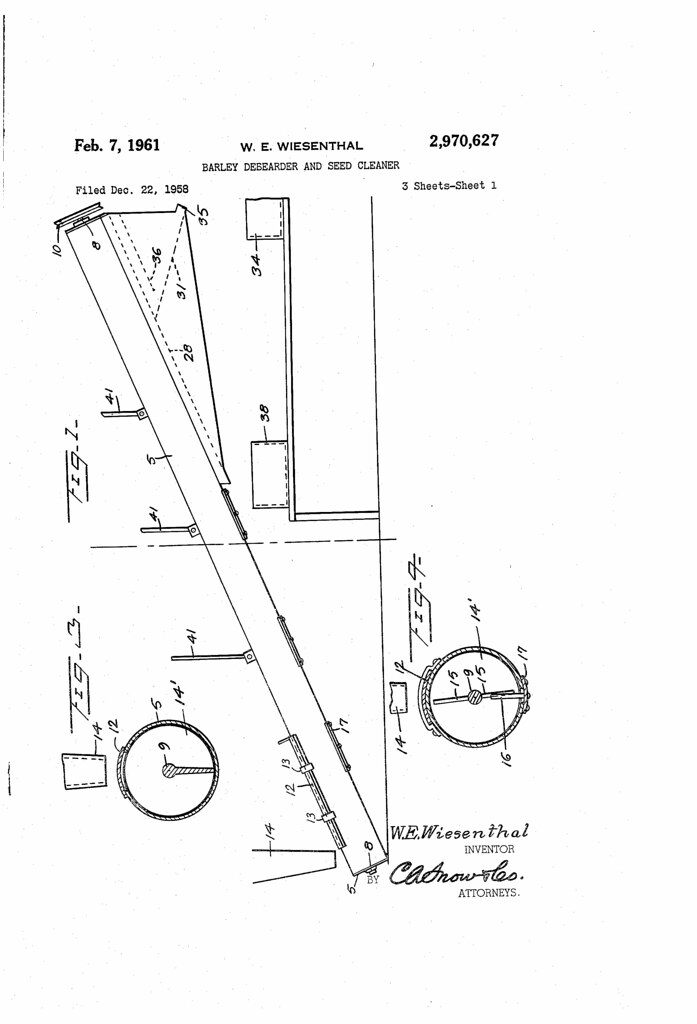
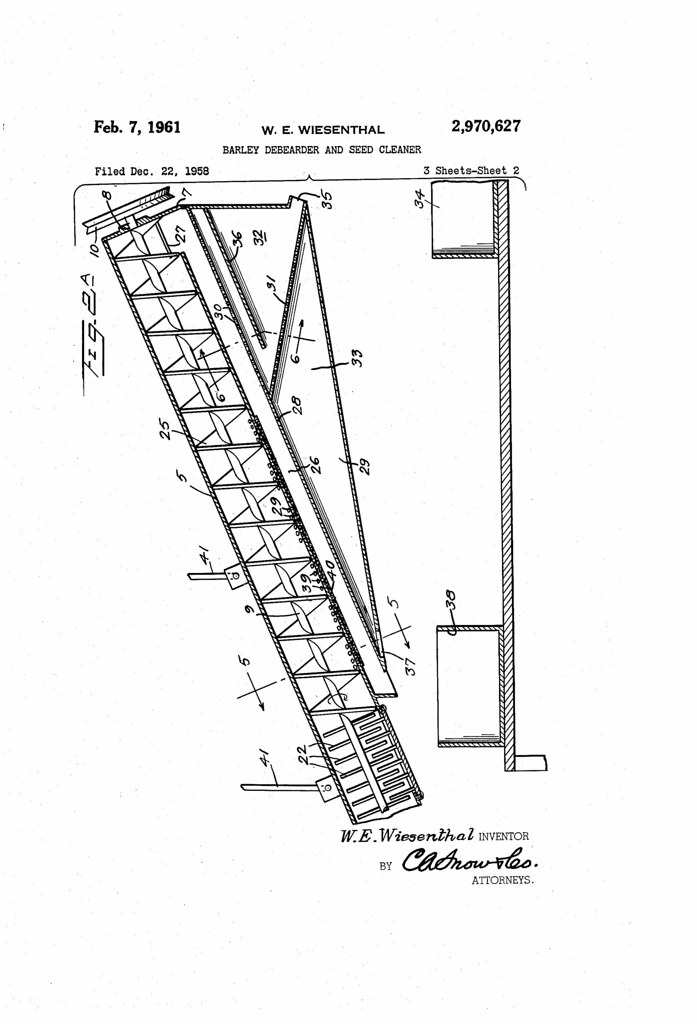
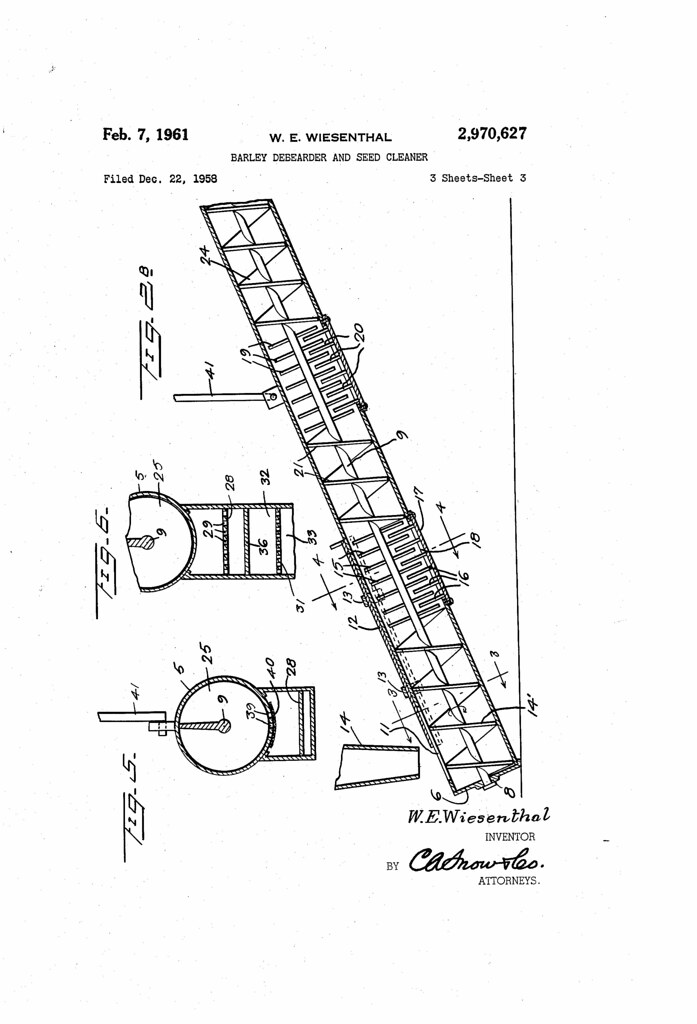
Today in 1961, US Patent 2496858 A was issued, an invention of Walter E. Wiesenthal, for his “Barley Debearder and Seed Cleaner.” there’s no Abstract, but according to the description, the ” invention relates to a seed cleaning and screening apparatus adapted to separate seeds of various crops which have been sown and harvested together. An important object of the invention is to provide an apparatus of this character which will operate effectively in debearding barley during the barley cleaning operation. A further object of the invention is to provide an apparatus wherein the various stages of cleaning and classifying the seeds will be accomplished simultaneously with the operation of the apparatus.”
Bistro Double IPA Winners 2015

El Segundo‘s Hammerland DIPA was chosen best in show at the 15th annual Double IPA Festival today at the Bistro in Hayward, California. A total of 63 Double IPAs and 34 Triple IPAs were judged. The full winner’s list is below.
Double IPAs
- 1st Place: Hammerland DIPA, El Segundo Brewing
- 2nd Place: Double Jack, Firestone Walker Brewing
- 3rd Place: Saint Archer Double IPA
Triple IPAs
- 1st Place: Pliny the Younger, Russian River Brewing
- 2nd Place: Scarcity IIIPA, Altamont Beer Works
- 3rd Place: Notorious, Boneyard Beer
Peoples Choice Awards
- People’s Choice Award — Double IPA: I See A Dankness, collaboration between Cellarmaker Brewing & Sante Adairius
- People’s Choice Award — Triple IPA: Notorious, Boneyard Beer
Congratulations to all the winners.
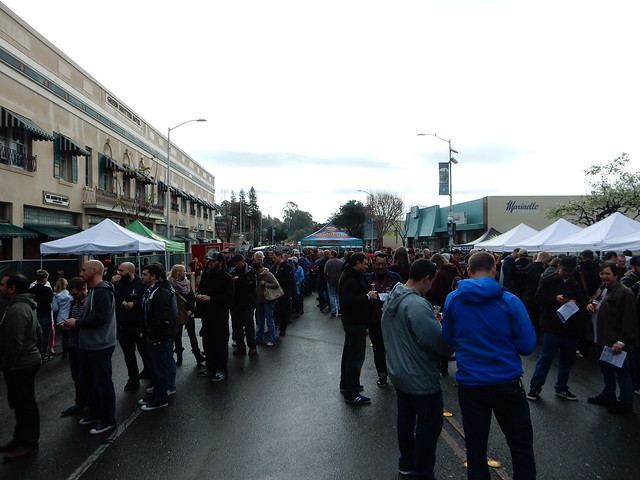
The scene at today’s Double IPA Festival at The Bistro.
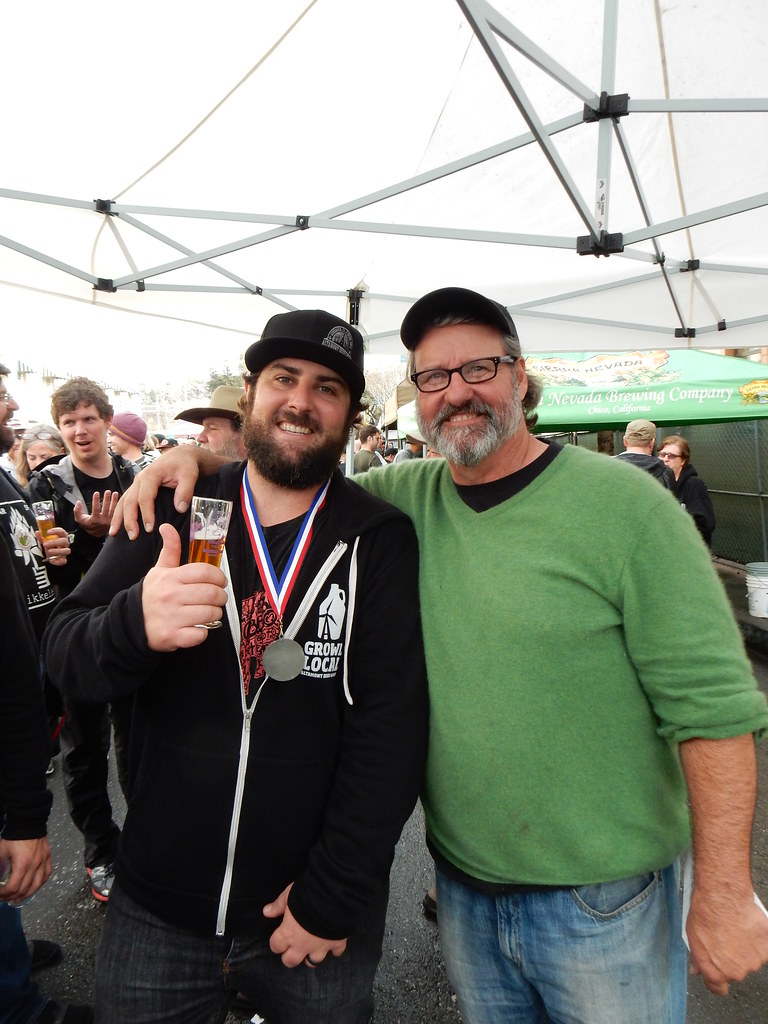
Steve Sartori from Altamont Beer Works with The Bistro’s Vic Kralj accepting his 2nd place for his Triple IPA.
Patent No. EP0224293B1: A Beer Tapping Installation
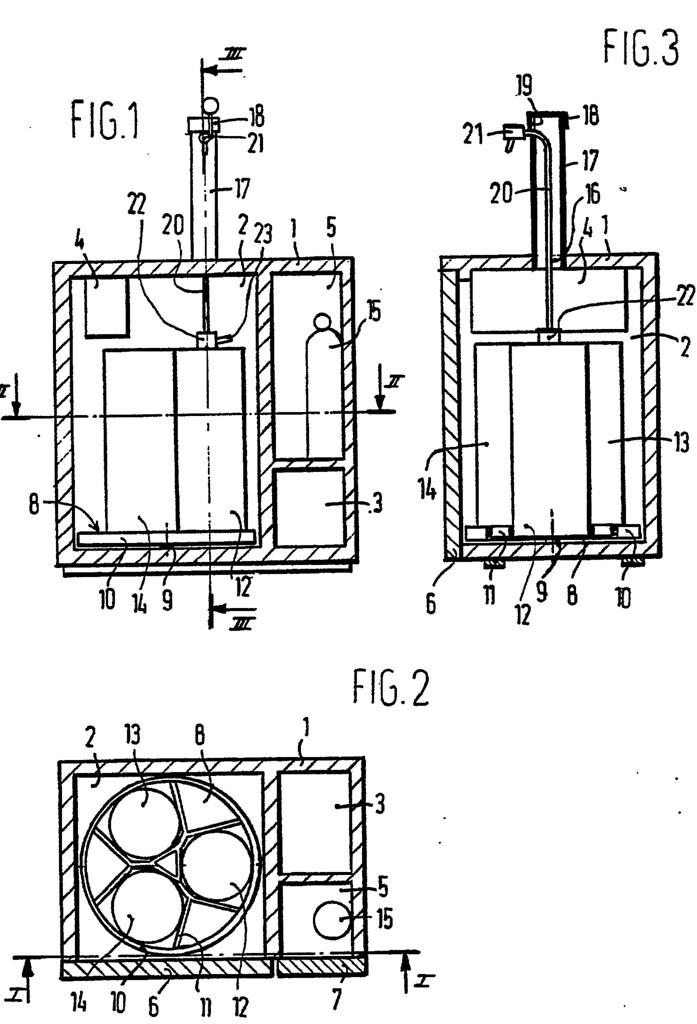
Today in 1990, US Patent EP 0224293 B1 was issued, an invention of Jacobus Dijkstra and Gijsbert Slootweg, assigned to Heineken Technisch Beheer B.V., for “A Beer Tapping Installation.” there’s no Abstract, but the description begins with the “invention relates to a beer tapping installation comprising a first cask installation and cooling unit adjacent a second cooling unit, a third unit supporting a tap and a storage space accommodating a gas container, a beer line with a cask coupling at its one end extending from the inside of the first unit to the tap and connected with its other end to said tap arranged near the free end of said third unit which comprises a hollow support protruding vertically from the coupled units, enveloping the beer line adjacent the tap and being in open communication with said first unit, the beer line with cask coupling being movable longitudinally of the hollow support, and a gas supply line extending between the gas container and the cask compiling.”
Patent No. 2496858A: Hop-Picking Machine
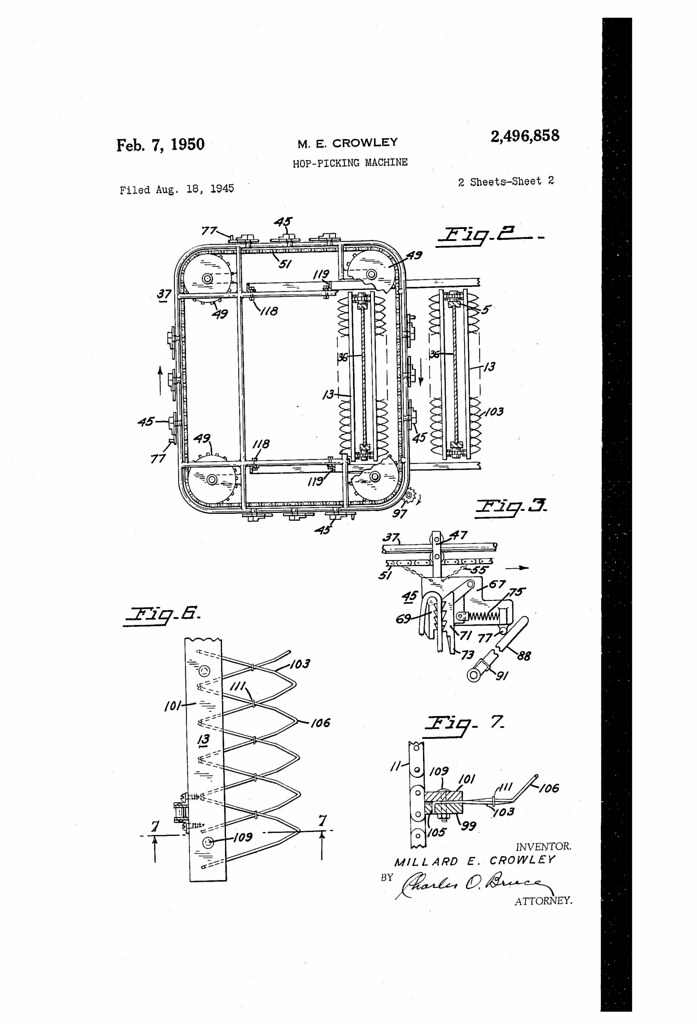
Today in 1950, US Patent 2496858 A was issued, an invention of Millard E. Crowley, for his “Hop-Picking Machine.” there’s no Abstract, but according to the description, the “invention relates to hop-picking machines or the like, and more particularly to improvements in the construction and mode of operation of the same.” But it’s a complicated apparatus, best read the application to get the full picture of how the machine works.

Beer In Ads #1458: Sound That Trumpet, Man
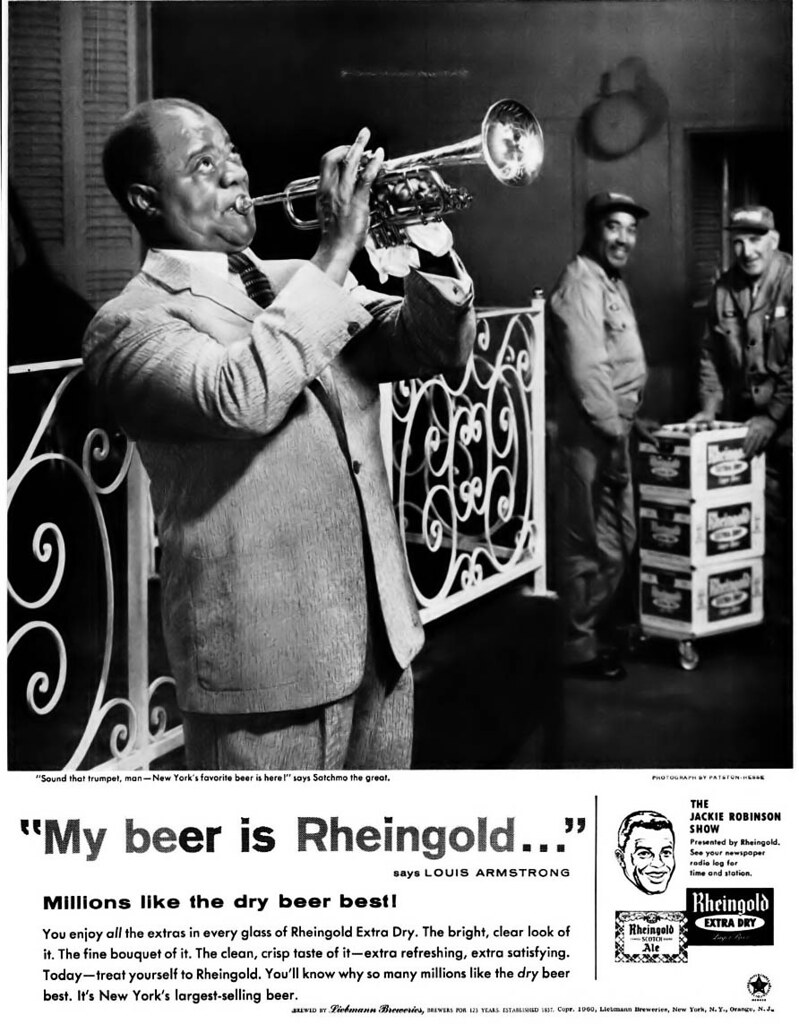
Friday’s ad is for Rheingold Beer, from 1960. Featuring jazz legend Louis Armstrong, the ad quotes “Satchmo” as saying “Sound That Trumpet, Man — New York’s favorite beer is here” and “My beer is Rheingold….” Also, curiously, check out the inset imaged in the bottom right corner showing the flagship Rheingold Extra Dry beer and also Rheingold Scotch Ale. Interesting to see such a relatively obscure style being advertised in 1960.
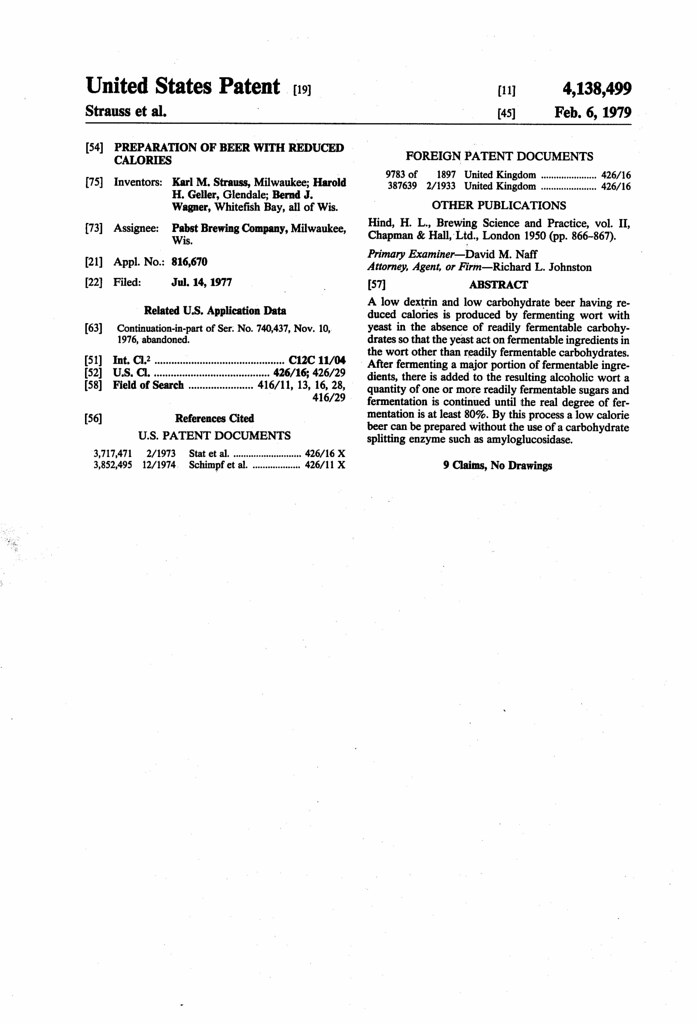
Patent No. 4138499A: Preparation Of Beer With Reduced Calories
Today in 1979, US Patent 4138499 A was issued, an invention of Karl M. Strauss, Harold H. Geller, and Bernard J. Wagner, assigned to Pabst Brewing Co., for their “Preparation of Beer with Reduced Calories.” Here’s the Abstract:
A low dextrin and low carbohydrate beer having reduced calories is produced by fermenting wort with yeast in the absence of readily fermentable carbohydrates so that the yeast act on fermentable ingredients in the wort other than readily fermentable carbohydrates. After fermenting a major portion of fermentable ingredients, there is added to the resulting alcoholic wort a quantity of one or more readily fermentable sugars and fermentation is continued until the real degree of fermentation is at least 80%. By this process a low calorie beer can be prepared without the use of a carbohydrate splitting enzyme such as amyloglucosidase.
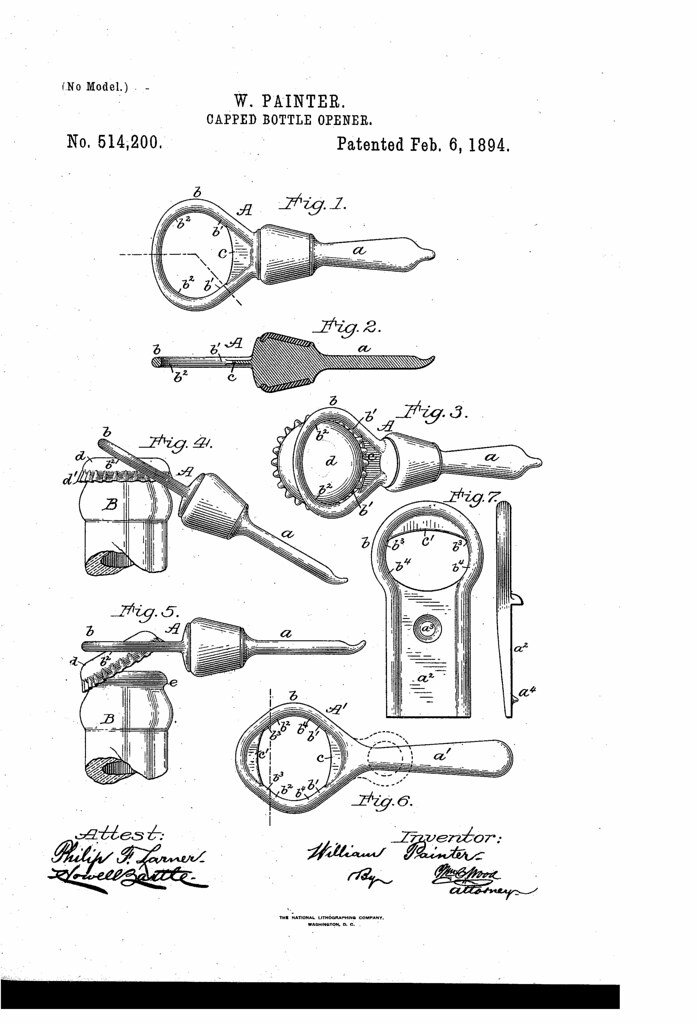
Patent No. 514200A: Capped-Bottle Opener
Today in 1894, US Patent 514200 A was issued, an invention of William Painter, for his “Capped-Bottle Opener.” There’s no Abstract, but in the introduction of his application, Painter states his “bottle opener essentially embodies a handle, having at one end thereof, a cap centering gage, and also a cap engaging lip, and however these three elements may be formed and combined, the centering gage should also afford a fulcrum, with respect of the handle and the cap engaging lip, and the latter should be substantially in line with the handle, so that when the opener is applied to a capped bottle, the gage will assure an appropriate bearing or fulcrum on top of the cap, with the lip located beneath or underlying a portion of the cap, and so enable the handle to serve as a lever for removing the cap from the bottle. Although without departure from my invention these three essential elements may be separately constructed and combined to form my bottle opener, they are more economically constructed integrally of iron or other suitably strong metal, as by molding or casting the opener in one piece, and it is in this form that my opener will be more particularly described.” After having patented the crown two years earlier, I guess he needed to invent a way to open the bottles, too.