Brookston Beer Bulletin

Jay R. Brooks on Beer

  • Home
  • About
  • Editorial
  • Birthdays
  • Art & Beer

Socialize

  • Dribbble
  • Email
  • Facebook
  • Flickr
  • GitHub
  • Instagram
  • LinkedIn
  • Pinterest
  • RSS
  • Twitter
  • YouTube

Powered by Genesis

Beer In Ads #352: Louis Pasteur Works In Whitbread’s Laboratory

April 20, 2011 By Jay Brooks

ad-billboard
Wednesday’s ad is for Whitbread, from 1937, and the ad shows an illustration of Louis Pasteur working on his fermentation studies in a laboratory at Whitbread Brewing in 1871, nine years after he completed his first test of pasteurization, which took place today in 1862.
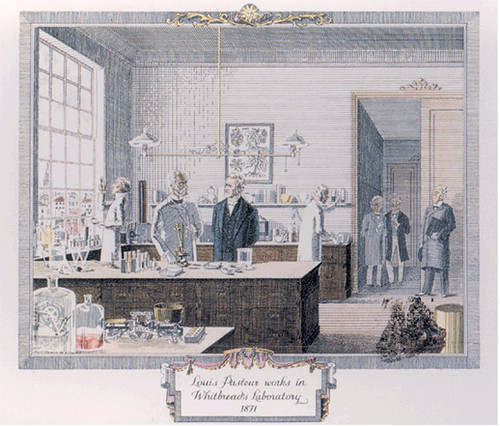
whitbread-pasteur-1937cal

Filed Under: Art & Beer, Beers Tagged With: Advertising, History, Science of Brewing

Beerstrology Sign: Taurus

April 20, 2011 By Jay Brooks

zodiac
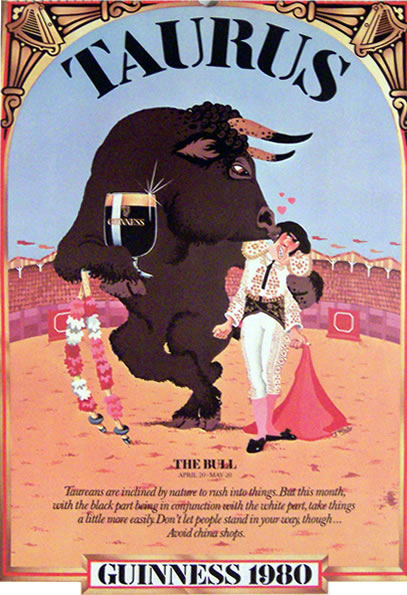
While I don’t put any stock in astrology, in 1980 Guinness put out a calendar with each month representing one of the zodiac signs, and I thought it would be fun to share these throughout the year.

Taurus, the bull, is from April 20-May 21. To learn more, see:

  • Astrology Online
  • Universal Psychic Guild
  • Wikipedia
  • Zodiac Signs

Guinness-zodiac-04-taurus

Filed Under: Art & Beer, Just For Fun Tagged With: Beerstrology, Guinness

Beer In Ads #351: Come Join The Tavern Schlitzfest

April 19, 2011 By Jay Brooks

ad-billboard
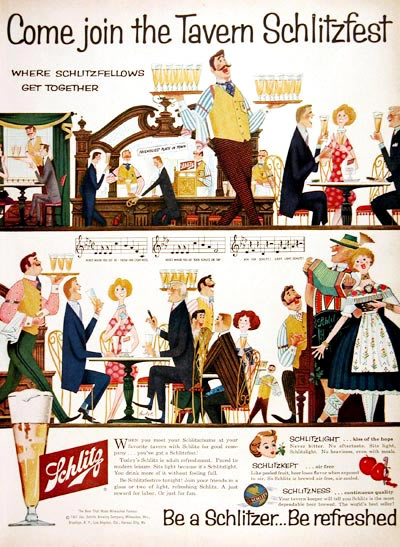
Tuesday’s ad is for Schlitz, from 1957, during one of my favorite ad campaigns by any brewer: Schlitzerland. Schlitzerland featured some great retro-style illustrations (though at the time perhaps they weren’t quite so retro). This one shows the happiest people in the world singing and drinking Schlitz in a tavern — the kind “Where Schutzfellows Get Together.”

57schlitzbeer

Filed Under: Art & Beer, Beers Tagged With: Advertising, History, Schlitz

UK Gov’t Statistics On Women Drinking Found To Be Wrong

April 19, 2011 By Jay Brooks

ofc-nat-stats
For the second time in a few years, a UK Government agency has admitted to making a mistake regarding statistics used in the creation and furtherance of alcohol policy. The first, in 2007, was when the UK’s Department of Health revealed that the definition of a hazardous drinker, that is what the safe limits of alcohol intake were said to be, was completely made up, quite literally “plucked out of the air.”

On Monday, the UK’s Office for National Statistics (ONS) “admitted that it misrepresented the trends in alcohol consumption and has issued a sincere apology to the Portman Group, the drinks industry organisation that champions responsible drinking.”

According to Straight Statistics:

In a report about the productivity of the NHS published at the end of last month, the claim was made that the proportion of women drinking more than 14 units a week had increased by a fifth since 1998, leading to a greater demand for healthcare. As Straight Statistics reported here, there was no justification for such a claim.

A change in methodology for measuring alcohol consumption in 2006 creates a break in the time series. If not allowed for, this gives the impression that the number of women who exceed 14 units a week has indeed increased. Plenty of anti-drink campaigners are happy to spread this false message but it came as a shock when the ONS did so.

David Poley, chief executive of the Portman Group wrote to Stephen Penneck, Director General of the ONS, who has now replied admitting that Mr Poley’s concerns are “entirely justified”. He blames a “lapse in the quality assurance process by which we check carefully the accuracy and reliability of any information that is for publication … unfortunately in this rare instance a key issue went unnoticed.”

The article and press release have been amended. The article, accessible here, is now proceeded by a correction notice. The press release now reads: “The percentage of males and females consuming over the weekly recommended alcohol limits declined from 2006 to 2009.”

Mr Penneck’s response is prompt, straightforward, and makes no attempt to fudge the issue. If only it were equally easy to persuade the media to look more critically at its assumptions about drinking being out of control.

At least they admitted their error. I doubt the same would be true on this side of the pond, where statistical errors tend to live in perpetuity if they serve the anti-alcohol agenda. But the original stories that parroted the incorrect statistics that drinking for women has increased in The Daily Telegraph, the Daily Mail and the Daily Star are still out there and, as far as I know, have not been corrected. They can’t be, really, because the stories focused on the false problem at the heart of the mistake. And that’s the same here, too, as propaganda — even after it’s been disproved — is still used by numerous anti-alcohol groups. Repeat a lie often enough and … well, you know the rest.

Filed Under: Editorial, News, Politics & Law Tagged With: Prohibitionists, Statistics, UK, Women

A Texas Bar & The Power Of Prayer

April 19, 2011 By Jay Brooks

humor
It reads like a joke, so I don’t know if it’s true or not, though it does come from the Clark County Democrat of Grove Hill, Alabama from late October, 2009. Thanks to Pete Slosberg, who sent me the link. Apparently, a Texas beer joint sues church…. Here’s the joke … er, story:

In a small Texas town, (Mt. Vernon) Drummond’s bar began construction on a new building to increase their business. The local Baptist church started a campaign to block the bar from opening with petitions and prayers. Work progressed right up till the week before opening when lightning struck the bar and it burned to the ground.

The church folks were rather smug in their outlook after that, until the bar owner sued the church on the grounds that the church was ultimately responsible for the demise of his building, either through direct or indirect actions or means.

The church vehemently denied all responsibility or any connection to the building’s demise in its reply to the court.

As the case made its way into court, the judge looked over the paperwork. At the hearing he commented, “I don’t know how I’m going to decide this, but as it appears from the paperwork, we have a bar owner who believes in the power of prayer, and an entire church congregation that does not.”

Filed Under: Just For Fun Tagged With: Humor, Pubs, Religion & Beer, Texas

Beer In Ads #350: The Rheingold Bird House

April 18, 2011 By Jay Brooks

ad-billboard
Monday’s ad is for Rheingold, from 1952, featuring Miss Rheingold for that year, Anne Hogan, putting up a bird house on a fine Spring day.

Rheingold-1952

Filed Under: Art & Beer, Beers Tagged With: Advertising, History

Rare Beer Prices On eBay

April 18, 2011 By Jay Brooks

ebay
A GT Wharton posted an interesting survey that he conducted about the prices people will bay for rare beer on eBay. His article, entitled Market Behavior for Rare Beer: eBay Auction Prices in Review appeared today on Rate Beer’s Hop Press. It appears to be a quite thorough look at auction prices realized over a one-month period. His dataset included 887 auctions. The average price was $122 ($137 w/shipping included). $9.50 was the low price and $999 the highest.

The five most expensive auctions by 12oz volume were:

  1. Midnight Sun M: $544.77
  2. Cantillon Don Quijote: $312.40
  3. Cantillon Rose de Gambrinus 1992 Vintage: $284.00
  4. Russian River Depuration: $265.07
  5. Flossmoor Station Wooden Hell: $260.12

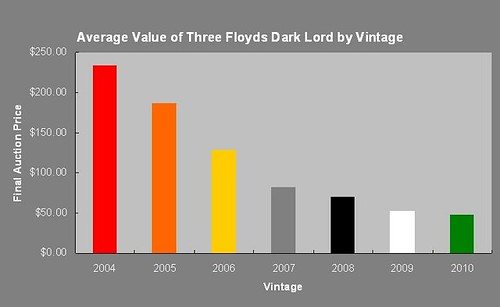
And here, for example, is a chart showing “Average Value of Three Floyds Dark Lord by Vintage.”
Wharton-Ebay1

Interesting stuff. He doesn’t go into the moral dilemma of selling beer on eBay and the fact that most brewers decry the practice, but from a merely numbers perspective it’s worth a read.

Filed Under: Beers, Editorial, Politics & Law Tagged With: Business, Websites

When Science Becomes Propaganda: The Caffeine & Alcohol Conundrum

April 18, 2011 By Jay Brooks

science
Ugh. To me there’s nothing worse than junk science, especially when it’s in the service of an agenda. And that’s how this latest “study” in the journal Alcoholism: Clinical and Experimental Research comes across. The title of the “study” is Effects of Energy Drinks Mixed with Alcohol on Behavioral Control: Risks for College Students Consuming Trendy Cocktails and was conducted at the Universities of Northern Kentucky and the Maryland School of Public Health. Here’s how the press release for the study explains it:

  • A new laboratory study compares the effects of alcohol alone versus alcohol mixed with an energy drink on a cognitive task, as well as participants’ reports of feelings of intoxication.
  • Results show that energy drinks can enhance the feeling of stimulation that occurs when drinking alcohol.
  • However, energy drinks did not alter the level of behavioral impairment when drinking alcohol, particularly for impaired impulse control.
  • The combination of impaired impulse control and enhanced stimulation may make energy drinks combined with alcohol riskier than alcohol alone.

Energy drinks mixed with alcohol, such as Red Bull™ and vodka, have become trendy. While this consumption has been implicated in risky drinking practices and associated accidents and injuries, there is little laboratory research on how the effects of this combination differ from those of drinking alcohol alone. A recent laboratory study, comparing measures of intoxication due to alcohol alone versus alcohol/energy drink, has found that the combination of the energy drink enhanced feelings of stimulation in participants. However, the energy drink did not change the level of impairment for impulsive behavior. These findings suggest that energy drinks combined with alcohol may increase the risks associated with drinking.

But take a closer look at what that says. The caffeine stimulates. Well, duh. That’s what caffeine does. Did anybody doubt that? Then the study goes on to say that “energy drinks did not alter the level of behavioral impairment when drinking alcohol,” meaning it didn’t make people more drunk. Then they conclude combining caffeine and alcohol “may increase the risks associated with drinking [my emphasis].”

Here’s how they conducted it:

Marczinski [lead author] and her colleagues randomly assigned 56 college student participants (28 men, 28 women), between the ages of 21 and 33, to one of four groups that received four different doses: 0.65 g/kg alcohol, 3.57 ml/kg energy drink, energy drink/alcohol, or a placebo beverage. The participants’ behavior was measured on a task that measures how quickly one can execute and suppress actions following the dose. Participants also rated how they felt, including feelings of stimulation, sedation, impairment, and levels of intoxication.

“We found that an energy drink alters the reaction to alcohol that a drinker experiences when compared to a drinker that consumed alcohol alone,” said Marczinski. “A consumer of alcohol, with or without the energy drink, acts impulsively compared to when they had not consumed alcohol. However, the consumer of the alcohol/energy drink felt more stimulated compared to an alcohol-alone consumer. Therefore, consumption of an energy drink combined with alcohol sets up a risky scenario for the drinker due to this enhanced feeling of stimulation and high impulsivity levels.”

“To reiterate,” said Arria, “the investigators found that the presence of an energy drink did not change the level of impairment associated with alcohol consumption.” It did, however, change the perception of impairment.

“The findings from this study provide concrete laboratory evidence that the mixture of energy drinks with alcohol is riskier than alcohol alone,” said Marczinski. “College students need to be aware of the risks of these beverages. Moreover, clinicians who are working with risky drinkers will need to try and steer their clients away from these beverages.”

But that’s hardly “concrete” as she characterizes it. In fact, it’s the very opposite of concrete. It didn’t change impairment, just how people felt about it, how they perceived it. From that “insight” they concluded that since being stimulated “sets up a risky scenario for the drinker” that therefore the risk is greater. And they recommend that people should “be aware of the risks.” So far, so good. But if you didn’t realize drinking coffee after alcohol would stimulate you, perhaps you shouldn’t be in college after all. Maybe it’s time to lower your sights if that obvious bit of wisdom eluded you. I hear McDonald’s is hiring.

When Marczinski states that “[y]oung people are now drinking alcohol in different ways than they have in the past” I have to wonder what her evidence is for that nonsense. People have been mixing caffeine and alcohol for as long as the two have been around, I’d wager. This is one of those generational things, where the older one always believes the younger generation is worse than they were. The only difference between when I was a kid and now, at least regarding caffeine and alcohol, is that you don’t have to go to the trouble of mixing it yourself.

And I shouldn’t have to say this, but I’m not a fan of alcopops or alcoholic drinks with caffeine added (that is not naturally occurring like many coffee stouts, for example). But for me, that’s not the issue. The issue is society going out of its mind over a perceived problem for which there is only anecdotal evidence that there even is a problem. And this study seems like more of the same. I don’t like these drinks, don’t drink them myself, but I don’t think they should be banned just because some people don’t like them. There are obviously adults who bought them, and want to continue buying them, and they shouldn’t be removed from shelves just so that kids can’t buy them. Kids are already prohibited from buying them. If kids can still get them, that’s an entirely different problem. Kids can’t own guns either, but I don’t see any movement to ban all guns so that we can keep them out of the hands of children. That’s just not how a society should function. We shouldn’t make the world safe for our children by only allowing kid friendly products to be in it.

In the end, this “study” is hardly the hard evidence that the caffeine and alcohol conundrum has now been solved and they’ve found the data to close the book on this scourge. Even its authors know as much, as they use qualifying words all over the place. Their hesitation is right there in the title of the press release, which is “Drinking energy beverages mixed with alcohol may be riskier than drinking alcohol alone.” [my emphasis.] Up front, it tells you this is not as conclusive as you might otherwise think because they admit that a greater risk is simply possible. Beyond using an almost laughable 56 test subjects, the study simply jumps to anecdotal conclusions that are not supported by what passes for hard data. There really isn’t any hard data beyond people’s feelings after having consumed alcohol and then alcohol with caffeine and the authors then concluding those feelings might turn into actions that were riskier.

But even as honestly as the study states that their “findings suggest that energy drinks combined with alcohol may increase the risks associated with drinking,” naturally that’s not how it’s being reported. Every headline has essentially removed the qualifying “might” and made it sound far scarier and more conclusive than it really is. Here’s just a few examples.

Combining Energy Drinks with Alcohol More Dangerous Than Drinking Alcohol Alone at Partnership for a Drug Free America and as linked to a Join Together e-mail blast. And that report begins by stating that “A new study finds that consuming a caffeine-infused energy drink combined with alcohol is more dangerous than drinking alcohol alone.” But that’s not what the study concluded at all.

Likewise, HealthDay’s headline was Alcohol-Energy Drink Combo Riskier Than Booze Alone, Study Says, MedPage states Alcohol and Energy Drinks, a Risky Combination and News Feed Researcher claims Study: Alcohol, Energy Drinks Are Risky Combo. But again, those headlines are misleading. That’s not what the “study” claims. The “study” never even mentions drunk driving, but sure enough some of the news reports do. All the “study” says is that drinking alcohol and caffeine might make you feel more stimulated which might possibly lead you to act more impulsively, which might make you engage in riskier behaviors. Maybe. Maybe we can agree that’s not exactly science, but propaganda.

Filed Under: Editorial, News, Politics & Law Tagged With: Prohibitionists, Propaganda, Science, Statistics

Beer In Art #123: Anthony Picone’s Beer Illustrations

April 17, 2011 By Jay Brooks

art-beer
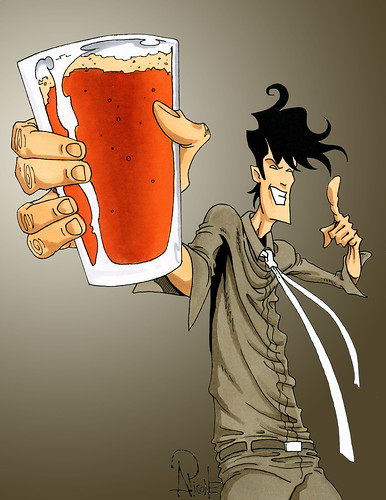
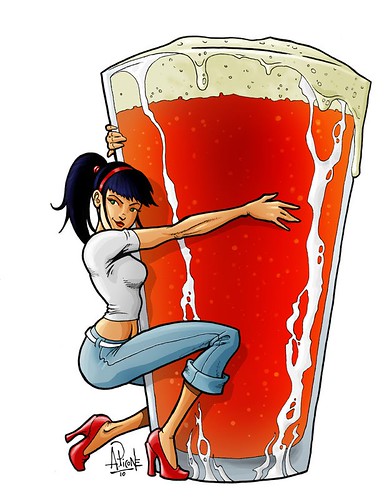
This week’s works of art are by Brooklyn illustrator Anthony Picone, whose art can be found on his blog Ant Stuff. This first one is called “Red Beer.”

picone-red-beer

This second one was created for Houston Beer Week.

picone-sexy-beer

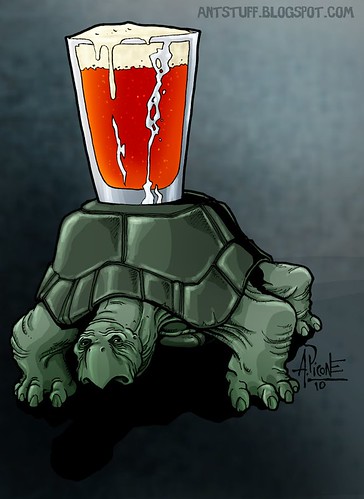
And I like the Beer Turtle, similar to the Iroquois creation myth where the world rode on the back of a giant turtle.

picone-beer-turtle

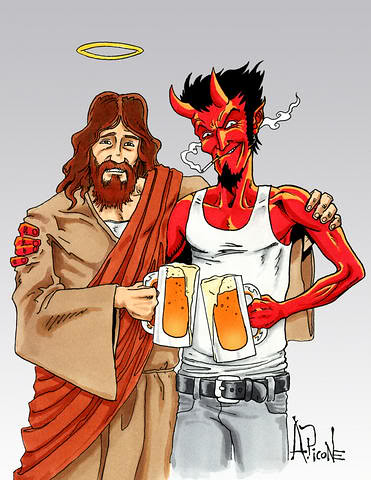
Forgivable Sin shows Jesus and Satan sharing a beer. See beer can solve any problem. Good and evil? Have a beer.

picone-forgivable-sin

Here’s Tiki Beer and Viking with a Beer.

picone-tikibeer picone-beer-viking

And Tin Man Beer along with Bird Beer.

picone-tinbeer picone-birdbeer

And Picone seems to have a thing for showing pint glasses affection.

picone-beerhug picone-squeeze

And finally, here’s some Hot Pints.

picone-hot-pints

That’s honestly a small sample of his beer-themed work. He also draws a lot of zombies, monsters, and assorted characters, all of which can be seen at his Antstuff blog.

Filed Under: Art & Beer, Beers Tagged With: New York

The Brain and Alcohol Research Project

April 17, 2011 By Jay Brooks

trinity-college
Trinity College, in Hartford, Connecticut, at the end of March released some preliminary results after three years of a five-year study entitled the Brain and Alcohol Research Project. In a press release entitled What Students’ Brains Have Told Us about the Effects of Binge Drinking, they revealed the following:

Young adults who binge drink tend to perform worse in class than normally would have been expected, but only in the first year of college. After that, drinking to excess produces no discernible difference in academic performance.

So the obvious takeaway from that is that during a student’s first year away from home and away from parental rule, young adults tend to go a little wild that first year but then settle down into academic life for the remaining three years of their four-year college experience. They may not stop drinking, but they figure out how to hit the books, too. It seems rather predictable when you think about, especially when there’s virtually no alcohol education prior to college and in some states even parents are forbidden from educating their own children about drinking.

But it also seems to fly in the face of the neo-prohibitionist hue and cry about underage drinking being as bad for student performance as believed. And undoubtedly the worst of it is because it’s underground as a result of the minimum age being 21 instead of a more reasonable 18.

Also known as BARCS (for Brain and Alcohol Research with College Students), the project is “a large-scale longitudinal study that includes more than 2,000 college students from diverse backgrounds, set out to definitively address previously unanswered questions such as: Can heavy drinking in college affect brain structure and grades? If so, is it related to the overall amount of alcohol consumed or more to consumption patterns, such as binging and blackouts? Why is it that many students drink heavily in college but only a minority goes on to have alcohol problems after college? Are all adolescents affected equally by alcohol in terms of possible effects on brain and risk for later alcohol abuse? Is there a way to identify the people who will be longer-term problem drinkers?”

Unfortunately, I believe they begin with a failed premise. The study defines binge drinking “as a pattern of drinking that raises a person’s blood alcohol content to 0.08 percent or above.” That means drinking enough to be considered drunk at the lowest BAC allowed in most jurisdictions is the same as binge drinking. It’s amazing how what it means to binge drink keeps getting lower and lower, presumably in an effort to make the perceived problem seem increasingly worse. But this greater incidence of binge drinking is due entirely to continually redefining its meaning. Equating binge drinking with merely being drunk (under the legal definition) removes any distinction between the two and renders it meaningless.

Filed Under: Editorial, News, Politics & Law Tagged With: Prohibitionists, Statistics

« Previous Page
Next Page »

Find Something

Northern California Breweries

Please consider purchasing my latest book, California Breweries North, available from Amazon, or ask for it at your local bookstore.

Recent Comments

  • Bob Paolino on Beer Birthday: Grant Johnston
  • Gambrinus on Historic Beer Birthday: A.J. Houghton
  • Ernie Dewing on Historic Beer Birthday: Charles William Bergner 
  • Steve 'Pudgy' De Rose on Historic Beer Birthday: Jacob Schmidt
  • Jay Brooks on Beer Birthday: Bill Owens

Recent Posts

  • Beer Birthday: Steve Wagner April 5, 2026
  • Beer In Ads #5206: For The Feast Of Easter April 5, 2026
  • Historic Beer Birthday: Hew Ainslie April 5, 2026
  • Historic Beer Birthday: Robert Leo Hulseman April 5, 2026
  • Beer Birthday: Tom McCormick April 5, 2026

BBB Archives

Feedback

Head Quarter
This site is hosted and maintained by H25Q.dev. Any questions or comments for the webmaster can be directed here.