Brookston Beer Bulletin

Jay R. Brooks on Beer

  • Home
  • About
  • Editorial
  • Birthdays
  • Art & Beer

Socialize

  • Dribbble
  • Email
  • Facebook
  • Flickr
  • GitHub
  • Instagram
  • LinkedIn
  • Pinterest
  • RSS
  • Twitter
  • YouTube

Powered by Genesis

Brookston Football Pool Winners

February 7, 2011 By Jay Brooks

football
With a most satisfying conclusion to the Super Bowl yesterday, the winners of the Brookston Football Pools 2010 have been decided. Congratulations to everyone who played this year, the winners are:

Pick ‘Em League

  1. nighthops (174)
  2. Austin Hopheads (165)
  3. TIE: Beerguy101, HoldFastBrewery (160)
  4. TIE: The Beer Runners, bbbilly, GreenMachine-MWA, OakshireMatt (158)
  5. Piranha Pale Riders (157)
  6. Mr. Nuts (156)
  7. Bakersfield Bills (155)
  8. TIE: Beerman49, Hopstain (154)
  9. Little Guy (152)
  10. TIE: Fort Braggers, Pour Curator (151)

Congratulations to Lucas (a.k.a. nighthops). He took an early lead and never let go.

This was the first year they kept the picks going through the playoffs. It looks like next year, we’ll be able to assign more points for correct playoff picks which could keep thinks lively down to the end. I’m thinking it would make sense for Wildcard week to be worth 2, then 3, then 4 and finally 5 (or more?) for picking the Super Bowl winner.

Survivor League

It took 16 weeks before a winner emerged. In fact, two of the remaining three were both knocked out that week — GreenMachina-WMA and Hopstain. That allowed DOZEer to become the winner, having only one miss for the entire season.

Congratulations to Paul (a.k.a. DOZEer) for the being the lone survivor.

Thanks to everybody who played. See you next year.

Filed Under: Just For Fun, News, Related Pleasures Tagged With: Awards, Football, Sports

Wikio Beer Blog Rankings For February 2011

February 7, 2011 By Jay Brooks

wikio
The February 2011 standings are out for Wikio’s Beer Blogs. For a third straight month, I’m still hanging on to the top spot. Here’s what happened to the Top 20 over last month:

Wikio February 2011 Beer Blog Rankings

1Brookston Beer Bulletin (+/-0)
2Beervana (+/-0)
3Brewpublic (+1)
4The New School (-1)
5Appellation Beer: Beer From a Good Home (+/-0)
6Washington Beer Blog (+5)
7A Good Beer Blog (-1)
8The Not So Professional Beer Blog (Not in Top 20 for Jan.)
9It’s Pub Night (+11)
10Seattle Beer News (+8)
11Drink With The Wench (-3)
12BetterBeerBlog (-3)
13Beer 47 (Not in Top 20 for Jan.)
14Brewed For Thought (+1)
15KC Beer Blog (+4)
16The Session Beer Project (Not in Top 20 for Jan.)
17Seen Through a Glass (-4)
18Burgers & Brews (-8)
19I Love Beer (Not in Top 20 for Jan.)
20An Ear For Beer (Not in Top 20 for Jan.)

Ranking made by Wikio

I again added the relative movements of each blog from last month. This month, four new blogs cracked the Top 20, and four dropped off. Again, I’ll keep stressing that it’s just a bit of fun so long as we don’t take it too seriously.

Filed Under: Just For Fun, News Tagged With: Awards, Blogging, North America, Websites

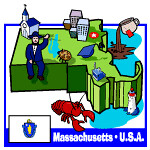
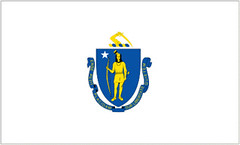
Massachusetts Beer

February 6, 2011 By Jay Brooks

massachusetts
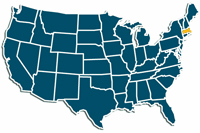
Today in 1788, Massachusetts became the 6th state.

Massachusetts
State_Massachusetts

Massachusetts Breweries

  • 50 Back
  • Amherst Brewing
  • Barleycorn’s Craft Brew
  • Barrington Brewery
  • Berkshire Brewing
  • Blue Hills Brewery
  • Boston Beer Co.
  • Boston Beer Co. (Corporate)
  • Boston Beer Works
  • The Brewery Exchange
  • The Brewmaster’s Tavern
  • Buzzards Bay Brewing (now brewing as “Just Beer”)
  • Cambridge Brewing
  • Cape Ann Brewing
  • Cape Cod Beer
  • Cisco Brewers
  • Cody Brewing
  • Deadwood Cafe & Brewery
  • Deja Brew BOP
  • Element Brewing
  • Endurance Brewing
  • Gardner Ale House Brewery & Restaurant
  • Harpoon Brewery
  • Haverhill Brewery
  • High & Mighty Beer Co.
  • Hyland Orchard Brewery
  • Idle Hands Craft Ales
  • John Harvard’s
  • Just Beer
  • Lefty’s Brewing
  • Lowell Brewery
  • Mayflower Brewing
  • Mercury Brewing
  • Moonshot Beer
  • Mystic Brewery
  • Nashoba Valley Brewery
  • New Century Brewing
  • Northampton Brewery
  • Notch Session Ale
  • Nowhere Brewing
  • Offshore Ale
  • Opa Opa Steakhouse & Brewery
  • Paper City Brewery
  • Peak Organic Brewing
  • People’s Pint
  • Pioneer Brewing
  • Pittsfield Brew Works
  • Pretty Things Beer & Ale Project
  • Rapscalion Brewery
  • Rock Bottom
  • Salem Beer Works
  • Samuel Adams
  • Sherwood Forest Beer
  • Sommerville Brewing
  • The Tap Brewpub
  • Wachusett Brewing
  • Wandering Star Brewing
  • Watch City Brewing
  • Wormtown Brewery

Masschusetts Brewery Guides

  • Beer Advocate
  • Beer Me
  • Rate Beer

Guild: Massachusetts Brewers Guild

State Agency: Massachusetts Alcoholic Beverage Control Commission

maps-ma

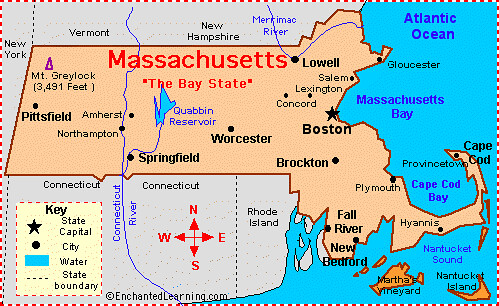
  • Capital: Boston
  • Largest Cities: Boston, Worcester, Springfield, Lowell, Cambridge
  • Population: 6,349,097; 13th
  • Area: 10,555 sq.mi., 44th
  • Nickname: The Bay State
  • Statehood: 6th, February 6, 1788

m-massachusetts

  • Alcohol Legalized: December 5, 1933
  • Number of Breweries: 40
  • Rank: 15th
  • Beer Production: 4,265,155
  • Production Rank: 14th
  • Beer Per Capita: 20.3 Gallons

massachusetts

Package Mix:

  • Bottles: 49.8%
  • Cans: 39.4%
  • Kegs: 10.5%

Beer Taxes:

  • Per Gallon: $0.11*
  • Per Case: $0.24*
  • Tax Per Barrel (24/12 Case): $3.30*
  • Draught Tax Per Barrel (in Kegs): $3.30*
    • * plus sales tax (an exemption ended in 2009)

Economic Impact (2010):

  • From Brewing: $507,113,526
  • Direct Impact: $1,951,782,007
  • Supplier Impact: $1,379,865,866
  • Induced Economic Impact: $1,153,744,790
  • Total Impact: $4,485,392,664

Legal Restrictions:

  • Control State: No
  • Sale Hours: On Premises: 8:00 a.m.–2:00 a.m. by state law, although individual cities and towns may prohibit sales before 11:00 a.m. and after 11:00 p.m. Not before 11:00 a.m. on Sunday.
    Off Premises: 8:00 a.m.–11:00 p.m., or 8:00 a.m.–11:30 p.m. on the day before a holiday. Not before noon on Sunday.
  • Grocery Store Sales: Yes
  • Notes: No individual, partnership, or corporation may have more than three off-premises licences in the state, nor more than two in any city, nor more than one in any town. No individual, partnership, or corporation not resident or headquartered in Massachusetts may apply for a license, although one may devolve upon such a corporation.

    On-premises regulations: No discounts at specific times (i.e. no “Happy Hour” discounts) or for specific individuals, no fixed-price open bar or all-you-can-drink (except at private functions), no more than two drinks per individual at any one time, no pitchers for fewer than two people, no drinking contests, no drinks as prizes, no free drinks.

    Off-premises sale of alcohol is prohibited on the last Monday in May (Memorial Day), Thanksgiving Day, Christmas Day, and the day after Christmas if Christmas falls on a Sunday.[6]
    Sale of alcohol is prohibited during polling hours on election days (subject to local exceptions).[6]
    “Malt beverages” defined as having not more than 12% alcohol by weight.

massachusetts-map

Data complied, in part, from the Beer Institute’s Brewer’s Almanac 2010, Beer Serves America, the Brewers Association, Wikipedia and my World Factbook. If you see I’m missing a brewery link, please be so kind as to drop me a note or simply comment on this post. Thanks.

For the remaining states, see Brewing Links: United States.

Filed Under: Beers, Breweries Tagged With: Massachusetts

Wisconsin Food Pyramid

February 6, 2011 By Jay Brooks

nfl-gb
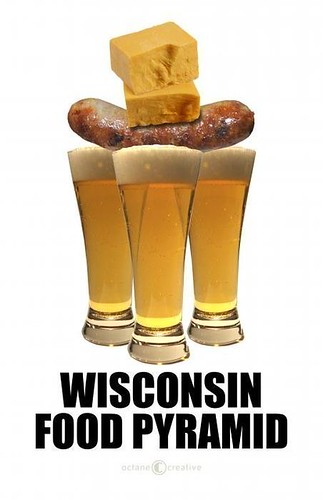
I imagine the “Wisconsin Food Pyramid” was originally meant to be derogatory, but what could be a better meal for a football game than sausages (cooked in beer), cheese and beer? That’s what I’m having at my Super Bowl party, along with chips, pretzels and more cheese. And Sean Paxton, the Homebrew Chef, has promised to bring Shepherd’s Pie. Yum. Go Packers!

wis-food-pyramid

Filed Under: Food & Beer, Just For Fun Tagged With: Food, Football, Humor, Sports, Wisconsin

Guinness Ad #54: Baby Kangaroo

February 5, 2011 By Jay Brooks

guinness-toucan
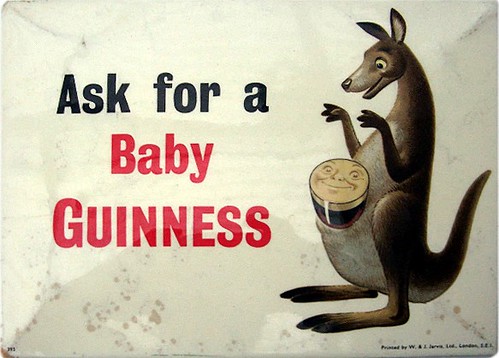
Our 54th Guinness poster by John Gilroy shows a kangaroo whose joey has been replaced by a pint of Guinness. Though surprisingly she looks quite pleased about the switcheroo.

Guinness-baby

Filed Under: Art & Beer, Beers Tagged With: Advertising, Guinness, History

Pliny the Younger 2011

February 5, 2011 By Jay Brooks

russian-river
Yesterday was Pliny the Younger Day at Russian River Brewing in Santa Rosa, California. I arrived a little before eleven, and owner/brewer Vinnie Cilurzo let me in the back of the brewpub. The difference between last year’s release day and this year’s was immediately apparent. There was relative calm in the place, the bar was not three or four deep, with people pushing against the bar clamoring for attention. Perhaps most importantly, both Vinnie and Natalie seemed relaxed, too.

Last year, you may recall, Russian River sold out of of Pliny the Younger, their Triple IPA that’s released just once each year, in just eight short hours. The brewpub was filled to the gills and the staff was understandably stressed and exhausted. The main reason this happened last year was nobody expected so many people to order growlers, and having placed few restrictions on them, they continued to honor orders until the entire supply of beer ran out.

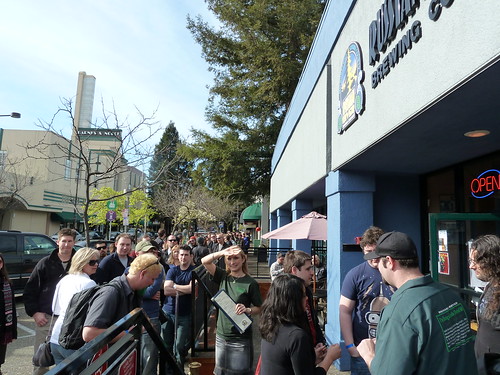
The line outside to get in was long all day

Having learned from last that experience, this year no Pliny the Younger growlers were permitted. They also managed the door and made sure it was never too crowded inside, which made for a much more enjoyable experience. A line of people that stretched down most of the block outside waited patiently for their turn to come inside. As people left, a new customer took their place so there was a steady stream of new patrons.

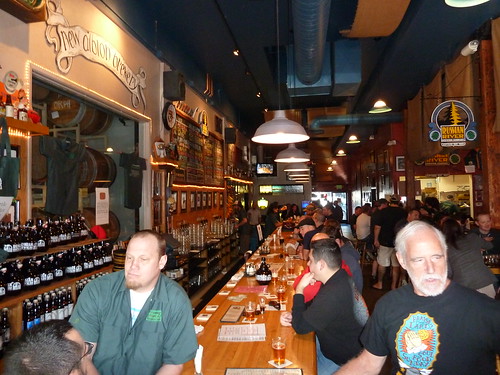
Pliny the Younger Day bar scene

I actually thought this year’s Pliny the Younger was even better than last year. It seemed more balanced and the hop wallop wasn’t as vegetal or oniony as I remember it being last year. There is nothing quite like having it fresh from the source on the day it’s released. And this year, they’ve allocated enough beer so it will be available for at least two weeks, giving many more people a chance to try get some.

Pliny the Younger in the sunlight

It will also begin appearing in select accounts around the Bay Area, so keep an eye on your favorite water hole. But act fast, last year kegs of Pliny the Younger kicked at some bars in a matter of hours.

Vinnie, me and Joe Tucker, from Rate Beer
Vinnie Cilurzo, me and Joe Tucker (from Rate Beer) enjoying a day at Russian River Brewing.

Below is a slideshow of Pliny the Younger Day. This Flickr gallery is best viewed in full screen. To view it that way, after clicking on the arrow in the center to start the slideshow, click on the button on the bottom right with the four arrows pointing outward on it, to see the photos in glorious full screen. Once in full screen slideshow mode, click on “Show Info” to identify each photo.

Filed Under: Beers, Breweries, Events, Reviews Tagged With: California, Northern California, Seasonal Release

Beer In Ads #304: Pabst Blue Ribbon Touch

February 4, 2011 By Jay Brooks

ad-billboard
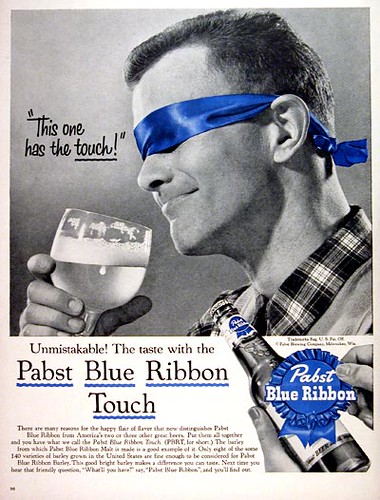
Friday’s ads feature two for Pabst Blue Ribbon from 1956. Both are spot color ads depicting a blindfolded man tasting Pabst and declaring “This one has the touch,” whatever that means.

56pabstblueribbonbeer

Below each photo it also reads. “Unmistakable! The taste with the Pabst Blue Ribbon touch.”

56pabstbeer

Filed Under: Art & Beer, Beers Tagged With: Advertising, History, Pabst

Session #48: Bottle, Can, Keg or Cask?

February 4, 2011 By Jay Brooks

beer-bottle-brown beer-can-beer keg cask-firkin
Our 48th Session is hosted by Simon Johnson of the Reluctant Scooper. He’s chosen as his topic the age-old question about which package is best: “Cask, Keg, Can, Bottle?.”

The method of beer dispense often raises the hackles of even the most seasoned beer drinker. Some evangilise about living, breathing cask as being the one true way. Others heartily support the pressurised keg. The humble tinny has its fans. Lovers of bottled beer, either conditioned or pasturised, can be equally voiciferous.

Perhaps you think that one method magnifiies a beer’s impact. Perhaps you won’t try a beer if it’s dispensed in a way you don’t agree with. Perhaps you’ve tried one beer that’s been dispensed every which way.

The question is simple but your answer may not be: Cask, Keg, Can, Bottle: Does dispense matter

session_logo_all_text_200

I’m not necessarily a champion of any one beer delivery system over the rest. It seems to me that each contributes something to the final product, the beer. And while I applaud CAMRA’s efforts, especially early on, they seem to be stuck in the past these days continuing to promote the idea that cask beer is the only beer, whereas many forward-thinking British brewers are making great beer that’s kegged and bottled. I personally feel they should embrace any beer that tastes good and lose their preoccupation with one delivery system. (I have been a member of CAMRA, but my membership is currently lapsed.) I should also say that’s only how CAMRA seems to me from 5,000 miles away, it’s just my perception. I could be totally off base on that.

keg-wooden That being said, I must confess a weakness for cask beer, and generally order a beer on cask or in a firkin if a bar offers one. But that has more to do with wanting to encourage every bar, or at least all the good ones, to keep at least some cask or firkin beer on their menu. That, and cask beer in the U.S. is still uncommon enough that I still get excited when I discover that a new place has some. I suspect if I lived in England where it is far more common, that my choices might be different. Certainly whenever I visit the UK I rarely order beer that’s not on cask, unless it’s something special that’s not available on cask, as is increasingly the case from small artisanal British and Scottish brewers.

I really do love cask beer, especially when comparing the same beer on cask and on keg or bottled. While many people complain about cask beer seeming flat, I think the lack of carbonation allows you to taste more of the flavors of the beer that are often masked by the CO2 in non-cask beer.

keg Which brings us to kegs, which for many, many beers work just fine, as far as I’m confirmed. Certainly nitrogen kegs have a smooth taste as a generality and many regular CO2 kegs have that bubbly carbonation that for some beers works quite well, many lager styles for example seem to me to be improved by the carbonation, which give them a cleanliness of sorts — scrubbing bubbles is how I often think of them.

beer-bottle-brown Bottles, of course, allow us to be able to drink many more beers from around the country and the world because they make it possible for the beer to travel farther and last longer. Of course, clear bottles and green bottles pervert those advantages with new problems, but brown seems to do a pretty good job. I once read that red bottles would actually offer the most UV light protection, but apparently they’re prohibitively expensive for some reason (or perhaps it’s just a matter of little or no demand?). I’ve actually only seen one red bottle, which was a specialty beer I picked up at the Trumer Brauerei in Salzburg, Austria. I’ve also seen white and blue bottles, too, but have no idea how they compare.

Then, of course, there’s bottle-conditioned beers, with live yeast in them that continue to ferment in the bottle. For me, they’re the preferred bottle for many, if not, most styles of beer. Interestingly, the Sierra Nevada Pale Ale in bottles — which is bottle-conditioned — uses a slightly different recipe for their kegged pale ale, and have been experimenting with essentially a keg-conditioned version that they’re hoping will more closely approximate the bottled version.

growler-2 Of course, the question also leaves out the hybrid package: growlers. Growlers are essentially a hand-bottled keg or cask beer that you can take home with you, but you have only a day or two in which to drink it. So it’s not exactly the best of both worlds, but it is a great way to try a draft-only beer in another setting.
beer-can-beer Cans are the wild card, I think. For so long, they were dismissed as a package. Back in the early days, brewers and other beer folk (myself included) hailed the brown beer bottle as the package for craft beer. So convincing was the argument at the time that I think it’s actually slowed the acceptance of craft beer in cans. Because the issues of beer in cans — specifically metal turbidity, which is metal leeching into the beer — have been largely solved. And beyond that, cans have many advantages over bottles. I’ve been involved in several side-by-side tastings of canned vs. kegged beer and the consensus in every case has been that no discernible difference can be detected. Is anyone yet doing a can-conditioned beer?

In the end, yes, I think the package does matter, but not to the point where I’d ever pass on a beer on that basis alone. Ultimately, it’s what the beer tastes like that’s most important. The package may determine that to some extent, and some do a better job with certain beers, but enough certainly seem suited to their primary package for it not to matter. As long as it ends up in my glass, I’m going to drink it, and I’ll probably enjoy it, too.

Filed Under: Beers, Editorial, The Session Tagged With: Bottles, Cans, Cask, Kegs

Beer In Ads #303: Miss Rheingold Goes Sailing

February 3, 2011 By Jay Brooks

ad-billboard
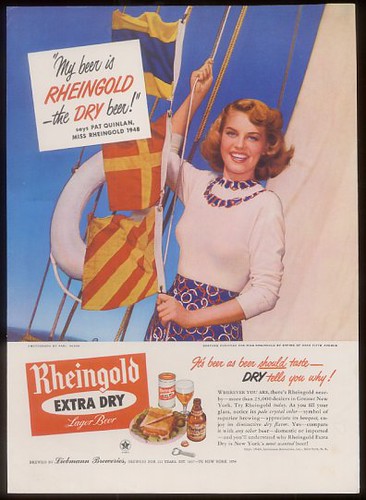
Thursday’s ad features Miss Rheingold for 1948, Pat Quinlan, on a sailboat. Man, can she wear a smile. I’m no fashionista, but doesn’t that hip skirt look more 1960s than 1948?

Rheingold-1948-3

Filed Under: Art & Beer, Beers Tagged With: Advertising, History

Thoughts On The New Dietary Guidelines From Beer Business Daily

February 3, 2011 By Jay Brooks

spirits-wine-beer
You most likely hard that the USDA released the quinquennial Dietary Guidelines for Americans at the end of last month. The 2010 version made a number of small, but significant changes with regard to food, such as “make half your plate fruits and vegetables” and “drink water instead of sugary drinks.”

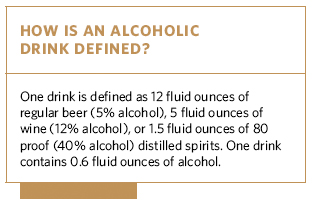
In Chapter 3, they also made one small change to how they define an “alcoholic drink.”

alcohol-defined

Harry Schuhmacher commented on the guidelines in today’s Beer Business Daily newsletter. With Harry’s permission, below I’ve reprinted his thoughts on the Dietary Guidelines and specifically the changes to the alcohol portion of them:

Earlier this week the USDA issued its 2010 Dietary Guidelines as it does every 5 years. It states: “One drink is defined as 12 fluid ounces of regular beer (5% alcohol), 5 fluid ounces of wine (12% alcohol), or 1.5 fluid ounces of 80 proof (40% alcohol) distilled spirits. One drink contains 0.6 fluid ounces of alcohol.”

Now, you’d think this maybe isn’t a big deal. Well, you’d be wrong on that. It is.

Here’s why: The previous USDA Dietary Guidelines five years ago had very similar language, although it was fought tooth and nail by the beer and wine lobbies. However, this time the feds added the crucial last sentence: “One drink contains 0.6 fluid ounces of alcohol.” [Emphasis added.]

This further puts the Feds on record as saying, basically, a drink is a drink is a drink, even though we all know in reality that’s not the case. You can be sure that Diageo and DISCUS — the spirits lobby — worked with a laser focus to get this sentence added. It’s the next step toward alcohol equivalency (for excise tax, labeling, and consumer access issues), even though Diageo and DISCUS have previously said this is not what they’re after.

LABELING: First let’s consider labeling. As we know, the federal TTB is considering (since 2003) allowing alcohol producers to include voluntarily display serving facts (which includes standard alcohol content for servings) on labels. This is an issue that large distillers support, but brewers and wineries typically oppose because some believe the push for serving facts is a stalking horse for equivalency.

INDUSTRY SPLIT ON STANDARD DRINK: The Wine Institute and DISCUS are on the same side of most issues, such as opposing the CARE Act, but standard drink isn’t one of them.

DISCUS followed the release of the Guidelines with a statement. “The Government today emphasized the scientific fact that a standard drink of beer, wine and distilled spirits each contains the same amount of alcohol,” said Dr. Monica Gourovitch, Distilled Spirits Council’s svp of scientific affairs. “Alcohol is alcohol and it all should be treated equally, as a matter of public health and public policy.”

Monica told our sister publication, WSD, that the updated definition is “very clear” and shows that “each standard drink contains the same amount of alcohol.” When looking at the science involved, each serving has the “same effect on the body — potential benefits and potential risks.” She also noted that the National Institute on Alcohol Abuse and Alcoholism (NIAAA) already defines a standard alcoholic drink as anything containing 0.6 fluid ounces.

Wait ….. 0.6 fluid ounces of alcohol? Not 0.5 fluid ounces? There are plenty of public health folks who defined drinks as having 0.5 fluid ounces of alcohol as a standard drink. Who, I wonder, lobbied the USDA to add that extra 0.1 fluid ounce to the definition?

The Wine Institute, for one, is livid. For once they are on the other side of DISCUS on an issue. The WI issued a statement on Tuesday, saying there is no such thing as a standard drink: “We agree with the time-tested definition of a serving as being 12 fl. oz. of regular beer, 5 fl. oz. of wine, or 1.5 fl. oz. of 80-proof distilled spirits but are concerned about the additional statement that each of the drinks contains the same amount of alcohol. A precise fluid-ounces-of-alcohol statement implies that the alcohol content is the same for every drink of wine, beer or distilled spirits when, in reality, alcohol content varies widely from drink to drink. Consumers should not be misled into believing there is such a thing as a ‘standard drink.’ In fact, the term ‘standard drink’ does not appear in the Dietary Guidelines.” This is true. But it doesn’t dull the fact that a federal agency has swallowed the equivalency argument hook, line and sinker while the rest of the industry sleeps.

The Beer Institute and the NBWA have remained mute on this issue, so far. But clearly it is important: As one alcohol politico told me: “Once the language is in a federal government guideline, it’s in the bloodstream.” What he meant by that is that, since the USDA has defined a drink as 0.6 ounces of alcohol, it gives the TTB cover to move forward with their “serving facts” labeling, and maybe it gives the states the argument to increase taxes on beer and wine and offer it at more times and in more channels, and maybe it gives the feds something to point to when considering an excise tax increase. It’s a slippery slope, my friends, toward equalization of taxes and access among the beverages, which works against beer and wine and is probably just bad public policy. In fact, if alcohol excise taxes were suddenly equivalent, it would virtually kill the wine and beer industries, and we’d be a nation of vodka swillers like Russia, wiping away 200+ years of cultural and policy differences between the beverages. It was Thomas Jefferson who logically first put forward the notion that moderation should be nurtured by the government by encouraging the consumption of beer and wine over spirits.

As usual, a distributor put it most succinctly: “So a Four Loko is the same as Jack Daniels is same as Coors Light is same as Mad Dog 20/20 is same as a hot 17% abv California cab is the same as an 11% abv Italian white? Really?”

It brings to mind the old story where August Busch III went to Capitol Hill and demonstrated to a Congressman considering equivalency that a drink is not a drink. He reportedly said, “I’ll drink these three Budweisers, and you drink these three dry martinis, and at the end we’ll see who is more intoxicated.” It’s a shame our beer industry leaders don’t pull more stunts like that.

Ethanol is ethanol, to be sure. But different types of bev-alc are consumed by the majority of Americans in different ways. Ethanol is ethanol, but a drink is not a drink.

Thanks Harry. If you don’t know about his Beer Business Daily, especially if you’re in the beer business, I highly recommend it. You really should subscribe to Harry’s newsletter.

Filed Under: Beers, Editorial, Food & Beer, Politics & Law, Related Pleasures Tagged With: Government, Guest Posts, Science

« Previous Page
Next Page »

Find Something

Northern California Breweries

Please consider purchasing my latest book, California Breweries North, available from Amazon, or ask for it at your local bookstore.

Recent Comments

  • Bob Paolino on Beer Birthday: Grant Johnston
  • Gambrinus on Historic Beer Birthday: A.J. Houghton
  • Ernie Dewing on Historic Beer Birthday: Charles William Bergner 
  • Steve 'Pudgy' De Rose on Historic Beer Birthday: Jacob Schmidt
  • Jay Brooks on Beer Birthday: Bill Owens

Recent Posts

  • Beer In Ads #5225: Fabled Ambrosia Of The Ancients April 17, 2026
  • Historic Beer Birthday: William O. Poth April 17, 2026
  • Beer In Ads #5224: Harvard Bock Beer April 16, 2026
  • Historic Beer Birthday: William H. Biner April 16, 2026
  • Historic Beer Birthday: Alan Eames April 16, 2026

BBB Archives

Feedback

Head Quarter
This site is hosted and maintained by H25Q.dev. Any questions or comments for the webmaster can be directed here.