Brookston Beer Bulletin

Jay R. Brooks on Beer

  • Home
  • About
  • Editorial
  • Birthdays
  • Art & Beer

Socialize

  • Dribbble
  • Email
  • Facebook
  • Flickr
  • GitHub
  • Instagram
  • LinkedIn
  • Pinterest
  • RSS
  • Twitter
  • YouTube

Powered by Genesis

Beer In Ads #5007: Lucky Lager Bock Beer vs. Karate

June 23, 2025 By Jay Brooks

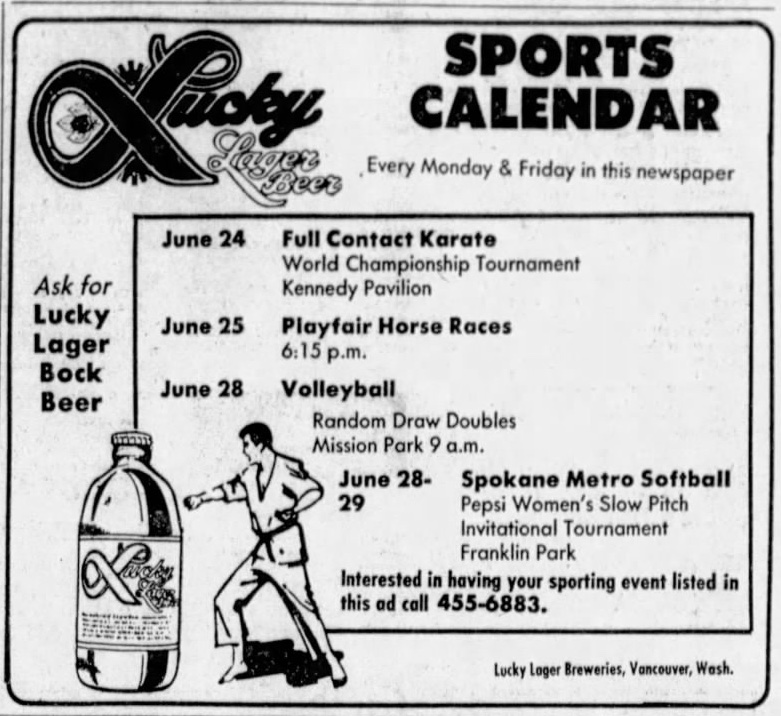
Last year I decided to concentrate on Bock ads. Bock, of course, may have originated in Germany, in the town of Einbeck. Because many 19th century American breweries were founded by German immigrants, they offered a bock at certain times of the year, be it Spring, Easter, Lent, Christmas, or what have you. In a sense they were some of the first seasonal beers. “The style was later adopted in Bavaria by Munich brewers in the 17th century. Due to their Bavarian accent, citizens of Munich pronounced ‘Einbeck’ as ‘ein Bock’ (a billy goat), and thus the beer became known as ‘Bock.’ A goat often appears on bottle labels.” And presumably because they were special releases, many breweries went all out promoting them with beautiful artwork on posters and other advertising.

Monday’s ad is for Lucky Lager Bock Beer. The ad was published on June 23, 1980. This one was for the Lucky Lager Breweries, which was located in Vancouver, Washington, among other places, and was originally launched in 1934. This ad ran in The Spokane Chronicle, of Spokane, Washington. This ad is isn’t all bock. In fact, bock seems more of an afterthought with the text “Ask for Lucky Lager Bock Beer” on the left edge of the ad. It’s really more of a “Sports Calendar” sponsored by Lucky Lager. But I do love the karate fight going on at the bottom between a bottle of Lucky Lager and a man employing “full contact karate.”
Filed Under: Art & Beer, Beers, Breweries, Just For Fun Tagged With: Advertising, Bock, History, Washington

Beer In Ads #5006: Valley Forge Bock Beer

June 22, 2025 By Jay Brooks

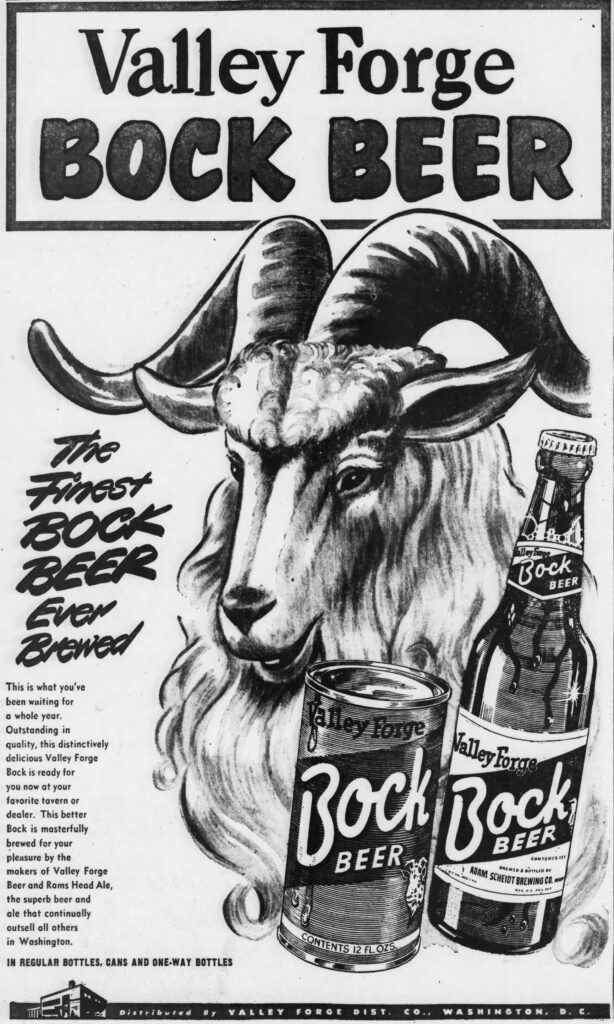
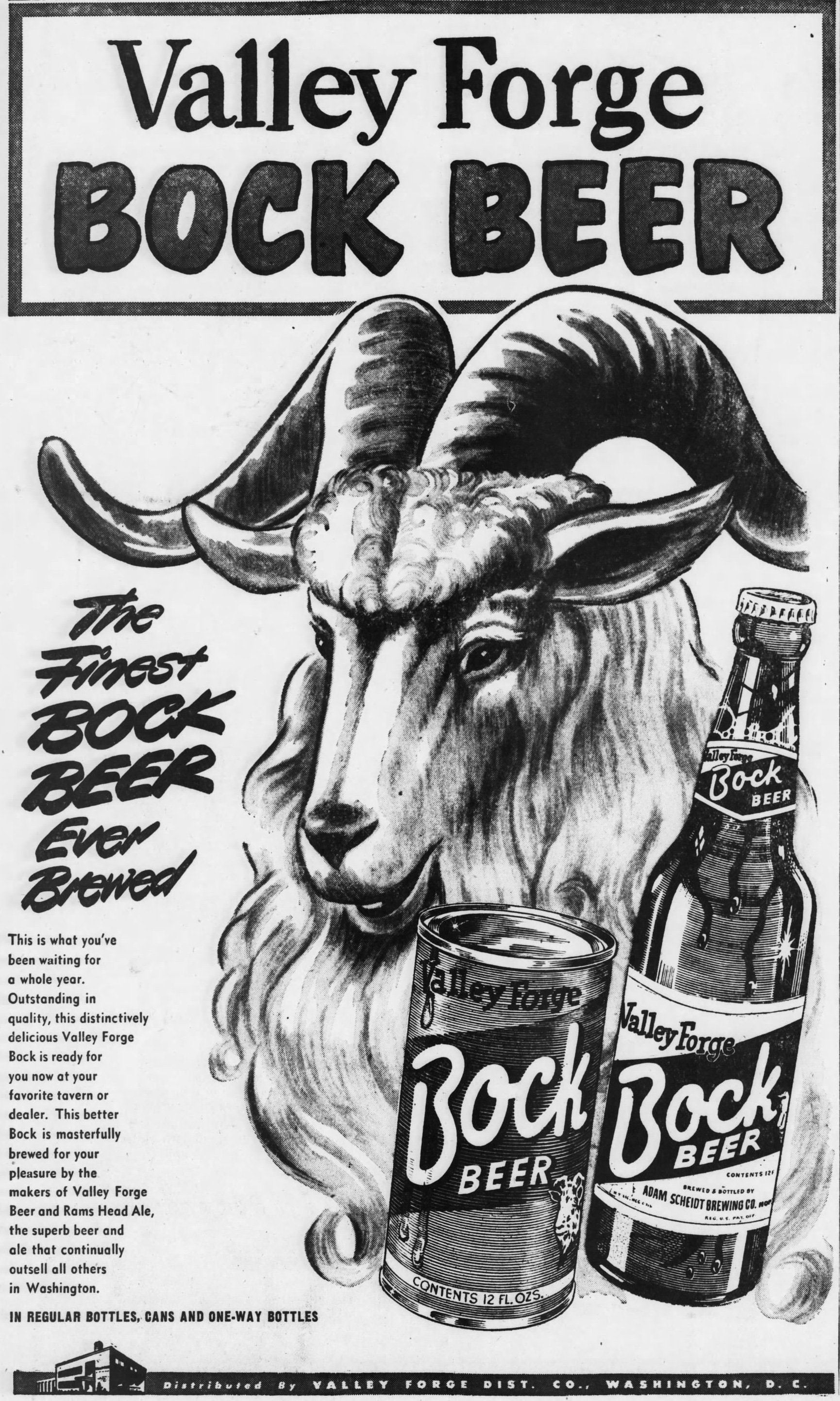
Last year I decided to concentrate on Bock ads. Bock, of course, may have originated in Germany, in the town of Einbeck. Because many 19th century American breweries were founded by German immigrants, they offered a bock at certain times of the year, be it Spring, Easter, Lent, Christmas, or what have you. In a sense they were some of the first seasonal beers. “The style was later adopted in Bavaria by Munich brewers in the 17th century. Due to their Bavarian accent, citizens of Munich pronounced ‘Einbeck’ as ‘ein Bock’ (a billy goat), and thus the beer became known as ‘Bock.’ A goat often appears on bottle labels.” And presumably because they were special releases, many breweries went all out promoting them with beautiful artwork on posters and other advertising.

Sunday’s ad is for Valley Forge Bock Beer. The ad was published in 1954. This one was for the Adam Scheidt Brewing Co., which was located in Norristown, Pennsylvania and was originally founded in 1866. This ad ran in The Evening Star, of Washington, D.C.

Filed Under: Art & Beer, Beers, Breweries, Just For Fun Tagged With: Advertising, Bock, History, Pennsylvania

Beer In Ads #5005: Valter & Droopy Love Old Imperial Bock

June 21, 2025 By Jay Brooks

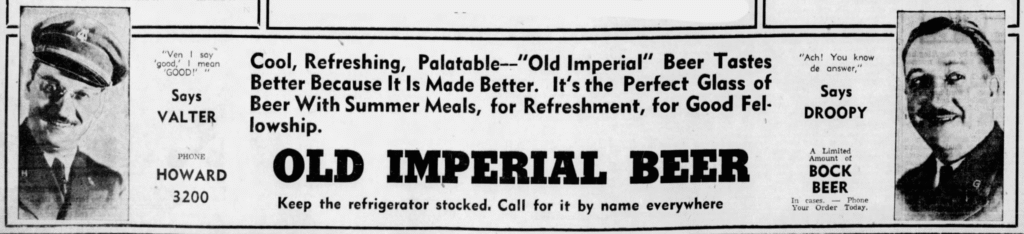
Last year I decided to concentrate on Bock ads. Bock, of course, may have originated in Germany, in the town of Einbeck. Because many 19th century American breweries were founded by German immigrants, they offered a bock at certain times of the year, be it Spring, Easter, Lent, Christmas, or what have you. In a sense they were some of the first seasonal beers. “The style was later adopted in Bavaria by Munich brewers in the 17th century. Due to their Bavarian accent, citizens of Munich pronounced ‘Einbeck’ as ‘ein Bock’ (a billy goat), and thus the beer became known as ‘Bock.’ A goat often appears on bottle labels.” And presumably because they were special releases, many breweries went all out promoting them with beautiful artwork on posters and other advertising.

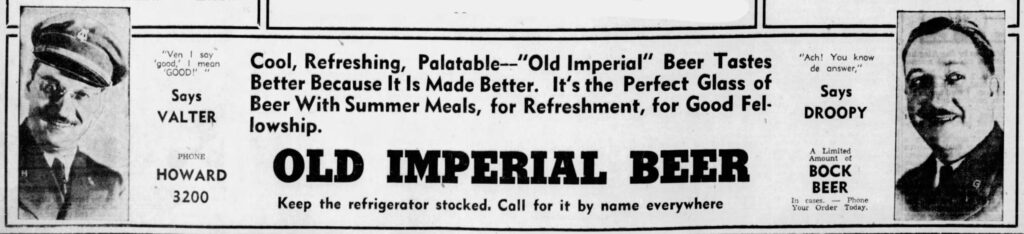
Saturday’s ad is for Old Imperial Bock Beer. The ad was published in 1962. This one was for the Rahr-Green Bay Brewing Co., which was located in Green Bay, Wisconsin and was originally founded in 1853. This ad ran in The Green Bay Press Gazette, of Green Bay, Wisconsin. The text on this one is great. “Cool, Refreshing, Palatable.” Palatable? Not exactly a great descriptor. But even better are the two endorsements, first from Valter: “Ven I say ‘good,’ I mean ‘GOOD!'” followed by Droopy: “‘Ach! You know de answer.”

Filed Under: Art & Beer, Beers, Breweries, Just For Fun Tagged With: Advertising, Bock, History, Wisconsin

Beer In Ads #5004: Have You Tried It Yet?

June 20, 2025 By Jay Brooks

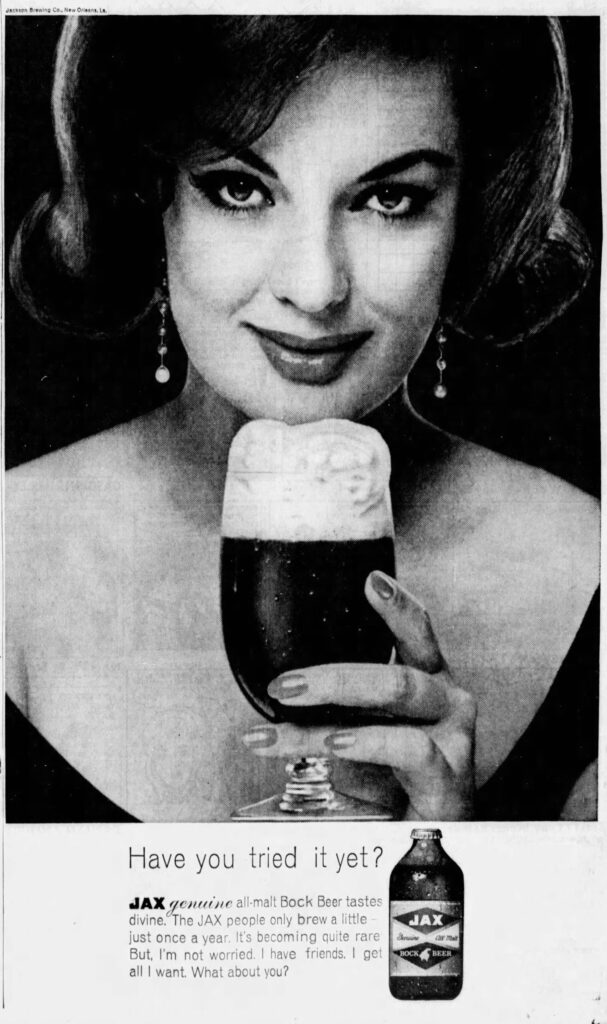
Last year I decided to concentrate on Bock ads. Bock, of course, may have originated in Germany, in the town of Einbeck. Because many 19th century American breweries were founded by German immigrants, they offered a bock at certain times of the year, be it Spring, Easter, Lent, Christmas, or what have you. In a sense they were some of the first seasonal beers. “The style was later adopted in Bavaria by Munich brewers in the 17th century. Due to their Bavarian accent, citizens of Munich pronounced ‘Einbeck’ as ‘ein Bock’ (a billy goat), and thus the beer became known as ‘Bock.’ A goat often appears on bottle labels.” And presumably because they were special releases, many breweries went all out promoting them with beautiful artwork on posters and other advertising.

Friday’s ad is for Jax Bock Beer. The ad was published in 1962. This one was for the Jackson Brewing Co., which was located in New Orleans, Louisiana and was originally founded in 1890. This ad ran in The San Angelo Standard Times, of San Angelo, Texas.

Filed Under: Art & Beer, Beers, Breweries, Just For Fun Tagged With: Advertising, Bock, History, Louisiana, New Orleans, Texas

Beer In Ads #5003: Old Reading Bock Beer

June 19, 2025 By Jay Brooks

Last year I decided to concentrate on Bock ads. Bock, of course, may have originated in Germany, in the town of Einbeck. Because many 19th century American breweries were founded by German immigrants, they offered a bock at certain times of the year, be it Spring, Easter, Lent, Christmas, or what have you. In a sense they were some of the first seasonal beers. “The style was later adopted in Bavaria by Munich brewers in the 17th century. Due to their Bavarian accent, citizens of Munich pronounced ‘Einbeck’ as ‘ein Bock’ (a billy goat), and thus the beer became known as ‘Bock.’ A goat often appears on bottle labels.” And presumably because they were special releases, many breweries went all out promoting them with beautiful artwork on posters and other advertising.

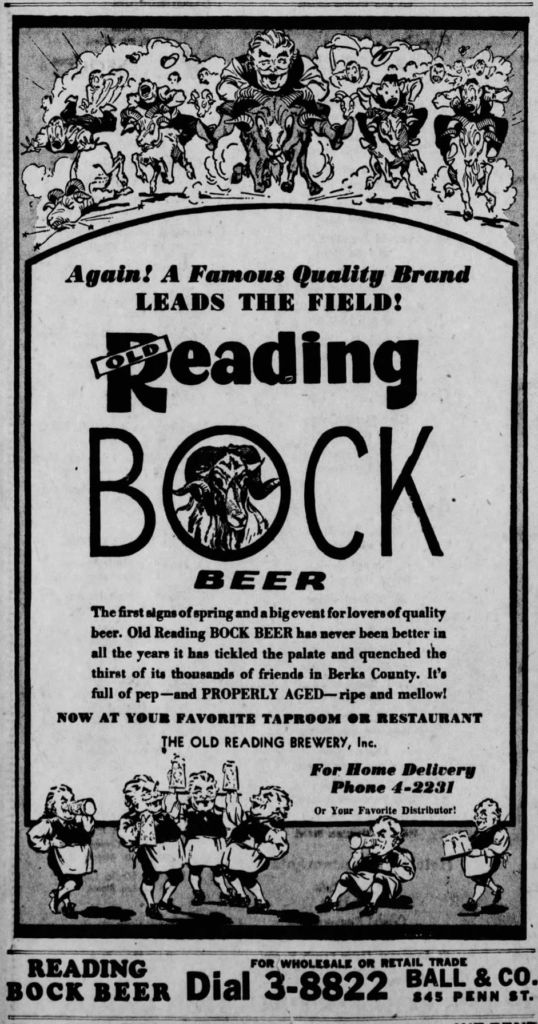
Thursday’s ad is for Old Reading Bock Beer. The ad was published in 1935. This one was for the Reading Brewing Co., which was located in Reading, Pennsylvania and was originally founded in 1886. This ad ran in The Reading Times, also of Reading, Pennsylvania.

Filed Under: Art & Beer, Beers, Breweries, Just For Fun Tagged With: Advertising, Bock, History, Pennsylvania

Beer In Ads #5002: Lemp’s Bock Beer

June 18, 2025 By Jay Brooks

Last year I decided to concentrate on Bock ads. Bock, of course, may have originated in Germany, in the town of Einbeck. Because many 19th century American breweries were founded by German immigrants, they offered a bock at certain times of the year, be it Spring, Easter, Lent, Christmas, or what have you. In a sense they were some of the first seasonal beers. “The style was later adopted in Bavaria by Munich brewers in the 17th century. Due to their Bavarian accent, citizens of Munich pronounced ‘Einbeck’ as ‘ein Bock’ (a billy goat), and thus the beer became known as ‘Bock.’ A goat often appears on bottle labels.” And presumably because they were special releases, many breweries went all out promoting them with beautiful artwork on posters and other advertising.

Wednesday’s ad is for Lemp’s Bock Beer. The ad was published on June 18, 1914. This one was for the Lemp Brewing Co., which was located in St. Louis, Missouri and was originally founded in 1840. This ad ran in The Post Intelligencer, of Seattle, Washington, I think, Illinois.

Filed Under: Art & Beer, Beers, Breweries, Just For Fun Tagged With: Advertising, Bock, History, Missouri, St. Louis

Beer In Ads #5001: Decatur Bock Beer

June 17, 2025 By Jay Brooks

Last year I decided to concentrate on Bock ads. Bock, of course, may have originated in Germany, in the town of Einbeck. Because many 19th century American breweries were founded by German immigrants, they offered a bock at certain times of the year, be it Spring, Easter, Lent, Christmas, or what have you. In a sense they were some of the first seasonal beers. “The style was later adopted in Bavaria by Munich brewers in the 17th century. Due to their Bavarian accent, citizens of Munich pronounced ‘Einbeck’ as ‘ein Bock’ (a billy goat), and thus the beer became known as ‘Bock.’ A goat often appears on bottle labels.” And presumably because they were special releases, many breweries went all out promoting them with beautiful artwork on posters and other advertising.

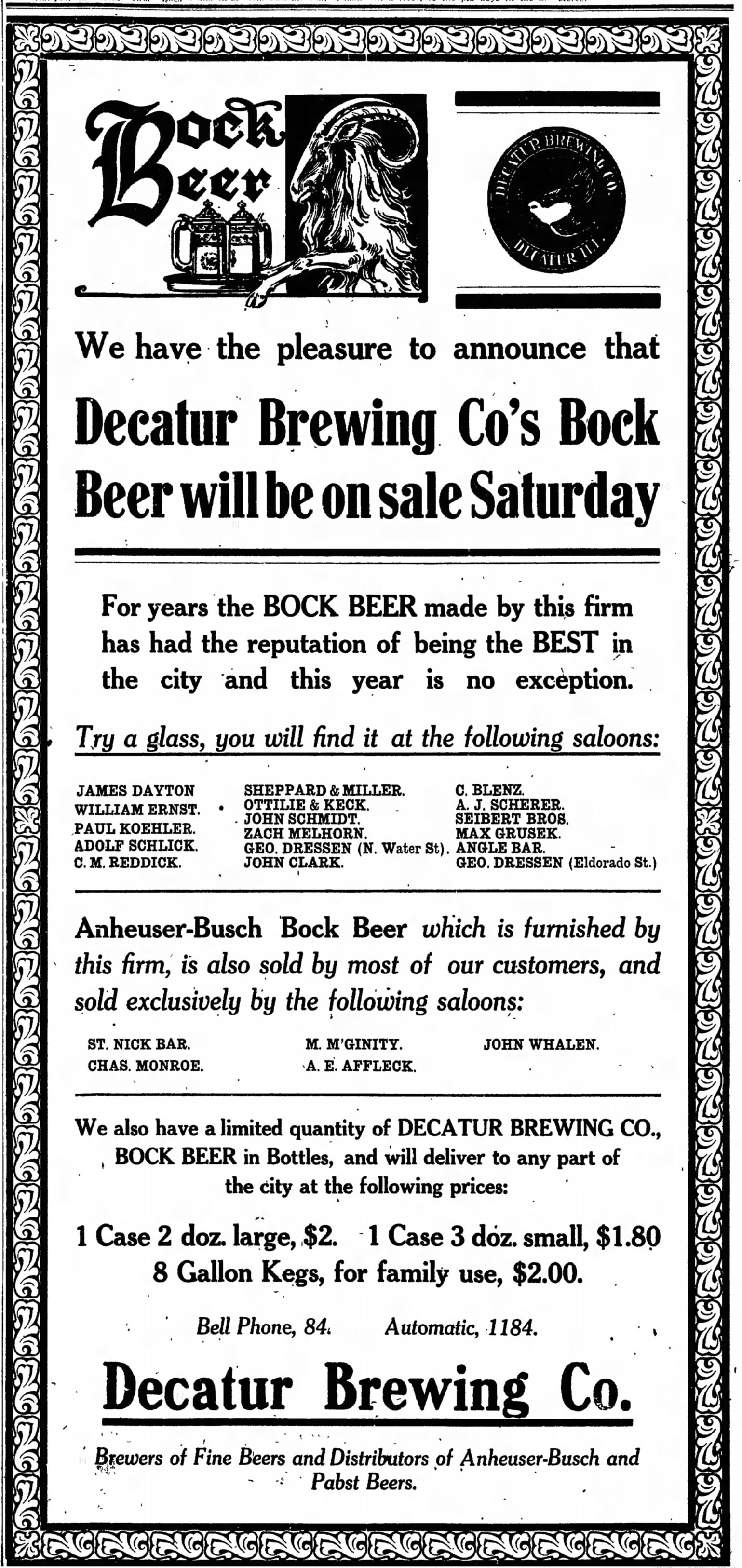
Tuesday’s ad is for Decatur Bock Beer. The ad was published in 1912. This one was for the Decatur Brewing Co., which was located in Decatur, Illinois and was originally founded in 1855. And it made sense to share today because it was run for a time by Frank Shlaudeman, who was born today in 1862. This ad ran in The Daily Review, also of Decatur, Illinois.

Filed Under: Art & Beer, Beers, Breweries, Just For Fun Tagged With: Advertising, Bock, History, Illinois

Beer In Ads #5000: Bock Beer Always In The Lead

June 16, 2025 By Jay Brooks

Last year I decided to concentrate on Bock ads. Bock, of course, may have originated in Germany, in the town of Einbeck. Because many 19th century American breweries were founded by German immigrants, they offered a bock at certain times of the year, be it Spring, Easter, Lent, Christmas, or what have you. In a sense they were some of the first seasonal beers. “The style was later adopted in Bavaria by Munich brewers in the 17th century. Due to their Bavarian accent, citizens of Munich pronounced ‘Einbeck’ as ‘ein Bock’ (a billy goat), and thus the beer became known as ‘Bock.’ A goat often appears on bottle labels.” And presumably because they were special releases, many breweries went all out promoting them with beautiful artwork on posters and other advertising.

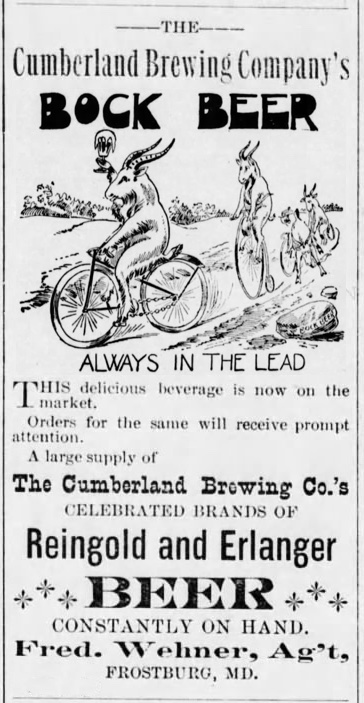
Monday’s ad is for Cumberland Bock Beer. The ad was published on June 16, 1894. This one was for the Cumberland Brewing Co., which was located in Cumberland, Maryland and was originally founded in 1890. This ad ran in The Frostburg Mining Journal, also of Frostburg, Maryland.

Filed Under: Art & Beer, Beers, Breweries, Just For Fun Tagged With: Advertising, Bock, History, Maryland

Beer In Ads #4999: Moerlein Bock Beer

June 15, 2025 By Jay Brooks

Last year I decided to concentrate on Bock ads. Bock, of course, may have originated in Germany, in the town of Einbeck. Because many 19th century American breweries were founded by German immigrants, they offered a bock at certain times of the year, be it Spring, Easter, Lent, Christmas, or what have you. In a sense they were some of the first seasonal beers. “The style was later adopted in Bavaria by Munich brewers in the 17th century. Due to their Bavarian accent, citizens of Munich pronounced ‘Einbeck’ as ‘ein Bock’ (a billy goat), and thus the beer became known as ‘Bock.’ A goat often appears on bottle labels.” And presumably because they were special releases, many breweries went all out promoting them with beautiful artwork on posters and other advertising.

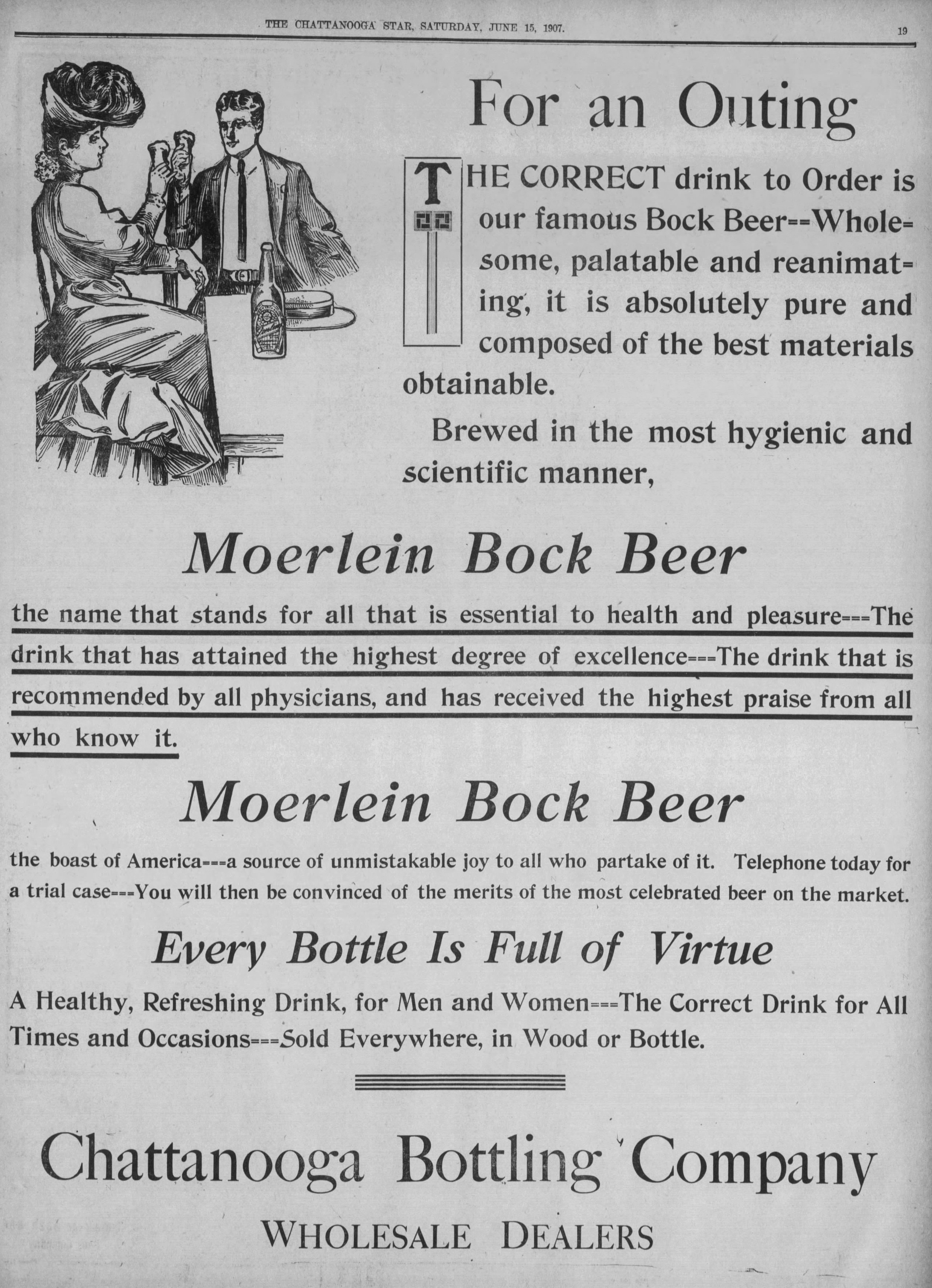
Sunday’s ad is for Christian Moerlein’s Bock Beer. The ad was published on June 15, 1907. This one was for the Christian Moerlein Brewing Co., which was located in Cincinnati, Ohio and was originally founded in 1853. This ad ran in The Chattanooga Star, also of Chattanooga, Tennessee.

Filed Under: Art & Beer, Beers, Breweries, Just For Fun Tagged With: Advertising, Bock, History, Ohio, Tennessee

Beer In Ads #4998: Maier’s Bock Beer

June 14, 2025 By Jay Brooks

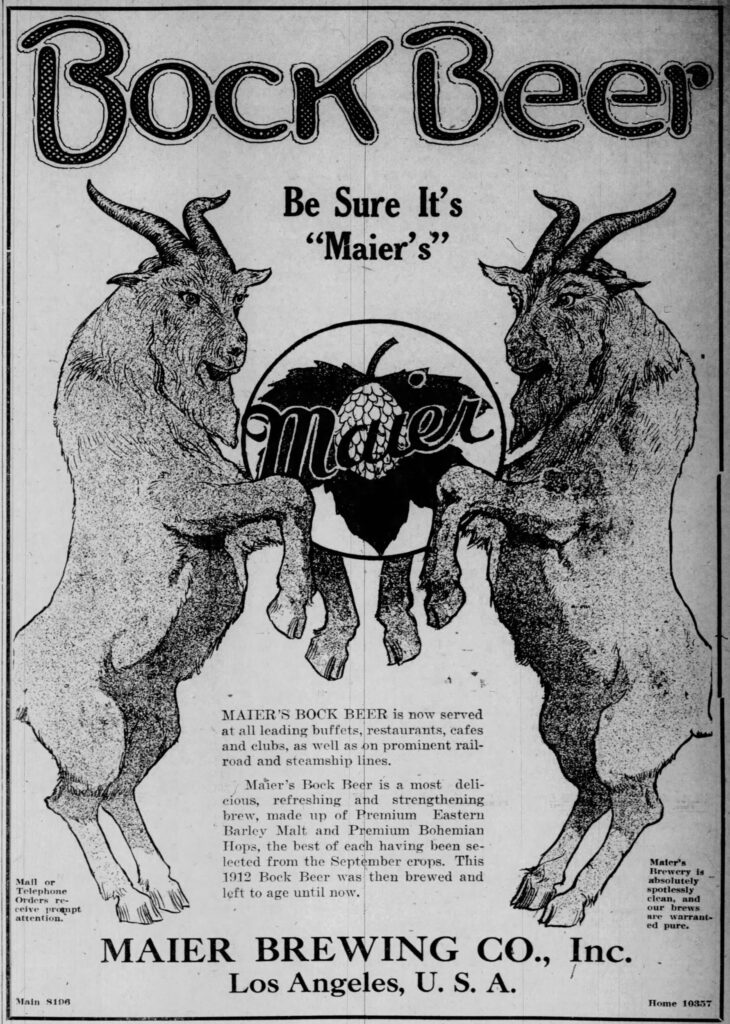
Last year I decided to concentrate on Bock ads. Bock, of course, may have originated in Germany, in the town of Einbeck. Because many 19th century American breweries were founded by German immigrants, they offered a bock at certain times of the year, be it Spring, Easter, Lent, Christmas, or what have you. In a sense they were some of the first seasonal beers. “The style was later adopted in Bavaria by Munich brewers in the 17th century. Due to their Bavarian accent, citizens of Munich pronounced ‘Einbeck’ as ‘ein Bock’ (a billy goat), and thus the beer became known as ‘Bock.’ A goat often appears on bottle labels.” And presumably because they were special releases, many breweries went all out promoting them with beautiful artwork on posters and other advertising.

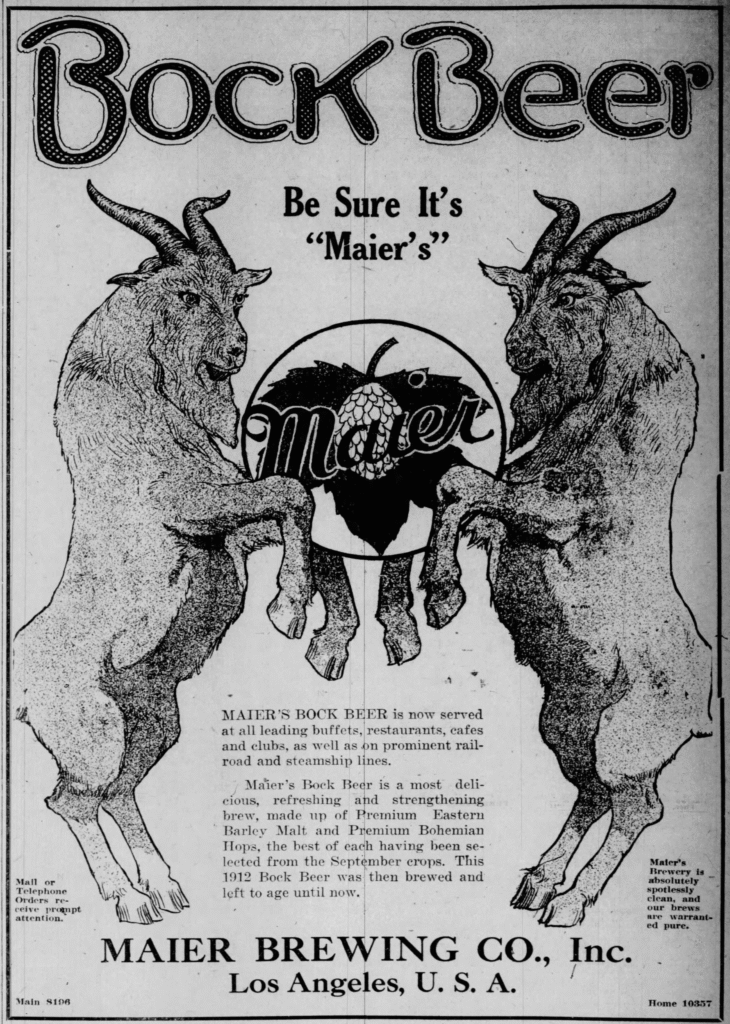
Saturday’s ad is for Maier’s Bock Beer. The ad was published in 1912. This one was for the Maier Brewing Co., which was located in Los Angeles, California and was originally founded in 1874, though they were known by a variety of names, using Maier Brewing from 1907-1971. This ad ran in the Los Angeles Evening Post Record, also of Los Angeles, California.

Filed Under: Art & Beer, Beers, Breweries, Just For Fun Tagged With: Advertising, Bock, California, History, Los Angeles

« Previous Page
Next Page »

Find Something

Northern California Breweries

Please consider purchasing my latest book, California Breweries North, available from Amazon, or ask for it at your local bookstore.

Recent Comments

  • Bob Paolino on Beer Birthday: Grant Johnston
  • Gambrinus on Historic Beer Birthday: A.J. Houghton
  • Ernie Dewing on Historic Beer Birthday: Charles William Bergner 
  • Steve 'Pudgy' De Rose on Historic Beer Birthday: Jacob Schmidt
  • Jay Brooks on Beer Birthday: Bill Owens

Recent Posts

  • Historic Beer Birthday: Pierre Celis March 21, 2026
  • Beer In Ads #5175: The Season Is Bock Again! March 20, 2026
  • Historic Beer Birthday: Frederick August Poth March 20, 2026
  • Historic Beer Birthday: Robert Portner March 20, 2026
  • Beer Saints: St. Cuthbert March 20, 2026

BBB Archives

Feedback

Head Quarter
This site is hosted and maintained by H25Q.dev. Any questions or comments for the webmaster can be directed here.