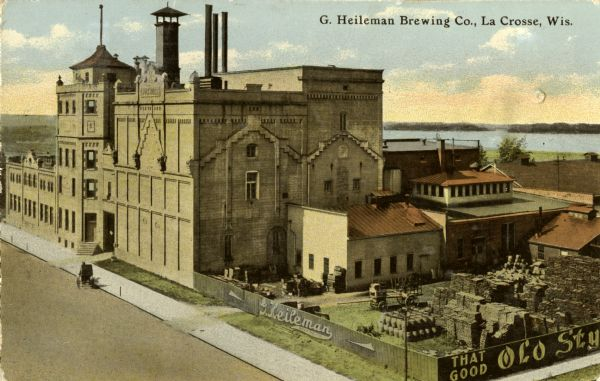
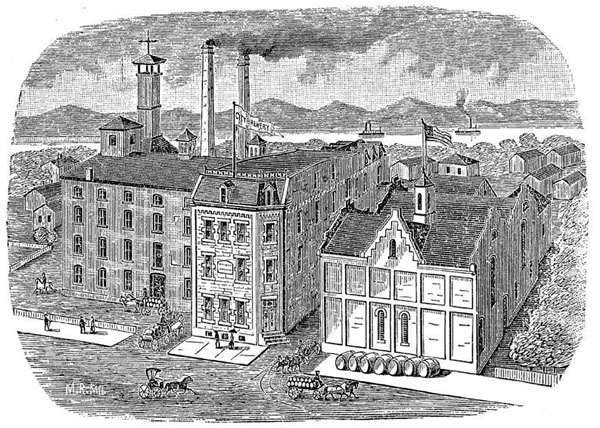
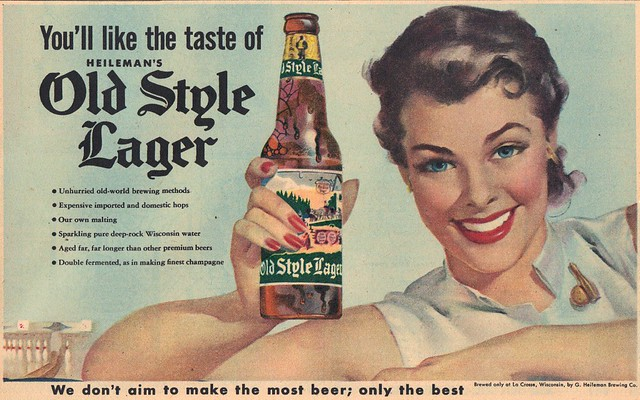
Today is the birthday of Gottlieb Heileman (January 6, 1824-February 19, 1878). He was born “in Kirchheim unter Teck, Württemberg, Germany” and was the founder of the G. Heileman Brewing Company in La Crosse, Wisconsin, in 1858.
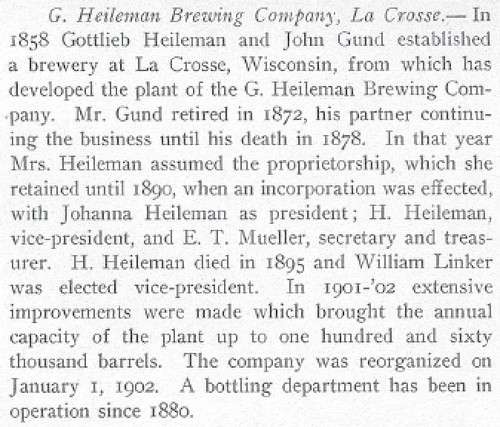
Here’s how the brewery was described in “100 Years of Brewing,” published in 1903.
Brewer. He founded the brewery that became the huge G. Heileman Brewing Co. Born in Kirchheim, Wurttemberg (Germany), he emigrated to the USA in 1852, working first in Philadelphia and then went to Milwaukee, Wisconsin in 1853 where he helped Gottlieb Maier found a bakery. In 1857 he moved to La Crosse and was employed in Nicolai brewery and the C&J Michel Brewery until he formed a partnership with Johan Gund in 1858 and they established the City Brewing Co. He became sole owner in 1872 upon Gund’s retirement when production had increased to 3,000 from 500 barrels in 1860; then renamed the firm the G. Heileman Brewing Co. When Heileman died in 1878 his wife assumed ownership becoming the first chief executive of a brewery in the nation. By 1881 production increased to over 7,100 barrels. The commitment to quality paid off well and by 1902 over 160,000 barrels were brewed annually. In 1890 the sole proprietorship was incorporated making his widow, Johanna, one of the first female presidents of a corporation; she remained active until her death in 1917. Until the 1880’s, the brewery sold its beer in oak kegs but began selling in glass bottles for home consumption; as a result, production tripled in the years between 1902, when “Old Style Lager” was introduced, and 1912. Prohibition in 1920 caused the brewery to temporarily switch production to near beer, sodas and malt extract. With Repeal of Prohibition in 1933, the brewery was swamped with beer orders, recapitalized as a public company and by 1953 produced over one-half million barrels of beer. In 1959, G. Heileman Brewing Company began acquiring breweries around the country including Blatz (1969) and Schlitz (1981) and culminated with total production exceeding 17 million barrels of beer annually including 5 million barrels at the La Crosse brewery. The company was acquired by Bond Corporation of Australia in 1987. Subsequently ownership changed hands a number of times until its name and brands, but not its breweries, were sold to Pabst Brewing Company in 1999. Coming full circle to the original 1858 name, former employees and investors acquired the Lacrosse brewing facilities, returned to the City Brewery name and again use Heileman’s 1870 residence on Third Street, directly across from the original brewery, as headquarters. The largest brewery in the United States not owned by industry leaders Anheuser-Busch, Miller and Coors, its capacity is 5 million barrels annually.
The G. Heileman Brewing Company achieved national recognition in the 1960s and 1970s when it aggressively acquired a number of well-known breweries and brands including the Blatz Brewing Company, the Rainier Brewery in Seattle, and the Grain Belt brand (now owned by August Schell Brewing Company). For much of its existence, however, the La Crosse, Wisconsin, firm operated in a conservative manner by brewing for local and regional markets only. This business strategy reflected the vision of one of the firm’s German founders, Gottlieb Heileman (born January 6, 1824, in Kirchheim unter Teck, Kingdom of Württemberg; died February 19, 1878, in La Crosse, Wisconsin), who was content to grow the firm slowly and focus on quality over quantity. John Gund (born October 3, 1830, in Schwetzingen, Grand Duchy of Baden; died May 7, 1910, in La Crosse, Wisconsin), the firm’s co-founder, eventually decided that Heileman’s business practices were too restrictive and ended the partnership in 1872 in order to build a new brewery in La Crosse that could compete with cross-state rivals such as Pabst, Schlitz, and Miller. The G. Heileman Brewing Company and the John Gund Brewing Company continued to pursue separate business strategies until national Prohibition was implemented fully in 1920. Gund’s large brewery collapsed, whereas Heileman’s smaller firm subsisted by producing non-alcoholic beer and malt products until the Twenty-First Amendment was passed in 1933.
Gund’s and Heileman’s different approaches to brewing in the post-Civil War era illustrate the diversity of business strategies employed by brewers during this period. Not all ambitious German immigrant brewers sought to create national – or even large regional – shipping breweries as did the Schlitz-Uihlein family, Adolphus Busch, and a number of other German immigrant brewers. Instead, some focused on serving local and regional markets and utilized technological advances such as artificial refrigeration and pasteurization to refine their products rather than expand their markets and market share. Furthermore, following Heileman’s death in 1878, his wife, Johanna (born August 31, 1831, in the Kingdom of Württemberg; died January 5, 1917, in La Crosse, Wisconsin), served as one of the firm’s main officers until her death in 1917. As the first known female head of a brewery in the United States and as one of the first female corporate executives in any business sector, Johanna Heileman (née Bandel) put her own unique stamp on the firm founded by her husband and his business partner.
John Gund’s vision of La Crosse emerging as the brewing center of the Midwest did not come to pass, but the city’s breweries did briefly outproduce their rivals in Milwaukee during the mid-1880s. This demonstrates that Milwaukee’s emergence as the preeminent brewing center of the Midwest was far from inevitable, and, instead, was contingent on a variety of historical factors that set it apart from other Midwestern brewery cities such as La Crosse, Minneapolis, and Duluth.
Gottlieb Heileman, Johanna Heileman, and John Gund each contributed to the development of the brewing industry in La Crosse, and any study of the G. Heileman Brewing Company’s early history must take into account the commercial, social, and cultural milieu that influenced these three immigrant entrepreneurs’ decision-making after they settled in the United States in the 1850s. Their success partially reflected the growing strength of the American brewing industry after the Civil War – made possible by the waves of German settlers who arrived in the U.S. during the mid- to late nineteenth century and who served as both producers and consumers of lager beer and other malt beverages. Nevertheless, the Heilemans and Gund were ultimately responsible for their individual successes and failures during this era as this study will demonstrate.
Family and Ethnic Background
Gottlieb Heileman (originally Gottlieb Heilemann), Johanna Bandel, and John Gund (originally Johann Gund) all hailed from the southwestern German lands. Gottlieb Heileman was one of eight children born to Caspar and Frederika Heilemann (née Meyer). He was born on January 6, 1824, in Kirchheim unter Teck, a small upland community southeast of Stuttgart in the Kingdom of Württemberg. Johanna Bandel, who also hailed from Württemberg, was born to Johann Ludwig and Kathrina Bandel (née Sigel) on August 31, 1831. She had a number of brothers who later immigrated to the United States. John Gund, on the other hand, was born approximately seventy-five miles northwest of Kirchheim in the community of Schwetzingen in the Grand Duchy of Baden on October 3, 1830. Schwetzingen lay in the rich, alluvial farmland between the Rhine and Neckar Rivers approximately six miles southwest of Heidelberg. Gund was the second of eight children born to Georg Michael and Sophia Elizabeth Gund (née Eder or Edes).
Both Heileman and Gund came from established families within their respective communities. Heileman’s father and maternal grandfather were bakers and Gottlieb Heileman received training as a baker and brewer during his youth. Gund’s father was a farmer who grew hops and tobacco, but John Gund served a two-year apprenticeship as a cooper and brewer following the end of his common school education at age fifteen. He worked an additional year as a journeyman brewer after his apprenticeship ended. The two men immigrated to the United States within four years of each other. Gund arrived in New York City in May 1848 at the age of eighteen, having traveled from Schwetzingen down the Rhine River to Rotterdam and then on to Le Havre and New York. Heileman reached Philadelphia in 1852 at the age of twenty-eight. Johanna Bandel settled in New York City in either 1852 or 1855 at the age of either twenty-one or twenty-four, respectively, and lived with her brothers for a number of years.
All three Germans followed a similar migration trajectory and made their way westward to Illinois, Iowa, and Wisconsin during the 1850s along with tens of thousands of other German immigrants, primarily from Baden, Württemberg, and the Palatinate. Gund’s parents settled in Freeport, Illinois, in the northwestern part of the state. John Gund found employment sixty miles to the west in Dubuque, Iowa, a commercial center situated on the west bank of the Mississippi River. He worked in a brewery operated by a German named Anton Heeb for two years. In June 1850, he relocated to nearby Galena, Illinois, to operate a brewery with a German named Witzel, possibly twenty-year-old Sebastian Witzel, who may have been an old friend. John Gund’s parents died of cholera the following month. After less than a year, he sold his share in the Galena brewery operation and rented another brewery in the community, known as the Cedar Brewery. About this time, he married fellow German immigrant Louise Hottman, a resident of Galena, with whom he eventually had five children. Two years after renting the Cedar Brewery, Gund decided to relocate to a larger and more prosperous community that would provide a better market for his beer. He and his wife moved approximately 180 miles northwest to the Mississippi River settlement of La Crosse, Wisconsin.
La Crosse had a population of approximately 2,000 residents in the mid-1850s. Situated on the east bank of the Mississippi River, the community had experienced rapid growth during the 1850s as settlers arrived to take advantage of the surrounding farmland and forests. The lumber industry flourished, facilitated by the community’s access to steamboats that plied the Mississippi River from St. Paul down to St. Louis and New Orleans. The city was incorporated in 1856 and benefitted further when a cross-state railroad connection was completed between La Crosse and Milwaukee in 1858
John Gund founded a brewery in La Crosse in August 1854. The small operation was located in a log cabin near the community’s waterfront. A number of other German immigrants founded breweries in the city in the months and years that followed. Gustavus Nicolai and Jacob Franz founded the Nicolai Brewery shortly after Gund founded his brewery. Due to production problems with Gund’s initial batch of beer, Nicolai and Franz were first to bring their beer to market. Charles and John Michel founded the La Crosse Brewery in 1857 after a failed attempt to strike it rich in the California gold fields in the early 1850s. After returning from the West Coast, they attempted to settle in Chicago but soon grew to dislike the community and made their way north to St. Paul. Ice on the Mississippi delayed their river journey and they eventually settled in La Crosse instead. After noting that existing breweries in the community could not meet local demand, they founded their own brewery.
Gottlieb Heileman reached La Crosse via Milwaukee the same year that the Nicolai brothers arrived in the city. He had worked for a year in Philadelphia after arriving in 1852. He then moved west to Milwaukee around 1854 and established a bakery with Gottlieb Maier in March 1856. The two men took out a $2,550 (approximately $70,000 in 2011$), three-year mortgage on the property, but paid off the balance within a year. Heileman was apparently less interested in baking than brewing, because he sold his share in the bakery for $1,525 (approximately $40,500 in 2011$) and moved west to La Crosse in October 1857. He found employment briefly as a foreman in the Nicolai Brewery but lost his job when Nicolai and Franz ended their partnership shortly thereafter. Heileman found a new position in the Michel brother’s La Crosse Brewery. In June 1858, he married Johanna Bandel, whom he had met during his three-year stay in Milwaukee. She had worked as a domestic servant in the midwestern city after leaving New York. Gottlieb Helieman returned to La Crosse with his bride and soon entered a new phase in his professional brewing career.
Business Development
Gottlieb Heileman and John Gund formed a partnership in November 1858 to operate the City Brewery in La Crosse. Their timing was propitious since the city of La Crosse continued to experience significant population growth, particularly among Northern European settlers, and the first outside railway connection had been completed to Milwaukee the previous month. The structures comprising the City Brewery were constructed at 1018 South Third Street. The location was south of the city’s commercial center near the Mississippi River waterfront. Early production figures for the brewery were modest. During the first decade of operation, production averaged around 500 barrels of lager beer per year (approximately 15,750 gallons). Originally, lager beer production had been limited to the winter months, but during the 1860s local brewers began using ice harvested from the Mississippi River to chill the beer during the critical lagering stage, which could last between six to eight weeks and produced a translucent and highly-carbonated final product. Heileman and Gund produced beer primarily for the local market and sold casks to hotels, taverns, and occasionally individuals. The partners constructed a hotel in downtown La Crosse in 1867 and named it the International Hotel. The facility likely offered an additional source of income for the partners and also provided a venue in which to sell their beer.
After nearly fifteen years in business together, Heileman and Gund dissolved their partnership in 1872. Heileman seems to have been content brewing beer primarily for the local market and this was reflected in the brewery’s modest output of approximately 3,000 barrels per year by the 1870s. By comparison, Eberhardt Anheuser and Adolphus Busch’s Bavarian Brewery in St. Louis produced approximately 100,000 barrels of beer per year during the same decade and the Pabst Brewery in Milwaukee produced 121,000 barrels annually. John Gund was far more ambitious than his partner and wished to establish La Crosse as a major center of brewing that would rival Milwaukee and St. Louis. Supposedly, the partners flipped a coin to determine which partner would receive the brewery and which would receive the International Hotel. Heileman won the City Brewery and Gund gained control of the hotel.
The G. Heileman Brewing Company
Gottlieb Heileman continued operating the City Brewery, now renamed the G. Heileman Brewing Company, following John Gund’s departure in 1872. The firm continued to produce a moderate volume of beer for local and regional consumption through the decade. Heileman died young in February 1878 at the age of fifty-four. Since his son, Henry, was only ten years old at the time, control of the enterprise passed to his forty-six-year-old widow, Johanna. She was assisted by Reinhard Wäcker (sometimes spelled Reinhart Wicker), who served as brewery foreman and dealt with technical matters. As president of the enterprise, Johanna Heileman became the first female head of a brewery in the United States, and after the business was incorporated in 1890, possibly the first female corporate executive in the nation. Of note, on the 1880 federal census, she listed her occupation as “keeping house,” whereas on the 1900 census she listed it as “owner of brewery.”
Other members of the Heileman family also participated in managing the business during the 1880s and 1890s. Emil Traugott Mueller, the husband of Johanna Heileman’s eldest daughter, Louisa, was hired in 1884 as a bookkeeper and assistant manager. As an adult, Henry Heileman served as vice president and assistant manager of the firm until his death from a self-inflicted gunshot wound in 1895 at the age of twenty-six.
Under Johanna Heileman’s oversight, the G. Heileman Brewing Company gradually expanded its production and market reach. In 1880, the brewery produced 7,170 barrels of beer, which put it in a distant third place compared to the Gund Brewing Company and the Michel brother’s La Crosse Brewery. Five years later, the brewery produced 12,000 barrels and employed roughly thirty-five men. The firm produced a number of different beers during this period including a Vienna lager and a dark lager named Hofbrau. They also began bottling beer for regional distribution. They opened their first distribution agency in Glencoe, Minnesota, a city approximately fifty miles west of Minneapolis in 1885 and gradually expanded their reach to the Dakotas and Illinois over the next two decades. The firm also established tied houses, taverns that sold Heileman beer exclusively (i.e. they were tied to a particular producer), in various cities. One was located in downtown La Crosse and another was situated approximately thirty miles east in Cashton, Wisconsin.
The firm sought to maintain good relations with the other breweries in the community and avoid ruinous price wars. In May 1898, the major breweries of La Crosse, including Heileman, Gund, Michel, and a number of smaller facilities agreed to establish uniform prices for kegged and bottled beer. They set the rate for kegged beer at eight dollars per barrel (approximately $224 per barrel in 2011$). For bottled beer, the rate was $2.20 for two dozen quarts of export-strength lager and $1.90 for two dozen quarts of regular-strength lager. At the same time, Heileman and three other La Crosse breweries began quietly investigating the possibility of forming a trust in order to compete against Gund locally and the major Milwaukee shipping breweries regionally. The impetus for the proposed trust was Chicago accountant Otto W. Heibig. After overseeing the installation of brewing equipment at the Gund Brewery following the destructive 1897 fire, Heibig grew interested in pooling the financial resources and physical plants of the other La Crosse breweries. Heibig estimated a combined value for the Heileman, Michel, Franz Bartl, and Zeisler breweries at $930,000 (approximately $26 million dollars in 2011$). In September 1900, the brewers and Heibig filed incorporation papers for the La Crosse Brewing Company and prepared to offer $700,000 in capital stock and $500,000 in bonds. They proposed constructing a new brewery with the capacity to produce 400,000 barrels annually, which was twice Gund’s output of approximately 200,000 barrels per year. Industrial architect Otto C. Wolf of Philadelphia designed the new brewery at a proposed cost of $300,000 (approximately $8.4 million dollars in 2011$). The existing breweries of the members of the trust would be adapted to other purposes with the Heileman facility being converted into a malting plant and the other breweries becoming storehouses and a dedicated ale brewery. Despite the great potential of the project, it never progressed beyond the planning stages. Shortly after the trust was incorporated in September 1900, a brewer in Cincinnati purchased the equipment intended for the proposed facility in La Crosse. The following January, the trust announced its new slate of corporate officers, which included Emil T. Mueller of the G. Heileman Brewing Company as treasurer. Little further action occurred over the next two years and eventually the trust collapsed in 1902, apparently due to resistance from officials at the Heileman Brewery.
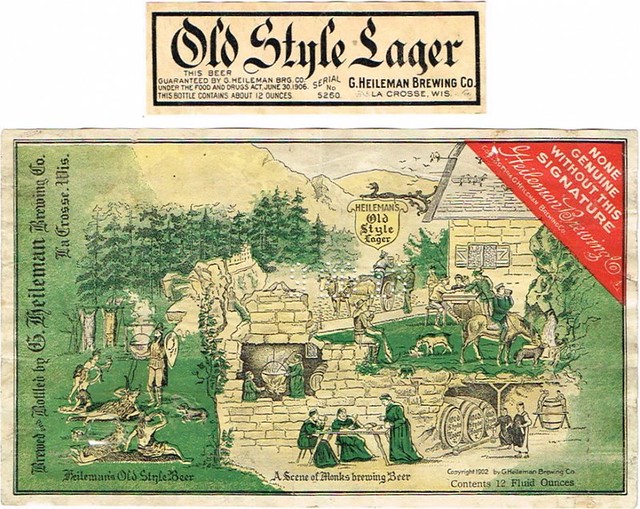
During the first decade of the twentieth century, G. Heileman Brewing introduced their best-known beer brand and went through a reorganization. The firm had acquired the trademark for a light lager, Golden Leaf, from a Milwaukee brewery in 1899 and a year later introduced a new heavier lager, Old Times Lager. In 1902, they renamed the beer Old Style Lager following a complaint from another brewery producing a similarly named beer. They also ended production of Golden Leaf to free up capacity for Old Style, which the firm produced exclusively in bottled format, as it was intended for distribution to regional markets. Emil T. Mueller played a key role in promoting the beer brand extensively over the following decade. Johanna Heilemann and the other brewery executives also expanded the firm’s capitalization to $350,000 from the original capitalization of $75,000 and used the funds to increase production to approximately 175,000 barrels per year. The firm’s brewery workers organized themselves around the same time and the firm signed a contract with Local 81 of the International Brotherhood of Brewery Workers, thus avoiding labor conflict.
By the 1910s, Heileman was shipping cases of bottled Old Style Lager to thirty-four states and had entered the lucrative Chicago market with more than fifty saloons and a number of distribution agents. Firm president Johanna Heileman passed away in January 1917, setting in motion a gradual transition from family to professional management at the firm. Johanna Heileman’s son-in-law, Emil T. Mueller, assumed the presidency of the firm, a position he held until his death in 1929. After Mueller died, another son-in-law, George Zeisler Jr., took over as president of G. Heileman Brewing until 1933, when the firm was reincorporated and non-family members assumed the presidency and key positions on the board of directors.
Unlike Gund Brewing, Heileman weathered the storm of Prohibition. Rather than risk producing low alcohol beer in 1919 and 1920, the firm began brewing a new, non-alcoholic beer called New Style Lager in May 1919 when the Wartime Prohibition Act went into effect. Like other breweries around the nation, the firm also produced a variety of hopped malt syrups and extracts that could be used by home brewers to produce beer and a line of soft drinks. Such measures helped the firm eke out an existence during the 1920s and early 1930s. In 1931, a major fire destroyed a number of warehouses and nearly bankrupted the firm, since the brewery had not insured the structures. Brewery officials warned that the firm was unlikely to survive much longer given the prohibition on alcohol sales and the general business disruption caused by the Great Depression. Fortunately, the gradual repeal of Prohibition beginning on April 7, 1933, gave G. Heileman Brewing a second lease on life. In the weeks leading up to April 7, the firm began brewing 3.2 percent beer permitted under the repeal act around the clock and released truck- and trainloads of the beer shortly after midnight on the seventh. Demand was so great that the firm could not fill all its orders and was forced to return numerous checks uncashed. Following the firm’s reincorporation, professional managers sought to update the brewery’s physical plant, improve quality control, which had slipped during the 1930s and 1940s, and expand production and distribution. This process continued into the 1950s and 1960s.
Personality and Social Standing
Both the Gund and Heileman families participated in the German institutions of La Crosse, Wisconsin, as well as in the local and regional brewing community. Little information survives about their specific involvement in the secular and religious institutions of La Crosse, but records show that John Gund’s eldest son, George, was a member of the local Turnverein in the 1870s. The physical education society had its origins in the post-Napoleonic German lands and was first introduced unsuccessfully to the United States in the 1820s. German 48rs reintroduced the Turner movement at the end of the 1840s and within a few years, Turner societies had emerged in major American cities with German populations. The La Crosse Turnverein was organized in October 1855 and John Gund granted the group permission to practice in the yard of his small brewery in 1856. They may have continued using the space through 1858, when Gund sold the property following his partnership with Heileman.
Gund and Heileman were members of the Lutheran Church and Heileman’s 1878 funeral at the local Lutheran church in La Crosse was considered to be one of the largest funerals in the history of the city to that date. More than 160 carriages belonging to mourners participated in the funeral procession from the church to the nearby Oak Grove Cemetery. Six prominent brewers in the community served as Heileman’s pallbearers, however, John Gund was not among them. This may have reflected lingering animosity between the former partners. When Gund died in 1910, members of the local Liederkranz Society, which was affiliated with the Turnverein as part of the local Deutscher Verein von La Crosse, attended his funeral along with members of the Brewer’s Union.
Politically, John Gund’s party affiliation reflected broader shifts in German immigrant political participation during the second half of the nineteenth century. He supported the Whig ticket shortly after his arrival in the United States and voted Republican in the 1860s and 1870s, but his allegiance shifted to the Democratic Party in his later years. This may have been linked to the Democrats’ opposition to the growing prohibitionist movement in the United States and the support they enjoyed from populist, agrarian elements in Midwestern states like Wisconsin, Minnesota, and Iowa. No information exists on Gottlieb Heileman’s political views.
Networks
Members of both families were active in professional and personal networks of largely German-American composition both at the local and national levels. These networks often overlapped, particularly in the case of marriage. John Gund’s nineteen-year-old daughter, Louisa, married La Crosse brewer Charles Michel in 1872. This cemented a bond between the two families who operated the largest and second largest breweries in La Crosse, respectively, throughout the closing decades of the nineteenth century. Similarly, Gottlieb and Johanna Heileman’s daughters married men who would later play key roles in the management of their family firm in the twentieth century.
Family members also participated in professional associations related to the brewing industry. The Heileman family joined the United States Brewers’ Association in 1886 and members of the Gund family participated in the association’s lobbying efforts on behalf of the American brewing industry. The Heileman’s son-in-law, Emil T. Mueller, served as secretary of the Personal Liberty League’s La Crosse chapter. Supported by the U.S. Brewer’s Association, the League lobbied against prohibitionist policies at the local and state levels and worked to protect the business interests of breweries in Wisconsin and elsewhere.
Lastly, family members were active in local civic associations and enterprises in La Crosse. John Gund’s eldest son, George, served on the city’s Board of Trade as its first treasurer. Later, he was selected as president of the La Crosse Baseball Association in the late 1880s. He was also among the original investors in the city’s Street Railway Company in 1879, a position that gave him influence over the city’s economic development.
Immigrant Entrepreneurship
John Gund and Gottlieb and Johanna Heileman participated in the introduction of European lager beer and German beer culture to the United States in the middle of the nineteenth century. They initially served kegged beer to a largely German local clientele. Advertisements for their products appeared in German in local periodicals such as the Nord Stern. Labels for their early bottled products also contained German phrases and in the Heileman’s case listed the producer as “Heilemann City Brauerei.” Over time, though, John Gund and later Johanna Heileman expanded the scope of their respective breweries’ operations in order to provide bottled beer to a broader, regional consumer market that was less directly tied to German ethnicity. Their success in the lucrative Chicago market through tied houses helped to make both Peerless and Old Style well known among regional beer brands, and their advertising and bottle art embraced European iconography but typically avoided explicitly German references.
John Gund and Gottlieb Heileman acquired knowledge and experience in German brewing practices through apprenticeships, and they brought this knowledge with them to the United States. Both men entered the brewing trade on a limited scale after they immigrated and settled in the Midwest. No evidence exists that either man received remittances from family members in the German lands, so they likely had to accumulate slowly the necessary capital in order to open their brewery in 1858. Gund worked in a number of breweries in Iowa and Illinois before moving to La Crosse. Similarly, Heileman worked as a baker in Milwaukee before gaining experience as a foreman at two breweries in La Crosse. Once the partners founded the City Brewery, they pursued a conservative business strategy and likely reinvested their profits in the operation. Rather than trying to grow the business quickly and expand into distant markets, they found plenty of consumers in La Crosse and its hinterlands during the 1860s and 1870s.
Gund returned to Germany in 1873, shortly after he ended his partnership with Heileman. The purpose of the visit was social, but it is likely that he also surveyed the brewing landscape in Germany and brought back knowledge with him that he employed in founding the John Gund Brewery. It is unknown if Heileman returned to German at any point before his death in 1878.
Conclusion
The firms founded by German immigrants John Gund and Gottlieb Heileman reflected the broader fate of the American brewing industry in the twentieth century. Like hundreds of other breweries, the John Gund Brewing Company did not survive Prohibition. The family shut down the operation and eventually sold off the firm’s assets piecemeal over the next two decades. G. Heileman Brewing survived the turmoil of Prohibition and its professional managers eventually determined that the firm had to expand or fall victim to industry consolidation in the 1960s. Consequently, the corporation purchased breweries across the nation during the 1970s, while also fending off challenges from the other major brewing firms of the era, including Pabst, Miller, and Anheuser-Busch. At the same time, publicly-traded Heileman stock became a target for speculators. The firm fended off hostile takeover attempts successfully in the 1980s, but eventually sunk into bankruptcy and was acquired by Stroh in 1996.
La Crosse, Wisconsin, failed to emerge as a major center of brewing comparable to Milwaukee. It simply lacked the population and financial resources of its cross-state rival. By the beginning of the 1960s, Heileman was the only brewery left in the city, whereas Milwaukee was home to major national shipping breweries including Miller, Pabst, and Schlitz. These firms had the financial resources that Heileman lacked and were better able to weather the storm of industry consolidation in the 1970s.
Over multiple generations, the Gund and Heileman families left their mark on the economic and physical landscape of La Crosse. Both Heileman and Gund’s names remain part of the city fabric. One of the old Gund Brewery buildings now houses loft apartments and the former G. Heileman Brewery is currently operated as a contract brewery for a number of brands. Surrounded by busy brewery buildings, Gottlieb and Johanna Heileman’s large brick home still reflects the conservative values of the company’s German immigrant founder.
John Gund and Gottlieb Heileman found success by selling beer to their fellow immigrants. Over time, this success translated into greater business opportunities. Though neither firm exists today, both left a legacy that is felt within the local La Crosse community and the national brewing industry.
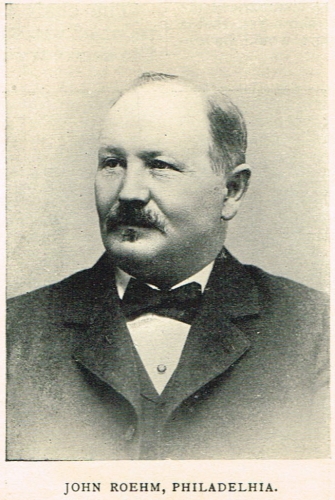
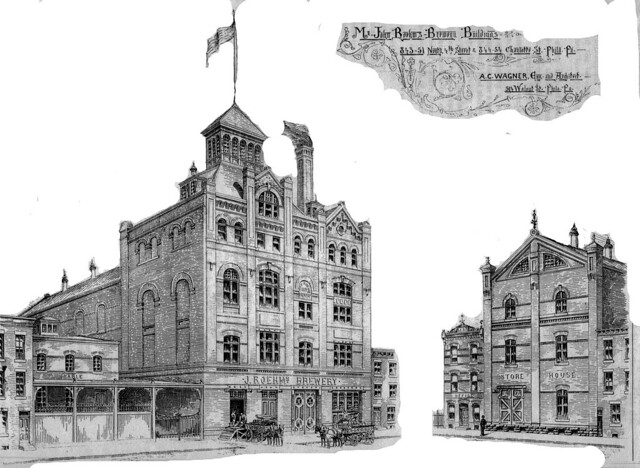
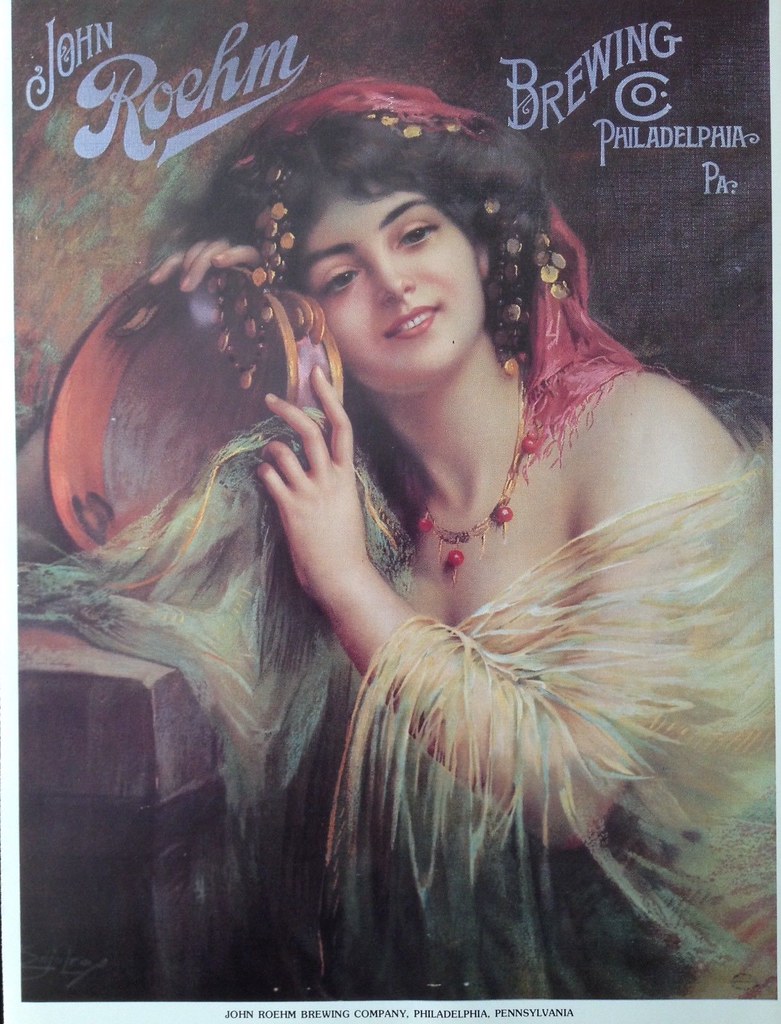
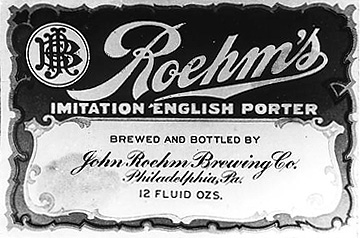
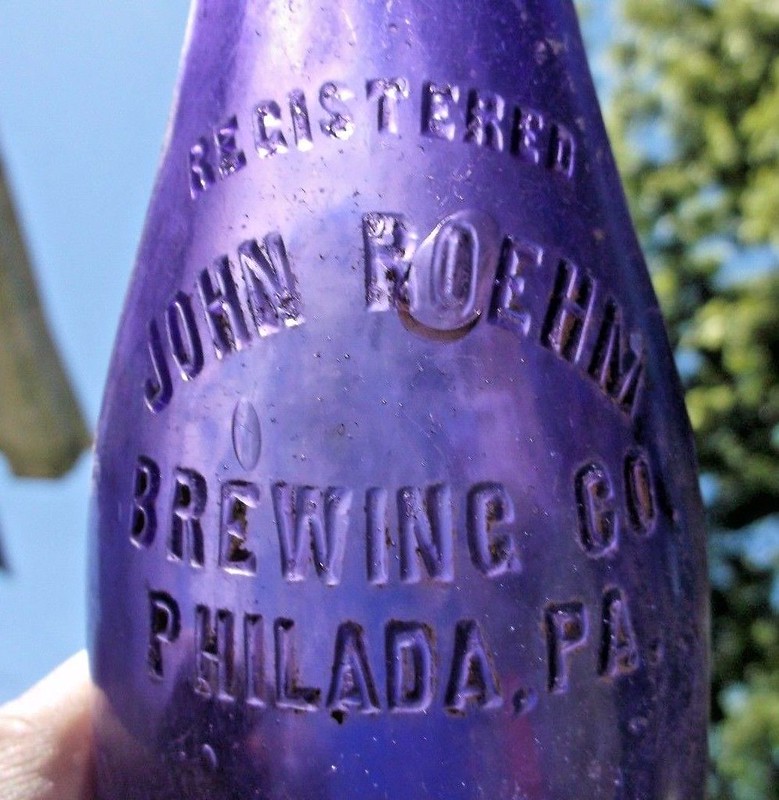
Today is the birthday of John Roehm (January 5, 1849-June 9, 1907). He was born in Bavaria, Germany, but moved to Philadelphia, Pennsylvania in 1888 and bought the brewery of Anton Stroebele (founded in 1870), renaming it the John Roehm Brewery, but also traded under the Consumers Brewing Co., at least until 1909. After Roehm’s death in 1907, his brewery appears to be sold to Henry Hess and went through several name (and probably ownership) changes until lastly it was known as the Otto Erlanger Brewing Co. from 1837 to 1951, when it closed for good. Unfortunately, I haven’t been able to find out much info about Roehm or the brewery.
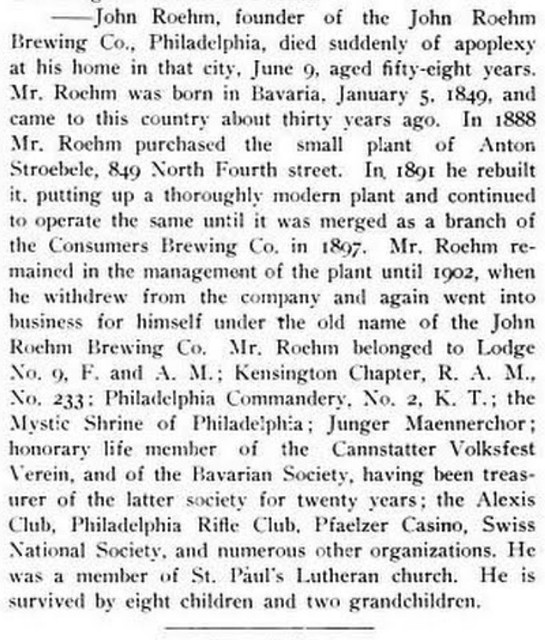
This is Roehm’s obituary from the Brewers Journal:
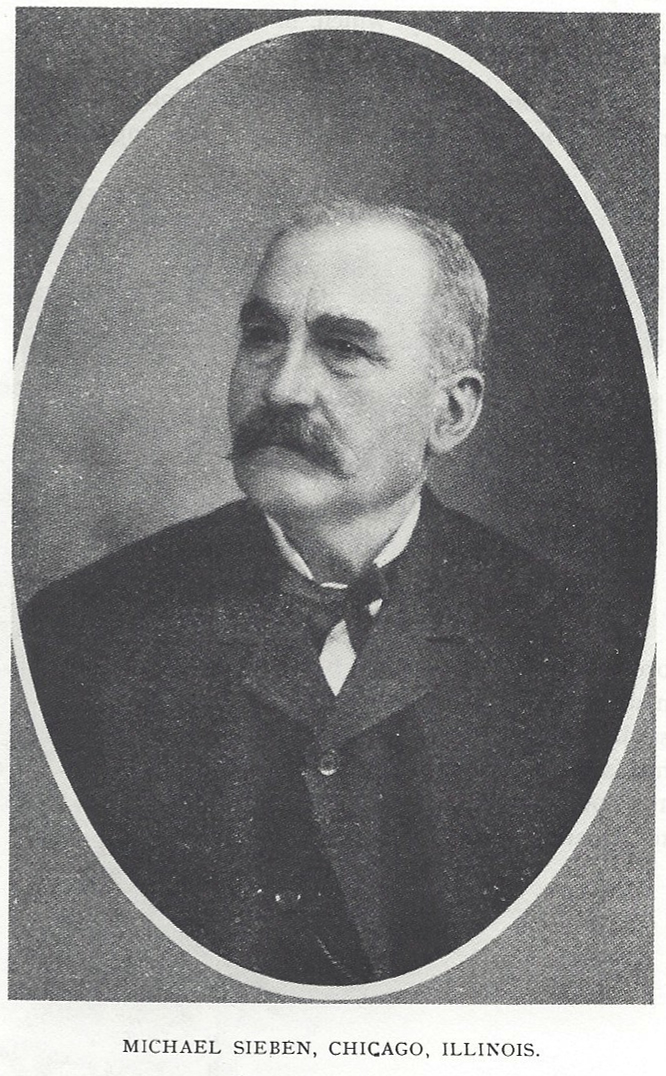
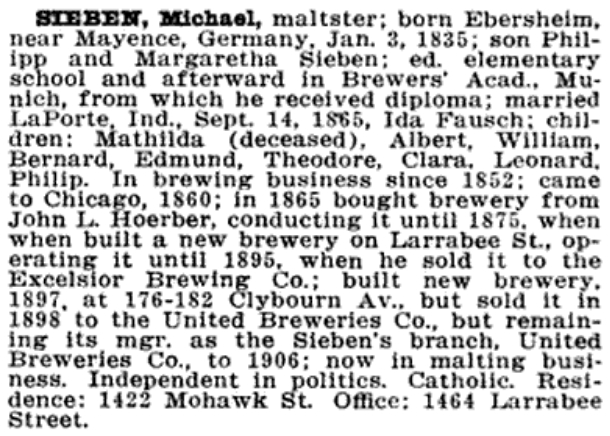
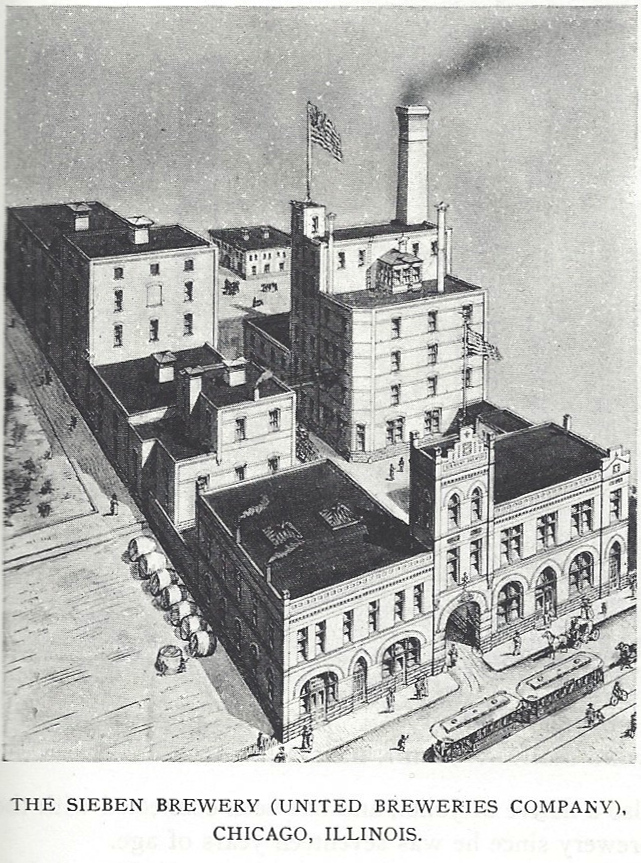
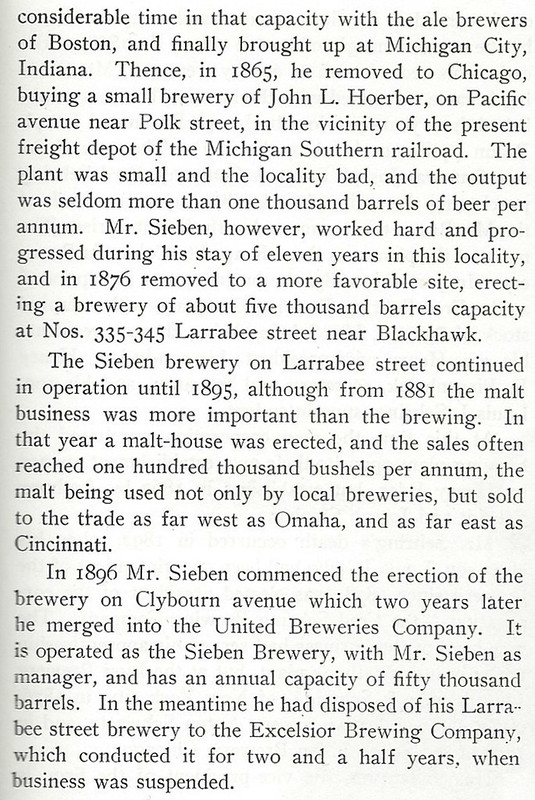
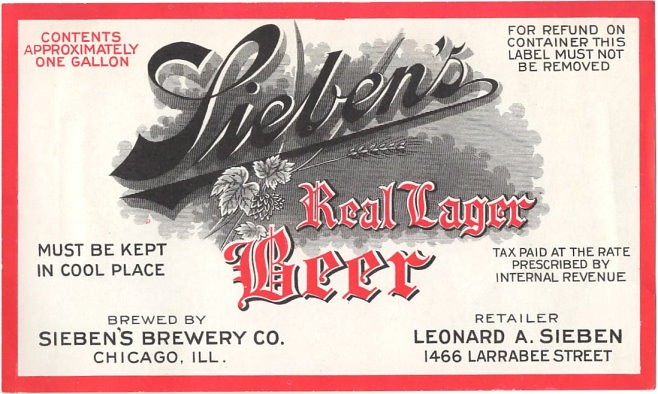
Today is the birthday of Michael Sieben (January 3, 1835-September 5, 1925). He was born in Ebersheim, Germany, but came to America when he was 25, in 1860. In 1865, he bought the James L. Hoerber Brewery, running it until 1875, when he built a new brewery which he named the Michael Sieben Brewery. Twenty years later he sold that brewery to the Excelsior Brewing Co., but promptly built another brewery, selling that one to United Breweries Co. in 1898, though he remained its manager of the Sieben’s Branch. A brewery bearing his name continued on in Chicago until prohibition, was briefly open during it, and re-opened afterwards in 1933 as Sieben’s Brewery Co., which remained in business until 1967.
This biography of Sieben is from “The Book of Chicagoans: A Biographical Dictionary of Leading Living Men of the City of Chicago, edited by Albert Nelson Marquis, and published in 1911:
In 1934, the newly reopened Sieben’s Brewery issued a press release celebrating its 100th anniversary of its founder, Michael Sieben:
The one hundreth birthday anniversary of Michael Sieben, the founder of the brewery which is now known all over the world, is celebrated these days by the Chicago Sieben Brewery Company, 1470 Larrabee Street. For the festive occasion an especially tasteful beer, the Sieben Centennial beer, was put on the market. It was made after a receipt known to the family for seventy years.
Michael Sieben was born on January 3, 1835, in Ebersheim, near Mainz, Germany, and died in Chicago September 5, 1925, at the age of ninety years. He learned the honorable art of beer brewing in Mainz, Germany, and as brewer’s and cooper’s assistant he journeyed through Germany, Austria, and Switzerland. For two years he worked at Lyons, Maney, and Dijon until the wanderlust urged him to go to the unknown land on the other side of the big pond.
Michael Sieben came in the year 1860 to America. During the succeeding five years, he worked as malster and brewer’s assistant, then as master brewer, and later as manager in Chicago, Indianapolis, Cincinnati, and Boston. In the year 1865, he returned to Chicago and founded here the Sieben brewery in the then Griswold Street. In the year 1876, the brewery moved to Larrabee Street, south of Blackhawk Street, at which place it is still operating today.
From the marriage of Michael Sieben and his wife Ida, nee Fausch, came seven children, of whom two sons, William and Bernard, are in charge of the brewery today.
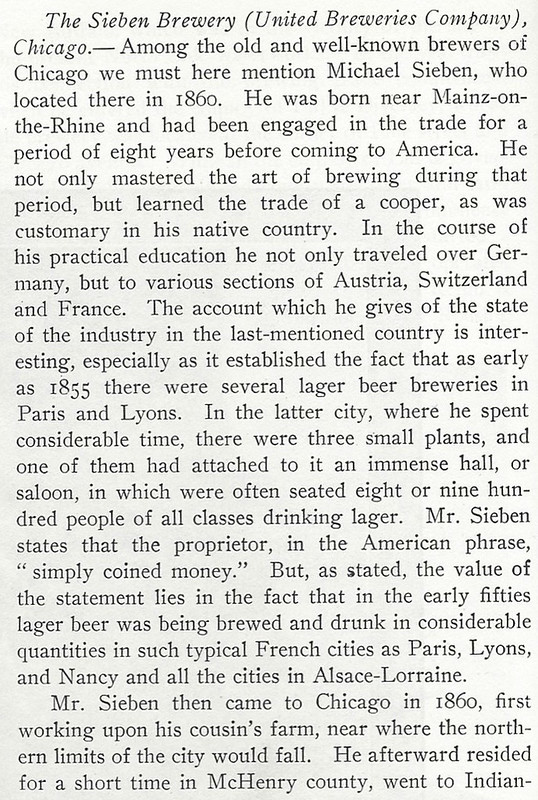
This account of the brewery is from “100 Years of Brewing,” published in 1903:
Around 2006, a group of investor’s tried to bring back the Sieben’s beer brand, but the last time the website was updated was 2009, so I don’t think they were successful in the long run. And in fact, the home page states that it’s “off the market.” But this account of Sieben is from their website:
Michael Sieben immigrated to the United States in 1860 from Ebersheim, Germany a village southwest of Mainz. In 1865 Michael founded the Michael SiebenBrewery, located on Pacific Avenue near Clark and Polk Streets in Chicago. That street is now the section of La Salle St. south of Congress Parkway. In 1871, the brewery was narrowly missed by the Great Chicago Fire due to a change in wind direction. In 1876 the brewery was relocated to 1466 Larrabee Street, just a short walk from where the Larrabee-Ogden station of the Chicago “L” Transit System would be built in 1900.
In 1896 Michael Sieben built a larger brewery on Clybourn Avenue, not far from the Larrabee Street location. In 1898 it was merged into the United Breweries Company. By 1903, Michael Sieben was back in the original Larrabee Street location and changed the name of his company to the Sieben´s Brewery Company. Michael Sieben´s wish was that the brewery bearing his name not be owned by anyone outside the Sieben family, perhaps due to the short alliance he had with United Breweries Company that this wish came into effect.
During the years of Prohibition 1920-1933 the Sieben family was out of the beer business. The years of Prohibition gave brewers few choices, some started to produce soda and/or near beer (a nonalcoholic beer) or just closed forever. Some brewers however, were faced with a couple of other choices, sell or lease their brewery. The Sieben´s were faced with this choice and decided to lease out the brewery to an entity which was supposed to be engaged in producing a nonalcoholic beer. This new company was called the George Frank Brewery and is said to be owned in partnership by Dion O´Banion (head of the north side gang) and Johnny Torrio (head of the south side gang). The story goes, that O´Banion calls up Torrio and said that he is tired of the bootleg business and wants to retire to his place in Colorado. O´Banion offered to sell Torrio, his share of the brewery for $500,000.00, Torrio agreed. Dion O´Banion was aware of the penalties for prohibition convictions.
The first, a mere slap on the hand. The second, put you away for nine months and O´Banion knew that Torrio had one conviction against him. Dion O´Banion also had information that the Chicago Police Department was to raid the brewery the day of the meeting. On May 19, 1924 the two men met at the Sieben´s Brewery. Johnny Torrio, handed Dion O´Banion a case with $500,000.00 in cash and in came the police and arrested everyone in sight.
This is where the common historical account differs from what family members who were there observed. The Sieben family member story is as follows, despite what was reported in the newspapers at the time. The transfer of funds either happened at another time or in another place. The raid happened about a week after this transaction. Also, O´Banion had no idea when a raid would take place, he only knew that the police officer he was paying off to inform him of when the next inspection was going to happen was no longer in a position to tell him. Elliot Ness had figured the cop for a “dirty” cop and had him transferred to where we don´t know, just out of the picture.
The normal operation with the gangsters was to at all times have two gangsters on the premises to run things. One would work in the office and the other was one of the bartenders. When the raid DID happen, the gangster/bartender, ran back through the brewery and kicked out the operating engineer that was running the steam engine that was used for refrigeration. He then grabbed a pair of overalls and dirtied his face with coal dust and sat at the controls of the steam engine so it looked like he was just an “engineer” worker and not a gangster. The gangster in the office came out and saw that there was a police officer standing guard in the street in front of the brewery. He got Leonard Sieben (who was 8 years old at the time) and told him to go out front and stand next to the officer and act like he was pulling a handkerchief out of his sleeve when the officer looked the other way. That was the signal for the gangster to slip out the front door and down the street, unseen. When the rest of the police surrounded the building and came in to conduct the raid, they ran right past the “engineer” who then just walked out the back door.
No gangsters were arrested at that time, they must have been rounded up later and this fact was hidden in an apparently elaborate deception so that the public could not find out. One might suspect that Elliot Ness had to score some kind of hit to garner some public or political support at a time when it was widely known that Prohibition was not working. The court records make no mention of Torrio, O´banion or old Scarface himself. The only names mentioned are “a Mr. Sieben, who owns the Realty” and George Frank who was the lease operator.
No matter which version you want to believe, this is what led to the infamous “handshake murder” of O´Banion at his north side State Street flower shop. It was also what sparked off the north and south side gang wars, including the St. Valentine´s DayMassacre in 1929.
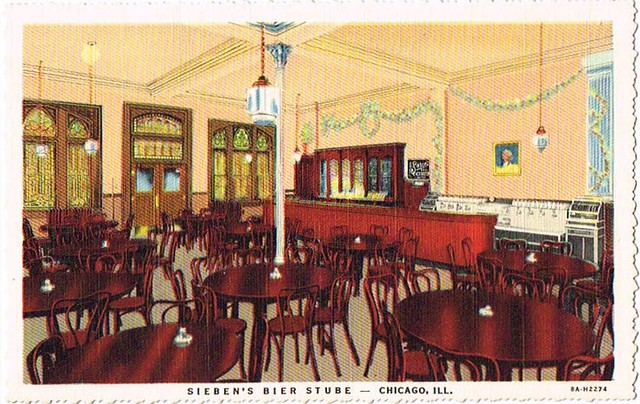
In 1933 Prohibition came to an end and the Sieben family reopened the brewery, bier stube and garden. For the next three and a half decades, Sieben´s Brewery Company would brew the fine beers for which it was known. In the 1950´s and 1960´s the beer business was changing and Sieben´s was finding it hard to keep up. Faced with the competition of mass produced beers, the Sieben´s Brewery and associated bier stube closed in 1967. The bottling house caught fire in 1968 and was heavily damaged. In 1969 all of the Sieben´s Brewery Company buildings were torn down.
In the 1980´s the name Sieben Brewery was resurrected by group of entrepreneurs not related to the Sieben family. The “new Sieben´s” was a brew pub in the River North Area of Chicago. The brew pub did not package and distribute their products, nor did they ever brew or have the original Sieben´s Brewery recipes.
In 2006 the Sieben´s family is back in the brewing business. Richard Sieben is a fourth generation family brewer and along with long time homebrewing friend Elliot Hamilton are, “Carrying on a Great Family Brewing Tradition.” Sieben´s brings back the original “Real Lager Beer” that was brewed at the original brewery. The Sieben´s name has been around since the time when Chicago was a big beer brewing town. That´s why we like to think and say that we´re also “Carrying on Chicago´s Great Brewing Tradition.”
Sieben’s beer, after a two year run on the market has been temporarily withdrawn from distribution. Not having our own brewery, while saving a bundle of money in infrastructure, costs us in flexibility. Our Wisconsin based brewery is ready and willing to produce more beer but until we are able to secure a dependable distributor who has our product featured in their portfolio, we must take time off to rethink our strategy.
This postcard of the Sieben Bier Strude is from 1937.
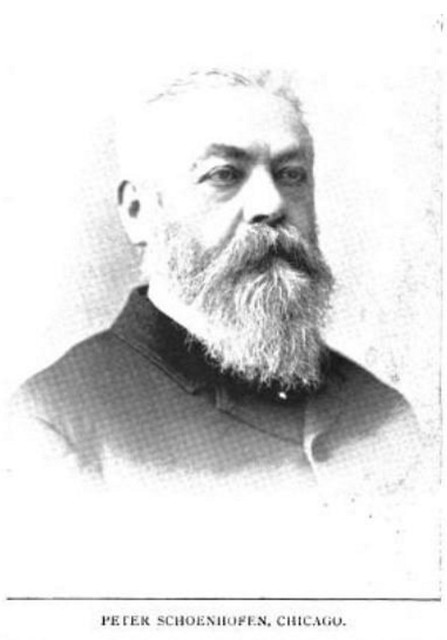
Today is the birthday of Peter Schoenhofen (January 2, 1827-January 2, 1893). He owned a brewery in Chicago that was called the Peter Schoenhofen Brewing Co.
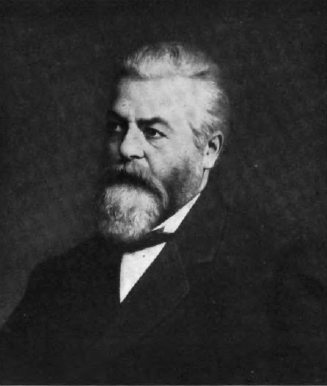
Portrait from “100 Years of Brewing,” originally published in 1901.
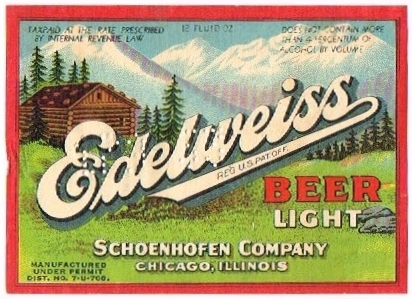
And here’s another portrait that included this text: “German-born Peter Schoenhofer (1827-1893) came penniless to America in 1851 and took jobs in various breweries around Chicago. Eventually he and a partner, Matheus Gottfried, opened a brewery. Schoenhofen bought out Gottfried in 1867 and the company became the Peter Schoenhofen Brewing Company. Ads bragged that the beer’s clean taste came from the artesian spring located under the brewery. Their Edelweiss brand was the best known.”
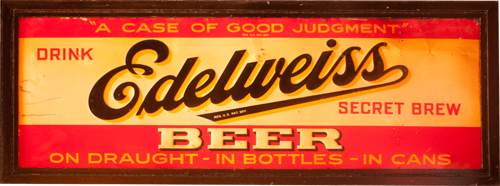
Peter Schoenhofen, a Prussian immigrant, was in Chicago working in the brewing trade by the 1850s. In 1861, he started a partnership with Matheus Gottfried; they were soon operating a brewery at Canalport Avenue and 18th Street where, during the early 1860s, they made about 600 barrels of lager beer a year. In 1867, Schoenhofen bought out his partner, and the company became the Peter Schoenhofen Brewing Co. By 1868, annual output had increased to about 10,000 barrels. During the 1890s, when the business was owned by the City Contract Co. of London, England, annual output reached 180,000 barrels. Around 1900, the Schoenhofen family regained control of the company, which employed about 500 people at its brewery on West 12th Street by 1910. During this time, the company was also known as the National Brewing Co. The company’s “Edelweiss” brand of beer was a big seller. Operations shut down during Prohibition, but by 1933, after the national ban on alcohol production was lifted, the company was back in business as the Schoenhofen-Edelweiss Co. After being purchased by the Atlas Brewing Co. in the late 1940s, Schoenhofen became part of Dewery’s Ltd. of South Bend, Indiana, in 1951, and thereafter assumed the Dewery’s name. By the beginning of the 1970s, there was nothing left of its Chicago operations, although Dewery’s reintroduced the famous Edelweiss brand in 1972 after nearly a decade-long hiatus.
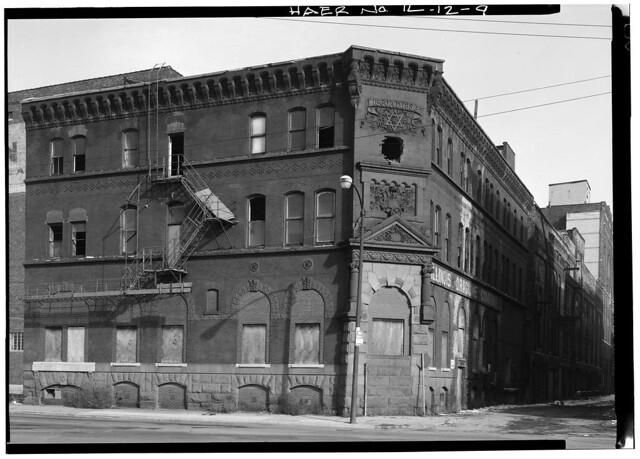
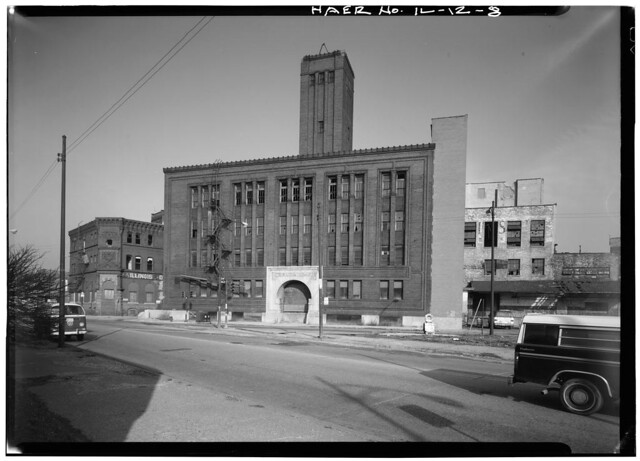
Forgotten Chicago has a nice photo gallery about the Schoenhofen Brewery and what remains of it today, saying that what is left “of the Schoenhofen Brewery are still the most impressive pre-Prohibition era brewery structures in Chicago. Buildings were first erected at 18th and Canalport in 1862 when the brewery relocated here from 12th and Jefferson. The last buildings were built in 1912, and the brewery remained in business until 1924, a casualty of prohibition.”
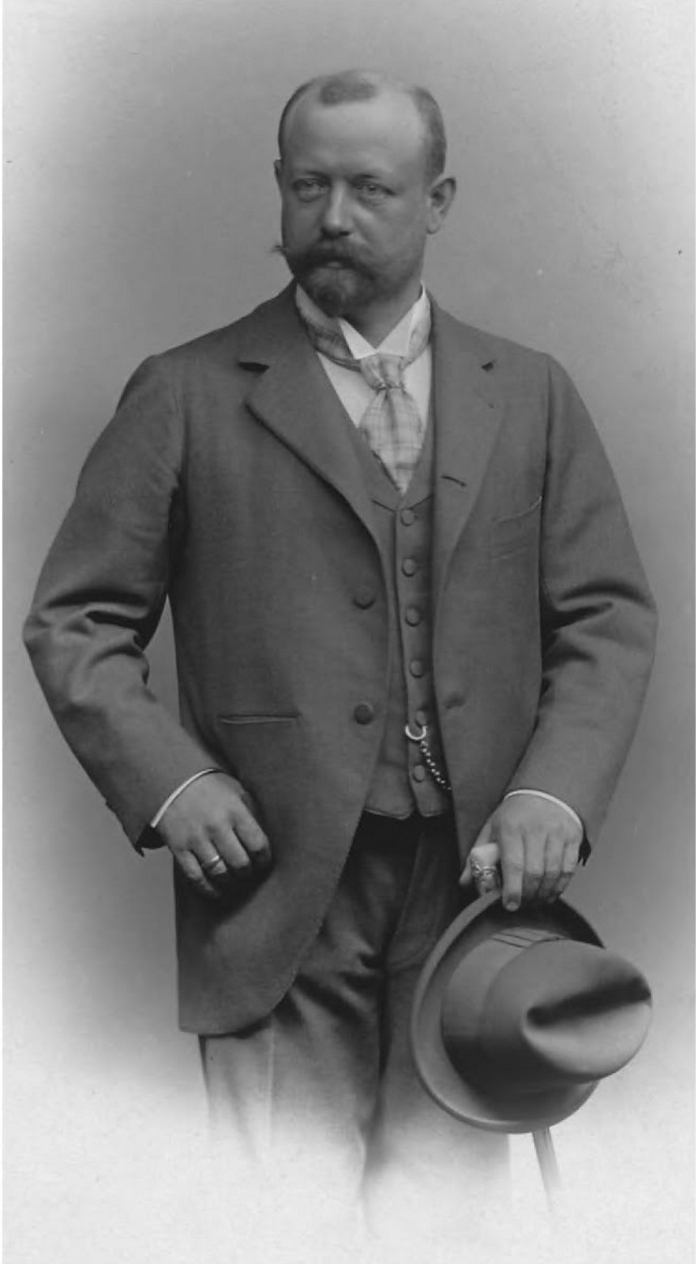
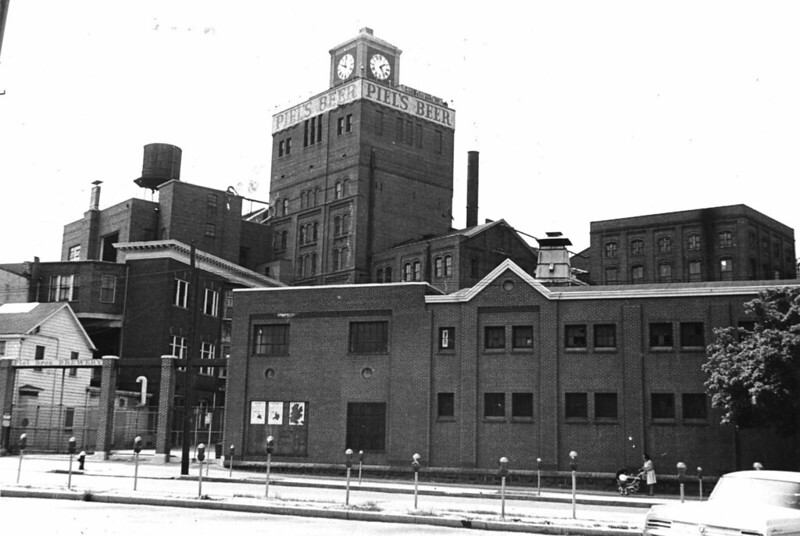
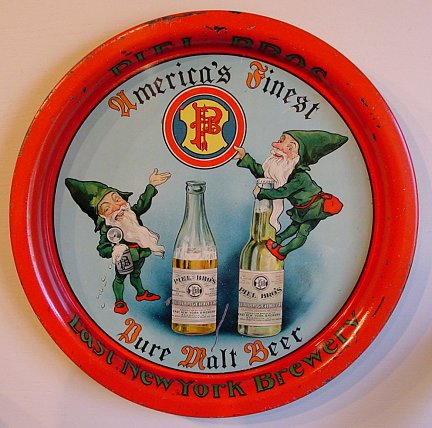
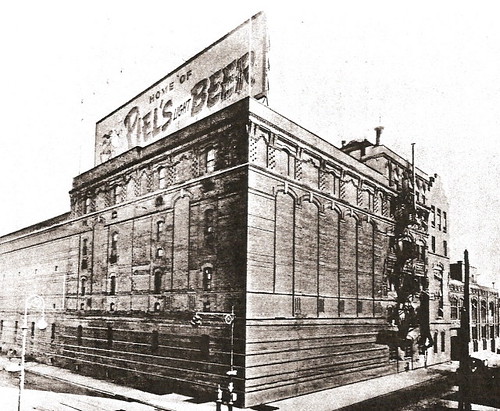
Today is the birthday of Gottfried Piel (December 31, 1852-May 1, 1935) who along with his brothers Michael and Wilhelm Piel founded Piel Bros. Beer in New York, more commonly known as Piels Beer in 1883. Gottfried Piel was more on the business side among his brothers, whereas his older brother Michael was the brewer.
Here’s a short biography of Piel from a website highlighting his highly collectible personal corkscrew:
Gottfried Piel was the founder of the Piel Brothers Brewing Company of Brooklyn, New York. Piel left his home in Dusseldorf, Germany in 1882 at the age of 29 to emigrate to the United States. In 1883 he convinced his brothers Michael and Wilhelm to join him in the purchase of the Landzer Brewery.
Piel’s first year beer production was 850 barrels and in ensuing years, Piel Bros. continue to grow rapidly. It became a Brooklyn tradition and, although the brewery closed after some rough years in the 1960s and 1970s, the brand name is still in use. The Piel name was purchased by the Schaefer Brewing Company in 1973.
Gottfried Piel died in 1935 and his corkscrew was left to his daughter Sophia, widow of Pinckney and wife of Peter William Dawson. The corkscrew passed to Peter William Dawson upon the death of Sophia. In 1980 Dawson died and the corkscrew passed to his nephew Jim Lowry. Jim Lowry sold the corkscrew to Don Bull.
And here’s a biography of his brother Michael from the Cyclopedia of American Biography, edited to keep the portions where Gottfried is mentioned:
PIEL, Michael, brewer, b. in Stoffeln, Düsseldorf am Rhein, Germany, 29 March, 1849; d. at Lake Parlin, Me., 12 June, 1915, son of Heinrich Hubert and Gertrud (Gispé) Piel. He was descended from an old Rhenish stock of farmers of singular attachment, whose members successively aimed to expand their patrimony of tillable lands. To the original and extensive Stoffeln Farm his father and uncles added the great Mörsenbroich-Düsseldorf tillages, which now border the residential section of the Lower Rhenish financial capitol. Michael was born in an environment of industry, thrift, and enterprise. His early youth was devoted to the farm at Mörsenbroich-Düsseldorf. At the age of eighteen, he began his military service in the Kaiser Alexander II Regiment of the Imperial Guards at Berlin. The Franco-Prussian War of 1870-71 broke out just as he had completed this duty. As he was not, therefore, subject to the call of the Fatherland, his family sought to hold him back. He promptly volunteered, however, and served throughout the war, participating with his regiment in several engagements, the battle of Gravelotte and the siege of Paris. The impressions on the country boy of his years of service at Berlin, which had already begun to modernize its industries, lingered and served constantly to stimulate his natural gifts of invention. While for several years after the war, true to the family tradition, he worked at Mörsenbroich with his elder brother, he continually sought expression for his native talents. The arduous discipline of farm-labor from sun-up to sun-down, — valuable preparation though it was for the early trials of his later life career — could not check his inventive spirit. Gradually, making the most of his opportunities on the farm, his successes won him away from the family calling. In the creation of new rose-cultures and, particularly, in the perfection of a new and highly productive breed of bees, for both of which, after but two years of experimentation, he was voted the government’s highest awards, he found the encouragement he needed for the growing determination to carve out his own future. It was, however, his invention of a centrifuge for the extraction of honey, awarded special governmental recognition and immediately adopted into general use, that decided him. As the protégé of a machine manufacturer, he visited the industrial centers of the progressive Rhineland and soon chose the ancient German industry of brewing as the one offering the best opportunity for his talent of applying machinery to natural processes. He found a fertile field. The new science of modern refrigeration had just come into practice, and the suggestions which it offered in his chosen field fascinated him. He began his novitiate in the old-style subterranean cellars at the breweries of Dortmund, Westphalia. In 1883, his apprenticeship ended, he welcomed the call of a younger brother, Gottfried, then already established as an export merchant in New York, to found with him in East New York, at its present site, a typically German brewery, to be conceived on modern and scientific principles. The brothers, as a partnership, secured title to a small old-style brewing plant, then in disuse, and found the problem to convert it to newer ideas a fight against tremendous odds. At the outset, Michael was its brewer, superintendent, and engineer, his accumulated experience fitting him admirably for the multiplicity of his duties. In the early days of the converted plant, Michael found that his hours were from four o’clock in the morning till ten at night. At last, in 1888, the ability of his brother as the financial head of the firm and the excellence of his own products assured success and the long struggle was won. The country which had offered him his opportunity for success he gladly and promptly adopted as his own, being admitted to citizenship in 1888. The enterprise prospered and the partnership became a corporation in 1898, with an established business of national reputation.
Last year I decided to concentrate on Bock ads for awhile. Bock, of course, may have originated in Germany, in the town of Einbeck. Because many 19th century American breweries were founded by German immigrants, they offered a bock at certain times of the year, be it Spring, Easter, Lent, Christmas, or what have you. In a sense they were some of the first seasonal beers. “The style was later adopted in Bavaria by Munich brewers in the 17th century. Due to their Bavarian accent, citizens of Munich pronounced ‘Einbeck’ as ‘ein Bock’ (a billy goat), and thus the beer became known as ‘Bock.’ A goat often appears on bottle labels.” And presumably because they were special releases, many breweries went all out promoting them with beautiful artwork on posters and other advertising.
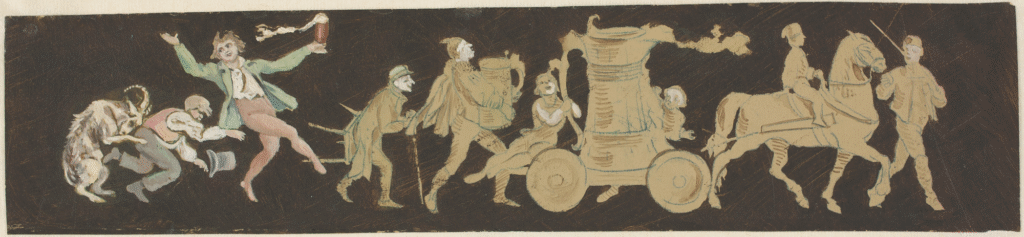
Monday’s poster is for Bock Beer, which was created probably in the mid-1800s. The title of the oil sketch is “Bockbierfestzug” or “Bock Beer Festival Parade.” The artist was Anton Muttenthaler, who was originally born in Höchstädt an der Donau (Höchstädt on the Danube) in 1820 and died in Leipzig in 1870. The work is in the Munich City Museum.
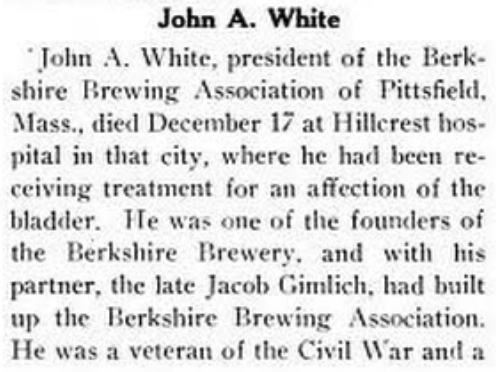
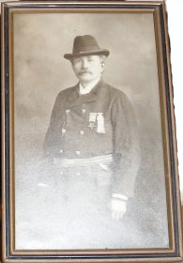
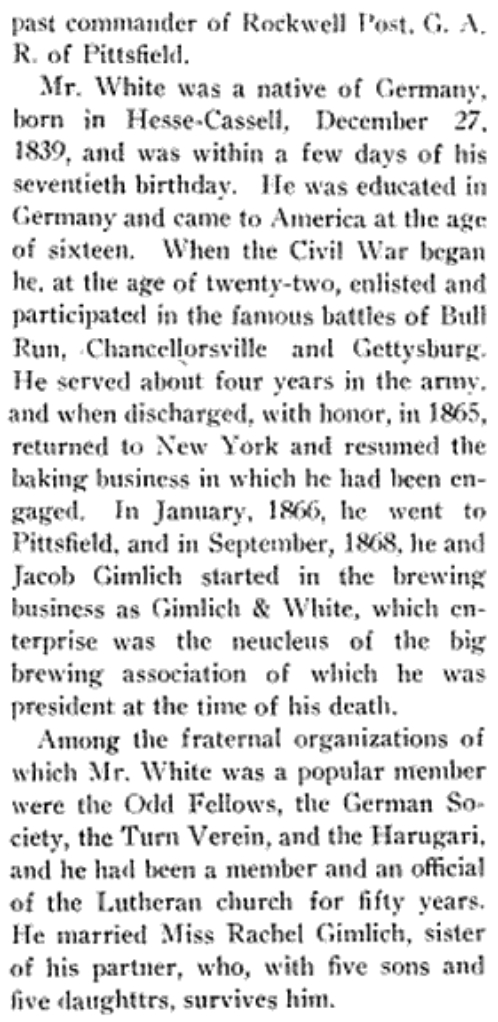
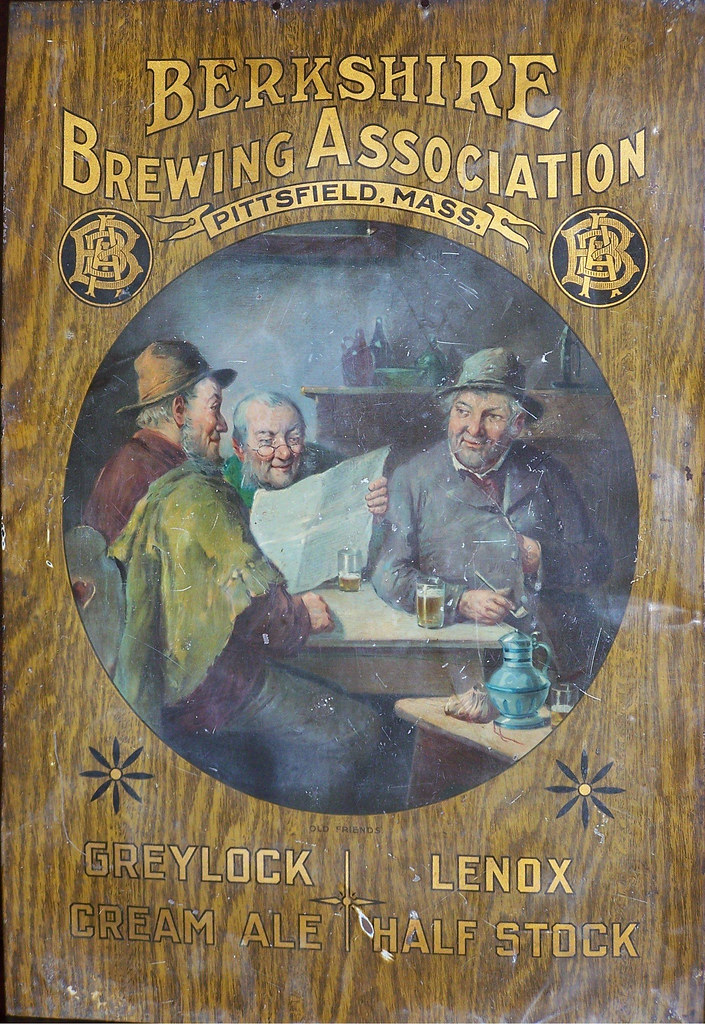
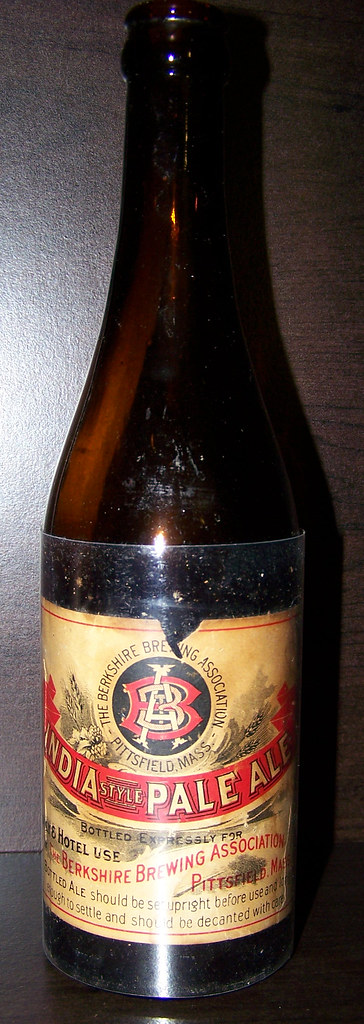
Today is the birthday of John A. White (December 27, 1839-December 17, 1916). He was born and educated in Hesse-Cassell, Germany, but came to the United States in 1856, when he was sixteen. When the Civil War began, he joined up and served with distinction for four years, participating in the battles of Gettysburg, Chancellorsville and Bull Run. After the war, he returned to baking, but a year later relocated to Pittsfield, Massachusetts and bought the M. Benson Brewery, along with Jacob Gimlich, which they called Gimlich & White, and which later became known as the Berkshire Brewing Association. It was closed by Prohibition in 1918, and never reopened after repeal.
Here’s White’s obituary from the American Brewers’ Review:
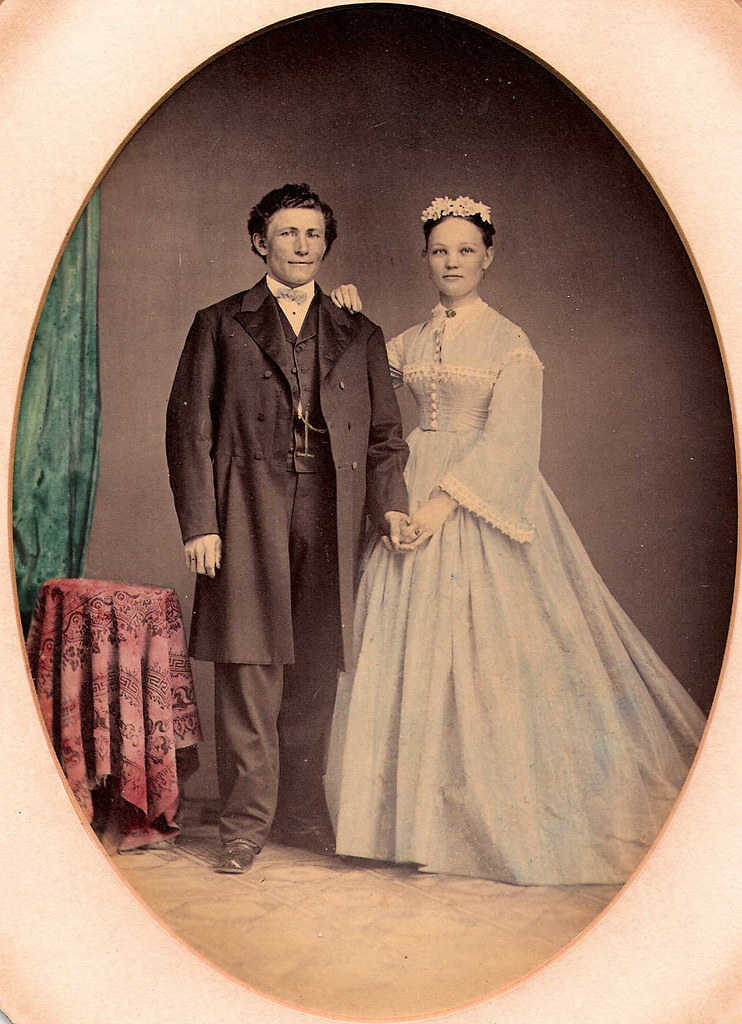
White and his wife Rachel Gimlich on their wedding day. She was the sister of White’s brewery business partner, Jacob Gimlich.
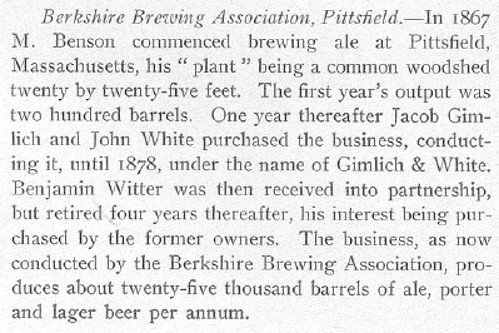
This is a short history of the brewery from 100 Years of Brewing:
Here’s a story of the brewery from the website iBerkshires.com:
One can only wonder what John White and Jacob Gimlich would have thought as federal officers poured 15,000 gallons of locally crafted beer into the sewer on an early May morning in 1922.
Gimlich and his brother-in-law White had first purchased a small brewery on Columbus Street in 1868 from Michael Benson. First called simply “Jacob Gimlich & John White,” the business began at an output of just six barrels a day, but would grow to be a major manufacturer in the West Side Pittsfield neighborhood.
Both men had immigrated to the country from Germany in their youth, and both served tours in the Civil War. Gimlich worked briefly for the Taconic Woolen Mills before going into the beer business with his sister Rachel’s husband.
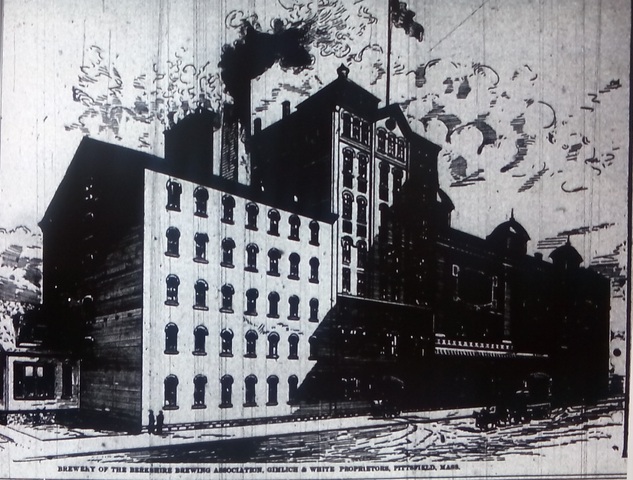
By 1880, operating as Gimlich, White & Co., the brewers erected a much larger facility in a five-story brick building measuring 40 by 80 feet. The expanded plant employed from 15 to 20 men and was shipping about 16,000 barrels a year.
Gimlich and White built houses directly across the road from their plant on John Street, and as their fortunes grew became increasingly prominent members of the community. Gimlich in particular became enmeshed in a variety of financial and civic affairs. From 1884-1885, he served as the city’s representative in the Legislature, and was one of the organizers and directors of City Savings Bank. Gimlich likewise served on the board of the Berkshire Loan and Trust Co. and of the Co-Operative Bank, was a past chancellor of the local lodge, Knights of Pythias, and member of the Grand Lodge of Massachusetts and of the local Sons of Veterans.
“Pittsfield has been pleased with the success of Gimlich & White and they are counted among the town’s leading, liberal, and most public spirited citizens,” states one Pittsfield Sun editorial of the time.
By the early 1890s the torch was being passed to the next generation, with sons David Gimlich along with Fred and George White taking on more leadership of the company when it reincorporated as Berkshire Brewing Association in 1892. An additional four-story building was added, with the brewing complex now taking up the full block along Columbus Avenue between Onota and John Street to Gilbert Avenue.
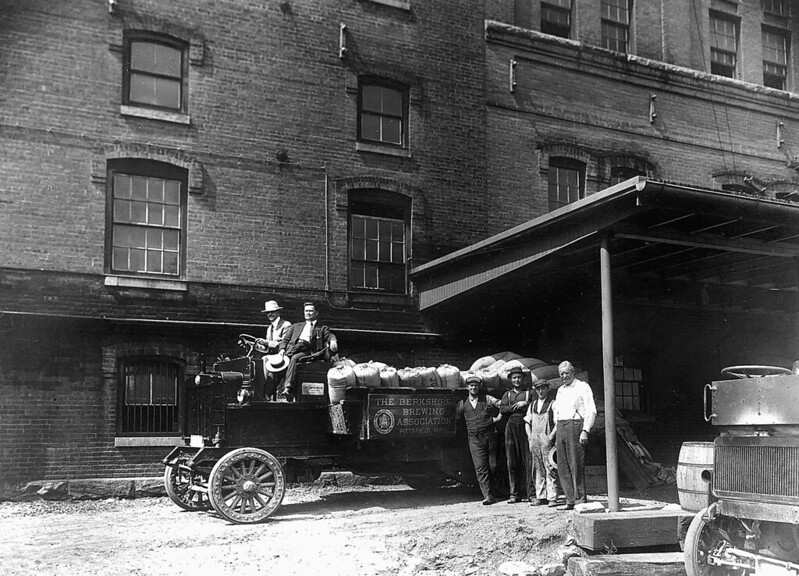
Among Berkshire Brewing’s most popular products were Mannheimer Lager Beer, Berkshire Pure Malt Extract, Lenox Half Stock Ale, and Berkshire Pale Ale, considered to be one of the finest India pale ales then on the market. The plant also churned out bottled mineral waters, ginger ale and other soft drinks.
The elder Gimlich and White passed away in 1912 and 1916, respectively, but the enterprise they founded continued to see steady growth. The only brewery of the kind within 50 miles of Pittsfield, Berkshire Brewing Association had something of a monopoly in the region, along with a thriving distribution throughout the east coast as far south as the Carolinas. At its peak, it employed 150 workers and put out 75,000 to 100,000 barrels worth of beer annually. Records indicate between 1910 and 1920, Berkshire Brewing Association paid $1 million in federal taxes, in addition to state and local taxes and fees, including $1,200 a year for a brewer’s license and $800 for an annual bottling license.
The company was not without its occasional hiccups, such as a lengthy strike in the fall of 1911 by the Pittsfield Brewers Union, culminating in the reinstatement of a dismissed employee.
Real crisis came at the end of the decade, as increasing restrictions on alcohol grew into total national prohibition. They first ceased brewing beer temporarily in December 1918, after a directive from the National Food Administration following the passage of the the Wartime Prohibition Act. Even after the passage of the Volstead Act the following fall, BBA voted to remain in business, focusing on bottled soft drinks while hoping the ban to be a brief legislative phase.
They also continued to brew beer, as did several major brewers throughout the country at first, seeing the government’s lack of resources tasked to enforce the rule. Finally in spring 1922, federal officers arrived to turn off the taps, disposing of 15,000 gallons worth and estimated $15,000 to $20,000 at the time.
Ironically, the company waited it out until nearly the end of the failed domestic policy, the board of directors voting to close down in January 1929.
The brewery building was dismantled soon after; for a time, the Siegel Furniture Co. operated out of the former bottling building, which later became the Warehouse Furniture Co. In 1975, this, too, was cleared as the land passed to the Pittsfield Housing Authority, which developed the Christopher Arms housing project that occupies the former site of the brewery today.
Today is the birthday of Rudolph Rheinboldt (December 27, 1827-October 30, 1916). He was born in Germany, came to Cincinnati, Ohio, and was involved with helping to found what would become the John Kaufman Brewing Co., though for a short time, from 1856-58, it was known as the John Kaufman Rudolph Rheinboldt Brewery. It’s possible he was related to Kaufman, though it’s unclear how, although Rheinboldt did marry Magdalena Kauffman in Cincinnati, Ohio, on August 13, 1859, when he was 31 years old.
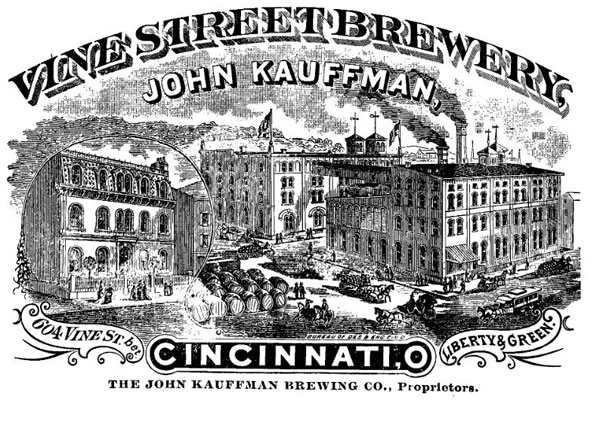
Here’s the letterhead from the John Kauffman Brewing Co.
Since he appears to have been involved for only a short time, I was unable to find very much about him, no photos, and almost nothing after he left the brewing industry.
In 1856 John Kauffman, George F. Eichenlaub, and Rudolf Rheinboldt purchased the Franklin Brewery on Lebanon Road near the Deer Creek from Kauffman’s aunt. Her husband, John Kauffman, estabished the brewery in 1844. He died in 1845. In 1859 under the name Kauffman and Company, they began to build a new brewery on Vine Street and soon left the Deer Creek location. The first structure on Vine was completed in 1860.
In 1871 the Kauffman Brewery was the city’s fourth largest with sales amounting to $30,930. It was located on both the west and east sides of Vine north of Liberty and south of Green Street.
In 1860 Kauffman also bought the Schneider grist mill on Walnut Street near Hamilton Road (McMicken Avenue), but leased it out before long to another company.
In its first year on Vine Street, the brewery produced only about 1000 barrels. By 1877 the number grew to 50,000 barrels of beer. Kauffman’s beer was sold in Nashville, Montgomery, Atlanta, Charleston, Savannah, and New Orleans.
In 1865 Eichenlaub retired from the business and he was followed by Rheinboldt in 1877. John Kauffman then took over the leadership by himself. After his oldest son Johnn studied brewing in Augsburg, Germany, he went to work at the family brewery. Emil Schmidt, Kauffman’s son-in-law, was superintendent by 1877.
In 1882 the brewery was incorporated as the John Kauffman Brewing Company with a paid-in capital stock of $700,000. In 1888 the brewery building at 1622 Vine was enlarged. Note it is occupied by the Schuerman Company today. The office and family residence was at 1625-27 Vine, which was razed and replaced about 75 years ago.
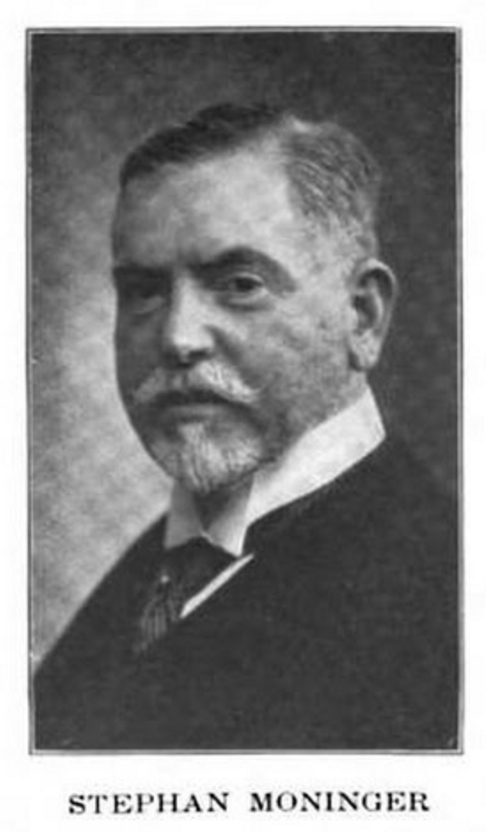
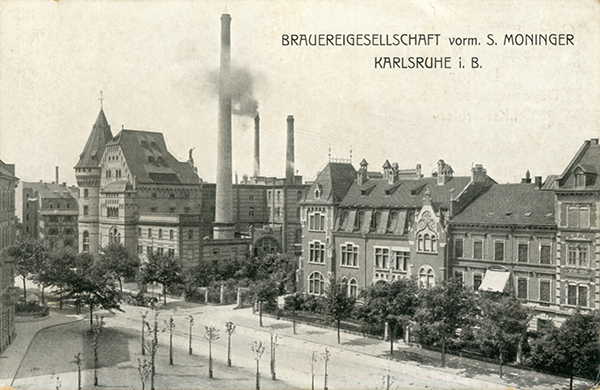
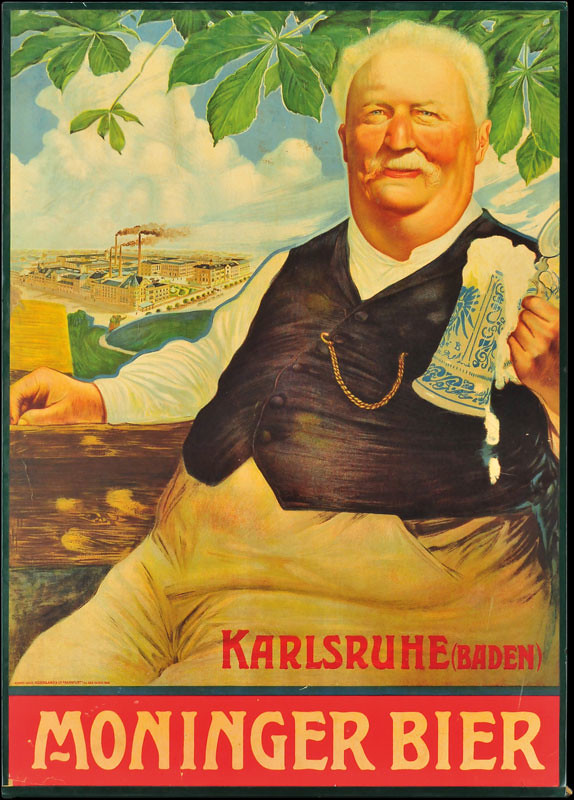
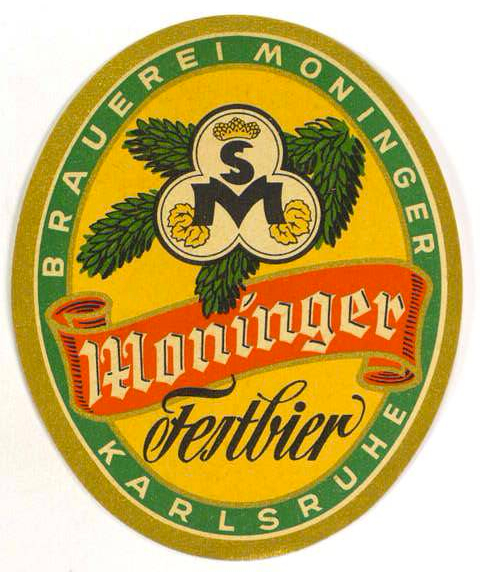
Today is the birthday of Stephan Moninger (December 25, 1827-1875). He was born in Württemberg, Germany, and on December 16, 1856, was granted a license to brew commercially and founded the Brauerei Moninger in Karlsruhe, Germany. It was the same brewery he had previously worked at as brewmaster, then known as the Brauerei Ludwig Kaufmann. When his boss died in 1852, he married his widow, Marie Kaufmann, and Moniger assumed control of the brewery then but had to wait until two years later to be inspected and permitted to join the local brewers’ and coopers’ guilds, even though he’d become a citizen of Baden and had acquired the “master’s rights.”
As Stephan Moninger from Upper Unterschneidheim at Ellwangen in 1854 to Karlsruhe came, wanted the local brewers guild not accept his master’s certificate. No wonder he had bought himself in Stuttgart. When then 27 breweries and 25,000 residents, there was a great competition. Moninger then worked initially as managing director of Ludwig Kaufmann brewery in Waldhornstraße 23 died as a merchant, married Moninger 1856 his widow Marie born Hermann . However, before that same year the brewery under the name brewery S. Moninger could lead, he had to take a new master inspection before Bierbrauer- and coopers’ guild.
After Moninger 1866 in the former brewery of his brother Josef Hack in the Long Road 142 (later Emperor Street ) moved, the company began to flourish soon. 1875 , the company was by his widow Marie and from 1881 by the sons Karl and Stefan Moninger continued as a general partnership.
From Josef Hack Moninger also had a beer cellar in summer bar (at the Kriegsstraße acquired). On the local terrain in the Kriegsstraße 128-130 (. Later No. 210-216) established the brothers Moninger – after 1884 a brewery fire the malt kiln in the Kaiserstraße had destroyed – after a new brewery.
With the commissioning of the new brewery investments in 1888 , the change occurred to one of the first industrial companies in this hitherto craft-oriented industry. At the same time, the conversion into a corporation under the name carried Brewery Company vorm. S. Moninger AG (since 1938 only Brauerei Moninger AG). 1898 a beer output of 100,000 hectoliters was reached. Thus she could in the subsequent period as now largest brewery establish bathing. 1905 was a bottling plant in operation.
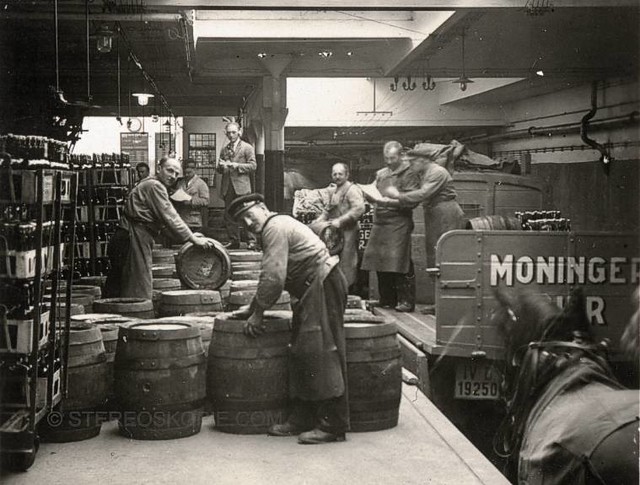
The First World War the supernatant Moninger AG better than most other Karlsruher breweries . Through the buying of brewery Kammerer ( 1920 ), the Eglau brewery ( 1921 ) and the Union Brewery ( 1922 ) she held the top position among the Karlsruher Breweries (beer production in 1928 : 200,000 hl.). From 1923 , the production of soft drinks and mineral was added.
In December 1856 originating from Württemberg took Stefan Moninger the brewery of the late Ludwig Kaufmann in Waldhornstraße 23, in which he worked as a brewmaster since. 1854 After Kaufmann’s death in June of the year, he had acquired Baden citizenship and the master’s rights, and married the widow Marie Kaufmann. Since Waldhornstraße the flourishing brewery Stefan Moninger offered little space, acquired Moninger 1866 for sale Brauerei his brother Josef Hack in Long Street (today Kaiserstraße ) 142 to the four acres of farmland including a beer cellar in summer line included. When Moninger passed away in 1875, his wife first handed over the management of the brewery to her oldest son, Ludwig Kaufmann junior. 1881 then took over the two elder sons from his second marriage, Charles Moninger (Kaufmann) and Stefan Moninger (brewer), the company for sale of her mother and made her a general partnership (OHG). In 1887, the youngest son Theodor Moninger joined the company as a third party, which developed into a major industrial company in the 1880s.
From 1886-1888 originated in the Kriegsstraße 128-130 (today Kriegsstraße 210-216), the site of the former summer line, according to plans by Hermann Walder modern brewery plant, which has been continuously expanded to 1900’s. On June 12, 1889, the family business was transformed into the company Bremerige Gesellschaftsgesellschaft S. Moninger. With a beer output of more than 100,000 hectoliters in the business year 1897/98 the enterprise rose to the largest Karlsruher brewery. 1898 the brothers from the town acquired a 12,800 square meter area at Westbahnhof as a storage and distribution center for growing freight traffic on rails. 1901 she opened in the Imperial Road 144, next to the former brewery, the also designed by Walder main places to Moninger . From 1906-1908 was on the brewery premises in Kriegstrasse modern Flaschenabfüllerei and on the adjacent corner plot war and border road (today Moningerstraße ) built a fountain.
The outbreak of the First World War led to a production Depression. 1920 took over the brewery, the brewery Karl Kammerer in Kriegstrasse 113 and the brewery Eglau Aktiengesellschaft (AG) in Durlach and 1922, the Union Brewery Aktiengesellschaft AG in Sophienstraße 101. In 1923 she expanded the production by making lemonade and mineral water. After ups and downs in the 1920s and 1930s led World War II in turn to a drop in production of in 1938 operating under the name and brewery Moninger AG company. The two houses in the Imperial Road were in airstrikes hit the brewery plant in Kriegstrasse spared.
On May 1, 2010, the merger of Moninger AG brewery was with the court brewery Hatz AG from my Betriebspacht- and purchase agreement Rastatt sealed, which was there for the 1863rd Since then the brewery has been transferred to Hatz-Moninger Brauhaus GmbH. The Hatzfeld brewhouse was dismantled and installed the Brew vessels in a new brewhouse. This cost 3.4 million euros and was built within eight months at the Zentralgesitz Grünwinkel.
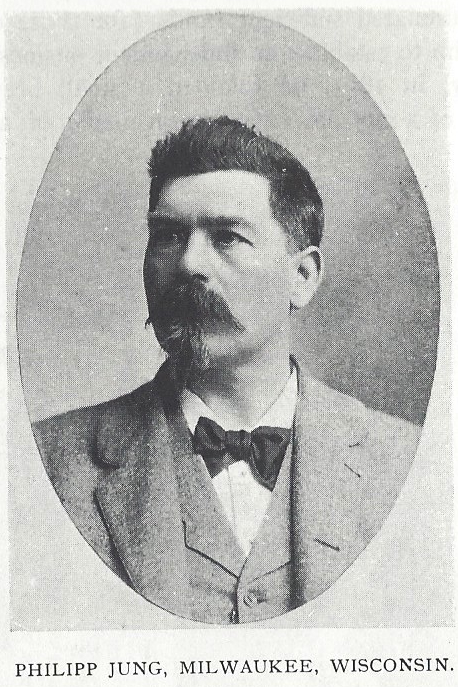
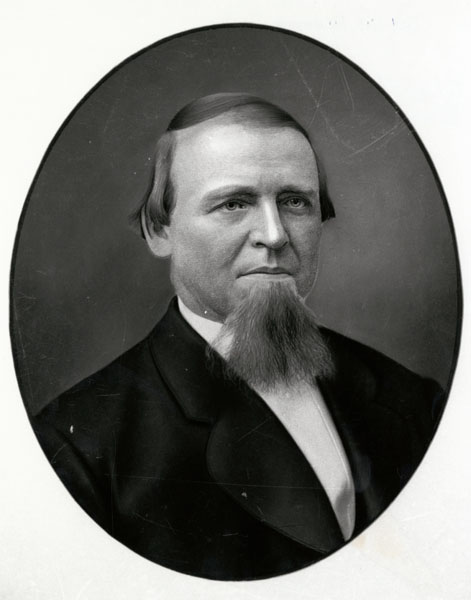
Today is the birthday of Philipp Jung (December 23, 1845–July 10, 1911). He was born “in Dorn-Assenheim, Hesse-Darmstadt, which today is a part of Reichelsheim in Wetteraukreis, Hesse, Germany,” but came to the U.S. when he was 25, in 1870. He came first to New York City, then Cincinnati before settling in Milwaukee, Wisconsin. “Jung married Anna D. Best, daughter of the brewer Jacob Best, and they had six children.”
Here’s a history of his career, from his Wikipedia page:
After his arrival in the United States, Jung was employed by Rogge and Feigenhaln Brewing Company in New York. He also worked as the maltster for the Foss, Schneider and Bremer Brewing Company in Cincinnati. After moving to Milwaukee in 1873, Jung became second foreman for the Phillip Best Brewing Company, then first foreman, and finally superintendent of the company’s south side plant. In 1879, he left Best to form a partnership with Ernst Borchert, founding the Jung & Borchert Brewing Company. In 1888 this became the Falk, Jung & Borchert Brewing Company in one of the earliest mergers involving Milwaukee breweries. The company became a rival to the Philip Best Brewery, which was operated by Frederick Pabst and later became the Pabst Brewing Company. Jung was considered “an important factor both as a manufacturer of large quantities and also as one who gave a distinctive quality to the goods sent out from his plant.”
In 1896, Jung purchased the Obermann Brewing Company at Fifth and Cherry Streets in Milwaukee, where he established The Jung Brewing Company. This firm grew and outlived its founder, finally closing because of Prohibition.
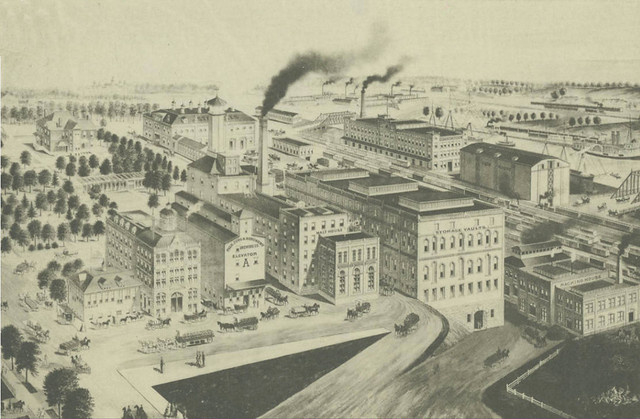
The Falk, Jung & Borchert Brewing Company.
This biography is from 100 Years of Brewing, published in 1903.
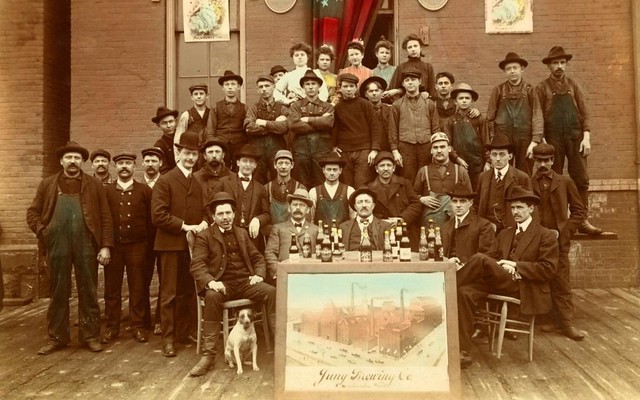
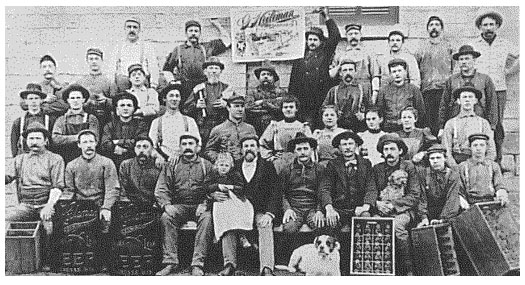
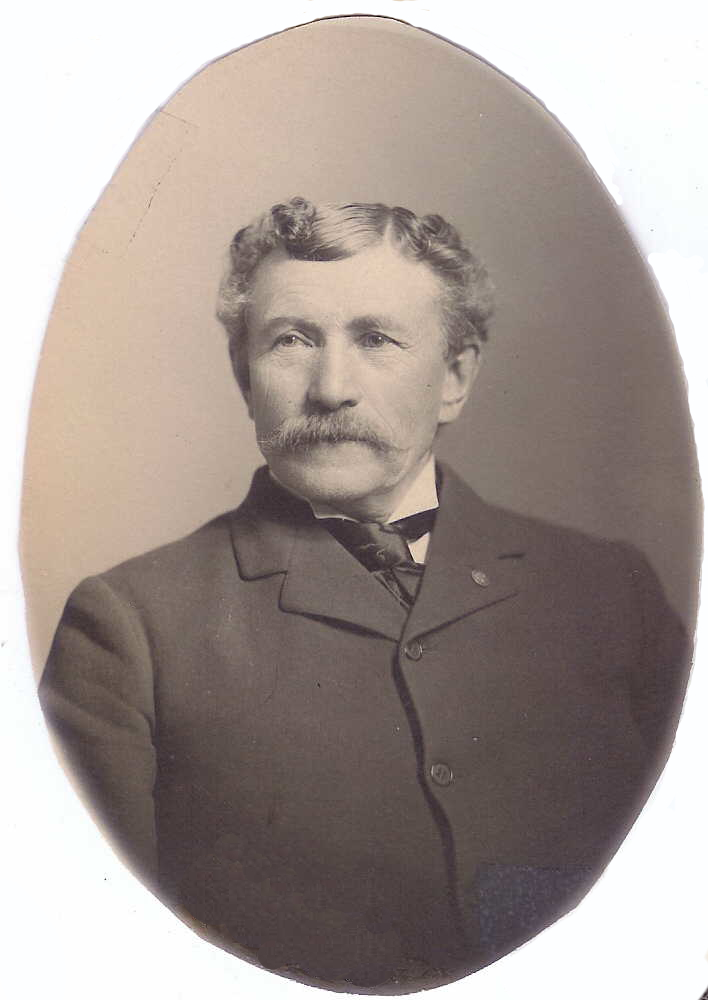
I think this is the Jung Brewing Co. employees, but it’s hard to tell. There were actually at least four Jung’s who brewed commercially in the U.S. One in Ohio, one in Texas, and two in Wisconsin. But seated in front, second from our left looks like Philipp’s mustache, so think this is the right one.












 A brewery delivery truck around 1905.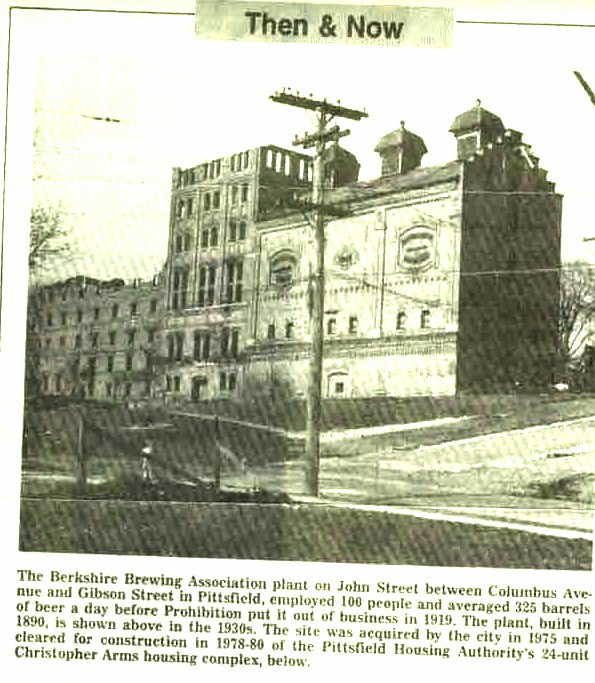

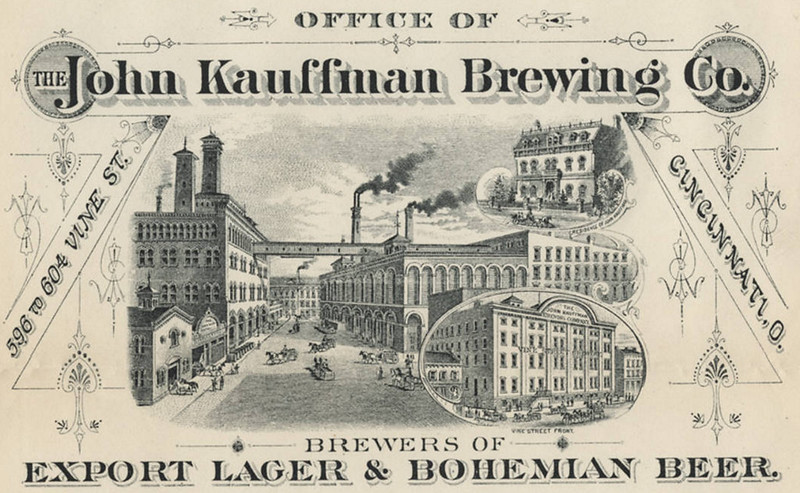 Here’s the letterhead from the John Kauffman Brewing Co.