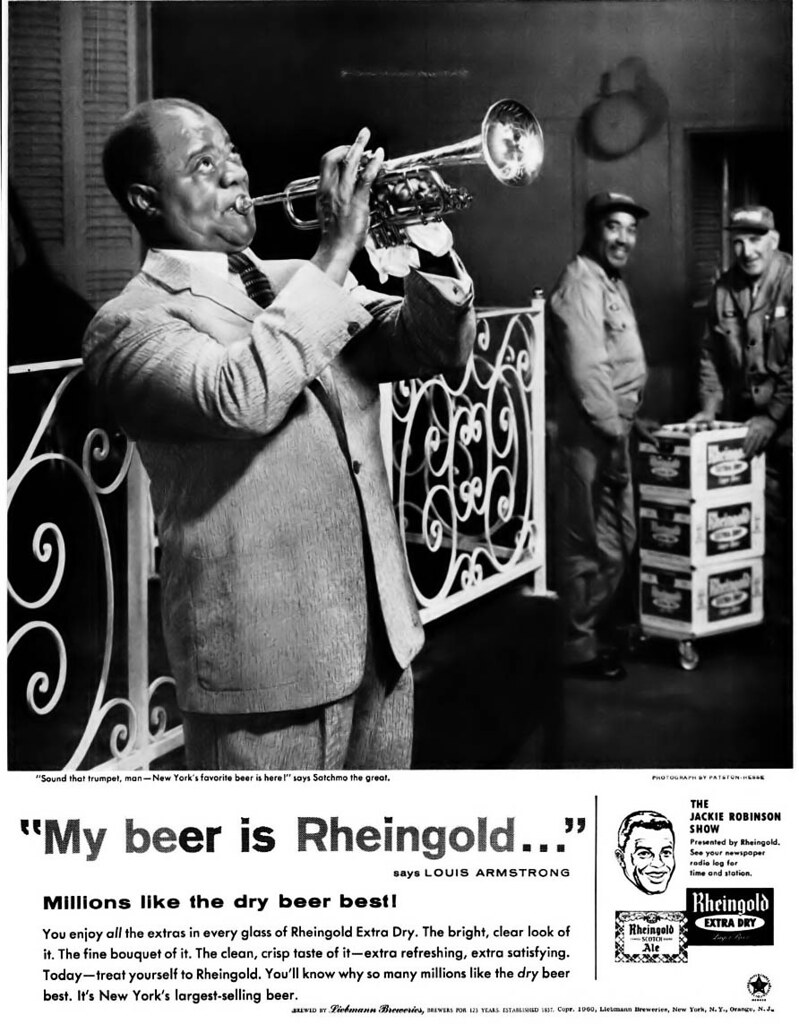
Today in 1883, US Patent 272261 A was issued, an invention of John E. Jeffords, for his “Beer-Mug.” There’s no Abstract, but Jeffords describes his invention as and its purpose “to provide a neat and a cheap form of mug, which is readily cleansed and not easily broken,” adding that it “consists of a beer-mug made of suitable porous material, glazed.”
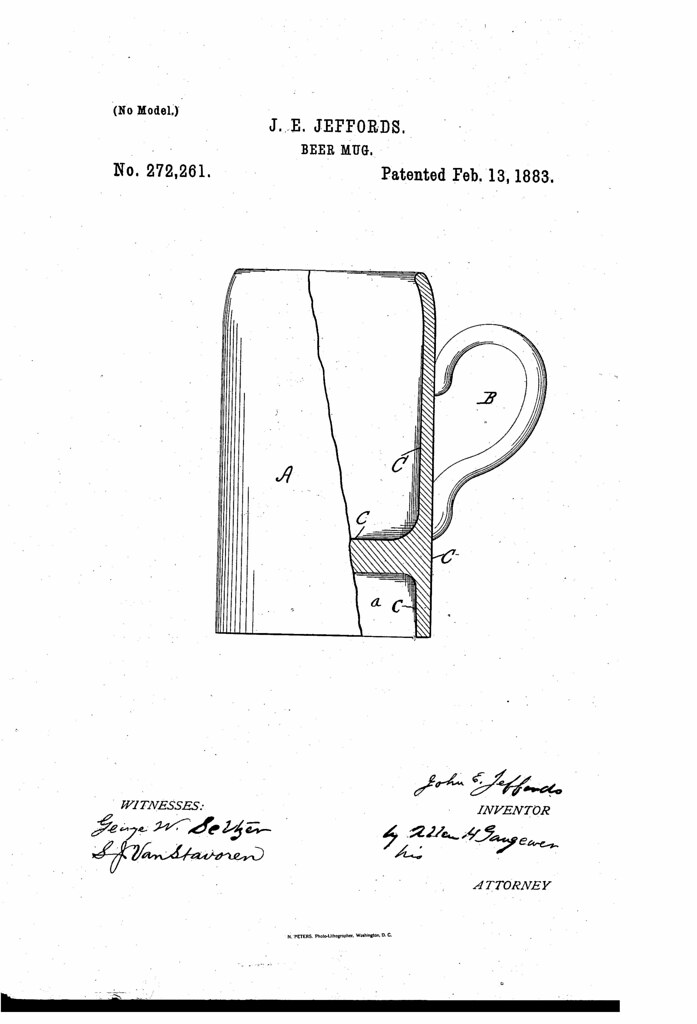
Beer In Ads #1464: Pronounce It Mick-A-Lobe

Thursday’s ad is for Michelob, from 1967. Apparently, in the late Sixties people still had trouble pronouncing Michelob. It reminds me of the packaging on Lagunitas, which includes “Say ‘lah-goo-knee-tuss'” on their carriers because when the brewery first opened, founder Tony Magee worried that most people wouldn’t know how to pronounce the name of the small west Marin town. So okay, it’s “Mick-A-Lobe,” “Now that’s an order.” Also, “In beer, going first class is Michelob. Period.” Sadly, that is how the brand was positioned. It even seemed to work for a while.
Beer In Ads #1463: Croquet & Beer
Wednesday’s ad is for Budweiser, from 1950. Here’s a great rule of thumb for living. “Some sort of recreation belongs in every one of your busy days.” If it’s croquet and drinking beer, I’m in. Especially if I get to dress up in the backyard. But I love croquet, used to play it at my grandmother’s place all the time growing up. Curiously, though, she never offered me a beer. I do like that their croquet set appears to have a place on it where you set down your beer. Ours didn’t have that.

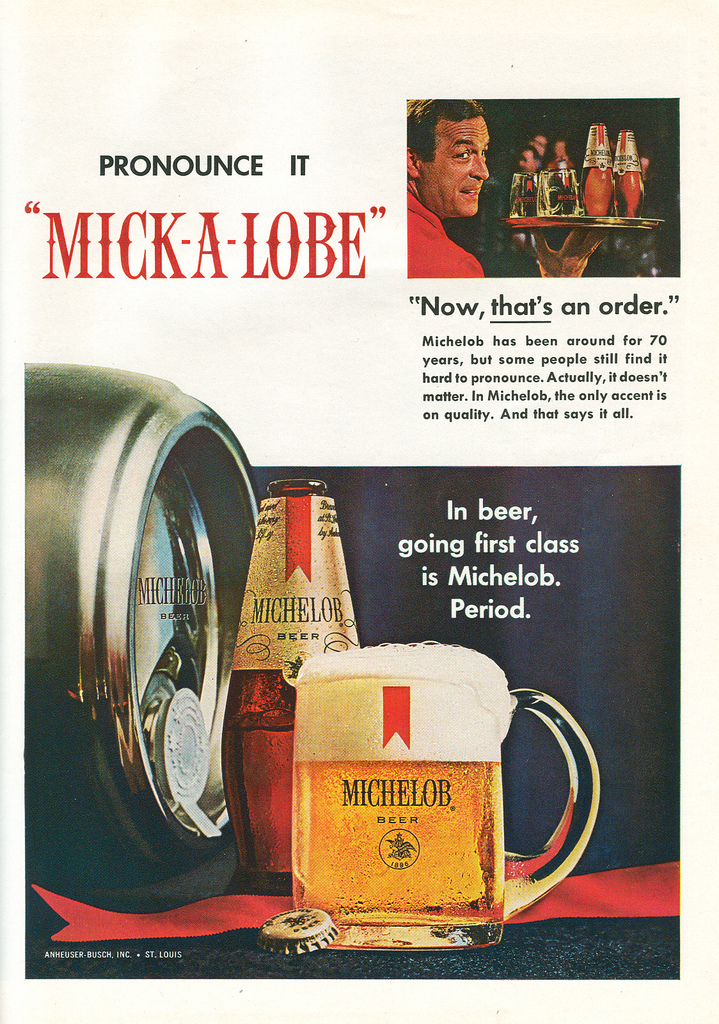
Beer In Ads #1462: Enjoy Life
Tuesday’s ad is for Miller High Life, from 1961. “Enjoy Life with Miller High Life.” Certainly the man is enjoying his, he gets the rocking chair and a book, while the little woman sits at his feet peeling carrots. I guess she shouldn’t complain, he did allow her to have a beer, too.
The Orchid Of Beer: Women’s Beer Circa 1953

I believe we tend to think of marketing efforts to create a beer specifically aimed at women as a more recent development, but apparently that’s not the case. I recently discovered that in 1953 the Storz Brewing Co. of Omaha, Nebraska was trying to sell beer to women using the same tired tricks that are often still being used today.
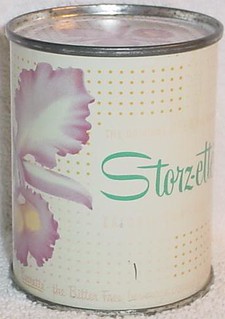
Apparently, in 1953, Storz created the “Storzette,” a smaller package designed for the ladies to be “calorie controlled” and less bitter, and which also had a pink and lavender package with orchids on them, and whose slogan was — believe it or not — “The Orchid of Beer.” Rusty Cans has the full story, from 2004, of the brewery and this dalliance into women’s marketing.
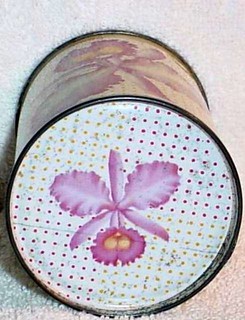
In 1953 Storz tried to market a new product for women, “Storzette.” Designed to be a beer for the ladies it was supposedly not too bitter and was calorie controlled. It also came in a smaller can, 8 ounces, which Storz called “Queen sized” and it came in four can packs called “Princess Packs.” The brewery noted that market studies showed that many women felt that the standard 12 oz can provided too large a serving. The beer inside was also different, made to be less bitter than standard beers. The can even had a pink orchid pictured on it to help it appeal to women. It’s initial test market results in San Diego seemed positive, but in the end the effort was not successful and Storzette did not last long on the market. As a result, the little can with the orchid is very scarce. Storz also used a slogan on its regular cans for awhile in the 1950s, “the Orchid of Beer” which has to be one of the more unusual beer advertising slogans.
Absent any additional information, I can only assume “Calorie Controlled” is done through offering a smaller size can. Smaller portions equals less calories. Of course, you could just drink less, couldn’t you? The control aspect of their claim seems entirely up to the drinker rather than anything designed by the packaging or the beer itself.

According to orchid websites, the particular type of orchid on the label is a cattleya. Not only do they use a flower, but the color palate is soft pastels, pinks and purple.
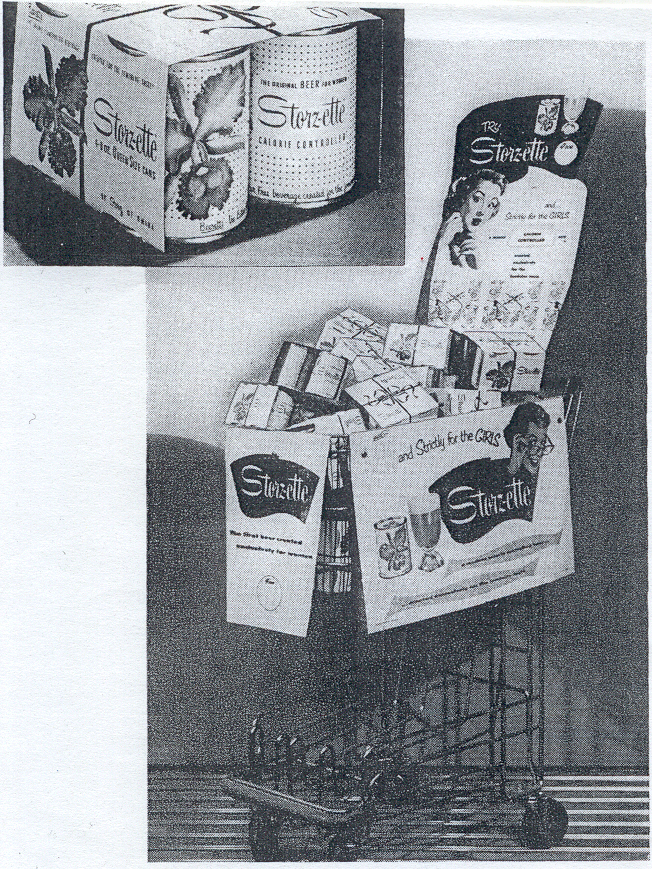
I presume this is a vintage grocery display using a cart filled with six-packs and surrounded by banners. Notice on the side there’s a gal wearing glasses saying the beer is “Strictly for the Girls.”
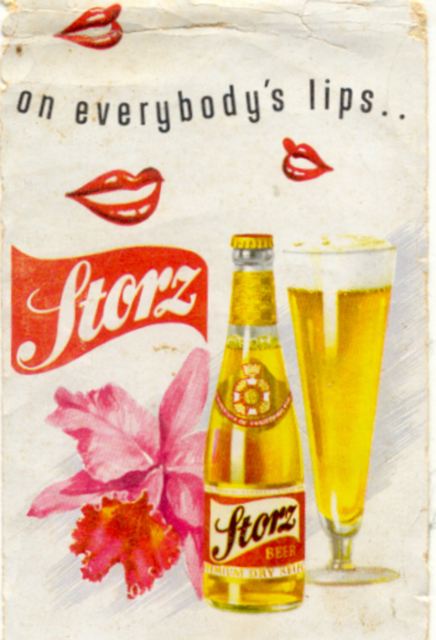
And finally, here’s an ad for the beer using an orchid in the advertisement.
Interestingly, a group of local folks from Omaha revived the Storz brand and opened a newer version of the brewery in 2013.
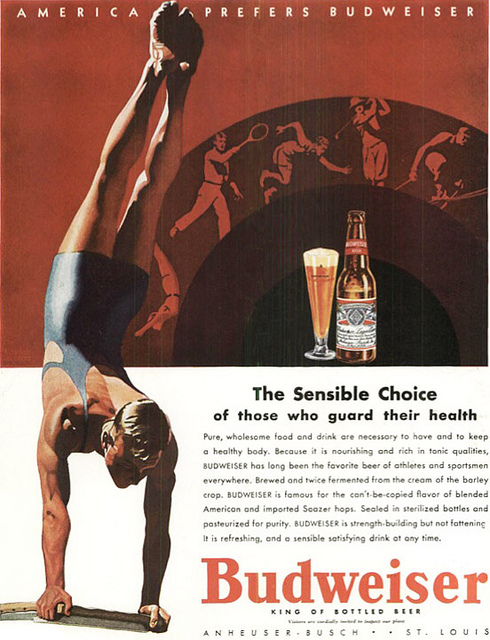
Beer In Ads #1461: The Sensible Choice
Monday’s ad is yet another one for Budweiser, this one from maybe the late 1930s. “The Sensible Choice of those who guard their health.” According to the ad, Budweiser is the “favorite beer of athletes and sportsmen everywhere.” That’s because “Pure, wholesome food and drink are necessary to have and to keep a healthy body.” And Bud is made with a mixture of American hops and “imported Saazer hops.” Which apparently makes it “strength-building but not fattening.”
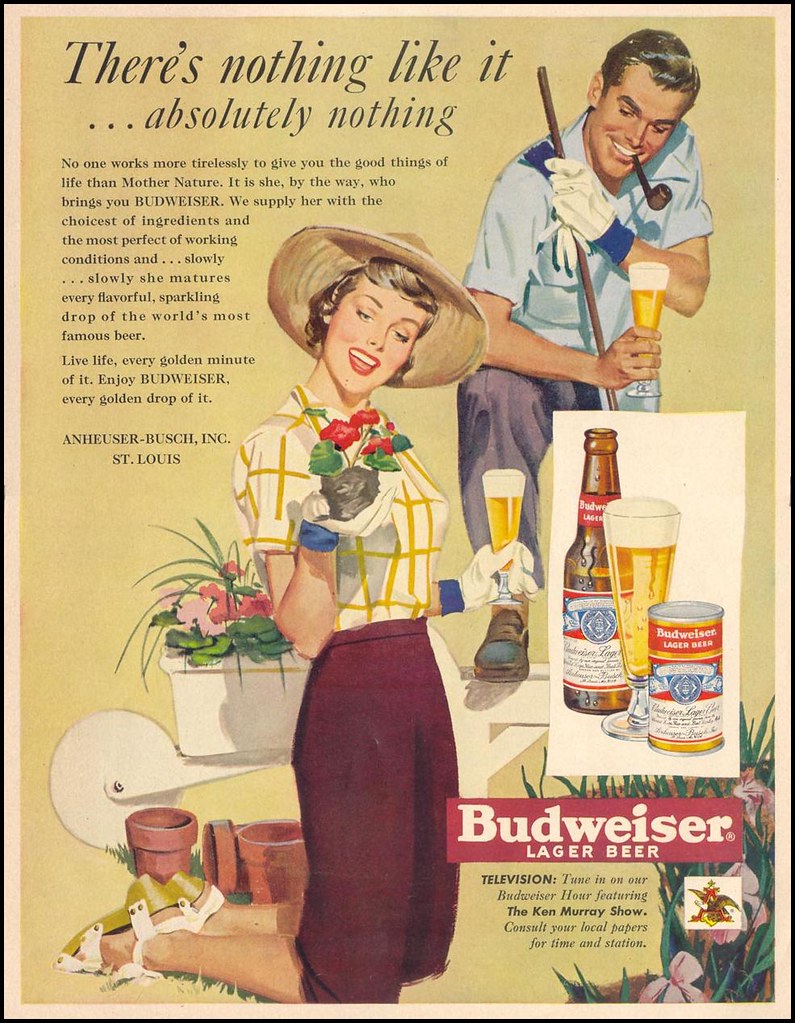
Beer In Ads #1460: Gardening With Buds
Sunday’s ad is another one for Budweiser, this one from 1950. I love the idea that Mother Nature is responsible bringing us beer, however this may be taking the thank you a bit too far. No fan of gardening myself, it seems like it would be even more difficult — nearly impossible I should think — trying to garden while holding a glass of beer in one hand.
A Short History Of The 12-Pack

Yesterday’s Beer in Ads post featured an ad for Budweiser from the 1970s. The ad, Pick-A-Pair Twice!, was trying to get people to buy not one, but two six-packs. I wondered in the post when the 12-pack debuted. My ignorance about this stems largely from having grown up in Pennsylvania, which is a case state, one of the weirder examples of what happened when alcohol laws were left to the states following the repeal of prohibition.
I’d never really thought about the 12-pack package until I was posting that ad last night. I remember reading about breweries experimenting with different size packages in groceries way back when until they decided six was the right weight for women shopping to pick up and bring home (assuming that’s even true).
After high school I went into the military, stationed in Virginia and then New York City, but generally went to bars and rarely bought beer for at home since I lived in a barracks. After my stint in the army, I moved back to PA. When I moved to California in 1985, there were 12-packs everywhere, though in retrospect I don’t remember even paying any special notice of them. By that time, most of the beers I was interested in came in 22 oz. bottles, or maybe six-packs. Who was the first early small brewer to have 12-packs? My guess is probably Samuel Adams. Sierra Nevada wasn’t until the latter 1990s, I believe. I was still the chain buyer at BevMo when they debuted. RedHook might have been early on, too.
Anyway, I wasn’t expecting an answer, but happily Dave “Beer Dave” Gausepohl sent me an excellent response. Beer Dave is breweriana collector of epic proportions, and has over 400,000 items in his collection, He’s also a board member of the BCCA — the Brewery Collectibles Club of America and a frequent contributor to All About Beer magazine. Here’s his short history of the 12-pack, written extemporaneously, from his own studying of beer history, reprinted with his kind permission.
Six-packs appeared first by Pabst just following World War II. They tested numerous package sizes and determined in a sexist fashion that the average housewife could comfortably carry six beers home with the shopping. The 12-pack came a few years later, and it resembled the dimensions of the Full Sail Session 12-packs. This was due to the fact that the first cans in 12-pack packages were cone top and crowntainer cans. This was also a corrugated carton. These cans were able to be filled on most breweries bottling lines with little retooling and they did not have purchase separate packaging equipment. The one way bottle was much more desired than cans when the flat top can debuted in 1935. World War II also limited the steel for cans and returnable bottles were a friendlier package towards the war effort.
In the 1960s when the convenience store took off, six-packs were the package of choice. They worked with the shelf space mostly laid out for milk and dairy items. The moisture of the retailers’ refrigeration equipment also was not kind to packaging larger than six packs. Also glass was still the package of choice for beer. Glass was a cheaper package than steel or aluminum. Many breweries had 8-pack glass as their package. It was not until after the oil crisis of the 1970s that the weight of packaging became a major cost factor. This movement pushed breweries to pursue cans over glass.
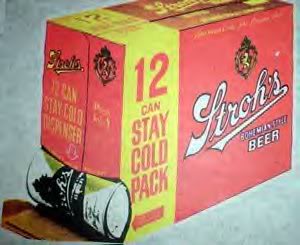
A Stay Cold Pack, this one by Stroh’s.Rainier debuted the Cold Pack in the early 1960s. In the Midwest it was not until the late 1960s when Stroh’s pioneered a similar 12-pack with a foilized paper that could with withstand the moisture of the refrigeration systems used at retail. A number of carton manufacturers like Mead developed waxed versions of cardboard to withstand the moisture levels. Corrugated rather than cardboard was the leader prior to the advent of the moisture resistant 12-pack. Back then just like today wet corrugated boxes have NO strength or purpose.
The difference in corrugated boards.The Pick-A-Pair campaign was a huge success for Budweiser. Ironically a number of states did not allow for 12-packs to be sold. The eight-pack was the largest package allowed to be purchased at retail in numerous states. The enormous growth to the suburbs also increased the demand for a larger retail pack. Since the country was driving to the store rather than walking or taking the bus or street car, more items could be carted home on the average shopping trip. The development of the supermarket drove this demand for package innovation. Also, the advancement of the size of the household refrigerator made this a more inviting package.
An example of a cardboard 12-pack.Prior to the 1970’s Returnable bottles in the 12, 16 and even quart bottle were very much a part of how beer was retailed. These fiberboard cases were very durable and withstood many trips back to the breweries to be refilled. These were a desired package with the on-premise trade. I imagine you remember the heavy wooden crates and glass bottles that soft drinks were packaged in until the 1980s.
An example of Fiberboard.


Thanks Beer Dave. Now you know.
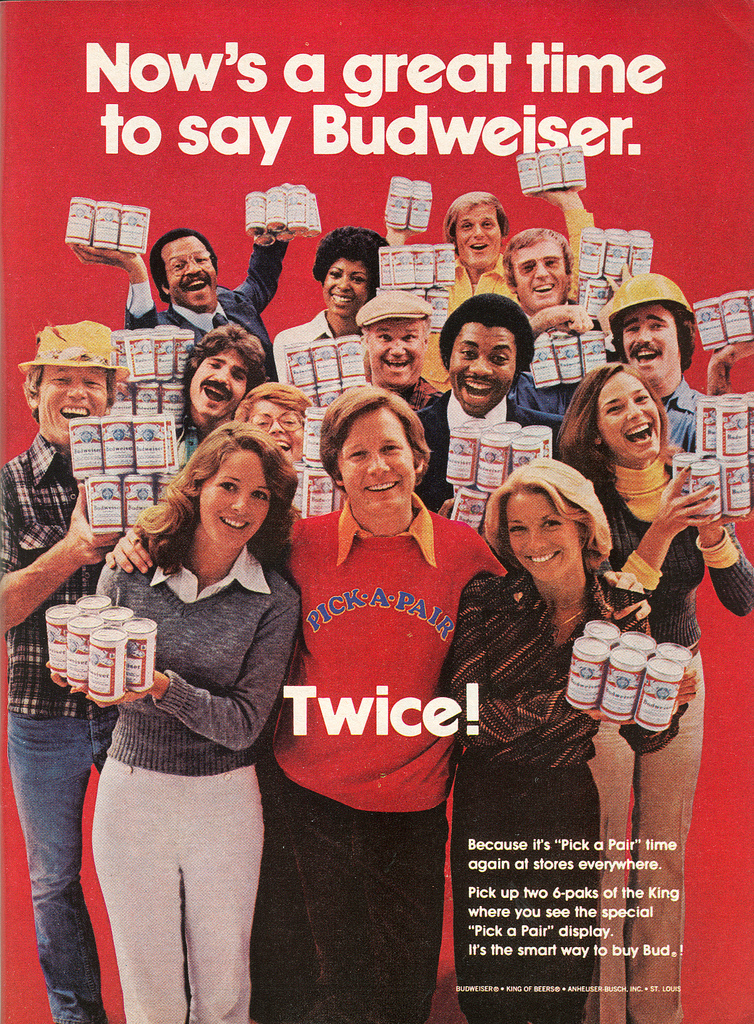
Beer In Ads #1459: Pick-A-Pair Twice!
Saturday’s ad is for Budweiser, from sometime in the 1970s, based on the collars and fashion. The ad is trying to get people to pick-a-pair, that is buy a six-pack, and in fact the ads wants people to do that “Twice!,” that is buy two six-packs. I grew up in a case state with weird, antiquated laws (Pennsylvania) so were twelve-packs not available yet in the 1970s? When did the twelve-pack debut? Anybody know? Because otherwise why not just advertise twelve-packs?
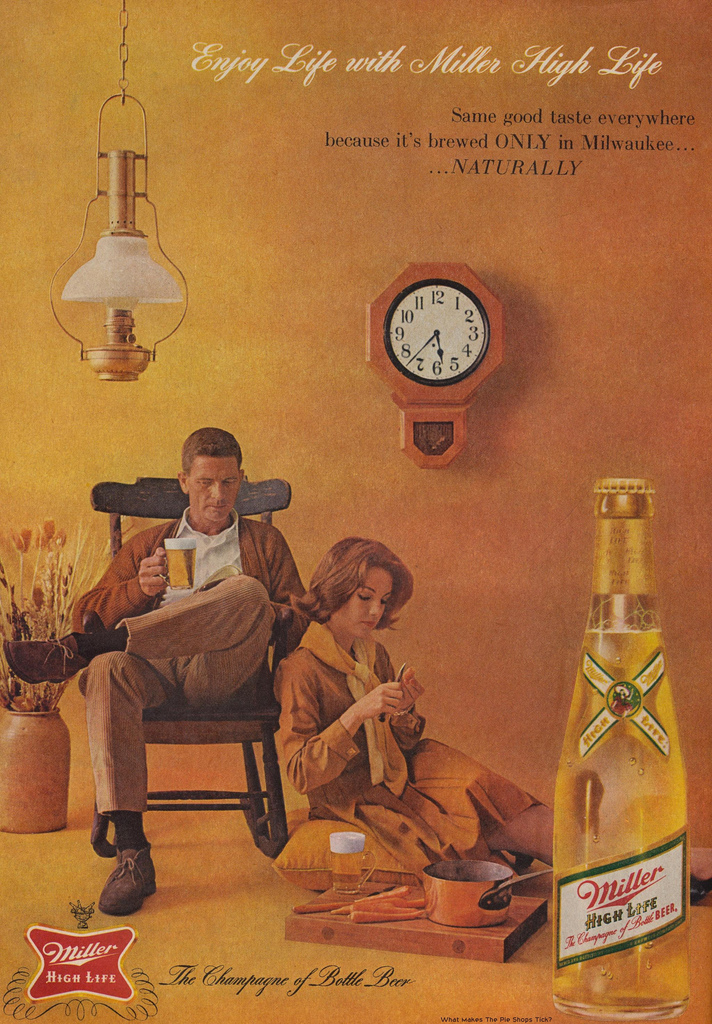
Beer In Ads #1458: Sound That Trumpet, Man
Friday’s ad is for Rheingold Beer, from 1960. Featuring jazz legend Louis Armstrong, the ad quotes “Satchmo” as saying “Sound That Trumpet, Man — New York’s favorite beer is here” and “My beer is Rheingold….” Also, curiously, check out the inset imaged in the bottom right corner showing the flagship Rheingold Extra Dry beer and also Rheingold Scotch Ale. Interesting to see such a relatively obscure style being advertised in 1960.