Brookston Beer Bulletin

Jay R. Brooks on Beer

  • Home
  • About
  • Editorial
  • Birthdays
  • Art & Beer

Socialize

  • Dribbble
  • Email
  • Facebook
  • Flickr
  • GitHub
  • Instagram
  • LinkedIn
  • Pinterest
  • RSS
  • Twitter
  • YouTube

Powered by Genesis

World’s Rarest Bottle of Beer Sold on eBay

August 16, 2007 By Jay Brooks

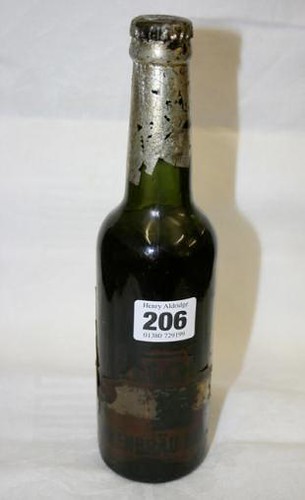
A full bottle of Allsopp’s Arctic Ale, brewed and bottled in 1852, sold recently on eBay for a record $503,300. The eBay listing gives a great deal of historical information about the Arctic expedition, as well as the bottle itself:

Until the 1850s Allsopp’s Brewery was most notable for brewing some of the first India Pale Ales for export to the colonies. However, Samuel Allsopp was approached about a different recipe; Sir Edward Belcher was about to led an arctic expedition (1852) to search for the lost explorer Sir John Franklin. The Expedition needed a brew that withstand arctic and sub arctic temperatures, and provide a degree of sustenance and nutritious value. “Captain Belcher reported that Allsopp’s Arctic Ale proved to be “a valuable antiscorbutic”, helping fight off scurvy, the bane of all sea voyages in those days.” He added that the beer was “a great blessing to us, particularly for our sick” and that it refused to freeze until the temperature dropped well below zero.”

What you are looking at is an actual museum quality sealed and intact bottle of Samuel Allsopp’s Arctic Ale brewed for the 1852 Expedition to the Arctic lead by Sir Edward Belcher. This bottle of beer is likely the rarest, oldest, and most documented bottle of beer in existence! Not to mention the unbelievably unique history surrounding it. Accompanying the bottle is an actual limited handwritten history about the bottle itself.

That laminated card you see hanging off the bottle is the handwritten note, which reads:

“This ale was specially brewed and bottled in England, in 1852, for Kane’s Expedition in search of Sir John Franklin. A portion of the lot was cached in the Arctic; and was afterwards taken back to England, where it was bought by Allsopp, from whom Mr. Jus. Fennell obtained a part.

This bottle was given to me by Mr. Fennell May 13, 1919. Should I depart from this (by that time probably) dry world before consuming the contents, let my son and brethren perform my duties and enjoy my rights in that respect, on the eve of my funeral (if they find it in time) – unless such act be then illegal, in which case those of the aforesaid trustees who sufficiently learned in law shall advise ac-????? To the rule of ey fares.

Two bottles of this ale were guests of honor at the banquet given to Shackleton and Peary, in Boston, some years ago. (1907/1908) The skeletons of said guests were preserved as mementos of Sir John Franklin! (Useful suggestion regarding the “cast off shell” of the spirit.)

Signed: Percy G Bolster

A short history of the Allsopp’s Brewery from MidlandsPubs.co.uk page on Staffordshire breweries:

allsopps-ask4

Based in the High Street of Burton-on-Trent, the history of this company can be traced back to the 1740’s. Samuel Allsop acquired the brewery in 1807. A new brewery and offices were constructed in 1859-60 close to the railway station. Throughout the 19th century Allsopp’s brewing business was second only to Bass in size. The new brewery site alone stretched between Station Street and Horninglow Street. They retained the original brewery in High Street, built a large maltings at Shobnall and numerous premises elsewhere. Samuel Allsopp was the first to export Burton Pale Ale to India in 1822. By 1890 their output had reached 460,000 barrels and they had a workforce of 1,750. However, the 20th century was not so favourable for the company and they went into receivership in 1913. Allsopp’s was eventually merged with the neighbouring Ind Coope & Co.Ltd. to form Ind Coope & Allsopp Ltd. The offices of the new brewery were later used as the headquarters of Punch Taverns and the Spirit Group.

There’s another interesting lecture transcribed that goes into great detail about what led to the Allsopp’s Brewery’s demise, entitled “The Fall of the House of Allsopp” by an R.G. Anderson.

What a fascinating little tale. I just hope they don’t open the bottle.

UPDATE: An alert Bulletin reader (thanks Scott) found a similar looking bottle that sold on eBay in June for a mere $305 and wondered if there was something “hokey going on.” A closer look at the two listings reveals that the person who bought the bottle for $305 is the same one who turned around and sold it for a half million. Now that’s a good return on investment.

Filed Under: Beers, Just For Fun Tagged With: Europe, Great Britain, History, Strange But True

Session #6: Fruit Beer

August 3, 2007 By Jay Brooks

fruit
This has been a brutal month for me, in the last few weeks I’ve been to Denver, Portland and am writing this from Mammoth Lakes, California, where I’m attending a CSBA meeting and beer festival. So the Bulletin has suffered, but I didn’t want to miss this month’s Session because it’s an idea that I strongly believe in. I’ll try to be brief for this one (at least brief for me) since I have a speaking engagement in a few hours. Our host for the month, Greg Clow, chose fruit beers for this month’s topic and it’s another worthy one.

session_logo_all_text_200

The use of fruit in beer, of course, is not a new phenomenon by any stretch of the imagination. The Belgians, for example, have been using fruit in lambics for centuries. I always chuckle to myself when people make allusions to fruit beer not being for men, without having the foggiest notion what their talking about. I’d love to see their face when they try their first sour cherry lambic and can no longer sustain that argument. Fruit beers are, according to taste, for everybody. It’s probably a good idea to like the fruit used in a particular beer, and to have it be not too sweet or not too sour, depending on your own tolerance and preferences. But there’s such a wide range and variety of fruit beers that there’s undoubtedly one to suit any person’s tastes.

Off the top of my head, here’s just a few different fruits that are or have been used in beer:

  • Apple: Jack Russell Harvest Apple, New Glarus Apple Ale, Unibroue Ephemere
  • Apricot: Alpine Apricot Nectar, Cantillon Fou’ Foune, Pyramid Apricot Ale, Valley Apricot Ale
  • Banana: De Troch Chapeau Banana Lambic, Wells Banana Bread Beer
  • Blackberry: Coast Range Blackberry Wheat, Jack Russell Blackberry Abbey Ale, Oregon Trail Blackberry Porter (Jim Koch’s Oregon Brewing also made a blackberry porter)
  • Black Currant: Lindemans Cassis Lambic, Unibroue Ephemere
  • Blueberry: BluCreek Blueberry Ale, Jack Russell Blueberry Beer, Marin Blueberry, SLO Blueberry Ale
  • Cherry: Bell’s Cherry Stout, Cantillon Kriek, Melbourn Bros. Spontaneous Fermentation Cherry, New Glarus Belgian Red, Samuel Adams Cherry Wheat
  • Cranberry: Samuel Adams Cranberry Lambic
  • Elderberry: Ebulum Elderberry Black Ale (I also once had an Elderberry Barleywine at a CAMRA festival in Peterborough that knocked me for a loop)
  • Gooseberry: Grozet Gooseberry and Wheat Ale
  • Grape: Cantillon St. Lamvinus, Cantillon Vigneronne, Concord Grape Ale
  • Grapefruit: Groslch 2.5 Pink Grapefruit, St. Peter’s Fruit Beer
  • Honeysuckle: Barrel House Honeysuckle Blond
  • Kiwi: Bube’s Kiwi-Strawberry Wheat
  • Lemon: Magic Hat Hocus Pocus, Saxer Lemon Lager, Stiegl Lemon Beer
  • Lime: Lakeport Brava Lime, Viking Lime Twist
  • Orange: Buffalo Bill’s Mandarin Hefeweizen, Caldera Dry Hop Orange, Craftsman Orange Grove Ale, Dogfish Head Blood Orange Hefeweizen, Triple Rock Orange
  • Peach: Four Peaks Arizona Peach, Lindemans Peche Lambic, Unibroue Ephemere
  • Pear: Hopper’s Pear Lambic
  • Pineapple: Maumee Bay Pineapple Wheat
  • Plum: J.W. Lee’s Plum Pudding, Watch City Jack Horner’s Plum Wit
  • Pomegranate: He’Brew Genesis Ale (original recipe), Moylan’s Pomegranate Wheat
  • Prickly Pear: Real Ale Brewing Prickly Wit, Sleeping Giant Prickly Pear Pale Ale
  • Raspberry: Undoubtedly the most popular fruit in beer, probably because it works so well. Great Divide Wild Raspberry, Lindemans Framboise, Marin Raspberry Trail Ale, New Glarus Raspberry Tart, Purple Haze Raspberry Wheat Brew
  • Strawberry: Melbourn Bros. Spontaneous Fermentation Strawberry, Pete’s Wicked Strawberry Blonde
  • Tomato: Pizza Beer, Uehara Shuzou Tomato Bibere
  • Watermelon: 21st Amendment Watermelon Wheat

This list is merely to show the amazing diversity of different fruits used in beers. No two are alike, and so saying you don’t like fruit beer is like saying you don’t like people. There’s just too many variables to make such a blanket statement. I think it comes down to perception again of some weird prejudice in the U.S. where fruit in beer is seen as unmanly, as ridiculous a notion as I can imagine. There’s just too many good flavors here to ignore them over masculinity. But I guess that’s more for the rest of us.

When fruit beers became trendy fifteen years ago, there were certainly some that were better than others and a few used too much extract, in my opinion. But at some point there seemed to be something of a backlash for reasons unknown, and a lot of breweries quietly dropped their beers made with fruit. Today, breweries that still make fruit beers are generally the ones where their popularity never waned and they just continued making them without worrying too much about how they were perceived. Customers were buying them, and that was really all that mattered. Happily, new breweries are also venturing into fruit beer and seems pretty clear to me that they’ll always be around, at least as long as people care about flavor and how things taste.

The Plumcots Are Coming, The Plumcots Are Coming!

Russian River Brewing recently added another fruit to the list of fruit beers, the plumcot, which is a hybrid cross between a plum and apricot. It was crossbred by none other than Luther Burbank right in Santa Rosa, just a few blocks from the brewery. That’s why brewer Vinnie Cilurzo chose it, because he could use a local ingredient created right in his own backyard.

Plumcots are also called Pluots, but the two are not interchangeable. Pluots are a variation on Burbank’s Plumcot created by Floyd Zaiger. Pluots are three-quarters plum and one-quarter apricot whereas plumcots are closer to 50-50. Pluots are also a registered trademark owned by Zaiger, a practice that I understand but loathe on many levels.

plumcots

The beer is Compunction, a blonde ale brewed with plumcots. It had an original gravity of 1048 and is 5.8% abv. It’s slightly cloudy with golden color and a thin white head. Brett is the first aroma that hits you with fruity esters coming closely behind. The sweetness is puckering and works nicely as a contrast for the Brettanomyces. It’s surprisingly refreshing and light, given its strength. The beer is also aged in wooden barrels, but the beer’s strong flavors don’t allow much barrel characteristics to come through, really only a touch. Another interesting beer from Russian River Brewing.

Filed Under: Editorial, The Session Tagged With: History, Ingredients, Tasting

Oly Pancakes

July 4, 2007 By Jay Brooks

olympia
Oakland Tribune staff food writer Steve Dulas did a fun piece on food for camping last week. He included baked apple, chili and, naturally, camp-style bean soup. But what caught my attention was a recipe for beer pancakes. Basically, the recipe calls for using a mix and substituting beer for the water, also including some oil or grease. But the author insists that Olympia beer must be used and that no other beer may be substituted. Hmm. They claim to have tried using a different beer that didn’t work as well, but neglected to tell us which beer they tried. As long as you use a beer similar to Oly, I really can’t see it making much of a difference.

Even Olympia beer, of course, hasn’t really been Olympia beer for at least four years, when SABMiller closed the old Tumwater, Washington brewery on July 1, 2003. Since that time it’s been made at any number of Miller breweries dotted throughout the west. Before that Olympia bought Hamm’s and Lone Star, but business continued to decline and the family (the Schmidt’s) decided in 1982 to sell to G. Heilemann, then one of the largest brewery businesses in the U.S. The following year, Pabst bought Heilemann, who later sold it to Stroh’s, which itself was eventually bought by Miller Brewing. Union politics probably led Miller to close Olympia, who by then was also brewing many other regional brands such as Hamm’s, Lucky Lager, Henry Weinhard and Rainier.

Olympia beer — than and now — is one of dozens of regional American-style light lagers that are all but interchangeable. What makes any of them unique has more to do with marketing and perception than reality. People don’t buy Olympia because it’s good, they buy it because it’s cheap. As pointed out by The Snitch (a blog at SF Weekly) Olympia beer is the “Offical Beer of 18-year-olds Walking Through the Door, Hoisting a 12-Pack Overhead and Shouting ‘Woo-Hoo!'” The Snitch tried Dulas’ recipe, both with Oly and Henry Weinhard’s Blue Boar Ale, perhaps not realizing the Henry Weinhard is an “ale” and Oly is a “lager,” concluding that the Oly was discernibly better. I’m still willing to bet any cheap lager will make the pancakes taste exactly the same.

The Snitch also wonders aloud (a-print just didn’t sound right) what the pancakes might taste like if made with “Pyramid Apricot Ale or Bass Peach Ale?” I’m not sure there’s enough apricot flavor in the Pyramid to give the pancakes any sweetness. The Bass suggestion is a complete bust, of course, because there is no such beer. The Snitch also ruminates over “Cranberry Lambic,” by which I presume he means Samuel Adams’ version of a lambic. And lastly, he believes Arthur Guinness would “come back from the dead and stop you” if you tried using his stout. I’m not sure why he feels so strongly about Guinness given that it has been used successfully in cooking for centuries. Despite being dark in color, it’s quite light-bodied and thus might work quite well in pancakes.

Certainly, the notion of taking the idea from the campground into the kitchen is an intriguing one, as is using different beers. For that to work best, I think, you’d have to throw out the mix and make the batter from scratch, however, and use richer beers to have them actually affect the taste of the pancakes beyond fluffiness and texture. Would the yeast in a bottle-conditioned beer contribute anything? [Lucy, Bruce, Sean – anyone know?] It could be fun to use something like Marin’s Blueberry Ale or a syrupy wood-aged beer.

Perhaps it was because I was hungry when I first read the article, but I think I’ll be giving it a try the next time I make pancakes. If you try it, too, let me know the results. Post a comment with the beer you used and how the pancakes tasted. Let’s build a beer pancake database.
 

Steve Dulas’ World’s Best Pancakes

oly-cakes
(Photo by Mike Lucia – Tribune Staff)

The preferred beer is Olympia. Any other American beer will likely mess this up — seriously. The morning we ran out of Oly and used another brand, the pancakes were not as tasty.

1 2-pound package Krusteaz Buttermilk Pancake Mix
4 to 6 12-ounce cans Olympia beer
1/4 cup vegetable oil or bacon grease

While the grill is heating to medium, pour pancake mix into a large bowl. Add beer, one can at a time, until the batter reaches a smooth consistency. When a few drops of water dance and sizzle on the grill, it’s ready. Wipe the grill with a thin coating of oil or grease on a paper towel, then drop batter onto the grill, about a half-cup per pancake. Cook about 2 minutes, and flip each cake when the top is covered with air bubbles. Cook another minute then serve. Makes 40-50 4-inch pancakes.

Note: If you’ve got a lot of campers you might want to graduate to the 5-pound package of Krusteaz and use more beer, up to a full 12-pack.

Filed Under: Food & Beer Tagged With: History, Washington

America’s Oldest Standing Brewery?

June 30, 2007 By Jay Brooks

Don Russell, better known as Joe Sixpack, had another very interesting column yesterday about an unassuming pink stucco home in Burlington, New Jersey, which may — or may not — have at one time been part of a brewery. And not just any brewery, but because records seem to date part of the structure to around 1693, it could be considered America’s oldest standing brewery. Currently, that title goes to “the Patrick Creagh house in Annapolis, Md., circa 1749.” The house is on sale on Craigslist for a mere $159,000 (hey, I live in California) but when I search for it, it didn’t turn up. Perhaps it’s already been scooped up by a new owner who, as Russell speculates in his closing, wants to be able to “thump his chest and boast, ‘Hey, c’mon over for brats and beer in my house, the oldest freakin’ brewery in America!'”

America’s oldest standing brewery?
Curt Hudson © the Daily News


Filed Under: Uncategorized Tagged With: Eastern States, History

Wunder of Wunders

June 22, 2007 By Jay Brooks

It’s always cause for celebration when a new brewery opens, doubly so when it represents the resurrection of a long-dead brand. Wunder Brewing last brewed in San Francisco in 1909. So it’s been almost a century since it closed. There was another Wunder brewery in Oakland just after Prohibition ended, around 1934, but it lasted less than a year. So it is with great promise that this historic brand tries to make a go of it once more in San Francisco’s inner sunset district. The only downside to this story is that Eldo’s — and more importantly their brewer Joe — are now gone from the local brewing community. So I wish new owner Carl Durham well, and hope his new venture will be …, well, wunder-ful. According to the brewery’s website, they should be open the first week of July.


I love the tagline they used on this tray, “None Purer, None Better.”

The original Wunder Brewing was first known as Philip Frauenholz & Co. when it opened in 1852. Over the years it went through five more name changes, usually involving some form of Bavaria Brewing, before becoming Wunder Brewing in 1898. That was after John C. Wunder purchased the brewery, having arrived in California a few years before, either in 1895 or on March 15, 1896, depending on the source. The first thing Wunder did upon arriving was found the San Diego (California) Brewing Co. in San Francisco. He later bought out the Bavarian Brewery, organizing his two breweries under the Wunder name.

The brewery was originally a steam beer plant but it’s unclear if it remained so through its many incarnations, not to mention locations, which include Vallejo and Green, Vallejo and Montgomery, and Greenwich and Scott Streets. The brewery on Greenwich was still standing until 1990, when damage from the 1989 Loma Prieta earthquake caused it to be torn down. Sometime in the 1920s or 30s it had been turned into a residence and was made to look like a Spanish-style stucco home.

As for the new brewery, they started their first batch at 11:50 a.m. on Saturday, June 9. It was a pale ale, and they expect to also offer a brown beer, which is described on the website as like a Viennese lager, among others. That makes some sense, since Vienna Lager’s color is usually described as reddish brown or copper, with a pretty narrow SRM range (10-12). But there’s certainly no reason why a commercial beer can’t make something close to that style that’s slightly darker. I like Vienna lagers, they’re a little sweeter and toastier than pilsners, but are also clean and crisp like their more popular cousin. I’m looking forward to trying Durham’s interpretation.

I’ve been staring at this poster below for many years now, as there’s one hanging in the Celebrator Beers News‘ offices, so it seems more like a familiar friend than an antique. It’s interesting to note that it’s exactly 100 years old.

Filed Under: Breweries, News Tagged With: Announcements, California, History, San Francisco

Krusovice Komes to Amerika

June 19, 2007 By Jay Brooks

Monday night I attended a presentation at the Toronado for the San Francisco launch of Krusovice, a beer from the Czech Republic. An old friend of mine, Dave Deuser, is the local rep. for the beer, which is (or was, but more on that in a minute) part of the Binding Group, a German company that owns several breweries, including DAB, Radeberger, Clausthaler, and Tucher. He had Krusovice’s head brewer and a translator who works for the brewery in tow.

Binding USA is bringing two of Krušovice’s beers into the U.S. market, the Imperial and the Cerne. The Imperial, which they call a Czech Premium Lager, is very clean with soft, round flavors. I was quite impressed with it. It used all Saaz hops and was right up there with the best tasting lagers I’ve had. The Cerné is a dark lager made with pale and specialty malts. At only 3.8% abv, it was very easy drinking. It had delicious sweet malt flavors.

The presentation was very thorough and included a thick, spiral bound book that the brewer went over page by page, calling out “turn page now” in his best Germanic command voice. The Royal Brewery of Krušovice has a rich history, having been founded around 1517. In 1581, the brewery was purchased by Emperor Rudolf II, whose visage still appears on the labels. When he moved his capital from Vienna to Prague, he moved it to the nearby town of Krušovice and it became a “Royal Brewery,” a distinction it continues to claim to this very day.

In 1945, after World War II it became the property of the state, in this case Czechoslovakia, until it was privatized in 1991 and then was purchased by the Binding Group in 1994. Binding completely modernized the brewery facilities and began exporting the beer in 1997. As of 2005, Krušovice was the 5th largest brewery in the Czech Republic.

All their beers use a double decoction method, which is fairly common in Germany and for lagers. Many craft brewers use infusion mashing since it requires less equipment and is generally quicker, and while there is a debate about which method is better, it seems moot as long as the end result is both what you were trying to achieve and tastes good.

Krušovice is currently sold throughout most of Europe, Australia and now North America (or at least in the U.S. and Canada). 63% of Krušovice is sold in kegs, 32% in bottles and 5% in cans. It’s apparently wildly popular in Russia, which accounts for more than half of all exports.

And that brings us to the weird part of the evening. Halfway through their tour of the States, they got the word that Krušovice had been sold to Heineken, who was looking to make greater inroads into the Russian beer market. So it was a testament to everybody’s professionalism that presentation went as well as it did. My friend Dave didn’t now what his role would be now regarding Krušovice, but it’s likely Heineken will bring in their own people and the Binding folks won’t be involved any longer. As for the brewer, I’m sure he must have felt at least a twinge of uncertainty for his own fate, but everybody continued to champion the brand as if nothing had changed. I’m not sure I could have done as well under those circumstances.

It was a fun and informative evening, with two very tasty beers to make it all the more enjoyable.

Krusovice’s head brewer (at left) and his translator.

Filed Under: Beers, News Tagged With: Europe, History, International, National, Tasting

Criminal Parenting

June 14, 2007 By Jay Brooks

crime
I suspect this rant will win me few friends and probably more than a few enemies, but sometimes you have to say what’s on your mind. I’ve only seen a little about this story — Parents locked up for son’s boozy 16th — all of it curiously from the press outside of the country, so I can only comment on what facts I do know. It seems a Virginia couple had a 16th birthday party for their son back in August of 2002 and served some beer to him and a few of his friends. Yesterday, after the Supreme Court refused to hear their appeal in late May, both went off to jail to serve 4 1/2-year sentences, six-months for each kid at the party with measurable levels of alcohol.

At the party there were around 30 people between 12 and 18 years old. Of those 30, nine apparently had “measurable levels” of alcohol in their system. The fact that they used the careful phrase “measurable levels” infers that they were well below the already questionable 0.08% which arbitrarily defines what it means to be drunk. To me it sounds like they gave the kids a taste of beer in a controlled setting. As reported in the Brisbane Times, the couple was “[c]oncerned that the teenagers would drink without supervision, [so] the parents said they had bought alcohol with the understanding that the teens would spend the night at their place and collected half a dozen car keys to prevent drunk driving.” Under a less Draconian society than ours, that doesn’t strike me as particularly unreasonable. But we live in a society that generally does not allow parents to use their own judgment about how to raise their children. Now I want to be crystal clear that I don’t think for one second that they should have given beer to the other kids, not under today’s climate especially. While I can almost understand why some of those parents might be upset, had my son been there I would not have been troubled in the least. As for their own son, well that’s another matter. The fact that learning to drink responsibly in the home, the way it’s done throughout most of the rest of the world, is illegal here says quite a lot about our society and its commitment to raising mature, self-reliant adults.

The fact that Paris Hilton got a mere 45 days for repeatedly flaunting the law and this couple got 4 1/2 years for showing poor judgment once, even though they were at least trying to keep people safe and off the roads, is also illustrative of how out of whack our justice system has become. The idea that they deserved jail time seems ludicrous to me. But then I don’t see alcohol as the great social ill that so many people do. I have a hard time thinking of them as criminals, and for very personal reasons. When I was a kid not that long ago, my mother and stepfather acted in much the same way, as did other parents of my peers. My mother, for all her flaws, was a nurse and one of the most caring people I knew. While in nursing school she spent one of her rotations in the ER and saw more than her fair share of drug overdoses. When I started high school and began going to parties, she despaired that I would take up drugs. So she offered me a deal. If I agreed to never do drugs she would keep the basement refrigerator stocked with beer for me and my friends. Needless to say, I took the deal and spent many happy and safe nights with friends drinking responsibly in my basement. We had a pool table, television, sofas and privacy. That my mother would be a considered a criminal today — and indeed technically was then too, I suppose — strikes me as absurd. She was correct in assuming that I would drink and that there was nothing whatsoever she could do about it short of locking me under the stairs. It wasn’t just me, it was just the times, at least to some extent. Almost everyone I knew drank at least on the weekends. Some of my friends’ parents even knew that their kids were drinking at my house with my parent’s consent and knowledge. They felt better knowing where their kids were and that they were safe with people they knew rather than out driving around and/or out with strangers. These people were all criminals? They were bad parents?

In our post-MADD society that’s certainly how they would be viewed today. But I don’t accept that they loved their children any less than parents today simply because they chose their own way to deal with underage drinking. I recall one of our graduation parties — this was 1977 — that one of my fellow seniors threw. Her parents, along several others parents of seniors, were there and they provided several kegs, which were in the backyard. In the basement there was a true home theater (the father was a projectionist by trade) and he was showing Mel Brooks’ Young Frankenstein on film. Of the 435 people in my graduating class, it seemed like most of them were there that night. If this scene unfolded today the parents would be hauled off to the hoosegow, as the case with the Virginia couple. Yet it was safe and incident free, like virtually all the parent-chaperoned parties I attended. But one of the consequences of strictly interpreting law in such a way that the letter of it becomes more important than its spirit is that it criminalizes parents for making choices that fall outside the agenda set by neo-prohibitionists and other conservative interests that want to control every aspect of society with their own set of moral values.

When my kids reach their teen years, I would love to be able to teach them about responsible drinking firsthand. But given that doing so might give the state the so-called authority to take them away from me, I won’t risk it. I find it deeply troubling that I can’t decide for myself how to raise them or teach them how to be an adult. The notion that our government can do a better job from afar is preposterous. The best I can hope for is that they’ll see my wife and me drinking responsibly in our home; with meals, on sunny afternoons on the back deck, and so on. Hopefully they’ll also see my many friends in the brewing industry likewise drinking responsibly at the few remaining beer festivals that still allow children. Maybe seeing that will allow them to model responsible behavior and ignore the ridiculous propaganda spewed out by the neo-prohibitionist groups. It would be far better if I could slowly taste them on alcohol so they know what it is, how to choose it and how to enjoy it responsibly. We give 16-year olds learner’s permits so they can learn how to drive with an experienced adult. People should be able to do the same thing with alcohol without fear of being arrested or worse.

Instead, my kids will undoubtedly get most of their information from the media and their peers — despite my best efforts — and most of it will be wrong. Many kids today raised under such conditions understandably become binge drinkers. Anyone with an ounce of sense sees the connection between a lack of education and irresponsible drinking by teens and young adults. Future politicians, hoping to distance themselves from the results of their own lack of education, will call this time in their lives a “youthful indiscretion.” They will likewise fail to see that such an environment was been created by the very people and laws that set out to stop underage drinking. All they’ve succeeded in doing is to make the problem far worse. The Virginia couple heading off to jail has had their lives ruined by a system that made them criminals for trying to do the right thing. Is it really so unreasonable to believe that their son would have wanted to celebrate his 16th birthday with alcohol? I did. Most of the people I know did. It’s only wrong because we — or I should say you and you and you — have decided it’s wrong. It hasn’t been wrong through much of humanity’s history. It isn’t considered wrong right now in many parts of the world. I have no trouble believing this couple reasonably thought they were keeping their son and his friends safe that night. And they very well may have. But that obviously counted for naught. The couple is divorced now. Their son will be turning 21 later this year, in August. His parents’ lives have been ruined. I’d love to know the effect all of this has had on him and his friends who had a nip of beer five years ago. Have they all become alcoholics? Hopeless hooligans and ruffians? N’er do wells destined to be a burden on society for the balance of their lives? Doubtful. It’s more likely they’re normal college-age kids no different from everyone else around them. Apart from the attention this case probably got locally, I doubt it’s had any effect on their lives whatsoever. So in the end two parents who were trying to do the right thing and likely caused no real harm whatsoever ran afoul of neo-prohibitionist agendas and the laws they’ve spawned, and in the process had their lives destroyed. If that’s justice, maybe it’s time she took off the blindfold.

Filed Under: Editorial, News Tagged With: History, Law, Prohibitionists

Sheboygan Brewing History

June 5, 2007 By Jay Brooks

maps-wi
Just hearing the word “Sheboygan” brings a smile to my face. I don’t know why exactly — and I certainly mean no disrespect to the town’s residents — but it’s just one of the words. The name is believed to be a Chippewa word, probably meaning “a noise underground,” or “river disappearing underground,” though some scholars think it may have meant “perforated object, as a pipe stem.” It just makes me laugh every time I hear it.

Sheboygan-postcard

In the wonderful Billy Wilder movie “Some Like It Hot,” Josephine and Daphne (played by Tony Curtis and Jack Lemmon) went to the Sheboygan Conservatory of Music. It’s located in eastern Wisconsin along the shores of Lake Michigan. The town itself has a population of just under 50,000, or almost exactly the same as the town I live in, Novato, California. But we have only had one brewery throughout the entire history of the town. Sheboygan, by contrast, has had as many as eleven at one time throughout its own history. That’s according to Bill Wangemann’s latest column in the Sheboygan Press where he details some of the breweries that have operated in Sheboygan over the years.

The earliest Sheboygan brewery was the Gutsch Brewing Co (later Kingsbury Brewing Co), which first opened in 1847. In the photo below, from the Sheboygan County Historical Research Center in Sheboygan Falls, a “truck from the Gutsch Brewing Co. is loaded with beer for delivery by driver Edwin Kreuter, right. The other man is unidentified.”

gutsch-brewing

Filed Under: News Tagged With: History, Midwest, Wisconsin

Achouffe Turning 25

May 13, 2007 By Jay Brooks

Brasserie d’Achouffe, located in the small village of Achouffe in the heart of the Belgian Ardennes, is celebrating its 25th anniversary this year. It was August 27, 1982 that Brasserie d’Achouffe brewed the 1st batch of La Chouffe. From August 10-12, they’ll be a big party at the brewery, which they’re calling La Grande Choufferie, and they’ve set up a website just for the occasion, along with slideshow of thirty photographs that shows the brewery then and now, as well as photographs of the local countryside.

Oh, and did I mention their beer is quite excellent. I’ve got a magnum of the La Chouffe I’m holding onto, which I think I’ll open this August for their 25th anniversary.


Filed Under: Uncategorized Tagged With: Announcements, Belgium, Europe, History, Other Event, Photo Gallery, Websites

May is Mild Month

May 1, 2007 By Jay Brooks

pint
The British advocacy group CAMRA, the Campaign for Real Ale, promotes the month of May as “Mild Month” in an effort to educate people about a style that’s dying before their eyes throughout England. Since this Friday’s “Session” — a.k.a. Beer Blogging Friday — that I’ll be hosting will be about Milds, I thought I’d collect and provide some basic information about this relatively unknown and misunderstood style. In fact, the theme for Friday’s “Session” is “The Mysterious Misunderstood Mild” in an effort to make these delicious beers less so. Yesterday, CAMRA had a press release in anticipation of Mild Month beginning today that summarizes their efforts.

Mild was once Britain’s most popular style of real ale, but had fallen out of fashion in favour of other beers. However there are still many brewers who are enthusiastic about the future of Mild and CAMRA is dedicated to making sure their beers get the credit they deserve.

May has been designated as Mild Month by CAMRA and the consumer organisation is urging beer lovers to seek out milds in their local pubs and rediscover this wonderfully flavoursome beer.

CAMRA also suggests a few recipes for cooking with mild.

Mild’s popularity has been waning since at least 1960. In 1959 the style accounted for 42% of beer sold in Great Britain, but by 1980 its popularity had dropped to a mere 10% and today it’s far less than that. For a good overview of the history of the style and what led to its decline, read the December 1998 article that All About Beer magazine ran on the subject by Roger Protz, entitled “Vanishing Mild.”

Here’s how CAMRA describes milds:

Mild is one of the most traditional beer styles which is enjoying a revival in today’s real ale market. Usually dark brown in colour, due to the use of well-roasted malts or barley it is less hopped than bitters and often has a chocolatety character with nutty and burnt flavours.

Cask conditioned Mild is a rarity in a lot of parts of the country, which is a crying shame, because Mild is a distinctive and tasty beer. Mild is one of, if not the, oldest beer styles in the country. Until the 15th century, ale and mead were the major British brews, both made without hops. Hops were introduced from Holland, France and Germany after this time. This also started the trend on reducing the gravity of ale, as the Hop is also a preservative, and beers had to be brewed very strongly to try to help preserve them. The hop also started the rapid decline of mead, which is only made in a very few places today.

So what is Mild? It is a beer which has tastes and textures all it’s own. Basically it is a beer that is less hopped than bitter, etc. The darkness of Dark Milds, such as Greene King XX Mild, comes from the use of darker malts and/or roasted barley which are used to compensate for the loss of Hop character. “Chocolate “, “fruity”, “nutty” and “burnt” are all tastes to be found in the complexity of Milds. However, not all milds are dark. Yorkshire brewed Timothy Taylors Golden Best is one of the best examples of a light coloured mild, as is Bank’s Original, the name changed from Mild to try to give it a more modern image. In Scotland, 60/- ale is similar to mild (Belhaven’s being a good example).

mild-glass

Milds today tend to have an ABV in the 3% to 3.5% range, with of course some notable exceptions. In fact, a lot of the Microbreweries who try their hand at mild are bringing the alcohol content back up somewhat! Mild wasn’t always weaker though. In the latter half of the 19th Century, milds were brewed to about the same strength as bitters as a response to the demand for a sweeter beer from the working classes and in those days most bitters were around 6 to 7% ABV.

During the First World War, malt rationing and pressure from the temperance movement led to brewers rapidly reduced the strength. Following the Second World War, as prosperity returned, mild`s popularity as a cheap ale began to fade, not being helped by being kept badly in run down pubs as the Big Brewers began to heavily promote their keg lager brands. Coupled to this was a gradual, but steady decline in heavy industry in the North and Midlands of Britain, mild`s great marketplace.

By the 1970s, the keg lager boom had seen mild’s share of the market fall to around 13% and it was a shame to see a bland gassy and overpriced product, which was generally weaker than the mild it was trying to oust, succeed in many cases.

On this side of the pond, there is a great deal of confusion about milds, though for me the most curious issue is that people don’t like the name. What on earth could be wrong with the word “mild,” which in terms of flavor is defined as “not sharp, pungent, or strong.” It’s the very opposite of extreme, but is still full-flavored and delicious. I can think of countless scenarios where a mild would be the ideal compliment to the situation, weather, food, etc.

Making things more confusing is the fact that oftentimes in England a mild when bottled is called a brown ale, but this is still not the same as a brown ale like Newcastle. And then there’s the fact that there are two recognized styles of milds, pale milds and dark milds, further clouding things.

The BJCP organizes milds under their Style #11, English Brown Ale, with 11A designated mild and two additional sub-styles, northern and southern English brown ale. They suggest IBUs of 10-25, SRM of 12-25, and ABV of 2.8-4.5%, with most falling between 3.1-3.8%. The only American example they list is Goose Island PMD Mild.

For the 2007 Great American Beer Festival, The Brewers Association will for the first time include milds as a separate category in the style guidelines. Two categories, actually, as they’re dividing them into two separate styles, English-Style Pale Mild Ale and English-Style Dark Mild Ale. These appear to be the same as Category 56 for the World Beer Cup. For the BA, Pale Mild has IBUs of 10-20, SRM of 8-17 and ABV of 3.2-4% and for Dark Mild, IBUs of 10-24, SRM of 17-34 and ABV of 3.2-4%.

The color distinctions between the two are described as “golden to amber” for pale mild and “deep copper to dark brown (often with a red tint)” for dark mild. Both are dominated by malt favors with very low bittering discernible and allow for some low levels of diacetyl (butterscotch). The dark mild may also include some licorice or “roast malt tones.”

mild

On Friday, if you’re participating in “The Session,” be sure to post a comment to the mild hosting post that will appear here on the Bulletin shortly after midnight PDT. I’ll try to add links in near-realtime and write up the days’ entries as time permits.

session-logo

So for Friday’s Mild Session Blogging Extravaganza, it might not be quite as simple to find a mild as going to your friendly neighborhood corner bar or liquor store. Hopefully, the information listed above may give you some help in finding a suitable beer to write about. The beer may not have the word “mild” written anywhere on the label, but if it’s close to the style parameters then go for it. The idea of Beer Blogging Friday is to be as inclusive as possible so we’re not going to get too hung up on strict style standards — whatever those might be. Find a “mild” beer and join us. To get you started, listed below are some American milds listed on the major beer forums:

The Top Rated American Milds From Beer Advocate*

English Pale Mild Ale:

Mild Ale, from Southern Tier Brewing, Lakewood, New York
Arcadia Special Reserve, from Arcadia Brewing, Battle Creek, Michigan
Cattail Ale, from Lakefront Brewery, Milwaukee, Wisconsin

English Dark Mild Ale:

Merrimack Mild, from The Tap (Haverhill Brewery), Haverhill, Massachusetts
Milltown Mild, from Victory Brewing, Downingtown, Pennsylvania
Harbor Lighthouse Ale, from Bar Harbor Brewing, Bar Harbor, Maine
Pride & Joy Mild Ale, from Three Floyds Brewing, Munster, Indiana
Motor City Brewing Ghettoblaster, from Motor City Brewing Works, Detroit, Michigan
 

The Top Rated American Milds From Rate Beer*

Merrimack Mild, from The Tap (Haverhill Brewery), Haverhill, Massachusetts
Dawn Patrol Dark Mild, from Pizza Port, Solana Beach, California
Titletown Brewing Whistling Chicken Mild Ale, from Titletown Brewing, Green Bay, Wisconsin
Flossmoor Station XXX Mild Ale, from Flossmoor Station, Flossmoor, Illinois
Brew It Up! Northern Mild Brown Ale, from Brew It Up!, Sacramento, California
 

And here are a few more American milds that I know about:*

Bells New World Ale, from Bells Brewery, Galesburg, Michigan
Iron Hill Mild Ale, Iron Hill Brewpubs, various locations in Delaware and Pennsylvania
Jeezum Jim, from Magic Hat Brewing, South Burlington, Vermont
John Harvards British Pale Mild, John Harvards Brewhouse, various locations
Lee’s Mild, Stone Brewing, Escondido, California
London Tavern Mild, from Valley Brewing, Stockton, California
Midlands Mild Ale, from Avery Brewing, Boulder, Colorado
Sara’s Ruby Mild, from Magnolia Pub & Brewery, San Francisco, California
Schlafly English Mild, from the Saint Louis Brewery, St. Louis, Missouri
Thunderhead Mild Ale, from Thunderhead Brewing, Kearney, Nebraska
Triumph Mild Ale, from Triumph Brewing, Princeton, New Jersey
Wynkoop Mayorale Mild, from Wynkoop Brewing, Denver, Colorado

* For both Beer Advocate and Rate Beer, most of the top-rated milds are, naturally, English beers. I removed those British beers from the list here because I figured it was we Americans (and Canadians) that will need the most help in finding a mild. And for all of the listed beers, I have no idea whether or not they are currently available.

Filed Under: Editorial, The Session Tagged With: History

« Previous Page
Next Page »

Find Something

Northern California Breweries

Please consider purchasing my latest book, California Breweries North, available from Amazon, or ask for it at your local bookstore.

Recent Comments

  • Bob Paolino on Beer Birthday: Grant Johnston
  • Gambrinus on Historic Beer Birthday: A.J. Houghton
  • Ernie Dewing on Historic Beer Birthday: Charles William Bergner 
  • Steve 'Pudgy' De Rose on Historic Beer Birthday: Jacob Schmidt
  • Jay Brooks on Beer Birthday: Bill Owens

Recent Posts

  • Historic Beer Birthday: Charles H. Wacker August 29, 2026
  • Beer In Ads #5332: The Statue Of Liberty Bock August 28, 2026
  • Beer Birthday: Carolyn Smagalski August 28, 2026
  • Historic Beer Birthday: Sandy Dvore August 28, 2026
  • Beer Birthday: Mike “Tasty” McDole August 28, 2026

BBB Archives

Feedback

Head Quarter
This site is hosted and maintained by H25Q.dev. Any questions or comments for the webmaster can be directed here.