Brookston Beer Bulletin

Jay R. Brooks on Beer

  • Home
  • About
  • Editorial
  • Birthdays
  • Art & Beer

Socialize

  • Dribbble
  • Email
  • Facebook
  • Flickr
  • GitHub
  • Instagram
  • LinkedIn
  • Pinterest
  • RSS
  • Twitter
  • YouTube

Powered by Genesis

The Pour on Cask

October 25, 2007 By Jay Brooks

Eric Asimov had another great beer piece yesterday at The Pour, this one was an overview on cask-conditioned beers. Personally, if I have a choice I always go with the cask version. In fact last night while out with some old high school buddies, I enjoyed Sara’s Ruby Mild on cask at Magnolia and later Moonlight’s Sublimmminal at the Toronado. Yum.

 
And here’s some general information on casks.

The parts of a beer barrel.


Cask Sizes:

  • Pin: 4.5 gallons
  • Firkin: 9 gallons
  • Kilderkin: 18 gallons
  • Barrel: 36 gallons
  • Hogshead: 54 gallons
  • Puncheon: 72 gallons
  • Butt: 108 gallons


Filed Under: Uncategorized Tagged With: History, International, Mainstream Coverage

The Crime of Beer Consumption

October 24, 2007 By Jay Brooks

A Bulletin fan (thanks Jim) sent me this link to a an article by Jascha Hoffman in the New York Times, in fact it was from the Magazine section’s Idea Lab this past Sunday and was titled Criminal Element. It’s a very interesting and provocative read, especially if, like me, you’re a fan of economic theory and the kind of oddball ways economics can be used in new ways, in the mold of the recent book Freakonomics. It centers on an idea by Jessica Wolpaw Reyes, an economist at Amherst College, that eliminating the lead from gasoline caused crime rates to fall in the 1990s.

Reyes found that the rise and fall of lead-exposure rates seemed to match the arc of violent crime, but with a 20-year lag — just long enough for children exposed to the highest levels of lead in 1973 to reach their most violence-prone years in the early ’90s, when crime rates hit their peak.

Such a correlation does not prove that lead had any effect on crime levels. But in an article published this month in the B.E. Journal of Economic Analysis and Policy, Reyes uses small variations in the lead content of gasoline from state to state to strengthen her argument. If other possible sources of crime like beer consumption and unemployment had remained constant, she estimates, the switch to unleaded gas alone would have caused the rate of violent crime to fall by more than half over the 1990s.

What an interesting theory that …. hey, wait a minute. What was that? “[O]ther possible sources of crime like beer consumption!?!” WTF! Since when did drinking beer become a source of crime? Where are those statistics? I’ve heard of hardcore heroin addiction leading to crime to support a drug habit, but beer? I don’t think so. If anybody out there has access to more than just the abstract of the article I’d love to run down where she got this idea. All I can find is that “beer consumption” is one of eleven “state-level variables” listed in the article’s appendix and that the information on “Beer consumption is from the Brewers Almanacs, published by the Beer Institute. It is measured as consumption of malt beverages in gallons consumed per capita.” But how does mere consumption lead to crime? Curiously, there’s no mention of spirits or wine consumption leading to crime, just beer, despite the fact that hard liquor was a permanent fixture at every high school and college party I ever attended. Has the demonization of beer just become so internalized and taken for granted that academia doesn’t even need to justify it? Frankly, I’m flummoxed. Am I missing something or just over-reacting as I’m so often accused? I’ve never resorted to crime to support my beer habit? How about you?


Filed Under: Editorial Tagged With: History, Law, Mainstream Coverage, Prohibitionists, Statistics

Soviet Anti-Alcohol Posters

October 23, 2007 By Jay Brooks

I happened upon this cool bit of history while searching for some images the other day. It’s the Museum of Anti-Alcohol Posters, a collection of old Soviet propaganda posters on the evils of drinking. There are more then thirty of them here, with translations. What struck me most in looking through them is that they’re really not all that different from the propaganda used by neo-prohibitionists working today in the United States. It’s the same sort of sensationalist nonsense with little basis in facts. But it’s somewhat comforting to know that propaganda is propaganda, no matter where it came from, and they are sort of fun to see. Enjoy.

Translation: “Rich inner substance.”

Translation: “Profiteer is a worst enemy.”


Filed Under: Just For Fun, Politics & Law Tagged With: History, International, Prohibitionists, Strange But True, Websites

Guinness’ Latest “What Were They Thinking”

October 4, 2007 By Jay Brooks

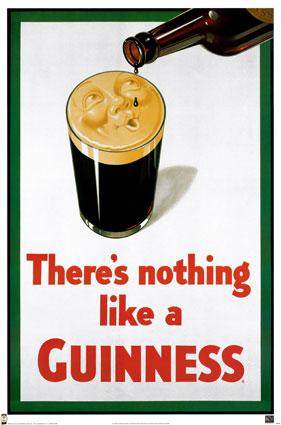
I’ve said it before and I’ll say it again. What the hell is Diageo doing with the Guinness brand? Are they trying to kill it, make it a mockery of its former self, or insult their customers even more than they already have? If so, they’re succeeding brilliantly. Diageo was created out of the merger between Grand Metropolitan and Guinness ten years ago. The new name was chosen for reasons passing understanding. Why take two recognizable names and trash them in favor of a new one nobody knows? The word Diageo came from the Latin word for ‘day’ and the Greek word for ‘world’. Apparently they couldn’t even make up their minds about what language to create the new company name from.

At any rate, over the last decade Diageo has displayed no respect whatsoever to the legacy, history or taste of the original Irish stout. Guinness had been brewing beer at St. James’s Gate in Dublin since 1759, with stout production beginning several years later, and now they’re even considering closing the brewery. Then there’s the $13 million widget bottle abomination that in 2001 tried to convince people to drink out of the bottle after all, setting the cause of better back again in the process. More recently, they’ve introduced “Extra Cold Guinness,” another useless novelty, and the test marketing of “Guinness Red” in England last year. The latest assault on their brand is “a plate-shaped device called the ‘Surger.’”

For a mere $25, Guinness wholesalers can stop selling Guinness on draft. Instead, they’ll pour it into a pint glass and put in on the “Surger.” Then “the bartender pushes a button to activate sound waves, which course through the liquid creating gas bubbles and ultimately the familiar cascading effect typical of a Guinness pint poured from draught.” One east coast distributor liked the idea, saying. “It gives me a new talking point that I can bring to my customers which is good for us.” Yes, forget about the beer itself, we need more talking points. This same guy “foresees the Surger eventually becoming available to consumers so they can drink a draught-like Guinness at home.”

Brandweek is spinning it like this. “One facet of marketing these days is to create an experience for the consumer. So Diageo will marry its new “Alive Inside” advertising message about the Guinness pour with a plate-shaped device called the ‘Surger.'” Given that there’s another, more important “surge” going on in the middle east involving more American soldiers fighting, was “the Surger” really the best Diageo could come up with? I always marvel at how the large companies strategize over their advertising and marketing messages. I suspect it’s embedded into the culture of big business, and in particular marketing, that nobody says “no” if the boss likes it or if a committee came up with it, once more proving that “group think” is a terrible danger. I always assume there’s some lone voice in the back, not being heard, saying “but what about the beer?” That guy will undoubtedly be fired within the week.

Here’s one of the new “Alive Inside” television spots:

Again, I must be the most out-of-step, uncool guy in the universe, because I find that ad more than a little creepy. Oh, I’ll grant you the music is slick and the effects are cool. But I can’t get past the idea that when I take that first sip, a million tiny men in white suits will be swimming down my throat. Yuck. It’s alive inside! What a terrible allusion to make. Isn’t that going to make the beer crunchy? Yeah, I know I shouldn’t take it so literally, but that’s how I roll. See, uncool to the bitter end.


Filed Under: Editorial Tagged With: Business, Europe, History, Packaging

Oktoberfest O’zapft is!

September 22, 2007 By Jay Brooks

Today is the first day of Oktoberfest in Munich, Germany, one of the world’s most famous beer festivals, though the German consider it a folk festival. I confess I’ve never gone and while I’d like to go at least once in my lifetime, I suspect it’s one of those experiences where once will be enough. As has been the tradition since 1950, today the Mayor of Munich, Christian Ude, tapped the first keg signaling the start of the festivities. In German, this tradition is called “O’zapft is!” meaning “it is tapped.” The first liter of beer poured was consumed by German premier Edmund Stoiber.

The festival will last sixteen days, ending, as it does each year, on the first Sunday in October. Since 1990, a modification has been introduced into the schedule so that is the first Sunday is either October 1st or 2nd then the festival will end on October 3rd, which is a holiday, German Unity Day, celebrating Germany’s reunification. This year, Oktoberfest ends on October 7. Unlike most beer festivals, it’s all day affair, with beer first served during weekdays at 10:00 am with last call not until 10:30 pm, and on the weekends things get started an hour earlier at 9:00 am.

There are over 100,000 seats in fourteen tents on just over 100 acres. About 72% attending are from locals from Bavaria with about 15% from outside Germany. Many of these aren’t used to handling a lot of alcohol and some pass out as a result of over-indulging. Locals call those who pass out “Bierleichen” (or if female, “Bierleiche”), which means “beercorpse.” Over the sixteen days of the festival last year the more than six and a half-million people attending Oktoberfest consumed an astounding:

  • Beer: 6.9 million litres (1.82 million gallons, or over 14.5 million pints)
  • Roasted steers: 102
  • Sausages: 144,635 pairs
  • Roast chickens: 494,135
  • Knuckles of pork: 43,492

Undoubtedly even more will be enjoyed this year.


One of the many Oktoberfest waitresses in the traditional “dirndl” dress (from the BBC’s Oktoberfest in Pictures) though the steins of beer are covering her bow. According to an AAP account, “[t]he dirndl has in any case become a fashion item this year. The knot in the bow reveals key information to potential suitors – on the right means the woman has a partner; on the left indicates she is available.”
 

Though the first Oktoberfest took place in 1810, it didn’t become an annual event until 1850. Here’s a history of the event, from the official website:

The Royal Wedding

Crown Prince Ludwig, later to become King Ludwig I, was married to Princess Therese of Saxony-Hildburghausen on 12th October 1810. The citizens of Munich were invited to attend the festivities held on the fields in front of the city gates to celebrate the happy royal event. The fields have been named Theresienwiese (“Theresa’s fields”) in honor of the Crown Princess ever since, although the locals have since abbreviated the name simply to the “Wies’n”.

Horse races in the presence of the Royal Family marked the close of the event that was celebrated as a festival for the whole of Bavaria. The decision to repeat the horse races in the subsequent year gave rise to the tradition of the Oktoberfest.

The Oktoberfest continues in 1811

In 1811 an added feature to the horse races was the first Agricultural Show, designed to boost Bavarian agriculture.
The horse races, which were the oldest and – at one time – the most popular event of the festival are no longer held today. But the Agricultural Show is still held every three years during the Oktoberfest on the southern part of the festival grounds.

In the first few decades the choice of amusements was sparse. The first carousel and two swings were set up in 1818. Visitors were able to quench their thirst at small beer stands which grew rapidly in number. In 1896 the beer stands were replaced by the first beer tents and halls set up by enterprising landlords with the backing of the breweries.

The remainder of the festival site was taken up by a fun-fair. The range of carousels etc. on offer was already increasing rapidly in the 1870s as the fairground trade continued to grow and develop in Germany.

174th Oktoberfest 2007

Today, the Oktoberfest is the largest festival in the world, with an international flavor characteristic of the 21th century: some 6 million visitors from all around the world converge on the Oktoberfest each year.

And since the Oktoberfest is still held on the Theresienwiese, the locals still refer to the event simply as the “Wies’n”. So “welcome to the Wies’n” means nothing other than “welcome to the Oktoberfest”!


Filed Under: Events Tagged With: Europe, Festivals, Germany, History, International

Mayflower Day

September 16, 2007 By Jay Brooks

Here’s To Beer is promoting September 16 as “Mayflower Day,” the day that the Pilgrims set sail for the New World. A few months later, tired, hungry and really, really thirsty (having run out of beer) they forgot all about their original intended destination of Virginia and instead settled in Massachusetts, landing famously at Plymouth Rock.

From the press release:

Although a little-known holiday, Mayflower Day had a big impact on making beer America’s favorite beverage of moderation.

Sunday, Sept. 16, marks the anniversary of the day the Mayflower departed from England in 1620 in search of the New World. For more than two months, the passengers and crew weathered storms, sickness and starvation without taking to land — until they ran out of beer. Beer was their primary beverage because, at that time, water could have been dangerous.

“Beer’s journey from a beverage of sustenance in colonial times to America’s alcohol beverage of choice is an integral part of our history,” said Bob Lachky, executive vice president, global industry development, Anheuser-Busch, Inc. “Whether an early settler or a modern adult, Americans share the same appreciation for beer. While today’s adults can enjoy complex varieties, styles and flavors, beer’s refreshment and drinkability remains tried and true.”

In early times, beer was made out of whatever ingredients adults could find, like pumpkins and molasses. Thirteen years before the pilgrims landed in Massachusetts, a group of settlers established a colony in Jamestown, Virginia. In 1609, the governor wrote a note back to England saying he needed two brewers to come over and establish a brewery in Jamestown. Beer was just that important.

Beer continues to reign supreme today. The latest Gallup Poll shows that of the 64 percent of Americans who consume alcohol, beer continues to be their beverage of choice, with 40 percent choosing it over wine and hard liquor.

A quick glance in the upper left-hand corner of the Bulletin should amply demonstrate that I am, among other things, a calendar geek. I have at least as many, and possibly more, books about calendars, time and dates than I do about beer. Back in the late Seventies, at the very same time I was discovering better beer, a book of mixed drinks I bought included an appendix with four reasons to drink a toast for every day of the year. The list included a mix of the usual holidays, some lesser known ones, famous people’s birthdays, and historical events. The notion of finding more of these for each day of the year captivated me and I began making lists of them for every day. In fact, my very first website — back at the dawn of time in 1995 — was “The Daily Globe,” a list of dates. Oddly enough, even though I took it off the internet in 1997, another website, JimJr Jokes, still has a copy of it hosted on their website. I don’t even mind that they didn’t ask me before stealing it whole, at least they gave me credit for all the work I put into creating it. There are a few others that stole it and gave me no credit whatsoever, such as Two Geeks on AOL. Curiously enough I first met Stephen Beaumont with reference to my dates page (he used them to come up with his daily phone messages) before we realized we both were in the beer business.

That brings us to “Mayflower Day,” a holiday that no one really has ever celebrated. It is listed in Chase’s Calendar of Events, which is the authority on current holidays and dates, but without a sponsor, website or town festival. But actually I’m okay with that. I think we need more holidays. And while it might have made a tad more sense for it to be celebrated on the day the Mayflower landed at Plymouth Rock — especially since it was running out of beer that contributed to the decision — that took place on December 26, the day after Christmas. That’s a terrible date to try to start a new holiday, not to mention that’s also Boxing Day, an English tradition. So September 16 it is, or rather that’s the date it is now. When the Pilgrims looked at their calendar as they set sail, the date was eleven days earlier. That’s because in 1620 England used the Julian calendar, which was off a bit. The Gregorian calendar is the one we use today and September 16 is the adjusted date. See? … calendar geek.

So I’m all in favor of raising a toast to those cranky, conservative Pilgrims. At least they loved their beer. Happy Mayflower Day everybody.

Anheuser-Busch’s Here’s To Beer ran this beautiful ad promoting “Mayflower Day” in USA Today last Thursday.


Filed Under: Uncategorized Tagged With: History

25 Years of California Brewpubs

September 15, 2007 By Jay Brooks

maps-ca
Thursday, September 13, marked the 25th of anniversary of the signing of the California bill — AB 3610 — which removed the “tied house” restriction then present in California prohibiting any person or company from brewing beer and selling it directly to the public. The new bill allowed beer to be sold where it was brewed, as long as the brewer also operated a restaurant at the same location. It was only the second brewpub law passed in the country at that time. The bill was written by then-state legislator Tom Bates, who is now the mayor of Berkeley.

California was home to three of the first five brewpubs in America. The second brewpub to open America (and the first in California) was the Mendocino Brewery in Hopland, California, which opened in August 1983. Mendocino Brewing has moved to a new facility in Ukiah and the Hopland location is now a bar, but the company is still going strong. The third brewpub in the U.S. was Buffalo Bill’s in Hayward, California, which opened in September 1984 and still a brewpub. And the fifth was Triple Rock Brewery in Berkeley, California, which opened in March 1986. It’s also the only one still owned by the same people who started it.

Triple played host Thursday to a ceremonial signing of the bill by Tom Bates, who authored the original legislation. They also presented a proclamation — which I helped write — signed by state legislator for District 14, Loni Hancock.

ccbw07-1
CSBA lobbyist Chris Walker reads a letter congratulating California small brewers from Governor Arnold Schwarzenegger.

ccbw07-2
Representative Loni Walker presents the state proclamation to Triple Rock owner — and CSBA president — John Martin.

ccbw-proclamation
A close-up of the proclamation, which originally sough to declare the week beginning September 13 as California Craft Beer Week. Next year, with more lead time, we hope to make that an officially recognized holiday week for California.

ccbw07-3
The brewpub bill’s author, Berkeley mayor Tom Bates, holds up a photo that ran in the Oakland Tribune 25-years before, of him celebrating the signing of Assembly Bill 3610.

brewpub-toast-1982
 

ccbw07-4
Then John Martin presented Mayor Bates with a specially made beer by Triple Rock brewer Christian Kazakoff. Wanting to make a truly California beer, Kazakoff brewed a California Common, better known as a steam beer. They called the beer AB 3610, in honor of the bill.

triplerock-ab3610
The commemorative beer’s label art.

ccbw07-6
Then mayor Tom Bates presented a framed copy of the original AB 3610, inviting everyone present to sign the mat.

ccbw07-7
Everyone there also got a small glass of the commemorative beer and Mayor Bates led a toast to California’s beer industry.

Filed Under: Events Tagged With: Bay Area, California, History, Other Events, Photo Gallery

Budweiser Negotiating to Buy Budweiser

September 14, 2007 By Jay Brooks

No, you read that right. In April it was announced that the Czech Republic, who owns and operates Budejovicky Budvar — from the Bohemian town of Budweis — was considering selling it to the highest bidder to help with the country’s budget woes. Naturally they used the gentler word privatize, but the result is the same. Forbes is reporting that Anheuser-Busch has been in negotiations for some time now.

A-B and Budvar have been bickering over the Budweiser trademark for over a century, though recently A-B agreed to distribute Czechvar (Budvar’s trade name in the U.S.) in the American market. Buying the Czech brewery would make good sense from a business point of view, because the still numerous pending trademark disputes would simply vanish, saving untold millions in legal fees. Plus A-B would be able to market its own Budweiser uniformly throughout the world. Currently there are a number of nations where Budvar has prevailed in litigation and the American Budweiser must be sold in those countries under a different name. Buying the brewery then seems like it would be worth its weight in gold. Of course, the Czech government is apparently not one to let an opportunity pass it by and is exploiting the situation. They’re asking $1.5 billion, even though that’s twelve times its annual sales of just over $125 million. Most valuations use a formula of around 2.5 times annual sales, making a pricetag of $300 million or so a bit more reasonable, at least to prospective buyers.

A-B began selling beer under the name Budweiser (admittedly taking the name from the Bohemian town of Budweis) in 1876 (registering the trademark in 1878), whereas the present brewer, Budejovicky Budvar, didn’t begin brewing until 1895. But as the Czechs are quick to point out, beer was being brewed in the town of Budweis since the 13th century, since 1265 to be exact. And in that time before trademarks and brand names per se, beer brewed in the town was called Budweiser to distinguish it from beer made in other towns, it just wasn’t made by the same company. To a number of people, however, the dispute is about more than just who used the brand name first. To the Czechs it’s understandably a matter of national pride. How do you tell someone they can’t use the name of their own town on their own labels with a company name that also includes the name of the town?


Well if you’re Anheuser-Busch, you rely on the fact that you’ve spent millions and millions of dollars building a brand name and some upstart company shouldn’t be able to just waltz in and trade on all that hard work. And while I do understand A-B’s position, I’d be more sympathetic to it if this dispute just started recently after they really have created a worldwide brand name over many, many years spending untold dollars to do so. But that’s not exactly what happened. This dispute began early in the 20th century, only ten years or so after the modern Budvar was formed and only 30-odd years after Anheuser began using the Budweiser name. At that time they were certainly a successful company, but nowhere near the international behemoth they are today. Looked at today, it’s much easier to accept A-B’s arguments, but not when the dispute began. The vast majority of the effort and resources that A-B has spent building up the value of the brand name took place after Budvar began complaining that A-B was using their town’s name. I’m not sure that matters from a legal standpoint (though perhaps it should) but it just feels wrong. I know that’s idealistic and isn’t how the world really works, but I’m not convinced that most people want to live in a world where the bully with the most money usually wins. A-B may have even figured out a way to market Budweiser in the Czech Republic, by buying another local brewery, Jihocesky Pivovary, which is currently located in southern Bohemia. But in 1997 they found documents indicating they were the first brewery in Budweis, having been founded in 1795.

But buying Budejovicky Budvar would finally and forever put this dispute to bed. I just don’t know if that’s really the right result. It certainly doesn’t feel like it would end the controversy or really answer the question of who really should be entitled to use the name “Budweiser.”


Filed Under: Editorial, News Tagged With: Business, Europe, History, International, Law, National

Celebrate 25th Anniversary of California’s Brewpub Law

September 10, 2007 By Jay Brooks

This Thursday, September 13, marks the 25th of anniversary of the signing of the California bill — AB 3610 — which removed the “tied house” restriction then present in California which prohibited any person or company from brewing beer and selling it directly to the public. The bill allowed beer to be sold where it was brewed, as long as the brewer also operated a restaurant at the same location. It was only the second brewpub law passed in the country at that time. The bill was written by then-state legislator Tom Bates, who is now the mayor of Berkeley.

California was home to three of the first five brewpubs in America. The second brewpub to open America (and the first in California) was the Mendocino Brewery in Hopland, California, which opened in August 1983. Mendocino Brewing has moved to a new facility in Ukiah and the Hopland location is now a bar, but the company is still going strong. The third brewpub in the U.S. was Buffalo Bill’s in Hayward, California, which opened in September 1984 and still a brewpub. And the fifth was Triple Rock Brewery in Berkeley, California, which opened in March 1986. It’s also the only one still owned by the same people who started it.

Join the California Small Brewers Association Thursday as we drink a toast to the law that changed our beer landscape for the better.

From the press release:

On September 13th at 5:00 pm, Berkeley Mayor Tom Bates will join brew pub owners to celebrate the 25th anniversary of the signing of the California law that legalized brewpubs. The bill — AB 3610, authored by then-Assemblyman Tom Bates — was soon replicated around the country, creating the national brewpub industry and introducing millions of people to good beer.

The September 13th event will include a ceremonial “bill signing” by the owners of Bay Area Brew Pubs, an honor to Mayor Tom Bates for writing the legislation, and a special beer brewed just for the occasion by Triple Rock Brewery.

“In the early 1960s, I spent time in Germany as an officer in the U.S. Army. When I got home, I realized you couldn’t get a good beer in the United States,” said Mayor Tom Bates. “When a group of entrepreneurs and beer enthusiasts approached me about changing State Law to provide a market for smaller, craft breweries, I jumped at the opportunity. Every time I travel around the country, I am amazed to see the wonderful legacy of my legislation.”

9.13

Celebration of the 25th Anniversary of Brewpubs!

Triple Rock Brewery, 1920 Shattuck Avenue, Berkeley, California
510.THE.BREW [ website ]
 

Filed Under: Events Tagged With: Bay Area, California, History, Law, Other Events, Press Release

The Bronze Age of Irish Brewing

August 19, 2007 By Jay Brooks

With at least 4,500 small breweries dotting the Irish landscape, you might be tempted to call this the Golden Age of Irish Brewing, but all this brewing was taking place around 2500 BCE, in the Bronze Age. At least that’s a new theory being proposed by the Moore Group, whose ideas will be published next month in Archaeology Ireland.

Apparently there are these odd features of the Irish countryside called “Fulacht Fiadhs” that include a mound of stones and troughs dug in the ground in the shape of a horseshoe. They are usually lined with either wood or stone. Alongside the trough is a hearth used to heat stones. There something like 4,500 throughout Ireland. Their exact purpose is largely a mystery, although there are many theories. “It is postulated that these pits were filled with water and heated stones thrown in to create a pool of boiling water in which meat was cooked.” This is the leading theory, but as has been pointed out, the sites are generally not littered with the bones of animals or other food-related items, which you would expect to find if they were places of cooking.

Other suggested uses include for bathing, the washing and dyeing of cloth, metalworking, tanning and leather working. In any event, the sites are almost always found near of source of water. The way it was believed to be used was that the trough would be filled with water and then heated stones dropped in to quickly bring the water to a boil.

Billy Quinn and Declan Moore, two archaeologists from Galway, puzzled over this enigma until, nursing a hangover one morning, pondered “the natural predisposition of all men to seek means to alter [their] minds” and wondered if perhaps the Fulacht Fiadhs might have served a very different function. After doing some intensive research around the world on the habits of Neolithic man, have concluded that the Fulacht Fiadh’s primary use may have been for brewing, though they believe it may also have had other secondary uses and functioned much like the kitchen sink.

To prove their theory, the pair had to recreate the process that early Irish people would have used to brew their beer. So they set up an experiment using as close to the original method as they could to try and brew some Bronze Age beer. Here is a summary of that experiment.

The experiment was carried at Billy’s home in Cordarragh, Headford, Co. Galway. Seeking authenticity in replicating our Bronze Age ale we decided that our equipment should be as basic as possible. The wooden trough, posthumously donated by Billy’s granduncle, was 60 years old, leaky, wedge-shaped and measured 1.7 m in length, 0.7 m in width with a depth of 0.65 m (roughly consistent with the average trough dimensions from excavated examples). When filled with water to a depth of 0.55 m, it held 350 litres. After digging a pit, the trough was lowered into the ground and water added. Despite some initial leakage we eventually reached an equilibrium in the water level by simply flooding the immediate area. For the purposes of our experiment we sourced granite and sandstone from Connemara.

The stones were heated in a fire for roughly two hours. Step one involved transferring the heated stones into the trough using a shovel. After 15 minutes we achieved our optimum temperature of 60-70c. At this point we half submerged a wicker basket in the trough and began to add our barley in small amounts to prevent the mash from congealing. Over a period of 45 minutes, maintaining a fairly constant temperature with the addition of occasional heated stones (some of which were recovered from the trough and reheated) our water transformed into a sweet, syrupy, workable wort.

After converting the starches to sugar, ascertained by tasting the mash, we brought the mixture to a boil to sterilise it and simply baled the final product into fermentation vessels. We used spigoted plastic containers with a total capacity of 75 litres. Including the leftover liquid we could easily have produced up to 300 litres of wort. At this point we added flavourings, the majority of which were growing around us in Billy’s garden. These additives were ground in a mortar, wrapped in muslin and suspended in the top of our wort. We added 150 ml of brewer’s yeast after cooling the vessels in a bath of cold water for 3 hours.

We produced what is more properly termed a gruit ale (gruit is a term used to describe the herbal mix used to flavour ale). Through our experiments, we discovered that the process of brewing ale in a fulacht using hot rock technology is a simple process. To produce the ale took only a few hours, followed by a three-day wait to allow for fermentation. Three hundred litres of water was transformed into a very palatable 110 litres of ale with minimal work.

At the end of the process they were pleased with the results. “It tasted really good,” Quinn said. “We were very surprised. Even a professional brewer we had working with us compared it favorably to his own.” The beer itself is said to be a “cloudy, yellowish brew with no discernible head with a yeasty taste reminiscent of weiss beer.”

Here’s the basic recipe for Bronze Age beer:

  1. Hot stones rolled through grain to malt it.
  2. Grinding of malted grain.
  3. Rocks heated on fire.
  4. Heated rocks transferred into water in a fulacht fiadh trough.
  5. Malted grain in wicker baskets plunged into water heated to 67° C (153° F).
  6. Mixture stirred to break down starch into sugars that will react with yeast to form alcohol.
  7. Mixture spiked with local ingredients such as bog myrtle, the hop-like bog plant, heather, elderflower, juniper berries and honey.
  8. Mixture baled into fermentation vessels, which are cooled in running water before yeast is added.
  9. Leave for three or four days to ferment.
  10. Drink.

The Moore Group has an extensive photo gallery of the experiment and has posted a video on YouTube of the experiment:

Fascinating stuff. I’d love to try some of that.


Filed Under: Uncategorized Tagged With: Europe, History

« Previous Page
Next Page »

Find Something

Northern California Breweries

Please consider purchasing my latest book, California Breweries North, available from Amazon, or ask for it at your local bookstore.

Recent Comments

  • Bob Paolino on Beer Birthday: Grant Johnston
  • Gambrinus on Historic Beer Birthday: A.J. Houghton
  • Ernie Dewing on Historic Beer Birthday: Charles William Bergner 
  • Steve 'Pudgy' De Rose on Historic Beer Birthday: Jacob Schmidt
  • Jay Brooks on Beer Birthday: Bill Owens

Recent Posts

  • Historic Beer Birthday: Charles H. Wacker August 29, 2026
  • Beer In Ads #5332: The Statue Of Liberty Bock August 28, 2026
  • Beer Birthday: Carolyn Smagalski August 28, 2026
  • Historic Beer Birthday: Sandy Dvore August 28, 2026
  • Beer Birthday: Mike “Tasty” McDole August 28, 2026

BBB Archives

Feedback

Head Quarter
This site is hosted and maintained by H25Q.dev. Any questions or comments for the webmaster can be directed here.