Brookston Beer Bulletin

Jay R. Brooks on Beer

  • Home
  • About
  • Editorial
  • Birthdays
  • Art & Beer

Socialize

  • Dribbble
  • Email
  • Facebook
  • Flickr
  • GitHub
  • Instagram
  • LinkedIn
  • Pinterest
  • RSS
  • Twitter
  • YouTube

Powered by Genesis

Historic Beer Birthday: Mathias Meller

April 9, 2025 By Jay Brooks

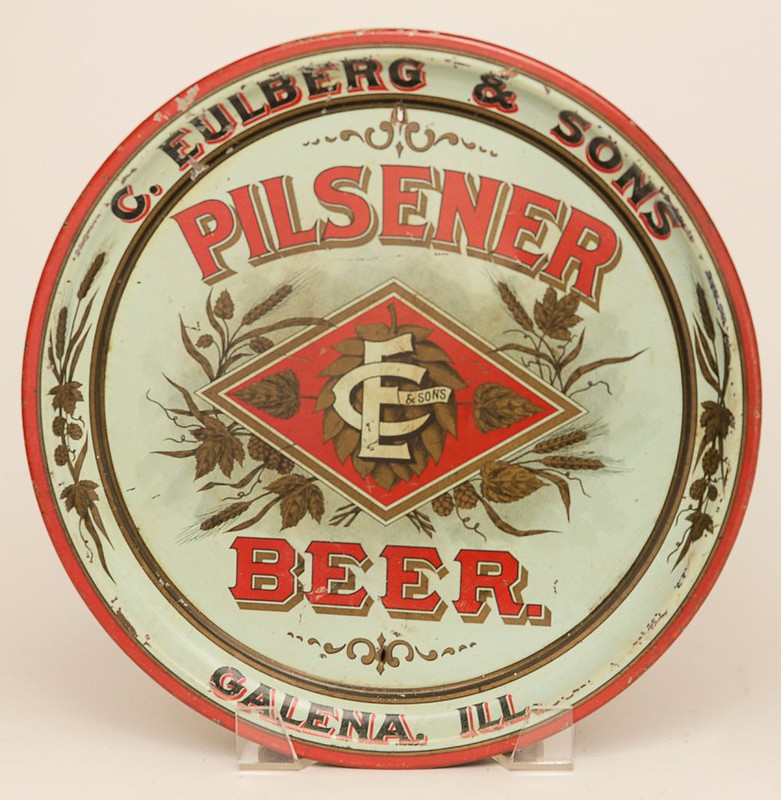
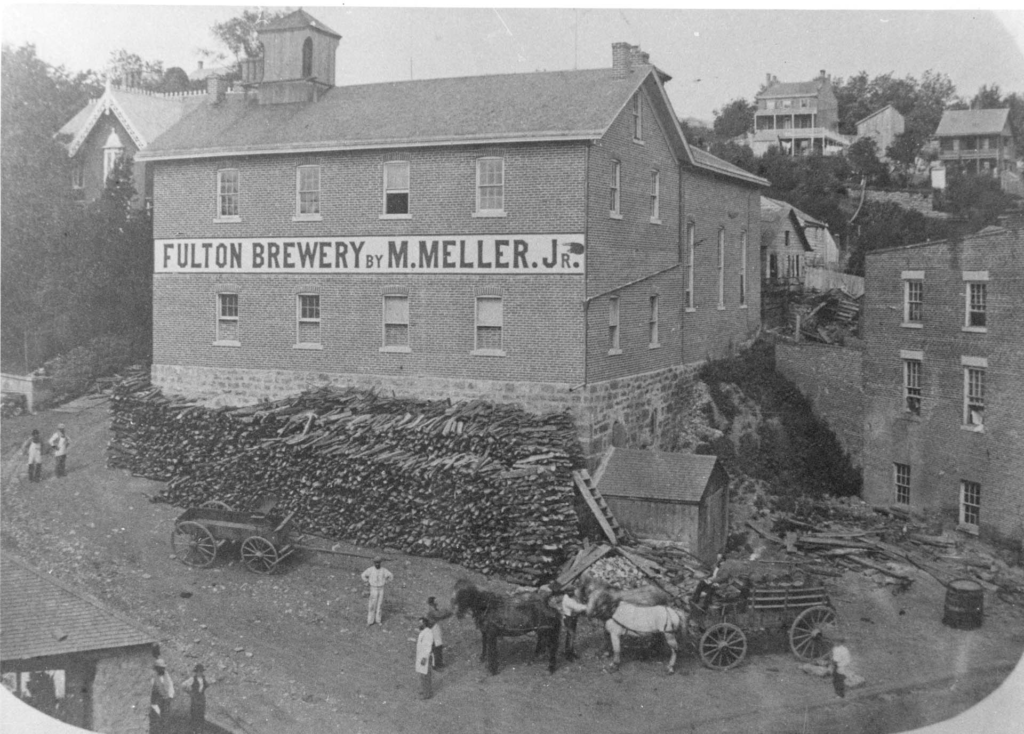
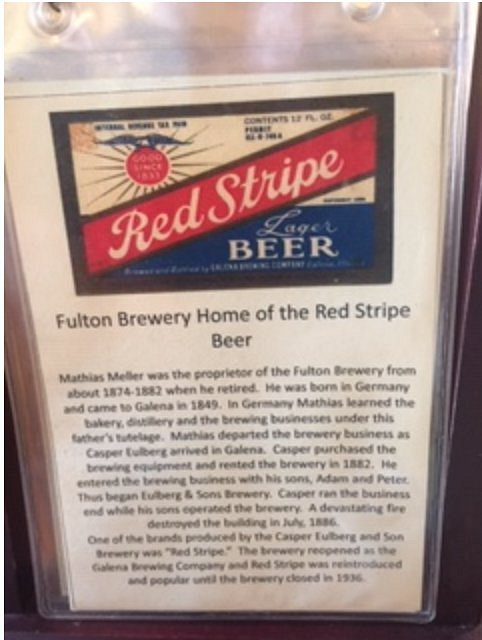
Today is the birthday of Mathias Meller (April 9, 1827-April 1, 1900). He was born in  Neuss, Germany, which is in the North Rhine-Westphalia area, and emigrated to the U.S. when he was 22, in 1849. He eventually settled in Galena, Illinois. In 1860 (or 1874, sources differ), he founded the Math. Meller Brewery (also called the Fulton Brewery), which would become the Casper Eulberg & Sons Brewery, and later, briefly, the Galena Brewing Co. after prohibition, before closing for good in 1936.

Here’s a short biography of Meller:
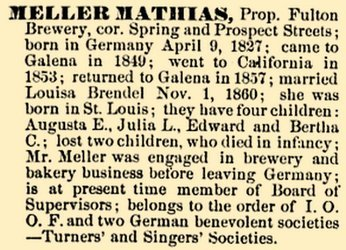
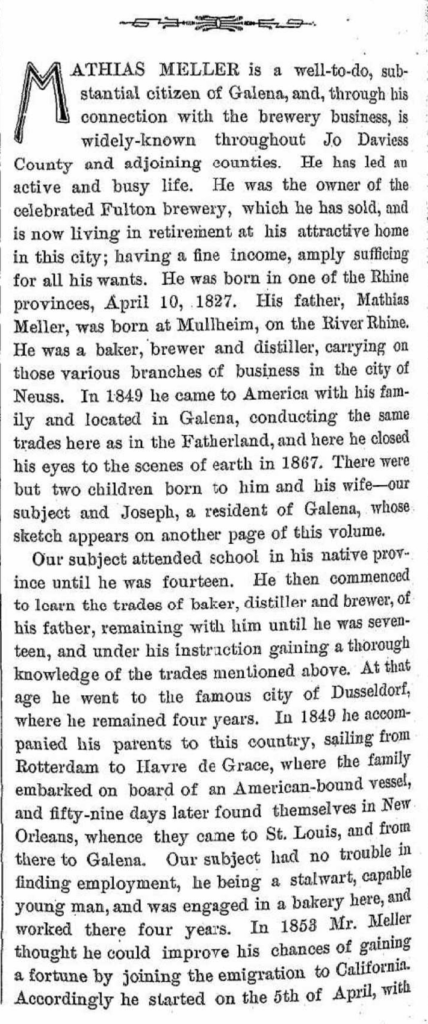
And this biography appears to be from a book on people from Jo Davis County
Curiously, their most popular beer was called Red Stripe, and had been made since the late 19th century. Apparently, when prohibition closed the brewery, they sold their recipe to British brewers who began production of the now-famous label in Jamaica.

Filed Under: Birthdays, Breweries, Just For Fun Tagged With: Germany, History, Illinois

Beer In Ads #4934: Ballantine’s Bock Beer Now Ready

April 8, 2025 By Jay Brooks

Last year I decided to concentrate on Bock ads. Bock, of course, originated in Germany, in the town of Einbeck. Because many 19th century American breweries were founded by German immigrants, they offered a bock at certain times of the year, be it Spring, Easter, Lent, Christmas, or what have you. In a sense they were some of the first seasonal beers. “The style was later adopted in Bavaria by Munich brewers in the 17th century. Due to their Bavarian accent, citizens of Munich pronounced ‘Einbeck’ as ‘ein Bock’ (a billy goat), and thus the beer became known as ‘Bock.’ A goat often appears on bottle labels.” And presumably because they were special releases, many breweries went all out promoting them with beautiful artwork on posters and other advertising.

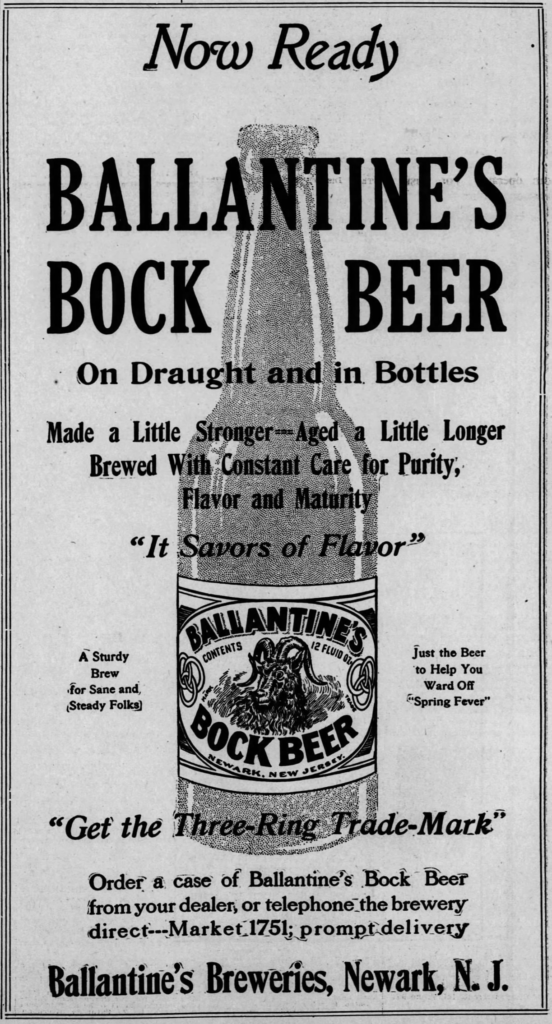
Tuesday’s ad is for Ballantine Bock Beer and was published April 8, 1916. The brewery was the P. Ballantine & Sons Brewing Co. of Newark, New Jersey, which was originally founded in 1857. This ad ran in the Montclair Times, of Montclair, New Jersey, with the tagline: “Now Ready BALLANTINE’S BOCK BEER On Draught and in Bottles.” But I love some of the other selling points: “Made a Little Stronger — Aged a Little Longer, Brewed With Constant Care for Purity, Flavor and Maturity” and this oddball one: “It Savors of Flavor.”

Filed Under: Art & Beer, Beers, Breweries, Just For Fun Tagged With: Advertising, Bock, History, New Jersey

Historic Beer Birthday: Henry Lembeck

April 8, 2025 By Jay Brooks

betz-lembeck-eagle
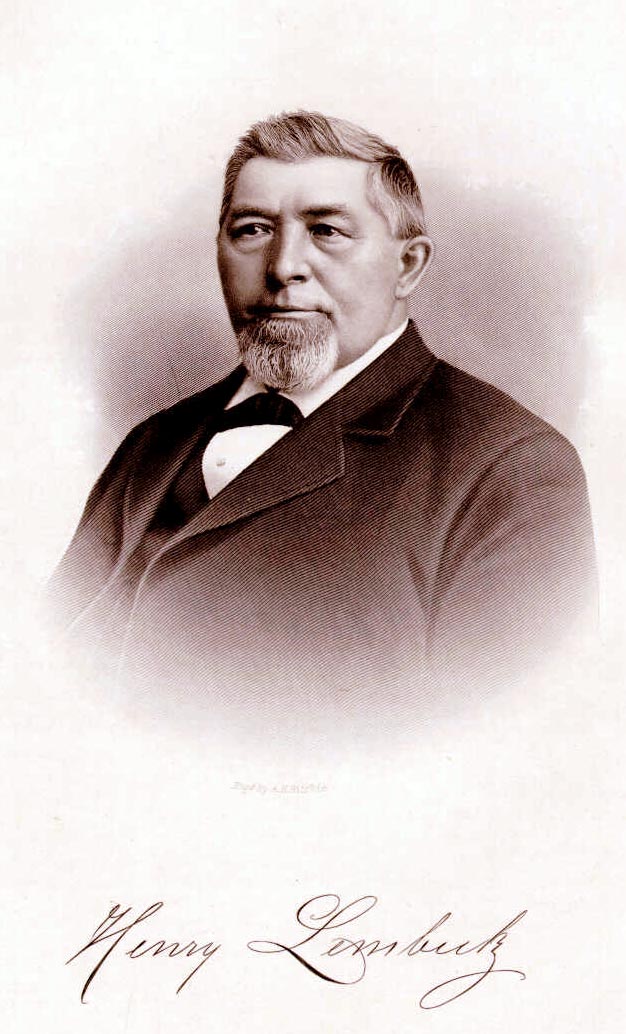
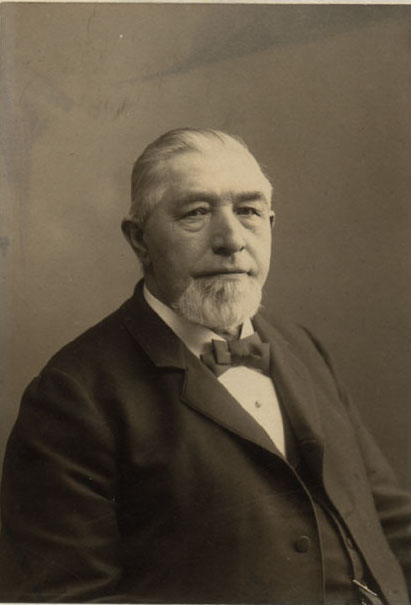
Today is the birthday of Henry B. Lembeck (April 8, 1826-July 26, 1904). He partner with John F. Betz (whose birthday is also today) to start The Lembeck and Betz Eagle Brewing Company in 1869, in Jersey City, New Jersey. It was originally known as the Henry Lembeck & John Betz Brewery, but changed its name to the Lembeck & Betz Eagle Brewing Co. in 1890. The brewery operated until prohibition in 1920. It was licensed in 1933 to begin brwong beer again, but never did so, effectively meaning it closed in 1920, or 1933, depending on how you want to look at it.

henry-lembeck-sig

This is his biography from his Wikipedia page:

Born in Osterwick, Germany near Münster, he became a cabinet maker like his father and an apprentice at the age of 13. He was drafted into the army at the age of 20, but deserted during the German Revolution of 1848 and immigrated to the United States in 1849. Living in New York City, he worked first as a carpenter and then as a grocery clerk. In a few years, Lembeck set up his own successful grocery business. It was then that he met a successful brewer, John F. Betz, selling his beer in his store.

In 1869, Lembeck moved across the river and established a brewery with Betz in downtown Jersey City, New Jersey. The Lembeck and Betz Eagle Brewing Company would develop into one of the most successful breweries in the eastern United States producing a quarter of a million barrels of beer a year. As Lembeck grew financially successful, he also helped establish banks and real estate companies in Jersey City. Lembeck was the founder of the Greenville Banking and Trust Company and a director of the Third National Bank. He helped develop the township of Greenville (today it’s a section of Jersey City) through real estate development of undeveloped land. Lembeck discontinued home building over a dispute with the city regarding the quality of water supplied to the Greenville area. After his retirement his son Gustav took over running the brewery. The brewery closed during Prohibition in 1920 and later went out of business. He lived in Greenville with his wife Emma and children in a mansion on Columbia Place, which has since been renamed Lembeck Avenue.
Lembeck died in Jersey City and is buried in Bayview – New York Bay Cemetery in Jersey City. The Lembeck mansion was later donated by his widow to St. Anne’s Home for the Aged.

henry-lembeck

Here’s a short biography of Lembeck from Find-a-Grave:

Henry Lembeck was born near Münster, Germany. At the age of 20, he was drafted into the army, but deserted during the German Revolution of 1848 and immigrated to the United States in 1849. Living in New York City, he worked first as a carpenter and than as a grocery clerk. In a few years, Lembeck set up his own successful grocery business. It was then that he met a successful brewer, John F. Betz. In 1869, Lembeck moved across the river and established a brewery with Betz in downtown Jersey City. The Lembeck and Betz Eagle Brewing Company would develop into one of the most successful breweries in the eastern United States producing a quarter of a million barrels of beer a year. As Lembeck grew financially successful, he also helped establish banks and real estate companies in Jersey City. His son Gustav took over running the brewery. He lived in Greenville (now part of Jersey City) with his wife Emma and children in a mansion on Columbia Place, which has since been re-named Lembeck Avenue.

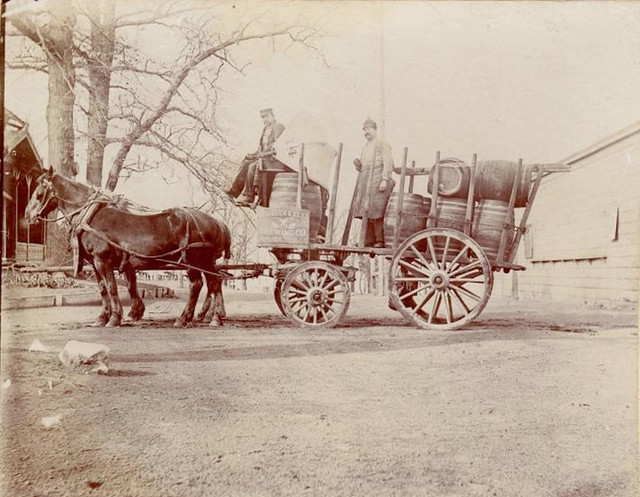
lembeck-and-betz-wagon

This is a second biography of Lembeck from Find-a-Grave:

Henry Lembeck is of German parentage, his father having resided in Osterwick, Munster, Germany, where he followed the trade of a cabinetmaker. He married Elizabeth Wenning, of the same town, and had children, Elizabeth, Catrina, Bernard (deceased), Henry and Joseph. Henry was born on the 8th of April, 1826, in Osterwick, where he remained until eighteen years of age. He received in youth a rudimentary education, and on the death of his father, when his son was fourteen years of age, became an apprentice to the cabinet-maker’s trade, serving three years in that capacity. For two and a half years he was employed as a journeyman, when, being drafted into the German army, he did duty as a soldier for two and a half years. His strong love of liberty, however, found expression in the revolutionary sentiments declared by him, which rendered his presence in his native land uncomfortable. He was therefore induced to emigrate to America, and on landing in New York at once resumed his trade, that of a cabinet-maker. Jersey City then became his place of residence,after which he became the agent for the sale of the ale made at the brewery of John F. Betz, of New York. This was continued until 1870, when, in connection with John Betz, he established the firm, of Lembeck & Betz,of which ale is the staple product. They speedily won an extended reputation for the excellence of their ale, and created a wide demand for it in New York City and the vicinity. He was for four years a member of the Board of Public Works of Jersey City, two years of which period he was its president. He is also a director of the E.B. Parsons Malting Company of Rochester, N.Y. He is in religion a Catholic, and identified with St. Paul’s Catholic Church of Greenville.

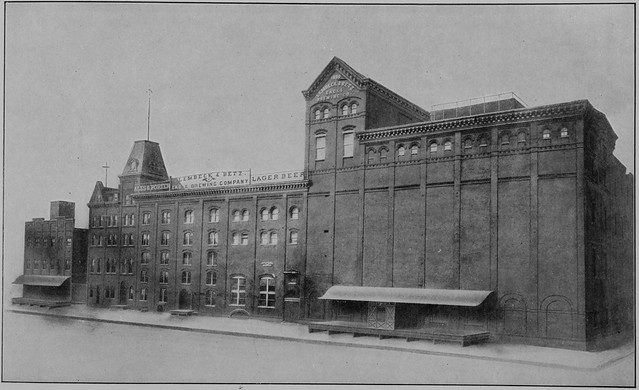
LembeckBetzBrewery-1910
The Lembeck and Betz Eagle Brewing Company in 1910.

And this is a history of his brewery from its Wikipedia page:

The Lembeck and Betz Eagle Brewing Company was founded in 1869 by Henry B. Lembeck and John F. Betz in Jersey City, in Hudson County, New Jersey, United States. The brewery, bounded by 9th, 10th, Grove, and Henderson streets in downtown Jersey City, developed into one of the most famous, best-equipped, and financially successful breweries on the East Coast of the United States. In 1889, Lembeck started producing lager beer in addition to the traditional pale ale they had been brewing. The brewery grew through the later part of the 19th century, eventually occupying seventeen city lots. The company was incorporated in May 1890. Since 1869, the brewery grew to become the fourth-largest brewery in New Jersey.

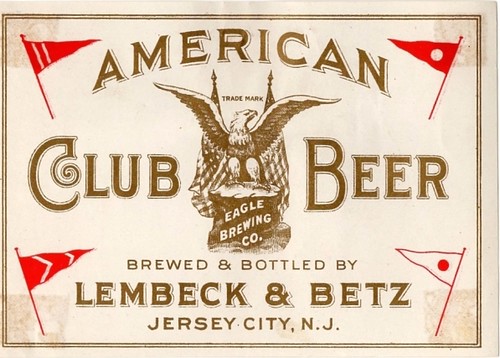
American-Club-Beer-Labels-Lembeck--Betz-Eagle-Brewing-Co

Lembeck died in 1904 and his sons Gustav and Otto took over running the brewery. The brewery closed during Prohibition. The facility was later sold and converted into a refrigeration plant. In 1984, the area was designated the Lembeck and Betz Eagle Brewing Company District on the National Register of Historic Places. The brewery buildings were demolished in 1997.

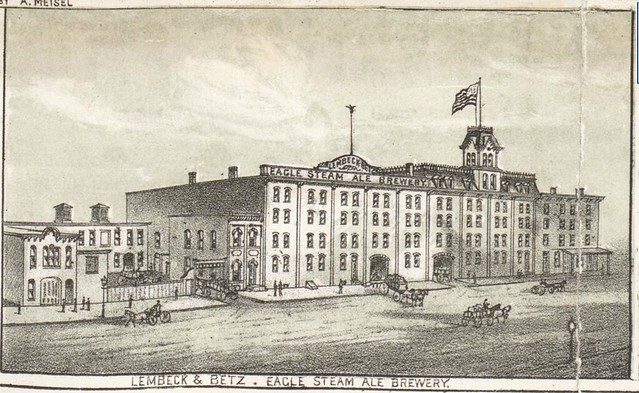
Lembeck_Betz_1883

This history of the brewery is from Jersey City, Past and Present:

Business partners Henry Lembeck and John F. Betz founded one of the most famous, best-equipped, and financially successful breweries on the East Coast of the United States. By 1889, it manufactured fifty thousand barrels of ale and port and 250,000 barrels of beer per year in a state of the art facility valued at a million dollars and worth three million dollars in total assets.

Henry Lembeck was born at Osterwick, Mu[e]nster, Germany, on April 8, 1826. He adopted his father’s trade of cabinet making starting as an apprentice at age thirteen. He served four years as a journeyman and expected to complete his training in Paris, France, when he was drafted into the German army in 1846, a year prior to the revolution. A genealogical investigation by Lembeck’s descendants has documented that while serving in the military, Lembeck, dressed in civilian attire, frequently attended and participated at rallies of the insurgents. After a furlough granted in March 1849, he did not return to his regiment and seems to have immigrated to the United States. An investigation in 1850 was conducted and he was “declared a deserter.”

After working as a carpenter for the Herring Safe Company in New York City, Lembeck became the clerk to a grocer; and three years later he bought his own business that developed from a grocery store to a market-gardening firm. While his business flourished, Lembeck also became a sales agent for the brewery of John F. Betz of New York. In 1869, Lembeck moved to Jersey City and established with Betz a brewery to manufacture ale and porter on Ninth Street. The Betz family had already established a reputation as brewers both in the United States and Germany.

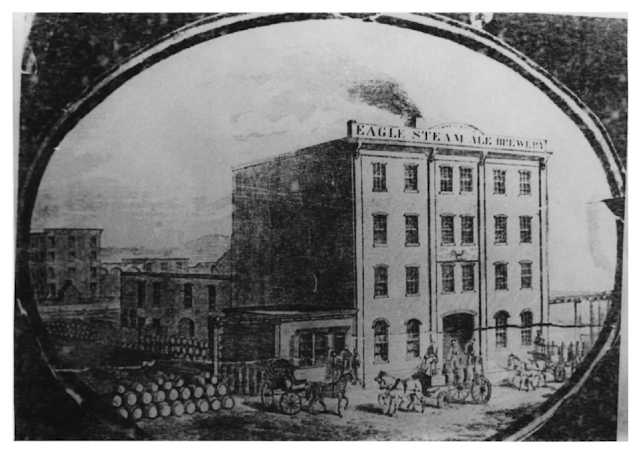
LembeckBetz_1870
The brewery in 1870.

With Lembeck’s newly acquired business savvy and Betz’s background in the production of ale and porter, the partnership was established on sound footing. The Jersey City brewing facility and operation expanded. Lembeck astutely noted the diminishing taste for ale in the United States, and in 1889 added the production of the more popular beverage of lager beer to the business. Lembeck became president of the company and incorporated the brewery into a cooperative stock company in May 1890. Betz was the vice president of the company.

A biography of Lembeck states, “[he] had the complete management of the business, assumed full responsibility of its direction, and consequently must receive the credit for its success and growth” (“Biography of Henry B. Lembeck,” 2). The brewery’s physical plant begun on Ninth Street was enlarged to accommodate the required refrigeration and storage of beer and eventually occupied seventeen city lots. A malt house, H.F. Lembeck & Company at Watkins, New York, at the head of Seneca Lake, complemented the brewing firm.

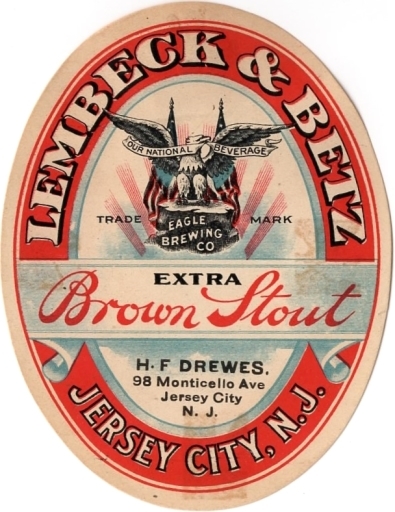
Extra-Brown-Stout-Labels-Lembeck--Betz-Eagle-Brewing-Co

Along with his business success, Lembeck took a strong interest in the Jersey City, his permanent residence. He was one of the founders the Greenville Banking and Trust Company, became vice president of the Third National Bank of Jersey City, and served with other corporations such as the Hudson Real Estate Company of which he was a director. In 1898 Lembeck built the Hudson Building at 13-15 Ocean Avenue. The stone Romanesque Revival structure at the corner of Lembeck and Ocean Avenues consecutively housed the Hudson Real Estate Company and the Greenville Bank and Trust Company with which he was associated. After a renovation in 1970, the Hudson Building became a 22-unit apartment.

Lembeck owned large tracks of land in Greenville and helped with its development. He donated property for the extension of Columbia Park (today Bartholdi Avenue). His earlier carpentry training prompted him to build a reported 32 to 43 houses in Jersey City prior to 1895 and to participate in their construction as both architect and supervising contractor. Lembeck discontinued home building over a dispute with the city regarding the quality of water supplied to the Greenville area and complained of the loss of tenants willing to rent his properties.

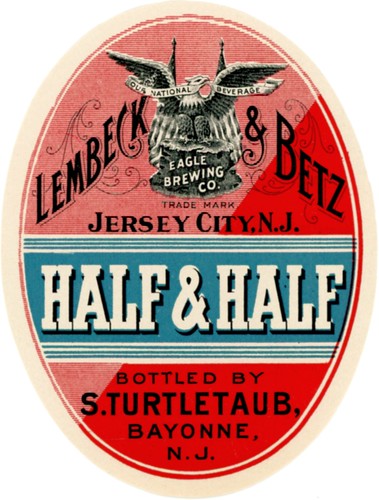
lembeck-and-betz-half-and-half

Lembeck lived in the home that he designed at 46 Columbia Place (today Lembeck Avenue) and Old Bergen Road. The modest-looking red brick structure has a decorative cornice painted gray with dentil molding and corner brackets. The center section of the house features a recessed gray wood and glass door reached from the concrete riser and has an open pediment supported by brackets over a double window with semicircular transom; the adjoining sections of building are topped by pyramids over the roofline. The Lembeck mansion was later donated by his widow to St. Anne’s Home for the Aged at 198 Old Bergen Road and serves as the administrative building; St. Ann’s became part of the York Street Project, run by the Sisters of St. Joseph of Peace, in 1987.

Lembeck died at his residence on July 25, 1904; he was president of Lembeck and Betz at the time of his death. He is buried in the family plot in the Bayview-New York Bay Cemetery.

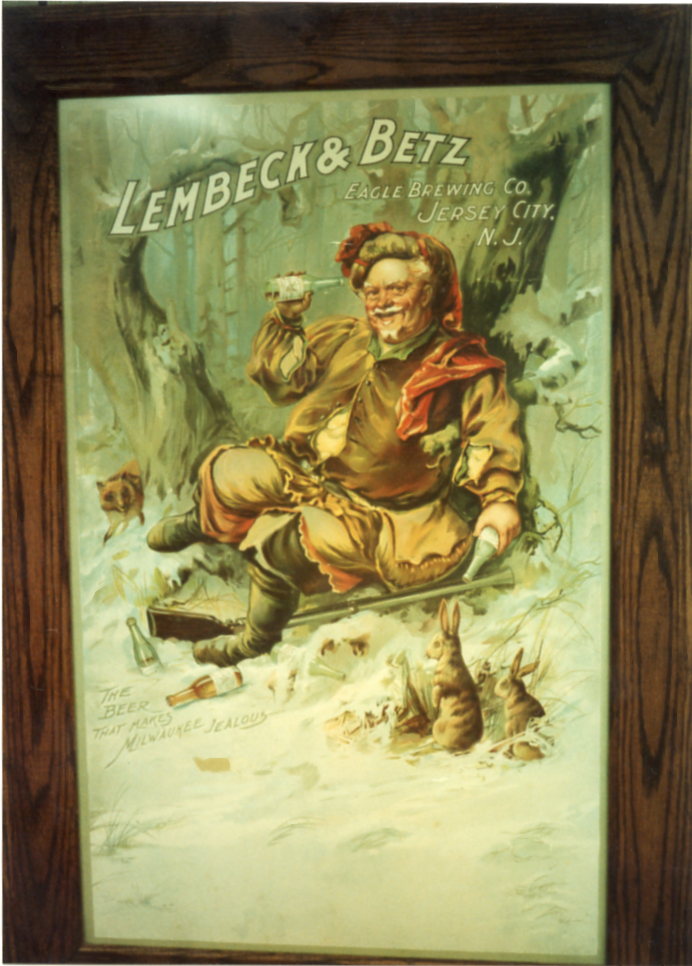
lembeck-and-betz-1910-poster
The tagline in this ad is great: “The beer that made Milwaukee jealous.”

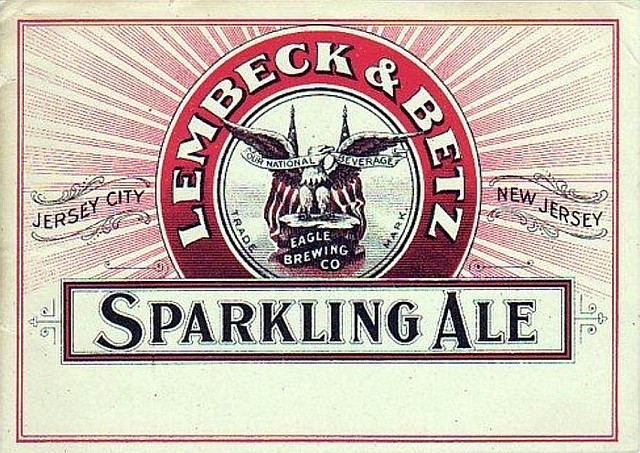
lembeck-and-betz-sparkling-ale

Filed Under: Birthdays, Breweries, Just For Fun Tagged With: Germany, History, New Jersey

Historic Beer Birthday: Thomas Dawes

April 8, 2025 By Jay Brooks

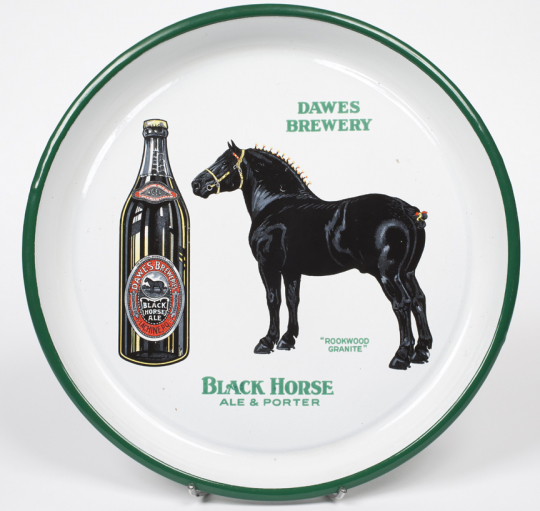
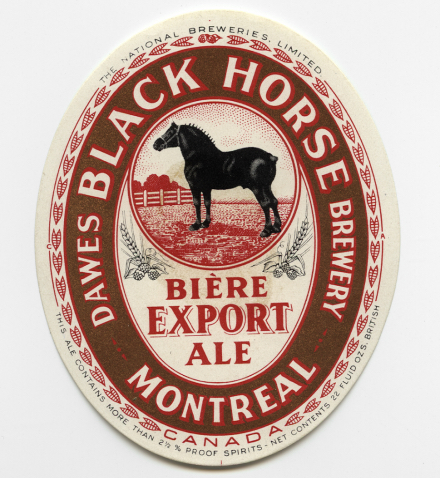
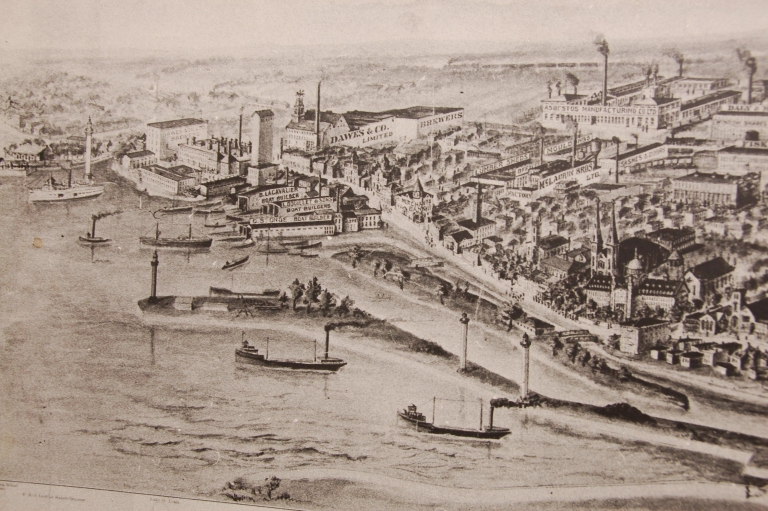
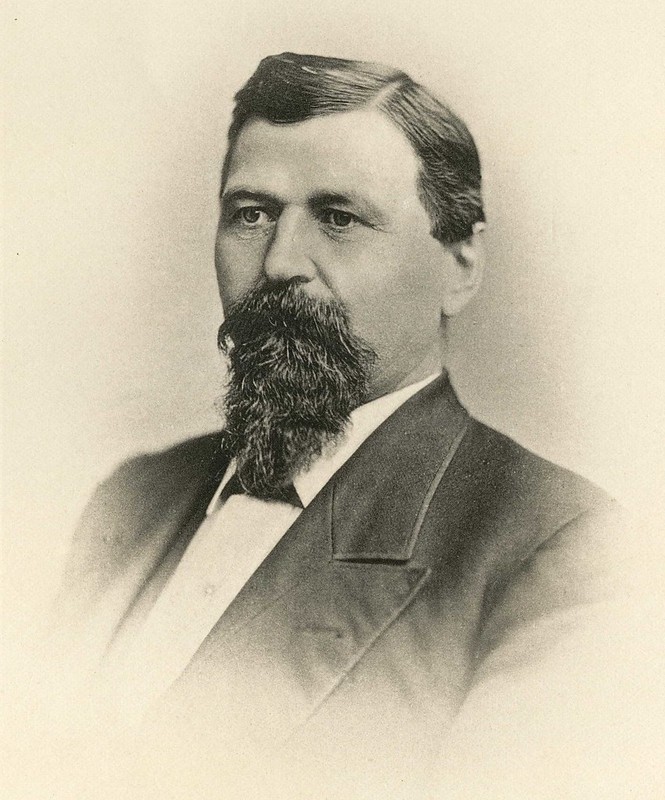
Today is the birthday of Thomas Dawes (April 8, 1785-February 11, 1863). He was born in Ambleside, Cumbria, England, but emigrated to Canada in 1808, eventually settling in Montreal. After working in breweries, he founded the Dawes Brewing around 1811 and it remained in the family until 1952.

This biography of Dawes is from the Musee de Lachine website in Montreal, Quebec’s exhibition on Black Horse Beer entitled “Pour boire il faut vendre” (To get a drink you have to sell):”

Born in Ambleside, England, Thomas Dawes (about 1775-1863) was the eldest of six children. He arrived in Canada in his early thirties, in 1808. In 1811, he settled in the area of Montréal called Côte des Argoulets (today’s Verdun borough), where he found work at a brewery run by Joseph Chapman. The brewing business suited him, it seems, since it became his lifelong career.

Thomas Dawes married Charlotte Weller in 1817, with Joseph Chapman and James Ogilvie as witnesses. The Dawes and Ogilvie families appear to have been friends. The connection was confirmed a few years later when, on April 21, 1826, Thomas Dawes and his associate Archibald Ogilvie bought from Stephen Finchlay a parcel of land southwest of Montréal, near what is now 28th Avenue in Lachine. Banking on his experience, Dawes set out to operate a farm and a brewery on the 4-acre by 30-acre lot.   

This account of the brewery and the Dawes family is a Google translation from “Historie du Quebec:”

The name  Dawes evokes one of the most famous breweries in Quebec. It was in 1811 that Thomas Dawes founded the Dawes Brewery, which was Lachine’s first industrial enterprise. Dawes is the third brewery on the island of Montreal, after the Molson brewery , founded in 1786, and the Dunn brewery , which appeared in 1809.

The Dawes Brewery is a family business, and no less than four generations of Dawes manage it, before selling the company to Canadian Breweries .

After Thomas Dawes, his sons James P. Dawes and Thomas A. Dawes took over. The third generation is represented by Andrew J. Dawes and James P. Dawes Jr. The fourth, by Norman Dawes, who has run the brewery for decades. But he sold it in 1952.

The Dawes were involved in the development of Lachine. Indeed, Thomas A. Dawes was mayor of Lachine from 1868 to 1869, while Andrew J. Dawes held this position from 1888 to 1893. It was the Dawes who funded the foundation of the Lachine General Hospital and of several churches , the tram network and the installation of the first Lachine telegraph line.

In addition, the Dawes family was among the founders of the Société d’Assurance Automobile du Québec , created in 1904 under the name of the Automobile Club of Canada . Andrew J. Dawes also headed Bell Canada, the Merchant Bank and other large companies. In addition, the Dawes imported and raised black percherons and contributed to the improvement of this horse breed. It will be remembered that it was Percherons who ensured the delivery of the beer and that they thus became the symbol of the Dawes brewery thanks to Black Horse beer .

In 1862, the Dawes built their imposing family home in Lachine (which was not sold until 1940). Around the Dawes area, large fields were devoted to the cultivation of barley and hops.

The decline of the Dawes brewery began in 1909, when sixteen Quebec breweries merged into the National Breweries Ltd. consortium. But the Dawes Brewery survived this ordeal, even if the company felt the effects of American prohibition in the 1920s. In 1939, it became the Dawes Black Horse Brewery, recalling its most famous beer.

In 1944, the Dawes proposed a merger with Molson, but the latter refused for fear of establishing a monopoly. The National Breweries Ltd. consortium was finally sold in 1952. It was bought by Canadian Breweries . The group is renamed Dow Brewery (moreover, the Dow Brewery had already existed for years, it was the designation for the whole consortium). The  Dawes Black Horse Brewery disappears, as does the great Dawes dynasty. The Dow has long become one of the most popular brands among Quebecers, but that’s another story.

Filed Under: Birthdays, Breweries, Just For Fun Tagged With: Canada, England, Great Britain, History, Quebec

Historic Beer Birthday: John F. Betz

April 8, 2025 By Jay Brooks

betz-pa
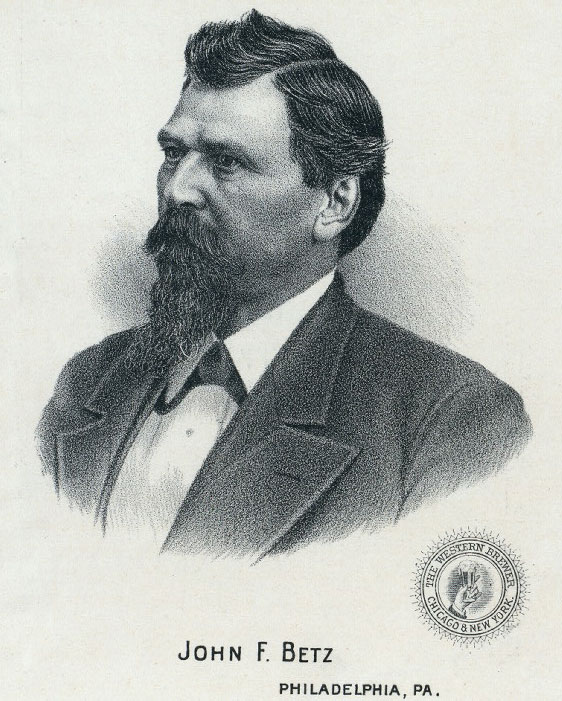
Today is the birthday of John F. Betz (April 8, 1831-January 16, 1908). He was born in Mohringer, Germany and emigrated with his family when he was an infant. His sister Elizabeth married D.G. Yuengling, and he learned brewing there from an early age. When he was 24, he bought a brewery in New York, but moved to Philadelphia in 1867, and bought what was originally the Robert Hare & J. Warren Porter Brewery when it opened in 1775. It was the William Gaul Brewery, but Betz changed it to the John F. Betz Brewery, though after his son joined the business in 1880, it became known as the John F. Betz & Son Brewery. The brewery survived prohibition, but closed for good in 1939.

betz-photo-2

Here’s one account by Rich Wagner on The Beers and Breweries of Philadelphia in Zymurgy from 1991:

John F. Betz came to Philadelphia in 1867 from New York, where he had been brewing for fourteen years. He took a job at the Gaul Brewery until purchasing it in 1880. Prior to Betz’s ownership, only ale and porter were brewed. Betz commenced brewing lager beer as well. John F. Betz became very active in the real estate market in the city. One of his other concerns was a beer garden at Riverside above the Wissahickon Creek on the Schuylkill River. He put in a line of little steamboats to carry his patrons up the river from Fairmount Dam. Betz produced an IPA of 6.5 % a.b.v. and an East India Pale Ale at 7.5% a.b.v. Betz’s half-and-half was a mixture of two-year old ale and stout, and Betz’s Best was a lager that was said to rival Bavarian imports. The Betz brewery reopened after Prohibition and remained in business until 1939.

John-F-Betz

Here’s his biography from Find-a-Grave:

Brewer. He started as an apprentice in a brewery in 1844, and in 1855 he established his own brewery. John F. Betz then came to Philadelphia in 1867, working at the Gaul Brewery. He bought it in 1880. In that same year he built a state of the art brewery. Gaul had only brewed ale and porter; Betz introduced lager beer. He also invested in Philadelphia real estate. His beer garden at Riverside above the Wissahickon Creek on the Schuylkill River was so popular that steamboats brought patrons up the Schuylkill from Fairmount Dam. His contemporaries claimed that Betz’s Best was a lager that rivaled Bavarian imports. His brewery at Fourth and Callowhill Streets was one of the nation’s largest breweries until it closed during Prohibition. The Betz brewery reopened after Prohibition and remained in business until 1939. Though a Lutheran throughout his life, he was made a Chevalier of the Order of St. Gregory by Pope Leo XIII. His first wife was Sybilla Caroline Betz. He was later married to Anna Helene Berroldinger. Before his death he disposed of his property among his wife, two adult sons, and two minor children to avoid the any conflicts over his will.

betz-eagle-brewery-ny

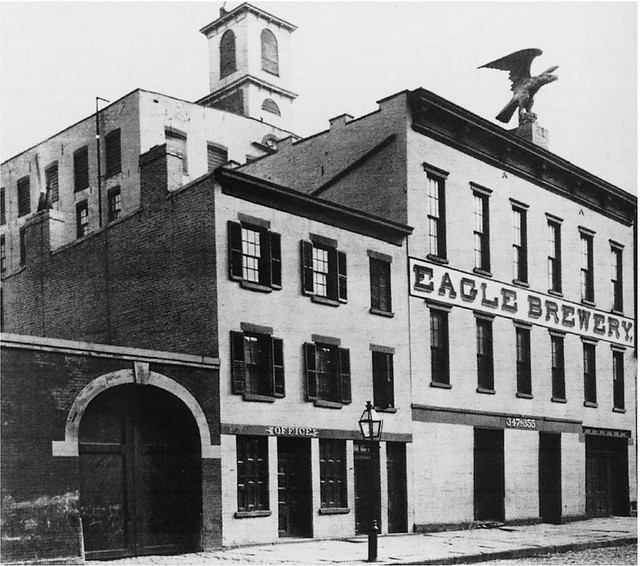
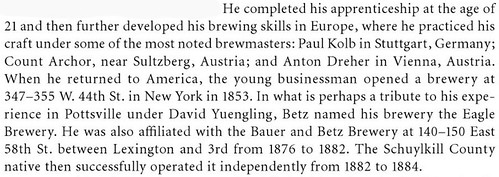
This mention of Betz and his brewery in New York is from “Yuengling: A History of America’s Oldest Brewery,” by Mark A. Noon:

Betz-yuengling-bio
D.G. Yuengling’s son David Jr., who would have been Betz’s nephew, worked at the New York brewery, too. In 1884, the name was changed to the Star Brewery, but it closed for good in 1891.

Betz also started a brewery in Jersey City, New Jersey with Henry Lembeck named The Lembeck and Betz Eagle Brewing Company. “The company was incorporated in May 1890. Since 1869, the brewery grew to become the fourth-largest brewery in New Jersey,” but closed due to prohibition.

John-F.-Betz-Sons-Brewery
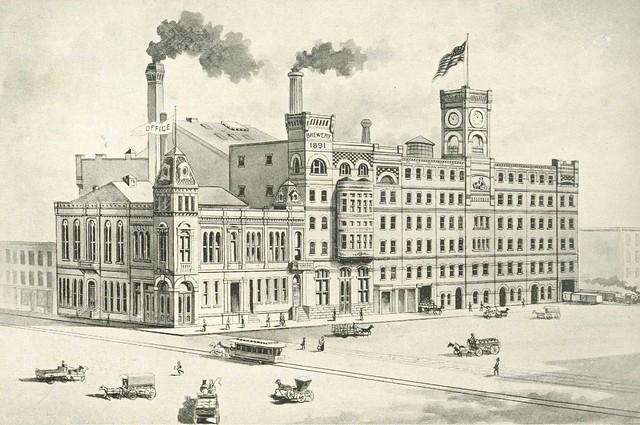
The Betz brewery in Philadelphia.

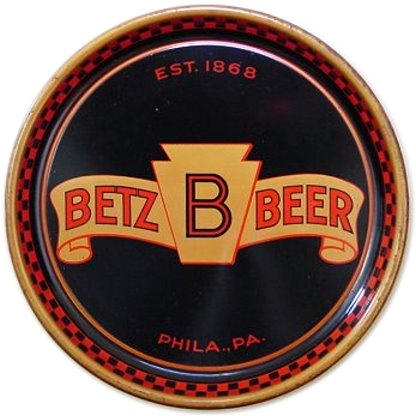
betz-black-tray

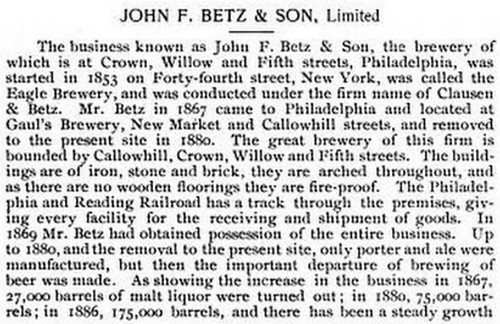
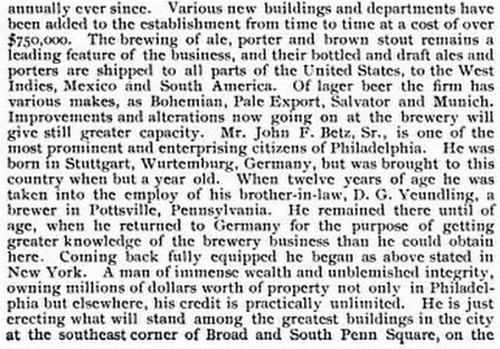
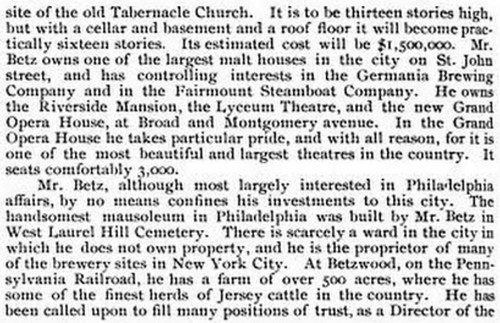
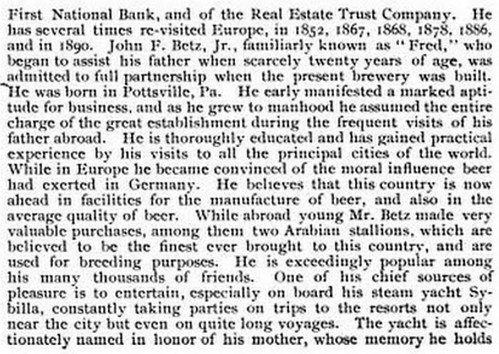
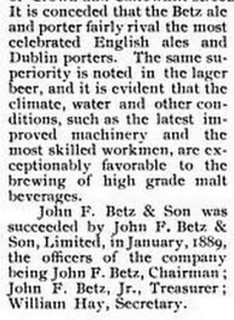
This much longer account is from “Philadelphia and Popular Philadelphians,” published in 1891:

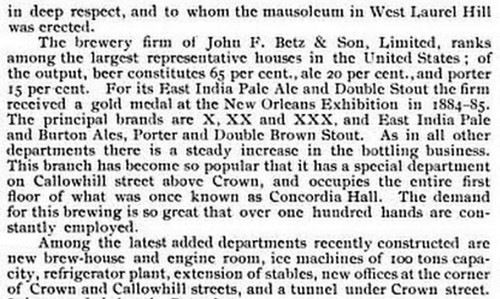
John-F-Betz-&-Son-bio-1
John-F-Betz-&-Son-bio-2
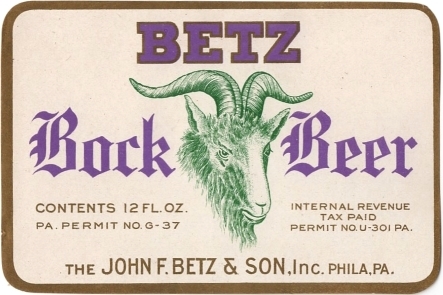
Betz-Bock-Beer--Labels-John-F-Betz--Son
John-F-Betz-&-Son-bio-3
John-F-Betz-&-Son-bio-4
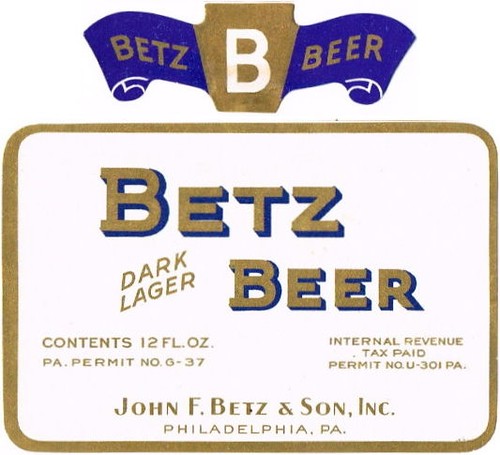
Betz-Dark-Lager-Beer-Labels-John-F-Betz
John-F-Betz-&-Son-bio-5
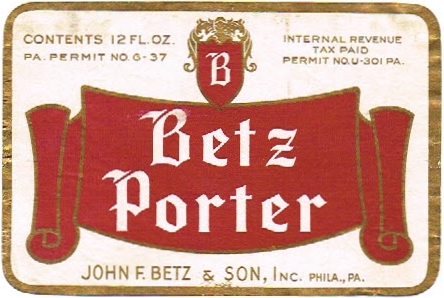
Betz-Porter--Labels-John-F-Betz--Son
John-F-Betz-&-Son-bio-6

Betz-Brewery-pa
The Philadelphia brewery.

I’m not sure if this was a newspaper advertisement or some very favorable coverage, but this was a page from The Times—Philadelphia on May 28, 1893.

Betz-philly-times-28-may-1893

Filed Under: Birthdays, Just For Fun Tagged With: History, Pennsylvania, Philadelphia

Beer In Ads #4933: First Taste Of Spring

April 7, 2025 By Jay Brooks

Last year I decided to concentrate on Bock ads. Bock, of course, originated in Germany, in the town of Einbeck. Because many 19th century American breweries were founded by German immigrants, they offered a bock at certain times of the year, be it Spring, Easter, Lent, Christmas, or what have you. In a sense they were some of the first seasonal beers. “The style was later adopted in Bavaria by Munich brewers in the 17th century. Due to their Bavarian accent, citizens of Munich pronounced ‘Einbeck’ as ‘ein Bock’ (a billy goat), and thus the beer became known as ‘Bock.’ A goat often appears on bottle labels.” And presumably because they were special releases, many breweries went all out promoting them with beautiful artwork on posters and other advertising.

Monday’s ad is for Schmidt’s Bock Beer and was published April 7, 1939. The brewery was the Jacob Schmidt Brewing Co. of Saint Paul, Minnesota, which was originally founded in 1857. This ad ran in the St. Paul Recorder, of St. Paul, Minnesota, with the tagline: “First Taste of Spring, Bock is Back!”

Filed Under: Art & Beer, Beers, Breweries, Just For Fun Tagged With: Advertising, Bock, History, Minnesota

Beer In Ads #4932: Eichler’s Bock Beer Since Civil War Days

April 6, 2025 By Jay Brooks

Last year I decided to concentrate on Bock ads. Bock, of course, originated in Germany, in the town of Einbeck. Because many 19th century American breweries were founded by German immigrants, they offered a bock at certain times of the year, be it Spring, Easter, Lent, Christmas, or what have you. In a sense they were some of the first seasonal beers. “The style was later adopted in Bavaria by Munich brewers in the 17th century. Due to their Bavarian accent, citizens of Munich pronounced ‘Einbeck’ as ‘ein Bock’ (a billy goat), and thus the beer became known as ‘Bock.’ A goat often appears on bottle labels.” And presumably because they were special releases, many breweries went all out promoting them with beautiful artwork on posters and other advertising.

Sunday’s ad is for Eichler’s Bock Beer and was published April 6, 1934. The brewery was the John Eichler Brewing Co. of New York, New York, which was originally founded in 1857. This ad ran in the Daily Item, of Sunbury, Pennsylvania, with the tagline: “Eichler’s Bock Beer Since Civil War Days.”

Filed Under: Art & Beer, Beers, Breweries, Just For Fun Tagged With: Advertising, Bock, History, New York

Historic Beer Birthday: George Ehret

April 6, 2025 By Jay Brooks

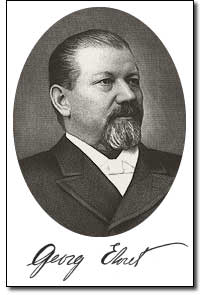
george-ehret
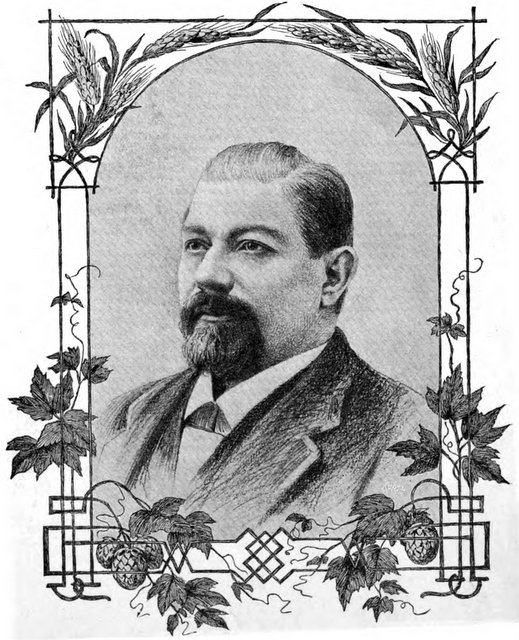
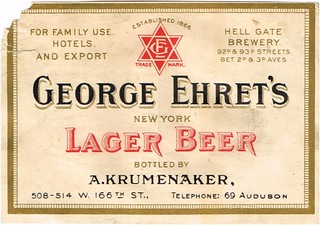
Today is the birthday of George Ehret (April 6, 1835-January 21, 1927). He was born in Hofweier, Buden, Germany but followed his father to America, arriving in New York in 1857, age 31. Having been trained as a brewer, he worked for a few years and then founded his own brewery, the George Ehret Brewery, which was also known as the Hell Gate Brewery, in 1866. It stopped producing beer in 1920 due to prohibition and limped along until 1927, when it closed due to his death.

The entry at Find a Grave has just a couple of sentences. “Beer Brewer, he established The Hell Gate Brewery in 1866 in New York City. It became one of the nation’s largest breweries, producing 602,000 barrels in 1900. When he died, his estate was valued at $40,000,000.”

george-ehret-portrait

100 Years of Brewing has a much fuller account of Ehret and the Hell Gate Brewery:

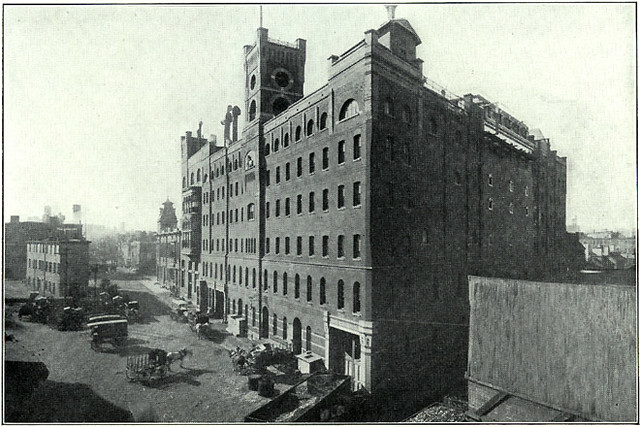
George Ehret’s Hell Gate Brewery, New York City.

The Hell Gate Brewery was established by George Ehret in the year 1866; hence, at a time when the annual production of malt liquors [in the U.S.] had increased to 5,115,140 barrels. He had then just attained the age of thirty-one years, the date of his birth being April 6, 1835. Nine years before the establishment of this brewery, Mr. Ehret came to America (1857) to join his father, who had emigrated from Germany in August, 1852.

Mr. Ehret, being a thoroughly practical brewer, strictly devoted to his calling, had not long to serve in the brewery of A. Hupfel before he rose to the foremanship and gained the full confidence and friendship of his employer. When he made known his intention to start a brewery for himself, Mr. Hupfel, a man of generous instincts and philanthropic disposition, at once promised and, at the proper time, gave his support and assistance to the new enterprise.

george_ehret

The site selected by Mr. George Ehret for his brewery was at that time of a decidedly rural character. It was opposite a dangerous passage in the East river, which had been designated “Hell Gate.” From this fact Mr. Ehret decided to name his brewery “The Hell Gate Brewery.”

The building in which he began brewing was erected under his supervision on the lower part of the block, between Ninety-second and Ninety-third streets and Second and Third avenues, and its interior appointments were completed at the beginning of the year 1867. This building is no longer standing. It was succeeded by another in 1871, which formed the nucleus of the establishment that now covers the greater part of an entire block. It is at present almost hidden by the over-towering brewery buildings which have sprung up around it in the course of a quarter century, and a full view of it can only be gained from the quadrangular yard, of which it forms the interior side, the buildings flanking it being the offices and the storehouse, both fronting on Ninety-second street.

George-Ehrets-Lager-Beer-Labels

Mr. George Ehret, from the very beginning, aimed at the brewing of a beer as nearly like the best quality of Munich lager as the difference between our water and that of the river Isar would admit. How well he succeeded in this may be inferred from the popularity which his beer attained in a few years. As has been said, he began brewing immediately after the completion of his plant. At the beginning of January, 1867, the first brew was stored in the cellars; in March of the same year his wagons, freighted not only with kegs, but also, metaphorically speaking, with all his expectations and anxieties, left his yards for the first time to serve his new customers. Five years after that date he sold 33,512 barrels; seven years later, 74,497 barrels, and in 1874 he produced and sold 101,050 barrels — a quantity which twenty-eight years ago was manufactured by but very few of the largest establishments. This growth was then all the more remarkable, because Mr. Ehret’s operations had suddenly been checked for a considerable time on account of a fire which, on the 19th of September, 1870, destroyed the greater part of his brewery, including books and papers. It is owing to this fact that we are unable to give the quantities of beer brewed during the four years preceding the fire.

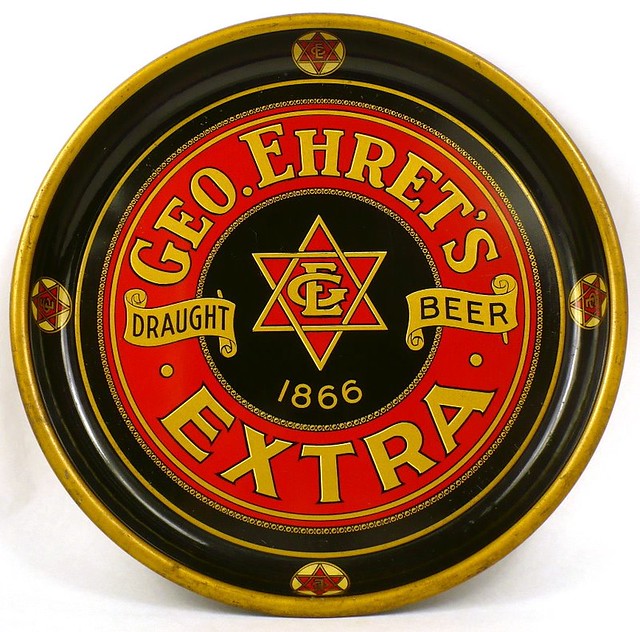
Ehrets-Extra-Draught-Beer-Serving-Trays-10-16-inches-George-Ehret-Brewery

The year 1870 may be called the second starting point in the growth of Hell Gate Brewery. In a certain sense the fire was not an unmixed evil, especially in view of the fact that the demand for Ehret beer was fast outgrowing the capacity of the original plant, necessitating a considerable extension of the premises and buildings, and many additions to the machinery and other appointments.

As stated above, the amount of beer produced and sold by the Hell Gate Brewery in the year 1874 amounted to 101,050 barrels; in 1880, the production amounted to 220,096 barrels, an increase in six years of over one hundred per cent. Ten years after, in the year 1890, the production amounted to 412,851 barrels, making another increase of almost one hundred per cent for the decade. In the year 1900, the production was 601,000 barrels, showing an increase of about forty-six per cent. This is a record to be proud of, and one that has seldom been equaled in the history of brewing.

This immense production has been attained without any forced efforts to open new channels outside of the limits of the State of New York; although, naturally enough, whenever a demand was shown to exist in outside markets, Mr. George Ehret endeavored to supply it, and thus established a number of agencies. The home demand always proved so great that the idea of engaging in an extensive export trade beyond the sea could not be entertained, save in conjunction with plans for a further enlargement of the brewery premises and increase in equipment.

On approaching the brewery, one is impressed at the very first glance with the unusually large dimensions of the grounds upon which the buildings are erected. In a smaller city this would not be anything worthy of note, but in New York, and especially in that part of it to which we refer, where scantness of territory and an immense and ever-growing population render necessary the utmost economy in the utilization of space (much to the detriment of architectural beauty), such extended premises as those we speak of can not fail to make an impression. The grounds, extending from within a short distance of Third avenue to Second avenue, and from Ninety-first to Ninety-fourth streets, comprise, inclusive of stables and storage buildings on Second avenue between Ninety-first and Ninety-third streets, seventy-five city lots, or one hundred and eighty-seven thousand five hundred square feet.

The main building, an imposing structure, surmounted by a graceful clock tower, fronts on Ninety-third street, extending southward to a considerable depth; it is flanked on either side by lower wings, which, in point of architecture and symmetrical proportions, harmonize perfectly with the principal facade. Ornamental gables, rising from the cornices of every building, enhance the impression of uniformity which, next to utility, was manifestly one of the prime objects of the architect.

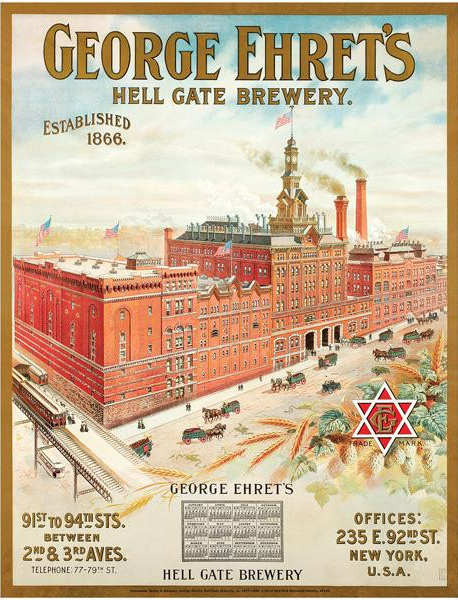
9276-Hell-Gate-Brewery_1024x1024

100 Years of Brewing was published in 1903, so the rest of the story can be found in Will Anderson’s Breweries of Brooklyn:

George Ehret, once this nation’s largest brewer, passed away in January of 1927 (leaving an estate valued at $40,000,000!). It was beginning to look as if Prohibition would last forever and the executors of Ehret’s estate debated whether they should sell the mammoth brewery buildings on the upper east side of Manhattan. For years they held off but in April of 1935 Col. Jacob Ruppert, Ehret’s neighbor on Third Avenue and 92nd Street, made an offer that the Ehret family just couldn’t refuse. With the sale to Ruppert, the Ehrets had even more money to add to what they’d inherited earlier — but they had no brewery. This problem was solved very nicely by the cash purchase, in July of 1935, of the Interboro Beverage Co. facilities [in Brooklyn]. Although the location was new, the brewery was still very much under the control of the Ehret family. Louis J. Ehret, George’s son, headed the firm, and he was aided by two of George’s grandchildren, George Ehret Burghardt and William Ehret Ottmann. Richard Barthel, brewmaster at the old Ehret plant in Yorkville, also made the move to Brooklyn. Over $200,000 was spent to thoroughly recondition the plant throughout, and by the summer of 1936 Louis J. Ehret had the plant in full production.

Ehret’s Extra Beer and Ale were brewed in Brooklyn for the next 12 years, until 1948, when the company transferred its operations to Union City, New Jersey. Whether Ehret’s moved because of an irresistible offer from Schlitz [who bought the Brooklyn plant] or because the Union City plant seemed preferable is unknown. In any case, move to New Jersey they did, where they remained in operation but three more years.

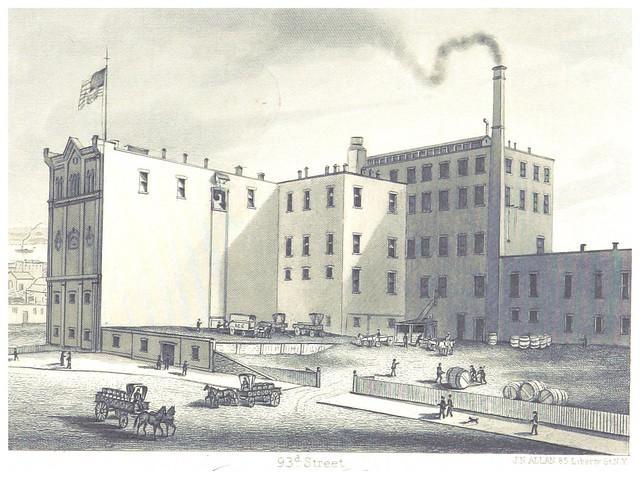
LOSSING(1876)_p169_GEORGE_EHRET'S_LAGER-BIER_BREWERY,_NYC_(2)_-_93d_STREET

And finally, here;s George Ehret’s obituary.

george-ehret-obit

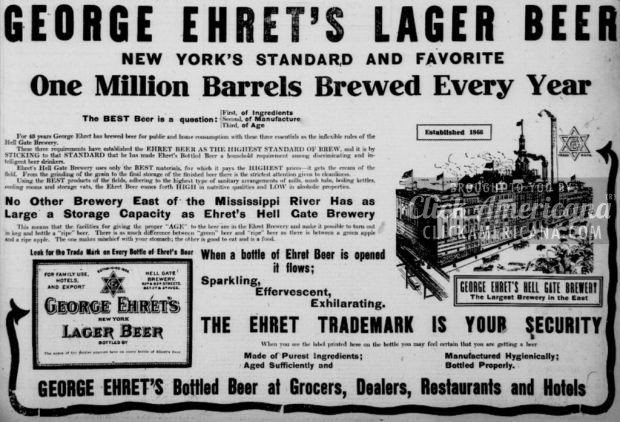
1909-george-ehret-lager-beer-ad
A ad from 1909.

Filed Under: Birthdays, Breweries, Just For Fun Tagged With: History, New York

Historic Beer Birthday: Caspar Eulberg

April 6, 2025 By Jay Brooks

eulberg-and-son
Today is the birthday of Caspar Eulberg (April 6, 1826-May 19, 1902). There’s very little information I could find about him. He was born in Kreis Westerburg, Hessen-Nassau, which was then Prussia. He married Franciska Rost, also from Prussia, and together they had ten children, six of whom were boys. At least some of them must have worked at his brewery in Galena, Illinois, because for most of its life it was called Casper Eulberg & Sons Brewery. Originally called Math. Meller Brewery when in opened in 1874, it appears Eulberg acquired it in 1885, changing the name to his own, at least until closed by prohibition in 1920. It tried to open after repeal, under the name Galena Brewing Co., but closed for good in 1936.

Eulberg-tray

Here’s an obituary of Eulbert from the American Brewers’ Review:

Caspar Eulberg & Sons Brewing around 1900.

This short history is from Northern Public Radio’s “This Week in Illinois History.“

On October 11, 1886, the Galena Daily Gazette reported that Casper Eulberg and his two sons had launched the Galena Brewery. Eulberg had purchased the long-operating brewery a year earlier, running it as C. Eulberg & Sons, but after only six months the entire operation burned to the ground. Eulberg rebuilt bigger and better, with modern machinery and a larger capacity. He changed the name to Galena Brewery. Within a few years, his flagship beer, Red Stripe, became one of the most popular beers in northern Illinois, southern Wisconsin and Iowa.

Red Stripe’s reign continued until Prohibition shut down the brewery in 1920. When Prohibition ended in 1933, the Galena Brewery reopened under new ownership and relaunched Red Stripe, based on the Eulberg family’s formula. In 1935, it trademarked the Red Stripe label but went out of business one year later.

Filed Under: Birthdays, Breweries, Just For Fun Tagged With: History, Illinois

Beer In Ads #4931: Spring Time Is Bock Beer Time

April 5, 2025 By Jay Brooks

Last year I decided to concentrate on Bock ads. Bock, of course, originated in Germany, in the town of Einbeck. Because many 19th century American breweries were founded by German immigrants, they offered a bock at certain times of the year, be it Spring, Easter, Lent, Christmas, or what have you. In a sense they were some of the first seasonal beers. “The style was later adopted in Bavaria by Munich brewers in the 17th century. Due to their Bavarian accent, citizens of Munich pronounced ‘Einbeck’ as ‘ein Bock’ (a billy goat), and thus the beer became known as ‘Bock.’ A goat often appears on bottle labels.” And presumably because they were special releases, many breweries went all out promoting them with beautiful artwork on posters and other advertising.

Saturday’s ad is for Gluek’s Bock Beer and was published April 5, 1914. The brewery was the Gluek Brewing Co. of Minneapolis, Minnesota, which was originally founded in 1857. This ad ran in the Star Tribune, also of Minneapolis, Minnesota, with the tagline: “Spring Time is Bock Beer Time.”

Filed Under: Art & Beer, Beers, Breweries, Just For Fun Tagged With: Advertising, Bock, History, Minnesota

« Previous Page
Next Page »

Find Something

Northern California Breweries

Please consider purchasing my latest book, California Breweries North, available from Amazon, or ask for it at your local bookstore.

Recent Comments

  • Bob Paolino on Beer Birthday: Grant Johnston
  • Gambrinus on Historic Beer Birthday: A.J. Houghton
  • Ernie Dewing on Historic Beer Birthday: Charles William Bergner 
  • Steve 'Pudgy' De Rose on Historic Beer Birthday: Jacob Schmidt
  • Jay Brooks on Beer Birthday: Bill Owens

Recent Posts

  • Beer In Ads #5138: The Event Of The Year: Jax Bock Beer March 2, 2026
  • Historic Beer Birthday: Anthony Durkin March 1, 2026
  • Historic Beer Birthday: Adam Sander March 1, 2026
  • Beer In Ads #5138: Flower City Bock Beer March 1, 2026
  • Historic Beer Birthday: Regina Wauters March 1, 2026

BBB Archives

Feedback

Head Quarter
This site is hosted and maintained by H25Q.dev. Any questions or comments for the webmaster can be directed here.