Brookston Beer Bulletin

Jay R. Brooks on Beer

  • Home
  • About
  • Editorial
  • Birthdays
  • Art & Beer

Socialize

  • Dribbble
  • Email
  • Facebook
  • Flickr
  • GitHub
  • Instagram
  • LinkedIn
  • Pinterest
  • RSS
  • Twitter
  • YouTube

Powered by Genesis

Colorado To Make Session Beers Illegal In Bars & Restaurants

November 29, 2010 By Jay Brooks

colorado
This should give anyone who loves session beers or groups trying to keep people from getting blotto a case of apoplexy. A new law in Colorado, actually a bill amended last spring, “now requires the state to enforce license restrictions to a T.”

The law requires to-the-letter enforcement of the state’s existing beer regulations. Bars, restaurants and liquor stores can sell only beer that is above 4 percent alcohol by volume. Grocery and convenience stores are allowed to sell only alcohol with less than 4 percent alcohol by volume.

So this is coming from the C-stores and groceries trying to protect their turf of low-alcohol beer. But the consequences are absurd, and will make it essentially illegal for any restaurant or bar to serve patrons beer that’s below 4% a.b.v. According to the Denver Post’s report, Stout Opposition to Looming Limits on Selling Lower-Alcohol Beer in Taverns, Restaurants, “[t]echnically, bars, restaurants and liquor stores in Colorado should never have sold the lower-alcohol beers in the first place, though no one ever paid much attention. Their licenses allow them to sell spirits, wine and beers that fall into the ‘malt liquor’ category.”

The original purpose of the law stems from the post-prohibition period when many laws enacted to regulate alcohol tried to limit access to it. Though Prohibition was a rousing failure, temperance groups merely shifted tactics and locally many of those early laws were an attempt to make it more difficult for alcohol to flow freely again as it had prior to 1920. Colorado’s answer was to enact laws that strictly specified which products could be sold where and that’s why modern Colorado has its peculiar alcohol landscape. But until now, the law restricting beers below 4% a.b.v. in bars and restaurants was not enforced. Increasingly, convenience and grocery stores saw that as a threat to their exclusive right to sell low-alcohol beer but were blocked time and time again from doing anything about it … until now, that is.

As is often the case, following the money does lead us to the answer. It’s about business, of course. I love this quote from Jason Hopfer, a C-store lobbyist. “Either stop selling the product we sell, or let’s stop having this false delineation on beer. Let’s let beer be beer.”

Yes, let’s let beer be beer, by all means. That is the obvious solution. To do that, we’d have to do away with Colorado’s ridiculous division that brands “beer” as anything under 4% a.b.v. and anything over it as “malt liquor.” That would be best for society as a whole, for the brewers and anyone who believes drinking lower alcohol beer while out in public is a safer idea. But as you might expect, the businesses that have benefited from these state-mandated monopolies for over 75 years are loathe to level the playing field. I think it’s simply an unknown. It doesn’t appear certain who would benefit or be hurt the most if all Colorado businesses could sell any strength beer. But it would change things considerably. And change is scary.

As the Denver Post story makes clear, nobody in the effected trade groups seem particularly concerned because they believe that when the next session of Colorado’s state legislature begins in early January, that the obvious absurdity of what this law would create will be addressed and fixed. Maybe, I’ve never followed Colorado’s state politics too closely so it’s hard to know how reasonable that belief is. But surely some of the politicians who supported this amendment with the language it currently uses had to know what the actual consequences would be. That’s perhaps the scariest thing of all, that they could accept the business argument in this case, ignoring the all too obvious negative repercussions. Save the Session Beers!

Filed Under: Beers, Editorial, News, Politics & Law Tagged With: Colorado, Law, Pubs

Blue Laws In Decline

November 24, 2010 By Jay Brooks

blue-laws
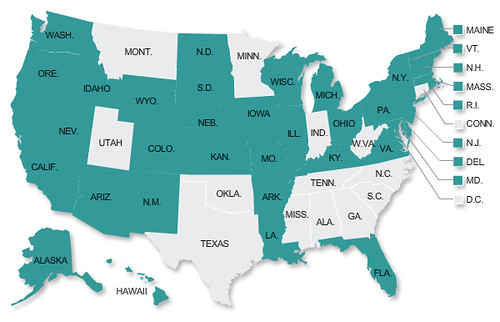
USA Today had an interesting report that more and more states are finally relaxing their antiquated blue laws and allowing alcohol to be — gasp — sold on Sundays. In the article, entitled Sunday Alcohol Sales Are on the Rise in U.S., it is revealed that “[s]ince 2002, 14 states have joined the list of states allowing Sunday sales of [alcohol], bringing the total to 36.” But that means there are still 14 more states, plus D.C., that prohibit Sunday sales of alcohol.

According to Dvaid J. Hanson, author the wonderful website, Alcohol: Problems and Solutions:

A blue law is one restricting activities or sales of goods on Sunday, to accommodate the Christian sabbath. The first blue law in the American colonies was enacted in Virginia in 1617. It required church attendance and authorized the militia to force colonists to attend church services.

As Wikipedia adds. “Most have been repealed, have been declared unconstitutional, or are simply unenforced, although prohibitions on the sale of alcoholic beverages, and occasionally almost all commerce, on Sundays are still enforced in many areas,” despite the fact that Sunday is the second busiest shopping day of the week.

As Lisa Hawkins, with the Distilled Spirits Council of the United States, put it, “[b]lue laws … simply don’t make sense in today’s economy. They inconvenience consumers and deprive states of much-needed tax revenue.” But economy aside, you’d think people would recognize that the origin of these laws to it to force religious practices on everyone, despite principles of religious freedom and not all citizens following the same faith. Apparently, you’d be wrong. One naysayer, Bruce Beckman (a council member in Downers Grove, Illinois who voted against modifying local blue laws), is quoted as saying he voted against changing his community’s blue laws because the “relatively small amount of tax revenue this might generate isn’t as important as using Sunday mornings for family, going to church … and not sitting in a bar somewhere.”

To me that’s an unbelievable rationale. I can hardly fathom someone holding such an opinion in 2010. Nobody’s stopping him from attending church or spending the day with his family, but that he believes he has the right to force everyone else in his community to do likewise is deeply offensive. It’s absolutely none of his business how I choose to spend my Sunday and that he thinks he should actively keep it illegal to do something he personally doesn’t care for is a tyranny, no matter how slight or small.

Happily, such outmoded points of view are visibly in decline, as evidenced by the increasing number of states doing away with these old-fashioned laws. Below you can see which states, in white, are still behind the times.

blue-laws-map

Filed Under: Beers, Editorial, Politics & Law Tagged With: Law, Religion & Beer

Coffee Stouts Saved

November 17, 2010 By Jay Brooks

fda
Finally some good news out of the knee-jerk ruling by the FDA to ban drinks mixing alcohol and caffeine. To their credit, they’ve put up a Questions and Answers: Caffeinated Alcoholic Beverages page. Question No. 7 answers the concerns of brewers and fans of coffee stouts, along with other craft beers that have caffeine in them as a result of ingredients that add a variety of flavors, too. The question and answer is below in its entirety.

Does This Action Apply to Coffee-Based Liqueurs?

No. These Warning Letters are not directed at alcoholic beverages that only contain caffeine as a natural constituent of one or more of their ingredients, such as a coffee flavoring. The alcoholic beverages that are the subject of FDA’s Warning Letters are malt beverages to which the manufacturer has directly added caffeine as a separate ingredient.

Filed Under: Beers, News, Politics & Law Tagged With: Government, Law

Brewers Association To Petition TTB For Caffeine Craft Beer Carve-Out

November 16, 2010 By Jay Brooks

ba
On the heels of today’s announcement that the FDA will move to ban caffeine in alcoholic drinks, the Brewers Association announced that it will “formally petition the U.S. Tax and Trade Bureau (TTB) to conduct rulemaking on alcoholic energy drinks.”

From the BA press release:

The petition seeks to disallow synthetic and pure caffeine additions to alcohol beverages, but allow incidental caffeine from ingredients that have a long tradition in brewing, such as coffee, chocolate and tea. The petition seeks to clarify that coffee, chocolate, herbs, spices, seeds and fruit are ingredients that should remain available to brewers to make beers for responsible enjoyment by beer drinkers.

Certain alcoholic energy drinks have received significant negative attention from state attorneys general, public health groups and concerned citizens. Many states are taking action this fall before the federal government has responded, leaving a patchwork of different regulatory wording, all with the same intention. The goal of this federal petition is to provide a clear and consistent national standard to assist state-based rulemaking under the 21st Amendment. This standard would remove the products of concern from shelves without creating unintended damage to the hundreds of craft brewers who, for many years, have been using traditional ingredients like coffee, tea and chocolate to responsibly craft interesting and flavorful beers.

Brewers Association President Charlie Papazian stated, “Responsible brewers have successfully used coffee, chocolate and tea to add interesting flavor and complexity to their beers for decades. In fact, the Aztecs brewed a corn, honey and chili-based beer that contained cocoa. Many craft brewers build on these traditions today using coffee, tea and chocolate. On the other hand, the addition of artificial caffeine not from a natural ingredient source has no heritage or tradition in brewing. We support a ban on the direct addition of caffeine.” The Brewers Association invites TTB to open up public comment and rulemaking on whether these products are appropriate for responsible consumption.

It would certainly be great if they can get the regulatory agencies to see that there is a difference between straight caffeine and the traditional “incidental caffeine” that occurs when beer is brewed using ingredients like coffee, tea, chocolate, herbs, spices, seeds and fruit. So often this type of knee-jerk law, that seeks to ban a substance being used in a specific way, has unintended consequences that harm legitimate uses of the substance. But there are dozens, if not more, legitimate ways in which caffeine can appear in a beer as a part of the brewing process. These do not, and should not, be subject to the same scrutiny that many other caffeine and alcohol drinks are being subjected to. They do not appeal to kids in any way, shape or form and should be protected as separate and distinct.

Save the Coffee Stouts!

Filed Under: Beers, News, Politics & Law Tagged With: Brewers Association, Law

ABI Suing Baseball Over Exclusive Beer Rights

November 12, 2010 By Jay Brooks

baseball
Today in U.S. District Court, for the Southern District of New York, Anheuser-Busch InBev filed a lawsuit asking for a declaratory judgment against Major League Baseball. In “Anheuser-Busch, Inc. v. Major League Baseball Properties, Inc.,” ABI alleges that MLB “reneged on a renewal of its beer sponsorship rights this year and demanded ‘exponentially higher’ fees.” Back in April of this year, ABI believed it had reached a deal to renew its long-standing status (over 30 years) as the “official beer of baseball,” but apparently the baseball league tried to renegotiate the deal “due to ‘a change in marketplace dynamics,’ according to the lawsuit.” Naturally, MLB was seeking to increase the amount of money they would receive from ABI and also wanted to negotiate with rival beer companies for the same rights. The lawsuit asks the court to enforce the April deal and further prevent “MLBP from negotiating with any other brewers for sponsorship rights. The lawsuit doesn’t request money damages.” Baseball’s position is that the April deal was not binding and that they could “offer sponsorship rights to Anheuser[-Busch]’s competitors.” In addition to sponsoring the league as a whole, Anheuser-Busch also sponsors 26 of the total of thirty individual baseball teams in MLB.

The story has already been picked up by Bloomberg, Reuters, the St. Louis Business Journal and the Wall Street Journal.

Filed Under: Breweries, News, Politics & Law Tagged With: Anheuser-Busch InBev, Baseball, Big Brewers, Law, Sports

Super Drunk

October 27, 2010 By Jay Brooks

superman
This Halloween, a new law in the state of Michigan takes effect. Officially, it’s known as the “High Blood Alcohol Content Enhanced Penalty” law, though most people call it by its nickname: the “Super Drunk” law. Essentially, the new law targets persons driving with a BAC of 0.17 or above and carries harsher penalties than regular drunk driving, to wit:

Under the new law, drunk drivers with a level of .17 or higher will face harsher punishment. Jail time will be doubled, a drivers license will be revoked for a minimum 45 days. Drivers who register .17 or higher will also face mandatory alcohol treatment and costs that could reach as high as $10,000.

According to Michigan ABC television station WJRT Channel 12, the “National Highway Traffic Safety is behind [the new law]. More than 40 states already passed the law and Michigan is one of them.” Strange that I haven’t heard of this before, especially if all but ten states have a similar law on the books. According to the National Conference of State Legislatures, not including Michigan, indeed 42 states have increased penalties for drivers stopped with a BAC of between 0.15 and 0.20, depending on the state.

So I know what you’re probably thinking. “How could I possibly be against this?” Well, the truth is I’m actually not … not exactly, anyway. I’m not necessarily against having harsher penalties for different levels of intoxicated driving. My biggest problem with this law, and presumably it’s the same in the other states, is that while addressing the upper limit, it keeps the lower limit where it is, at 0.08, and also there continues to be “zero tolerance” areas that ignore the law and arrest people who are below 0.08 and also some jurisdictions that either have proposed or have already passed legislation allowing the arrest of people with a lower BAC. I’m just not sure any of this does much to actually stop people from driving drunk — the goal, one hopes — and it especially does nothing to stop the worst offenders. At least one Michigan newspaper agrees with me, writing In The Margins: ‘Super drunk’ law isn’t necessary, nor will it curb hard-core drunks.

To me the problem of the worst offenders driving drunk was never addressed by lowering the BAC. All that’s been accomplished is ruining the lives of more and more people. The argument is always, but what about the people who are hurt by drunk drivers? In a sense, that’s like asking “what about the people who might be accidentally shot during a robbery.” Making robbery illegal hasn’t stopped that problem, either, because people who will do stupid and illegal things will not stop just because the government says “hey you, stop.” Of course it would be great if everybody was responsible and didn’t get behind the wheel of their car when they’d had too much, but more and harsher penalties hasn’t worked before. Maybe it’s time to try a different approach?

Filed Under: Beers, Editorial, News, Politics & Law Tagged With: Law, Prohibitionists

Texas Considering Lowering Drunk Driving Standard To One Beer

October 15, 2010 By Jay Brooks

texas
According to Fox TV Channel 14 in El Paso, Texas is reporting that the Texas state legislature is considering a law which could make it legal to arrest people who’ve had as little as one beer or a glass of wine.

According to Fox News:

The proposed law doesn’t saying people are drunk at that level, but it does say that drivers are “buzzed” at that point. The law targets drivers with a blood alcohol level between .05 and .07. It’s called the DWAI law, or driving while ability impaired.

I know I’ll take heat for saying this, but it seems to presuppose that any person whose BAC is below .08% is “impaired” to the extent that they’re a danger to themselves or others by driving. But that’s exactly the presumption we already made when we lowered the BAC standard from .1% to .08%. Even though it’s suggested that the penalties for driving “impaired” will be less than driving “drunk,” it will still have a chilling effect on businesses that serve alcohol and even further criminalizes legal behavior.

I’m not in favor of people driving drunk, but continually lowering the standard by which we measure that does nothing to actually stop the real problem drunk drivers. It’s not the solution, but it appears to be the extent of lawmakers and neo-prohibitionists’ creativity.

Fox News concludes with the time table for the new law. “The Texas Senate will discuss the proposed law and possibly pass it in January.”

Filed Under: Beers, Editorial, News, Politics & Law Tagged With: Law, Southern States, Texas

Small Town Stupidity

October 5, 2010 By Jay Brooks

illinois
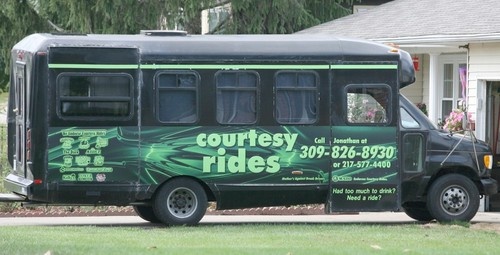
The most recent issue of Reason magazine arrived yesterday, and I stumbled on this little tale of small town stupidity from Quincy, Illinois. A man living there, Jonathon Schoenakase, suffered the loss of a good friend at the hands of a drunk driver. His response was unusual and was an incredibly positive reaction to a very emotional incident. He started “Courtesy Rides,” a free service in town offering rides for people who’d had too much to drink to get them home safely.

Stupidity #1

All well and good. He had a lot of takers for the free service and added a second car and then a bus to the fleet. Schoenakase supported his efforts on donations and tips. But that made the taxi drivers in town nervous and they lobbied the city council to change the law, which they did, specifically so Schoenakase would be required to buy a license.

And that brings us to the first stupidity. One reason the taxis were upset is because Schoenakase had a competitive advantage by virtue of being unlicensed. Taxis are not allowed to work past midnight, but bars in Illinois don’t close until 2:00 a.m. and some clubs at 4:00 a.m. Now why the fuck would you intentionally have a law that makes it harder for people who may have been drinking to get home safely. That makes absolutely no sense whatsoever. And wouldn’t it have made a lot more sense to simply change the law to allow taxis to operate after midnight than make Schoenakase have to license his free rides. In any event, the sheriff denied his application.

courtesy-rides

Stupidity #2

Right or wrong, Schoenakase continued to operate his free Courtesy Rides and the only complaints that police have received have come from the rival taxi drivers. He’s now been arrested twice in sting operations. Police “caught him” in the “illegal act” of accepting tips from riders. But Chief of Police Rob Copely admitted there wasn’t really a problem to begin with. “Under questioning from aldermen, [he] said the police department hasn’t received any significant complaints about Courtesy Rides.”

Copley also revealed that police used a sting-style undercover operation on several occasions to see if Schoenakase would try to coerce a tip or donation from a passenger who declined to give anything for a ride. Each time, he said, Schoenakase did nothing onerous to demand any kind of compensation.

Apparently that’s just how they treat good Samaritans in Quincy, Illinois.

Online, the Reason article, though slightly different from the print version, put it this way.

When you’re charging for something and someone else figures out a way to offer it for free, normally you’re SOL. Unless, of course, you happen to be operating in a regulated industry with licensing requirements—and you happen to have the ear of the city council and/or the chief of police. Then there’s another, more appealing alternative: You can make the competition illegal.

But I think Jalopnik in writing about the story summed it up best:

We understand the police are just following the law, but this entire situation stinks like a three-days-worn t-shirt off a drunk’s back. A guy goes out of his way to reduce drunk driving in his town, an effort he’s doing to honor his dead friend, and the city shuts him down at the behest of a taxi company. Real nice work there. If nothing else how about just give the guy his $10 license and be done with all this pointless nonsense.

Reason even picked Quincy Police Chief Rob Copely as their Nanny of the Month for August of this year.

Filed Under: Beers, Editorial, Politics & Law Tagged With: Illinois, Law

Postal Service Considering Beer Mail

September 26, 2010 By Jay Brooks

usps
You’ve probably heard that in the age of e-mail, FedEx and UPS the U.S. Postal Service has been losing money. A lot, and for a long time now. According to the Washington Post, on Thursday, Senator Tom Carper (Democrat-DE) introduced legislation to save the post office, the Postal Operations Sustainment and Transformation (POST) Act of 2010. The bill includes a laundry list of changes designed to help stop the fiscal bleeding and turn things around. It would eliminate Saturday deliveries, for example, and as Postmaster General John E. Potter explains it, “it alleviates our retiree health benefit burden while bringing resolution to the pension overpayment dilemma we’ve faced.” I don’t know what that means, but it’s not important for my purposes.

The most important part of the POST Act is that it would also “revise current prohibitions against USPS shipping wine and beer.” Opening up the post office to shipping beer seems like a great idea to me, especially given the problems with UPS and FedEx in that regard. The Postmaster General is in favor of the bill, as many of the items contained in it are apparently ideas that have been suggested before. Curiously, William Burrus, president of the American Postal Workers Union, is against allowing beer and wine shipments, but I can’t really understand why. He just wonders aloud if “allowing the Postal Service to ship beer and wine and closing small post offices while the organization is losing billions really the answer?” To which I can only answer yes, why not? What can it hurt, and it would most certainly give the post office a competitive advantage. Why would he be against trying anything reasonable? The Postmaster General stated the bill seeks “to more closely align our costs and the needs of our customers.” Well speaking as one of their customers, I need to get beer so it would make my life simpler if beer could be legally and reliably shipped through the USPS. I’m certainly willing to give up Saturday deliveries in exchange for the potential to have my mailman bring beer the other five days of the work week.

Filed Under: Beers, News, Related Pleasures Tagged With: Law, United States

Next Up For San Francisco’s Alcohol Tax? The Voters

September 23, 2010 By Jay Brooks

vote
Politicians are used to getting their way, and so are powerful non-profits, so they tend not to look at defeat as losing, but as an opportunity to try to win a different way. Certainly they’d never openly admit they’re wrong or have lost. If one strategy doesn’t work, they try another. The will of the people or common sense rarely matters, what matters is winning.

And so the new alcohol tax for the city of San Francisco, as proposed by supervisor John Avalos, was vetoed by mayor Gavin Newsom. But that’s hardly the end of it. I’m sure that Avalos and his backing organization, the Marin Institute, are still trying to strong-arm the three supervisors who voted against the new tax in the hopes of an override, but in the meantime, they’re also looking at others ways to realize their agenda. The determination of the minority who claim the moral high ground will not be stopped so easily. Their dream of punishing the majority of lawful, responsible drinkers for the excesses of the few will not go gently into that long goodnight. Likewise, their dream of punishing the big alcohol companies with a scheme that will barely register on their radar while at the same time causing real harm to the local economy, to local restaurant and bar owners and employees, and to hundreds of small family-owned breweries, wineries and distilleries will also not stop, but will instead just veer off in a different direction.

Just hours after Newsom’s swift veto of the alcohol tax, “supervisor John Avalos says the measure might be taken to voters to override Mayor Gavin Newsom’s veto.”

Unfortunately, every news outlet keeps repeating the lie that the tax would only add “a few cents per standard serving of beer, wine or hard liquor.” Don’t any of these news outlets fact check? As the business community has tried to explain — and any person with a functioning brain should understand — the initial tax (like all costs of doing business) will be marked up along the supply chain from wholesaler to retailer to consumer. Seriously, how hard is that to comprehend? This won’t be a “nickel a drink,” more like a buck a drink. Okay, maybe not that much for most, but if I have to keep hearing it’s only a nickel, I think I’m within my rights to engage in a little hyperbole, too. At least I’m up front about it. I feel like if I turn around, I’ll see Upton Sinclair shaking his head behind me. As he observed, “It is difficult to get a man to understand something when his job depends on not understanding it.” And so it goes.

And what also doesn’t get talked about — but should — is that alcohol is already the most taxed consumer product on planet America, with the possible exception of tobacco. But tobacco, you may recall, has no health benefits whereas the moderate consumption of alcohol has plenty, not least of which is that you’ll most likely live longer if you drink a little instead of abstain.

Every state and community is having trouble paying for the services its citizens feel entitled to, and that’s undoubtedly a real problem. I personally believe politics has led us down this path, but regardless I don’t believe politics can save us from it, either. Everybody wants the services, but curiously no one is willing to pay for them. No one wants their taxes to go up, even though that’s probably the fairest way to get us out of this mess. Instead, politicians keep trying to find a solution that doesn’t seem like a tax, in most cases just so they can continue to say they’re against more taxes, for no grander purpose than they want to keep their jobs. So when the Marin Institute whispered in the ear of John Avalos, “psst, have I got a ‘fee’ for you,” … he listened.

And in the end, that’s why I’m so vehemently opposed to this type of tax. It’s dishonest at its core. It argues from a false premise. I don’t really care how much the tax is, it’s patently unfair at any amount. It takes the all too familiar position that drinking alcohol is somehow a sin and therefore people should have to pay to enjoy it. Bullshit. I don’t believe that and neither should you. The concept of sin is a religious “belief” and last time I checked the Constitution guaranteed that I can believe otherwise and that in any event religion, where the idea of sin flourishes, should have nothing to do with the governing of alcohol policy or any other damn law.

What we have is decades of demonization working its way into a discussion it should have no part in. It’s utter nonsense to suggest that alcohol “made” people abuse it and further that the people who make it and sell it share that blame, too. When we start taxing ammunition and gun companies for the crimes people commit using their products then come talk to me about charge for harm. When we start taxing soda companies, high fructose corn syrup makers, fast food chains and red meat companies for the obesity epidemic and the burden it places on our healthcare system then come talk to me about charge for harm. When we start taxing the oil companies and car manufacturers for the loss of the ozone layer and other natural disasters from their dismantling of mass transit and people driving too much then come talk to me about charge for harm. Virtually every human activity does some harm to someone or something. Trying to calculate all of them and figure out who owes what is a fool’s errand. And that’s why we don’t, except when it comes to alcohol. Alcohol has been a convenient scapegoat for well over a century now, and there’s no end in sight for the ills of society it can be blamed for.

My biggest fear if this does go to a vote, is that the mis-information and propaganda out there has created a populace that believes one thing when another is closer to the truth. One of the most potent takeaways from the quasi-debate that KQED aired a few weeks ago, was how frighteningly uninformed many people are about this issue. So many have let emotions, inflated statistics and one-sided reporting inform them on this issue that I think a lot of people will happily pull that “yes” lever, blissfully ignorant of how unfair it is and how their emotions have been manipulated by propaganda and fear. And that’s a direct result, I think, of our local media just uncritically parroting propaganda in favor of the tax and all but ignoring any meaningful opposition.

But long term it’s also because we allow the debate to start from the premise that alcohol is bad in and of itself. It’s not. All the evidence you need to disprove that is your own behavior and those of almost everyone around you, easily able to responsibly drink moderate amounts of alcohol. You’re the majority. You’re the norm. You’re doing something good; good for you and for society. Drink up. Enjoy yourself. Don’t let fear and propaganda win the day.

Filed Under: Editorial, News, Politics & Law Tagged With: California, Law, San Francisco

« Previous Page
Next Page »

Find Something

Northern California Breweries

Please consider purchasing my latest book, California Breweries North, available from Amazon, or ask for it at your local bookstore.

Recent Comments

  • Bob Paolino on Beer Birthday: Grant Johnston
  • Gambrinus on Historic Beer Birthday: A.J. Houghton
  • Ernie Dewing on Historic Beer Birthday: Charles William Bergner 
  • Steve 'Pudgy' De Rose on Historic Beer Birthday: Jacob Schmidt
  • Jay Brooks on Beer Birthday: Bill Owens

Recent Posts

  • Beer Birthday: Rudi Ghequire March 26, 2026
  • Beer In Ads #5186: Today’s The Day! March 26, 2026
  • Historic Beer Birthday: Bill Brand March 26, 2026
  • Historic Beer Bornday: Fraggle March 26, 2026
  • Beer In Ads #5185: Too Good To Last March 25, 2026

BBB Archives

Feedback

Head Quarter
This site is hosted and maintained by H25Q.dev. Any questions or comments for the webmaster can be directed here.