Brookston Beer Bulletin

Jay R. Brooks on Beer

  • Home
  • About
  • Editorial
  • Birthdays
  • Art & Beer

Socialize

  • Dribbble
  • Email
  • Facebook
  • Flickr
  • GitHub
  • Instagram
  • LinkedIn
  • Pinterest
  • RSS
  • Twitter
  • YouTube

Powered by Genesis

Patent No. 2121458A: Apparatus And Process For Aerating Wort In Yeast Production

June 21, 2015 By Jay Brooks

patent-logo
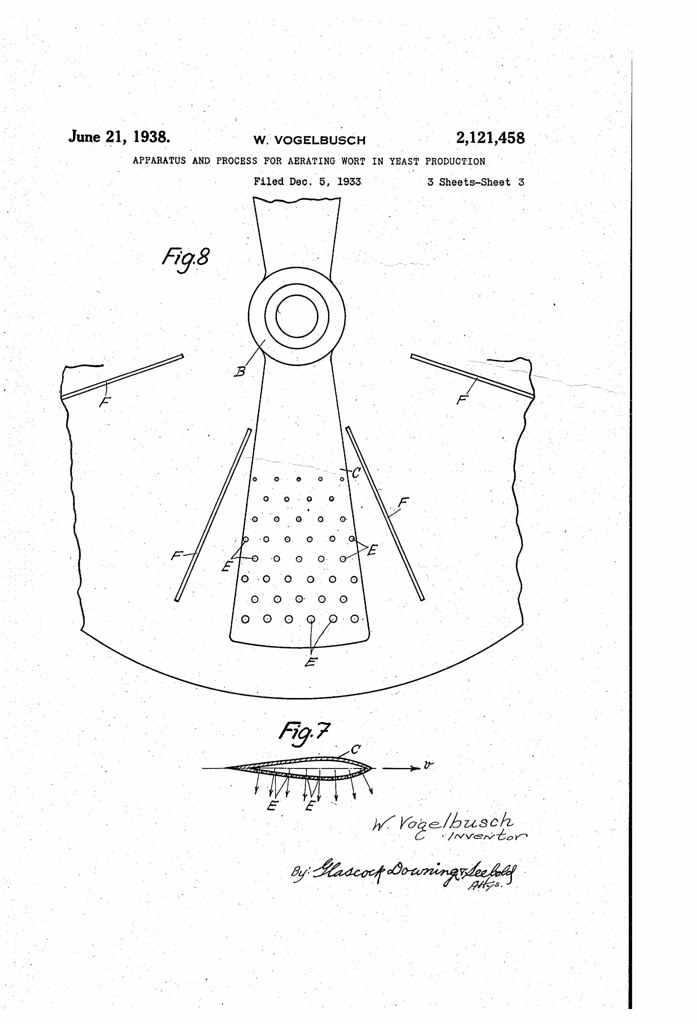
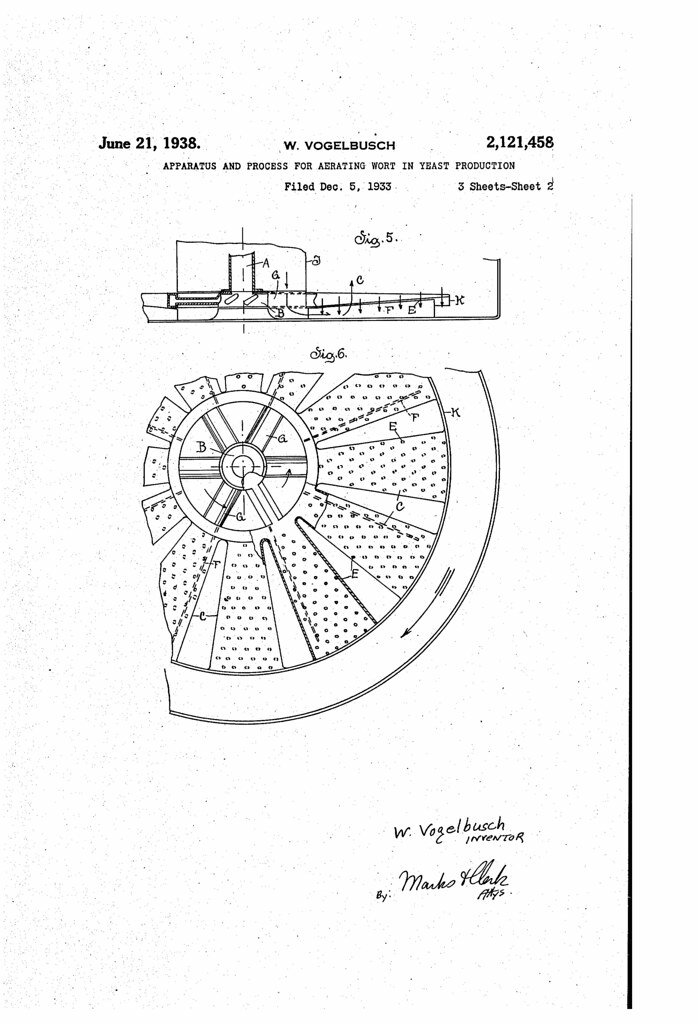
Today in 1933, US Patent 2121458 A was issued, an invention of Wilhelm Vogelbuseh, for his “Apparatus And Process for Aerating Wort in Yeast Production.” There’s no Abstract, although in the description it includes this summary:

In the production of yeast, air is supplied to the wort during the fermentation in order to meet the oxygen requirements of the multiplying cells and also to render harmless the interchange products which are produced. Hitherto, compressed air from an air pump has usually been introduced into the wort through a rigidly mounted tube system which is placed horizontally at the bottom of the fermenting vat and the separate tubes of which are provided with holes. The attempts in recent years to reduce the size of the air bubbles have led to the diameter of the air outlet holes being reduced down to 0.3 mm. On account of the danger of stoppage and the difficulty of keep through such holes. Distributing devices provided with tubes or boxes of burnt clay, stoneware, sintered glass, etc. to act as air outlet surfaces have been used. The saving in power, however, does not correspond to the reduction of the amount of air as these materials, on account of their smaller permeability, require a higher operating pressure. keep such a body perfectly clean as is required for avoiding contamination.

The object of the invention is to avoid these disadvantages, and the invention consists in that a hollow body of suitable shape serving for delivery large openings and which, in the direction of movement, offers as little resistance as possible and allows the air to escape preferably in a direction different from the direction of movement and preferably at right angles or approximately at right angles thereto is moved through could hitherto only be obtained in the yeast industry by using the above-mentioned ceramic materials for the air supply member. In addition, it is difficult to ring the air into the liquid through comparative count of the above-mentioned disadvantages, have not become widely used.

Untitled
Untitled
Untitled

Filed Under: Beers, Breweries, Just For Fun, Politics & Law, Related Pleasures Tagged With: Brewing Equipment, History, Law, Patent, Wort

Patent No. 3256627A: Ornamented Drinking Glass

June 21, 2015 By Jay Brooks

patent-logo
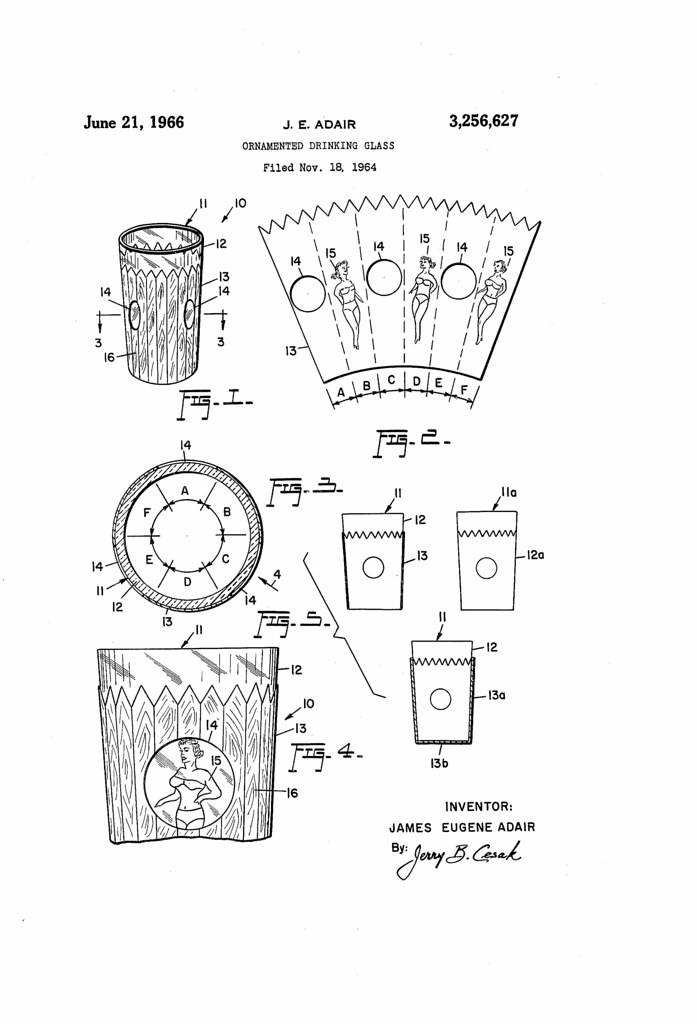
Today in 1966, US Patent 3256627 A was issued, an invention of James Eugene Adair, assigned to Fishlove & Co., for his “Ornamented Drinking Glass.” There’s no Abstract, although in the description it includes this summary:

The principal object of the invention is to provide an aesthetic, entertaining or amusing novelty item in the form of an ornamented drinking glass such as is commonly used for mixed drinks, beer, highballs, or the like, the glass having an opaque side wall but being provided with one or more transparent portions or peep holes, and also having ornamentation on regions thereof opposite the peep holes, such ornamentation being visible through the peep holes, transversely of the glass and through liquid such as the glass may contain. Such liquid produces effects of magnification and distortion, especially when transparent solids such as ice cubes are immersed therein, so that the ornamentation as viewed through the peep holes has an enlarged and/or animated appearance.

Untitled

Filed Under: Beers, Just For Fun, Politics & Law, Related Pleasures Tagged With: Glassware, History, Law, Patent

Patent No. 2163468A: Process For Making Hopped Beer Wort

June 20, 2015 By Jay Brooks

patent-logo
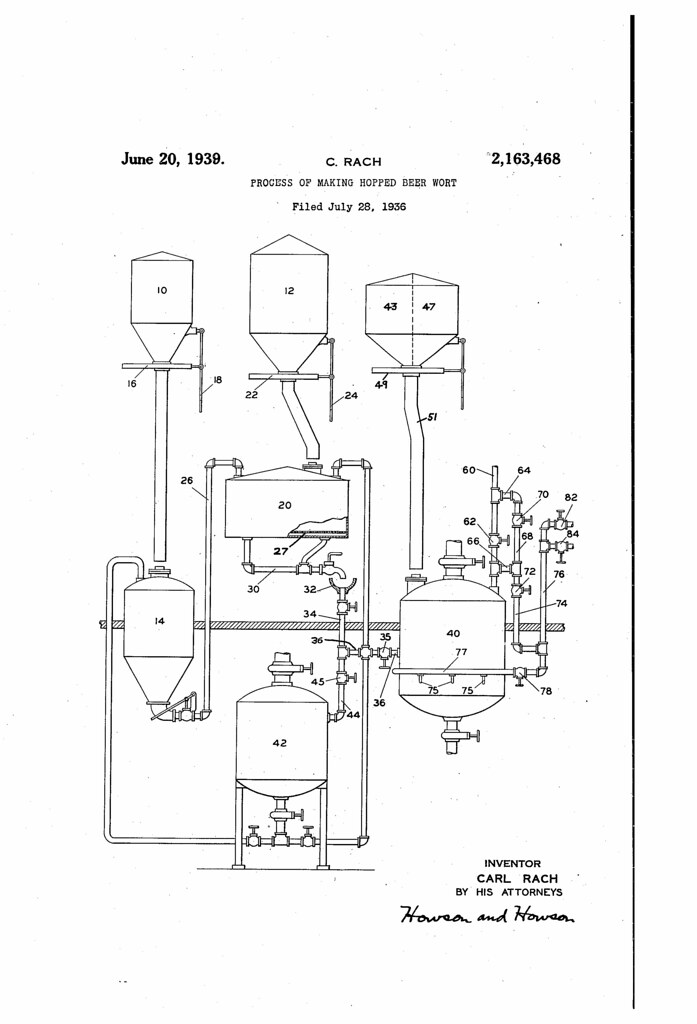
Today in 1939, US Patent 2163468 A was issued, an invention of Carl Rach, for his “Process For Making Hopped Beer Wort.” There’s no Abstract, although in the description it includes this summary:

Heretofore in the process of making this wort, unmalted cereals (such as corn grits or rice) were mixed with malt (such as malt barley or wheat malt) and were cooked with water at a temperature around the boiling point in a large container or cooker, the resulting mixture being led from the cooker into a mash tub where it was mixed with a malt mash and kept for onehalf hour or more at mashing off temperature. The wort which resulted from this .last mashing operation was strained through the undissolved grains of the material or mash resting upon a false bottom, with which the mash tub is provided. During this operation the undissolved grains on the false bottom served as a filter mass. The usual practice in the next stage of the old process was to wash the grains by pouring hot water upon them in the mash tub to remove the remaining wort extract. This washing of the grains or sparging operation, as commonly called, resulted in a wort which was of much lower As the sparging operations continued the resulting worts were of less and less density and after they were all collected together in a large kettle they had to be boiled to evaporate some of the water and increase the density to the desired degree, which is between 12 to 13% as measured by the Bailing saccharometer.

This evaporation and concentration of the wort was disadvantageous in that it required time, labor and fuel and thus increased the cost of the beer.

Thus it is an object of my invention to provide a process which eliminates the necessity of boiling the wort to concentrate it, and thus (1) to reduce the expense of the process, and (2) to permit greater control of the composition and chemical nature of the product, by reason of boiling being carried on only to chemically affect the wort and not to evaporate water.

Untitled

Filed Under: Beers, Breweries, Just For Fun, Politics & Law, Related Pleasures Tagged With: History, Law, Patent, Science of Brewing, Wort

Patent No. 28771A: Beer-Pitcher

June 19, 2015 By Jay Brooks

patent-logo
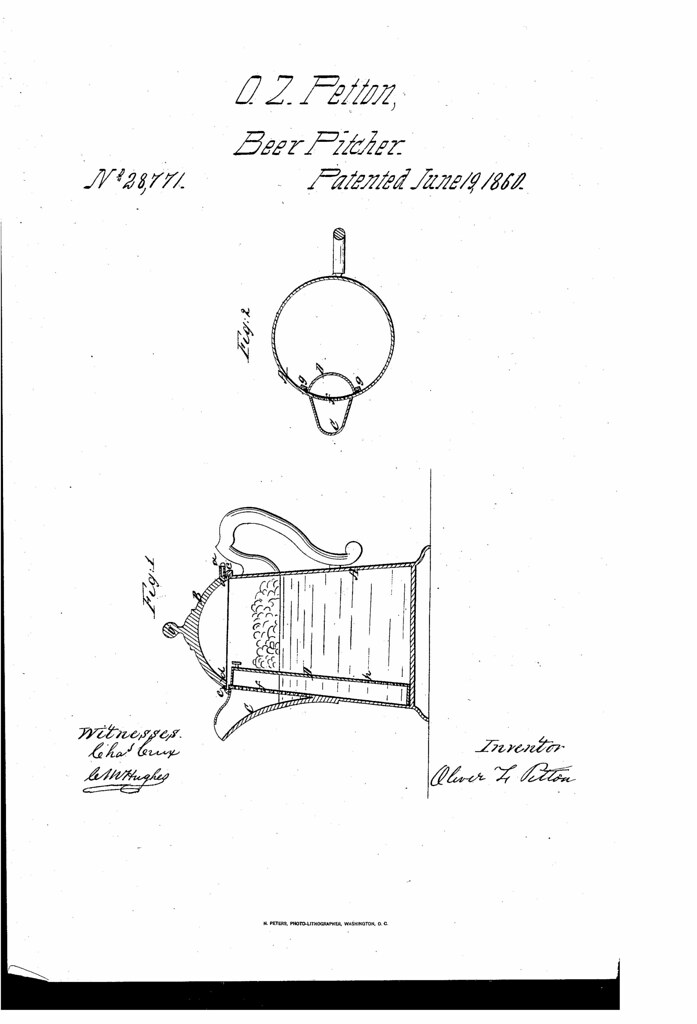
Today in 1860, US Patent 28771 A was issued, an invention of Oliver Z. Pelton, for his “Beer-Pitcher.” There’s no Abstract, although in the description it states that Pelton has “invented a new and Improved Beer-Pitcher,” with additional information:

A represents a beer pitcher or can constructed of tin, britannia or any other suitable material, and of any desirable size. cover B, is attached to the body of the same by means of a hinge a., and a knob b, serves to open and close said cover.

The cover shuts down into a rim c, on the top edge of the pitcher, and in order to make it close tight, it is provided with a groove (Z, near to its edge to receive a ring e, of india rubber or any other suitable material. This ring projects slightly beyond the surface of the cover, and if the cover is closed, it shuts down perfectly tight, so that no part of the contents of the pitcher can escape.

The contents of the pitcher are poured out through the spout C, which is furnished with a strainer f in the usual manner. Behind the spout is the movable partition D, which tits into grooves or gnides g, so that it can be drawn out and put in at pleasure. Instead of making this partition to fit into the guides g, it might, however, be attached with a hinge or in any other convenient manner, enabling the same to be brought into such a position that it can easily be cleaned. I prefer, however, to arrange it in such a manner that it can be taken out altogether, so that the inside of the pitcher, as well as the partition itself, can be reached everywhere.

Untitled

Filed Under: Beers, Just For Fun, Politics & Law, Related Pleasures Tagged With: Glassware, History, Law, Patent

Patent No. 2750945A: Hop-Picking Machine

June 19, 2015 By Jay Brooks

patent-logo
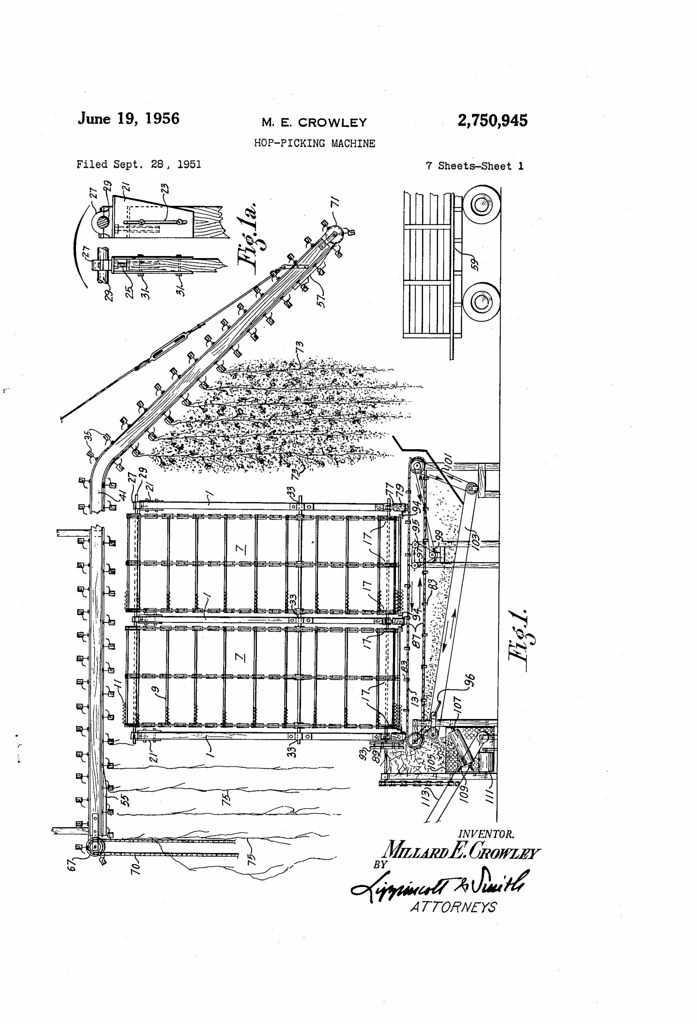
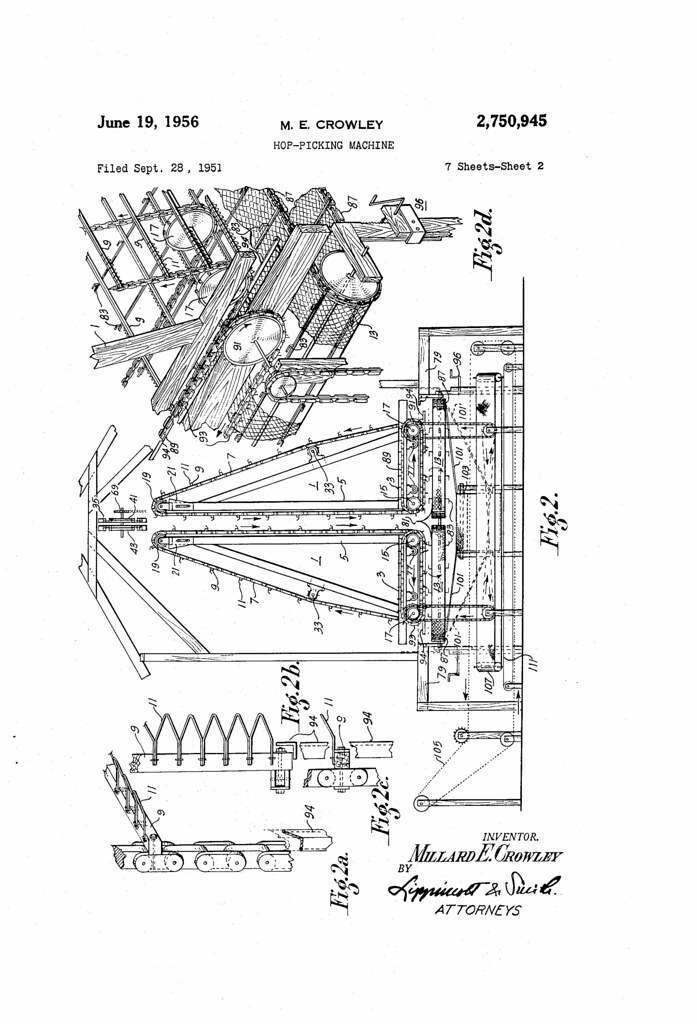
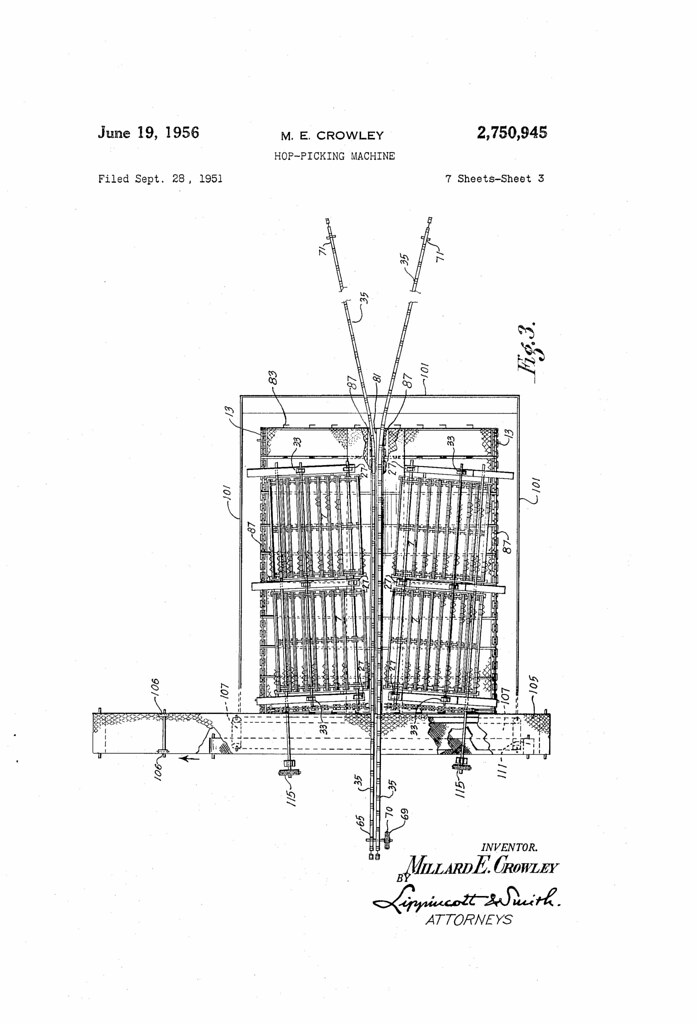
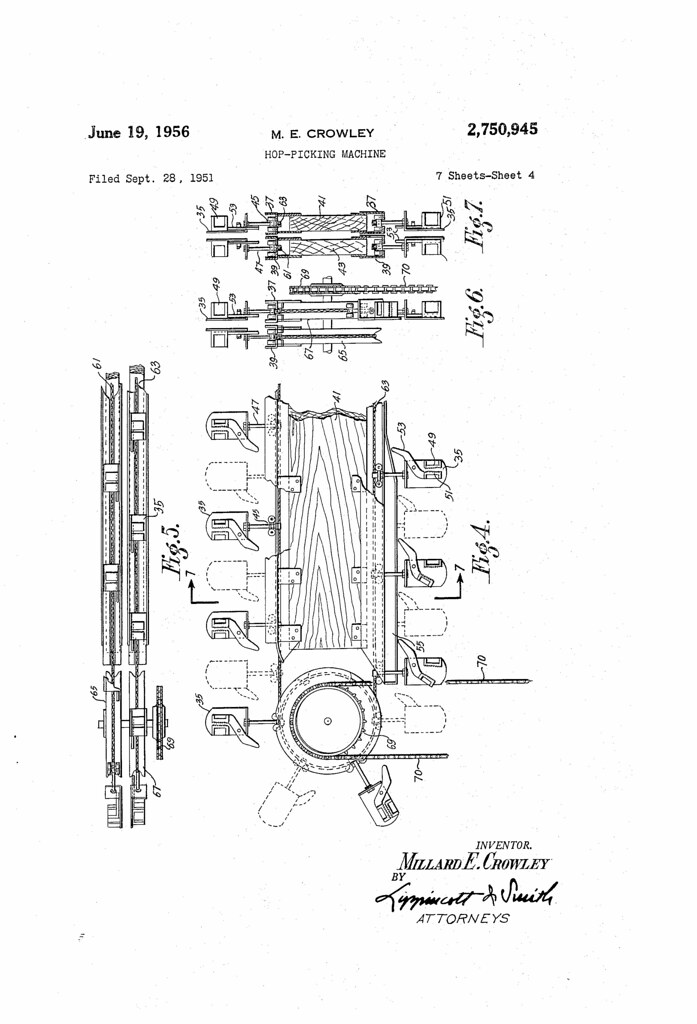
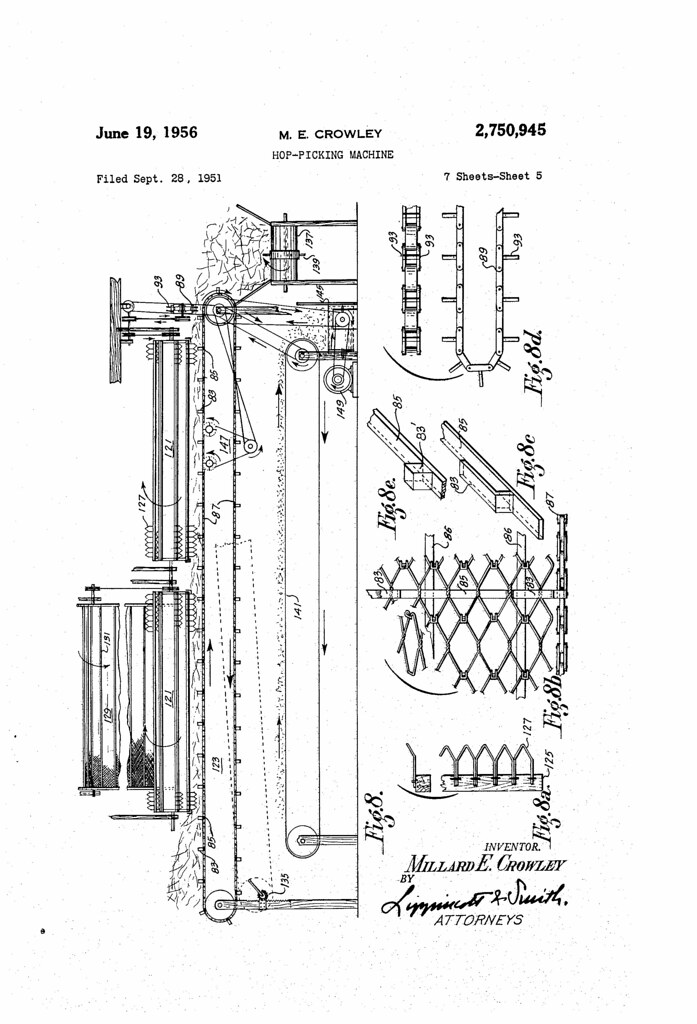
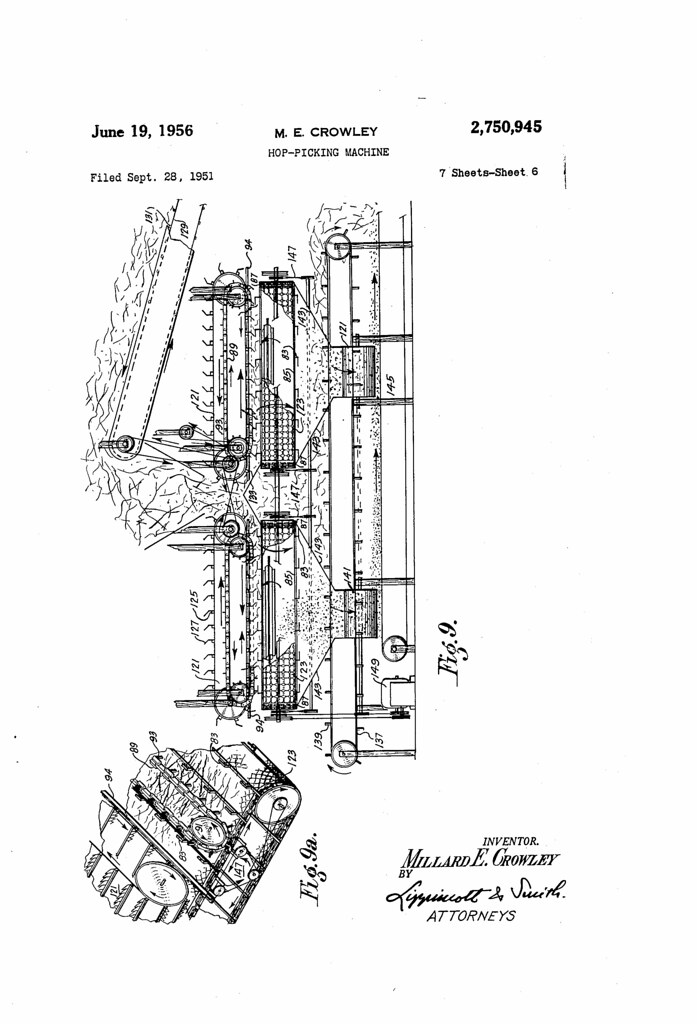
Today in 1956, US Patent 2750945 A was issued, an invention of Millard E. Crowley, for his “Hop-Picking Machine.” There’s no Abstract, although in the description it includes this summary:

Having set forth the invention broadly, included among the objects thereof are the following: to provide a hop picking machine capable of the simultaneous raking of hops from vines and short arms; to provide apparatus capable of multi-directional combing of hop vines and arms; to combine in a single machine, functions heretofore deemed characteristic of separate machines, as well as, to produce additional functions without the necessity of employing all parts required by the separate machines; to combine in a single machine, capable of continuous operation over extended time intervals, the functions of hop vine and arm picking; and to provide a short arm picker per se capable of optimum picking action.

Untitled
Untitled
Untitled
Untitled
Untitled
Untitled
Untitled

Filed Under: Beers, Just For Fun, Politics & Law, Related Pleasures Tagged With: Brewing Equipment, History, Hops, Law, Patent

Patent No. 1029727A: Tap

June 18, 2015 By Jay Brooks

patent-logo
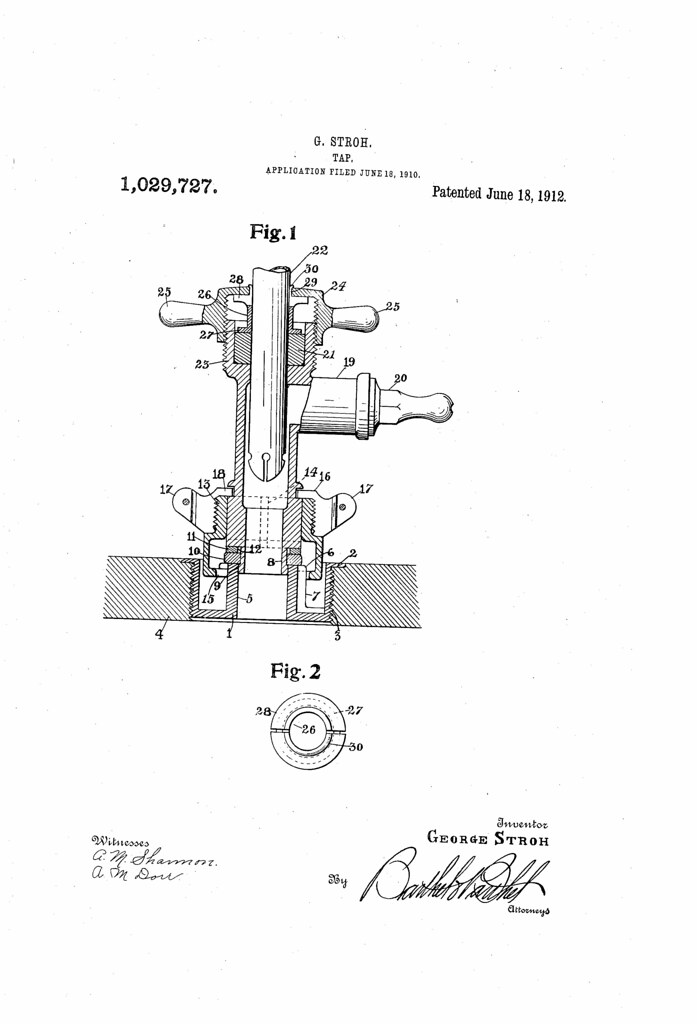
Today in 1912, US Patent 1029727 A was issued, an invention of George Stroh, for his “Tap.” There’s no Abstract, although in the description it includes this summary:

This invention relates to taps and bushings and more particularly to that class wherein the bushing is permanently secured in a beer keg or barrel. and-a tap, so called, is arranged for coupling therewith. In such devices it is desirable that the tap be so constructed that it may be readily coupled with the bushing, and -a tight joint made therewith without the use of tools, as the coupling of the parts is usually effected when the barrel or keg is in a store room or cellar or other dark place and as the help available is usually unskilled. Furthermore it is of great advantage to have the tap constitute a single structure bodily removable from the bushing, and so arranged that the packing rings and like parts which form an essential feature of the device are not readily lost.

This invention relates more particularly to a construction of a tap sleeve whereby the coupling with a barrel bushing is readily effected by the use of the hand alone and whereby there are no loose tap parts which may be shaken off or otherwise displaced.

Untitled

Filed Under: Beers, Just For Fun, Politics & Law, Related Pleasures Tagged With: History, Kegs, Law, Patent

Patent No. PP23674P2: Hop Plant Named “Delta”

June 18, 2015 By Jay Brooks

patent-logo
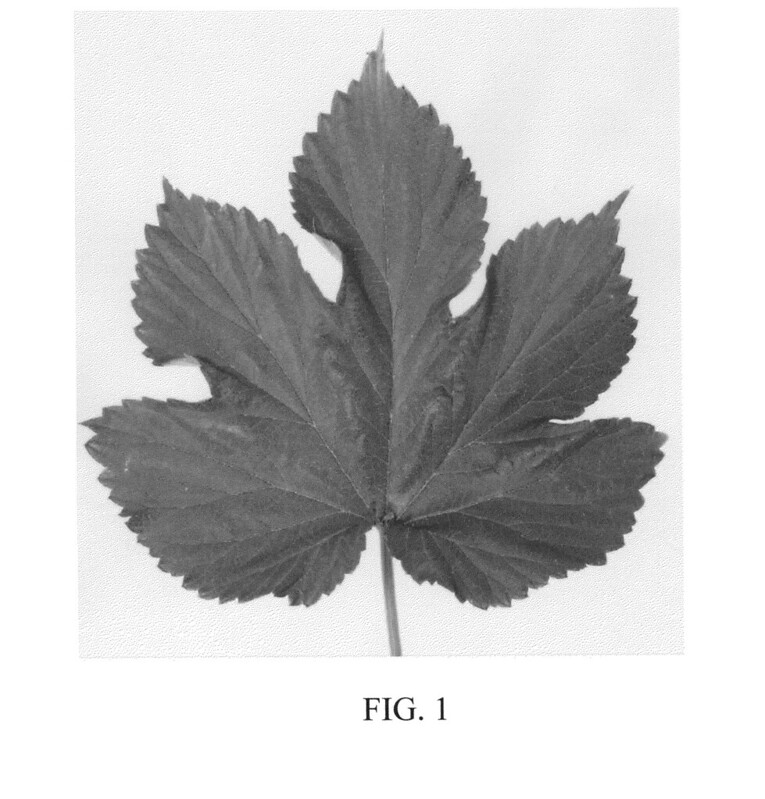
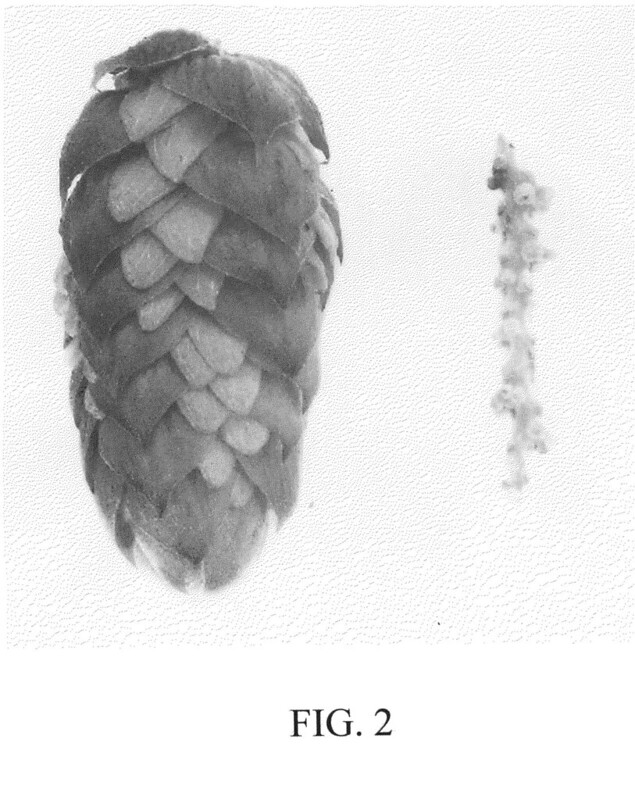
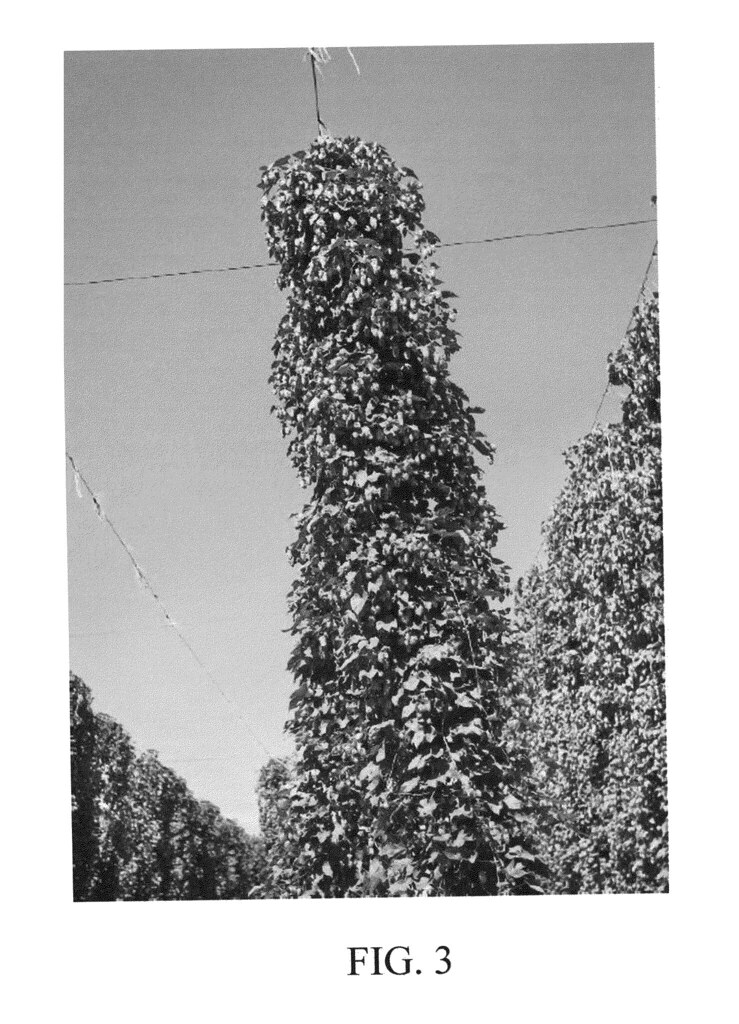
Today in 2013, US Patent PP23674 P2 was issued, an invention of Roger D. Jeske and Paul D. Matthews, assigned to S.S. Steiner, Inc., for their “Hop plant named ‘Delta.'” Here’s the Abstract:

A new and distinct aroma variety of hop plant, Humulus lupulus L., named ‘Delta’ is characterized by its good cone yield, nice aroma (characterized as mild citrus/spice), 1:1 ratio of alpha-acids to beta-acids, low CoH, high Linalool, good storage stability, and resistance to hop powdery mildew. The new variety resulted from cross-pollination performed in 2003 in a field in Prosser, Wash., United States and has been asexually reproduced in a nursery in Prosser, Wash., United States.

Patented only two years ago (filed four years ago), I haven’t seen any mention of this hop being used by any breweries. Anyone know of it being used by anyone?
USPP023674-20130618-D00001
USPP023674-20130618-D00002
USPP023674-20130618-D00003

Filed Under: Beers, Just For Fun, Politics & Law, Related Pleasures Tagged With: Hops, Law, Patent

Patent No. 541431A: Hop-Picker

June 18, 2015 By Jay Brooks

patent-logo
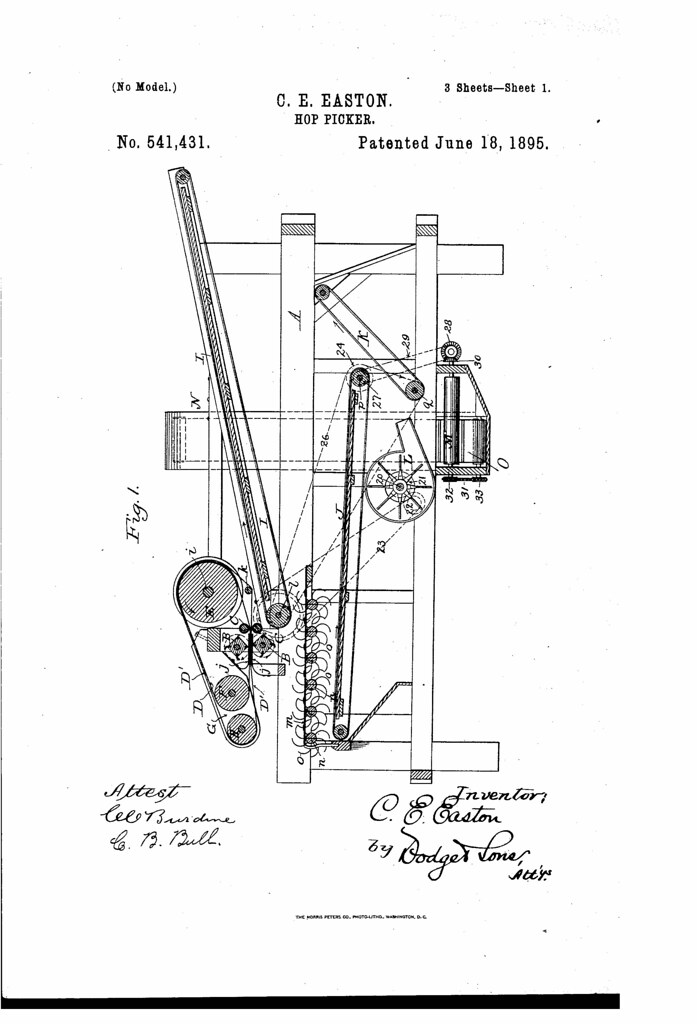
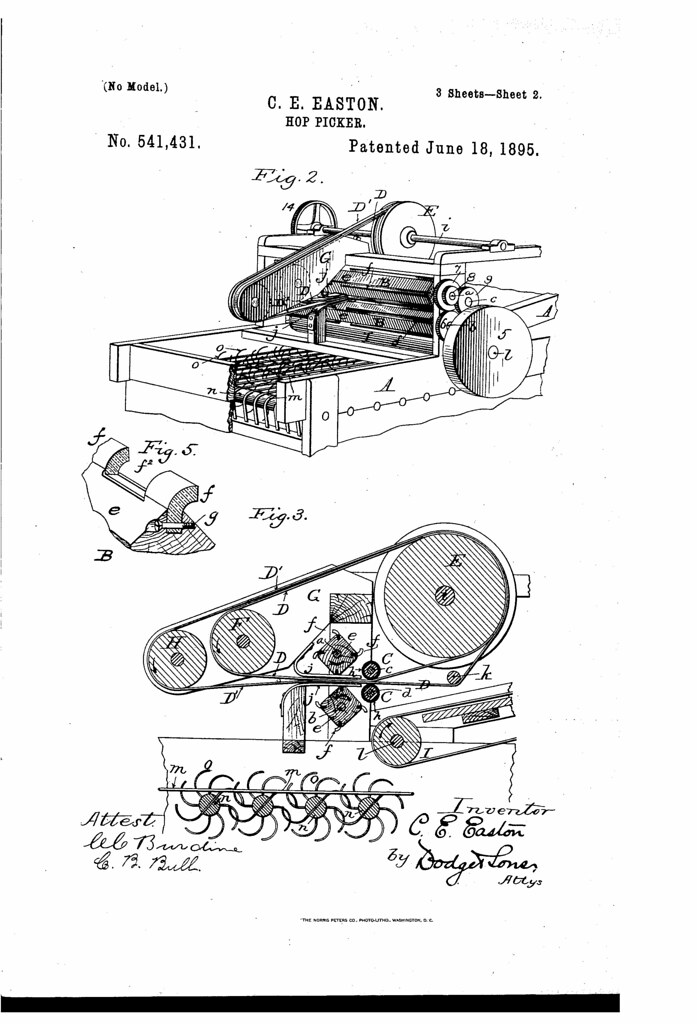
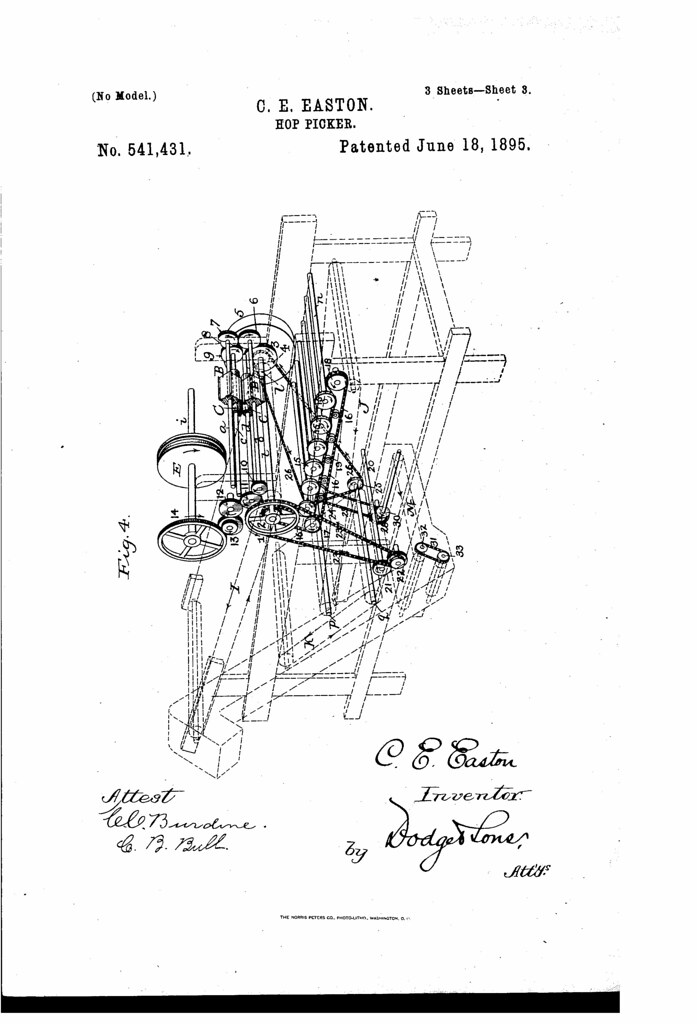
Today in 1895, US Patent 541431 A was issued, an invention of Charlon E. Easton, for his “Hop-Picker.” There’s no Abstract, although in the description it includes this summary:

My invention relates to machines for picking hops-that is, a machine for picking each strobile or oatkin from the vine,and the object of the invention is to produce a machine that will remove the catkins from the vine or stem thoroughly, rapidly, and without injury.

Untitled
Untitled
Untitled

Filed Under: Beers, Just For Fun, Politics & Law, Related Pleasures Tagged With: History, Hops, Law, Patent

Patent No. 2245650A: Grain Separating Machine

June 17, 2015 By Jay Brooks

patent-logo
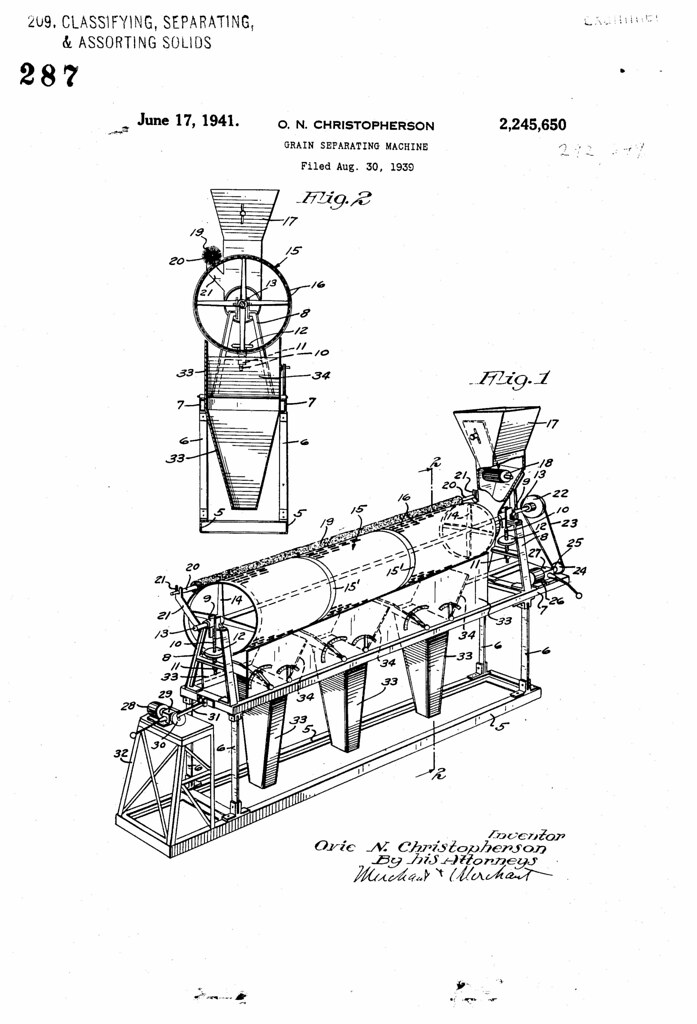
Today in 1941, US Patent 2245650 A was issued, an invention of Ovie N. Christopherson, for his “Grain Separating Machine.” There’s no Abstract, but it’s described generally as and “invention provid[ing] an improved highly efficient machine for the separation of various grains or seeds according to their thickness or transverse diameter,” making two claims:

1. In a separating machine, a separating screen, means for simultaneously imparting to said screen endwise reciprocating and transverse movements, said screen having elongated slots extended in the direction of its longitudinal reciprocating movement, the transverse movement thereof :being crosswise of the direction of said slots.

2. The structure defined in claim 1 in which said screen is in the form of a rotary drum and the transverse movement thereof being in a constant direction.

Untitled

Filed Under: Beers, Just For Fun, Politics & Law, Related Pleasures Tagged With: barley, Brewing Equipment, History, Law, Malt, Patent

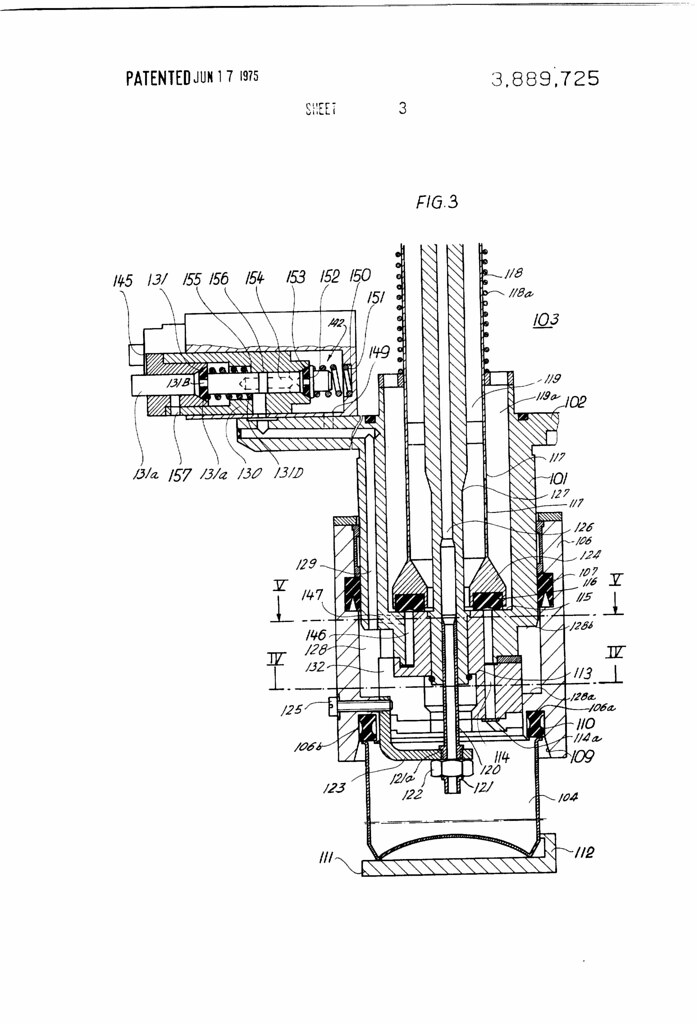
Patent No. 3889725A: Method Of Filling Beer Cans

June 17, 2015 By Jay Brooks

patent-logo
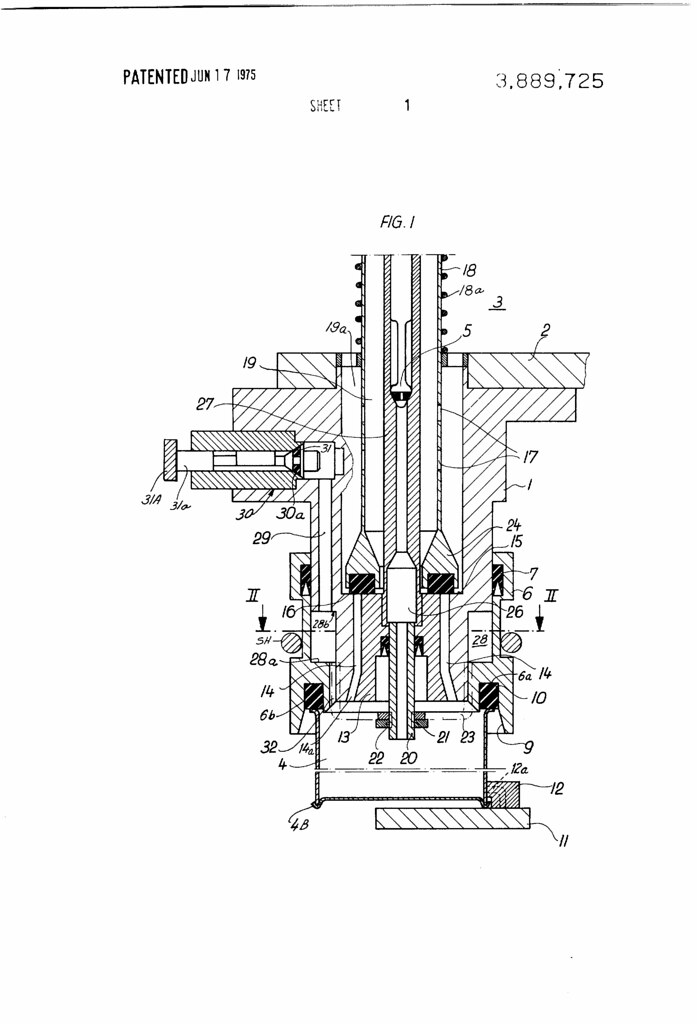
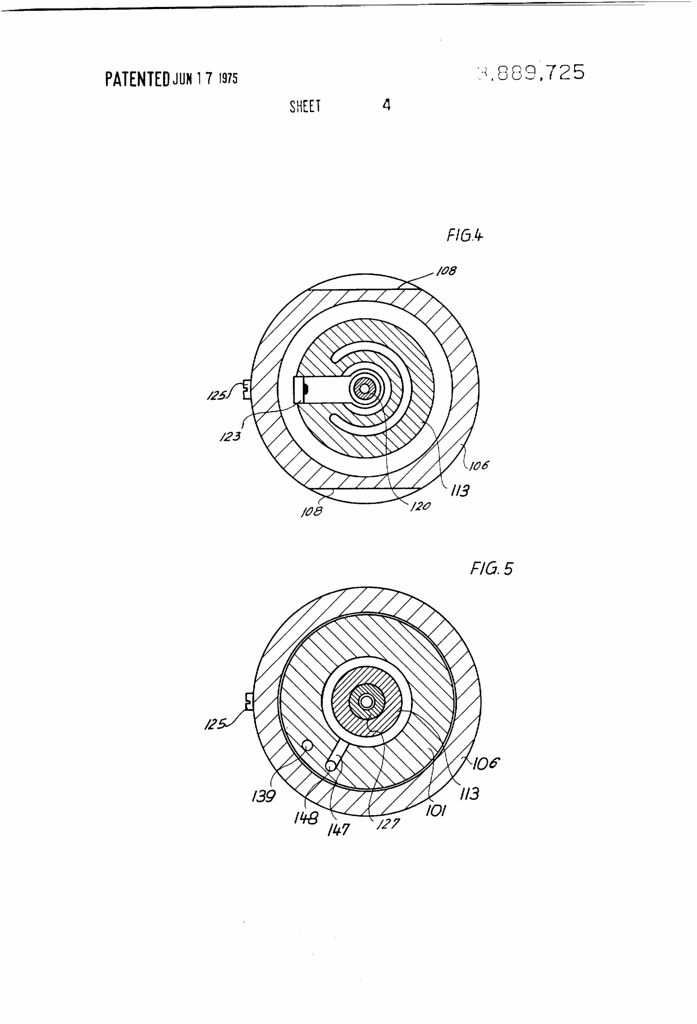
Today in 1975, US Patent 3889725 A was issued, an invention of Werner Heckmann, Heinz Jordan, Uwe Knabe, Karl Plock, Karl Quest, Friedrich Rademacher, and Dieter Unger, assigned to Holstein & Kappert Maschf, for their “Method of Filling Beer Cans or the Like.” Here’s the Abstract:

The supported devices in an apparatus which fills beer cans orbit about a vertical axis and have upright housings supporting cylindrical centering members which carry deformable gaskets for the mouths of cans. Such cans are supported by a conveyor which orbits with the filling devices and is movable up and down or is held against vertical movement during rotation with the filling devices. The introduction of liquid into the cans takes place subsequent to introduction of a compressed gas, and such gas can be used to bias the gaskets against the mouths of cans during filling. When the filling of a can is completed, the pressure in its interior is increased to facilitate separation from the respective gasket. That supply of beer which remains in a channel of the housing on closing of the beer-admitting valve can be expelled in response to expansion of gas in a chamber which receives such gas by way of the container and is sealed from the container by beer in the channel. The expansion of gas in the chamber takes place in response to opening of a valve which reduces the pressure of gas above the body of liquid in the container.

Untitled
Untitled
Untitled

Filed Under: Beers, Breweries, Just For Fun, Politics & Law, Related Pleasures Tagged With: Brewing Equipment, Cans, History, Law, Packaging, Patent

« Previous Page
Next Page »

Find Something

Northern California Breweries

Please consider purchasing my latest book, California Breweries North, available from Amazon, or ask for it at your local bookstore.

Recent Comments

  • Bob Paolino on Beer Birthday: Grant Johnston
  • Gambrinus on Historic Beer Birthday: A.J. Houghton
  • Ernie Dewing on Historic Beer Birthday: Charles William Bergner 
  • Steve 'Pudgy' De Rose on Historic Beer Birthday: Jacob Schmidt
  • Jay Brooks on Beer Birthday: Bill Owens

Recent Posts

  • Beer In Ads #5137: Bock Is Back… Look For It March 1st February 28, 2026
  • Historic Beer Birthday: John Holme Ballantine February 28, 2026
  • American Craft Beer Hall of Fame: 2nd Year Inductees February 28, 2026
  • Beer Birthday: Jeff Bell February 28, 2026
  • Beer In Ads #5136: American Bock Beer Is Being Served Today! February 28, 2026

BBB Archives

Feedback

Head Quarter
This site is hosted and maintained by H25Q.dev. Any questions or comments for the webmaster can be directed here.