Brookston Beer Bulletin

Jay R. Brooks on Beer

  • Home
  • About
  • Editorial
  • Birthdays
  • Art & Beer

Socialize

  • Dribbble
  • Email
  • Facebook
  • Flickr
  • GitHub
  • Instagram
  • LinkedIn
  • Pinterest
  • RSS
  • Twitter
  • YouTube

Powered by Genesis

Historic Beer Birthday: Geörg Ziegelmaier
March 3, 2025 By Jay Brooks

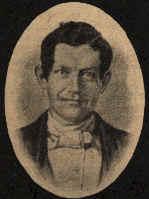
Today is the birthday of Geörg Ziegelmaier (March 3, 1852-December 27, 1908). He was born in Württemberg, Germany, but emigrated to the U.S. on July 2, 1854. He was originally trained as a baker and a miller, but became a brewer and founded the George Ziegelmaier Brewery in 1966, which was located in Boscobel, Wisconsin. He ran the brewery for nearly twenty years before selling it to William Bruer. It then went through a series of owners before becoming the Boscobel Brewing Co. in 1920, before closing for good in 1942.

Here’s his biography from Tavern Trove:

He became a farmer in New Hartford, Connecticut, then opened a milling business after the first harvest. In 1856 he established a farm in Crawford County, Wisconsin, but moved away after only one season. History next finds Ziegelmaier forty miles to the west, in McGregor, Iowa, a port city on the Mississippi River.  He stayed long enough there to get married, to Mary Koss, and have two children.

In 1857 he moved his family back to Wisconsin to the town of Boscobel, where he opened a brewery and bakery shop. The brewery burned soon after, and he returned once again to McGregor. He came back to Boscobel in 1866 where he purchased the old brewery property and rebuilt it.  He ran the brewhouse until 1884, when he sold it to William Bruer.

By 1890 Ziegelmaier had relocated to Milwaukee. The next decade saw him follow several of his children, now numbering an even dozen, to Washington state. Geörg died there on December 27th, 1908. He was 76 years old.

This is from another history of Boscobel beer that discusses the early history of the brewery.

This short biography is from “The History of Grant County, Wisconsin,” by Willshire Butterfield, and published in 1881.

Filed Under: Birthdays, Breweries, Just For Fun Tagged With: Germany, Wisconsin

Historic Beer Birthday: Henry Gund

March 2, 2025 By Jay Brooks

gund
Today is the birthday of Henry Gund (March 2, 1859-July 2, 1945). He was the son of John Gund, who co-founded what would become the The G. Heileman Brewing Company with Gottlieb Heileman. They formed a partnership in November 1858 to operate the City Brewery in La Crosse, but “after nearly fifteen years in business together, Heileman and Gund dissolved their partnership in 1872.” After leaving City Brewing, Gund immediately “established a new brewery on the southern edge of La Crosse that he named the Empire Brewery, and which was incorporated in 1880 as the John Gund Brewing Company.” Gund employed all three of his sons in his new venture, and eventually Henry Gund became president of the brewery after his father’s death.

henry-gund

There’s not much biographical information on Henry, and I couldn’t find a photo of him, either. But there was a short write-up in the Biographical History of La Crosse, Trempealeau and Buffalo Counties, Wisconsin, published in 1892, when Henry was still alive, and so was his father. This biography starts with John Gund, and then has limited information about each son.

gundbrewery1892

henry-gund-bio-1
henry-gund-bio-2

gund-letterhead
Immigrant Entrepreneurship, under German-American Business Biographies, has a lengthy tale of both John Gund and Gottlieb Heileman

In May 1910, John Gund passed away a few months shy of his eightieth birthday. Fifty-one-year-old Henry Gund assumed control of the firm, which had expanded significantly to become the largest brewery in the Old Northwest outside Milwaukee. It employed 450 workers and owned numerous saloons throughout the region that carried Gund beer exclusively. Despite the firm’s success, the second decade of the twentieth century would be a trying time for Gund Brewing. The First World War fueled the prohibitionist movement in the United States and denunciations of German-American brewers became commonplace. In November 1918, shortly after the armistice ending the war had been signed, Congress passed the curiously misnamed Wartime Prohibition Act banning the production of intoxicating beverages starting in May 1919 and the sale of such beverages starting on July 1. Legal wrangling in the federal courts regarding the definition of “intoxicating beverages” occupied much of the spring of 1919. Many brewers including Gund held that beer with an alcohol content lower than 2.75 percent was non-intoxicating and resumed low-alcohol beer production. Later in the fall, Congress ratified the Volstead Act enacting national Prohibition and set January 16, 1920, as the start date.

gund-brewery-1902
The Gund Brewery in 1902.

Despite the enactment of national Prohibition in early 1920, Gund and many other breweries continued producing 2.75 percent beer as various lawsuits made their way through the federal courts challenging the legality of the law and the meaning of various provisions. While the officers of the Gund Brewery awaited the outcome of the national legal battles, they faced a more immediate crisis. Local 81 of the International Brotherhood of Brewery Workers went on strike against local La Crosse breweries to ban open shops. Henry Gund refused to negotiate with the strikers and instead hired replacement workers to fill the vacant positions. The situation remained unresolved when the United States Supreme Court upheld the Volstead Act in the summer of 1920 and reinforced the complete ban on sales of alcoholic beverages. The ongoing labor unrest combined with the ban on beer production eventually led Henry Gund and the other corporate officers of the company to shutter the brewery. The corporation was dissolved in 1938 and the Peerless trademark was sold to the Michel brothers who resumed production of the brand. The Heileman Brewery later purchased Gund’s brew house.

John-Gund-Brewing-Co-Workers

John Gund’s vision of his brewery evolving into a major shipping brewery did not come to pass, and La Crosse did not emerge as a major rival to Milwaukee, St. Louis, or Cincinnati. Nevertheless, Gund had a major economic impact on the community and he influenced the entrepreneurial path of his sons. All three pursued careers in brewing: George in Washington and Ohio, John Jr. in Illinois and Kentucky, and Henry in Wisconsin. They also diversified their business activities into other fields. George entered the financial and mining sectors and earned a fortune through banking and real estate. John Jr. operated a malting facility in Chicago, the Lexington Brewery in Lexington, Kentucky, eventually became head of the Swiss Oil Company and the president of the First National Bank of Lexington. Henry stayed in La Crosse and became a director and later president of the National Bank of La Crosse (later the First National Bank La Crosse) and the president of the Pioneer Real Estate Company, a holding company for the defunct Gund Brewery’s real estate.

gund-brewery

Filed Under: Birthdays, Breweries, Just For Fun Tagged With: History, Wisconsin

Historic Beer Birthday: Adam Sander

March 1, 2025 By Jay Brooks

sander-bros

Today is the birthday of Adam Sander (March 1, 1832-July 8, 1901). He opened his first brewery with Andrew Schneider in 1857, located in Plymouth, Wisconsin. In 1864, he sold his portion of the brewery to his partner and moved to Fond du Lac, where he founded the Sander Brewery in 1873. In 1897, Sander brought his two sons, Albert and Edwin into the business, renaming it Sander Bros. Brewery, and retiring in 1898. The brewery was closed by prohibition, and briefly reopened in 1933 as the Pioneer Brewing Co. before closing for good the same year.

Sander-Bros-brew

There was almost no information about Adam or his breweries other than a few bits and bobs, all fairly general. This is about all I could find:

Adam Sander began production of his beers from his plant on eleven acres of land one mile south of the city on the Fond du Lac and Milwaukee Road. Sander’s brewery, under different names, remained in business for almost fifty years. Sander was born in Germany in March 1832. As a young man, he married Gertrude Gaubenheimer and moved first to Baltimore, Maryland, and then to Wisconsin, living briefly in Milwaukee and Plymouth before finally settling in Fond du Lac in 1864. Late that year, he began a modest brewing enterprise.

During the following decades, Sander’s brewing company grew into a family business. When they were teenagers, his sons Edwin and Albert began working at the brewery. By 1880, the enterprise was producing 750 barrels per year. In 1898, at the age of sixty-six, Adam Sander decided to retire and handed over the brewing operations to his sons.

As new brewery owners, Edwin and Albert decided to institute major improvements to their facility. These changes included physical plant additions, state of the art bottling equipment, and a modern ice plant. The improvements paid off, and by 1912, Sander Brothers Brewing was selling six thousand barrels annually. At the top of their game, the brothers were finally forced out of business when alcohol prohibition came to America.

Filed Under: Birthdays, Breweries, Just For Fun Tagged With: History, Wisconsin

Historic Beer Birthday: Frederick C. Miller

February 26, 2025 By Jay Brooks

miller-old
Today is the birthday of Frederick C. Miller (February 26, 1906–December 17, 1954). Fred was born in Milwaukee, Wisconsin, “the son of Carl A. Miller of Germany, and Clara Miller (no relation), a daughter of Miller Brewing Company founder Frederick Miller.

1954-Fred-C.-Miller

Succeeding his younger cousin Harry John (1919–1992), Miller became the president of the family brewing company in 1947 at age 41 and had a major role in bringing Major League Baseball to Wisconsin, moving the Braves from Boston to Milwaukee in 1953. He coaxed Lou Perini into moving them into the new County Stadium and the Braves later played in consecutive World Series in 1957 and 1958, both against the New York Yankees. Both series went the full seven games with Milwaukee winning the former and New York the latter.

Fred-Miller-with-Warren-Spahn-Courtesy-of-David-Klug

Fred Miller was also notably a college football player, an All-American tackle under head coach Knute Rockne at the University of Notre Dame, posthumously elected to the College Football Hall of Fame in 1985. He later served as an unpaid assistant coach for the Irish, flying in from Milwaukee several times a week.

fred-miller-fb

He also “volunteered as a coach for the Green Bay Packers and, during a difficult financial period, even helped fund the team. Miller Brewing remains the largest stockholder of the Green Bay Packers,” which probably explains why they played half of their home games in Milwaukee before Lambeau Field was refurbished.

miller-chof

Here’s his biography from the College Football Hall of Fame:

A native of Milwaukee, Fred Miller was the grandson of the founder of the Miller Brewing Company. The qualities which later made Fred a great business executive were already evident when he entered Notre Dame in 1925, and they were quickly recognized by the immortal Knute Rockne. It was under Rockne’s tutelage that the 6-1, 195-pounder came to his gridiron peak, earning All-America mention in 1927, and again in 1928, and achieving the ultimate Notre Dame football honor by being named captain of the 1928 team. His quest for perfection was not limited to the gridiron. During his years at Notre Dame he coupled athletic prowess with academic proficiency and established the highest scholastic average of any monogram winner. Miller was involved in real estate, lumber, and investments before becoming president of the Miller Brewing Company. In 1954, he and his son, Fred Jr., were killed in an airplane crash. Miller was 48 years old. He was survived by his wife, six daughters and a son.

fred-miller-stadium
Miller at Milwaukee’s County stadium, where he helped moved the Boston Braves to in 1953, along with paying $75,000 for the County Stadium scoreboard in the background.

But beyond his sports accomplishments, he was an effective leader of his family’s brewery, as detailed by the Milwaukee Journal-Sentinel in Remembering Frederick C. Miller, Milwaukee brewing’s 1st rock star:

Frederick C. Miller was the first brewery rock star.

Industry types praised Miller in the 1940s and early ’50s in the same way they gush over leading craft brewers today.

Frederick J. Miller was the builder of the brewery that is marking its 160th anniversary this year. Frederick’s son, Ernest, who took over after his father’s death, was a caretaker for the brewery keeping the status quo.

But Frederick C. Miller, part of the focus of a monthlong celebration of the company’s history that wrapped up last weekend, was the innovator who sparked new relationships, new buildings, put new ideas in motion and marched the family brewery past regional dominance to become the nation’s fifth-ranked brewery.

When you sip a beer at Miller Park or Lambeau Field it’s because of Fred C. He identified the relationship between beer and sports, and ran with it like the all-American football player he was.

“Fred was iconic,” said David S. Ryder, MillerCoors vice president for brewing, research, innovation and quality. “He was named as president of Miller Brewing in 1947, and from the day that he was named president, Miller Brewing started to grow.”

Frederick C. died when his plane crashed on takeoff at what is now Mitchell International Airport on Dec. 17, 1954. He was 48. His son Fred Jr., 20, and two pilots on the Miller Brewing payroll were killed on impact in the crash; Frederick C. was thrown clear of the crash but died hours later in the hospital.

A crowd of 3,000 mourners attended the funeral services, and the overflow was described by The Milwaukee Journal as “everyday folks — men in overalls and other rough work clothes, mothers carrying babies, young people and old.”

During Frederick C.’s time, Miller’s brewery expanded and sales grew from 653,000 barrels in 1947 to more than 3 million in 1952. He added buildings, including a new brewhouse and a new office building. He turned the former ice caves into The Caves Museum, a place where brewers could assemble for lunch or special occasions.

Liberace, a West Allis native, cut the ribbon for The Caves in 1953, according to John Gurda’s book “Miller Time: A History of Miller Brewing Company.”

Miller-airplane

Here’s a newspaper account of the tragic death of Fred and his son in 1954.

Miller-sportsman-dies

1949-Miller-tops-1-million-barrels

And lastly, here’s some interesting speculation from my friend, historian Maureen Ogle, that Miller Brewing might have done considerably better against their rival, Anheuser-Busch, if Fred Miller had not died prematurely in that place crash when he was only 48 years old.

It’s rare that the presence or absence of one person makes a historical difference (I said “rare,” not impossible). But I think that the death of Fred C. Miller in 1954 altered the course of American brewing. Miller was aggressive, ambitious, smart — all on a grand scale. He was the first beermaker to come along in decades who showed the potential to go head-to-head with the Busch family, particularly Gus Busch, who ran A-B from the late 1940s until the mid-1970s.

Miller became company president in 1947, and over the next few years, he shoved, pushed, prodded, and otherwise steered his family’s brewing company not-much-of-anything into the ranks of the top ten. But in late 1954, he died (in a plane crash) — and Miller Brewing lost its way.

As Miller faltered, A-B solidified its position as the dominant player in American brewing. Had Fred Miller not died, I believe the course of American brewing would have turned out differently: Fred Miller would have transformed his family’s company into a formidable powerhouse. He would have challenged A-B’s dominance. He would have been able to command-and-direct in a way that, for example, Bob Uihlein was not able to do at Schlitz during the same period.

Put another way, in the 1950s, Gus Busch met his match in Fred C. Miller. Things might have turned out differently had Miller lived

I can’t prove that, of course, but hey — what’s all that research good for if I can’t express an informed opinion.

And lastly, the Wisconsin Business Hall of Fame created a short video of Miller’s life that’s a nice over view of him.

Filed Under: Birthdays, Just For Fun Tagged With: Football, History, Miller Brewing, Sports, Video, Wisconsin

Historic Beer Birthday: Frederick Gettelman

February 24, 2025 By Jay Brooks

a-gettelman
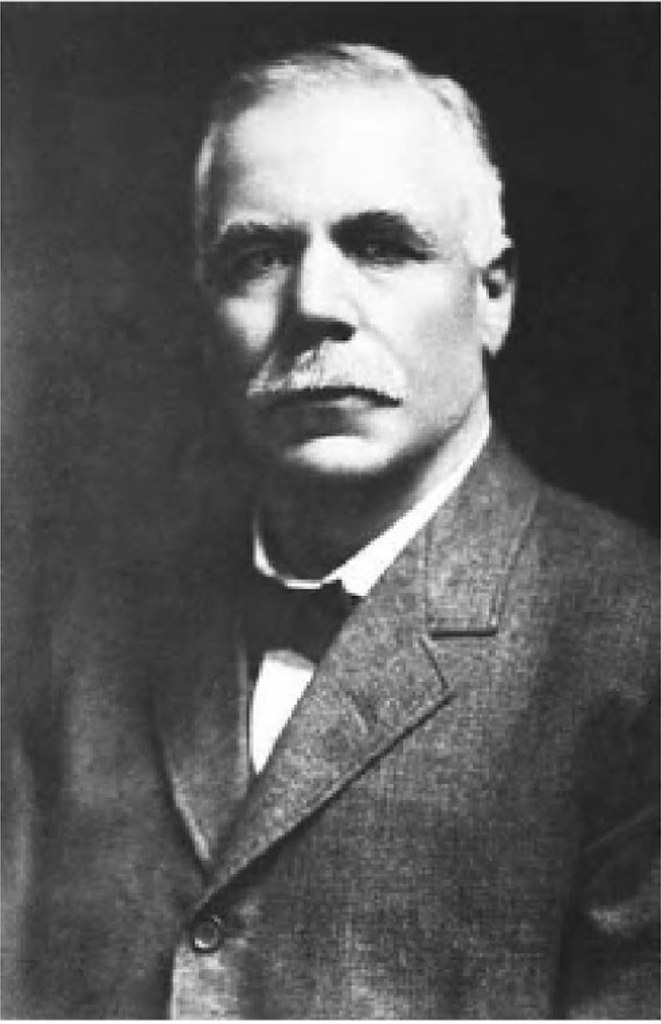
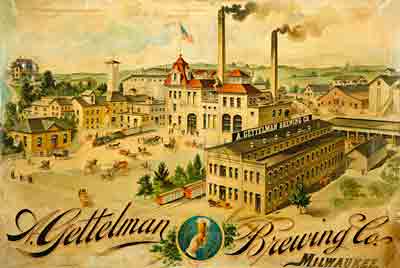
Today is the birthday of Frederick “Fritz” Gettelman (February 24, 1887-June 23, 1954). He was the son of Adam Gettelman, whose father-in-law, George Schweickhart, founded the Strohn & Reitzenstein Brewery in 1854, though the same year it became known as the Menomonee Brewery. When Schweickhart passed away in 1876, Adam Gettelman became the sole owner and renamed it the A. Gettelman Brewing Co. The Milwaukee brewery managed to remain open during prohibition and began making beer again in 1933. When Adam Gettelman dies in 1925, his other son William briefly led the brewery until 1929, when Fritz took over and continued to run the brewery until he passed away in 1954. It remained open after Fritz, though it struggled, and in 1961 was bought by rival Miller Brewing.

fritz-gettelman

This account of Fritz Gettelman’s time at the breweries from the Encyclopedia of Milwaukee:

Gettelman survived Prohibition making “near beer” and through several different investments outside of brewing, like the West Side Savings Bank, the development and manufacturing of snow plows, gold-mining in the American southwest, and a sugar beet processing plant in Menomonee Falls. Gettelman returned to brewing in 1933, with Frederick “Fritz” Gettelman as president.

In order to counteract barrel shortages as brewing resumed, Frederick Gettelman personally designed the first practical steel keg in 1933, manufactured by the A.O. Smith Company of Milwaukee. Shortly after, he also consulted with the American and Continental Can Companies on how to apply his design to the development of what became known as the “keg-lined” beer can. In the late 1930s, he developed new glass-lined storage tanks, also manufactured by A.O. Smith, and a more efficient bottle-washing machine.

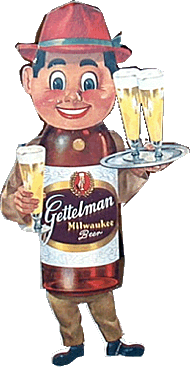
The company introduced a new eight-ounce beer bottle labeled “Fritzie” in 1946, inspired by heinzelmännchen, the house gnomes of German folklore. By 1952, Fritzie had evolved into a cartoon beer bottle with a rotund face and Tyrolean hat that was famously featured in different humorous scenes painted on the exterior walls of several Milwaukee taverns. Moreover, the company became an important pioneer in television advertising in Milwaukee, sponsoring televised wrestling matches in 1947, and World Series pre-game shows in 1949.

Gettelan-Lithograph-2

Gettelman Brewing also made major investments in modernizing and expanding their operations in the 1950s. They entered the Chicago, Boston, California, and other regional and national markets as they briefly opened in the wake of industry consolidation. Gettelman released a new, lighter “Milwaukee” brand beer in 1956, and began importing and distributing Tucher beer from Nuremburg, Germany in 1959—the first American brewer to establish such a relationship.

Nevertheless, the company was unable to continue competing with the national giants, and the Gettelman family sold the brewery to the neighboring Miller Brewing Company in 1961. The Gettelman plant and brand continued on with brothers Tom Gettelman and Frederick Gettelman, Jr. as plant managers until Miller formally merged the two operations in 1971.

Elements of the Gettelman brewery remain part of the Miller Brewing Company complex, and its Milwaukee’s Best brand lives on in Miller’s portfolio.

fritz-gettelman-2
fritz-gettelman-2-text

And this is from “A Century of Brewing, 1854-1954: The A. Gettelman Brewing Company,” a company brochure from 1954:

The A. Gettelman Brewing Company first began to show signs of the new post-prohibition prosperity in 1937 with construction of an addition to the old bottle-house. An 80 x 110 foot structure, the building was twice the size of the building it annexed. Cream-colored bricks salvaged from the old Gettelman mansion atop the hill overlooking the brewery went into the construction of its walls and the bottling equipment it housed was modernity itself. In fact, Fritz Gettelman had had a hand in the improvement of the bottle washer installed in the new bottle house. It was he who had dreamed up and perfected the idea of cleaning the bottles with high pressure steam and water. So efficient was the equipment in the ultra modern bottle shop that Gettelman was able to show figures proving that breakage on bottles of all makes and ages ran only .442 percent of total bottles handled.

In addition to the modern machinery on the ground floor the bottle shop boasted a battery of glass-lined storage tanks in the basement, an innovation which Fritz Gettelman had also helped engineer. During development of the revolutionary tanks, he had spent long hours at the A. 0. Smith plant subjecting experimental models to every conceivable torture to prove his idea that molten glass will stick to steel. How he did this in the face of skeptical college “enchineers” — as he called them — is another story, but the success he encountered is borne out by the fact that few progressive breweries today are without the big beer holders with the glazed walls.

Gettelman-Beer-Labels-A-Gettelman-Brewing-Company

All this while the affairs of the brewery had been directed from the office building which lies between State street and the brewery proper. By 1948, however, it was becoming increasingly apparent that the expanding brewery would need corresponding office facilities. It was decided, therefore, that an old malt-house which had, for the last several years, served as a place for miscellaneous storage be made over into an office building. Part of the building had originally been the first Gettelman homestead, antedating even the mansion on the hill. From what had once been its living room emerged the present office reception room whose walls are panelled with the cypress of the old wooden beer storage tanks. From the rest of the building the architect’s skill and a lot of hard work wrought the present Gettelman offices. Fritz Gettelman went along with, and indeed inaugurated, most of the brewery’s advances, but he turned a deaf ear to any suggestion that he move his office to the newly renovated building. Moreover, he insisted that the second story room in which he had been born and from which had come many of his ideas on the humble brown butcher paper be left inviolate — and so it has been, to this day.

Modernization of brewery and office facilities was approved by everyone connected with the business, but no one sanctioned them more heartily than the two Gettelman brothers, Fred, Jr., and Tom, sons of the energetic and imaginative Fritz. Actively entering the management affairs of the brewery in 1939 and 1941, respectively, the two younger Gettelmans not only welcomed the changes but were, in large measure, responsible for their execution. Interest of the brothers in increased production and administrative efficiency was not an overnight affair. The lives of both of them had revolved around the brewery almost since they had taken their first steps and they had a working knowledge of every facet of the business long before they emerged from brewers’ school as master brewers.

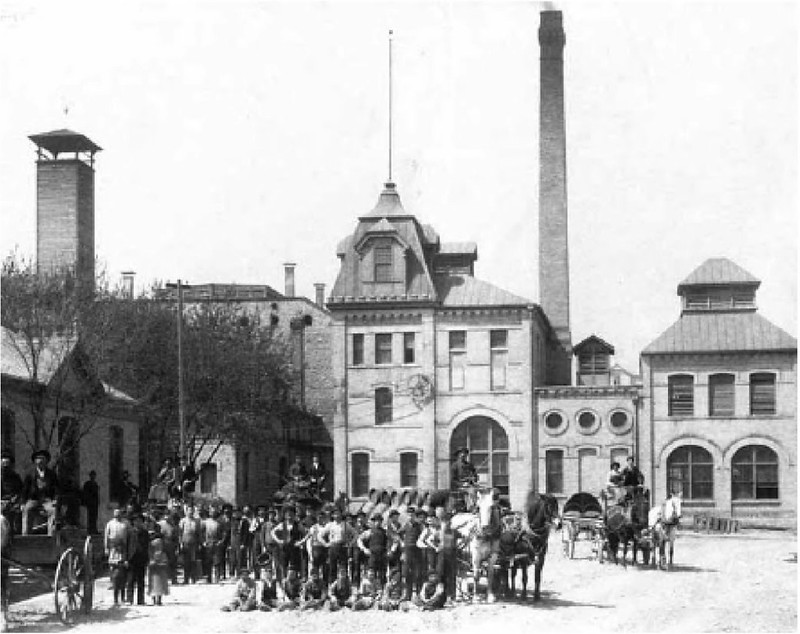
Gettelman-Brewery-1054
The brewery in 1954, on its 100th anniversary.

Here’s a fun fact about Fritz:

As Prohibition was beginning to end, the Gettelmen found that there was a wood shortage that would impact the creation of beer barrels. To solve this problem the first steel beer keg was invented by Fritz Gettelman.

Gettelman-Pre-Pro-Milw.-Best-1910

And another:

The brewery suffered from the Milwaukee brewery strikes of 1953 and, like other breweries in Milwaukee, lost the trust of some local taverns as they began to buy their beer from other breweries. In the following years, Gettelman had to struggle along with the other smaller Milwaukee breweries for advertisement and sales, as the larger breweries were dominating the market in both areas. In 1961, as Miller was becoming ever more interested in purchasing more breweries, The Gettelman Brewing Company was purchased by Miller.

Gettelman-brewery-fresh

fritz

Filed Under: Birthdays, Breweries, Just For Fun Tagged With: History, Wisconsin

Historic Beer Birthday: Joseph F. Hausmann

February 20, 2025 By Jay Brooks

hausmann
Today is the birthday of Joseph F. Hausmann (February 20, 1887-November 30, 1916). I couldn’t find much of anything about Hausmann, apart from this. He was the brewmaster of Capital Brewery in Madison, Wisconsin, which was founded in 1854. In 1891 it changed its name to the Hausmann Brewing Co. when, presumably, he bought the brewery.

Joseph-Hausmann

This is a short obituary from the 1917 American Brewers’ Review.

JF-Hausmann-obit
This is what his brewery looked like.

hausmann-capital-brewery

hausmann-esserprepro

Filed Under: Birthdays, Breweries, Just For Fun Tagged With: History, Wisconsin

Historic Beer Birthday: Henry Uihlein II

February 3, 2025 By Jay Brooks

schlitz-globe
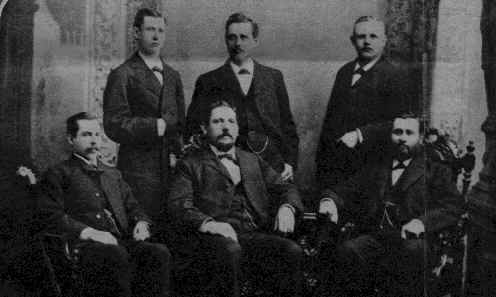
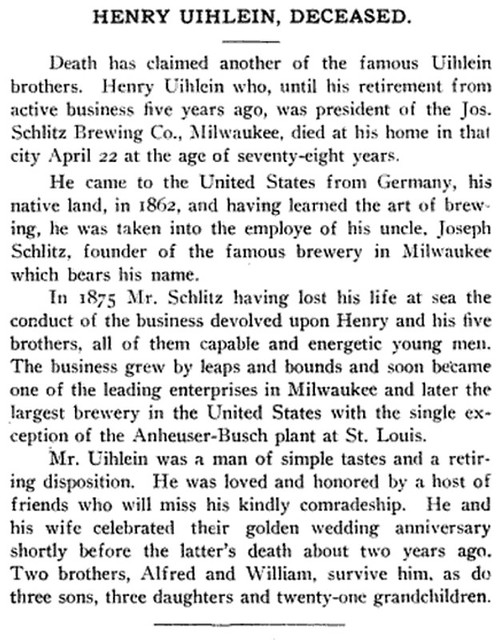
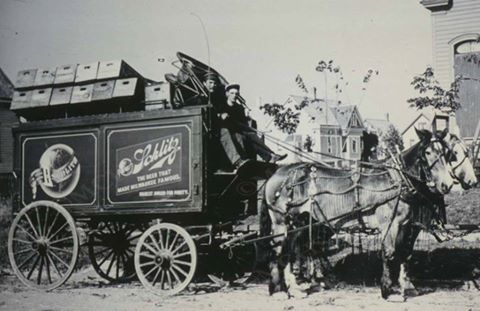
Today is the birthday of Henry Uihlein II (February 3, 1896-June 8, 1997). He was the grandson of Henry Uihlein, who for many years was the president of the Joseph Schlitz Brewing Company early in the 20th century. Henry II was also a director of the family business for several decades until its sale in 1982.

1983HLMHUihlein
This paid death notice was printed in the New York Times in 1997:

UIHLEIN-Henry II. Of Lake Placid, NY. Died June 8, 1997, at his winter home in Indian Wells, CA, at the age of 101. He is survived by his wife, Suzanne M. Uihlein, and by his nephews, Robert and August Rohe. Mr. Uihlein was preceded in death by his first wife, Mildred Anthony Uihlein, who died on July 9, 1990. He was a grandson of Henry Uihlein who was a longtime president of the Joseph Schlitz Brewing Company early in this century, and was himself a director of the company for several decades until its sale in 1982 to the Stroh Brewing Company. Mr. Uihlein was born in New York City on February 3, 1896, and attended public and private schools there. A promising collegiate career was cut short by tuberculosis and resulted in his spending several years in Lake Placid, NY, where he was restored to health by the altitude and climate. He married Mildred Anthony of South Orange, NJ, on June 10, 1927, and after an extended European honeymoon, they settled in Montclair, NJ, where he founded a real estate corporation. Summers were spent in Lake Placid. In 1933, the Uihleins moved to New York City where Mr. Uihlein attended to his father’s affairs until he died in 1939. In 1941, the Uihleins made Lake Placid their permanent residence, purchasing farm land from the Lake Placid Club which became known as Heaven Hill Farm. Over the succeeding decades, Mr. Uihlein developed a blue ribbon pure-breed Jersey cattle herd, a prize maple syrup operation, and a first class seed potato farm. Stock from his Jersey herd consistently took top prizes at American Jersey Club Shows. Several years ago, the Jersey herd was donated to the Miner Institute of Chazy, NY, where they continue breeding under the Heaven Hill name. Also several years ago, the maple syrup and potato operations were donated to the College of Agriculture of Cornell University under which auspices they continue to be operated as demonstration and research facilities (and in the case of the potato operation, as a disease-free source of seed potatos.) In addition to his interests in fishing, hunting, stamp collecting, and skeet shooting, Mr. Uihlein supported the sport of speed skating in Lake Placid by sponsoring a number of contestants and events, thus contributing to to Lake Placid’s reputation as a winter sports resort. He was an official timer at the 1932 Winter Olympics in Lake Placid and an active supporter of the 1980 Winter Olympics for which he was made an honorary member. In 1983, he was named to the Lake Placid Hall of Fame. Henry Uihlein also liked classic automobiles and undertook the restoration of 2 1939 DeLage automobiles. These automobiles, one a coupe and the other a convertible, are one of a kind and were the stars of the French Pavillion at the 1939 World’s Fair. More recently, they have taken top honors at the Concourse D’Legance at Pebble Beach, CA, and other national competitions. Mr. Uihlein has also been actively involved in philanthropy. In addition to funding the Cornell College of Agriculture gifts noted above, he played a major role in the creation of the Uihlein Mercy Center, a geriatric hospital and home located not far from Heaven Hill Farm in Lake Placid. He also has an administration building named after him at the Eisenhower Medical Center in Palm Desert and has served as an honorary Trustee of the Center. He has also actively supported the work of the Mayo Clinic. He will be missed by his many relatives, friends and all those whose lives he touched during his many years. Services will be held on Saturday, June 14th at 11:00 a.m. at the Uihlein Mercy Center Chapel in Lake Placid, interment to follow at North Elba Cemetery, Lake Placid, NY. Memorials may be made to Cornell University College of Agriculture, Uihlein Mercy Center, Lake Placid, NY, Eisenhower Medical Center, Palm Desert, CA, and the Mayo Clinic, Rochester, MN. For information, call the Clark Funeral Home in Lake Placid, NY.

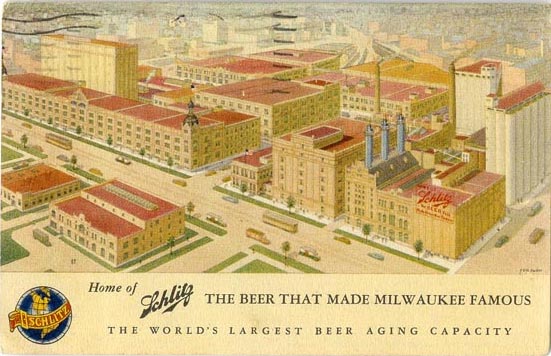
Schlitz-postcard-2
This biography was written in 1982, when Uihlein was inducted into The Potato Association of America:

Henry Uihlein II, born in Milwaukee, Wisconsin on February 3, 1896, is a member of the family that owned and operated the Jos. Schlitz Brewing Company for over 100 years.

Soon after Henry was born, his family moved to New York City, where his father continued the family tradition of engaging in the brewery business. He attended public schools and then the Horace Mann Preparatory School in New York City, a part of Teachers College, which was affiliated with Columbia University. As a youth he was active in athletics, participating in baseball, ice hockey and track.

Henry aspired to a career in medicine and with that in mind enrolled at Cornell University. However, misfortune struck. He became seriously ill with tuberculosis and his father was advised that it was unlikely that Henry would live more than six months. So in 1916, in an effort to regain his health, Henry went to Lake Placid, New York, which was famous for its health sanatoria. There he gradually regained his health and as soon as he was able, resumed his interest in amateur athletics. He focused his energies and support behind speed skating, bringing national and international meets to the tiny Adirondack village. His efforts to promote winter sports in Lake Placid continued through the ’20′s, in spite of being involved in a very serious auto accident. Mr. Uihlein played a significant role in bringing the winter Olympics to Lake Placid in 1932.

In 1927, Mr. Uihlein married Mildred Anthony, whom he had met two years earlier at the Lake Placid Club. They recently celebrated their 56th wedding anniversary. After a number of years actively engaged in business in New York City, the Uihleins returned to Lake Placid in 1940, bought Heaven Hill Farm and directed their energies toward farming. Their first Jersey cattle were acquired in 1942, the beginning of a champion show herd which eventually numbered 250 head. Their sire, Brownys Masterman Jester, bred at Heaven Hill Farm, set an unprecedented record by winning five Grand Championships at the National Jersey Show. Seven head of their cattle achieved “Hall of Fame” records. Their love of Jersey cattle continues today and Heaven Hill enjoys an international reputation for their premier breeding stock.

Concurrently with the development of their Jersey herd, the Uihtein’s entered the seed potato business in order to help the war effort. Their annual production eventually reached 30,000 bushels of top quality certified seed. In 1961 Cornell University approached the Uihleins seeking to lease or purchase their Tableland Farm to establish an official seed potato farm for New York State. The Uihleins countered with an extraordinary offer–they had decided to give Cornell approximately 300 acres of prime potato land. This, along with subsequent gifts of land, became known as the Uihlein Farm of Cornell University.

In 1975 Cornell again approached Mr. Uihlein seeking his support for building a laboratory and greenhouse on the Cornell-Uihlein Farm for the specific purpose of producing pathogen-free potato seed stocks by meristem and shoot tip culture. Having always maintained a keen interest in all aspects of the research program and the production of disease-free seed stocks, Mr. Uihlein very generously agreed to fund this facility. Ground was broken in 1977; the Henry Uihlein II Laboratory was dedicated in June of 1979. Maple syrup production on Heaven Hill was an annual affair since the 1940′s, Heaven Hill having many thousands of mature sugar maples. In 1964 Henry Uihlein conceived the idea of starting a demonstration and research project under the direction of Cornell’s Department of Natural Resources for the production of maple syrup. In addition to funding the construction of the sugar house, equipment and deeding 165 acres of maple forest to Cornell, he has continued to subsidize this project.

The Uihlein’s, in a further demonstration of community spirit, donated 35 acres of land and partial funding for a $4,500,000 nursing home for the aged and chronically ill. This facility, known as the Uihlein Mercy Center, is widely known for its beauty and excellent care. Among his many other activities and interests, Mr. Uihlein served as a Director of the Jos. Schlitz Brewing Co. for 32 years, then as Director Emeritus and Lifetime Honorary Director. He has also served as Director of the Jos. Schlitz Foundation and as a trustee and president of the Lake Placid Educational Foundation. Mr. Uihlein was honored by the American Jersey Cattle Club in 1968 and was designated “Master Breeder of the Year.” He was on the Lake Placid Olympic Organizing Committee for the 1980 Winter Olympics and has been active in numerous other organizations.

Very few individuals outside the research community have contributed so much to support the development of a basic aspect of the potato industry. Mr. Uihlein’s contributions of land and buildings have made possible a foundation seed farm of unique quality. For over twenty years, scientists, farmers, and consumers in New York State and beyond have benefitted from his personal interest in and active support for research to produce disease-free potatoes.

For his vision and enthusiasm, his high level of interest and unstinting generosity to seed potato research, it is most appropriate that we honor Mr. Henry Uihlein II with an Honorary Life Membership in The Potato Association of America.

And thanks to his contribution of bringing the Olympics to Lake Placid, he was inducted into the Lack Placid Hall of Fame.

uihlein_II_henry

Filed Under: Birthdays, Breweries, Just For Fun Tagged With: History, New York, Wisconsin

Historic Beer Birthday: William Wenzel

January 31, 2025 By Jay Brooks

science

Today is the birthday of William Frederick Wenzel (January 31, 1854-January 15, 1927). He was born in Germany, but moved to Wisconsin as a boy with his family. He was trained in a number of fields, but is best known in brewing circles for the Wenzel Filtermass, which became the standard for clarifying filters for breweries in the 19th century. Unfortunately, I could not find any photographs of Wenzel. This biography of Weznel is from a “History of Outagamie County, Wisconsin.”

Wenzel-bio
wenzel-filtermass

And this obituary was published in the Post-Crescent of Appleton, Wisconsin, on April 25, 2917.

Wenzel-obituary

Filed Under: Birthdays, Just For Fun, Related Pleasures Tagged With: Germany, Science of Brewing, Wisconsin

Beer In Ads #4799: Pabst Bock Beer

November 21, 2024 By Jay Brooks

After taking a few months off from my “Beer in Ads” series, having finished documenting the Miss Rheingold ad campaign that lasted from 1941 to 1964, I thought it was time to bring back the ads, and decided to concentrate on Bock ads for the foreseeable future. Bock, of course, originated in Germany, in the town of Einbeck. Because many 19th century American breweries were founded by German immigrants, they offered a bock at certain times of the year, be it Spring, Easter, Lent, Christmas, or what have you. In a sense they were some of the first seasonal beers. “The style was later adopted in Bavaria by Munich brewers in the 17th century. Due to their Bavarian accent, citizens of Munich pronounced ‘Einbeck’ as ‘ein Bock’ (a billy goat), and thus the beer became known as ‘Bock.’ A goat often appears on bottle labels.” And presumably because they were special releases, many breweries went all out promoting them with beautiful artwork on posters and other advertising.

Thursday’s ad is for the Pabst Brewing Co. originally founded in Milwaukee, Wisconsin. This poster for their “Bock Beer” was created in 1936 by an unknown lithographer.

Filed Under: Art & Beer, Breweries, Just For Fun Tagged With: Advertising, Bock, History, Pabst, Wisconsin

Beer In Ads #4798: Pabst Genuine Bock Beer

November 20, 2024 By Jay Brooks

After taking a few months off from my “Beer in Ads” series, having finished documenting the Miss Rheingold ad campaign that lasted from 1941 to 1964, I thought it was time to bring back the ads, and decided to concentrate on Bock ads for the foreseeable future. Bock, of course, originated in Germany, in the town of Einbeck. Because many 19th century American breweries were founded by German immigrants, they offered a bock at certain times of the year, be it Spring, Easter, Lent, Christmas, or what have you. In a sense they were some of the first seasonal beers. “The style was later adopted in Bavaria by Munich brewers in the 17th century. Due to their Bavarian accent, citizens of Munich pronounced ‘Einbeck’ as ‘ein Bock’ (a billy goat), and thus the beer became known as ‘Bock.’ A goat often appears on bottle labels.” And presumably because they were special releases, many breweries went all out promoting them with beautiful artwork on posters and other advertising.

Wednesday’s ad is for the Pabst Brewing Co. originally founded in Milwaukee, Wisconsin. This poster for their “Genuine Bock Beer” was created in 1963, although I believe it may have ben based on earlier advertising art.

Filed Under: Art & Beer, Beers, Just For Fun Tagged With: Advertising, Bock, History, Pabst, Wisconsin

« Previous Page
Next Page »

Find Something

Northern California Breweries

Please consider purchasing my latest book, California Breweries North, available from Amazon, or ask for it at your local bookstore.

Recent Comments

  • Ernie Dewing on Historic Beer Birthday: Charles William Bergner 
  • Steve 'Pudgy' De Rose on Historic Beer Birthday: Jacob Schmidt
  • Jay Brooks on Beer Birthday: Bill Owens
  • Steve 'Pudgy' De Rose on Beer Birthday: Charles Finkel
  • Steve 'Pudgy' De Rose on Beer Birthday: Bill Owens

Recent Posts

  • Beer In Ads #5184: The “B”s Are Here, Bruton Bock Beer January 27, 2026
  • Beer Birthday: Logan Plant January 27, 2026
  • Historic Beer Birthday: William Tunis Ryerson January 27, 2026
  • Historic Beer Birthday: Henry Hubach January 27, 2026
  • Beer Birthday: Peter Kruger January 27, 2026

BBB Archives

Feedback

Head Quarter
This site is hosted and maintained by H25Q.dev. Any questions or comments for the webmaster can be directed here.