Religion & Beer

10 Healthy Reasons To Drink Beer

by Jay Brooks on January 16, 2012 · 2 comments

in Beers,Just For Fun,News,Top 10

catholic-vatican
I may not always see eye-to-eye with the roman catholic church, but I’m with them all the way on this one. While many religious denominations forbid their followers from drinking alcohol and others preach against it, it’s nice to see at least one take a more rational approach. Not only does Catholic Online tell everyone: “Have a beer. Really, go ahead and have one.” They even go so far as to encourage you to spread the word to your fellow man (and woman): “Tell everyone we said it’s okay to pop a cold one.” Talk about a great beginning.

The article published today on the catholic website is entitled 10 healthy reasons to have a beer! and also carries this subtitle: “Beer outperforms wine as a healthy beverage in several categories.” After detailing beer’s long history and its changing perception today, they get to the meat of their thinking:

Several years ago, it became understood that wine had a surprising number of health benefits. Since then, beer drinkers have had to endure a litany of praises about how great wine was for health as opposed to beer. But now, it turns out that the wine drinkers needn’t be so smug when comparing their beverage to beer.

Researchers from around the world have spent years studying one of our favorite beverages in detail, and there’s some good news. The latest collection of studies from around the world reveals that if the beer is enjoyed in moderation, meaning one for women, and no more than two for men, per day, then it can yield a surprising number of health benefits.

Below is the list of their ten reasons to drink a beer, but check out the original story to read the background for each of these ten.

  1. Strong Bones
  2. Strong Heart
  3. Kidney Stone Prevention
  4. Dementia Prevention
  5. Reduced Cancer Risk
  6. Taking Your Vitamins
  7. Stroke Prevention
  8. Diabetes Prevention
  9. Blood Pressure
  10. Long Life

I’ve seen, read and even written about most, if not all, of these health benefits from drinking beer in moderation, but it’s nice to see them all in one place. The article ends with this appropriate suggestion. “So the next time you decide to have a beer, you can enjoy it without the guilt.” Amen to that.

{ 2 comments }

santa-claus
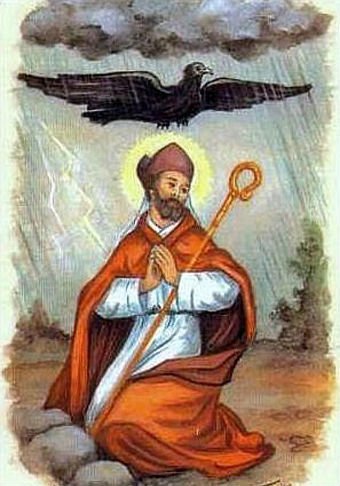
While St. Nicholas is best known — in America, at least — for wearing red and white and giving presents to Children each December 25, he’s actually the patron saint for a number of professions, places and afflictions. His feast day is not actually Christmas Day, but almost three weeks earlier on December 6. That’s the reason why the holiday beer Samichlaus is brewed each year on this day. The person we associate with Christmas, Santa Claus, was based on Saint Nicholas, who was originally known (and still is in some places) as Bishop Nicholas of Myra.

santa-pils

Nicholas is the patron saint of brewers, among many others. He’s also the patron saint against imprisonment, against robberies, against robbers. And Nick’s the patron for apothecaries, bakers, barrel makers, boatmen, boot blacks, boys, brewers, brides, captives, children, coopers, dock workers, druggists, fishermen, Greek Catholic Church in America, Greek Catholic Union, grooms, judges, lawsuits lost unjustly, longshoremen, maidens, mariners, merchants, penitent murderers, newlyweds, old maids, parish clerks, paupers, pawnbrokers, perfumeries, perfumers, pharmacists, pilgrims, poor people, prisoners, sailors, scholars, schoolchildren, shoe shiners, spinsters, students, penitent thieves, travellers, University of Paris, unmarried girls, and watermen. Places he’s the patron for are Apulia, Italy; Avolasca, Italy; Bardolino, Italy; Bari, Italy; Cammarata, Sicily, Italy; Cardinale, Italy; Cas Concos, Spain; Creazzo, Italy; Duronia, Italy; Fossalto, Italy; Gagliato, Italy; Greece; La Thuile, Italy; Lecco, Italy; Limerick, Ireland; Liptovský Mikulás, Slovakia; Lorraine; Mazzano Romano, Italy; Mentana, Italy; Miklavž na Dravskem polju, Slovenia; Naples, Italy; Portsmouth, England; Russia; Sassari, Italy; Sicily; Is-Siggiewi, and Malta.

He also has many names around the world, such as Baba Chaghaloo, Father Christmas, Joulupukki, Kanakaloka, Kris Kringle, Pere Noel, Papa Noël, Santa Claus, and Weihnachtsmann (“Christmas Man” or “Nikolaus”), to name just a few.

Here’s what Wikipedia has to say:

Saint Nicholas (March 15, 270 – December 6, 346) is the common name for Nicholas of Myra, a saint and Bishop of Myra (in Lycia, part of modern-day Turkey). Because of the many miracles attributed to his intercession, he is also known as Nicholas the Wonderworker. He had a reputation for secret gift-giving, such as putting coins in the shoes of those who left them out for him, and is now commonly identified with Santa Claus. His reputation evolved among the faithful, as was the custom in his time. In 1087, his relics were furtively translated to Bari, in southern Italy; for this reason, he is also known as Nicholas of Bari.

The historical Saint Nicholas is remembered and revered among Catholic and Orthodox Christians. He is also honoured by various Anglican and Lutheran churches. Saint Nicholas is the patron saint of sailors, merchants, archers, and children, and students in Greece, Belgium, Romania, Bulgaria, Georgia, Russia, the Republic of Macedonia, Slovakia, Serbia and Montenegro. He is also the patron saint of Barranquilla, Bari, Amsterdam, Beit Jala, and Liverpool. In 1809, the New-York Historical Society convened and retroactively named Sancte Claus the patron saint of Nieuw Amsterdam, the Dutch name for New York City. He was also a patron of the Varangian Guard of the Byzantine emperors, who protected his relics in Bari. So beloved is Saint Nicholas by Russians, one commonly heard saying is that “if God dies, at least we’ll still have St. Nicholas.”
The American image of Santa Claus in red and white has more to do with marketing than anything else. I wrote about this in The Santa Hypocrisy a couple of years ago when the Shelton Brothers were in hot water from several states who tried to tell them Santa Claus on a beer label threatened the American way of life and especially the impressionable young kiddies who would all be led down the path to underage drinking and alcoholism because Santa was depicted on a beer label. It was an utterly ridiculous position and they ultimately backed down, but it’s indicative of our puritan hang-ups as a culture and our general paternalism where we believe everyone needs to be protected. And in retrospect I can now see how the “institutionalized demonization of alcohol” creates the conditions for such decisions. Remember the message? “Alcohol is evil. No one can be trusted with it.” When that’s the underlying assumption, you create rules for what can and can’t be displayed on a label that are way beyond reason; standards no other products have to follow because they’re not seen as inherently evil.
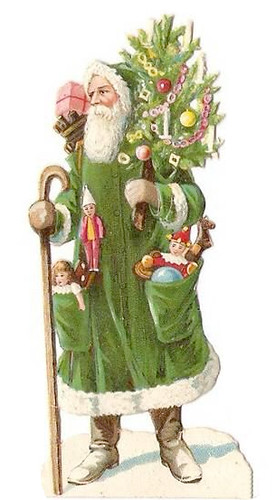
But before the 20th century and in other parts of the world, Santa Claus was and still is depicted in many different ways and in various colors. Father Christmas, for example, is often seen wearing a green robe, as in the British Isles he’s more associated with nature and the old Celtic religions. The yule log, Christmas tree, wreaths, mistletoe and many other features we take for granted during the holidays do not have direct Christian origins, but were appropriated from pagan religions in order to make the transition to Christianity easier for the masses to make. Personally, I love a green Santa Claus because it reminds me of hops, and a Santa that stands for hops is one I can get behind.
green-santa-4
Few American beer labels show Santa precisely because of our peculiar brand of paternalism and the label laws spawned by our institutionalized demonization of alcohol. Santa’s Private Reserve, from Rogue in Oregon, is one of the few I can think of year after year. Most, not surprisingly, come from abroad, where people take a more reasonable approach to both the holidays and alcohol. There’s the famous Santa’s Butt from Ridgeway Brewing in England, but also Pickled Santa from the Hop Back Brewery and Austria’s Samichlaus is translated as “Santa Claus.”

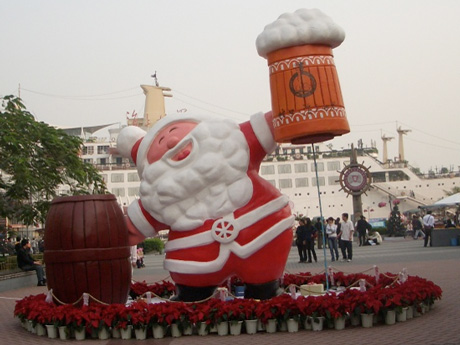
santa-mugs

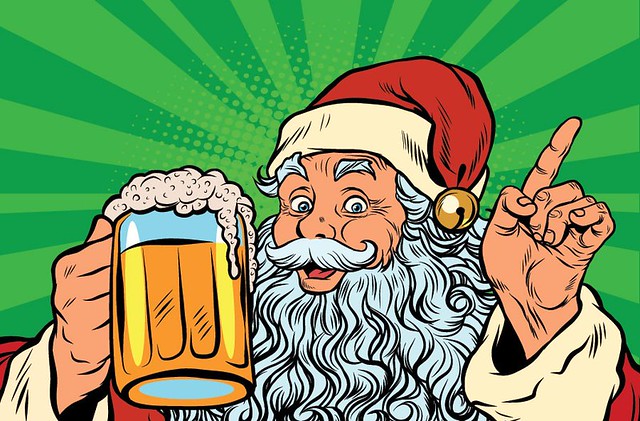
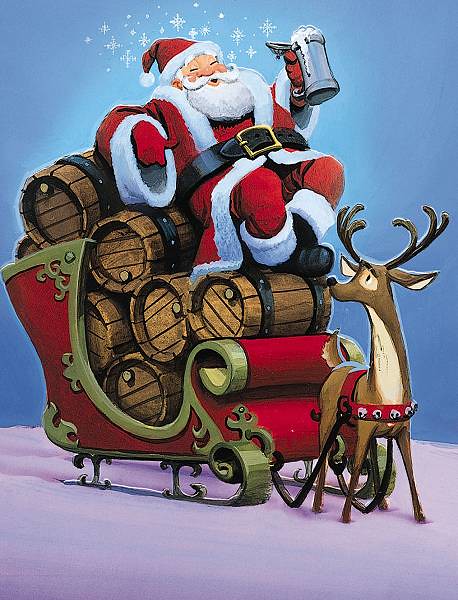
Why does it seem like we’re the only uptight nation on Earth when it comes to this silly issue. In Hong Kong, a giant Santa Claus is shown with a mug of beer, and no one seems to be that concerned. Try putting something like that up here, and all hell would break loose. We’re the only country complaining that there’s a “War on Christmas,” as stupid a notion as ever there was one, especially in a nation where those who celebrate Christmas constitute the vast majority.

santa-drinks

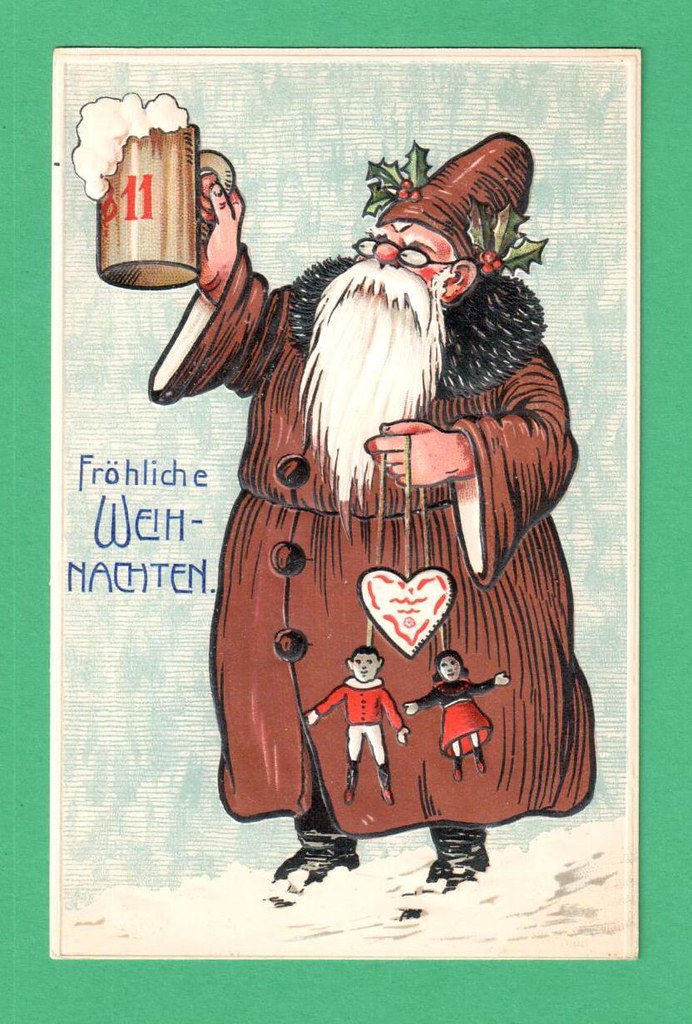
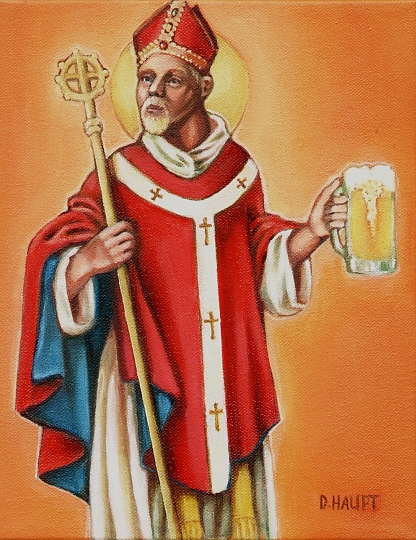
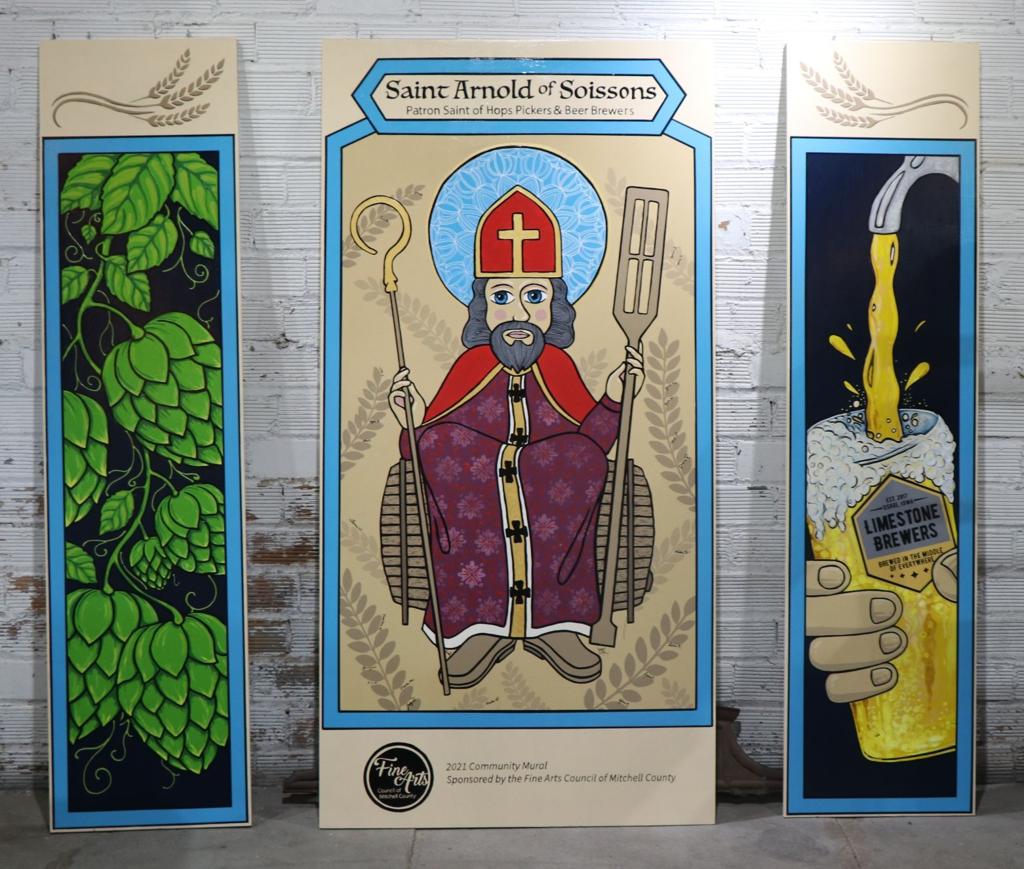
The point is if the church can have a patron saint of brewing, why do religious people object to St. Nicholas being on beer labels? Wouldn’t it make perfect sense for brewers to want to place their patron saint on their beer?

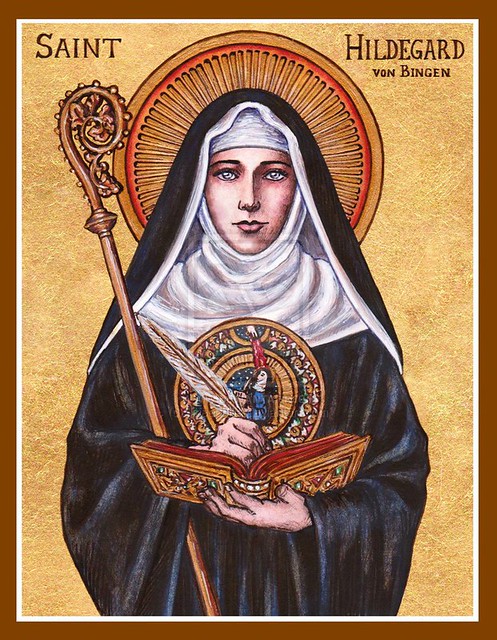
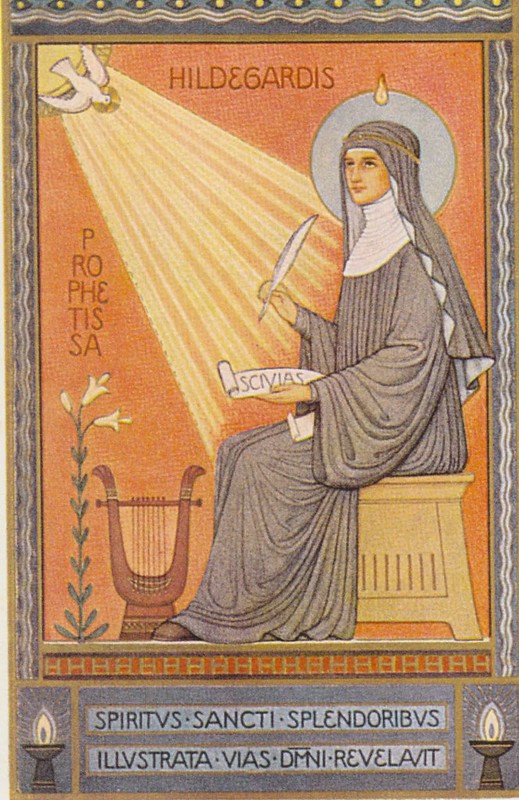
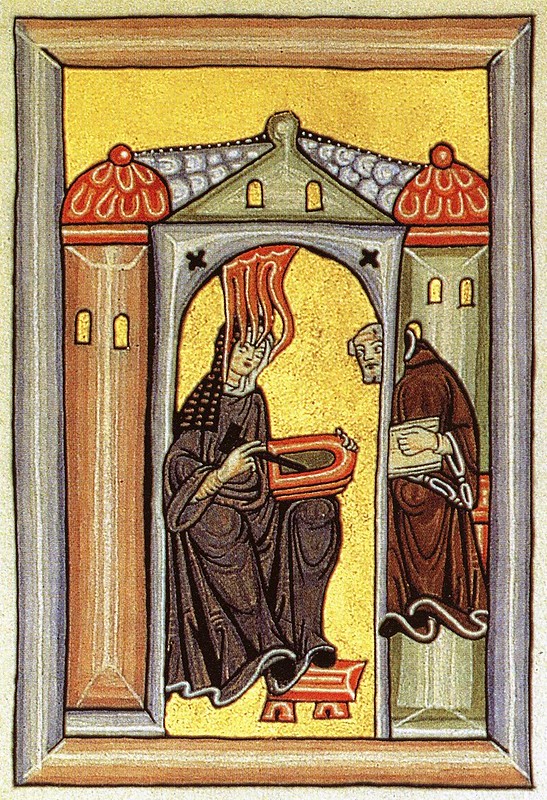
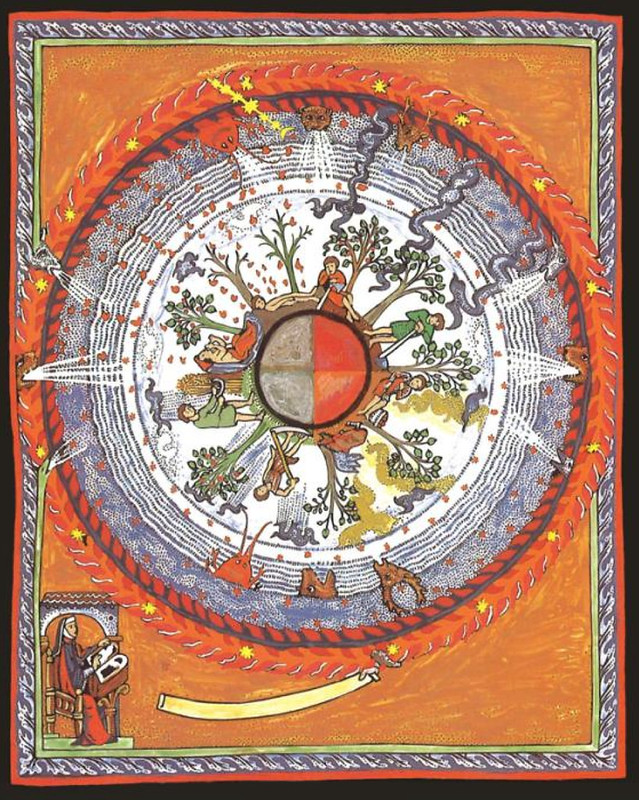
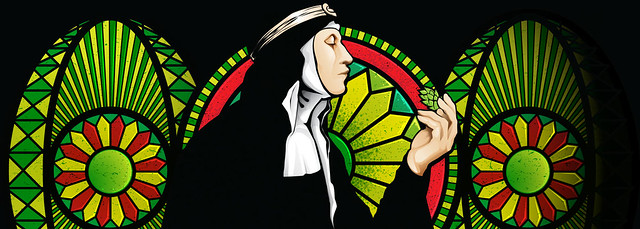
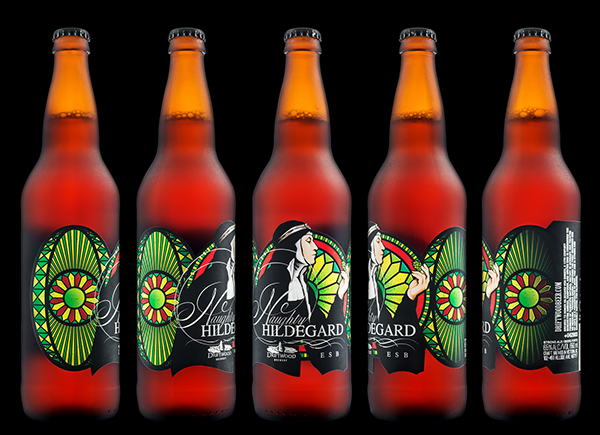
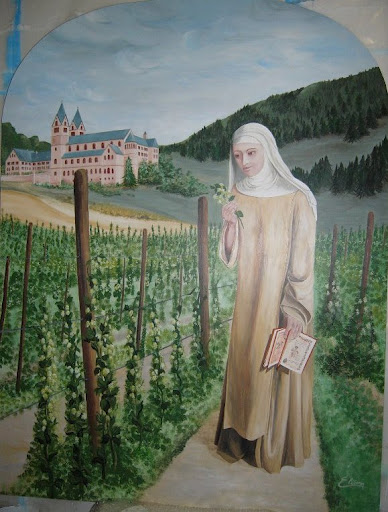
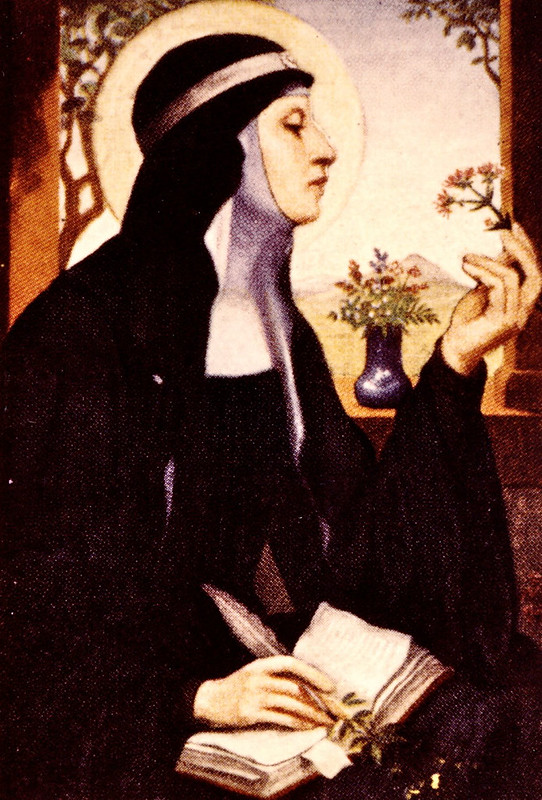
Throughout Europe, Monks not only kept alive the method of brewing beer but improved techniques for making it. A Benedictine nun in Germany, Hildegard von Bingen, is most likely responsible for the introduction of hops in beer. Religion and brewing are intertwined throughout history and, in every place except the United States, that continues to be the case. Why? What about our particular religiosity makes us incapable of seeing that and reconciling it? Why is it seemingly acceptable for Santa Claus to be used to sell everything under the sun … except alcohol. Santa sells cigarettes, soda pop, fast food and pretty much everything else with capitalistic glee yet alcohol is the corrupting influence? That’s going too far somehow? Please.

That Santa Claus only appeals to children is usually the rallying cry of the buffoons who complain about this sort of thing, but a survey of pop culture will reveal that St. Nick is used in all manner of adult contexts. Kris Kringle, like the spirit of Christmas itself, belongs to all of us, not just children. There’s no doubt that I love seeing Christmas through the fresh eyes of my children, their innocence and wonder adds a new dimension to my enjoyment of the season. But I loved the holidays as much before I was a father and after I was an adult, too.

That St. Nicholas appeals to wide array of people should be obvious from the huge number of groups and places that consider him their patron. When so many look to him for comfort in such a varied number of ways, how can anyone say what he is or what he isn’t, where he’s appropriate or where he’s not? They can’t of course, despite neo-prohibitionists and our government’s attempts to the contrary. As the patron saint of brewers, Santa Claus is, and ought to be, perfectly at home on a bottle of beer.

There’s also a wealth of information about the real Santa Claus at the Saint Nicholas Center online.

{ 7 comments }

Beer In Ads #371: Jesus For Brahma

by Jay Brooks on May 17, 2011 · 1 comment

in Art & Beer,Beers

ad-billboard
Talk about mixed mythologies, Tuesday’s ad is another recent one for the Brazilian beer, Brahma. Showing Rio de Janeiro’s “Christ the Redeemer” statue in another frenetic, colorful ad for Brahma, who before it was beer, was the Hindu god of creation, I found a little odd. Perhaps that’s just me.

brahma-rio

{ 1 comment }

A Texas Bar & The Power Of Prayer

by Jay Brooks on April 19, 2011 · 1 comment

in Just For Fun

humor
It reads like a joke, so I don’t know if it’s true or not, though it does come from the Clark County Democrat of Grove Hill, Alabama from late October, 2009. Thanks to Pete Slosberg, who sent me the link. Apparently, a Texas beer joint sues church…. Here’s the joke … er, story:

In a small Texas town, (Mt. Vernon) Drummond’s bar began construction on a new building to increase their business. The local Baptist church started a campaign to block the bar from opening with petitions and prayers. Work progressed right up till the week before opening when lightning struck the bar and it burned to the ground.

The church folks were rather smug in their outlook after that, until the bar owner sued the church on the grounds that the church was ultimately responsible for the demise of his building, either through direct or indirect actions or means.

The church vehemently denied all responsibility or any connection to the building’s demise in its reply to the court.

As the case made its way into court, the judge looked over the paperwork. At the hearing he commented, “I don’t know how I’m going to decide this, but as it appears from the paperwork, we have a bar owner who believes in the power of prayer, and an entire church congregation that does not.”

{ 1 comment }

Beer Birthday: Gambrinus

by Jay Brooks on April 11, 2011 · 0 comments

in Birthdays

gambrinus
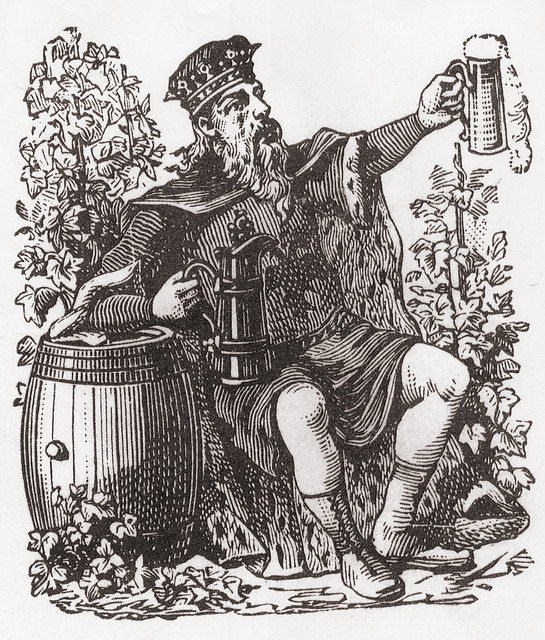
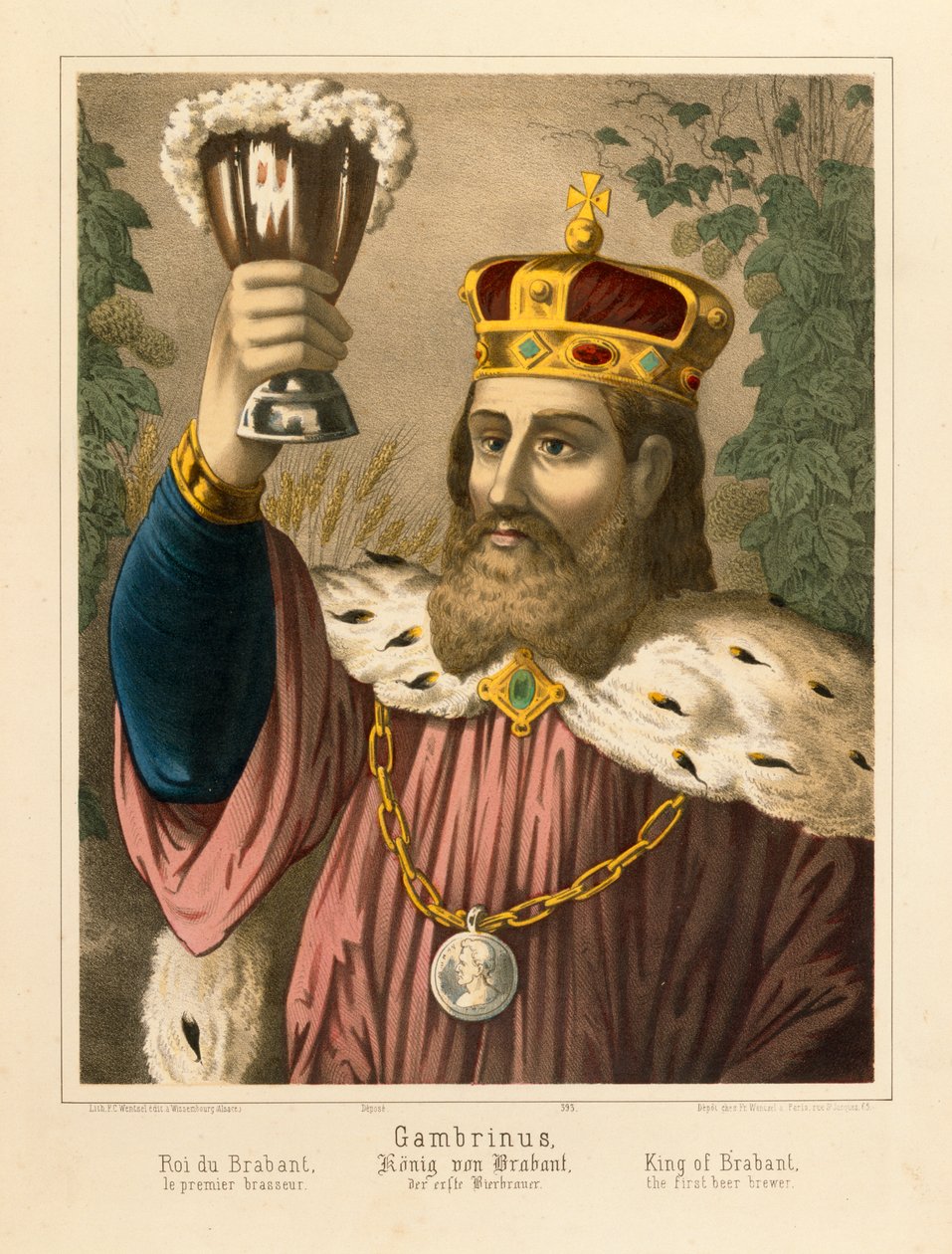
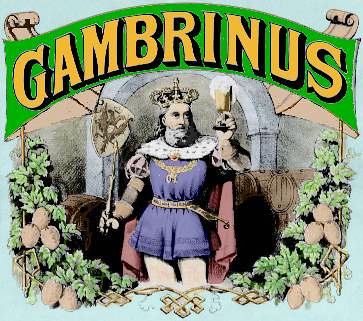
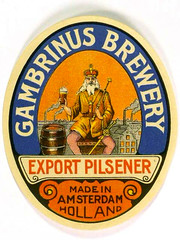
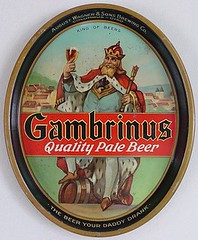
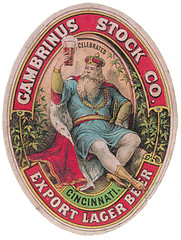
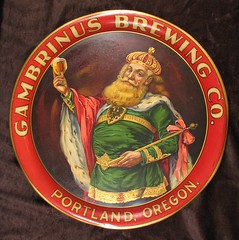
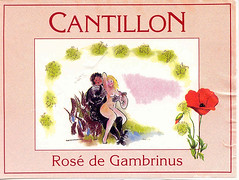
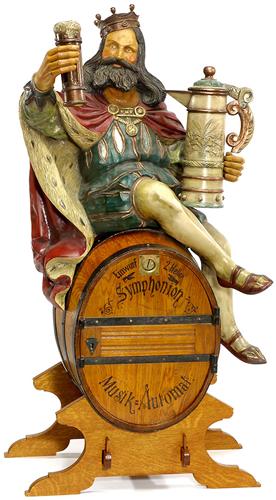
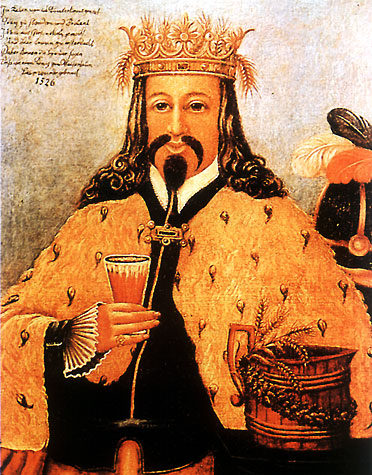
Today is the traditional birthday of Gambrinus, sometimes called King Gambrinus, considered to be the patron saint of beer, brewing and/or Belgian beer. Not an “official” saint, at least not in the catholic church, but a legendary figure. Regardless, join me in drinking a toast to King Gambrinus today.

king-gambrinus

Here’s the overview at Wikipedia:

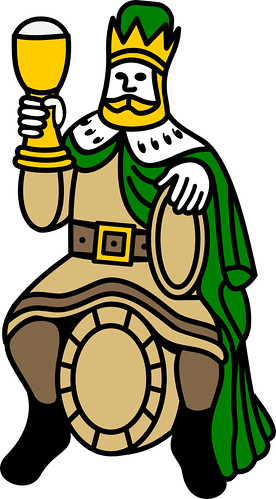
Gambrinus is a legendary king of Flanders, and an unofficial patron saint of beer or beer brewing. Gambrinus is variously depicted as a European king, as an English knight of the Middle Ages, or (less commonly) as a plump old man. Gambrinus’ birthday is purported to be April 11.

The origin of the character is most widely believed to be John the Fearless (1371–1419), who some also believe to be the inventor of hopped malt beer. However, other sources report that one of the cup-bearers in the court of Charlemagne (742–814) was also called Gambrinus. In 1543, the German poet Burkart Waldis wrote of Gambrinus, explaining that Gambrinus learned the art of brewing from Isis, the ancient Egyptian goddess of motherhood and fertility.

It is also possible that the original Gambrinus was Duke John I of Brabant (1254-1298), who was called Jan Primus.

Other possible Latin etymologies of the name include cambarus (cellarer) and ganeae birrinus (one who drinks in a tavern). Plzeňský Prazdroj, brewer of the Gambrinus lager, endorses the explanation that the name is a corruption of Jan Primus (John the First), referring to John I, Duke of Brabant. Alternatively, Gambrinus may be a corruption of the name Gambrivius. Although less likely, Gambrinus might also derive from camba, a word from the Celtic language family that refers to a brewer’s pan.

gambrinus-2

The beer website Froth N Hops has the fullest account of the story of King Gambrinus in one place, though it’s unclear what the source material is. Hopefully, he won’t mind my re-printing it here.

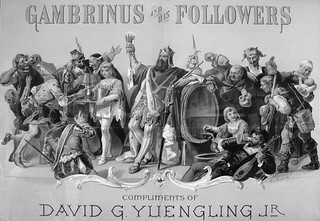
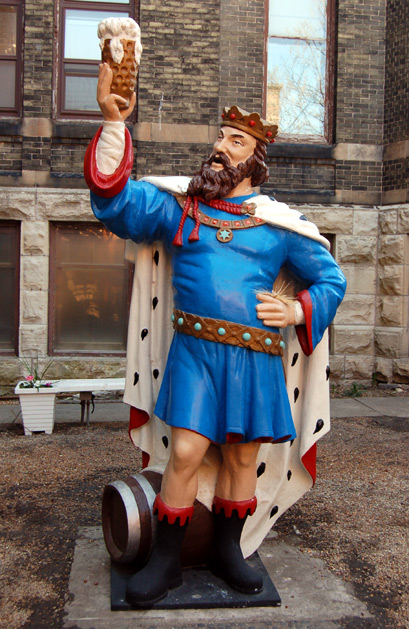
King Gambrinus, known as “the patron saint of beer,” has long been a universal symbol of beer and brewing. Particularly during the late nineteenth century, the image of Gambrinus was used by countless brewers to promote their products and remind consumers of the rich heritage of beer-making. Many breweries were even adorned with life-size statues of the King.

But who was Gambrinus? It is Gambrinus who brought beer to earth, and here is the legend of how this came to pass, and how he came to be King: Gambrinus was a poor apprentice in glass-making, hailing from a little town in the Flandres called Fresne sur l’Escaut. With his wonderful pink cheeks, blonde hair and blonde beard, he was the most beautiful boy in the town and had great romantic success with the town girls.

But Gambrinus had secretly fallen in love with the beautiful daughter of his master, Flandrine. In those times, glass makers were noble from birth, and taught their art only to their sons. Flandrine, as proud as she was pretty, wanted to marry a master glass maker like her father, grandfather, and great grandfather. Gambrinus, as an apprentice, would only prepare the glass for his master, who then skillfully puffed it into decorative sheets.

At last, Gambrinus gathered the courage to reveal his feelings to Flandrine. But Flandrine, offended that such a lowly apprentice sought her affection, refused so strongly that Gambrinus left Fresne, and vowed never to return to glass-working again so that he might forget about Flandrine forever.

So Gambrinus wandered from town to town playing his violin and writing poetry to sing along while he played. Gambrinus, who was very clever and a quick-learner, soon gained a reputation as one of the best violinists in the region. He was constantly called on in towns far and wide to liven up weddings, birthdays, and other parties.

When the people of Fresne heard of the fame Gambrinus had achieved, they could barely believe it. They were so proud of their Gambrinus that they invited him back to Fresne and threw a town-wide celebration in his honor. Gambrinus, flattered by the thought of a celebration in his honor, accepted the towns invitation and returned to Fresne. When he arrived in Fresne and began playing his violin, the delighted townspeople began to sing and dance and cheer.

But soon after Gambrinus had started playing, he noticed Flandrine in the crowd. Overcome by nervousness, Gambrinus began to tremble. He trembled so much and played his violin so horribly that the townspeople began to kick him and shout at him.

The townspeople all blamed Gambrinus for the commotion, since it was his poor playing that upset everyone. Gambrinus soon found himself arrested by the town officials and spent a full month in jail for the trouble he caused in the street and the noisy disturbance he had caused in the night. When Gambrinus was released from jail, he decided the only way he could ever make himself forget about Flandrine was to kill himself. He decided to hang himself, and headed out into the forest to set up a noose and platform. Gambrinus slid the noose over his neck, but just when he was about to step off the platform, he saw before him the devil himself. As is his custom, the devil proposed a deal to Gambrinus: if his power was not strong enough to make Flandrine love Gambrinus, the devil would oblige Gambrinus to forget Flandrine forever. This in exchange for Gambrinus’ soul in 30 years time. Gambrinus accepted the deal, and agreed to the devil’s terms.

As soon as Gambrinus returned to town, he noticed an intense desire to gamble on games. Indeed, the devil meant to turn Gambrinus’ love for Flandrine into a passion for betting. Gambrinus bet on everything he could, not caring whether he won or not. But win he did, and soon Gambrinus found himself the owner of a small fortune. Although gambling had nearly eclipsed any thought of Flandrine, Gambrinus suddenly had an idea. Because he was as rich as a prince, perhaps Flandrine would agree to marry him as a noble. Gambrinus approached Flandrine for the second time and expressed his feelings to her. But Flandrine’s rejection was as swift and as ruthless as the first time: Gambrinus wasn’t a noble; he was born a boy, and would remain a boy for life.

King on a BarrelGambrinus, returned to the forest to see the devil and ask him what went wrong; after all, Gambrinus still had not forgotton Flandrine, nor had Flandrine been made to fall in love with Gambrinus. Suddenly, before Gambrinus’ eyes appeared a large field with long lines of poles on which green plants began to grow. Soon the poles were covered by these green, perfumed plants. “These,” explained the devil, “are hops.” Just as quickly, two buildings burst forth from the ground. “The first building is a hophouse,” said the devil, “and the second one is a brewery. Come, and I will teach you how to make beer, Flandres’ wine. Beer will help you to forget Flandrine.”

Gambrinus learned how to make beer (not without tasting it every now and again) and found it delicious. Gambrinus soon felt like singing and dancing and playing his violin. But he remembered that the last time he had played violin he had been arrested, and his violin destroyed. Gambrinus asked the devil how he might seek revenge against the townspeople of Fresne who kicked him, sent him to jail, and broke his violin. The devil gave Gambrinus a new instrument that no one could resist, and taught Gambrinus how to play it. The devil explained that this instrument was called the chimes. The devil gave Gambrinus some seeds and the chimes and sent Gambrinus back to Fresne.

Once he arrived home, Gambrinus planted the precious seeds given to him by Belzebuth, and practiced making beer and playing chimes. One morning, Gambrinus set up tables, chairs, barrels, and chimes on the main town square and invited all the townspeople to join him to sample his new drink called beer. The townspeople tasted the beer, which was a brown lager. At first the people complained: “It is too bitter,” “It is too stong.” The people soon began laughing at Gambrinus and his stupid drink. Then Gambrinus began to play the irresistable chimes. The people all began dancing and could not stop. All the dancing made the people thirsty, which encouraged them to drink more beer. After an hour or so, the tired and woozy townspeople pleaded with Gambrinus to stop playing chimes. But Gambrinus kept playing for hours and hours. Gambrinus was satisfied that he had gotten his revenge on those who had wronged him.

But after time the townspeople began to appreciate the beer. They begged Gambrinus to make more and called beer the best drink they ever had. Word of Gambrinus’ drink spread far and wide and crossed over all frontiers. People from other towns soon begged Gambrinus to bring beer to their towns. Everywhere Gambrinus went, he brewed beer and played the chimes. So impressed were the nobles of the region that the Dukes, Counts, and Lords offered Gambrinus the title “King of Flandres.” Gambrinus accepted the position of king, but said he preferred the title “King of the Beer.” From thence on, Gambrinus was known as “The Brewer King.”

When Flandrine realized that Gambrinus would never come to her again, she came to talk to him. Gambrinus, however, more than a little inebriated, couldn’t recognize Flandrine, and just offered her something to drink; indeed, Gambrinus had forgotten about Flandrine.

Gambrinus lived happily with his subjects for many years, until finally the devil returned. “Thiry years have passed since we made our deal,” said the devil. “Now you must follow me.” But when the devil turned around, Gambrinus began playing the chimes, and the devil began to dance. The devil begged Gambrinus to stop playing, but Gambrinus continued, and the devil could not stop dancing. Finally, the devil agreed to break his deal with Gambrinus, releasing Gambrinus from his end of the deal.

King Gambrinus lived happily for another half century playing chimes and making beer. When Gambrinus finally died, his body disappeared, and in its place appeared a barrel of beer. This is why Gambrinus has no tombstone, and why no one knows of the resting place of The Brewer King.

gambrinus-logo

{ 0 comments }

amish-fightin
I love contradictions, especially when they have to do with the Amish. I grew up right around the Pennsylvania Amish, and in fact on my mother’s side, I am partly Amish, so to speak. From my grandfather’s generation and before, my family was Mennonite and operated a farm, having come to America from Bern, Switzerland in 1745 as Anabaptists. The Amish and the Mennonites both share an Anabaptist heritage. The Amish are the more well-known of the two, and eschew many modern conveniences such as electricity and cars. Mennonites on the other hand, at least the ones I observed growing up, drove cars but painted all the chrome black so as to avoid anything flashy or showy. Whenever you visit Amish tourist areas, the ones operating the gift shops and tourist attractions who look Amish, are more likely to be Mennonites.

As a result of that childhood, I love all things Amish and we even have a large hex sign on our house in California, if for no better reason than to confuse people — plus, I just think they’re cool. When I play fantasy sports, I often use as a team name: the “Fightin’ Amish,” again because I love the contradiction. The Amish are conscientious objectors and don’t fight, and even have an exemption for military service. Likewise, there’s a great band I like called The Electric Amish that nicely plays on the contradictions between the Amish and modern life. I bring this up because Lancaster Brewing, in the heart of Pennsylvania’s Amish country, has announced their latest seasonal beer, in a can, to be called Rumspringa Golden Bock.
lancaster-rumspringa
Rumspringa is essentially adolescence, from around age 16 until 18, when an Amish teen has to decide to be baptized and join the church or be “shunned” (ostracized by their community for the rest of the lives — no pressure there). Not surprisingly, most join the church. During the Rumspringa, teens have more freedom then before or after, and though it varies by sect, it’s often thought of as the time when they can “sow their wild oats,” find a spouse, get a little crazy. While I’ve seen documentaries where drinking and other taboos do take place, for most it’s simply a time to decide what to do with their lives, at least as I understand it. The Amish, of course, don’t drink alcohol so I love the apparent contradiction of naming a beer for this time in the Amish life cycle. Plus it’s just a good name for a spring beer. And I’m doubly glad they’re canning it so I may even have a shot at trying some.

{ 2 comments }

Beer In Art #117: Michael Marcinkowski’s Nectar Of The Gods

March 6, 2011

This week’s work of art is by a French illustrator, Michael Marcinkowski, who created a fun play on a portion of Michelangelo’s painting of the Sistine Chapel. He calls his work Le Nectar Des Dieux or Nectar of the Gods and it shows God giving beer to Adam, presumably right after he gave him life. [...]

Keep Reading →

Christianity & Beer: Another Point Of View

January 25, 2011

My friend and colleague, Rick Sellers, who writes at Pacific Brew News, published a thoughtful piece entitled Christianity & Drinking — Why Not?. Sellers is no stranger to religion, and in fact has “a degree in Biblical Studies” and even worked briefly as a pastor. It’s definitely worth a read.

Keep Reading →

Blue Laws In Decline

November 24, 2010

USA Today had an interesting report that more and more states are finally relaxing their antiquated blue laws and allowing alcohol to be — gasp — sold on Sundays. In the article, entitled Sunday Alcohol Sales Are on the Rise in U.S., it is revealed that “[s]ince 2002, 14 states have joined the list of [...]

Keep Reading →

Beer Drinking In The Old Testament

September 16, 2010

Biblical Archeology Review has an interesting article in their September/October issue entitled Did the Ancient Israelites Drink Beer?. The author makes some of the same points I’ve often made — but with more authority — that because of mistranslations and bias, beer is mostly absent from the Bible despite the fact that it’s everywhere else [...]

Keep Reading →

Beer In Art #75: Eduard Grutzner’s Monastery Brewers

May 2, 2010

Today’s works of art are by a German artist, Eduard Grützner, who was born in 1846 and became well-known for his genre paintings of monks until his death in 1925. I had a hard time choosing from among his monk paintings, so there are a number of them presented here. Few of them are dated, [...]

Keep Reading →

Boobquake Monday

April 23, 2010

This is slightly off topic, except that I learned about it from British beer writer Melissa Cole. Perhaps you saw the news report where Iranian cleric Hojatoleslam Kazem Sedighi is blaming earthquakes on women. Well, not all women, just the ones with the temerity to show a little skin. Sedighi is quoted as follows. “Many [...]

Keep Reading →

Joyeuses Paques

April 4, 2010

Easter has to be one of the oddest holidays, a curious mix of religious and pagan traditions. Chocolate, bunny rabbits, eggs, and the newly undead happily mix for a curious stew of fertility rites and resurrection. Joyeuses Paques — a.k.a. Happy Easter — with beer-drinking eggs. There are very few true Easter beers, Het Anker’s [...]

Keep Reading →

Beer In Art #66: Rembrandt’s The Prodigal Son

February 21, 2010

Today work of art is a return to the old masters, a place we haven’t been for some time now. The artist is Rembrandt Harmenszoon van Rijn better known simply as Rembrandt, one of history’s most famous artists. Today’s painting is officially known as “Portrait of the Artist with his Wife Saskia” though more commonly [...]

Keep Reading →

Beer In Art #45: The Hindu God Shiva As Bhairava, Bestower Of Beer

September 30, 2009

Today’s work of art is an unusual one. I chose it because it’s on display at the Denver Art Museum, where a good portion of the beer community has been all last week for the Great American Beer Festival. It’s a sculpture from around the 1600s of Bhairava, one of the forms the Hindu god [...]

Keep Reading →

Beer In Art #33: Rik Olson’s Saint Of Beer

June 28, 2009

Today’s work of art is one that I own and is hanging on the wall in my kitchen. It’s by a local artist, Rik Olson, who’s an illustrator as well as a fine artist. Olson has a studio in Sebastopol and I’ve been to it a few times during the annual Sonoma County Art Trails, [...]

Keep Reading →