The Netherlands


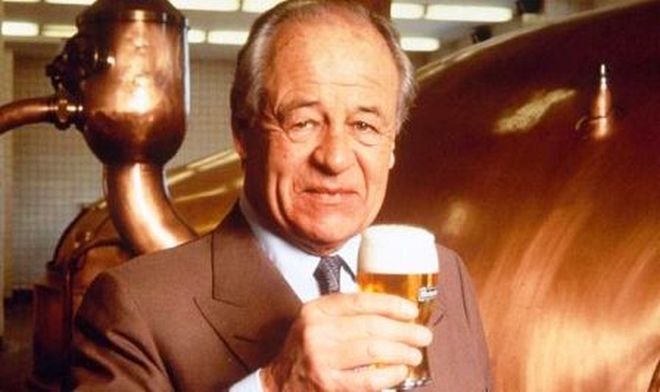
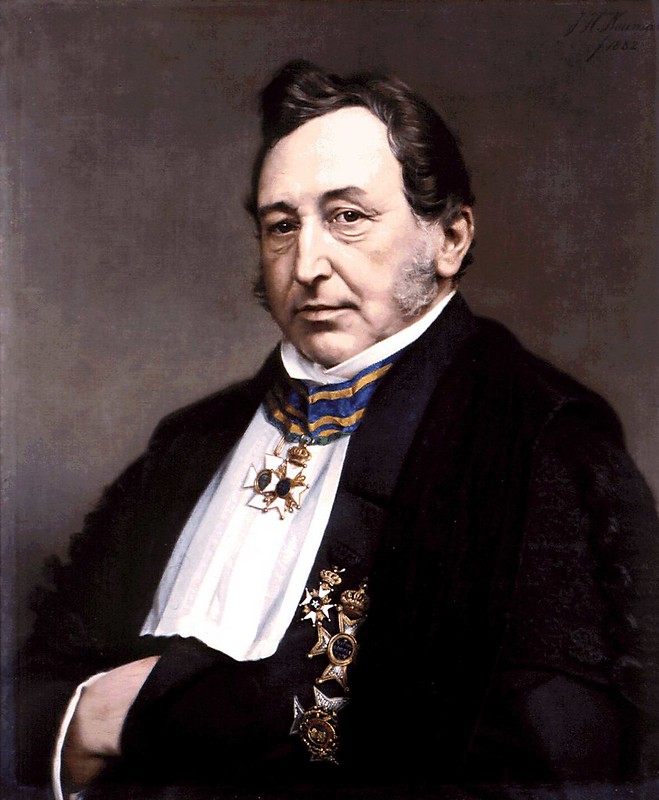
Tuesday’s ad is for Heineken. It looks like it’s from the 1960s or so, but it was definitely before 1991, when Heineken bought their importer, Van Munching & Co. One interesting thing I’m pretty sure isn’t on their neck label any more is the suggestion to “Serve at 45°-50° F.” Not sure about their claim of tasting “tremendous,” that’s not been my personal experience.
Heineken-tremendous

{ 3 comments }

Netherlands Beer

by Jay Brooks on May 5, 2012 · 0 comments

in Beers,Breweries

netherlands
Today in 1945, The Netherlands were liberated from Nazi Germany.

Netherlands
netherlands-color

Netherlands or Dutch Breweries

Netherlands Brewery Guides

Other Guides

Guild: Centraal Brouwerij Kantoor

National Regulatory Agency: Not Known

Beverage Alcohol Labeling Requirements: See European Union requirements

Drunk Driving Laws: BAC 0.05%

Netherlands

  • Full Name: Kingdom of the Netherlands
  • Location: Western Europe, bordering the North Sea, between Belgium and Germany
  • Government Type: Constitutional monarchy
  • Language: Dutch (official), Frisian (official)
  • Religion(s): Roman Catholic 30%, Protestant 20% (Dutch Reformed 11%, Calvinist 6%, other Protestant 3%), Muslim 5.8%, other 2.2%, none 42%
  • Capital: Amsterdam
  • Population: 16,730,632; 64th
  • Area: 41,543 sq km, 135th
  • Comparative Area: Slightly less than twice the size of New Jersey
  • National Food: Stamppot, Hutspot
  • National Symbol: Lion; Tulip; Willibrord; Windmills
  • Affiliations: UN, EU, NATO
  • Independence: Liberated From Nazi Germany, May 5, 1945 / 23 January 1579 (the northern provinces of the Low Countries conclude the Union of Utrecht breaking with Spain; on 26 July 1581 they formally declared their independence with an Act of Abjuration; however, it was not until 30 January 1648 and the Peace of Westphalia that Spain recognized this independence)

netherlands-coa

  • Alcohol Legal: Yes
  • Minimum Drinking Age: 16 (under 15% ABV); 18 (15% ABV and over) [Note: If the person is under the age of 20, an identity card has to be shown before buying. Drinking in public is banned by local ordinance in most municipalities. Selling alcohol to underage customers carries a fine of €900–3,600.]
  • BAC: 0.05%, 0.02% for drivers with less than 5 years’ experience
  • Number of Breweries: 117

netherlands-money

  • How to Say “Beer”: bier
  • How to Order a Beer: Un beer, ahls-yer-bleeft
  • How to Say “Cheers”: Geluch / Proost
  • Toasting Etiquette: N/A

netherlands-map

Alcohol Consumption By Type:

  • Beer: 50%
  • Wine: 34%
  • Spirits: 16%

Alcohol Consumption Per Capita (in litres):

  • Recorded: 9.55
  • Unrecorded: 0.50
  • Total: 10.05
  • Beer: 4.72

WHO Alcohol Data:

  • Per Capita Consumption: 9.6 litres
  • Alcohol Consumption Trend: Stable
  • Excise Taxes: Yes
  • Minimum Age: 16
  • Sales Restrictions: Time, places
  • Advertising Restrictions: Yes
  • Sponsorship/Promotional Restrictions: Yes

Patterns of Drinking Score: 1

Prohibition: None

netherlands-eu

{ 0 comments }

art-beer
Today’s work of art is by a contemporary Dutch artist, Jos Van Riswick, who for most of his life worked at a university as a physicist before giving it all up to pursue an artist’s life in Nijmegen, Holland. After some experimentation, he found that traditional oils suited him best, and has been specializing in still lifes, such as this commission, done for someone in Chevy Chase, Maryland. The painting, Beer Still Life, was completed in August of 2010.

Van-Riswick-still_life_beer

In his biography, van Riswick cites Rembrandt, along with Vermeer and Caravaggio, as influences and I have to agree that his work looks more timeless and older than many of his contemporaries. You wouldn’t look at this painting and immediately place it as having been done less than two years ago.

To learn more about Van Riswick, he has a short biography on his website. You can see many more of his paintings at Postcard From Holland, his blog Jos van Riswick — Painter, his Drawing Book and his eponymous website JosVanRiswick.com.

{ 0 comments }

art-beer
Today’s work of art is by the Dutch artist Adriaen van Ostade, a Golden Age painter of genre scenes. This is the second painting of his I’ve featured, the first being Ale House Interior. Like that one, van Ostade did a watercolor first, and it, too, is in the Morgan Library & Museum in New York City. But eventually, in 1673, it was completed as an oil painting on a wood panel. It usually called The Violin Player, though some call it A Violinist at a Farmhouse Door.

Adriaen_van_Ostade-violinist

The painting today hangs in the Mauritshuis at The Hague in the Netherlands. The museum describes The Violinist:

A group of people are gathered in front of a simple house that seems to be a country inn. The atmosphere is one of gaiety, for an itinerant violinist has come to the door to play a tune, accompanied by the boy in the red jacket who plays the hurdy-gurdy. The music is enjoyed by young and old alike. In the middle of the picture, a man sits on a bench, his legs wide apart, holding a tankard of beer. In the doorway, a woman leans on the lower half of the door and two men look out, trying to catch a glimpse of the musicians. Some children hang about outside, enjoying the excitement. A tousled girl steadies a child wearing only one shoe, and a little boy makes contact with a dog.

I’m no expert on Dutch architecture, but the building doesn’t look like a farmhouse to me, as the Morgan Library insists. To me, at least, it looks more like a tavern door, and that better explains the man with the big tankard of beer.

To learn more about Adriaen van Ostade, Wikipedia and the J. Paul Getty Museum each have a biography of him, and you can also see links to his works online at ArtCyclopedia. The Web Gallery of Art and the Wikimedia Commons also feature a number of his paintings.

{ 0 comments }

art-beer
Today’s work of art is by the Dutch artist Joseph de Bray, who’s more famous as the son of Salomon de Bray, also a painter, and for essentially just one work of art, his In Praise of Herring, which is also known as Eulogy to a Herring and Still-Life in Praise of the Pickled Herring. It was completed in 1656.

Joseph_de_Bray_-_Still-Life

The painting also includes a poem, also titled In Praise of Herring by Jacob Westerbaen, who was de Bray’s brother-in-law. Unfortunately, I was also unable to find the full text of the poem, either. Say what you will about pickled herring — and I’m certainly not a fan — but if you’re going to pair it with a beverage, you can bet it’s going to be beer.

The Web Gallery of Art has this to say about the artist and his painting:

Fish still-lifes developed as a category during the seventeenth century — not an astonishing phenomenon when we recall that fishing, particularly for herring and cod, was a mainstay of the Dutch economy. A notable exponent of the type is Abraham van Beyeren. As the Dutch love for flowers, their love for seafood is proverbial. The Haarlemer Joseph de Bray, son of Salomon and brother of Jan, celebrated this taste in his picture, dated 1656, dedicated to the apotheosis of the pickled herring.

Resting behind the large, succulent herring and other objects in the painting’s foreground, there is an elaborate tablet, draped with a festoon of herrings and requisite onions, inscribed with a poem by the Remonstrant preacher and poet Jacob Westerbaen: ‘In praise of the Pickled Herring’ published in 1633. After telling of the herring’s delight to the eye, palette, and its other qualities, Westerbaen adds that consumption of it ‘Will make you apt to piss/And you will not fail/(With pardon) to shit/And ceaselessly fart…’ – proof, if it is needed, that plain profane messages are as likely embodied in Dutch paintings as spiritual ones. The painting was evidently a success. In the following year he painted another, somewhat larger still-life, now in Aachen, dedicated to the same subject. It includes the text of Westerbaen’s verse dedicated to the pickled herring, and a brief passage from his poem ‘Cupido’ on the page of an open folio accompanied by an ample display of herrings and onions.

And another source said the following:

Joseph de Bray came from a family of Haarlem painters which included the highly respected Salomon de Bray (his father) and Jan de Bray (his brother). Joseph is known for this curious still life in which the different elements — the jug, the glass of beer, the fish, the bread, the butter and the onions — are organized in a U-shape. In the centre of the composition is a manuscript where one can read a poem by Doctor Jakob Westerbaen, singing the praises of a salted and smoked herring!

To learn more about Joseph de Bray, sadly, there’s not much. There isn’t even a Wikipedia page in English for him, it instead forwards to his father’s page where Joseph is mentioned. There is, however, a short German page for him, and that translates as follows:

Son of the painter Salomon de Bray and brother of Dirck, Jacob and Jan de Bray. He was certainly younger than his brother, Jan, and older than his brother Dirck. Probably trained by his father, he specialized mainly on still life. In 1664, he died of the plague.

The earliest known evidence of his artistry is a small drawing of an Arcadian landscape dated 14th February 1650, classified because of the uncertain lines as an early work. There are only a handful of works that can be ascribed with certainty. The most famous depiction is “Still Life with a poem on the pickled herring” that has survived in several handwritten copies. Recently appeared on the international art market is another picture which is tentatively attributed to him. Besides the few oil paintings, there are some drawings, which are also brought in touch with him.

There’s not much else, beyond this article, Painting Family: The De Brays, about his family.

{ 0 comments }

art-beer
Today’s work of art is by the Dutch artist Adriaen van Ostade, a Golden Age painter of genre scenes. The painting is usually known simply as Ale House Interior though its full title is actually Ale House Interior with Nine Peasants Smoking, Drinking, and Playing Cards or Tric-trac. Completed in 1673, it’s “pen and brown ink, brown wash, watercolor in varying tints of gray, green, yellow, purple, and pink, with some bodycolor, over traces of graphite, on paper; [with a] framing line in brown ink.” Today, the original is in the Morgan Library & Museum in New York City.

ostade-ale-house-interior-1673

Here’s how one source describes the painting:

This magnificent drawing was executed using a very elaborate technique, signed and dated by Van Ostade. In a highly detailed manner, it depicts the interior of a tavern and the different activities going on: a card game, beer drinking, a relaxing smoke by the fireplace. The dress, furniture, accessories and decor are all accurately rendered in this scene of daily life in Holland during the seventeenth century.

To learn more about Adriaen van Ostade, Wikipedia and the J. Paul Getty Museum each have a biography of him, and you can also see links to his works online at ArtCyclopedia. The Web Gallery of Art and the Wikimedia Commons also feature a number of his paintings.

{ 1 comment }

Beer In Art #151: Pieter van Anraadt’s Still Life With Earthenware Jug

December 4, 2011

This week’s work of art is by the Golden Age Dutch artist Pieter van Anraadt. He’s mostly known for painting historical subjects and portraits, but he has done some still lifes, such as this one: Still Life with Earthenware Jug, painted around 1658. One description of the painting is the following: Beer drinking has often [...]

Keep Reading →

Beer In Art #150: Jan Luyken’s The Brewer

November 27, 2011

This week’s work of art is by the same artist as last week, Dutch illustrator and engraver Jan Luyken. His watercolor painting, The Brewer, was originally done as a study for an engraving he was working on for a larger project, a book entitled “Het Menselyk Bedryf,” or “Book Of Trades.” Both the watercolor and [...]

Keep Reading →

Beer In Art #149: Jan Luyken’s The Cooper

November 20, 2011

This week’s work of art is by the Dutch illustrator and engraver Jan Luyken. His watercolor painting, The Cooper, was originally done as a study for an engraving he was working on for a larger project, a book entitled “Het Menselyk Bedryf,” or “Book Of Trades.” Both the watercolor and the subsequent engraving, which is [...]

Keep Reading →

Beer In Art #147: Jan Vermeer’s The Procuress

November 6, 2011

This week’s works of art is an early work by the renowned Dutch painter Jan Vermeer, though technically Johannes Vermeer. In fact, the Swiss Berger Foundation claims it’s Vermeer’s very first known painting, though others disagree. It’s most often known as The Procuress, though occasionally it’s called The Go-Between. Painted in 1656, today the painting [...]

Keep Reading →

Beer In Art #146: Judith Leyster’s Merry Drinkers

October 30, 2011

As tomorrow is Halloween, this week’s works of art involves the supernatural as well as beer. It’s from around 1639 and was painted by Judith Leyster, one of three significant Dutch Golden Age female artists. It’s known by various titles, The Last Drop, the Gay Cavalier and the Merry Drinkers. Whatever you call it, the [...]

Keep Reading →

Beer Birthday: Ron Pattinson

October 19, 2011

Today is also the 55th birthday of Ron Pattinson, a brewing historian who writes online at Shut Up About Barclay Perkins. Ron lives in Amsterdam but is obsessed with the British brewery Barclay Perkins, which is what the title of his blog refers to. I have not yet had the pleasure of meeting Ron in [...]

Keep Reading →

Beer In Art #130: Jacob Jardeans’ The Satyr And The Peasants

June 5, 2011

This week’s work of art is by a Dutch Artist, Jacob Jardeans, who was better known in his own time than he is today. Unlike his contemporaries, Rubens and Van Dyck, Jardaens never left Antwerp or found the success that they did. But in his hometown, he was one of the most popular artists. He [...]

Keep Reading →

Beer In Art #125: Pieter de Hooch’s Woman Drinking In A Courtyard

May 1, 2011

This week’s work of art is by the Dutch artist Pieter de Hooch who was active during the time period known as the Dutch Golden Age in the 17th century. The painting, completed between 1658-1660, is entitled Un homme fumant et une femme buvant dans une cour a Delft (which is translated as Man Smoking [...]

Keep Reading →

Beer In Ads #357: Grolsch Tulips

April 27, 2011

Wednesday’s ad is a relatively new ad, from 1983. It’s for the Dutch beer Grolsch, showing six-packs growing out of the national flower of the Netherlands: tulips. Clearly, I’m buying the wrong bulbs.

Keep Reading →

Beer In Art #121: Jan Jansz van de Velde’s Still Lifes

April 3, 2011

This week’s works of art are by Jan Jansz van de Velde, a Dutch painter from that nation’s golden age. He painted still lifes of everyday objects from the time, and at least two of those included beer. The first was completed in 1649, and is entitled Still Life with a Mug of Beer. And [...]

Keep Reading →