Brookston Beer Bulletin

Jay R. Brooks on Beer

  • Home
  • About
  • Editorial
  • Birthdays
  • Art & Beer

Socialize

  • Dribbble
  • Email
  • Facebook
  • Flickr
  • GitHub
  • Instagram
  • LinkedIn
  • Pinterest
  • RSS
  • Twitter
  • YouTube

Powered by Genesis

Historic Beer Birthday: Frederick Metz

May 19, 2025 By Jay Brooks

metz-bros

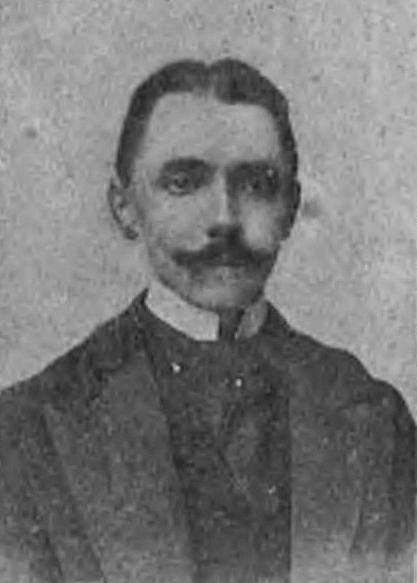
Today is the birthday of Frederick Metz (May 19, 1832-March 7, 1901). He was born in Hesse-Cassel, Germany but moved to the U.S. in his teens, eventually settling in Omaha, Nebraska. Along with his brother Philip, he bought what was originally the McCumbe Brewery in 1861, which had been founded two years earlier in 1859. It went through a series of name changes before settling on Metz Bros. Brewing Co. from 1894 until it closed in 1917. The label continued after prohibition, but oddly was brewed by the Walter Brewing Co. of Pueblo, Colorado (although it originated in Eu Claire, Wisconsin). In 1938, the Metz Brewing Co., also of Omaha, Nebraska began brewing under that name, having been originally the Joseph Guggenmos Brewery, when it was founded in 1896, and later was the Nebraska Brewing Co. and the Willow Springs Brewing Co. It appears the Metz Brothers may have been involved in that brewery, too, but I can’t find anything definitive to confirm it.

Fred-Metz-Nebraskans

Here is a short biography of Metz from his Wikipedia page:

Born in Hesse-Kassel (or Hesse-Cassel), Germany, Frederick was educated as a forester. In 1851 he emigrated to the United States of America through the port of New Orleans, Louisiana, and settled in St. Louis, Missouri, where he worked in the mercantile business. In 1857 he came to Bellevue, Nebraska and continued in the merchandising trade until 1862. Frederick next went to Denver, Coloradoand established a wholesale and commission business in general merchandise, which he owned until 1864. In 1864 Frederick returned to Nebraska and with his brother Philip purchased the McCumbe Brewery, the first brewery in Nebraska, which they renamed Metz Brewery. Frederick served in the Nebraska Senate in 1871 and again 1885. He was president of German Savings Bank in Omaha.

Frederick-Metz-mini

He married Louisa Beate Gesser of St. Louis in 1855. Frederick and Louisa had four sons and three daughters together. In 1873 Louisa died and was buried in Prospect Hill Cemetery. In 1877 Frederick married Adele Wassmer, who was born in Holstein, Germany, and had emigrated to Nebraska. Together they had one son and one daughter. Metz died at the brewery at the age of 69, and was also interred at the Prospect Hill Cemetery in North Omaha.

Metz-Bros-brewery

And this short history of the brewery is from its Wikipedia page:

The Metz Brothers Brewing Company was among the first brewers in the U.S. state of Nebraska, having been established in the city of Omaha in 1859. It was among the earliest manufacturers in the city. After originally opening as the McCumbe Brewery, the facility was sold several times until brothers Frederick and Philip Metz purchased it in 1861.[2] Metz was one of the “Big 4” brewers located in Omaha, which also included the Krug, Willow Springs and Storz breweries.

Metz-beer-nebraska

In 1880 the Metz Brewery was located at 1717 South 3rd Street, and was producing 12,400 barrels (1,970 m3) per year. Later the facility moved to 209 Hickory Street into the former Willow Springs Distilling Company facility. Considered to be modern for the time, the facilities sat on an entire city block. Early brewing equipment included three cooling vaults, two of which were twenty feet wide by seventy-five feet long, and one smaller, being twenty feet wide by thirty in length. The ice rooms immediately above were of the same dimensions. The mash tub and brewing kettle each had a capacity for holding one hundred barrels. Barns for the delivery horses were also located on site. The brewery was said to have “no equal in the country.” The Metz brothers also ran the Metz Brothers Beer Hall, located on 510 South Tenth Street, where beer was supplied in barrels by horse-drawn cart from the main brewery.

The Metz Brewery closed because of the Prohibition. The facility was sold to an agriculture company in 1920. The label was brewed until 1961 by the Walter Brewing Company of Pueblo, Colorado.

metz-brewery

This biography is from the “History of Douglas County,” published in 1882:

Frederick Metz, surviving member of the firm of Metz Bros., brewers and malsters, Omaha. Mr. Metz was born in Hessel-Cassel, Germany, 1832, and was educated to the profession of forester there. In 1851 he came to America; landed in New Orleans, and settled in St. Louis the same year, where he was identified actively with the mercantile business till 1857, when he came to Nebraska and located at Bellevue and carried on merchandising there till 1862. In that year he went to Denver, Colo., and established a wholesale and commission business in general merchandise, which he ably conducted till 1864, when he returned to Nebraska and located here, where he has been prominently identified with his present business since. In 1855 he was married to Miss Louisa Beate Gesser, in St. Louis. She was born and reared there, and departed this life in 1873, and is buried in Prospect Hill Cemetery here, leaving a family of four sons and three daughters,–Minnie, now Mrs. Richard Siemon, of Canton, Ohio; Estelle, now Mrs. Ferdinand Schroeder, of Omaha; Charles Frederick, Jr., Tony, Arthur and Louis. In 1877 he married Miss Adele Wassmer, who was born in Holstein, Germany, and reared in Nebraska. They have a family of one son and daughter, Herman and Louisa. Mr. Metz has always been an active worker in the development of the social and industrial welfare of his locality. In 1871 he accepted the position of Representative for this district in the Senate and Legislature of his State, and has taken an active interest in the general growth of the city.

Metz-flying-high

And this is Metz’s obituary from the American Brewers’ Review:

Fred-Metz-obit-1
metz-jubilee-beer
Fred-Metz-obit-2
metz bros brewing co button

Filed Under: Birthdays, Breweries, Just For Fun Tagged With: Germany, Nebraska

Historic Beer Birthday: Josephus Petrus Van Ginderachter

May 19, 2025 By Jay Brooks

Today is the birthday of Josephus Petrus Van Ginderachter (May 19, 1889-June 17, 1959). He was the son of Corneel van Ginderachter, and the grandson of Cornelius Antonius Van Ginderachter, who, in 1888, acquired the Brouwerij Martinas, which had been founded in 1871 by Florentinus De Boeck. Josephus, who was sometimes referred to as Joseph, created their most well-known beer in 1928, Ginder-Ale, and the business became known as Brouwerij Ginder-Ale.

This account, that mentions Joseph’s contributions, is from a Flanders heritage website:

In 1908, the brewery buildings were again adapted, including an increase in the volume parallel to the Kattestraat. The street facade on the Kattestraat was adapted around 1923 as a result of the construction of, among other things, a warehouse, to the left of the former buildings, which was extended to the current volume. The brewery buildings were also further expanded in 1927 and 1930. From the interwar period, Joseph Van Ginderachter was director of the brewery. In 1928 he launched Ginder-Ale, a top-fermented beer. In addition to being a brewer, he was also mayor of Merchtem from 1933 to 1959. Under his directorship, the brewery flourished during the 1950s. This was accompanied by the construction of a new director’s house with offices on the side of the Langensteenweg (after the demolition of, among other things, the former brewer’s house and a warehouse), as well as an extension of the industrial buildings. The architect was Paul-Jean De Vos. The house on Langensteenweg was registered in the land register in two phases, namely first the right part and the gate in 1949 with offices and a caretaker’s house, and then in 1950 the director’s house on the left side of the passage. The extension of the brewery was registered in the land register in 1952 and included a building with cold stores. Another large-scale expansion followed in 1955. The brewery also expanded during that period with a building with a bottling plant on the other side of the Kattestraat (1954). 1956 building plans, drawn up by engineer L. Durin (Ghent), adapted the appearance of this complex on the Katte and Dendermondestraat. This building was also expanded later. A connecting bridge was also built between the buildings on Kattestraat (demolished around 1995). Afterwards Constant De Smedt took over the brewery and finally in 1973 the Artois brewery. Production continued until the late 1980s and the brewery finally closed in 1991.

This image has an empty alt attribute; its file name is KF_objecten_1445000804251605371925

Here’s a short history of the brewery translated from the Belgian website Residentie Martinas.

The brewery was founded in 1871 by Florentius De Boeck (1826-1892) – the father of composer August De Boeck – and was taken over in 1888 by Corneel van Ginderachter. After Corneel’s death, the company was managed by his wife Hendrika van Nuffel, who had to hand over her copper boilers to the Germans during the First World War. In 1928, son Joseph launched the high fermentation beer Ginder Ale, a beer of the Spéciale belge type that, according to experts, was closely related to the taste of Antwerp’s De Koninck or Palm from Steenhuffel. The company enjoyed its greatest success in the 1950s, employing 180 people at its peak. In 1973 it was taken over by the Artois Brewery – from 1988 Interbrew – and it continued to brew there until 1991. From then on, production was transferred to Leuven and to date 3,000 hectoliters are produced annually. This beer is usually distributed in the vicinity of Merchtem, so that one can literally speak of a regional beer. Due to the successive mergers, Brouwerij Ginder-Ale is part of Anheuser-Busch InBev.

This image has an empty alt attribute; its file name is martinas95-2.jpg

Filed Under: Birthdays, Breweries, Just For Fun Tagged With: Belgium

Historic Beer Birthday: John Hinchliffe

May 19, 2025 By Jay Brooks

hinchcliffe
Today is the birthday of John Hinchliffe (May 19, 1850-March 18, 1915). His father, also named John Hinchliffe, was born in Yorkshire, England but moved to New Jersey and founded the Hinchliffe Brewing & Malting Company in 1863. The brewery eventually employed his three sons, including John Hinchliffe Jr., who was later president. In 1890, it joined a consolidation of five local breweries in Paterson which became known as the Paterson Brewing & Malting Co. The brewery was closed by prohibition and never reopened.

This obituary comes from the American Brewers Review in 1915:

HinchliffePortraits

This brewery history is from the Paterson Historic Preservation Society:

The Hinchliffe Brewing & Malting Company was one of at least a dozen of breweries to operate out of Paterson in the pre-Prohibition Era. Owned and operated by John Hinchliffe & sons, who had previously founded the Eagle Brewery in Paterson in 1861 (on the Eve of the Civil War), Hinchliffe Brewing built the impressive brick structure that still stands on Governor Street in 1899. Designed by Charles Stoll & Son, notable “brewer’s architects” from Brooklyn, New York, building lasted eight months and once completed she was the largest in the city. Advertising broadsides from the era feature products such as their “East India Ale,” Porters, and Brown Stouts. The Brewery had a three-story ice factory located behind it, and at full capacity could produce 75,000 barrels per year. In 1917, the Brewery was converted to cold storage for supplies headed to the battlefields of World War I.

Glassware and advertising from Hinchliffe Brewery are considered collectibles due to their pre-Prohibition origins. Unfortunately, the Brewery would not survive the 18th Amendment and the Volstead Act, as the Hinchliffe family closed operations to conform with the law of the land.

Hinchcliffe-Brewery

And this history is by Peter Blum:

Hinchliffe-Brewery-by-Blum

hinchcliffe-brewing-malting

And this is from the City of Paterson, New Jersey’s website:

The Hinchliffe Brewing and Malting Company was formed in 1890 by the well-known Hinchliffe brothers, the three sons of the English founder of the Eagle Brewery in 1861. The Eagle was likely the earliest medium-scale brewery in Paterson. John Hinchliffe began under the name Hinchliffe & Co., and was later changed to Shaw, Hinchliffe & Penrose in 1867 following association with those gentlemen. While business did well, in 1878 Penrose withdrew from the firm to which then the name changed to Shaw & Hinchliffe. Soon afterward in 1881, Shaw went abroad due to illness and died there, leaving the firm under its founder, John Hinchliffe, who again was alone in the endeavor until his death in 1886. His sons John, William and James inherited the property and the business, to which they put their minds and in 1890 set out together. They hired the well-known firm of Charles Stoll & Son of Brooklyn to draw up plans for the city’s largest and most modern brewing facility. The brew house stood five stories tall, built of brick and iron and trimmed with granite, and behind was a modern ice making facility three stories tall. A four-story cold storage facility was also constructed at the time fronting Governor Street.

The 1890s was the high time for the brewing industry in Paterson. The four main breweries in Paterson consolidated as the Paterson Consolidated Brewing Co. and in 1899 the Hinchliffe brothers also joined and became board leaders of the organization. John Hinchliffe died in 1915, the same year that more than 30 of Paterson’s saloons were closed due to the lack business. The brewing industry in Paterson was soon thereafter crippled and dissolved by the Temperance movement and prohibition era of the 1920-30s.

On January 15, 1904, a fire broke out at the Hinchcliffe Brewery Malt House. One firefighter died when he fell from a ladder during efforts to put out the blaze, and at least three others were injured. The website Paterson Fire History has photographs and newspaper clippings from the fire.

Hinchliffe-Brewery-1904-fire

Hinchcliffe-pure-malt

Filed Under: Birthdays, Breweries, Just For Fun Tagged With: England, Great Britain, History, New Jersey

Beer Birthday: Sabine Weyermann

May 19, 2025 By Jay Brooks

weyermann-logo
Today is the 67th birthday of Sabine Weyermann, a.k.a. “The Malt Queen,” co-owner of Weyermann Malting in Bamberg, Germany. If you’ve visited any of the Craft Brewers Conferences, you’ve no doubt seen the bright yellow and red of the specialty malting company, which is sold in the U.S. by the Brewers Supply Group. Sabine’s family began the Weyermann Malt company in 1879, although she can trace her family back at least as far as 1510. She’s an amazing person, and her malt has helped fuel many a small and large brewery. Join me in wishing Sabine a very happy birthday.

Sabine and me at CBC in Minneapolis in 2022.
At CBC in 2023.
P1030081
Sabine giving a presentation at their offices in Bamberg when I visited there in 2007.
CBC_San Diego_ 2012
Sabine and her husband Thomas Kraus-Weyermann at CBC in San Diego, 2012.
DSCN9902
You can see the Weyermann Malting Brewer’s Star that Weyermann’s starting making at the top of my home office/guest house, which we call “The Brewhouse.”

Filed Under: Birthdays, Just For Fun Tagged With: Germany, Malt

Beer In Ads #4973: Bock Beer, A Hummer B’Gosh

May 18, 2025 By Jay Brooks

Last year I decided to concentrate on Bock ads. Bock, of course, may have originated in Germany, in the town of Einbeck. Because many 19th century American breweries were founded by German immigrants, they offered a bock at certain times of the year, be it Spring, Easter, Lent, Christmas, or what have you. In a sense they were some of the first seasonal beers. “The style was later adopted in Bavaria by Munich brewers in the 17th century. Due to their Bavarian accent, citizens of Munich pronounced ‘Einbeck’ as ‘ein Bock’ (a billy goat), and thus the beer became known as ‘Bock.’ A goat often appears on bottle labels.” And presumably because they were special releases, many breweries went all out promoting them with beautiful artwork on posters and other advertising.

Sunday’s ad is for Ganser Bock Beer. The ad was published on May 18, 1906. This one was for the P. Ganser, The Home Brewery, a.k.a. City Brewery, of Owatonna, Minnesota, which was originally founded in 1865. This ad ran in the People’s Press, also of Owatonna, Minnesota.

Filed Under: Art & Beer, Beers, Breweries, Just For Fun Tagged With: Advertising, Bock, History, Minnesota

Beer Birthday: James Watt

May 18, 2025 By Jay Brooks

brew-dog

Today is the 42nd birthday of Jame Watt, co-founder of the Scottish brewery BrewDog. I first met James in Philadelphia during Philly Beer Week in 2009. Bill Covaleski, Greg Koch and I took James for his first cheesesteak at Jim’s after a beer event. I’ve run into him a few times since then and it’s always a good time. Join me in wishing James a very happy birthday.

Dana Blum, James Watt & Me
Dana Blum, then with Anchor Brewing, James, and me at Monk’s Kettle in 2010.
James Pours Sink the Bismarck
Pouring Sink the Bismarck.
Later night at Jim's Steaks Bill Covaleski showcases our cheesesteaks as James Watt looks on & Greg Koch tries to hide his face
In 2009 during CBC in Philly, at Jim’s Steaks: Bill Covaleski showcases our cheesesteaks as James Watt looks on and Greg Koch tries to hide his face.

Filed Under: Birthdays, Just For Fun Tagged With: Great Britain, Scotland

Beer Birthday: Jeff Bagby

May 18, 2025 By Jay Brooks

bagby-beer
Today is the 51st birthday of Jeff Bagby, who for a number of years was the head brewer extraordinaire at Pizza Port in Carlsbad. There, you used to be able to read the entire biography of Jeff “Extra Spicy” Bagby. I’m not sure when it was written, but it’s no longer there, but it ended with the following sentence. “Jeff has his sights set on winning a GABF Brewpub of the Year award and we most definitely believe it is in his future as well.” Several years ago now at GABF, Jeff won an amazing seven medals and Pizza Port Carlsbad was awarded the Large Brewpub and Large Brewpub Brewer of the Year. That means his plaid pants got to go up on stage a record eight times! You can see a retrospective of Jeff’s plaid choices over the years, too, at Jeff “Lucky Pants” Babgy Wins Big. Once he started working on opening his own brewery, I suggested he should consider “Plaid Brewing” or some variation of that idea, like “Plaid Pants Brewing” or “Lucky Plaid Brewing.” Unfortunately, he went with a more sensible Bagby Beer Co., which opened a few years ago, but unfortunately he and Dande closed the brewery a little over a year ago. All, well some, kidding aside, Jeff is a terrific brewer and a hell of a washoes player, though I still think Dave Keene and I could beat him and Tomme again. Join me in wishing Jeff a very happy birthday.

Jeff Bagby & His Girlfriend, from Pizza Port - Carlsbad
Jeff with his then-girlfriend, now wife, Dande at GABF a few years ago. And yes, those are his lucky pants.
Greg Koch & Jeff Bagby
Greg Koch and Jeff at the Falling Rock.
anchor-toro-3
Former Drake’s brewer Melissa Myers with Jeff at an event at Anchor celebrating the Toronado’s 20th anniversary.
labbeydin-16
Sam Calagione, Bruce Paton and Jeff at the Lost Abbey for a beer dinner during CBC.
P1030583
Jeff at the Toronado for the annual Belgian Beer Dinner in 2012, with owner Dave Keene wearing his “Who the F@#k is Jeff Bagby?” T-shirt.
DSCN1206
Dandelian and Jeff Bagby in the upstairs loft dining area of their new brewery. The plaid back of the bench seating was inspired by Jeff’s winning plaid pants that he used to wear for GABF award ceremonies, as I detailed several years ago in Jeff “Lucky Pants” Bagby Wins Big.

Filed Under: Birthdays, Just For Fun Tagged With: California, San Diego, Southern California

Beer In Ads #4972: Schlitz Hotel Bock Beer

May 17, 2025 By Jay Brooks

Last year I decided to concentrate on Bock ads. Bock, of course, may have originated in Germany, in the town of Einbeck. Because many 19th century American breweries were founded by German immigrants, they offered a bock at certain times of the year, be it Spring, Easter, Lent, Christmas, or what have you. In a sense they were some of the first seasonal beers. “The style was later adopted in Bavaria by Munich brewers in the 17th century. Due to their Bavarian accent, citizens of Munich pronounced ‘Einbeck’ as ‘ein Bock’ (a billy goat), and thus the beer became known as ‘Bock.’ A goat often appears on bottle labels.” And presumably because they were special releases, many breweries went all out promoting them with beautiful artwork on posters and other advertising.

Saturday’s ad is for Schlitz Bock Beer, which they refer to as Schlitz’ Famous Bock Beer. The ad was published on May 17, 1935. This one was for the Joseph Schlitz Brewing Co. of Milwaukee, Wisconsin, which was originally founded in 1849. This ad ran in the Press of Atlantic City, of, of course, Atlantic City, New Jersey. Apparently there was a Schlitz Hotel on the boardwalk at Atlantic City. There you could get a glas of Schlitz Bock Beer for a Nickel, and a Seidel for 15-cents.

Here’s a look at the Atlantic City Schlitz Hotel from between 1910 and 1920.

Filed Under: Art & Beer, Beers, Breweries, Just For Fun Tagged With: Advertising, Bock, History, Milwaukee, New Jersey, Schlitz, Wisconsin

Beer Birthday: JJ Jay

May 17, 2025 By Jay Brooks

petaluma-hills
Today is the 65th birthday of Jeffrey “JJ” Jay, who founded Petaluma Hills Brewing. JJ was an animator who worked for Lucas Arts, Pixar and Dreamworks Animation and during that time was an avid homebrewer. In 2012, he left his job to start his own brewery in Petaluma and made great beer for the next five years before shutting things down in 2017. JJ also was kind enough to talk to my SSU class and over the years I really came to like JJ and especially his dry sense of humor. It’s a shame his brewery didn’t make it hopefully he’ll figure out something to return to the beer industry. Join me in wishing JJ a very happy birthday.

DSCN3372

Filed Under: Birthdays, Just For Fun Tagged With: California, Northern California

Historic Beer Birthday: Bert Grant

May 17, 2025 By Jay Brooks

bert-grants-real-ales

Today would have been Bert Grant’s 97th birthday, and he is still definitely missed. Bert opened the country’s first brewpub in 1982 in Yakima, Washington and was a fixture in the industry until his death in late July of 2001. Join me tonight in lifting a pint to Bert’s memory.

bert-grant

Here’s his obituary from Real Beer:

Craft brewing pioneer Bert Grant, who founded the first modern day brewpub in the United States, is dead at 73.

Grant had been ill for two years and died Tuesday at the University of British Columbia Hospital in Vancouver. He had moved to that city a year ago to be close to his children.

When Grant founded his brewpub in Yakima, Wash., in 1982 there were fewer than 50 individual brewing operations in the U.S. Today there are more than 1,500. That brewpub expanded to become a bottling microbrewery, selling about 10,000 barrels of Bert Grant’s Ales in 2001. He sold the brewery to Chateau Ste. Michelle wines in 1995, but Grant remained an active spokesman until being slowed by illness.

He’d sometimes wear a kilt at his pub in Yakima and occasionally dance on the bar. He kept a claymore — a double-bladed broadsword — just in case he had to enforce his ban on smoking.

He was born in Dundee, Scotland, in 1928. He moved to Toronto, where he grew up and got his first job in a brewery … at 16, he became a beer taster. He remained in the beer business all his life. He moved to Yakima in 1967, where he helped build and operate two plants that processed hops. His patented processing of hops is still in use today.

Bert Grant Bert was one of a kind,” said Paul Shipman, who founded Red Hook Brewery around the time Grant began Yakima Brewing and Malting Co. “He was a scientist, a brewer, and I don’t think he even graduated high school.”

He remained dedicated to assertive beer and carried a vial of hop oil in his pocket to boost the flavor of a bland domestic beer. His first priority was to brew beer he liked. “It may not be your favorite beer,” Grant’s son Peter said. “But it was his.”

Bert-Grant-GABF
Bert at GABF in the 1990s.

And here is his obituary from the New York Times:

Bert Grant, a veteran brew master who in 1982 opened the granddaddy of all the good, bad and so-so brew pubs slaking thirsts across the country today, died on July 31 at a hospital in Vancouver, British Columbia, where he had recently made his home. He was 73 and a longtime resident of Yakima, Wash.

The cause was a bowel rupture, his family said.

Mr. Grant’s experience in brewing stretched back to his teenage years in Canada. He worked at big brewing companies and later as an international consultant to them before settling in Yakima, the center of American hops country.

Mr. Grant started the Yakima Brewing and Malting Company in the 19th-century former home of the Yakima Opera, using plenty of the flavorful hops he thought other beers lacked. At first he brewed just eight kegs at a time.

Friends who sampled his recipe liked it and spread the word. It caught on with Yakima beer lovers, who welcomed it as an alternative to national brands and expensive imports. Mr. Grant got some chairs to sit on in the lobby and convinced skeptical licensing officials that Washington State law permitted each brewer to operate one pub.

This gave birth in the summer of 1982 to Grant’s Brewery Pub, the first such establishment in the United States since Prohibition. Food and tables were added, and a growing clientele prompted Mr. Grant to move his pub across the street into what used to be Yakima’s downtown railroad station. He liked to greet customers personally and, as a native of Scotland, often did so wearing a plaid kilt with a clan pin.

His brewing company, meanwhile, came to offer an assortment of beers and ales, including seasonal brews that varied with the harvest of the region’s distinctive types of hops. Mr. Grant built the company into one of the Northwest’s leading microbreweries and started bottling his brands, like Grant’s Scottish Ale, Imperial Stout and HefeWeizen. Last year, Yakima Brewing and Malting brewed 10,000 barrels and shipped bottles to distributors in 20 states, from Alaska to Connecticut to Florida.

Herbert Lewis Grant was born in Dundee but immigrated to Canada with his parents as a toddler. With World War II draining his adopted country of manpower, he left school at 16 to work at Canadian Breweries (now Carling).

He moved on to the United States to develop a pilot brewing program for Stroh and, as his reputation grew, became an independent consultant for makers like Anheuser-Busch and the Australian brewer Foster’s.
Also working for hops companies, he became well acquainted with Yakima and moved there when he decided to brew to his own taste. He sold his business in 1995 to Stimson Lane Ltd., a long-established winery, but remained a consultant to it until recently.

Mr. Grant is survived by two sons, David H., of Winnipeg, Manitoba, and Peter A., of Vancouver; three daughters, Shannon D. Grant and Melanie Bond of Vancouver, and Wendy Cundall of Calgary, Alberta; and five grandchildren. Also surviving is his former wife, Daphne Grant of Vancouver.

According to family lore, the Scottish doctor who delivered little Herbert lifted him by the heels and, slapping breath into him, said, ”Bottoms up.” His first cradle, the lore goes, was an oaken barrel sawed in half — possibly apocryphal, Mr. Grant allowed.

bert-grant-hops

And finally, here’s a great retrospective written by Ryan Messer for the Yakima Herald in 2017, entitled “Bert Grant: The Godfather of Craft Brewing.”

He’s been called the “Dean of America’s craft brewers” and the Wall Street Journal called him “The Patriarch of the micro movement.” Personally, I prefer Bert Grant as the “Neil Young of Microbrews.” Neil didn’t invent Rock ’n Roll, but he was the Godfather of Grunge. Likewise, Bert didn’t invent beer but what he did to change it made an indelible mark.

Most people know Bert Grant as the man who gave us Yakima brewing and Malting Co., or Grant’s Ales. While he launched that business in 1982, his passion for beer, and hops in general, started decades before.

Bert was born in 1928 in Dundee, Scotland. Before he reached the age of 10, the Grant family moved to Toronto, and Bert had consumed his first beer. I should say his first of many beers. I don’t even know if it’s possible to quantify what Bert consumed over his lifetime. As a child, Bert’s father let him drink opened beers left behind, and his first job at age 16 was to taste beer; 50-100 per day — you do the math.

The thing about beer drinking for Bert was that he truly enjoyed it. It wasn’t about the feeling, it was about the flavor. And, it was about the science behind the flavor. Bert was a chemist and loved studying why one beer could taste remarkable, and another could ruin your evening.

Part of his career included working for Canadian Breweries (parent company of Carling) and Stroh Brewing Company, doing experimental brewing. He had the freedom to try new things, but sadly neither company utilized his research or expertise. Finally, Bert realized consulting was the best direction for him. He eventually worked with large breweries spanning the globe such as Guinness, Coors, Foster’s, Anheuser-Busch and Yakima hop company, S.S. Steiner.

Steiner was the business that really changed Bert’s world, and ours as a collective of beer drinkers. They convinced him to move to Yakima and redesign a hop extract plant. After great success, Bert and Steiner changed gears — literally. Under Bert’s supervision, Steiner built the first hop pellet plant in the United States. This was a game changer for the beer industry. It took the varying aroma of a whole hop cone (based on time from harvest) and replaced it with exacting smell and bitterness. It was similar in nature to the extract, but far easier and more precise for the brewer to use.

With over 40 years of beer tasting and testing under his belt, Bert wanted to share his knowledge with the world, or at least the people of the Yakima Valley. It would be a daunting task because at the time, no one even knew what a microbrew was. In the early ‘80s, there were two little known breweries in California, Sierra Nevada and Anchor Brewing, that were making something entirely different than the “King of Beers.” In 1982, when Bert was ready to start brewing professionally, his only competition in the state was Redhook. On July 1st that year, Yakima Brewing and Malting Co. poured its first Grant’s Scottish Ale in the old Opera House on Yakima’s Front Street.

Bert was at the helm as one of the chief investors and brewmaster, and the recipes and ideas all stemmed from him. He started with his son-in-law and a few others to round out the investment team and hired Rick Desmarais (who he had worked with at Steiner) as his first head brewer and Dan Boutillier as production manager. Within the first few years the Scottish Ale shared tap space with an Imperial Stout and an India Pale Ale (IPA). A few years beyond that, a low calorie “Celtic Ale”, Weis (white beer), “Spiced Ale” (winter beer) and Yakima Cider (a hard cider made exclusively from apple concentrate) were added to the lineup.

The unique thing about Yakima Brewing and Malting is that it started without a bottling line. It was only available in plastic bottles that the consumer could bring or purchase like a crude precursor to today’s growler. It was also available for consumption on premises. This is what really stood out because it was the first time anyone had an establishment of that nature in the United States since before prohibition. Yakima, Washington was the home of the first “brewpub” in America in over 60 years.

In 1984, Bert hired Darren Waytuck who eventually became head brewer. Waytuck said it was a tremendous learning experience working for someone like Bert. “He wasn’t only into the chemistry of the beer and that process, but in hops as well. That was really his forte. But he also had incredible experience. Someone new might know if a beer was flawed but wouldn’t know why. It was Bert’s job to understand why and how to correct it.”

As brew master, Bert was still in charge of all things happening with his beer. All ideas would come from him on the brewing process and ingredients. When asked about what hops they used to brew with, Waytuck said, “I preferred the whole hop cone and didn’t care for the smell of a hop pellet, but Bert insisted. When I still didn’t use them, Bert ran us out of whole hops so I had to use the pellets.”

Bert was a risk taker though, and had no problem with pushing the envelope for something he was passionate about. “No one was out there getting their beer in front of people like Bert did, it just didn’t happen before his time.” Waytuck said. With that success they had to build a bottling line directly behind the brewery in the Opera House. They also expanded into a space to the north for a larger pub which my mother, Jana Johnson, ran for the better part of two decades. When that wasn’t enough, the brewery expanded to a 20,000 square foot building off Washington Avenue and the pub moved across the street to the old train depot.

Waytuck and the crew enjoyed their craft, but he said, “it was a lot more fun at the Opera House. It became more corporate at the new brewery and was more of a task.”

Shortly after the locations changed, Bert continued to push the envelope, but this time with an organization that no one beats — the Bureau of Alcohol, Tobacco and Firearms, (ATF). Bert had done some testing on his beers and found that a 12 ounce bottle of Scottish Ale contained beneficial vitamins and nutrients, including 170 percent of the U.S. RDA of Vitamin B-12. He had table tents printed, added it to his 6-pack cartons and even made shirts advertising the news (although a bit tattered, I’m happy to say I still have mine).

Of course the ATF wouldn’t allow someone to suggest that beer was actually healthy for you and ordered him to stop. At the same time, the Bureau looked into his cider making process which was not technically a beer, but considered by them as a wine. Not only did they prevent him from continuing to make the cider, they required he pay back taxes for the years he paid too little. Waytuck said, “It was tough for Bert. He didn’t like the confrontation, but he was going to push as far as he could.”

After achieving a greater success than I believe Bert imagined he could, Yakima Brewing and Malting was sold to Stimson Lane, the parent company of Chateau Ste. Michelle, Columbia Crest and other wineries in Washington and California, in 1995. While his role changed, Bert stayed on with the company until he passed away in July of 2001. Stimson Lane sold the company only a few months later. Waytuck stayed committed to the brand and eventually became brewmaster, before the company closed in 2004. “I promised Bert I would see it through and make the best beer as long as we were open,” Waytuck said.

two-bert-grants
Me and the two Berts at OBF.

Filed Under: Birthdays, Events Tagged With: Canada, Scotland, Washington

« Previous Page
Next Page »

Find Something

Northern California Breweries

Please consider purchasing my latest book, California Breweries North, available from Amazon, or ask for it at your local bookstore.

Recent Comments

  • Ernie Dewing on Historic Beer Birthday: Charles William Bergner 
  • Steve 'Pudgy' De Rose on Historic Beer Birthday: Jacob Schmidt
  • Jay Brooks on Beer Birthday: Bill Owens
  • Steve 'Pudgy' De Rose on Beer Birthday: Charles Finkel
  • Steve 'Pudgy' De Rose on Beer Birthday: Bill Owens

Recent Posts

  • Beer In Ads #5201: Metzger’s Bock Beer February 13, 2026
  • Historic Beer Birthday: Mary of Burgundy February 13, 2026
  • Historic Beer Birthday: Henry C. Haefner Jr. February 13, 2026
  • Beer Birthday: Bruce Joseph February 13, 2026
  • Beer In Ads #5200: Now Is The Time To Enjoy … Stroh’s Bock Beer February 12, 2026

BBB Archives

Feedback

Head Quarter
This site is hosted and maintained by H25Q.dev. Any questions or comments for the webmaster can be directed here.