Brookston Beer Bulletin

Jay R. Brooks on Beer

  • Home
  • About
  • Editorial
  • Birthdays
  • Art & Beer

Socialize

  • Dribbble
  • Email
  • Facebook
  • Flickr
  • GitHub
  • Instagram
  • LinkedIn
  • Pinterest
  • RSS
  • Twitter
  • YouTube

Powered by Genesis

Historic Beer Birthday: Robert Leo Hulseman

April 5, 2025 By Jay Brooks

solo-cup
Today is the birthday of Robert Leo Hulseman (April 5, 1932-December 21, 2016). You may not know his name, but you’ve almost certainly used the product he pioneered in the 1970s, especially if you’ve ever been to a party. Hulseman was born in Chicago and began working at the company his father started in 1936, The Solo Cup Company, when he was only eighteen, eventually becoming CEO in 1980. But the reason he deserves to be remembered came in the 1970s when he came up with the now-ubiquitous red solo cup, the cup of choice for countless keg parties, backyard barbecues and almost any other large-scale gathering you can name.

In the early 1970s, Hulseman hired famed Hollywood designer Sandy Dvore to redesign their plastic cups. Dvore had worked on such projects as the title sequence for the Partridge Family, Knot’s Landing, and the Young and the Restless, as well as doing trade ads for the back cover of Variety for many years. He apparently redesigned their logo on the spot, and it was immediately accepted and implemented (and is still in use today). He also suggested that they add some color to the cups themselves, and the initial cup colors were the exact same ones he used in the Partridge Family titles: blue, yellow, and, of course, the iconic red. While other colors have been available, it’s the red that really took off. The company has run numerous consumer surveys over the years, and red always emerges as the favorite by a wide margin. So you may see additional colors from time to time, but the red is likely never going away.

One other innovation that Hulseman created, that you probably use several times a week, is the “Solo Traveler coffee cup lid.” So drink a toast to Robert Leo Hulseman with whatever your favorite beverage happens to be, just make sure you drink it out of a red solo cup.

Filed Under: Beers, Birthdays, Just For Fun, Related Pleasures Tagged With: Glassware, History, Packaging

Historic Beer Birthday: Jaromír Vejvoda

March 28, 2025 By Jay Brooks

accordion
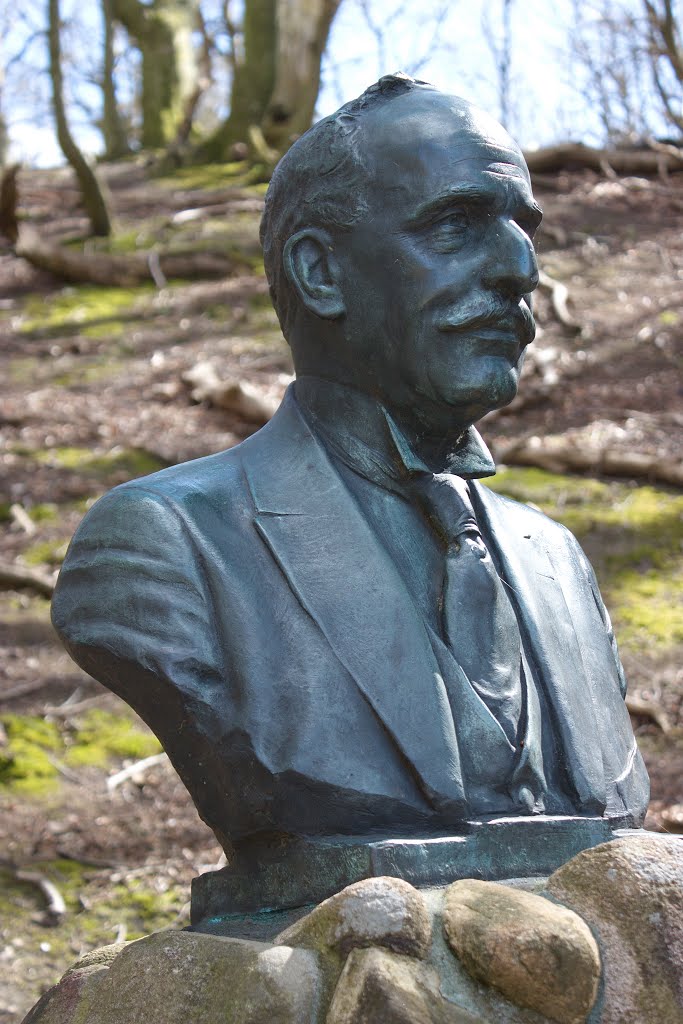
Today is the birthday of Jaromír Vejvoda (March 28, 1902-November 13, 1988). He was a Czech composer and his most famous song was the iconic “Beer Barrel Polka.”

Jaromir_Vejvoda

Here’s a short biography of Vejvoda, from his Wikipedia page:

Vejvoda was born and died in Zbraslav. He learned to play the fiddle and flugelhorn in a band led by his father. Later he played these instruments in a military band. He started to compose in the 1920s while he worked as a bartender in a pub owned by his father-in-law. In 1929 he wrote the Modřanská polka named after Modřany, a suburb of Prague where it was played the first time. This catchy tune became a hit and allowed Vejvoda to pursue music as a full-time professional. It was published in 1934 with lyrics Škoda lásky, kterou jsem tobě dala… Publishing house Shapiro Bernstein acquired the rights shortly before World War II and the polka, now the “Beer Barrel Polka” with the English lyrics “Roll out the barrel…”, became the most popular song of the Allies in the West, although the original Czech lyrics have a very different meaning and do not speak about beer. After the war this polka became popular around the world, in German-speaking countries as “Rosamunde.”

Jaromir-Vejvoda

And here’s the story of his famous song:

“Beer Barrel Polka”, also known as “The Barrel Polka” and “Roll Out the Barrel”, is a song which became popular worldwide during World War II. The music was composed by the Czech musician Jaromír Vejvoda in 1927.[1] Eduard Ingriš wrote the first arrangement of the piece, after Vejvoda came upon the melody and sought Ingriš’s help in refining it. At that time, it was played without lyrics as “Modřanská polka” (“Polka of Modřany”). Its first text was written later (in 1934) by Václav Zeman – with the title “Škoda lásky” (“Wasted Love”).

The polka became famous around the world. In June 1939, “Beer Barrel Polka”, as recorded by Will Glahé, was number one on the Hit Parade. This version was distributed by Shapiro Bernstein. Glahé’s earlier 1934 recording sold many copies in its German version Rosamunde (it is possible the reason for the rapid spread was due to the occupation of Czechoslovakia by Nazi Germany, and subsequent emigration of thousands of Czechs to other parts of the world, bringing this catchy tune with them). The authors of the English lyrics were Lew Brown and Wladimir Timm. Meanwhile, the song was recorded and played by many others such as Andrews Sisters in 1939, Glenn Miller Orchestra, Benny Goodman, Bobby Vinton, Billie Holiday, and Joe Patek who sold over a million copies of his album “Beer Barrel Polka.”

During World War II, versions in many other languages were created and the song was popular among soldiers, regardless of their allegiances. It was claimed many times that the song was written in the country where it had just become a hit. Its actual composer was not widely known until after the war.

skoda-lasky

Praha_Zbraslav_-_Jaromir_Vejvoda

This more recent recording is by Frankie Yankovic and His Yanks.

But the first hit recording of the song under the name we all know it by today was in 1939, by Will Glahé.

Filed Under: Birthdays, Just For Fun, Related Pleasures Tagged With: Czech Republic, History, Music

Beer Saints: St. Cuthbert

March 20, 2025 By Jay Brooks

Today is the feast day of St. Cuthbert (c. 634 – 20 March 687), sometimes referred to as Cuthbert of Lindisfarne. In addition to being the patron saint of England, and specifically Durham, Newcastle, Hexham, Lancaster and Northumbria, shepherds, sailors, and against the plague, he is also the patron saint of maltsters. According to some sources, this is because “during his final years, in retreat on the Island of Farne, Cuthbert was only able to sustain himself by growing barley. He also became a protector of the barley by invoking the name of God to disperse the birds who hungered to consume the barley.”

Here’s his overview from Wikipedia:

Cuthbert was an Anglo-Saxon saint of the early Northumbrian church in the Celtic tradition. He was a monk, bishop and hermit, associated with the monasteries of Melrose and Lindisfarne in what might loosely be termed the Kingdom of Northumbria, in North East England[b] and the South East of Scotland. After his death he became the most important medieval saint of Northern England, with a cult centred on his tomb at Durham Cathedral. Cuthbert is regarded as the patron saint of Northumbria.

Cuthbert grew up in or around Lauderdale, near Old Melrose Abbey, a daughter-house of Lindisfarne, today in Scotland. He decided to become a monk after seeing a vision on the night in 651 that St. Aidan, the founder of Lindisfarne, died, but he seems to have seen some military service first. He was quickly made guest-master at the new monastery at Ripon, soon after 655, but had to return with Eata of Hexham to Melrose when Wilfrid was given the monastery instead. About 662 he was made prior at Melrose, and around 665 went as prior to Lindisfarne. In 684 he was made bishop of Lindisfarne, but by late 686 he resigned and returned to his hermitage as he felt he was about to die. He was probably in his early 50s.

Cuthbert discovers the piece of timber washed up with the tide, that was to be used as a roof beam, c. late 12th century.

Here’s another telling of his story, from OrthoChristian, picking it up after he’d been prior of Lindisfarne for twelve years and had been teaching the rules of monastic life to the Lindisfarne monks.

Little by little he introduced very strict discipline and monastic rules to the monastery—he lived precisely such a life himself—and became a real father to his brethren. And he continued his missionary work, which stretched to such places as Durham and Carlisle. But he more and more wished for a solitary life as a hermit. So he first retired to the isle today known as St. Cuthbert’s Island, and then, in 676, he settled on Inner Farne (both isles belong to the group of the Farne Islands which are famous for their wild nature and colonies of many species of birds today). On Inner Farne he built himself a little hut and a chapel and constructed a high wall around them (he was a physically very strong and skillful man).

At first he did not want any visitors to come to him, wishing to see only the sky, the heaven for which he strove so much. The saint lived in extremely difficult conditions on Farne, but nothing was impossible for him because God and the angels were always nearby. The saint by his fervent prayer expelled all the demons from Farne, who for some time attacked him ferociously. He also provided food for himself by the labor of his hands: through his prayer the soil on Farne became fertile and he was able to grow barley there, and a holy well with an abundant amount of water gushed forth from a dry rock on the isle due to his prayers. With time monks from Lindisfarne and other monasteries, nevertheless, started to flock to him and inhabitants from outside Lindisfarne followed too, in spite of the remoteness of that site. And Cuthbert, though he tried to avoid fame, could not refuse them wise instruction and words of consolation.

And they mention his growing of barley a little later in the story.

Some modern researchers suggest that St. Cuthbert was the first man in history to speak up in defense of wild nature, in his case: eider ducks. Maybe this is just a legend, but it is certain that he took care of these birds during his life and they still nest on Inner Farne in masses, as if in memory of the great saint. Northumbrians call these eider ducks “chicken of Cuddy” after St. Cuthbert. According to Bede, when Cuthbert first sowed seeds of barley on Inner Farne, birds started pecking them. The saint reproached them for that and they did not do it again. Two ravens used to steal straw from the small guesthouse near the saint’s cell. Cuthbert ordered them to leave the isle for such behavior. But the ravens soon returned with their wings prostrated and the heads lifted low as a sign of their remorse. More than that, they brought him lard to atone for their guilt. The saint forgave them, allowed them to stay on the isle and used the lard to waterproof his shoes.

There is a specific cross named for the saint, known as the St Cuthbert’s Cross, which is used on the County Durham flag, for example.

Filed Under: Birthdays, Just For Fun, Related Pleasures Tagged With: Great Britain, History, Religion & Beer

Beer Saints: St. Joseph

March 19, 2025 By Jay Brooks

Today is the feast day of St. Joseph, husband of Mary, and the “legal” father of Jesus. While he’s not the patron saint of brewers or anything beer related, it’s his feast day that marks the beginning of the Frühjahrsbierfest in Munich, Germany. Frühjahrsbierfest translates as “Spring Beer Festival” and it’s also sometimes called “Little Oktoberfest.” It’s very similar to Oktoberfest, held in the same place but is more local-focused and considerably smaller. The modern festival is held in late April now, ending in early May, and this year’s one in Stuttgart begins April 16th and concludes on May 8, with a similar one in Munich over the same dates. But today is its traditional start date and it lasted, I believe, around two weeks.

“Saint Joseph with the Flowering Rod,” by Jusepe de Ribera, c. 1630.

Here is his main description from his Wikipedia page:

Joseph (Hebrew: יוֹסֵף‎, romanized: Yosef; Greek: Ἰωσήφ, romanized: Ioséph) is a figure in the canonical gospels who was married to Mary, mother of Jesus, and was the legal father of Jesus. The Gospels name brothers of Jesus; the Gospel of James, an apocryphal work of the late 2nd century, theorized these as the sons of Joseph from an earlier marriage. This position is still held in the Orthodox churches, but the Western church holds to Jerome’s argument that both Joseph and Mary must have been lifelong virgins and that the “brothers” must have been his cousins. Perspectives on Joseph as a historical figure are distinguished from a theological reading of the Gospel texts.

Joseph is venerated as Saint Joseph in the Catholic Church, Orthodox Church, Oriental Orthodox Church, Anglicanism, and Lutheranism. In Catholic traditions, Joseph is regarded as the patron saint of workers and is associated with various feast days. The month of March is dedicated to Saint Joseph. Pope Pius IX declared him to be both the patron and the protector of the Catholic Church, in addition to his patronages of the sick and of a happy death, due to the belief that he died in the presence of Jesus and Mary. Joseph has become patron of various dioceses and places.

“Joseph’s Dream” by Rembrandt, completed in 1645.

While not a beer saint in the usual sense, I included him because of his association to this German beer festival. Because of his importance to Christianity, he is a patron for a bewildering number of people, places and things, including carpenters, craftsmen, families, lawyers, people who fight communism, social justice, travelers, working people. The places he’s the patron for include, Austria, Belgium, Bavaria, Bohemia, Canada, the Croatian people, the New World, along with Buffalo, NY; Cologne, Germany; La Crosse, Wisconsin; San Jose, California; and Westphalia, Germany. And trust me, that’s just the tip of the iceberg. For the rest, check out CatholicSaints.info.

Filed Under: Beers, Birthdays, Breweries, Events, Just For Fun, Related Pleasures Tagged With: Beer Festivals, Festivals, Germany, Religion & Beer

The Cheerupping-Cup

March 19, 2025 By Jay Brooks

Today, like every day, I surveyed a list of writers born this day and try to find an appropriate quote involving beer or drinking for the day. I’ve been doing this for years and have amassed a fairly sizable quantity of quotations. But today I stumbled upon yet another great word that has been lost to time, or in this case never quite seems to have caught on at all, which is a pity.
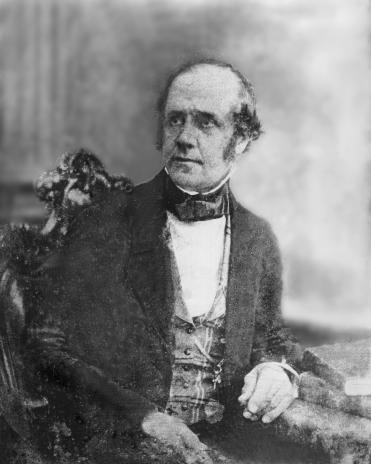
Tobias Smollett was born today in 1721 in “Dalquhurn, now part of Renton in present-day West Dunbartonshire, Scotland.” According to his Wikipedia page, he “was a Scottish writer and surgeon. He was best known for writing picaresque novels such as The Adventures of Roderick Random (1748), The Adventures of Peregrine Pickle (1751) and The Expedition of Humphry Clinker (1771), which influenced later generations of British novelists, including Charles Dickens.”

While searching through his work today, I happened upon a great word in his 1771 novel The Expedition of Humphry Clinker, which is described as “the last of the picaresque novels of Tobias Smollett, published in London on 17 June 1771 (three months before Smollett’s death), and is considered by many to be his best and funniest work. It is an epistolary novel, presented in the form of letters written by six characters: Matthew Bramble, a Welsh Squire; his sister Tabitha; their niece Lydia and nephew Jeremy Melford; Tabitha’s maid Winifred Jenkins; and Lydia’s suitor Wilson.”

In the 59th letter of the novel, of a total of 85, which was written by J. Melford Argylshire and addressed “To Sir Watkin Phillips, Bart. of Jesus college, Oxon” and beginning “Dear Knight,” Smollett invented the word “chearupping-cup” to describe … well, a cup of cheer, with, naturally, alcohol in it. Here’s the paragraph that includes it:

When the Lowlanders want to drink a chearupping-cup, they go to the public house, called the Change-house, and call for a chopine of two-penny, which is a thin, yeasty beverage, made of malt; not quite so strong as the table-beer of England,—This is brought in a pewter stoop, shaped like a skittle, from whence it is emptied into a quaff; that is, a curious cup made of different pieces of wood, such as box and ebony, cut into little staves, joined alternately, and secured with delicate hoops, having two cars or handles—It holds about a gill, is sometimes tipt round the mouth with silver, and has a plate of the same metal at bottom, with the landlord’s cypher engraved.—The Highlanders, on the contrary, despise this liquor, and regale themselves with whisky; a malt spirit, as strong as geneva, which they swallow in great quantities, without any signs of inebriation. They are used to it from the cradle, and find it an excellent preservative against the winter cold, which must be extreme on these mountains—I am told that it is given with great success to infants, as a cordial in the confluent smallpox, when the eruption seems to flag, and the symptoms grow unfavourable—The Highlanders are used to eat much more animal food than falls to the share of their neighbours in the Low-country—They delight in hunting; have plenty of deer and other game, with a great number of sheep, goats, and black-cattle running wild, which they scruple not to kill as vension, without being much at pains to ascertain the property.

I confirmed with the O.E.D. that this is the sole instance of the word being used (at least that they recorded) and which thy defined as “Of an alcoholic drink: reviving; comforting….” “Chear,” being an archaic form of “cheer,” that never quite caught on as well as cheer, it feels better with the double-ee’s. And indeed later editions spelled it “cheerupping-cup” as listed in “A Supplemental English Glossary,” by T. Lewis O. Davis, and published in 1881, under an entry for “Twopenny.”

From “A Supplemental English Glossary,” by T. Lewis O. Davis.

And in another instance from a news report in the Stamford Mercury, Friday, July 4, 1823, there’s a story using the word.

The language of love, so much talked of by the poets, prevailed against every remonstrance of friends and even the rage and fury of relations. The happy swain had conquest in his cheeks and will love, cherish, honour and obey. Hand in hand the couple blithely proceeded to the adjoining village of Rippingale where the festive board groaned with the weight of the feast and it also being the annual feast day of the parish, the tabor struck up and the village was gay. Rural sports were the order of the day and the merry dance and sparkling glass went round till night was at odds with morning and the groom, having taken sufficient of the cheer-upping cup, the happy couple retired and after throwing the stocking, the jolly swain was left wrapt in the arms of Morpheus to enjoy (what he most needed), nature’s sweet restorer, balmy sleep. [My emphasis.]

But doing some more rabbit-hole digging, I discovered it was used earlier with the more common ‘cheer’ spelling, though still not often and certainly not enough to suggest its use became widespread by any means. The O.E.D. lists as an adjective “cheer-upping” with the same definition, “[o]f an alcoholic drink: reviving; comforting…” with a range of use from 1720-1832. They also list a quotation that predates Smollett, from 1733, so it’s likely he wasn’t the first after all. “They … retired to comfort themselves with a cheer-upping Cup,” which is from “English Malady: or, A Treatise of Nervous Diseases of All Kinds,” by George Cheyne, though he remains one of the few to use it in fiction.

But whoever came up with, I still don’t understand why it fell out of use, because it just rolls pleasantly off the tongue: “cheerupping-cup.” Who wouldn’t want, or often need, a cheerupping-cup? I think I need one now. Who’s with me? Fancy a cheerupping-cup?

Filed Under: Just For Fun, Related Pleasures Tagged With: History, Words

Märzen Madness 2025

March 16, 2025 By Jay Brooks

I may not be biggest fan of academia’s version of indentured servitude, otherwise known as college basketball, but I do still enjoy the games of March Madness every year. The tournament is usually a fun diversion for a few weeks each year, so for the fourteenth straight year, I’ve set up a fantasy game, similar to fantasy football or baseball. It’s a bracket game through Yahoo which I call “Märzen Madness.” It doesn’t look like there’s a limit to the number of people who can play, so sign up and make your picks beginning right now, with the first games taking place on March 18, which only gives you roughly two days to complete your bracket. So don’t delay, sign up right away and fill out your bracket.

To join Märzen Madness and play the Yahoo! Sports Tournament Pick’em game, just follow the link below. You’ll also need a Yahoo ID (which is free if you don’t already have one).

To accept the invitation and play Märzen Madness this year, just follow this invitation link.

Good Luck Everybody!

Filed Under: Just For Fun, Related Pleasures Tagged With: Basketball, Fantasy, Games, Sports

Historic Beer Birthday: Joseph Priestley

March 13, 2025 By Jay Brooks

oxygen
Today is the birthday of English scientist Joseph Priestley (March 13, 1733-February 6, 1804). While he was also a “clergyman, natural philosopher, chemist, educator, and Liberal political theorist,” he’s perhaps best known for discovering oxygen (even though a few others lay claim to that honor). According to Wikipedia, “his early scientific interest was electricity, but he is remembered for his later work in chemistry, especially gases. He investigated the ‘fixed air’ (carbon dioxide) found in a layer above the liquid in beer brewery fermentation vats. Although known by different names at the time, he also discovered sulphur dioxide, ammonia, nitrogen oxides, carbon monoxide and silicon fluoride. Priestley is remembered for his invention of a way of making soda-water (1772), the pneumatic trough, and recognising that green plants in light released oxygen. His political opinions and support of the French Revolution, were unpopular. After his home and laboratory were set afire (1791), he sailed for America, arriving at New York on 4 Jun 1794

Priestley

In the biography of Priestley at the American Chemistry Society has a sidebar about his work with fermentation:

Bubbling Beverages

In 1767, Priestley was offered a ministry in Leeds, Englane, located near a brewery. This abundant and convenient source of “fixed air” — what we now know as carbon dioxide — from fermentation sparked his lifetime investigation into the chemistry of gases. He found a way to produce artificially what occurred naturally in beer and champagne: water containing the effervescence of carbon dioxide. The method earned the Royal Society’s coveted Copley Prize and was the precursor of the modern soft-drink industry.
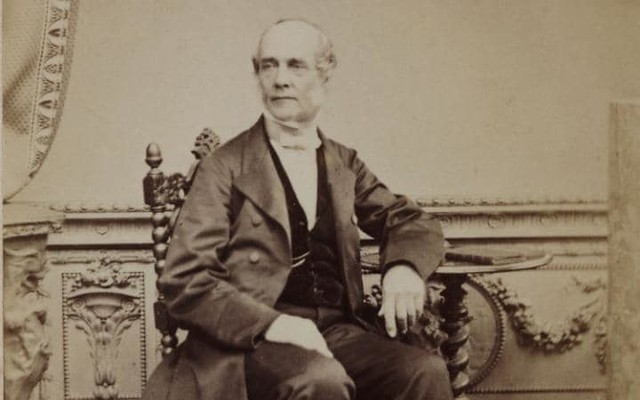
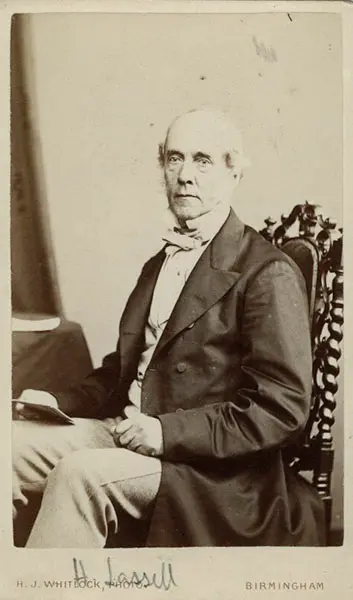
Even Michael Jackson, in 1994, wrote about Priestley connection to the brewing industry.

“It has been suggested that the Yorkshire square system was developed with the help of Joseph Priestley who, in 1722, delivered a paper to the Royal Society on the absorption of gases in liquids. In addition to being a scientist, and later a political dissident, he was for a time the minister of a Unitarian church in Leeds. During that period he lived next to a brewery on a site that is now Tetley’s.”

ZIN42670

In the New World Encyclopedia, during his time in Leeds, it explains his work on carbonation.

Priestley’s house was next to a brewery, and he became fascinated with the layer of dense gas that hung over the giant vats of fermenting beer. His first experiments showed that the gas would extinguish lighted wood chips. He then noticed that the gas appeared to be heavier than normal air, as it remained in the vats and did not mix with the air in the room. The distinctive gas, which Priestley called “fixed air,” had already been discovered and named “mephitic air” by Joseph Black. It was, in fact, carbon dioxide. Priestley discovered a method of impregnating water with the carbon dioxide by placing a bowl of water above a vat of fermenting beer. The carbon dioxide soon became dissolved in the water to produce soda water, and Priestley found that the impregnated water developed a pleasant acidic taste. In 1773, he published an article on the carbonation of water (soda water), which won him the Royal Society’s Copley Medal and brought much attention to his scientific work.

He began to offer the treated water to friends as a refreshing drink. In 1772, Priestley published a paper entitled Impregnating Water with Fixed Air, in which he described a process of dripping sulfuric acid (or oil of vitriol as Priestley knew it) onto chalk to produce carbon dioxide and forcing the gas to dissolve by agitating a bowl of water in contact with the gas.

Joseph_Priestley

And here’s More About Priestley from the Birmingham Jewellry Quarter, whatever that is:

But his most important work was to be in the field of gases, which he called ‘airs’ (he would later chide James Keir for giving himself airs (oh dear!) by adopting the term ‘gases’ in his Dictionary of Chemistry, saying ‘I cannot help smiling at his new phraseology’). Living, as he did at the time, next to a brewery, he noticed that the gas given off from the fermenting vats drifted to the ground, implying that it was heavier than air. Moreover, he discovered that it extinguished lighted wood chips. He had discovered carbon dioxide, which he called ‘fixed air’. Devising a method of making the gas at home without brewing beer, he discovered that it produced a pleasant tangy taste when dissolved in water. By this invention of carbonated water, he had become the father of fizzy drinks!

PriestleyStamp

But perhaps my favorite retelling comes from the riveting History of Industrial Gases:

priestley-gases

The relevant findings were published in 1772, in Impregnating Water with Fixed Air

20. By this process may fixed air be given to wine, beer, and almost any liquor whatever: and when beer is become flat or dead, it will be revived by this means; but the delicate agreeable flavour, or acidulous taste communicated by the fixed air, and which is manifest in water, will hardly be perceived in wine, or other liquors which have much taste of their own.

PriestleyJoseph-Lab
Priestley’s apparatus for experimenting with ‘airs.’

Filed Under: Beers, Birthdays, Just For Fun, Politics & Law, Related Pleasures Tagged With: History, Science of Brewing

Historic Beer Birthday: George M. Biner

February 22, 2025 By Jay Brooks

Today is the birthday of George Michael Biner (February 22, 1897-June 19, 1971). He was the brother of William H. Biner, who was also a brewer. He was born in the Montana territory to Swiss immigrant parents. His father, Theophil Biner, knew Leopold Schmidt and even worked at his Olympia Brewery. Biner sent both of his sons, including George, to brewing school in Milwaukee.

This short biography is from his Find-a-Grave page:

George Michael Biner (1897-1971) was the son of Theophil Biner and Juliana Truffer. George contracted polio as a soldier during World War I. However, he went on to be a successful artist, brew master and inventor. He supervised the laying of the tile for the dome of the Los Angeles County Library, invented a labeling machine for breweries and was the co-founder of Biner Ellison which pioneered the production of liquid filling machines, and still makes brewery equipment today.

The RL-HG 540 Labeler.

Filed Under: Birthdays, Just For Fun, Related Pleasures Tagged With: Brewing Equipment, California, Montana

Historic Beer Birthday: Louis Camille Maillard

February 4, 2025 By Jay Brooks

maillard-reaction
Today is the birthday of French physician and chemist Louis Camille Maillard (February 4, 1878-May 12, 1936) who was the Doogie Howser of his era, joining the faculty of the University of Nancy when he was only sixteen. He rose to prominence thanks to his work on kidney disorders and later taught medicine at the prestigious University of Paris.

Louis_Camille_Maillard_wikipedia

But his biggest contribution, especially to brewing, was an accidental discovery he made in 1912, which today we call the Maillard Reaction, or Browning Reaction.

Here’s the basic description, from Wikipedia:

The Maillard Reaction a chemical reaction between amino acids and reducing sugars that gives browned food its desirable flavor. Seared steaks, pan-fried dumplings, biscuits (widely known in North America as cookies), breads, toasted marshmallows, and many other foods undergo this reaction. It is named after French chemist Louis-Camille Maillard, who first described it in 1912 while attempting to reproduce biological protein synthesis.

The reaction is a form of non-enzymatic browning which typically proceeds rapidly from around 140 to 165 °C (284 to 329 °F). At higher temperatures, caramelization and subsequently pyrolysis become more pronounced.

The reactive carbonyl group of the sugar reacts with the nucleophilic amino group of the amino acid, and forms a complex mixture of poorly characterized molecules responsible for a range of odors and flavors. This process is accelerated in an alkaline environment (e.g., lye applied to darken pretzels), as the amino groups (RNH3+) are deprotonated and, hence, have an increased nucleophilicity. The type of the amino acid determines the resulting flavor. This reaction is the basis of the flavoring industry. At high temperatures, a potential carcinogen called acrylamide can be formed.

In the process, hundreds of different flavor compounds are created. These compounds, in turn, break down to form yet more new flavor compounds, and so on. Each type of food has a very distinctive set of flavor compounds that are formed during the Maillard reaction. It is these same compounds that flavor scientists have used over the years to make reaction flavors.

It was, and is, for food science and understanding how heat and cooking create flavors. If you want to dive deeper, the Warwick Medical School has an article on the Historical Development of the reaction, and NPR’s Food for Thought on the centenary of Malliard’s discovery posted 100 Years Ago, Maillard Taught Us Why Our Food Tastes Better Cooked.

But it was also very important to brewing, too, especially when it comes to malting and roasting malt to get different flavors and colors in the beer. For example, here’s UC Davis professor Charlie Bamforth writing about the Malliard Reaction in his book Grape vs. Grain.

Bamforth-malliard
Not surprisingly, John Mallett, in his recent book Malt: A Practical Guide from Field to Brewhouse, mentions Malliard’s contributions to brewing science.

Mallet-malliard-1
Mallet-malliard-2

The chemistry website Compound Interest has a good explanation with their post, Food Chemistry – The Maillard Reaction.

Food-Chemistry-Maillard-Reaction

And finally, Popular Science’s BeerSci series discusses the Maillard Reaction in How Beer Gets Its Color.

Filed Under: Birthdays, Just For Fun, Related Pleasures Tagged With: History, Malt, Science of Brewing

Historic Beer Birthday: William Wenzel

January 31, 2025 By Jay Brooks

science

Today is the birthday of William Frederick Wenzel (January 31, 1854-January 15, 1927). He was born in Germany, but moved to Wisconsin as a boy with his family. He was trained in a number of fields, but is best known in brewing circles for the Wenzel Filtermass, which became the standard for clarifying filters for breweries in the 19th century. Unfortunately, I could not find any photographs of Wenzel. This biography of Weznel is from a “History of Outagamie County, Wisconsin.”

Wenzel-bio
wenzel-filtermass

And this obituary was published in the Post-Crescent of Appleton, Wisconsin, on April 25, 2917.

Wenzel-obituary

Filed Under: Birthdays, Just For Fun, Related Pleasures Tagged With: Germany, Science of Brewing, Wisconsin

« Previous Page
Next Page »

Find Something

Northern California Breweries

Please consider purchasing my latest book, California Breweries North, available from Amazon, or ask for it at your local bookstore.

Recent Comments

  • Steve 'Pudgy' De Rose on Historic Beer Birthday: Jacob Schmidt
  • Jay Brooks on Beer Birthday: Bill Owens
  • Steve 'Pudgy' De Rose on Beer Birthday: Charles Finkel
  • Steve 'Pudgy' De Rose on Beer Birthday: Bill Owens
  • Steve "Pudgy" De Rose on Beer Birthday: Pete Slosberg

Recent Posts

  • Beer Birthday: John Dean December 30, 2025
  • Beer In Ads #5155: Bock Beer Festival Parade December 29, 2025
  • Historic Beer Birthday: August A. Busch, Sr. December 29, 2025
  • Beer Birthday: Michael Lewis December 29, 2025
  • Beer Birthday: Kurt Widmer December 29, 2025

BBB Archives

Feedback

Head Quarter
This site is hosted and maintained by H25Q.dev. Any questions or comments for the webmaster can be directed here.