Brookston Beer Bulletin

Jay R. Brooks on Beer

  • Home
  • About
  • Editorial
  • Birthdays
  • Art & Beer

Socialize

  • Dribbble
  • Email
  • Facebook
  • Flickr
  • GitHub
  • Instagram
  • LinkedIn
  • Pinterest
  • RSS
  • Twitter
  • YouTube

Powered by Genesis

Historic Beer Birthday: John Roehm

January 5, 2026 By Jay Brooks

john-roehm
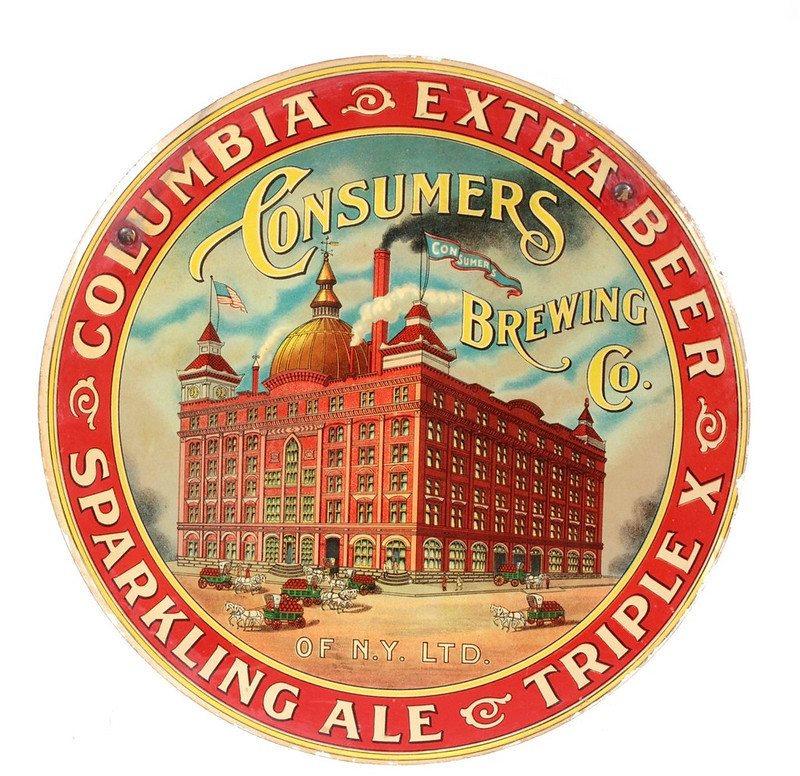
Today is the birthday of John Roehm (January 5, 1849-June 9, 1907). He was born in Bavaria, Germany, but moved to Philadelphia, Pennsylvania in 1888 and bought the brewery of Anton Stroebele (founded in 1870), renaming it the John Roehm Brewery, but also traded under the Consumers Brewing Co., at least until 1909. After Roehm’s death in 1907, his brewery appears to be sold to Henry Hess and went through several name (and probably ownership) changes until lastly it was known as the Otto Erlanger Brewing Co. from 1837 to 1951, when it closed for good. Unfortunately, I haven’t been able to find out much info about Roehm or the brewery.

This is Roehm’s obituary from the Brewers Journal:

John-Roehm-obit
john-roehm-brewery
john-roehm-poster-2

roehmporter
Nice-Purple-Blob-Beer-John-Roehm-Brewing-Co-_57 (1)

Filed Under: Birthdays, Breweries, Just For Fun Tagged With: Germany, History, Pennsylvania, Philadelphia

Historic Beer Birthday: Thomas Aitken

January 5, 2026 By Jay Brooks

Today is the birthday of Thomas Aitken (January 5, 1821-January 5, 1884). He was born in Scotland, but emigrated to Australia in 1842, when he was 19. “In 1851 he founded the Corio Brewery in Geelong, and later started the Union Brewery in Melbourne. By 1854 he was in business at Victoria Parade, East Melbourne, where he had built a new brewery, distillery and malthouse. The large complex was called the Victoria Parade Brewery,” which was later known simply as the Victoria Brewery. He also developed the formula for their most popular beer, Victoria Bitter, also in 1854. When Thomas died in 1884, his son Archibald took over the brewery, but today it is owned by Carlton & United Breweries, which in turn was acquired by SABMiller, although last year, Asahi Breweries bought Carlton & United.

This biography of the Aitken family was written in 2007 for the Townsville Bulletin.

The home of Thomas and Margaret Aitken which stood near where the Aitkenvale library now stands. He would one day have a suburb and a street named after him but when Thomas Aitken jumped on board a ship bound for Australia, he was just a runaway in search of a better life in a new country.

Born 1825 in Edinburgh, Scotland Thomas Aitken was raised in an orphanage until, on reaching an age when he was able to fend for himself, he absconded from his guardians and boarded the vessel which was to change his destiny.

Upon arrival in his adopted country in the 1840s, Thomas was drawn to life on the land, working on farms around the Brisbane area, but his heart remained in Scotland.

‘‘He worked on cattle properties on what was then Moreton Bay,’’ John Aitken, 69 of Maroochydore said of his great-grandfather.

‘‘Then he went back to Scotland and married his wife, who was a daughter on a neighbouring property to where the orphanage was — he must have known her previously. Her family disowned them — they didn’t want her associated with a poor orphan but later the family came out to Australia as well.’’

Thomas and his new wife Margaret Aitken arrived in Australia on January 6, 1852 on the ship WilliamandMary, and worked the interior of Queensland as drovers before finally settling in Townsville.

‘‘They came up here to Townsville in about 1867,” Mr Aitken said. ‘‘He and his wife worked their way up from the areas along the D’Aguilar Highway which runs inland from Caboolture. They drove their cattle and travelled in horse drays and they came up through western Queensland, and finally they came into Ravenswood and into Townsville. It took them a number of years. The family Bible records where the children were born and they were born at different places along the way.’’

It was during these travels that the stockman, accustomed to austere living, chanced upon a remarkable discovery that would have changed his family’s fortune — but Thomas clearly was not materialistic by nature.

‘‘On the way through he was the first person to discover gold in Ravenswood,” Mr Aitken said of his greatgrandfather’s propitious find.

‘‘He found gold and then when he came to Townsville he told some people who went back and made their fortune out of it. Granddad was more interested in his cows.’’

With his focus solely on cattle, Thomas Aitken, after arriving in Townsville, procured a large parcel of land for grazing on what was then the outskirts of town.

‘‘He had 3500 acres on the Ross River — that’s a huge amount of land and I suspect it was some sort of land grant to get people to move into the country areas,’’ Mr Aitken said.

‘‘Their original house was a little log shanty down on the banks of the river and it got washed away in a flood. Then they built a fairly substantial homestead in an area just at the back of where the Aitkenvale Library is today. The property was originally hyphenated as Aitken-Vale.

‘‘He subdivided a lot of the property in his later years and he just retained about five acres around the homestead. Herveys Range Road was the main road through to Charters Towers back then, and the first stop on the stage coach was the Aitkenvale Arms Hotel (now the Vale Hotel). That was the first change of horses after you left Townsville on a trip to Charters Towers and that was just opposite where their house was,’’ Mr Aitken said.

Thomas and his wife remained in Townsville, raising five children, most of whom continued to live in the township. Elizabeth married Henry Kidner and built the Grand Hotel on Flinders St. Isabella married a Mr Covington — a ’pen-pusher’ for Charles Darwin on his Beagle voyage. Jane married Mr Buckpitt who owned a butcher shop on Flinders St East (where Avis now stands). Margaret married Germanborn Mr Maass and opened Townsville’s first soap factory in Sturt St. Charlotte went to live in Ayr but Mr Aitken’s grandfather John stayed in the region.

‘‘John was the only son — he and my grandmother Sarah lived with Thomas and Margaret for many years on the Aitkenvale property,’’ Mr Aitken said.

‘‘My grandmother used to tell us stories about how in Aitkenvale the water was from a hand pump and in the winter they used to have to pour boiling water down the pump to melt the ice in the mornings before they could pump it. If there’s such a thing as global warming that’s an indication — I don’t think you’d ever have to do that in Aitkenvale now.

‘‘The biggest disruption to their lives however was when there was flooding because they couldn’t get into town. The flood waters used to cut them off in the area of Rising Sun,’’ he said.

Travelling from Aitkenvale to the city was no easy matter in those early days with natural impediments frequently necessitating a more circuitous route, Mr Aitken said.

‘‘My grandfather worked at the Hubert Wells — the electricity generation and water supply works for Townsville. It was on Ross River Road opposite where The Cathedral School is now. The power was generated by coal and there was a railway line that used to go from Garbutt through to the power house.

‘‘He lived in Railway Estate and he used to go to work on his push bike from Railway Estate to Hubert Wells and if the tide was high and he couldn’t get across the creek at Sandy Crossing he used to have to go across Victoria Bridge because there was no Lowth’s Bridge. It was a long ride. When Lowth’s Bridge was built, my grandmother never called it Lowth’s Bridge, it was always the new bridge. It was rusting and falling apart when I first knew it but it was still called the new bridge,’’ Mr Aitken said.

While the Aitken family prospered in Townsville, they also had their share of misfortune when their spacious home burned down in 1899 and they also narrowly avoided tragedy in 1911 when the SSYongalavanished off Cape Bowling Green.

‘‘My grandmother sailed from Brisbane to Townsville on the Yongalaon the trip before it vanished. She was living in Davidson St in South Townsville at the time and told me how the locals used to walk to the river each evening to meet the returning search parties to find any news of the missing vessel,’’ Mr Aitken said.

Thomas Aitken, who died a wealthy man in 1897, is remembered today as a person of historic importance to Townsville and his name lives on not only in the suburb which is his namesake but also in Aitken St which was once a track leading down to the old homestead. Elizabeth and Charlotte streets were also named in honour of two of his four daughters.

The Victoria Brewery in 1870.

And this short obituary appeared in the Melbourne Herald on January 5, 1884.

“He arrived in Melbourne in the year 1842, being at that time a youth of 19 with intelligence and energy to aid him in his career. In Scotland he had acquired a knowledge of the brewing trade, but he turned his attention to other pursuits at first and was fairly successful. The gold discoveries of 1851 gave an impetus to trade, and Mr Aitken, being of a speculative disposition, took advantage of the tide of affairs and started the Corio Brewery in Geelong. Melbourne, however, offered better advantages, and in 1852 he commenced business in the Union Brewery, Lonsdale street west; shifting two years later, to the site of the present Victoria Parade Brewery. Mr Aitken’s business venture developed into an extensive undertaking, the secret of success being the production of a good article, and the employment of business capabilities to push the trade. The premises owned by the deceased gentleman cover an area of more than three acres of land. The building is effective in design, with an imposing and ornamental facade to the front elevation. In 1861 Mr Aitken established the first distillery under the new Distillation Act, which also proved a success, and the business reached such proportions that the value of the property and plant is now close upon £80,000.”

Thomas Aitken in the late 1800s.

Also, Gary Gilman, has a nice article about Aitken entitled The Inspirational Victoria Brewery, Melbourne, if you want to know more.

Filed Under: Birthdays, Breweries, Just For Fun Tagged With: Australia, Scotland

Historic Beer Birthday: Matt Bonney

January 5, 2026 By Jay Brooks

Today would have been the 52nd birthday of Matt Bonney, formerly of Brouwer’s and Bottleworks, both in Seattle, Washington, and later the proprietor of Toronado Seattle. Bonney was one of my favorite people in the industry. You would have been be hard-pressed to find a person more passionate about good beer. He also knew how to throw a party and was always a gracious host. Unfortunately, he unexpectedly passed away in late March of 2019. Join me in drinking a toast to Bonney tonight. He is definitely missed.

Bonney, me and Dave Keene at GABF a few years ago.
Matt (3rd from left) with the final judges at the 2009 Hard Liver Barleywine Festival at Brouwer’s.
Matt with Dave Keene, from the Toronado, at the A Night of Ales beer dinner during SF Beer Week.
Matt with Chris Black, from Falling Rock Taphouse in Denver, pouring candy sugar to create Publication at Russian River Brewing in May of 2009.
Dr. Bill with Matt at Slow Food Nation 2008.
Matt at the Bistro Double IPA Fest in 2010 along with Stephen Beaumont, Sean Paxton, Pete Slosberg and Rick Sellers.

Filed Under: Birthdays, Just For Fun Tagged With: Pubs, Seattle, Washington

Beer Birthday: Rodger Davis

January 5, 2026 By Jay Brooks

Today is Rodger Davis’ 56th birthday. He’s the former head brewer at Triple Rock in Berkeley, California, among much else, and several years ago opened his own brewery in Alameda, Faction Brewing, along with his wife Claudia Pamparana. Rodger is a terrific brewer and has been very active in the local beer community and it’s great to see him at the helm of his own place. He’s one of those people always giving the craft beer world a good name, helping colleagues, organizing festivals and being a good friend to all. If only he could keep his tongue in his mouth. Join me in wishing Rodger a very happy birthday.

Rodger at a Berkeley Museum event a few years ago, in 2009, pouring Triple Rock beer.
Rodger with his wife Claudia at a Beer Chef beer dinner for Allagash in 2009.
Rodger at the 2009 Triple Rock Firkin Fest.
Rodger and Claudia shortly after Faction Brewery opened, with Rodger doing his best not to make a goofy face. (You should see the outtakes!)
That’s more like it….
Rodger & me
Rodger & me at his surprise birthday party at The Trappist several years ago for his 40th. (photo by Mike Condie.)

Filed Under: Birthdays Tagged With: Berkeley, California, Northern California

Historic Beer Birthday: Denis Holliday

January 4, 2026 By Jay Brooks

Today is the birthday of Denis Holliday (January 4, 1917-June 2, 2016). He was born in Great Yarmouth, England, and worked as an apprentice at Greene King beginning in 1938. He then worked at Tollemache brewery in Ipswich and Bass’s Wenlock Brewery in London before being hired by Dorchester’s Eldridge Pope as head brewer in 1954. He completely cleaned up the brewery and turned the old brewery into a modern one. He also created their Royal Oak and Thomas Hardy’s Ale.

denis-holliday

In 1972, he won “a record seven International Brewing Awards, the “Oscars” of the beer industry, at the London Brewers Exhibition,”and was listed “in the Guinness Book of Records after brewing the strongest beer in the world.” For a time, he was president of the International Brewers’ Guild and was awarded a Queen’s Silver Jubilee Medal for Industry in 1977. He retired from brewing in 1982, but continued to work as a consultant in the industry. In 2008, he received an MBE (Order of the British Empire) for his service to the community.

I’m sorry to say I hadn’t known about Holliday until after a few summers ago. Unfortunately, that’s when he passed away and his obituary appeared in The Telegraph. He sounds like he was an amazing person who lived a full life.

Filed Under: Birthdays, Just For Fun Tagged With: England, Great Britain, History

Beer Birthday: Derek Walsh

January 4, 2026 By Jay Brooks

Today is the 68th birthday of Derek Walsh. Derek was born in Toronto, Canada, but has lived in the Netherlands as long as I’ve known him. He originally worked in the aviation industry, but also attended the Doemens Akademie Gräfelfing in Munich. He currently works as a consultant for BEER+, which he founded in 2002, and also works with StiBON, a beer education program. I first met Derek somewhere judging a beer competition but it was long enough ago for me not to remember when or where. But I see him frequently worldwide at various judging opportunities throughout the average year, and I love our chats over a beer. Plus, he’s a great advocate for better beer. Join me in wishing Derek a very happy birthday.

Judging last year in Gent for the Brussels Beer Challenge.
Jumping for joy, judging the Brussels Beer Challenge.
Out in Cape Town after judging in South Africa in 2022.
Derek in 2015 (photo by Paul Peng).
Derek (on the right) judging at GABF in 2023.
Derek (on the far left) with the whole gang of judges at the Brussels Beer Challenge in 2021.

Filed Under: Birthdays, Just For Fun Tagged With: The Netherlands

Historic Beer Birthday: Michael Sieben

January 3, 2026 By Jay Brooks

siebens
Today is the birthday of Michael Sieben (January 3, 1835-September 5, 1925). He was born in Ebersheim, Germany, but came to America when he was 25, in 1860. In 1865, he bought the James L. Hoerber Brewery, running it until 1875, when he built a new brewery which he named the Michael Sieben Brewery. Twenty years later he sold that brewery to the Excelsior Brewing Co., but promptly built another brewery, selling that one to United Breweries Co. in 1898, though he remained its manager of the Sieben’s Branch. A brewery bearing his name continued on in Chicago until prohibition, was briefly open during it, and re-opened afterwards in 1933 as Sieben’s Brewery Co., which remained in business until 1967.

Michael-Sieben-100ys

This biography of Sieben is from “The Book of Chicagoans: A Biographical Dictionary of Leading Living Men of the City of Chicago, edited by Albert Nelson Marquis, and published in 1911:

Michael-Sieben-bio
In 1934, the newly reopened Sieben’s Brewery issued a press release celebrating its 100th anniversary of its founder, Michael Sieben:

The one hundreth birthday anniversary of Michael Sieben, the founder of the brewery which is now known all over the world, is celebrated these days by the Chicago Sieben Brewery Company, 1470 Larrabee Street. For the festive occasion an especially tasteful beer, the Sieben Centennial beer, was put on the market. It was made after a receipt known to the family for seventy years.

Michael Sieben was born on January 3, 1835, in Ebersheim, near Mainz, Germany, and died in Chicago September 5, 1925, at the age of ninety years. He learned the honorable art of beer brewing in Mainz, Germany, and as brewer’s and cooper’s assistant he journeyed through Germany, Austria, and Switzerland. For two years he worked at Lyons, Maney, and Dijon until the wanderlust urged him to go to the unknown land on the other side of the big pond.

Michael Sieben came in the year 1860 to America. During the succeeding five years, he worked as malster and brewer’s assistant, then as master brewer, and later as manager in Chicago, Indianapolis, Cincinnati, and Boston. In the year 1865, he returned to Chicago and founded here the Sieben brewery in the then Griswold Street. In the year 1876, the brewery moved to Larrabee Street, south of Blackhawk Street, at which place it is still operating today.

From the marriage of Michael Sieben and his wife Ida, nee Fausch, came seven children, of whom two sons, William and Bernard, are in charge of the brewery today.

sieben-brewery

This account of the brewery is from “100 Years of Brewing,” published in 1903:

sieben-brewery-100yrs-1
sieben-brewery-100yrs-2
sieben-brewery-100yrs-3

Siebens-Real-Lager-Beer-Labels-Siebens-Brewery

Around 2006, a group of investor’s tried to bring back the Sieben’s beer brand, but the last time the website was updated was 2009, so I don’t think they were successful in the long run. And in fact, the home page states that it’s “off the market.” But this account of Sieben is from their website:

Michael Sieben immigrated to the United States in 1860 from Ebersheim, Germany a village southwest of Mainz. In 1865 Michael founded the Michael SiebenBrewery, located on Pacific Avenue near Clark and Polk Streets in Chicago. That street is now the section of La Salle St. south of Congress Parkway. In 1871, the brewery was narrowly missed by the Great Chicago Fire due to a change in wind direction. In 1876 the brewery was relocated to 1466 Larrabee Street, just a short walk from where the Larrabee-Ogden station of the Chicago “L” Transit System would be built in 1900.

In 1896 Michael Sieben built a larger brewery on Clybourn Avenue, not far from the Larrabee Street location. In 1898 it was merged into the United Breweries Company. By 1903, Michael Sieben was back in the original Larrabee Street location and changed the name of his company to the Sieben´s Brewery Company. Michael Sieben´s wish was that the brewery bearing his name not be owned by anyone outside the Sieben family, perhaps due to the short alliance he had with United Breweries Company that this wish came into effect.

During the years of Prohibition 1920-1933 the Sieben family was out of the beer business. The years of Prohibition gave brewers few choices, some started to produce soda and/or near beer (a nonalcoholic beer) or just closed forever. Some brewers however, were faced with a couple of other choices, sell or lease their brewery. The Sieben´s were faced with this choice and decided to lease out the brewery to an entity which was supposed to be engaged in producing a nonalcoholic beer. This new company was called the George Frank Brewery and is said to be owned in partnership by Dion O´Banion (head of the north side gang) and Johnny Torrio (head of the south side gang). The story goes, that O´Banion calls up Torrio and said that he is tired of the bootleg business and wants to retire to his place in Colorado. O´Banion offered to sell Torrio, his share of the brewery for $500,000.00, Torrio agreed. Dion O´Banion was aware of the penalties for prohibition convictions.

The first, a mere slap on the hand. The second, put you away for nine months and O´Banion knew that Torrio had one conviction against him. Dion O´Banion also had information that the Chicago Police Department was to raid the brewery the day of the meeting. On May 19, 1924 the two men met at the Sieben´s Brewery. Johnny Torrio, handed Dion O´Banion a case with $500,000.00 in cash and in came the police and arrested everyone in sight.

This is where the common historical account differs from what family members who were there observed. The Sieben family member story is as follows, despite what was reported in the newspapers at the time. The transfer of funds either happened at another time or in another place. The raid happened about a week after this transaction. Also, O´Banion had no idea when a raid would take place, he only knew that the police officer he was paying off to inform him of when the next inspection was going to happen was no longer in a position to tell him. Elliot Ness had figured the cop for a “dirty” cop and had him transferred to where we don´t know, just out of the picture.

The normal operation with the gangsters was to at all times have two gangsters on the premises to run things. One would work in the office and the other was one of the bartenders. When the raid DID happen, the gangster/bartender, ran back through the brewery and kicked out the operating engineer that was running the steam engine that was used for refrigeration. He then grabbed a pair of overalls and dirtied his face with coal dust and sat at the controls of the steam engine so it looked like he was just an “engineer” worker and not a gangster. The gangster in the office came out and saw that there was a police officer standing guard in the street in front of the brewery. He got Leonard Sieben (who was 8 years old at the time) and told him to go out front and stand next to the officer and act like he was pulling a handkerchief out of his sleeve when the officer looked the other way. That was the signal for the gangster to slip out the front door and down the street, unseen. When the rest of the police surrounded the building and came in to conduct the raid, they ran right past the “engineer” who then just walked out the back door.

No gangsters were arrested at that time, they must have been rounded up later and this fact was hidden in an apparently elaborate deception so that the public could not find out. One might suspect that Elliot Ness had to score some kind of hit to garner some public or political support at a time when it was widely known that Prohibition was not working. The court records make no mention of Torrio, O´banion or old Scarface himself. The only names mentioned are “a Mr. Sieben, who owns the Realty” and George Frank who was the lease operator.

No matter which version you want to believe, this is what led to the infamous “handshake murder” of O´Banion at his north side State Street flower shop. It was also what sparked off the north and south side gang wars, including the St. Valentine´s DayMassacre in 1929.

In 1933 Prohibition came to an end and the Sieben family reopened the brewery, bier stube and garden. For the next three and a half decades, Sieben´s Brewery Company would brew the fine beers for which it was known. In the 1950´s and 1960´s the beer business was changing and Sieben´s was finding it hard to keep up. Faced with the competition of mass produced beers, the Sieben´s Brewery and associated bier stube closed in 1967. The bottling house caught fire in 1968 and was heavily damaged. In 1969 all of the Sieben´s Brewery Company buildings were torn down.

In the 1980´s the name Sieben Brewery was resurrected by group of entrepreneurs not related to the Sieben family. The “new Sieben´s” was a brew pub in the River North Area of Chicago. The brew pub did not package and distribute their products, nor did they ever brew or have the original Sieben´s Brewery recipes.

In 2006 the Sieben´s family is back in the brewing business. Richard Sieben is a fourth generation family brewer and along with long time homebrewing friend Elliot Hamilton are, “Carrying on a Great Family Brewing Tradition.” Sieben´s brings back the original “Real Lager Beer” that was brewed at the original brewery. The Sieben´s name has been around since the time when Chicago was a big beer brewing town. That´s why we like to think and say that we´re also “Carrying on Chicago´s Great Brewing Tradition.”

Sieben’s beer, after a two year run on the market has been temporarily withdrawn from distribution. Not having our own brewery, while saving a bundle of money in infrastructure, costs us in flexibility. Our Wisconsin based brewery is ready and willing to produce more beer but until we are able to secure a dependable distributor who has our product featured in their portfolio, we must take time off to rethink our strategy.

Siebens-Bier-Stube-Post-Cards-Siebens-Brewery-Co
This postcard of the Sieben Bier Strude is from 1937.

Siebens-Real-Lager-Labels-Siebens-Brewery

Filed Under: Birthdays, Breweries, Just For Fun Tagged With: Chicago, Germany, History, Illinois

Beer Birthday: Rafał Kowalczyk

January 3, 2026 By Jay Brooks

jabeerwocky

Today is the birthday of Rafał Kowalczyk, who founded the JaBEERwocky Brower in Warsaw, Poland. They also operate two pubs, one in Warsaw and the other in Poznan. I’ve judged several times and in several places with Rafał, but have only gotten to know him more recently, and he’s a terrific person. Join me in wishing Rafał a very happy birthday.

Rafał-Kowalczyk-hops
Rafał in 2016.
Rafał-Kowalczyk-with-Jan
At the Brussels Beer Challenge with fellow judge Jan Lichota.
Rafał-Kowalczyk-eye
I guess this beer will make you see cockeyed.

Filed Under: Beers, Birthdays, Just For Fun Tagged With: Poland

Historic Beer Birthday: Robert F. Ballantine

January 3, 2026 By Jay Brooks

ballantine
Today is the birthday of Robert Francis Ballantine (January 3, 1836-December 9 or 10, 1905). He was born in New Jersey, and was the son of Peter Ballantine, who founded the Patterson & Ballantine Brewing Company in 1840 in Newark, New Jersey. Peter Ballantine had three sons, and they joined him in the business in 1857, which is when the name was changed to the P. Ballantine and Sons Brewing Company. In 1883, when his father died, Robert became president of the brewery, outliving both his brothers and continuing to run the family business until his own death in 1905.

robt-ballantine-portrait
This short biography of Robert Ballantine is from “New Jersey History,” published in 1909:

robt-ballantine-NJ-History-1909

ballantine-stamps

And this lengthier obituary is from the Brewers Journal:

robt-ballantine-obit-1
robt-ballantine-obit-2
robt-ballantine-obit-3
robt-ballantine-obit-4

Ballantines-Lager-Beer-Labels-Ballantine
And here’s a history of the Ballantine brewery from “A History of American Manufactures from 1608 to 1860,” by John Leander Bishop, Edwin Troxell Freedley, Edward Young, published in 1868:

ballantine-brewery-bio-1
ballantine-brewery-bio-2
ballantine-brewery-bio-3

letterheadglassbeeraleCutOut

Ballantine-xmas-1964-blanks

Filed Under: Birthdays, Breweries, Just For Fun Tagged With: Ballantine, History, New Jersey

Historic Beer Birthday: Peter Schoenhofen

January 2, 2026 By Jay Brooks

Schoenhofen-brewery
Today is the birthday of Peter Schoenhofen (January 2, 1827-January 2, 1893). He owned a brewery in Chicago that was called the Peter Schoenhofen Brewing Co.

Peter-Schoenhofen

Portrait from “100 Years of Brewing,” originally published in 1901.

schoenhofenportrait

And here’s another portrait that included this text: “German-born Peter Schoenhofer (1827-1893) came penniless to America in 1851 and took jobs in various breweries around Chicago. Eventually he and a partner, Matheus Gottfried, opened a brewery. Schoenhofen bought out Gottfried in 1867 and the company became the Peter Schoenhofen Brewing Company. Ads bragged that the beer’s clean taste came from the artesian spring located under the brewery. Their Edelweiss brand was the best known.”

Edelweiss-Light-Beer-Labels-Schoenhofen-Company
Here’s an entry about Schoenhofen from the Encyclopedia of Chicago:

Peter Schoenhofen, a Prussian immigrant, was in Chicago working in the brewing trade by the 1850s. In 1861, he started a partnership with Matheus Gottfried; they were soon operating a brewery at Canalport Avenue and 18th Street where, during the early 1860s, they made about 600 barrels of lager beer a year. In 1867, Schoenhofen bought out his partner, and the company became the Peter Schoenhofen Brewing Co. By 1868, annual output had increased to about 10,000 barrels. During the 1890s, when the business was owned by the City Contract Co. of London, England, annual output reached 180,000 barrels. Around 1900, the Schoenhofen family regained control of the company, which employed about 500 people at its brewery on West 12th Street by 1910. During this time, the company was also known as the National Brewing Co. The company’s “Edelweiss” brand of beer was a big seller. Operations shut down during Prohibition, but by 1933, after the national ban on alcohol production was lifted, the company was back in business as the Schoenhofen-Edelweiss Co. After being purchased by the Atlas Brewing Co. in the late 1940s, Schoenhofen became part of Dewery’s Ltd. of South Bend, Indiana, in 1951, and thereafter assumed the Dewery’s name. By the beginning of the 1970s, there was nothing left of its Chicago operations, although Dewery’s reintroduced the famous Edelweiss brand in 1972 after nearly a decade-long hiatus.

Schoenhofen-bldg-1

Forgotten Chicago has a nice photo gallery about the Schoenhofen Brewery and what remains of it today, saying that what is left “of the Schoenhofen Brewery are still the most impressive pre-Prohibition era brewery structures in Chicago. Buildings were first erected at 18th and Canalport in 1862 when the brewery relocated here from 12th and Jefferson. The last buildings were built in 1912, and the brewery remained in business until 1924, a casualty of prohibition.”

Schoenhofen-bldg-2

The area where the brewery operated are today known as the Schoenhofen Brewery Historic District.

Edelweiss1

I love their ad copy: “A case of good judgment,” which they used extensively. And this beer was a “secret brew,” whatever that means.

Filed Under: Birthdays, Just For Fun Tagged With: Birthdays, Chicago, Germany, History

« Previous Page
Next Page »

Find Something

Northern California Breweries

Please consider purchasing my latest book, California Breweries North, available from Amazon, or ask for it at your local bookstore.

Recent Comments

  • Bob Paolino on Beer Birthday: Grant Johnston
  • Gambrinus on Historic Beer Birthday: A.J. Houghton
  • Ernie Dewing on Historic Beer Birthday: Charles William Bergner 
  • Steve 'Pudgy' De Rose on Historic Beer Birthday: Jacob Schmidt
  • Jay Brooks on Beer Birthday: Bill Owens

Recent Posts

  • Beer Birthday: Brian Stechschulte May 14, 2026
  • Beer Birthday: Dan Carey May 14, 2026
  • Beer Birthday: John Martin May 14, 2026
  • Beer In Ads #5250: Pacific Bock Beer May 13, 2026
  • Historic Beer Birthday: Jacob Adams May 13, 2026

BBB Archives

Feedback

Head Quarter
This site is hosted and maintained by H25Q.dev. Any questions or comments for the webmaster can be directed here.