Brookston Beer Bulletin

Jay R. Brooks on Beer

  • Home
  • About
  • Editorial
  • Birthdays
  • Art & Beer

Socialize

  • Dribbble
  • Email
  • Facebook
  • Flickr
  • GitHub
  • Instagram
  • LinkedIn
  • Pinterest
  • RSS
  • Twitter
  • YouTube

Powered by Genesis

Historic Beer Birthday: Henry Flach

November 23, 2025 By Jay Brooks

flach
Today is the birthday of Henry Flach (November 23, 1835-November 13, 1896). He was born in Hessen, Germany and emigrated to American when he was 16, in May of 1852. In 1880, Flach and a partner, John Henzler, bought Morris Perot’s Brewery in Philadelphia (which had opened just two years before, in 1878), who operated it as Henzler & Flach until 1885, when they changed the name to the Eagle Brewery. In 1888, Henry bought out Henzler and brought his two sons into the business, calling it Henry Flach & Sons. When Henry Flach dies in 1986, his sons sold the business the following years and the new owners called it American Brewing Company before it closed for good in 1920 because of Prohibition.
HenryFlach-MarieHartung-05
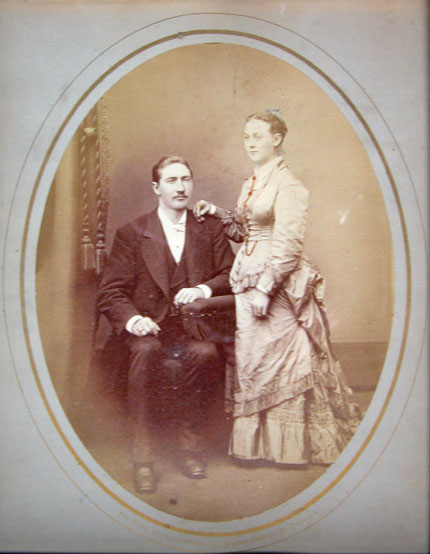
Henry Flach and his wife, Marie Rosalie Frederica Hartung.
This is his obituary from the Public Ledger on November 14, 1896:

Henry Flach, a well-known brewer of this city, died yesterday at his residence, 1500 N. 52nd St. Mr. Flach had been complaining of illness for a year past and three months ago underwent an operation, from the effects of which he, for a while, appeared to have nearly recovered.

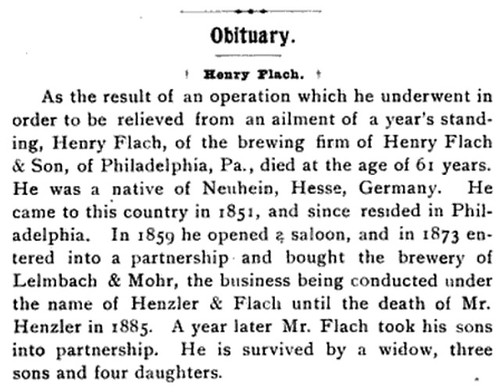
Mr, Flach was born in Neuenhien, Hessen, Germany, November 23, 1835. He came to this country in 1851 and since resided in Philadelphia. In 1860, he opened a saloon, and in 1873 entered into a partnership and bought the brewery of Leimbach and Mohr, 32nd and Master Sts., the business being conducted under the name of Henzler and Flach until the death of Mr. Henzler in 1885. A year later Mr. Flach took his sons into partnership, the firms name being changed to Flach and Sons. He is survived by a widow, three sons and four daughters.

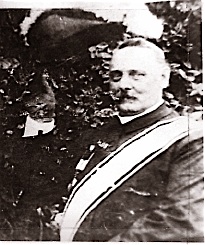
Mr. Flach was a Mason and was a member of the William B, Schneider Lodge, No. 419; Oriental Chapter, No 183; St. Johns Commandery No. 4; and among other organizations to which he belonged are the 34th Ward Republican Club, Philadelphia Lodge, No. 30 D. O. H.; Belmont Lodge, No.19, K of P; Philadelphia Rifle Club, the Bavarian Society, the Gambrinus Society and the Lager Beer Brewery Association.”

Henry is buried at the Northwood Cemetery in Phila., located off Broad St. a short distance from Temple University. His burial plot is shared with Philip Spaeter, who, according to Edna Godshall, was Henry’s best friend and the reason Henry named his last son Philip. Philip Spaeter worked as a cooper and made kegs for the brewers. Philip named his son, Philip Henry in honor of Henry Flach.

In a letter to Richard Flach, Muriel Flach Eldridge, granddaughter of Henry, writes that there were 33 carriages in Henry’s funeral procession.
henry-flach-a-mason
This is Flach’s biography from Find-a-Grave:

Henry was born on Nov 23, 1835 in house #5 in Neuenhain, a small village located southwest of Kassel in northern Hesse. He was baptized in the protestant church on 1 Jan 1836 and was confirmed in 1849. His godfather was Henrich Ehl who was a teacher in Bischhausen.

His father Johannes was an innkeeper, musician, brewer, farmer, and member of the village council. Johannes died at age 44 in 1847 on Henry’s 12th birthday. Henry’s grandfather was Conrad Flach, a blacksmith from the village of Zimmersrode which is about two miles west of Neuenhain. Conrad had died 15 years before Henry’s birth. Conrad was the son of Nicholaus Flach.

On May 6, 1852, at the age of 16, Henry Flach arrived at the port of Philadelphia, Pa. He came from Bremen, Germany aboard the ship Louise Marie. The passenger list had his name spelled (Heinrich Floch) and his occupation was listed as a farmer. Henry became a citizen on September 28, 1860 and his home in Germany was listed as the “Elector of Hesse-Cassel” and his occupation in the 1860 census says he was a woodturner.He married Rosalie Hartung, who arrived in USA from Saxony, Germany in 1855.

In the Phila. census of 1860, Henry is listed as Henry (HOGG) living in the 1st ward of Phila.on June 11, 1860. His occupation is listed as a wood turner. He hailed from Hesse Cassel and wife Rosalie shows as being from Saxony. Daughter Anna (age 5) shows born in Pa. Son Henry was age 3 and also born in Pa. Son George was 1 and reported born in Delaware.

1861 At the onset of the Civil War, President Lincoln called for 72,000 soldiers to serve for 3 months. Henry joined the 1st Delaware infantry in Wilmington, DE and served his 3-month term at which time he went back to civilian life in Philadelphia. Henry’s younger brother George enlisted in Sep 1861 and was wounded at the battle of Sharpsburg aka Antietam

  • In 1863, Henry Flach was living at 422 Morris St. in Philadelphia. His occupation is “Lager beer”
  • In 1864 and 1865 Henry had a tavern at 1514 S. 4th St. in Phila.
  • In 1866, Henry and brother George are listed at 433 Enterprise St as machinists.
  • In 1867, Henry has a saloon at 1206 S. 4th St.
  • In 1868 and 1869, Henry is listed in Gopsills Directory as having a “saloon” at 1206 4th St.

In Nov. 1869 Henry petitioned for membership into the William B Schneider lodge as a mason and on Dec 21, 1869 Henry was initiated. On Dec 21 he was a 1st degree. On Jan. 2, 1870 he was a 2nd degree. He became a Master on Feb. 15, 1870 and passed to the Chair Dec. 12, 1871.
flach-eagle-brewery
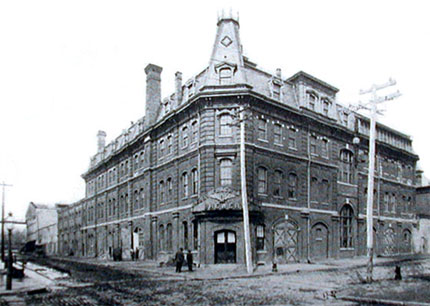
Eagle Brewery.
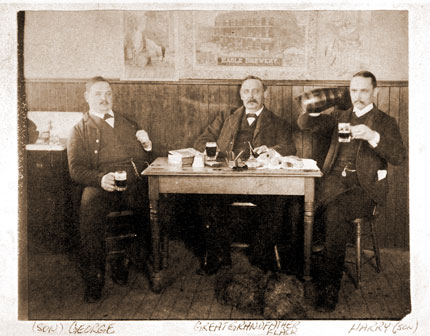
HenryFlach-EagleBrewery-sepia
Henry (center) with his two sons.
And this short obituary is from the American Brewers Review from 1897:

henry-flach-obit
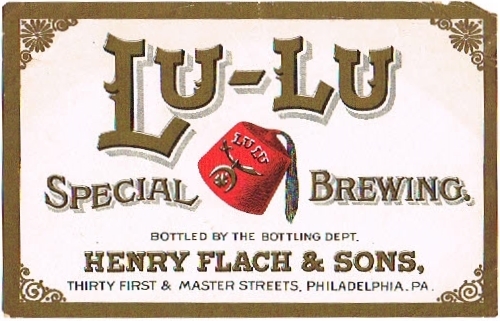
Lu-Lu-Special-Brewing--Labels-Henry-Flach
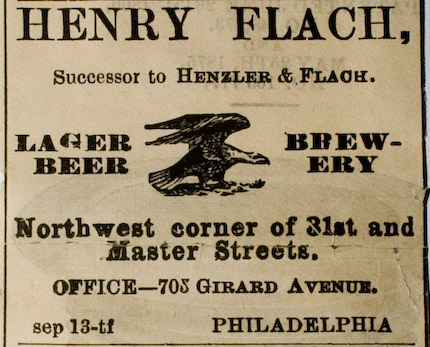
flach-ad

Filed Under: Birthdays, Breweries, Just For Fun Tagged With: Germany, History, Pennsylvania, Philadelphia

Beer In Ads #5122: Z.H.B. Bokbier

November 22, 2025 By Jay Brooks

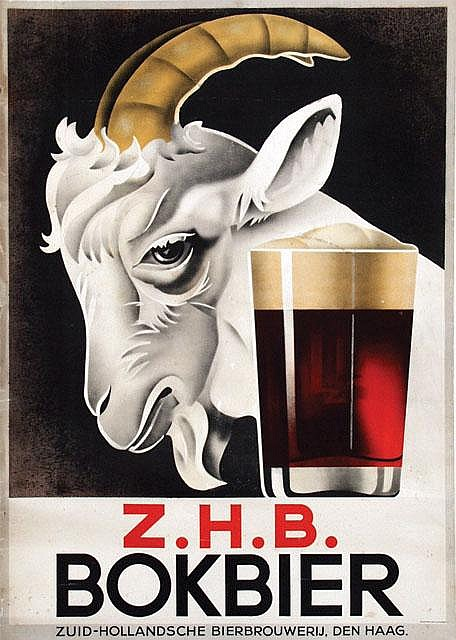
Last year I decided to concentrate on Bock ads for awhile. Bock, of course, may have originated in Germany, in the town of Einbeck. Because many 19th century American breweries were founded by German immigrants, they offered a bock at certain times of the year, be it Spring, Easter, Lent, Christmas, or what have you. In a sense they were some of the first seasonal beers. “The style was later adopted in Bavaria by Munich brewers in the 17th century. Due to their Bavarian accent, citizens of Munich pronounced ‘Einbeck’ as ‘ein Bock’ (a billy goat), and thus the beer became known as ‘Bock.’ A goat often appears on bottle labels.” And presumably because they were special releases, many breweries went all out promoting them with beautiful artwork on posters and other advertising.

Wednesday’s poster is for Z.H.B. Bokbier, and was published c. 1930. It was made for the Zuid-Hollandsche Bierbrouwerij (or South Holland Beer Brewery) of The Hague, Netherlands, which was originally founded in 1881. The poster was created by Dutch artist Jan Wijga.

Filed Under: Art & Beer, Beers, Breweries, Just For Fun Tagged With: Advertising, Bock, History, The Netherlands

Beer In Ads #5121: Make Way For Gem Bock Beer

November 21, 2025 By Jay Brooks

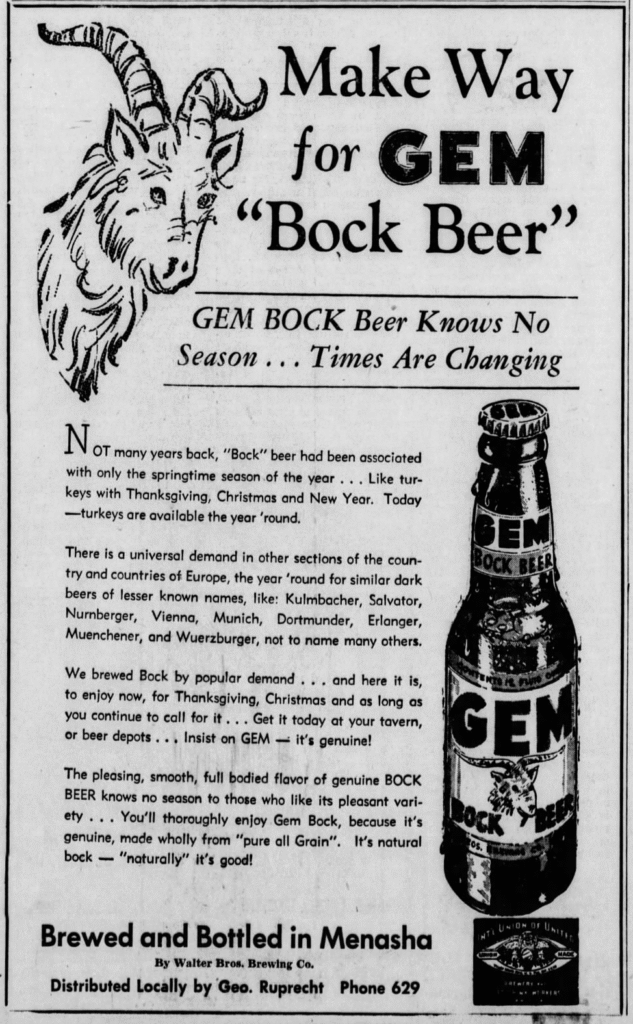
Last year I decided to concentrate on Bock ads for awhile. Bock, of course, may have originated in Germany, in the town of Einbeck. Because many 19th century American breweries were founded by German immigrants, they offered a bock at certain times of the year, be it Spring, Easter, Lent, Christmas, or what have you. In a sense they were some of the first seasonal beers. “The style was later adopted in Bavaria by Munich brewers in the 17th century. Due to their Bavarian accent, citizens of Munich pronounced ‘Einbeck’ as ‘ein Bock’ (a billy goat), and thus the beer became known as ‘Bock.’ A goat often appears on bottle labels.” And presumably because they were special releases, many breweries went all out promoting them with beautiful artwork on posters and other advertising.

Thursday’s ad is for Gem Bock Beer, which was published on November 21, 1952. This ad was for the Walter Bros. Brewing Co. of Menasha, Wisconsin, which was originally founded as the Island City Brewery in 1860. It became known as Walter Bros. in 1933 after prohibition, although the brothers had been involved in the brewery since 1888. This ad ran in The Daily Tribune, from Wisconsin Rapids, Wisconsin.

Filed Under: Art & Beer, Beers, Breweries, Just For Fun Tagged With: Advertising, Bock, History, Wisconsin

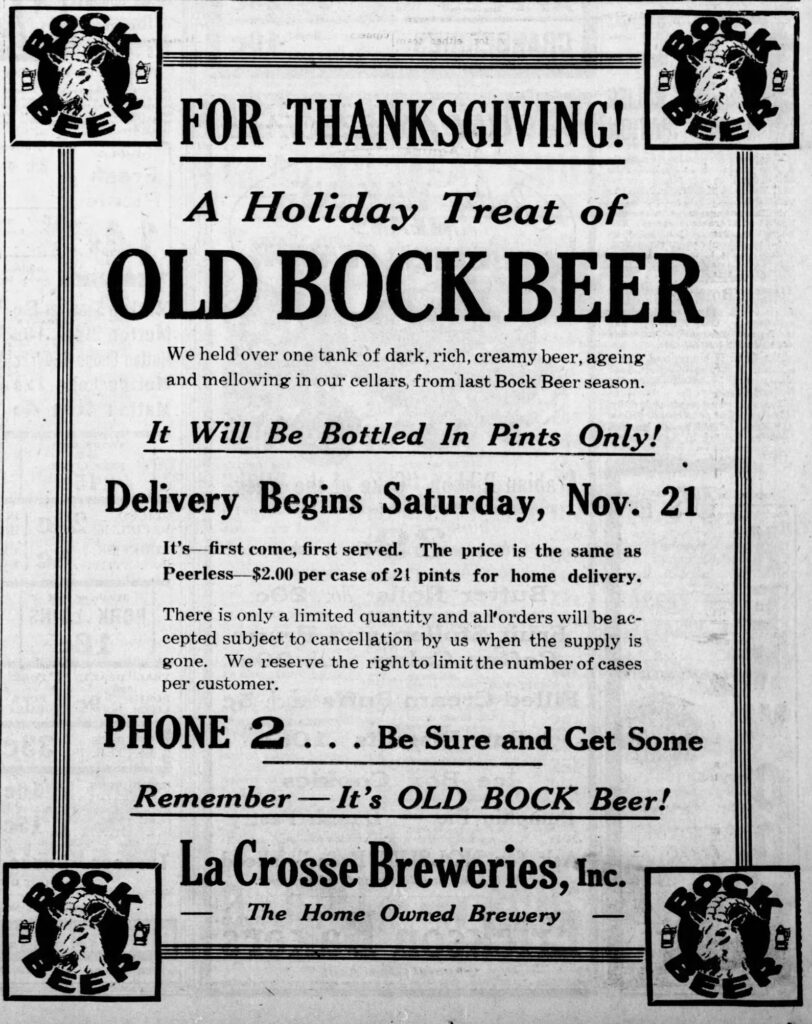
Beer In Ads #5120: For Thanksgiving A Holiday Treat Of Old Bock Beer

November 20, 2025 By Jay Brooks

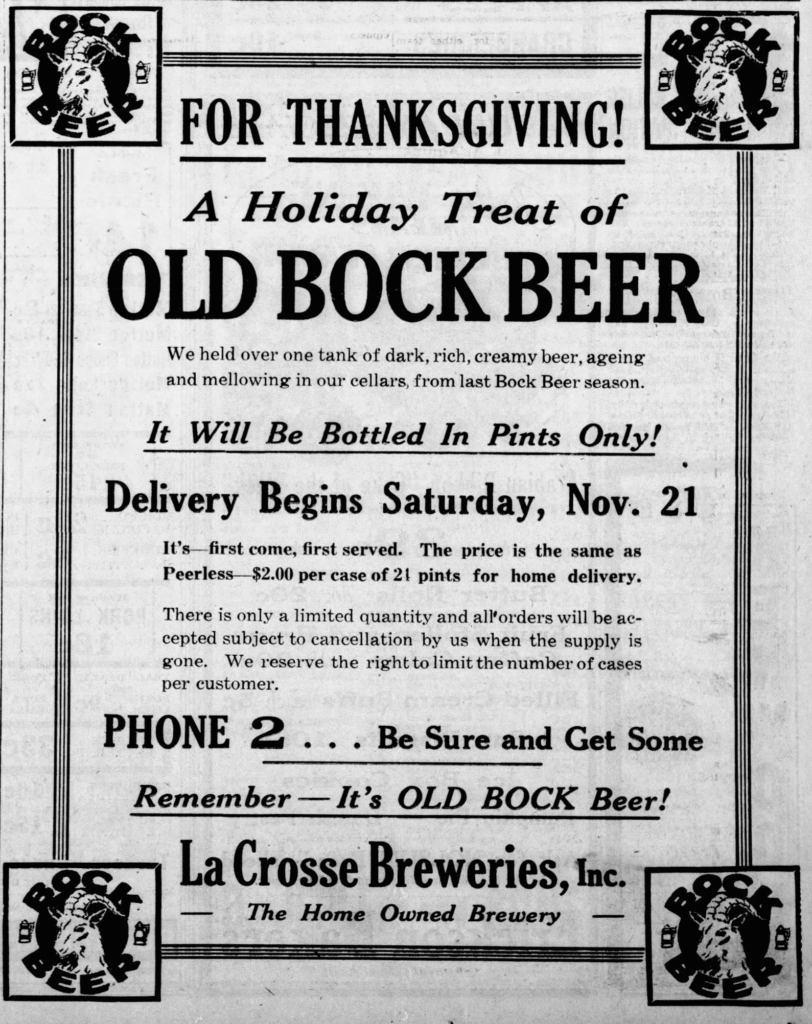
Last year I decided to concentrate on Bock ads for awhile. Bock, of course, may have originated in Germany, in the town of Einbeck. Because many 19th century American breweries were founded by German immigrants, they offered a bock at certain times of the year, be it Spring, Easter, Lent, Christmas, or what have you. In a sense they were some of the first seasonal beers. “The style was later adopted in Bavaria by Munich brewers in the 17th century. Due to their Bavarian accent, citizens of Munich pronounced ‘Einbeck’ as ‘ein Bock’ (a billy goat), and thus the beer became known as ‘Bock.’ A goat often appears on bottle labels.” And presumably because they were special releases, many breweries went all out promoting them with beautiful artwork on posters and other advertising.

Thursday’s ad is for La Crosse Old Bock Beer, which was published on November 20, 1936. This ad was for La Crosse Breweries, Inc. of La Crosse, Wisconsin, which was originally founded in 1857. This ad ran in The La Crosse Tribune, also from La Crosse, Wisconsin. I love that a case is 21 bottles and their phone number is “2.”

Filed Under: Art & Beer, Beers, Breweries, Just For Fun Tagged With: Advertising, Bock, History, Wisconsin

Historic Beer Birthday: Wilhelm Riedlin

November 20, 2025 By Jay Brooks

bavarian-kentucky
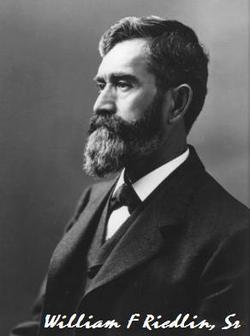
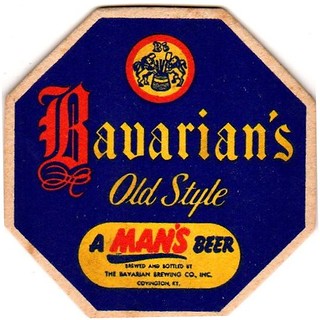
Today is the birthday of Wilhelm Ferdinand Riedlin (November 20, 1850-February 19, 1919). He was born in either Vögisheim or Mulheim, Baden, Germany, and emigrated to the United States in June of 1870. He bought into the Bavarian Brewing Co. of Covington, Kentucky in 1882, and eventually became the sole owner. Riedlin died as prohibition began, but the brewery reopened after repeal, although not until 1935, by one of Riedlin’s son-in-laws and the family retained ownership until 1959, when they sold the business to International Breweries Inc., who finally closed the brewery for good in 1966.

William-Riedlin
This short account of his life is from Find-a-Grave:

He was a very active resident of Covington, KY.

-In his early career, he was a blacksmith, a trade he brought to the US, having learned from his father.
-In 1877, he opened a grocery store, and shortly after established Tivoli Hall Saloon and Beer Garden
-He was the President and owner of the Bavarian Brewing Company by 1882. During prohibition, the Brewing Company manufactured ice and soft drinks.
-He was an active member of the City Legislature and the Covington Elks.
-The director of the Gernan National Bank and Covington Sawmill
-A member and the President of the German Pioneer Society and the Covington Turner Society
-The treasurer of the Baden Benevolent Society
-The President of the Covington Coal Company
-A major stockholder in the Ludlow Lagoon Amusement Park

In 1877, he married Matilda Emma Hoffman. The two made their home at 917 Main Street, Covington KY. Current day, this is now his historic residence, being occupied by a funeral home, the Covington Chapel.

William and Emma had nine children: Carl, Charles, Emma, William Jr, Anna Maria, Edward, Walter F, Lucia and A.K.

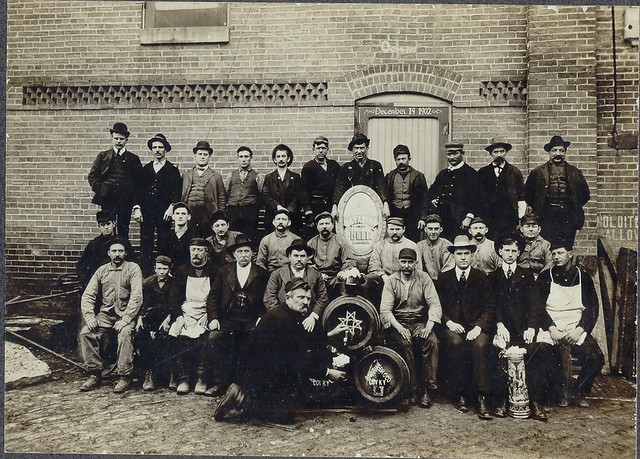
bavarian-brewery-employees

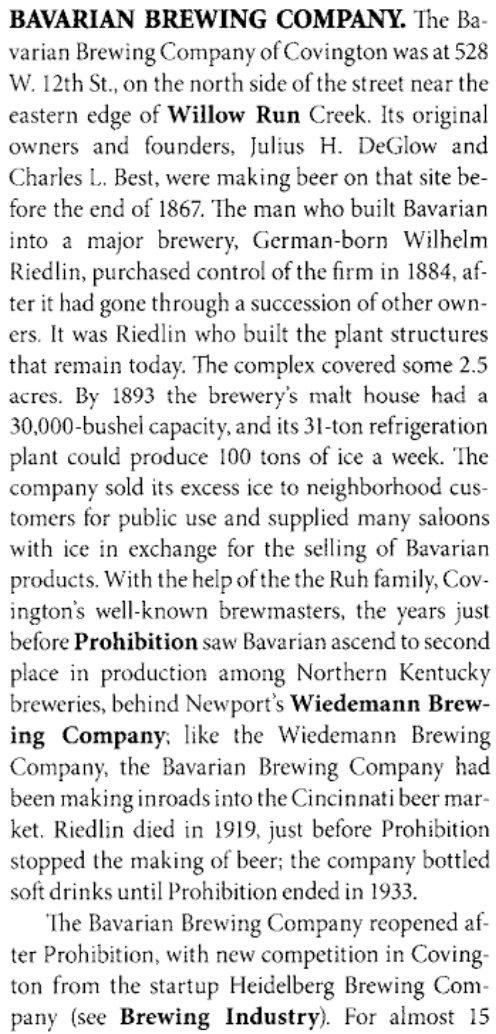
And this history of the brewery is from “The Encyclopedia of Northern Kentucky,” edited by Paul A. Tenkotte, James C. Claypool:

bavarian-brewing-ky-01
bavarian-brewing-ky-02
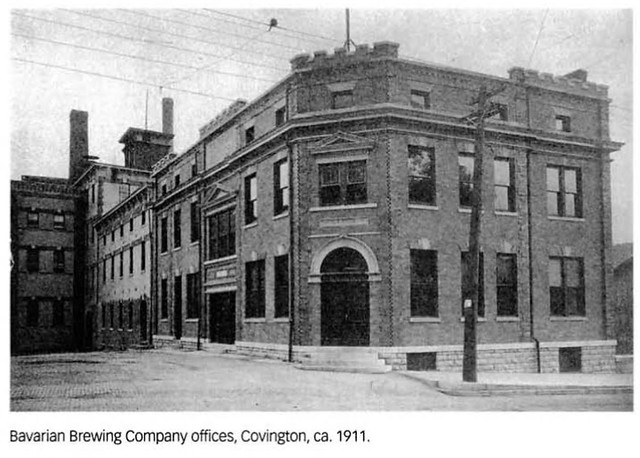
bavarian-brewing-offices-1911

The Wikipedia page for the Bavarian Brewing Co. mentions Riedlin, of course, and his contributions to the success of the business, eventually becoming sole owner.

After the brewery was established as DeGlow & Co., new ownership interests within just a couple of years resulted in several changes to its name beginning in 1868, including DeGlow, Best & Renner. However, in 1873, it was established as the Bavarian Brewery Co. Over the next several years the brewery operated under this name, but ownership interests varied. John Meyer obtained controlling interest and the brewery operated under his name for a short time, starting in 1879. Then in 1882, a German immigrant named William Riedlin, who established a saloon and beer hall called Tivoli Hall in the Over The Rhine area of Cincinnati, entered into partnership with John Meyer. It operated as the Meyer-Riedlin Brewery before Riedlin purchased a controlling interest in the brewery from Meyer, incorporated the business under its former name and became president in 1889.

A number of changes were made to the facility during Riedlin’s tenure including the brewery’s first bottling plant built in 1892. Key bottling innovations including the crown bottle cap and pasteurization increased the shelf life of beer, enabling it to be distributed to a much wider area. Besides Bavarian Beer, the company also offered Riedlin Select Beer. By 1914 the annual beer production was 216,000 barrels, increasing from only 7,341 barrels in 1870, and it became the largest brewery in the state.

Operations expanded from the original location on Pike street to include several structures on the property between Pike Street and 12th Street. The main structure, which essentially remains today, was a four story 175 by 125 foot edifice that opened in January, 1906, serving as both the stock and wash houses. An ice house that manufactured 200,000 pounds of ice daily, and that included a couple of ponds, was adjacent to the brewery. The total land area comprised six and one-half-acres. Ice was used in the lager fermentation process before refrigeration became available and it was also sold to the public.

Beer production was abruptly halted shortly before the introduction of Prohibition in 1918. To prevent a complete closure of the brewery, arrangements were made to bottle non-alcoholic beverages under the name The William Riedlin Beverage Company. However, William Riedlin died in early 1919, several months before Prohibition was officially passed by Congress. His son, William Riedlin, Jr., died within a couple months after his father aged 37. He had previously been a Vice President of the brewery and briefly in charge of the Beverage Company. Shortly after the deaths of the father and son the brewery property was closed – for some fifteen years.

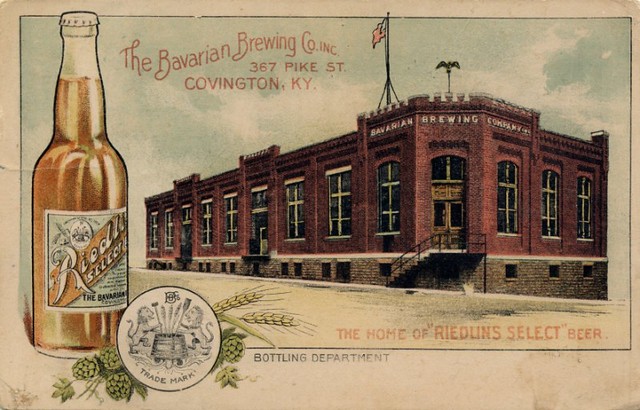
bavarian-postcard-bottling

The Kenton County Public Library also has a history of the Bavarian Brewery, and Riedlin’s involvement is discussed.

Bavarian Brewery can be traced back to the year 1866 when Julius Deglow and Charles L. Best began operating a small brewery on Pike Street in Lewisburg. In 1869, the brewery officially became known as Bavarian. William Riedlin and John Meyer were the next owners of the brewery. They purchased Bavarian in 1882. Seven years later, Riedlin became the sole owner. Anton Ruh was hired as the brew master.

Under William Reidlin’s ownership, Bavarian Brewer expanded rapidly. The first bottling plant at Bavarian was built in 1892 and was replaced in 1903. This two-story structure was modern in every detail and measured 46’ x 188’. At this same time a new stable was constructed to house the many horses needed to pull delivery wagons. A new four-story warehouse followed in 1905. By 1914, Bavarian Brewery was the largest such enterprise in the Commonwealth of Kentucky. The brewery occupied a 6 ½ ace site on Pike Street and was producing 216,000 barrels of beer each year.

Bavarian continued to prosper until the era of Prohibition. In 1919 production at the plant shifted from beer to soft drinks. In 1925, the icehouse was sold to Joseph and Ferdinand Ruh who incorporated as the Kenton Ice Company. Bavarian re-opened in 1935. Over three thousand guests attended the grand opening. The officers at this time were: Murray L. Vorhees, Fred C. Faller, and Leslie S. Deglow. Three years later, William Riedlin’s four grandsons purchased the business for $55,000. Sales rose throughout the 1930s.

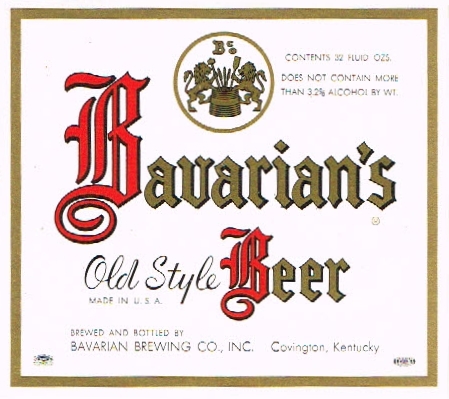
Bavarians-Beer--Labels-Bavarian-Brewing-Company-
Bavarians-Old-Style-Beer-Coasters-Over-4-Inches-Bavarian-Brewing-Company

Filed Under: Birthdays, Breweries, Just For Fun Tagged With: Germany, History, Kentucky

Beer In Ads #5119: Shhh… The Best Bock Beer Is Aging Here!

November 19, 2025 By Jay Brooks

Last year I decided to concentrate on Bock ads for awhile. Bock, of course, may have originated in Germany, in the town of Einbeck. Because many 19th century American breweries were founded by German immigrants, they offered a bock at certain times of the year, be it Spring, Easter, Lent, Christmas, or what have you. In a sense they were some of the first seasonal beers. “The style was later adopted in Bavaria by Munich brewers in the 17th century. Due to their Bavarian accent, citizens of Munich pronounced ‘Einbeck’ as ‘ein Bock’ (a billy goat), and thus the beer became known as ‘Bock.’ A goat often appears on bottle labels.” And presumably because they were special releases, many breweries went all out promoting them with beautiful artwork on posters and other advertising.

Wednesday’s ad is for Genesee Bock Beer, which was published on November 19, 1959. This ad was for Genesee Brewing Co. of Rochester, New York, which was originally founded in 1878. This ad ran in The Post-Star, from Glens Falls, New York.

Filed Under: Art & Beer, Beers, Breweries, Just For Fun Tagged With: Advertising, Bock, History, New York

Historic Beer Birthday: Eugene Hack

November 18, 2025 By Jay Brooks

hack-and-simon
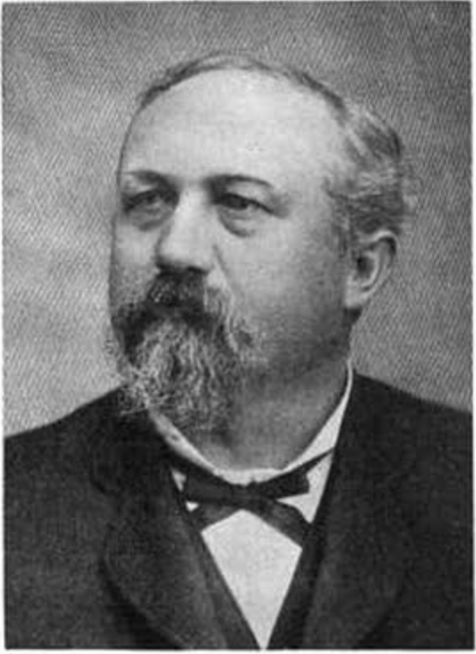
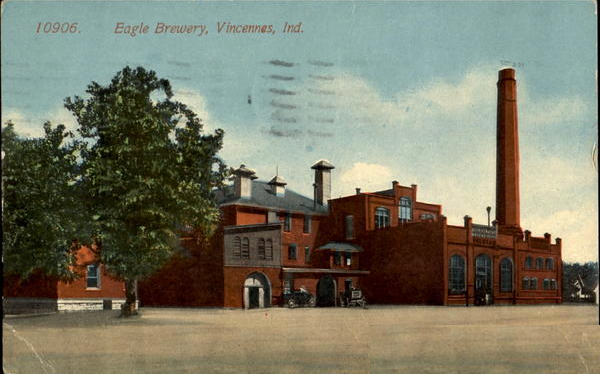
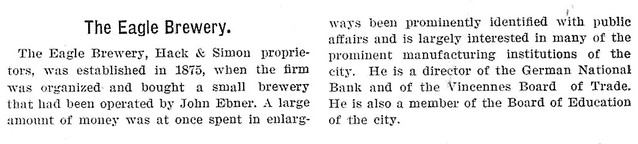
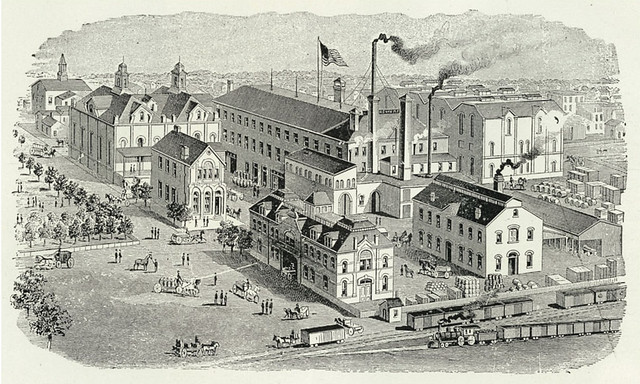
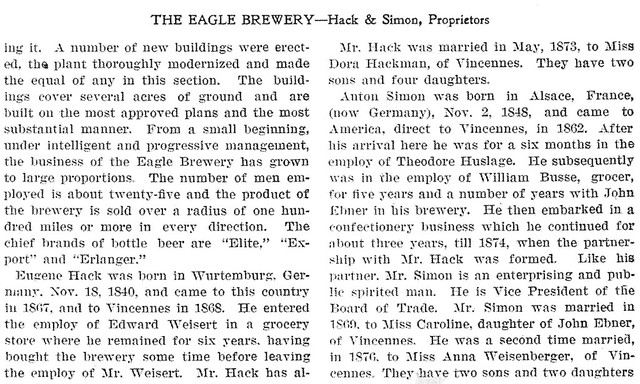
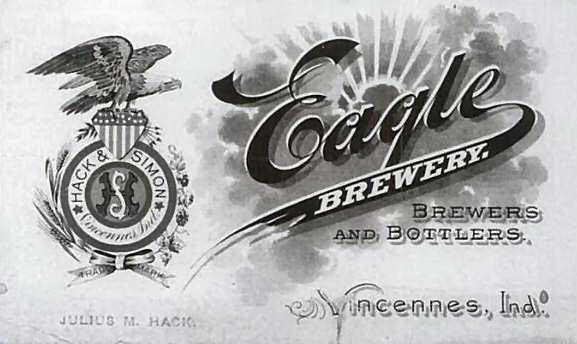
Today is the birthday of Eugene Hack (November 18, 1840-June 12, 1916). He was born in Wurtenburg, Germany, but emigrated to Indiana and settled in Vincennes in 1868. In 1875, he and a partner, Anton Simon, bought a small brewery in Vincennes, Indiana from John Ebner, who had established in 1859. They continued to call it the Eagle Brewery, although it was also referred to as the Hack & Simon Eagle Brewery, though in 1918, its official name became the Hack & Simon Brewery, until closed by prohibition. The brewery briefly reopened after prohibition as the Old Vincennes Brewery Inc., but they appear to have never actually brewed any beer, before closing for good in 1934.

Eugene-Hack-photo
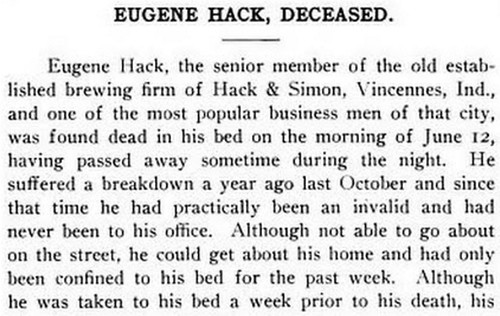
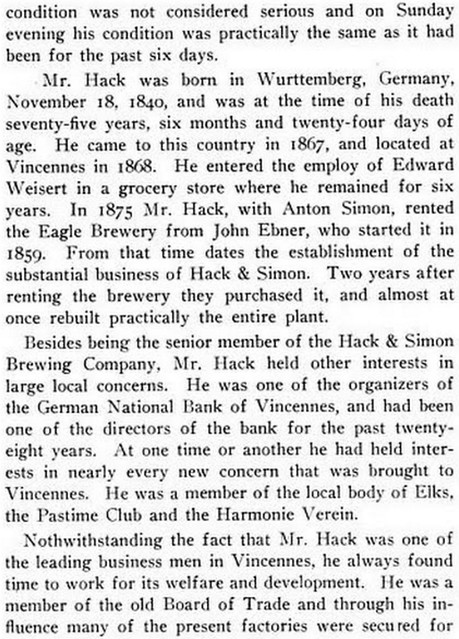
Here’s Hack’s obituary, from the Brewers Journal, Volume 47, published in 1916:

Eugene-Hack-obit-1
Eugene-Hack-obit-2
Eagle-brewery-postcard-color
And this account is from “Vincennes in Picture and Story: History of the Old Town, Appearance of the New,” written by J.P. Hodge, and originally published in 1902.

Eagle-history-1
eagle-brewery-indiana
Eagle-history-2

eagle-brewery-logo

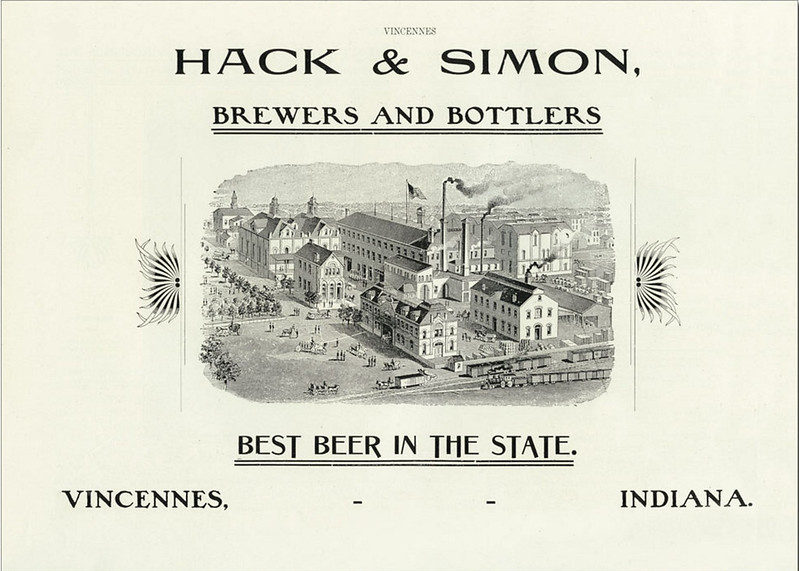
In 1859 the Eagle Brewery was established by John Ebner on Indianapolis Avenue in Vincennes, Indiana. It operated under his management until 1875 when it was sold to Eugene Hack and Anton Simon. They kept the name and added an eagle logo identifying their flagship brand. Hack and Simon successfully operated the brewery for decades. They were producing 18,000 barrels of beer a year and maintained five wagons and twelve head of horses for their local trade. In time they established five refrigerated beer depots in towns in Indiana and Illinois. The brewery was shut down by Indiana prohibitionary laws in 1918 and apparently not reopened in 1934 after Repeal.

Eagle-Brewery-blotter
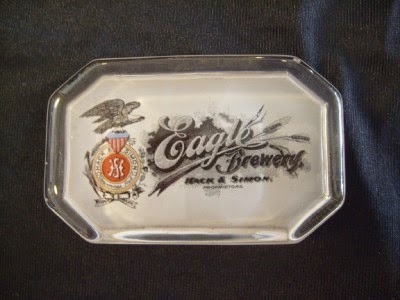
A brewery paperweight.
hack-and-simon-poster

Filed Under: Birthdays, Breweries, Just For Fun Tagged With: Germany, History, Indiana

Historic Beer Birthday: Florentinus De Boeck

November 18, 2025 By Jay Brooks

Today is the birthday of Florentinus De Boeck (November 18, 1826-1892). He was a well-known organist and orchestra conductor, and the father of famed Belgian composer August De Boeck. He was also a brewer who founded the Brouwerij Martinas in 1871. It was later known as the Brouwerij Ginder-Ale. In 1888, it was taken over by Corneel van Ginderachter, whose family managed the brewery into the 1970s, before a series of mergers and acquisitions left it in the hands of AB-InBev. Unfortunately, there’s not much information I could find about Florentinus, especially since he only ran the brewery for 17 years.

Filed Under: Birthdays, Breweries, Just For Fun Tagged With: Belgium, History

Historic Beer Birthday: Charles Buxton

November 18, 2025 By Jay Brooks

trumans-old
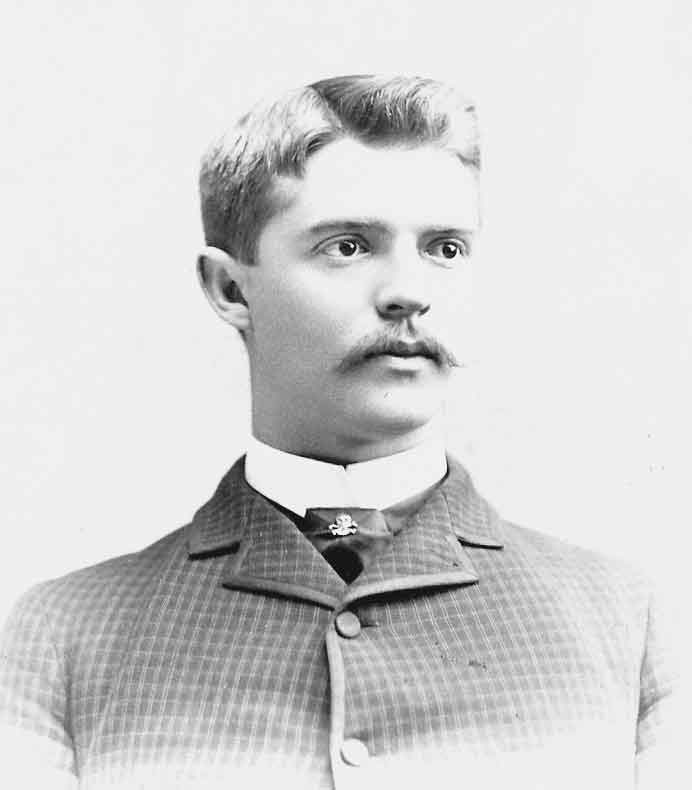
Today is the birthday of Charles Buxton (November 18, 1823-August 10, 1871). He “was an English brewer, philanthropist, writer and member of Parliament. Buxton was born in Cobham, Surrey, the third son of Sir Thomas Buxton, 1st Baronet, a notable brewer, MP and social reformer, and followed in his father’s footsteps, becoming a partner in the brewery of Truman, Hanbury, Buxton, & Co in Brick Lane, Spitalfields, London, and then an MP. He served as Liberal MP for Newport, Isle of Wight (1857–1859), Maidstone (1859–1865) and East Surrey (1865–1871). His son Sydney Buxton was also an MP and governor of South Africa.”

charles-buxton
This is the image that comes up for Charles Buxton when you do a Google search, but I can’t confirm that it’s the same person.

Buxton’s father, Sir Thomas Fowell Buxton, 1st Baronet, usually known as just Fowell Buxton, was a partner in Truman’s Brewery, which had been around since 1666 as the Black Eagle Brewery.

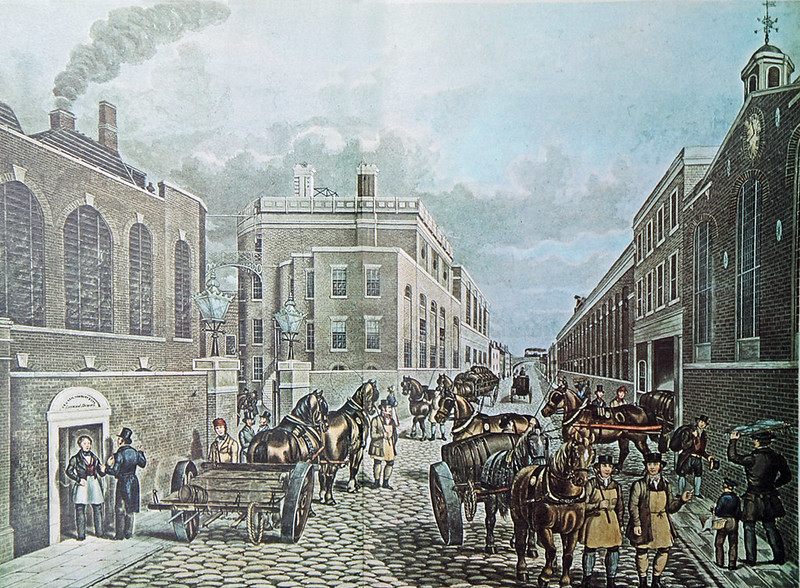
brick-lane-bwy-1842
The brewery on Brick Lane in London.

The original brewery was probably established by the Bucknall family, who leased the site in the seventeenth century. The site’s first associations with brewing can be traced back to 1666 when a Joseph Truman is recorded as joining William Bucknall’s Brewhouse in Brick Lane. Part of the site was located on Black Eagle Street, hence the brewery’s name. Truman appears to have acquired the lease of the brewery in 1679, upon the death of William Bucknell. Through the Truman family’s efforts – not least those of Sir Benjamin Truman (who joined the firm in 1722) – the business expanded rapidly over the following 200 years. By 1748 the Black Eagle Brewery was the third largest brewery in London, and likely the world, with 40,000 barrels produced annually.

In the mid-18th century Huguenot immigrants introduced a new beverage flavoured with hops, which proved very popular. Initially, Truman’s imported hops from Belgium, but Kent farmers were soon encouraged to grow hops to help the brewery meet growing demand.

Sir Benjamin died in March 1780 and, without a son to take on the business, it passed to his grandsons. In 1789, the brewery was taken over by Sampson Hanbury (Hanbury had been a partner since 1780; the Truman family became ‘sleeping partners’). Hanbury’s nephew, Thomas Fowell Buxton, joined the company in 1808, improved the brewing process, converted the works to steam power and, with the rapid expansion and improvement of Britain’s road and rail transport networks, the Black Eagle label soon became famous across Britain (by 1835, when Buxton took over the business upon Hanbury’s death, the brewery was producing some 200,000 barrels (32,000 m3) of porter a year).
The Brick Lane brewery – now known as Truman, Hanbury, Buxton & Co – took on new partners in 1816, the Pryor brothers (the company’s owners were renowned for their good treatment of their workers – providing free schooling – and for their support of abolitionism). By 1853 the brewery was the largest in the world, producing 400,000 barrels of beer each year, with a site covering six acres.

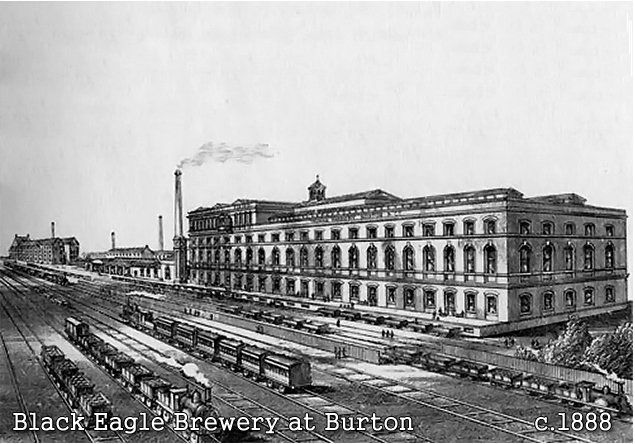
However, the company also faced competition from breweries based outside London – notably in Burton upon Trent, where the water was particularly suitable for brewing – and in 1873 the company acquired a brewery (Phillips) in Burton and began to build a major new brewery, named the Black Eagle after the original London site.

In 1888, Truman, Hanbury, Buxton & Co became a public company with shareholders, but the balance of production was now shifting to Burton. The Brick Lane facility remained active through a take-over by the Grand Metropolitan Group in 1971 and a merger with Watney Mann in 1972, but it was in terminal decline. It eventually closed in 1989.

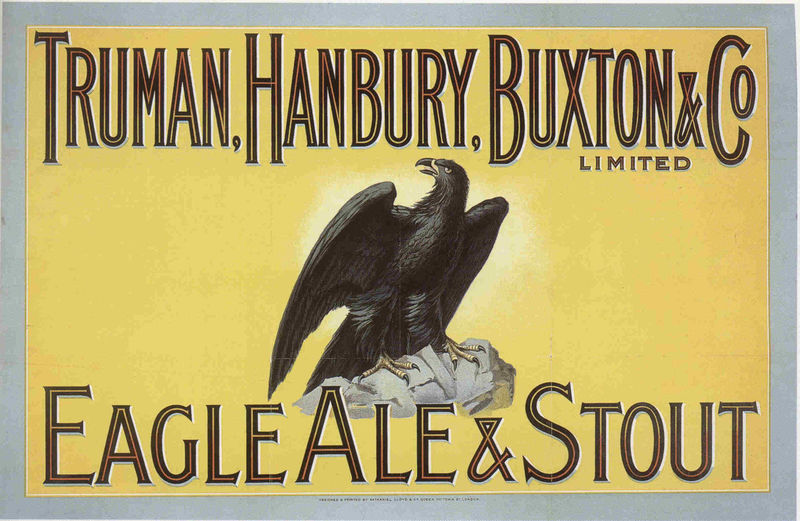
Truman_Colour_Ad

Glenn Payne wrote the Truman, Hanbury, Buxton & Co. entry for the Oxford Companion to Beer:

Truman, Hanbury, Buxton & Co. was a venerable British brewery that operated for more than 3 centuries before it closed its doors in 1988. The original brewery was built on Lolsworth Field, Spitalhope, London, by Thomas Bucknall in 1669. He was soon joined by Joseph Truman, who became brewery manager in 1694. Joseph Truman brought Joseph Truman Jr into the company in 1716 and his executor, Sir Benjamin Truman, who took ownership of the business in 1722. Two years later a new brewery, The Black Eagle, was built on nearby Brick Lane, which grew to become Britain’s second largest brewery, employing some 1,000 people. Sir Benjamin died in 1780 without a direct male heir and left the brewery to his grandsons. In the same year, Sampson Hanbury became a partner and took over control in 1789. His nephew, Thomas Fowler Buxton, joined in 1808. He improved the brewing process by adopting innovations in brewing technology brought about by the Industrial Revolution. Outside his activities in the brewery, Buxton was a renowned philanthropist, and he was elected a member of Parliament in 1818. He was associated with William Wilberforce, a leader in the fight to end the British slave trade. By the time of his death in 1845, the brewery produced about 305,000 hl of porter annually. The brewery is even mentioned in Charles Dickens’ David Copperfield (1850). Seizing upon the growing influence of Burton as a brewing center in the 19th century, the company acquired the Phillips brewery there in 1887 and 2 years later became a public company. But its fortunes declined with the shift in popular taste away from porter toward pale ale near the end of the 19th century. In 1971, the brewery was acquired by the Grand Metropolitan Group, which, in turn, was merged into Watney Mann 1 year later. Thomas, Hanbury, and Buxton ceased production in 1988 but its brewery still stands on its site in Brick Lane, London, where it has been redeveloped into a complex of residential housing, offices, restaurants, galleries, and shops.
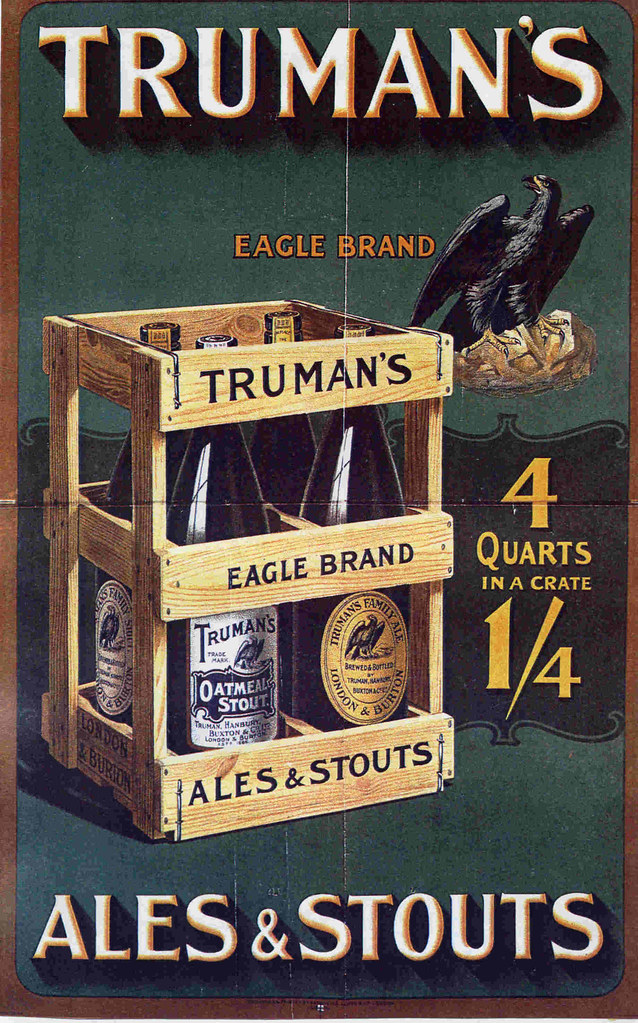
Truman_ad_1908
They also later built a Black Eagle Brewery in Burton. As you’d expect, Martyn Cornell has an amazingly thorough account of Trumans, which he refers to as When Brick Lane was home to the biggest brewery in the world.
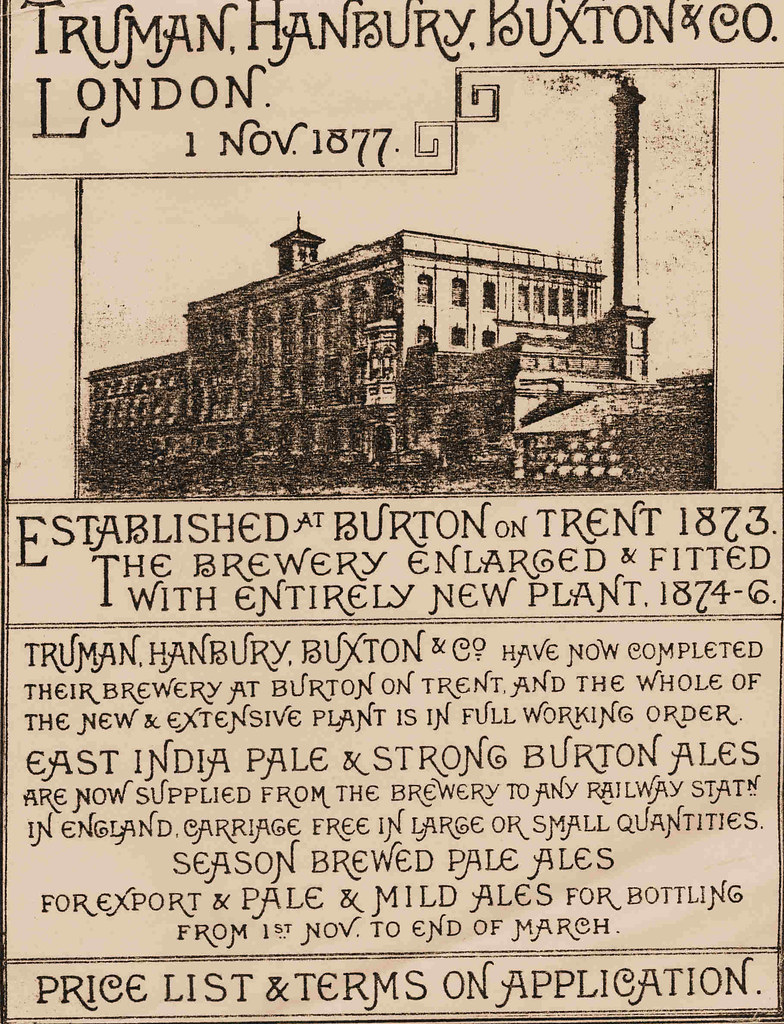
Truman_1877

black-eagle-brewery-1888

Filed Under: Birthdays, Breweries, Just For Fun Tagged With: England, Great Britain, History

Beer In Ads #5117: Amstel Bock

November 17, 2025 By Jay Brooks

Last year I decided to concentrate on Bock ads for awhile. Bock, of course, may have originated in Germany, in the town of Einbeck. Because many 19th century American breweries were founded by German immigrants, they offered a bock at certain times of the year, be it Spring, Easter, Lent, Christmas, or what have you. In a sense they were some of the first seasonal beers. “The style was later adopted in Bavaria by Munich brewers in the 17th century. Due to their Bavarian accent, citizens of Munich pronounced ‘Einbeck’ as ‘ein Bock’ (a billy goat), and thus the beer became known as ‘Bock.’ A goat often appears on bottle labels.” And presumably because they were special releases, many breweries went all out promoting them with beautiful artwork on posters and other advertising.

Monday’s poster is for Amstel Bock, and was published in 1954. It was made for the Amstel Brewery of Amsterdam, The Netherlands, which was originally founded in 1870. The poster was created by Dutch artist Jan Wijga.

Filed Under: Art & Beer, Beers, Breweries, Just For Fun Tagged With: Advertising, Bock, History, The Netherlands

« Previous Page
Next Page »

Find Something

Northern California Breweries

Please consider purchasing my latest book, California Breweries North, available from Amazon, or ask for it at your local bookstore.

Recent Comments

  • Bob Paolino on Beer Birthday: Grant Johnston
  • Gambrinus on Historic Beer Birthday: A.J. Houghton
  • Ernie Dewing on Historic Beer Birthday: Charles William Bergner 
  • Steve 'Pudgy' De Rose on Historic Beer Birthday: Jacob Schmidt
  • Jay Brooks on Beer Birthday: Bill Owens

Recent Posts

  • Beer In Ads #5167: Acme Bock Is Back Tomorrow! March 16, 2026
  • Historic Beer Birthday: John Land March 16, 2026
  • Historic Beer Birthday: Axel Heiberg March 16, 2026
  • Beer Birthday: Paul Segura March 16, 2026
  • Beer Birthday: Steve Hindy March 16, 2026

BBB Archives

Feedback

Head Quarter
This site is hosted and maintained by H25Q.dev. Any questions or comments for the webmaster can be directed here.