Brookston Beer Bulletin

Jay R. Brooks on Beer

  • Home
  • About
  • Editorial
  • Birthdays
  • Art & Beer

Socialize

  • Dribbble
  • Email
  • Facebook
  • Flickr
  • GitHub
  • Instagram
  • LinkedIn
  • Pinterest
  • RSS
  • Twitter
  • YouTube

Powered by Genesis

Historic Beer Birthday: Joseph Schmid

July 14, 2025 By Jay Brooks

lion-ny

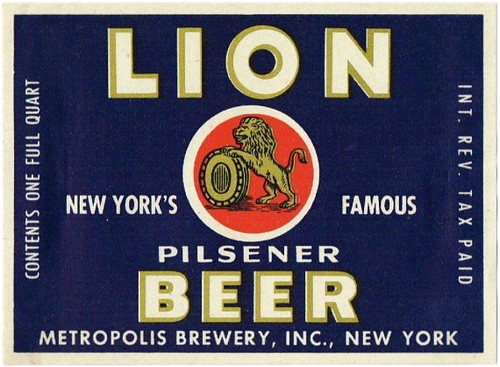
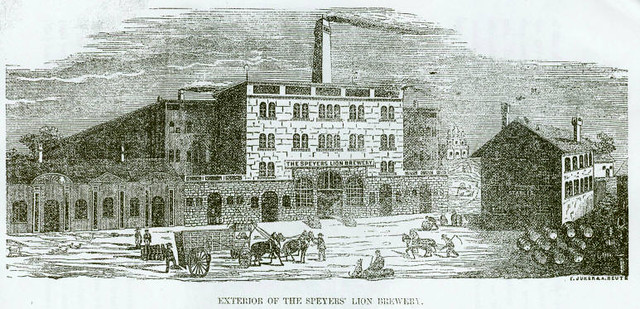
Today is the birthday of Joseph Schmid (July 14, 1814-December 18, 1881). He was born in Hausen, Hohenzollern, but grew up in Constantz, where he learned to brew. He started a brewery in Germany, but sold it and came to American when he was 42, in 1856.

He initially settled in Illinois where he started the Atlantic Brewery in Rock Island, but a decade later when he joined the Lion Brewery, which was also known as the Bernheimer & Schmid Brewery. There was also an August Schmid involved in that business, and it’s unclear the relationship between the two Schmids. The brewery survived prohibition but closed for good in 1941.
Lion_Brewery2

This short biography of Joseph Schmid is from the Western Brewer reprinting his obituary 25 years after the fact. The piece mentions the “Lim Brewery” but I’m convinced that’s a typo and should read “Lion Brewery.”

joseph-schmid-obit
Lion-Extra-Lager-Beer--Labels-Lion-Brewery-Of-New-York-City

Another account appears to clear up some of the confusion regarding Joseph and August, from the Columbia University Libraries:

A locus for both business and pleasure in Morningside Heights, the Lion Brewery began operations in 1850 and continued until its demolition in 1944. During that time, especially in the late 19th-century, it rose to be a community focal point. It originated with a farm—stretching from Tenth Avenue to Central Park, and 106th Street to 110th Street—belonging to Joseph Schmid (sometimes spelled “Schmidt”) on which he built a brewery in the 1820s, operating as Schmidt & Speyer. Soon, a change of partners brought a change in name to Bernheimer & Schmidt, for Schmid’s new partner, former brewery worker Emanuel Bernheimer. The two renamed it the Lion Brewery in 1850; within thirty years it was generating profits estimated between $1,500,00 and $2,225,000. Real estate speculation doomed the partners, however, and by May 1879, the year after the newspapers’ estimate of their wealth, their combined net worth had fallen to $500,000. They dissolved their partnership and each man transferred his share of the business to his better-educated son: Joseph Schmid transferred his holdings to his son August, and Emanuel Bernheimer to his son Simon. August and Simon applied their education to the management of the business, and by 1888 the plant alone was valued at $1,5000,000.

Lion-Pilsener-Style-Beer-Labels-Lion-Brewery-of-New-York-City--pre-Prohibition

And this account of some litigation reported by the American Brewers’ Review shed further light on the ownership question of the Schmids.

Lion-brewery-litigation
lion-1915
Lion-Pilsener-Beer-Labels-Metropolis-Brewery-Inc

Filed Under: Birthdays, Breweries, Just For Fun Tagged With: Germany, History, New York

Beer In Ads #5023: Falken Schaffhauser Bock

July 13, 2025 By Jay Brooks

Last year I decided to concentrate on Bock ads. Bock, of course, may have originated in Germany, in the town of Einbeck. Because many 19th century American breweries were founded by German immigrants, they offered a bock at certain times of the year, be it Spring, Easter, Lent, Christmas, or what have you. In a sense they were some of the first seasonal beers. “The style was later adopted in Bavaria by Munich brewers in the 17th century. Due to their Bavarian accent, citizens of Munich pronounced ‘Einbeck’ as ‘ein Bock’ (a billy goat), and thus the beer became known as ‘Bock.’ A goat often appears on bottle labels.” And presumably because they were special releases, many breweries went all out promoting them with beautiful artwork on posters and other advertising.

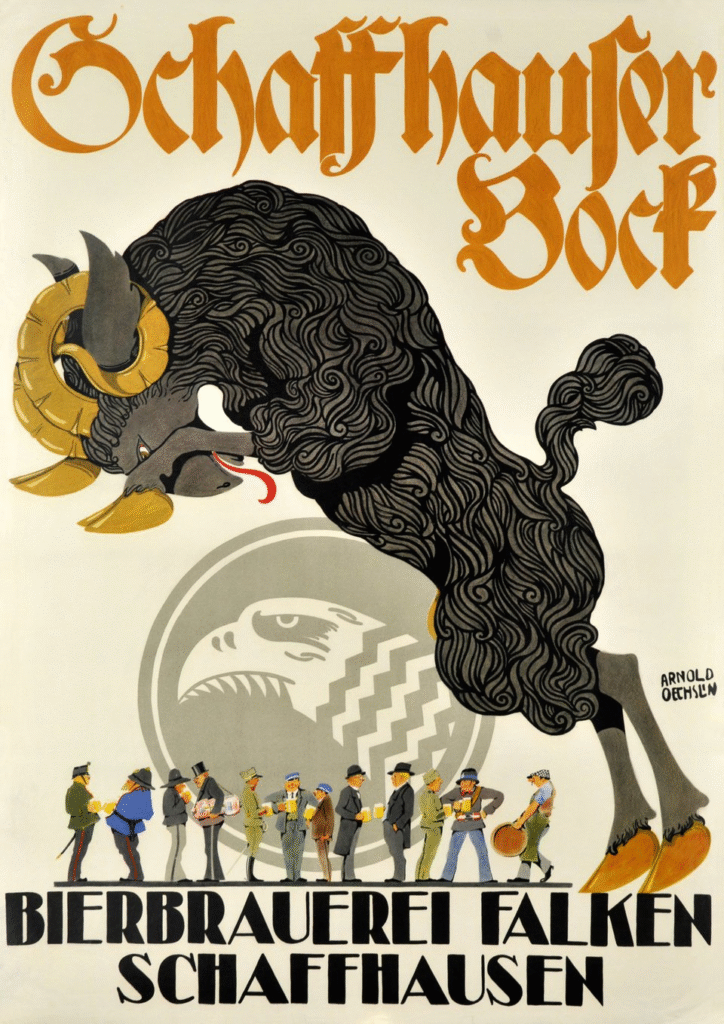
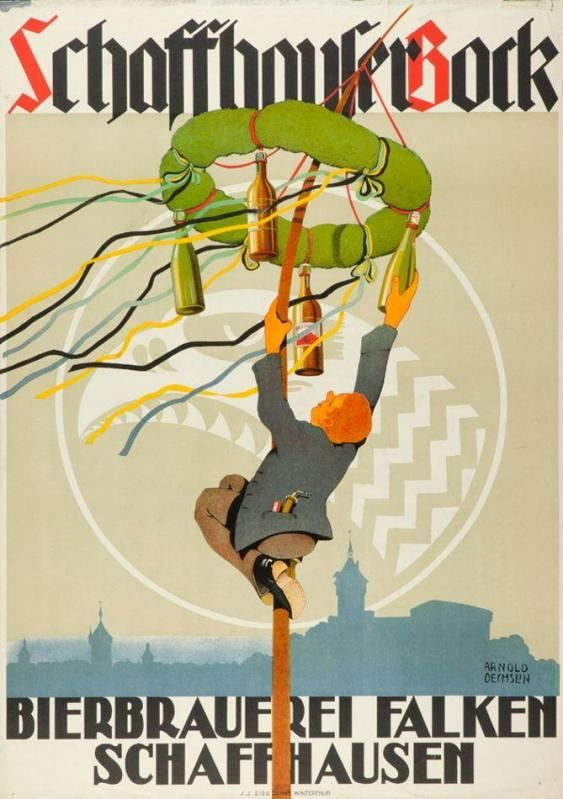
Sunday’s poster is for Falken Schaffhauser Bock Beer, and was published in 1934. This one was made for the Bierbrauerei Falken Schaffhausen, or Falcon Brewery, of Schaffhausen, Switzerland. The brewery was founded in 1799, and is still in business today, and is “considered the only independent brewery in the Schaffhausen region,” and is Switzerland’s 5th largest brewery. This one is for their Schaffhauser Bock and shows a very thirsty man who apparently shimmied up the town maypole to grab one of the bottles of beer tied to the wreath at the top. It was created by Swiss artist Arnold Oechslin.

Filed Under: Art & Beer, Beers, Breweries, Just For Fun Tagged With: Advertising, Bock, History, Switzerland

Beer In Ads #5022: Falken Schaffhauser Bock Maypole

July 12, 2025 By Jay Brooks

Last year I decided to concentrate on Bock ads. Bock, of course, may have originated in Germany, in the town of Einbeck. Because many 19th century American breweries were founded by German immigrants, they offered a bock at certain times of the year, be it Spring, Easter, Lent, Christmas, or what have you. In a sense they were some of the first seasonal beers. “The style was later adopted in Bavaria by Munich brewers in the 17th century. Due to their Bavarian accent, citizens of Munich pronounced ‘Einbeck’ as ‘ein Bock’ (a billy goat), and thus the beer became known as ‘Bock.’ A goat often appears on bottle labels.” And presumably because they were special releases, many breweries went all out promoting them with beautiful artwork on posters and other advertising.

Saturday’s poster is for Falken Schaffhauser Bock Beer, and was published in 1935. This one was made for the Bierbrauerei Falken Schaffhausen, or Falcon Brewery, of Schaffhausen, Switzerland. The brewery was founded in 1799, and is still in business today, and is “considered the only independent brewery in the Schaffhausen region,” and is Switzerland’s 5th largest brewery. This one is for their Schaffhauser Bock and shows a very thirsty man who apparently shimmied up the town maypole to grab one of the bottles of beer tied to the wreath at the top. It was created by Swiss artist Arnold Oechslin.

Filed Under: Art & Beer, Beers, Breweries, Just For Fun Tagged With: Advertising, Bock, History, Switzerland

Historic Beer Birthday: Harry A. Poth

July 11, 2025 By Jay Brooks

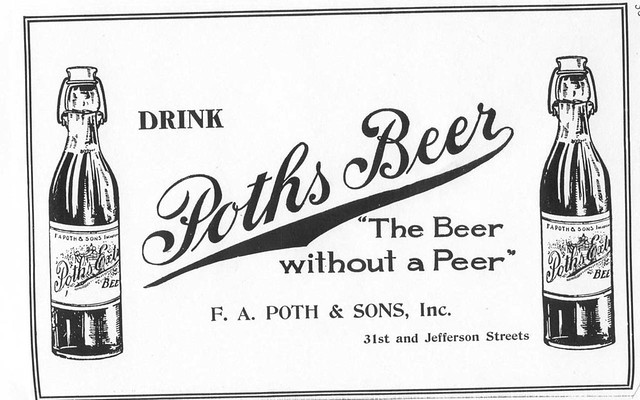
poths
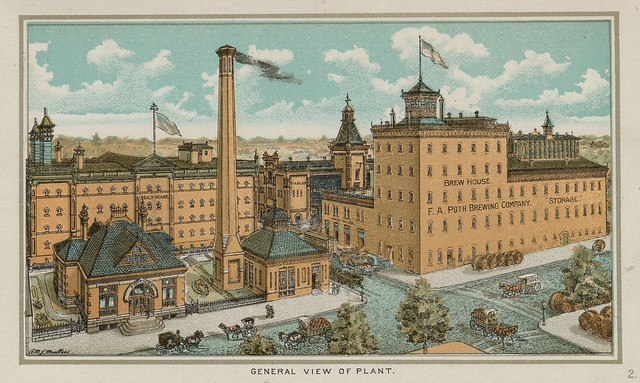
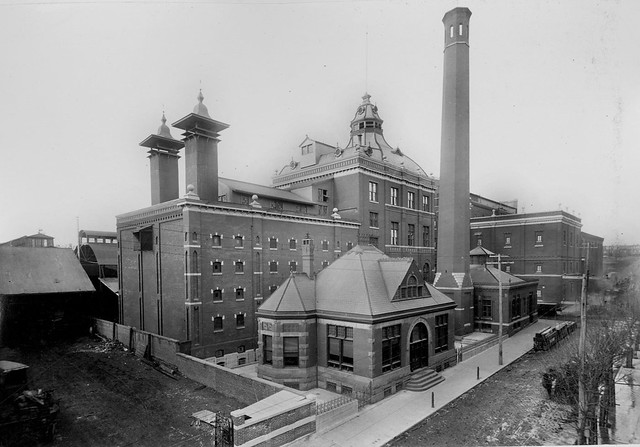
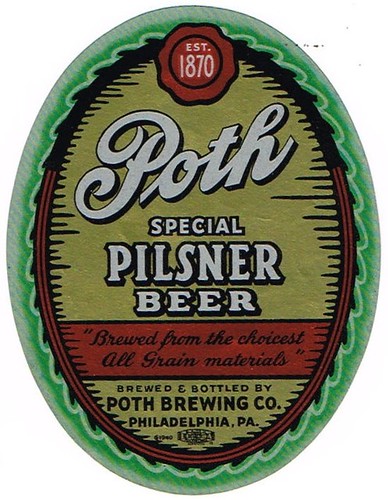
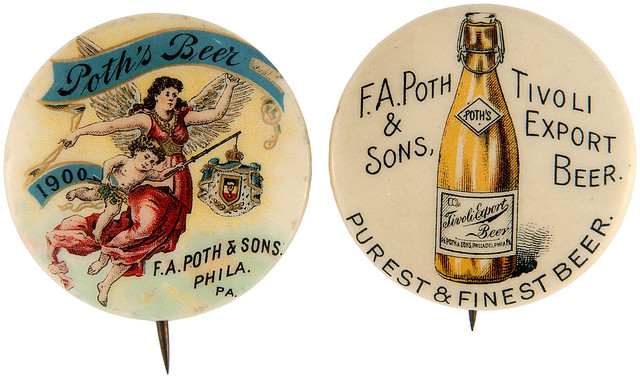
Today is the birthday of Harry A. Poth (July 11, 1881-November 16, 1931). He was born in Pennsylvania, and attended the William Penn Charter School until 1898, after which he graduated from the Pennsylvania Military Academy in 1902. He then attended the Wallerstein Brewing Institution, becoming a brewer at the Fred A. Poth Brewery, which by 1875 was the largest brewery in the U.S., and which his grandfather, Frederick August Poth founded in 1870. It was incorporated in 1893, when his sons were working with him, including Harry’s father Frederick A. Poth, and it was renamed the F. A. Poth & Sons Brewery. Harry, of course, was one of the “Sons” in the name. His younger brother, Frederick J. Poth, seems to have focused on the management side of the business, while Harry was the brewer. It reopened after prohibition briefly as the Poth Brewing Co. Inc., but closed for good three years later, in 1936.

f-a-poth-brewery-postcard
The Poth brewery, from an illustration done in the early 1890s.

I couldn’t find any photographs of him, which isn’t too surprising given I couldn’t find any of his father and only one of his brother, Frederick J. Poth. Sadly, I could find almost nothing else about him, either.

poth-brewerytown

pothredbellbrewery1900
The Poth & Sons Brewery around 1900.

Poths-Cream-Ale-Labels-Poth-Brewing-1936

poth-buttons

Filed Under: Birthdays, Breweries, Just For Fun Tagged With: History, Pennsylvania, Philadelphia

Beer In Ads #5021: Olympia Bock Beer

July 10, 2025 By Jay Brooks

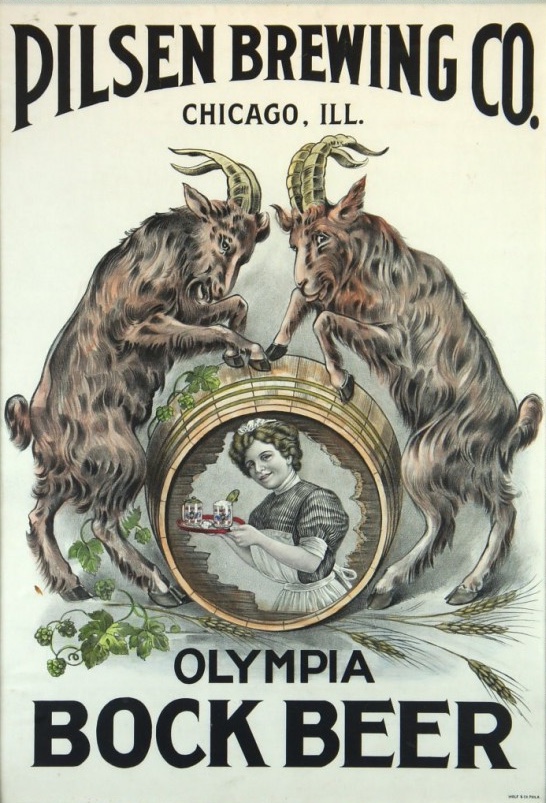
Last year I decided to concentrate on Bock ads. Bock, of course, may have originated in Germany, in the town of Einbeck. Because many 19th century American breweries were founded by German immigrants, they offered a bock at certain times of the year, be it Spring, Easter, Lent, Christmas, or what have you. In a sense they were some of the first seasonal beers. “The style was later adopted in Bavaria by Munich brewers in the 17th century. Due to their Bavarian accent, citizens of Munich pronounced ‘Einbeck’ as ‘ein Bock’ (a billy goat), and thus the beer became known as ‘Bock.’ A goat often appears on bottle labels.” And presumably because they were special releases, many breweries went all out promoting them with beautiful artwork on posters and other advertising.

Thursday’s poster is for Olympia Bock Beer, and was published around the 1910s. This one was for the Pilsen Brewing Co. of Chicago, Illinois, which was originally founded in 1903 by a group of Bohemian tavern owners.

Filed Under: Art & Beer, Beers, Breweries, Just For Fun Tagged With: Advertising, Bock, Chicago, History, Illinois

Beer In Ads #5020: A Rare July Treat

July 9, 2025 By Jay Brooks

Last year I decided to concentrate on Bock ads. Bock, of course, may have originated in Germany, in the town of Einbeck. Because many 19th century American breweries were founded by German immigrants, they offered a bock at certain times of the year, be it Spring, Easter, Lent, Christmas, or what have you. In a sense they were some of the first seasonal beers. “The style was later adopted in Bavaria by Munich brewers in the 17th century. Due to their Bavarian accent, citizens of Munich pronounced ‘Einbeck’ as ‘ein Bock’ (a billy goat), and thus the beer became known as ‘Bock.’ A goat often appears on bottle labels.” And presumably because they were special releases, many breweries went all out promoting them with beautiful artwork on posters and other advertising.

Wednesday’s ad is for Brandon & Beal Bock Beer, which was published on July 9, 1902. This one was for the John Brandon & George Beal Brewery of Leavenworth, Kansas, which was originally founded in 1887. This ad ran in The Leavenworth Times, also of Leavenworth, Kansas.

Filed Under: Art & Beer, Beers, Breweries, Just For Fun Tagged With: Advertising, Bock, History, Kansas

Historic Beer Birthday: Peter Grant Hay

July 9, 2025 By Jay Brooks

carlton-and-united
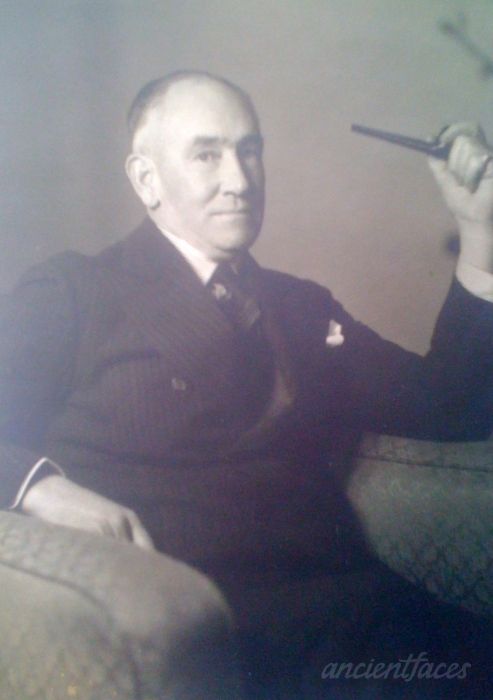
Today is the birthday of Peter Grant Hay (July 9, 1879–August 29, 1961). He “was an Australian brewer, landowner, pastoralist and thoroughbred racehorse breeder. He founded the Richmond N.S. Brewing Co. Ltd. in Melbourne Australia,” which upon his death was sold to Carlton & United Breweries. “He is responsible for both the introduction of pasteurization to Australia’s dairy industry and the introduction of the Swiss Nathan System of brewing to Australia.”

peter-grant-hay

Here’s his biography from his Wikipedia page:

Grant Hay was born in Bright, Victoria, the son of James Grant Hay, partner of Melbourne shipping firm, Coulson Hay & Co. and Catherine Margaret (née Cox), daughter of Irish distillery founder, Charles Cox. The Grant Hay’s owned hop farm estates in Bright, Victoria and the Derwent Valley in Tasmania and were the main supplier of hops to Carlton & United Breweries in Victoria.

Upon the death of his father in 1914, Grant Hay traveled to America by steamship to San Francisco on board the USS American, meeting Tooheys Brewery manager Arnold Resch. The two agreed to inspect the major American breweries of Milwaukee, including the Valentin Blatz Brewing Company, Joseph Schlitz Brewing Company, and the Miller Brewing Company and Anheuser-Busch brewing company in St Louis. Grant Hay then sailed to London to inspect the Courage Brewery plant and its hotels.

He then flew to Zurich and met with Dr Leopold Nathan, a Swiss chemist, who had invented a new brewing system. Grant Hay drove to Munich and attended Oktoberfest in the company of the Reinheitsgebot before the outbreak of war and returned to Australia.

In 1918 he married Margaret Glover, cousin of Australian landscape artist John Glover. Grant Hay was forty. They had four children, Patricia, Kathleen, Alison and Peter. The Grant Hay’s settled at Sackville Street, Kew and later moved to ‘Egoline’ at Albany Road in Toorak, Victoria. The family also owned ‘Kilby Park,’a one hundred acre dairy farm and thoroughbred racehorse stud at Kew, Victoria.

By age fifty Grant Hay was already one of Victoria’s wealthiest hop merchants when the Victorian beer wars began in 1925. Carlton & United Breweries had grown into Australia’s largest brewer and began to use monopolistic practices of lowering the cost of supply to hop growers, including Grant Hay’s ‘Kentdale’ hops from the Derwent Valley.

kentdale-invalid-stout

And this is a history of his brewery, the Richmond N.S. Brewing Co.:

The Kentdale Hop Estate was one of the finest properties in Tasmania. It was located fifty kilometres from Hobart and harvested thirty hectares of finest-quality hops. In 1927 a business disagreement took place between Grant Hay and Carlton & United Breweries over the price and quantity of hops, causing Carlton to cancel its contract with Kentdale.

Resentful of Carlton’s unfair business practices, Grant Hay proceeded to off-load his hops successfully to Carlton’s interstate rival, Tooheys. He then summoned a meeting of his hop estate managers from Bright in Victoria and the Derwent Valley in Tasmania for a meeting at Coulson Hay & Co. headquarters in Melbourne to establish his own brewery.

On 4 April 1927, Grant Hay wired a cable to Dr Nathan Leopold in Zurich, Switzerland for the order of the first Swiss Nathan Brewing System to be shipped to Melbourne and to be accompanied by Master Swiss Brewer, Heinrich Walter Haenggi of Zurich. Over the course of three months, Grant Hay proceeded to buy up five industrial sites adjoning his Church Street property. He then ordered a consignment of three thousand units of purified gin to be shipped from British Army headquarters in Lahore and resold the rebottled gin to American bootleggers in prohibition controlled Chicago, netting Coulson Hay & Co. a million pounds. The deal set Grant Hay up for life, and bankrolled the construction of the brewery.

On 13 August 1927, Grant Hay’s application for permit to build a brewery on the site at Church Street Richmond was approved by the Richmond City Council. Grant Hay then hired contractors to excavate the site in preparation of the brewery’s construction, when the excavation was delayed, Grant Hay proceeded to dynamite the site himself using three tonnes of dynamite.

On the morning of 23 August 1927, the sound of percussion could be heard as far away as Brighton, and was said to have woken the Mayor of Melbourne from his sleep. When nearby Richmond residents objected, Grant Hay sued the residents and offered to buy their homes. Eventually, council sided with the residents and sought an injunction against Grant Hay to the detonation, but Grant Hay won on appeal and continued unabated.

Mr Grant Hay retained Brigadier Sir Eugene Gorman KBE, MC, QC as his full time barrister and confidant. Litigous by nature, Grant Hay later sued the Camberwell City Council on its liquor licensing trading laws on appeal before the Privy Council, UK. Mr Gorman’s rooms in the Equity Chambers building on Melbourne’s Bourke Street are named Gorman Chambers in his honour.

On 24 October 1927, Heinrich Walter Haenggi and his wife arrived at Port Melbourne aboard the SS Modolva bringing with them the single largest steel works consignment for disembarkation. Three transports were used to unload and deliver the Swiss brewing plant machinery and equipment to Church Street. Mr Grant Hay drove the Haenggi’s to their hotel in his new 1927 Packard Roadster and held a dinner in honour of their arrival at his home.

By Easter of 1928, the construction of the Richmond Brewery was completed and a toast was held on the assembly line by Mrs Grant Hay and included two hundred guests, from growers, hoteliers and workers. The brewery began its first run of Richmond Lager and Bitter Beer on 24 April 1928 with 88 dozen bottles of output per week which continued to grow to 200 dozen bottles of output per week by 1929. The quality of the beer, and the fact that it had been produced free of any combine commended the beverage to the public’s taste. With his own hop supplies, Grant Hay had lowered his costs of production and unit costs considerably. He then followed Courage Brewery’s example by purchasing his own pubs and hotel outlets across Australia, exclusively serving Richmond beer.

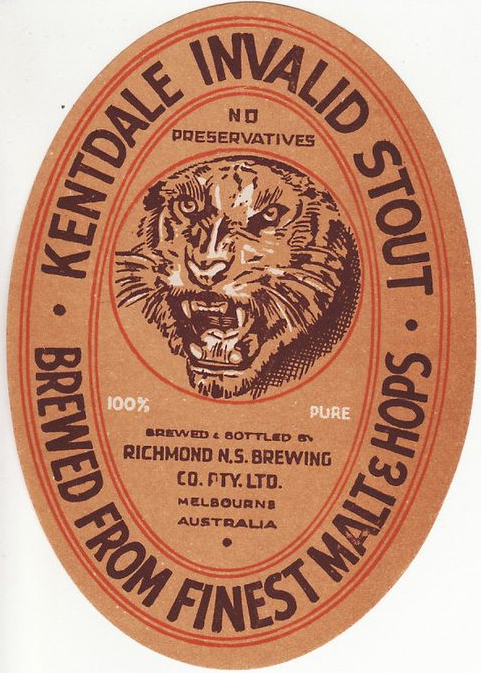
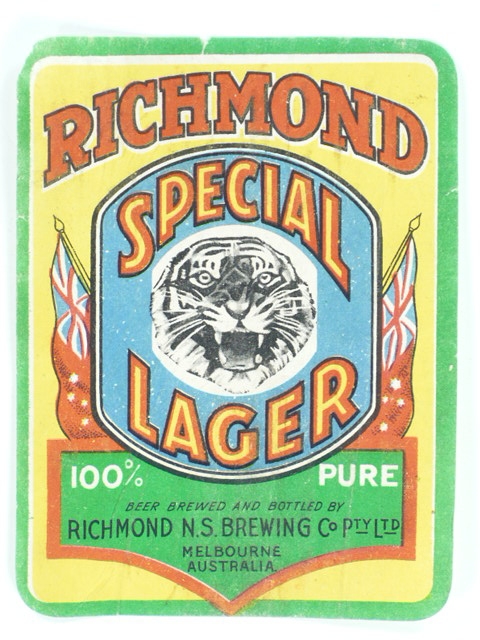
The Richmond Brewery was a remarkable success. By 1940 shipments of Richmond Lager were eagerly consumed in Melbourne, Perth, Sydney, Brisbane and Adelaide. By 1950 annual tunrover revenues in the Richmond Brewery had grown to almost three million pounds. Exports to India and Brazil soon followed, with the bottle labels Richmond Pilsener, Lager Bitter and Stout all sporting the illustrated Tiger’s head logo, designed by Mrs Grant Hay.

During World War II, Grant Hay negotiated the supply of Richmond Beer to Australian troops in North Africa and American troops stationed at Sandown Racecourse, which he owned. He also purchased land on Flinders Island in Tasmania where he stood Fourth Hand, winner of the 1927 Irish 2,000 Guineas and bred champion Australian racehorse Counsel, winner of the 1944 Caulfield Cup and champion American racehorse, Warra Nymph at Del Mar. Grant Hay also owned the seventy-two foot ketch, “Jane Moorhead” which was used by General Douglas MacArthur for the Allied troop landings in the Pacific.

By 1960 the brewery continued to prosper controlling sixteen per cent of Victorian beer sales and eight per cent of Australian beer sales nationally. Mr Grant Hay’s health was however deteriorating and no succession plan was put in place, despite his only surviving son. A charismatic autocrat and fierce business competitor, Mr Grant Hay would not allow the company to be controlled by anyone but himself. He refused to publicly list the company and repeatedly rejected merger offers from Courage Brewery and Carlton & United Breweries.

Upon his death in 1961, Mrs Grant Hay negotiated the sale of the Richmond Brewery between bidders Courage Brewery, Asahi Breweries and Carlton & United Breweries, accepting a final offer to purchase the brewery from Carlton & United Breweries on January 26, 1962.

Richmond-Special-Lager-Labels-Richmond-NS-Brewing-Co-Pty

Richmond-Special-Bitter

Here’s another history of Hay’s brewery from the Nathan Institute:

richmond-ns-brewing

richon-non-pasteurized
This must have been interesting….

Filed Under: Birthdays, Breweries, Just For Fun Tagged With: Australia, History

Beer In Ads #5019: Trinkt Bock Beer

July 8, 2025 By Jay Brooks

Last year I decided to concentrate on Bock ads. Bock, of course, may have originated in Germany, in the town of Einbeck. Because many 19th century American breweries were founded by German immigrants, they offered a bock at certain times of the year, be it Spring, Easter, Lent, Christmas, or what have you. In a sense they were some of the first seasonal beers. “The style was later adopted in Bavaria by Munich brewers in the 17th century. Due to their Bavarian accent, citizens of Munich pronounced ‘Einbeck’ as ‘ein Bock’ (a billy goat), and thus the beer became known as ‘Bock.’ A goat often appears on bottle labels.” And presumably because they were special releases, many breweries went all out promoting them with beautiful artwork on posters and other advertising.

Tuesday’s poster is for Bock Beer, and was published around 1940. This one was for the Wirte Genossenschaftsbrauerei of Luckenwalde, Germany, which was originally founded in 1906.

Filed Under: Art & Beer, Beers, Breweries, Just For Fun Tagged With: Advertising, Bock, Germany, History

Historic Beer Birthday: Frank Selinger

July 8, 2025 By Jay Brooks

schlitz2

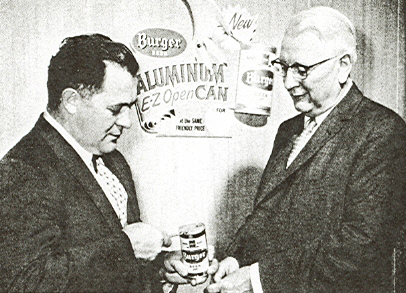
Today is the birthday of Frank J. Selinger (July 8, 1914-June 15, 2000). He was born in Philadelphia and was trained as a chemist and later became a brewmaster, first with the Esslinger Brewing Co. in Philadelphia, but later with the Burger Brewing Co. and Anheuser-Busch. But in 1977, he accepted the position of CEO for Schlitz Brewing and even appeared in television commercials for them in the early 1980s.

frank-sellinger-tv

Here’s an obituary of Sellinger, from the Williamsburg Daily Press:

Francis J. Sellinger, a former brewing executive in Milwaukee, St. Louis, Cincinnati and Philadelphia, died Thursday, June 15, 2000, at Williamsburg Community Hospital. He was 85.

A native of Philadelphia, Mr. Sellinger graduated in 1936 with a degree in chemistry from St. Joseph’s College in Philadelphia. According to his son, Joseph Sellinger, he initially wanted to become a doctor but took a job in a brewery in order to help support his family. He began his career in the brewing industry in 1936 as chief chemist and assistant brewmaster with the Esslinger Brewing Co. in Philadelphia. In 1952, he joined the Burger Brewing Co. in Cincinnati, and he became vice president and general manager in 1956.

Mr. Sellinger joined Anheuser-Busch Inc. in St. Louis, Mo., in 1964. During his 14 years with the company, he held many senior executive positions, including vice president of engineering, and was a key figure in the company’s rapid brewery expansion during the 1970s, with the construction of breweries in Columbus, Ohio; Jacksonville, Fla.; Merrimack, N.H.; Williamsburg, Va.; and Fairfield, Calif. Mr. Sellinger was also heavily involved in the promotion of new technological advances within the company.

“He was the one that understood the direction the economics of the industry were going in,” said Patrick Stokes, president of Anheuser-Busch Inc.

He also played a key role in the development of the company’s Busch Gardens-The Old Country theme park and the Kingsmill Residential Community and Resort, both in Williamsburg.

In 1978, he became the vice chairman and chief executive officer of Schlitz Brewing Co. in Milwaukee. According to Joseph Sellinger, one of his first tasks at Schlitz was to turn the image of the company around. He worked to accomplish this by returning the company to a traditional brewing process. In addition, Mr. Sellinger appeared in the “Taste My Schlitz” television advertising campaign that began in 1978. Joseph Sellinger said that the locales for his father’s commercials ranged from barley fields to bars. Mr. Sellinger continued his career at Schlitz until his retirement in 1983 to Kingsmill in Williamsburg.

After his retirement, Mr. Sellinger became involved with the Anheuser-Busch Golf Classic, now the Michelob Golf Classic, and worked for St. Bede’s Catholic Church.

Mr. Sellinger will be remembered for his integrity, caring and generosity toward his family, friends and employees. He came from very humble beginnings, said Joseph Sellinger, yet gave so much to others.

BurgerSoftTopIntro
Frank Sellinger (left), when he was Vice-President and General Manager of Burger Brewing.

And this is from the New York time, from March 1, 1981, an article by Ray Kenny entitled “Trying to Stop the Flight from Schlitz.”

MILWAUKEE SHORTLY after Frank J. Sellinger went to work at the Jos. Schlitz Brewing Company in November 1977, he faced the first in a long list of problems.

A daughter, who then lived on the West Coast, telephoned and confessed: “Daddy, I don’t like that beer.” She had a lot of company. Schlitz, which had reformulated its flagship brand in a disastrous economy move in the 70’s, has been fighting a steady decline in sales ever since. Earnings plunged from almost $50 million five years ago to a $50.6 million loss in 1979 when it sold its newest brewery.

Said Mr. Sellinger: “I told my daughter, ‘Honey, do me a favor. Try Schlitz Malt Liquor. If you still don’t like it, go back to Budweiser.'”

After all, Mr. Sellinger said, “Anheuser-Busch put bread and butter on the Sellinger table for a lot of years.” Mr. Sellinger was an executive there all those years. Now, as vice chairman and chief executive at Schlitz charged with getting people to drink Schlitz again, he has reworked its taste, pitted it against the major beers in taste competitions televised live and gone on television commercials himself as the company’s down-to-earth pitchman. He has also pared expenses, cut excess brewing capacity and tightened quality control.

For all that, Schlitz is still losing sales position. In its best year, 1976, the company sold 24.2 million barrels. In 1980, shipments declined 11 percent on the year, to 15 million barrels. The company lost its fingertip hold on third place in the industry, behind the Anheuser-Busch Companies, which sold 50.2 million barrels in 1980, and the Miller Brewing Company, a subsidiary of Philip Morris Inc., which shipped 37.3 million barrels last year. Schlitz dropped to fourth place, behind its crosstown rival, Pabst, which shipped 15.1 million barrels.

“This company faced the toughest marketing problem you’ve ever seen,” an outside director said. “Beer drinkers are intensely loyal and we drove them away. Getting them to switch back is a horrendous challenge.”

Despite the continued falling sales, the company managed to show a profit last year of $27 million, or 93 cents a share, on revenues of $1 billion. Mr. Sellinger’s efforts apparently have paid off, along with gains by Schlitz’s container division and some profits attributed to nonoperating areas of the business. Clearly, corporate executives and members of the Uihlein (rhymes with E-line) family, who continue to hold the controlling interest in the company, were buoyed by the earnings swing.

“When sales are falling, the first thing you do is arrest the decline,” Mr. Sellinger said. “We’ve slowed things down but it’s too early to tell whether we’ve turned it around. Ask me again in June.”

Mr. Sellinger, 66, was named vice chairman and chief executive officer at Schlitz last April after coming on board in 1977 as president. One of the first things he did in an attempt to slow falling sales was to formulate what he calls “one helluva good brew.” He assembled technical personnel and urged them to create a flagship beer that would appeal to the eye as well as the taste.

“It has to look good,” he said. “Americans drink with their eyes. Beer has to be rich in flavor and hold its head. “There is just so much you can do. You can increase the barley malt and change the amount of hopping – the ratio of hops to corn. But the malt is the soul of the beer.

“From January of 1978 until July, we conducted test after test after test. Finally, we all agreed, and I’ll tell you, if we can get people to taste the beer, we’ll keep ’em.”

Then he sought to improve quality control. “If the quality guy at a plant says it doesn’t go, it doesn’t go,” he said. “He reports to headquarters, not to the plant manager, and if that means we dump 5,000 cans because of high air content, then we dump 5,000 cans.”

Mr. Sellinger pared the payroll to 6,100 employees, eliminating 800 to 1,000 jobs. “I believe in paying fair wages,” he said, “but I can’t afford two workers for one job. We eliminated a lot of people. We sacrificed a few for the good of the many.”

As for expenses, he said, “We had grown fat. Lax. I mean, how many WATS lines do you really need? How many copies do you have to make? There a million ways to save.”

He cut deeply into excess capacity when he closed the company’s newest brewery – a six-year-old facility in Syracuse, N.Y., in 1979. The move, together with the closing of a small brewery in Honolulu, trimmed production capacity by 5.4 million barrels. But the company is still swimming in capacity. Last year it was capable of turning out 25.6 million barrels while it sold 15 million.

A year ago, the Syracuse plant was sold to Anheuser-Busch for $100 million. The company absorbed a $44.3 million loss in the process. “That was a beautiful brewery,” Mr. Sellinger said, “but it was an albatross. That doesn’t mean the decision to build it wasn’t right at the time. If your sales trend is a plus 12 percent a year, then you know that in three and a half years – the time it takes to construct a brewery – you will need so much beer to satisfy demand. The 1974 trend told us we would have to spend $157 million for the beer we would need by 1977.”

B REWERIES are built with the wholesalers in mind, Mr. Sellinger said. “We pressure them to sell Schlitz and they want to know whether Schlitz will have the beer if the business continues. We can’t say, ‘we have no beer.’ That takes all their incentive away.”

But if the customers leave, there’s no need for a brewery. “That’s the chance business takes constantly,” Mr. Sellinger said. “Look at our friends at Miller. Their trend line has been a plus 24 percent a year, but now it’s 3 1/2 percent.” Between 1954 and 1964, no breweries were built in the United States, the Schlitz chief recalled.

“Only Anheuser-Busch and Schlitz had the guts to borrow the money at 9.2 percent interest and build new plants. We didn’t have a ‘cash cow,’ ” he said, using his favorite description for Philip Morris. “What would Miller’s profit be if they paid even 8 percent interest on that Philip Morris investment?”

Schlitz embarked on an expensive campaign featuring live taste tests on television, pitting its product, at various times, against Miller High Life and Anheuser’s Budweiser and Michelob. Half the 100 Budweiser drinkers pulled the lever for Schlitz in one test supervised by Tommy Bell, a widely recognized referee in the National Football League. Other scores were respectable. But some critics said that the nature of the tests gave Schlitz the advantage. (Since the participants in a given test were all, say, Budweiser drinkers, Schlitz could claim victory if any favored its beer.)

Concluded Joseph Doyle, a brewing industry analyst at Smith Barney Harris Upham & Company: “All the media coverage (of the taste tests) is giving Schlitz a big bang for their buck. I’d count the campaign a huge success if it arrests the decline of the brand, and it looks like it is doing that.”

The company trumpeted the results in follow-up newspaper ads, but there are no current plans to continue the live taste tests. Nevertheless, Mr. Sellinger’s desk is piled with letters and comments. “Here’s one from five students at Holy Cross – Bud drinkers – who have started a Tommy Bell/Schlitz fan club,” he said. “The young drinkers are the ones you want to win.”

The company has not disclosed sales figures related to the television campaign but some distributors reported sales gains. “We doubled our January sales in the first week,” after the commercials began, reported Jack Lewis, a distributor in Cleveland. Joe Scheurer, in Philadelphia, said his sales were up 10 percent. Other distributors reported gains.

Mr. Sellinger, who prefers the term “beer tasting” to beer guzzling, will drink to that.

Here’s one of Sellinger’s TV ads, this one from 1981.

And here’s another one.

Filed Under: Birthdays, Breweries, Just For Fun Tagged With: Advertising, Anheuser-Busch, History, Milwaukee, Pennsylvania, Philadelphia, Schlitz, Video, Wisconsin

Beer In Ads #5018: Point Bock Beer

July 7, 2025 By Jay Brooks

Last year I decided to concentrate on Bock ads. Bock, of course, may have originated in Germany, in the town of Einbeck. Because many 19th century American breweries were founded by German immigrants, they offered a bock at certain times of the year, be it Spring, Easter, Lent, Christmas, or what have you. In a sense they were some of the first seasonal beers. “The style was later adopted in Bavaria by Munich brewers in the 17th century. Due to their Bavarian accent, citizens of Munich pronounced ‘Einbeck’ as ‘ein Bock’ (a billy goat), and thus the beer became known as ‘Bock.’ A goat often appears on bottle labels.” And presumably because they were special releases, many breweries went all out promoting them with beautiful artwork on posters and other advertising.

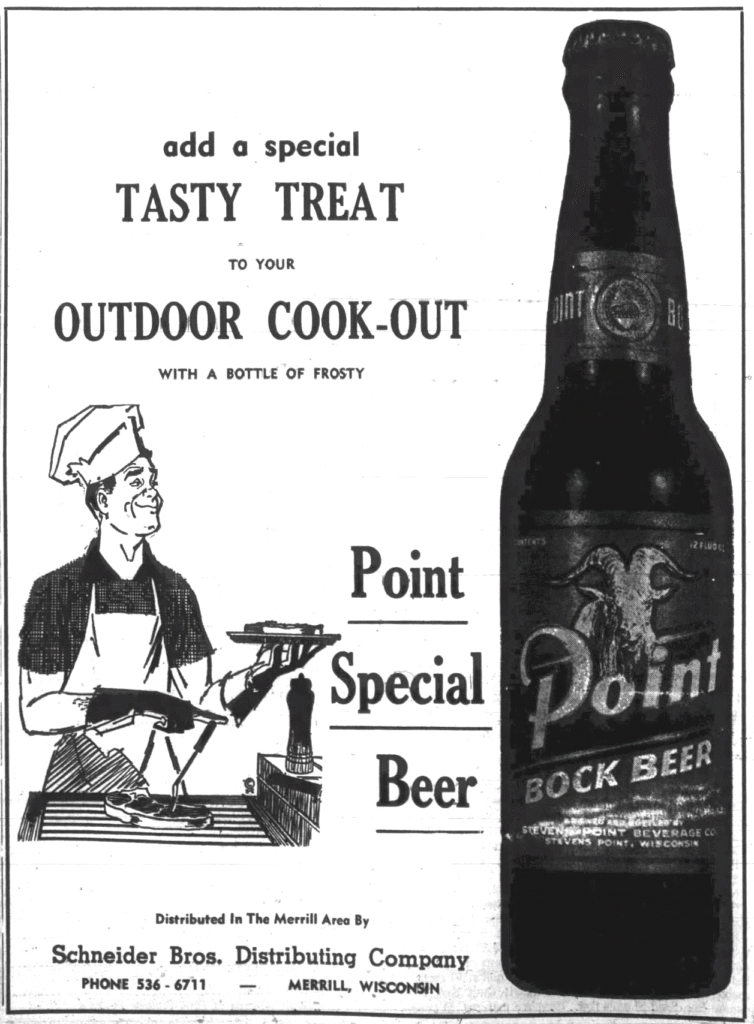
Monday’s ad is for Point Bock Beer, which was published on July 7, 1967. This one was for the Stevens Point Brewery of Stevens Point, Wisconsin, which was originally founded in 1857. This ad ran in The Merrill Daily Herald, of Merrill, Wisconsin.

Filed Under: Art & Beer, Beers, Breweries, Just For Fun Tagged With: Advertising, Bock, History, Wisconsin

« Previous Page
Next Page »

Find Something

Northern California Breweries

Please consider purchasing my latest book, California Breweries North, available from Amazon, or ask for it at your local bookstore.

Recent Comments

  • Bob Paolino on Beer Birthday: Grant Johnston
  • Gambrinus on Historic Beer Birthday: A.J. Houghton
  • Ernie Dewing on Historic Beer Birthday: Charles William Bergner 
  • Steve 'Pudgy' De Rose on Historic Beer Birthday: Jacob Schmidt
  • Jay Brooks on Beer Birthday: Bill Owens

Recent Posts

  • Beer Birthday: Alexandra Nowell March 18, 2026
  • Beer In Ads #5169: The Best Of The Bocks March 17, 2026
  • Beer In Ads #5168: Hey! It’s Bock Beer Day To-Day! March 17, 2026
  • Beer In Ads #5167: Acme Bock Is Back Tomorrow! March 16, 2026
  • Historic Beer Birthday: John Land March 16, 2026

BBB Archives

Feedback

Head Quarter
This site is hosted and maintained by H25Q.dev. Any questions or comments for the webmaster can be directed here.