Brookston Beer Bulletin

Jay R. Brooks on Beer

  • Home
  • About
  • Editorial
  • Birthdays
  • Art & Beer

Socialize

  • Dribbble
  • Email
  • Facebook
  • Flickr
  • GitHub
  • Instagram
  • LinkedIn
  • Pinterest
  • RSS
  • Twitter
  • YouTube

Powered by Genesis

Beer In Ads #5216: The Finest Bock, As Usual

April 11, 2026 By Jay Brooks Leave a Comment

Two years ago I decided to concentrate on Bock ads for awhile. Bock, of course, may have originated in Germany, in the town of Einbeck. Because many 19th century American breweries were founded by German immigrants, they offered a bock at certain times of the year, be it Spring, Easter, Lent, Christmas, or what have you. In a sense they were some of the first seasonal beers. “The style was later adopted in Bavaria by Munich brewers in the 17th century. Due to their Bavarian accent, citizens of Munich pronounced ‘Einbeck’ as ‘ein Bock’ (a billy goat), and thus the beer became known as ‘Bock.’ A goat often appears on bottle labels.” And presumably because they were special releases, many breweries went all out promoting them with beautiful artwork on posters and other advertising. With Spring approaching, there are so many great examples that I’m going to post two a day for a few months.

Saturday’s first ad is for Anheuser-Busch Bock Beer, which was published on April 11, 1891. This one was for the Anheuser-Busch Brewing Co., then of St. Louis, Missouri, which was originally founded in 1852 as the Bavarian Brewery by George Schneider. Eberhard Anheuser and Adolphus Busch, who’s married Anheuser’s daughter Lilly, had acquired it outright by 1869. The ad ran in the Washington Post, of Washington, D.C.

Filed Under: Art & Beer, Beers, Breweries, Just For Fun Tagged With: Advertising, Bock, History, Missouri

Beer In Ads #5215: Another Load Of “Milwaukee’s Choicest”

April 10, 2026 By Jay Brooks Leave a Comment

Two years ago I decided to concentrate on Bock ads for awhile. Bock, of course, may have originated in Germany, in the town of Einbeck. Because many 19th century American breweries were founded by German immigrants, they offered a bock at certain times of the year, be it Spring, Easter, Lent, Christmas, or what have you. In a sense they were some of the first seasonal beers. “The style was later adopted in Bavaria by Munich brewers in the 17th century. Due to their Bavarian accent, citizens of Munich pronounced ‘Einbeck’ as ‘ein Bock’ (a billy goat), and thus the beer became known as ‘Bock.’ A goat often appears on bottle labels.” And presumably because they were special releases, many breweries went all out promoting them with beautiful artwork on posters and other advertising. With Spring approaching, there are so many great examples that I’m going to post two a day for a few months.

Friday’s second ad is for Braumeister Bock Beer, which was published on April 10, 1950. This one was for the Independent Milwaukee Brewery of Milwaukee, Wisconsin, which was originally founded in 1901 by Henry N. Bills, William Gutknecht, Charles Evers, Emil Czarnecki, and William Jung.

There are actually two versions I found of the same ad, and I’m willing to bet good money I could find more if I really looked. It appears they created a generic ad that any distributor could add their territory and specific information in different markets. There was a white oval for the town’s name and open space at the bottom where you could list contact information for the distributor from whom to buy their beer. The first one was for Toledo, Ohio and the ad ran in the Toledo Blade, of Toledo, Ohio. The second one was for Monroe, Wisconsin and the ad ran in the Monroe Evening News, of Monroe, Wisconsin.

Filed Under: Art & Beer, Beers, Breweries, Just For Fun Tagged With: Advertising, Bock, History, Ohio, Wisconsin

Beer In Ads #5214: Poth’s Bock Beer

April 10, 2026 By Jay Brooks Leave a Comment

Two years ago I decided to concentrate on Bock ads for awhile. Bock, of course, may have originated in Germany, in the town of Einbeck. Because many 19th century American breweries were founded by German immigrants, they offered a bock at certain times of the year, be it Spring, Easter, Lent, Christmas, or what have you. In a sense they were some of the first seasonal beers. “The style was later adopted in Bavaria by Munich brewers in the 17th century. Due to their Bavarian accent, citizens of Munich pronounced ‘Einbeck’ as ‘ein Bock’ (a billy goat), and thus the beer became known as ‘Bock.’ A goat often appears on bottle labels.” And presumably because they were special releases, many breweries went all out promoting them with beautiful artwork on posters and other advertising. With Spring approaching, there are so many great examples that I’m going to post two a day for a few months.

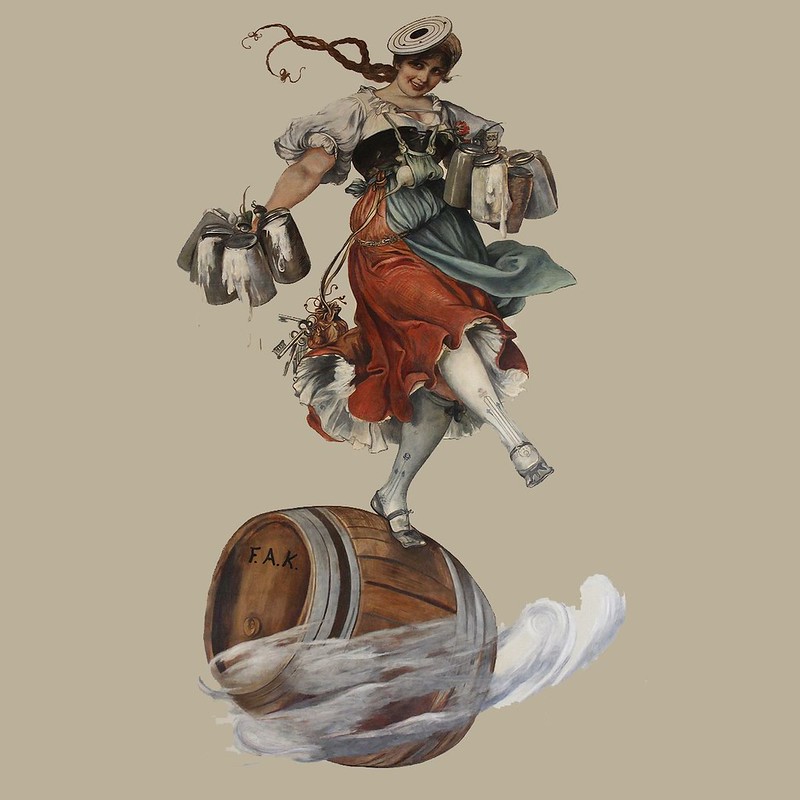
Friday’s first ad is for Poth Bock Beer, which was published on April 10, 1908. This one was for the F.A. Poth Brewing Co., of Philadelphia, Pennsylvania, which was originally founded in 1864. This ad ran in the Trenton Evening Times, of Trenton, New Jersey.

Filed Under: Art & Beer, Beers, Breweries, Just For Fun Tagged With: Advertising, Bock, History, Pennsylvania, Philadelphia

Beer In Ads #5213: Bock Beer Cascade Quality

April 9, 2026 By Jay Brooks Leave a Comment

Two years ago I decided to concentrate on Bock ads for awhile. Bock, of course, may have originated in Germany, in the town of Einbeck. Because many 19th century American breweries were founded by German immigrants, they offered a bock at certain times of the year, be it Spring, Easter, Lent, Christmas, or what have you. In a sense they were some of the first seasonal beers. “The style was later adopted in Bavaria by Munich brewers in the 17th century. Due to their Bavarian accent, citizens of Munich pronounced ‘Einbeck’ as ‘ein Bock’ (a billy goat), and thus the beer became known as ‘Bock.’ A goat often appears on bottle labels.” And presumably because they were special releases, many breweries went all out promoting them with beautiful artwork on posters and other advertising. With Spring approaching, there are so many great examples that I’m going to post two a day for a few months.

Thursday’s second ad is for Cascade Bock Beer, which was published on April 9, 1917. This one was for Vancouver Breweries Ltd., of Vancouver, British Columbia, which was originally founded in 1902 by a merger. This ad ran in The Vancouver Sun, of Vancouver, British Columbia, Canada.

Filed Under: Art & Beer, Beers, Breweries, Just For Fun Tagged With: Advertising, Bock, British Columbia, Canada, History, Vancouver

Beer In Ads #5212: Metz Bock Beer

April 9, 2026 By Jay Brooks Leave a Comment

Two years ago I decided to concentrate on Bock ads for awhile. Bock, of course, may have originated in Germany, in the town of Einbeck. Because many 19th century American breweries were founded by German immigrants, they offered a bock at certain times of the year, be it Spring, Easter, Lent, Christmas, or what have you. In a sense they were some of the first seasonal beers. “The style was later adopted in Bavaria by Munich brewers in the 17th century. Due to their Bavarian accent, citizens of Munich pronounced ‘Einbeck’ as ‘ein Bock’ (a billy goat), and thus the beer became known as ‘Bock.’ A goat often appears on bottle labels.” And presumably because they were special releases, many breweries went all out promoting them with beautiful artwork on posters and other advertising. With Spring approaching, there are so many great examples that I’m going to post two a day for a few months.

Thursday’s first ad is for Metz Bock Beer, which was published on April 9, 1908. This one was for the the Metz Bros. Brewing Co. of Omaha, Nebraska, which was originally founded in 1856 by Frederick Metz. This ad ran in The Omaha Evening Bee, also of Omaha, Nebraska.

Filed Under: Art & Beer, Beers, Breweries, Just For Fun Tagged With: Advertising, Bock, History, Nebraska

Beer In Ads #5211: Its Out, The Bock Beer You Have Been Waiting For Is Now Ready

April 8, 2026 By Jay Brooks Leave a Comment

Two years ago I decided to concentrate on Bock ads for awhile. Bock, of course, may have originated in Germany, in the town of Einbeck. Because many 19th century American breweries were founded by German immigrants, they offered a bock at certain times of the year, be it Spring, Easter, Lent, Christmas, or what have you. In a sense they were some of the first seasonal beers. “The style was later adopted in Bavaria by Munich brewers in the 17th century. Due to their Bavarian accent, citizens of Munich pronounced ‘Einbeck’ as ‘ein Bock’ (a billy goat), and thus the beer became known as ‘Bock.’ A goat often appears on bottle labels.” And presumably because they were special releases, many breweries went all out promoting them with beautiful artwork on posters and other advertising. With Spring approaching, there are so many great examples that I’m going to post two a day for a few months.

Wednesday’s ad is for Feigenspan Bock Beer, which was published on April 8, 1909. This one was for the the Feigenspan Brewing Co. of Newark, New Jersey, which was originally founded in 1866 by Charles Kolb, but Christian William Feigenspan appears to have acquired it in 1875, using a variety of related names though when this ad was published if was called Feigenspan’s Brewery. This ad ran in The Central New Jersey Home News, also of New Brunswick, New Jersey.

Filed Under: Art & Beer, Beers, Breweries, Just For Fun Tagged With: Advertising, Bock, History, New Jersey

Beer In Ads #5210: Thousands Of Barrels Ready For You!

April 7, 2026 By Jay Brooks Leave a Comment

I’ve been featuring Bock ads for the last two years, but am taking a break from that today since it’s National Beer Day to instead share this ad announcing “Thousands of Barrels of Fully Aged Goetz Country Club Real Beer Ready For You!”

Tuesday’s ad is for Country Club Beer, which was published on April 7, 1933. This one was for the M.K. Goetz Brewing Co. of Saint Joseph, Missouri (and they also had a brewery in Kansas City), which was originally founded in 1859.  This ad ran in The Sedalia Democrat, of Sedalia, Missouri.

Filed Under: Art & Beer, Beers, Breweries, Just For Fun Tagged With: Advertising, History, Missouri

Historic Beer Birthday: George Clement Hawley

April 7, 2026 By Jay Brooks Leave a Comment

Today is the birthday of George Clement Hawley (April 7, 1860-October 13, 1928). He was born in Albany, New York, and originally worked as a clerk. When he was 32, in 1892, he married Thedore M Amsdell, whose father acquired the Dobler Brewing Co. the year before, in 1891. The brewery had been founded in Albany by Darius S. Wood in 1865, but three years later, in 1868, it was purchased by John Dobler. After Hawley’s father-in-law bought it, and he became involved, they continued to trade under the Dobler name, but officially changed the name to the (Theo K.) Amsdell & (George C.) Hawley Brewery.

I wasn’t able to find our much about Hawley’s life. He and his wife don’t appear to have had any children, so I don’t even know who took over the brewery after Hawley passed away.

Filed Under: Beers

Historic Beer Birthday: Leo Van Munching Jr.

April 7, 2026 By Jay Brooks Leave a Comment

Today is the birthday of Leo Van Munching Jr. (April 7, 1926-February 15, 2016). He was born in Rotterdam, The Netherlands, but moved with his family after prohibition. His father, Leo van Munching Sr. started importing Heineken beer under the name “Van Munching & Co., and he and his son built it into a powerhouse imported beer brand. Sales Agents UK has an overview of their business strategy in a short piece entitled Leo Van Munching – The Story of the US Heineken Mogul.

This is his obituary from the San Francisco Chronicle:

Leo Van Munching Jr., whose stewardship of the importing company started by his father made the Dutch-brewed beer Heineken and its low-calorie sibling, Amstel Light, familiar brand names in the United States, died on Sunday at his home in Darien. He was 89.

The cause was heart failure, his son Philip said.

Heineken, which was first brewed in the 19th century, was the first European beer to be shipped to this country after the end of Prohibition. It was Mr. Van Munching’s father, Leo van Munching (the father preferred the lowercase v, the son the uppercase V), who recognized the business opportunity, and persuaded Heineken executives to allow him to represent the brand in the United States.

He arrived from the Netherlands with 50 cases of beer and his young family shortly after the repeal in December 1933 of the 18th amendment to the Constitution that had banned the manufacture and sale of alcoholic beverages. Earlier that year, President Franklin D. Roosevelt had signed the Beer and Wine Revenue Act that legalized (and taxed) beverages containing no more than 3.2 percent alcohol. “I think this would be a good time for beer,” the president declared.

Exports from the Netherlands were curtailed a few years later during World War II, but in 1946, the elder Mr. van Munching established Van Munching and Company as the lone American distributor of Heineken products.

Spurred by the beer’s popularity among American soldiers, who had enjoyed it in Europe, and by an advertising campaign that underscored its cachet as a foreign beer, sales were brisk. In 1951, The New York Times reported that sales of Heineken in the United States totaled more than 4.6 million bottles, an increase of 49 percent from 1950, a period when beer sales as a whole increased by only 1.2 percent.

That was just about the time that the younger Mr. Van Munching went to work for the company, shortly after graduating from college in 1950. He worked closely with his father for a quarter-century, establishing regional offices and, through advertising and marketing, helping to lift American recognition of the Heineken brand.

The Van Munching name grew in prominence as well, largely because of radio ads for Heineken that closed with an announcer saying: “Imported by Van Munching and Company, New York, New York.” By the mid-1970s, Leo Jr. was running day-to-day operations; he was officially named president in 1980.

By then, Heineken had been the best-selling imported beer in America for eight years, and according to Advertising Age, in 1979, it accounted for a whopping 41 percent of all imported beer sales in the country. Under Mr. Van Munching, the family company introduced other brands to the United States (including Grizzly, a Canadian-brewed beer, whose radio ads featured a not terribly well-known comedian named Jerry Seinfeld).

But perhaps more significantly, he increased Heineken product sales: He persuaded Heineken, which had bought the Amstel brewery, then in Amsterdam, in 1968, to begin producing a low-calorie beer for export; it arrived in the United States as Amstel Light in the early 1980s, initially marketed with women as a target.

Beginning in the mid-1970s, he marketed Heineken with television advertising for the first time, focusing on the beer’s distinctive green bottle and a slogan promoting its documented popularity: “America’s No. 1-selling imported beer.”

By the late 1980s, fending off a challenge from Mexican beers that were being marketed to younger drinkers — by then, the decade had minted (and named) a new demographic, yuppies, who gravitated to trendy imports — Heineken changed its advertising direction, which was focused by a tagline: “When you’re done kidding around, Heineken.”

Mr. Van Munching sold his company to Heineken in the early 1990s (he ran it for them until 1993), and when he left, it was still the leading American import. By 1997, however, Heineken had yielded the top spot to Corona Extra. As of 2015, it had yet to reclaim it.

Mr. Van Munching was born in Rotterdam, the Netherlands, on April 7, 1926. His father had been a ship’s steward for the Holland/America cruise line before he began importing beer. His mother was the former Maria Molt.

The family lived in Weehawken, N.J., where Mr. Van Munching attended high school. He joined the Navy, serving in Hawaii at the end of World War II. Afterward, he studied business and management at the University of Maryland on the G.I. Bill of Rights.

In later years, among his many philanthropic donations were gifts totaling $11 million to his alma mater, where Van Munching Hall is the home of the Robert H. Smith School of Business.

And this obituary is from his hometown paper of Darien, Connecticut, the Darien Times:

Leo Van Munching, Jr., who guided Heineken’s decades-long dominance in the US imported beer market, died February 14th after a long illness. The Darien resident was 89.

Born in 1926 in Rotterdam, the Netherlands, Leo and his family immigrated to the United States upon the repeal of Prohibition in 1933. His late father, Leo, Sr., came as a representative of the Heineken brewery and eventually established the independent Van Munching & Company as the sole US importer of Heineken brands.

Leo served as a ‘Seabee’ in the 35th Special Naval Construction Battalion on Oahu, Hawaii from 1944 to 1946. Upon discharge from the Navy, he enrolled in the University of Maryland on the G.I. Bill, earning a degree from the College of Business and Management in 1950.

He then went to work for Van Munching & Company, establishing regional offices in major markets around the country and developing both the brand imagery and the distribution network that led to Heineken’s preeminence in the expanding imported beer segment. He married Margaret (Peggy) Pratt in 1953, and moved his quickly growing family to Chicago and Los Angeles before settling in Connecticut, where he took over as president of Van Munching & Company. He remained in that role until his retirement in 1993.

During his time with Van Munching & Company, no other brand approached Heineken’s position as the largest-selling imported beer. After cajoling the Heineken Brewery to create a low-calorie version of its Amstel brand, Leo guided Amstel Light to the top sales spot in the imported light beer segment.

In recognition of his outstanding contributions and personal dedication to US-Netherlands trade relations, and his promotion of goodwill for the Netherlands in the United States, the Dutch government honored him with The Order of Orange-Nassau in 1982. Six years later, the Netherlands Chamber of Commerce in the US also recognized his role in the expansion of trade between the two countries, presenting him with the George Washington Vanderbilt Award.

Leo’s efforts as a philanthropist – often anonymous – were substantial and far-reaching. Many of his contributions were made out of appreciation for the opportunities he and his family enjoyed in America. He became involved in the restoration of the Statue of Liberty in honor of his mother, Mia, who he said was greatly affected by seeing the statue as an arriving immigrant.

He donated Van Munching Hall, home of the University of Maryland’s Robert H. Smith School of Business, in part to thank the university for its kind treatment of the veterans of World War II. In addition to building the home for the University of Maryland’s business school, Leo was a member of the school’s Dean’s Advisory Council, an honorary trustee of the University of Maryland College Park Foundation Board, and in 2012, was given the Tyser Gottwals Award in honor of his outstanding service to the university.

Leo’s fervent commitment to supporting education led him to a long-standing relationship with Kolbe Cathedral High School in Bridgeport. His support of that school, both as a benefactor and member of the Advisory Board, prompted the Diocese of Bridgeport to honor him with the Order of St. Augustine Medal of Service in 2012. He and Peggy were also strong supporters of the St. Margaret Mary School in the Bronx.

Closer to home, Leo and Peggy established the Van Munching Rehabilitation Unit at Stamford Hospital, which helps people with chronic or disabling illnesses or injuries restore their mobility and independence. The excellent care he received at the New York Hospital/Cornell Medical Center prompted Leo to make a founding donation to the Margaret M. Dyson Vision Research Institute. Leo was also a leadership donor to the construction of the new Darien Library, which opened in 2009. He was an active supporter of several Darien-based charities, and a member of the Wee Burn Country Club.

This plaque hangs at the University of Maryland, Van Munching’s alma mater, which he attended after World War 2.

Filed Under: Beers, Birthdays Tagged With: Connecticut, Heineken, Imports, The Netherlands, United States

The First Beer Of New Beer’s Day

April 7, 2026 By Jay Brooks Leave a Comment

When the Cullen-Harrison Act took effect on April 7, 1933, it signaled that the national nightmare known as Prohibition was coming to end. In practical terms, it provided for the return of lower alcohol 3.2 beer (which is 3.2% by weight, or 4% ABV). Looking through the historic record, loads of people all over the nineteen states, plus the District of Columbia, where they could once more legally drink starting April 7, stayed up past midnight to get that first sip of beer in thirteen years. I think I would have done the same, honestly. A lot of politicians who helped to dismantle prohibition were sent some of the first cases of beer by grateful breweries who suddenly were able to get back to work, feeding their families and supporting the economy. There’s a famous photo of an Anheuser-Busch team of Clydesdale horses pulling a wagon of beer to deliver to the White house.

Budweiser delivery in D.C. on April 7, 1933.

But as iconic as the photo is, it was not the first beer delivery on that day to the White House. While less well-known, it was widely reported on the day. That honor fell to a local brewery, the Abner-Drury Brewery. That brewery has originally been founded in D.C. in 1870 by John Albert, who in 1898 sold it to Edward F. Abner and Peter A. Drury, who renamed it. It survived prohibition, but not much longer, closing permanently in 1938.

Two days after the passing of the Cullen–Harrison Act on March 22, 1933 (and a day after it was signed into law by president Franklin D. Roosevelt), the D.C. newspaper, The Evening Star, sent a reporter to the brewery on 25th and G Streets to see how they were preparing for the upcoming flood of beer two weeks later. Having survived prohibition in part by brewing near-beer, that horribly mis-named N/A, they were already quite prepared to resume brewing the real thing. In fact, beer was already in the tanks but could not be bottled until they receive their official permit, which they’d already applied for.

The permit must have come through, because at midnight on April 7, 1933, an Abner-Drury beer truck, guarded by a U.S. Marine riding on top, rolled up the White House gate to deliver some beer to FDR as a thank you, and also a few additional cases destined to be delivered to the National Press Club in the morning. There were already lots of people camped out at the White House, not to mention members of the press. The president had already gone to bed, unfortunately, but naturally there were plenty of people there willing to open and drink that first beer just a few minutes past midnight. Apparently, that honor fell to the Marine who was helping to guard the beer truck, and while supposedly there are photos of that, I couldn’t find any of those. He does, however, show up in other photos from that night.

The story is mentioned briefly on the Wikipedia page for National Beer Day:

The Abner-Drury Brewery sent a guarded truck to the White House at a minute past midnight with two cases of beer for Roosevelt, though when it arrived, it became apparent he was asleep. The Marine guarding the beer opened the first bottle and drank it, allowing the press to photograph him. Roosevelt later sent the cases of beer to the National Press Club. People across the country gathered outside breweries on April 7, some of whom camped outside the night prior. An estimated 1.5 million barrels of beer were consumed, with an estimated $5 million of beer being sold in Chicago alone. Hundreds of breweries, bars, and taverns could reopen and expand again, hiring workers and buying new equipment, while restaurants could sell alcohol again. In the four months that followed, manufacturing grew by 78%, automobile and heavy equipment sales by almost 200%, the stock market by 71%, and approximately four million people found employment, with approximately 500,000 more jobs being created in related industries.

But the fuller story was picked up all over the wire services and by morning was retold all over the country. This one is from one of the local papers, the Capital Journal:

Here’s a version from the Knoxville News Sentinnel:

This one’s from the Tampa Tribune:

And this is from the Okmulgee Daily Times of Oklahoma:

And from the Buffalo News:

The celebrations took place all over the map, and this one describes what went on in San Francisco from The Californian:

And here’s what well-known humorist Will Rogers had to say about it:

The Abner-Drury Brewery also ran an ad in the newspaper on April 7, 1933:

Filed Under: Beers, Breweries, Just For Fun, Politics & Law, Related Pleasures Tagged With: Advertising, California, History, Politics, Prohibition

« Previous Page
Next Page »

Find Something

Northern California Breweries

Please consider purchasing my latest book, California Breweries North, available from Amazon, or ask for it at your local bookstore.

Recent Comments

  • Bob Paolino on Beer Birthday: Grant Johnston
  • Gambrinus on Historic Beer Birthday: A.J. Houghton
  • Ernie Dewing on Historic Beer Birthday: Charles William Bergner 
  • Steve 'Pudgy' De Rose on Historic Beer Birthday: Jacob Schmidt
  • Jay Brooks on Beer Birthday: Bill Owens

Recent Posts

  • Beer In Ads #5226: Broadway Brewing Bock Beer April 18, 2026
  • Beer Birthday: Alan McLeod April 18, 2026
  • Beer In Ads #5225: Fabled Ambrosia Of The Ancients April 17, 2026
  • Historic Beer Birthday: William O. Poth April 17, 2026
  • Beer In Ads #5224: Harvard Bock Beer April 16, 2026

BBB Archives

Feedback

Head Quarter
This site is hosted and maintained by H25Q.dev. Any questions or comments for the webmaster can be directed here.