Brookston Beer Bulletin

Jay R. Brooks on Beer

  • Home
  • About
  • Editorial
  • Birthdays
  • Art & Beer

Socialize

  • Dribbble
  • Email
  • Facebook
  • Flickr
  • GitHub
  • Instagram
  • LinkedIn
  • Pinterest
  • RSS
  • Twitter
  • YouTube

Powered by Genesis

Why Success Is Killing the Craft Brew Industry

April 16, 2013 By Jay Brooks

money-bag
This ran in The Street a couple of weeks ago, and I meant to post it before but it kept getting pushed down in the queue. Portland writer Jason Notte does an interesting job dissecting the industry and the recent kerfuffles over taxes in Why Success Is Killing the Craft Brew Industry. If you follow the business side of the beer industry, it’s worth a read.

yellow

Filed Under: Breweries, Editorial, Just For Fun, News Tagged With: Business

British Brewers Inspired By American Craft Beer?

April 11, 2013 By Jay Brooks

uk
The BBC’s News Magazine has an interesting article, US Craft Beer: How It Inspired British Brewers, that gives an overview of the rise of craft beer in America. Despite moving New Albion Brewing from Sonoma to San Francisco, the article does get most of the history reasonably right. And it’s also nice seeing my friend Melissa Cole quoted.

But the article doesn’t really deliver on the title, which I don’t mean as a criticism per se. It’s just that it’s more about craft beer becoming “fashionable,” trendy even in Great Britain than about British brewers being inspired by our beer. Certainly some are, and by everything I’ve seen and heard, it’s happening more and more, but I’ve also talked to British brewers who are convinced that UK consumers don’t want our hoppy or extreme beers. Yet when I was at GBBF a few years ago, the American brewers section was crowded all day long for the entirety of the festival. And when I accompanied Matt Brynildson to Marston’s in Burton-on-Trent to brew a collaboration beer for the J.D. Wetherspoon chain, the brewer — a terrifically nice person — refused to put in as many hops as Brynildson’s recipe called for, and he ended up having to adjust it. Even so, it proved to be one of the most popular beers at J.D. Wetherspoon’s festival that year. So I think that British beer drinkers are more interested in American-style beers than their brewers tend to believe is the case. At least that’s my anecdotal take, anyway.

P1120175
Matt Brynildson and Melissa Cole at a J.D. Wetherspoon pub in London.

Filed Under: Breweries, Editorial Tagged With: History, UK

The Neo-Prohibitionist Agenda: Punishment Or Profit

April 11, 2013 By Jay Brooks

target-alcohol
Regular bulletin readers know well my disdain for the hypocritical anti-alcohol organizations trying their damndest to remove all alcohol from society or, failing that, make everyone who makes, sells or enjoys alcohol as miserable as they are. Not surprisingly, at the recent Alcohol Policy 16 Conference, which took place in Arlington, Virginia in early April, they revealed just how far their hypocrisy extends yet again.

Angela Logomasini, who attended the conference on behalf of Wine Policy, noted that during a panel discussion on alcohol tax policy that the “entire discussion revolved around how to lobby for taxes and profit in the process.” Given that the subtitle of the entire conference was “Building Blocks for Sound Alcohol Policies,” she can be excused for believing that the discussion might involve “research related to the impact of taxes on alcohol abuse” or whether “higher taxes really reduce alcohol abuse.” Such reasonable topics, however, were not even discussed. Instead, as I said, the entirety of the talk “revolved around how to lobby for taxes and profit in the process.”

Logomasini continued her description of the panel discussion:

Rebecca Ramirez of the Bloomberg School of Public Health at Johns Hopkins University presented her qualitative research on the framing of pro-tax messaging for use in lobbying campaigns. It included interviews with policymakers and activists involved in these campaigns. Ramirez’s discussion eventually turned to earmarking, which is apparently the key reason many groups are involved. Officials with one disability advocacy group, she noted, told her flat out they simply didn’t care about the public health impacts of taxes. They were in the game solely to get some of the tax revenue steered toward their organization.

She wonders aloud how that might serve the public good, and it appears she’s not the only one. Surprisingly enough, Bruce Lee Livingston, sheriff of my local anti-alcohol posse Alcohol Justice, disagrees, apparently believing profiting from lobbying efforts does not serve the public health. He takes a different view. Livingston “commented during the question and answer portion that activists are unable to get taxes high enough to actually produce positive public health benefits. Rather, he called for a ‘charge-for-harm’ approach, which is based on the assumption that anyone who drinks deserves to be punished.” That’s the same bullshit approach he took trying to get an additional tax on alcohol in San Francisco in 2010, all but writing the script for Supervisor John Avalos’ ultimately failed Alcohol Mitigation Fee Ordinance.

So, as Angela Logomasini observes, there were only two approaches or reasons to raise alcohol taxes brought up by essentially every neo-prohibitionist group in the country, or at least in attendance. As I’ve been ranting for years now, none of those reasons had anything to do with public health, or safety, or any other lofty goals. These self-proclaimed “public health advocates” only want to raise taxes on alcohol for two reasons: either to enrich themselves and profit from the alcohol companies their groups target or to punish every single person who dares to enjoy a pint of beer or glass of wine. And yet they still maintain non-profit status.

If nothing else, this should teach us that like many modern charitable organizations, they’ve strayed very far from their original purpose and self-preservation and profit are their only motives now. As I’ve said many, many times, they need a reason to exist and so they keep reinventing themselves in order to survive and keep their — in the parlance of Mel Brooks’ Blazing Saddles — phony baloney jobs. And so raising money becomes the driving force, not any interest in bettering the world, instead just pandering to their members’ fears, paranoia and prejudices. And if all of us who enjoy beer, and drink responsibly, get punished in the process, so what? Apparently, that’s just a bonus.

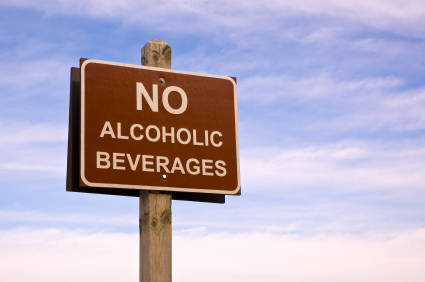
No alcoholic beverages

Filed Under: Editorial, News, Politics & Law Tagged With: Anti-Alcohol, Charity, Prohibitionists

Kim Jordan’s Keynote Address 2013

April 4, 2013 By Jay Brooks

ba
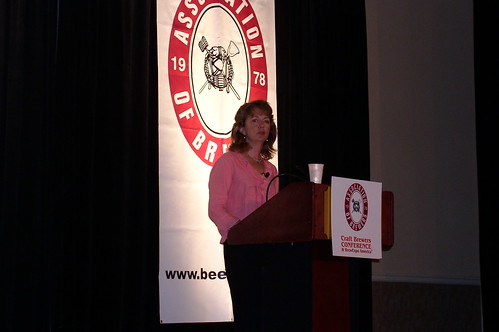
At this year’s Craft Brewers Conference, the keynote address was given by Kim Jordan from New Belgium Brewing. The context of Jordan being asked this year to speak is because ten years ago, when CBC was in New Orleans, she gave an optimistic keynote speech then predicting that craft beer would break the 10% barrier. While we’re not quite there yet — the current estimate is 6.5% of volume — great progress has been made and the future certainly looks rosier than it did in 2003. As someone who was sitting in the audience in New Orleans during that keynote, I was keen to hear what Kim would have to say a decade later. Below is a photo I took of Jordan giving that speech in 2003.

P1010007

Below is my video of Kim Jordan’s keynote address. Technical difficulties (okay, I was slow on the draw) delayed the start and I missed the first few seconds, probably no more than 30 seconds worth. Also, due to YouTube’s size limitations, I had to break it into two parts in order to upload it. Enjoy.

Part 1:

Part 2:

Filed Under: Breweries, Editorial, Just For Fun, News Tagged With: Brewers Association, Business, CBC, Video

Spirituality On Tap

March 24, 2013 By Jay Brooks

jesus-drinks-beer
With Win Bassett about to enter the seminary, this story from Madison, Wisconsin, stood out as something he could do to combine his callings. According to the Cap Times, a couple of local taverns, the Chief’s Tavern and the Fountain, both in Madison, are hosting regular events combining beer and religion.

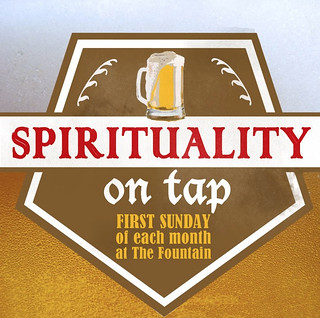
The Fountain is hosting a group known as Spirituality on Tap, who meets the on the first Sunday or each month “to talk about faith and spirituality in a relaxed, comfortable environment.”
spirituality-on-tap

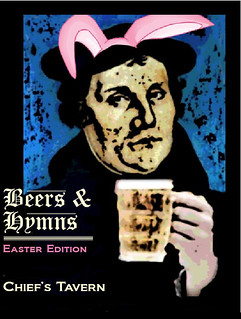
The second group takes over Chief’s Tavern for “Beer & Hymns,” where members of a nearby Lutheran Church meet to drink a few pints and sing a few hymns.
beer-and-hymns-easter

As one attendee quipped. “It’s easier to talk to a pastor standing next to a bar stool.” Another admitted that “a pub or a local bar is a more comfortable space than a church is.” Best of all, another advocate had this to say. “This is about recognizing that many people equate alcohol with alcoholism … those two things, while related, are not the same. We need to be sensitive to those that have struggled, but not demonize alcohol itself.” Amen to that.

That’s how all church should be held, frankly. Win, can you do something about that?

Filed Under: Beers, Editorial, Just For Fun, News, Politics & Law Tagged With: Religion & Beer

New Study Concludes Kids Drink Same Beers As Adults

March 20, 2013 By Jay Brooks

underage-drinking
I’m not exactly sure why this is news at all. It’s part of a series of what I call “so what” or “duh” studies that the neo-prohibitionists use to promote their anti-alcohol agenda. Really, it can best be termed “joke science,” and frankly, even using the word science is giving it too much credit. It’s more “agenda science,” propaganda masquerading as science, where the conclusion comes before the “study,” and the results fit the agreed upon conclusion every time. This one’s from CAMY, the Center on Alcohol Marketing and Youth, as anti-alcohol a group as you’re likely to encounter. Here’s what they did.

[R]esearchers at CAMY and the Boston University School of Public Health conducted an online survey of 1,032 youth ages 13 to 20. Participants were asked about their past 30-day consumption of 898 brands of alcohol among 16 alcoholic beverage types (are there really that many well-delineated types?). They answered questions about how often and how much of each brand they consumed. The study appears in Alcoholism: Clinical & Experimental Research.

In a million years, you’ll never guess what they found out. Ready. Sitting down? They discovered that underage drinkers consume the same popular brands as most adults! Woo hoo, drop the balloons. What a surprise! Among the top ten brands reported, four were beers:

  1. Bud Light (27.9%)
  2. Budweiser (17%)
  3. Coors Light (12.7%)
  4. Corona Extra (11.3%)

Well, now let’s look at the top selling beer brands overall, as of Dec. 2, 2012:

  1. Bud Light (+3.27%)
  2. Coors Light (+6.18%
  3. Budweiser (-2.54%)
  4. Miller Lite (+3.32%)
  5. Natural Light (+2.07%)
  6. Corona Extra (+5.08%)

And note that Coors Light showed a better than six-percent increase, while Budweiser slipped almost three percent, so when the survey was conducted they most likely lined up, one, two, three.

According to the press release. “Of the top 25 consumed brands, 12 were spirits brands (including four vodkas), nine were beers, and four were flavored alcohol beverages.” Since they haven’t released the full list, we only know the top four brands of beer.

So however much money and resources they spent on this, what they paid for bought them the news that what adults drink and what their kids are sneaking a drink of match up almost exactly. And while most thinking adults would look at these lists and just shake their heads, the anti-alcohol CAMY sees this as revealed wisdom.

“For the first time, we know what brands of alcoholic beverages underage youth in the U.S. are drinking,” said study author David Jernigan, PhD, CAMY director. “Importantly, this report paves the way for subsequent studies to explore the association between exposure to alcohol advertising and marketing efforts and drinking behavior in young people.”

Really? We finally know what kids are drinking, do we? Thank goodness somebody finally thought to ask them, by conducting a poll. And while most reasonable people might question what these results mean, CAMY immediately leaps to the conclusion that this proves an “association between exposure to alcohol advertising and marketing efforts and drinking behavior in young people.” Holy moley, can these people spin a yarn. Without any evidence of causation whatsoever, they declare these findings show there is an association. But all it reveals is that kids drink the same brands that their parents do, that they drink the beers they have access to (i.e., can pilfer from their parents’ stash or get an older brother to buy for them). Guess what I drank when I was unable to walk into a store and buy my own beer? Whatever I could get. Do they really think that underage kids are determining in advance what brands they decide they want to drink, and then do whatever’s necessary to insure that’s what they actually get? Pul-leeze. They’ll drink whatever they can get, and be happy about it. You can’t be too picky at that age. So it’s a good thing most teenagers haven’t yet developed a discerning palate, otherwise they’d be mightily disappointed on a regular basis.

Unfortunately, the danger with this sort of junk science is that it’s then used like real science to promote a particular agenda and change public policy. For example, when the Partnership for a Drug Free America reported on it, in Study Finds Underage Drinkers Prefer Top Alcohol Brands, they concluded with this quote from CAMY director David Jernigan:

“This research will lead to insights that will inform public policy,” he says. “Everybody has gut sense that some brands are appealing to kids more than others. Now we know for which brands that is working.”

Except that there are no real insights in this at all. That it’s even in a “scientific journal,” albeit “Alcoholism: Clinical and Experimental Research” — not exactly the journal Nature — is baffling. Here’s the “Background” from the abstract: “Little is known about brand-specific alcohol consumption among underage youth.” Really, we don’t currently know what brands underage kids are drinking? Seriously, how can they print that without losing all credibility. Neo-prohibitionists have been complaining about what kids are drinking for decades, if not longer. But until we asked 1,000 teenagers to take an online survey, we had no idea which brands? Are they kidding? What a joke.

Then there’s the “Conclusions,” which frankly I’m surprised is plural, as if there is more than one conclusion. But here it is: “Underage youth alcohol consumption, although spread out over several alcoholic beverage types, is concentrated among a relatively small number of alcohol brands. This finding has important implications for alcohol research, practice, and policy.”

I can’t wait to here about the “important implications” to which they believe that future “alcohol research, practice, and policy” will be altered by the groundbreaking news that kids are drinking the same stuff their parents are drinking. Why isn’t this on the front page, above the fold, of the Grey Lady herself? But really, the question ought to be why is it news at all.

Fundação-Telefônica-Beer-for-kids
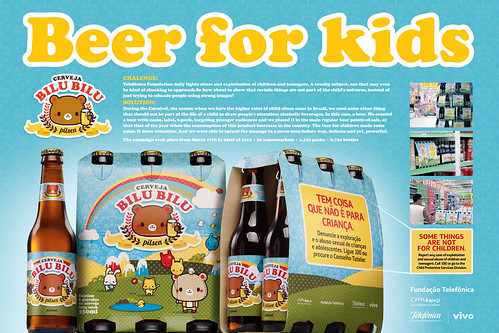
I wonder how CAMY would process this Brazilian brand created to warn about the dangers of underage drinking?

Filed Under: Beers, Editorial Tagged With: Anti-Alcohol, Prohibitionists, Statistics

How Beer Gave Us Civilization

March 15, 2013 By Jay Brooks

ninkasi
While I’m firmly in the “beer came before bread” camp in the anthropological debate about what sparked civilization, evidence has been mounting for that view since it was first proposed over a half-century ago. In a new opinion piece in the New York Times by Jeffrey P. Kahn, the CEO of WorkPsych Associates, entitled How Beer Gave Us Civilization, he lays out the case for why “we needed beer” and runs through an overview of early civilization’s introduction of alcohol and why it was so necessary to our development. He also brings into the debate a recent study from the Journal of Archaeological Method and Theory, What Was Brewing in the Natufian? An Archaeological Assessment of Brewing Technology in the Epipaleolithic, which adds new support for what I call the “beer first” theory.

He unfortunately ends with the long-discredited Benjamin Franklin beer quote, but apart from that gaffe, it’s a good read. Just stop short of the final two paragraphs, and it’s even better. He should have just finished with this sage observation. “Beer’s place in the development of civilization deserves at least a raising of the glass.” Hear, hear.

Nilson-first-kegger
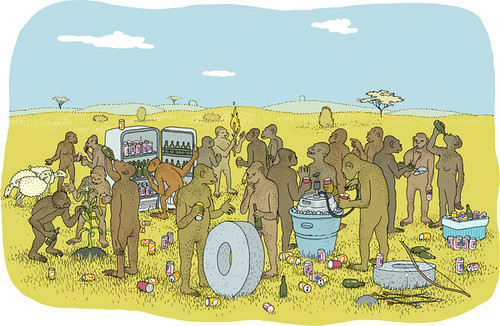
Illustration by Anders Nilsson.

Filed Under: Beers, Editorial, Events, News, Politics & Law, Related Pleasures Tagged With: History, Mainstream Coverage, Science

What Would Jesus Brew?

March 10, 2013 By Jay Brooks

jesus-drinks-beer
I figure I should get this posted while it’s still Sunday, the Christian Sabbath. My friend Pete, he of the Wicked renown, sent me the link to an article in the Wall Street Journal about Valley Church in Allendale, Michigan, which is bringing a slightly different message to its flock than the average church. In Some Church Folk Ask: ‘What Would Jesus Brew?’, they host a “semi-regular meeting of beer enthusiasts and home brewers who go by the moniker ‘What Would Jesus Brew?'”

buddy-jesus-loves-a-good-beer

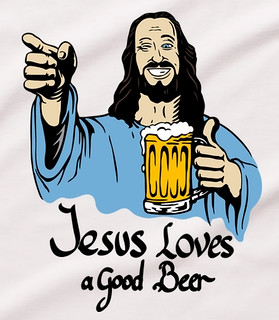
But the story details other similar efforts at bridging beer and religion at churches around the country, such as Saint Paul’s Episcopal in Wilmington, North Carolina, where they asked “congregants to brew beer and challenge other churches in the area to a friendly competition to raise money for charity.” The contest was called the “What Would Jesus Brew? competition.” And although it initially met with laughter and some derision, “[a] handful of nearby churches took up the mantle, and the groups met at Wilmington’s Front Street Brewery to learn basic brewing techniques and the history of beer in the church.” More impressively, the St. Paul’s team was called “Brew Unto Others” and also came up with a great team slogan: “God’s peace. Happy yeast.”

gods-peace-happy-yeast

They “built a ‘gigantic, four-foot trophy with a giant stein on it,’ which went to the ‘Hopostles’ from St. Mary Catholic Parish for their tasty double India Pale Ale.” It goes on to point out, not surprisingly, that not everyone in the Christian church is thrilled with this recent beery focus, but Pastor Matt Bistayi from Michigan’s Valley church has an answer for them. “‘Drunkenness is a sin,’ he said, ‘but beer or alcohol in moderation can be a gift from God’s creation.'” Amen to that.

Filed Under: Beers, Editorial, Just For Fun, News, Politics & Law Tagged With: Homebrewing, Religion & Beer

Big Bottles Equals Wine?

March 5, 2013 By Jay Brooks

duval-bottle
This is one of those “what the fuck” moments when I absolutely loathe wine’s status as the owner of all things sophisticated and fine, which also assumes, in the great words of Mike Myers (substituting “wine” for “Scottish”) “if ain’t wine, it’s crap.” The other assumption is that everything else is trying to be like wine, that anything trying to be a well made, good product on its own has to be aspiring to be like wine, it can’t just want to be good for its own reasons. This has been incredibly frustrating and insulting, as the status and quality of beer has been steadily improving in the United States for several decades. Despite the many years this has been so, it seems to me that many wine and spirits writers have essentially put their heads in the sand and every now and then will pop up and see that things have changed, and then decide they’re the ones who first noticed it.

Case in point is an article in the New York Times by a Clay Risen, who is, as far as I can tell, primarily a spirits writer who writes about that at Mash Notes and also writes about other things at the Atlantic. In the Times’ “Wine & Dining” section (another pet peeve of mine; why can’t it be “drinks & dining?”) he writes about Craft Beer’s Larger Aspirations Cause a Stir. Here’s the stir to which he’s referring, as he begins.

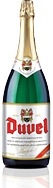
Time was, beer came in one size: whether bottle or can, the stuff inside measured a reliable 12 ounces. But walk into a craft-beer store these days and you’ll see shelf after shelf taken over by giants: 22-ounce “bombers,” 750-milliliter wine bottles, even three-liter jeroboams.

I’m not sure what time exactly he’s referring to, but a twelve ounce “standard” size for beer is as mythical as the idyllic America conservatives refer back to in telling us what’s wrong with the world today. While it’s true that the diversity in sizes was reduced after Prohibition, that’s largely because many states adopted post-prohibition laws that included only sizes many of the big brewers made, in part because those businesses helped write the laws. Florida’s an ideal example, where state law after Prohibition mandated only specific package sizes were legal. But even so, larger, and smaller, sizes have always been with us. And I also don’t know what he means when he says that craft-beer shelves “these days” have larger 22 oz. bottles, etc. The 22 oz. bottle has been a big part of craft beer for literally decades, and many breweries started out with just that size because it was cheaper, and didn’t require six-pack carriers.

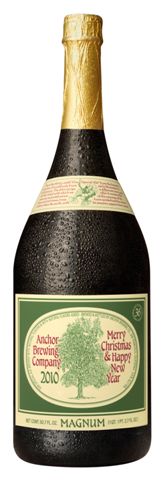
Anchor Brewing, Belgian breweries, and many others have been using magnum bottles, and other large format bottles also for decades. I have Anchor Christmas magnums from the early 1990s and I’m confident they were using the size well before that.

Anchor-Christmas_2010_magnum

So, okay, he seems to be taking the position that this is something he just noticed, therefore it’s new. Annoying, but somewhat benign; ignorance, not malice. But here’s where he loses me.

The trend toward large bottles is part of what is being called the “wine-ification” of beer, the push by many brewers to make their product as respectable to pair with braised short ribs as is a nice Chateauneuf-du-Pape, and at a price to match.

Frankly, meat dishes like braised short ribs naturally pair much better with beer than wine so really it’s wine that should have to fight for this respectability, but the author just takes it for granted that wine must be the better choice for a food pairing. What arrogance. Ribs with beer is already a respectable pairing, it’s only through willful ignorance that someone would not realize that.

But apart from the author, who are these people calling it the”‘wine-ification’ of beer?” Who decided this was a “trend?” I sure wish they’d cut it out. It’s wrong. It’s insulting. And most of all, it isn’t really true. Sure, brewers and people who love beer would be very pleased if good beer got the respect that it deserves, but they don’t think of it as the new wine, or any other annoying label the mainstream media loves to put on it. Beer can be good, even great, on its own terms without turning into wine. Just because some beer is put into a different size bottle doesn’t mean they’re trying to make it like wine. Look at beer bottles from 100 or more years ago. They were large, they had a crown and cork, and nobody confused them with wine.

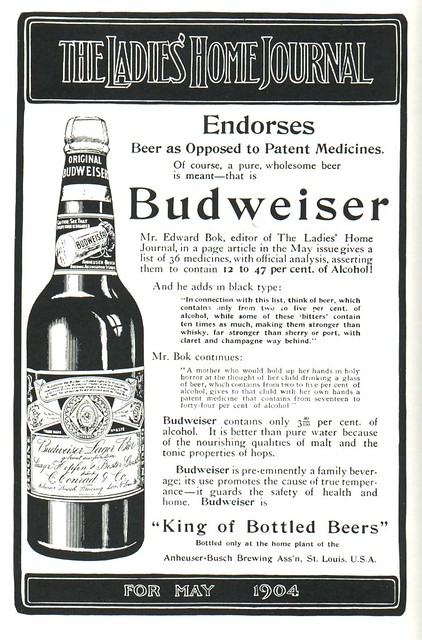
Below, for example, is a bottle of Budweiser in an ad in the Ladies Home Journal from 1904. Notice anything? It’s a big bottle, and it has a cage and cork. I guess this big bottle trend of trying to make beer like wine really has been going on a long time.

1904Budweiser

And here’s one for Rainier beer in Seattle, from 1900. And what have we here? A big bottle, wrapped in foil at the crown.

rainier_beer_ad_1900

As part of the support for his theory, Risen cites the following. “Last year, only about 3.5 percent of craft beer was sold in 22-ounce bottles, the most common large-format size, according to the market research firm SymphonyIRI.” Maybe he doesn’t realize this, but Symphony IRI data is primarily collected from grocery and big box stores, it is not representative of the market as a whole. And those outlets as a general rule, stock less odd-size bottles because their shelves are not set up for packages of varying sizes. Their shelves are at their most efficient when they stick to the same sizes.

So while nobody that I know has reliable statistics for the breakdown in all beer packages sold in the market, I can say with confidence that grocery sales do not reflect them. 22 oz., and other sizes are, and have been, selling for quite some time. When I was the beer buyer at BevMo, we specialized in beer much more than the average grocery store and that was reflected in the mix of package sizes we carried, too.

The story goes on to stir the pot of controversy over people’s concerns about big bottles. And while I’m sure he can find plenty of people willing to complain, it’s still just anecdotal evidence that ultimately doesn’t mean that much. Oh, this guy over here doesn’t like a big bottle. So what? Most of the more expensive, limited beers are the ones in big bottles so they’re not exactly made to be a mass marketed product. They’re meant for people who like them, can appreciate them, and who want them. The idea that somebody could be “uncomfortable with the notion of drinking beer like wine” seems utterly ridiculous. I mean, who’s saying that? What does drinking it “like wine” even mean. Does it mean not out of the bottle? Does it mean in something other than a pint glass? Does it mean sharing it, which he suggests, though that assertion seems very odd to me.

Then there’s a quote from Ben Granger, from Bierkraft (which I’ve heard very good things about, but have not visited) that “[a]s soon as you say you want to be more like wine, the battle is lost. I don’t think beer and beer culture need to be more like wine. I think they need to keep being themselves.” But who’s saying we’re trying to make our beer more like wine? With all due to respect to Granger, all of the people who I know who love great beer don’t think that big bottles, sharing or drinking out of a nice glass means we’re treating beer like wine. And I live in the heart of wine country. Treating beer with respect is just that. There’s no analogies necessary. Drinking beer out of the proper glass, and opening a big bottle to share with friends is exactly my favorite way to enjoy a beer. Until this mess of an article, it never occurred to me that what I was doing might be winey. You know why? Because it’s not, for chrissakes.

But this statement might be what bothers me the most: “Ultimately, traditionalists say that what irks them the most about the big bottles is that they send the signal that beer is trying to be something that it’s not: that it needs to be more like wine or scotch to win over elite consumers.” No it fucking doesn’t say that at all. If that’s the message you’re receiving, you made that up, all by yourself. Wine does not have a monopoly on glassware, bottle sizes or anything else. Beer can, and should, be put into whatever size package the brewer thinks best suits the product inside.

Who exactly are these “traditionalists?” And what does that mean? Traditional in what sense? Twelve ounce bottles became more common after prohibition because they fit nicely in the refrigerator. They weren’t even always in six-packs, and brewers tried other sizes, too. But my understanding is that six could be easily carried by most people, and especially women, who back then did the majority of the household shopping. As breweries became larger and more national, buying glass in bulk was also cheaper, and standardizing their own operations saved them money, but they weren’t creating a “tradition.” It was a business decision, pure and simple.

Now I like wine just fine. I live in Sonoma County, where there’s plenty of great wine all around me. If somebody hands me a glass, I happily accept it, drink it, and even sometimes enjoy it. I am a cross-drinker. But there’s nothing inherently exclusive to wine in the way it’s packaged, consumed or enjoyed. And saying so just pits the two against one another in a way that distorts reality and does neither side any good. It’s just unnecessary. This manufactured issue may sell papers or get click-throughs online, but otherwise should have no part in the way we perceive the status of different alcoholic drinks.

But one thing I have noticed, though I freely admit this is anecdotal, too. This argument is always made by the wine or spirits side, never by the beer world. Most beer people are content letting beer be beer, in whatever form it wants, but wine seems to always accuse beer of putting on airs whenever it dares to be more than lightly-flavored malt swill served out of buckets from tailgates outside of football games. “Big bottle? You must be trying to be like wine?” What utter fucking nonsense. Now hand me that Jeroboam of Russian River, I’ve worked up a powerful thirst.

UPDATE March 6: Garrett Oliver today posted his comments on Risen’s folly on the Times’ website, which I’ve copied below.

I must say that I take genuine exception to yesterday’s article on high-end beer in large bottles. The article appears to be pushing a point of view that is patently at odds with reality, and the piece is so full of holes and half-truths as to be essentially false. Let’s have a look:

(a) Our customers enjoy these beers enough that we have a hard time keeping up, as does every other good craft brewery we know.

(b) The writer conflates the 750 ml bottle with the 22 oz. “bomber” bottle, which is akin to conflating punk rock with heavy metal because they’re both loud and aggressive. That’s embarrassing.

(c) Beer cannot be “wine-ified” for two reasons. The first is that beer, like wine, has always been both “high” and “low”. The old American term for an alcoholic was “wino”, and there’s a reason for that. European museums are full of ornate gold and silver beer vessels and beer has featured heavily on the tables of royal and aristocratic households for more than 500 years. And every small French, Italian or Spanish town has a cantina where bottles of wine can be filled for a euro or two.

Also, ninety percent of the American wine market is bag-in-box or jug wine. Ninety percent! People drink both wine and beer at backyard barbecues and at four-star restaurants. And if the bottle is large and the beer tasty, all the better – we have friends and family to share it with.

Cheers,

Garrett Oliver
Brewmaster, The Brooklyn Brewery
Editor-in-Chief, “The Oxford Companion to Beer”

Well said, Garrett.

Filed Under: Beers, Editorial, Politics & Law Tagged With: Bottles, Mainstream Coverage

NBA Beer Prices

March 2, 2013 By Jay Brooks

basketball
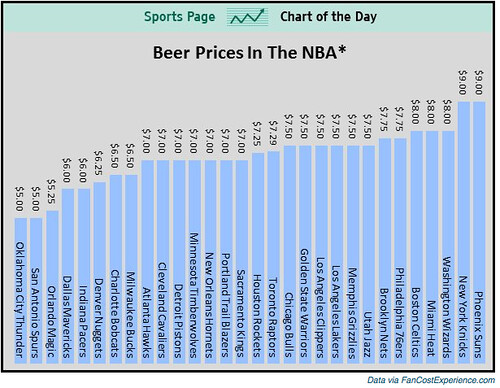
Last year, I posted about how high beer prices were at NFL Football stadiums, and, not surprisingly, the same is true for NBA Basketball games, as well. According to the Bleacher Report’s NBA Beer Prices Are Absurd, the price for a beer at an NBA game starts at $5 and can go for as much as $9, depending on the arena. The other interesting finding is that there doesn’t seem to be any logical reason for the price disparity and, naturally, team owners can charge whatever they want. Why people will actually pay that much … well, that’s a larger discussion. Below is a chart of NBA pricing across the league. It appears that between $7 and $7.50 is the average, which is, as the title of the piece suggests, a pretty absurd price for a small beer.

While the NBA story doesn’t break it down by ounces, as the NFL one did, is does say that the pricing is for “a small beer.” And while that’s not defined, the NFL average was $7.28 for 17 oz., I have to assume a “small” is less than that, probably closer to 12 or possibly 14 ounces. And if that’s true, that would make NBA beer even pricier than at an NFL game, which is pretty hard to swallow.

NBA-beer-prices

Filed Under: Beers, Editorial, News Tagged With: Business, Sports

« Previous Page
Next Page »

Find Something

Northern California Breweries

Please consider purchasing my latest book, California Breweries North, available from Amazon, or ask for it at your local bookstore.

Recent Comments

  • Ernie Dewing on Historic Beer Birthday: Charles William Bergner 
  • Steve 'Pudgy' De Rose on Historic Beer Birthday: Jacob Schmidt
  • Jay Brooks on Beer Birthday: Bill Owens
  • Steve 'Pudgy' De Rose on Beer Birthday: Charles Finkel
  • Steve 'Pudgy' De Rose on Beer Birthday: Bill Owens

Recent Posts

  • Beer In Ads #5204: Oh Brother! Griesedieck Bros. Genuine Premium Bock Beer Is Here! February 15, 2026
  • Historic Beer Birthday: Emil Resch February 15, 2026
  • Historic Beer Birthday: Philip Zang February 15, 2026
  • Beer In Ads #5203: Robert Portner’s Bock Beer February 15, 2026
  • Historic Beer Birthday: August Schell February 15, 2026

BBB Archives

Feedback

Head Quarter
This site is hosted and maintained by H25Q.dev. Any questions or comments for the webmaster can be directed here.