Brookston Beer Bulletin

Jay R. Brooks on Beer

  • Home
  • About
  • Editorial
  • Birthdays
  • Art & Beer

Socialize

  • Dribbble
  • Email
  • Facebook
  • Flickr
  • GitHub
  • Instagram
  • LinkedIn
  • Pinterest
  • RSS
  • Twitter
  • YouTube

Powered by Genesis

The Most Dangerous Things & The Duckworth Scale

October 4, 2010 By Jay Brooks

duck
Over the weekend I was perusing a book I picked up during my last trip to England, The Book of General Ignorance, a trivia book based on a British TV show, QI, which stands for Quite Interesting. There’s a whole series of QI books, and I was drawn to it initially because Stephen Fry was involved, and I’m a big fan of his work. One of the entries I read recently was entitled “What’s three times more dangerous than war?” It was the first sentence that leapt out at me. “Work is a bigger killer than drink, drugs or war.”

Many anti-alcohol organizations begin their press releases, policy papers, etc. with the eye-catching statistic that alcohol-related deaths account for a higher number of deaths than another kind. But this seems to fly in the face of that. It claims that “around two million people die every year from work-related accidents and diseases, as opposed to a mere 650,000 who are killed in wars.” While I might quibble with the adjective “mere,” it’s clear that far more die at work or in war than from alcohol. You can read the entire entry on the bottom of page 69 through Google Books.

Of course, some recent studies insist that two million die worldwide each year due to alcohol-related causes. Still others insist it’s involved in 1 in 25 deaths, which would mean that if it were really 2 million, then total world mortality for a given year would be 50 million. According to the UN, about 62 million people die each year. In the World Health Organization’s top 10 causes of death worldwide, alcohol is not among them. In 2001, a study by the CDC claimed 75,754 deaths were attributable to alcohol, but added that “low consumption has some beneficial effects, so a net 59,180 deaths were attributed to alcohol.” I could keep going citing study after study with different results, because the way you structure the statistics leads to the ultimate results. And that’s why who does the study and/or their motives are so important. And that’s why you shouldn’t believe such statistics without finding out where they came from, not even mine.
duck-scale

Somewhat off-topic, but quite interesting — at least to me — is the statistics behind the QI’s pronouncement of what’s safe and what’s dangerous were based on The Duckworth Scale, a “scale for assessing the risks involved in various activities” created in 1999. It takes its name from its creator, Dr. Frank Duckworth, a retired statistician. The scale is logarithmic, like the Richter scale for earthquakes. It grades one’s risk of death from activities ranging from washing up to playing Russian Roulette. It starts at zero for living on planet earth for a year, to a maximum of eight for certain death.

The Duckworth Scale

  • 8.0 Suicide Russian roulette (six bullets)
    Jumping off Eiffel Tower
    Lying in front of Flying Scotsman
  • 7.2 Russian Roulette (one game)
  • 7.1 Continuing smoking cigarettes (male aged 35 – 40 a day)
  • 6.9 Continuing smoking cigarettes (male aged 35 – 20 a day)
  • 6.7 Continuing smoking cigarettes (male aged 35 – 10 a day)
  • 6.4 Deep sea fishing (40 year career)
  • 6.3 Rock climbing over 20 years
  • 5.5 Accidental falls (new born male)
    Lifetime car travel (new born male)
    Dying while vacuuming
    Dying while washing up
    Dying while walking down the street
  • 4.6 Murder (new born male)
  • 4.2 Rock climbing (one session)
  • 2.0 Riding fairground rides (100 times)
  • 1.9 100 mile car journey (sober middle aged driver)
  • 1.7 100 mile flight
  • 1.6 Destructive asteroid impact (in the life-time of a new born male)
  • 0.3 100 mile rail journey

Those are the only ones I could find on the scale, but I’d love to see where more activities fall on the scale. Has anyone seen a more comprehensive list?

Filed Under: Beers, Editorial, Politics & Law Tagged With: Prohibitionists, Statistics

Calling The Brew Kettle Black

October 4, 2010 By Jay Brooks

marin-institute
In an irony apparently lost on the Marin Institute, their latest missive to the faithful accuses Big Alcohol of doing “anything” to protect their business. The exact headline is Big Alcohol will do anything to avoid paying for alcohol-related harm. This is related to the industry’s recent support of California Proposition 26, which is attempting to close the loophole created by the California Supreme Court that allows “fees” to be imposed under certain conditions with just a majority vote rather than the 2/3 vote required for ordinary taxes. This has led to a spate of taxes pretending to be fees being imposed throughout the state. The proposition seeks to expose those hidden taxes and subject them to the same standard as any other taxes.

As I wrote before in Trash Talking Prop 26, this proposition was not started by the alcohol industry, or even the oil or tobacco industries, but was a grassroots effort sponsored by the California Chamber of Commerce and the California Taxpayers’ Association, and is supported by nearly sixty chambers of commerce and tax organizations. There is also support from trade organizations in a wide range of businesses and industries. It wasn’t until August that alcohol donations were made and that’s a significant point the Marin Institute is conveniently ignoring. It was at that time that “every company who makes alcohol, distributes alcohol and sells and serves alcohol realized they were under attack by the Marin Institute, who was pushing [San Francisco supervisor John] Avalos and supplying him him with all the resources for the test case to add a new tax to alcohol in San Francisco. That’s when most of us even became aware of Prop 26. Before that, I’d wager, hardly anyone in the alcohol industry had paid it much attention. When you’re being attacked, you tend to defend yourself.”

So at a minimum, the Marin Institute is mis-characterizing Prop 26 and at worst is using the results of its own actions to claim that the alcohol industry will go to great lengths to “avoid paying for alcohol-related harm.” But first of all, the notion of “alcohol-related harm” is something that the Marin Institute made up themselves. Alcohol companies, like any business, are simply trying to protect themselves from having to pay more taxes. This is something every company in every industry would do, in fact has to do, indeed is mandated to do by their corporate charter. Shareholders would be right to revolt if they didn’t take those steps. That the Marin Institute is using this very reasonable and understandable reaction to being attacked by the Marin Institute to paint the industry as going too far is more than a little hypocritical as it shows the lengths that they will go to in bending reality to their service. The rest of the missive also misstates what the proposition is really about, further showing how far they’ll go to further their agenda. If that’s not the pot calling the brew kettle black, I don’t know what is.

Filed Under: Editorial, Politics & Law Tagged With: California, Prohibitionists

Beer Drinkers Are Normal, Study Derisively Claims

October 3, 2010 By Jay Brooks

pint
In yet another hatchet job by the National Institute on Alcohol Abuse and Alcoholism, a new study they sponsored declares “Alcohol Consumers Are Becoming The Norm,” as if that’s a bad thing. The longitudinal study using data almost two decades old from the NIAAA’s 1991-92 National Longitudinal Alcohol Epidemiologic Survey and the 2001-02 National Epidemiologic Study on Alcohol and Related Conditions was conducted by researchers at the UT Southwestern School of Health Professions. The results are being be published this month in Alcoholism: Clinical and Experimental Research, a journal of the National Council on Alcoholism and Drug Dependence. To say the study is most likely biased, without even having to look at it, is something of an understatement.

The press release for the study begins with this eye-catching pronouncement. “More people are drinking than 20 years ago.” But that’s not correct. A more accurate statement would be that more people are drinking eight years ago than were doing so twenty years ago. Not quite as sexy, or alarming, but correct based on the actual data the study examined.

But really, even if true, if more people are indeed drinking today than twenty years ago, so what? The statement completely ignores context. We know mass-produced beer is down. We know craft beer is up. Couldn’t an equally valid explanation be that more people are drinking less, but better beer. That would mean more moderate drinking, which has shown to cause people to live longer than either abstaining or over-drinking. Shouldn’t that be considered be excellent news? But when the people studying the data owe their careers and paychecks to the study of “alcoholism,” it’s always bad news. The glass is quite literally, always half empty.

half-empty-2

Just look at how they define drinkers vs. non-drinkers. For purposes of the study, someone who has had twelve drinks of at least “0.6 ounces” in the last year is considered a drinker. That’s a total of 7.2 ounces in an entire year and you’re a “drinker.” That’s less than half a pint in a year, for chrissakes. Less than that and you’re a non-drinker. Talk about just saying no. But an increase in the number of people who’ve had less than a half pint is on the increase, apparently, and that’s cause for alarm? Are you kidding me? That would be laughable if lead researcher Dr. Caetano didn’t sound so serious. He thinks “that continuous monitoring of alcohol consumption levels is needed to understand better the factors that affect consumption. Monitoring also would help to detect as early as possible signs that rates of risky drinking behaviors such as binge drinking or drinking to intoxication may be increasing.” And he’s worried about people who’ve consumed as little as 7.2 oz. in one year. Is it just me, or is that the proverbial tempest in a pint glass?

But wait, it gets better. Based on what any reasonable person would consider almost no drinking at all, he has the following recommendations.

“This suggests to us that a variety of public-health policies such as restrictions on alcohol advertising, regulating high-alcohol-content beverages, increasing taxes on alcohol, as well as treatment and brief interventions may be needed to reduce alcohol-related problems,” he said.

How? How does that suggest these draconian measures? To them, the “reasons for the uptick vary and may involve complex sociodemographic changes in the population, but the findings are clear: More people are consuming alcohol now than in the early 1990s.” But that’s not even true from their own findings. First of all, as I said before, this compares a study from 1991-92 to another one conducted in 2001-02. That was eight years ago, not “now” as he states. Then with such flimsy increases using as their base amount less than 8 oz. of alcohol consumed in an entire year, they think it’s appropriate to make recommendations calling for more regulation, higher taxes and more medical intervention. That’s completely absurd and utterly disproportional to the findings.

This seems so obviously an agenda in search of a study. The suggestions were already in place. It’s the same nonsense that neo-prohibitionist groups have been pushing for years. This study was just shamelessly shoe-horned into that agenda.

But again I think part of what bothers me about these type of studies is that they take the view that any drinking is bad, no matter how small or moderate. They don’t take into account the context of the drinking. Is it with food? Is it with friends over a long period of time? Is it a few times a week or all at once? Even the Federal government increased their recommendations of safe drinking from two to four drinks a day, assuming the weekly intake stays below their recommendations. And they’ve acknowledged the numerous studies that show moderate drinking is part of a healthy lifestyle and will also most likely mean you’ll live longer. But these anti-alcohol funded studies just add up the amounts people drink and say it’s all bad for you, no context necessary. It’s just self-serving propaganda. If an alcohol industry group had sponsored this, it would have been dismissed immediately. But anti-alcohol groups get no such scrutiny. Their studies are embraced by the medical community, such as Medical News Today, which ran the study’s press release as a news story almost verbatim. Also, Science Daily reprinted the press release as news, disclosing its source at the bottom, well after the average reader stopped reading it. They also provide a link to the press release and the original journal article, something that Medical News Today can’t be bothered to do.

Though the headline is Alcohol Consumers Are Becoming The Norm, the title of the study itself is Sociodemographic Predictors of Pattern and Volume of Alcohol Consumption Across Hispanics, Blacks, and Whites: 10-Year Trend (1992–2002), the headline bears very little resemblance to the study itself.

Here’s the abstract:

Keywords: Ethnicity; Race; Binge Drinking; Drunkenness; Intoxication; Whites; Blacks; Hispanics

Background:  There have been limited trend studies examining variations on the patterns of alcohol consumption among Whites, Blacks, and Hispanics in the United States. The current paper reports national trends in drinking patterns, volume of drinking (number of drinks per month), binge drinking, and drinking to intoxication among Blacks, Whites, and Hispanics over a period of 10 years and identifies sociodemographic predictors of these behaviors across the 3 ethnic groups.

Methods:  Data are from the 1991 to 1992 National Longitudinal Alcohol Epidemiologic Survey (NLAES; n = 42,862) and the 2001 to 2002 National Epidemiologic Study on Alcohol and Related Conditions (NESARC; n = 43,093). Both surveys used multistage cluster sample procedures to select respondents 18 years of age and older from the U.S. household population.

Results:  Trends varied across different dimensions of drinking and ethnic groups. There were no statistically significant differences in the mean number of drinks consumed per month among men and women in any of the 3 ethnic groups between 1992 and 2002, but there was a significant rise in the proportion of current drinkers in both genders and in all 3 ethnic groups. Multivariate analysis indicated that, compared to Whites in 1992, Blacks and Hispanics did not increase their volume of drinking, but Whites did. Drinking 5 or more drinks in day at all did not increase between 1992 and 2002, but drinking 5 or more drinks at least once a month was more likely for all groups in 2002 compared to Whites in 1992. Drinking to intoxication at all was more likely among Whites in 2002 than 1992, but drinking to intoxication at least once a month was more likely among Whites and Blacks in 2002 than 1992.

Conclusion:  The only common trend between 1992 and 2002 across both genders and 3 ethnic groups was a rise in the proportion of drinkers. There was also a rise in drinking 5 or more drinks in a day (Whites, Blacks, and Hispanics) and drinking to intoxication (Whites and Blacks), but this was limited to those reporting such drinking at least once a month. The reasons for these changes are many and may involve complex sociodemographic changes in the population. It is important for the field to closely monitor these cross-ethnic trends in alcohol consumption.

I don’t see a reference to the headline, Alcohol Consumers Are Becoming The Norm, anywhere in either the press release or the abstract. Nothing in the abstract addresses normalization of any kind. After the headline, it’s never mentioned again. I don’t understand what it even means, becoming the norm? Alcohol has been consumed since the beginning of civilization. It hasn’t suddenly become anything. It’s been perfectly normal for adults to drink alcohol since at least 1933, when it became legal again in the U.S. It’s pretty hard to take the whole thing very seriously, when the headline itself is nothing but sensationalist propaganda.

Filed Under: Beers, Editorial, News, Politics & Law Tagged With: Prohibitionists, Science, Statistics

Session #44: Frankenstein’s Beers

October 1, 2010 By Jay Brooks

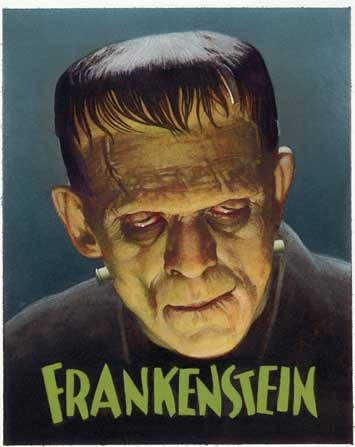
frankenstein-march
Our 44th Session is an appropriately scary one, with Halloween at the end of the month. The Session is hosted by Ashley Routson a.k.a. The Beer Wench. She’s chosen “Frankenstein Beers” as her topic, which Ashley likens to Frankenstein’s monster, a creation that was “constructed of human parts and various other inanimate objects,” defying nature’s laws and ultimately “unlike anything the world had ever seen before.” She continues.

Many craft brewers are like Frankenstein. They have become mad scientists obsessed with defying the laws of brewing and creating beers that transcend style guidelines. These “Frankenstein Beers” challenge the way people perceive beer. They are freaks of nature — big, bold and intense. The ingredients resemble those of a beer and the brewing process might appear to be normal, but some aspects of the entire experience are experimental, unorthodox and insane.

An altercation with these beers produces confusion in the eye of the taster … is it a beer, or a monster?

“I do know that for the sympathy of one living being, I would make peace with all. I have love in me the likes of which you can scarcely imagine and rage the likes of which you would not believe. If I cannot satisfy the one, I will indulge the other.” — The Monster.

Your mission, should you choose to accept it, is to write a blog post on “Frankenstein Beers.” There are no rules about how to write about this topic — feel free to highlight a Frankenstein brewer, brewery, beer tasting notes … or just your opinions on the concept.

session_logo_all_text_200

To me, it’s not the beers that have become like Frankenstein, but the brewers themselves. In the same way that many people often mistake Dr. Frankenstein’s monster for Frankenstein himself, his creation actually had no name and was always referred to euphemistically in the original novel. Although once, in a letter, author Mary Shelley referred to Frankenstein’s monster as “Adam.” Perhaps that means Alan Sprints’ Hair of the Dog Adambier is the original Frankenstein beer?

A Modern Prometheus. Prometheus was the Titan who stole fire from Zeus and gave it to mankind. “Zeus then punished him for his crime by having him bound to a rock while a great eagle ate his liver every day only to have it grow back to be eaten again the next day.” Modern brewers also damage our livers each day, but luckily it’s still intact when we wake up with only a hangover the next day.

But Frankenstein is also considered an allegory for the dangers of messing with nature and the idea that science can be bad, a common theme at the dawn of the industrial revolution. But Frankenstein’s monster only became so monstrous because his creator couldn’t bear the thought of being his father and banished him. The monster reacted badly to being abandoned along with people not being able to see the good inside of him, his ugly exterior was all they could see. That’s what caused him to become violent and seek revenge on Dr. Frankenstein. His creation could have been quite positive had it not been for the way he was treated. And so Frankenstein is considered a cautionary tale, though it really didn’t have to turn out that way. And it’s for that reason that I consider the notion of Frankenstein beers as a very positive development in the world of brewing.

In the last thirty years of craft beer, brewers as confident and skilled as Dr. Frankenstein eschewed traditional styles either by building on them or simply ignoring them to create their own monster beers. But they loved them and nurtured them, and never abandoned them. And I think that’s why we love them, too. No pitchforks necessary. The American craft beer scene, and more recently the world beer scene, has become a landscape filled with Frankenstein-like beers, unique and unusual and beloved. Unlike Mary Shelley’s Frankenstein, today’s monster beers are quite wonderful and prove the science of brewing in a post-industrial age doesn’t pervert nature but raises it to an art form. To me, the best of today’s beers can be described as a balance between art and science. Some breweries are overly scientific and create bland, tasteless beers that are very well-crafted. Others are artistic leaning endeavors that are ambitious and creative but are often inconsistent and/or technically flawed. But the best hit that Goldilocks sweet spot that balances the two.

They also don’t follow traditional styles, preferring their own path. And the best of those new ideas are copied — the sincerest form of flattery — creating new kinds of beer and driving many Brits and others who hate the explosion of new beer categories absolutely bonkers. But at the Great British Beer Festival, the American export booth is one of the most popular spots at Earl’s Court. People may complain about the new monster beers, or at least the American predisposition to categorize them, but they’ll line up to drink them all the same.

It may be Halloween month, but when it comes to beer, Frankenstein is alive and well throughout the entire year. I just think of him as a friendlier monster, more like the 60s cartoon Frankenstein Jr.

frankenstein-jr

Filed Under: Beers, Editorial, The Session Tagged With: brewers, Science of Brewing

The Beer Vault

September 30, 2010 By Jay Brooks

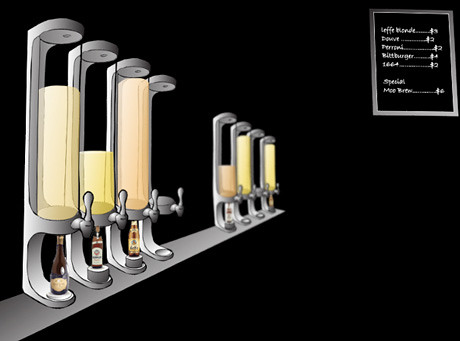
beer-tower
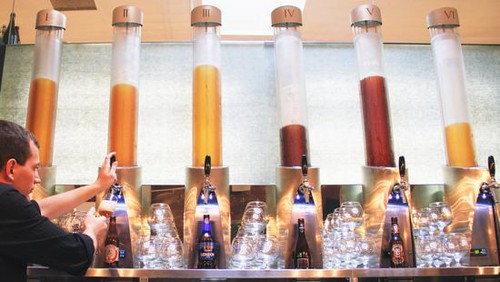
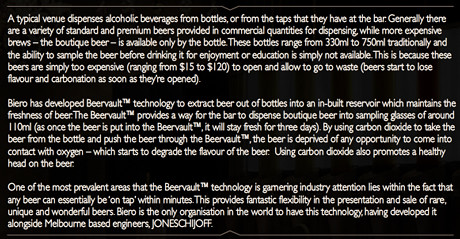
I’m not quite sure what to make of this gadget. It was created by a design firm in Australia, JonesChijoff, working with Edwin Koh and Iqbal Ameer for their Melbourne bar, Biero. It’s called a Beer Vault, and takes bottled beer and transfers it into a draft environment, cooled by glycol and kept under pressure to preserve it using carbon dioxide which they claim maintains its freshness as if it was still in the bottle. It was also designed so the bottle itself can be displayed just below a clear UV-protected tube that stores and dispenses the beer. (Thanks to Andrew M. for sending me the original link.)

beer-vault-2

And here’s the finished product, behind the bar at Biero bar.

beer-vault-1

The website at Biero has some additional information.

beer-vault-4

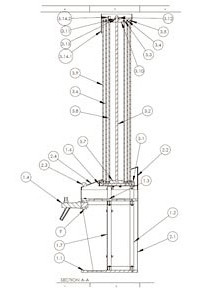
And there’s also a blueprint there, too.

beer-vault-3

The website anthill, where ideas and business meet, describes the project like this:

Be able to offer premium beer to punters in a way that hasn’t previously been done. Any beer is now available on tap! But not displayed in an industrial tin-can hidden away, but out ‘n’ proud, showcasing the varying hues of amber.

Syphoning the bottled beer into the BeerVaults and keeping it under the same pressure as was in the bottle before the lid was cracked. It is also chilled via a clear volume of liquid glycol surrounding the beer, which reticulates through a chiller. At JONESCHIJOFF we put simplicity above all else, and this was the simplest yet most effective solution.

Apparently it will keep the bottled beer fresh for about three days, meaning more people could theoretically buy a small amount of a rare beer, without having to open and potentially even waste a whole bottle. So maybe it’s a good idea? I guess time will tell.

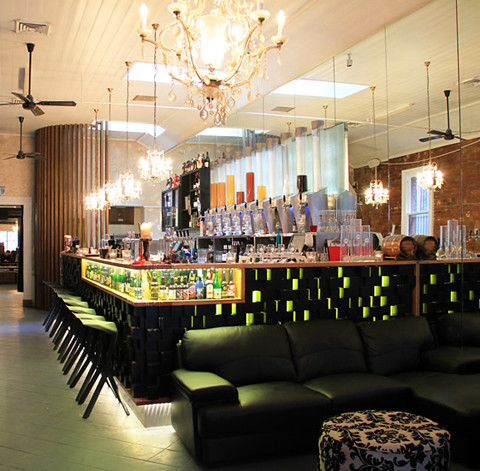
And here’s a wider shot of the Biero bar.

biero-1

Filed Under: Beers, Editorial, Just For Fun, News Tagged With: Australia, gadgets, novelties

A New Justification For More Beer Taxes

September 26, 2010 By Jay Brooks

rwjf
Ugh, here we go again. Three researchers at the University of Florida, led by epidemiologist Alexander C. Wagenaar, have just released a new study which they claim shows that raising alcohol taxes — in fact doubling them — will reduce consumption and cure society’s problems.

The study, Effects of Alcohol Tax and Price Policies on Morbidity and Mortality: A Systematic Review, is to be published in the November issue of the American Journal of Public Health, but was released online last week, as is common for academic journals.

As I don’t have the resources to buy a subscription to every related academic journal, I have to make do with the abstract and what other news outlets write about it. Here’s the abstract:

Objectives. We systematically reviewed the effects of alcohol taxes and prices on alcohol-related morbidity and mortality to assess their public health impact.

Methods. We searched 12 databases, along with articles’ reference lists, for studies providing estimates of the relationship between alcohol taxes and prices and measures of risky behavior or morbidity and mortality, then coded for effect sizes and numerous population and study characteristics. We combined independent estimates in random-effects models to obtain aggregate effect estimates.

Results. We identified 50 articles, containing 340 estimates. Meta-estimates were r=–0.347 for alcohol-related disease and injury outcomes, –0.022 for violence, –0.048 for suicide, –0.112 for traffic crash outcomes, –0.055 for sexually transmitted diseases, –0.022 for other drug use, and –0.014 for crime and other misbehavior measures. All except suicide were statistically significant.

Conclusions. Public policies affecting the price of alcoholic beverages have significant effects on alcohol-related disease and injury rates. Our results suggest that doubling the alcohol tax would reduce alcohol-related mortality by an average of 35%, traffic crash deaths by 11%, sexually transmitted disease by 6%, violence by 2%, and crime by 1.4%.

Those are some pretty specific promises and some pretty specific recommendations, something most academic papers assiduously avoid. To me that’s a red flag about the intentions of this study.

Science Daily covered the study in an article today (thanks to Richard S. for sending me the link) entitled Increasing Taxes on Alcoholic Beverages Reduces Disease, Injury, Crime and Death Rates, Study Finds. Obviously, I’m as predisposed to question such a study as the average anti-alcohol wingnut is to swallow it unquestioningly. And I confess something doesn’t smell right with it. My alky sense is tingling.

Having not seen the full article, I’m left wondering exactly what the “50 published research papers containing 340 estimates” means. What is being “estimated?” It reads like it’s the supposed harm that’s being estimated, because I can’t for the life of me understand how you could ever say there’s definitive causation for such a complex relationship as the price of something to “other misbehaviors,” or indeed any of the laundry list of issues the researchers believe are caused by people drinking alcohol. In my experience at looking at these studies, any event in which there was alcohol present is usually sufficient to consider the incident alcohol-related, but that’s nowhere near the same as having been caused by the alcohol. And so these statistics tend to be inflated and, consequently, misused.

But the key insight into the study came in the very last paragraph of Science Daily’s coverage of the study, where they reveal that the funding for the study came from the notorious Robert Wood Johnson Foundation (RWJF), the godfather of neo-prohibitionist groups. The RWJF funds many other neo-prohibitionist groups, and also sets the national agenda in the anti-alcohol community. That they funded this, and other similar studies, suggests that the answer preceded the study, that is it was designed to support their agenda, its conclusions a fait accompli.

To me this also explains professor Wagenaar’s statement. “Results are surprisingly consistent.” Of course, they would be if you’re looking for a correlation. The same team did a similar study in 2007, Raising Alcohol Taxes Reduces Deaths, Study Finds where they examined alcohol-related deaths in Alaska after beer taxes were raised in the state. That study was also funded by the RWJF. Predictably they found the correlation they were looking for, but this is playing with statistics for incredibly complex relationships. Their simple conclusions seem absurd. They ignore any underlying causes for alcohol abuse or suicide or anything else, for that matter. As almost every study like this I’ve ever seen, “alcohol-related” is a thinly veiled attempt to paint any alcohol use, however responsible or moderate, as dangerous and life-threatening. Beer is not a syringe of heroin, despite these same groups’ attempts to portray it that way.

Mark my words, we’re going to see this study used by groups all over the country in renewed efforts to raise beer taxes in state after state. But the only thing I remember happening when the federal excise tax on beer was doubled in 1990 was a loss of jobs and long term economic harm visited on the brewing industry. I don’t recall seeing any victory parties by the anti-alcohol groups once that doubling cured all the problems they previously ascribed to alcohol. They went right on complaining about all the supposed damage caused by the industry. That’s a real world example of what they want to do having none of the outcomes this new study claims would occur under the exact same conditions.

Filed Under: Beers, Editorial, News, Politics & Law Tagged With: Prohibitionists, Science, Statistics

1 In 5 Americans Driving After Drinking

September 24, 2010 By Jay Brooks

steering-wheel
The National Highway Traffic Safety Administration (NHTSA) released the results of their latest National Survey of Drinking and Driving Attitudes and Behaviors, done in 2008.

That headline grabbing statistic, that one in five have driven after drinking (actually within two hours of drinking) is not about driving “drunk,” but simply after having had any amount of alcohol. That seems a little alarmist and misleading. If I have one beer with lunch and then drive, I’m included in that statistic even though at my size and appetite, it’s unlikely I’m anywhere near 0.08% BAC. It makes for a great headline, but that’s about it. It’s also the statistic featured on the home page for this survey. Here’s the abstract from the NHTSA.

One Out of Five Are Drinker-Drivers

Twenty percent of the public 16 and older had in the past year driven a motor vehicle within two hours of drinking alcohol. About two-thirds of these, or 13% of the total population 16 and older had done so in the past 30 days. The survey produced an estimate of 85.5 million past-month drinking-driving trips, up from 73.7 million trips in 2004 and reversing a declining trend in such trips since 1995. More than three-fourths (78%) of the trips were made by males.

Those who reported driving within two hours of drinking in the past year tended to be more frequent drinkers than did other drivers who drink but do not drive afterwards. More than one in four (28%) drinking drivers usually consumed alcoholic beverages 3 or more days a week, compared to 10% of drivers who drink but do not drink and drive. While few 16- to 20-year-olds reported drinking and driving, those that did averaged 5.7 drinks per sitting during the times they drink alcohol (inclusive of all drinking occasions, not just drinking and driving). For 21- to 24-year-old drinking drivers, their average alcohol intake was 4.2 drinks per sitting. The average number of drinks dropped sharply again for 25- to 34-year-old drinking drivers (3.0), then declined more slowly across ensuing age groups.

But when you look at this same statistic since 1993, when the first survey was taken, it’s been almost exactly the same, changing no more than a percentage point or two in nearly twenty years. The point is that all of the efforts to lower the standard of what it means to be drunk, the scare tactics and increased penalties have done little to change people’s behavior.

As for people driving after meeting our arbitrary definition of being drunk, that’s roughly 17.2 million people (in the last year) or about 8%. That’s more like one in twelve. And though I couldn’t find a companion chart for this stat since 1993, I’d be willing to guess it’s been similarly static.

I should say at this point — though I shouldn’t have to — that I don’t think people should get drunk and drive, so please don’t write and accuse me of that. I’m simply questioning the statistics and the effectiveness of current policy based upon them. As I’ve written before, I tend to think that all that lowering the standard of intoxication from 0.1% to 0.08% has accomplished is to criminalize more people while doing nothing to stop the true problem drinkers from driving.

To me, the real scandal is that not one organization that’s against drunk driving is actively lobbying for a mass transit system that actually works in the U.S. It seems to me that the most obvious way to curb drunk driving is provide an alternative. If history has taught us anything, it’s that we can’t effectively stop people from drinking alcohol. It was illegal for thirteen years, and that didn’t stop anyone. And if this recent study shows us anything, it’s that, right or wrong, people still drive after drinking despite years of increasingly criminalizing that behavior. In short, what we’re doing now isn’t working. Isn’t that obvious?

Many people who want to lower the BAC even further note that in Europe it’s often 0.05% or even lower. But what they fail to point out is that in every country in Europe I’ve ever visited, there are real, viable alternatives to get around using public transportation. But we’re a car country thanks to the actions of the oil and automobile companies in the last century, when they bought up and dismantled public transportation systems. Not to mention the greatest corporate giveaway in history is the public highway system. Imagine how expensive cars would be if the automobile companies had to build the roads, too, like railroads did. So if we want to use Europe as a model, then we have to build an effective public transportation system here, too. And that would have all kinds of positive benefits beyond reducing drunk driving. So let’s get on that.

nhtsa

You can read the whole survey, in three parts at the NHTSA website, where you can download the pdf’s.

Filed Under: Editorial, News Tagged With: Prohibitionists

Next Up For San Francisco’s Alcohol Tax? The Voters

September 23, 2010 By Jay Brooks

vote
Politicians are used to getting their way, and so are powerful non-profits, so they tend not to look at defeat as losing, but as an opportunity to try to win a different way. Certainly they’d never openly admit they’re wrong or have lost. If one strategy doesn’t work, they try another. The will of the people or common sense rarely matters, what matters is winning.

And so the new alcohol tax for the city of San Francisco, as proposed by supervisor John Avalos, was vetoed by mayor Gavin Newsom. But that’s hardly the end of it. I’m sure that Avalos and his backing organization, the Marin Institute, are still trying to strong-arm the three supervisors who voted against the new tax in the hopes of an override, but in the meantime, they’re also looking at others ways to realize their agenda. The determination of the minority who claim the moral high ground will not be stopped so easily. Their dream of punishing the majority of lawful, responsible drinkers for the excesses of the few will not go gently into that long goodnight. Likewise, their dream of punishing the big alcohol companies with a scheme that will barely register on their radar while at the same time causing real harm to the local economy, to local restaurant and bar owners and employees, and to hundreds of small family-owned breweries, wineries and distilleries will also not stop, but will instead just veer off in a different direction.

Just hours after Newsom’s swift veto of the alcohol tax, “supervisor John Avalos says the measure might be taken to voters to override Mayor Gavin Newsom’s veto.”

Unfortunately, every news outlet keeps repeating the lie that the tax would only add “a few cents per standard serving of beer, wine or hard liquor.” Don’t any of these news outlets fact check? As the business community has tried to explain — and any person with a functioning brain should understand — the initial tax (like all costs of doing business) will be marked up along the supply chain from wholesaler to retailer to consumer. Seriously, how hard is that to comprehend? This won’t be a “nickel a drink,” more like a buck a drink. Okay, maybe not that much for most, but if I have to keep hearing it’s only a nickel, I think I’m within my rights to engage in a little hyperbole, too. At least I’m up front about it. I feel like if I turn around, I’ll see Upton Sinclair shaking his head behind me. As he observed, “It is difficult to get a man to understand something when his job depends on not understanding it.” And so it goes.

And what also doesn’t get talked about — but should — is that alcohol is already the most taxed consumer product on planet America, with the possible exception of tobacco. But tobacco, you may recall, has no health benefits whereas the moderate consumption of alcohol has plenty, not least of which is that you’ll most likely live longer if you drink a little instead of abstain.

Every state and community is having trouble paying for the services its citizens feel entitled to, and that’s undoubtedly a real problem. I personally believe politics has led us down this path, but regardless I don’t believe politics can save us from it, either. Everybody wants the services, but curiously no one is willing to pay for them. No one wants their taxes to go up, even though that’s probably the fairest way to get us out of this mess. Instead, politicians keep trying to find a solution that doesn’t seem like a tax, in most cases just so they can continue to say they’re against more taxes, for no grander purpose than they want to keep their jobs. So when the Marin Institute whispered in the ear of John Avalos, “psst, have I got a ‘fee’ for you,” … he listened.

And in the end, that’s why I’m so vehemently opposed to this type of tax. It’s dishonest at its core. It argues from a false premise. I don’t really care how much the tax is, it’s patently unfair at any amount. It takes the all too familiar position that drinking alcohol is somehow a sin and therefore people should have to pay to enjoy it. Bullshit. I don’t believe that and neither should you. The concept of sin is a religious “belief” and last time I checked the Constitution guaranteed that I can believe otherwise and that in any event religion, where the idea of sin flourishes, should have nothing to do with the governing of alcohol policy or any other damn law.

What we have is decades of demonization working its way into a discussion it should have no part in. It’s utter nonsense to suggest that alcohol “made” people abuse it and further that the people who make it and sell it share that blame, too. When we start taxing ammunition and gun companies for the crimes people commit using their products then come talk to me about charge for harm. When we start taxing soda companies, high fructose corn syrup makers, fast food chains and red meat companies for the obesity epidemic and the burden it places on our healthcare system then come talk to me about charge for harm. When we start taxing the oil companies and car manufacturers for the loss of the ozone layer and other natural disasters from their dismantling of mass transit and people driving too much then come talk to me about charge for harm. Virtually every human activity does some harm to someone or something. Trying to calculate all of them and figure out who owes what is a fool’s errand. And that’s why we don’t, except when it comes to alcohol. Alcohol has been a convenient scapegoat for well over a century now, and there’s no end in sight for the ills of society it can be blamed for.

My biggest fear if this does go to a vote, is that the mis-information and propaganda out there has created a populace that believes one thing when another is closer to the truth. One of the most potent takeaways from the quasi-debate that KQED aired a few weeks ago, was how frighteningly uninformed many people are about this issue. So many have let emotions, inflated statistics and one-sided reporting inform them on this issue that I think a lot of people will happily pull that “yes” lever, blissfully ignorant of how unfair it is and how their emotions have been manipulated by propaganda and fear. And that’s a direct result, I think, of our local media just uncritically parroting propaganda in favor of the tax and all but ignoring any meaningful opposition.

But long term it’s also because we allow the debate to start from the premise that alcohol is bad in and of itself. It’s not. All the evidence you need to disprove that is your own behavior and those of almost everyone around you, easily able to responsibly drink moderate amounts of alcohol. You’re the majority. You’re the norm. You’re doing something good; good for you and for society. Drink up. Enjoy yourself. Don’t let fear and propaganda win the day.

Filed Under: Editorial, News, Politics & Law Tagged With: California, Law, San Francisco

GABF Media Panel

September 23, 2010 By Jay Brooks

microphone-3
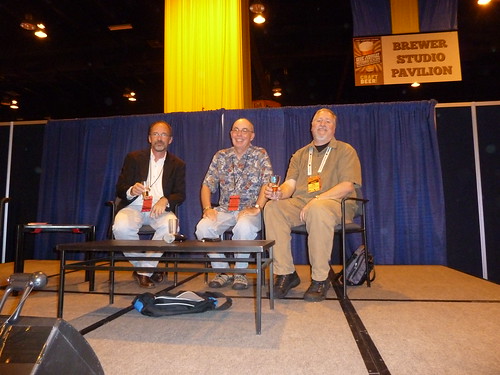
Saturday night at GABF, I was honored to be on a three-man panel talking about beer media, along with Daniel Bradford from All About Beer magazine, and Stan Hieronymus. We talked for about 40 minutes, although you can hear exactly how bad my voice was all week long, after losing it Wednesday night.

P1010361
Daniel Bradford, Stan Hieronymus and me on stage at GABF. (Thanks to Julia Herz for taking the photo.)

We had about a half-full studio, more than I’d expected for a Saturday night session, and a high percentage of the audience was other media personalities. It was great fun, we could easily have talked all night.

If you can’t see the video embedded here, try viewing it on Justin.TV.

Filed Under: Beers, Editorial, Events, Just For Fun, Related Pleasures Tagged With: GABF, Media, Video

Mayor Newsom Vetoes SF Alcohol Tax

September 21, 2010 By Jay Brooks

san-francisco
Last week, the San Francisco Board of Supervisors passed, 7-3, the proposed alcohol tax sponsored by John Avalos, urged on by the Marin Institute, who gave him the idea in the first place. Today, as promised, mayor Gavin Newsom vetoed the ordinance.

According to a press release from the California Alliance for Hospitality Jobs, “San Francisco small business owners and employees in the hospitality industry breathed a sigh of relief after learning that Mayor Gavin Newsom followed through on his promise to veto Supervisor John Avalos’ job-killing alcohol ‘mitigation fee.'” I wish I could be so optimistic. This is not over yet. There will be a major push now by the Marin Institute, and other proponents of the tax, to twist the arms of the three San Francisco supervisors who voted against. It originally looked like Avalos would send the ordinance back to committee as he’d promised the local business community. But he apparently changed his mind and instead sent it for a vote anyway, fueling speculation that he’d been promised that the votes needed for a veto override would be found, and indeed just before it went to a vote the Marin Institute issued an action alert to persuade the three supervisors and the mayor to change their vote, asking their members to contact them for that purpose.

I would suggest that citizens opposed to the alcohol tax do likewise, asking the same supervisors and the mayor to stand firm and not be persuaded by propaganda and misinformation. So contact Carmen Chu, Bevan Dufty and Sean Eisbernd along with mayor Gavin Newsom and ask them to continue their opposition to the alcohol tax proposed by Avalos. And while you’re at it, tell the others supervisors, especially if they’re in your district to not vote for the override. I think it’s reasonable that they should hear from both sides of the argument, not just the one side that the majority of the local media has portrayed, doing a disservice to the democratic process. I assume there’s a time limit for veto overrides, but I’m not sure what the time limit is; anybody know? However long it is, the next few weeks will certainly be interesting.

The San Francisco Chronicle is now on record saying Gavin Newsom must veto S.F. alcohol tax and the Examiner appears doubtful, too. Fingers crossed. If this doesn’t stop now, you can bet we’ll see it in countless communities throughout the state.

Filed Under: Editorial, News, Politics & Law Tagged With: California, Prohibitionists, San Francisco

« Previous Page
Next Page »

Find Something

Northern California Breweries

Please consider purchasing my latest book, California Breweries North, available from Amazon, or ask for it at your local bookstore.

Recent Comments

  • Bob Paolino on Beer Birthday: Grant Johnston
  • Gambrinus on Historic Beer Birthday: A.J. Houghton
  • Ernie Dewing on Historic Beer Birthday: Charles William Bergner 
  • Steve 'Pudgy' De Rose on Historic Beer Birthday: Jacob Schmidt
  • Jay Brooks on Beer Birthday: Bill Owens

Recent Posts

  • Beer In Ads #5164: There Is No Argument To It … Camden Bock Beer Is Genuine Old-Time Bock March 15, 2026
  • Beer Birthday: Ron Barchet March 15, 2026
  • Historic Beer Birthday: Louis Burger March 15, 2026
  • Beer In Ads #5164: Spring’s Almost Here … And Everyone Feels Like A Millions Bocks March 14, 2026
  • Historic Beer Birthday: Anthony J. McGowan March 14, 2026

BBB Archives

Feedback

Head Quarter
This site is hosted and maintained by H25Q.dev. Any questions or comments for the webmaster can be directed here.