Brookston Beer Bulletin

Jay R. Brooks on Beer

  • Home
  • About
  • Editorial
  • Birthdays
  • Art & Beer

Socialize

  • Dribbble
  • Email
  • Facebook
  • Flickr
  • GitHub
  • Instagram
  • LinkedIn
  • Pinterest
  • RSS
  • Twitter
  • YouTube

Powered by Genesis

Clear As Mud

April 17, 2010 By Jay Brooks

zima
While clear beer is not exactly new, it has never proved economically successful despite polling that seems to suggest people would drink it. In the real world, once faced with a purchasing decision, people don’t buy beer that doesn’t look like beer. Thank goodness. The first clear malt beverage I recall trying was Zima, when it debuted in 1993, also from Coors. Though it wasn’t a beer per se, it was malt based and somewhat similar. It eventually got lumped into the Alcopop category, though it was not originally marketed that way, but simply as an alternative to beer. The first true clear beer, also from 1993, was Miller Clear.
miller-clear

Happily, it failed in test marketing and was halted in October of that year. I’m sure this ad, by Don Austin Creative, had nothing to do with its lack of success.

Here’s what Michael Jackson wrote about Miller’s Clear Beer, back in 1994:

Clear Beer was never available in the UK, but I encountered it in the United States, where it was presented in marketingspeak as “in the finest tradition of the Miller Brewing Company, full-flavored but without heaviness”.

This curious product was a lager the colour of 7-Up, which formed little head and tasted like a sweetened seltzer with the faintest touch of oily, medicinal happiness in the finish. It looked like a soft drink, but contained 4.6 per cent alcohol by volume, a level found in many “premium” lagers on both sides of the Atlantic.

Miller has a history of trying to remove the character from beer. It popularised Lite Beer, memorably described as “wet air” by the native American writer William Least-Heat Moon; and it marketed a so-called Genuine Draft in a can long before Irish and British brewers developed their rather better approximation.

But as George Santayana wrote in Reason in Common Sense. “Those who cannot learn from history are doomed to repeat it.” Seventeen years later, apparently nobody at MolsonCoors or MillerCoors is a student of history. MolsonCoors’ UK division, who launched the BitterSweet Partnership to reach female beer drinkers and increase their numbers, has announced they’ll be introducing a clear beer to the UK market. The full story can be found in Marketing Magazine and the UK’s Metro.

Bitter-Sweet

To me, the BitterSweet Partnership is ridiculous (as is the similar Dea Latis). First of all, none of the female beer writers or brewers I know are involved in the organization, it’s strictly about marketing. The whole “team” is made of female Coors UK employees, and they’re all from HR, sales, finance, etc. I’m sure they’re lovely people but they’re hardly experts on beer. The notion of finding female-friendly beer seems wrong on so many levels. Beer is beer. Trying to make one that’s strictly for women is absurd. Remember Virginia Slims — cigarettes for women? It also reminds me of something Lionel Trains did back in the mid-20th century. They made pink trains with pastel-colored cars aimed specifically at girls. Guess what, it flopped because the girls wanted real trains like the ones their brothers had, not some watered down girly trains some marketing pinhead thought would appeal to them.

So far, the beer has no name — and they’ll be a naming contest to come up with one. That should be good for a laugh. Then it won’t be available on draft, bottles only, because in polling 30,000 women, a majority were convinced that bottles “offer better protection against having them spiked in bars and pubs.” WTF? Since when did that become a major problem? And if it has, I’d think there were more pressing concerns like stopping an entire nation of men from poisoning the opposite sex. Additional research shows that the women polled think beer is “too calorific and a ‘man’s drink.'” Please tell me we’ve moved beyond such stereotypes? Apparently not. Who are these people? No woman I know thinks like that.

In a related bit of nonsense, the BitterSweet Partnership also has research showing “that 31% of women thought beer glassware is ‘ugly and manly.'” Seriously? Again, these must be some of the strangest women on the planet, and lots of less kind epithets spring to mind. Who thinks “I’d love to drink that tasty beverage, if only it came in a glass I liked better?” Let’s ignore centuries of trial and error to get to the right glassware — flutes for champagne, snifters for brandy, a weissbier vase for wheat beers — and bow to a minority of women whose sense of fashion dictates what they drink. WTF? Let’s not try to educate them why they’re complete morons. Even though 69% think that beer glassware is fine the way it is, they’ve instead opted to design “four new glasses to serve beer in to bring a bit more style into the drinking experience,” whatever that means. You can see the four designs that were voted on here. Below is the “winner.”

lyla-black

First of all, you can’t even see the beer you’d be drinking in the glass, whether it’s clear or not. What a terrible idea that is. But that’s what misinformation and ignorance will get you. How stylish. What unmitigated bullshit.

While I can’t pretend to speak for women or give the woman’s perspective on this, happily, both Julie from Brusin’ Ales and Ashley at the Beer Wench have ranted beautifully about it and are as angry and offended by it as I would have expected. Their screeds mirror what I’d think would be the response from any self-respecting female fan of craft beer.

Filed Under: Beers, Breweries, Editorial, News Tagged With: Advertising, History, MillerCoors, Women

Native But Unnatural

April 17, 2010 By Jay Brooks

colorado
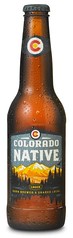
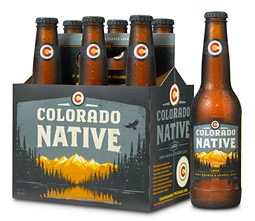
Earlier this month, AC Golden Brewing — a wholly-owned subsidiary of MillerCoors — announced their newest project, Colorado Native. AC Golden is essentially just the Coors pilot brewery located inside Coors’ massive brewery complex in Golden, Colorado. Pretending they’re a small, separate, independent company may work on paper, for legal purposes, but I’d like to believe that most people can see through the deception.

The idea behind Colorado Native, while arguably laudable, seems too calculated to be sincere, especially when it’s being done by a global multinational company. Designed to appeal to locavores, it’s “brewed in Colorado with virtually all Colorado ingredients, more than any other beer.” More than any other beer? Do they mean more than any other beer in Colorado? Or any other beer, regardless of where it’s from? If the latter, I believe they may be forgetting Sierra Nevada’s Estate Ale.

colorado-native

The beer itself is an amber lager, which should at least please Michael Lewis, who at this year’s CBC famously dissed any craft beer that’s not a lager. Still, it’s hard to get worked up about a beer, no matter how well-intentioned, that’s made in the heart of one of the largest single breweries in the world. To me that sends a mixed message at best. The beer may taste fine, and probably does, but it’s not be marketed on taste, it’s being used instead to sell an idea. And that’s where I think it’s doomed to fail. No matter how native Colorado Native is, it still can’t separate itself from the unnaturally large parent company that’s about as un-local as a business can be.

The other odd bit about Colorado Native is that it’s also being promoted using social media, as detailed in Advertising Age. They have a Facebook page and will be using SnapTag technology on its packaging, something other “small” companies like Unilever, Ford and Crayola are also using to reach and data mine customers. In the AdAge piece, here’s how they characterize breweries using social media.

Brewers have typically been slow to move into mobile and social-media channels because of concerns that age verification presents too big a hurdle for consumers to be willing to jump over — Anheuser-Busch InBev’s Michelob is perhaps the only major-brewery owned brand on Twitter, for instance — but that isn’t stopping MillerCoors here.

Huh, how did they miss the literally hundreds of small breweries on Twitter and Facebook, so many it’s a damn phenomenon. Over the past two years, the Craft Brewers Conference has held two panel discussions about the use of social media by breweries, one of which I sat on the panel. And their comment about age verification continues to stick in my craw. Where the hell does it say only adults can TALK or READ about alcohol? Drink, yes, I disagree with that but understand it. That people under 21 aren’t allowed to read about beer on websites is something that makes no earthly sense.

colorado-native-btl

But back to Colorado Native. Using tools that only very large companies can afford doesn’t make them seem particularly small or local, which as far as I can tell is the image they’re trying to project. In the Denver Business Journal, SnapTag’s chief marketing officer Jane McPherson was quoted. “Rather than just looking at the bottle, they [consumers] can have a much fuller brand experience.” I know marketing is important, but really? A “fuller brand experience?” I have no doubt that the brewers tried to create the best-tasting beer they could, but this whole “project” seems more about the image and marketing than the beer. It’s more about trying to fit an identified niche than just creating a beer they like and trying to see if people like it and will buy it, too. It just feels too calculated. And that’s why, to me, it may be a native beer, but it still seems entirely unnatural.

Filed Under: Beers, Breweries, Editorial Tagged With: Big Brewers, Colorado

The Top 50 Annotated 2009

April 14, 2010 By Jay Brooks

ba
This is my fourth annual annotated list of the Top 50 so you can see who moved up and down, who was new to the list and who dropped off. So here is this year’s list again annotated with how they changed compared to last year.

  1. Anheuser-Busch InBev; #1 last year, no surprises
  2. MillerCoors; ditto for #2
  3. Pabst Brewing; ditto for #3
  4. D. G. Yuengling and Son; Moved up 1, over Boston Beer again
  5. Boston Beer Co.; Moved down 1 to behind Yuengling, where they’d been the 2 years prior to 2008
  6. Sierra Nevada Brewing; Same as last year
  7. New Belgium Brewing; Moved up 1
  8. Craft Brewers Alliance; Moved down 1
  9. Spoetzl Brewery (Gambrinus); Moved up 1
  10. High Falls Brewing; Moved down 1
  11. Minhas Craft Brewery; Up 3 over last year
  12. Pyramid Breweries (IBU); Down 1, after two years moving up
  13. Deschutes Brewery; Down 1
  14. F.X. Matt Brewing; Moved up 1, after dropping down 1 last year
  15. Magic Hat Brewing (IBU); Up 3 from #18 last year
  16. Boulevard Brewing; Same as last year, as others move all around them
  17. Harpoon Brewery; Up 3 from #20 last year
  18. Alaskan Brewing; Up 1 from #19 last year
  19. Bell’s Brewery; Up 2 from #21 last year
  20. Goose Island Beer; Up 2 from #22 last year
  21. Kona Brewing; Up 2 from #23 last year, after Shooting up 14 the previous year
  22. Full Sail Brewing; Down 5, primarily from removing contract beers from their total to give a more accurate figure of their own brands
  23. Stone Brewing; Up 5 again this year from 28, same jump as last year
  24. Dogfish Head Craft Brewery; Shot up 9 from #33, after being up 5 and 4 the two previous years
  25. Iron City Brewing; Plummeted 12, after a Chapter 11 bankruptcy and moving production out of Pittsburgh
  26. August Schell Brewing; Down 1 from last year
  27. Brooklyn Brewery; Up 4 from #31 last year
  28. Abita Brewing; Up 2 from #30 last year
  29. Summit Brewing; Down 2 from #27 last year
  30. Anchor Brewing; Down 6 from #24
  31. Shipyard Brewing; Down 5 from #26 last year
  32. New Glarus Brewing; Same as last year
  33. Great Lakes Brewing; Up 4 from #37 last year
  34. Rogue Ales/Oregon Brewing; Up 2 from #36, canceling being Down 2 last year, and Up 2 the year before that
  35. Long Trail Brewing; Down 1 from #34 last year
  36. Lagunitas Brewing; Up 2 from #38 last year, after being up 3 for the prior 2 years
  37. Mendocino Brewing; Down 8 from #29 last year
  38. Gordon Biersch Brewing; Down 3 from #35
  39. Sweetwater Brewing; Up 1 from #40 last year
  40. Firestone Walker Brewing; Down 1 from #39 last year
  41. Victory Brewing; Up 5 from #46 last year
  42. Flying Dog Brewery; Down 1 from #41 last year
  43. BJs Restaurant & Brewery; Down 1 from #42 last year
  44. Odell Brewing; Up 1 from #45 last year
  45. Rock Bottom Brewery Restaurants; Down 2 from #43 last year, a reversal of the year before
  46. Straub Brewery; Up 1 from #47 last year
  47. BridgePort Brewing (Gambrinus); Down 3 from #44 last year
  48. Lost Coast Brewing; Not in Top 50 last year
  49. Big Sky Brewing; Up 1 from #50 last year
  50. Stevens Point Brewery; Not in Top 50 last year

Two breweries are new to the list this year, Lost Coast and Stevens Point (who’ve transitioned to primarily all-malt brewing), while two dropped off the list; Cold Springs Brewery (fka Gluek Brewing) and Mac and Jack’s Brewery.

If you want to see the previous annotated lists for comparison, here is 2008, 2007 and 2006.

Filed Under: Breweries, Editorial, News Tagged With: Big Brewers, Statistics, United States

World Beer Cup Statistics 2010

April 12, 2010 By Jay Brooks

world-beer-cup
Here’s some preliminary breakdowns of how the awards went down, who won the most by country and state. Of the 268 awards (2 medals were not awarded) from 3,351 beers by 642 breweries in 44 countries, here’s the results.

Awards by Country

  1. United States 204
  2. Germany 16
  3. TIE: 7
    • Belgium 7
    • Canada 7
  4. TIE: 5
    • Japan 5
    • UK 5
  5. TIE: 3
    • Australia 3
    • Czech Republic 3
    • Denmark 3
    • Singapore 3
  6. TIE: 2
    • Sweden 2
    • Lithuania 2
    • Italy 2

Two years ago, the U.S. was again in first with 158, followed by Germany and Belgium. This year, Canada shares third with Belgium. 19 countries won at least one medal, down from 21 two years ago.

Awards by State

  1. California 45
  2. Oregon 13
  3. TIE: 12
    • Illinois 12
    • Washington 12
  4. TIE: 11
    • Colorado 11
    • Michigan 11
  5. Virginia 8
  6. TIE: 7
    • Indiana 7
    • Missouri 7
    • Wisconsin 7
  7. TIE: 6
    • Delaware 6
    • Maryland 6
  8. Nevada 5
  9. TIE: 4
    • Arizona 4
    • Massachusetts 4
    • New Mexico 4
    • New York 4
    • North Carolina 4
    • Pennsylvania 4
  10. TIE: 3
    • Alaska 3
    • Tennessee 3
    • Utah 3
    • Wyoming 3

Last time California won 35, so we picked up 10 more awards this year. Oregon was in third place in 2008, but this time around moved into second. This year, third place was a tie between Illinois and Washington. Second in 2008 was Colorado, who dropped to a tie for fourth with Michigan.

Full winner’s list.

Filed Under: Breweries, Editorial, News Tagged With: Awards, Statistics, World Beer Cup

Joyeuses Paques

April 4, 2010 By Jay Brooks

easter
Easter has to be one of the oddest holidays, a curious mix of religious and pagan traditions. Chocolate, bunny rabbits, eggs, and the newly undead happily mix for a curious stew of fertility rites and resurrection.

joyeuses-paques
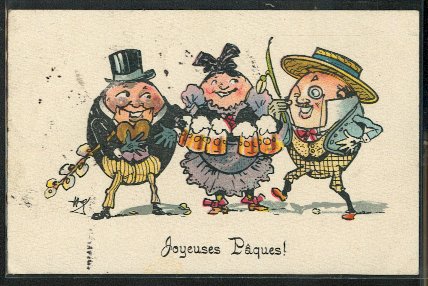
Joyeuses Paques — a.k.a. Happy Easter — with beer-drinking eggs.

There are very few true Easter beers, Het Anker’s Gouden Carolus Easter Beer being perhaps the most obvious exception. Russian River’s Redemption also springs to mind for the name alone. My friend and UK colleague, Jeff Evans, has a great list of Ten Beers For Easter. There’s also the Swedish Påsköl. Carlsberg used to brew Påskeøl and Paaske Bryg, which has been replaced by Semper Ardens Easter Brew, along with Tuborg’s Easter Brew — Kylle, Kylle. And let’s not forget De Dolle’s Boskeun.

But notice how the dedicated Easter beers are all European? That’s hardly an accident as American puritanism seems to bristle at the idea of Easter beer, though wine, as usual, gets a pass for the holiday. When I worked for BevMo I recall that we virtually ignored beer entirely, promoting only wine for Easter. I’m sure there was market research behind that decision, but never understood the rationale underlying it. Plenty of beers go great with ham, yet only wines were given as recommended pairings. I’m probably not even having ham today, but I can guarantee there will be beer.

madelines-easter

Filed Under: Beers, Editorial, Just For Fun Tagged With: Holidays, Religion & Beer

Session #38: Cult Beers

April 2, 2010 By Jay Brooks

beer-kool-aid
Our 38th Session is hosted by Sean Inman at Beer Search Party, is cult beers; those beers that are in short supply, high demand and often require going to great lengths to acquire.

Here’s Sean’s thoughts on the cult of beers:

I started thinking about what beer or beers that I would get up at 4:00 in the morning, drive across state lines, stand in a long unmoving line in the cold and rain for the chance to taste with a crowd the size of Woodstock.

So here is my question to you (with a couple addenda).

What beer have you tasted recently (say, the last six months or so) that is worthy of their own day in the media sun?

And to add a little extra to it, how does “great” expectations affect your beer drinking enjoyment?

AND If you have attended one of these release parties, stories and anecdotes of your experience will be welcomed too.

So that’s the assignment, so to speak. While I’m not big on actually standing in lines, if anything might so motivate me, it’s the promise of a truly extraordinary beer for my trouble.

session_logo_all_text_200

But what makes a cult beer? Scarcity seems to be a factor. An intangible hype also sees to be part of the legend. Of course, Coors was once a cult beer, at least East of the Mississippi. Some people think of PBR as a cult beer even though it’s hardly difficult to find. So beers that were once cult favorites can lose that peculiar appeal to become more pedestrian beers. Years ago Mendocino Brewing’s Eye of the Hawk was considered a cult beer and its biannual release was highly anticipated, but they foolishly decided to make it all year round. As a result, it’s really lost virtually all its cache.

Of course, it better taste good to back up the hype or it’s going to lose its cult status pretty quickly. All but a couple of the beers on my list were pretty damn good. So perhaps the real question is does having to work to get a cult beer to try bias one toward rating it higher, in effect giving it points just for the effort involved? I think that can be a factor. Human nature being what it is, most of us don’t want to admit that all that effort wasn’t worth it. In a sense, like many quests, it’s really the journey that’s important.

Every geeky discipline has it’s holy grails that its most ardent fans will seek out. I also collect View-Master reels and there’s one reel among the early single reels (before packets — never mind, V-M geek talk) that always commands the highest price in auctions. It’s Reel #1305 and the last time it was auctioned, it fetched over $800. I think it’s title will explain, at least in part, why: “President Kennedy’s Visit To Ireland.” And indeed, the late John F. Kennedy is in several of the reel’s seven pictures. View-Master geek that I am, I’ve had the reel for a number of years and while it’s certainly a highly-prized part of my collection, there are countless reels with more stunning 3-D photography that I like to look at far more often.

But one thing you can say about geeks is that they’re never satisfied, always restless and in search of the next thing, big or small. And so cult beers will always be a part of the craft industry. Making too little beer for demand is something small brewers can easily excel at. All they need to do is make sure the demand is high enough, sprinkle some hype around and a quick sell out is all but assured, which in turn makes its cult status only grow. And, naturally, they need to brew a beer that can live up to the hype, something most seem readily able to do.

I frankly think the scarce beers are great for the industry. They provide a creative outlet for the brewers, beers for the most ardent fans and make reputations for the breweries themselves while simultaneously allowing them to concentrate on their core brands that make the majority of their profits for them. The most successful breweries seem to me the ones that can both have a flagship or stable of beers that everybody loves and a few stand-outs that appeal primarily to the beer geeks. That’s real multitasking, brewery style. Think New Belgium’s Fat Tire/La Folie. Deschutes’ Black Butte Porter/The Abyss. New Glarus’ Spotted Cow/Everything Else. Sam Adams Boston Lager/Utopias. Sierra Nevada Pale Ale/Bigfoot, Celebration and quite a lot more. I don’t think it’s an accident those are some of the most successful modern era breweries.

beer-koolaid
Drink the cult beer Kool-aid.

But which beers are cult beers? Which ones belong on a list of cult beers? I’ve made a list below off the top of my head Without putting too much thought into it, these are a few that immediately came to mind.

  • Black Albert (De Struise)
  • Black Tuesday (The Bruery)
  • Cable Car (Lost Abbey)
  • Cuvee de Tomme (Lost Abbey)
  • Dark Lord (Three Floyds)
  • Exponential Hoppiness (Alpine beer)
  • Kate the Great (Portsmouth Brewery)
  • Leviathan Barleywine (Fish Brewing)
  • Local 1 (Brooklyn Brewery)
  • O.B.A. (Anchor Brewery)
  • 120 Minute IPA (Dogfish Head)
  • Pliny the Elder (Russian River Brewing)
  • Pliny the Younger (Russian River Brewing)
  • Poseidon Imperial Stout (Fish Brewing)
  • Raspberry Tart (New Glarus)
  • Sink the Bismarck! (BrewDog)
  • Speedway Stout (AleSmith)
  • Tactical Nuclear Penguin (BrewDog)
  • Toronado 20th Anniversary Ale (Russian River Brewing)
  • Westvleteren Blond, 8 and 12 (Westvleteren)
  • Wisconsin Belgian Red (New Glarus)

These seem like no brainers, for the most part. Of course, I’ve tried all of them. I assume there’s plenty of ones I can’t think of simply because I’ve never tried them, or perhaps even heard of them. What else should be on the list? Anchor’s Christmas Ale? Sierra Nevada Bigfoot?

As it happens, I recently sampled a number of the beers on this list at this year’s Keene Tasting at Brouwer’s Cafe in Seattle. I’ll have my report from that tasting posted shortly and will update it here with a link.

Pliny-the-Younger
The original cult figure Pliny the Younger.

Filed Under: Beers, Editorial, The Session Tagged With: Strange But True

Prohibition Through Taxation

April 1, 2010 By Jay Brooks

tax
Being April Fool’s Day, this might almost seem laughable, if it wasn’t so serious and obvious an attempt to bring about prohibition through taxation. (And thanks to the many people who sent me information about this, you know who you are, I appreciate it.) A San Diego couple, Kent and Josephine Whitney, have introduced a ballot initiative they’re calling the “Alcohol-Related Harm and Damage Services Act of 2010.” If that sounds innocuous, it’s not. If they collect the required 433,971 signatures by August 23, it will be on the California ballot this November. The “Act” seeks to raise alcohol taxes as listed below. If you have a drink in your hand, put it down first. If you’re standing up, sit down. Drum roll, please:

  • Spirits — 2,700% increase [from $0.65 per 750 ml bottle to $17.57]
  • Beer — 5,500% increase [from $0.11 per 6-pack to $6.08]
  • Wine — 12,775% increase [from $0.04 per 750 ml bottle to $5.11]

No, those aren’t typos. The anticipated revenue of $7-9 billion would be used to fund the Department of Alcohol and Drug Programs, whatever that is. It won’t be used to fix the state deficit apparently.

In the OC Weekly Blog, Dave Lieberman correctly comments that “this is Prohibition through taxation” [a phrase I hope he won’t mind me borrowing]. He continues.

“The armchair libertarians must be having sedentary conniption fits from Yreka to Ysidro. Nowhere does it say that alcohol has to be a zero-sum game, not to mention the fact that the vast majority of those who do drink do so responsibly, which means you’re taxing those who play by the rules to pay for those who don’t.”

Ballotpedia lists a dozen reasons for the ballot measure, each one more fallacious than the last. The Whitney’s blame alcohol for murders, pregnant women drinking, burdens on health care, underage drinking, binge drinking; pretty much everything any neo-prohibitionists has ever thrown up against the wall, while naturally ignoring all of the personal responsibility for any of those actions. It’s as if they’ve drank the anti-alcohol kool-aid and believe unquestioningly all of the propaganda from those groups. To blame the alcohol and not the people who engage in those behaviors is a common tactic lately but ignores logic, common sense and any notion of fairness. It also reveals quite a lot about the mindset of the people who believe such nonsense. Also, if the ballot measure should pass, it would declare all of that nonsensically bad propaganda masquerading as statistics as true!

It also ignores the physical and mental health benefits of responsibly drinking moderate amounts of alcohol. Numerous studies have shown many, many health benefits to moderate drinking, not least of which are the many studies that show that people who drink moderately tend to live longer and be healthier than people who either abstain or overindulge. So in effect, this ballot measure would most likely make people in California less healthy.

Curiously, the State Attorney General’s summary says:

Additional state revenues of between $7 billion and $9 billion annually from an increase in state excise taxes on alcoholic beverages, with the proceeds going to support alcohol-related programs and services. A decrease in state and local revenues from existing excise and sales taxes on alcoholic beverages of several hundred million dollars annually due to a likely decline in consumption of alcoholic beverages.

The Initiative’s Analysis from the state Legislative Analyst’s Office goes into more detail but remains similarly conservative in the negative consequences while swallowing wholesale the notion that it would actually bring in the estimated $7-9 billion in additional excise tax revenue. First of all, the loss of business and company’s going out of business outright would cause that figure to be greatly reduced from the start. If a bottle of wine has at least $5.11 in state excise taxes plus all of the other taxes, plus the costs of ingredients, manufacture, packaging, transportation, etc. even two-buck chuck is going to become ten-buck Ken or worse.

Similarly, if just the state excise tax on a six-pack of beer starts at $6.08, again plus every other cost of doing business, just who in their right mind believes that consumers will continue to merrily drink the same amounts at exponentially higher prices? Don’t even get me started on how many dollars will fly out of California by people driving to bordering states to buy their alcohol. You’re going to see a cottage industry in just-over-the-border liquor stores popping up wherever a road leaves California. It’s absurd to believe the revenue stream would continue at the same rate.

That analysis suggests that only several hundreds of millions of dollars would be lost in decreased consumption seems laughably conservative. Here’s some of their reasoning, from the analysis:

Effects on Existing State Excise and SUT Revenues. The decline in taxable consumption of alcoholic beverages that would likely be caused by this measure would reduce the revenues received for the General Fund from the existing state excise and SUT revenues. We estimate that this could potentially result in a loss of state revenues of several hundred million dollars annually.

Effects on Local Revenues. The likely decline in taxable consumption of alcoholic beverages due to the increase in the excise tax imposed under this measure would also affect local SUT revenues. We estimate that local governments, primarily cities and counties, would experience a decrease in sales tax revenues of approximately $100 million on a statewide basis due to the excise tax increase.

Indirect Economic Effects. If the measure were to result in declines in overall economic activity in California, it could produce indirect state and local revenue losses. Such effects could occur, for example, if businesses were to close because they could no longer remain profitable as the overall economy adjusted to a lower demand for alcohol in the long run. If these lost resources were not redirected back to California’s economy into equal or more productive activities, then it would likely lead to a net loss in taxable income and spending for state and local governments. The magnitude of these potential revenue losses is unknown.

See that last bit? “The magnitude of these potential revenue losses is unknown.” I can pretty much tell you it’s going to be staggering. It would be a near prohibition, with a return to illegal hooch. After homebrewers start selling their kitchen beers under the table, new law enforcement agencies will be created to stop them, every homebrew shop will be watched and anyone with a pair of rubber boots will be under suspicion.

So who the hell are the Whitneys and why are they trying to effect an alcoholic Armageddon? Those are good questions, I think, and there’s at least one very disturbing possibility. The V Bit Set speculates that it may be simply for money. Doing some detective work, internet style, he points out there is a Kent Whitney in the San Diego area who owns the 21st Century Wellness Initiative, and the ballot measure would provide “fifteen percent for the funding of grants for naturopathic treatment and recovery programs for alcohol addiction.” Are the two connected? He admits it’s wild conjecture at this point, but it is compelling nonetheless. If it turns out to be true, how vile and repugnant would this be? On an unimaginable scale, I’d have to say. To attack an entire healthy industry, putting thousands of workers and hundreds of businesses at risk of being removed from the economy for personal gain would be one of the most abominable acts of all time. If they’re sincere, it’s clear they either didn’t think through their actions or are entirely hostile to anyone who enjoys, makes or sells alcohol.

Filed Under: Editorial, News, Politics & Law Tagged With: California, Prohibitionists, Southern California

Marin Institue Wagging Their Finger At Brewers Again

March 30, 2010 By Jay Brooks

marin-institute
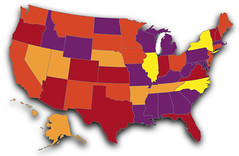
The Marin Institute is at it again. Today, they published a shiny color-coded map showing how — and I love this bit of doublespeak — “State Governments Neglect Beer Taxes.” The press release goes on to suggest that “inflation has decreased the value of low beer taxes, while state budget shortfalls have exploded.” Of course, that argument can be made for every single tax in existence, from sales tax to income tax yet they’re not crying about those not being raised. Everything is effected by inflation, yet it’s alcohol taxes that must bear the burden for that. And I’ve said it before, and I guess I have to keep saying it, but trying to make alcohol pay for the state’s shortfalls is not in the least bit fair. Alcohol companies didn’t cause the problems we’re all experiencing, yet these neo-prohibitionists keep insisting they must disproportionally pay to fix them. Whatever fixes are imposed should be paid by everyone, not just the convenient target of an extremist anti-alcohol organization.

This neglect, they claim, has “[l]egislators ignoring a lot of revenue their states could use right now.” They neglect, naturally, to factor in all of the direct and indirect positive economic contributions that the alcohol industry makes to our economy, one of the few industries growing and providing jobs. Instead, they suggest punishing and harming the alcohol industry to, and here’s a telling quote, “prevent future losses.” That presupposes that these taxes are somehow ordained from on high, sacrosanct and absolutely necessary. But are they? Not in the least. The taxes they’re referring to are excise taxes, taxes no other industry except tobacco has to pay. Alcohol companies already pay more taxes than any other goods manufacturing industry in the country. The notion that they have to be adjusted for inflation is something these yahoos just made up because they don’t like alcohol. The maps are very colorful and utterly useless.

pretty-map
Ooh, look at the pretty colors.
 

These excise taxes are patently unfair and always have been since they were first imposed during the Civil War to raise money for the Northern Army. That they’re taken for granted and most people believe there’s a good reason for them has more to do with anti-alcohol propaganda and decades of ceaseless attacks painting alcohol as a sin. Today’s reason du jour for the continued excise taxes is usually stated as alcohol is somehow duty-bound to pay for any harm caused by people abusing the products they make and sell. This argument, of course, doesn’t stand up to the simplest logic. Not everybody abuses alcohol, of course, and the percentage that do so are in a very small minority of the total number of people who regularly drink.

Still, this notion persists that the industry must pay for a small percentage of alcohol abusers. But if it’s about the harm, then why aren’t soda and fast food manufacturers taxed similarly for the burden they place on our healthcare system. People over-eating surely has made many people unhealthy and their medical bills far higher than people who eat a healthier diet. Why don’t they have to pay for the harm they cause? Why don’t pharmaceutical companies get taxed for the harm caused by people who abuse their prescription drugs? Why don’t gun and bullet makers have to pay for the violence caused by their products? I could go on and on. Almost everything causes harm if abused, but only alcohol has to pay for it, apparently.

What’s most pernicious about these recent attacks by anti-alcohol groups is that they’re simply seizing an opportunity caused by the economic downturn to advance an agenda that has little to do with what caused our economic woes. They’re essentially just stoking people’s fears to further their own agenda of removing alcohol from society by taxing it to death and figuring people will go along with it if they step up their lying to them about it at a time when we’re all worried about the future. It’s quite frankly, disgraceful.

In other recent news, the California state legislature did not approve Jim Beall’s latest attempt to punish alcohol with his nickel-a-drink tax that’s come up several times before and will continue to be brought up until the people of San Jose finally get smart enough to vote him out of office. Jim Beall is like a rabid dog that just won’t quit nipping at alcohol’s heels.

The Marin Institute’s chief flack, Bruce Lee Livingston quipped after its most recent defeat. “How in good conscience … can these public servants vote no or even worse abstain on this bill? It’s a travesty; whose interests are they representing?” Well, listen up, I’ll tell you. A nickel-a-drink sounds like a modest proposal, but it’s not. It would greatly raise the price of alcohol, especially beer, and even though I know that’s your real goal, it harms a healthy segment of the economy at a time when there are fewer and fewer healthy segments left. Legislators understand that. You do not, because you don’t care about the economy if it means alcohol continues to prosper. You only care about causing the alcohol industry harm. So it helps the interests of business, something pretty important if raising money is the goal so everyone in California can prosper. To you, it seems like a fine time to attack alcohol, but to people who really do care about the state’s economy, not so much. You also keep going on about big beer, but this harms 200 small breweries, many of which are Mom & Pop businesses just trying to make a living and feed their families, not giant behemoths.

Voting against it also helps the interests of the poor, who buy a lot of the beer, especially when Beall’s bill exempts 79% of wineries. The fee (or tax) is regressive, meaning it falls disproportionally on the poorest Californians. The bill also funds healthcare facilities to treat alcohol and drug abuse. Drugs, you may not realize, are not made in breweries, so asking alcohol companies to pay for pharmaceutical abuse is not exactly fair. In addition, the $700 million (still only 3.5% of the state deficit) you claim will help the budget won’t do any such thing if all or a portion is being used for these treatment facilities. Those are in addition to balancing the budget.

Sadly, the bill, “AB 1694 will be re-considered in the Assembly Health Committee on April 6.” And so it goes ….

Filed Under: Breweries, Editorial Tagged With: California, Northern California, Prohibitionists

B.A.C. & The Definition Of Being Drunk

March 22, 2010 By Jay Brooks

drunk-in-public
Thanks to my friend Rick for sending this my way. In an editorial in the student newspaper for Temple University, the Temple News Online, student commentator Cary Carr writes about sudents getting drunk in a piece she called When Your BAC Exceeds .31 and the Label Reads Natty Ice, Trouble Brews. It’s mostly an anecdotal essay about student drinking and how kids should be more responsible and watch their intake. It’s all well and good, and there’s nothing I take issue with, but there’s just something that leaps out at you in the middle of it.

After all, there does tend to be a hierarchy to drunkenness, ranging from a happy tipsy to an invincible and shameless drunk to the stage we’ve all witnessed or experienced: how-are-you-even-alive drunk.

Of course there are more technical levels of intoxication, which Dr. Jeremy Frank, a psychologist from Tuttleman’s Counseling Services, explained.

“The best way to categorize stages of drunk is with Blood Alcohol Concentration,” Frank said. BAC is the ratio of alcohol to blood in the body. “Drunk is from .11 to .15. Very drunk is usually between .16 and .19. Once you get to .25 to .30 you generally are in a stupor, and from .31 and up would be the beginning of a coma.”

Hmm, according to the field of psychology, drunk is “from .11 to .15,” or above the 0.08% that MADD and other groups rammed down our throats in the early 1980s, when the standard was 0.10%, very much in line with Frank’s definition. Interesting. I wonder how other fields define being drunk?

Filed Under: Editorial, Politics & Law Tagged With: Prohibitionists

Knowing Your Limits

March 21, 2010 By Jay Brooks

limits
I woke up again in Seattle, my second day here. Yesterday I helped to choose the winners of the Hard Liver Barleywine Fest at Brouwer’s Cafe. It’s the eighth year of the festival and it’s really grown into an impressive event in the several years I’ve been coming up for it.

But the weekend has got me thinking, not about barley wines, but tasting in general. At these types of festivals, people often try to taste every offering — in small quantities of course — of some very big beers. You see it at the Toronado Barleywine Festival and you see if at Brouwer’s Hard Liver, where this year 50 barley wines will be judged and something like 62 or 66 will be served, owing to multiple vintages of the same beers.

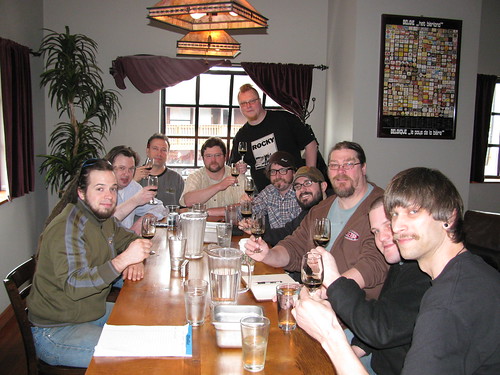
And as impressive as that is, it’s today that has me worried. Each Sunday, the day after the Hard Liver Fest, Matt Bonney hosts, with his business partner Matt Vandenberghe (a.k.a. Vern) and a cast of characters, the private, invitation-only Keene Tasting, named for Dave Keene, who owns the Toronado in San Francisco. With Dr. Bill now working at Stone and no longer doing as many of his legendary tastings, the Keene Tasting is one of the few that follow the format Dr. Bill (at least as far as I know) pioneered.

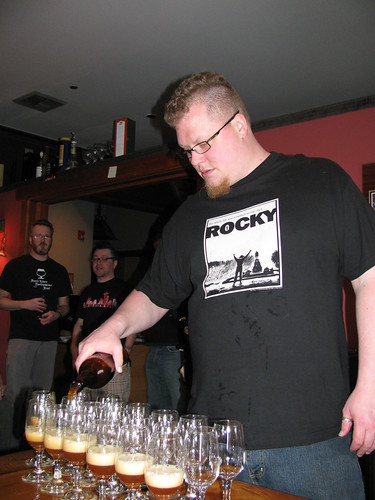
It’s a simple, if punishing format, where a new beer is opened roughly every five minutes over a period of several hours. So while you never get a large portion of any single beer, you do ultimately taste a lot of different beers. Still, it adds up. There are snack breaks and a lunch break, and those that stick with it can expect to be there eleven or twelve hours. Like many other types of marathons, very few actually reach the finish line, tasting every single beer.

At the beginning, the first beer
Last year something like 160 beers were tasted, beginning around 11:00 a.m. and going well into the evening. That year I made it to 110 beers before reaching my limit.

The year before, I only made it half-way, and dropped out at beer 75, owing to getting very, very sick — not from the beer, just a feverish flu — which I detailed then in Pride Goeth Before A Fall. And that brings me to my point. We all have our limits, and it’s not only good to know them, but also pay them heed.

Matt Bonney keeping things moving
Impressively, one of the improvements Bonney employs over the average Dr. Bill tasting is that a clean glass is used for every beer, a Herculean task if ever there was one.

There are, of course, myriad ways to taste from settling in to drink only one beer, exploring it thoroughly from start to finish, lingering over it as it changes when it warms, really letting it sink in to the very opposite, tasting as many beers as possible, very quickly, and everything in between. Generally, when judging beers in competition, you want no more than nine or ten in a flight and 30 or less for a single session. But that’s just one legitimate way in which beer can be sampled. That may be too many at a time for some people and too few for others.

I know there are people critical of the rapid fire Dr. Bill-style tasting, but I’m not. Is it my favorite way to sample beer? Not necessarily, but it is still quite enjoyable and while you can’t linger over every single beer, you can get a sense of it all the same. There’s a Danish proverb, “better thin beer than an empty jug.” And that’s the rub. I still prefer the opportunity to sample some truly rare beers, even if not under the most ideal circumstances, than not at all. So yes, I’m a relativist when it comes to the marathon tasting but I’m just fine with that. The important thing is to have a good time and know when to walk away. I already know there will be some spectacular beers poured later today and I’m looking forward to giving it another go. Will I make it to the end? Probably not. But that’s okay, there’s no shame in that as far as I’m concerned.

In the words of the immortal Kenny Rogers, equally applicable to drinking as gambling. “You got to know when to hold ’em, know when to fold ’em, know when to walk away and know when to run.” With any luck, I’ll know when to fold and can walk away. Stay tuned for details.

Below is a slideshow of the 2009 Keene Tasting. This Flickr gallery is best viewed in full screen. To view it that way, after clicking on the arrow in the center to start the slideshow, click on the button on the bottom right with the four arrows pointing outward on it, to see the photos in glorious full screen. Once in full screen slideshow mode, click on “Show Info” to identify each photo.

Filed Under: Beers, Editorial, Events Tagged With: Photo Gallery, Seattle, Tasting, Washington

« Previous Page
Next Page »

Find Something

Northern California Breweries

Please consider purchasing my latest book, California Breweries North, available from Amazon, or ask for it at your local bookstore.

Recent Comments

  • Bob Paolino on Beer Birthday: Grant Johnston
  • Gambrinus on Historic Beer Birthday: A.J. Houghton
  • Ernie Dewing on Historic Beer Birthday: Charles William Bergner 
  • Steve 'Pudgy' De Rose on Historic Beer Birthday: Jacob Schmidt
  • Jay Brooks on Beer Birthday: Bill Owens

Recent Posts

  • Beer In Ads #5240: Rieker’s Bock Beer Is Now On The Market May 3, 2026
  • Historic Beer Birthday: Herman Adolph Schalk May 3, 2026
  • Beer In Ads #5239: The National Drink May 2, 2026
  • Beer Birthday: Anders Kissmeyer May 2, 2026
  • Beer Birthday: Bruce Paton May 2, 2026

BBB Archives

Feedback

Head Quarter
This site is hosted and maintained by H25Q.dev. Any questions or comments for the webmaster can be directed here.