
Wednesday’s ad is also for Schlitz, though from the 1960s, and is a simple ad. It just shows a man draining a glass of Schlitz. I’m guessing it’s early sixties since he’s wearing a suit, scarf and goofy hat.


Wednesday’s ad is also for Schlitz, though from the 1960s, and is a simple ad. It just shows a man draining a glass of Schlitz. I’m guessing it’s early sixties since he’s wearing a suit, scarf and goofy hat.

This evening at Anchor Brewing in San Francisco, the brewery released their newest beer, Brekle’s Brown, named for the very first brewer at the brewery that would eventually become Anchor, Gottlieb Brekle.
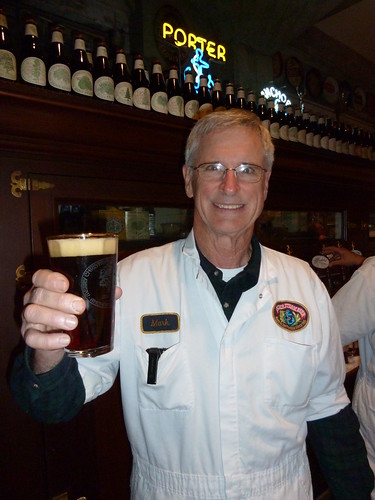
Mark Carpenter, Anchor’s brewmaster showing off his latest creation, Brekle’s Brown.
The beer is a beautiful bright mahogany, with a tan head. The nose is malty sweet, with nutty aromas that continue through to the flavor. With a dry finish, it’s nicely sweet on the palate, and belies its 6% a.b.v. Easily a session brown. Another great complement to the stable of Anchor beers.
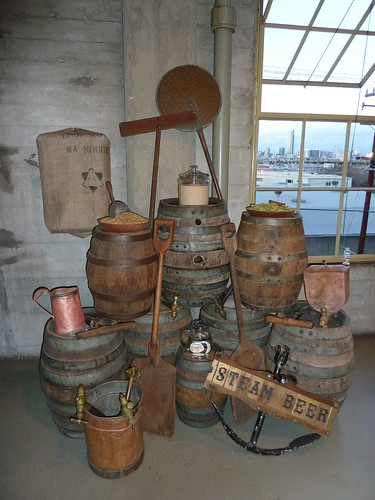
I’ll have more later on the event later, but with just another half hour to go, I’m going to go have another beer before heading on to the next event.

Daniel Defoe observed in 1726 that nothing was more certain than death and taxes, and sadly, that still holds true nearly three centuries later. It seems more likely that we’ll lick that immortality problem before taxes ever become a thing of the past. And few taxes are more certain to be under attack than alcohol taxes, a favorite target of the anti-alcohol groups, whose incessant calls for their increase have only grown louder as the economy is in free fall. Because what you want to do in a sinking economy is make it harder for one of the few industries doing well to keep people employed, paying taxes and in business.
But that’s never stopped them before and it’s not stopping them now, as the latest shot over the bow from my friends at the Marin Institute was a press release today, Twelve States Stuck at Bottom of Beer Tax Barrel. It announces their new interactive map of Neglected and Outdated State Beer Taxes.
Here’s the entirety of the press release:
SAN FRANCISCO, Feb. 16, 2011 /PRNewswire-USNewswire/ — Marin Institute, the alcohol industry watchdog, launched its Neglected & Outdated Beer Taxes Map today. This new interactive tool helps those who want to raise beer tax rates to balance state budgets or erase deficits.
“Just point your cursor at a state and you can see the your current beer tax rate, the year of your last tax increase, and the loss of revenue from inflation,” said Bruce Lee Livingston, Marin Institute executive director and CEO. “We show the twelve states that have hit the bottom of the barrel in beer tax revenues and are the most overdue for an increase.”
The beer tax map quickly reveals states suffering the most from Big Beer’s influence. These are states that have beer taxes stuck at absurdly low rates set as long ago as the 1940s, and even the 1930s. “With almost every state struggling to find new dollars to fund critical programs, policymakers need to stop leaving beer tax revenue on the table,” said Sarah Mart, research and policy manager at Marin Institute.
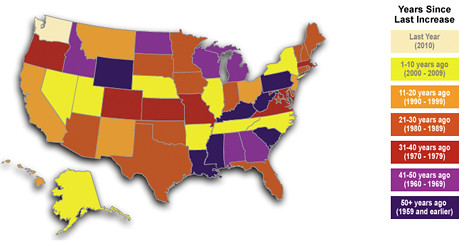
The web site shows the twelve states with the “worst” beer tax rates in the nation, the “bottom of the beer barrel”: Georgia, Idaho, Kentucky, Louisiana, Michigan, Mississippi, Missouri, North Dakota, Pennsylvania, West Virginia, Wisconsin, and Wyoming. Six states (Kentucky, Louisiana, Mississippi, Pennsylvania, West Virginia, and Wyoming) have not raised their beer tax in 50 years or more.
The worst state is Wyoming, which has the distinction of the lowest tax rate – $0.02 per gallon – set in 1935, during FDR’s first term. Factoring for inflation, the value of Wyoming’s beer tax has decreased 94%. A simple 5 cents per drink increase in the state’s beer tax would yield $7.75 million in new revenue. Considering that Wyoming’s annual budget shortfalls are projected to hit $5 million by 2013, a modest beer tax increase would erase all budget shortfalls in the state, reduce drinking, and increase health and safety a little.
The map shows that in 47 states, the decrease in real value of the beer tax due to inflation ranges from 25 percent to more than 75 percent. “This is such a lose-lose scenario for the states,” added Mart. “States are losing revenue and cutting essential programs, especially those which mitigate alcohol-related harm, while the beer companies reap higher and higher profits. It’s time for states to stop their race to the bottom and raise beer taxes.”
And here’s their colorful map of beer taxes and when they were last raised, minus the interactivity. The interactive version you can see on their website.
But there are so many things wrong with their arguments that it’s hard to know where to begin. So I’ll start by being petty. Look at the first two words of the press release: “SAN FRANCISCO.” The Marin Institute is NOT in San Francisco, but in San Rafael, which is just north of the city in Marin County, hence their name. I’m sure that they used the more familiar San Francisco because nationwide, and especially worldwide, no one’s heard of San Rafael, but I can’t help but ponder that if they can’t even be accurate about where they’re located, what does that say about their commitment to the truth in more substantive issues?
First, let’s assume everything they say is correct (it’s not, but just for the sake of argument). The amounts realized according to their table of the states with the lowest taxes if their state excise taxes were increased by “10 cents a drink” ranges from $15.3 to $333 million, or an average of about $123 million per state. But state deficits are in the billions, with a “b.” The Center on Budget and Policy Priorities estimates around $350 billion. Even if you added up all twelve states, the additional taxes would be less than $1.5 billion, less than half a percent of the total (not a perfect number, but still indicative of the problem). The point is that raising the state excise taxes on alcohol comes no where close to doing anything meaningful about the budget shortfalls facing all but four or five of the states. All it does is punish and weaken one of the few functioning industries in a distressed economy.
Next, let’s talk about the idea that taxes should parallel inflation and be raised to match those levels. If that is indeed a public policy goal, shouldn’t it be applied across the board? If we accept that taxes should be raised every time inflation inches ever higher, then shouldn’t ALL taxes do likewise? Singling out the alcohol industry for such treatment is, again, just punishing one industry because one of their “watchdogs” doesn’t like them, despite all protestations to the contrary. I don’t want my taxes to go up anymore than I suspect you do, but if we need more money as a state, country and society, than I don’t see any other fair way to raise more money. Any scheme that falls disproportionally on any industry is de facto unfair to solve a problem that effects all of society. We should have done away with tax breaks for the rich, but that couldn’t even be talked about, much less implemented. Instead, let’s suggest the heavily regressive taxes on alcohol punish the poor even more than they already do.
The other unanswered question is how high to raise excise taxes and for how long? And while there’s no amount proposed at this time, since they’re merely providing the tools to sow discontent in individual states, I believe that’s because there’s really no amount too high for the anti-alcohol groups. Though unstated, it seems implicit in their rhetoric that no amount is enough and they’ll never be satisfied. I’ve never seen a discussion of what amount they might consider fair enough, or might balance the amount with their ability to stay in business (which is the only way companies could continue to actually pay their taxes). Is there an amount that might satisfy such organizations? If so, I’ve never seen it. Then, if fixing the economy is truly the aim of their proposals, should such taxes only be imposed as a temporary measure until the crisis is over? If you didn’t laugh when you read that, you don’t realize that taxes are almost never repealed, only imposed or increased. What I think this exposes is that this is simply a way to use current circumstances to harm the alcohol companies and make it harder for them to stay in business, falling especially hard on the small brewers.
What’s also conveniently left out of their argument, as always, is the current amount of taxes paid by alcohol producers. There’s more taxes paid on every bottle of beer than any other consumer good save tobacco. Those two products are the only remaining items that pay excise taxes, at both the federal and state level. And while I think most would agree that smoking offers no health benefits, beer (and alcohol more generally) in moderation most definitely does. If you drink one or two beers a day, the odds are you’ll live longer than either a teetotaler or a binge drinker.
I’ve tackled this before, so if you want background on the issue of beer taxes, see Abe Lincoln On Beer & Politics and Here We Go Again: Beer & Taxes.
How much does the brewing industry pay? As of 2008, business and personal taxes accounted for $35,283,148,850, consumption taxes account for another $11,172,946,867; or a total of $46,256,095,717 annually. The total economic impact of the beer industry alone pumps $198,152,918,964 into the national economy each year. And all those figures are not including wine and spirits which would push it significantly higher.
I think Defoe’s quote needs modifying to reflect modern society, adding that few things are more certain than anti-alcohol groups using a recession to further their own narrow agenda of making the alcohol industry pay for their perceived sins. I think I need one of Moonlight Brewing‘s tastiest beers, their black lager, Death & Taxes.

Sadly, the date chosen for Don Younger’s memorial last Sunday meant I could not attend. There were too many long-standing obligations with SF Beer Week. Happily the Bay Area was well-represented, with several friends in attendance, including Dave Keene and Jennifer Smith from the Toronado, Vinnie and Natalie Cilurzo from Russian River Brewing, and Tom Dalldorf, publisher of the Celebrator Beer News. Tom took a lot of photos and was kind enough to write a guest post for me, giving his account of the day. He also has a great piece up on the Celebrator website entitled Don Remembered. Thanks Tom.
A memorial for the late Don Younger, renowned publican and ultimate beer industry character, HAD to be held at his world famous Horse Brass Pub in Portland. The only question was how. Everyone even remotely connected to the beer industry knew him and respected his many contributions to brewing and beer culture and would want to be there.
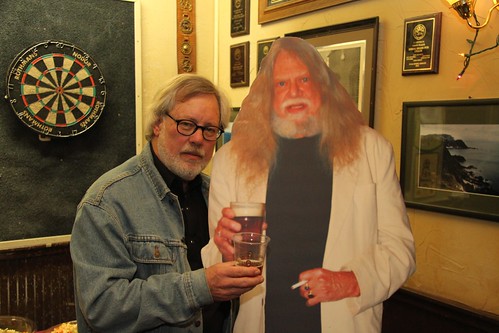
Tom Dalldorf posing with one of many Don Younger life-size stand-ups at the memorial.
Close family and HB staff decided to hold two gatherings on Sunday, February 13, to celebrate his life and times. One would be by invitation only and held inside the pub starting at 11 am and the other would be open to the public and start at 2 pm under tents erected in the parking lot behind the pub.
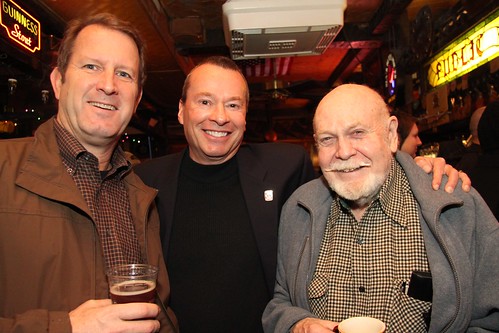
Gary Fish (from Deschutes), Kurt Widmer (from Widmer Brothers) and beer writer Fred Eckhardt.
The usual Portland rain seemed to mercifully hold up while the set up and arrivals took place. Beer industry veterans and personal friends from as far away as England arrived to celebrate Don’s many accomplishments and tell outrageous Don stories late into the afternoon. The small but tightly knit PNC (Publican National Committee), of which Don was a founding member, gathered with Tom Peters, Monk’s Café in Philadelphia, having traveled furthest to be there. Others included Matt Bonny, Brouwer’s Café in Seattle; Chris Black, Falling Rock in Denver and David Keene, Toronado in San Francisco.
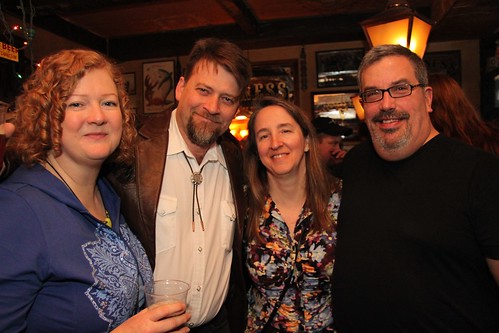
Lisa Morrison, Chris and Cheryl Black (from the Falling Rock) and Tom Peters (from Monk’s Café).
Around 1 pm a toast to his memory was offered in the pub with an amazing number of shots of his favorite Macallum 12 year old Scotch distributed to the guests. Yet another toast took place inside and in the tent set up in the parking lot packed with Younger fans. This toast was picked up at pubs and beer joints all across the Pacific Coast time zone promptly at 3 pm. Jay Brooks led the toast at the Sour Beer Fest at Triple Rock in Berkeley. Others toasted at 3 pm in their own time zones.
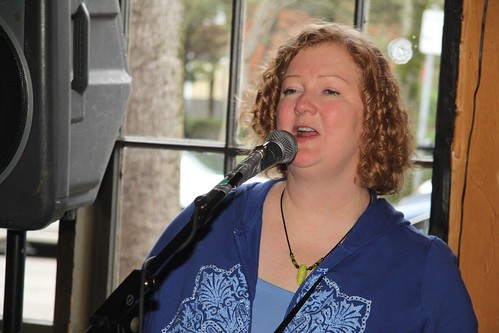
Lisa Morrison — a.k.a. The Beer Goddess — leading one of the many heartfelt toasts to Don.
Brookston Beer Bulletin is offering up some space for selected photos from the gathering in Portland. The beer world has lost a champion but his inspiration and dedication to the beer culture we all love will live on.
— Tom Dalldorf
Below are a few more of Tom’s photos from the memorial. Thanks again, Tom.
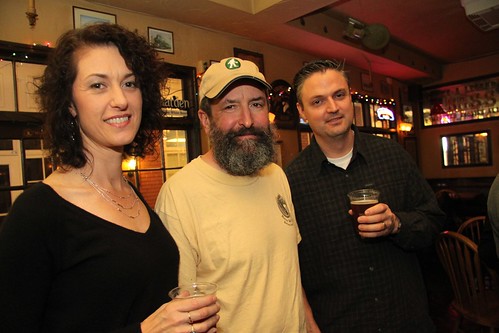
Natalie Ciurzo, John Maier (from Rogue) and Vinnie Cilurzo.

Longtime friend Joy Campbell with Dave Keene’s wife Jennifer Smith.
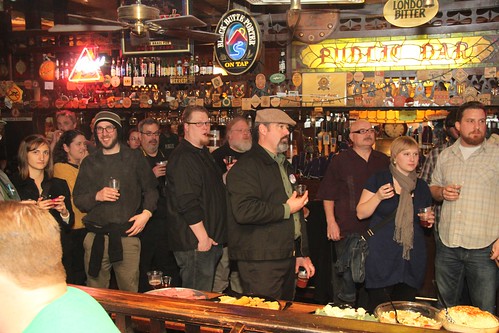
The crowd inside the Horse Brass pub.
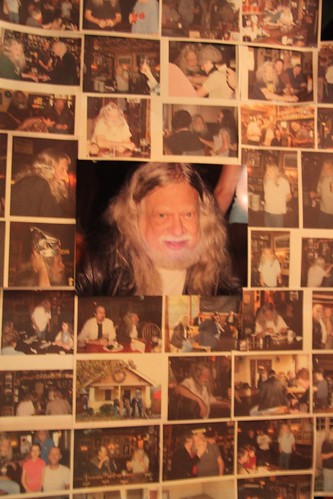
A collage of memories for the man of the hour: Don Younger 1941-2011 R.I.P.

On Monday, Rich Higgins (Director of SF Beer Week) and I went on the local ABC affiliate’s afternoon show, 7 Live, to promote SF Beer Week. Rich brought two of his beers from Social Kitchen & Brewery. First, his White Thai Affair (9.5% a.b.v., an imperial Rapscallion with galangal and lemongrass) was paired with a Kale salad with clementines and a ginger garlic vinaigrette. Then his Giant S’mores (10.5% a.b.v., a Belgian Imperial Stout) was paired with Point Reyes Original Blue cheese. Lastly, I picked up some beer ice cream from Humphry Slocombe made with He’Brew’s Bittersweet Lenny’s R.I.P.A. and brought bottles of the beer so they could taste the beer the ice cream had been made with.
It was a quick 3-4 minute segment, as is the nature of these things, but overall I think went well. Of the three 7 Live hosts, our segment was with Lizzie Bermudez, though both of the others did get into the act with Brian Copeland snagging one of the beers of the table and Jennifer Jolly trying the ice cream, too. We got the message out about SF Beer Week and, I think, opened their eyes a bit to beer with food. The cheese pairing went over particularly well and the ice cream was a big hit, too. And it was great fun for us.
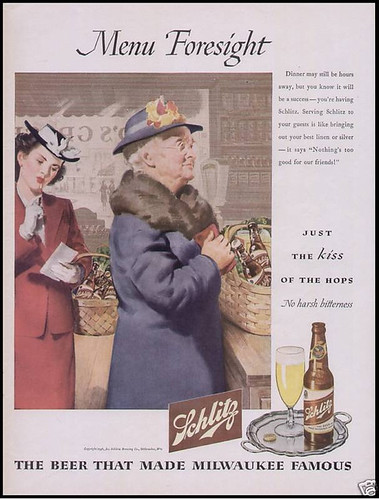
Tuesday’s ad is for Schlitz from 1946, and shows two women shopping. Each has a basket under her arm with bottles of Schlitz in them. Now that’s “Menu Foresight,” not that I can see any actual food in those baskets to pair with the beer.

Like several people tonight, I also got a press release from Greg Koch of Stone Brewing. Stone Brewing has “made a video called ‘Craft Beer Profitability’ that lays out the business case for selling craft beer. [They] believe, and early feedback affirms, that it will be a valuable tool in educating restaurant and bar owners about the benefits of selling craft beer.” Their goal “is to help restaurant and bar owners understand why it is in their best interest to offer great beer choices.”
The video is below, but can also be found at Selling Craft Beer. And you can also download it from there, too, along with a few companion videos that expand on the information in the main one.
If you’re already a beer geek, you’ll probably know and agree with much of the video, but it’s aimed at bar owners who may not yet understand what all the fuss is about craft beer and hits them where they live: profitability. I think it’s a great idea, and hope many bar owners will watch it. The time is right. The numbers definitely bear that out. In some better beer communities, people get it — Philly’s a good example of a place that gets it — but in my experience most do not. In many cities, even in San Francisco, there is a good number of better beer bars, but a majority still don’t carry much, if any craft beer. And that, I believe, needs to change. What’s your take? What would you do differently?
From the website:
This video explains why craft beer can be a better, more profitable choice for bars and restaurants. From higher margins to more loyal customers, craft beer is the best use of valuable draught real estate and bottle lists. Stone Brewing CEO Greg Koch explains why switching from mediocre brands — which can sometimes rely on illegal giveaways and unethical incentives — and switching to quality craft beer will improve the bottom line.

Our 49th Session brings things full circle from the very beginning of the Session, first proposed by Stan Hieronymus four years ago. Our fifth year of monthly Sessions will start with the original first three hosts, Stan, Alan (from A Good Beer Blog) and myself. The first of these blasts from the past has Stan, from Appellation Beer, taking on the topic A “Regular” Beer. What is a “regular” beer, you may be wondering? Take it away, Stan:
In March of 2007 I couldn’t have guessed the topic March 4, 2011 might be “regular beer.” How vague is that? But when in December I was motivated to post my defense of “regular beer” the course was set.
Please write about a regular beer (time to lose the quotation marks). You get to define what that means, but a few possibilities:
- It might be your “go to” beer, brewed commercially or at home. The one you drink regularly.
- I could be a beer your enjoy on a regular special occasion. When in San Francisco I always like to start with draft Anchor Liberty Ale. But it might be your poker night beer.
- It doesn’t have to be a “session beer,” but it can be.
- It probably shouldn’t have an SPE of more than $25 (that’s a very soft number; prices may vary by region and on premise further confuses the matter). Ask yourself, is it what somebody in a Miller High Life TV commercial in the 1970s could afford? Because affordability matters. I’m all for paying a fair price (which can mean higher than we’d like) to assure quality and even more for special beers, but I’m not ready to part with the notion that beer should be an everyman’s drink.
- Brewery size, ownership, nationality do not matter. Brew length doesn’t matter. Ingredients don’t matter. It feels a little strange typing that last sentence, since the Mission Statement here says ingredients matter. But I hope you get the point. I prefer beer that costs a little more because its ingredients cost more, because there’s more labor involved. You don’t have to. Beer should be inclusive.
Still not clear? Consider this a sample post. It mostly illustrates you can write anything you damn please.
So put on your thinking cap — or should that be drinking cap? — and let everybody know what you think a regular beer might be for the next Session on Friday, March 4.
Monday’s ad is for Rheingold Beer from 1944, featuring Miss Rheingold for that year, Jane House. She’s holding a heart-shaped red tray with three beers on it. Now that’s a man really wants for Valentine’s Day. “It’s the favorite of millions!” Why? “DRY tells you WHY!”


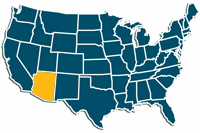
Today in 1912, Arizona became the 48th state.
Arizona

Arizona Breweries
Arizona Brewery Guides
Guild: Arizona Craft Brewers Guild
State Agency: Arizona Department of Liquor Licenses and Control

Package Mix:
Beer Taxes:
Economic Impact (2010):
Legal Restrictions:
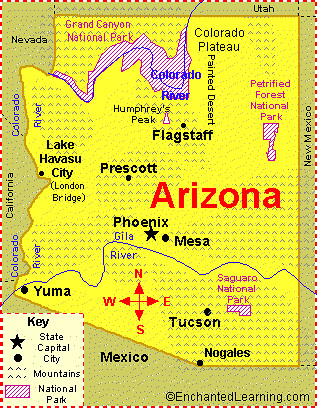
Data complied, in part, from the Beer Institute’s Brewer’s Almanac 2010, Beer Serves America, the Brewers Association, Wikipedia and my World Factbook. If you see I’m missing a brewery link, please be so kind as to drop me a note or simply comment on this post. Thanks.
For the remaining states, see Brewing Links: United States.