Thursday’s ad continues the impromptu series from the golden age of posters, the 1920s. This one is again from France around 1927. It’s for Brasserie Lengrand and is by the artist G. Piana.

By Jay Brooks

Thursday’s ad continues the impromptu series from the golden age of posters, the 1920s. This one is again from France around 1927. It’s for Brasserie Lengrand and is by the artist G. Piana.

By Jay Brooks
![]()
Wow, this is certainly an interesting development. BevMo, the company where I was the beer buyer for nearly five years in the late 1990s, is coming under fire by the United Food & Commercial Workers Union, Local 5, for their treatment of employees. They were never exactly great to their employees. Like almost every big or growing American company, they squeezed a lot out of their workers, expected long hours from salaried employees. Don’t get me wrong, I liked a lot of things about the job, and met a great many good people — though a fair number are no longer there — but it was demanding in a way that was beneficial to the company, but necessarily to the well-being of the people doing all the actual work. I know that’s a fairly common scenario, but it must have grown even worse, because for a Union to step in and go after BevMo the way they are suggests a level of poor treatment above and beyond the average company.
According to the BevMo Can Afford to Do Better website set up by UFCW-5, they launched a campaign last week against BevMo “[o]n the heels of the company’s August 1 announcement eliminating full time jobs across the chain and under [the subsequent] BevMo rules resulting in the loss of health benefits for the new part time employees, the workers are fighting back.”
BevMo Can Afford to Do Better
BevMo! currently operates 104 superstores, located in California & Arizona. In March 2007, TowerBrook formally announced its acquisition of BevMo! TowerBrook is a private equity firm with $2.5 billion under management. TowerBrook pursues control-oriented private equity investments in large and middle market companies and has committed to making BevMo even more successful. According to BevMo’s CEO, Alan Johnson, sales in 2000 were around $100 million and in 2009 reached well over $500 million. Since Towerbrook’s acquisition of the company, BevMo has opened 40 new stores with plans to open 100 more over the next few years. Clearly, BevMo CAN AFFORD TO DO BETTER.

A press conference was held earlier today at Embarcadero and Clay streets in Oakland to explain the campaign to the public. The demands of the workers were laid out, as follows:
They’ve also set up a Facebook page about the campaign. And they’ve released a video outlining it, as well.
Hmm, I wonder if they’ll start calling for a boycott?
By Jay Brooks

Ukiah’s Mendocino Brewing announced today that it’s acquired Butte Creek Brewing and “will be brewing these beers at its state-of-the-art brewery at Ukiah, CA.” Butte Creek was originally founded Chico, California, in 1998 by former brewers from Sierra Nevada Brewing Co.
From the press release:
Butte Creek Beer — “The Official Beer of Planet Earth.”
Butte Creek’s mission statement has been: “At Butte Creek Brewing, we handcraft award winning earth-friendly organic ales and lagers. Since 1998, we have been committed to producing organic products focused on quality, balance, and true hop flavor. We support organic farming and promote sustainability in our community. We fight against global warming by reducing our carbon imprint.”
Mendocino Brewing CEO, Yashpal Singh, had this to say about the acquisition. “We’re proud to be the brewers of ‘The Official Beer of Planet Earth’. We fully endorse and will pursue Butte Creek’s mission. This acquisition blends perfectly with our own policy of brewing quality, full-bodied ales for the discerning beer lover.”
Mendocino Brewing Company will brew and market Butte Creek brands under its dba Butte Creek Brewing Company.
By Jay Brooks

Wednesday’s ad is another from the golden age of posters, the 1920s. It’s an Italian poster by artist Leonetto Cappiello, and features a trio of lovely ladies dancing around a pilsner glass like it was a Maypole.

By Jay Brooks

It appears we’re in for a day of beer business news. Anchor Brewing Co. today is officially Anchor Brewers & Distillers, LLC, with the deal to purchase the brewery and the Anchor spirits division now completed by the Griffin Group. They’ve also announced a strategic partnership with Berry Bros. & Rudd, the UK’s “oldest wine and spirits merchant,” which was founded in the 17th century.
From the press release:
“Today marks a major milestone, culminating our work with Fritz Maytag to maintain the time-honored legacy of Anchor Brewing Company in San Francisco,” said Tony Foglio, Chairman of Anchor Brewers & Distillers.
Keith Greggor, CEO of Anchor Brewers & Distillers continued, “In addition to fostering the culture of craft brewing and artisan distilling in San Francisco, there is an undeniable affinity for Anchor beers and spirits around the globe. To support this interest, we’ll be advancing our commitment internationally through a partnership with Berry Bros. & Rudd.”
With a primary focus on the spirits portfolio, Anchor Brewers & Distillers has established a strategic partnership with Berry Bros. & Rudd, Britain’s oldest wine and spirits merchant with a history that spans over 300 years. Through the strategic partnership, Anchor Brewers & Distillers will introduce two of Berry Bros. & Rudd’s award-winning spirits not currently available in the US exclusively in San Francisco in the Fall 2010.
“This is an ideal partnership for Berry Bros. & Rudd as Anchor Brewers & Distillers shares our passion and dedication for fostering the heritage of hand-crafted, premium spirits brands, while also making them available to a growing global market,” added Jeremy Parsons, CEO of Berry Bros. & Rudd Spirits.
With the closing of the acquisition and the partnership with Berry Bros. & Rudd, Anchor Brewers & Distillers is further reinforcing its intention to establish a “Center of Excellence” in San Francisco for craft brewers and artisan distillers from around the world. Much like Berry Bros. & Rudd’s No. 3 St. James’s Street in London, whose doors first opened in 1698, the Anchor Brewers & Distillers “Center of Excellence” will serve as an epicenter of development, education, entertainment and innovation, all designed to further contribute to the culture and heritage of craft beer and artisan spirits.
“Throughout Anchor’s history, quality, tradition and innovation have been cornerstones to its success. There has been an evolution of Anchor’s ownership over the last 140 years with each owner contributing to the ongoing legacy of Anchor,” added Fritz Maytag. “Tony and Keith share that commitment wholeheartedly, as well as a commitment to evolving the Anchor legacy by partnering with companies like Berry Bros. & Rudd that have embraced those same values for over 300 years.”
In addition, the San Francisco Chronicle has more details in Anchor Brewing acquisition is official, in their business section.
By Jay Brooks

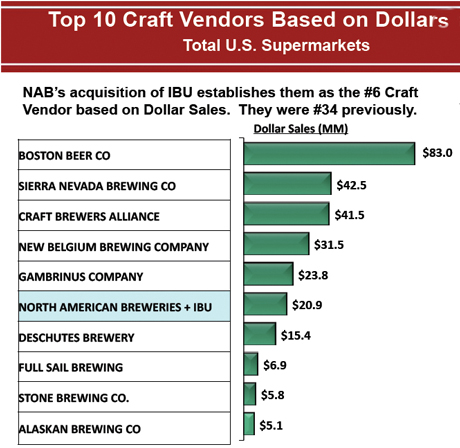
The deal that was rumored late last month is now completed. North American Breweries has bought the Magic Hat, Pyramid and Portland breweries. The deal includes three breweries, five alehouses and one retail store.
From the press release:
According to Rich Lozyniak CEO of North American Breweries, the new beers add craft brewing credibility, and variety to the beers currently offered by the company. “We are really excited to add Magic Hat, Pyramid and MacTarnahan’s beers to North American Breweries. All three brands have a rich history of craft brewing that helps us gain acceptance in that tight-knit community,” said Lozyniak. “By having more beers to offer our customers, wholesalers and retail accounts, we can better compete with the multi-national mega brewers who dominate the U.S. beer industry.”
Along with the new craft beer offering, North American Breweries also imports and sells Imperial, Labatt Blue and the Labatt family of beers. Out of its Rochester brewery it makes and sells the historic line of Genesee beer, Dundee Ales & Lagers, the Original Honey Brown Lager and Seagram’s Escapes.
“The industry has taken a turn away from the mega brewers. We have a collection of regional and heritage brands that position us well among today’s beer drinkers,” said Rich Lozyniak. “At a time when the overall beer industry is in decline, we’re growing across brands which essentially created a great opportunity to collaborate with some of the best craft brewers in the business.”
According to the company, the heritage and brand position of Magic Hat, Pyramid and MacTarnahan’s will be closely guarded. “The credibility that these brewers have developed in the craft beer segment is key to our success. We will work hard to carefully maintain and grow what was passionately created by people who love to drink and brew beer.”
The new brands mean the addition of three new breweries, one each in: Portland, Oregon; Berkeley, California; and Burlington, Vermont. Magic Hat is the 10th largest craft brewery in the country, while Pyramid is the fifth largest. Both companies have a strong following of loyal consumers who love the craftsmanship that go into each unique beer.
Together Magic Hat, Pyramid and the Portland Brewing Co. (MacTarnahan’s) employ about 600 people. Currently, North American Breweries has approximately 500. “We’re a hardworking group of people with a strong track record of brewing beer, building brands and executing in the marketplace,” said Lozyniak.
Interestingly, the press release also includes NAB’s plans and their promise, presumably to consumers and fans of the brands they’ve purchased. That’s not something I’ve seen before, and it suggests they understand how brand perception effects how a particular brand performs, especially to beer geeks in the craft beer world.
North American Breweries’ Plans for Magic Hat, Pyramid and MacTarahan’s
North American Breweries’ Promise
By Jay Brooks

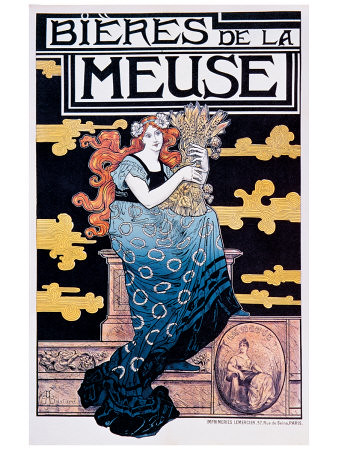
Tuesday’s ad is by one of my favorite poster artists, Alphonse Mucha. The title of it is Bieres de la Meuse and it was done in France around 1897.

By Jay Brooks

This is excellent news. I just got an e-mail from Florian Kuplent, one of my favorite brewers at A-B (including Mitch Steele, of course). His Bavarian Wheat beer is/was divine. Last week he left A-B and along with fellow ex-A-B employee David Wolfe to open a new craft brewery in St. Louis. The new brewery, Urban Chestnut Brewing, will be located at 3229 Washington Avenue, “in an old 1920’s garage that has been outfitted to accommodate our ‘new world meets old world’ brewery’ in a district of St. Louis known as Midtown Alley.”

From the press release:
Urban Chestnut Brewing Company (UCBC), an unconventional-minded yet tradition-oriented brewer of craft beer, is excited to announce its plans to open a micro-brewery in the Midtown Alley district of St. Louis, MO. UCBC plans to brew and distribute its draught and bottled beers to local restaurants, bars, grocery and liquor stores and other retail establishments in the St. Louis area.
Scheduled to launch in late 2010, UCBC is operated by two former Anheuser-Busch employees: Florian Kuplent, UCBC’s brewmaster, and David Wolfe, UCBC’s marketing and sales principal.
Co-founders Kuplent and Wolfe believe their passion for craft beer coupled with their unique expertise in creating, brewing and marketing beer will bring a fresh approach to the local craft beer market in St. Louis. The pair also shares a passion for local community development. By using local ingredients in their beer and food offerings whenever possible, and by partnering with local businesses and non-profit organizations, UCBC hopes to contribute to St Louis’ progression as a strong and vibrant local craft beer community and community as a whole.
- UCBC will look to distinguish itself from other craft breweries through its unique brewing philosophy, Beer Divergencya ‘new world meets old world’ brewing approach wherein UCBC contributes to the ‘revolution’ of craft beer through artisanal creations of modern American beers, and pays ‘reverence’ to the heritage of beer with classically-crafted offerings of timeless, European beer styles.
- Their philosophy is shaped around co-founder Florian’s lifelong passion for the culture and tradition of brewing and his dedication to the art and science of brewing. A German-born and educated brewmaster, Florian brings two decades of brewing expertise to UCBC. His career in brewing has spanned small and large brewers in the U.S, Germany, Belgium and England and his beers have won awards at the Great American Beer Festival, the North American Beer Awards and SIBA Wheat Beer Challenge. Florian is active in the brewing community serving as a judge at national and international beer festivals, as a contributor to brewing publications and as a member of various brewing clubs. It is his passion for creating new, artisanal beers coupled with his background rooted in the heritage and culture of beer that has helped to form UCBC’s brewing philosophy Beer Divergency. “In launching UCBC, my vision is to delve into both th3 exploration of modern, American craft beer and the traditions of old world brewing, simultaneously. It is the fusion of these two brewing cultures, new and old, that has shaped our brewing philosophy of ‘Beer Divergency’— embracing the revolution of American craft beer, while simultaneously appreciating the heritage of European beer,” Florian shares.
- UCBC will work to contribute to St. Louis’ evolution in local craft beer by adding to the number of small, local brewers who distribute their beer in bottles. The co-founders believe St. Louis is a burgeoning local craft beer community that unquestionably boasts a significant community of knowledgeable craft beer drinkers and has a proud and active base of small brewers. UCBC sees an opportunity to add to the overall growth of and appreciation for local craft beer, by bottling and selling their beer at establishments all over town. Wolfe, who grew up in St. Louis, comments, “As UCBC prepares to join the community of small, St. Louis area brewers who are already contributing to the culture of local craft beer, we are excited to begin packaging our beer in both bottles and kegs, and we look forward to collaborating with as many local merchants as possible to reach as many beer drinkers as we can.”
Beyond distributing their beer, UCBC will have a taste room and outdoor biergarten where guests can enjoy UCBC beers and other locally brewed craft beers accompanied by small food pairings. Wolfe remarks, “Our taste room & biergarten won’t quite be the traditional brewpub. I like to tell people, ‘think wine bar for beer’; a casual place to hangout and experience a selection of local craft beers accompanied by small plates of cheeses, meats, and other little eats that pair well with beer.” Kuplent adds, “It is my goal to bring a little bit of Bavaria to UCBC. While our taste room will have a touch of old-world feel, our biergarten is where we’re trying to create an authentic, German beer-drinking experience by importing biergarten tables from Europe and planting shade-giving chestnut trees.”
The Urban Chestnut name is also derived from its philosophy of “Beer Divergency”; Urban—a nod to the locales of the modern craft beer revolution and Chestnut—a symbol of the heritage and tradition of beer; the chestnut tree has been utilized by Bavarian brewers for centuries to give shade to their biergartens and bierkellers.
According to the website, they’ll be doing two series of beers:
Revolution Series: Our contribution to the renaissance of craft beer—brewing artisanal, modern American beers.
Reverence Series: Our celebration of beer’s heritage—brewing classically-crafted, timeless European beer styles.

By Jay Brooks

Wired Magazine has a funny, and interesting, post about seven science-influenced craft beers, by Betsy Mason, who earlier had a very funny post, proving Why Geologists Love Beer. The seven beers are listed below. Give it a read.
By Jay Brooks

The latest list of the Top Beers on Planet Earth that Beer Advocate released yesterday was an experimental list, aimed at sparking a discussion so they could consider the best way to approach such lists in the future. After a day of constructive feedback, and some not so constructive I’m told, they’ve again redone the list introducing several new changes to the formula, based on feedback they received during the experiment. The biggest difference between the two lists is to be included on yesterday’s list required a minimum of 1,000 reviews. The current list requires only 105 reviews to be eligible. So since so many people seemed to enjoy yesterday’s analysis of the list, I’ve looked at the new list in the same way and again pulled out some interesting statistics about the Top 100 Beers.
In the Top 100, there are beers from 60 breweries, 16 more than yesterday’s list (the Experimental or E-List). Those breweries are from six countries, one less than the E-List. Two countries dropped off (the Czech Republic and Ireland) and one new one was added (Denmark).
The U.S. again has by far the most, with 72 (one more than yesterday’s). The American beers on the list are located in 19 states, 6 more than the E-List. California still has the most, by far, with two more than yesterday’s list, bringing their total to 25, meaning one in four beers on the list is from California. Seven new states had beers that made the list (Connecticut, Florida, Maine, Minnesota, Missouri, Texas and Wisconsin) and one dropped off (Maryland). Here’s how the new list shakes out:
The diversity of styles represented by the list dropped to 24, losing a dozen but picking up five new ones, and again I simplified and combined a few from Beer Advocate’s list. Around 11 styles have only one beer on the list. The most popular, Imperial Stout, more than doubled over yesterday’s list, while the second most popular, Double IPAs, remained the same. The top 13 (the styles with more than 1) break down as follows.
Extreme beers (9% and above) took the lead, with 53, over half, whereas yesterday they numbered only 32. Beers below 5% also dropped in half, from 10 to 5. Beers of middle-strength (over 5% but below 9%) likewise fell from 58 to 42. In the new list extreme beers make up 53%, middle-strength 42% and session beers 5%. In the Top 25, things stayed more constant, with 16 (1 more than the E-List) being 9% or above. The Top 25 also represent less styles, 9 as opposed to 12 yesterday, from 16 different breweries in 4 countries, shaking out like so:
The top 50 is no longer as middle of the road as it was. Yesterday, extreme and middle-strength beers were nearly equal. Today’s list has extreme beers at about 56%. Again, Oskar Blues was the highest ranked canned beer, but came in at #45 instead of #30.
The diversity of breweries also changed dramatically, with several having a great number on yesterday’s list being reduced to very few or even none, notably Anchor, Dogfish Head and Sierra Nevada. Thirteen breweries, many of them world class, fell of the new list but 30 news ones made the cut, giving the whole list greater diversity. The breweries having the most beers on the Top 100 list is below.
And here’s the new list: