
Monday’s ad is for an unknown beer, created by Paul Gusset in 1956. Since today is the summer solstice, the poster reminded me of summer itself. Happy summer.
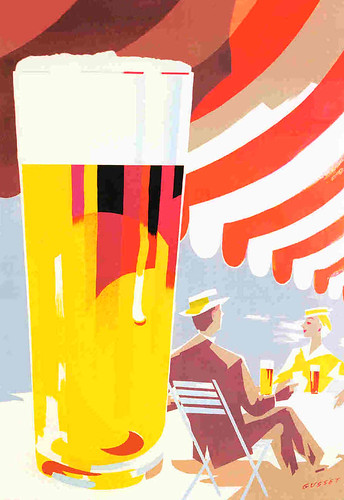

Monday’s ad is for an unknown beer, created by Paul Gusset in 1956. Since today is the summer solstice, the poster reminded me of summer itself. Happy summer.

Talk about a father’s day gift. I just got an e-mail from my friend Peter Hoey, who’s the co-founder and brewmaster of Odonata Brewing in Sacramento. His wife Britany gave birth last night to their second child, and first son, Liam. But I can’t help but beam with pride after reading his middle name. Now that’s a beautiful name — good choice. Peter tells me they’re “now home resting and getting to know him.” Please join me in congratulating Peter and Britany Hoey as they welcome the newest addition to the Odonata Brewing family.
Particulars:
Original Gravity: 9 pounds, 0 ounces
IBUs: 21 in.
Style: Boy
Release Date: June 19, 2010
Label: Liam Porter Hoey
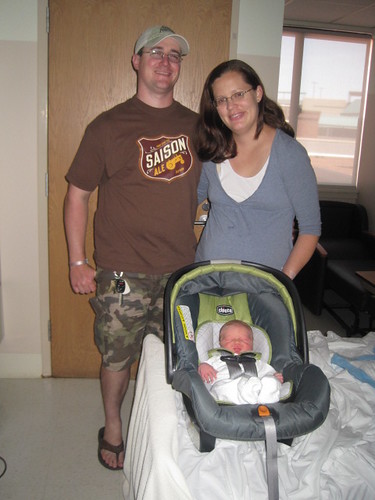
Peter, Britany and Liam Hoey.

Today’s work of art was painted as a mural at the Portsmouth Brewery in New Hampshire by local artist Gordon Carlisle. He painted The Jimmy La Panza Lounge in 2005 and it’s enamel on canvas.

The mural hangs above the stairs leading down to, yup you guessed it, The Jimmy La Panza Lounge, which is in the basement of the brewpub.
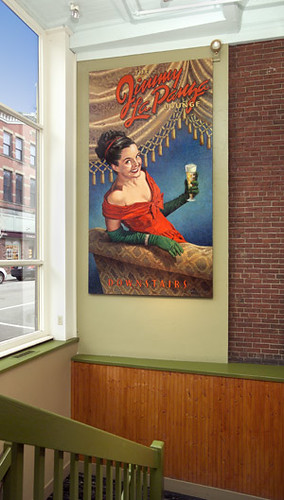
To learn more about Gordon Carlisle, there’s a biography on his website, where you can also see more of his artwork.

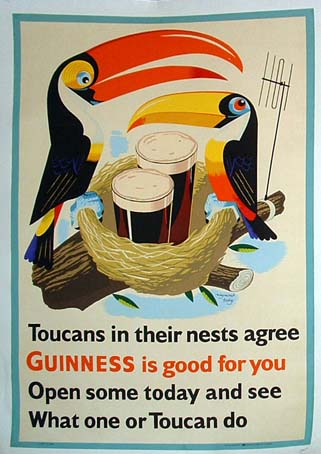
Our 23rd Guinness poster by John Gilroy features the toucans in their nest, but instead of eggs there are two pints of Guinness and the “Guinness is good for you” slogan followed by a bad pun: Open some today and see What one or Toucan do.” Plus it looks like a father and son pair, and Father’s Day is tomorrow.

In my newspaper column two weeks ago, entitled Betsey’s Belgians, I highlighted Waterloo Beverages and the new beers they’re bringing in from Belgium. The beers are being brought in by a friend of mine, Betsey Hensley, who used to work at the Toronado. Since these beers are so good and I think deserve a chance to catch on with customers, I wanted to highlight each one of them a bit more and let you know where they can be found, at least so far.
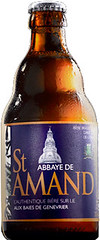
Brewery: Brunehaut Brewery
Beer: Belgian Strong Pale Ale
A.B.V. 7%
Package: 330 ml bottle-conditioned
Organic: no
Notes: the Abbaye de Sint Amand, a bottle-conditioned strong blonde ale spiced with Juniper berries. The Juniper is subtle and gives just a hint of the berry’s distinctive flavors and has a great dry finish.
Brewery: Brouwerij De Ryck
Beer: Belgian Tripel
A.B.V. 8%
Package: 330 ml bottle-conditioned
Organic: no
Notes: The Arend Tripel from the Brouwerij de Ryck, is a favorite of local brewer Brian Hunt, who owns Moonlight Brewing in Santa Rosa. Hunt tells me, in fact, that he asked Hensley to bring in the beer, as he waxes poetically about the brewery. De Ryck “is a third-generation family brewery, and makes some of the finest beers in the world, with a brilliancy and passion you don’t often see.” After a visit to the brewery, he’d become friends with Anne De Ryck, one of Belgium’s few women brewers. “I don’t think a man can make that beer. Her beers have a grace that I haven’t found in others. We can’t make it, but we can appreciate it.” And it is a beautiful beer, soft and subtle, with some delicate flavors. It may simply be the best tripel you’ve never heard of.
Brewery: Oud Beersel; brewed at Brouwerij Huyghe
Beer: Belgian Tripel
A.B.V. 9.5%
Package: 330 ml bottle
Organic: no
Notes: The brewery’s only non-lambic beer, Bersalis, a tripel they created to help finance the operations of the museum brewery where they make their lambics. It uses wheat, as well as malt, to soften it and includes some spices to give it great citrus and spicy notes. It has a nice dry finish, and you’d never guess it’s 9.5% a.b.v.
Brewery: De Proef [website currently offline]
Beer: Belgian Pale Ale
A.B.V. 7.5%
Package: 330 ml bottle-conditioned
Organic: yes
Notes: Gagaleer is a blonde brewed with sweet gale (a.k.a. bog myrtle) a traditional spice used in gruits that pre-date the use of hops in beer, though it’s used primarily here as a spice. The beer also uses local barley and Belgian hops. The beer is honey sweet and the finish is candy sweet, balanced by the bitterness of the sweet gale and hops.
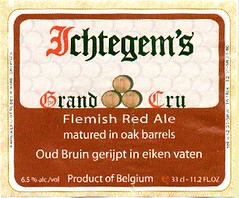
Brewery: Brouwerij Strubbe
Beer: Flanders Red Ale
A.B.V. 6.5%
Package: 330 ml bottle
Organic: no
Notes: The Ichtegems Grand Cru, from the De Strubbe Brewery, is a Flemish red ale aged in oak barrels. It has a malty nose and flavors, with just a touch of sourness, a creamy mouthfeel and a sweet finish.
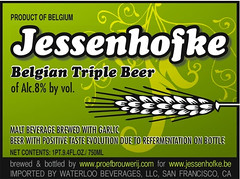
Brewery: De Proef [website currently offline]
Beer: Belgian Strong Pale Ale
A.B.V. 8%
Package: 750 ml bottle-conditioned, cork & cage
Organic: yes
Notes: This beer is brewed with unrefined cane sugar giving it a ruddy complexion along with organic hops — Challenger, Goldings & Fuggles — from Poperinge, organic malt and there’s also organic garlic used in the brewing process. The garlic provides mostly body and mouthfeel, though it is evident in the aroma.

Brewery: Brouwerij Strubbe
Beer: Fruit Lambic
A.B.V. 8%
Package: 750 ml bottle-conditioned, cork & cage
Organic: yes
Notes: Leireken Wild Berries is a bottle-conditioned fruit beer made with the juice of pomegranates, cherries and strawberries, along with the pulp from blueberries, raspberries and the red elderberry, all organic and unfiltered. Surprisingly, the beer is more tart than sweet, and is refreshingly light and zesty. According to their website it’s “is based on Leireken White Spelt, an organic beer brewed from spelt. Spelt is a hardy ancient type of wheat that grows well in nutritionally poor soil. Its slow maturation process allows the plant to absorb a maximum of minerals from the soil. The 12th century medieval abbess Hildegard von Bingen, later Saint Hildegard, endorsed spelt, calling it “the healing grain.” (She’s actually quoted as saying, “It is rich and nourishing and milder than other grains. It produces a strong body and healthy blood to those who eat it and it makes the spirit of man light and cheerful”).”
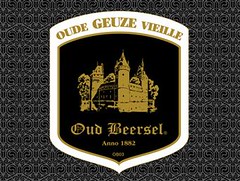
Brewery: Oud Beersel
Beer: Gueuze
A.B.V. 6%
Package: 750 ml bottle
Organic: no
Notes: The Oud Beersel brewery is a working museum just like Cantillon in Brussels. According to their website, “Oud Beersel Oude Geuze is one of nature’s miracles. Oude Geuze is a blend of lambic from different years. One year old lambic is still readily fermentable. Two year old and three year old lambic main contribution is to the taste. Blending the lambic produces a sparkling beer that is made in accordance with time-honored traditions. Oud Beersel Oude Geuze notable hop and fruit character is much appreciated.”
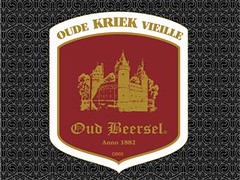
Brewery: Oud Beersel
Beer: Fruit Lambic
A.B.V. 6.5%
Package: 750 ml bottle
Organic: no
Notes: Oud Beersel’s website describes Oude Kriek as “an artisanal product, made from real cherries and Oud Beersel Lambic from old barrels. Once the cherries have been added to the Lambic, they are slowly absorbed into the Lambic, which develops a fruity character and a red colour.
Oud Beersel Oude Kriek is unique of its type in that it contains around 400 grams of cherries per litre of Oude Kriek. Oud Beersel Oude Kriek has no added sugar and contains no artificial flavourings or preservatives.” It’s only bottled once a year, and what’s available now was bottled last fall.
The beers are just rolling out to retailers and restaurants around the Bay Area. So far, you can find some or all of them at the following locations:
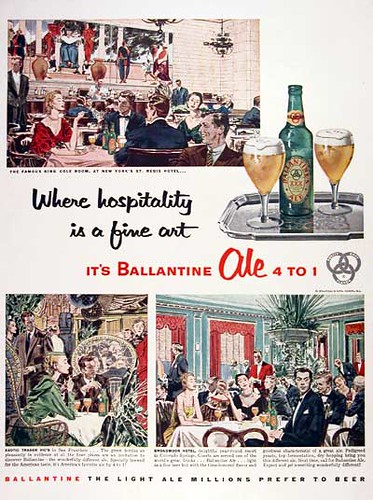
Friday’s ad is for Ballantine Ale, from 1954, with the slogan “Where hospitality is a fine art, It’s Ballantine Ale 4 to 1.” I love that they’re trying to position it as classy compared to lagers. Even the tagline at the bottom is priceless. “The light ale millions prefer to beer.” Lager is for the hoi polloi, ale is for connoisseurs. Nice.

As ever playing catch-up, here is my wrap-up from the two additional days I spent in Philadelphia for Philly Beer Week. Monday I covered with Hammer Time, and after a quiet Tuesday attended the Lambic Beer Dinner at Monk’s Cafe. Wednesday morning I let my art freak flag fly and took the train to the suburbs for a quick visit to the Barnes Foundation, which I wanted to visit before it’s moved to its new location against the wishes (and the will) of Albert Barnes. When I got back, I headed straight to Standard Tap, in the hopes of getting my own Bear Ninja Cowboy t-shirt — success! — more tater tots and a shopping excursion to the Foodery across the street where I happily ran into two folks from Founders Brewing, Michael Bell and Dave Engbers, doing a tasting there.
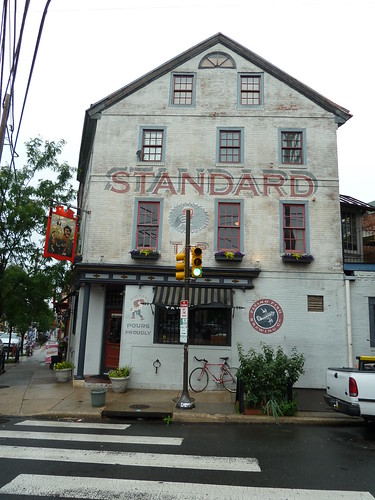
Outside Standard Tap.
Then it was off to Nodding Head, where owner Curt Decker had invited me to his Sam, Tomme & Old Beer event, which featured some amazing nibbles (the Keen’s Farmhouse Cheddar was sooo good and so was the pork tenderloin with fig reduction) and ten rare beer from Dogfish Head, Lost Abbey and, of course, Nodding Head.
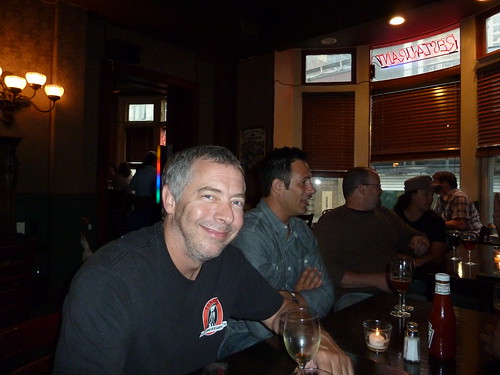
Curt Decker, with Sam Calagione and Tomme Arthur at the Nodding Head bar.
I wasn’t able to stay for the entire event, because I had a 7:00 event I’d committed to, but it was very tempting to stay longer. Some of the beers served which I was lucky enough to try included Dogfish Head’s Immort Ale 2006 and Black & Blue 2008. Then there was Lost Abbey’s Red Barn 2009, Dogfish Head Olde School Barleywine 2006 and Lost Abbey Judgment Day 2007. And I finished off the event with a Dogfish Head 120 Minute IPA from 2008.
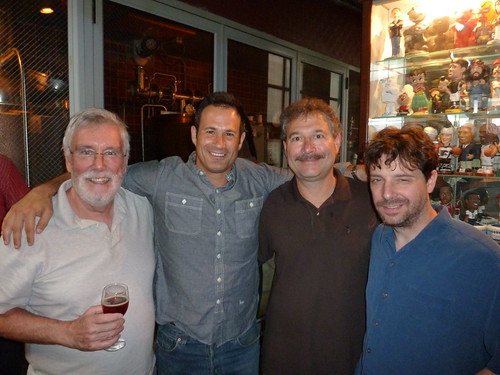
Jack Curtin, Sam Calagione, Ed Friedland and Curt’s assistant brewer, Gordon Grubb.
After that, I headed out for my next event, but had to make a quick detour at Fergie’s Pub to say hello to Carol Stoudt from Stoudts Brewing.

Carol and me at Fergie’s Pub.
Then I grabbed a cab to the University of Pennsylvania’s Museum of Archeology & Anthropology for the main event of my evening: The Great Lambic Summit.
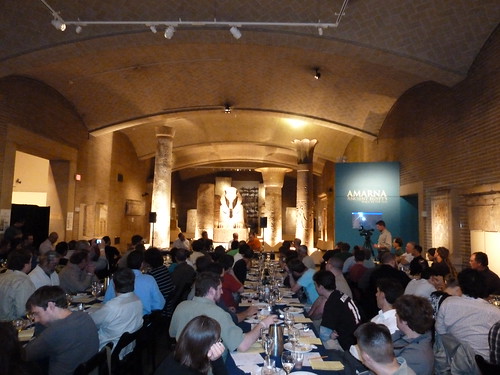
The Great Lambic Summit featuring Armand Debelder (3 Fonteinen) Frank Boon (Brouwerij Boon), and Jean Van Roy (Brasserie Cantillon), along with Dan Shelton (Shelton Brothers).
After that, I cabbed back to the after party at Monk’s Cafe, where many out-of-town brewers had congregated.
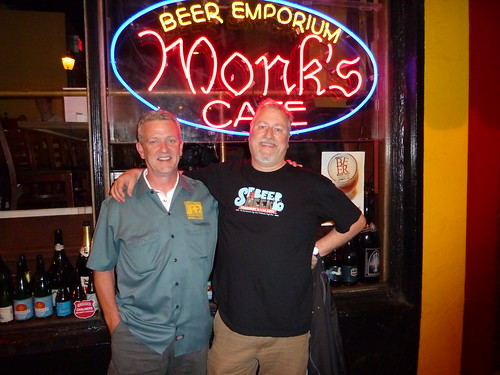
Brendan Moylan wandered up while a group of us were talking outside Monk’s.
Before turning in for the night, I stopped by McGilllin’s Olde Ale House, where a pub crawl between local brewers was supposed to end. Unfortunately, I got there a little to late so I had a quick nightcap and stumbled back to my hotel.

Late night outside McGilllin’s Olde Ale House, Philadelphia’s oldest bar.
The next day I slept in, then went for a walk to do some sightseeing and pick up gifts for the kids, ending up, as planned, at a cheesesteak place on Market Street — Sonny’s — for my fourth cheesesteak in four days. (You just can’t get a decent authentic one in San Francisco so I tend to go overboard when I’m back East.)
Eventually I ended up at the Kite and Key for the debut of a collaboration beer between Dogfish Head, Stone and Victory; Saison de BUFF. The BUFF part is an acronym for “Brewers United for Freedom of Flavor.” It’s a great saison, spicier than most, but still quite refreshing. It’s made with — try not to break into song — parsley, sage, rosemary & thyme.
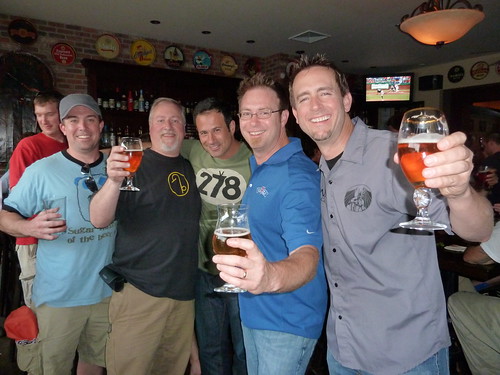
Kite and Key co-owner Jim Kirk and me with Sam Calagione, Bill Covaleski and Greg Koch.
After that, I caught a ride with the three brewers to the World Cafe Live, but I’ll finish that story in another post.
Below is a slideshow of my last two days at Philly Beer Week. This Flickr gallery is best viewed in full screen. To view it that way, after clicking on the arrow in the center to start the slideshow, click on the button on the bottom right with the four arrows pointing outward on it, to see the photos in glorious full screen. Once in full screen slideshow mode, click on “Show Info” to identify each photo.

Alright, not exactly fearful symmetry, but Asia Pacific Breweries, who owns the Tiger Beer brand, is sprucing up its bottles. They’ve hired two artists, Korean-American Rostarr (Romon Yang) and Singapore-based Tomas Goh, to create limited edition bottle designs. They each did one design apiece and collaborated on the third.
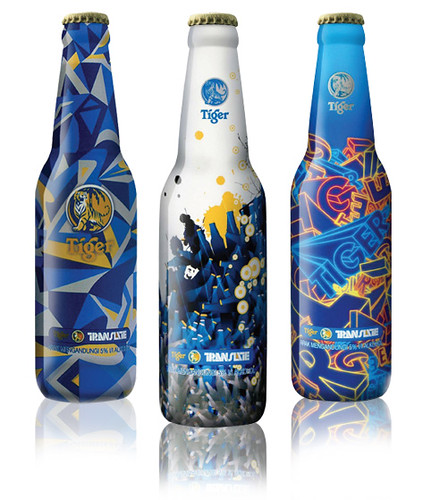
About the designs, known individually as Graphysics, Rise and Energy from the press release:
Internationally acclaimed Korean-American Rostarr´s design Graphysics is based on his signature cutting-edge graphics that fuses digital design and free painting. His design is a marriage of Graphics and Physics, creating a dynamic visual iconography.
Singapore-based Tomaz Goh´s design, Rise, on the other hand, reflects his thoughts on the state of the environment today. With the opinion that our world is fast deteriorating, the versatile Goh chose to use his design to urge mankind to “rise” against the threats of global deterioration of our environment and increase our recycling efforts.
The Energy design is inspired by the collective efforts of Asian artists such as Rostarr and Tomaz that are making an impact in the design world today.
Graphysics, Rise and Energy are exclusively designed to represent the spirit and philosophy of Tiger Beer — a brand with bold character and identity!
While I know it’s all about the beer inside, I still do enjoy the art of packaging and labels. And people do shop the labels and are swayed to make a purchase based on the packaging, so like it or not, it is an important component in a beer’s success.
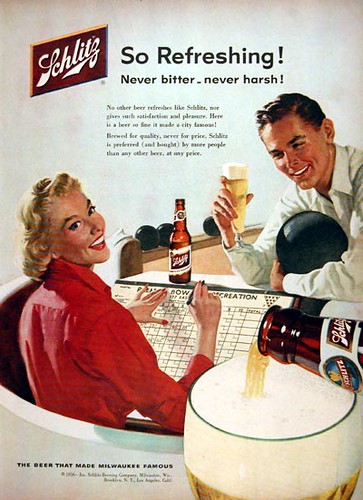
Thursday’s ad is for Schlitz, from 1956, when bowling was at the height of its popularity. Look how the dude is cradling his ball, I’ve never ever seen anyone hold their bowling ball like that. “So refreshing!”

On Monday, the results of this year’s California State Fair competition for “Commercial Craft Beer” were released. As usual, the winners are listed confusingly by county, with no overall list. Why they do this is beyond me. Also, the commercial competition is judged using the 23 BJCP categories, plus three for mead and two for hard cider. I have nothing against the BJCP guidelines, though they were developed primarily for homebrewing and often don’t fit commercial standards as well. The only standard that commercial beers need to satisfy is that of their customers, who could often care less what style a beer is as long as they like it.
At any rate, the top honors went to:
And the “1st Gold” Awards in each category were as follows:
