Brookston Beer Bulletin

Jay R. Brooks on Beer

  • Home
  • About
  • Editorial
  • Birthdays
  • Art & Beer

Socialize

  • Dribbble
  • Email
  • Facebook
  • Flickr
  • GitHub
  • Instagram
  • LinkedIn
  • Pinterest
  • RSS
  • Twitter
  • YouTube

Powered by Genesis

Patent No. 7730912B2: Bottle Filler

June 8, 2016 By Jay Brooks

patent-logo
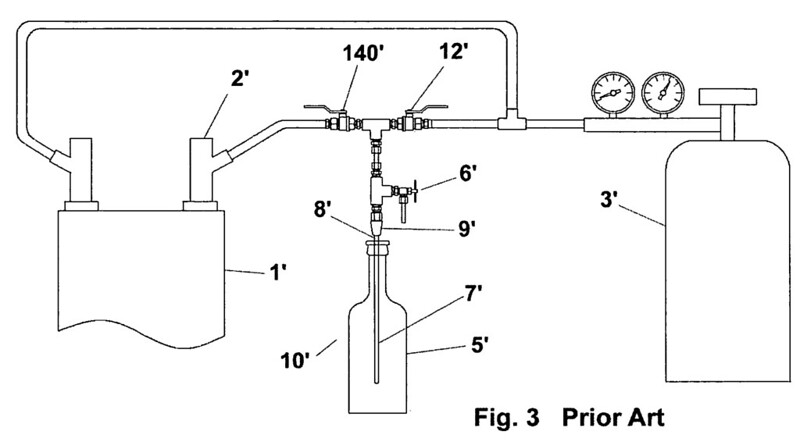
Today in 2010, US Patent 7730912 B2 was issued, an invention of John Richard Blichmann, for his “Bottle Filler.” Here’s the Abstract:

An improved bottle filler assembly for filling bottles from kegged carbonated or non carbonated beverages without carbonation loss or oxidation that is intuitive to use, sanitize, and keep free of bacteria. In the preferred embodiment, a long hose gradually reduces the pressure of the beverage on the way to the filler. Two tubes are placed inside each other forming an annulus where CO2 can be forced to the bottom of the bottle via a CO2 valve thereby purging the bottle of air (O2). A valve seat placed on the bottom of the tubes allows the beverage to flow into the bottle from the bottom by depressing a trigger.
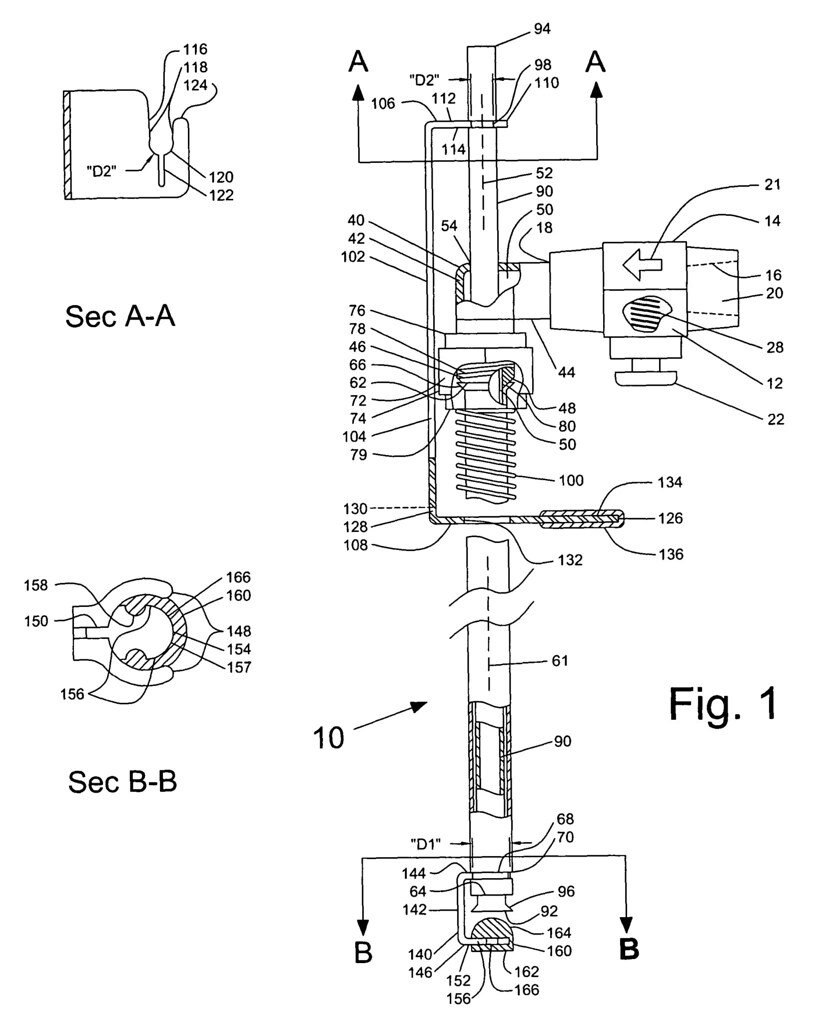
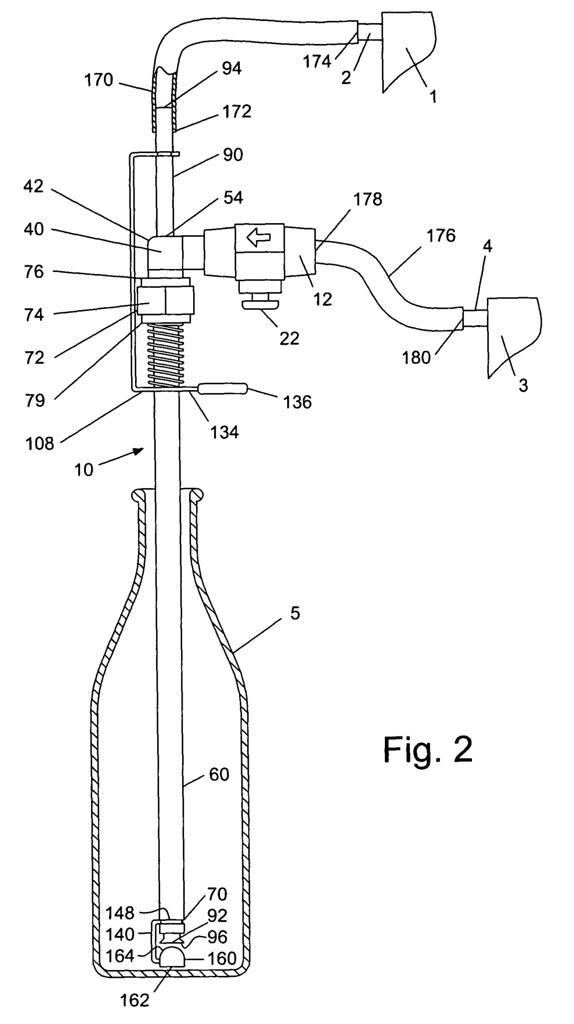
US07730912-20100608-D00001

US07730912-20100608-D00002

US07730912-20100608-D00003

Filed Under: Beers, Breweries, Just For Fun, Politics & Law, Related Pleasures Tagged With: Bottles, Brewing Equipment, History, Law, Patent

Patent No. 2083281A: Beer Tap Fitting

June 8, 2016 By Jay Brooks

patent-logo
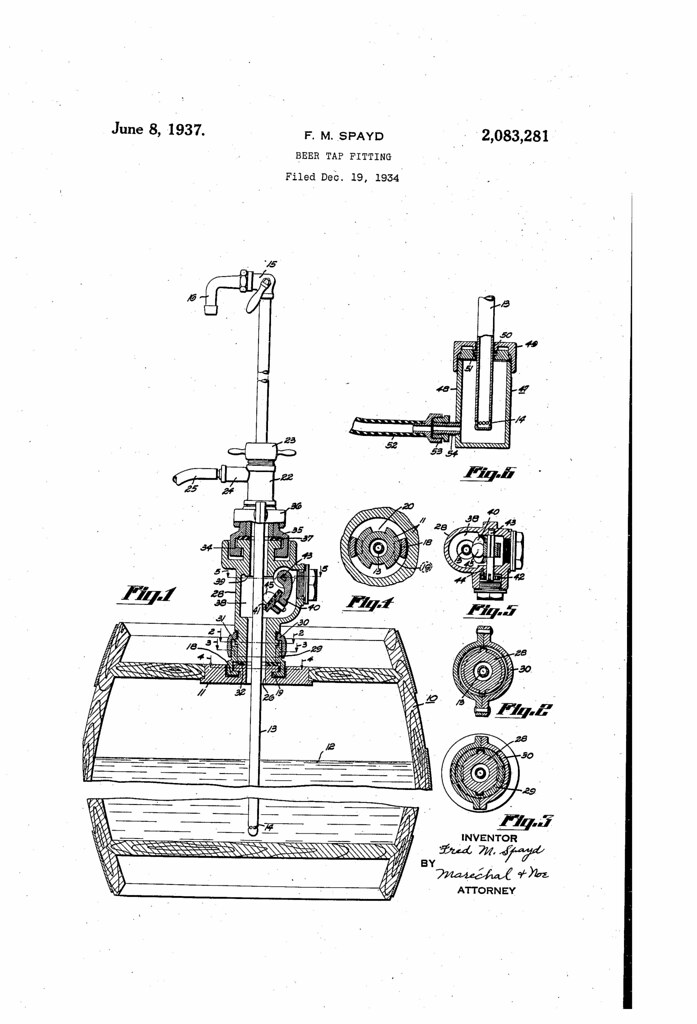
Today in 1937, US Patent 2083281 A was issued, an invention of Fred M. Spayd, for his “Beer Tap Fitting.” There’s no Abstract, though it’s described this way in the application:

This invention relates to liquid dispensing apparatus and more particularly to beer dispensers and cleaning apparatus therefor.

One object of the invention is the provision of a beer keg or the like having a thing through which the draft tube can be inserted and having a bayonet connection with the keg bung, the fitting having a self-closing valve adapted to be opened and to be held open by the draft tube, but normally closed when the draft tube is withdrawn so that the pressure within the keg may be maintained.

Another object of the invention is the provision of a self-closing valve fitting adapted to be readily attached to and disconnected from a barrel bung, and having attaching means at its opposite ends which are complementary to one another so that the fitting is adapted for use with standard connections.

US2083281-0

Filed Under: Beers, Just For Fun, Politics & Law, Related Pleasures Tagged With: History, Kegs, Law, Patent

Beer In Ads #1935: The Bride’s First Dinner Party

June 7, 2016 By Jay Brooks


Tuesday’s ad is entitled The Bride’s First Dinner Party, and the illustration was done in 1952 by Ray Prohaska. It’s #66 in a series entitled “Home Life in America,” also known as the Beer Belongs series of ads that the United States Brewers Foundation ran from 1945 to 1956. In this ad, a new couple is apparently having guests over to their new home for the very first time. The table is set, and the husband has delivered beers to their guests to soften them up. I think she’s whispering to him how well things are going so far. And that, undoubtedly thanks to the beer they’re giving their guests.

066. The Bride's First Dinner Party by Ray Prohaska, 1952

Filed Under: Art & Beer, Beers, Just For Fun Tagged With: Advertising, History

Chasing Utopia(s)

June 7, 2016 By Jay Brooks

utopias
Today is the birthday of poet, writer, commentator, activist, and educator Nikki Giovanni. She’s currently an English professor at Virginia Tech, and has authored over twenty collections of poetry, children’s books, and many other works. She isn’t much of a beer drinker, sad to say. But her mother apparently was, and that’s what she wrote a story about: honoring her mother by searching out what she believed was one of the best beers around, Samuel Adams’ Utopia [sic].

nikki-giovanni

Curiously, even though her story was printed in a prominent magazine and then later collected into a book, meaning editors and copy people presumably poured over it, nobody noticed that Utopia was not the actual name of the beer that was so central to the story. The actual name of the beer, of course, is Utopias. It’s possible it was by design, and I can see a scenario where the “s” was left off to give the phrase “chasing utopia” more meaning. That gaffe aside — if indeed it was one — it’s still an interesting story.

When Giovanni’s mother passed away, Nikki Giovanni decided drinking wine, which she preferred, wouldn’t do. But she also didn’t think that the pedestrian beers that her mother favored wouldn’t quite pay the proper respect, and she decided to find out what was the best beer in the world, and decided for her purposes that it was Utopias, and then wrote about the experience of trying to find a bottle for the July 2011 issue of Poetry Magazine.

Michel Martin interviewed Nikki Giovanni on NPR in early 2014, about her new book, and the Chasing Utopia story:

MICHEL MARTIN, HOST: We start today with the award-winning writer Nikki Giovanni. She’s one of the best-known and most celebrated poets of our time. She’s known for her accessible and beautiful writing about home, family, friends and even food. Nikki Giovanni is the university distinguished professor of English at Virginia Tech. She’s also the author of 28 books. Her latest “Chasing Utopia” is a combination of essays and poetry. I spoke with her when the book was first published last year, and she began by telling me how she chose the title “Chasing Utopia.”

NIKKI GIOVANNI: Well, it really is that my mom died now in 2005. And so it’s been a while, but, you know, losing your mother, even though it’s the right order of things, is sad. I was a mother’s child. And I stayed very, very sad. And I finally said, you know, Nikki, you have to get out of this. And mommy, every day — we knew that mommy was dying when she said no she didn’t want a beer because every day of her life, she drank a beer. And so I said to myself, well, I’m missing mommy, why don’t I have a beer? But I really — I hate to say it, Michel, I just don’t like beer. And so it was like, OK, if you’re going to drink a beer, then you ought to drink the number one beer in the world. So I went and looked it up. Well, it turns out it’s Utopias, which is actually a beer by Sam Adams. So I called a man at my local store, Keith (ph), and he said, Nikki, we never get Utopias. You know, we’re a small market, they never sell us any Utopias. Well, I started to do what I do when things don’t go well. I just started to complain. You know, everybody starts going – why can’t I find a Utopias? And I happened to be on NPR actually, and the guy who makes Utopias heard it. And he actually sent it to me. But in the meantime, I had been to a government agency. I’ve been every place, you know, and everybody was like, oh, you’ll find utopia. And I was like, no, it’s a beer for Christ’s sake. So it’s been really fun learning about beers, and it makes me smile because I think of my mother. And I know that she’s sitting in heaven, you know, kicking back. She’s a Bud Light person.
MARTIN: She’s a Bud Light — not even a Utopias? What?

GIOVANNI: No. She couldn’t afford Utopias.

MARTIN: Maybe her tastes will change in heaven. Would your mom have enjoyed Utopia, or would that be too rich for her blood?

GIOVANNI: Oh, no. Mommy would’ve enjoyed it. Mommy enjoyed anything. But, you know, I could take my mother a glass of water and she would – and that’s what I loved about her. She would like, oh, I’ve never had water this good. What did you do to the water? You know, my mother always made me feel incredibly competent. And I don’t think anybody else has taken that place in my life actually.

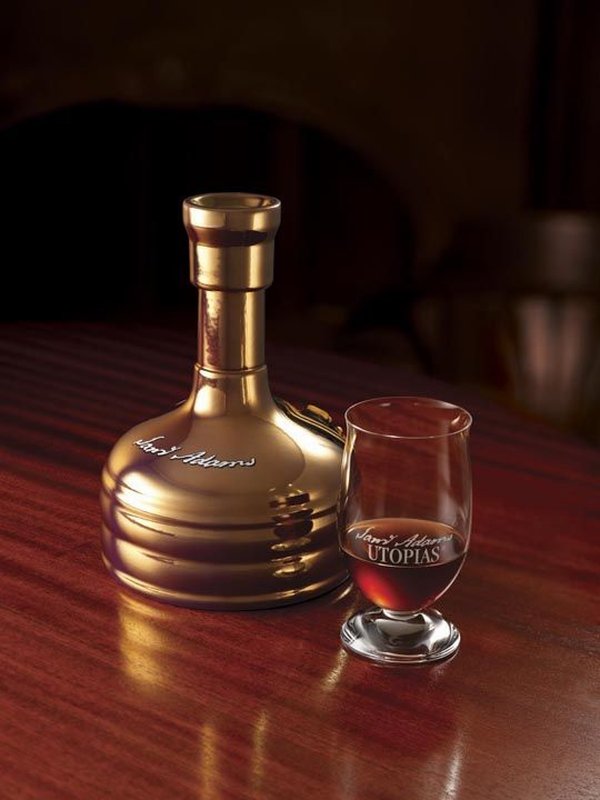
A press shot of the Utopias

Here’s the story itself, from the Poetry Foundation website:

Thanks to social networking, G.K. Chesterton’s remark that “poets have been mysteriously silent on the subject of cheese” has recently been given wide, if undeserved, circulation; anyone who consults the Poetry Foundation’s online poetry archive will find his claim not to be true. Hoping to disprove any larger point he may have been making, however, we asked several poets to mix memory and desire — for food — in the pieces that follow. Bon appetit!

• 

So here is the actual story. I was bored. Bored even though I had the privilege of interviewing Mae Jemison, the first Black woman in space, who said she pursued a degree in physics and also became a medical doctor to keep her mind occupied. Mae’s iq must be nine hundred and fifty-five or thereabouts. I asked: “How do you keep from being bored?”

And she replied: “A friend of my father’s once told me ‘If you’re bored you’re not paying attention.’”

So I said: “Beer.”

We are foodies, my family and I. My grandmother was an extraordinary cook. Her miniature Parker House rolls have been known to float the roof off a flooded house in hurricane season. Grandpapa made pineapple ice cream so rich and creamy, with those surprising chunks that burst with citrusy flavor. My sister, Gary Ann, made spring rolls so perfectly the Chinese complained to the State Department, and my Aunt fries chicken just short of burning that has been known to make the Colonel denounce his own kfc. Mommy was the best bean cooker in this world—and still is, I’m sure, in the next. I do a pretty swell pot roast myself. We are, in other words, dangerous when it comes to food.

Mommy also liked pig feet. Boiled. Not pickled.

I was sad when Mommy died. Then six weeks later Gary Ann died. Then my Aunt Ann. I tried to find a way to bring them back.

Beer.

Mommy drank Miller Genuine Draft. Gary Ann drank Bud Light. Not me. What did I have in common with those guys on tv who were throwing a football around and looking just shy of fat? Nothing. They bored me. If it was going to be beer, I needed to learn something.

Going through books, I came across Utopia. Sam Adams. The number one beer in the world. Having always been a fan of start at the top, I called my local beer store. “I’d like to order a Utopia, please.” Thinking this would be easy.

“No Way,” Keith said. “We never get that!”
ok. I called Bounty Hunter. They have everything. That’s where I bought my Justice Series: Blind Justice, Frontier Justice, Poetic Justice. Great red wines.

“No, ma’am, we don’t sell beer.”

Utopia is only on a special allotment to Canada, where it is sold as a “Special Brew.” If I could just get to Canada, I could find my Utopia. But, dadgummit, the tsa would take it from me, claiming it was over three ounces. I’d be doggone if I would provide that group with Utopia. Never. Never. No Canada for me.

Samuel Adams’s Utopia is only brewed every other year. There will be a batch coming out this year, but it goes really quickly. There are folk who work at the Sam Adams Brewery just to be able to smell it, and I have heard, though I doubt that it’s true, that you are strip-searched when you leave work during Utopia season. Once, they say, someone belched and was immediately arrested.

Utopia is incredibly special, is the number one beer in the world because the aroma alone is worth the price. Can a beer be “chewy” while at the same time smooth as silk? Can a beer make you feel like a queen while bringing out your libido, making you want to howl? Indeed it can. Utopia makes you want a Swan for your Leda. A Lancelot for your Guinevere. A boiled pig foot for your low-down blues. Special? Are your first pair of stockings special? Is the first time your Mom let you wear lipstick special? Is your first kiss special? It’s Utopia.

But here is the happy part. I am a poet. I occasionally get invited to speak at Important Government Agencies. I was thrilled. Sure, someone will say: Why would you, a poet, a rebel, you who hate the tsa and think railroads should make a big comeback, you who think modern wars are stupid and unworthy—why would you speak for an Important Government Agency? Well, for one thing, I am an American. So government, whether I like it or not, R Me. For another thing, I know they have the world’s best computers. I was charming. I was funny. I was very nice and a good citizen. I wanted an illegal favor.

“Please, sir,” said I, “can you find Utopia?”

“Of course, little lady,” said the Director. “It’s in your heart and mind.” He smiled a lovely smile and patted me on my shoulder. Not wanting to appear to correct him, I smiled the smile of the defeated. And waited for him to leave. I asked his assistant.
“I think,” he pontificated, “it is in your soul. Search deep and you will find it.”

I knew I needed someone of color. Finally an older man, grey hair cut short, came by. “Please excuse me,” I said, “I’m trying to find Utopia. Can you help?”

“Why sure,” he said “as soon as I can find a safe computer.” We moved into another room and he made me stand way away from him so that I could not see the screen. He pulled up a website. “Here you go.” And he was right. “I can’t buy it as it’s against the rules, but get someone else to go to this site. I hear it’s a great beer. At $350 a pint, it ought to be.”

And now that I’ve found Utopia, I am at peace. I have Utopia, and if I were Egyptian I would be buried with it. I use it to start conversations and make friends. It is not for mortals. Or Americans. Utopia is for the gods.

chasing-utopia
The above piece was included in her latest collection of poems,
also entitled Chasing Utopia, published in 2013.

Filed Under: Beers, Birthdays, Just For Fun, Related Pleasures Tagged With: Literature

Patent No. WO2011150933A3: Energy Saving Brewing Method

June 7, 2016 By Jay Brooks

patent-logo
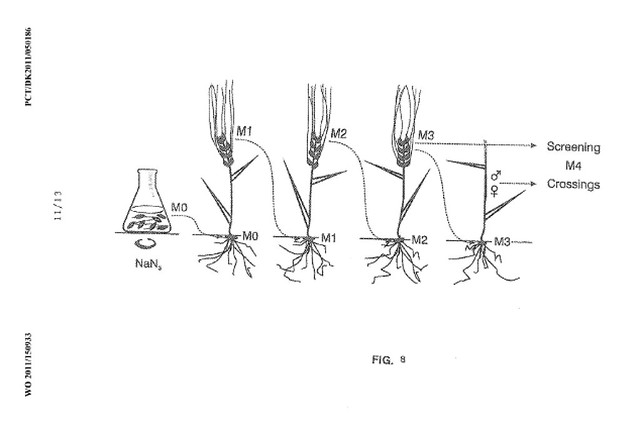
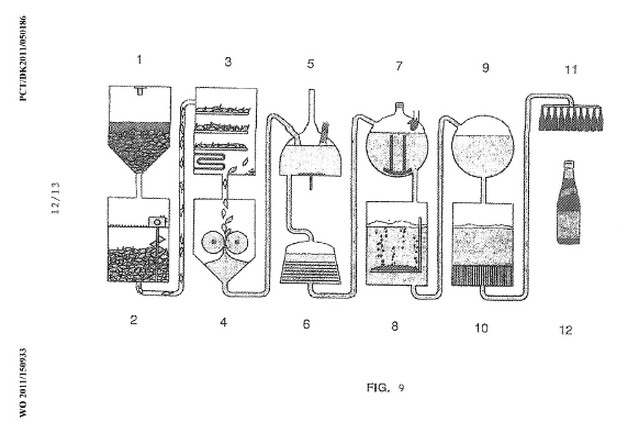
Today in 2012, US Patent WO 2011150933 A3 was issued, an invention of Lene Mølskov BECH, Søren Knudsen, Ole Olsen, Preben Riis, and Birgitte Skadhauge, assigned to Carlsberg Breweries A/S and Heineken Supply Chain B.V., for their “Energy Saving Brewing Method.” Here’s the Abstract:

Barley based beverages are produced in large quantities, employing highly energy consuming methods, for example in the malting and brewhouse facilities for kiln drying and wort boiling operations, respectively. The present invention relates to energy saving methods for preparing barley based beverages, as well as to barley plants useful in such methods. In particular, the invention describes barley plants with combined traits of null-lipoxygenase-1 (null-LOX-1), null-lipoxygenase-2 (null-LOX-2) and null-S-adenosylmethionine:methionine S-methyltransferase in one plant, which is particularly useful for energy saving methods to prepare barley based beverages, such as beer.

2011150933A3-8
2011150933A3-9

Filed Under: Beers, Breweries, Just For Fun, Politics & Law, Related Pleasures Tagged With: barley, History, Law, Patent

Firestone Walker Invitational Beer Festival 2016

June 7, 2016 By Jay Brooks

firestone-walker-long
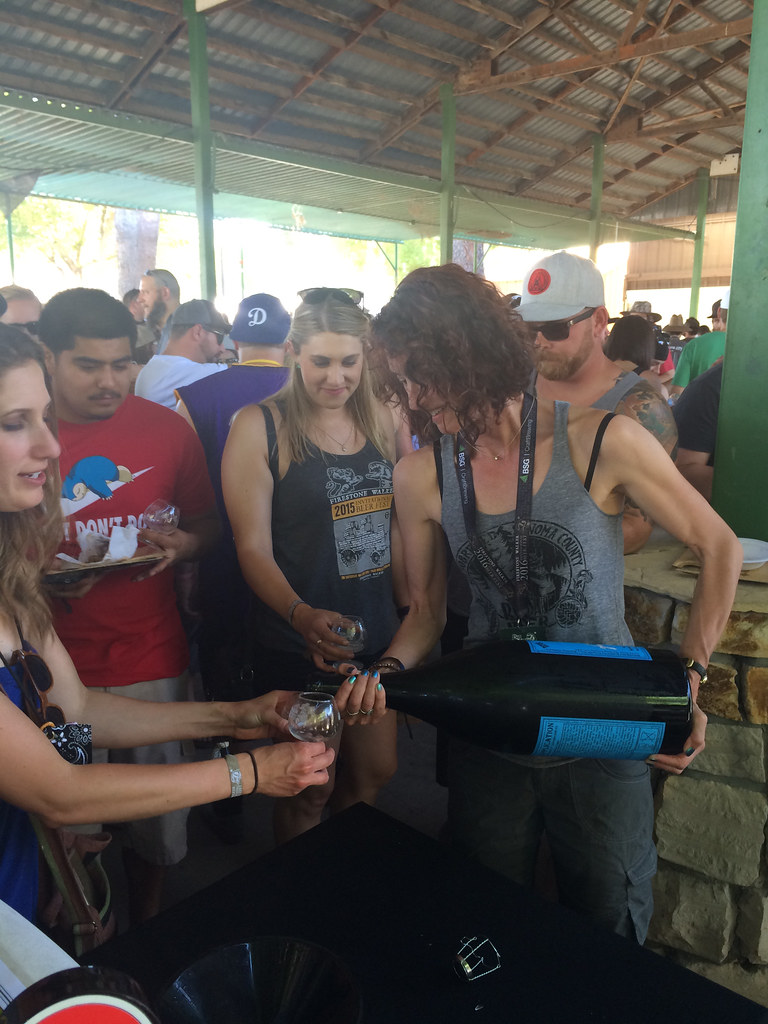
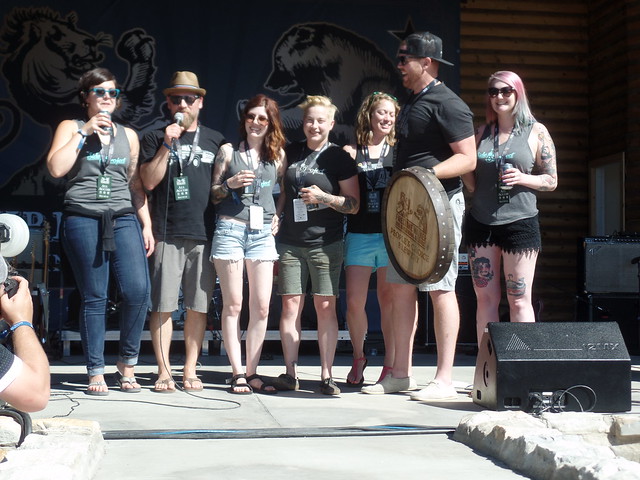
On Saturday, the 5th annual Firestone Walker Invitational Beer Festival was held in Paso Robles, California. Although a relatively new festival, it has quickly become one of my favorite not-to-be-missed events of the season. The brewery describes it like this: “The Firestone Walker Invitational Beer Fest is an epic yet intimate gathering of 50 leading brewers from around the nation and world, celebrating craft beer in our hometown Paso Robles.” What sets it apart is great organization, a well-curated selection of brewers (who are each asked to bring a sesssionable beer and something special), lots of food, music (and perhaps more importantly, lots of areas that are quieter should you prefer that), along with many, many small details, diversions and things to do. This was another great year, with plenty of wonderful sensations to eat and drink. Here is a photo essay of the day.

IMG_3189
Our weekend started by picking up the teardrop camper we rented the night before.

IMG_3193
Which we set up in the camp set aside for brewers and media at the Paso Robles Event Center, on the grounds of where the festival would take place the next day.

SAM_6272

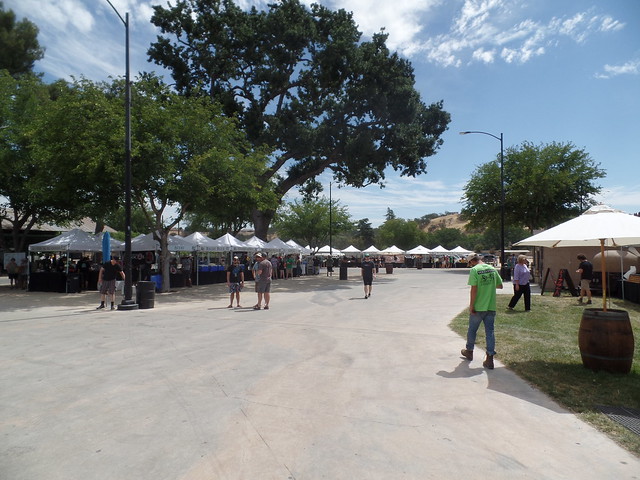
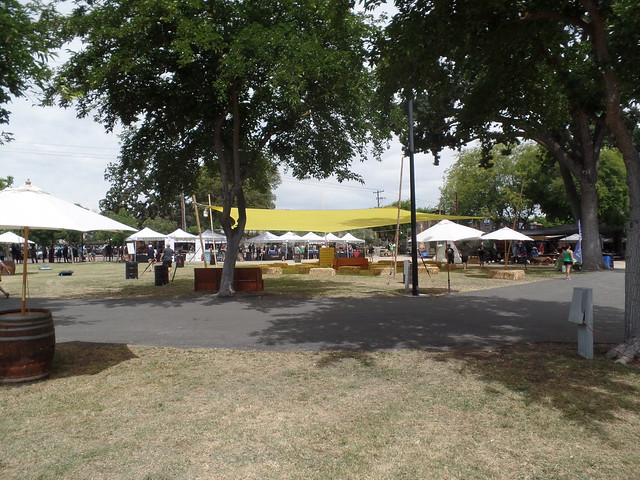
Two shots of the festival grounds before it began Saturday morning. The calm before the storm.

SAM_6270

SAM_6277
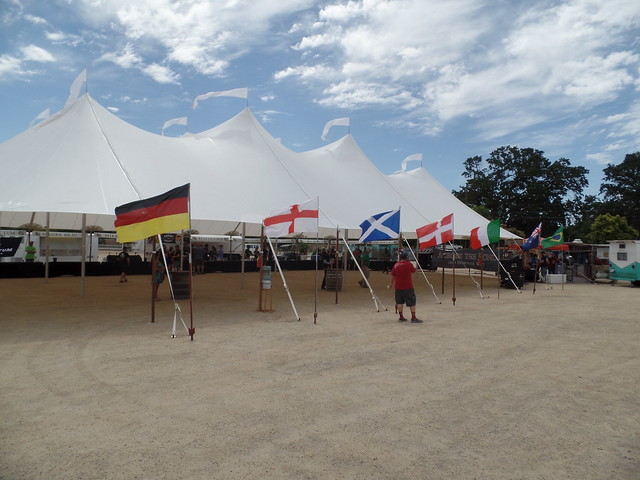
This year, a separate tent housed all of the breweries from outside the U.S.

SAM_6284
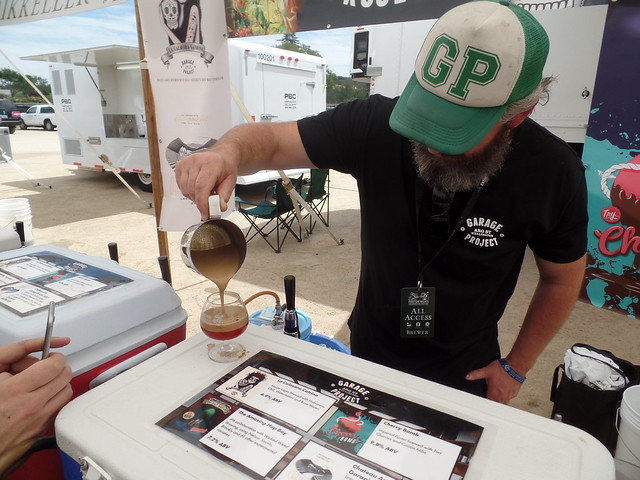
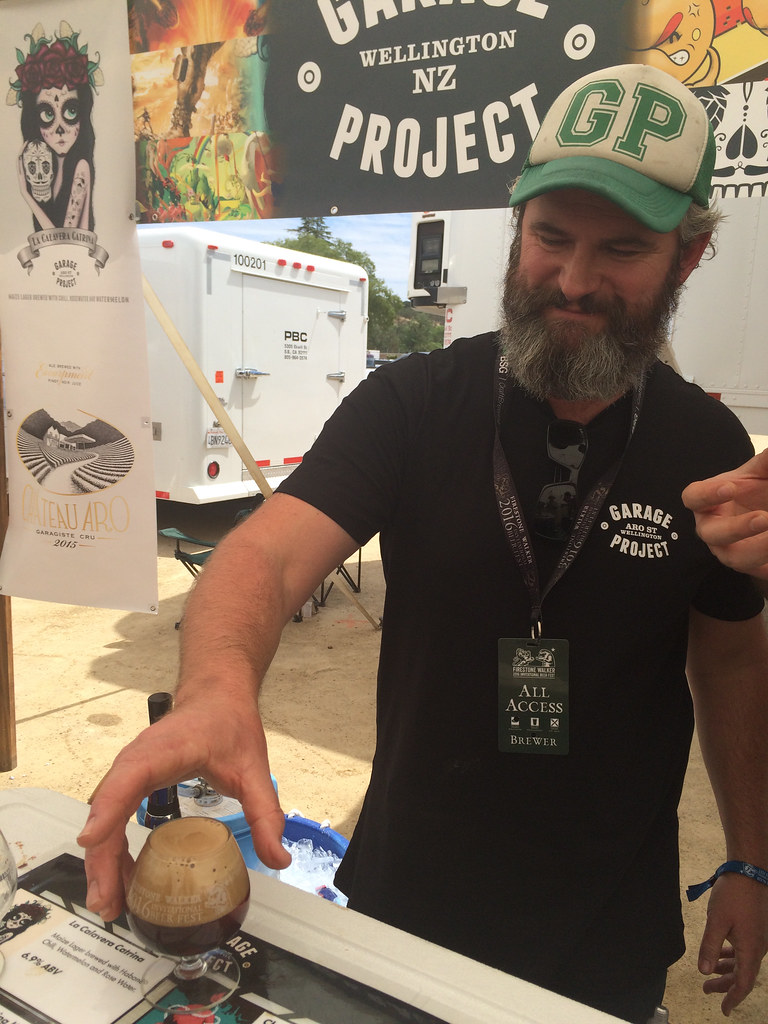
For example, Pete Gillespie from New Zealand’s Garage Project Brewery, was pouring a very interesting beer, with a great presentation. Essentially a deconstructed Imperial Porter, Cherry Bomb, first they pour the cherry-based beer, and then on top of that is added chocolate foam from another tap that was drawn into a metal cop. It stayed fairly well separated until you drank it, then it began to mix together.
IMG_3212

fwibf-2
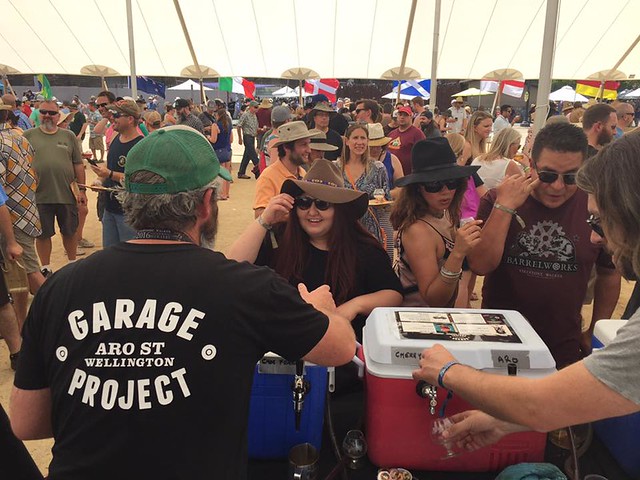
In fact, Garage Project had well-deserved long lines all day long.

SAM_6289
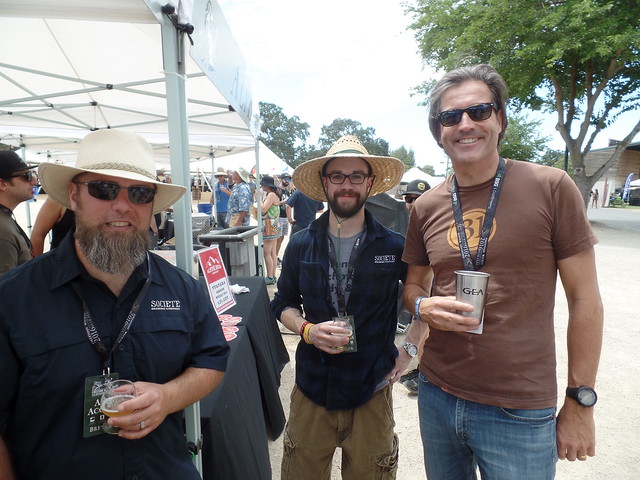
Travis Smith and Mike Sardina, both from Societe Brewing of San Diego, with David Walker, co-founder of Firestone Walker.

SAM_6269
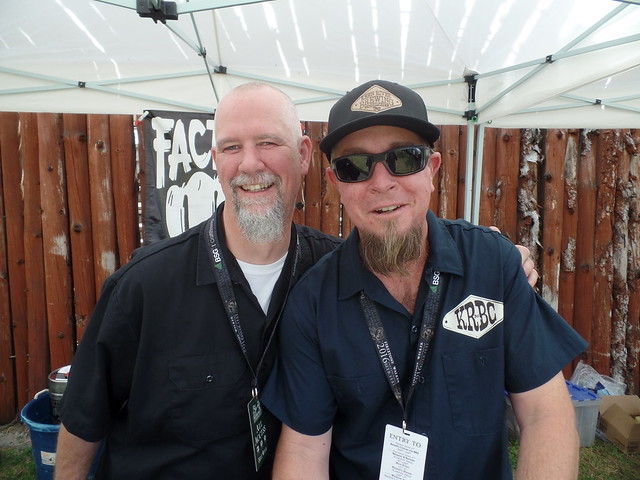
Rodger Davis, from Faction Brewing, and Kyle Smith, from Kern River Brewing, behind their respective booths.

SAM_6291
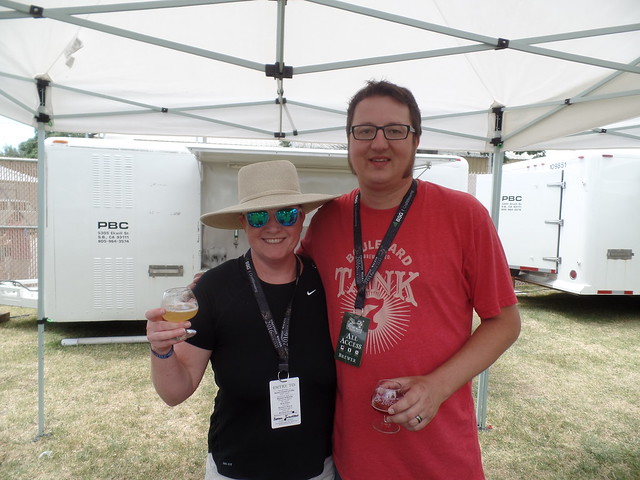
My wife Sarah with the great Jeremy Danner, from Boulevard Brewing in Kansas City.

fwibf-1
It was a fairly hot day, 100+ degrees, but we were prepared. I wore my Amish hat, and both Ken Weaver, from All About Beer, and I both brought spray bottle fans. When we posed with them, I sprayed Ken just as this photo, taken by Jon Page, was snapped.

SAM_6301
Firestone Walker brewmaster Matt Brynildson with Logan Plant, from Beavertown Brewery in London.

fwibf-3
As usual, the food was great, and even one of the vendors was serving frites, specifically truffle fries with parmesan, which I shared with Vinnie Cilurzo.

SAM_6299
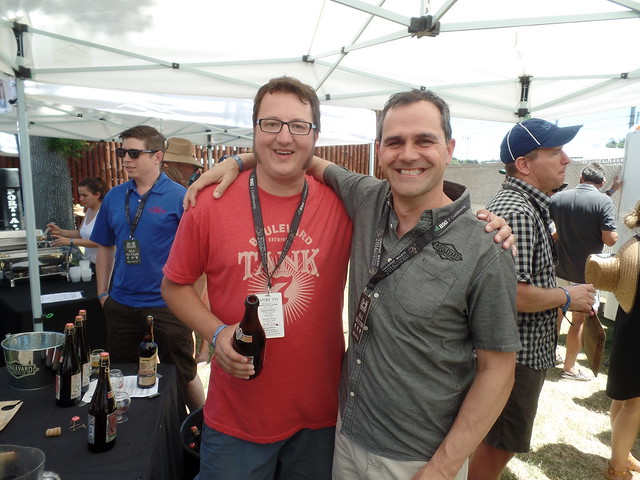
Jeremy Danner again, this time with Boulevard brewmaster Steven Pauwels.

SAM_6332
With Chuck Silva (middle), former brewmaster for Green Flash Brewing, who’s working on his own place, Silva Brewing, which he’s hoping will be open by fall of this year.

SAM_6295
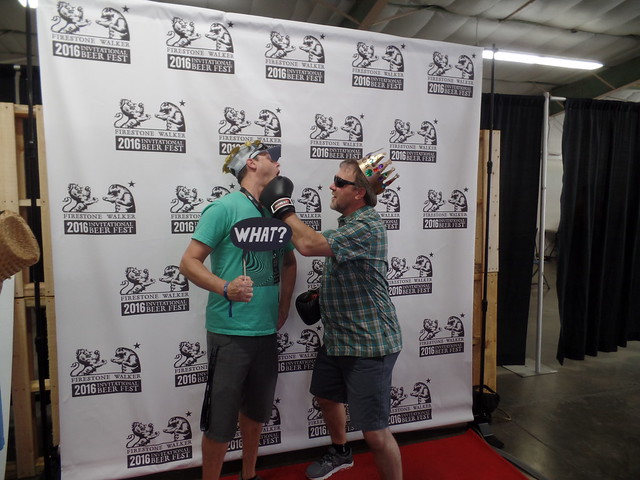
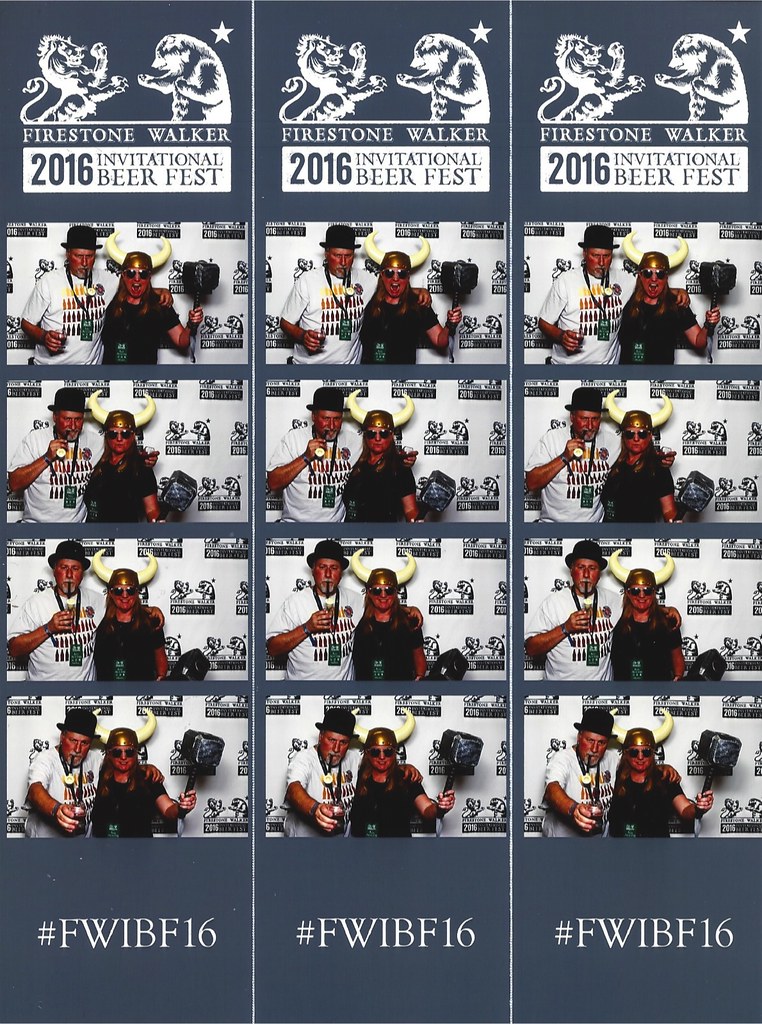
Terence Sullivan, from Sierra Nevada Brewing, beating up a buddy from Chico at Firestone Walker’s photo booth. And this is our own series of photos from the photo booth.
fwibf-strip

fwibf-4
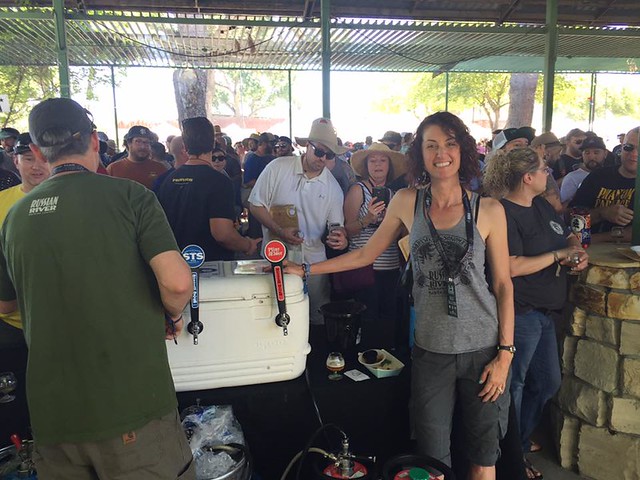
The Russian River Brewing booth was also busy all day, which kept their staff busy.

SAM_6318
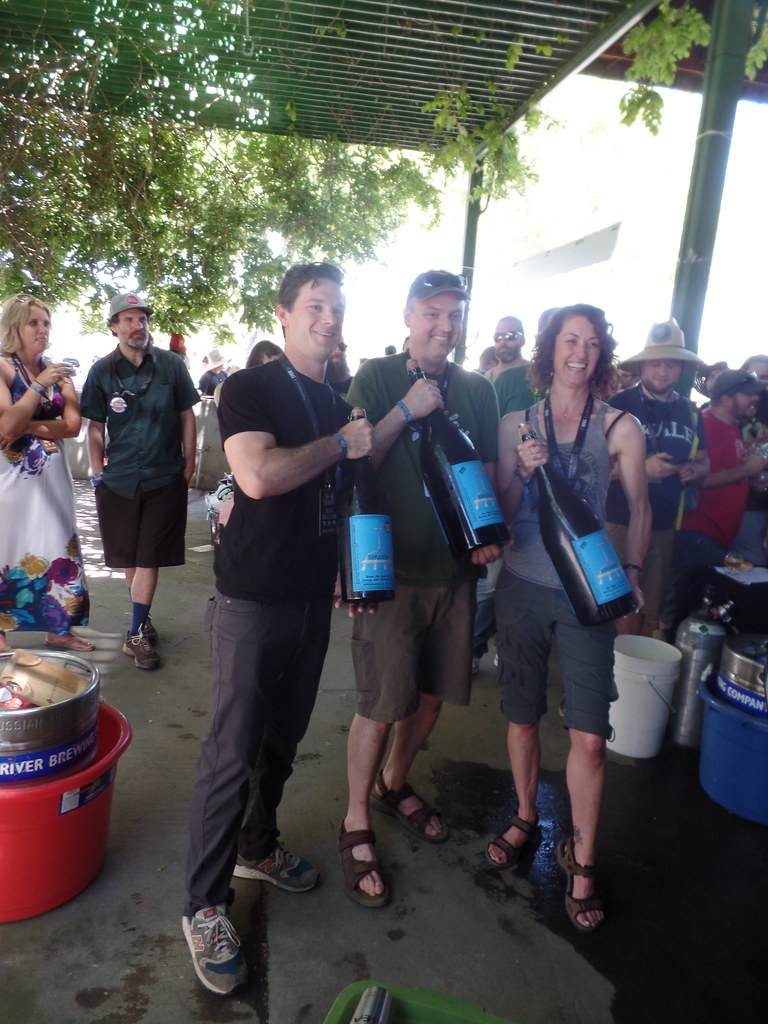
At precisely 2:23 PM, Russian River Brewing opened three seven-year-old bottles of Supplication.

SAM_6325
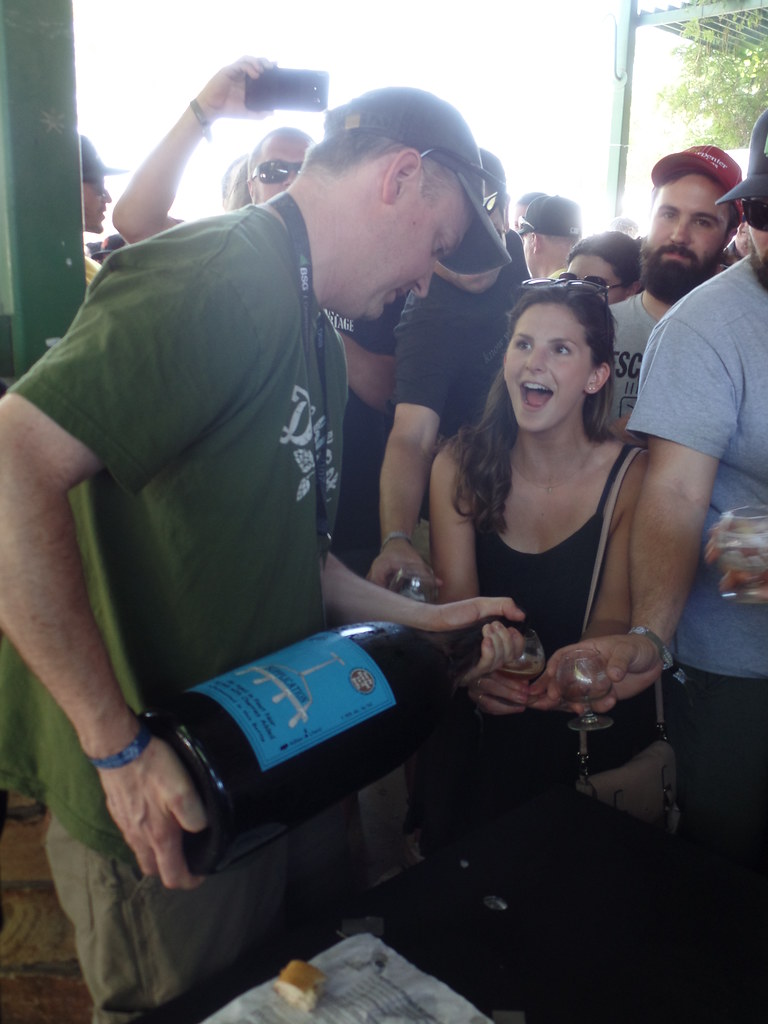
Then both Vinnie and Natalie each poured samples from each of their 6L bottles to people in the crowd, and continued pouring until they were empty.
IMG_3196

SAM_6347
At the end of the festival, the voting for people’s choice was announced, and this year was one by Side Project Brewing from St. Louis.

SAM_6303
Me, Matt Brynildson, Logan Plant and another Firestone Walker brewer.

Filed Under: Events, Just For Fun, Related Pleasures Tagged With: Beer Festivals, California, Northern California, Photo Gallery

Patent No. WO2001040514A1: Method Of Judging Flocculating Properties Of Bottom Brewer’s Yeast

June 7, 2016 By Jay Brooks

patent-logo
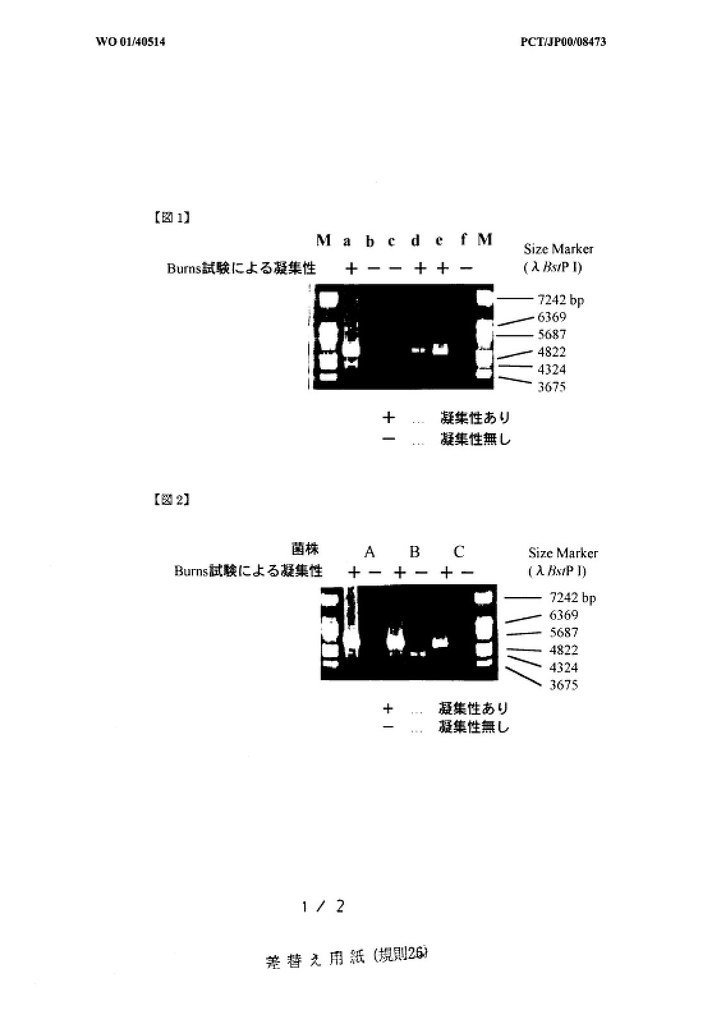
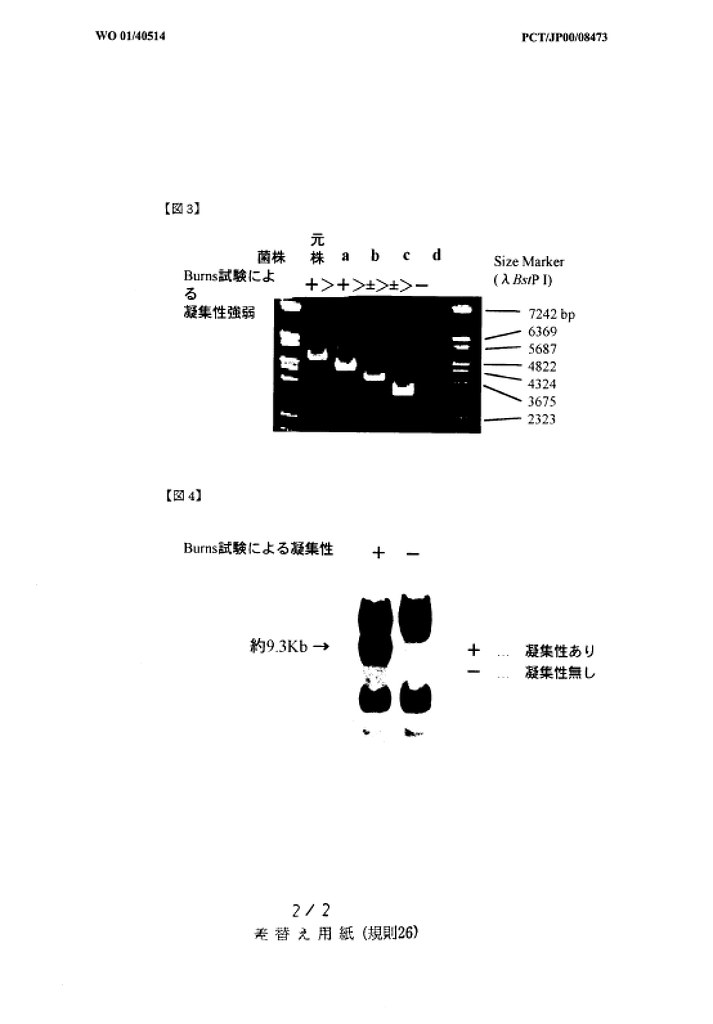
Today in 2001, US Patent WO 2001040514 A1 was issued, an invention of Makiko Jibiki, assigned to Asahi Breweries, Ltd., for his “Method of Judging Flocculating Properties of Bottom Brewer’s Yeast.” Here’s the Abstract:

A method of easily evaluating the flocculating properties of bottom brewer’s yeast within a short period of time at a high reproducibility without carrying out fermentation. This method is characterized by using the ORF sequence of a flocculation gene FLO5 of a laboratory yeast Saccharomyces cerevisiae.

2001040514-0.jpg
2001040514-1.jpg

Filed Under: Beers, Breweries, Just For Fun, Politics & Law, Related Pleasures Tagged With: History, Law, Patent, Yeast

Beer In Ads #1934: Home Preview Of The Mardi Gras Costume

June 6, 2016 By Jay Brooks


Monday’s ad is entitled Home Preview of the Mardi Gras Costume, and the illustration was done in 1952 by Douglass Crockwell. It’s #65 in a series entitled “Home Life in America,” also known as the Beer Belongs series of ads that the United States Brewers Foundation ran from 1945 to 1956. In this ad, a group of people in a New Orleans courtyard, beers in hand, are looking over a costume that shortly thereafter will be up on a float in a Mardi Gras parade. I don’t know if that was a common party theme, but it seems like a fairly thin excuse for a celebration.

065. Home Preview of the Mardi Gras Costume by Douglass Crockwell, 1952

Filed Under: Art & Beer, Beers, Just For Fun Tagged With: Advertising, History

Patent Nos. 3323919A & 3323920A: Preparation Of Concentrated Fermented Malt Beverage Of Low Hop Content & Concentration Of Beer By Crystallization And Distillation

June 6, 2016 By Jay Brooks

patent-logo
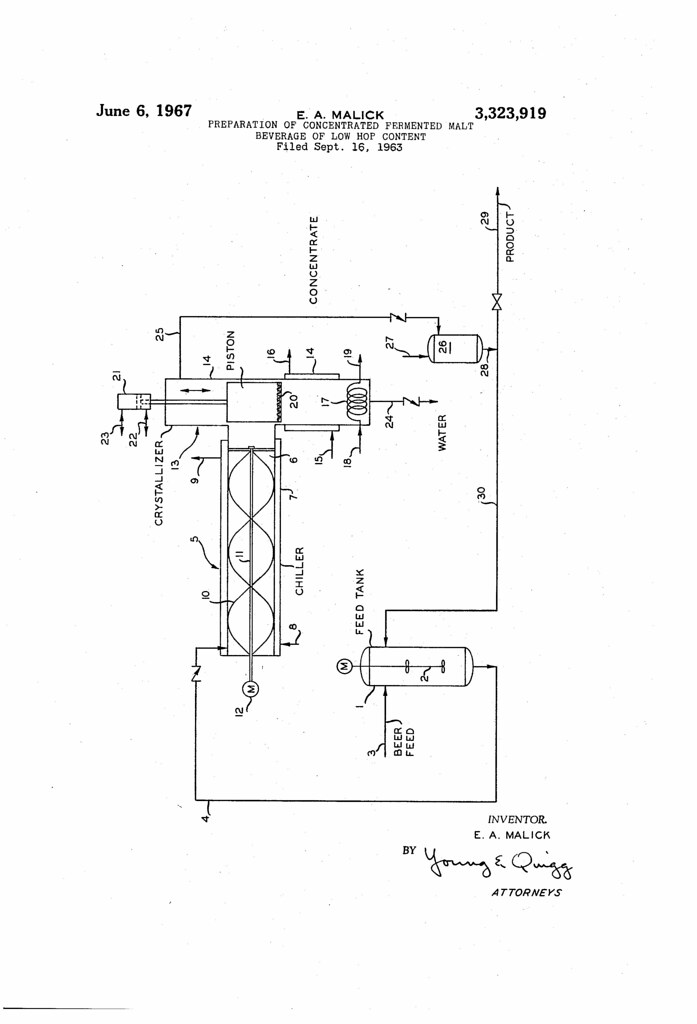
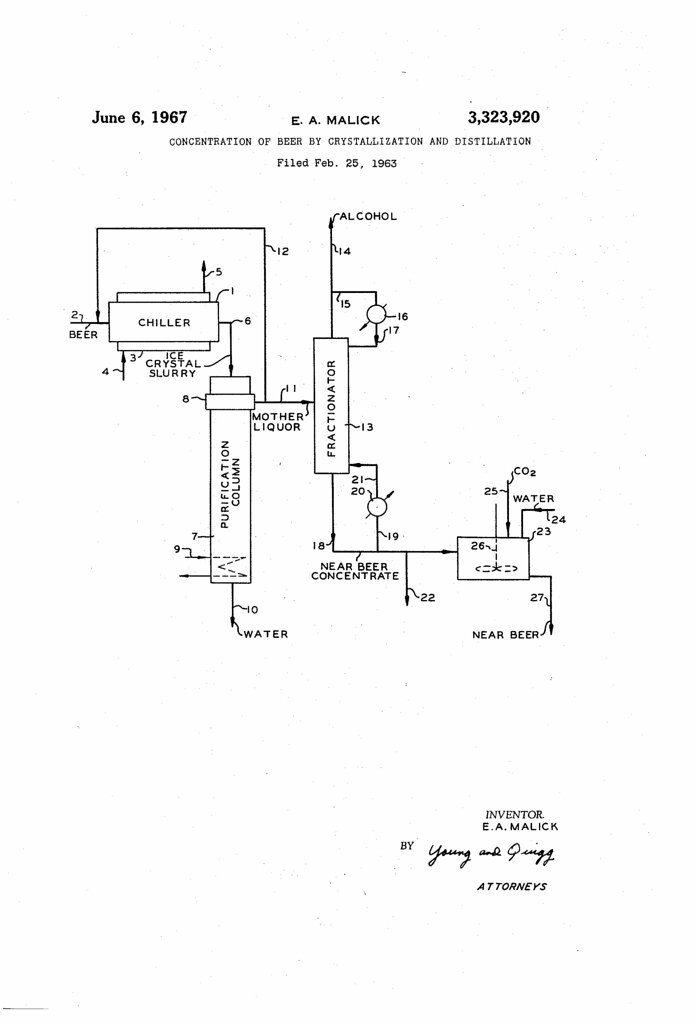
Today in 1967, US Patent 3323919 A and US Patent 3323920 A was issued, both an invention of Emil A Malick, assigned to the Phillips Petroleum Co., for his “Preparation Of Concentrated Fermented Malt Beverage of Low Hop Content” and “Concentration of Beer By Crystallization and Distillation.” There’s no Abstract, though it’s described this way in the applications:

This invention relates to a process for the preparation of a novel fermented malt beverage. In another aspect, it relates to the fermented malt beverage so produced as a new composition of matter.

The concentration of aqueous solutions, such as fruit juices, wines and beer, by crystallization to remove water therefrom and produce a concentrate which is reconstituted by dilution thereof with water, is receiving increasing attention in the food processing and allied industries. In the case of beer, it has been shown that significant savings in brewing, storage, and shipping can be gained by the freeze concentration of beer and its reconstitution; that the taste, aroma, and keeping qualities of the reconstituted beer are as good as, and in some cases better than, the beer produced by the present standard brewing process; and that the useful storage or shelf life of the beer, whether stored in a concentrated or reconstituted state, is greatly increased.

In the freeze concentration of beer, especially by the process known in the brewing industry as the Phillips Fractional Crystallization Process and basically covered by US. Reissue Patent 23,810 to J. Schmidt and US. Patent 2,854,494 to R. W. Thomas, the concentrate which is produced from beer made by the standard brewing process generally will have an unacceptable harsh, bitter taste which is generally unpalatable to the layman as well as brewmasters and beer connoisseurs, though when reconstituted such concentrate yields an excellent beverage.

Accordingly, an object of this invention is to provide a process for preparing a novel fermented malt beverage. Another object is to provide such a malt beverage as a new composition of matter. Further objects and advantages of this invention will become apparent from the following description and accompanying drawing in which the single figure schematically illustrates an embodiment of fractional crystallization apparatus which can be used in preparing the novel malt beverage of this invention.

I have now discovered that a novel concentrate of beer, which is itself an appealing, palatable malt beverage having excellent taste and aroma, can be made by freeze concentration of beer brewed from wort hopped with an amount of hops that is inversely proportional to the amount of water removed from the beer by said freeze concentration, said amount of hops being substantially below that used in the standard beer brewing process. For example, where 75 percent of the water is removed from the beer by freeze concentration thereof, the amount of hops added to the Wort and boiled therewith will be, according to this invention, about one-fourth the amount generally used in making a conventional beer, or a reconstituted beer from a beer concentrate. In other respects, the beer from which the novel beverage or concentrate of this invention is obtained can be made or brewed by the standard brewing process, such as that used in making the American type of Pilsener beer. Preferably, in addition to employing the reduced amount of hops, as described above, any conventional additives normally used in brewing which will, upon freeze concentration of the beer, attain an undesirably high level in the concentrate such as to degrade the taste and other desirable properties thereof, are also reduced in the amount conventionally employed.

The amount of water which is removed from the low-hops beer by freeze concentration thereof, according to this invention, can vary and generally will be in the range of 25 to 85 weight percent, preferably to weight percent. Correspondingly, the inversely proportional amount of hops to be used in making the beer to be freeze concentrated will generally be about 5 to 20 pounds per barrels of brew, preferably about 10 to 16 pounds per 100 barrels of brew.

The wort, from which the novel beverage of this invention is made, can be conventionally prepared by mashing barley malt with water, for example at 67 to 70 C., and, if desired, suitable precooked adjuncts, such as unmalted barley, corn grits or flakes, rice, and like cereal and starchy products, the malt usually making up from 50 to 75 percent of the total brewing materials. The temperature is thereafter raised, for example to 75 C., to inactivate the enzymes. Undissolved grain and husks are removed from the mash generally in so-called lauter tubs or mash filters. The resulting soluble or sweet wort is then hopped in a brewing kettle, using the small quantity of hops mentioned above. If desired, the hops used can be made up of 25 to 30% imported or choice Fuggles and 70 to 75% domestic hops. Following hopping, or boiling of the hopped wort, brewing can be completed according to the standard brewing process using the usual standard brewing procedures, equipment and materials, all of which are of general knowledge and are substantially the same throughout the industry in the United States. For example, the hopped wort (or brew) is strained, cooled, and subjected to bottom fermentation by the addition of a yeast, e.g., one pound of liquid yeast per barrel of brew. After fermentation is completed, the yeast is removed and the young beer or ruh is clarified, aged, pasteurized, stored, filtered, chill-proofed, carbonated, finished, and filtered. Alternatively, any one or all of these latter operations can be eliminated and it is within the scope of this invention to prepare the novel beverage of this invention by freeze concentrating the beer, with or without first filtering it, as it leaves the fermenters, or as it leaves the clarifying tanks or cellar, or after it leaves the lagering cellar. Such alternatives can be used because during freeze concentration suspended solids such as yeast and hop resins will be removed along with the ice. Because of the low temperatures of the free concentration step, e.g., 25 to 32 F., the solubilities of undesirable materials such as those which normally give rise to haze and sediment (which materials are normally removed by clarification and on storage or lagering) are decreased and they precipitate and can be removed with the ice. Also, since the freeze concentration is carried out at low temperatures, and the alcoholic content is increased, bacterial activity and undesirable changes due to the activity of residual yeast cells or spores are decreased or stopped, and pasteurization can be eliminated without impairing the desirable shelf life and keeping qualities of the novel concentrate.

The ethyl alcohol content is increased by the freeze concentration, for example a low-hops beer with 3 to 8 volume percent alcohol can be concentrated to increase the alcohol content to 5 to 25 volume percent, preferably 7 to 18 volume per-cent. The alcoholic content of the concentrate will vary with the alcoholic content of the beer which is concentrated and the number of concentration stages used. As compared with a concentrate prepared by freeze concentration of a standard beer made with about four times as much hops, the concentrate of this invention has about one-half or less the amount of furfuryl alcohol content, e.g., the concentrate of this invention has less than 0.3 Weight percent furfuryl alcohol, and can have as low as 0.002 weight percent furfuryl alcohol.

The freeze concentration step can be carried out batchwise, for example using a plurality of alternate ice-generators and centrifuges connected in series, or, preferably, by continuously cooling the beer to produce a slurry of ice crystals and mother liquor, melting the crystals, passing at least a portion of the melt in contact with and countercurrent to the crystals, and separating the mother liquor (or beer concentrate) and the melted ice, such continuous process being preferably carried out in a plurality of stages, e.g. three. If desired, the concentrate which is produced by the freeze concentration step can be filtered to remove any precipitated materials not removed with the melted ice. Suitable apparatus for carrying out the freeze concentration of the low-hops beer by a continuous process is that shown in said patents to Schmidt and Thomas. Schmidts process involves moving a mixture of crystals and adhering liquid through a liquid removal zone, a reflux zone and a melting zone, removing liquid in said liquid removal zone, melting crystals in said melting zone, withdrawing part of the melt from the melting zone and forcing another part of the melt in a direction countercurrent to the movement of crystals in said reflux zone. In Thomas process (which is an improvement over the separation of the type disclosed by Schmidt), the solids in the purification zone are counter-currently contacted with a pulsating flow of reflux liquid by application against the melt of pulsating pressure generated by a pulse pump, the pulsation of the reflux liquid occurring during sustained application of force to the crystals to feed the same into the liquid removal zone.

The alcoholic malt beverage or elixir prepared according to this invention differs from beer in taste and is whol ly unlike any drink hereto produced, although it has a basic beer-like flavor. Unlike reconstituted beer of concentrates made from beer brewed with the regular amount of hops, reconstituted beer of the novel concentrates of this invention has a terrible taste. Like beer, the malt beverage of this invention willhave varying amounts of unfermented sugars and dextrins, proteinlike substances, flavoring constituents derived from malt and yeast, and minor constituents such as various inorganic salts, metabolic by-products of yeast, vitamins, traces of iron and copper, etc. The beverage of this invention will usually have some residual carbonation and, if desired, it can be further carbonated to -O.4O.6 weight percent carbon dioxide.

US3323919-0

This invention relates to a method for concentrating aqueous solutions by crystallization and distillation. In another aspect, it relates to a method for the preparation of an alcoholic beverage.

Near-beer is conventionally prepared by first making a regular beer and then removing a portion of the alcohol by distillation. It is generally accepted that these near beers do not have the quality of the regular beer, probably because the distillation of the regular beer results in the degradation and/or removal of some of the flavor and odor components.

Although this discussion will be simplified by primary reference to the preparation of near-beer, it is obvious that the invention is also applicable to any process for the removal of a volatile component more volatile than water from a multi-component aqueous liquid. Thus, the invention is also applicable to the preparation of near wine of low alcohol content as well as other alcoholic beverages where it is necessary to reduce the alcohol content.

US3323920-0

Filed Under: Beers, Breweries, Just For Fun, Politics & Law, Related Pleasures Tagged With: History, Law, Non-Alcoholic, Patent, Science of Brewing

Patent No. 4836097A: Whirlpool For Coarse Sludge Separation In Brewing Of Beer

June 6, 2016 By Jay Brooks

patent-logo
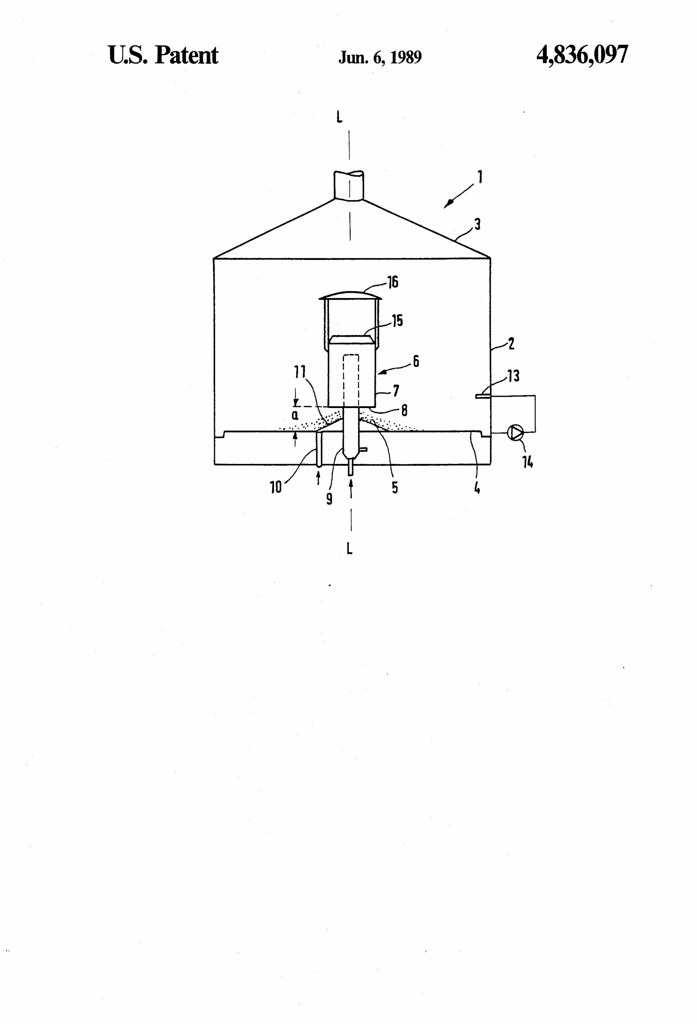
Today in 1989, US Patent 4836097 A was issued, an invention of Hans Tretter, assigned to Anton Steinecker Maschinenfabrik Gmbh, for his “Whirlpool for Coarse Sludge Separation in Brewing Of Beer.” Here’s the Abstract:

The present invention refers to a whirlpool for coarse sludge separation from the wort in brewing of beer, said whirlpool being being constructed as a circular receptacle provided with a base on which the sludge deposits and with a heating means for heating the wort.

For providing a possibility of treating the wort in a space-saving manner and without any special insulating measures in the wort heating process, the invention is characterized by the features that a rotationally symmetrical inner boiler is provided as a heating means, said inner boiler being arranged in the interior of the receptacle such that it is concentric with the longitudinal center axis of the receptacle and such that its lower side extends in spaced relationship with the base of the receptacle.

US4836097-1

Filed Under: Beers, Breweries, Just For Fun, Politics & Law, Related Pleasures Tagged With: Brewing Equipment, History, Law, Patent, Science of Brewing

« Previous Page
Next Page »

Find Something

Northern California Breweries

Please consider purchasing my latest book, California Breweries North, available from Amazon, or ask for it at your local bookstore.

Recent Comments

  • Bob Paolino on Beer Birthday: Grant Johnston
  • Gambrinus on Historic Beer Birthday: A.J. Houghton
  • Ernie Dewing on Historic Beer Birthday: Charles William Bergner 
  • Steve 'Pudgy' De Rose on Historic Beer Birthday: Jacob Schmidt
  • Jay Brooks on Beer Birthday: Bill Owens

Recent Posts

  • Historic Beer Birthday: Lawrence Steese April 30, 2026
  • Beer In Ads #5235: The Buck Is Loose! April 29, 2026
  • Historic Beer Birthday: Robert Cain April 29, 2026
  • Historic Beer Birthday: Philip Jacob Ebling Jr. April 29, 2026
  • Beer Birthday: Tom Riley April 29, 2026

BBB Archives

Feedback

Head Quarter
This site is hosted and maintained by H25Q.dev. Any questions or comments for the webmaster can be directed here.