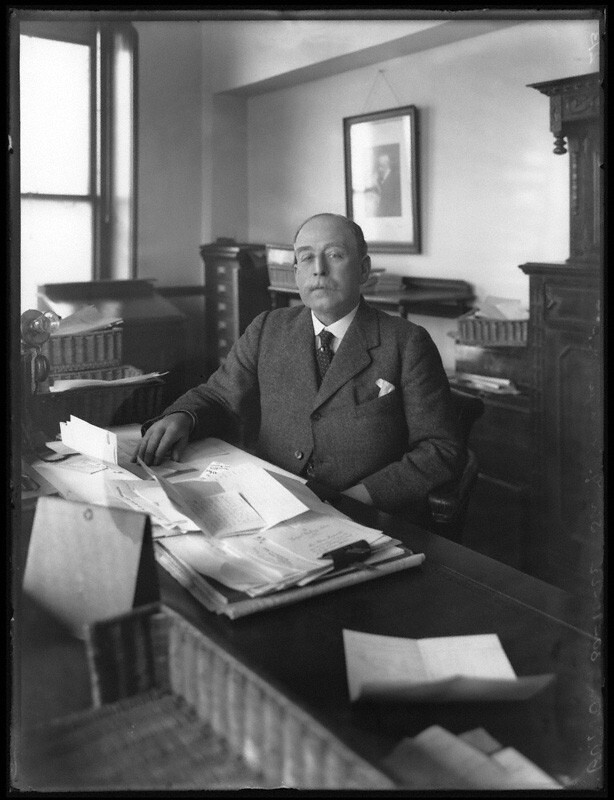
Today is the birthday of Jacob Ruppert, Jr. (August 5, 1867–January 13, 1939). He was the son of Jacob Ruppert, who founded the Jacob Ruppert Brewing Company in 1867. Jacon Jr., who went by Jake “was an American brewer, businessman, National Guard colonel and United States Congressman who served for four terms representing New York from 1899 to 1907. He also owned the New York Yankees of Major League Baseball from 1915 until his death in 1939.
Starting out in the family brewing business, Ruppert entered the United States National Guard in 1886 at the age of 19, eventually reaching the rank of colonel. While he was the owner of the Yankees, he purchased the contract of Babe Ruth and built Yankee Stadium, reversing the franchise’s fortunes and establishing it as the premier club in the major leagues. Ruppert was inducted into the National Baseball Hall of Fame in July 2013.”
Ruppert was born in New York City, the son of brewer Jacob Ruppert, Sr. (1842–1915) and his wife, the former Anna Gillig (1842–1924). He was the second oldest of six children, along with Cornelia Ruppert-Franko (1865–96), Anna Schalk (born 1870), Frank (born 1872), George (1875–1948) and Amanda Elizabeth “Lizzie” Ruppert-Silleck (1878–1952). His grandfather Franz (1811–83), a brewer from Bavaria, had emigrated to the United States in 1836 or 1842. His mother was also of German ethnicity, and was herself the daughter of prominent brewer George Gillig. Although he was a second-generation American, to the day he died he spoke with a noticeable German accent.
He grew up in the Jacob Ruppert, Sr. House on Fifth Avenue. Jacob Jr. attended the Columbia Grammar School. He was accepted into Columbia College, but instead began working in the brewing business with his father in 1887. He started as a barrel washer, working 12-hour days for $10 a week ($267 in current dollar terms), and eventually became vice president and general manager of the brewery.
Ruppert enlisted in the Seventh Regiment, National Guard of New York, serving in the rank of private from 1886 through 1889. In 1890, he was promoted to colonel and appointed to serve on the staff of David B. Hill, the Governor of New York, serving as aide-de-camp. He became a senior aide on the staff of Roswell P. Flower, Hill’s successor as governor, until 1895.
The Jacob Ruppert Brewery around 1932.
Ruppert was elected to the United States House of Representatives in 1898 as a member of the Democratic Party to the Fifty-sixth United States Congress, defeating incumbent Philip B. Low of the Republican Party in New York’s 15th congressional district. He was supported in his election by Richard Croker, the political boss of Tammany Hall. Ruppert won reelection over Alderman Elias Goodman in 1900. Ruppert was renominated for Congress, this time running in New York’s 16th congressional district, in 1902. Ruppert was not a candidate for reelection in 1906, and he left office in 1907.
Ruppert was also president of the Astoria Silk Works and the United States Brewers Association from 1911 through 1914. In January 1914, he bought J&M Haffen Brewing Company for $700,000 ($16,737,209 in current dollar terms), intending to close the brewery down and develop the property, which was located near The Hub in The Bronx. Upon his father’s death in 1915, Ruppert inherited the Jacob Ruppert Brewing Company and became the company’s president. Ruppert also owned real estate, including Pass-a-Grille Key in Florida.
Ruppert, interested in baseball since his childhood, began to pursue ownership of a Major League Baseball team, and attempted to purchase the New York Giants on numerous occasions. In 1912 he was offered an opportunity to purchase the Chicago Cubs, but decided that Chicago was too far away from New York for his tastes. However, Frank J. Farrell and William S. Devery, owners of the New York Yankees, were looking to sell their franchise. Ruppert and Tillinghast L’Hommedieu Huston, a former United States Army engineer and captain, purchased the Yankees from Farrell and Devery before the 1915 season for $480,000 ($11,363,684 in current dollar terms). The Yankees were, at that time, a perennial also-ran in the American League (AL), posting winning records in only 4 of their 12 seasons – and only once since 1906 – since relocating to New York prior to the 1903 season from Baltimore, where the team had played as the Orioles during the AL’s first two years of operation, 1901 and 1902.
Babe Ruth, Ruppert, Bob Shawkey (Pitcher for the Yankees), and Lou Gehrig.
After the 1917 season, Ban Johnson, president of the AL, suggested that Ruppert hire St. Louis Cardinals manager Miller Huggins to take over the same position with the Yankees. Huston, who was in Europe at the time that Ruppert was considering the appointment, disliked Huggins and wanted to hire the manager of the National League’s crosstown Brooklyn Robins, Wilbert Robinson, his drinking buddy. However, Ruppert interviewed Huggins on Johnson’s recommendation, and agreed that Huggins would be an excellent choice Ruppert offered the job to Huggins, who accepted and signed a two-year contract. The hiring of Huggins drove a wedge between the two co-owners that culminated in Huston selling his shares of the team to Ruppert in 1922.
Ruppert and Huston purchased pitcher Carl Mays from the Boston Red Sox in 1918, in direct opposition of an order issued by Johnson. The matter was taken to court, where Ruppert and Huston prevailed over Johnson. The case led to the dissolution of the National Commission, which governed baseball, and helped lead to the creation of the Commissioner of Baseball. Ruppert eventually organized opposition to Johnson among other AL owners.
The Yankees purchased star pitcher-outfielder Babe Ruth from the Red Sox in 1919, which made the Yankees a profitable franchise. The Yankees began to outdraw the Giants, with whom they shared the Polo Grounds. In 1921 the Yankees won the AL pennant for the first time, but lost to the Giants in the World Series. As a result of the Yankees’ increased popularity, Charles Stoneham, owner of the Giants and the Polo Grounds, raised the rent for Ruppert and Huston for the 1922 season. The Yankee owners responded by purchasing land in The Bronx, across the Harlem River from the Polo Grounds, from the estate of William Waldorf Astor for $675,000 ($9,658,002 in current dollar terms), breaking ground on a new stadium in May 1922. That year, the Giants once again defeated the Yankees in the World Series. Yankee Stadium opened on April 18, 1923,[the first ballpark with three tiers of seating for fans, and the first referred to as a “stadium”. Ruppert and Huston financed the project with $2.5 million of their own money ($35,770,378 in current dollar terms).
In 1923, Ruppert bought out Huston for $1.5 million ($21,084,961 in current dollar terms), and he became the sole owner. Later that year, the Yankees finally beat the Giants to win their first World Series title. The Yankees went on to dominate baseball throughout most of the 1920s and 1930s, winning three more pennants from 1926 through 1928, including the Murderers’ Row team which won the 1927 World Series and repeated as champions the following year. They returned to the top with the 1932 World Series title, and then began their strongest period yet with the Bronx Bombers teams of the late 1930s, becoming the first team to win three consecutive World Series titles in 1936, 1937 and 1938. In 1937, the Yankees became the first team to win six World Series titles, and in 1938 they surpassed the Philadelphia Athletics to become the first team to win ten AL championships, with only the Giants winning more pennants in the 20th century.
Lous Gehrig, Ruppert and Joe McCarthy in 1935.
In 1929, Ruppert added numbers to the Yankees’ uniforms, which became a feature of every team. He said, “Many fans do not attend games on a regular basis and cannot easily pick out the players they have come to see.”
in 1931 Ruppert bought the Newark Bears who played at Ruppert Stadium in Newark, New Jersey, and begin building the farm system for the Yankees. Ruppert’s 24 years as a Yankee owner saw him build the team from near-moribund to a baseball powerhouse. His own strength as a baseball executive – including his willingness to wheel and deal – was aided by the business skills of general manager Ed Barrow and the forceful field managing of Miller Huggins, until his sudden death at age 50 late in the 1929 season, and Joe McCarthy, beginning in 1931. By the time of Ruppert’s death, the team was well on its way to becoming the most successful in the history of Major League Baseball, and eventually in North American professional sports.
Ruppert and Ruth had public disagreements about Ruth’s contracts. Nevertheless, they were personal friends; according to Ruth, Ruppert called him “Babe” only once, and that was the night before he died. Usually, Ruppert called him “Root” (as “Ruth” sounded in his German-accented voice); he always called everyone, even close friends, by their last name. Ruth was one of the last persons to see Ruppert alive.
Ruppert suffered from phlebitis in April 1938, and was confined to his Fifth Avenue apartment for most of the year. He was too sick to follow the Yankees to the 1938 World Series, what would be their seventh world title under his stewardship; he listened on the radio. In November 1938, he checked into Lenox Hill Hospital, where he died on January 13, 1939.
New York Yankees Tony Lazzeri, Joe DiMaggio, and Frankie Crosetti with their team owner Jacob Ruppert taken in the late 1930’s.
Ruppert’s father, Jacob, Sr., left behind an estate of $6,382,758 ($111,618,204 in current dollar terms) when he died in 1915, which Ruppert increased to $40 million by the time of his death in 1939. This was managed by his heirs. His brother George, who served as the Yankees’ vice president, declined to take over the team presidency, and instead recommended that general manager Ed Barrow be given control of the club. Under Barrow’s leadership, the Yankees won a fourth consecutive World Series in 1939, and captured three more AL titles and two World Series from 1941 to 1943 as the nation entered World War II. After mismanaging Ruppert’s brewery, the heirs sold the Yankees to Dan Topping, Del Webb and Larry MacPhail in 1945. The brewery sold its flagship beer, Knickerbocker beer, to Rheingold, and went out of business in 1965.
On April 16, 1940, the Yankees dedicated a plaque in Ruppert’s memory, to hang on the center field wall of Yankee Stadium, near the flagpole and the monument that had been dedicated to former manager Miller Huggins. The plaque called Ruppert “Gentleman, American, sportsman, through whose vision and courage this imposing edifice, destined to become the home of champions, was erected and dedicated to the American game of baseball.” The plaque now rests in Monument Park at New Yankee Stadium.
An apocryphal story says that Ruppert is responsible for the Yankees’ famous pinstriped uniforms; according to this account, Ruppert chose pinstripes in order to make the often-portly Ruth appear less obese, but the uniform was in fact introduced in 1912.
A beer was named after Ruppert, as were Ruppert Stadium in Newark, New Jersey. Ruppert Park in Manhattan, is part of the Ruppert Yorkville Towers housing complex was built on the site the brewery in Yorkville, Manhattan.
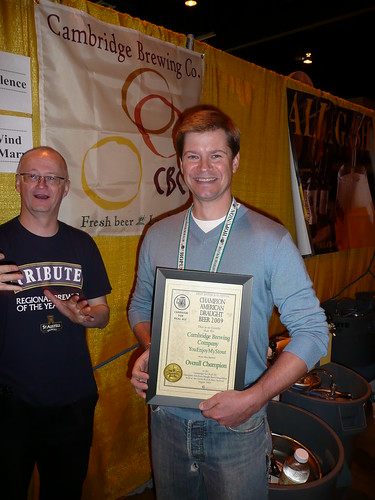
Today is UK beer writer Ben McFarland’s birthday. I first met Ben when he was over here working on the CAMRA beer guide to the west coast with Tom Sandham and Glenn Payne. We invited Ben to join us judging Double IPA’s at the Bistro’s Double IPA Festival, which I believe was something of a shock to the system for both Ben and Tom. These days he and Tom are The Thinking Drinkers, performing their “‘The Thinking Drinker’s Guide to Alcohol,’ a unique comedic drinking show that debuted at the 2011 Edinburgh Fringe.'” Join me in wishing Ben a very happy birthday.
Ben judging at the Double IPA Festival at the Bistro in Hayward while he was working on the CAMRA guide to the west coast of the U.S. in 2007.
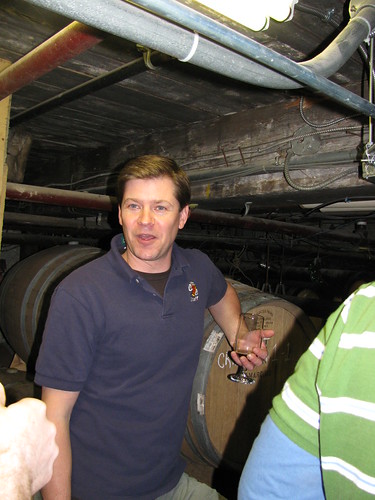
Another view of judging in the basement of the Bistro.
Taken at the CLASS Awards, by CLASS Magazine.
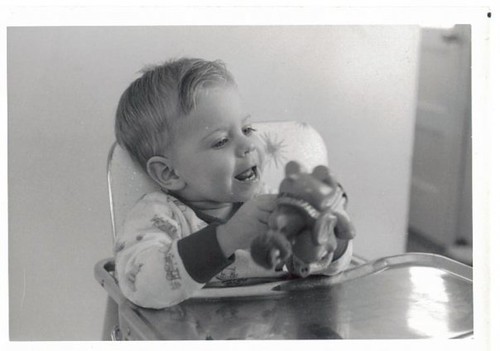
Taken somewhere in the U.S. of A.
Ben and his writing partner, Tom Sandham.
Note: The last three photos were purloined from Facebook.
Today is the 72nd birthday of Gary Bogoff (August 5, 1953- ). Originally a general contractor and cabinet maker, he and a few co-founders started the Berkshire Brewing Co. of South Deerfield, Masachusetts in 1994. I have a soft spot for the brewery because years ago (I don’t remember where, to be honest) I won a silent auction for an early sign from the brewery depicting a train that I bid on because my son Porter is obsessed with trains, even as an adult. I’ve never met Gary, but maybe one of these days. Join me in wishing Gary a very happy birthday.
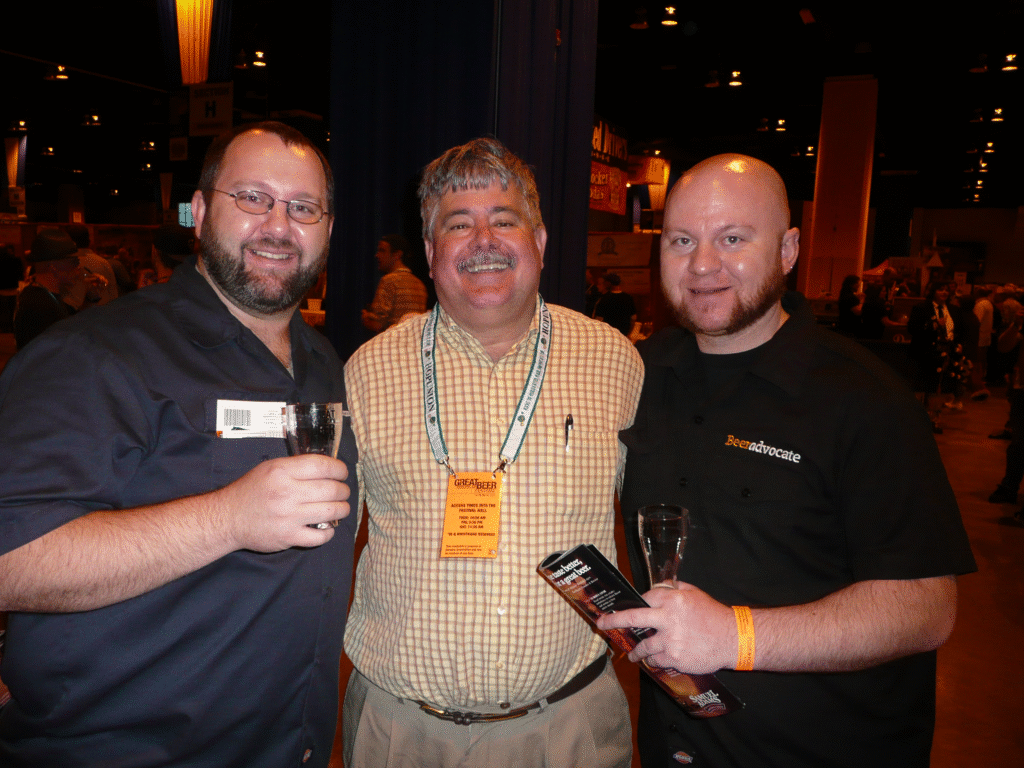
Gary at the brewery bar.
An early photo of Gary after he started the brewery, from the official website.
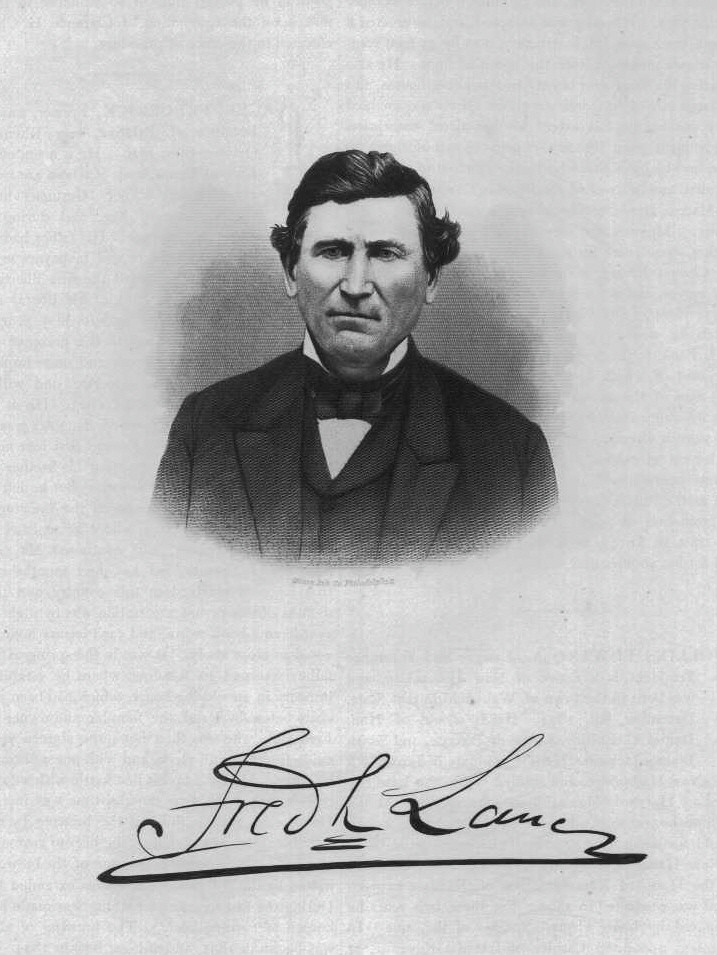
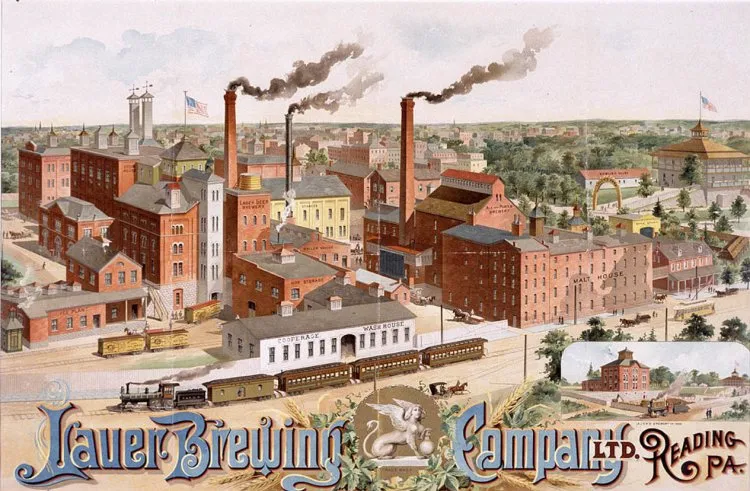
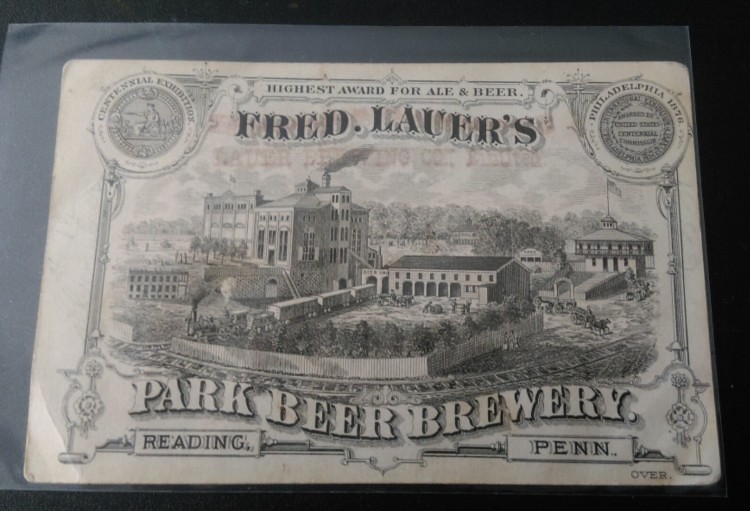
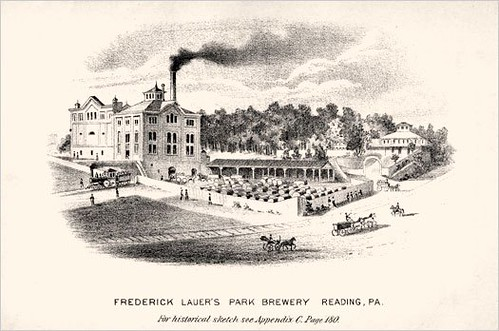
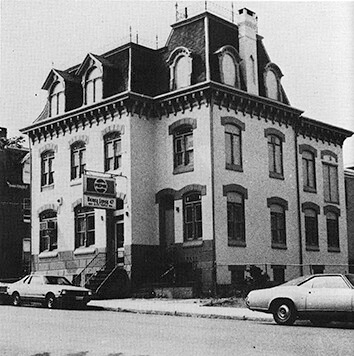
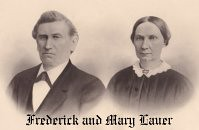
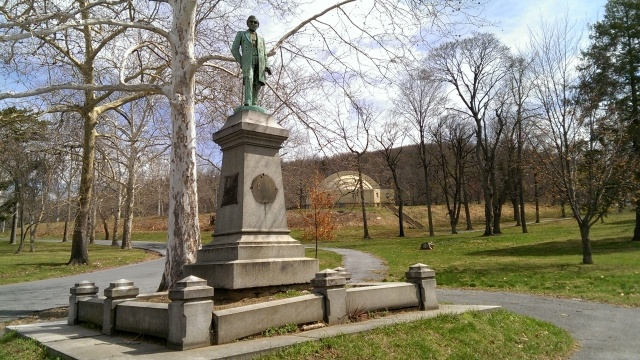
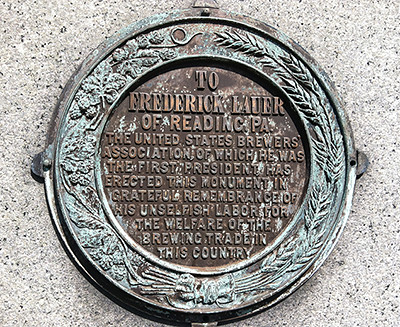
Today is the birthday of Johann Christ “John” Stocker (August 5, 1850-July 19, 1903). He was born in Baden, Germany, but moved to Pennsylvania, working for Frederick Lauer in Reading for 17 years before opening his own small brewery with John Roehrich in 1891, initially known as the John C. Stocker & John Roehrich Brewery. By 1897, Stocker was the sole owner and renamed it the John C. Stocker Brewery. There seems to be some confusion about his middle initial. The brewery continued after he died, briefly as the Estate of John C. Stocker Brewery for two years, and then it became known as the Fairview Brewery, until 1912. From 1912 until closed by prohibition it was called the Mt. Penn Brewing Co. It reopened after prohibition as the Fisher Brewing Co., at least until 1934. Thereafter it was known briefly as the Woerner Brewery and then the Adam C. Jaeger Brewing Co. until it closed for good in 1943.
He was a brewer and started a brewery with his brother in law John Roehrich called Stocker and Roehrich in Schuylkill county and the also in Reading. It was located on 11th St. across from City Park.
He became ill with a heart ailment and traveled with his family to Germany for rest and rehab. While in Carisbad, Austria he died. His family returned to Reading and his remains arrived separately August 8 that year.
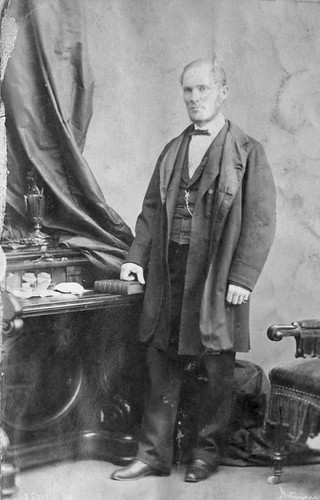
There was a very grand funeral which many attended. There were several siblings in Germany and a sister in Reading, Ms Carolyn Daum.
He was born in Baden, Germany, but moved to Pennsylvania, working for Frederick Lauer in Reading for 17 years before opening his own small brewery with John Roehrich in 1891, initially known as the John C. Stocker & John Roehrich Brewery. By 1897, Stocker was the sole owner and renamed it the John C. Stocker Brewery. The brewery continued after he died, briefly as the Estate of John C. Stocker Brewery for two years, and then it became known as the Fairview Brewery, until 1912. From 1912 until closed by prohibition it was called the Mt. Penn Brewing Co. It reopened after prohibition as the Fisher Brewing Co., at least until 1934. Thereafter it was known briefly as the Woerner Brewery and then the Adam C. Jaeger Brewing Co. until it closed for good in 1943.
This biography of Stocker is from the “Historical and Biographical Annals of Berks County, Pennsylvania,” edited by Morton Luther Montgomery:
And this obituary is from the Reading Historical Society”
John Stocker, a worthy and honored citizen and prominent business man of Reading, died at Carlsbad, Bohemia, July 19, 1903. Mr. Stocker was born in Baden, Germany, Aug. 5, 1850, son of John and Catherine (Werren) Stocker, both of whom were natives of the same section of the German Empire.
The will of John Stocker was made only a short time before Mr. Stocker sailed for Germany for his health, and left his entire estate to his widow. His son John Stocker was named as the executor.
The estate was a large one, with up to $200,000 in real estate, with about $15,000 personal property. The real estate included the Stocker brewery, near the fair ground, his late residence located at 1700 North 11th Street, and a number of hotel stands in the city and county.
The brewer’s license of John Stocker for the brewery at 2100 North 11th; was granted by Judge Endlich to John Stocker, his son.
John Stocker was reared to manhood in his native land, and was afforded the advantages of the excellent schools there. In 1869, at the age of nineteen years, he emigrated to America and took up his residence in Reading, Pa., where he secured employment in the brewery of Peter Barbey. Later he identified himself with the operation of the brewery of Frederick Lauer, and after continuing in the employment of others for seventeen years he removed to Tremont, Schuylkill County, where he and his brother-in-law, John Roerich, rented a brewery, which they operated for the ensuing six years. Mr. Stocker then disposed of his interest in the enterprise and returned to Reading, where he built up a large and profitable business in the ownership and operation of what was known as the Stocker Brewery. He was thoroughly familiar with all details of the business, gave to his plant careful personal supervision and gained for the output a high standard of excellence. Mr. Stocker continued the executive head of the brewery until his death.
Mr. Stocker was survived by his wife, whose maiden name was Catherine Roerich, and by five (children: Henry, J. George, Catherine (wife of Charles Deale), Adam (who was killed by the explosion of a beer vat, Oct. 20, 1905, at the age of twenty-six years, two months, eighteen days), and Caroline.
John Stocker, his son, who was made executor of the estate by the terms of his father’s will, and who was identified with the operation of the brewery from his youthful days was born in Reading, March 19, 1875. After completing the curriculum of the public schools he rounded out his discipline by a course in the Inter-State Business College, at Reading, where he graduated. He then became associated with the work of his father’s brewery in Tremont, and later with the Stocker Brewery in Reading. In January, 1903, he was graduated in the American Brewery Academy in Chicago, Ill. In 1893 he was made brewmaster in his father’s brewery, and in 1897 became general manager of the business.
On Sept. 1, 1904, Mr. Stocker married Miss Anna P. Watkins, who was born and reared in Philadelphia, Pennsylvania.
On April 8, 1907 John Stocker disposed of the Stocker Brewery. The Stocker brewery, located at 2100 North Eleventh Street, and the Stocker residence, located at 1700 North Eleventh Street, were sold to Augustus Snyder, a brewer, of Pittsburg. The price was never made public.
After the sale of the brewery Mr. Stocker attended to the affairs of the estate and for a short time conducted the Stocker Cafe, at 13 North Eighth Street.
John Stocker died suddenly in St. Joseph’s Hospital at 6:45 o’clock April 13, 1933. He was admitted to the institution from his home, 805 Centre Avenue, at 12:45 o’clock in the morning. He was in ill health for three months prior, but not seriously. He was 58 years old.
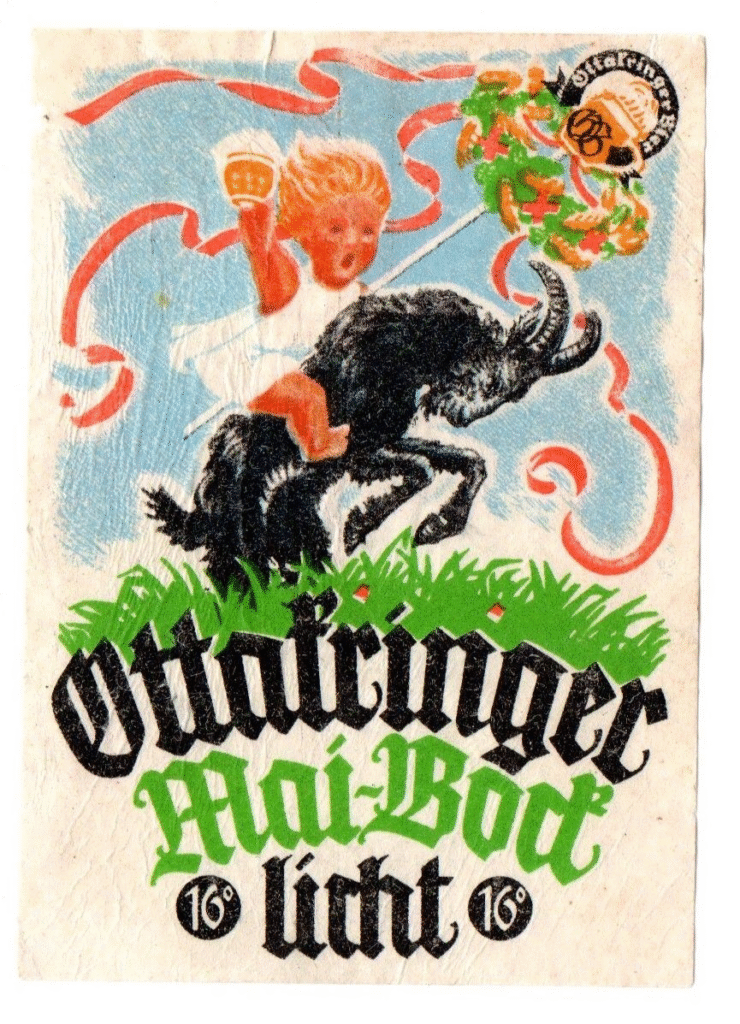
Last year I decided to concentrate on Bock ads. Bock, of course, may have originated in Germany, in the town of Einbeck. Because many 19th century American breweries were founded by German immigrants, they offered a bock at certain times of the year, be it Spring, Easter, Lent, Christmas, or what have you. In a sense they were some of the first seasonal beers. “The style was later adopted in Bavaria by Munich brewers in the 17th century. Due to their Bavarian accent, citizens of Munich pronounced ‘Einbeck’ as ‘ein Bock’ (a billy goat), and thus the beer became known as ‘Bock.’ A goat often appears on bottle labels.” And presumably because they were special releases, many breweries went all out promoting them with beautiful artwork on posters and other advertising.
Monday’s ad is for not for a specific Bock Beer, but a restaurant on Route #4 in Paramus, New Jersey, called “Old Salt Seafood Restaurant.” They also mention another, presumably sister restaurant, called the “Old Salt Clam House,” located in New York City between 99th and 100th Streets. The ad was published on August 4, 1950. This ad ran in The Bergen Evening Record, of Bergen, New Jersey. The art for the ad features a cartoon drawing of a camel sitting at a bar, who comes in the Spring and drinks nothing but Bock Beer.
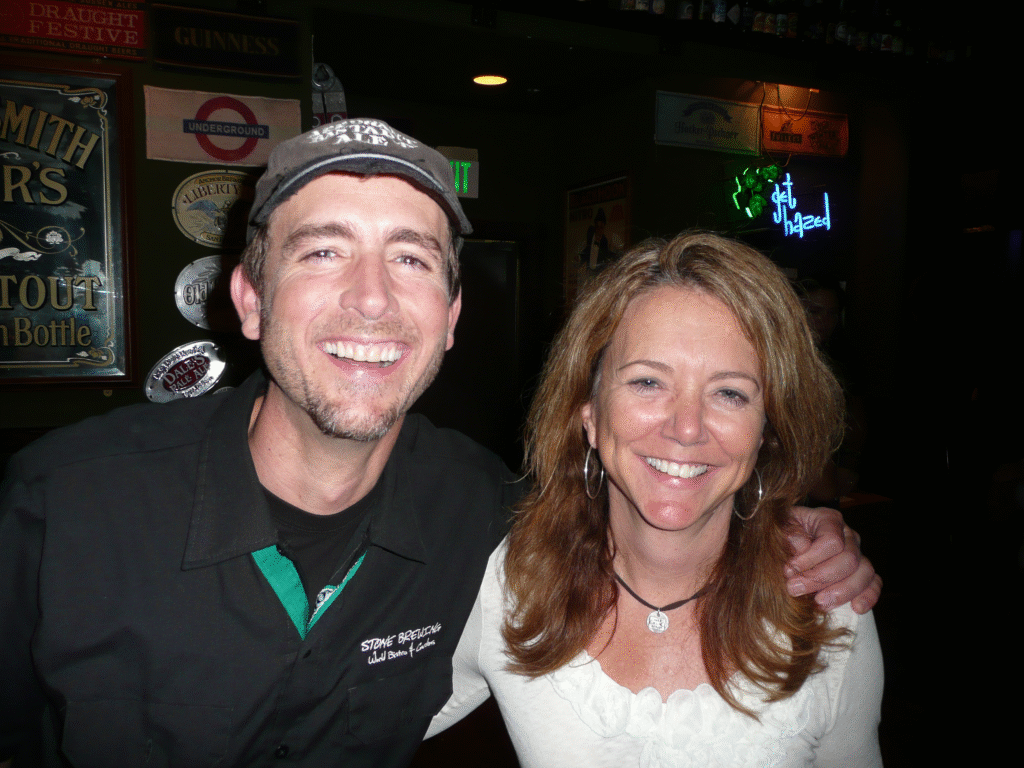
Today is also the birthday of Aaron Mateychuk, former brewmaster of Watch City Brewing in Waltham, Massachusetts. I met Aaron during CBC week when the Craft Brewers Conference was in Boston in 2009, and we almost got together when he was in San Francisco a couple of years ago, but kept crossing paths instead. More recently, Aaron’s running the Lookout Farm Brewing & Hard Cider Co. in Natick, Massachusetts. Join me in wishing Aaron a very happy birthday.
Giving a tour in 2009 during the Craft Brewers Conference in Boston.
Aaron with his wife Jennifer, in a Toronado t-shirt.
And at the Toronado.
Aaron at his new gig.
Note: The second and third photos purloined from Facebook, and the last is from Lookout’s website.
Today is the birthday of William J. Seib (August 4, 1836-after 1901). He was born in Germany and learned to brew there. When he was 18, in 1854, he emigrated to the United States and worked at several breweries in the Detroit area, including Stroh’s. He worked for several additional breweries before becoming the brewmaster at Conrad Seipp Brewery of Chicago, Illinois, a position he held for nearly two decades until his retirement in 1901, after fifty years in the brewing industry. He must have been very well regarded because he’s referred to as “the dean of American brewmasters.” Seib was one of three men appointed to draft the charter of the Master Brewers’ Association of the United States, along with Louis Frisch and Charles J. Schmidt, which was founded on April 14, 1887.
This is a short biography when he retired from brewing in 1901, when he was 64, from the American Brewers’ Review:
And this biography is from when Seib celebrated his 50th wedding anniversary.
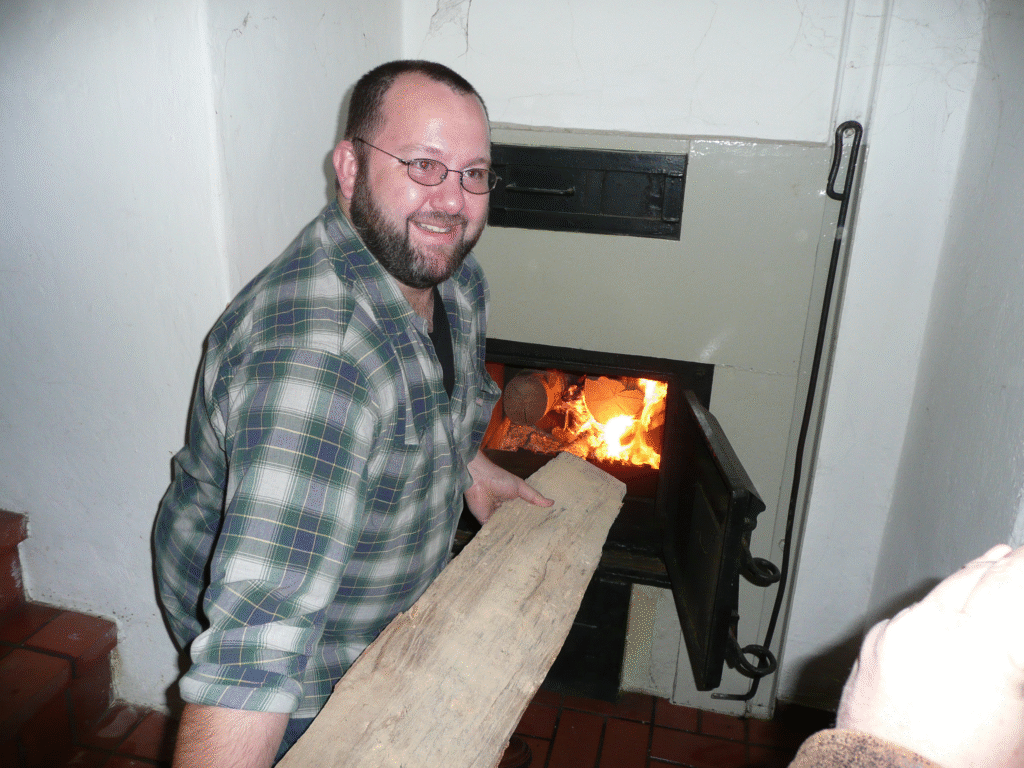
Today is my friend Rod DeWitt’s 68th birthday. Rod is the Director of Plant Engineering & Process Control at Anderson Valley Brewing Co. in Boonville. Rod also played drums in the Rolling Boil Blues Band. Join me is wishing Rod a very happy birthday.
Rod and me at the Boonville Beer Festival in 2006.
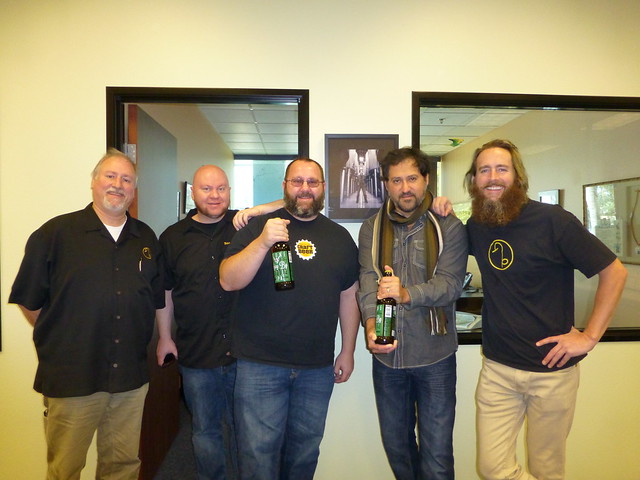
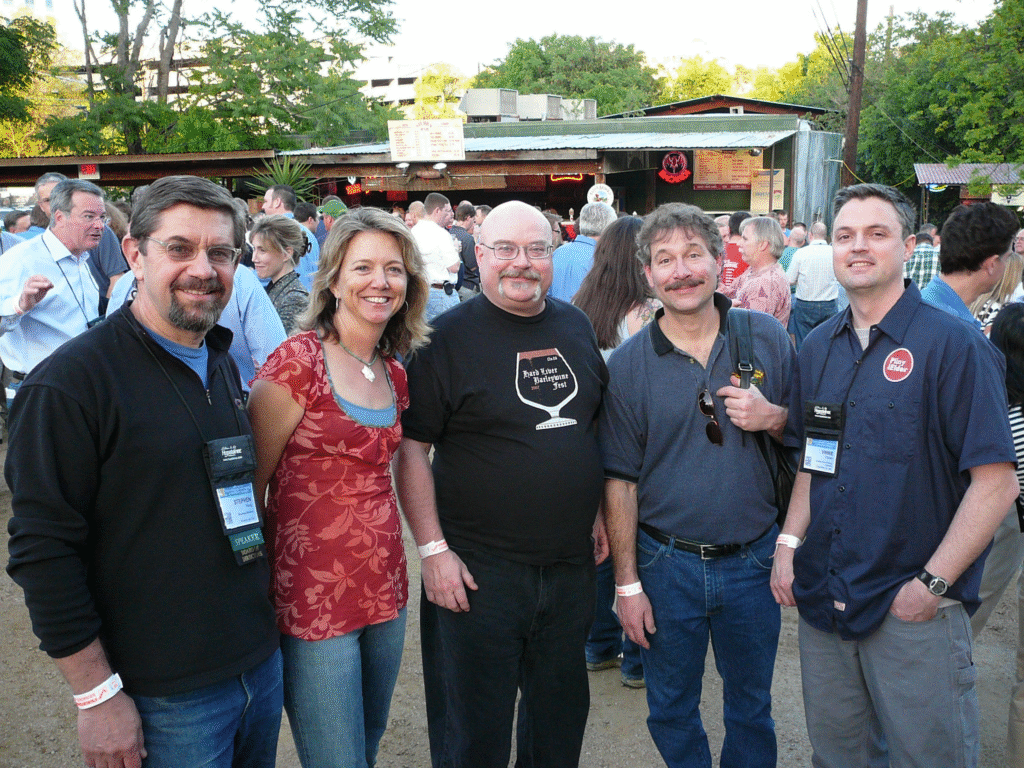
At the Mammoth Lakes Bluesapalooza in 2007. From left: Marc Cohen, Rod, Tom Dalldorf, Bruce Joseph and Ken Hickmott.
Rod DeWitt, on the roof showing me the view depicted on every bottle of Anderson Valley Brewing during a private tour in May of 2006.
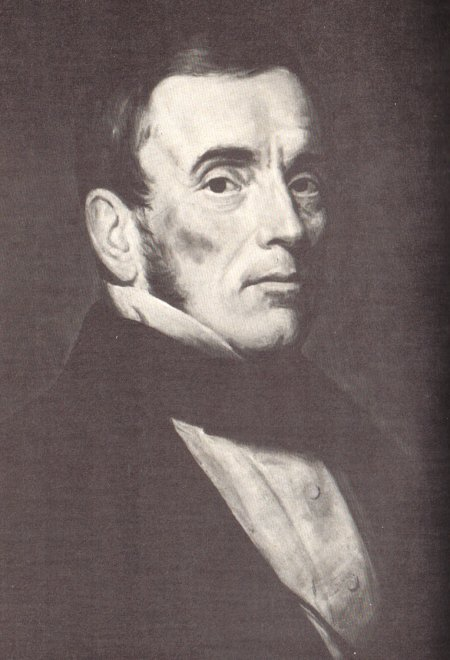
Today is the birthday of Julius Deglow (August 1823-August 4, 1885). He was born in Germany sometime in August, though the exact date is unknown, but since we know he died on August 4, that’s as good a date as any. He moved to Covington, Kentucky as a young man. In 1866, he founded what would become the Bavarian Brewing Co. Although ownership would pass to others, the brewery remained in business in some form until 1966.
This obituary of Deglow is from the Kentucky State Journal in Newport:
The many friends of Mr. Julius H. Deglow, the prominent tanner of Covington, will regret to learn of his rather sudden death Tuesday at about 1:30 o’clock. The deaths of Mr. Deglow and his wife are of a peculiarly sad nature. About three months ago they went to Germany to be cured of an illness, but not meeting with success, Mrs. Deglow came home to spend her last days. In a few days after her arrival she died. A telegram was sent Mr. Deglow in Germany, but he never received it, and he knew nothing of his wife’s death until he arrived in Cincinnati on Monday night. This sad news so affected him that he, too, died at his country residence on the Lexington pike about an hour after his arrival and taking his bed.
The Wikipedia page for the Bavarian Brewing Co. mentions Deglow, of course, since he founded the brewery, though how long he remained as an owner is unclear.
After the brewery was established as DeGlow & Co., new ownership interests within just a couple of years resulted in several change to its name beginning in 1868, including DeGlow, Best & Renner. However, in 1873, it was established as the Bavarian Brewery Co. Over the next several years the brewery operated under this name, but ownership interests varied. John Meyer obtained controlling interest and the brewery operated under his name for a short time, starting in 1879. Then in 1882, a German immigrant named William Riedlin, who established a saloon and beer hall called Tivoli Hall in the Over The Rhine area of Cincinnati, entered into partnership with John Meyer. It operated as the Meyer-Riedlin Brewery before Riedlin purchased controlling interest in the brewery from Meyer, incorporated the business under its former name and became president in 1889.
The Kenton County Public Library also has a history of the Bavarian Brewery, and again Deglow figured only very briefly in the first paragraph.
Bavarian Brewery can be traced back to the year 1866 when Julius Deglow and Charles L. Best began operating a small brewery on Pike Street in Lewisburg. In 1869, the brewery officially became known as Bavarian. William Riedlin and John Meyer were the next owners of the brewery. They purchased Bavarian in 1882. Seven years later, Riedlin became the sole owner. Anton Ruh was hired as the brew master.
Last year I decided to concentrate on Bock ads. Bock, of course, may have originated in Germany, in the town of Einbeck. Because many 19th century American breweries were founded by German immigrants, they offered a bock at certain times of the year, be it Spring, Easter, Lent, Christmas, or what have you. In a sense they were some of the first seasonal beers. “The style was later adopted in Bavaria by Munich brewers in the 17th century. Due to their Bavarian accent, citizens of Munich pronounced ‘Einbeck’ as ‘ein Bock’ (a billy goat), and thus the beer became known as ‘Bock.’ A goat often appears on bottle labels.” And presumably because they were special releases, many breweries went all out promoting them with beautiful artwork on posters and other advertising.
Sunday’s ad is for Lion Bock Beer, which was published in 1906. This one was for the Lion Brewery of New York, New York, which was originally founded in 1857. This ad ran in The New York Times, also of New York.