Saturday’s ad is for Schlitz, this time from 1959. It originally ran in Ebony magazine, showing a handsome looking couple behind what’s either an incredibly beautiful sunset or a fake backdrop, I can’t quite tell which.


Saturday’s ad is for Schlitz, this time from 1959. It originally ran in Ebony magazine, showing a handsome looking couple behind what’s either an incredibly beautiful sunset or a fake backdrop, I can’t quite tell which.
Friday’s ad is another one for Schlitz, this time from 1951. Want to get your man off the couch watching the baseball game? Ply him off the Lazyboy by waving a bottle of beer at him. “When there’s Schlitz in the picture, even a domestic chore becomes an attractive proposition.” So at least there’s nothing sexist about this ad.


Last year, the San Francisco Brewers Guild put together a fun event at the Old Mint with Flipside and the San Francisco Museum and Historical Society called Hops & History, in which I was the moderator of a panel discussion about opening and running a brewery in the city of San Francisco, and also helped with a breweriana display of brewery artifacts from San Francisco and California. I thought it was a great event, and it looks like I wasn’t the only one. Apparently, it was “one of the most popular events hosted by FlipSide for the San Francisco Museum and Historical Society last year.” That’s according to an Op-Ed on the Digital Journal, Hops History event displays that San Francisco is a beer town.
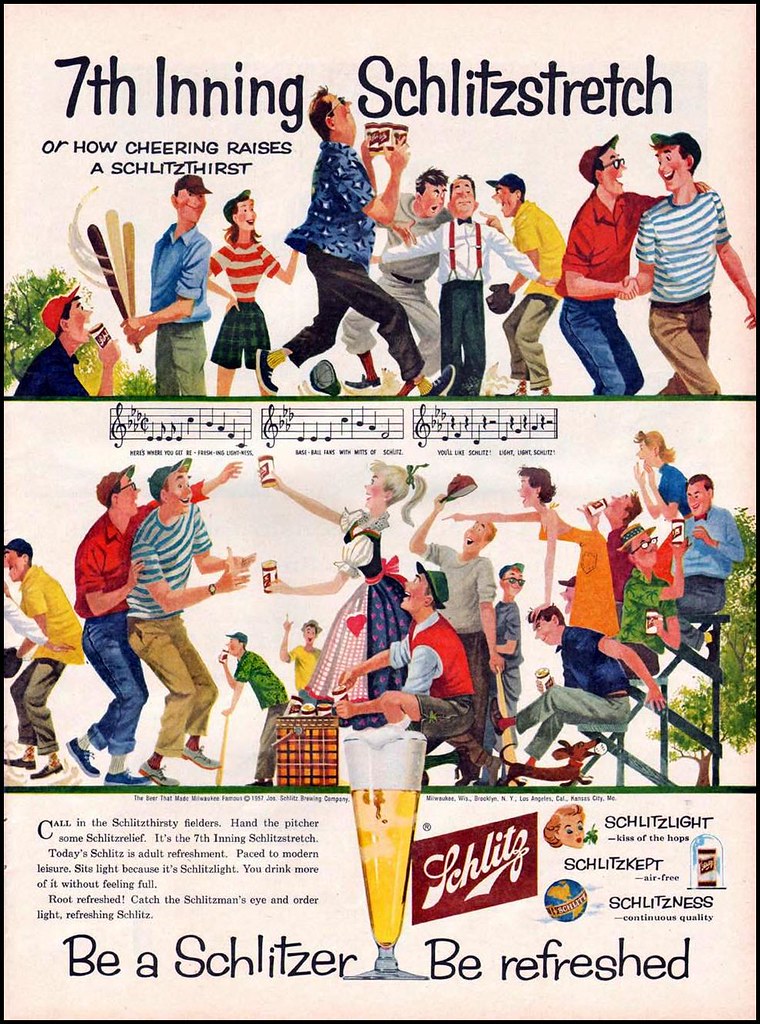
As a result of last year’s success, they’ve decided to another beer event at the Mint this year. The Hops & History 2 event takes place next Thursday, July 24, from 6:30 to 9:30 p.m. at The Old Mint, located at 88 Fifth Street at Mission in San Francisco. Tickets to the event are $30.
Here’s more information about the event, from the San Francisco Brewers Guild website:
Its time to order another round. This 2nd annual event will feature Bay Area craft beer tasting, historical talks, a panel discussion, home brewing demos, local food vendors, and an expanded exhibit of rarely seen historical West Coast brewing memorabilia. Held in the historic 1874 San Francisco Mint, Hops and History Round 2 continues last year’s sold-out celebration of the unique history of brewing in the Bay Area while looking forward to the future of craft brewing in the City by the Bay and beyond.
Don’t get left out in the cold! Get your tickets early to join us to taste the past and enjoy the present of Bay Area craft brewing.
Tastings from all breweries included
Program Info
Apparently tickets are selling briskly, so order your tickets quickly if you’re hoping to join us for another great evening of brewing history. There’s also more info at Flipside’s Facebook page. See you there.
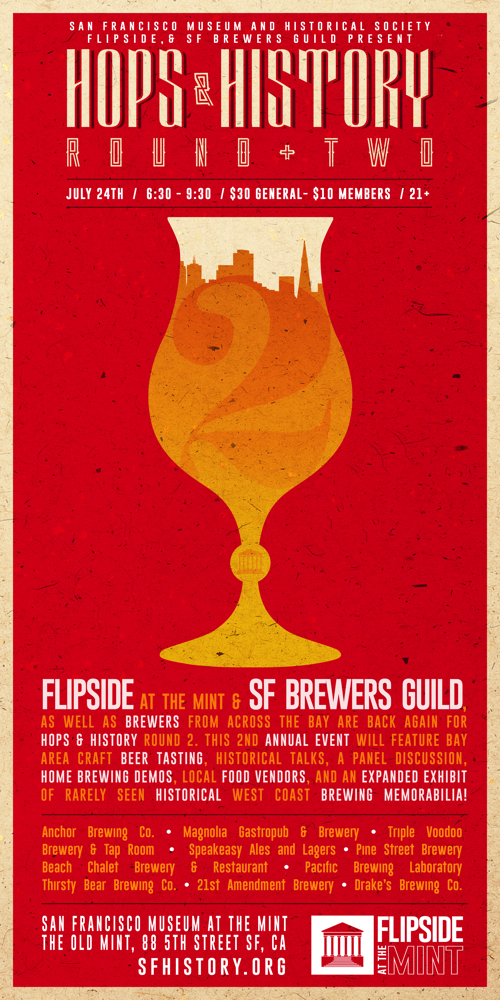
Thursday’s ad is for Schlitz, from 1957. Given we’re in the middle of the all-star break, I figured a “7th Inning Schlitzerstretch” might be in order. It’s subtitled “How Cheering Raises A Schlitzthirst.” I confess I love the Schlitzerland ad campaign, especially the illustrations. “Be a Schlitzer.” Wouldn’t you like to be a Schlitzer, too?
Wednesday’s ad is for Knickerbocker Beer, from 1952. It’s hard to believe that even in 1952 you could advertise a beer with guy that looked like such a dandy. Not to mention the beer was “Extra light … frosty-dry … less ‘filling,’ too!” What exactly is “frosty-dry?”

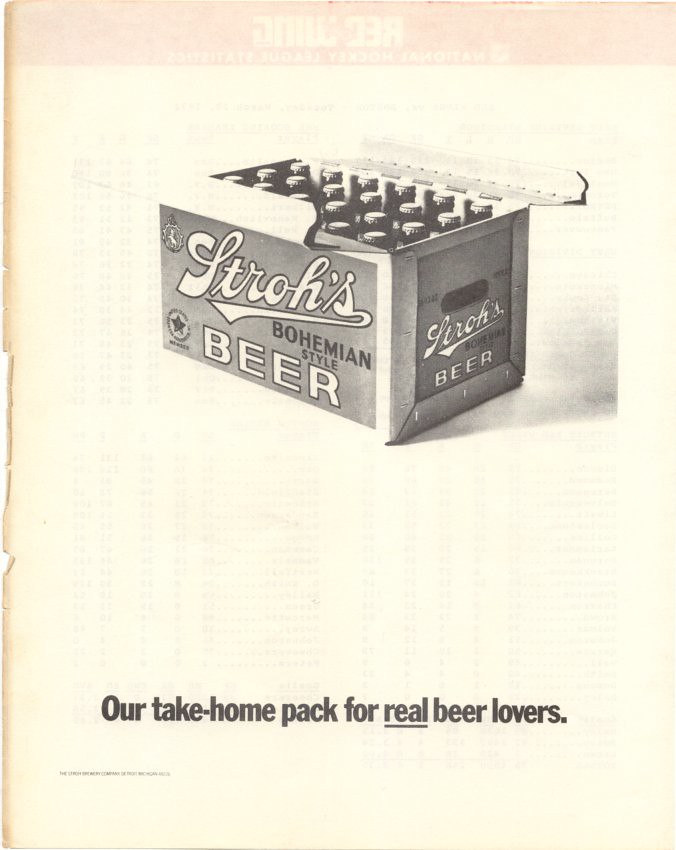
Tuesday’s ad is for Stroh’s, from 1971. Showing a returnable case of bottles of Stroh’s Bohemian Style Beer, the ad is pretty simple. I’m not exactly sure what they mean by “Our take-home pack for real beer lovers,” unless only true beer lover would buy beer by the case.

I recently gave a talk about beer and brewing in the time of Johann Sebastian Bach, at the Mendocino Music Festival‘s Bachfest: Bach and Beer this weekend. Bach’s time was from 1685 to 1750. And while commercial breweries were a big part of the story, brewing at home was still very common, especially in larger households, as evidenced by an interesting historical source I happened upon while researching my talk. The Art of Cookery Made Plain and Easy, by Hannah Glasse, was first published in 1747, originally by subscription, but later the same year in a single edition and it had 20 separate re-printings and remained in print until 1843.
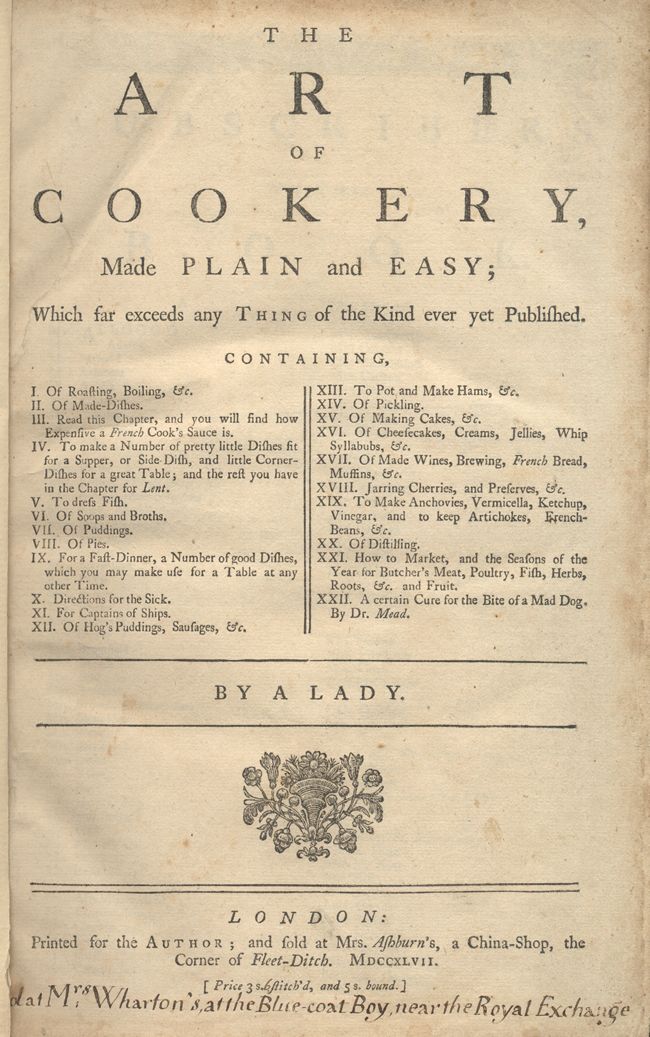
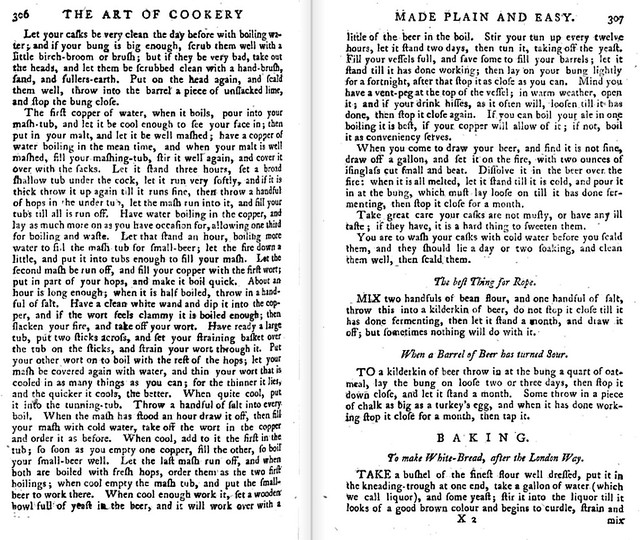
In Chapter 17, she sets out to tell her readers “Of Made Wines, Brewing, French Bread, Muffins, &c.” Here’s her instructions, or “rules,” for brewing beer.
Care must be taken, in the first place, to have the malt clean; and after it is ground, it ought to stand four or five days.
For strong October [ale], five quarters of malt to three hogsheads, and twenty-four pounds of hops. This will afterwards make two hogsheads of good keeping small-beer, allowing five pounds of hops to it.
For middling beer, a quarter of malt makes a hogshead of ale, and one of small-beer. Or it will make three hogsheads of good small-beer, allowing eight pounds of hops. This will keep all the year. Or it will make twenty gallons of strong ale, and two hogsheads of small-beer that will keep all the year.
If you intend your ale to keep a great while, allow a pound of hops to every bushel; if to keep six months, five pounds to a hogshead; if for present drinking, three pounds to a hogshead, and the softest and clearest water you can get.
Observe the day before to have all your vessels very clean, and never use your tubs for any other use except to make wines.
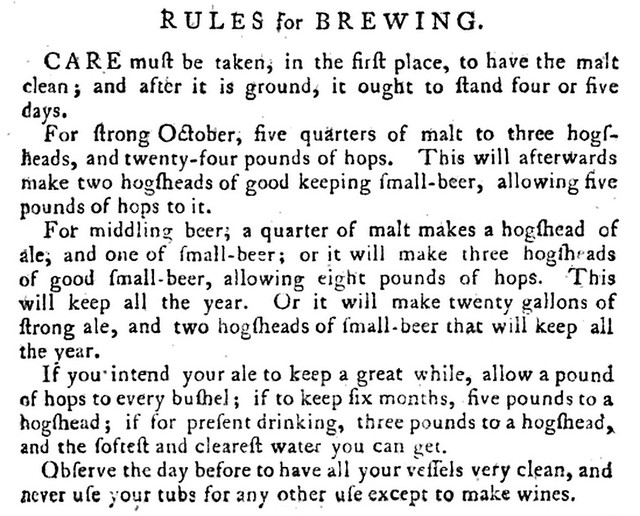
Let your cask be very clean the day before with boiling water; and if your bung is big enough, scrub them well with a little birch-broom or brush ; but if they be very bad, take out the heads, and let them be scrubbed clean with a hand-brush, sand, and fullers-earth. Put on the head again, and scald them well, throw into the barrel a piece of unslacked lime, and stop the bung close.
The first copper of water, when it boils, pour into your mash-tub, and let it be cool enough to see your face in; then put in your malt, and let it be well mashed; have a copper of water boiling in the mean time, and when vour malt is well mashed, fill your mashing-tub, stir it well again, and cover it over with the sacks. Let it stand three hours, set a broad shallow tub under the cock, let it run very softly, and if it is thick throw it up again till it runs fine, then throw a handful of hops in the under tub, let the mash, run into it, and fill your rubs till all is run off. Have water boiling in the copper, and lay as much more on as you have occasion for, allowing one third for boiling and waste. Let that stand an hour, boiling more water to fill the mash-tub for small-beer; let the fire down a little, and put it into tubs enough to fill your mash. Let the second mash be run off, and fill your copper with the first wort; put in part of your hops, and make it boil quick. About an hour is long enough; when it has half boiled, throw in a handful of salt. Have a clean white wand and dip it into the copper, and if the wort feels clammy it is boiled enough; then slacken your fire, and take off your wort. Have ready a large tub, put two sticks across, and set your, straining basket over the tub on the sticks, and strain your wort through it. Put your other wort on to boil with the rest of the hops; let your mash be covered again with water, and thin your wort that is cooled in as many things as you can, for the thinner it lies, and the quicker it cools, the better. When quite cool, put it into the tunning-tub. Throw a handful of salt into every boil. When the mash has stood an hour draw it off, then fill your mash with cold water, take off the wort in the copper and order it as before. When cool, add to it the first in the tub; so soon as you empty one copper, fill the other, so boil your small-beer well. Let the last mash run off, and when both are boiled with fresh hops, order them as the two first boilings; when cool empty the mash tub, and put the smallbeer to work there. When cool enough work it, set a wooden bowl full of yeast in the beer, and it will work over with a little of the beer in the boil. Stir your tun up every twelve hours, let it stand two days, then tun it, taking off the yeast. Fill your vessels full, and save some to fill your barrels; let it stand till it has done working; then lay on your bung lightly for a fortnight, after that stop it as close as you can. Mind you have a vent-peg at the top of the vessel, in warm weather, open it; and if your drink hisses, as it often will, loosen till it has done, then stop it close again. If you can boil your ale in one boiling it is best, if your copper will allow of it; if not, boil it as conveniency serves.
When you come to draw your beer and find it is not fine, draw off a gallon, and set it on the fire, with two ounces of isinglass cut small and beat. Dissolve it in the beer over the fire: when it is all melted, let it-stand till it is cold, and pour it in at the bung, which must lay loose on till it has done fermenting, then stop it close for a month.
Take great care your casks are not musty, or have any ill taste; if they have, it is a hard thing to sweeten them.
You are to wash your casks with cold water before you scald them, and they should lie a day or two soaking, and clean them well, then scald them.
Monday’s ad is for Rheingold Beer, from 1952, and features Miss Rheingold from that year, Anne Hogan. In this ad, she’s got a rake over her shoulder while wearing fall colors. Though there’s a leaf stuck to the rake and full wire basket of leaves in the background to the left, she looks too neat and unwrinkled to have done a lick of work. Apart from “here, hold this rake,” of course.

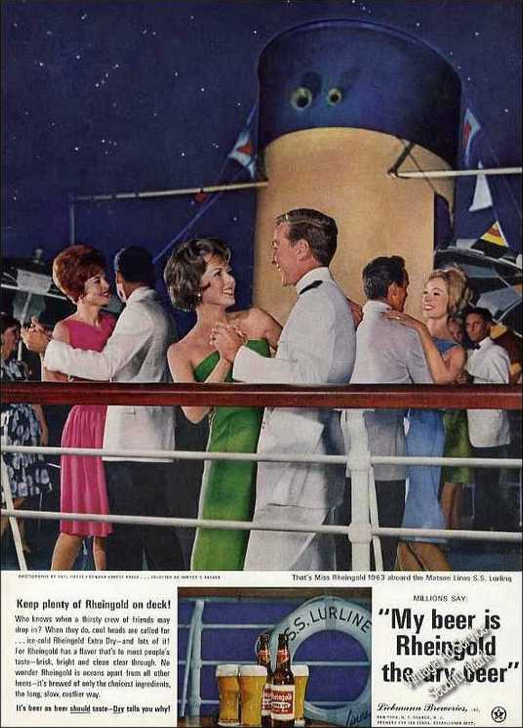
Sunday’s ad is for Rheingold Beer, from 1963, and features Miss Rheingold from that year, Loretta Rissell. In this ad, she’s dancing aboard the S.S. Lurline wearing a strapless green dress. Her partner is either a Naval officer or someone dressed in all white wearing an apron, I can’t quite tell which it is.
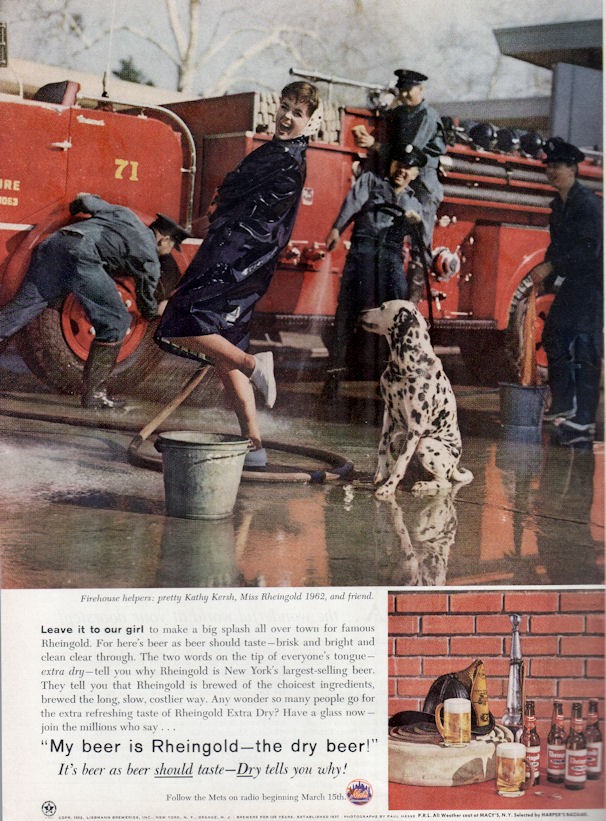
Saturday’s ad is for Rheingold Beer, from 1962, and features Miss Rheingold from that year, Kathy Kersh. In this ad, she’s helping out at the fire station as the boys are cleaning the trucks. She appears to be ducking bursts of water from firemen’s hoses, but she’s wearing a raincoat, so she must have at least been expecting it. In the text it says that two words are “on the tip of everyone’s tongue.” Those two words? “Extra Dry.” Of course, I hear everyone saying that all that time, even today. Um, so then what’s with all the wet water?