Brookston Beer Bulletin

Jay R. Brooks on Beer

  • Home
  • About
  • Editorial
  • Birthdays
  • Art & Beer

Socialize

  • Dribbble
  • Email
  • Facebook
  • Flickr
  • GitHub
  • Instagram
  • LinkedIn
  • Pinterest
  • RSS
  • Twitter
  • YouTube

Powered by Genesis

Liverpool Craft Brewery: The Brewer

October 7, 2013 By Jay Brooks

Liverpool-craft
This is an interesting video, a quiet, black and white short film celebrating the Liverpool Craft Beer Co. and its brewer, Terry Langton. As the production company describes them, “Liverpool Craft Beer Company create traditional and exceptional real ales alongside beers that push the boundaries — new types of beers packed with flavour and intrigue. Their beer is enjoyed heartily in Liverpool’s finest, most interesting and unique venues. Word of new Liverpool Craft Beers spreads around the country. This is their story.” The film certainly makes we want to try their beers.

The Brewer from There is More Films on Vimeo.

Filed Under: Breweries, Just For Fun Tagged With: UK, Video

Beer From Around The World

October 7, 2013 By Jay Brooks

earth-2
Today’s infographic, entitled Beer From Around The World, created for Legal Info 360. On their website, the infographic is somewhat different, and is interactive. One interesting stat I hadn’t seen before is they state that there are 15,235,126 breweries in the world. With around 7.2 billion people in the world, that’s roughly one for every 473 people. Does that seem to high to anybody else?

Print
Click here to see the infographic full size.

Filed Under: Beers, Just For Fun Tagged With: Infographics, International, Language, Statistics

Everything You Wanted To Know About Oktoberfest

October 6, 2013 By Jay Brooks

oktoberfest-banner
Today’s infographic is our last about Oktoberfest this year, which ends today in Munich, Germany. This one is called Everything You Wanted To Know About Oktoberfest and was created by the beer app Beer Hunt.

everything-you-wanted-to-know-about-oktoberfest
CLick here to see the infographic full size.

Filed Under: Beers, Breweries, Events, Just For Fun Tagged With: Infographics, Oktoberfest, Statistics

Interesting Facts About Beer

October 5, 2013 By Jay Brooks

beer-graphic
Today’s infographic is a hodgepodge of trivia entitled Interesting Facts About Beer. It was created by Limetree for Stay Events.

interesting-facts-about-beer
Click here to see the infographic full size.

Filed Under: Beers, Just For Fun Tagged With: Infographics, trivia

Beer In Ads #991: Know The Real Joy Of Good Living!

October 4, 2013 By Jay Brooks


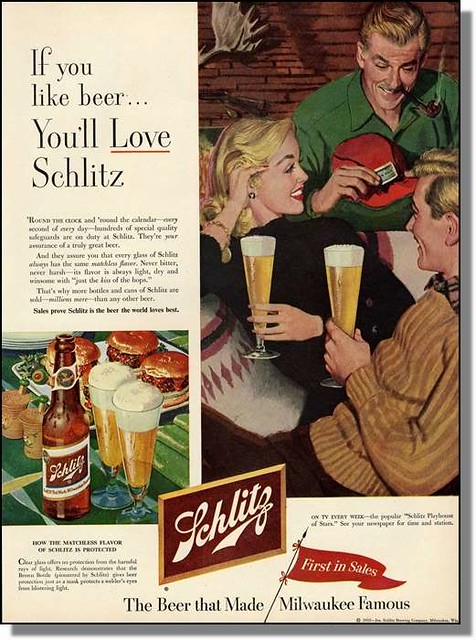
Friday’s ad is for Schlitz, from 1960. The ad shows a couple playing the boardgame Monopoly, and drinking Schlitz, of course. My kids have gotten into Monopoly lately, but I can’t ever remember playing it with just two people. It’s not nearly as much fun that way, so maybe that’s why they need the beer.

Schlitz-monopoly-1960

Filed Under: Art & Beer, Beers Tagged With: Advertising, History, Schlitz

Drinking Around The World

October 4, 2013 By Jay Brooks

world-map-3
Today’s infographic is entitled Drinking Around The World, and shows the Top 10 for toal alcohol, beer, wine and spirits.It was created by Recovery Connection.

top-10-alcohol-counsuming-countries
Click here to see the infographic full size.

Filed Under: Beers, Just For Fun, Related Pleasures Tagged With: Infographics, International, Statistics

The Dishonesty Of The Prohibitionist Fundamentalists

October 4, 2013 By Jay Brooks

target-alcohol
Having been involved at some level professionally in the beer industry for over twenty years, I’ve been growing increasingly weary of the anti-alcohol organizations incessantly nipping at the heels of the brewing community. In my lifetime, they’ve grown increasingly dishonest in their rhetoric and their strategies to punish or rid the country of alcohol. For years, I’ve been referring to them as neo-prohibitionists, to separate them from the first wave of temperance advocates that resulted in the failed experiment that was prohibition. No more. The way I see it, they’ve become as inflexible and divisive as they were before 1919, so they’re just prohibitionists from now on. And the increasing polarization of their arguments, no longer admitting any positives for alcohol, a position that’s only been happening in recent years, seems eerily similar to the way the temperance movement of the 19th century migrated from fairly liberal to incredibly all-encompassing, so that by the end they wanted to ban everything, not just all alcohol, but also coffee, sugar, salt and many other things they didn’t like. Today’s prohibitionists seem every bit as fundamentalist as their earlier incarnations, reacting to the modern world in much the same way, becoming increasingly unable to compromise, or even see the other side’s point of view. Many seem like wild-eyed fanatics, with no sense of proportion or concern for anything beyond furthering their agenda.

What got my ire up yet again was a tweet yesterday from Alcohol Justice, the self-proclaimed sheriff of another prohibition, claiming that “Doubling alcohol tax would reduce alcohol-related mortality 35%, sexually transmitted disease 6%, crime 1.4%.” The tweet also included a link to one of their propaganda screeds, While Beer Taxes Slide, Industry Profits & Public Health Suffers. It was originally written in June, but it’s a fairly common tactic to retweet the same propaganda with different headlines or scary statistics. That article was responding to a June 11 post on CNN Money’s blog, Every state imposes a tax on beer, but the amount each state charges varies widely. That’s not exactly news, since the reason for this has to do with the alcohol laws being made by each state after prohibition ended. What would be more surprising if all the states’ alcohol laws were the same. But each time this is discussed, they make it sound like some states are cheating somebody, like there’s something wrong with the amount, especially if it’s lower than they’d like, though to be fair they’re all too low, from their point of view. But for every state, there’s a reason why they are whatever amount they are that’s evolved from 1933 to the present. It didn’t just happen, there’s context, which the prohibitionist routinely ignore.

But right in the very first sentence of While Beer Taxes Slide, Industry Profits & Public Health Suffers, Alcohol Justice states something that’s not true when they write that “Tennessee, which currently levies the highest rate [of excise tax on beer] (at $0.06 a beer, not exactly breaking anyone’s bank).” Tennessee’s tax is $0.66 on a six-pack, which is 11-cents a beer, not six. So whether you think that’s too low or too high, right out of the gate they’re being dishonest.

beer-taxes-bw
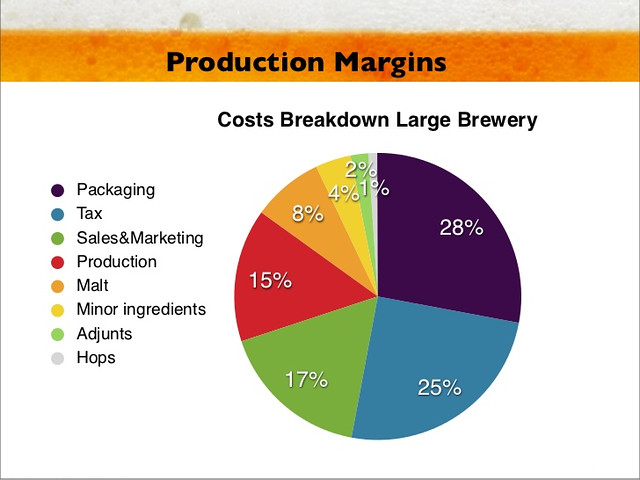
Of course, taxes in beer are already quite a large percentage of the total cost, and because few other consumer goods include an excise tax, they’re one of the most heavily taxed items you can buy.

They then launch into their tired argument that those excise taxes simply aren’t covering the supposed “harm” that they insist alcohol is causing. It’s an incredibly spurious argument, but they keep on making it anyway. They cite a $94 billion annual amount for this “harm,” which comes from a 2006 study, Economic costs of excessive alcohol consumption in the U.S.. In that study they cite, the cause of all the strife is caused by “Excessive alcohol consumption,” not the regular, moderate consumption that most people, maybe 95% of people engage in. But even assuming that their figure for the “economic costs of excessive drinking” were even close to accurate (which they’re not) they should not be used as a basis to punish all adult drinkers.

In just one example, the $161.4 billion (72.2% of $223.5 billion) they ascribe to “lost wages” does not balance any lost productivity with people hired to replace those who miss work, either temporarily or as a permanent replacement. Sure it sucks for the person who lost their job, but the work goes on, and somebody will do it, making a positive contribution to the economy that’s utterly ignored by that statistic, making it completely dishonest, especially considering they claim it’s nearly three-quarters of the harm done by alcohol. I wrote more about this specific study a couple of years ago, in Societal Costs vs. Personal Costs For Alcohol, if you want to dig deeper into its inaccuracies.

This same sort of nonsense popped up again in England, which I detailed recently in Making Up Harms. In that instance, an organization there claimed that £21 billion of harm was caused by alcohol. My colleague, Pete Brown, responded appropriately, telling them that “overstating problem creates moral panic and media sensationalism that helps no one.” A European health organization took a look at that number months before and concluded that “social cost of drinking totals little better than nonsense.” That wisdom comes from an article by Finnish researcher Klaus Mäkelä, published in Nordic Studies on Alcohol and Drugs, which concludes:

This analysis argues that estimates of the cost imposed on society by drinking are often grossly inflated because (among other things) they assume that hazardous drinking must be irrational consumption, that crime benefits no one, that drinking has no social, psychological or indirect business benefits, and that productivity losses are not counter-balanced by benefits elsewhere and by non-alcohol impaired workers taking over the jobs of the impaired. These assumptions are, it is contended, based on value judgements sometimes not made explicit, and lend the results of calculations based on those values a spurious appearance of objectivity and precision.

And that study also concludes that “[e]ven the most sophisticated cost-of-alcohol calculations include entries based on misleading assumptions or logical mistakes.”

Next, Alcohol Justice goes back on the attack. “The alcohol industry’s go-to trope — that beer taxes are regressive and harm the middle class — is simply false.” Talk about a straw man. That’s not even the “trope,” we’re losing our middle class at an alarming rate. Higher taxes, any higher taxes on consumer goods, really, are regressive because they more greatly effect the poor. And did it occur to no one that they drink less than the more affluent precisely because they have less disposable income? Way to throw salt in the wound. But beyond that, their “evidence” is that “one-third of Americans don’t even drink alcohol,” based on a Gallup poll. So let me see if I have this straight. Some people don’t buy beer, so therefore more taxes are not regressive. Okay, got it. They do correctly say that “those who drink the most will pay the most in alcohol taxes,” but given that the majority of those people will undoubtedly do so responsibly and not cost society one thin dime, then how is this a reasonable argument for raising taxes?

beer-can-money

They based their overall argument on the idea that rising excise taxes on alcohol will “save lives,” based on yet another study, Effects of alcohol tax and price policies on morbidity and mortality: a systematic review, conducted at the University of Florida. It was really a meta-study, looking at other similar studies. They identified “162 papers [that] have been published that evaluate the effects of alcohol tax and price levels on alcohol sales, drinking, and a range of alcohol-related morbidity and mortality outcomes,” but they used only 112 of those to draw their conclusions. Why fifty of these studies were ignored, I can only guess.

But what they did was simply search a series of databases looking for the following words: “(tax OR taxes OR taxation OR cost OR cost* OR price OR prices) AND (alcohol* OR drinking OR liquor OR drunk* OR beer OR wine OR spirits OR malt beverage*)” Any articles they found containing those terms were identified and classified. I don’t doubt the scientific rigors of the methodology, but I question many of the assumptions underlying them. There are undoubtedly plenty of studies looking for a correlation for taxing and consumption, most done I’d warrant to justify themselves or an agenda. So that’s what you’ll find in the literature. Are there many (or any?) studies done looking for an opposite conclusion, looking for instances of higher taxes having a different outcome? Essentially, this is just a circle jerk. You have a self-fulfilling prophecy of studies trying to prove causation being used to create another study showing that higher taxes reduce so-called alcohol “harms,” but with no dissent or opposing views it’s just a circle of agendas reinforcing themselves in a closed loop.

In their conclusions, they suggest that “[i]n most developed countries, alcohol is second only to tobacco as a consumer product that causes death (approximately 85 000 alcohol-related deaths per year in the United States alone)” but their evidence for that is Actual causes of death in the United States, 2000, which lists alcohol third, after tobacco and poor diet and physical inactivity. And even at number three, alcohol is less than a quarter of deaths attributed to poor diet and physical inactivity and only 10.6% of the top two. So even assuming their calculations are correct (they’re most likely not) it’s still far less than that of other health issues people face. But even though they don’t explicitly say it’s number two in the U.S., that’s the clear message of that statement, which certainly suggests a willingness to mislead or mis-state information. But the kicker is in the acknowledgements, which thanks the Robert Wood Johnson Foundation (RWJF) for their support and funding of the study. The RWJF is the mother of all prohibitionist groups, and they in turn fund many of the other anti-alcohol groups in the country, as well as many of the studies these groups use to peddle their agenda. See what I mean? Circle jerk.

But more generally the idea that they can show a direct cause and effect of crime, health care costs and other factors in a straight line from alcohol to a burden on society that would not exist without the booze is laughably simple and almost naive.

The media seems to fall for these studies, presumably because they’re published in “scientific journals” and because the prohibitionist groups putting out press releases about them claim the moral high ground. They also frame themselves in terms of protecting people, or children, or society from the scourge of big business, or big alcohol, or whatever bogeyman label they can come up with. What I find so reprehensible about that is how hypocritical that is. They usually claim that the alcohol companies are just out to make money, while by contrast they’re just trying to protect people. But when they use deceit and falsehoods in their efforts to “protect” how can they continue to cling to that moral high ground? Even if they believe in what they’re doing or saying (a doubtful premise), lying for a good cause is still just lying. Can the ends really justify the means under such circumstances?

Follow their rhetoric for long enough, and it starts to seem like they really believe that the beer companies would do anything to make a buck, as if there really aren’t people behind these companies. I know many wonderful people who work in the beer world, for both small and large companies. The vast majority have families, pay their taxes and work hard, and share many of the same values as prohibitionists. Yet these fundamentalists seem to believe that these companies really don’t care about their customers, that they don’t care about drunk drivers or alcoholics. It just pisses me off. Do they really think a beer distributor sales rep. is more concerned with their job than whether their child is hurt in a car accident with a drunk driver. They always accuse the beer companies of not really doing enough to encourage responsible drinking. But whatever they do, it’s never enough to the fundamentalists. It’s simple, really. Fanaticism is never satiated. You can’t appease it.

Is alcohol perfect? Can everyone use it responsibly? Of course not. Most beer drinkers would be the first to admit that. But unlike the prohibitionist fundamentalists, we’re willing, and able, to concede that it’s not for everyone. Not everyone can handle the enjoyment that beer can bring. We’re willing to work on fixing any problems that some have with alcohol, not just because it’s the right thing to do, but also because we don’t like problem drinkers either. I hate a bad drunk as much as the average MADD member, but I don’t think we should throw the baby out with the bathtub gin. But prohibitionists use every story where an individual acted stupidly and recklessly to suggest that it’s the inevitable, and only, result of drinking. They literally ignore the absolute majority of responsible drinkers, as if they don’t even exist.

That’s because these groups, in my opinion, really don’t care about health policy or public policy. They care about pushing an agenda. That agenda is punishing the alcohol industry and making it as hard as possible for them to do business. Since prohibition ended, the work of the prohibitionists has continued unabated, in an effort to severely limit their ability to advertise, to limit the scope of who can buy alcohol, and where, at what times, even in what neighborhoods. Anything they can do to cripple or harm alcohol is something they’ll try.

If they really cared about stopping drunk driving, they’d lobby Congress to invest in more mass transit infrastructure so people didn’t have to drive and help fund the research and development efforts to create cars that drive themselves, which would eradicate drunk driving at a stroke. If they really believed these corporations were evil, they’d work on reforming corporations. Because much of what they accuse big alcohol of is trying to make a buck by any means. But corporate charters demand that profit be their prime directive. Doing otherwise would be against their charters. People running corporations have a duty to their shareholders to maximize profits. It’s their jobs. I don’t like the way many big corporations operate, and I think corporate reform is likely the only way to change their behavior, but I’ve never once heard that argument from a prohibitionist group wanting alcohol companies to act differently.

beer-cans-money

You may recall that earlier this year, prohibitionist groups revealed themselves as having no less a profit motive than most corporations. In The Neo-Prohibitionist Agenda: Punishment Or Profit, we discovered their true motives, that these “self-proclaimed ‘public health advocates’ only want to raise taxes on alcohol for two reasons: either to enrich themselves and profit from the alcohol companies their groups target or to punish every single person who dares to enjoy a pint of beer or glass of wine.” And in terms of being non-profit charities, many aren’t even good examples of that, to wit: MADD Charity Rating Downgraded To “D.”

Toward the end of the Alcohol Justice propaganda screed, they finally get to the numbers from their tweet. “Alcohol taxes are the single most effective policy to reduce alcohol-related harm. Raising taxes significantly reduces consumption, particularly among underage youth. Doubling the alcohol tax would reduce alcohol-related mortality by 35%; traffic crash deaths by 11%; sexually transmitted disease by 6%; and crime by 1.4%.” Those numbers are the spurious conclusions drawn from the meta-study examining studies looking for support for raising taxes. But that first declarative statement, “Alcohol taxes are the single most effective policy to reduce alcohol-related harm,” really stands out. Oh, to be so sure about anything. I want to live in that idyllic world. Unfortunately, I live in the real world, where everything is complicated, hopelessly interconnected and where few things are as simple as prohibitionists would have us believe. Late last year, I wrote that Higher Alcohol Taxes Reduce Tax Revenue, in which government studies from abroad showed the polar opposite of what AJ claims is the “the single most effective policy to reduce alcohol-related harm,” showing in fact that “affordability has a negligible and statistically insignificant negative effect on recorded alcohol consumption.” Similarly, in 2010, a European Study Shows Raising Beer Taxes A Bad Idea.

At the very end, talking about one state’s recent decision to reduce their excise tax on beer, they say this. “Meanwhile, as consumption rises, so will alcohol-related harm and its associated costs in the state.” Um, consumption of alcohol around the world has been dropping, and even in the U.S. it peaked in the early 1980s, and has been slowly, but steadily, falling ever since.

I really feel like I’m tilting at windmills, although the prohibitionists seem like the bat-shit crazy Don Quixote who sees dragons and damsels in distress everywhere he looks. They keep making the same arguments, ones that are riddled with holes, seemingly oblivious — though more likely maliciously deceitful — to how most people actually enjoy their alcohol or how the overwhelming majority of breweries are small family-owned businesses with deep roots in their local communities.

But perhaps the biggest charade in all of this is how one-sided their arguments have become. Admitting not one positive effect for alcohol, their list of harms is so widely unbalanced that it’s utterly meaningless. A couple of years ago, I started a post (but never finished it) about a then-still-Marin Institute report in which they abruptly shifted their focus from “we’re not neo-prohibitionists” to saying this. “Alcohol consumption, even at moderate levels, is responsible for a wide range of health problems, from heart disease, to various forms of cancer, to sexually-transmitted diseases.” That’s ignoring a lot of science, and that’s the moment, for me, when they veered straight into the fast lane of prohibitionist fundamentalism. Because you’d have to be a fairly committed prohibition fundamentalist to ignore the numerous studies that show a positive total mortality rate for drinkers, that is people who drink moderately tend to live longer than those who abstain, and even heavy drinkers usually outlive teetotalers. Then there’s the countless smaller studies showing small advantages from drinking beer that keep people from getting certain diseases or otherwise positively effecting their overall health. Anyone paying attention would have to notice that in recent years, now that people are shedding their prejudices and looking at alcohol with a less jaundiced eye, that they’re finding all kinds of solid evidence and support that alcohol is not entirely the demon it was once thought to be.

That’s not even counting the calming effect of a drink after work or a beer with dinner, a reward for getting through the day, and one which so improves one’s mental state. Plus there’s the many other ways that beer enhances our lives. Several years ago, I recall something Lew Bryson wrote, Why We Drink, in response to a comment an anonymous person left on his blog who was seemingly (though more likely he was not) confused as to why anyone would ever want to drink alcohol. In his response, Lew detailed many of the intangible reasons that people enjoy beer in their lives. You no doubt know what those are.

That none of these tangible and intangible positive attributes to moderate and responsible drinking are taken into account when these so-called studies seek to put a price tag on harms they claim are caused by alcohol (and importantly, not by the people drinking, but the alcohol itself bearing responsibility), I believe, speaks volumes about what’s really going on with prohibitionist fundamentalism. Because as far as I can tell, the only way their arguments can continue to be even made, is if they continue to utterly ignore anything and everything that contradicts them. So they essentially simply discount and dismiss whatever doesn’t fit their view of the world, where everything is still black and white, and alcohol is responsible for everything wrong with modern society.

But we live in a technicolor world, with vibrant hues and shades of both meaning and experience. And for most of us, beer is a welcome part of that world, in which it enhances our lives and makes us enjoy ourselves just a little bit more. Is that something worthwhile that should be protected, celebrated and enjoyed? Yes, yes it is. Drink a toast tonight with your friends and family to the fact that you still have the right to drink a toast tonight with your friends and family. If the prohibitionist fundamentalists have their way, we may not be able to enjoy that experience. Stand up to their dishonesty and their hypocrisy. Say it with me. “I am a beer drinker.”

Filed Under: Beers, Editorial, Politics & Law Tagged With: Anti-Alcohol, Prohibitionists, Statistics, United States

Beer In Ads #990: Beyond Words

October 3, 2013 By Jay Brooks


Thursday’s ad is for Budweiser, from 1946. The ad shows a happy bride cutting her wedding cake, and is “Beyond Words.” This, despite there being words all over the ad. I especially like the ones at the bottom of the ad. “Every sip tell you what words can’t.”

Bud-wedding-1946

Filed Under: Art & Beer, Beers Tagged With: Advertising, Budweiser, History

On Geeks & Nerds & Snobs

October 3, 2013 By Jay Brooks

beer-geek
The definitions of how we follow our passions seems to be a popular topic of discussion lately. Are we geeks, nerds, snobs, enthusiasts, connoisseurs or aficionados, or just annoying? I tackled this question in my first article for Beer Advocate magazine, way back in 2007, in “Freaks and Beer Geeks.” In that piece, I defined a geek as “an obsessive enthusiast, often single-mindedly accomplished, yet with a lingering social awkwardness, at least outside the cocoon of their chosen form of geekdom.” I’m still pretty happy with that definition, it seems to fit most of the geeks I know. And as I’m one myself — something I gleefully admitted in Living in the Silver Age for All About Beer — I tend to prefer being around other geeks. In my experience, we tend to run in packs. We’re tribal.
beergeek
Here’s what I said in early 2007.

Beer Geeks. You probably know one of us. Hell, if you’re reading this magazine you may be one, too. And even if you don’t or you aren’t, you probably know what we’re talking about. We’re the Trekkies — excuse me — Trekkers of the beer world. You can find us at our countless conventions — a.k.a. beer festivals — wearing the uniform: beer t-shirt (occasionally tie-dyed), denim, baseball cap with brewery logo and in winter a hoodie, ditto logo. We’ll go anywhere in the world to find great beer.

We are also known by other names: snob, fanatic and hophead, among others. But fanatic never quite caught on, hophead is generally reserved for fans of IPAs and other hoppy beers, and snob never crossed over, retaining its mostly derogatory meaning. Originally, a snob was someone who made shoes, a cobbler, before migrating to a person of the lower classes who wants to move up and then on to its present meaning of a person who places too much emphasis on status or “a person who believes that their tastes in a particular area are superior to others.”

Occasionally kinder, gentler terms are employed like enthusiast or aficionado, but they never seem to strike the right chord for some reason. Most of us prefer to be known simply as beer geeks though, oddly enough, the word geek meant originally a fool and later referred to the lowest rung of circus performer, one who may even have bitten the heads off of live chickens, as popularized in a 1946 novel, “Nightmare Alley,” by William Gresham, about the seedy world of traveling carnivals. In that book, to be a “geek” was to be so down and out that you’d do virtually anything to get by, no matter how distasteful or vile.

Like many old words that were primarily derogatory, its meaning has now been turned on its head. Beginning probably with the original new nerd, the computer geek, it was taken back as a source of pride. So today there are band geeks, computer geeks, science geeks, film geeks, comics geeks, history geeks and Star Wars geeks, to name only a few, all of them proud to call themselves geek, because of the shared passion that is so central to its modern meaning. Today a geek is an obsessive enthusiast, often single-mindedly accomplished, yet with a lingering social awkwardness, at least outside the cocoon of their chosen form of geekdom.

But then there’s the on-going debate about whether we, or anybody really, is a geek, a nerd, a dork, a snob, or whatever. Not that these labels matter, but they must at least a little bit, since people keep talking about them.
simpons-geek-vs-nerd
Beer Geek Speak last year asked Snob, Geek or Nerd…Which are you??, Anti-Hero Brewing also tackled Beer Geek vs. Beer Snob and Modern Drunkard has the Subtle Art of Beer Snobbery. The point is, do a Google search for geek vs. nerd or geek vs. snob and you’ll get a lot of hits, and most of the top ones, particularly comparing geeks and snobs, are about beer drinkers. Clearly, this is on our minds.

I think a lot of this is coming from the fact that beer is trying to climb out of the muck and ooze that has kept it down for decades, kept it a drink of of the hoi polloi, with many manufacturers more worried about quantity than quality. Changing that has been a struggle, for a variety of reasons, but the notion that beer is every bit as sophisticated and worthy of respect as any other beverage has been difficult to achieve. Why that is would make for an entire book, a very thick book even, but this endless debate over labels is just one manifestation of that, I believe. And so we see the endless comparisons to wine, which annoys many of us to no end. I’ve written extensively about my own frustration with this, and earlier today Jen Muehlbauer had a terrific piece on that very subject: Fancy beer: pinkies out or middle fingers up?

Earlier this morning, a UK colleague, Phil Mellows, shared an interesting article from Slackpropagation entitled On “Geek” Versus “Nerd”, first published this June. A more general discussion, in it author Burr Settles defines a geek as an “enthusiast of a particular topic or field,” saying “Geeks are ‘collection’ oriented, gathering facts and mementos related to their subject of interest. They are obsessed with the newest, coolest, trendiest things that their subject has to offer,” whereas a nerd he defines as a “studious intellectual, although again of a particular topic or field. Nerds are ‘achievement’ oriented, and focus their efforts on acquiring knowledge and skill over trivia and memorabilia.” He later draws a further distinction, saying this. “Both are dedicated to their subjects, and sometimes socially awkward. The distinction is that geeks are fans of their subjects, and nerds are practitioners of them.”

He then mined the data from several million tweets to create a statistical model showing geeks and nerds plotted on an x/y axis showing their relative geekiness and nerdiness. Here’s how he described the results:

The PMI statistic measures a kind of correlation: a positive PMI score for two words means they ”keep great company,” a negative score means they tend to keep their distance, and a score close to zero means they bump into each other more or less at random.

With that in mind, here is a scatterplot of various words according to their PMI scores for both “geek” and “nerd” on different axes (ignoring words with negative PMI, and treating #hashtags as distinct):

And here is the plotted chart, though I added beer since his data didn’t include beer geeks or beer nerds. And frankly, I just picked a hole where I thought beer might fit, but I really can’t say where beer would properly fit along the continuum. Where do you think it belongs?

geek-vs-nerd
Click here to see the original chart full size.

To me, this is interesting stuff, even though in the grand scheme of things none of it really matters. As long as you’re comfortable in your own skin and know who you are, what people call you you or even how you label yourself means almost nothing. But where we fit into the world does matter, at least to each of us, so I think that’s probably why I find this fascinating. We may not be able to pick our family, but our friends, our passions and the tribes we join do matter deeply and on a very personal level. They form a part of the architecture by which we define ourselves. I identify myself as a beer drinker, and that means something to my self-image, as I imagine such labels do to most of us. It’s how we see ourselves and present ourselves to the world. It only seems to go wrong when other people choose the labels for us. For example, I’m fine with geek, and nerd doesn’t bother me, but I don’t care for snob, even though I can think of plenty of instances when I have been a snob. In part, it’s a perception of the words as labels themselves. They’re not static, but in constant flux, their meaning changing subtly all the time.

And here’s one final bit of interest. In the comments, there’s one from a Hannah Fry, who’s the host of Number Hub, part of a British YouTube channel started by James May called Head Squeeze. After this post was initially published, she entertainingly devoted one of her weekly videos to the question of what distinguishes geeks and nerds. Enjoy.

Filed Under: Editorial, Just For Fun, Related Pleasures Tagged With: Humor, Language, Science, Statistics

Here’s To Beer! Infographic

October 3, 2013 By Jay Brooks

beer-graphic
Today’s infographic is called Here’s to Beer!, and celebrates American beer with a quinary of charts, based on data from the BreweryDB. It was created by the Wiki P.R. firm Beutler Ink.

Beutler_CMWBeer_v5
Click here to see the infographic full size.

Filed Under: Beers, Breweries, Just For Fun Tagged With: Infographics, Statistics

« Previous Page
Next Page »

Find Something

Northern California Breweries

Please consider purchasing my latest book, California Breweries North, available from Amazon, or ask for it at your local bookstore.

Recent Comments

  • Bob Paolino on Beer Birthday: Grant Johnston
  • Gambrinus on Historic Beer Birthday: A.J. Houghton
  • Ernie Dewing on Historic Beer Birthday: Charles William Bergner 
  • Steve 'Pudgy' De Rose on Historic Beer Birthday: Jacob Schmidt
  • Jay Brooks on Beer Birthday: Bill Owens

Recent Posts

  • Beer In Ads #5225: Fabled Ambrosia Of The Ancients April 17, 2026
  • Historic Beer Birthday: William O. Poth April 17, 2026
  • Beer In Ads #5224: Harvard Bock Beer April 16, 2026
  • Historic Beer Birthday: William H. Biner April 16, 2026
  • Historic Beer Birthday: Alan Eames April 16, 2026

BBB Archives

Feedback

Head Quarter
This site is hosted and maintained by H25Q.dev. Any questions or comments for the webmaster can be directed here.