Brookston Beer Bulletin

Jay R. Brooks on Beer

  • Home
  • About
  • Editorial
  • Birthdays
  • Art & Beer

Socialize

  • Dribbble
  • Email
  • Facebook
  • Flickr
  • GitHub
  • Instagram
  • LinkedIn
  • Pinterest
  • RSS
  • Twitter
  • YouTube

Powered by Genesis

Oh, The Horror: Children Recognize Beer Brands

March 19, 2012 By Jay Brooks

beer-kids
Another classic propaganda study was just released in Britain, using the all-too-common meme of “think of the children” as the wedge to attack alcohol advertising. Ever since Prohibition ended miserably here in the U.S., anti-alcohol groups turned their attention to other methods of crippling alcohol, and attacking advertising has been a favorite strategy. It’s quite common in the UK, too, as similar groups there have no doubt witnessed its effectiveness on our side of the pond. This one is being reported by the Daily Mirror as More Children Familiar with Alcohol Brands Than Snacks, which is no doubt exactly the alarm that the anti-alcohol organization behind it was hoping to raise. The so-called “study” the Mirror is reporting on was conducted for Alcohol Concern, a “national charity on alcohol misuse” which certainly sounds like one of our American organizations that cover themselves in the cloak of health and concern for the children.

So let’s look at the study. 400 children, ages 10 and 11 (the same age as my son Porter), were shown brand names and images. Of those, 79% correctly recognized Carlsberg as a beer, or at least as alcohol. The same percentage also correctly identified Smirnoff as alcohol whereas only 74% recognized Ben & Jerry’s Ice Cream (which must have greatly chagrined Ben & Jerry’s ad agency). Oh, the horror! From there, of course, the leap is made that tighter controls need to be placed on the advertising of alcoholic beverages lest the kiddies remain able to know what’s alcohol and what’s not. Because if children know which brands are alcohol, then obviously they will drink them. If then can identify them, then obviously they’re being targeted and all ads therefore “encourage immoderate consumption.” Alcohol Concern asserts that alcohol advertising must be “not attractive to children,” as if adults and children like completely different things.

Okay, a couple of things. First, being able to identify which brands are alcoholic drinks and which are not does not mean the recognition came from advertising. That almost 4 out of 5 kids could identify Carlsberg, one of the best-selling beers in the UK, is just as likely due to its popularity, being in those kids’ homes, sitting in the refrigerator, and seeing their parents drinking it. Or seeing it when they’re at the local football game, with family and family friends drinking it while watching the game; or at a picnic; or they may see it walking the supermarket aisles as their parents shop. There are many places where kids can see alcohol brands, including many positive experiences, that do not have to do with advertising. Kids do not have tunnel vision and only retain what they see in ads on television. Yet Mark Leyshon, from Alcohol Concern, insists their “study” does “provide more evidence that alcohol marketing messages are getting through to young people well before they are legally able to buy alcohol.” I’d say that’s true only if you ignore reality.

On some level, isn’t it good news that kids know the difference between alcohol and soda? And guess which one they prefer? Think about it. Do kids like bitter tastes like beer or sugary sweet flavors like soft drinks? Study after study I’ve seen, and not just ones by neo-prohibitionists, always show young people prefer sweet tastes over bitter ones. I know my kids do. Don’t yours? So it’s in their interest — and yours and society’s if the anti-alcohol nutjobs are to be believed — if they don’t accidentally reach for a bottle of Carlsberg thinking the green bottle contains Sprite or 7Up? Knowledge should be a good thing, but apparently Alcohol Concern thinks it would be better if our children were completely ignorant.

Second, the study itself seems overly simplistic at best. The kids were shown “the brand names and logos of common alcohol products, as well as images from TV alcohol advertisements,” along with “brand images, logos and TV adverts for popular non-alcoholic products such as soft drinks and breakfast cereals.” Then it was multiple choice. The kids could choose for each image they were shown between three choices: “food,” “soft drink” or “alcoholic drink.” I can’t speak for their ten and eleven year olds, but I’m fairly certain my own son (who’s 10-1/2) could do a pretty good job of just guessing between those three choices. Most successful brand images work because the association with the products are natural or complimentary, not inscrutable and hard to figure out.

But even so, would it have been better for children’s health if they could more easily identify the “soft drinks” or “sugary snacks,” which ultimately are at least as bad for their health as alcohol? I know that kids under 18 in civilized places (or 21 in places less so) should not be drinking alcohol, and I accept that children should not have unrestricted access to it. But the fact remains that, all things being equal, the excess sugar and other chemicals in soft drinks and many, many processed foods are terrible for everybody, children included. Yet Alcohol Concern — and indeed most anti-alcohol groups — seem to have no difficulty with the many unhealthy products in the world and are single-mindedly convinced that it’s alcohol alone that it is the cause of society’s woes.

For me personally, as a parent, I find this concern completely absurd, unfounded and misguided. My kids could name more alcohol brands than the average ten and seven-year old, because it’s “daddy’s work.” Their hearts sink every time a package arrives on our doorsep and it’s not a new book or toy, but instead is beer. Our house is full of beer. It’s lining the hallway, in boxes in the foyer, sitting around the dining room, the kitchen, the garage, and stuffed into four refrigerators. But my kids have no interest in it whatsoever. Zip, zero, nada. They know it’s “for adults.” And that’s partly why I’m convinced these sorts of attacks on alcohol advertising using children as a shield are not about the kids in the least. They never are. I’m glad my kids know the difference between what they’re allowed to drink and what they’re not. Don’t all parents teach their kids what they can drink? In our home, it’s simple, really. No soda, no beer and no alcohol. They know, and that knowledge is powerful and effective. Just say know.

Filed Under: Beers, Editorial, Politics & Law Tagged With: Anti-Alcohol, Prohibitionists, Propaganda, Statistics, UK

Beer In Art #166: Albert Edelfelt’s Portrait of Louis Pasteur

March 18, 2012 By Jay Brooks

art-beer
Today’s work of art is by the Swedish-speaking Finnish artist Albert Edelfelt, who in 1886 painted a Portrait of Louis Pasteur. Pasteur, of course, while primarily known for pasteurization of milk, did his initial studies of fermentation and unlocked many of the mysteries of how yeast worked in brewing, paving the way for brewers to better understand and control the process of making beer. In 1873 he published his Treatise on Fermentation.

Albert_Edelfelt_-_Louis_Pasteur_-_1885

The painting today hangs in the Musee d’Orsay in Paris. The museum describes Portrait of Louis Pasteur:

Like many of his contemporaries from Northern Europe, the Finn Albert Edelfelt came to France when he was scarcely twenty to study at the fine arts school in Paris. He quickly took part in the official exhibitions and soon won medals and awards. The presentation of his portrait of the chemist and biologist Louis Pasteur at the Salon of 1886 marked a new stage in his career because it earned him the Legion of Honour. At a time when painters readily chose contemporary scientific subjects rather than historical painting, which was bogged down in the reproduction of anecdotes, this portrait of one of the most famous scientists of the time was very popular.

Pasteur is shown in his laboratory in the rue d’Ulm, in the midst of his experimental apparatus. He is holding a jar containing the spinal cord of a rabbit infected with rabies which he used to develop a vaccine against rabies. As a result of this discovery, he was hailed as a benefactor of mankind. Far from being a heroic representation, the painting is the epitome of poise, both in its composition and lighting. Light from a window out of sight on the right spreads delicately over the scene, highlighting the equipment and the scientist’s thoughtful face.

To learn more about Albert Gustaf Aristides Edelfelt, you can start with Wikipedia, and you can also see links to his works online at ArtCyclopedia, Painting Giant, Vaasa, the Athenaeum and Wahoo Art.

Filed Under: Art & Beer, Breweries Tagged With: brewers, Finland

Half Full Or Empty Debate Solved

March 18, 2012 By Jay Brooks

humor
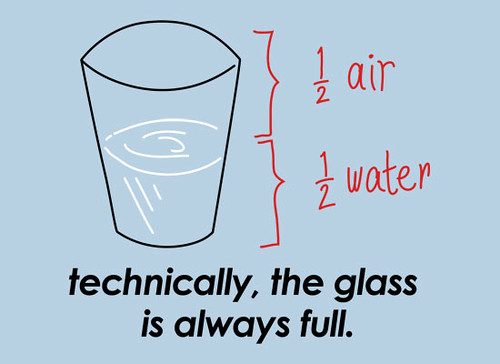
The age old debate about whether the beer glass is half full or half empty is no longer a matter of individual mood or personal philosophy. Once and for all, the riddle has now been solved, since as SnorgTees reveals, Technically, The Glass Is Always Full.

alwaysfull_fullpic

Filed Under: Just For Fun, Related Pleasures Tagged With: Humor

A Biologist’s St. Patrick’s Day Song

March 17, 2012 By Jay Brooks

ethanol
This is one of the coolest, albeit nerdy, songs I’ve heard since Tom Lehrer was doing the Vatican Rag and singing about the Elements. And thanks to Peter H. for sending me the link. It’s a St. Patrick’s Day song by a biologist, known only as Cadamole, who apparently lives in Washington, D.C. He sings about the biology of beer and … well, just listen to it for yourself. Enjoy!

And below are the lyrics so you can sing along:

In the year of our lord eighteen hundred and eleven
On March the seventeenth day
I will raise up a beer and I’ll raise up a cheer
For Saccharomyces cerevisiae
Here’s to brewers yeast, that humblest of all beasts
Producing carbon gas reducing acetaldehyde
But my friends that isn’t all — it makes ethyl alcohol
That is what the yeast excretes and that’s what we imbibe

Anaerobic isolation
Alcoholic fermentation
NADH oxidation
Give me a beer

[CHORUS]

My intestinal wall absorbs that ethanol
And soon it passes through my blood-brain barrier
There’s a girl in the next seat who I didn’t think that sweet
But after a few drinks I want to marry her
I guess it’s not surprising, my dopamine is rising
And my glutamate receptors are all shot
I’d surely be bemoaning all the extra serotonin
But my judgment is impaired and my confidence is not

Allosteric modulation
No Long Term Potentiation
Hastens my inebriation
Give me a beer

[CHORUS]

When ethanol is in me, some shows up in my kidneys
And inhibits vasopressin by degrees
A decrease in aquaporins hinders water re-absorption
And pretty soon I really have to pee
Well my liver breaks it down so my body can rebound
By my store of glycogen is soon depleted
And tomorrow when I’m sober I will also be hungover
Cause I flushed electrolytes that my nerves and muscles needed

Diuretic activation
Urination urination
Urination dehydration
Give me a beer

[CHORUS]

Filed Under: Just For Fun, Related Pleasures Tagged With: Holidays, Music, Science, Science of Brewing, Video

Guinness Ad #111: Toasting The Zookeeper

March 17, 2012 By Jay Brooks

guinness-toucan
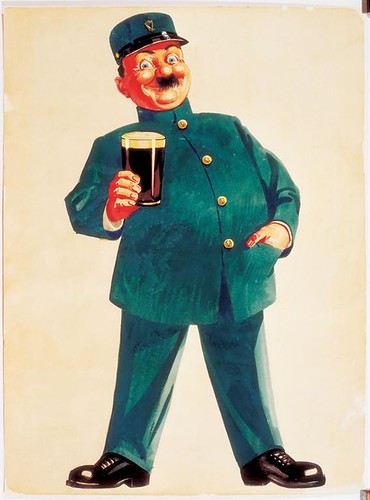
Our 111th Guinness ad is by John Gilroy, showing the iconic zookeeper simply raising a Guinness in toast, which seemed appropriate for St. Patrick’s Day.

Gilroy-Advertising-The-Zookeeper

Filed Under: Art & Beer, Beers Tagged With: Advertising, Guinness, History, Holidays

Beerherding For St. Patrick’s Day

March 17, 2012 By Jay Brooks

stpatrick
It’s hard not to get a chuckle from this Guinness advertisement from the UK, especially on St. Patrick’s Day. Enjoy.

Filed Under: Beers, Just For Fun Tagged With: Guinness, Holidays, Video

Beer In Ads #565: In The Early 1800s Beers Were Dark

March 16, 2012 By Jay Brooks


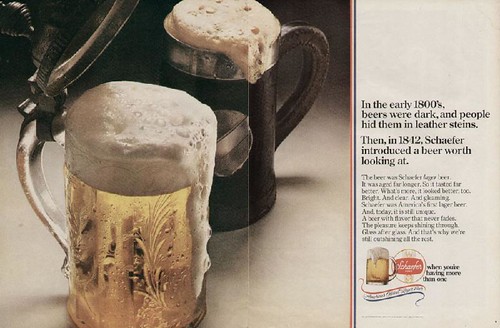
Friday’s ad is the last bicentennial ad for Schaefer beer in the series. This one uses the ad copy. “In the early 1800s beers were dark, and people hid them in leather steins. Then, in 1842, Schaefer introduced a beer worth looking at.” This one also doesn’t try to make them sound 200 years old. And it does feature another beautiful drinking vessel — although I’m not fond of that leather one — and yet more impossibly perfect foam.

schaefer-1842-b

Filed Under: Art & Beer, Beers Tagged With: Advertising, History

Drowning One’s Sorrows May Be Genetic

March 16, 2012 By Jay Brooks

fruitfly
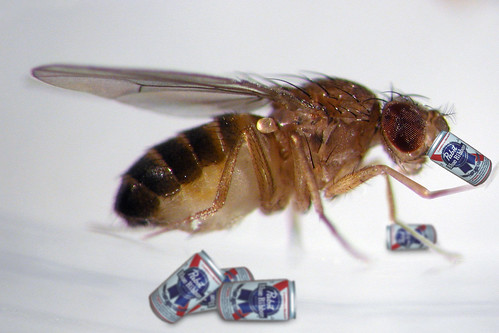
The March issue of Science, touted as “the world’s leading journal of original scientific research, global news and commentary, included an article entitled Sexual Deprivation Increases Ethanol Intake in Drosophila. Which may not mean much, until you realize that in plain English it’s essentially “fruit flies who’ve had their sexual advances rejected drink more alcohol.” Here’s the abstract:

The brain’s reward systems reinforce behaviors required for species survival, including sex, food consumption, and social interaction. Drugs of abuse co-opt these neural pathways, which can lead to addiction. Here, we used Drosophila melanogaster to investigate the relationship between natural and drug rewards. In males, mating increased, whereas sexual deprivation reduced, neuropeptide F (NPF) levels. Activation or inhibition of the NPF system in turn reduced or enhanced ethanol preference. These results thus link sexual experience, NPF system activity, and ethanol consumption. Artificial activation of NPF neurons was in itself rewarding and precluded the ability of ethanol to act as a reward. We propose that activity of the NPF–NPF receptor axis represents the state of the fly reward system and modifies behavior accordingly.

Science Magazine’s News Blog featured the article in more layman’s terms as Sexually Rejected Flies Turn to Booze, and described the results as follows.

Offer a male fruit fly a choice between food soaked in alcohol and its nonalcoholic equivalent, and his decision will depend on whether he’s mated recently or been rejected by a female. Flies that have been given the cold shoulder are more likely to go for the booze, researchers have found. It’s the first discovery, in fruit flies, of a social interaction that influences future behavior.

Apparently that’s not the outcome the scientists expected.

The researchers expected all of the flies to prefer alcohol, but that’s not what they found. “You see that the mated males actually have an aversion to the alcohol-containing food,” Shohat-Ophir says. “And the rejected males have a high preference to that food with alcohol.” On average, the rejected males drank four times more alcohol than the mated ones, her team reports.

In the New York Times’ coverage — Learning From the Spurned and Tipsy Fruit Fly — they make the leap to human addiction, which I find a little troubling. “Fruit flies apparently self-medicate just like many humans do, drowning their sorrows or frustrations for some of the same reasons.” Which is okay, so far, but then they quote an alcohol addiction researcher who was not involved in the study, Dr. Markus Heilig, who believes the study “also supported new approaches to treating alcohol dependence,” including the investigation of “several compounds aimed at blunting alcohol urges.” And earlier in the Times’ reporting, they state that the study “suggests that some elements of the brain’s reward system have changed very little during evolution, and these include some of the mechanisms that support addiction.”

But that presupposes that the urge to drink alcohol is always bad, something that people should never do, and that it necessarily leads to addiction. And that, of course, it not the least bit true. Once upon a time, it meant the difference between living long enough to procreate and dying without issue. When it was safer to drink than the water, those humans with a greater tolerance for alcohol survived while those that couldn’t did not. If you’re reading this right now, it’s likely you can thank your ancient ancestors’ ability to handle their drink.

Even today, people who drink moderately tend to outlive those who never drink alcohol. Even those that drink heavily still tend to outlive those who never drink alcohol. It’s just that small fraction of the population that cannot handle alcohol and can be considered alcoholics, whether genetic or social or simply weak-willed. And for their failings, the world is cursed with neo-prohibitionists hell bent on the idea if even one person can’t handle alcohol, then dagnabbit no one should be able to enjoy it.

But so much of this type of research seems to play into their hands, making the assumption — very, very wrong in my opinion — that alcohol is bad for people, and bad for society, and that drinking alcohol always leads to alcoholism. It’s usually the starting premise. But it’s a false premise, because the majority of people who drink alcohol do so responsibly and in moderation and do not fall prey to alcoholism after their first (or tenth, or 100th or 1000th) sip.

And like the rejected fruit fly, sometimes a beer is just the thing to help get over a bitter rejection, or just a long, tough day at work. The calming effect of a beer after work or with dinner is part of a healthy lifestyle for many, many people. For a majority of people, there’s nothing wrong with that, and it does not signal the onset of addiction or any sort of problem whatsoever. And that’s my takeaway from the fruit fly, too. Sometimes you just need a beer to drown your sorrows.

drunk-fruitfly

Filed Under: Editorial, Just For Fun, News, Related Pleasures Tagged With: Nature, Science

Beer In Ads #564: 1842. It Was A Very Good Year For Beer Drinkers

March 15, 2012 By Jay Brooks


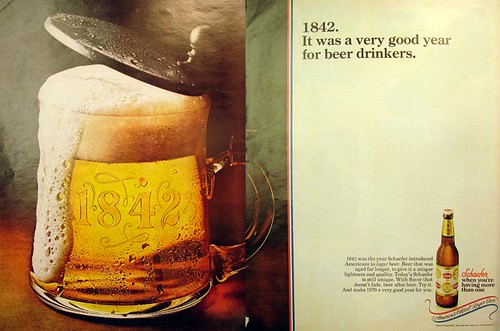
This week has inadvertently turned into Schaefer Week, with Thursday’s ad being yet another bicentennial ad for Schaefer beer. This one uses the ad copy. “1842. It Was A Very Good Year For Beer Drinkers.” At least this one doesn’t try to make them sound 200 years old. But it does feature another beautiful drinking vessel and more impossibly perfect foam.

schaefer-1842

Filed Under: Art & Beer, Beers Tagged With: Advertising, History

State Beer Excise Tax Rates As Of 2011

March 15, 2012 By Jay Brooks

tax
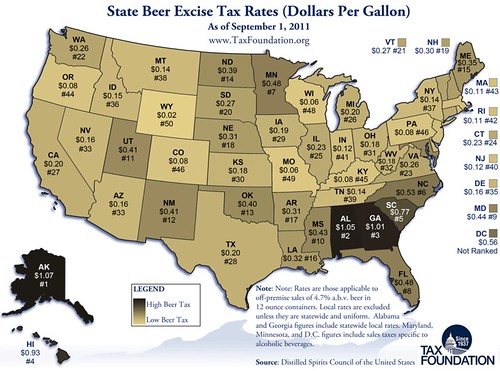
The Tax Foundation, a Washington think tank dedicated to al things taxable, had last week for their weekly Monday Maps on the Tax Foundation’s blog an infographic on State Beer Excise Tax Rates as of September 1, 2011. Alaska has the highest tax rate and Wyoming the lowest. And, of course, the chart doesn’t include the federal excise taxes breweries have to pay or any local taxes, either. Still, it’s always interesting to see the differences laid out on the map.

beermap_large-2011
Obviously, it’s hard to read at this size, but you can check it out full size at the Tax Foundation blog.

Filed Under: Beers, Breweries, Politics & Law Tagged With: Law, Statistics, Taxes

« Previous Page
Next Page »

Find Something

Northern California Breweries

Please consider purchasing my latest book, California Breweries North, available from Amazon, or ask for it at your local bookstore.

Recent Comments

  • Bob Paolino on Beer Birthday: Grant Johnston
  • Gambrinus on Historic Beer Birthday: A.J. Houghton
  • Ernie Dewing on Historic Beer Birthday: Charles William Bergner 
  • Steve 'Pudgy' De Rose on Historic Beer Birthday: Jacob Schmidt
  • Jay Brooks on Beer Birthday: Bill Owens

Recent Posts

  • Historic Beer Birthday: Peter Schemm May 30, 2026
  • Beer Birthday: Chris Crabb May 29, 2026
  • Beer Birthday: Tony Magee May 29, 2026
  • Historic Beer Birthday: John the Fearless May 28, 2026
  • Historic Beer Birthday: Charles Green May 28, 2026

BBB Archives

Feedback

Head Quarter
This site is hosted and maintained by H25Q.dev. Any questions or comments for the webmaster can be directed here.