Brookston Beer Bulletin

Jay R. Brooks on Beer

  • Home
  • About
  • Editorial
  • Birthdays
  • Art & Beer

Socialize

  • Dribbble
  • Email
  • Facebook
  • Flickr
  • GitHub
  • Instagram
  • LinkedIn
  • Pinterest
  • RSS
  • Twitter
  • YouTube

Powered by Genesis

Rare Beer Hysteria Gone Awry

March 6, 2012 By Jay Brooks

pliny-the-younger
I assume many people already saw this, and the brouhaha seems to have died down, if not gone away. But the issue remains, lingering like a wound that won’t heal. The specific incident in question began a few days ago when a restaurant in Sacramento, Kupros Bistro, got a keg of Russian River’s highly sought after Pliny the Younger (PtY), and announced on Facebook (now taken down) that they would be offering it to the public for a whopping $45 for a 12 oz. pour, though to be fair that price also included “a burger, and a buck off any other tap beer for the remainder of the event,” as reported by RanSACkedmedia.com, whose byline is “True-life stories of Modern life in California’s Capitol City.” Many people complained, not surprisingly, and Russian River Brewing was inundated with e-mails, some of which even blamed them.

What many people don’t realize — and really why should they? — is that the laws are very specific about how beer is distributed and sold. It’s a highly regulated product. Most people just buy the beer they want, without a moment’s thought about how the system works, how the pricing is set, or what the law says about it. In California, by law, everybody is supposed to pay the same price for the same beer. Whenever prices change, a “posting” must be filed in advance with the California ABC in Sacramento, and it’s done on a county by county basis, meaning a separate “posting” must be done for every county where the beer’s price is raised or lowered. I’ve been to the ABC offices. When I visited, there was a shelf for each county, with the postings heaped chronologically on each one, usually in folders, which I think may have been for each month. I think I heard they’ve finally started to digitize the information but as recently as the late 1990s they were still all analog and the only way to review them was to go to the office and start opening folders. The point is that, despite the occasional shenanigans, the price that every bar pays for a keg in a given county is the same. Neither the brewery or the distributor can start charging more in order to gouge a customer or make more money as a beer becomes more scarce, not without changing the price for everybody by posting the new price.

It’s the retailer, the business that sells the beer directly to the customer, that has more flexibility in their pricing. They can, in theory, charge whatever price they believe they can get for what they’re selling, whatever they believe the market will bear. The manufacturer (in this case the brewer) usually recommends a price point — you often hear it expressed in other industries as the MSRP or “Manufacturer’s Suggested Retail Price,” but they’re usually not bound to take the suggestions. At Christmas there’s usually a hot toy item that becomes artificially scarce and it will cost you a lot more to get the latest Wii game, Tickle-Me-Elmo or Cabbage Patch Doll. Most people just accept that it’s part of living in a capitalist society.

But beer is usually handled somewhat differently, in part because it’s so highly regulated, and in part because until recently there haven’t been many beers that could command an excessively high price. We’re in somewhat uncharted waters. It’s only been maybe the last ten or so years that we’ve seen a proliferation of cult beers — Three Floyds Dark Lord, Portsmouth’s Kate the Great, The Bruery’s Black Tuesday and, of course, Pliny the Younger. So here’s what happened with the PtY flap in Sacramento. Vinnie Cilurzo, Russian River’s brewmaster and co-owner, contacted his distributor in Sacramento, DBI Beverage, and asked them to pay Kupros a visit. Again, ranSACkedmedia.com followed up on the story, reprinting an e-mail from one of Russian River Brewing’s fans who received a reply from someone at the brewery. I feel a little funny re-printing what was obviously intended to be a private e-mail, but since it’s already been posted there, it’s already out in the public.

Thanks for the email, but, please do not jump to conclusions here, it is Kupros that is the bad guy here. DBI Sacramento is already on this as I have received a couple emails before yours, they are heading to the account right not (or they may already be there) telling them that DBI and Russian River are very upset and DBI is dealing with.

We sell beer at a posted price (ABC law) to our Sacramento distributor, DBI Beverage. That means every keg we sold them was the same price. Then, DBI legally has to post their keg price with the ABC, this means they sell a keg of PTY to all accounts for the same price. With that said, it is the account Kupros that is ripping people off, not DBI and not Russian River.

Anyway, I really appreciate you emailing us, and please know that we are pissed off beyond belief and I can say for sure that Kupros will never get RRBC beer again.

That was on March 1, the next day, the event was cancelled, and in an effort to repair their reputation, Kupros announced the following on their Facebook page:

For some of our customers who feel taken advantage of: we wanted to make clear what we were offering you: Kupros was offering something special for those who wanted to make a special night out of enjoying their pint of Russian River Brewing Company Pliny. We were offing a pint WITH YOUR choice of 4 different burgers, happy hour all day and a raffle for free another pint of Pliny at the end of it. It was NOT $45 for a pint. It was NOT $45 for a burger and a small glass. It was a package deal that was mis-communicated on Facebook. For those who called in to confirm and purchase tickets, we thank you! We also thank our loyal patrons who understand that Kupros is not about capitalizing on others, but rather — about community and the special feeling we all get when we can make a night out feel amazing by enjoy a rare taste of beer! In the end, we are sorry for the inconvenience of the lack of clear communication!

Now I don’t know anyone from Kupros, and I certainly don’t mean to keep the wound open, but that sounds like damage control, pure and simple. Let’s say the beer should have been priced at $5 for a 12 oz. glass, is the rest of that “package deal” worth $40? Removing the beer, for $40 you would get a burger (and not just any burger, but you even got to choose from among four different kinds of burgers), happy hour pricing all day long, and the chance to win another glass of Pliny the Younger. That’s the package. And in the story, it’s revealed that the burger that’s part of the package is normally priced at $14, so that would mean your raffle ticket for the second glass of PtY and the right to buy additional draft beer at happy hour prices would cost you $26. As RanSACked also notes, “no mention of the raffle prize for one lucky patron to get a second glass of Pliny the Younger” was made in prior announcements of the event.

Apparently, most people weren’t buying that explanation either, and on March 2, Kupros posted the following on their Facebook page:

“Sorry Sacramento! We made a mistake. Due to the confusion, we will have Pliny the younger on tap for $1 (6 oz. pour) on a first come first serve basis this Sun. (3-4-12) Doors will open to the public at 6 pm. So that more people can try this exclusive beer, there will be a limit of one serving per customer. See you here!”

I think RanSACked said it best, keeping up with their coverage of the local story, when they expressed what I imagine most people thought of that:

“Due to the confusion”? Or was it due to the overwhelming internet backlash? Do you feel this mea culpa is adequate? Are you willing to move on from this SNAFU and patronize the bistro for a chance to taste the ultra-rare Pliny the Younger?

And lending credence to the damage control theory, one commenter noted that Kupros had deleted his sarcastic comment from their Facebook page.

I assume, and hope, this is an isolated incidence. But it is indicative of what can happen when the market changes and there is an unbalanced supply and demand situation. Overall, I think it’s great that breweries make small, special batches of beer. It keeps their creative juices flowing and provides something fun, interesting and hopefully tasty for craft beer’s biggest fans. It’s usually great press and even creates fun events for people to attend. And who doesn’t want to try an ultra-rare, hard-to-get, or one-of-a-kind beer?

While there are people who complain that it’s gone too far, the beer’s are rarely worth all the attention paid them, or that the effort to get one is just too much, I feel confident that almost every one of those same people would happily accept trying the beer if it was handed to them. They just don’t want to make the effort. And that’s fine, nobody’s making them. What I guess I don’t understand is why so many people feel compelled to insult the brewery for creating an exciting beer that many other people are willing to take the time and effort to acquire and to insult the people who are willing to make more of an effort than they are? It usually comes across as sour hops to me.

But as more and more beer lovers are finding craft beer every day, this is a problem that’s only going to continue to grow. When popular breweries make a small batch of beer, chances are there are more people willing to buy some of it than there is beer to go around. Whenever I get a chance to try one of the “cult” or rare beers, I feel fortunate and lucky to have had the opportunity to try that beer, but there are plenty of such beers I’ve never tried and perhaps never will. And for me, that’s just fine. There’s plenty of great beer out there, and I’m not going to waste my time fretting over what I didn’t drink. If someone else gets to try a beer I didn’t, I say “good for them,” and hope they’ll please tell me how it was and what it tasted like.

But it seems to me that many people feel that they’re somehow entitled to that rare beer, and if they don’t get it, then it’s just not fair. People who missed the lottery for some of these beers seem to feel they’ve been cheated somehow. People in other parts of the country seem to think it’s unfair that locals have the advantage. When a beer sells out before they’ve had a chance to try it, they take it personally, as if the brewery ran out of it on purpose just to ruin their day. I’ve even heard people complain to beer festival organizers that because they didn’t get to drink one of 100 or more beers available at an event, that they should be entitled to get their money back, as if a beer festival ticket guarantees a taste of every beer served there. This attitude seems to cause all manner of bad behavior.

If I’ve learned anything in my half-century on planet beer, it’s that people are funny creatures. They definitely want what they can’t get, and so there will always be a market to satisfy such demands, which is why we’re seeing a grey market emerging for cult beers. I saw a tweet recently that someone was filling two water bottles with Kate the Great and was looking to sell or trade one of them. I toured Three Floyds after CBC in Chicago a few years ago and discovered that a few days before someone from a tour group had stolen two bottles of that year’s Dark Lord and put one of them up for sale on eBay.

Many rare bottles now show up on eBay, and eBay seems to look the other way even though it’s supposed to be against their own policy to allow alcohol sales. They get around it by just selling the “collectible” bottle. Uh, huh. I even understand that an industry representative contacted them to try and put a stop to such beer sales and was rudely told they’d have to sue eBay to stop it. In many conversations I’ve had with brewers, they hate seeing their beers sold like that on eBay. But as long as there are people willing to pay high prices for rare beer, people’s greed will keep such a market alive. I’d love to believe we’ve moved past the “greed is good” days of the 1980s, but sadly there’s no evidence I can point to that doesn’t make me think as a society we’re even more controlled by money than ever. And so in order to have such rare, cult beers we’re going to have to suffer the consequences that such scarcity brings.

The good news is, of course, that what that also means is that the demand for such beer suggests all manner of wonderful things to come for craft beer’s future. If we all just learn to play together a little nicer, and not be so consumed by the desire for money, I think I’d drink a little easier. I’d hate to see rare beer become like coin or stamp collecting where it’s all about what it’s worth, and not its intrinsic beauty. Where I grew up in Pennsylvania, there was a big weekly flea market — Renninger’s — where people would come to on the weekends from all over the northeast. As a teenager, I remember feeling disgusted watching some yuppie from New York talking to a book seller about the leather binding of an old book while the seller tried to tell him the story its pages contained. The yuppie could not have cared less about the story; all he cared about was the value and the condition of the binding and how it would look in his house.

Beer is made to be enjoyed. It’s not meant to languish in a cellar. Yes, some beers can, and should, be aged for a period of time, but in the end their purpose is to be opened and, ideally, shared with friends. That’s true whether or not they’re rare or common. I believe that rare and “cult” beers are ultimately good for the beer industry, but only as long as they’re kept in perspective and it’s the beer inside them that’s most important. When it becomes about money, and greed, and grey markets, and eBay, and crime then we’ve lost what made them worthwhile and created the demand for them in the first place. When that happens, then I’ll really need a drink. I just may not be able to afford one.

Filed Under: Beers, Breweries, Editorial, Politics & Law Tagged With: California, Northern California, Sacramento

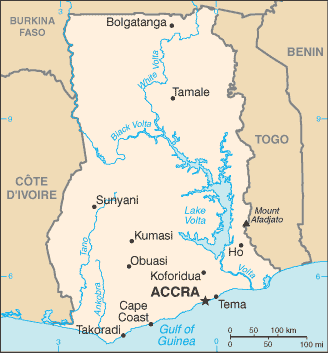
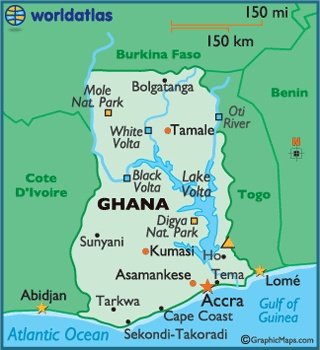
Ghana Beer

March 6, 2012 By Jay Brooks

ghana
Today in 1957, Ghana gained their Independence from the United Kingdom.

Ghana
ghana-color

Ghana Breweries

  • Accra Brewery
  • Ghana Breweries Ltd.
  • Guinness Ghana Ltd.: Kumasi

Ghana Brewery Guides

  • Beer Advocate
  • Beer Me
  • Rate Beer

Other Guides

  • CIA World Factbook
  • Official Website
  • U.S. Embassy
  • Wikipedia

Guild: None Known

National Regulatory Agency: None

Beverage Alcohol Labeling Requirements: Not Known

Drunk Driving Laws: BAC 0.08%

Ghana

  • Full Name: Republic of Ghana
  • Location: Western Africa, bordering the Gulf of Guinea, between Cote d’Ivoire and Togo
  • Government Type: Constitutional Democracy
  • Language: Asante 14.8%, Ewe 12.7%, Fante 9.9%, Boron (Brong) 4.6%, Dagomba 4.3%, Dangme 4.3%, Dagarte (Dagaba) 3.7%, Akyem 3.4%, Ga 3.4%, Akuapem 2.9%, other (includes English (official)) 36.1%
  • Religion(s): Christian 68.8% (Pentecostal/Charismatic 24.1%, Protestant 18.6%, Catholic 15.1%, other 11%), Muslim 15.9%, traditional 8.5%, other 0.7%, none 6.1%
  • Capital: Accra
  • Population: 25,241,998; 47th
  • Area: 238,533 sq km, 82nd
  • Comparative Area: Slightly smaller than Oregon
  • National Food: Ndolé
  • National Symbol: Black Star; Golden Eagle
  • Affiliations: UN, African Union, Commonwealth
  • Independence: From the UK, March 6, 1957

Coat_of_arms_of_Ghana

  • Alcohol Legal: Yes
  • Minimum Drinking Age: 18
  • BAC: 0.08%
  • Label Requirements: N/A
  • Number of Breweries: 5

GhanaPNew-1Cedi-2007-donatedbl_f

  • How to Say “Beer”: N/A
  • How to Order a Beer: N/A
  • How to Say “Cheers”: N/A
  • Toasting Etiquette: N/A

ghana-map

Alcohol Consumption By Type:

  • Beer: 27%
  • Wine: 5%
  • Spirits: 2%
  • Other: 66%

Alcohol Consumption Per Capita (in litres):

  • Recorded: 1.47
  • Unrecorded: 1.50
  • Total: 2.97
  • Beer: 0.40

WHO Alcohol Data:

  • Per Capita Consumption: 10.03 litres
  • Alcohol Consumption Trend: Stable
  • Excise Taxes: Yes
  • Minimum Age: 18
  • Sales Restrictions: Location
  • Advertising Restrictions: Yes
  • Sponsorship/Promotional Restrictions: No

Patterns of Drinking Score: 3

Prohibition: None

ghana-africa

Filed Under: Beers, Breweries Tagged With: Africa, Ghana

Beer In Ads #556: Bud’s Hammer Time

March 5, 2012 By Jay Brooks


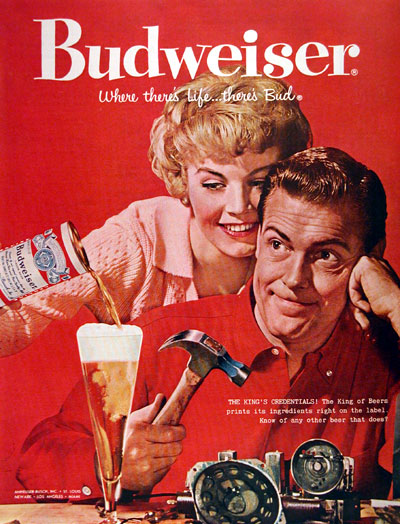
Monday’s ad is yet another from Budweiser’s “Where There’s Life ..” series. This one shows a man who’s trying to fix what to my eyes appears to be an old rotary telephone … with a hammer. I’m not sure that’s the right tool for the job. But based on the look on his face, I’m not sure he has his mind on what he’s doing anyway.

budweiser-hammer

Filed Under: Art & Beer, Beers Tagged With: Advertising, Budweiser, History

Tasting The Bay: SF Beer Week 2012

March 5, 2012 By Jay Brooks

sf-bw-2012
Here’s yet another video showcasing SF Beer Week. This one is brought to you by the Top Shelf Society. It has great production value and music, including what I can only assume is an original song, Beer by the Bay, “written and performed by Jefferson Bergey.” There’s a lot from the opening celebration and then a few other events are highlighted. Nice job.

Filed Under: Beers, Breweries, Events, Just For Fun, SF Beer Week Tagged With: Bay Area, California, Video

Beer In Art #164: Vincent Van Gogh’s Agostina Segatori Sitting in the Café du Tambourin

March 4, 2012 By Jay Brooks

art-beer
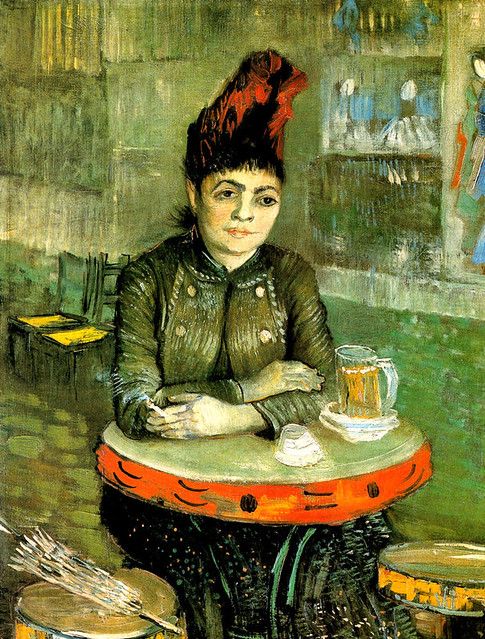
Today’s artwork is another painting by one of the world’s most well-known artists, Vincent Van Gogh. This one is a portrait entitled Agostina Segatori Sitting in the Café du Tambourin, completed in 1887. Today it hangs in the Van Gogh Museum in Amsterdam, Holland.

Van_Gogh-Agostina-Segatori-1887

Here’s how Wikipedia describes the work:

In the painting Agostina, a woman in her forties, can be seen smoking a cigarette while having her second glass of beer, evidenced by two saucers under the mug of beer. In demeanor and style, such as her clothing, make-up and hairstyle, she is a modern woman. She is wearing a fashionable hat. According to the style at the time, her jacket is a different design than her dress. A parasol sits on one of the seats next to her.

Van Gogh used the theme of a woman sitting at a small table, introduced by Impressionists, such as Edgar Degas and Edouard Manet. The table and stools were in the shape of tambourines, befitting the café’s theme. On the wall behind her are Van Gogh’s Japanese prints, which he began exhibiting at the café in February, 1887. The brightly colored painting and confident subject represent a shift in Van Gogh’s attitude, in comparison to his previous subjects, such as were dark, tragic peasants.

And apparently Van Gogh was very familiar with both the Café du Tambourin and its owner, Agostina Segatori, who had also been a model for Edouard Manet, Jean-Baptiste-Camille Corot and other artists. More from Wikipedia:

[The Café du Tambourin] was a gathering spot for Parisian artists, a place where their work was exhibited. Van Gogh, unable to pay in cash for his meals, exchanged paintings for meals. The paintings then adorned the restaurant. He held a special exhibit of his Japanese prints in the café as well. His connection with Agostina and the cafe came to a sad end when she went bankrupt and Van Gogh’s paintings were confiscated by creditors. This painting, however, demonstrates an artistic discovery that culminated in his unique, creative style not quite on the brink of being understood and revered.

I can’t tell if she’s trying to relax after a long day, or having a quick smoke and a coiple of beers in order to face her shift behind the bar. Based on the expression on her face, it could be either.

For more about Vincent Van Gogh, Wikipedia is a good place to start, though there’s even more at the Vincent Van Gogh Gallery, which has a complete list of his works. There are also tons of links at the ArtCyclopedia and another biography at the Web Museum.

Filed Under: Art & Beer, Beers Tagged With: France, Pubs

Hard Liver Barleywine Fest Winners 2012

March 4, 2012 By Jay Brooks

brouwers
Here are the results from the 2012 Hard Liver Barleywine Fest in held at Brouwer’s Cafe in Seattle, Washington:

  • 1st Place: Angel’s Share Bourbon ’11; Lost Abbey
  • 2nd Place: Abacus ’11; Firestone Walker Brewing
  • 3rd Place: Old Birdbrain ’10; Black Raven Brewing

Congratulations to all the winners. (And special thanks to Sean Paxton, the Homebrew Chef, for sending me the results since I couldn’t be there this year.)

Filed Under: Beers, Events, News Tagged With: Awards, Beer Festivals, Seattle, Washington

Beer Birthday Again: Jay Brooks

March 3, 2012 By Jay Brooks

brookston
Today was my 53rd birthday, and I’ve once again been overwhelmed by an embarrassment of riches from well-wishers sending me notes via e-mail, Twitter and Facebook. My sincere thanks to one and all. As it’s usually me posting embarrassing photos of my friends and colleagues, for the fourth year in a row, here’s some howlers of me from over the years.

indian-birthday
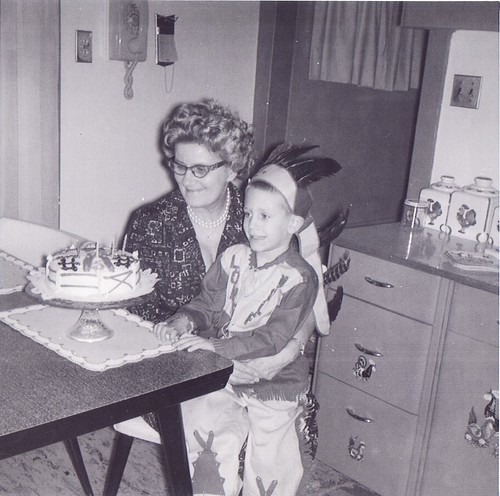
An indian birthday at my grandmother’s house. No idea what year this was. It couldn’t be later than the mid-1960s.

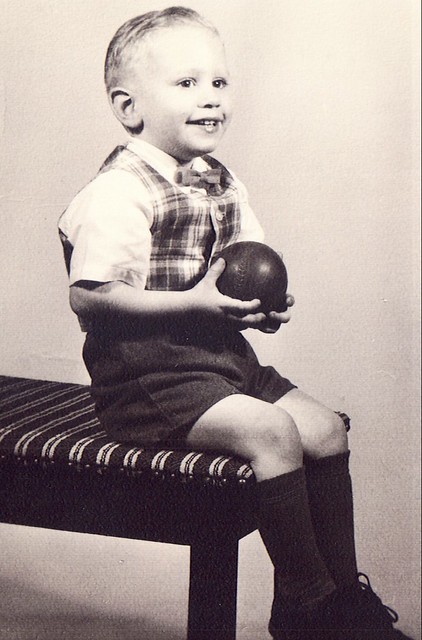
having-a-ball
I can’t even believe this is me, it’s so posed. And what’s with the black baseball? Why is that the prop they chose?

moms-2nd-wedding
At my mom’s second wedding to my stepfather in 1964, before he became a psychotic alcoholic.

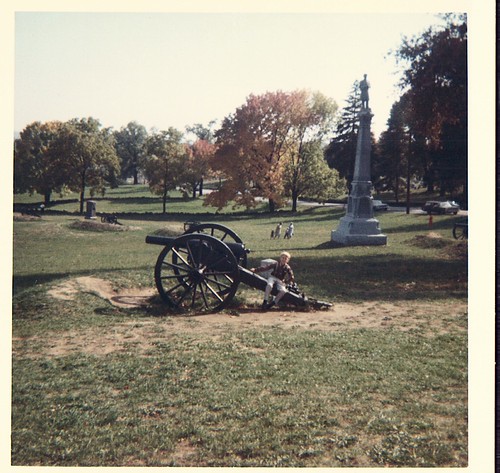
gettysburg-cannon
Sitting on a cannon at the battlefield in Gettysburg.

comb-over
An elementary school photo, where they wet my hair and combed it in a way that I never, ever did, except in this photo. It almost looks like I’m bald and it’s a comb-over.

green-and-purple
It’s hard to tell in this early 1970s photo, but that outfit was green and purple; green jacket and tie with a purple shirt. Sheesh.

There’s many more where these came from, for a good laugh just check out the photos from the last three years at Beer Birthday: Jay Brooks, Beer Birthday: J (Yes, Embarrasing Myself This Time) and Beer Birthday Overkill, from 2009, when I posted a bunch encompassing my first 50 years on planet beer. Oh, and thanks once again to everybody for the generous birthday wishes.

Filed Under: Birthdays Tagged With: Bay Area, California, Pennsylvania

Guinness Ad #109: The Cellist

March 3, 2012 By Jay Brooks

guinness-toucan
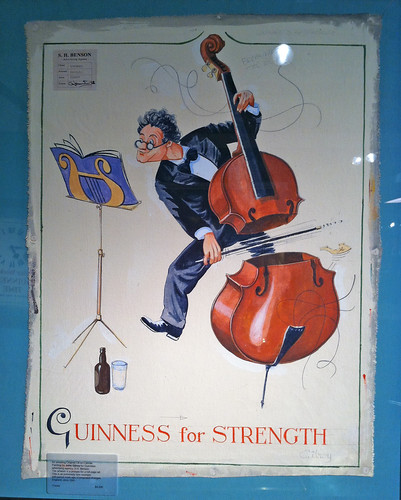
Our 109th Guinness ad is from around 1945, an original by John Gilroy. I’ve never seen a final version of this ad, but I have to assume it was used at some point. It shows a cellist so engrossed in his music, and so strong thanks to the Guinness under his music stand, that he’s sawed his cello in half. I didn’t realize horsehair was so sharp. The tagline is, of course, “Guinness for Strength.”

Guiness-for-Strength-John-Gilroy-1945

Filed Under: Art & Beer, Beers Tagged With: Advertising, Guinness, History

Beer In Ads #555: A Sunday Supper Success

March 2, 2012 By Jay Brooks


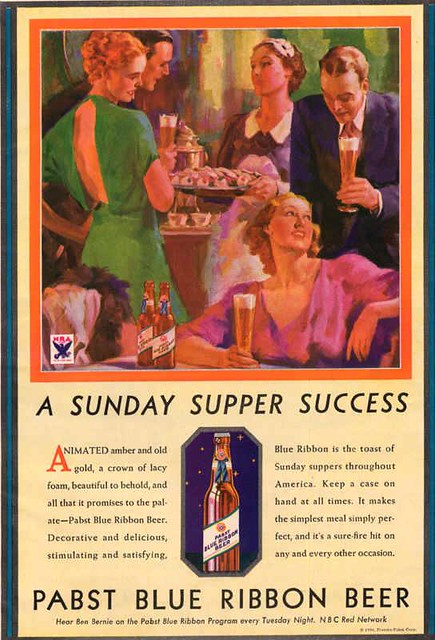
Friday’s ad is for Pabst Blue Ribbon, from 1934, with nice alliteration. I like the description of the beer in the ad copy. “Animated amber and old gold, a crown of lacy foam, beautiful to behold, and all that it promises to the palate.”

pbr-sunday-supper

Filed Under: Art & Beer, Beers Tagged With: Advertising, History, Pabst

Session #61: What Makes Local Beer Better?

March 2, 2012 By Jay Brooks

locavore-text
Our 61st Session is hosted by Matt Robinson — a.k.a. The Hoosier Beer Geek — and he’s asking us to consider the question What Makes Local Beer Better? Here’s how he puts it:

The topic I’ve been thinking about is local beer. The term is being used by just about every craft brewer in the country. What does it really mean though? Is it more of a marketing term or is there substance behind the moniker? This month I want to think about what makes local beer better? I’m not just talking about the beer itself, although it’s the focal point, but what makes local beer better? My connection to local beer is far from thinking that my beer is actually “local.” Maybe you don’t agree with me, and you can write about that. Bonus points for writing about your favorite local beer and the settings around it being local to you.

session_logo_all_text_200

I’ve been thinking about this one a bit lately, too, mostly in terms of what most people aren’t talking bout, which is that for many, possibly most, climates the two most common agricultural ingredients of beer cannot be grown and what that means for their ultimate status as local products.

I’ll ignore the question about whether local beer is better, because as far as I’m concerned, that’s not as interesting to me personally. Bad beer can be made halfway around the world as easily as next door, and vice versa. To my way of thinking, good beer is the result of a skilled brewer, using good ingredients, regardless of where they happen to be brewing.

local-beers-logo

There used to a phrase you’d hear as the craft beer movement was gathering steam in its early days: “Think Globally, Drink Locally.” A play on words of “Think Globally, Act Locally,” a phrase that was coined in the late 1960s or 70s (no one’s quite sure); it originally related to town planning and the environment.

But it’s no surprise that early craft brewing placed an emphasis on drinking local, since for most of beer’s history it was only a local product. Beer didn’t used to travel very well, or very far. That’s why at its peak in the 1870s, there were over 4,000 breweries in the United States alone. Every town had at least one brewery to slake the thirst of its residents. When you went to the next town, you drank their beer. When you went to the nearest big city, you could drink perhaps dozens of different beers from their local breweries.

locavore-badge

The First Locavores

In fact, I think craft breweries presaged the newer locavore movements taking place in most communities over the last few years. When the word “locavore” was chosen as Oxford’s 2007 “word of the year,” it was only two years old, having been coined right here in the Bay Area by a group of four women in San Francisco. The original idea was to restrict your diet to food grown or produced within a 100-mile radius. But it also emphasizes that local ingredients are fresher, more nutritious, taste better and are ultimately better for the environment, too. And that message certainly seems to spreading. Are there many towns today that don’t have a farmer’s market?

That’s also the same idea that early craft breweries were trying to get across. Fresh beer tastes better. So the closer to the source one is, the fresher the beer is likely to be, not to mention the economic advantages. By buying local, there’s the added benefit of keeping the money circulating in your local economy and not sending it to a corporate headquarters hundreds of miles away.

Many early microbreweries recognized that advantage from the beginning, and worked tirelessly to be good local citizens, and most I know of are still very active in their local communities, raising money for good causes, donating kegs for worthy events, giving their spent grain to local farmers to feed their livestock and partnering with other local businesses for the benefit of the places where they both live and work.

What Makes a Beer Local?

In 2012, it’s immensely satisfying that no one in America has to travel very far to find local beer. Several years ago, the Brewers Association crunched the numbers and determined that more than half of all Americans lived within 10 miles of a brewery. Since then, hundreds of breweries have opened (with literally hundreds more in various stages of planning) so that factoid is only getting closer. I wouldn’t be surprised to learn it’s more like 75% live within 10 miles of a brewery now.

But as terrific as that is, there is an elephant sitting at the bar, wondering what it means to be a local beer. What exactly makes a beer local? The obvious answer, of course, is that it’s brewed right here. Brewpubs, which brew where they serve, are the most local you can get, from that point of view. And breweries that only deliver their beer in a local area likewise would have to be considered local.

But as many people are beginning to point out, some of the ingredients that go into beer come from all over the world. Beer is an agricultural product, and its two most well known ingredients — barley and hops — do not grow well everywhere. They need the right climate to flourish. Hops grow best in Washington and Oregon, and also in parts of England, Germany, the Czech Republic and even New Zealand. One of pilsner’s signature ingredients is Saaz (or Zatec) hops, which grow best in the area around the Czech Republic. You can grow them other places, but they take on different characteristics when you do that. Beer brewed with the same hop variety grown in different places will often taste slightly different.

And barley does grow in a lot of places, but most it for brewing comes from Europe, the Ukraine, Russia, Canada and Australia. If you want specialty malts, they’re mostly likely available only from where they’re created. Even if you grow your own barley, you have to go through the malting process, which is typically done by a maltster. And there’s not a malthouse in many places, either.

The point is, there are a lot of places where it’s simply not possible to get all the ingredients to brew beer locally, and that raises the specter about whether a beer brewed locally, but with ingredients flown in from around the world, still can be considered a local beer.

Because beer is mostly water, the majority of your bottle will always be almost entirely local, both by weight and by volume. The malt and hops and yeast constitute a very small portion of the finished beer. But as more and more people are taking seriously eating and drinking locally, it’s hard to ignore that arguably beer’s most important ingredients may not come from down the street.

Not that some breweries aren’t trying to address this. Thirsty Bear, in San Francisco, a little while back created a beer using all locally sourced ingredients, which they called Locavore Pale Ale. Likewise, the relatively new Almanac Beer Co. is creating all of their beers with mostly local ingredients, and working toward making that all. And Sierra Nevada releases annually their Estate Brewer’s Harvest Ale, which they make using both malt and hops grown on their own property in and around Chico.

In California, we are fortunate enough to have the right climate where both hops and barley can grow, even though the majority of it is grown elsewhere. But in many other states that traditionally haven’t grown these crops, brewers and farmers are trying to do just that, with an eye toward making their beers even more local.

But in some locations, there isn’t anything that can be done. Alaska isn’t going to start growing hops and barley anytime soon, but I’d have a hard time considering a beer brewed there not being a local beer. Regardless of whether or not 100% of the ingredients are local, it does still have local character. The water, the air, the industry, the people brewing it and selling it, the economy: those are all very local.

For me that’s enough. In the end, I personally don’t think it diminishes beer’s ability to be seen as local. While I believe this is a debate worth having, undoubtedly there will always be some purists who won’t be able to budge from a position that if all the ingredients aren’t local, then it can’t be considered local. If they choose not to drink those beers for that reason alone, that’s a shame. Because with beer, the most important thing is how good it tastes. If it’s all local, that’s just a bonus. Or as friend of mine once quipped, “If I can drink it, it’s local.”

buylocal

Filed Under: Beers, Breweries, Editorial, Just For Fun, The Session Tagged With: California, local

« Previous Page
Next Page »

Find Something

Northern California Breweries

Please consider purchasing my latest book, California Breweries North, available from Amazon, or ask for it at your local bookstore.

Recent Comments

  • Bob Paolino on Beer Birthday: Grant Johnston
  • Gambrinus on Historic Beer Birthday: A.J. Houghton
  • Ernie Dewing on Historic Beer Birthday: Charles William Bergner 
  • Steve 'Pudgy' De Rose on Historic Beer Birthday: Jacob Schmidt
  • Jay Brooks on Beer Birthday: Bill Owens

Recent Posts

  • Historic Beer Birthday: Peter Schemm May 30, 2026
  • Beer Birthday: Chris Crabb May 29, 2026
  • Beer Birthday: Tony Magee May 29, 2026
  • Historic Beer Birthday: John the Fearless May 28, 2026
  • Historic Beer Birthday: Charles Green May 28, 2026

BBB Archives

Feedback

Head Quarter
This site is hosted and maintained by H25Q.dev. Any questions or comments for the webmaster can be directed here.