Monday’s ad is for Budweiser, from 1942. This World War 2 ad features ghostly horses riding the sky above Navy warships to illustrate the power of diesel engines which, according to A-B, were first built for use in their breweries. Hmm.
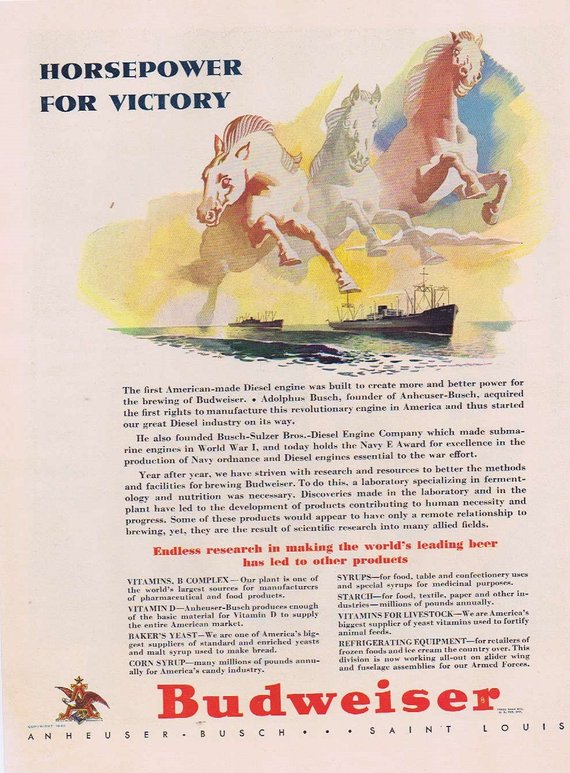

Monday’s ad is for Budweiser, from 1942. This World War 2 ad features ghostly horses riding the sky above Navy warships to illustrate the power of diesel engines which, according to A-B, were first built for use in their breweries. Hmm.
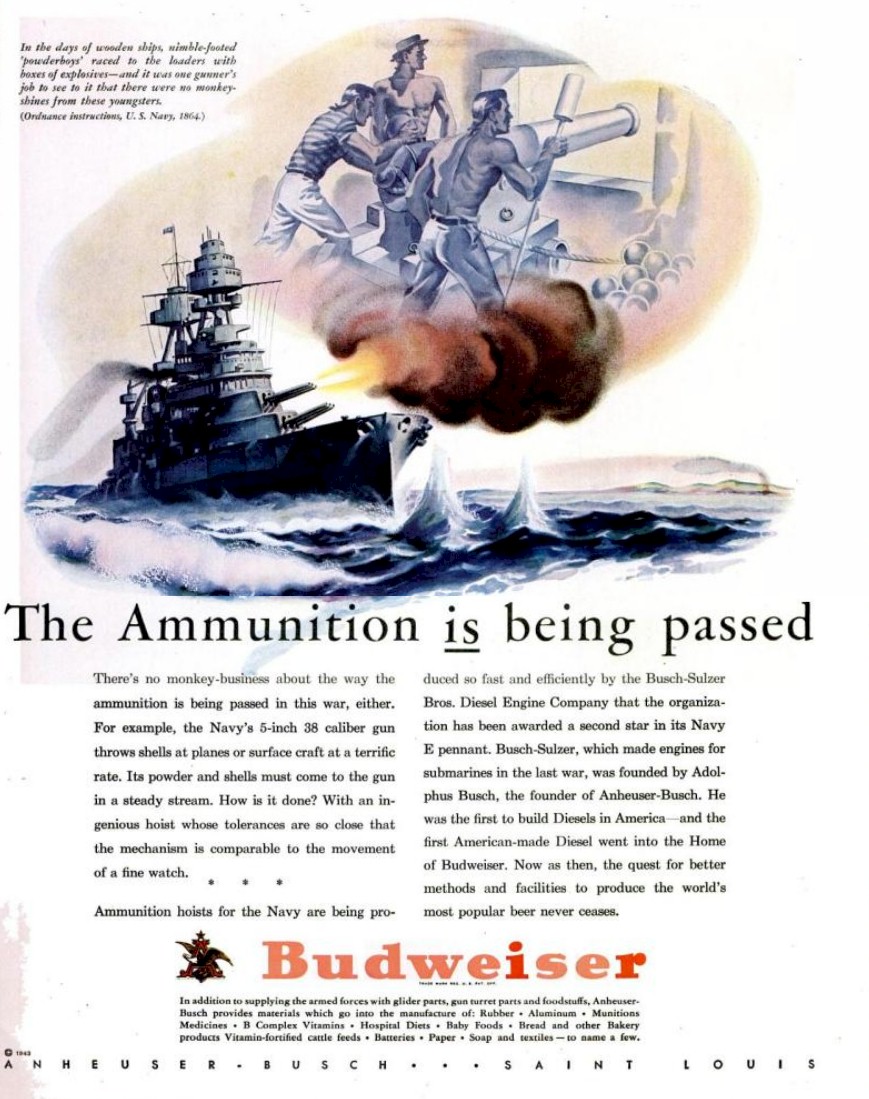
Sunday’s ad is for Budweiser, from 1943. This World War 2 ad features a scene aboard a warship that’s firing its guns, contrasting the modern ship to the sailors firing cannons from a colonial wooden ship, with the tagline “The Ammunition is being passed.”

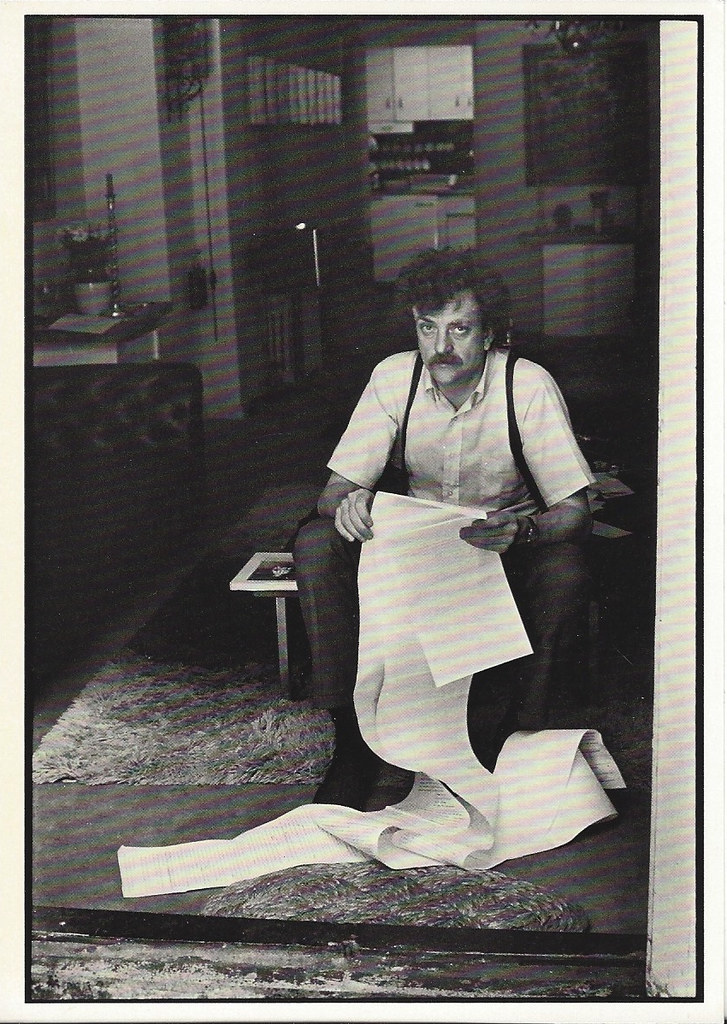
Today is the birthday of Kurt Vonnegut Jr., one of my favorite authors. I wrote about him when he passed away in 2007 in a post entitled So It Goes: Kurt Vonnegut’s Beer Heritage and detailed his relationship with John Hickelooper’s father and a beer Wynkoop later made based on Vonnegut’s grandfather’s recipe. There were essentially two different beer stories involving the Wynkoop Brewing and Vonnegut, and I’ve learned a little more about them over the past decade.
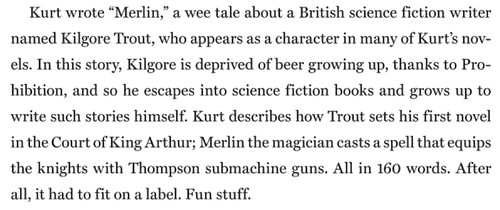
The first one was in the mid-1990s, when the Denver Public Library held a special event around 1996 (sources vary between 1995-97) called Denver Public Libation to commemorate the opening of the new library. The library partnered with Wynkoop, who invited several well-known authors to write mini-stories to be printed on the labels. Some of the writers included Clive Cussler, Allen Ginsberg, and Hunter Thompson, among others. Vonnegut also wrote something for the event. His piece was 160 words and entitled “Merlin,” and tells the story of “the unfortunate events that ensue when the master wizard casts a spell that equips the Knights of the Round Table with Thompson submachine guns.” Despite its short length, I cannot find a copy of it anywhere, and it doesn’t appear to have been reprinted anywhere else. It’s listed in his bibliography as having only been “Serialized on bottles of Denver Public Libation Ale, made by Wynkoop Brewing Company.”
John Hickenlooper wrote about the story in “The Opposite of Woe: My Life in Beer and Politics:”
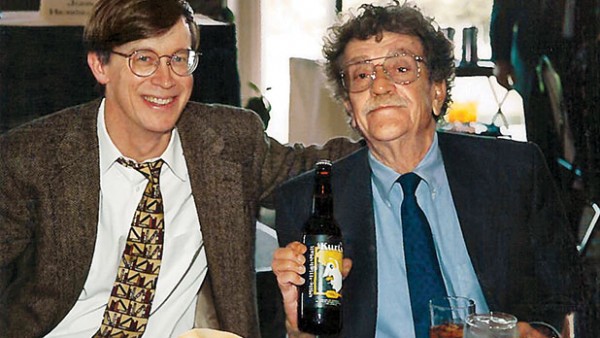
The second instance was around the same time, when Wynkoop created a beer with Vonnegut based on his grandfather’s recipe. It was called Wynkoop Mile High Malt.
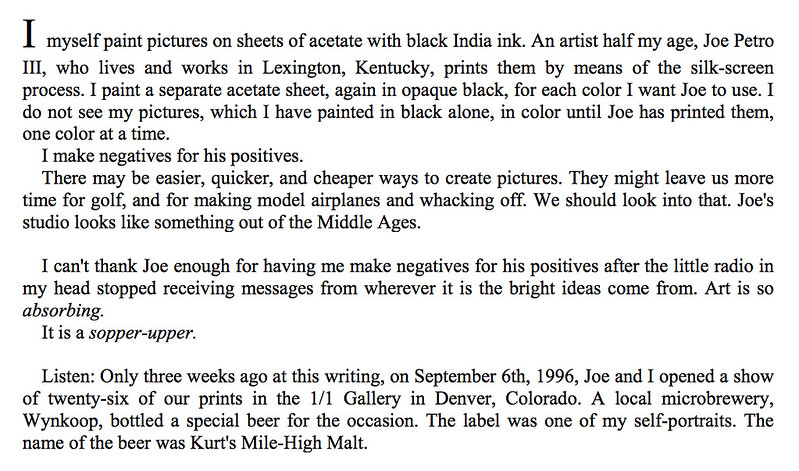
Vonnegut himself detailed the experience in his 1997 semi-autobiographical novel “Timequake.”
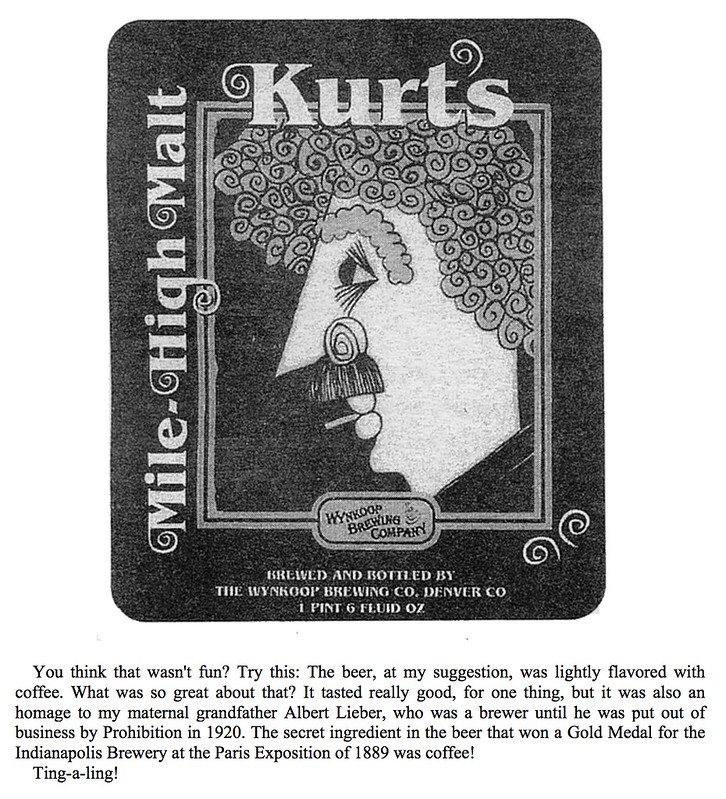
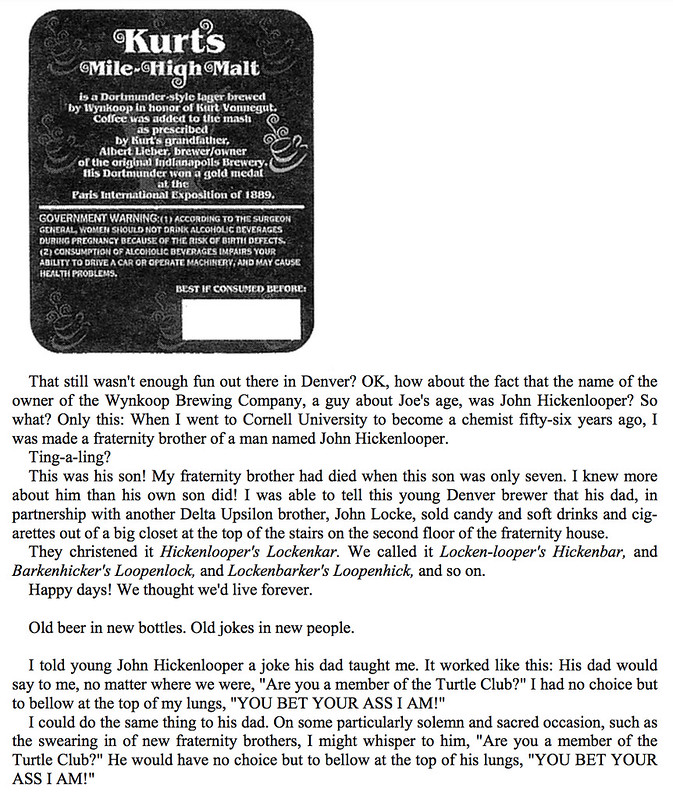
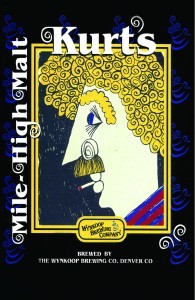
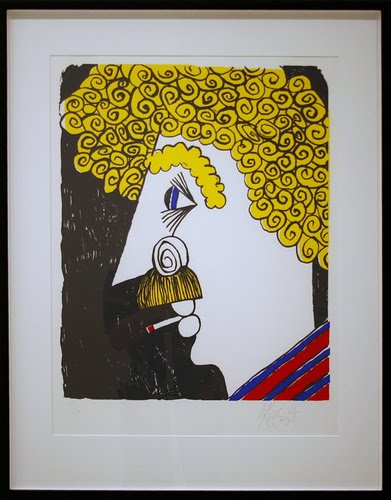
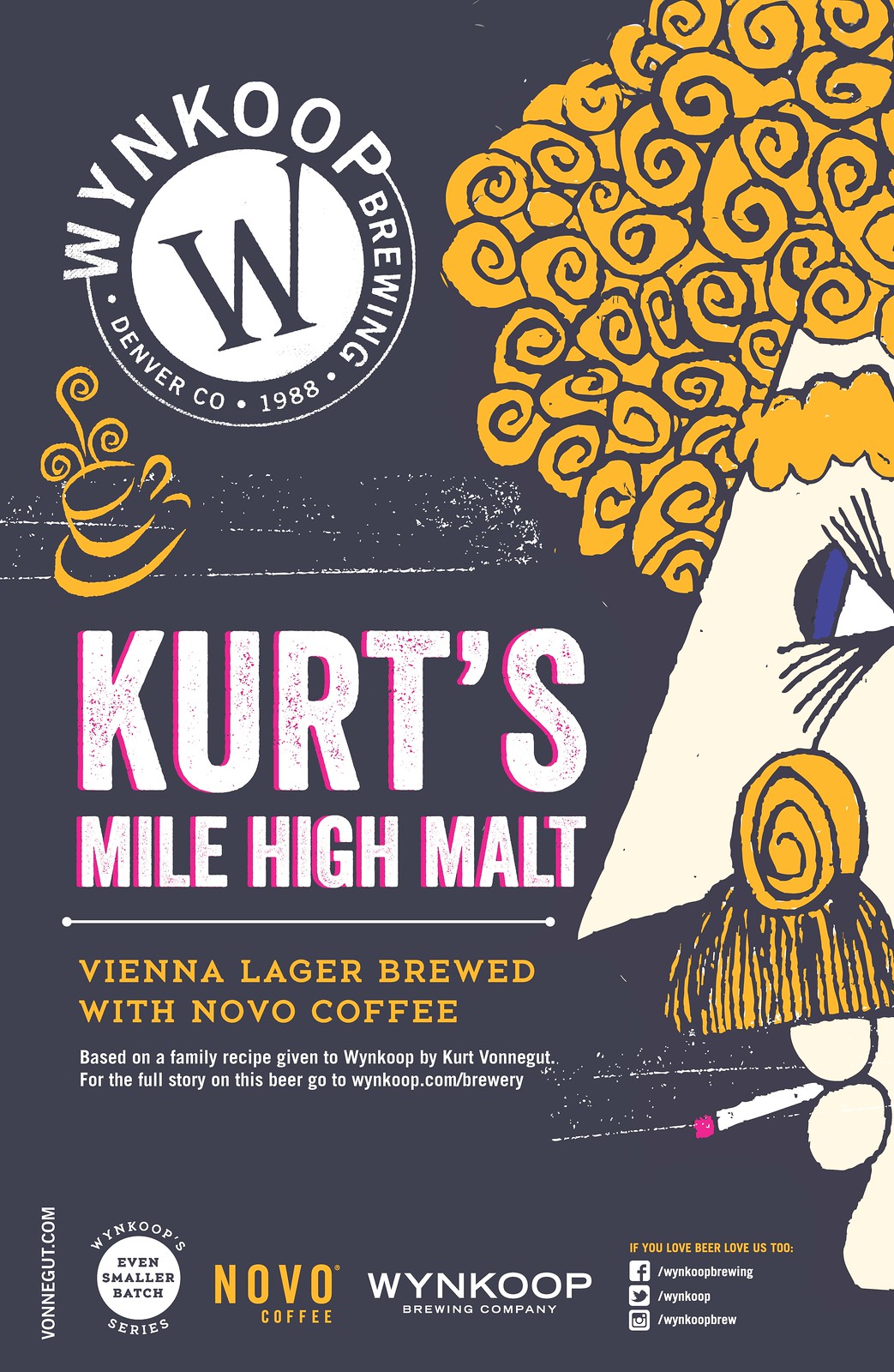
The label artwork was based on a self-portrait by Vonnegut, who was also an artist.
And in the book “Conversations with Kurt Vonnegut,” by Kurt Vonnegut and William Richard Allen, he explains more about his grandfather’s beer.
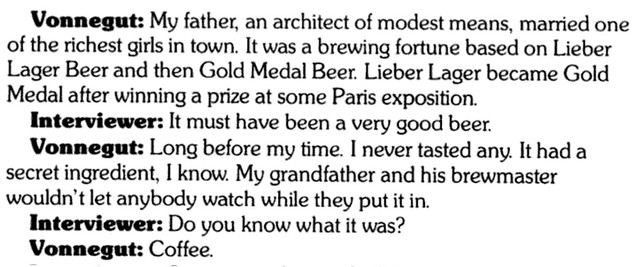
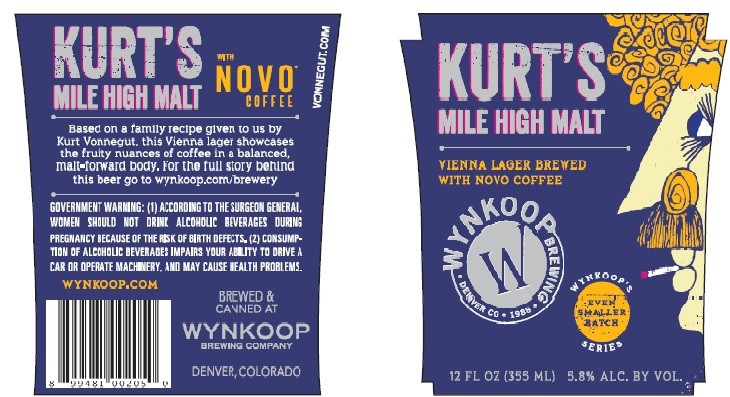
On November 11, 2007, Wynkoop Brewing Company in Denver, reintroduced Kurt’s Mile High Malt to celebrate the late author’s birthday. The beer was originally created by Vonnegut’s grandfather, Albert Lieber, of the Indianapolis Brewery, using coffee as the secret ingredient. Kurt’s Mile High Malt was first brewed in 1996 thanks to Wynkoop Founder and Denver Mayor John Hickenlooper, a friend of Vonnegut’s. At Vonnegut’s request, coffee was added to the Mile High Malt, making it a close recreation of his grandfather’s original.
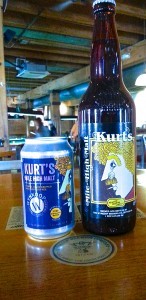
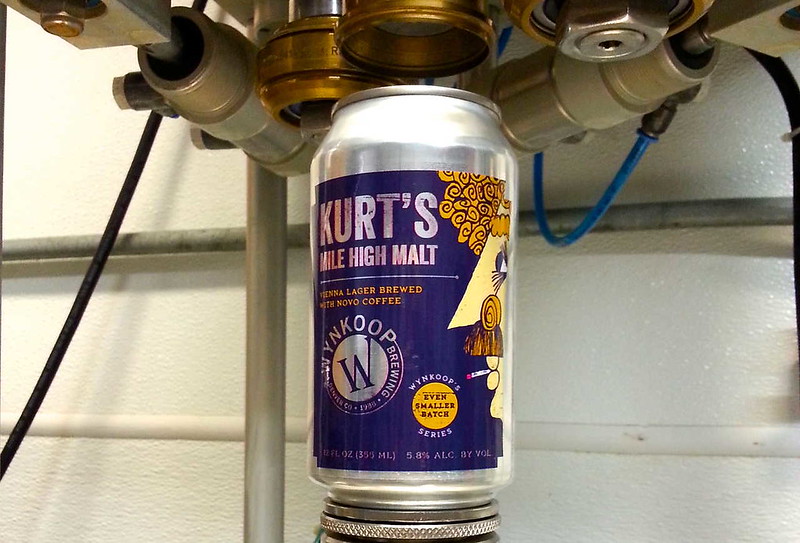
Then, in 2014, they released it again for the brewery’s 25th anniversary. It was part of their “Even-Smaller Batch Series” and was even canned.
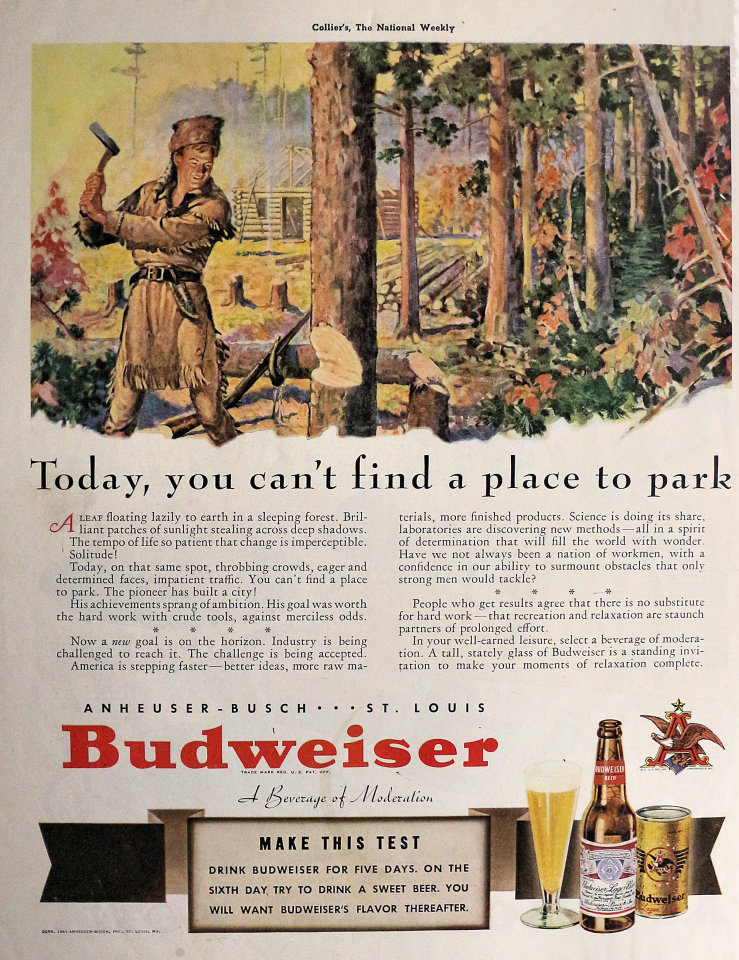
Saturday’s ad is for Budweiser, from 1941. This just prior to World War 2 ad features a frontiersman chopping down wood to contrast how open America was compared to “Today, [when] “you can’t find a place to park.”
Friday’s ad is for Budweiser, from 1940. This just prior to World War 2 ad features English writer Samuel Johnson and his position on the importance of friendships.

Thursday’s ad is for Budweiser, from 1943. This World War 2 ad features the animals marching down a hill, maybe to the slaughter, since it’s their meat that is the subject here. Even during the war, Americans are very well nourished, apparently in part due to Anheuser-Busch’s yeast being used to fortify animal feed. Hmm, seems like a bit of a stretch, but it is making me hungry.

Wednesday’s ad is for Budweiser, from 1944. This World War 2 ad features a group of pilgrims walking through a snow-filled forest with the headline “Not an A Card in Ye Group,” which is a reference to rationing during the war. If you had an “A Card” you were permitted 3-4 gallons of gas per week, whereas a “B card” got you 8 and a “C card” got even more, but was reserved for doctors, mail carrier, railroad workers, ministers, etc. There were also “T cards” for trucks and buses and “X cards” for VIPs. It was primarily to save rubber, which was in short supply, not gas.

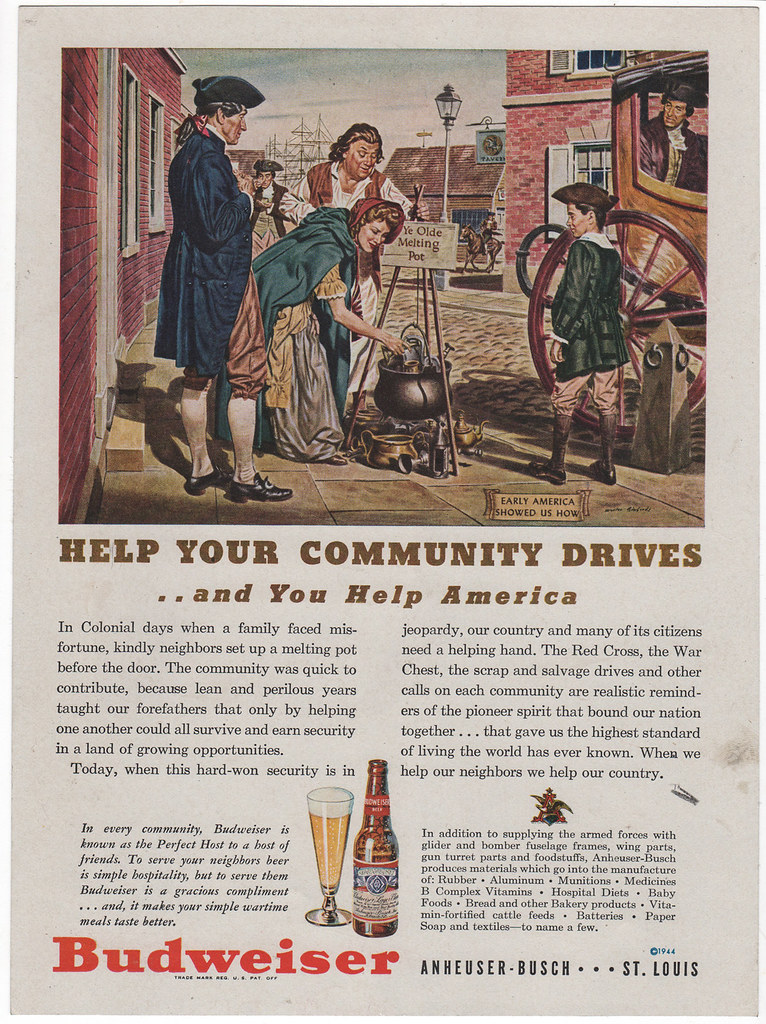
Tuesday’s ad is for Budweiser, from 1944. This World War 2 ad features a Colonial American scene with “Ye Olde Melting Pot” on a street corner. I doubt that’s what actually happened, but I know there were scrap metal drives during World War 2. I have a newspaper clipping when my mother was a little girl when she was made a general in the “tin can army” for collecting a lot of metal (primarily because my grandfather’s job gave him access to it). What it has to do with beer is less clear, except that apparently the brewery also gave to the war effort.
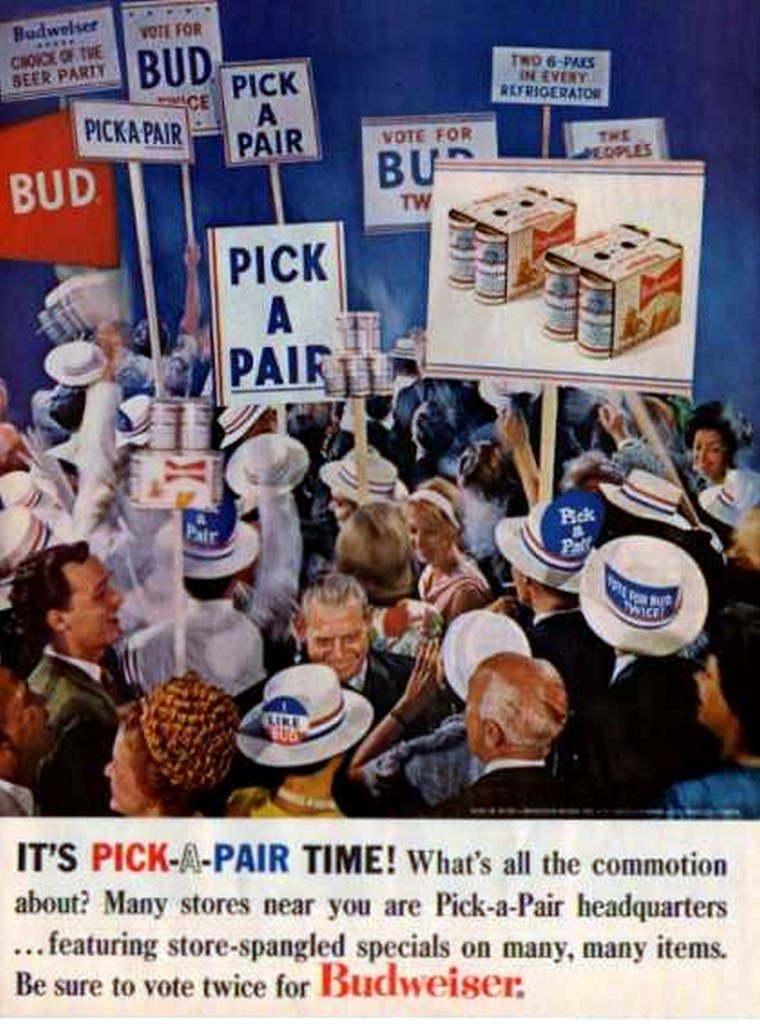
Monday’s ad is for Budweiser, from 1964. Taking a break from the World War 2 theme, this ad features an election theme, with everyone in favor of cheaper beer, but Anheuser-Busch recommending you “vote twice for Budweiser.”
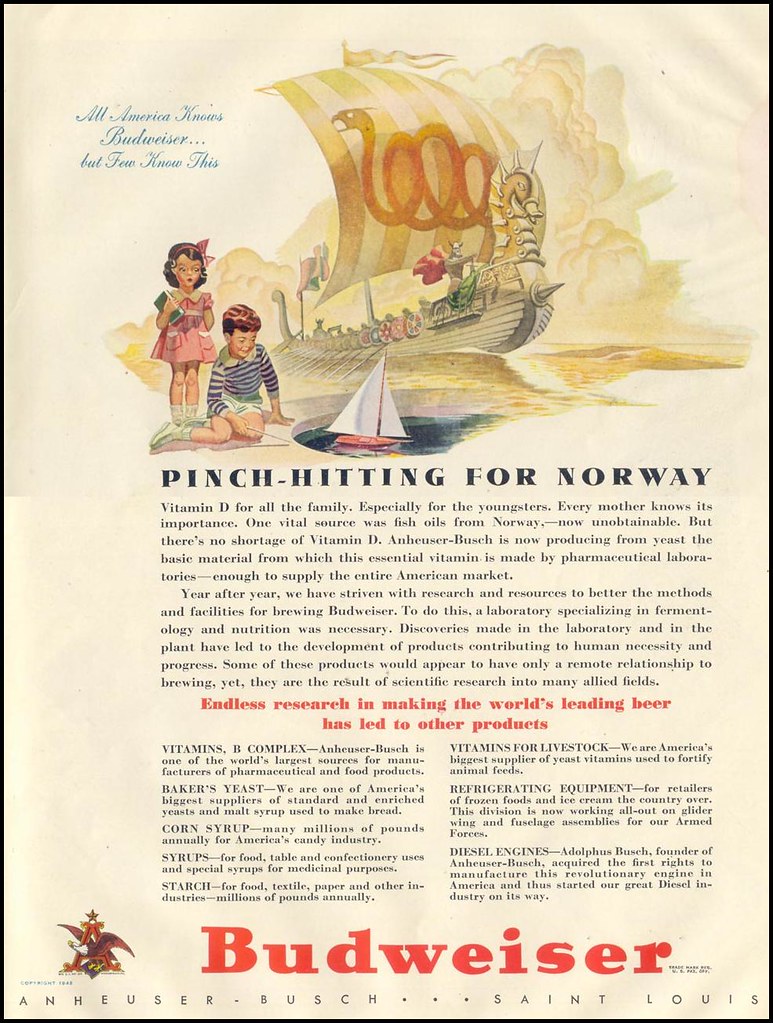
Sunday’s ad is for Budweiser, from 1942. This ad features the curious story of because of World War 2 imported fish oil from Norway — a good source of Vitamin D — was impossible to obtain, but thankfully Budweiser came to the rescue and offered Vitamin D from another source, their yeast.