Brookston Beer Bulletin

Jay R. Brooks on Beer

  • Home
  • About
  • Editorial
  • Birthdays
  • Art & Beer

Socialize

  • Dribbble
  • Email
  • Facebook
  • Flickr
  • GitHub
  • Instagram
  • LinkedIn
  • Pinterest
  • RSS
  • Twitter
  • YouTube

Powered by Genesis

Patent No. 2140187A: Bottle Filling And Gassing Machine

December 13, 2015 By Jay Brooks

patent-logo
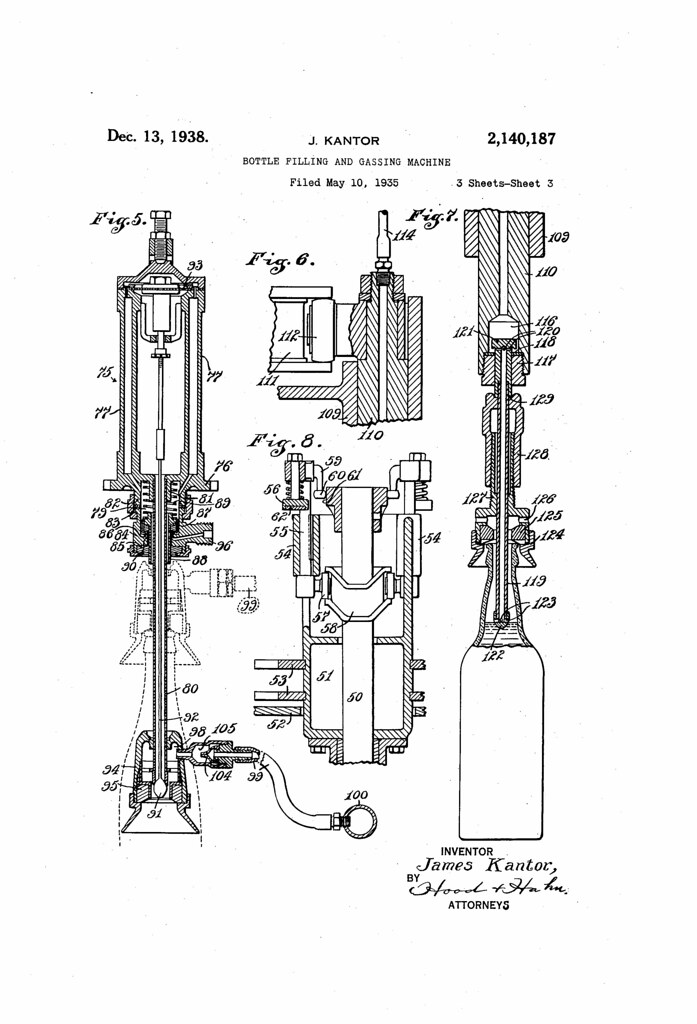
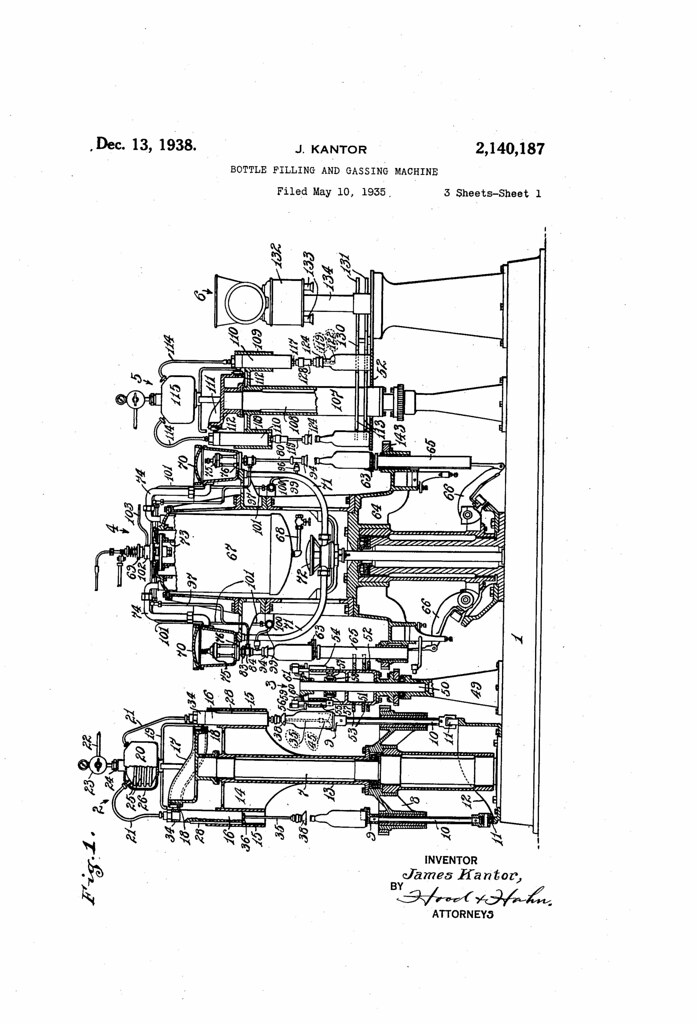
Today in 1938, US Patent 2140187 A was issued, an invention of James Kantor, assigned to the Liquid Carbonic Corp., for his “Bottle Filling and Gassing Machine.” There’s no Abstract, although in the description it includes this summary:

My invention relates to improvements in bottle filling machines particularly adapted for filling bottles with beer, and to a method of filling bottles with beer.

It ha been found that air has a decidedly deteriorating effect on beer and it has been found that where beer has been bottled and the content of air in the bottles is comparatively large, that after storage for a short period the bottled beer not only deteriorates as to color but as to the taste.

As a matter of fact, in the bottling of beer, if the air content of the bottle, after it has-been crowned, is greater than two per cent, the deteriorating effect is decidedly noticeable.

It is one of the objects of my invention to provide a machine and method for filling bottles with beer and to fill the same in such a manner that the air content of the bottle after crowning is reduced to the In the apparatus and in the method in which I am able to fill the bottles, I am enabled to deliver filled and crowned bottles with approximately not more than four-tenths of one per cent of air.
Untitled
Untitled
Untitled

Filed Under: Beers, Breweries, Just For Fun, Politics & Law, Related Pleasures Tagged With: Bottles, Brewing Equipment, History, Law, Patent

Patent No. 20130327064A1: End Table With Concealed Built-In Refrigerator

December 12, 2015 By Jay Brooks

patent-logo
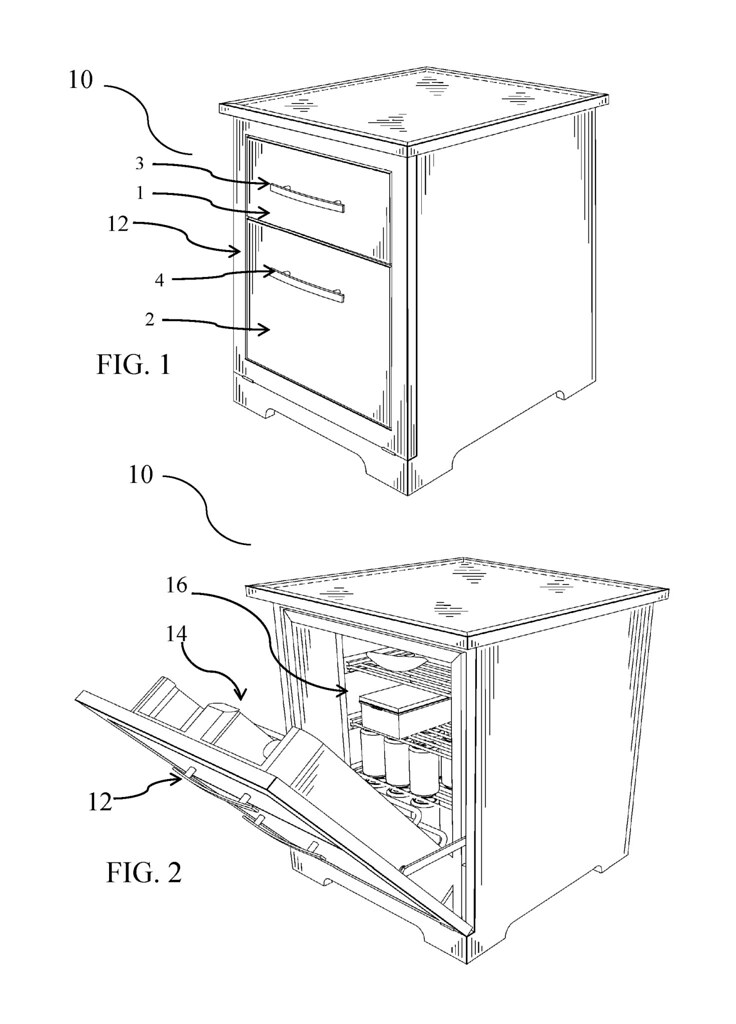
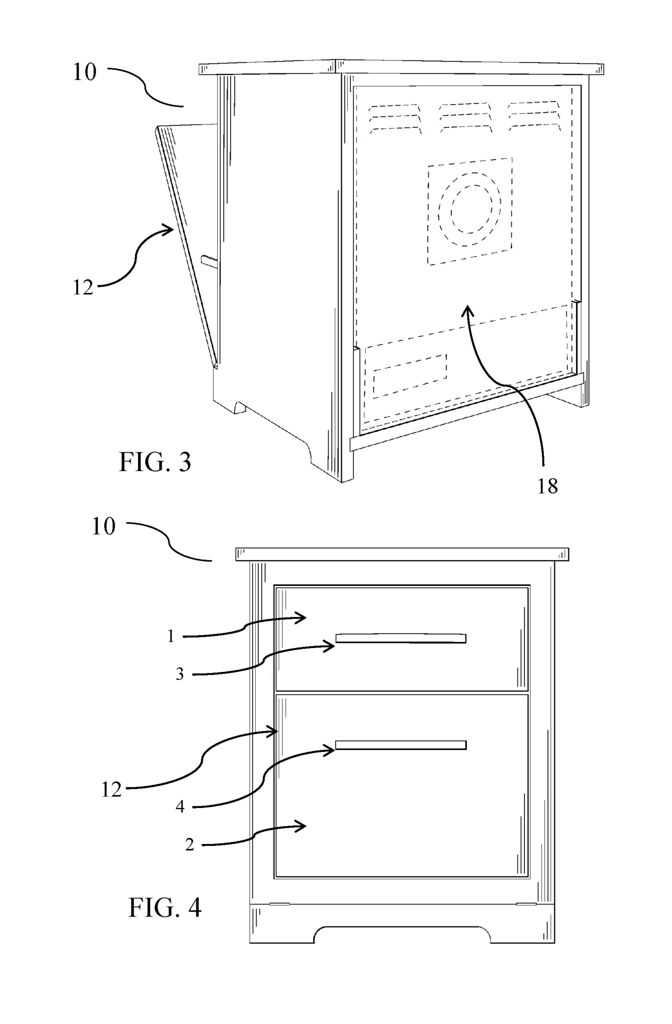
Today in 2013, US Patent 20130327064 A1 was issued, an invention of Thomas C. Stein, for his “End Table with Concealed Built-In Refrigerator.” Here’s the Abstract:

An end table with a concealed built-in refrigerator unit for use next to a chair, sofa, or bed with a front door that opens down like a dishwasher door for easy access to the interior compartment of the refrigerator unit to retrieve canned and bottled beverages or food, while in a seated position. The built-in refrigerator of the end table has a thermoelectric Danby Diplomat type cooling system for maximum efficiency in cooling and whisper soft operation.

Untitled
Untitled
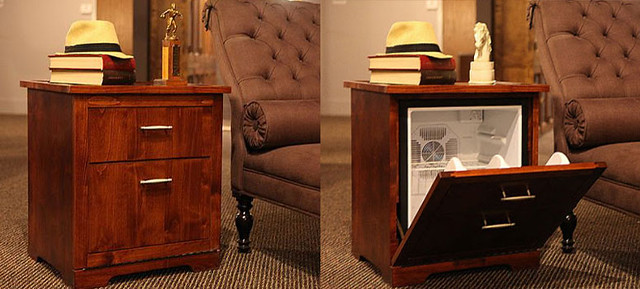
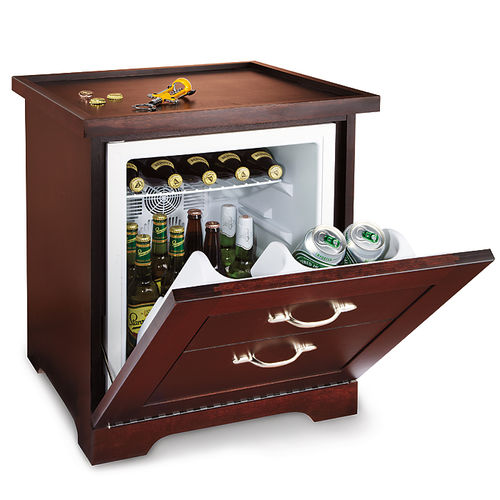
I’m not sure why this patent was granted, such end tables have been around for at least a few years, if not longer. I wrote about ManTables’ End Table Refrigerators five years ago, and this was patented two years back. There’s also another Man Tables – Mini Fridge End Tables for sale that looks remarkably like the drawings filed with the patent application.

Untitled

But a quick Google search reveals quite a few similar, but distinctly different, designs for refrigerator end tables. Here’s one that’s at least similar to the patented design.

Untitled

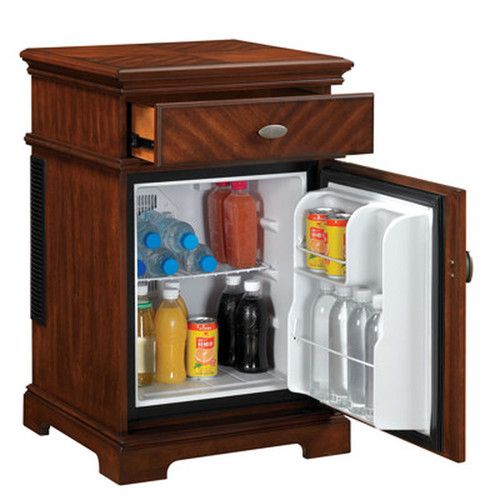
And here’s another one that has more of side door instead of folding down from the top, and also includes an actual working drawer.

Untitled

Filed Under: Beers, Just For Fun, Politics & Law, Related Pleasures Tagged With: Humor, Law, Patent

Patent No. 2183505A: Keg

December 12, 2015 By Jay Brooks

patent-logo
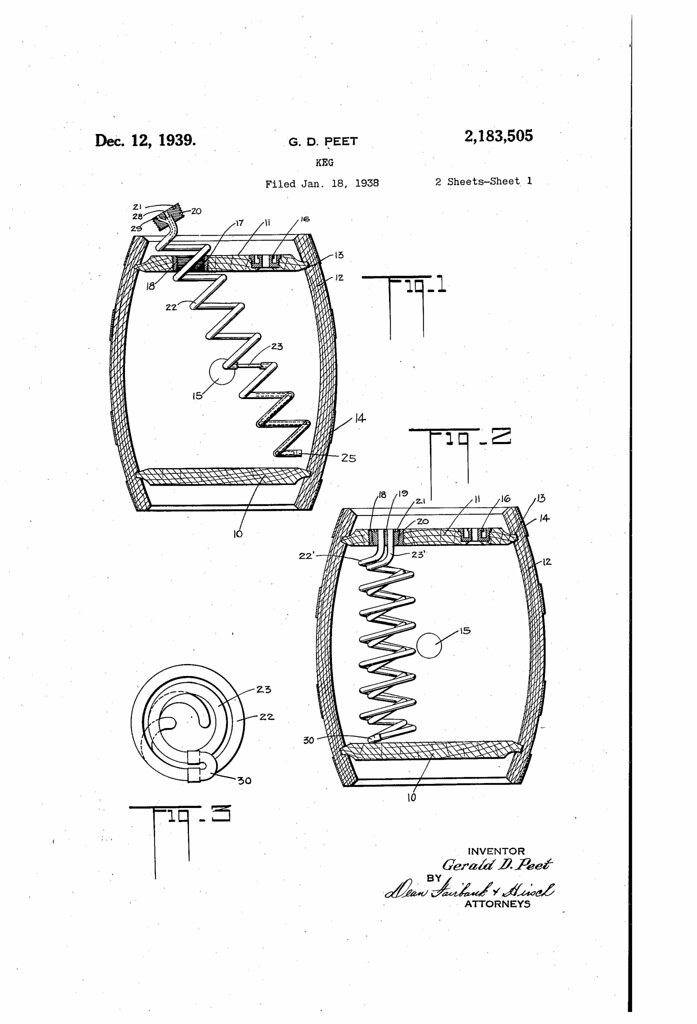
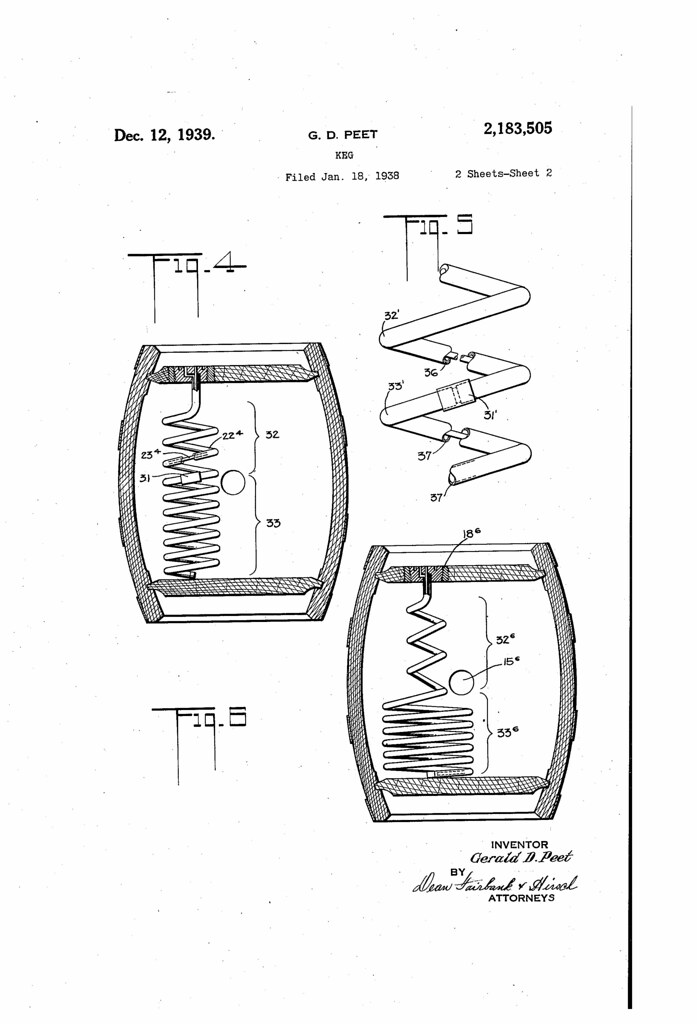
Today in 1939, US Patent 2183505 A was issued, an invention of Gerald D. Peet, for his “Keg.” There’s no Abstract, although in the description it includes this summary:

My present invention is concerned with transportation beer kegs or barrels, and more especially with such kegs as are intended not only to serve as dispensing containers but also to cool and maintain the brew cool within the interior thereof by the circulation of cooling fluid therethrough.

Untitled
Untitled

Filed Under: Beers, Just For Fun, Politics & Law, Related Pleasures Tagged With: History, Kegs, Law, Patent

Patent No. WO1997046116A1: Roasted Hop Solids

December 11, 2015 By Jay Brooks

patent-logo
Today in 1997, US Patent WO 1997046116 A1 was issued, an invention of Vinod K. Chaudhary, Laurel E. Maney, Robert J. Mizerak, David P. Newell, Sydney R. Rader, Subba C. Rao, David S. Ryder, Joseph E. Snyder, and Matthew L. Tripp, assigned to Miller Brewing, for their “Roasted Hop Solids and Methods of Using Them.” There’s no Abstract, although in the description it includes this summary:

A method of roasting hop solids (spent hops) is disclosed. The roasted hop solids are useful for making a light stable, fully kettle hop flavored beverage.

One aspect of the present invention provides a method of roasting hop solids, comprising the steps of feeding the hop solids to a heating means; and exposing the hop solids to a predetermined heating profile in the heating means to produce a roasted hop solids, wherein the predetermined heating profile is chosen so that a fermented hop flavored beverage made using the roasted hop solids has enhanced kettle hop flavor and greater light stability compared to such a beverage if made with an equal amount of unroasted hop solids. The heating means can be any type of dryer capable of drying particulate solids such as flakes, pellets, granules, powders, chips, shreds, leaf, agglomerates, and irregular shapes. For example, a truck dryer or a fluidized bed dry can be used. The predetermined heating profile is preferably further chosen so that substantially all the alpha acids are destroyed. Preferably, the predetermined heating profile is further chosen so that if a fermented hop flavored beverage is made using the roasted hop solids it is light stable. Most preferably, the predetermined heating profile is 98°C for 23-24 hours.

Another aspect of the invention provides a method of making a hop flavored beverage from a fermentable growth media, comprising the steps of adding to the media, prior to bio-conversion, a hop flavoring agent; and bio- converting the media to form the hop flavored beverage, wherein the hop flavoring agent comprises roasted hop solids.

A still further aspect of the invention provides a hop flavored beverage prepared by adding to a fermentable growth media, prior to bio-conversion, a hop flavoring agent comprising roasted hop solids, and then bio- convert the media to form the hop flavored beverage.

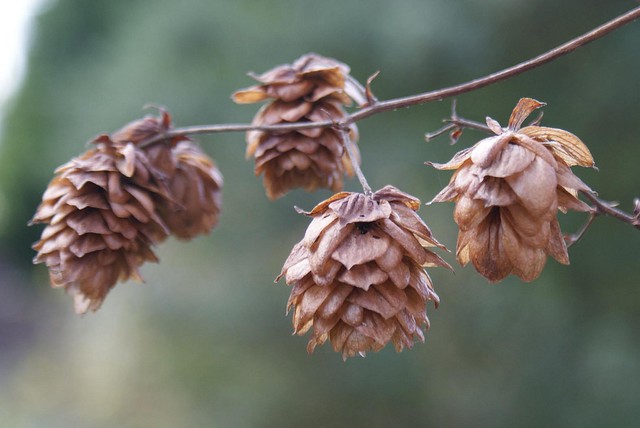
Several years ago, I gave a wine writer a hard time for, among other things, referring to the history of hops in northern California’s past, explaining how hops were once “roasted” throughout the region. Moonlight’s Brian Hunt chimed in, and claimed he’d actually “seen ‘roasted hops’ in print before.” So imagine my surprise when Miller Brewing actually patented a process for roasting hop solids, the spent hops after they’ve been used in the brew, and they also claim that “roasting the hop solids further enhances the fruity/estery hop character imparted by the hop solids.” Hmm.

old-hops

Filed Under: Beers, Breweries, Just For Fun, Politics & Law, Related Pleasures Tagged With: History, Hops, Law, Patent, Science of Brewing

Patent No. 530600A: Apparatus For Bottling Beer

December 11, 2015 By Jay Brooks

patent-logo
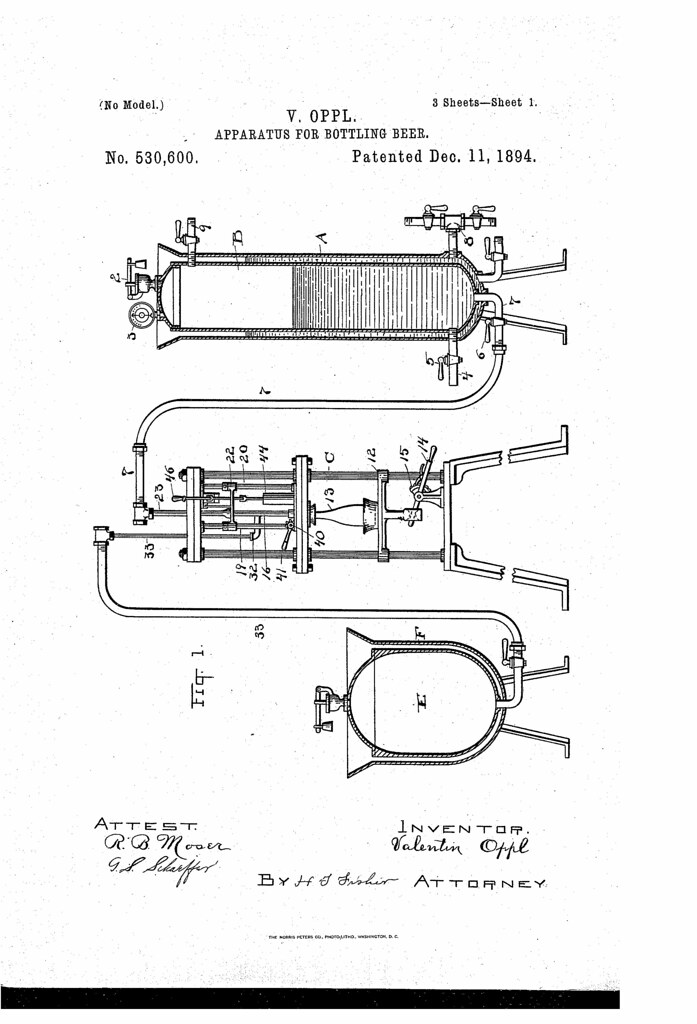
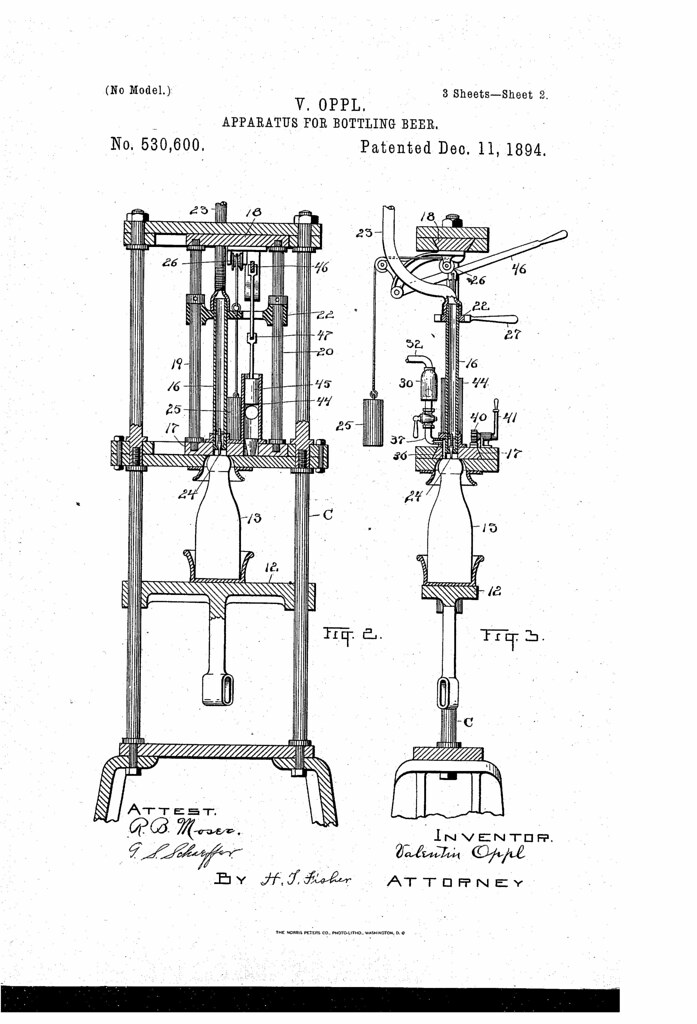
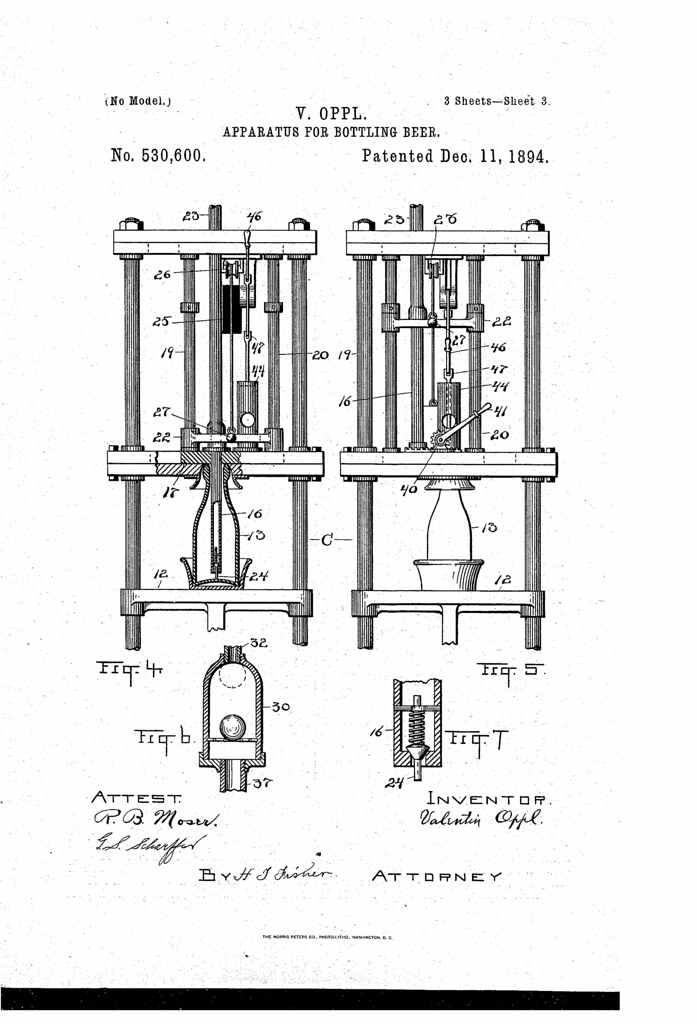
Today in 1894, US Patent 530600 A was issued, an invention of Valentin Oppl, for his “Apparatus For Bottling Beer.” There’s no Abstract, although in the description it includes this summary:

My invention relates to an apparatus for bottling beer, and the invention consists in the construction of apparatus substantially as shown and described and particularly pointed out in the claims

Untitled
Untitled
Untitled

Filed Under: Beers, Breweries, Just For Fun, Politics & Law, Related Pleasures Tagged With: Bottles, Brewing Equipment, History, Law, Patent

Patent No. 2816031A: Beer Brewing Process

December 10, 2015 By Jay Brooks

patent-logo
Today in 1957, US Patent 2816031 A was issued, an invention of Wilhelm Eberhard Schultheis and Walter Specht, assigned to Ultra Technik G M B H, for his “Beer Brewing Process.” There’s no Abstract, although in the description it includes this summary:

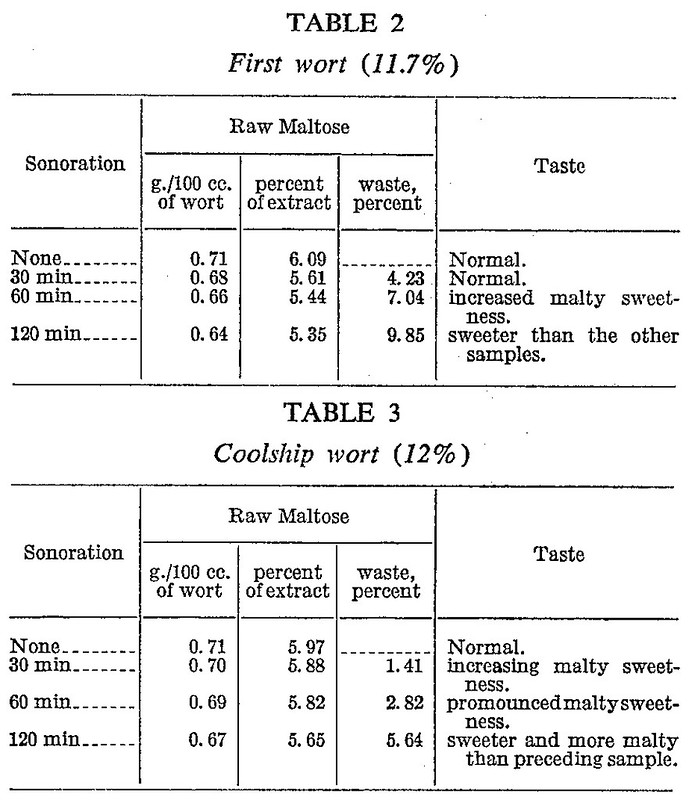
We have found that the production of beer may be made more economical and that beers of superior qualities may be obtained by the application of ultrasonic waves, which term is generally understood to define waves whose frequencies are greater than those which affect the human ear, that is, greater than about 18,000 per second. The ultrasonic irradiation, called hereinafter sonoration, may be applied to various stages of the brewing process. For instance, hops in the presence of water or aqueous solutions, intermediary products such as mash, wort, glattwasser (last wort), or by-products, such as trub, may be treated, singly or severally, also in mixture with each other, with ultrasonic waves to obtain advantages.

As an ultrasonic generator, e. g. the immersion device type T 300a, rotation irradiator with high frequency generator (1000 kilocycles), built by Ultrakust G. m. b; H., Ruhmannsfelden, Lower Bavaria, may be used. The apparatus is preferably operated with full output, whereby it transmits about 300 watts ultrasonic energy to the treated batch.

The sonorat-ion is preferably carried out at elevated temperatures, e. g. between about 50 to 100 (3., which temperatures should be kept constant, and with at least temporary circulation of the treated solution.

A well known drawback of the conventional hopping process, where hops as such are added to the wort, is due to the fact that in the boiling process only about one-third or one-fourth, generally not more than 35 percent, of the bitter principal ‘(resins) contained in the hops pass into the wort, and that, in addition, considerable amounts, e. g. about 3 to 7 percent, of aid resins are precipitated during fermentation and storage.

According to the invention, these drawbacks are obviated by subjecting hops to sonoration in the presence of water or aqueous solutions, e. g. softened brewing water, wort, or last wort; hereby the valuable resins of the hops are dispersed in the extracting liquid without objection: able loss, and the thus obtained resin extracts are used for hopping the wort.

As the hop resins are difficulty soluble in water, only limited amounts of said resins can be dissolved in the water or aqueous solutions used as solvents. In addition, the dissolved resins readily precipitate again, particularly in the presence of absorbent substances, such as spent hops, trub, yeast, or carbon dioxide bubbles. The separation of the resins is further assisted by the fact that the pH of the sweet wort changes during fermentation from United States Patent 2 5.5 to about 4.5, which reduces the solubility of the resins.

We have found that ultrasonic waves have the elfect of producing a fine colloidal dispersion of the difficulty soluble resins in the extract, and at the same time, a stabilization against objection-able precipitation of said dispersed resins in the extract and later in the wort. We believe that this stabilizing action is due to colloidal substances which pass by the sonoration together with the resins into the aqueous liquid, and also to colloidal substance contained in the wort; This may explain the phenomenon that res-ins isolated by sonoration from the hops and dispersed in the aqueous phase can be concentrated in the extract; even in the acid range, to a considerable’ extent and that on addition of the resin extracts thus obtained to the boiling wort objectionable precipitation of resins is substantially avoided. Therefore, the resins are essentially retained in the wort and do not pass, to the extent experienced heretofore, into the trub or during fermentation into the so-called curls or into the yeast.

The extraction of the resins by scnoration may be carried out separately in a metal vessel of a suitable size for the hatch, e. g. in the hop strainer available in breweries, and the resin extract thus obtained will be admixed to the wort in suitable amounts. For instance, we may mix the allotted amount of hops with the extracting liquid, which has been heated to about 50 to 60 C. or even higher, and first agitate the mixture, for instance by circulator, for several minutes to obtain swelling and only subsequently start the sonoration. As extracting liquid, we may use decarbonate’d brewing water, or the glattwasset (last wort) obtained by washing (sparging) the spent grains separated from the first wort, or even the first wort itself. The amount of liquid to be added to the hops depends on the desired concentration ratio between hops arid liquid. In determining the optimum working conditions, it must be taken into account that the maximum extraction effect is not only dependent on said concentration ratio, but also on the nature and composition of the extraction liquid, the pH value, the extraction temperature, the ultrasonic intensity and the sonoration time. Our experiments were carried out at a temperature of about 5060 C. and the temperature was kept constant throughout the extraction period. Under these conditions, a sonoration period of about one hour lproved generally to be sufficient; sometimes it was necessary to apply a somewhat longer sonoration, e.g. up to two hours, in order to obtain optimum results. The extraction by means of sonoration may, however, be carried through also at higher temperatures, e. g. between 60 and C. with a shortened sonoration.

After completion of the extraction, the resinous extract may be separated from the spent hops, e.g. by filtering with suction, and separately processed.

Untitled
Untitled

Filed Under: Beers, Breweries, Just For Fun, Politics & Law, Related Pleasures Tagged With: Brewing Equipment, History, Law, Patent, Science of Brewing

Patent No. 2816032A: Method Of Preparing A Hops Powder

December 10, 2015 By Jay Brooks

patent-logo
Today in 1957, US Patent 2816032 A was issued, an invention of Willy Heyer, for his “Method of Preparing a Hops Powder.” There’s no Abstract, although in the description it includes this summary:

The present invention relates to a method of preparing a hops powder by extracting natural or fresh hops with the aid of an alkaline solvent. A hops powder prepared by the method according to the invention has an application as a base material in the making of beer.

According to the invention, the hops is extracted in a brewing wort of 4 to 6 percent and softened brewing water, the hydrogen ion concentration (pH number) being adjusted from 8.0 to 8.3. With the pH number maintained within this range, an optimum yield of iso-humulone is obtained, which substance is of prime importance in regard to the making of beer, said substance being obtained as a transformation product of humulone which latter is soluble in wort and beer to a very slight extent only.

According to a specific object of the invention the desired pH number of between 8.0 and 8.3 is adjusted by the addition of alkaline salts. Substances particularly suitable for this purpose are soda lye, soda, potash and in the case of boiling under pressure, salt of ammonium. One major object of the invention is to be seen in the fact that the pH number, once it ‘has been adjusted to a value between 8.0 and 8.3, is stabilized by a buffer substance contained in the wort. A suitable buffer substance, is for example a solvent of potassium-sodium phosphate. A buffer substance of this type may be relied upon to maintain substantially constant the pH number which may take any value between 8.0 and 8.3, the use r of the butter substance preventing the pH number from exceeding its upper limiting value, thus preventing any undesirable formation of humulinic acid.

The adjustment of the pH number between 8.0 and 8.3 may be performed, according to the invention, by titrimetric or electrometric methods.

Untitled

Filed Under: Beers, Breweries, Just For Fun, Politics & Law, Related Pleasures Tagged With: History, Hops, Law, Patent, Science of Brewing

Patent No. 4557186A: Brewing Apparatus

December 10, 2015 By Jay Brooks

patent-logo
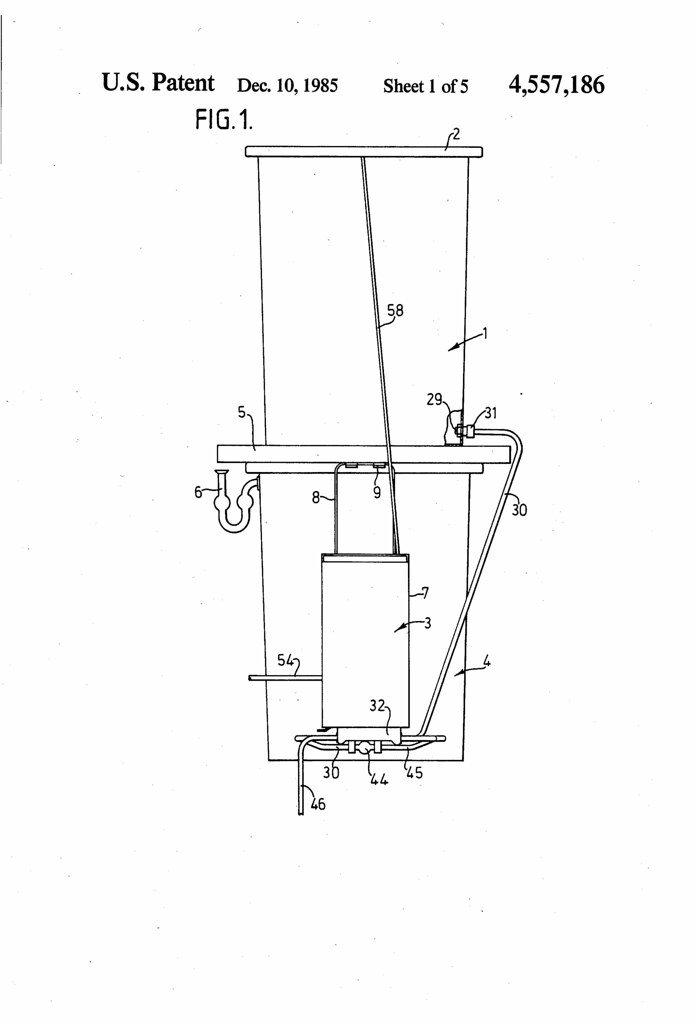
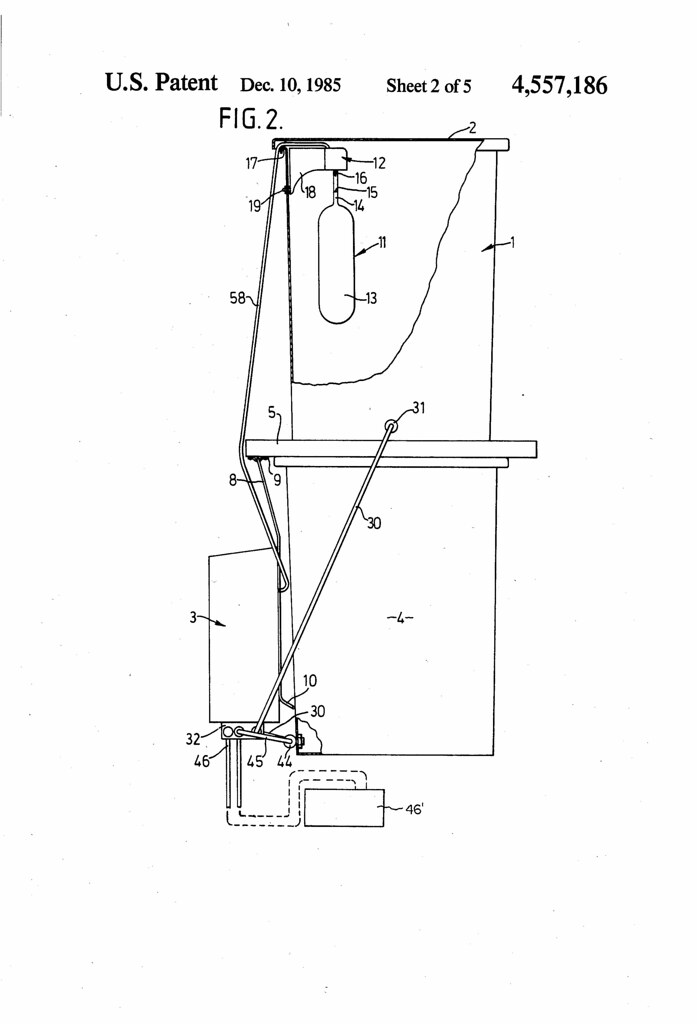
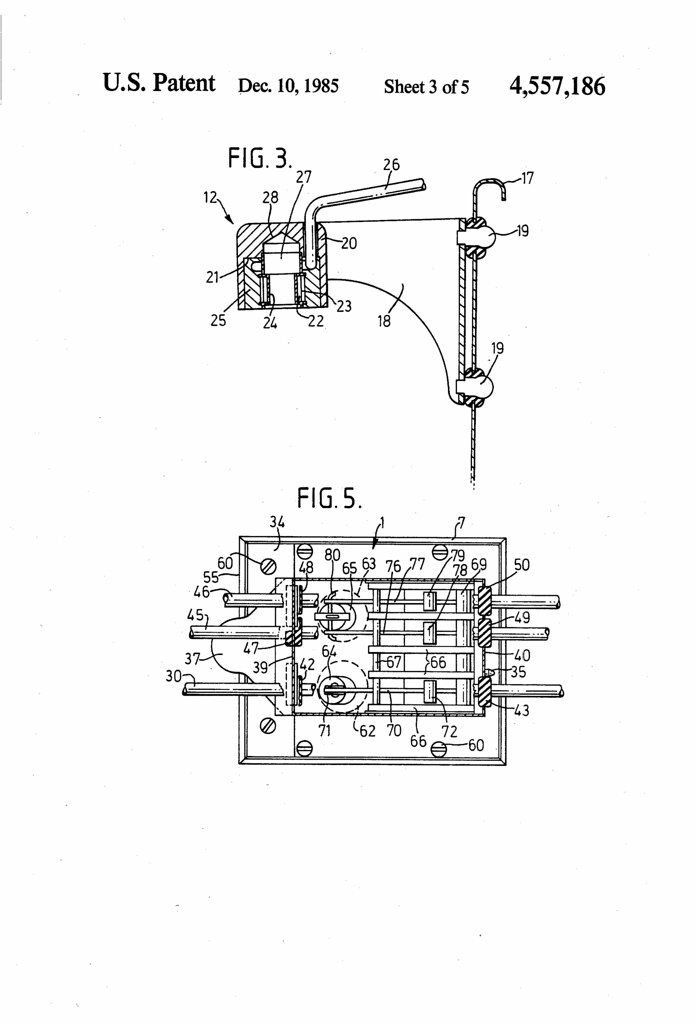
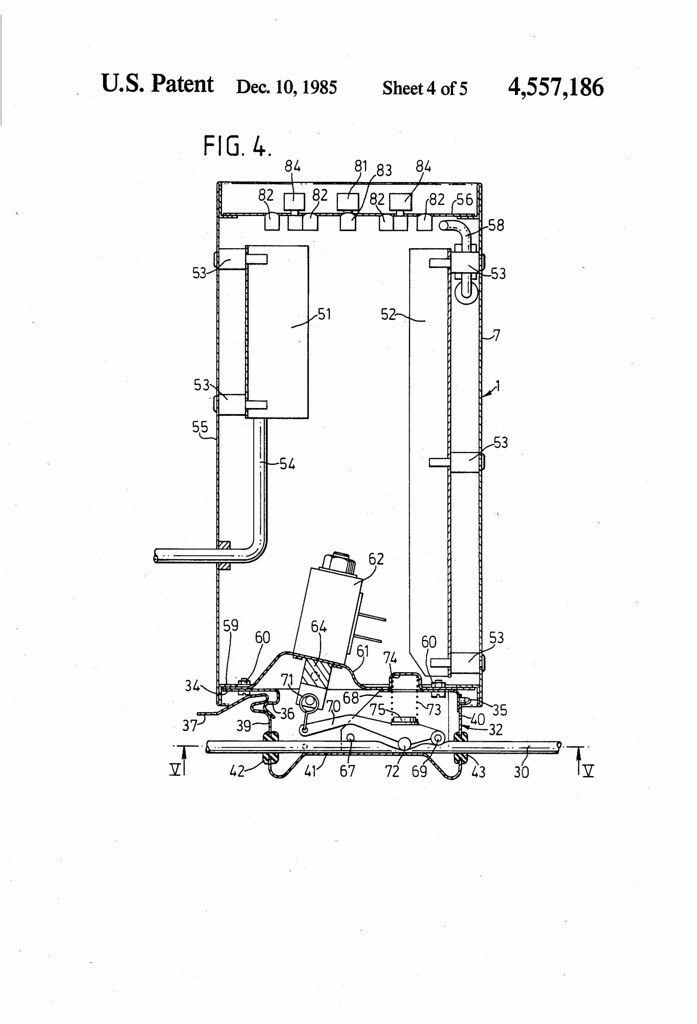
Today in 1985, US Patent 4557186 A was issued, another invention of Christopher J. L. Brown, assigned to Bowmans Brewer, Ltd., for his “Brewing Apparatus.” Here’s the Abstract:

Brewing apparatus for batch brewing beer or ale comprises a fermentation vessel 1 in which a fermentable liquor is contained, a float hydrometer 11 and a sensor 12 for monitoring downward displacement of the hydrometer 11 as the specific gravity of the liquor reduces due to fermentation. The sensor 12 includes means for providing a signal in a controller 3 at a desired specific gravity to indicate completion of the required fermentation and the controller 3 is operable to control automatic transfer of the fermented liquor to a maturing vessel 4 and, after a predetermined time interval to a barrel or the like.

Untitled
Untitled
Untitled
Untitled

Filed Under: Beers, Breweries, Just For Fun, Politics & Law, Related Pleasures Tagged With: Brewing Equipment, History, Law, Patent, Science of Brewing

Patent No. 3415654A: Deep Vat Fermentation Of Beer

December 10, 2015 By Jay Brooks

patent-logo
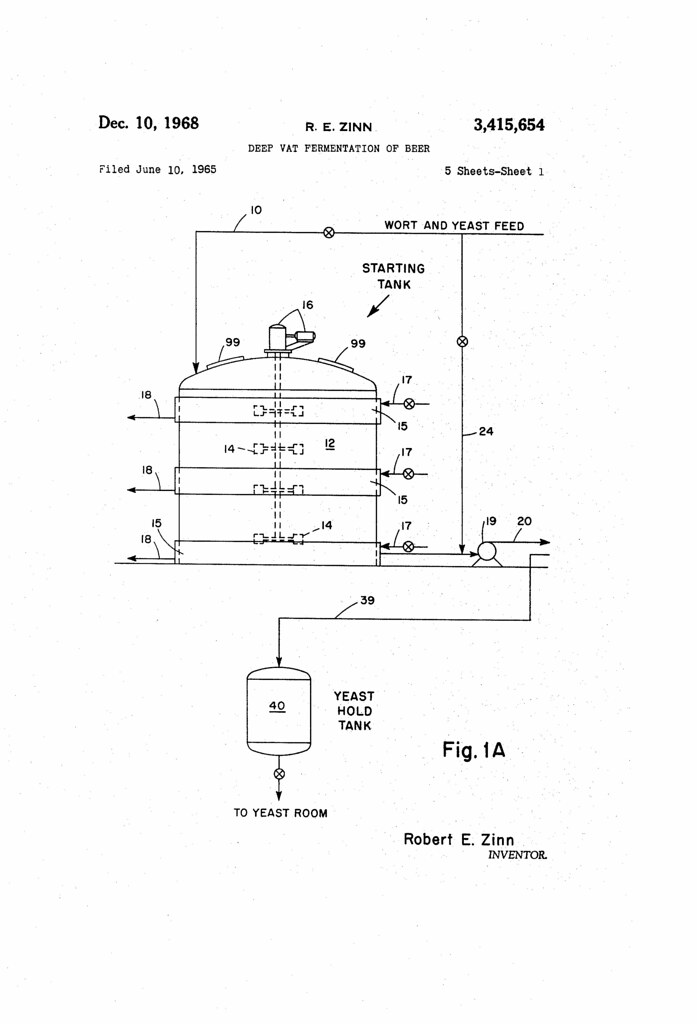
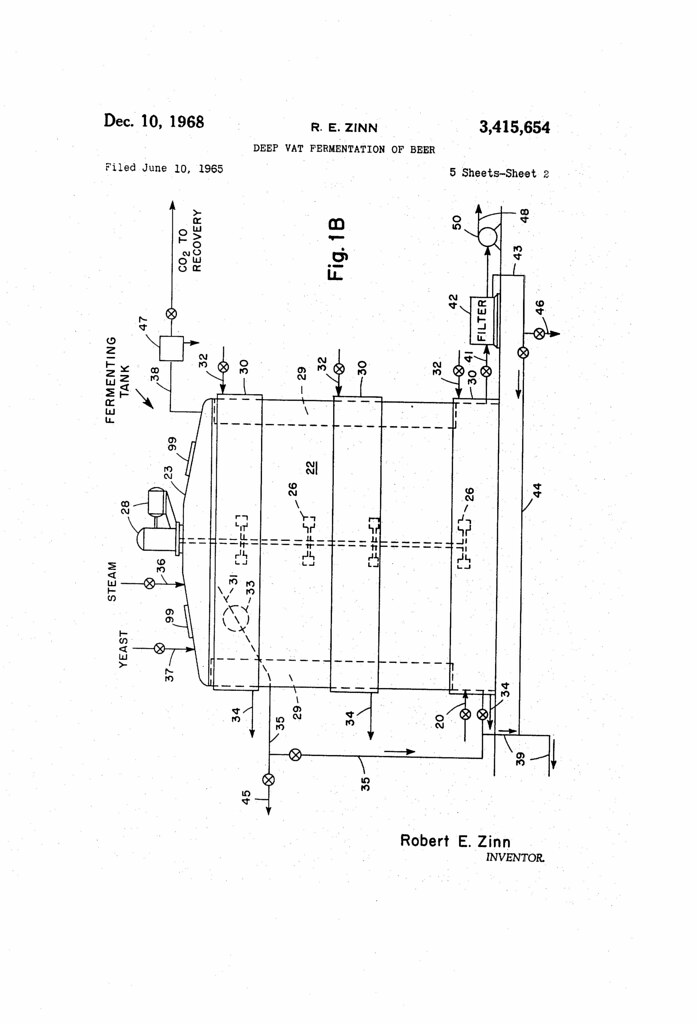
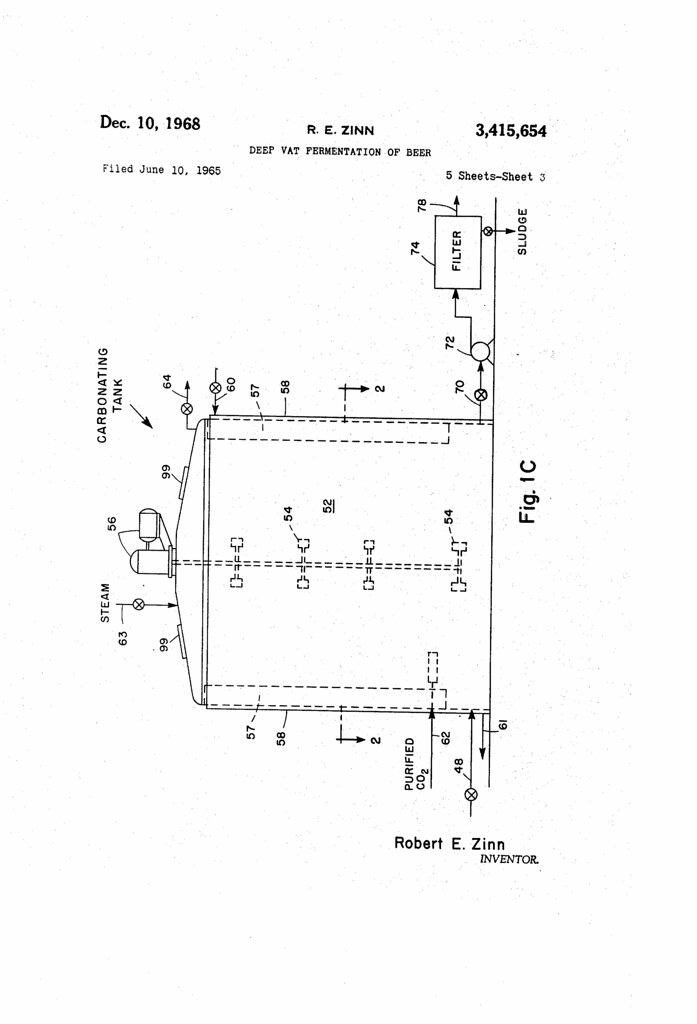
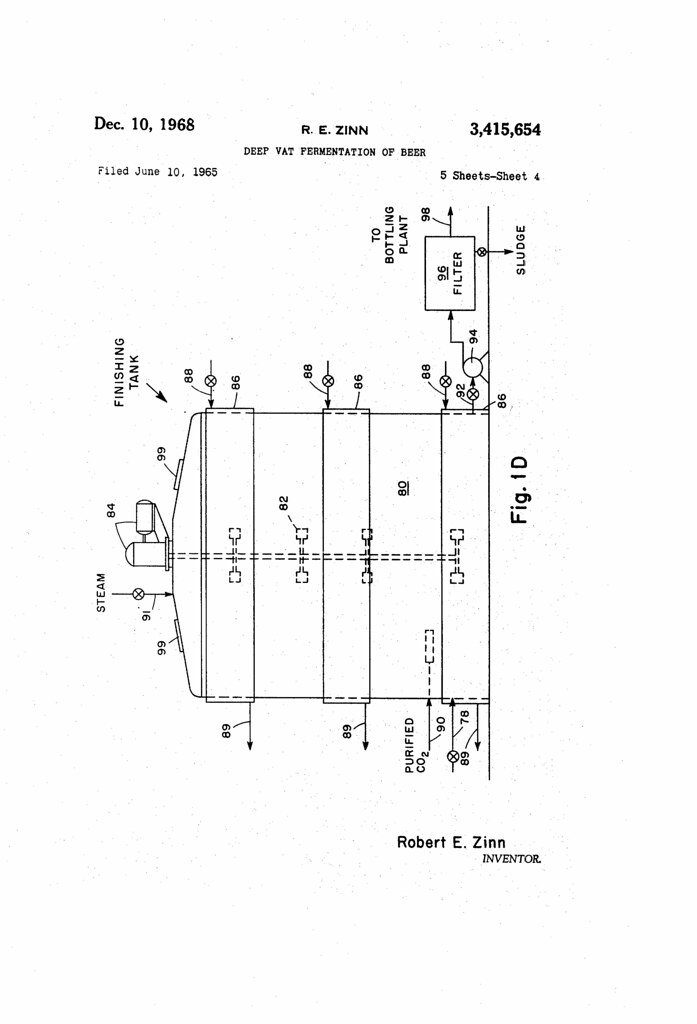
Today in 1968, US Patent 3415654 A was issued, another invention of Robert E. Zinn, assigned to Falstaff Brewing Corp., for his “Deep Vat Fermentation of Beer.” There’s no Abstract, although in the description it includes this summary:

This invention relates to an improved process for making beer, and to apparatus for carrying out the process. By the term beer is meant the various fermented malt beverages commonly included within that term, e.g., lager, ale, bock, porter, and stout. The fermentation of malt beverages is similar in many respects to fermentations in general; however, the consumption of the product by humans to satisfy thirst and for pleasure imposes unique and severe organoleptic criteria on the product.

It has now been found, in accordance with the present invention, that the fermentation of beer, to produce a highly acceptable product, can be carried out advantageously without the use of cellars and in thermally insulated and temperature-controlled individual tanks which provide the requisite greater beer depth and thus the greater foam depth. Despite the greater static pressure in the brew at these greater depths, the normal course of yeast-wort fermentation can unexpectedly be achieved, although hitherto it has generally been considered impossible or undesirable. Additionally, a volume of fermenting beer confined to a deep tank has a smaller surface area exposed to air than the same volume in a shallow tank. Preferably, the reciprocal ratio of surface area to the volume of liquid should be at least 20, and may exceed 60 or more. It will be noted that depth alone controls the surface area to volume ratio of the beer liquid.

A principal object of the present invention is therefore to provide a method of and apparatus for deep fermentation of beer with improved control of foam removal.

It is an object of the invention to provide a process of deep fermentation where the reciprocal ratio of surface area to the volume of liquid is at least 20. It is another object of the invention to provide a deep fermentation process wherein the reciprocal ratio of surface area to volume of liquid exceeds 40.

The object of this invention is attained by providing one or more deep fermentation tanks or fermenters of sufficient size to provide a beer depth of at least 20 feet, each tank being jacketed with suitable temperature control means adequate to assure the desired temperatures within the tanks. These tanks are supplied with wort and yeast and other conventional ingredients prepared in the usual fashion for supplying to beer fermentation tanks. Provisions are also made for thoroughly mixing the ingredients as fed to the fermentation tanks, and preferably also for circulation of the contents of such tanks during fermentation, so that the yeast may be effectively distributed throughout the fermenting mass to provide complete uniformity, thus assisting in assuring desired taste characteristics of the fermented product. Each fermenter is provided with means for selectively removing foam from the brew surface.

Untitled
Untitled
Untitled
Untitled

Filed Under: Beers, Breweries, Just For Fun, Politics & Law, Related Pleasures Tagged With: Brewing Equipment, History, Law, Patent, Science of Brewing

Patent No. 2620961A: Carton Flap Opener

December 9, 2015 By Jay Brooks

patent-logo
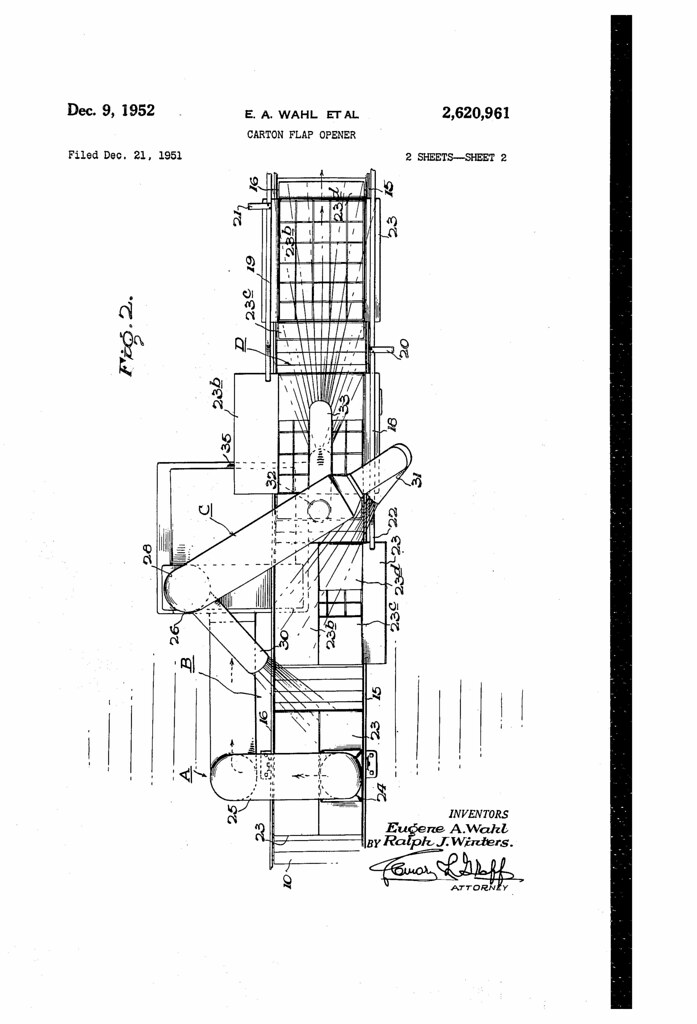
Today in 1952, US Patent 2620961 A was issued, another invention of Eugene A. Wahl and Ralph J. Winters, assigned to Ballantine & Sons, for their “Carton Flap Opener.” There’s no Abstract, although in the description it includes this summary:

The present invention relates generally to a method and apparatus for inspecting the interior and/or contents of cartons, or for filling and emptying cartons, and more particularly to a method and apparatus for unfolding the carton fiaps from folded closed position to unfolded open position to automatically have access to the interior of the carton for any desired purpose.

Untitled
Untitled

Filed Under: Beers, Breweries, Just For Fun, Politics & Law, Related Pleasures Tagged With: Brewing Equipment, History, Law, Packaging, Patent

« Previous Page
Next Page »

Find Something

Northern California Breweries

Please consider purchasing my latest book, California Breweries North, available from Amazon, or ask for it at your local bookstore.

Recent Comments

  • Bob Paolino on Beer Birthday: Grant Johnston
  • Gambrinus on Historic Beer Birthday: A.J. Houghton
  • Ernie Dewing on Historic Beer Birthday: Charles William Bergner 
  • Steve 'Pudgy' De Rose on Historic Beer Birthday: Jacob Schmidt
  • Jay Brooks on Beer Birthday: Bill Owens

Recent Posts

  • Historic Beer Birthday: John J. Schlawig February 27, 2026
  • Beer In Ads #5134: Lord Bushkill On Bushkill Bock February 27, 2026
  • Historic Beer Birthday: William Henry Beadleston February 27, 2026
  • Beer In Ads #5133: Going… Going… SB Bock February 26, 2026
  • Beer Birthday: Art Larrance February 26, 2026

BBB Archives

Feedback

Head Quarter
This site is hosted and maintained by H25Q.dev. Any questions or comments for the webmaster can be directed here.