Brookston Beer Bulletin

Jay R. Brooks on Beer

  • Home
  • About
  • Editorial
  • Birthdays
  • Art & Beer

Socialize

  • Dribbble
  • Email
  • Facebook
  • Flickr
  • GitHub
  • Instagram
  • LinkedIn
  • Pinterest
  • RSS
  • Twitter
  • YouTube

Powered by Genesis

Patent No. 5405039A: Can For Beverage

April 11, 2015 By Jay Brooks

patent-logo
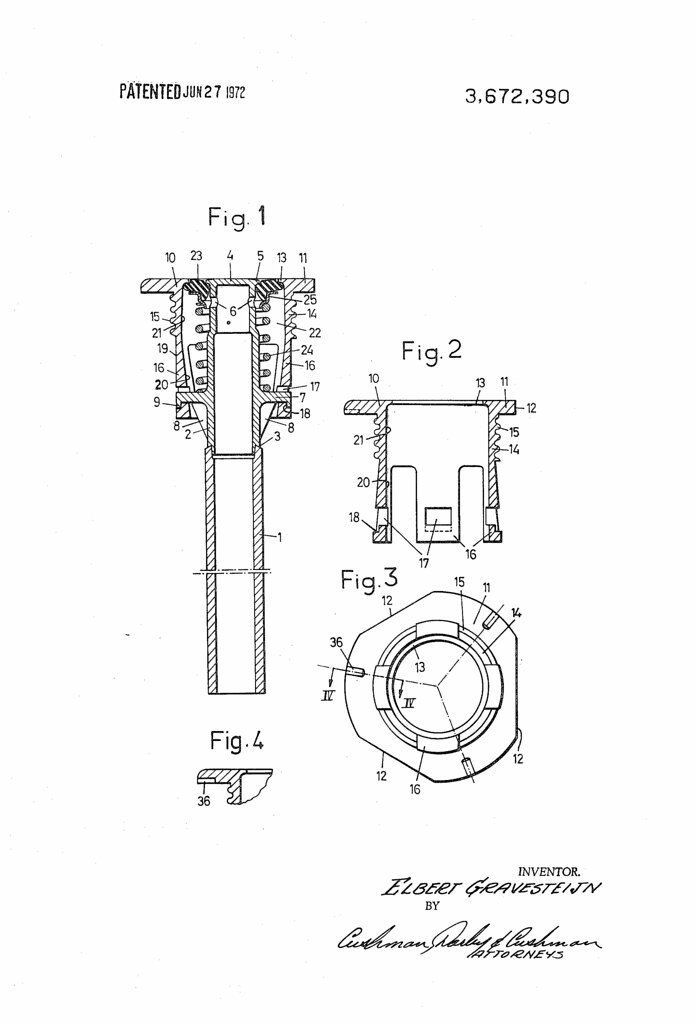
Today in 1995, US Patent 5405039 A was issued, an invention of Masahiro Komura, for his “Can For Beverage.” Here’s the Abstract:

A can for containing a beverage has a cylindrical body, a top lid for forming an opening through which the beverage can be drunk from the can, a small tab having a finger-receiving hole staked to a central portion of the top lid with a staking member, and a line of weakness defining the opening. This line is in the form of a segment of a circle centered about the staking member. This segment is between an approximately semicircular segment and a 90 degree segment.

US5405039-1
US5405039-2
US5405039-3

Filed Under: Beers, Breweries, Just For Fun, Politics & Law, Related Pleasures Tagged With: Cans, History, Law, Patent

Bistro IPA Festival Winners 2015

April 11, 2015 By Jay Brooks

bistro
After missing this festival for the past few years, I finally made it back to judge this year’s Bistro IPA Festival. This year’s big winner was Solana Beach IPA, from Pizza Port Solana Beach, which was chosen best in show, out of 70 IPA offerings, at the 18th annual IPA Festival today at the Bistro in Hayward, California. The full list of winners is below.

  • 1st Place: Solana Beach IPA (Pizza Port Solana Beach)
  • 2nd Place: Spring IPA (Faction Brewing)
  • 3rd Place: Raceway IPA (Pizza Port Carlsbad)
  • People’s Choice: Knee Deep Breaking Bud (Knee Deep Brewing)

Filed Under: Beers, Breweries, Events, News Tagged With: Awards, Bay Area, California, IPA

Patent No. 989546A: Bottle-Filling Machine

April 11, 2015 By Jay Brooks

patent-logo
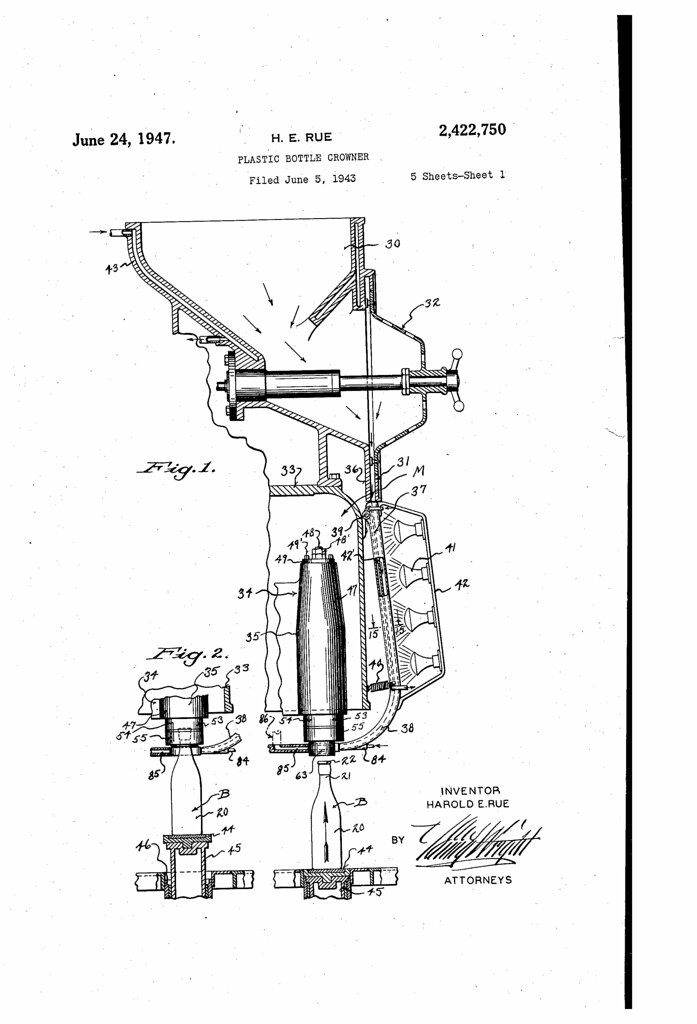
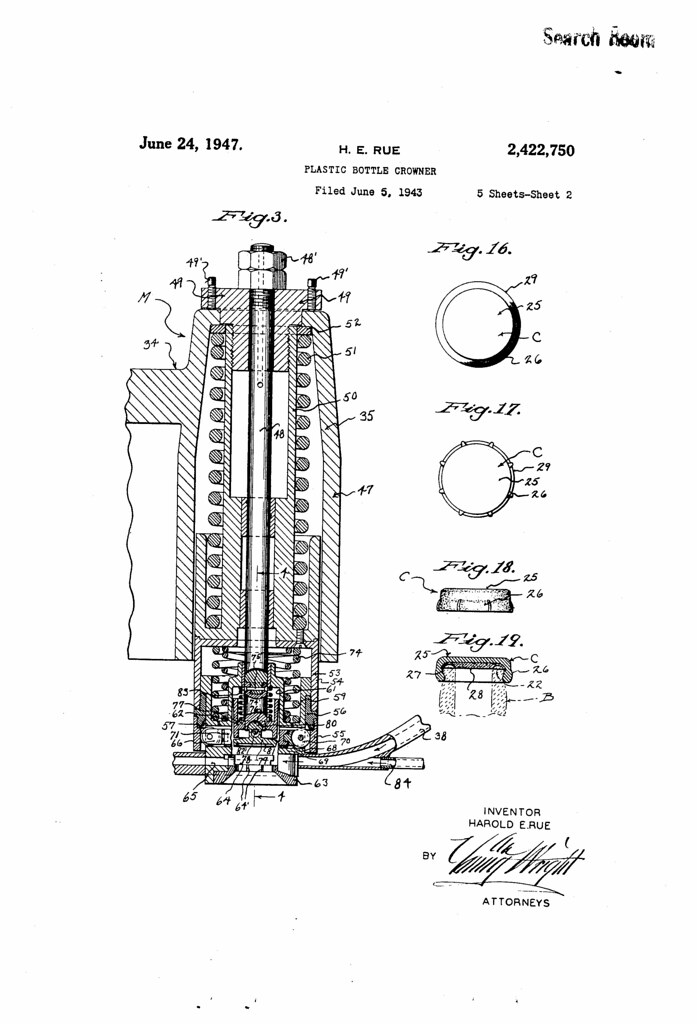
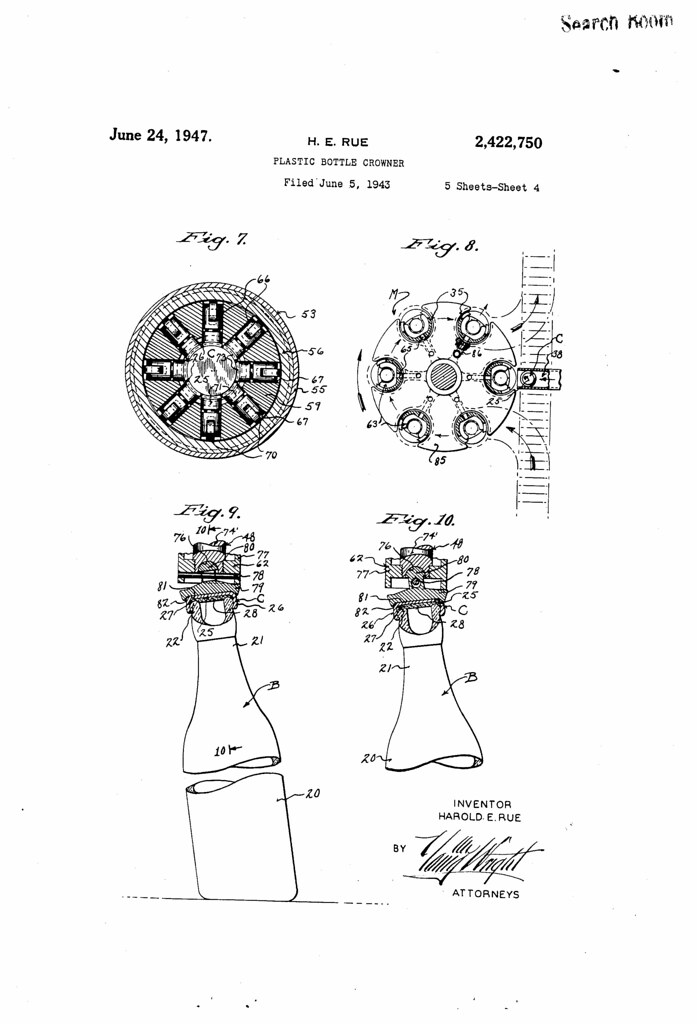
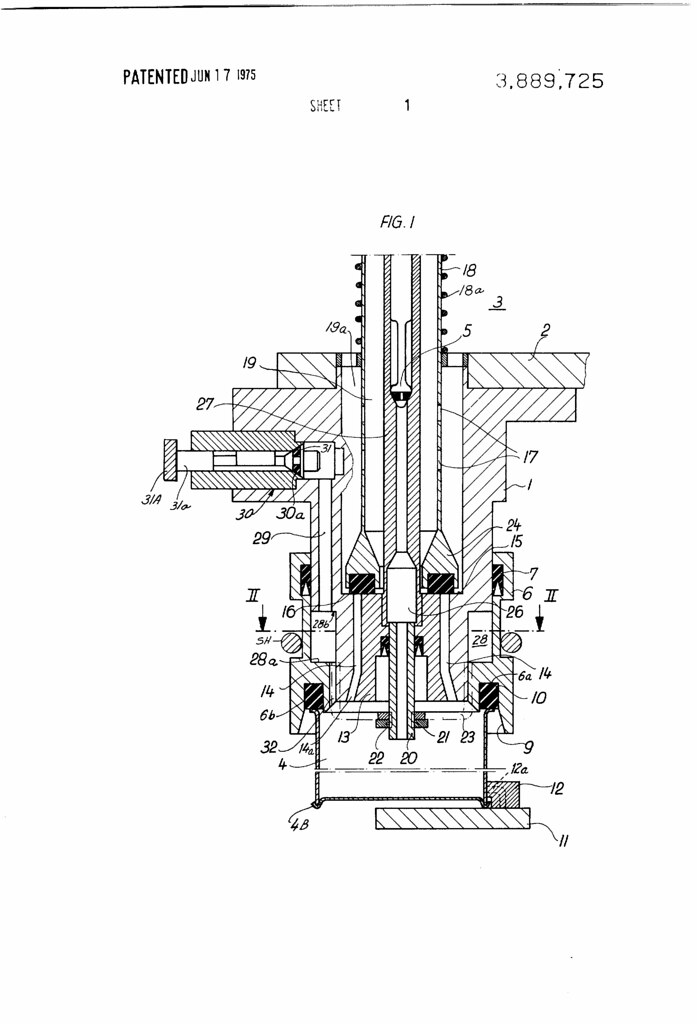
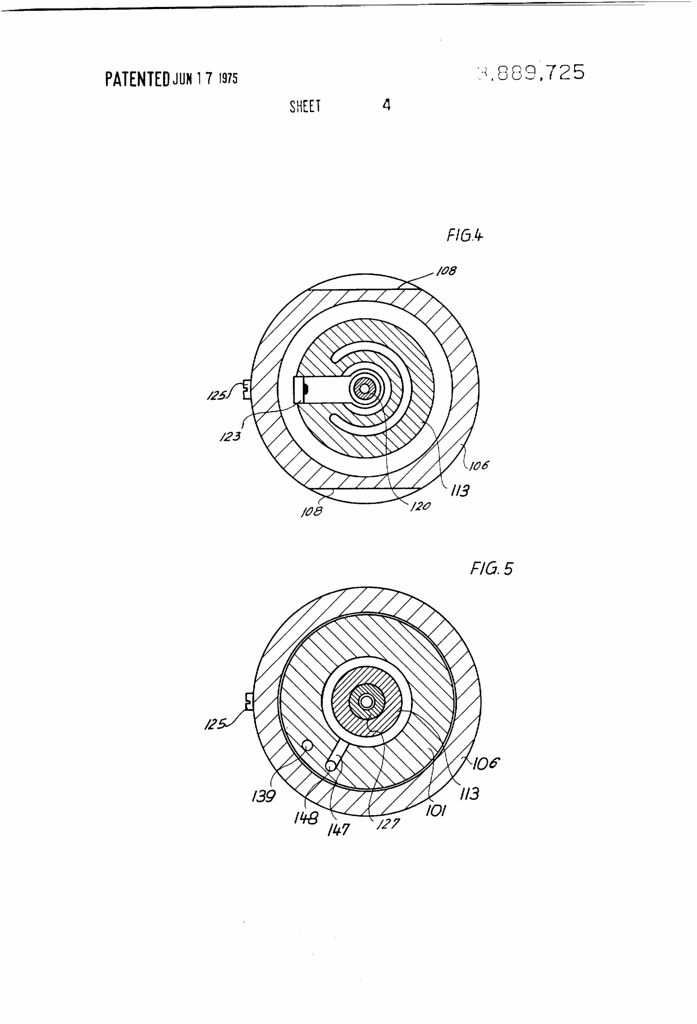
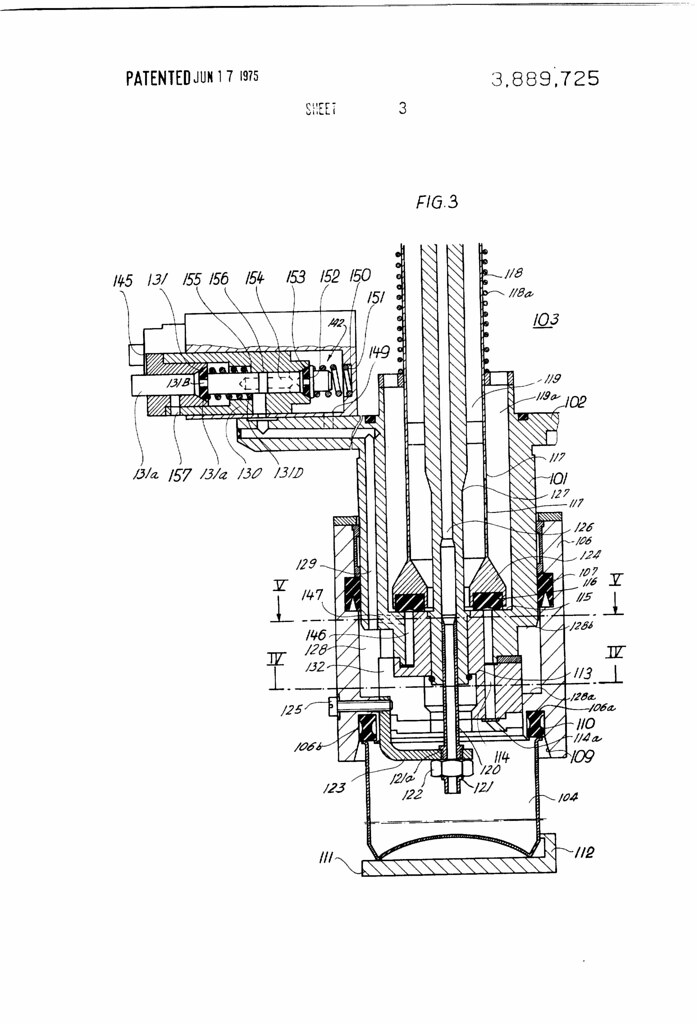
Today in 1911, US Patent 989546 A was issued, an invention of Mathias Jensen, for his “Bottle-Filling Machine.” There’s no Abstract, but there’s this description. “invented a new and Improved Bottle-Filling Machine, of which the following is a full, clear, and exact description.”

This invention relates to certain improvements in machines for filling bottles, cans, or other containers with liquid or semi-liquid` substances, and more particularly to that type of machine in which a series of empty containers are continuously delivered to the machine, automatically filled in succession, and continuously delivered thereof. In a filling machine embodying all of the various features of my invention, the containers are conveyed along an endless belt to the machine and the latter operates to remove them from the belt, fill them in succession, and return them to the belt. The machine is so constructed that after filling each bottle, the liquid is removed from the bottle to a predetermined level below the mouth thereof, irrespective of slight variations in the height of successive bottles.

US989546-0
US989546-1
US989546-2

US989546-3 US989546-4

Filed Under: Beers, Breweries, Just For Fun, Politics & Law, Related Pleasures Tagged With: Brewing Equipment, History, Law, Patent, Science of Brewing

Patent No. 4915959A: Decarboxylation Of Acetolactate To Diacetyl, Enzymatic Reduction To Acetoin

April 10, 2015 By Jay Brooks

patent-logo
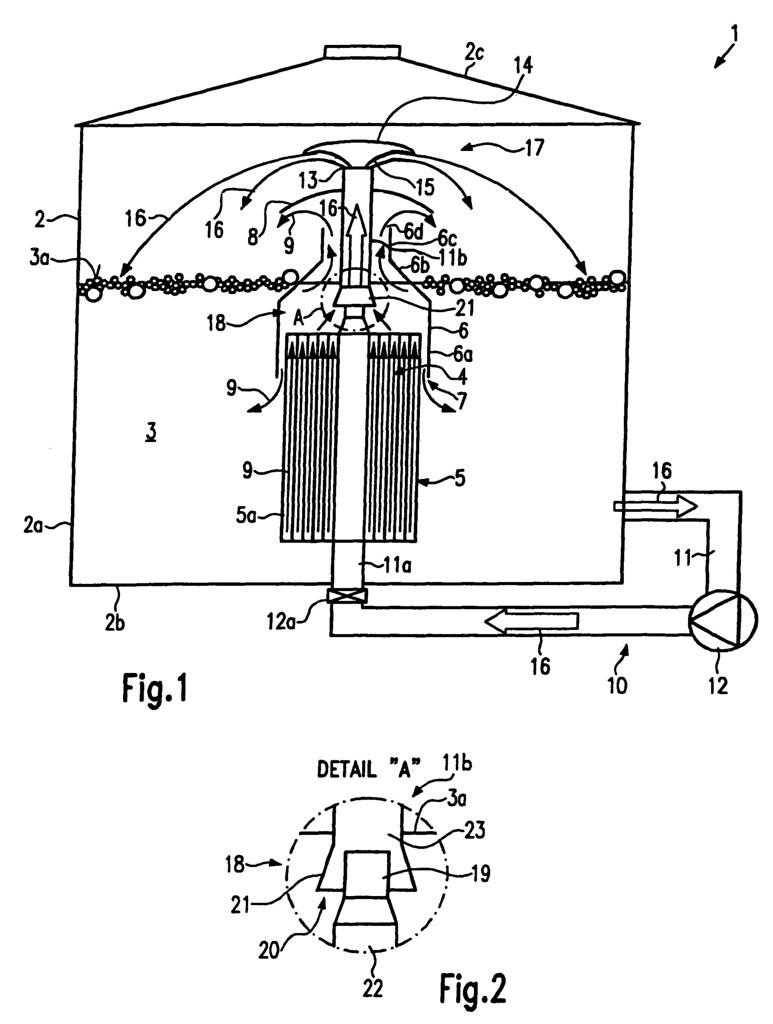
Today in 1990, US Patent 4915959 A was issued, an invention of Esko Pajunen, Veijo Makinen, Heikki O. Lommi, and Markku S. Loisa, for their “Method for the Continuous Maturation of Fermented Beer” or the “Decarboxylation of Acetolactate to Diacetyl, Enzymatic Reduction to Acetoin.” Here’s the Abstract:

Beer is fermented by the use of yeast and after fermentation the yeast is removed and the maturation or lagering of the beer is accomplished by a continuous maturation process which involves heat treating the beer to convert all or substantially all the alpha acetolactate and other diacetyl precursors present to diacetyl, cooling the beer, and feeding the heat treated fermented beer through a reaction column packed with immobilized yeast cells at a flow rate which effects the conversion of said diacetyl to acetoin in order to lower the concentration of said diacetyl to levels which do not result in tastes normally considered unacceptable for a beer.

US4915959-1 US4915959-2

US4915959-3 US4915959-4

Filed Under: Beers, Breweries, Just For Fun, Politics & Law, Related Pleasures Tagged With: History, Law, Patent, Science of Brewing

Let’s Grab A Beer

April 10, 2015 By Jay Brooks

lets-grab-a-beer
Show of hands: who remembers “Here’s to Beer,” the somewhat lackluster attempt by Anheuser-Busch to teach consumers more about beer eight years ago? No? Let me refresh your memory. The original idea in 2005 was to have all of the major breweries work together to promote beer as an industry, rather than promote any one brand, sort of like the Beer Belongs campaign by a brewers trade group in the late 1940s and 1950s. Unfortunately, trust was not strong among the competing larger breweries and none signed on, fearing A-B would run the show and control the message for their own benefit. So A-B decided to go it alone, and launched a consumer website in 2006 called Here’s to Beer. If you click on the link, it still works, but it’s not that first attempt anymore. Before it launched there were press releases and media talking about it, including me in Here’s To Beer — Here’s to Making it Appear Relevant and Appealing. A few days later the website went live and I did an initial review of it, which was not overwhelmingly positive. A year later I started questioning if Here’s to Beer was dead with R.I.P. Here’s to Beer? But it turned out that the reports of its demise had been premature, and a month later Phase 2 launched with an updated website. That website, which used to be “herestobeer.com” changed to “htbeerconnoisseur.com” and that’s the one that is still online, although it doesn’t appear to have been updated in quite some time, if ever. The copyright information at the bottom of the home page is dated 2009, and attributed to “Here’s to Beer, Inc.” which you won’t be surprised to learn is located at 1 Busch Place, Saint Louis,” the headquarters for Anheuser-Busch InBev. So Phase 2 was about as successful as the first attempt, and quietly faded away.

So this past Tuesday, on “National Beer Day,” you may have seen some of these graphics making the rounds on Twitter, Facebook and other social media. I know I retweeted a couple of them.

lgab-offended lgab-national-day

It turns out they’re part of a new effort by ABI, this time called “Leg’s Grab a Beer.” Apparently Beer Marketer’s Insights first reported on it, but I saw it on AdAge, in an article entitled Let’s Grab a Beer… With A-B InBev: Brewer Tries Unbranded Beer Image Campaign. The idea, this time around, according to Julia Mize, ABI VP of Beer Category + Community, is wanting “consumers to understand all the different varieties that are available with beer for different occasions.” Which is much more possible now that they acquired several more smaller breweries outright.

But her subsequent statement is really hilarious: “[W]e wanted to do it in a non-branded way so that we make sure we are connecting with the consumers and it’s not forced. It’s not marketing. Our intention here is to just have a resource that is relevant and fun and celebrates beer.” That reminds me of something Bill Hicks said about marketing, “they’re going for the anti-marketing dollar.” Essentially they’re marketing by not marketing, a tactic more prevalent in our more media-savvy present. And while I’m certainly not against a little education, this seems more like a Tumblr than any real effort at that. The plan apparently is for the “site [to] include a combination of original and aggregated content, ranging from ‘deep reads about the past, present and future of beer’ to colorful charts and graphics,” although at least for now there’s a lot more of the latter. Some of the “deep reads” include such titles as “7 Beer GIFs that Will Make Your Mouth Water” and a photograph of “Women demonstrating against Prohibition 1932.” It’s not exactly heady stuff they’re tackling so far.

Here’s to Beer, for all its faults, at least tried to educate consumers. This latest attempt seems more intended to entertain, not that there’s anything wrong with that.

The National Beer Day cards were done, apparently, in partnership with Some E-Cards. Sadly, it doesn’t look like you can make your own cards using the beer background. That’s a shame, it would have been fun to make some.

There’s definitely some interesting things being shared, but edumacation it ain’t. The other problem I see is something that seems to happen frequently to these sorts of efforts. There was a flurry of posts to the Let’s Grab a Beer Tumblr (might as well call it what it is) but then nothing new since Tuesday, three days ago. That’s a long time for a tumblr to not be updated. I have several, and make an effort to post something at least once a day, while many others post new content far more often than that. But Here’s to Beer suffered from the same problem: infrequent updates gave little reason to return to the site with any frequency. If you can absorb everything there in a few minutes and then there’s nothing new posted, why would anyone become a regular visitor?

Web

It’s somewhat obvious why they’re doing this, as one of their own posts makes clear. So if beer drinkers are using social media more often, why wouldn’t they realize you have to keep up with the pace of that social media? If they really want something like this to work, they need at least a dedicated person working on this 24/7. That’s what makes a successful Tumblr.

Midway through the AdAge article, the author suggests it’s branding at the heart of this move.

But there is also an inherent fear in industry circles about the so-called “wineification” [how I hate that word!] of beer. This refers to placing emphasis on beer styles, versus brands. For instance, if more people walk into bars and ask for a “wheat beer,” rather than a Shock Top or Blue Moon, brands become less valuable. And good branding equals profits.

“They are facing the ultimate challenge here of trying to promote a category that really lives through its brands,” said one industry executive, speaking on the condition of anonymity. “So how do you celebrate beer without making it a commodity? The value of the industry is in the equity of the brands.”

I have to take issue with her definition of “wineification,” saying it means “placing emphasis on beer styles, versus brands.” I don’t think that’s it at all. Nobody walks into a wine bar and says “give me a Chardonnay” or “oh, anything red will be fine.” The term generally has been used to suggest that beer is trying to be fancy, or be marketed more like wine, and is usually used derisively (at least by me). I think people do look to drink a particular type of beer they’re in the mood for or for some other reason just want at a particular time, but it’s been a long time (at least a decade or more, I’d guess) since most people would sit down at a bar and ask the bartender for whatever “pale ale,” or perhaps more popularly an “IPA, they have on tap. Brands still matter a great deal, as the spate of recent high profile trademark disputes among brewers should make abundantly clear to anyone paying attention.

But the rest is an interesting insight. Branding is how all of the big brewers made their fortunes, especially when most beer tasted about the same. In effect, all beer was commodified for a long time, which is why advertising, marketing and branding became so important for the success of the big beer companies. It was no accident that year after year, A-B outspent their competition in ad dollars per barrel by a wide margin. I haven’t seen those figures since InBev took control of A-B, but certainly that was the case up until that transition.

Now that smaller breweries have essentially uncommodified beer by offering a wide range of beers that don’t all resemble or taste like one another, big brewers are left asking themselves what to do now. “So how do you celebrate beer without making it a commodity? The value of the industry is in the equity of the brands.” In some ways that, anonymous executive is still engaging in old beer thinking, using the framework of how the industry used to be constituted. One could argue it still is since 90% of beer is of that single, commodified type — American lager — but it’s nowhere near as universal as when I was a kid. And I think even small beer’s 10% slice of the total beer pie is enough to have at least changed many, if not most, people’s perception of it, even if they choose to still buy the big brewer’s beers. Even the loyal customers still buying the bland American beers know about Yuengling, or Samuel Adams, or Sierra Nevada, or New Belgium, or Lagunitas. What the big brewers bought with decades of blanket advertising was not just blind loyalty, but habit. And habits are harder to shake, because they’re no longer conscious decisions.

So I’m unequivocally in favor of beer education for everyone. We’ve known since the beginning of flavorful beer’s rise that education was the path to winning over more beer drinkers. In order to appreciate it, you have to know something about it. That may not be necessary to simply drink it and enjoy it, but to appreciate what you’re tasting, you do have to know a little more.

I think music once again provides a useful analogy. You don’t need to know anything about music theory or composition to love the Allegro con brio first movement to Beethoven’s 5th symphony in C minor, or Gershwin’s Rhapsody in Blue. But if you do, the experience is much richer because you understand what they were doing differently than their predecessors and how they were expressing musical ideas. The history of music is all about rules, and breaking them. Baroque music was very orderly and followed strict rules for its composition, then innovative composers broke those rules and created the classical music period, which in turn had its rules broken by romantic composers, and so on. Each time there was push back from the status quo before the new music became the next established form.

I think we’re seeing something similar with beer, too, as traditional rules have been broken, but are often respected, too. Innovation is simply trying something a little different or even going back to something that hasn’t been done for a long time, or mixing the two, or doing something old in a new way. It doesn’t have to mean something particularly snooty or high falootin’ as we so often seem to think. It’s just how change occurs. It’s trying to find something you can call your own that a brewery can sell and make their reputation. Few breweries, if any, will do that making the same thing as everybody else is. That’s how we got in the mess we were in by 1980 in the first place. So we should expect breweries to try something new, with 3,000 of them they almost have to experiment to find a niche, or their place in the market. Some will undoubtedly work better than others, and some will ultimately fail while others succeed. That’s the natural order of things. That’s healthy competition, with breweries competing on taste or what people are willing to support and buy.

I think I’ve veered off quite a bit from where I started with this, rambling on about some unrelated ideas, but the takeaway is that education matters — “Just Say Know™” is my catchphrase — but this may not be the best way to engage more people to learn about beer. Still, I’m up for whatever. Let’s grab a beer.

Filed Under: Beers, Breweries, Editorial, Related Pleasures Tagged With: Advertising, Anheuser-Busch InBev, Big Brewers, Business, Education, Marketing, Websites

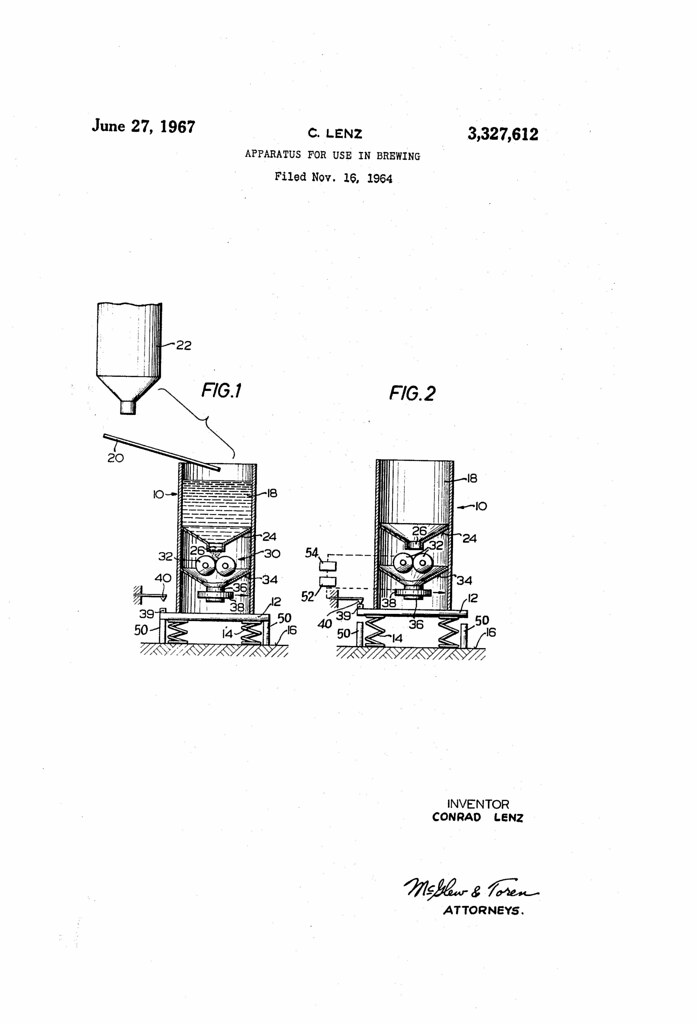
Patent No. 4197321A: Process For Brewing Beer And Treating Spent Grains

April 8, 2015 By Jay Brooks

patent-logo
Today in 1980, US Patent 4197321 A was issued, an invention of Gustav W. Chyba and John H. Dokos, assigned to Anheuser-Busch, Incorporated, for their “Process for Brewing Beer and Treating Spent Grains.” Here’s the Abstract:

In the brewing of beer, spent grain at about 90% moisture from a straining tank having no internal rotating rake is collected and pumped to a centrifuge which reduces the moisture of the spent grain to about 70% and provides spent grain liquor of about 2.0 to 4.5% or more of total solids. The spent grain liquor is stored in a tank at 165° F. to 170° F. and held until it is used up to 50% of the sparge liquid for a subsequent brew in the straining tank. The spent grains at about 70% moisture are directed to a large holding tank. Nutritious brewery waste streams are added thereby increasing the nutritional value.

US4197321-1
US4197321-2
US4197321-2

Filed Under: Beers, Breweries, Just For Fun, Politics & Law, Related Pleasures Tagged With: Brewing Equipment, History, Law, Patent, Science of Brewing

Patent No. 3128188A: Beer Lagering Process

April 7, 2015 By Jay Brooks

patent-logo
Today in 1964, US Patent 3128188 A was issued, an invention of Donald B. McIntire, assigned to the Union Carbide Corp., for his “Beer Lagering Process.” There’s no Abstract, but here’s how it’s described. “The main object of the present invention to provide a process for producing lagered beer without storing the beer.” I think what I’m most curious about is what interest a company like Union Carbide would have in holding a patent for making lager beer? The process is described in great detail as the description continues.

In accordance with the present invention, there is provided a process for lagering ruh beer comprising freezing water from the ruh beer so as to produce a slurry of concentrated beer, ice, and other solids; and removing the ice and other solids from the concentrated beer, while maintaining the beer in a substantially inert atmosphere throughout all process steps. Thus, the inventive process produces concentrated, lagered beer by freeze concentrating ruh beer.

Another novel and important feature of the present invention resides in the removal of calcium oxalate from the lagered beer product. Calcium oxalate is usually formed during normal brewing processes, and it is well established in the brewing literature that this compound is an extremely undesirable constituent of conventional beer. The oxalate normally plates out in processing tanks and lines, forming beer stone and resulting in a complex cleaning problem. Calcium oxalate also contributes to haze and offensive avors in beer and is generally considered to contribute to the highly undesirable phenomenon known as gushing Oxalates are also undesirable from a nutritional standpoint, since an excess of oxalates in the body is one factor which reduces the absorption of calcium from the intestine. While conventional beer always contains a substantial portion of oxalate, both the lagered beer concentrate formed by the present invention and the reconstituted product contain negligible amounts of oxalate because the calcium oxalate is precipitated out during the freezing step, and then subsequently removed from the concentrated beer along with the ice and other solids. Thus, not only is the expensive and time-consuming storage process eliminated by the inventive process, but the quality of the final product is unexpectedly and significantly improved.

In addition to, and possibly as a result of, the removal of calcium oxalate, the process of the present invention improves the flavor and haze stability of the resultant beer product. Indeed, beer produced by diluting the novel 3,128,188 Patented Apr. 7, 1964 ICC l concentrate ‘appears to be superior in flavor and clarity not only to other reconstituted concentrates, but also to fresh, high-quality draft beer, even though the concentrate and/or the reconstituted product may be as much as a year old. Because of its inherent bacteriological stability, the stabilized beer concentrate may be stored for long periods without the deterioration in flavor, clarity, and uniformity which conventional lagered beer, even when pasteurized, always suffers.

Although the inventive process can theoretically be used to produce lagered beer of any desired concentration, concentration above about five-fold, i.e., a concentrate possessing one-fifth the volume of the beer as originally fermented, usually results in deterioration of the desirable qualities of the product. Accordingly, less than five-fold volume concentrations are deemed preferable.

US3128188-0

Filed Under: Beers, Breweries, Just For Fun, Politics & Law, Related Pleasures Tagged With: Brewing Equipment, History, Law, Patent, Science of Brewing

Patent No. 1092538A: Beer And Hops Separator

April 7, 2015 By Jay Brooks

patent-logo
Today in 1914, US Patent 1092538 A was issued, an invention of George F. Rauch, for his “Beer and Hops Separator.” There’s no Abstract, but here’s how it’s described. “This invention relates to the art of brewing, and particularly to a new and useful separator, for separating the beer and hops.” Apparently it has several features:

One of the features of the invention is the provision of a receptacle in which a revoluble pear-shaped screen is, mounted, having a distributor or splasher for swirling or splashing the fluid or combination of beer and hops against the inner circumference of the pear-shaped screen.

Another feature of the invention is the provision of a plurality of agitator wings carried by the distributer or splasher, which wings owing to the centrifugal force swing outwardly, so as to splash the fluid or combination of hops and beer against the inner circumference of the pear shaped revoluble screen, the beer passing through the perforations of the screen, while the hops pass centrally down through the screen.

Another feature of the invention is the provision of a stationaryv supported rake pear-shaped or conical screen, to prevent the hops from adhering or clinging to the inner circumference of the pear-shaped screen. In other words. the hops that may hang to the inner surface of the creen are raked or combed ofi as the screen revolves.

The beer that percolates through the perforations of the pear-shaped screen deposits and is carried oil by a spout. The hops pass centrally down through the screen.

Another feature of the invention is the provision of a conveyor disposed beneath the outlet of the screen to receive the hops, which are conveyed to and under a yieldably mounted pressure roller, so as to squeeze any further beer that may remain with the hops as they leave the screen.

US1092538-0
US1092538-1
US1092538-2

Filed Under: Beers, Breweries, Just For Fun, Politics & Law, Related Pleasures Tagged With: Brewing Equipment, History, Hops, Law, Patent, Science of Brewing

Patent No. 2674535A: Method And Means For Shipping Or Storing Hops

April 6, 2015 By Jay Brooks

patent-logo
Today in 1954, US Patent 2674535 A was issued, an invention of Sidney S. Meisler, for his “Method and Means For Shipping or Storing Hops.” There’s no Abstract, but here’s how it’s described. “It is an object of the instant invention to provide better packing which will be impervious to Weather, negligent handling, and poor storing in the holds of ships where other cargos may contaminate the hops with odors, moisture, acids, etc., the hops being easily damaged. Another object is to conserve material in the shipment of hops.”
US2674535-0
US2674535-1

Filed Under: Beers, Breweries, Just For Fun, Politics & Law, Related Pleasures Tagged With: History, Hops, Law, Patent

Patent No. 917019A: Apparatus For Mixing Liquids With Gases

April 6, 2015 By Jay Brooks

patent-logo
Today in 1909, US Patent 917019 A was issued, an invention of Gustav Detlefsen, for his “Apparatus for Mixing Liquids with Gases.” There’s no Abstract, but here’s how it’s described. “This invention relates to an improved apparatus for mixing liquids with gases, the device being more particularly designed to charging beer with carbonic acid gas while the beer flows from the chip cask to the racking apparatus. The construction is such that the liquid is thoroughly agitated while being charged with the gas, so that an intimate mixture is obtained.”
US917019-0

Filed Under: Beers, Breweries, Just For Fun, Politics & Law, Related Pleasures Tagged With: Brewing Equipment, History, Law, Patent, Science of Brewing

« Previous Page
Next Page »

Find Something

Northern California Breweries

Please consider purchasing my latest book, California Breweries North, available from Amazon, or ask for it at your local bookstore.

Recent Comments

  • Bob Paolino on Beer Birthday: Grant Johnston
  • Gambrinus on Historic Beer Birthday: A.J. Houghton
  • Ernie Dewing on Historic Beer Birthday: Charles William Bergner 
  • Steve 'Pudgy' De Rose on Historic Beer Birthday: Jacob Schmidt
  • Jay Brooks on Beer Birthday: Bill Owens

Recent Posts

  • Historic Beer Birthday: Oliver Hughes May 20, 2026
  • Historic Beer Birthday: Benjamin, Lord Iveagh May 20, 2026
  • Historic Beer Birthday: Eduard Buchner May 20, 2026
  • Historic Beer Birthday: Louis de Luze Simonds May 20, 2026
  • Historic Beer Birthday: Johann Adam Lemp May 20, 2026

BBB Archives

Feedback

Head Quarter
This site is hosted and maintained by H25Q.dev. Any questions or comments for the webmaster can be directed here.