Brookston Beer Bulletin

Jay R. Brooks on Beer

  • Home
  • About
  • Editorial
  • Birthdays
  • Art & Beer

Socialize

  • Dribbble
  • Email
  • Facebook
  • Flickr
  • GitHub
  • Instagram
  • LinkedIn
  • Pinterest
  • RSS
  • Twitter
  • YouTube

Powered by Genesis

The Calorie Mix From The 1970s To Today

April 7, 2011 By Jay Brooks

cornucopia
This is not a beer post, but we gotta eat, too. Tom Philpott, at Grist, details an interesting interactive chart created by Andrea Jezovit at Civil Eats.

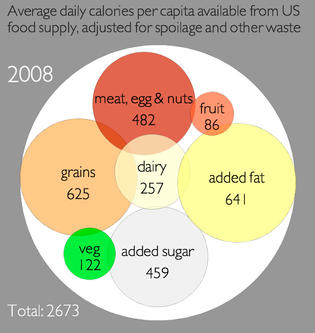
Using USDA data for “average daily calories available per capita, adjusted for spoilage and waste,” it tracks our eating habits since 1970, separating our foodstuffs into basic categories: grains, dairy, vegetables, fruits, proteins (“meat, eggs, and nuts”), added sugars, and added fats.
calorie-mix-2008

Both Philpott’s The American diet in one chart, with lots of fats and sugars and Jezovit’s Where Do Americans Get Their Calories? are worth a read. Be sure to check out the interactive version of the chart which graphically shows how the mix of calories we eat has changed over the last 40 years.

Filed Under: Food & Beer, News, Politics & Law, Related Pleasures Tagged With: Food, Statistics

Drunken Carrot

April 5, 2011 By Jay Brooks

carrots-2
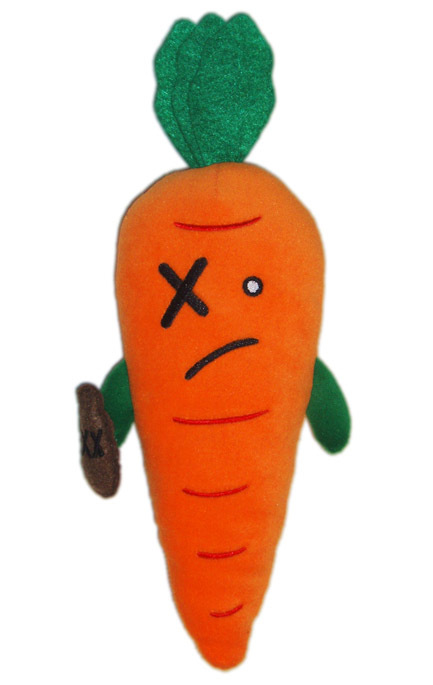
On Sunday, my wife and I indulged our inner geeks by attending WonderCon at Moscone Center in San Francisco. It’s an orgy of comic books, cartoons, science fiction and fantasy, art, toys, film, television and all manner of mainstream and non-mainstream entertainment. It was a fun day, and we picked up some cool stuff for ourselves and the kids. One oddity I came across is a stuffed vegetable (animal didn’t seem quite right) entitled Drunken Carrot. He’s part of the Mr. Toast collection. You can see more of artist Dan Goodsell’s artwork and characters at the Wonderful World of Mr. Toast.

Drunken Carrot is described like so: “He is orange and he has a problem.” I’m not entirely sure why one of his eyes is not working, but I assume it’s from over-indulging on beer — what is that, Dos Equis?
drunkenCarrot

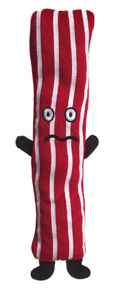
Since I didn’t want him to get too lonely being stuck in my office all day long, I also picked up a companion for him: Shaky Bacon. Shaky doesn’t look to happy. He probably needs a drink.
shaky-bacon

Filed Under: Food & Beer, Just For Fun Tagged With: Food, Humor

Food & Drink’s 50 Most Important Discoveries & Inventions

March 17, 2011 By Jay Brooks

sliced-bread
The Daily Meal, a food-oriented website, has come up with a list of The 50 Most Important Inventions (and Discoveries) in Food and Drink. It’s a pretty interesting list, and at the very least got me thinking about how much we take for granted and how important so many of those simple items are to the enjoyment of our lives.

The process of creating the list began with saying to yourself. “I simply couldn’t cook without my….”

Everybody who prepares food at home (or professionally, for that matter) has an implement or appliance or five or ten of them that they consider essential to their culinary practices. But how many of these things really matter in the larger scheme of things? How many are truly essential, or at least very important, to the preparation — and the ultimate consumption — of food (and let’s throw drink in here as well, just to wash it all down with)?

We were sitting around talking about this one day and came up with the obvious candidates: pots and pans, the knife, the oven, the (hey, we’re up-to-date around here) food processor… Then somebody said, well, what about the things nobody invented but somebody figured out or harnessed — like, er, fire, without which cooking as we understand it would never have been born? And what about methods of collecting food, means of storing or preserving it, ways of taming it? We started making a list, including not just things we have in our own kitchens (salt, four-sided grater) but also natural phenomena (fermentation) and specialized tools (sous-vide equipment — which we don’t have in our own kitchens yet).

We decided to leave out foodstuffs — miraculous innovations that became veritable building blocks of civilization, like bread, wine, cheese, vinegar, bacon-cheeseburgers — though we did include two substances that we ingest, salt and gelling agents. We left out all the vehicles and devices with which food is planted and harvested (with one exception; see below); we omitted broad concepts like the domestication of animals and the development of genetic studies, though both have obviously had enormous effect on what and how we eat (among other things); we decided not to include means of conveying information about food, from the book to the iPad.

What we ended up with is a list of things that we, yes, simply couldn’t cook — or eat and/or drink — without. As usual with such compendiums, we have been both selective and subjective. We’ve probably missed some obvious and vital items, and we have frankly allowed ourselves to have a little fun here and there. Should you decide to assemble such a list yourself, of course, it would almost certainly not be the same as ours.

Here’s the first five:

  1. Salt
  2. Fire
  3. The Knife
  4. The Spoon
  5. The Pot

All pretty important, no doubt. And at number 6? Drum roll, please …

  • 6. Fermentation

Awesome, well-deserved. Seven more alcohol-related items also made the list.

  • 9. The Barrel
  • 10. Wine Press
  • 13. Distillation
  • 18. Cork
  • 25. Pasteurization
  • 26. Refrigeration
  • 50. The Pull-Tab

Some other faves that made the cut included the blender, the restaurant and the fork. Personally, I would have put the Deep-Fryer higher than 32, but then I probably eat fried food every day. But it’s a fun list, despite many commenters taking it way too seriously. Here you can see the full list. But I have to ask, why do we always say something is the best thing since sliced bread. Besides that, what would you add?

Filed Under: Food & Beer, Just For Fun, Related Pleasures

Guinness Chocolate Cheesecake

March 13, 2011 By Jay Brooks

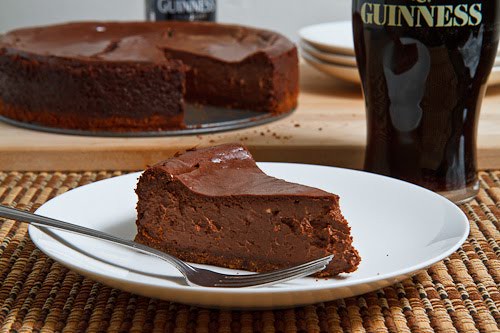
guinness-glass
My sister-in-law sent me this delicious looking recipe for a chocolate cheesecake made with Guinness, though I suspect any Irish dry stout would work. The recipe comes from Closet Cooking, a food blog by a man named Kevin in Ontario, Canada.

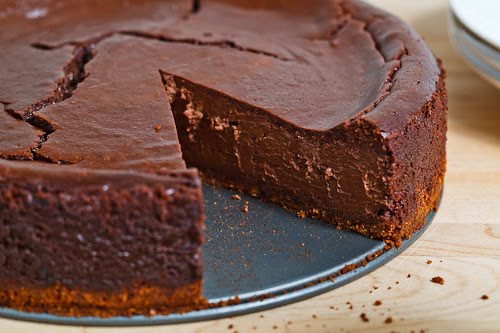
Guinness-Chocolate-Cheesecake-2

This recipe for the Guinness chocolate cheesecake is a pretty basic chocolate cheesecake recipe with the addition of the Guinness but the similarities stop there. The addition of the Guinness changes the texture and properties of the cheesecake making it more souffle like. Normally you can tell when a cheesecake is done by shaking it a bit and if only the center wiggles it is done but the entire surface of this cheesecake will wiggle the whole time, even after 2 hours of baking. You pretty much just have to trust the recipe and the results are certainly worth it!

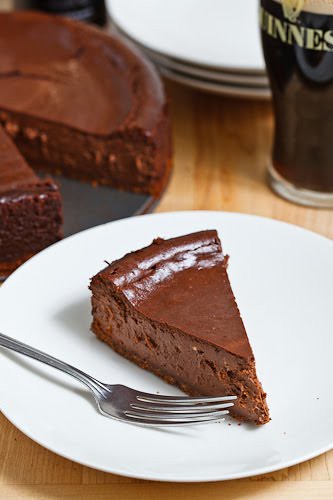
Guinness-Chocolate-Cheesecake-3

The Guinness chocolate cheesecake is a moist one as might be expected with all of the extra liquid provided by the Guinness but it is also nice and light and creamy. This cheesecake has a texture that seems to be like a cross between a souffle and fudge and it is simply amazing! The Guinness flavour is very subtle but it seems to enhance the overall chocolate flavour which is quite welcome. In all honesty, this cheese cake does not need any garnishes but feel free to top it with some Bailey whipped cream if you like.

Here’s the recipe, but without the blockquotes for ease of reading:

Guinness Chocolate Cheesecake
(makes 6+ servings)
Printable Recipe

Ingredients:

1 cup graham cracker crumbs
2 tablespoons cocoa powder
1 tablespoon sugar
2 tablespoons butter, melted
12 ounces dark chocolate, chopped
2 tablespoons heavy cream
3 (8 ounce) packages cream cheese
1 cup sugar
1/2 cup sour cream
3 eggs
1 teaspoon vanilla extract
3/4 cup Guinness

Directions:

1. Mix the graham cracker crumbs, cocoa powder, sugar, and butter and press into the bottom of a 9 inch spring form pan.
2. Melt the chocolate in the cream in a double boiler.
3. Cream the cream cheese.
4. Mix in the sugar, chocolate, sour cream, eggs, vanilla, and Guinness.
5. Pour the mixture into the spring form pans.
6. Bake in a preheated 350F oven for 60 minutes.
7. Turn off heat and leave cheesecake in the oven with the door slightly ajar for 60 minutes.
8. Let it cool completely.
9. Chill the cheesecake in the fridge overnight.

Guinness-Chocolate-Cheesecake-1

Boy that looks tasty. I’m hungry.

Filed Under: Beers, Food & Beer, Just For Fun, Related Pleasures Tagged With: Cooking, Guinness, Recipes

Celebrate Triple Rock’s 25th Anniversary Monday

March 11, 2011 By Jay Brooks

triple-rock-check
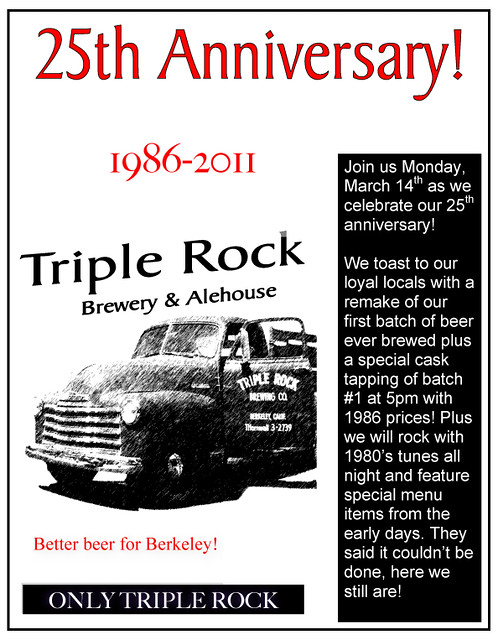
Geez has time flown. Twenty-five plus years ago you weren’t even allowed to operate a brewpub in the State of California. Finally in 1983 that finally changed, thanks to some hard work and a lot of meetings. Shortly thereafter, the first two brewpubs in California opened, Mendocino Brewing and Buffalo Bill’s. The third opened 25 years ago come this Monday, March 14, 1986. It was started by the Martin brothers — John and Reid — who had both homebrewed in college. It originally opened under a name you may not be familiar with: Roaring Rock. Unfortunately, the folks from Latrobe, Pennsylvania, who brewed Rolling Rock, thought the name was too close to their own, and so the Martins had to pick a new name. Eventually they settled on Triple Rock Brewery & Alehouse.

Triple-Rock-Opening-Day-2
Triple Rock when it opened in 1986.

This Monday, March 14, 2011, Triple Rock will be celebrating the 25th Anniversary of opening its doors. Here’s what will be going on at the brewpub all day long:

In celebration Rodger has re-brewed “Brew #1,″ the first beer ever made in the Triple Rock system. Reid & John originally brewed it on Christmas Day 1985. On March 14th we will be pouring Brew #1 (a Pale Ale) all day for just $1.75 a pint (the original price for a pint in 1986). We will also tap a hopped-up cask version of Brew #1 at 5 pm. Kind of a “2011 hopping meets 1986 cask ale” beer. Come by and try both of them!

The kitchen will be serving some old-school items, such as our original Muffaletta sandwich. But no, you’re not going to have to go to the “window” to order your grub, like you did in ’86.

John & Reid will preside over the tapping of the cask, and maybe go for another round of arm-wresting (John lost to Reid at the Festivus celebration last Dec.) Join past & present TRB brewers, staff, and long-time regulars to toast The Rock’s 25 years of making beer!

We’ve also created a special anniversary tee-shirt that pays homage to our original name, ”Roaring Rock Brewery”. There will be just one small print run of this shirt, so you should get yours before they’re gone. But, if you are up on your trivia of the early days of Roaring Rock/Triple Rock — you just may win one!

Triple-Rock-25th

Filed Under: Breweries, Events, Food & Beer, News Tagged With: Announcements, Bay Area, Brewpubs, California, History

The Impact Of Texture On Taste Perception

March 8, 2011 By Jay Brooks

sense-taste
On Food Navigator, there was an interesting short interview with Matthew Patrick, VP of R&D for TIC Gums where he suggests that “food and beverage product developers spend a shockingly low amount of time examining how texture may impact a finished product.” In beer, of course, texture is more often referred to as “mouthfeel.” And while when judging beer, mouthfeel is a consideration it’s usually not the primary one. Honestly, I’m really not sure how often brewers tinker with their recipes specifically to get a particular mouthfeel though it’s clear that many beers have great ones and many otherwise solid beers suffer for having a less than pleasant or ideally suited mouthfeel.

He’s talking primarily about texture in food and non-alcoholic beverages, though he singles out what he refers to as “low-viscosity beverages” like “tea” as products who didn’t give much thought to their texture. Beer’s viscosity has quite a range, from thin pilsners and golden ales to thick, rich oatmeal and imperial stouts so I can’t say where beer falls in TIC Gums’ viscosity scale. But there’s no doubt that mouthfeel is at least one of the many factors that add up to a beer’s overall taste profile. What a brewer can, or should, do about it seems like a worthy discussion to have.

The impact of texture on taste perception

There’s also a summary of the interview from the Food Navigator website:

Speaking to FoodNavigator-USA at the Research Chefs Association conference and expo in Atlanta, Patrick explained that texture can have wide-ranging influence on consumer perception of a food or beverage product.

For example, texture can influence the way saltiness or sugariness is perceived, meaning that different textures can make a product seem more or less sweet or salty even if the level of sugar or salt remains the same. That effect is something that product developers need to be particularly aware of, as many are cutting sugar or salt in products in response to demand for healthier foods and drinks.

Patrick added that low-viscosity beverages, such as teas, represent one area in which there is particular potential for enhancing consumer experience of a product through subtle textural differences.

Filed Under: Beers, Food & Beer, Related Pleasures Tagged With: Interview, Science of Brewing, Tasting

SF Beer Week On ABC 7 TV

February 16, 2011 By Jay Brooks

abc-7
On Monday, Rich Higgins (Director of SF Beer Week) and I went on the local ABC affiliate’s afternoon show, 7 Live, to promote SF Beer Week. Rich brought two of his beers from Social Kitchen & Brewery. First, his White Thai Affair (9.5% a.b.v., an imperial Rapscallion with galangal and lemongrass) was paired with a Kale salad with clementines and a ginger garlic vinaigrette. Then his Giant S’mores (10.5% a.b.v., a Belgian Imperial Stout) was paired with Point Reyes Original Blue cheese. Lastly, I picked up some beer ice cream from Humphry Slocombe made with He’Brew’s Bittersweet Lenny’s R.I.P.A. and brought bottles of the beer so they could taste the beer the ice cream had been made with.

It was a quick 3-4 minute segment, as is the nature of these things, but overall I think went well. Of the three 7 Live hosts, our segment was with Lizzie Bermudez, though both of the others did get into the act with Brian Copeland snagging one of the beers of the table and Jennifer Jolly trying the ice cream, too. We got the message out about SF Beer Week and, I think, opened their eyes a bit to beer with food. The cheese pairing went over particularly well and the ice cream was a big hit, too. And it was great fun for us.

Filed Under: Beers, Food & Beer, Just For Fun, News, SF Beer Week Tagged With: California, San Francisco, Video

Wisconsin Food Pyramid

February 6, 2011 By Jay Brooks

nfl-gb
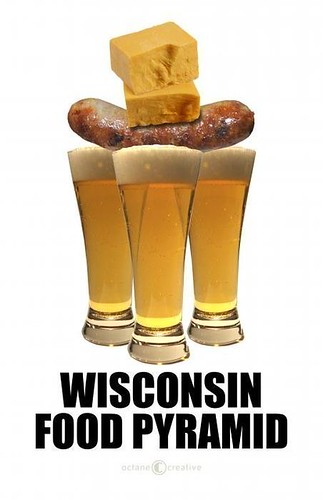
I imagine the “Wisconsin Food Pyramid” was originally meant to be derogatory, but what could be a better meal for a football game than sausages (cooked in beer), cheese and beer? That’s what I’m having at my Super Bowl party, along with chips, pretzels and more cheese. And Sean Paxton, the Homebrew Chef, has promised to bring Shepherd’s Pie. Yum. Go Packers!

wis-food-pyramid

Filed Under: Food & Beer, Just For Fun Tagged With: Food, Football, Humor, Sports, Wisconsin

Thoughts On The New Dietary Guidelines From Beer Business Daily

February 3, 2011 By Jay Brooks

spirits-wine-beer
You most likely hard that the USDA released the quinquennial Dietary Guidelines for Americans at the end of last month. The 2010 version made a number of small, but significant changes with regard to food, such as “make half your plate fruits and vegetables” and “drink water instead of sugary drinks.”

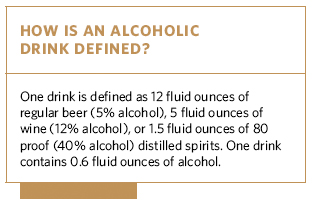
In Chapter 3, they also made one small change to how they define an “alcoholic drink.”

alcohol-defined

Harry Schuhmacher commented on the guidelines in today’s Beer Business Daily newsletter. With Harry’s permission, below I’ve reprinted his thoughts on the Dietary Guidelines and specifically the changes to the alcohol portion of them:

Earlier this week the USDA issued its 2010 Dietary Guidelines as it does every 5 years. It states: “One drink is defined as 12 fluid ounces of regular beer (5% alcohol), 5 fluid ounces of wine (12% alcohol), or 1.5 fluid ounces of 80 proof (40% alcohol) distilled spirits. One drink contains 0.6 fluid ounces of alcohol.”

Now, you’d think this maybe isn’t a big deal. Well, you’d be wrong on that. It is.

Here’s why: The previous USDA Dietary Guidelines five years ago had very similar language, although it was fought tooth and nail by the beer and wine lobbies. However, this time the feds added the crucial last sentence: “One drink contains 0.6 fluid ounces of alcohol.” [Emphasis added.]

This further puts the Feds on record as saying, basically, a drink is a drink is a drink, even though we all know in reality that’s not the case. You can be sure that Diageo and DISCUS — the spirits lobby — worked with a laser focus to get this sentence added. It’s the next step toward alcohol equivalency (for excise tax, labeling, and consumer access issues), even though Diageo and DISCUS have previously said this is not what they’re after.

LABELING: First let’s consider labeling. As we know, the federal TTB is considering (since 2003) allowing alcohol producers to include voluntarily display serving facts (which includes standard alcohol content for servings) on labels. This is an issue that large distillers support, but brewers and wineries typically oppose because some believe the push for serving facts is a stalking horse for equivalency.

INDUSTRY SPLIT ON STANDARD DRINK: The Wine Institute and DISCUS are on the same side of most issues, such as opposing the CARE Act, but standard drink isn’t one of them.

DISCUS followed the release of the Guidelines with a statement. “The Government today emphasized the scientific fact that a standard drink of beer, wine and distilled spirits each contains the same amount of alcohol,” said Dr. Monica Gourovitch, Distilled Spirits Council’s svp of scientific affairs. “Alcohol is alcohol and it all should be treated equally, as a matter of public health and public policy.”

Monica told our sister publication, WSD, that the updated definition is “very clear” and shows that “each standard drink contains the same amount of alcohol.” When looking at the science involved, each serving has the “same effect on the body — potential benefits and potential risks.” She also noted that the National Institute on Alcohol Abuse and Alcoholism (NIAAA) already defines a standard alcoholic drink as anything containing 0.6 fluid ounces.

Wait ….. 0.6 fluid ounces of alcohol? Not 0.5 fluid ounces? There are plenty of public health folks who defined drinks as having 0.5 fluid ounces of alcohol as a standard drink. Who, I wonder, lobbied the USDA to add that extra 0.1 fluid ounce to the definition?

The Wine Institute, for one, is livid. For once they are on the other side of DISCUS on an issue. The WI issued a statement on Tuesday, saying there is no such thing as a standard drink: “We agree with the time-tested definition of a serving as being 12 fl. oz. of regular beer, 5 fl. oz. of wine, or 1.5 fl. oz. of 80-proof distilled spirits but are concerned about the additional statement that each of the drinks contains the same amount of alcohol. A precise fluid-ounces-of-alcohol statement implies that the alcohol content is the same for every drink of wine, beer or distilled spirits when, in reality, alcohol content varies widely from drink to drink. Consumers should not be misled into believing there is such a thing as a ‘standard drink.’ In fact, the term ‘standard drink’ does not appear in the Dietary Guidelines.” This is true. But it doesn’t dull the fact that a federal agency has swallowed the equivalency argument hook, line and sinker while the rest of the industry sleeps.

The Beer Institute and the NBWA have remained mute on this issue, so far. But clearly it is important: As one alcohol politico told me: “Once the language is in a federal government guideline, it’s in the bloodstream.” What he meant by that is that, since the USDA has defined a drink as 0.6 ounces of alcohol, it gives the TTB cover to move forward with their “serving facts” labeling, and maybe it gives the states the argument to increase taxes on beer and wine and offer it at more times and in more channels, and maybe it gives the feds something to point to when considering an excise tax increase. It’s a slippery slope, my friends, toward equalization of taxes and access among the beverages, which works against beer and wine and is probably just bad public policy. In fact, if alcohol excise taxes were suddenly equivalent, it would virtually kill the wine and beer industries, and we’d be a nation of vodka swillers like Russia, wiping away 200+ years of cultural and policy differences between the beverages. It was Thomas Jefferson who logically first put forward the notion that moderation should be nurtured by the government by encouraging the consumption of beer and wine over spirits.

As usual, a distributor put it most succinctly: “So a Four Loko is the same as Jack Daniels is same as Coors Light is same as Mad Dog 20/20 is same as a hot 17% abv California cab is the same as an 11% abv Italian white? Really?”

It brings to mind the old story where August Busch III went to Capitol Hill and demonstrated to a Congressman considering equivalency that a drink is not a drink. He reportedly said, “I’ll drink these three Budweisers, and you drink these three dry martinis, and at the end we’ll see who is more intoxicated.” It’s a shame our beer industry leaders don’t pull more stunts like that.

Ethanol is ethanol, to be sure. But different types of bev-alc are consumed by the majority of Americans in different ways. Ethanol is ethanol, but a drink is not a drink.

Thanks Harry. If you don’t know about his Beer Business Daily, especially if you’re in the beer business, I highly recommend it. You really should subscribe to Harry’s newsletter.

Filed Under: Beers, Editorial, Food & Beer, Politics & Law, Related Pleasures Tagged With: Government, Guest Posts, Science

Grilling With Beer: Fanning The Flames Of A New Edition

January 30, 2011 By Jay Brooks

lucy-saunders
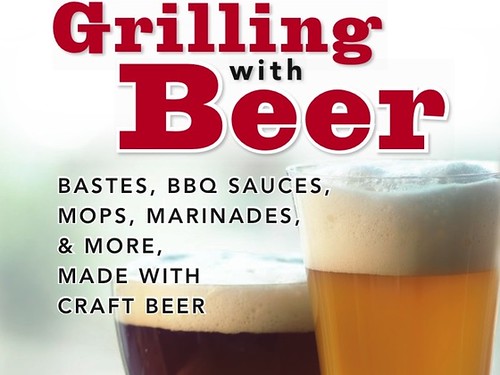
The beer cook, Lucy Saunders, published a great book five years ago called Grilling with Beer. I must confess I’m a little biased, because I contributed a short chapter to it on Oyster BBQ. The book is now out of print, though there’s still great demand for it. So Lucy’s planning on “putting together new chapters and recipes for [her] cookbook, GRILLING WITH BEER: bastes, barbecue sauces, mops, marinades and more made with craft beer.”

She’s using Kickstarter to raise the $28,000 she needs “to pay for the printing for the 224-page color cookbook (using recycled paper and eco-inks). Everyone who funds will be acknowledged on the grillingwithbeer.com website — and larger funders can get even more cookbooks, plus assorted goodies such as tastings and cooking demonstrations. Eventually, the cookbook will be sold (suggested price will be $21.95) where craft beer is sold!”

While you can pledge any amount on Kickstarter, pledge just $25 and get a copy of the book autographed by Lucy, a t-shirt and 5 recipe postcards. Such a deal! Whether you have a copy of the original book or not, here’s a great opportunity to get the new version and help out a very worthwhile project to get Lucy’s book back in print.

Grilling-with-beer

Filed Under: Beers, Food & Beer, News Tagged With: Beer Books, Cooking

« Previous Page
Next Page »

Find Something

Northern California Breweries

Please consider purchasing my latest book, California Breweries North, available from Amazon, or ask for it at your local bookstore.

Recent Comments

  • Steve 'Pudgy' De Rose on Historic Beer Birthday: Jacob Schmidt
  • Jay Brooks on Beer Birthday: Bill Owens
  • Steve 'Pudgy' De Rose on Beer Birthday: Charles Finkel
  • Steve 'Pudgy' De Rose on Beer Birthday: Bill Owens
  • Steve "Pudgy" De Rose on Beer Birthday: Pete Slosberg

Recent Posts

  • Historic Beer Birthday: Gottfried Piel December 31, 2025
  • Beer Birthday: Mitch Steele December 31, 2025
  • Beer In Ads #5156: Straub Bock Beer December 30, 2025
  • Beer Birthday: John Dean December 30, 2025
  • Beer In Ads #5155: Bock Beer Festival Parade December 29, 2025

BBB Archives

Feedback

Head Quarter
This site is hosted and maintained by H25Q.dev. Any questions or comments for the webmaster can be directed here.