Brookston Beer Bulletin

Jay R. Brooks on Beer

  • Home
  • About
  • Editorial
  • Birthdays
  • Art & Beer

Socialize

  • Dribbble
  • Email
  • Facebook
  • Flickr
  • GitHub
  • Instagram
  • LinkedIn
  • Pinterest
  • RSS
  • Twitter
  • YouTube

Powered by Genesis

Beer In Ads #5021: Olympia Bock Beer

July 10, 2025 By Jay Brooks

Last year I decided to concentrate on Bock ads. Bock, of course, may have originated in Germany, in the town of Einbeck. Because many 19th century American breweries were founded by German immigrants, they offered a bock at certain times of the year, be it Spring, Easter, Lent, Christmas, or what have you. In a sense they were some of the first seasonal beers. “The style was later adopted in Bavaria by Munich brewers in the 17th century. Due to their Bavarian accent, citizens of Munich pronounced ‘Einbeck’ as ‘ein Bock’ (a billy goat), and thus the beer became known as ‘Bock.’ A goat often appears on bottle labels.” And presumably because they were special releases, many breweries went all out promoting them with beautiful artwork on posters and other advertising.

Thursday’s poster is for Olympia Bock Beer, and was published around the 1910s. This one was for the Pilsen Brewing Co. of Chicago, Illinois, which was originally founded in 1903 by a group of Bohemian tavern owners.

Filed Under: Art & Beer, Beers, Breweries, Just For Fun Tagged With: Advertising, Bock, Chicago, History, Illinois

Historic Beer Birthday: Francis Showering

July 10, 2025 By Jay Brooks

babycham
Today is the birthday of Francis Showering (July 10, 1912-September 5, 1995). Showering was an English brewer. His family company, Showerings, invented Babycham, a light, sparkling perry, launched in 1953 and originally marketed as “genuine champagne perry”.
Mr-Showering-1

Here’s Showering’s obituary from The Independent in 1995:

Francis Showering was a remarkable man who achieved extraordinary success in the drinks industry over many years. He was still in harness as chairman of the drinks company Brothers Drinks at the time of his death, aged 83.

Born at Shepton Mallet, in Somerset, in 1912, Francis Showering was one of four brothers whose first employment at an early age was with their parents, who were innkeepers in Shepton Mallet, brewing beer and cider to their own requirements and for sale to other licensed houses in the district. Business was highly competitive. As a small concern they were overshadowed by the regional and national brewers and were also unable to sell their ciders against the national brands. During the Second World War they kept the business going in spite of shortage of raw materials and somehow built up a delivery fleet of mainly elderly vehicles which were sustained by an innovative transport department.

After the war they again suffered the frustration of lacking outlets for their products, and Francis Showering, by then managing director, turned to Perry as a potential for breaking into the brewer-dominated licensed trade. Sparkling Champagne Perry in baby bottles became the brand Babycham, and in due course became the drinks industry’s marketing success of the century.

babycham-coaster-3

First, however, it had to be established as a quality product and Showering excelled in the meticulous supervision of the production process to give an attractive sparkling drink well packaged and with a long shelf-life. Marketing and customer service received his equally uncompromising attention, with the result that, after extensive testing in local markets, Babycham was launched nationally in the early 1950s and became a cult drink for women in pubs and clubs. With the sprightly little Bambi deer symbol, Babycham glasses and cocktail cherry, this was exactly the drink that millions of women were waiting for. The simple slogan “I’d love a Babycham” said it all, and they loved it enough to consume over 4 billion bottles in the next 30 years.

The Showerings offered shares to the public in 1959. The issue was over- subscribed. Not only did it increase the wealth of the family but the creation of a public company gave Francis Showering and his brothers the means of acquiring other companies in the drinks industry. William Gaymer, Vine Products, Whiteways, and Britvic fruit juices were among those acquisitions, and the largest came in 1966 with the takeover, after a considerable battle, of Harvey’s of Bristol which brought with it world-wide interests in wines and spirits.

babycham-coaster-2

In 1968 Allied Breweries, already much involved in the drinks industry apart from brewing, made an agreed bid for Showerings Vine Products and Whiteways Ltd of pounds 108m. Thus the original shareholders in the Showerings company were rewarded yet again, and Francis Showering could take all credit for that.

Initially, the marriage was not an easy one. The different cultures of the two groups had to be reconciled and that took several years, but in no way inhibited the continued growth of the combined company. Showering’s nephew Keith Showering (later Sir Keith) became chairman in 1975. After seven years in office he died suddenly in 1982, when Francis became vice- chairman and continued to support the company in every possible way.

Francis Showering was a man of great determination and strength of character. The success of Babycham entitled him to have uncompromising views on the production and marketing of drinks generally, and the activities of the group in particular, and he could be relied upon to make those views known. Yet he was also a good listener, and when convinced of the loyalty of his colleagues gave it back in full measure.

babycham-coaster-1

He was also generous to the extreme. His loyalty and generosity to Shepton Mallet are evident in the modern development of the town centre, at his own expense. One of his great pleasures was entertaining at his house on the Beaulieu River, and aboard his motor cruiser Silver Cavalier, which gave him further opportunities to pursue perfection in maintenance and navigation.

Showering was appointed CBE in 1982; it was a reflection of his work for the community in West Country agriculture and at Shepton Mallet as well as his success in building a whole business structure on that little bottle of Babycham.

Sir Keith Showering had two daughters and four sons. In his closing years, through the formation with these four great-nephews of a new drinks company, Brothers Drinks, which he chaired, Francis Showering saw and encouraged, the possibility of an experience for them such as he and his brothers had had, and so much enjoyed.

Showerings
From left; Ralph and Keith Showering, R. N. Coate, Herbert, Francis and Arthur Showering, at the time of the ‘merger’ of the two cider makers.

This is a short history of Babycham from his Wikipedia page:

In the 1940s, the company developed a process to produce perry — a form of cider made from fermented pear juice – and created a low-alcohol sparking drink that was christened Babycham. The new drink was marketed mainly at young women, and sold in small bottles to be served in a champagne saucer – “the genuine champagne perry sparkling in its own glamorous glass”. After disputes with French champagne produces, including a court case in 1978, H P Bulmer Ltd v J Bollinger SA which held that marketing of a similar sparkling cider was not confusing, the reference to champagne was eventually prohibited by EU rules on protected designation of origin.

The drink became very popular, with its advertising slogan “I’d love a Babycham” and logo of a small deer. To serve the burgeoning demand, the company bought pear orchards across the West Midlands, and planted new pear orchards in Somerset. Output in Shepton Mallet reached 108,000 bottles an hour in 1966, and new plants were opened in Ireland and Belgium.

babycham-advert

Babycham

Filed Under: Birthdays, Just For Fun Tagged With: Cider, Great Britain, UK

Historic Beer Birthday: Frank Yoerg

July 10, 2025 By Jay Brooks

yoerg
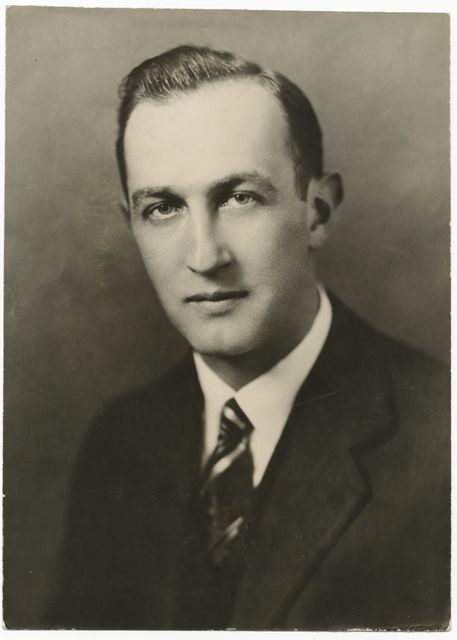
Today is the birthday of Frank Yoerg (July 10, 1867-July 13, 1941). He was the third oldest son of Anthony Yoerg, who founded Minnesota’s first brewery in 1848. He “attended MIT (Massachusetts School of Technology) in Boston and worked as an architect for four years before he joined the family trade where he was a ‘collector’ from 1893-1896, the bookkeeper from 1899-1904, Vice President from 1904-1905, President from 1905-1934 and secretary from 1934 until his death in 1941.”

frank_yoerg
The brewery was known as the Anthony Yoerg Brewery from its beginning until 1896, when its founder passed away, then it was changed to simply the Yoreg Brewing Co. The brewery opened after prohibition ended, and continued in business until 1952.

Yoergs-Beer-Labels-Yoerg-Brewing-Company-1933
A Yoerg’s Cave Aged Beer label from 1933, when Frank was still president.
A new Yoerg’s Beer started up again in Saint Paul in 2015, with plans to offer the first beer shortly, and according to their Facebook page, the beer is in the bottle and they’re awaiting federal label approval, with plans to introduce Yoerg’s Bock this Fall.

yoergs_snow_skiing_-1915
Frank and Anthony Yoerg Jr. with their wives at the St. Paul Winter Carnival in 1915

Filed Under: Birthdays, Just For Fun Tagged With: History, Minnesota

Historic Beer Birthday: Jack “Legs” Diamond

July 10, 2025 By Jay Brooks

moonshine
Today is the birthday of Jack “Legs” Diamond (July 10, 1897–December 18, 1931). He was “also known as ‘Gentleman Jack,’ [and] was an Irish American gangster in Philadelphia and New York City during the Prohibition era. A bootlegger and close associate of gambler Arnold Rothstein, Diamond survived a number of attempts on his life between 1916 and 1931, causing him to be known as the “clay pigeon of the underworld”. In 1930, Diamond’s nemesis Dutch Schultz remarked to his own gang, “Ain’t there nobody that can shoot this guy so he don’t bounce back?”

jack-legs-diamond-2

Here’s his biography from Find-a-Grave:

Gangster bootlegger. Born Jack Moran on July 10, 1897, in Philadelphia, Pennsylvania, to an Irish immigrant family. After his mother, Sara’s death, Diamond moved with his father and brother to Brooklyn, New York. Growing up impoverished, Diamond turned to street gangs and became involved in theft and violent crime as a teen. He later began to work for gangsters Arnold Rothstein and Jacob “Little Augie” Orgen. Jack set up shop as an extremely violent and murderous figure. He earned his “Legs” nickname either due to his quickness when running from a scene or because of his excellent dancing skills. He also married Alice Schiffer in 1926. She remained devoted to Jack through his strings of crime and mistresses, which included a notable affair with Ziegfeld showgirl Kiki Roberts. In August, 1927, Jack played a role in the murder of “Little Augie” (Jacob Orgen). Jack’s brother Eddie was Orgen’s bodyguard, but Legs Diamond substituted for Eddie that day. As Orgen and Jack were walking down a street on the Lower East Side of Manhattan, three young men approached them and started shooting. Orgen was fatally wounded and Jack was shot two times below the heart. He was taken to Bellevue Hospital, where he eventually recovered. During the late 1920s, Prohibition was in force, and the sale of beer and other alcohol was illegal in the United States. Jack traveled to Europe to score beer and narcotics, but failed. He did score liquor which was dumped overboard in partially full barrels which floated into Long Island as ships entered New York. Following Orgen’s death, Jack went to work overseeing bootleg alcohol sales in downtown Manhattan. That brought him into conflict with Dutch Schultz, who wanted to move beyond his base in Harlem. He also ran into trouble with other gangs in the city. In 1930, Jack and two henchmen kidnapped Grover Parks, a truck driver in Cairo, New York, and demanded to know where he had obtained his load of hard cider. When Parks denied carrying anything, Jack and his men beat and tortured Parks, eventually letting him go. A few months later, Jack was charged with the kidnapping of James Duncan. He was sent to Catskill, New York for his first trial, but was acquitted. However, he was convicted in a federal case on related charges, and he was sentenced to four years in jail. In a third trial, in Troy, New York, he was acquitted. On October 12, 1930, Jack was shot and wounded at the Hotel Monticello on the west side of Manhattan. Two men forced their way into his room, shot him five times, and then fled. Still in his pajamas, he staggered out into the hallway and collapsed. On December 30, 1930, Jack was discharged from Polyclinic. On April 27, 1931, Jack was again shot and wounded, this time at the Aratoga Inn, a road house near Cairo, New York. He was eating in the dining room with three companions when he walked out to the front door. A gunman with a shotgun shot him three times, and Jack collapsed by the door. On December 18, 1931, Jack’s enemies finally caught up with him, At 4:30 am, Jack went back to the rooming house and passed out on his bed. Two gunmen entered his room around 5:30 AM. One man held Jack down while the other shot him three times in the back of the head. No other gangster of the bootlegging era of 1920’s survived more bullet wounds than Legs. He was known as “The Clay Pidgeon of the Underworld”. On July 1, 1933, Jack’s widow, Alice Kenny Diamond, was found shot to death in her Brooklyn apartment. It was speculated that she was shot by Jack’s enemies to keep her quiet.

BE033346

This is about his arly life from his Wikipedia page:

Diamond was born July 10, 1897, to Sara and John Diamond, who emigrated from Ireland in 1891 to Philadelphia, USA. In 1899, Jack’s younger brother Eddie Diamond was born. Jack and Eddie both struggled through grade school, while Sara suffered from severe arthritis and other health issues. On December 24, 1913, Sara died from complications due to a bacterial infection and high fever. John Diamond, Sr. moved to Brooklyn shortly afterwards.

Diamond soon joined a New York street gang called the Hudson Dusters. Diamond’s first arrest for burglary occurred when he broke into a jewelry store on February 4, 1914, with numerous arrests following through the remainder of his life. Diamond served in the U.S. Army during World War I, but deserted in 1918 or 1919, then was convicted and jailed for desertion.

Once free of jail, Diamond became a thug and later personal bodyguard for Arnold Rothstein in 1919.

On October 16, 1927 Diamond tried to stop the murder of “Little Augie” (Jacob Orgen). Diamond’s brother Eddie was Orgen’s bodyguard, but Legs Diamond substituted for Eddie that day. As Orgen and Diamond were walking down a street on the Lower East Side of Manhattan, three young men approached them and started shooting. Orgen was fatally wounded and Diamond was shot two times below the heart. Diamond was taken to Bellevue Hospital, where he eventually recovered. The police interviewed Diamond in the hospital, but he refused to identify any suspects or help the investigation in any way. The police initially suspected that Diamond was an accomplice and charged him with homicide, but the charge was later dropped. The assailants were supposedly hired by Louis Buchalter and Gurrah Shapiro, who were seeking to move in on Orgen’s garment district labor rackets.

Diamond was known for leading a rather flamboyant lifestyle. He was a very energetic individual; his nickname “Legs” derived either from his being a good dancer or from how fast he could escape his enemies. His wife Alice was never supportive of his lifestyle, but did not do much to dissuade him from it. Diamond was a womanizer; his best known mistress was showgirl and dancer Marion “Kiki” Roberts. The public loved Diamond; he was Upstate New York’s biggest celebrity at the time.

jack-legs-diamond-6

And this is about his time during “Prohibition and the Manhattan Bootleg Wars:”

During the late 1920s, Prohibition was in force, and the sale of beer and other alcohol was illegal in the United States. Diamond traveled to Europe to score beer and narcotics, but failed. He did obtain liquor, which was dumped overboard in partially full barrels, which floated onto Long Island, as ships entered New York. He paid the children a nickel for every barrel they brought to his trucks.

Following Orgen’s death, Diamond went to work overseeing bootleg alcohol sales in downtown Manhattan. That brought him into conflict with Dutch Schultz, who wanted to move beyond his base in Harlem. He also ran into trouble with other gangs in the city.

In 1930, Diamond and two henchmen kidnapped Grover Parks, a truck driver in Cairo, New York, and demanded to know where he had obtained his load of hard cider. When Parks denied carrying anything, Diamond and his men beat and tortured Parks, eventually letting him go. A few months later, Diamond was charged with the kidnapping of James Duncan. He was sent to Catskill, New York, for his first trial, but was acquitted. However, he was convicted in a federal case on related charges, and sentenced to four years in jail. In a third trial, in Troy, New York, he was acquitted.

legs

And this is about the many assassination attempts, prosecution attempts, and his eventual death:

On October 12, 1930, Diamond was shot and wounded at the Hotel Monticello on the west side of Manhattan. Two men forced their way into Diamond’s room, shot him five times, and then fled. Still in his pajamas, Diamond staggered out into the hallway and collapsed. When asked later by the New York Police Commissioner how he managed to walk out of the room, Diamond said he drank two shots of whiskey first. Diamond was rushed to the Polyclinic Hospital in Manhattan, where he eventually recovered. On December 30, 1930, Diamond was discharged from Polyclinic.

On April 21, 1931, Diamond was arrested in Catskill, New York, on assault charges for the Parks beating in 1930. Two days later, he was released on $25,000 bond from the county jail.

On April 27, 1931, Diamond was again shot and wounded, this time at the Aratoga Inn, a road house near Cairo, New York. Diamond was eating in the dining room with three companions when he walked out to the front door. A gunman with a shotgun shot Diamond three times, and Diamond collapsed by the door. A local resident drove Diamond to a hospital in Albany, New York, where he eventually recovered. While Diamond was still in the hospital, New York State Troopers on May 1 seized over $5,000 worth of illegal beer and alcohol from Diamond’s hiding places in Cairo and at the Aratoga Inn.

In August 1931, Diamond and Paul Quattrocchi went on trial for bootlegging. That same month, Diamond was convicted and sentenced to four years in state prison. In September 1931, Diamond appealed his conviction.

On December 18, 1931, Diamond’s enemies finally caught up with him. Diamond had been staying in a rooming house in Albany, New York while on trial in Troy, New York, on kidnapping charges. On December 17, Diamond was acquitted. That night, Diamond, his family and friends were at a restaurant. At 1:00 a.m., Diamond went to visit his mistress, Marion “Kiki” Roberts. At 4:30 a.m., Diamond went back to the rooming house and passed out on his bed. Two gunmen entered his room around an hour later. One man held down Diamond while the other shot him three times in the back of the head.

There has been much speculation as to who was responsible for the murder; likely candidates include Dutch Schultz, the Oley Brothers (local thugs), the Albany Police Department, and relatives of Red Cassidy, another Irish American gangster at the time. According to William Kennedy’s O Albany, Democratic Party Chairman Dan O’Connell, who ran the local political machine, ordered Diamond’s execution, which was carried out by the Albany Police.

Marion-
Legs’ best known mistress was showgirl and dancer Marion “Kiki” Roberts, who was with him the night he was murdered.

Filed Under: Birthdays, Just For Fun, Related Pleasures Tagged With: History, New York, Pennsylvania, Philadelphia, Prohibition

Historic Beer Birthday: Adolphus Busch

July 10, 2025 By Jay Brooks

a-b
Today is the birthday of Adolphus Busch (July 10, 1839-October 10, 1913). He was born in Kastel, Germany, and co-founded Anheuser-Busch, along with his father-in-law, Eberhard Anheuser. The twenty-first of twenty-two children, his family was in the wholesale business, specializing in winery and brewery supplies. Like all of his his brothers he was sent to college, and graduated from the Collegiate Institute of Belgium in Brussels.

He moved to St. Louis in 1857, when he was eighteen, and eventually got a sales job with Charles Ehlermann Hops and Malt Co. After a distinguished stint as a soldier during the Civil War, he returned to his brewery supply job and married Lily Anheuser, the daughter of Eberhard Anheuser. Together, they had thirteen children, including Adolphus Busch II and August A. Busch. After marrying Lily, he joined the family business, then known as E. Anheuser Co.’s Brewing Association, and eventually became a partner. When Lily’s father passed away in 1879, Adolphus took control of the business and changed the name to Anheuser-Busch.

portrait-of-Adolphus-Busch

In St. Louis, Adolphus Busch was busy transforming his father-in-law’s (Eberhard Anheuser’s) once-failing brewery into a grand empire. Adolphus, perhaps more than any other brewer, became known for his flamboyant, almost audacious persona. Tirelessly promoting his Budweiser Beer, he toured the country in a luxurious railroad car immodestly named “The Adolphus.” In place of the standard calling card, the young entrepreneur presented friends and business associates with his trademark gold-plated pocket knife featuring a peephole in which could be viewed a likeness of Adolphus himself. His workers bowed in deference as he passed. “See, just like der king!” he liked to say.

adolphus-busch-1869
Adolphus as a young man, in 1869.

Here’s a biography of Adolphus Busch from the Immigrant Entrepreneur Hall of Fame:

“A truly American tale. Freedom. Opportunity. Progress. Words that seized the imagination of people all over the world and brought them to the Land of Liberty. It’s a uniquely American story, told in chapter after chapter of hardship, hard work and hard-won success. The Budweiser story is no exception.”

Photo of Adolphus BuschSo begins the tale of Adolphus Busch, the founder of Anheuser-Busch and creator of Budweiser beer, as stated on the Budweiser website. He was an immigrant who not only created personal wealth and success but also made a landmark contribution to American society.

Born the second youngest of 22 children in Germany, Busch was educated in Brussels and immigrated to the United States in 1857. Settling in St. Louis, he married Lilly Anheuser and had 13 children of his own.

After completing his enlistment in the Union Army during the Civil War, Adolphus joined his father-in-law in the operation of E. Anheuser & Co. Brewery. The company was later restructured with Anheuser as president and Busch as secretary. As full partner, Busch took on greater responsibility for the operation of the brewery. To recognize his efforts, in 1879 the company name was changed to the Anheuser-Busch Brewing Association.

Busch was a man of many firsts. Apart from founding America’s first national beer brand, Budweiser, in 1876, he is credited with revolutionizing the shipment of beer (in refrigerated railway cars), being one of the first to bottle beer and implementing a method to pasteurize beer to keep it fresh.

Today, Anheuser-Busch captures the largest market share in the U.S. with 47.6 percent share of U.S. beer sales to retailers. It brews the world’s top-selling beer brands, Budweiser and Bud Light, at 12 breweries across the United States.

After he died while on vacation in Germany, his body was brought back to St. Louis to be buried. It was a fitting resting place for the man who created one of America’s most iconic brands.

Adolphus-Busch-photog

Busch married Elise “Lilly” Eberhard Anheuser, the third daughter of Eberhard Anheuser, on March 7, 1861 in St. Louis, Missouri. They had thirteen children; eight sons, including Adolphus Busch II, August Anheuser Busch I and Carl Busch, and five daughters. The Busches often traveled to Germany where they bought a castle. They named it the Villa Lilly for Mrs Busch. It was located in Lindschied near Langenschwalbach, in present-day Bad Schwalbach.

adolphus-and-lily-1865-to-75

And here’s his biography from the German-American Hall of Fame:

Busch, Adolphus
1839-1913
Inducted: 2007
Area of Achievement: Business & Industry

American businessman and philanthropist, b. Mainz, Germany. To U.S. (1857); joined St. Louis brewery of Eberhard Anheuser (1861); president of Anheuser-Busch Brewing Association (1879-1913); introduced Budweiser brand; pioneered in pasteurization of beer.

Adolphus Busch was born July 10, 1839 in Kastel (near Mainz, Hesse), Germany. He was second-to-youngest of twenty-two children of Ulrich Busch and Barbara Pfeiffer Busch.

In 1857, Adolphus Bush emigrated to the United States with no plans, no destination, and nothing but his own ambition and abilities. Three of his brothers had already headed for St. Louis, Missouri. His brother John had opened his own brewery in nearby Washington, Missouri.

Young Adolphus joined Ernst Wattenberg to sell equipment and supplies to breweries. This venture led him to forge several strategic partnerships. Most important, he met his future bride, Lily Anheuser. At the same time, his brother Ulrich became enamored with her older sister, Anna.

Their father, Eberhard Anheuser, a skilled St. Louis soap and candle-maker, had recently purchased the failing Bavarian Brewery in St. Louis. He reopened the brewery as E. Anheuser & Co.

On March 7, 1861, the Anheuser-Busch interests were formally joined, both professionally and matrimonially. Eberhard Anheuser escorted both daughters down the aisle in double nuptials to the two Busch brothers. At the time, Busch was working for Anheuser as a salesman. (The future malt mogul and his brother married his boss’ daughters.)

Eventually, Busch and Anheuser became partners and equals. It was the perfect match. Busch was the consummate marketer, and Anheuser was a skilled manufacturer. Working for his father-in-law, Busch developed pasteurization of beer and began marketing the Budweiser brand, which was named after Bmische Budweis, a town in his homeland of Germany. In 1876, Busch enlisted the help of his friend Carl Conrad (a liquor bottler) to develop this Bohemian-style pilsner beer.A fierce rivalry developed between Anheuser-Busch’s Budweiser beer and an old Czech brand from Budejovice. Since the 16th Century, the Czechs had called their product “The Beer of Kings,” so Busch began marketing his as “The King of Beers.”

By 1879, Busch was president of the Anheuuser-Busch Brewing Association. He held this position for more than 30 years.

His extravagant spending and elaborate lifestyle have become American folklore. Busch owned an expansive St. Louis manor, plus two palatial homes near Pasadena, California. He also had a country estate and a hops farm near Cooperstown, New York (not far from the Baseball Hall of Fame), two country villas in Germany, and his own private railroad car. His landscaping was famous for its fairy tale figurines, as Busch was a fan of the famed Grimm Brothers.

In 1911, when Adolphus and Lily marked their 50th wedding anniversary, he presented his queenly with a diamond tiara. U.S. President Theodore Roosevelt, the emperor of Germany, and other world leaders sent lavish gifts as well.

He died October 10, 1913 near Langenschwalbach, Germany. His son August took the reins of the company until his death in 1934. The company has been headed by a family succession ever since.

Incidentally, the famous Anheuser-Busch Clydesdale horses did not join the clan until after his death. In 1933, at the end of Prohibition, a team of Clydesdales were hitched up to pull the first load of legal beer from the St. Louis brewery. Company President August Busch (Adolphus’ son) was so taken by the sight that the horses became a favorite company trademark.

adolphus-busch-1905
Adolphus later in life, around 1905.

And there’s a few more thorough accounts of his life at Encyclopedia.com, the State Historical Society of Missouri’s Historic Missourians, and and a four part story “originally published in The American Mercury, October, 1929,” entitled The King of Beer by Gerald Holland.

Filed Under: Birthdays, Just For Fun Tagged With: Germany, History, Missouri, St. Louis, United States

Beer In Ads #5020: A Rare July Treat

July 9, 2025 By Jay Brooks

Last year I decided to concentrate on Bock ads. Bock, of course, may have originated in Germany, in the town of Einbeck. Because many 19th century American breweries were founded by German immigrants, they offered a bock at certain times of the year, be it Spring, Easter, Lent, Christmas, or what have you. In a sense they were some of the first seasonal beers. “The style was later adopted in Bavaria by Munich brewers in the 17th century. Due to their Bavarian accent, citizens of Munich pronounced ‘Einbeck’ as ‘ein Bock’ (a billy goat), and thus the beer became known as ‘Bock.’ A goat often appears on bottle labels.” And presumably because they were special releases, many breweries went all out promoting them with beautiful artwork on posters and other advertising.

Wednesday’s ad is for Brandon & Beal Bock Beer, which was published on July 9, 1902. This one was for the John Brandon & George Beal Brewery of Leavenworth, Kansas, which was originally founded in 1887. This ad ran in The Leavenworth Times, also of Leavenworth, Kansas.

Filed Under: Art & Beer, Beers, Breweries, Just For Fun Tagged With: Advertising, Bock, History, Kansas

Historic Beer Birthday: Peter Grant Hay

July 9, 2025 By Jay Brooks

carlton-and-united
Today is the birthday of Peter Grant Hay (July 9, 1879–August 29, 1961). He “was an Australian brewer, landowner, pastoralist and thoroughbred racehorse breeder. He founded the Richmond N.S. Brewing Co. Ltd. in Melbourne Australia,” which upon his death was sold to Carlton & United Breweries. “He is responsible for both the introduction of pasteurization to Australia’s dairy industry and the introduction of the Swiss Nathan System of brewing to Australia.”

peter-grant-hay

Here’s his biography from his Wikipedia page:

Grant Hay was born in Bright, Victoria, the son of James Grant Hay, partner of Melbourne shipping firm, Coulson Hay & Co. and Catherine Margaret (née Cox), daughter of Irish distillery founder, Charles Cox. The Grant Hay’s owned hop farm estates in Bright, Victoria and the Derwent Valley in Tasmania and were the main supplier of hops to Carlton & United Breweries in Victoria.

Upon the death of his father in 1914, Grant Hay traveled to America by steamship to San Francisco on board the USS American, meeting Tooheys Brewery manager Arnold Resch. The two agreed to inspect the major American breweries of Milwaukee, including the Valentin Blatz Brewing Company, Joseph Schlitz Brewing Company, and the Miller Brewing Company and Anheuser-Busch brewing company in St Louis. Grant Hay then sailed to London to inspect the Courage Brewery plant and its hotels.

He then flew to Zurich and met with Dr Leopold Nathan, a Swiss chemist, who had invented a new brewing system. Grant Hay drove to Munich and attended Oktoberfest in the company of the Reinheitsgebot before the outbreak of war and returned to Australia.

In 1918 he married Margaret Glover, cousin of Australian landscape artist John Glover. Grant Hay was forty. They had four children, Patricia, Kathleen, Alison and Peter. The Grant Hay’s settled at Sackville Street, Kew and later moved to ‘Egoline’ at Albany Road in Toorak, Victoria. The family also owned ‘Kilby Park,’a one hundred acre dairy farm and thoroughbred racehorse stud at Kew, Victoria.

By age fifty Grant Hay was already one of Victoria’s wealthiest hop merchants when the Victorian beer wars began in 1925. Carlton & United Breweries had grown into Australia’s largest brewer and began to use monopolistic practices of lowering the cost of supply to hop growers, including Grant Hay’s ‘Kentdale’ hops from the Derwent Valley.

kentdale-invalid-stout

And this is a history of his brewery, the Richmond N.S. Brewing Co.:

The Kentdale Hop Estate was one of the finest properties in Tasmania. It was located fifty kilometres from Hobart and harvested thirty hectares of finest-quality hops. In 1927 a business disagreement took place between Grant Hay and Carlton & United Breweries over the price and quantity of hops, causing Carlton to cancel its contract with Kentdale.

Resentful of Carlton’s unfair business practices, Grant Hay proceeded to off-load his hops successfully to Carlton’s interstate rival, Tooheys. He then summoned a meeting of his hop estate managers from Bright in Victoria and the Derwent Valley in Tasmania for a meeting at Coulson Hay & Co. headquarters in Melbourne to establish his own brewery.

On 4 April 1927, Grant Hay wired a cable to Dr Nathan Leopold in Zurich, Switzerland for the order of the first Swiss Nathan Brewing System to be shipped to Melbourne and to be accompanied by Master Swiss Brewer, Heinrich Walter Haenggi of Zurich. Over the course of three months, Grant Hay proceeded to buy up five industrial sites adjoning his Church Street property. He then ordered a consignment of three thousand units of purified gin to be shipped from British Army headquarters in Lahore and resold the rebottled gin to American bootleggers in prohibition controlled Chicago, netting Coulson Hay & Co. a million pounds. The deal set Grant Hay up for life, and bankrolled the construction of the brewery.

On 13 August 1927, Grant Hay’s application for permit to build a brewery on the site at Church Street Richmond was approved by the Richmond City Council. Grant Hay then hired contractors to excavate the site in preparation of the brewery’s construction, when the excavation was delayed, Grant Hay proceeded to dynamite the site himself using three tonnes of dynamite.

On the morning of 23 August 1927, the sound of percussion could be heard as far away as Brighton, and was said to have woken the Mayor of Melbourne from his sleep. When nearby Richmond residents objected, Grant Hay sued the residents and offered to buy their homes. Eventually, council sided with the residents and sought an injunction against Grant Hay to the detonation, but Grant Hay won on appeal and continued unabated.

Mr Grant Hay retained Brigadier Sir Eugene Gorman KBE, MC, QC as his full time barrister and confidant. Litigous by nature, Grant Hay later sued the Camberwell City Council on its liquor licensing trading laws on appeal before the Privy Council, UK. Mr Gorman’s rooms in the Equity Chambers building on Melbourne’s Bourke Street are named Gorman Chambers in his honour.

On 24 October 1927, Heinrich Walter Haenggi and his wife arrived at Port Melbourne aboard the SS Modolva bringing with them the single largest steel works consignment for disembarkation. Three transports were used to unload and deliver the Swiss brewing plant machinery and equipment to Church Street. Mr Grant Hay drove the Haenggi’s to their hotel in his new 1927 Packard Roadster and held a dinner in honour of their arrival at his home.

By Easter of 1928, the construction of the Richmond Brewery was completed and a toast was held on the assembly line by Mrs Grant Hay and included two hundred guests, from growers, hoteliers and workers. The brewery began its first run of Richmond Lager and Bitter Beer on 24 April 1928 with 88 dozen bottles of output per week which continued to grow to 200 dozen bottles of output per week by 1929. The quality of the beer, and the fact that it had been produced free of any combine commended the beverage to the public’s taste. With his own hop supplies, Grant Hay had lowered his costs of production and unit costs considerably. He then followed Courage Brewery’s example by purchasing his own pubs and hotel outlets across Australia, exclusively serving Richmond beer.

The Richmond Brewery was a remarkable success. By 1940 shipments of Richmond Lager were eagerly consumed in Melbourne, Perth, Sydney, Brisbane and Adelaide. By 1950 annual tunrover revenues in the Richmond Brewery had grown to almost three million pounds. Exports to India and Brazil soon followed, with the bottle labels Richmond Pilsener, Lager Bitter and Stout all sporting the illustrated Tiger’s head logo, designed by Mrs Grant Hay.

During World War II, Grant Hay negotiated the supply of Richmond Beer to Australian troops in North Africa and American troops stationed at Sandown Racecourse, which he owned. He also purchased land on Flinders Island in Tasmania where he stood Fourth Hand, winner of the 1927 Irish 2,000 Guineas and bred champion Australian racehorse Counsel, winner of the 1944 Caulfield Cup and champion American racehorse, Warra Nymph at Del Mar. Grant Hay also owned the seventy-two foot ketch, “Jane Moorhead” which was used by General Douglas MacArthur for the Allied troop landings in the Pacific.

By 1960 the brewery continued to prosper controlling sixteen per cent of Victorian beer sales and eight per cent of Australian beer sales nationally. Mr Grant Hay’s health was however deteriorating and no succession plan was put in place, despite his only surviving son. A charismatic autocrat and fierce business competitor, Mr Grant Hay would not allow the company to be controlled by anyone but himself. He refused to publicly list the company and repeatedly rejected merger offers from Courage Brewery and Carlton & United Breweries.

Upon his death in 1961, Mrs Grant Hay negotiated the sale of the Richmond Brewery between bidders Courage Brewery, Asahi Breweries and Carlton & United Breweries, accepting a final offer to purchase the brewery from Carlton & United Breweries on January 26, 1962.

Richmond-Special-Lager-Labels-Richmond-NS-Brewing-Co-Pty

Richmond-Special-Bitter

Here’s another history of Hay’s brewery from the Nathan Institute:

richmond-ns-brewing

richon-non-pasteurized
This must have been interesting….

Filed Under: Birthdays, Breweries, Just For Fun Tagged With: Australia, History

Historic Beer Birthday: Jacob Perkins

July 9, 2025 By Jay Brooks

frig
Today is the birthday of Jacob Perkins (July 9, 1766–July 30, 1849). He “was an American inventor, mechanical engineer and physicist. Born in Newburyport, Massachusetts, Perkins was apprenticed to a goldsmith. He soon made himself known with a variety of useful mechanical inventions and eventually had twenty-one American and nineteen English patents. He is known as the father of the refrigerator. He was elected a Fellow of the American Academy of Arts and Sciences in 1813.”

jacob-perkins

While from what I can tell, Perkins didn’t work directly on refrigeration for breweries, but his work on the subject of refrigeration paved the way for all of your beers to be stored colder.

This biography of Perkins is from the History of Refrigeration:

Jacob Perkins (1766 – 1849) was an American inventor, mechanical engineer and physicist. He held many patents, among which was a patent for refrigerator. Because of that he is considered the father of the refrigerator.

Jacob Perkins was born in Newburyport, Massachusetts, and went to school in Newburyport until he was 12. After the school he was an apprentice to a goldsmith in Newburyport called Davis. When Davis died three years later, Jacob continued the business of making gold beads and he also added the manufacture of shoe buckles. When he was twenty-one he was given a job by the master of the Massachusetts mint to make a die for making copper coins – cents bearing an eagle and an Indian. Three years later he improved and made machines for cutting and heading nails for which he was granted a patent in 1795. Jacob married on Nov. 11, 1790 to Hannah Greenleaf of Newbury and they, in time, had nine children. During the War of 1812 he worked on machinery that bored out cannons. He invented a bathometer (or piezometer) which measured the depth of the sea by measuring pressure of the water at certain depth. He also made steel plates and created some of the best steel plates which he used to start a printing business with engraver Gideon Fairman. They printed school books and legal currency for a Boston Bank. Perkins bought from Asa Spencer in 1809 the stereotype technology which was used as a method of prevention from counterfeiting and registered the patent. He later employed Asa Spencer. In 1816 he bid on the printing of currency for the Second National Bank in Philadelphia. At the same time English had a problem with forged notes when the Royal Society, a learned society for science, noticed high quality of American bank currency that was made by Perkins. In 1819, Perkins, Gideon Fairman, and Asa Spencer went to England to try and win the £20,000 reward for “unforgable notes”. After initial disputes they win the job and form the partnership “Perkins, Fairman and Heath” with English engraver-publisher Charles Heath. Partnership was later renamed into “Perkins Bacon”, when Charles Heath’s son-in-law, Joshua Butters Bacon, bought out Charles Heath. Company “Perkins Bacon” printed money for many banks, and postage stamps for many foreign countries.

In 1816, Jacob Perkins had worked on steam power with Oliver Evans in Philadelphia and in 1822 he made an experimental high pressure steam engine that worked at pressures up to 2,000 psi but that was not practical for the manufacturing technology of the time. This technology was used in another invention, the steam gun – an early fully automatic machine gun powered by steam with a high magazine capacity and a firing rate of 1,000 rpm. This idea was rejected by the Duke of Wellington as “too destructive”.

The idea for a refrigerator had come from Oliver Evans, also an American inventor. He conceived it in 1805 but he never built it. Perkins was granted the first patent for the vapor-compression refrigeration cycle, on August 14, 1834 with title: “Apparatus and means for producing ice, and in cooling fluids.”

1826_JacobPerkins_byThomasEdwards_BostonMonthlyMagazine_v1_no11

Here’s the description of his patent:

perkins-patent-ice-machine

jacob-perkins-ice-machine

1835_Perkins_AmericanMagazine_v2_December

Filed Under: Birthdays, Just For Fun, Related Pleasures Tagged With: History, Science

Historic Beer Birthday: Rudolph J. Schaefer Jr.

July 9, 2025 By Jay Brooks

schaefer
Today is the birthday of Rudolph J. Schaefer Jr. (July 9, 1900-September 2, 1982). Nicknamed “Rudie,” he was the great-grandson of Rudolph J. Schaefer, who was the son of Maximilian Schaefer, and he, along with his brother Frederick, founded the F&M Schaefer Brewing Company in 1842. Rudie’s grandfather Rudolph became the president of F&M Schaefer Brewing in 1912, and continued in that position until his death. He also bought out his uncles and their heirs, and controlled the entire company, which allowed Rudie to become president in 1927, a position he held until retiring in 1969.

rudie-schaefer

Here’s his obituary from the New York Times:

Rudolph J. Schaefer – the brewer and yachtsman who ran one of the country’s largest and most famous regional breweries for 42 years while also supporting the American tradition of yachthing – died yesterday at Memorial Sloan-Kettering Cancer Center after a brief illness. He was 82 years old.

Mr. Schaefer was well known for his stewardship of the family beer business, the F. & M. Schaefer Brewing Company of Brooklyn, from the depression and prohibition to the hectic competition of the late 1960’s.

A Figure in 2 Worlds

But ”Commodore Ruddy,” as the Larchmont Yacht Club designated him, was at least as important in the world of ships that sail on the winds as he was in the world of palates that lived on good beer.

Mr. Schaefer took over the family brewery in 1927 and began planing for the end of prohibition. In 1934, a year after the country became wet again, his three week old racing yatch, ”Edlu,” won the 650-mile Newport-to-Bermuda race.

During his captaincy, Mr. Schaefer built the New York brewery into the nation’s sixth largest and help support the United States retention of the America’s Cup and the rebuilding of Mystic (Conn.) Seaport.

Rudolph Jay Schaefer 2d was born in Larchmont, N.Y., on July 9, 1900. He was the son of Rudolph J. Schaefer, the head of the brewery which his grandfather, Maximilian, and his grand uncle, Frederick, had founded on Sept. 1, 1842, six years after ariving from Germany. Took Grandfather’s Advice

His earliest lessons in brewing came from his grandfather. He said: ”When I was a youngster, grandfather said to me one day, ‘Rudy, you can have the best grain and the finest hops and the best yeast, but if you want to make real good beer you’ve got to have people who know their business and who want to make the best beer in the world.’ ”

Because he always followed this advice, Mr. Schaefer said in 1952, the brewery had grown. Following his graduation as an architectural major at Princeton University in 1924, Mr. Schaefer joined the brewery which began on 19th Street in Manhattan and then moved to Park Avenue before arriving in Brooklyn in 1915.

Mr. Schaefer became president in 1927. And with Repeal in 1933, he began rebuilding the brewery and expanding the image and consumption of beer.

To this end, he even clashed with Mayor-elect F.H. LaGuardia in 1933 when Mr. Schaefer opposed city-owned beer gardens as good ideas ” for spacious living” that nevertheless jeopardized ”the investment made by many thousands of peoples in retail beer establishments.”

Mr. Schaefer headed the brewery until 1969 when he was succeeded by his son. And the brewery remained independent until August 1981, when it was taken over by the Stroh Brewery Company of Detroit.

Mr. Schaefer is survived by his second wife, the former Janet Udall of Valley Stream, L.I.; his sons, Rudolph J. 3d and William M.; his daughters, Edmee Coombs and Lucy Peterson; and grandchildren.

A big part of Schaefer’s life, as big or bigger than his running the brewery, was yachting, which he was passionate about all his life.

schaefer-iii-ondeck

But perhaps the best account was written by Rudolph J. Schaefer, Jr. and is Chapter IV of The Schaefer Story blog:

Section 1

It’s evident from our lifestyle and activities that the repeal of the Volstead Act not only saved the Schaefer Brewing Company from collapse, but resulted, in subsequent years, in its growth and profitability.

But to go back: Eventually, the Sebastion Somers Brewing Company came into Friedrich and Maximilian Schaefer’s hands. How that came about, I don’t know. Perhaps the owner had no issue. My grandfather, Maximilian, came to America with the formula for lager beer. The word, lager, in German means storage place. It was used to define beer which had been aged for weeks or months. Lager beer is distinct from ale, but, generically, ale is called a beer.

My grandfather was the first brewer to make lager beer in this country. This he did after he and Friedrich had taken over the little Somers brewery. Hitherto, all brewers made what we all know as ale–porter, ‘common beer.’ Heavy, bitter and completely lacking in sparkle, ale was drunk at room temperature. One of our prominent advertising slogans was ‘America’s Oldest Lager Beer Brewers.’

In 1842, Friedrich and Maximilian Schaefer formed the F. & M. Schaefer Co., a partnership. We have a ledger entry of their first sale–five gallons of beer. I found the following account written years ago of Friedrich and Maximilian’s partnership in my father’s papers.

‘On a blustery day in February, 1848, Friedrich and Maximilian Schaefer hoisted some casks from their cellar and became the first brewers in New York to put lager beer on the market. Most brewers, who produced English-type beers and ales, didn’t see the handwriting on the barroom floor.’

The fast-growing demand for the Schaefer product seemed to blunt the difficult years since the blossoming partnership took root five years earlier in a small brewery on lower Broadway.

It was barely a month after the Schaefer brothers began operations that New York City celebrated a blessed water event. The new Croton aqueduct now offered a free current of water, through pipes extending downtown, for people, for firefighting and for commercial use.

The joyous news gushed throughout every part of the city with its universal tone. Despite the fact there was “Water, water everywhere,” the Schaefer brothers felt somewhat like throat-parched “Ancient Mariners.”

Their brewery had no connection with the Croton water, and, it turned out, they had to pay a neighborhood grocer $20.75 for a year’s supply.

With the coming of cold weather, malt-liquor patrons shifted to heavier brews. The Schaefer brothers joined in and sold their first strong beer in November. The price was higher than for small beer, a whopping $2.25 for 15 gallons, as against $1.50.

Work in a brewery in those formidable days was hard. It took muscle. Brewers pulled, pumped, lifted and stirred by hand, working as much as 15 and 16 hours a day, and the Schaefers were no different. Brewing also took skill. A brewer lacking instruments depended on his senses of sight, smell, taste and touch to judge the condition of his mixture in following his private formula.

The Schaefer brothers managed these first few years with thrift and determination, despite competition from the other 22 brewereies in Manhattan. Soon they needed to move, and in January, 1845, bought several vacant lots on Seventh Avenue between 16th and 17th Streets where they erected a brewhouse and two brownstones.

As wave upon wave of emmigrants poured in to these shores, lager-type yeast suddently appeared from Europe aboard clipper ships and, obtaining some, the Schaefer brothers revised their manufacturing process. Shortly after, they introduced lager beer. Within a year that innovation, the partners began looking for enlarged quarters.

In 1850, they acquired land on 51st Street and Fourth (Park) Avenue, and part of the old Beekman estate, a fading landmark that ended in a rocky cliff. In a six-year period, they had moved the brewery three times, an indication of the rapid growth of the company. Here, they had a cavern excavated 30 feet wide to make room for a double row of casks and 250 feet deep to accommodate a lot of them.

Producing lager necessitated deep cellars, and cold areas were imperative, not only for the storage phase of manufacturing, but for storage until delivery.

In view of a mounting volume of production, the Schaefer brothers counted on a considerable savings also by making malt in stead of buying it.

Breweries throughout the country increased from 431 in 1849 to 1,269 in 1859, despite the moral fervor of the ‘temperance’ movement, and with formulation of the first Internal Revenue Code in 1862, a device of a Civil War Congress to raise money, taxation of whiskey, as well as beer, helped to promote lager beer’s national success.

Brewers, however, saw the possibility of arbitrariness and evasion in the regulations for tax bites, and subsequently formed a federation to protect their interests and insure uniform obedience to the code.

Frederich Schaefer was named its first treasurer, remaining in that post for 15 consecutive years. The federation was the genesis of the present-day U.S. Brewers Association.

Consolidating activities during the war, the Schaefer brothers closed their Seventh Avenue plant in 1863 and acquired more ground for the Fourth Avenue operation. That July, the plan miraculously was spared from the onslaught of the Draft Riots, which marked a path of pillage and murder for four days, but somehow bypassing the brewery.

With an eye towards growth potential, the brothers later bought property on 50th Street, between Lexington and Third Avenues and erected a large hall, called the Terrace Garden, which became a mecca of entertainment.

Production at the F. & M. Schaefer Brewing Company for 1871-72 was 43,847 barrels, putting the partners eighth on the list of leading American brewers and second to the Lion Brewery in the New York area.

The Schaefer brothers decided to perpetuate the family business and in late 1877 applied for incorporation, listing $650,000 in capital stock. Incorporation became fact on January 4, 1878.

The brewery was built on Park Avenue on the land of what is now St. Bartholmew’s Church. Across the street were their livery stables. The Ambassador Hotel (which later became the Sheraton East) was also erected on that site. A 44-story office building, 345 Park Avenue, replaced the hotel. So the Schaefer brothers had the two block fronts from 50th Street to 52nd Street on the east side of Park Avenue.

The pictures of the brewery show that many years prior to 1910 there were railroad tracks right on grade on Park Avenue. The brewery, facing the railroad tracks, had its grains and materials shipped by railroad and dropped right at its doorstep. In the course of time, the railroad company made a far-reaching decision to depress the tracks, and, in so doing, it was necessary to put temporary bridges every six to ten blocks across the tracks to allow traffic to cross over. About 1911, the tracks were completely recessed, and Park Avenue, with an esplanade down its center, was paved. It had been strictly commercial before then–old factories lining the street. The Steinway Piano factory was north of the brewery.

When the company moved to Park Avenue, the beer was put into large casks probably 6 or 7 feet in diameter and about 7 feet long. Casks were hauled by horse and wagon to a piece of property the company owned on the East River where there were natural caves. I don’t know how my canny grandfather came upon them. The beer casks were stored in the caves for cooling in the ice cut from lakes and ponds and transported to the caves and allowed to age for several months. The beer was light in body with a sparkling quality and clarity and was served cold.

When the property where our caves were was bought to build the fashionable River House apartment building, the builders had a terrible time because when they drilled for the foundation, they fell through into the natural caves which had to be filled in order to support the foundation of the apartment building.

The beer was then filtered into smaller barrels for delivery in the area. The Park Avenue plant consisted of a brewery and an extensive malt house. In 1858, the founders of the company, Friedrich and Maximilian, constructed a large four-story building, installing some of the first refrigerating machinery ever used in this country. This machinery made possible the erection of beer storage houses above ground.

In 1892, on the 50th anniversary of the company, ‘Frank Leslie’s Illustrated Weekly,’ said of Schaefer beer, ‘It has the reputation of fifty years standing for unexcelled quality, strength, age and parity and is the standard beer of the trade.’ In that year, we instituted the bottling department.

I have listed the stockholders of the F. & M. Schaefer Brewing Company as of April 20, 1907.

E.C. Schaefer (275 shares)
Emil Schaefer (5)
R.J. Schaefer (313)
George G. Schaefer (274)
Geo. ChaSchmid (1)
Albert Schaefer (50)
Amelia G. Chatillon (250)
Maximilian Schaefer (308)
Rose K. Schaefer v. Bertenbach (66)
E.C.S. and G.G.S. Trustees for Rose K. v. Burtenbach (134)
E.C.S. and G.G.S., Trustees for Albert Schaefer (200)
R.J.S., Trustee under deed of Trust (624)

For a total of 2,500 shares

In September of 1912, my father, Rudolph (now Anglicized) Jay Schaefer, Sr. had the money to purchase his brother Frederick’s children’s interests and his cousin’s interests in the company. It was an amicable buyout and a profitable one for those family members. He thereby became president of the company and sole owner of the F. & M. Schaefer Brewing Company.

On the 70th anniversary dinner of the company, November 23, 1912 my father gave the following speech to the officers and friends of the company. It reveals the feeling he had for the men who worked for the company and the company itself.

“This is the proudest day of my career. It is also one of the happiest nights of my life–and many of my friends have claimed that I have been partial to nights.

Like many of you, so have I built castles in the air and so did I have dreams that I felt could never be realized, and like many, I, in my imagination, tried to reach goals which I felt could never be reached. But, determination, perseverance, plugging away, hard work and some luck are often rewarded by the fulfillment of the very things I referred to a moment ago.

I am here tonight, and this is why I expect to be here a few years longer. I fully realize the difficulty of the task before us–the many responsibilities, anxieties, cares and obstacles to overcome, but I have faith in God, I have confidence in you and in myself.

That is why in taking this optimistic view of the future and having this tremendous desire to ‘make good,’ I feel that we shall and must succeed. And this evening, too, I find a difficult task before me.

I am to give a history of the Seventy years of activity of our concern in seven minutes…

Both old gentlemen [Frederick and Maximilian] and their family came from Wetzlar. Uncle arrived in 1838. My father came soon afterward. They both were earnest, hardworking, saving men, and the first monies they accumulated were returned to their mother in Wetzlar who had given them the money to travel abroad from a mortgage she had placed on her modest little home. The next monies accumulated by them, after organizing the business, brought over their sisters and brothers, of which only one is living today. Aunt Sattig.

When Uncle and Father established the business, succeeding a man named Sommers in 1842, the capital consisted of a few hundred dollars which belonged to my uncle and some chattels which belonged to my father that were not quite worth the amount of money my uncle had. To put them on an equal basis, my father drew a few dollars less each month until such time when they were equal partners.

Uncle moved into his house [on Park Avenue] and here his three youngest children were born. The property which we hold here was gradually bought–some as late as 25 years ago. Opposite here, before the stable was built, was a row of small houses on Park Avenue. The old malt house, over which we had a falling out, when not malting was used for a walking and running track when I was a kid. Later on, John B. and I would use it for a bathing establishment in the summer time. Steel tubs! Around the corner was a place familiar to all the old Columbia College boys–a frame house, ‘Fritz’s.’ Uncle Settig’s place, and next to it was the cooper shop. Our cellars, ‘Felsen Keller,’ were at East River and more beer ran down the gutters in those old days than many places sell. Those were the good old times, and they were happy days.

Each evening at five, we would gather around the old Sternwirth, and there spend an hour or more, telling stories and drinking beer. Uncle Jake Schaefer, Spitzer and later on Moller, were the wits of our party.

And gradually, structural changes took place. The old ice houses were changed into cold storage houses–boilers were opposite – 3 Boyle 25-ton machines, and you could hear valves 1,000 feet away. But many things are as they were more than 30 years ago. Brew house kettles – mash tub – old engine – all the beer – old vats and tanks.

Some of the old men are with us–and if time has changed them a bit, they are just as energetic and loyal as in the old days. No brewing concern in this country and few in any other, can show such a roster of old, faithful and loyal men as we can–and to these men I want to give thanks.

Our brewery is not one of the largest, but in addition to being the oldest is among the best. Its age and standing more than compensate for lack of largeness and furnish the best and safest foundation upon which to build largely and expansively in the future. If the capacity of our present plant is not sufficient to meet the demands of a clamoring public and the efforts of a well organized, enthusiastic, aggressive and energetic force of popular solicitors and agents, for whom it should be comparatively easy to sell a brew concocted by the foremost master of fermentology and exponent of the art of beeriology, why, there are some vacant lots near by that can be improved by placing upon them in time the most complete, modern and up-to-date brewery in this country.

Thirty years ago last Wednesday, I entered the employ of this concern, beginning in the old malt house on Park Avenue. At the end of 30 years’ experience and schooling, it has been my happy lot to come to the head of the business in which I started at the bottom, and as I approach the responsibilities which come with the assumption of control, I find consolation both in the knowledge that I shall have about my men, you men, who will assist me in solving the problems and carrying out the work which we shall confront, and also in time have at my elbow one of my sons who will share with me the labors and responsibilities of my position. When one looks upon the founding, development and growth of a business such as ours, he is forcibly reminded of what Tennyson wrote about the brook: ‘For men may come and men may go, but I go on forever.’

So is the Schaefer Brewing Company destined to go on from generation to generation. Founded 70 years ago by the two noble men to whom I referred, perpetuated and carried further by their sons, it now happens that a third generation of the family is to enter into active participation in the affairs of our company and acquire the lessons and experience which will enable it some day to carry its burdens and enjoy its prosperity.

It is my pleasure and my blessing that I am to introduce into the business tonight my son, Emile. With him I hope will come new life, new vigor, new ideas and new force. I hope it may be given to him to carry on this business until the next generation and to continue these yearly celebrations of our birthday up to a time when a fourth generation will take hold of the reins and carry the business on to another generation.

Tonight is indeed commemorative of many things. It deals with the past. It puts us in deep thought about the present and it brings up the horizon of the future. The past is safely a matter of history. The present is happily taking care of itself. Let us turn our faces to the future and determine upon harmony of thought, unity of action, singleness of purpose and sameness of ambition and make them all tell for the promotion of the best interest and success of The F. & M. Schaefer Brewing Company–not for me, not for anyone alone, but for all of us because we are all sailing in the same boat and sharing the same trials and enjoying the same successes.

A friendly haven will welcome us all together; a destructive storm will bring calamity to each of us. I am at the wheel for time being and shall endeavor to steer a safe and successful course. All I ask of you is your conscientious assistance. With that I have no fear for the future.”

Section 2

The entire Park Avenue area, to use a current term, was slowly gentrified. Apartment houses were built on the east and west sides of the avenue. By 1916, the area was almost 100% residential, and the commercial plants such as the brewery had to move. Having bought out his cousins, my father made the unilateral decision to move the F. & M. Schaefer Brewing Company to Brooklyn. He sold the property–one block front to the church and one block front to what became the Ambassador Hotel. A very lucrative sale! It was very valuable property then, but little did anyone dream how valuable it was to become. In 1960, it was appraised as the most valuable corner in New York City at that time. In 1980, it was appraised as worth $100 million.

The move to Brooklyn was a big decision. My father had to pull up stakes of what was in those days a fairly large brewery on Park Avenue and establish completely new headquarters in Brooklyn on South 9th Street and Kent Avenue. The company bought a distillery which was outfitted with the necessary equipment to brew beer. Instead of stills, we put in brewing kettles–somewhat similar but used differently. City water–Croton Dam water–was used in the Brookly plant. It was and is considered very fine water. In addition there was a good water supply on Long Island which was fed into the plant and blended with Croton Dam water. That water had to be watched and tested scientifically to make sure the blend was right because the New York City water was somewhat different from the Croton water. We had to make adjustments from time to time.

Most of our employees at the Park Avenue plant continued to work for us in Brooklyn. Subsequently, because of travel time and other events affecting the business, our employees came largely from Brooklyn and Long Island because it was more convenient for them to get to work.

To go back. The company came upon hard times in 1918. In spite of sugar and other supply shortages during World War I, we managed with barley malt, made from a special quality of barley. It was a limited crop used mainly for beer. The other ingredient, hop, was gown in upper New York State. The Herkimer County farmers grew a very fine grade of hops. Hops were also grown on the West Coast. Over the years, the labor supply in New York State became scarcer and more costly than the West Coast labor. The hop fields upstate gradually dwindled down, and finally the farmers went out of the hop business entirely. All the American hops grown since World War II come from the West Coast.

Parenthetically, when the Eighteenth Amendment abolishing alcoholic beverages was canceled by the Twenty-first Amendment, and we started to brew in volume again, we tried to support the New York State hop people (all of the New York State brewers did), but the farmers couldn’t make a go of it; they couldn’t compete with the lower cost of labor on the West Coast. Sad.

In 1919, the Volstead Act was passed to reinforce the Eighteenth Amendment. Intoxicating beverages were defined as containing more than .5% alcohol by volume. This ushered in the terrible era of Prohibition. F. & M. Schaefer faced a crisis–how to survive.

I don’t know who wrote the following account of that period but it was written at that time and has immediacy.

“OUR HAND HAS NEVER LOST ITS SKILL”

Gloomy patrons jammed hotels and bars across the land to bid farewell to an old friend that fateful midnight in January, 1920. Prohibition had become law. The ‘good old days’ were gone.

One state legislature after another had ratified the Eighteenth Amendment and by September, 1918, President Wilson had clamped down on 2.7% beer, halting production of all malt beverages as of the following November.

In August, 1917, as the flood of prohibition legislation rose, Schaefer decided to make a trial brew of non-alcoholic beer. “We-No,” as it was called, sold fairly well and had offset growing losses in beer sales.

When the mantle of Prohibition finally cloaked the country, Schaefer tried out various ersatz species such as “Special Brew,” “Schaefer’s Special” and “Malt Tonic,” all of them attempts to get as near as possible to the allowable cereal beverage, or “near beer.” These contained less than half of one percent of alcohol by volume.

Uncertain as to public response to these concoctions, Schaefer began manufacturing ice to offset losses. This venture proved profitable and facilities were optained to turn out 100 tons a day. Conversely, near beer lost money. To make sure of surplus refrigeration, Schaefer decided to produce dyestuffs, inasmuch as color-bearing liquids in such work were filtered in iced. Under the name of Kent Color Corporation, Schaefer made methyl violet. The product claimed a high price, and as Kent prospered, F. & M. Schaefer declined.

Schaefer remained rigid in his belief that the public would tire of Prohibition. But he never lived to witness the outcome. He died of pneumonia on November 9, 1923.

His son, Emile, took the helm, and when Emile suffered grave injuries in an auto accident in 1924, Rudy [sic] Schaefer, Jr. came to the rescue. Fresh out of Princeton, Rudy became sales manager and gave Schaefer advertising and sales new impetus. Sales of Schaefer near-beer brands were largely confined to the summer months, and to bolster winter sales the company brought out Kent Ale and Olde Stout.

Malt Tonic, a Schaefer sleeper, awoke from its lethargy, and salesmen did best with it, its sale advancing 50%. Rudy, who had shown a phenominally acute grasp of business, succeeded his ailing brother to the presidency on October 10, 1927. Because of Rudy’s persistent advertising for Malt Tonic, and by virtue of ice sales and curtailment of operating costs, the company managed to make a small profit in 1929.

The free-spending “Roaring 20’s” brought prosperity to virtually every industry except brewing. It also brought futile enforcement of Prohibition. It was an era of “bathtub gin,” home brew, speakeasies, rumrunners, hijackers and gang warfare and murders.

Mounting defiance of the law and revulsion of the underworld sparked a drive among leaders in business, labor and civic life to clamor for repeal. When the Wall Street bull market crashed in 1929, there was widespread hope that the national depression might induce Congress to modify the Volstead Act.

Rudy Schaefer, Jr. wasn’t merely waiting. He had an idea to make his near beer more attractive. This was to serve “Schaefer on Draught” at Nedick’s orange juice stands. He figured that a passerby who might not care for a frankfurter and an orange drink, might relish a frank and a beer. The idea caught on, and refrigerated boxes were installed at five Nedick stands the following year, while others were taken by Chock Full O’Nuts.

While repeal was waxing hot as a political issue, Rudy Schaefer, Jr. set about formulating plans for expenditures on the physical plant and product and merchandising policies. Although it was still not permissible to advertise beer, he planned and subtly carried forward an aggressive promotional campaign that would bolster Schaefer’s prestige and win industry leadership.

Before it adjourned in February, 1933, Congress passed a joint resolution ot overturn the ‘noble experiment’ of Prohibition. It voted for the manufacture and sale of 3.2% beer effective April 7. That great day witnessed a rush of the Kent Avenue brewery, and on December 5, President Roosevelt proclaimed ratification of the repeal amendment.

Prohibition was dead! Happy days were back again!

Thereafter, expansion became the keynote at the Brooklyn brewery. In the ensuing years, an eight-story stockhouse and new bottling and administration buildings were built. Close to $1 million was spent in this spurt of contruction and on other physical improvements such as new brew kettles and mash filters.

Sales volume grew as expected, and the plant now was geared to an output of 400,000 barrels, a mark almost reached in 1934. Growing prestige and product satisfaction soared company sales to 592,000 barrels in 1936, the year contracts for cans and machines were inked. Schaefer subsequently adopted the “steinie,” an immediate sales-booster, expecially in the suburbs.

The millionth barrel was drawn on December 22, 1938, in ceremonies attended by key executives, a testimony to the fact that for the 13 arduous years between Prohibition ad Repeal, the Schaefer hand had “never lost its skill.”

In 1921, the family members holdings were valued at $1,000,000.

A minute of a January 1922 meeting notes that F.M.E. Schaefer was to become a Director of the company (all Directors to receive $10 for each meeting), and that the president, Rudolph Jay Schaefer, was to receive a salary of $6,000 per annum.

As was said in the preceding account, the only product the brewers could make had the onerous name of near beer. Let’s go back a bit and define non-alcoholic beer. Beer was brewed under a federal permit and then dealcoholized. Alcohol was boiled off, and the beer was then carbonated to give it the head and the bubbles of genuine beer. It was sold under various labels since the work ‘beer’ could not be used in its name. Brew was the substitute word. We made Kent Brew or Weiner Brew, but the near beer was always sold as a Schaefer product. Schaefer was the brand.

Over the years, our biggest rival was Ruppert Brewery, Ehret was the second biggest. In the New York City area, there were about ten breweries which managed to stay in the business selling near beer. My father was innovative. He was well liked in the beer fraternity. The owners of the breweries were his great friends. When Prohibition began, he went to a number of them and said, ‘Look, we’re not going to be able to sell a lot of the near beer product. My brewery has a capacity of X, and we could take your production, produce it at our plant and share the profits on an accounting basis to be developed. You close your brewery and sell the real estate or whatever you want to do with it, and we’ll make the beer for you.’ Six or seven brewers agreed to his proposal. We were making beer for breweries you’ve never heard of: Fallert, Elias, Central, Huber, and Hoffman.

My father saved them from losing money, but the arrangements soon petered out. We’d put their labels on their bottles, but it was all one product. And the joint enterprise quickly died because the brewers didn’t have any direct operation in hand; they didn’t have the contacts with the trade, taverns and the like. That ended very fast, but it was yet another means of keeping going.

Compared to the real beer, it was awful. It certainly didn’t have much sex appeal! A few years before Prohibition was repealed in 1933, we sold many kegs of near beer to people who added alcohol to it and sold it as bootleg beer. That really had a horrible taste because the alcohol was synthetically added. But people drank awful stuff in those days–bathtub gin, as an example.

Fortunately, we had other products to support us. we had excess refrigeration capacity. In my father’s time, he had wisely installed an artificial ice-making plant. Before that, ice was sold by the block. ‘The Iceman Cometh.’ Block ice. Making ice was a profitable item. My father, resourcefully, sought another use for the refrigeration facility. He knew he couldn’t keep the company going on the sales of near beer alone. This was apparent very quickly. He had to find something else to keep the plant open or it would close as so many other breweries had. He bought the Kent Color Corporation which made a dye, methyl violet, used for printing ink. One of the main ingredients was dimethylanaline, the main chemical in the methyl violet. It required refrigeration to manufacture so Kent Color Corporation leased part of the plant to F. & M. Schaefer Brewing Company to manufacture the dye. A very separate operation from brewing beer. The only thing in common was the need for refrigeration.

We had purple footprints around–people would walk through the dye plant and then come out in the brewing area. Things were purple except for the beer–we managed to keep that a beautiful golden color. We never made purple beer. That auxiliary dye business was important because we managed to keep the company going with its profits.

I had no desire to be a brewer. I wanted to be an architect, having majored in architecture at Princeton with my father’s blessing. Before I went off to college, I remember sitting down with him one evening to ‘think about my future’ as he said. He wanted me to have some idea of what I was aiming for. He said, ‘I was born a brewer and my father before me, and so it’s natural that it would make me very happy if you planned to follow that path. I want you to be very frank because, whatever you do, I’ll back you. Whatever is your desire.’ And I told him then I wanted to be an architect. He then said, ‘All right, fine, architecture it will be.’

When he died suddenly in the Fall of 1923, he was still of a mind that I would never go into the business. My brother, Emile, who was eight years my senior, was already in the business. He was not, at the time I came aboard, in particularly good health. When I joined the company in 1924, right after I had graduated from college, Prohibition was still in effect and would be until 1933.

The company was struggling when I came to work there as Vice President and Director. My salary was $3,600 per year from the F. & M. Schaefer Brewing Company; $1,500 from Kent Color Company and $2,000 from Schaefer Company. In 1927, when I was 27, I was made president and CEO of the company with a salary of $7,500, $1,200 and $4,000 from the three companies. By 1937, my salary reflected the company’s profits–$60,000 per year. I was the most active one; my brother couldn’t give the company the time and attention.

Our relationship, both brotherly and professionally, was wonderful. We never had an argument. I was running with the ball, and he let me run with it. I valued his judgment and experience. He never disputed my decisions, my suggestions. There were periods when he would be in good health, and he’d be involved in the business. He always had an office there, and we would discuss problems and make decisions together. It eventually got to the point where I had to do things my own way.

Section 3

Prohibition was a precarious time, but facing the challenge was beneficial. we had to be very efficient and economical in order to keep Schaefer from going under. Without my father as my mentor, Emile was always my guide. In Father’s stead, Jake Ruppert taught me the brewery business. He was always ther with canny advice, staunch support and encouragement. I am forever grateful to him. I had wonderful people working in the company. The brewmaster, the journal manager, the office manager, the financial man just adopted me. There was no resentment that I was the boss’s young son. I leaned on them very heavily as we struggled to keep our heads above water. Business had dwindled because our product was near beer. The volume had dropped from 300,000 barrels (that’s a unit measurement) a year down to 50,000 barrels a year. And it kept dropping by the year. We had to let many of our employees go, but, fortunately, we kept the key men who swung into action when we were able to resume brewing beer.

After I’d been president for a short while, I concentrated on promoting a product that was difficult to promote. Near beer. I would develop new labels, new names and look for some reason to get people to try the newly-named product. From time to time, we’d make a little change in the near beer’s taste. We dubbed a near ale Kent Ale because the brewery was on Kent Avenue. We made what was called a malt tonic concentrate which we advertised as good for nursing mothers. Anything to try to keep going!

In 1932, the Democratic Party had a beer plank in the party platform advocating relegalization of beer so we swung behind Roosevelt because that meant the end of Prohibition. Many Republican brewers cast Democratic vote for the first time in their lives. Roosevelt had a plank in the Democratic party platform to legalize beer, and if he was elected, I knew that we would be able to brew beer again. By that I do not mean repeal of Prohibition. On the strength of that, I sought the services of Batten, Barton, Durstine and Osborn advertising agency. The son of the president was a very close college friend.

I told the agency that I was convinced that we could start manufacturing beer very soon, and I wanted to get a jump on competition and come our with an advertising campaign to tell the public that we hadn’t forgotten how to brew beer. They designed a campaign, a billboard campaign, with the slogan, ‘Our Hand Has Never Lost Its Skill.’ We couldn’t use the word beer because it was still illegal since Prohibition was still in effect. We got around that by picturing a glass of beer since there was no law against that. I had fun posing for that picture–the glass was in my hand. We smeared the city billboards with that ad. ‘Our hand has never lost its skill’ was a form of telling everyone that we hadn’t forgotten how to make excellent beer.

It was very successful. It gave us a tremendous jump. Schaefer was the only company at that time to advertise beer. we had the whole field 100% to ourselves. Becaue of our extensive advertising and my interest in sports, I was named by ‘TV Guide’ its ‘Sports Patron of the Year.’ We dealt with BBD&O from that time until I sold the company. The new management discharged them after the company went public.

The Volstead act was amended in 1933 to allow brewers and wine makers to make beer and wine with a 3.2% alcohol content. There was a definition of what constitutes an intoxicating level of alcohol, and it was determined to be 3.2. We went ahead brewing 3.2 beer. We knew about a month before it happened that the Twenty-First Amendment to the Constitution of the United States would be approved. That saved our business because Prohibition was outlawed on April 7, 1933.

Before that, we had begun intensive preparation for that welcome event which got us off to a roaring start. Our clever, knowledgeable brewmaster began to make beer. Parenthetically, I never wanted that role. I never went to brewer’s school to learn the science of brewing; I knew I could always hire brewmasters. In those days, a bewmaster was the overall boss of the whole operation. He formulated the product; he oversaw the production of his formula; he purchased the necessary ingredients, the hop and malt. He did the hiring and firing. He was central to the success of every and any brewery.

After Prohibition was cast out, I think I was one of the first in the industry to get away from the concept of the brewmaster being overall head. I separated the technical control man from the production control man. I dropped the title of brewmaster; I abandoned the name. Our production manager had been the brewmaster, but our technical control man held equal rank. I thought the brewmaster had too much control. That new table of organization was copied by other breweries.

Around 1930, I conceived the idea of merging the 12 major regional brewers of the country into one national organization which I would head. Approval by some of the brewers approached was a key factor to this proposition. For reasons of their own, more than one declined, and the proposal failed. If it had succeeded, it would have resulted in a business with great clout. I went to them when Franklin D. Roosevelt was elected president in the Fall of 1932. The depths of the Depression.

How did we get through the Depression? The Twenty-first Amendment saved our business. It came just in time. We were just about down to our very last penny. We had reached the point where sales of near beer were down to nothing. The ice and dye business couldn’t sustain the plant. We were about ready to give up the ghost. We had so few dollars in the till that, in preparation for the first day of sale of beer, I had to go to the bank to borrow money to buy the federal tax stamps. In those days, a revenue stamp had to be put on each barrel by hand. There was a tax collector right in the brewery, assigned to the brewery, to whom we gave the revenue stamps. We had to rebuild the F. & M. Shaefer Brewing Company from a very low, near-bankrupt point.

I was turned down by three banks–the three banks we did business with at that time. I was angry about that. I went to the National City Bank, now Citibank. I walked in cold on them with hat in hand and told them my story on bended knee. They believed in me; they had faith in me just from that one chat. They agreed to extend a line of credit in the amount of $75,000 for three months. We drew only $50,000 of the loan and repaid it in a little over two months. We never had to borrow the entire $75,000 to buy the tax stamps.

From that time on, National City Bank, now Citibank, became the company bank. We went to the bank from time to time for help in financing our ongoing construction and expansion programs. We had a wonderful relationship, both professional and personal, with Citibank.

On April 7, 1933, we had what was called relegalization as a result of the repeal of the Volstead Act and we were allowed to make 3.2 beer. 3.2 beer was real beer. Repeal, however, allowed brewers to make beer with as strong an alcohol content as they wished. Beer, however, just happened to come out with a 3.2 level of alcohol. A natural fermentation, not as a result of a controlled formula.

Our advertising campaign gave us the field for six to eight months. Sales rose rapidly. We went from something like 250,000 barrels in the first year to 1 million barrels in the fourth year. We aged our beer. We had to build like mad. We started enlarging our plant capacity right away. We were building all the time, never stopped building. We had to borrow a lot of capital on a rotating basis from the bank. That was no problem. All of the money we borrowed went right into the plant, and our profits paid off the loan. It was a continuous cycle.

By the time repeal came, we had about 150 to 200 employees. The teamsters, drivers of our trucks, increased our numbers. Engineers and the like had to be found. We had to build up a sales staff. I hired a sales manager to build up a sales organization, and within six months, we fielded something like 200 salesmen. Our big advertising campaign was in place by that time. We didn’t use radio; television hadn’t been developed at that time. Billboards and print media, newspapers, magazines, were the outlets we used. We had an appealing campaign, high quality, and it made a hit. We had the jump on everyone when it came to the selling end of our business.

To commemorate the first Million Barrel Year, a citation was presented to F.M.E. Schaefer (my brother) and R.J. Shaefer (me) by the company’s 1,000 employees on December 22, 1938. That meant a great deal to Emile and me. By 1941, the Brooklyn plant had storage tanks which were 85 feet long. 900,000 glasses of beer could be stored in the tanks. 500 trucks delivered the beer in a radius of 100 miles from the plant–the equivalent of going around the world 140 times a year.

Incidentally, in the thirties, I began to build, for the company, a splendid collection of ceramic and faience tankards. I bought a small but excellent collection of tankards from the widow of one of Father’s best friends. The collection, dating from the 16th century and up, contains 250 tankards which were found by searching all over Europe and the United States. A museum quality collection which was displayed in a room I had designed at the company offices.

I was receptive to a request to build a tavern room identified by a plaque, ‘Donated by Schaefer Brewing Company’ at the Mystic Seaport Museum in Mystic, Connecticut. This came about after a call from Philip Mallory, a member of the Mallory family, one of the families which founded the Seaport following World War II. He said, ‘We’re working on a restoration of Mystic Seaport. We have several buildings which we want to erect there or replace there, and one of them is a tavern. I can’t think of anyone who’d be more interested in that building than Rudie Schaefer.’ He asked me to come over and talk about it, and I replied, ‘I’m on my way.’ We discussed the whole undertaking, and after our meeting, I made arrangements for the company to restore ‘The Old Spouter Tavern.’ An enormously satisfying undertaking.

With my knowledge and consent, the curator collected what went into the building. I found it an absorbing undertaking because it gave me an outlet for my love for traditional American architecture and furniture. To have such a satisfying project be such good PR for the company was wonderful.

That encouraged me (as well as the company) to contribute to the William Pitt Tavern in the Strawberry Banke restoration in Portsmouth, New Hampshire, and to have the company give taverns to restorations at Old Bethpage, Long Island, and Old Sturbridge Village in Sturbridge, Massachusettes.

During my presidency, Schaefer grew from a small company to the sixth largest brewing company in the United States. We grew technologically sophisticated which enabled us to become a large multi-brewing company after World War II. At the time I started with the company, we no longer depended on dray horses and wagons. We had motor trucks. But, interestingly, with the gasoline shortage caused by the war, we reverted to a horse operation. We found an old stable in New York and went out and bought horses. I found a fellow who could train and break farm horses to use on city streets. Horses that had never been shod before.

Our stable in New York City housed 100 horses. We bought wagons only to discover that harnesses were difficult to find. I was out scouting for harnesses everywhere; they were very scarce. We had to train drivers–teamsters to drive the teams of horses.

That operation turned out to be a terrible pain in the neck in many ways, but it proved to have tremendous advertising value because of the favorable press coverage. We had a great amount of publicity about our horse operation. F. & M. Schaefer Brewing Company was perceived to be not only patriotic but resourceful.

F. & M. Schaefer sponsored the Brooklyn Dodgers on radio and television for a number of years. When the Dodgers left New York, we sponsored a wide variety of sporting events then known as the Schaefer Circle of Sports. We put up $1,000,000 to build the Schaefer Stadium in Foxboro, Massachusetts, with the proviso that it be named Schaefer Stadium for ten years. Unfortunately, that promise was abrogated after eight years.

Over time, I bought some other plants: The Beverwyck Brewing Company in Albany in 1950; in 1961 the Standard Brewing Company in Cleveland, another in Baltimore. The George J. Meyer Malt and Grain Corporation in Buffalo became our malt division.

Schaefer did business in Brooklyn, the metropolitan area, and Westchester. We had a wholesale and retail business. We sold bottled beeer to the retail grocer when it was permitted and within the law. We sold to taverns directly, but only in areas we could reach with our delivery system. In fringe areas, we had distributors, and we would ship truckloads of beer to them. They would, in turn, distribute to the retailers both for on-premise consumption (the restaurant and tavern where you drank the beer on the premises) and for off-premise consumption. That included retail stores and chain stores which became big outlets. Beyond our immediate delimvery zone, selling the product was done by wholesalers and distributors.

Schaefer had six or eight branches or distribution centers. We had one up in Bridgeport; we had one in Fairfield County; we had several in New Jersey; we had one in New Rochelle which was relocated in Mamaroneck. All the beer was made in the Brooklyn plant.

Did it take a lot of nerve and optimism to expand that rapidly? Was I so sure? Oh, I was certain! There was no question about it. We just went forward, Gave the horses full rein! Everything was go!

The World’s Fair of 1939 in New York provided us with a marvelous public relations opportunity. We made a big splash there because we decided that if we wanted to be heard and seen, we had to do something important. Eggers and Higgins were our architects (as they were for anything we did). We built a huge restaurant, Schaefer Center, a circular structure with one-third of the circumference of the circle an open, stand-up bar. The rest of the building was an enclosed restaurant with some open terraces off of it. 2,000 people could be fed at one time. It was a huge success, and again, that added to our good name. As I recall, it was pretty much self-sustaining. It had great prestige and had quality.

I’d like to add that Em, Helene, Lucia and I had tickets for the Fair’s opening ceremony. Despite the fact that we had built a $300,000 pavilion, we had to beg for two more bleacher seats for our wives. We witnessed a milestone because General Sarnoff of RCA opened the first television broadcast in the United States of that occasion at which President Fanklin D. Roosevelt gave the opening address. The first president of the United States to appear on television.

Our rivals had pavilions but nothing like ours. They were also-rans. They saw what we were doing, and they copied us by subsidizing other restaurants where they sold their product. These were not high-class operations at all. Ours was outstanding. Totally ours; re ran it; we managed it.

Based on our experience with the ’39 Fair, we commissioned an outstanding structure for the second World’s Fair in 1964, again designed by Eggers and Higgins. Again, it was totally owned and operated by The F. & M. Schaefer Brewing Company. We wanted to do something unusual because we knew we had to compete with many unusual structures and exhibits. So Eggers and Higgins came up with what amounted to a balloon roofing–a floating roof–air bubbles. We had a lot of problems with it, but it was, as we ordered, unusual and caused much comment. That’s exactly what we wanted. The floating balloon roof symbolized the foam on top of a glass of beer.

We had a circular motif at that time. Our bottle labels were circular; again, everything was circular including the bubbles on the roof. Many, many footsore visitors to the Fair welcomed a chance to sit down and have a bite to eat and a cold glass of beer in a cool, attractive restaurant centrally located on the Fair grounds. Our product was good!

Because I had been educated to be an architect, I loved doing the two Fair pavilions. And, too, promotional ideas came naturally and easily to me. I guess I was a born salesman. Most important to me was building a quality image for Schaefer. I succeeded in doing that in the many facets of my business career, but having the company known for its quality in all operations gave me the most satisfaction.

Section 4

We went through a very bad experience in 1949 with a labor strike that lasted two days short of three months. The Brewery Workers Union–which subsequently became the Teamsters–struck. Up to that time, we’d had only spasmodic labor trouble. Sniping. There were continual small problems. If you’re unionized, there’s always a problem.

I had a bad experience, which prompted me to close the office. I drove up to the office one morning, and one of the pickets stretched out on the ground in front of my car. I said, ‘That does it!’ I called all my people together and said I was going to close up shop. ‘We’re going to close the shop tomorrow, and there will be a sign on the door, ‘CLOSED,’ until termination of the strike.’ Everybody was laid off; everybody was told that when we resumed, which I hoped would be soon, they wouldn’t lose any money–they’d all be given back pay. I set up my temporary office over at our advertising agency, Batten, Barton, Durstine & Osborne on Madison Avenue, and I did not lay eyes on that brewery for the duration of that strike. We were out of business for three costly months.

My point in talking about that strike is this: We expected, of course, the competition from outside the New York area to move in. All the breweries were closed in New York–they were all struck so we weren’t the only victim.

We had a trade organization, the Brewers’ Board of Trade, in New York City. I was the president. We were surrounded by competing companies. New Jersey had big breweries, Ballantine and others. The western brands such as Budweiser, Schlitz, etc. had distribution facilities in New York City as they were doing business in the city. We knew that they’d just pour in their products to the extent they physically could. And we knew that the unions, to hurt us, would permit and promote the importation of beer from the outside so our poor, thirsty customers wouldn’t go dry.

All these pressures. Well, we came out of it uncertain about how we would fare picking up the loose ends at the termination of the strike, but we regained our position in one month.

The Brewers’ Board of Trade members were a united front almost to the termination of the strike, but there were breakaways towards the end of the ordeal. Some weakened and broke away. We had some unpleasant exchanges which were hard to take since we had been good friends. There was bitterness as a result.

As was expected, I held various offices in all of the important trade associations:

United States Brewers Association–Vice President, Treasurer, President and honorary Director.
New York State Brewers Association–Vice President, Trustee.
Metropolitan Brewers Institute–Treasurer
Brewers Board of Trade–Vice President
Brewing Industry Foundation–Treasurer
Brand Names Foundation Inc.–Director
Bottling Brewers Protective Association–Vice President and Director.

The business kept growing to a pint where we were confronted with either expanding the capacity of our breweries or building a completely modern brewery. The older plants were not as efficient as our rivals’ newer ones. We decided, because of the shipping and delivery problems, that central Pennsylvania would be the ideal site for a new, modern brewery. That’s why we built the Lehigh Valley Brewery near Allentown, Pennsylvania.

I had a wonderful time working on that. We announced that brewery in 1968. We designed it ourselves although we had to have an architect of record because that was required. I worked with David Eggers of Eggers and Higgins for we had commissioned his firm to design the skin. The outside appearance. The aesthetics. That they did.

But the entire interior layout from an operational standpoint was done by us–with our own engineers and our own talent. It was built on a big, old corn field. About 160 acres. It was farm country; there were no factories anywhere near us. The major hurdle was persuading the local town fathers to agree to give up the farm land. There was no zoning fight, but it took a little doing. We had to move very slowly because we had to deal very gently with the local people. After they agreed to our building the brewery, the city had to run all of the utilities in there for us–they even ran a railroad spur in for delivery of our supplies. It is a self-sufficient plant and tremendously successful. Very efficient. As a matter of fact, that brewery is the only one owned by the people who bought the company. They expanded the Lehigh Valley plant, and it now produces all of the beer that the company is selling now.

When we first completed Lehigh in 1972, it was about half the size of the Brooklyn brewery, but it was tremendously efficient. The whole plant was on one level. It was built from the ground up, and everything was placed in proper relationship or sequence to the production flow. The other plants were relative hodge-podges because, just as in the case of the Brooklyn plant, the original brewery was added on to meet changing demands. This resulted in an inefficient operational flow.

It also resulted in a difficult manning problem. We had to hire a great many more people than we wanted to to produce the same capacity we could achieve in Allentown. So our decisions to build Lehigh had as its purpose to build a plant which would operate efficiently with fewer people.

It was dedicated to me, to R.J. Schaefer, in June, 1972, by R.J. Schaefer III who was president of the Schaefer Brewing Company, a subsidiary of The F. & M. Schaefer Corporation, the holding company.

During the sixties, business was very good. 1964 was a 4-million-barrel year! And 1968 was a 5-million-barrel year! But all during this time, I sensed that the future was going to be rough. I knew that our big competition was no longer the local breweries but national breweries–the national brands. Budweiser, Schlitz, Pabst, Miller, these were our future competition. We had now reached a peak which we thought was a saturation point for one brand in the area where we sold. We had made a few probes to test the opening of new markets. These proved to be difficult and really not successful.

Our Cleveland market was confined to what I thought of as an island operation. There was an area between the Cleveland market and the area we sold in Ohio surrounding Cleveland. There was a barrier between that and our Pennsylvania market. A gap where we did not sell, and, in trying to close the gap, we ran into difficulty. In fact, we abandoned it. In fact, we abandoned Cleveland even though we had put on a tremendous show there to make ourselves known. Schaefer was a new name in Cleveland, and we were not successful to giving it high visibility so we finally sold the brewery and closed that market.

With discouraging experience, and with the conditions in the marketing field, we could foretell that, with competitors like Budweiser, Schlitz and Pabst, we were facing a rough future. Expanding territorially was a difficult, if not impossible, undertaking except at very high cost. We didn’t want to take that risk. I began to think of selling out if we could find an interested buyer at a good price because we were very successful and very profitable. We went through a number of negotiations and finally decided to go public. This we did in 1968.

We were incorporated, and we sold all the shares of stock that I owned and had put in trust for my children. I had talked it over with my two boys very carefully because it involved their futures. I considered all aspects of the idea. I presented all the pros and cons to my sons. We discussed it, and I said, ‘It’s your future, not mine.’ They finally agreed with me that selling out would be a smart step to take. We developed the idea and then discussed it with my tow daughters. I had set up trusts for the four of them so they were involved through the trusts. I was completely open and above board as far as my family was concerned. I went about and tried to shop this thing and wound up doing it the way we finally did.

It was a very hard decision to make, but the reasoning was so plausible that I had no misgivings about it whatsoever. I knew I was right. I was convinced that this was the thing to do. My boys agreed with me, and, as it turned out, in retrospect, it was a very smart thing to have done. We picked just exactly the right time.

We sold out right at the peak and got the last possible dollar. A new company, The Schaefer Corporation, was formed which purchased the stock which was sold to the public in 1968. There was a banking group which put the deal together, and the stock was distributed by White, Weld downtown. The deal had been put together oiginally by a company by the name of Pressprich which dissolved about three or four years ago. The capital stock was sold for $100 million. We had set that price, and anyone could have come along and bought it for $100 million, but no one did so we had to sell the stock to the public for that price plus $6 million for the preferred stock I held. Valued at $106 million, Schaefer stock was listed on the New York Stock Exchange.

At the time, we decided to sell our stock, Schaefer was number one! We could out-service any of our competitors. We had beat out Ruppert several years before, but Rheingold was now our biggest competitor. Soon after we went public, Rheingold became number one. Several years later, Ruppert closed their plant and sold the property because their brand was produced by Rheingold. We regained our first position and beat Rheingold right up and beyond the time that we dicided it was the right time to sell out.

My son, Rudie, had been groomed to take over Schaefer Brewing Company and that he did as CEO and President. However, the board of the holding company searched for and hired Bob Lear CEO of Indian Head to be chairman. He, knowing nothing about a consumer-oriented business, made one mistake after another. I deplored his disastrous decision to fire BBDO, the advertising agency which helped to put Schaefer on the Fortune 500 list for some years. He brought in William Schoen to be responsible for overseeing your Rudie’s operation of the brewing company. Rudie was asked to do a great deal of PR work–appearing before investment committees of brokerage houses and so forth–and he found that that wasn’t what he’d been trained for. He found those assignments ate up a great deal of the time needed for the operation of the brewing company.

Rudie asked me to have lunch with him at the New York Yacht Club a few years after we’d gone public, and he told me most reluctantly that he was going to resign from The F. & M. Schaefer Brewing Company. His position had become untenable. That was a sad day for us both.

In 1970, we acquired Arnold Bakers for $9,500,000 of Schaefer preferred stock. It was a step in our diversification program and our entry into the food field. Arnold’s serviced the same area that Schaefer did. It seemed like a natural because beer, made from hops, was regarded as liquid bread. It never worked for we found that with 27 different kinds of packaging our beer for the trucks, we didn’t have room to carry Arnold’s products. We and Bob Fanelli of Arnold’s decided to sell Arnold Bakery to a grain company. We didn’t lose money, but that acquisition never made us any money either.

I wish I knew what the company’s net worth was when I took over presidency in 1927, but it was very low. At one time, during Prohibition, along about 1930, on of the big bootleggers approached me indirectly and offered to buy the brewery in Brooklyn with the proviso that I would stay as president as a front for his clandestine operation.

I was willing to consider his offer of $700,000 for the property, but under no condition would I stay with the company as its president. If we had accepted his deal, we would have sold out for $700,000. So, in effect, what I did was to parlay the $700,000 to $106,000,000 in 38 years.

During those 38 years, even though there were difficult times, I didn’t have to struggle with any self-doubt about being able to handle the good times and the bad. I had many things going for me and the company. I had good managers. We had wonderful esprit de corps; we had a great personnel program. We had a very loyal, hardworking group. We became unionized at the turn of the century, but I was the first in the country, in our business, to give life insurance and pension benefits not called for in union contracts.

As it turned out, I am very pleased that I never became a professionl architect but made a success of the F. & M. Schaefer Brewing Company. Concluding the beautiful 100th Anniversary book, printed in 1942, which tells the story of the company up to that year, is this pragraph:

‘The years ahead are shaped by the years that have gone before. And man’s achievements rise like monuments to the thoughts, the hopes, the dreams of men who are here no more. How well these monuments will endure the never-ending flight of time, our deeds alone can tell. For the past lives today in each of us, and through us, prophisizes our future.’

On May 26, 1981, I sent in my remaining shares of the F. & M. Schaefer Corporation for redemption through the purchase agreement by Stroh Brewery Company of Detroit to acquire all outstanding shares at $7.40 per share.

This was the last vestige which spelled the complete disassociation – the last line – of the family from the company which the Schaefer brothers had founded in 1842 (incorporated in 1878), 139 years ago.

Interesting to note is that the company has now come full circle, from a private company to public ownership and now again back to a private company–from 100% Schaefer ownership to 100% Stroh ownership.

For all but the last 13 of these years, the company had been owned 100% by the family, having gone public in 1968.

rudy-at-right
Park Commissioner Heckscher, and Rudolph J. Schaefer with the New America in the background at E. 12st and E. River, where anchor memorial was dedicated, taken August 16, 1967.

Rudy was also involved in creating the United Brewers Industrial Foundation, which was responsible for the “Morale is a Lot of Little Things” advertising series and the later “Beer Belongs” ads. This 1937 photo from the founding of the UBIF includes Rudy Schaefer in the middle, with NYC competitors Jacob Ruppert, Jr. and Carl Badenhausen.

CarlBadenhausen Rudy Schaefer Col Ruppert

Filed Under: Birthdays, Just For Fun Tagged With: History, New York, Schaefer

Historic Beer Birthday: Joe Owades

July 9, 2025 By Jay Brooks

joe-owades
Today is the birthday of Joe Owades, born today in 1919. He’s best known as the father of light beer. Owades was trained as a biochemist but ended up working in the beer industry, first for Rheingold Breweries in Brooklyn, eventually becoming their vice president and technical director.

Joe passed away in 2005, and in his obituary it tells the story of light beer:

It was at Rheingold where Mr. Owades finally applied his college training to his profession, developing a process to remove the starch from beer, making it lower in carbohydrates and calories and, thus, cholesterol. The new beer was called Gablinger’s, which became a product of Meister Brau, all of which was eventually purchased by the Miller Brewing Co. Miller Lite was made famous by the company’s “tastes great, less filling” advertising campaign, but it was exactly the same product that Mr. Owades had invented in his laboratory years before.

After stints at Anheuser-Busch, Carling and others, in 1975 he began consulting, and a few years later moved to the Bay Area. Owades also worked on formulas for such brands as Samuel Adams, Tuborg, New Amsterdam Beer, and Pete’s Wicked Ale. He taught a short course at Anchor Brewing he called the “Art and Science of Brewing” and also consulted with the wine industry as well. He had 25 patents, including Prequel, a pill that supposedly if you take before you start drinking, will reduce the effects of alcohol.

I first met Joe when his neighbor, who was an early marketing director at BevMo, asked him to meet with me when we first started developing private label beers at Beverages & more. I’ve never been a fan of low-calorie light beer but its influence on the industry is undeniable and that, along with Joe’s contributions to several of the craft beer pioneers, makes his legacy equally as undeniable. Join me in raising a toast to Joe’s memory.

joseph-owaide1

Here’s a more tongue-in-cheek obituary featured on Morning Remembrance, which bills itself as “a collection of sarcastic obituaries ripped from the deadlines.”

Joseph L. Owades, the biochemist whose recipe for light beer achieved the impossible feat of making crappy beer even crappier, is now more stale than a Herman Cain pick-up line.

Fresh out of college, Owades got his first job researching for Fleischmann’s Yeast. Then he found out Fleischmann was one of his mom’s canasta friends and “Yeast” was another thing entirely.

In the 1950s he created the first “diet” beer by discovering an enzyme that destroys fat starches, and in the process, any reason for wanting to drink beer in the first place.

When Miller Brewing Co. bought his process they marketed the new beer with the familiar “tastes great, less filling” jingle, replacing the less successful “Hey! You gotta chug twice as much of this crap to get a buzz!” jingle.

Over the years Owades wrote over 40 research papers on beer, all of them supporting the same thesis that he’s okay to drive and nobody understands him.

Owades requested his body be brewed into a tasteless yellow liquid and poured directly into the toilet to save time.

And here’s a tribute written by my friend and colleague Julie Ann Johnston:

And this is from the Los Angeles Times:

Joe in 1989.

And this obituary is from the Daily Telegraph:

Filed Under: Birthdays, Just For Fun Tagged With: California, New York

« Previous Page
Next Page »

Find Something

Northern California Breweries

Please consider purchasing my latest book, California Breweries North, available from Amazon, or ask for it at your local bookstore.

Recent Comments

  • Ernie Dewing on Historic Beer Birthday: Charles William Bergner 
  • Steve 'Pudgy' De Rose on Historic Beer Birthday: Jacob Schmidt
  • Jay Brooks on Beer Birthday: Bill Owens
  • Steve 'Pudgy' De Rose on Beer Birthday: Charles Finkel
  • Steve 'Pudgy' De Rose on Beer Birthday: Bill Owens

Recent Posts

  • Historic Beer Birthday: John Goetz January 28, 2026
  • Beer Birthday: Jean-Marie Rock January 28, 2026
  • Beer In Ads #5184: The “B”s Are Here, Bruton Bock Beer January 27, 2026
  • Beer Birthday: Logan Plant January 27, 2026
  • Historic Beer Birthday: William Tunis Ryerson January 27, 2026

BBB Archives

Feedback

Head Quarter
This site is hosted and maintained by H25Q.dev. Any questions or comments for the webmaster can be directed here.