Brookston Beer Bulletin

Jay R. Brooks on Beer

  • Home
  • About
  • Editorial
  • Birthdays
  • Art & Beer

Socialize

  • Dribbble
  • Email
  • Facebook
  • Flickr
  • GitHub
  • Instagram
  • LinkedIn
  • Pinterest
  • RSS
  • Twitter
  • YouTube

Powered by Genesis

Megan Fox For Brahma Beer

January 14, 2013 By Jay Brooks

brahma
Today I saw in the UK Sun that American actor Megan Fox is doing ads for Brahma, the Brazilian Budweiser, an especially accurate association since Brahma is part of Anheuser-Busch InBev. Why do we care? We don’t, but I’m game to look at a couple of ads with Megan Fox in them. Isn’t that why advertisers chose her? Of course, it’s still a tasteless, flavorless beer.

As Mais Gostosas do Carnival (The Hottest Carnival)

brahma-fox-2

Is it just me, or does that beer have his arm around Fox? Is the beer wearing sunglasses because he doesn’t want to be seen with Megan Fox?

Convidando Megan Fox Pra Uma Brahma (Inviting Megan Fox for a Brahma)

brahma-fox-1

And here she is going off to have a picnic. According to the Sun, she’s flying down to Rio to do a commercial and pose for some more ads.

brahma-fox-3

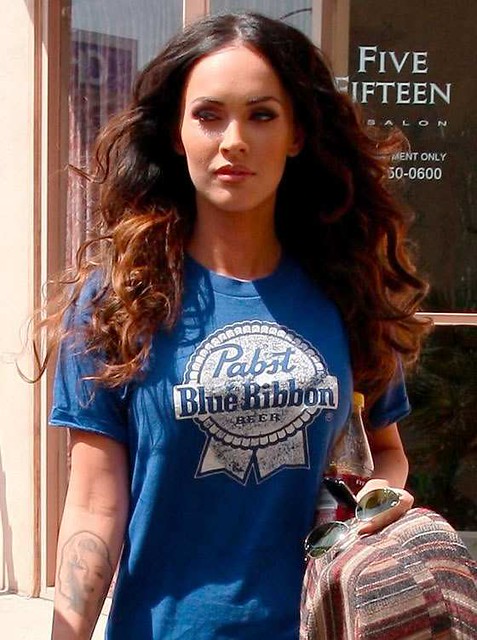
Although humorously enough, a few years ago the hipster appeared more partial to Pabst Blue Ribbon. This was taken by paparazzi in 2009. Ah, sex and beer. What’s not to love. It seems to me, the big brewers follow a variation of the old lawyer’s adage. “When the law is on your side, argue the law. When the facts are on your side, argue the facts. When neither the facts nor the law are on your side, make an ad hominem attack.” In the brewer’s world it’s more along these lines. “When the beer tastes good, promote the beer. When the brewery has personality, promote the brewer. When the beer has neither, promote a celebrity, a cartoon, or both.”

megan-fox-pbr

Filed Under: Beers, Breweries, Editorial, Just For Fun, News Tagged With: Advertising, Anheuser-Busch InBev, Brazil, Humor, Women

Upcoming Pliny The Younger Day On NBC

January 13, 2013 By Jay Brooks

russian-river
New England Cable News, an NBC News affiliate, had a nice video on Russian River Brewing, and Pliny the Elder and the upcoming Pliny the Younger release, which this year will take place February 1. It’s a nice piece, by Garvin Thomas, but when they return to the Anchor, she should have just kept her mouth shut, instead putting her foot well and truly in it. But watch the video first, concentrate on the good vibes, and see if you notice it, too.

At the end, they talk about the poll that the American Homebrewers Association takes annually, asking nationwide members to pick the best beer in America, and how Pliny has been picked as #1 four years in a row. The 2012 Poll got a record 16,445 votes from homebrewers around the country. But that didn’t stop the snark. Understandably, since this is New England Cable News, the announcer chided the list because there were no New England breweries in the Top 25 and the highest ranked New England beer was Samuel Adams, which tied for #31. I understand that’s their audience but was the snark really necessary? She then states almost all of the beers on the list were from the West Coast, saying “not a surprise since the American Homebrewers Association is based in California,” implying that the voting must have been rigged in favor of West Coast beers. Of course, the AHA has been in Boulder, Colorado since 1978 and has members all across the U.S., not concentrated in the Western states. That was just moronic and completely unnecessary. Congratulations to Vinnie and Natalie on the coverage.

Filed Under: Beers, Breweries, Events, Just For Fun, News Tagged With: California, Northern California, Russian River Brewing, Video

Jesse Houck Named New Brewmaster At Golden Road

January 10, 2013 By Jay Brooks

golden-road
Wow, Jesse Houck, who used to brew at 21st Amendment, and most recently was at Drake’s, is moving to Los Angeles to become the new brewmaster at Golden Road Brewing. According to the press release:

Houck and Golden Road President, Meg Gill, first met at 21st Amendment Brewery in 2008, where they bonded over their mutual love for canned beers and California IPAs.

Golden Road has experienced a rapid expansion since opening in October of 2011, doubling the size of their brew house and brewing capacity, releasing four canned beers and over fifteen specialty brews, opening over 500 draft accounts throughout the greater LA area. Says Golden Road President Meg Gill: “As we look forward to 2013, we have big plans for the direction we want our beers to go. We’re thrilled to bring Jesse’s leadership and dry, hoppy, clean-beer loving palate to LA.”

Adds Houck, “I am looking forward to sharing Meg and Tony’s vision of crafting quality beers for LA, and excited to be part of one of the fastest growing craft beer scenes on the West Coast.” A long time bay-area brewer, Houck brings a blend of chemistry and artistry to his brewing, having studied Chemical Engineering before becoming fascinated — and later obsessed — with home-brewing and beer.

Co-founder Tony Yanow has also been a fan of Houck’s for years, commenting, “Jesse has created some of my favorite beers, and we’re excited to bring his creativity and brewing expertise to our team.”

That’s awesome news for Jesse. He’s a terrific brewer and should be a good fit at Golden Road.

firkinfest08-08
Jesse (2nd from the left) at the Triple Rock Firkin Fest in 2008.

Filed Under: Breweries, News Tagged With: California, Los Angeles, Southern California

The Top Beer Brand Of 2012

January 4, 2013 By Jay Brooks

ace-metrix
I don’t want to wade neck deep into the “craft vs. crafty” debate — I’m not quite finished digesting it all — so I’m trying to not comment too much about this, yet in this instance, I’m going to at least stick my toe into the murky waters of this issue. (Oh, and a hat tip to Evan Benn for tweeting about this.)

Ace Metrix, a company based in nearby Mountain View, has just released their list of the Top Brands and Ads of 2012. Ace Metrix characterizes themselves as “the new standard in television and video analytics.”

They picked the top brand in fifteen different broad categories. The award does not go to the company with the best product, but to the one that had the best advertising last year, that is whoever received the “highest average Ace Score for their body of work in 2012.” This is best illustrated by reviewing some of the other category “winners.” For example, Olive Garden won for restaurants, so that should tell you something.

In the category “Beverages — Alcoholic” the winner was Blue Moon. You can even view the five Blue Moon commercials that got the highest scores. Now, I like Blue Moon. It’s not a bad beer. It may not be my favorite wit, but unlike many other beers made by big companies, I will drink it if my choices are limited. I know its creator, Keith Villa (who also stars in the commercials), and I’ve judged with him at GABF several times. It’s a great entry level beer, and has been phenomenally successful in that regard and also in marketing itself as not being part of Coors, in the same way that Saturn cars did in setting themselves apart from GM.

But that’s the way of the world, at least in our peculiar pro-corporate brand of capitalism. In brewing, I have to say, things are a lot more transparent than in many other industries. There was also a Geekologie chart of Parent Companies and their Subsidiary Brands, but the site’s been more recently hacked, to get an idea of how literally hundreds of brands are owned by just ten corporations. And I’ll bet dollars to doughnuts that most people weren’t aware of more than a few of those relationships, believing many of those brands to be independent or small companies, if they even cared at all.

Maybe it’s because in the world of beer geekdom we pay so much more attention, but most of the stealth brands like Blue Moon are open secrets. They may not talk about who owns the brands, but the information is out there and available if you bother to look. The thing is, most people don’t. If they like it, they drink it, and they buy it. Period.

Where the trouble comes in, I think, is when doing so infringes on another’s business ethos, or whatever. When small specialty breweries first started popping up, the big guys were initially somewhat helpful but as they began eating into their market share, things started to change. Over the years we’ve seen many attempts, with varying degrees of success, to copy or acquire anything that’s successful. In a sense it’s human nature, or certainly business nature. Do you think it’s an accident that after any successful film or television series, similar shows in the same genre proliferate with alarming alacrity?

But back to the Ace Metrix and their top brands of 2012. In their press release, in a section entitled “Brands of the Year Illuminate Many Notable Themes,” there’s this headline: “Craft Beer and Juice Beat Out Big Beer and Soda Brands.” Here’s the relevant bits about beer:

A changing of the guard was not only seen in the technology category, but also in the beverage category in which Blue Moon usurped the top spot from ‘big beer,’ and Ocean Spray ousted Coca-Cola from the winner’s platform. … Blue Moon swept the Alcoholic Beverage Category with an average Ace Score of 538, beating out big beer brands like Budweiser, Bud Light, Miller Lite and Coors Light, all of which failed to even make the Watch List this year, a stark comparison to 2011.

See the problem? How can Blue Moon have usurped anything from “big beer” when it really is a big beer. And that’s why the Brewers Association had to come out with its recent controversial statement, because even professional business analysts don’t realize who owns what, so what chance do consumers have?

I’m going to steer clear of the BA’s statement itself, at least for now, except to say that I thought the excellent rebuttal by August Schell was heart-wrenching and perfectly illustrated the problems of such statements and definitions. Because those characterizations only matter internally, among insiders and the businesses and professionals working in those industries. And while once upon a time those inner workings remained … well, internal … today almost everything is out in the open, on the internet, and often what might better be private insider discussions become full-blown public debates. Sometimes, it’s simply exhausting.

It’s a bit like beer styles themselves. They only really matter in very rarified situations, like competition judging. In the real world, they matter very little. It’s the same with trying to define beer, or craft beer, or whatever we’re calling it now. I completely understand why the BA needs to define craft beer, because their mission is to promote craft beer. You have to know exactly what and who it is you’re promoting in order to do your job. I get that. From private discussions I had a few years ago with people who were involved in crafting the newer definition over about a year’s time, it was apparently a very contentious process and was extremely difficult because with every changed word, someone was excluded or someone you didn’t think belonged remained. It reminds me a little of a famous quip made by a Supreme Court justice in Jacobellis v. Ohio when, in trying to define hardcore pornography and create an obscenity threshold, Justice Potter Stewart wrote that it was difficult to define, but that “I know it when I see it.”

And that’s the problem, because how you define craft beer is, and should be, different things to different people, with varying priorities and concerns. It may be one thing to the BA, but something else entirely for an average consumer and yet again something more stringent to a hardcore beer geek. The thing is, everybody’s both right and wrong on this one, at least as I see it. When you’re talking about personal preference, it’s ultimately just that: personal. Like pornography or even religion, whatever you believe is correct, for you. Whatever you choose to drink is right for you. I may disagree with your choice, but that’s okay. Happily, they come in these little 12, 16 or 22 oz. bottles and cans, or can be poured into single-serving sizes of glassware, so that we can all just drink what we want, definitions be damned.

Filed Under: Beers, Breweries, Editorial, News, Politics & Law Tagged With: Advertising, Big Brewers, Coors, Packaging

The Beer Monopoly

January 2, 2013 By Jay Brooks

apm
This just drives me crazy for some unknown reason. It happens with alarming frequency that seems to belie a willful ignorance and an amazing ability to act as if the media just woke from a Rip Van Winkle-like nap. The latest culprit is American Public Media, a company that produces public radio programming, including Marketplace, a show that specializes in the world of business. Marketplace is the one that just filed a report on the proposed merger between ABI and Grupo Modelo, the latest in a seemingly unending series of consolidation in the beer commodities market. Entitled Proposed Beer Merger Could Hurt Competition in U.S., here’s part of what the very short report has to say.

Barry Lynn, a fellow at the New America Foundation, argues that over the years, Anheuser Busch-InBev and the world’s second largest beer company, MillerCoors, have created a monopoly.

Really, he “argues?” And it seems like he’s implying that it’s just happened lately, slowly over the years and nobody noticed until now? Maybe I”m reading into that, but that’s how it strikes me. First of all, the “Big Two” — f.k.a. the “Big Three” — have had a monopoly over the beer world for decades, at least since the 1980s, some thirty years. And prior to that, big breweries dominated the beer industry because, well … because that’s all there was: big breweries and regional breweries. I don’t think anyone needs to “argue” that point. I’d say it’s pretty well-settled. I’m not aware of any contrary flat-Earth-like group arguing that there’s no monopoly in the beer industry. But every time there’s a high profile merger, you hear this as if nobody was paying attention until now.

It’s doubly odd because Lynn is apparently an “expert” on monopolies, author of the book Cornered: The New Monopoly Capitalism and the Economics of Destruction, and he also wrote Big Beer, A Moral Market, and Innovation in the Harvard Business Review.

In the latter piece, he expands this theme and claims that “this began to change in the early 1980s, as radical revisions to antitrust law unleashed extreme consolidation in two of the industry’s three tiers. … In brewing, a long series of mergers has reduced the field from more than 48 major brewers in 1981 to two.” But that’s not exactly correct. There weren’t “48 major brewers in 1981.” According to the Beer Institute, who’s kept the number of breweries tally since 1887, there were 38 “traditional breweries” in 1981, along with 10 “specialty brewers.” It’s not the numbers I’m quibbling with, but the characterization that these 48 breweries were somehow equal, or nearly so, by calling them all “major brewers.” I don’t know exactly who the ten were, but it’s a safe bet they included Anchor, New Albion, Sierra Nevada, Boulder, RedHook, none of whom even today, much less in 1981, would be considered “major,” especially when compared to the largest brewers. There was, and is, an enormous difference in the size of these breweries. While there were, of course, a few larger regional breweries still around in 1981, the chasm between the largest and smallest was still dramatic. It sets up a false perception to say that they were all major in 1981 but now only two remain thirty years later. That’s just not what happened.
monopoly-beer
While I don’t recall this term being used, in the 1970s and the very early 80s, there was essentially the “Big 5,” which was the Big 3 plus Pabst and Schlitz. Five companies dominating the industry is hardly much different than three, and still a big difference from the fictional 48. Consolidation of breweries actually began right after Prohibition ended, when many that existed before 1919 never reopened and those that did often struggled mightily. A lot of them were swallowed up quickly by those breweries that enjoyed early post-prohibition success, a pattern that continued from roughly 1934 through the 1980s.

A 1994 study estimated U.S. beer market share by decade of the top 10 beer companies. In 1939, the biggest 10 owned 24% of the market. By 1964, it had more than doubled to 58%. In 1966, worried about what further consolidation would do to the market, the U.S. government intervened to try to keep more consolidation by M&A from happening. They obviously failed. Commenting in 1991, A. M. McGahan, remarked in his piece, “The Emergence of the National Brewing Oligopoly,” that “policy implementation was too late to prevent an oligopoly in the market. The nationwide recognition and brand loyalty earned by the ‘big five’ breweries created momentum, and these firms demonstrated that consolidation was no longer necessary to gain market share. By 1980, the combined production of the ‘big five’ breweries accounted for 75 percent of all domestic beer produced. The top ten largest breweries produced 93 percent of the nation’s beer.”

That 1994 survey largely agrees, estimating that in 1974, the top 10 accounted for 81% of the market and by 1980, their share had risen to 94%, hitting a peak of 98% in 1990. So much for this being a recent phenomenon. The domination of the beer industry by just a few companies is, quite frankly, old hat. Yet this old saw about it having just happened is trotted out every time a new merger occurs. I admit it’s gotten worse, from a sheer numbers point of view now that we’re down to two, but the fact is a near monopoly of the beer market has been with us longer than most of us have been alive.

Later this year, ABI will again go before federal regulators to ask that their purchase of Grupo Modelo be approved. ABI has owned a 50% non-controlling stake in the Mexican beer company for many years, so this would give them control, and the other half of the company. I assume it will sail through. The last time ABI came before the feds was when InBev wanted to buy A-B, and all the government required was that they divest themselves domestically of Labatt’s. Big whoop.

The meteoric rise of — let’s just call it the specialty beer market for now — has created an industry with more breweries than we’ve had in over a century, but even after 35 years only accounts for about 6% of the total market. That percentage has changed only incrementally in all those decades. That there’s a beer monopoly should quite frankly be seen as a given. It’s been with us for a long, long time. So let’s stop pretending with every new merger that this is the one to push us over the edge of decreased competition. As any smaller brewer will tell you, the market has been difficult since the very beginning for every single brewery, especially early on.

The one thing I do agree with Lynn about is this statement about the large beer companies. “They have this remarkable ability to make it seem as if this is the most competitive of marketplaces.” That’s certainly true, as a knowing walk down the average grocery store beer set will prove. So while I’m sure the argument before government regulators will undoubtedly be that competition will not materially be effected by this merger, I agree that it’s hard to see how this latest acquisition will change much. As they say, it’s a little late to close the stable door now that the horse has bolted. But he bolted so long ago that he’s nowhere in sight anymore.

In his Harvard Business Review piece, Lynn suggests that “the threat we face is not only to the variety and quality we all enjoy.” “[C]onsolidation can also threaten the primary outcome of this market — the ability of communities and individuals to manage for themselves this ever so extraordinary commodity.” Again, the fallacy here, IMHO, is that this represents a new threat. The damage has already been done, in fact done so long ago that the wound has healed. Most specialty breweries understand the world they’re trying to do business in, they get that it’s inherently unfair and is unequally balanced, but they’ve figured out how to work within a system that’s been broken almost since it began when the three-tier system was imposed after the repeal of prohibition. [Note: before the heated commentary begins, I admit the three-tier system does work in many ways, and I’m not arguing against it per se, but it has favored larger beer companies and has made life difficult for many smaller ones over the years. There’s no doubt that’s been changing but has more to do with the hard work of countless small brewery employees than any magnanimous sea change by wholesalers.]

Retail and the distribution networks favor consolidation because having to deal with fewer companies is more efficient. That’s why all of the big companies offer a myriad of brand names to give the illusion of choice. When people want choice, it’s easier to pretend to offer just that by creating different packages with very similar stuff inside them, and let advertisers and marketers create preferences. That’s a model that’s worked well in the modern era.

So will this latest merger “hurt competition” in the U.S. beer market? No more than the last one, or the one before that one, or the one prior to the last one, or the one before then, ad infinitum. Is it getting worse? Perhaps, but we’ve had a beer market dominated by just a few big players for such a long, long time that at the very least we should stop pretending this is a new problem that needs addressing with each merger. The beer monopoly has been with us for decades. Whatever solutions there might be to the problems of a consolidating industry — not that I can think of any that have a chance in hell — we should at least be honest about the situation we find ourselves in. Just say know.

You can listen to the entire Marketplace report below.
monopoly-beer

Filed Under: Breweries, News Tagged With: Big Brewers, Business

Times Tackles Brett

December 28, 2012 By Jay Brooks

brett
In case you missed it, yesterday’s New York Times had an article on Brettanomyces entitled Brettanomyces, a Funky Yeast, Makes Flavorful Beers that’s worth a read.

Filed Under: Beers, News Tagged With: Mainstream Coverage, Yeast

Pretentious Beer Glasses

December 18, 2012 By Jay Brooks

pretentious-beer-glasses
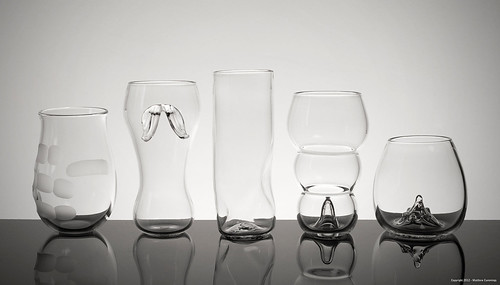
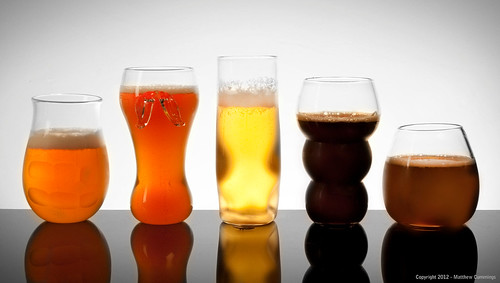
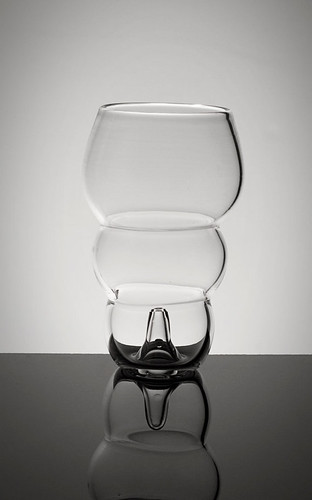
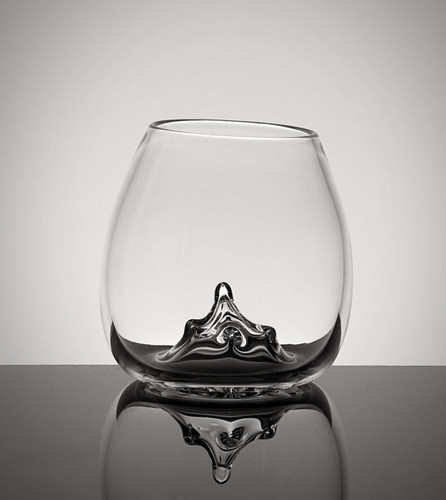
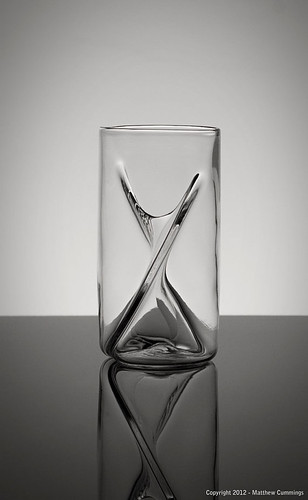
These are some of the most unusual and inventive beer glasses I’ve run across for some time now. They’re hand made, mouth-blown glasses by a Matthew Cummings of Louisville, Kentucky and are available through his Etsy store, Pretentious Beer Glasses. You just know that many people will call his efforts pretentious so I love the fact that he decided to just own it and called his company by that name. He only opened for business earlier this month. Below are the five regular glasses that he makes (but for more photos, and to see them larger, visit him at Etsy):

pbg-02
From left to right: The Hoppy Beer Glass, Ale Glass, Subtle Beer Glass, Malty Beer Glass and the Aromatic Beer Glass.

Each glass is designed for a different range of beers, and you can probably work out what beers go in which glasses by their names.

Below are the same glasses, but filled with beer.
pbg-01

Here’s a breakdown of each glass:

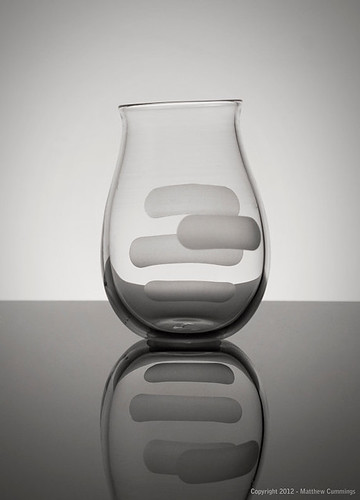
The Hoppy Beer Glass

pbg-07-hoppy

The Hoppy Beer Glass description:

This handmade beer glass is designed to highlight hoppy beers, such as IPAs APAs and also light Belgians. The tulip shape is a favorite glass style of high end beer vendors because of its versatility and enhancement of complicated beers. This tulip is engraved with four dashes on the sides, one for your thumb, and three for your fingers. I make each glass by hand in the hotshop (glass studio) and carve the finger grips on the glass the old fashioned way…lathe cutting. Same process that crystal companies use for their cut crystal glassware, only I leave the glass with a nice satin finish instead of polishing it, which provides better grip. Each glass is 5″ tall and 3.5″ wide, holding 12 oz of liquid with a 1-2 oz head (remember, dimensions will vary slightly as each glass is made by hand).

The Hoppy glass is also available with two types of hand grips, dashes and finger prints.

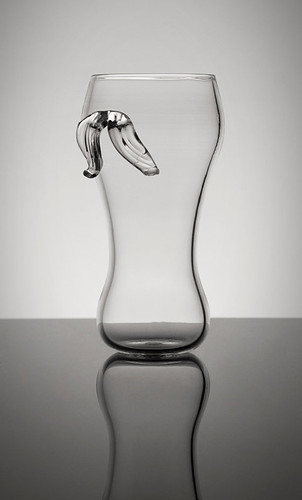
The Ale Glass

pbg-04-ale

The Ale Glass description:

This might be the most versatile glass of the set. It is a variation on a typical pint glass that highlights most ales, lighter beers, and hefeweizens. This is an extremely popular glass design for a reason, and I didn’t see any need for drastic alteration to it’s form. But I had to make it mine (as far as design goes), so I went graffiti on it. Take a recognized format, bomb it, and make it your own. Hence the ‘stache. Dimensions are 6.25″ tall and 3.25″ wide (remember, dimensions will vary slightly as each glass is made by hand).

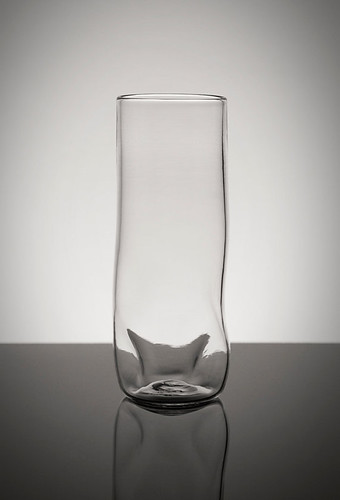
The Subtle Beer Glass

pbg-08-subtle

The Subtle Beer Glass description:

This handmade beer glass is designed to highlight any lighter flavored beer, Lager, Pilsner, Kolsch, etc. The glass is in the traditional format for the style, a tall, narrow cylindrical shape. Yet it possesses a wonderfully “softened” bottom made by indenting the hot glass with newspaper pads while it is being blown. The “softened” bottom is not only ergonomic, but it reveals all the different hues of each beer by presenting the liquid in different densities. Dimensions are approximately 6.75″ tall by 2.5″ wide and holds a 12 oz. pour with 2-3 oz. of head (remember, dimensions will vary slightly as each glass is made by hand).

The Malty Beer Glass

pbg-05-malty

The Malty Beer Glass description:

This handmade beer glass is meant to highlight just about any beer with distinct notes of malt…including Stouts, and Porters. The glass is also wonderful for any unfiltered beer. The point coming out of the bottom of the glass allows the sediment to cascade to the outer edge of the bottom. While the lowest “waist” keeps the sedimentation at the bottom and out of your teeth! The glass is about 6″ tall and 3.5″ wide, and holds a 12oz. pour with significant head (remember these are handmade and dimensions will vary slightly).

The Aromatic Beer Glass

pbg-06-aroma

The Aromatic Beer Glass description:

This glass is designed to highlight any aromatic beer and or high ABV beer. Obviously reminiscent of the snifter or full bodied red wine glass, it concentrates the volatiles and aromatics of the beer to properly enhance the experience. The main design element is an abstract mountain pushed into the bottom of the glass. As you drink the beverage, the mountain is slowly revealed, emerging from the dark liquid. Dimensions are 4″ tall and 4″ wide, holding 12 oz (remember, dimensions will vary slightly as each glass is made by hand).

In addition, Cummings has one more glass in his store, The Dual, which is an ideal glass for mixing beers:

The Dual Beer Glass

pbg-03-dual

The Dual Beer Glass description:

This is the first specialty glass released by the Pretentious Beer Glass Company. It is a cylindrical beer glass with two separate chambers inside that combine into one towards the lip. I first began working on this design after having a bartender incorrectly pour a Half and Half, blending the two beers together. This glass is not just the solution to the problem of using a jig to properly pour those types of beers, but it allows you to mix any two beers, even ones that have similar viscosities. A wonderful secondary benefit to this glass is that you can smell the bouquet of both beers simultaneously, where normally you only smell the beer that settles on top. Dimensions vary more on this glass than the others due to production techniques, and are approximately 5-6″ tall and 3″ wide, holding 10-12 oz.

The glasses are a little pricey, but not when you consider that they’re made by hand and are utterly unique. It will be interesting to see how they work. I’ve ordered a set of five, although they won’t make it here by Christmas, and I should point out that you won’t be able to get them for a gift this year since he’s been flooded with orders and is currently sold out.

To see many more photos, and larger ones, visit Matthew Cummings’ Etsy store, Pretentious Beer Glasses.

Filed Under: Beers, Just For Fun, News Tagged With: Gift Ideas, Gifts, Glassware

Ommegang To Brew “Game Of Thrones” Beer

December 17, 2012 By Jay Brooks

game-of-thrones
In case you missed the news, the New York Times Art Beat is reporting that Ommegang will be creating four beers for the popular HBO series Game of Thrones, based on the A SOng of Ice and Fire books by George R.R. Martin. According to Coming Soon: The Beer of Kings:

The first beer, Iron Throne Blonde Ale, will be inaugurated nationwide in late March, to coincide with the Season 3 premiere of “Game of Thrones,” which is scheduled for March 31. Three more beers are planned, with the second to be released next fall. The others will follow in subsequent seasons.

I’m a fan of the show, and my wife and several relatives have read all the books, but this is certainly some odd marketing. If the goal is to make more people watch the show, I can’t see how this will have any effect. If you already like the show, will you seek out the beer just because of the tie-in? I like the beer that Brewery Ommegang makes, but apart from some press and attention, I can’t see how this will help the brand all that much.

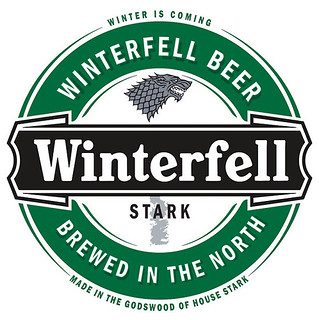
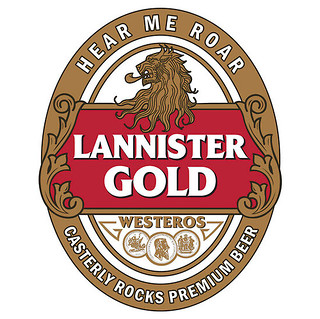
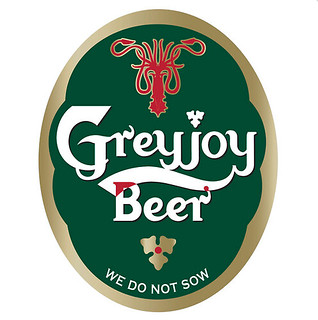
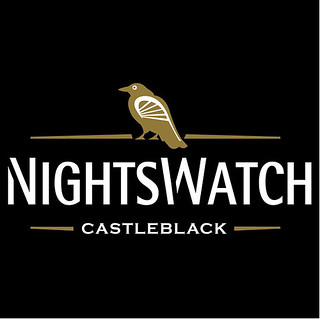
Note: These are not the actual labels that Ommegang will create, but some imagined ones that have been floating around the internet since earlier this year, this collection from Geek Tyrant.

got-winterfell-heineken

got-lannister-gold-stella

got-greyjoy-beer

got-nights-watch-guiness

UPDATE 12.18: Ommegang brewmaster Phil Leinhart revealed some additional details about the upcoming Game of Thrones beers in an interview on Guyism. Here’s what he had to say:

[T]he blonde ale is fair in color and soft in appearance, but still holds a complexity and bite.

“With a Lannister currently on the throne, it only made sense to do a delicate, but piercing Golden Blonde Ale with Noble hops,” he said, referring to one of the series’ characters.

Subsequent beers for the collaboration are still being worked on, because the Ommegang team has to wait for the themes and characters to develop in the series’ next season before it can begin crafting the next ale. Capozza said that two additional beers will be released in conjunction with each of the series’ following seasons

And there’s also more about the project came about:

Allison Capozza, a spokeswoman at Ommegang, said that the Game of Thrones creators and producers have long been fans of Brewery Ommegang, whose team happens to enjoy the TV series. HBO, she said, reached out to the brewery about the idea for a collaboration.
“The producers very much resonated with Ommegang’s blend of ‘old world’ and ‘new world’ elements to create something new and unique,” Capozza said.

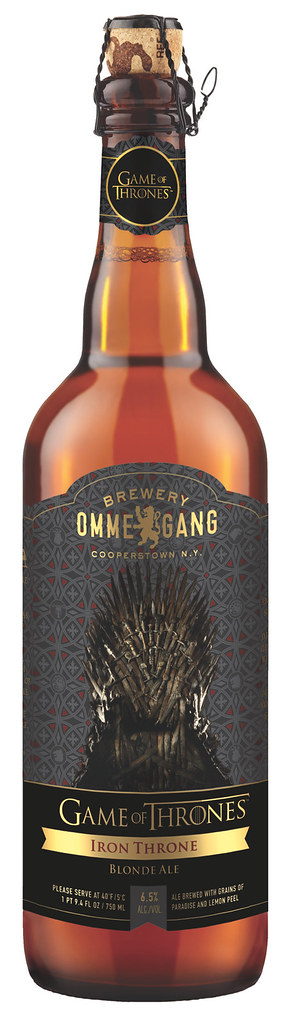
And below is the official bottle that Ommegang will release next year.

ommegang-iron-throne

Filed Under: Beers, Breweries, Just For Fun, News Tagged With: Announcements, Television

Pandering To Women

December 17, 2012 By Jay Brooks

women
I may not be a woman, but I grew up around them quite a lot as a child, perhaps more than some others (my folks divorced when I was one and I spent most of my formative years among my mother, grandmothers, aunts, etc.) and am fully in touch with my feminine side. Plus, I love quite a few women — one a lot more than others — but count quite a few among my closest friends. So I cringe every time I read about the efforts of big companies to market beer directly to women, believing all it will take to increase market share is more attractive packaging or sweeter flavors. How many of these failed efforts have we endured in just the last decade?

A few days ago, yet another one surfaced, in a Fast Company interview with Carlsberg Group CEO Jorgen Buhl Rasmussen entitled Carlsberg Taps The Next Big Beer Market (Really): Women. This morning, I saw quite a few exasperated tweets and posts from women in the beer industry that I respect, and decided to read the interview. It’s a head-shaker, alright. Riddled with so much wrong, it’s hard to address it all, so I won’t. I’m sure someone will dissect it better than I can.

But, just a few points. First, Rasmussen claims that the “beer category has been suffering in terms of image,” but for just “the last 10 to 15 years.” Um, I can’t actually remember a time when beer wasn’t marketed almost exclusively to men. There are a few post-World War 2 ads that reach out to women — primarily because they were the ones doing the grocery shopping — but by the 1960s it was all men, all the time. And it’s been that way ever since, from the Swedish Bikini Team to Miller’s infamous mud wrestling. But he soldiers on.

Rasmussen and others still think product innovation and marketing brewed drinks toward women is possible. Increasingly, women know about different, palate-friendly beers like Abbey Ales, fruit lambics, ciders, ginger beers, and dark stouts — as well as about the more varied glassware they require and how to pair them with foods. Women want “a less bitter, non-bloating beer that does not give you a malty/hoppy aftertaste and breath,” says Carlsberg spokesman Ben Morton. “Flavor proliferation has become a key feature of beer innovation.”

So what’s the plan? “[H]e wants to come up with new types of drink recipes that can be made in Carlsberg-owned breweries but are lighter in alcohol, refreshing in taste, and perceived as healthy enough to take on wine, champagne, and other drinks vying for women’s dollars.” Rasmussen used to work for Duracell, Gillette Group, Mars, and Unilever, and seems to believe that beer is just the same as marketing razors and candy, but I don’t think that’s true.

Then there’s this bit of wisdom, by Carlsberg’s VP of Marketing, Kirsten Ægidius. “Many young people aren’t keen on the bitter aftertaste of beer.” Uh, huh. That’s why IPA has been the fastest growing category for years.

So I know they can’t help themselves, but I really wish the big beer companies would just stop this insane, asinine belief that reaching women is a matter of finding beer that’s female friendly and is marketed to them like Virginia Slims’ “you’ve come a long way, baby” pandering.

Not surprisingly, I have a lot of female friends who love beer every bit as much as I do. My wife is a beer lover, and probably drinks more beer at home than I do. I know countless female brewers, beer writers and female fans who love craft beer. This is the same craft beer, mind you, that I love, and that every other beer-loving male loves, too. There doesn’t need to be gender-specific beer. That’s a ridiculous notion, but one that keeps resurfacing, even though it fails every single time. I remember an “I Love Toy Trains” video that Porter used to watch when he was younger that showed how in the 1950s Lionel created a toy train set aimed at girls in which all the cars were pastel colors, pink, lavender, etc. It bombed, because the girls who wanted to play with toy trains wanted the same trains that the boys had. It’s hard to imagine why anybody would have thought otherwise.
Young blond woman with glass of beer
So while I hate to speak for women beer lovers, who are quite capable of fending for themselves, I’m just as eager for this nonsense to stop. So here’s a few tips I have for the big beer companies on how to reach women:

  1. Stop pandering to women, just treat them like people.
  2. Stop the obvious sexism in most of your advertising.
  3. Stop ignoring your own involvement in creating the perception that beer is not for women.
  4. Stop assuming women won’t drink anything bitter; coffee is bitter and you don’t see this issue in the coffee industry, do you?
  5. Stop creating packages that you think will appeal to women.
  6. Stop believing that marketing is the answer.

Filed Under: Beers, Breweries, Editorial, News, Politics & Law Tagged With: Denmark, International, Interview, Women

Nine Beers Experiencing Titanic Sales Drops

December 9, 2012 By Jay Brooks

sales-chart-down
24/7 Wall St. had an interesting look at some beers that have fallen on hard times over the last five years. Entitled Nine Beers Americans No Longer Drink, it lists some mainstream beers that have experienced some amazing drops in sales from 2006 through last year. The data is from Beer Marketer’s Insights and the list includes nine beers that have experienced more than a one-third drop in sales — and in two cases two-thirds — over that five-year time period. Here’s the list:

  1. Michelob: 72% drop in sales, 2006-2011 (ABI)
  2. Michelob Light: 66.3% drop in sales, 2006-2011 (ABI)
  3. Budweiser Select: 60.8% drop in sales, 2006-2011 (ABI)
  4. Milwaukee’s Best: 57.1% drop in sales, 2006-2011 (MillerCoors)
  5. Old Milwaukee: 52.8% drop in sales, 2006-2011 (Pabst)
  6. Miller Genuine Draft: 52.3% drop in sales, 2006-2011 (MillerCoors)
  7. Amstel Light: 47.7% drop in sales, 2006-2011 (Heineken)
  8. Miller High Life Light: 37.6% drop in sales, 2006-2011 (MillerCoors)
  9. Milwaukee’s Best Light: 35.5% drop in sales, 2006-2011 (MillerCoors)

That’s a pretty remarkable list. A few of those used to be truly successful brands. The article also details how “to combat the growing popularity of craft brews, major breweries such as Anheuser-Busch Inbev and MillerCoors have aggressively marketed their own specialty beer.” Those include such stealth beers as Blue Moon, Shock Top, et al. That’s in addition to buying up craft brands such as Goose Island or creating separate marketing arms, like Tenth and Blake.

It will be interesting to see what these companies will do next as these brands drag down the ship with such titanic sinking sales. Will they take steps to reinvigorate these brands or jettison them from their portfolios and instead concentrate on craftier brands?

titanic

Filed Under: Beers, Breweries, Editorial, News Tagged With: Anheuser-Busch InBev, Big Brewers, Business

« Previous Page
Next Page »

Find Something

Northern California Breweries

Please consider purchasing my latest book, California Breweries North, available from Amazon, or ask for it at your local bookstore.

Recent Comments

  • Bob Paolino on Beer Birthday: Grant Johnston
  • Gambrinus on Historic Beer Birthday: A.J. Houghton
  • Ernie Dewing on Historic Beer Birthday: Charles William Bergner 
  • Steve 'Pudgy' De Rose on Historic Beer Birthday: Jacob Schmidt
  • Jay Brooks on Beer Birthday: Bill Owens

Recent Posts

  • Beer In Ads #5133: Going… Going… SB Bock February 26, 2026
  • Beer Birthday: Art Larrance February 26, 2026
  • Beer In Ads #5132: Grain Belt Bock Beer February 26, 2026
  • Historic Beer Birthday: Frederick C. Miller February 26, 2026
  • The Bock Beer Pig? February 26, 2026

BBB Archives

Feedback

Head Quarter
This site is hosted and maintained by H25Q.dev. Any questions or comments for the webmaster can be directed here.