Brookston Beer Bulletin

Jay R. Brooks on Beer

  • Home
  • About
  • Editorial
  • Birthdays
  • Art & Beer

Socialize

  • Dribbble
  • Email
  • Facebook
  • Flickr
  • GitHub
  • Instagram
  • LinkedIn
  • Pinterest
  • RSS
  • Twitter
  • YouTube

Powered by Genesis

It’s Official: February Declared California Beer Month

February 23, 2012 By Jay Brooks

california
It’s been rumored for weeks, maybe longer, but I got the word a few days ago that the California Senate would vote this morning between 9 and 10 o’clock on SCR 66, introduced by Senate majority leader Ellen Corbett, a resolution to declare February California Beer Month. Rick Sellers, who writes at Pacific Brew News and lives in Sacramento, was on hand and a few minutes ago tweeted that the senate passed the resolution 36-0!

Here’s the text of the resolution:

SCR 66, as introduced, Corbett. California Craft Brewery Month. This measure would proclaim the month of February 2012 as California Craft Brewery Month.

WHEREAS, California is the birthplace of the craft brewing movement, when Fritz Maytag acquired the Anchor Brewing Company in 1965 and began brewing authentic, handcrafted beers;
and

WHEREAS, California is the home of the first microbrewery, beginning with Jack McAuliffe who built a small brewery in Sonoma from scratch, and began selling New Albion ales in 1977;
and

WHEREAS, The second largest craft brewer in the country, Sierra Nevada Brewing Company, was founded in Chico, California, in 1979, and spurred the craft brewery movement around the country; and

WHEREAS, In 1977, Governor Jerry Brown signed Assembly Bill 3610 to amend the state’s tied-house laws to remove the restriction on on-premises sales of craft beer. Following this change in law, California became home to three of the first five brewpubs in America; and

WHEREAS, The second brewpub in America was opened by the Mendocino Brewery in Hopland, California; the third brewpub, opened in September 1984, was Buffalo Bill’s in Hayward, California; and the fifth, opened by John Martin in March 1986, was Triple Rock Brewery in Berkeley, California; and

WHEREAS, The California craft brewery industry has an annual impact of $500 million on the state’s economy in direct wages and benefits; and

WHEREAS, The California craft brewery industry creates more than 17,000 jobs, which in turn creates billions of dollars in positive economic impact; and

WHEREAS, The California craft brewery industry creates more revenue for the state and federal governments than many other industries, generating more than $36 million in taxes in 2010; and

WHEREAS, California now has more breweries than any other state in the country, including over 280 small, independently owned craft breweries; and

WHEREAS, California is now known and recognized internationally for the quality of its craft breweries. Year after year, Californian breweries win more medals at the World Beer Cup, the largest international beer competition in the world, and the Great American Beer Festival, the largest beer competition in the United States, than breweries found in other states; and

WHEREAS, Brewery tourism is increasingly popular and contributes to the economic impact of the state’s tourism industry; and

WHEREAS, The California craft brewery industry is a leader in the stewardship of natural resources and the environment, and has made a major commitment to implement sustainable practices that are environmentally sound, including some of the largest solar arrays in the private sector, and the use of fuel cells and other innovative conservation techniques and processes; and

WHEREAS, Despite the challenges of intense global competition, the state’s craft brewery industry is strong and growing, and is a major contributor to the economic vitality of California; now, therefore, be it Resolved by the Senate of the State of California, the Assembly thereof concurring, That the Legislature hereby proclaims the month of February 2012 as California Craft Brewery Month; and be it further Resolved, That the Secretary of the Senate transmit copies of this resolution to the author for appropriate distribution.

And not a moment too soon, only 23 days into the month. Now that’s political efficiency. I’ll post more details as they become available. At least this year there’s an extra day in the month to celebrate. Happy California Beer Month everybody.

Filed Under: Beers, Breweries, Just For Fun, News, Politics & Law Tagged With: California, Holidays

Schlafly, Texas Ranger

February 10, 2012 By Jay Brooks

schlafly
If this hilarious video for the annual The Repeal of Prohibition Beer Festival doesn’t make you want to attend, I don’t know what else would. The festival will be held at Schlafly Bottleworks in St. Louis, Missouri on Saturday, April 14th, 2012 from noon until 5:00 p.m.

Filed Under: Breweries, Just For Fun, News, Politics & Law Tagged With: Announcements, Beer Festivals, Humor, Missouri, Video

State Alcohol Administrators Slam Alcohol Justice

January 27, 2012 By Jay Brooks

ncsla
You probably knew that each state has some form of an ABC, an alcohol control organization that after Prohibition was created to administer their state’s laws regarding alcohol. Not surprisingly, they also have an organization where the professionals in these state organizations can get together and share information, how they do things, and generally learn from and help one another be better at their jobs. It’s called the National Conference of State Liquor Administrators, or NCSLA. Their stated purpose is:

The purposes of the Association shall be to promote the enactment of the most effective and equitable types of state alcoholic beverage control laws; to devise and promote the use of methods which provide the best enforcement of the particular alcoholic beverage control laws in each state; to work for the adoption of uniform laws insofar as they may be practicable; to promote harmony with the federal government in its administration of the Federal Alcohol Administration Act; and to strive for harmony in the administration of the alcoholic beverage control laws among the several states.

They have an annual convention where they get together, along with other events throughout the year. Also, in addition to the obvious members, it’s also open to distributors, suppliers, retailers, law firms, health organizations and anyone else with an interest in the administration of alcohol at the state and federal level.

Well. Earlier this week, Alcohol Justice posted a press release entitled Big Alcohol Dominates Alcohol Regulator Meeting, which touted an article in the new edition of the journal Addiction that they claim “Documents Unhealthy Influence of Alcohol Industry over State Regulators.” Not surprisingly, the author of the article, Sarah M. Mart, is the Director of Research for Alcohol Justice. So they created the propaganda, then promote it is as if it’s news and/or impartial information and it’s not surprising that it just happens to support their agenda. Is the concept of a self-fulfilling prophecy lost on them?

In this case, the article, Top priorities for alcohol regulators in the United States: protecting public health or the alcohol industry?, purports to examine the “NCSLA Annual Meeting [that] took place 20–24 June 2010 in New Orleans, Louisiana.” Smart claims as a “finding” that “[m]ore than two-thirds (72.2%) of the 187 conference attendees were from alcohol producers, importers, wholesalers, retailers or their attorneys. Nearly two-thirds (65.0%) of the 40 panelists were from the alcohol industry. The author of this paper was the only attendee, and the only panelist, representing public health policy.”

In the press release, Alcohol Justice spins it this way.

In a peer-reviewed article in the February 2012 issue of Addiction, Sarah Mart, director of research at Alcohol Justice, has documented the alcohol industry’s excessive involvement in a 2010 annual conference of state liquor administrators.

“With alcohol use being the third leading preventable cause of death in the U.S, you would think state regulator meetings would focus on the most effective and cost-effective ways to reduce alcohol-related harm,” stated Mart. “But this event was really about the industry’s agenda.”

Mart’s article details her experience at the annual National Conference of State Liquor Administrators (NCSLA), which took place in June 2010. More than two-thirds (72%) of the 187 meeting attendees, and 65% of the panelists, were from the alcohol industry. The rest represented state alcohol control systems and federal government agencies. Mart was the only participant representing public health policy.

“The NCSLA is dominated by the global companies that produce, import, distribute and sell alcohol,” said Mart. “Not surprisingly, the Association’s liquor control agenda lacks public health considerations.”

On average, 79,000 deaths annually are attributed to alcohol consumption. In 2005, there were over 1.6 million hospitalizations and 4 million emergency room visits for alcohol-related causes. Alcohol-related costs to state budgets are staggering, yet this trade organization of state regulators, which could play an important role in reducing the harm, has no stated position supporting public health.

“Big Alcohol panelists actually sent regulators a warning message: Be industry-friendly. Don’t rock the boat of commerce with public health concerns, or your job may be on the line,” reported Mart. “The Federal officials that were present also spoke about supporting the industry, instead of protecting public safety. That was a disappointment.”

Sounds bad, right? Well, the NCSLA sees it a different way. They’ve now responded with their own press release telling the other side of this story.

NCSLA, The Inclusive Crucible Of Alcohol Policy Issues, Dismayed By Inaccuracies Of “Sour Grapes”

When requested to comment on the recent press release from an entity named “Alcohol Justice”(formerly known as The Marin Institute), NCSLA President William A. Kelley, Jr. today said,

“The National Conference of State Liquor Administrators (“NCSLA”) has for decades been the only organization of the 50 states with the sole clear, transparent and inclusive purpose of effectively controlling alcoholic beverages. That purpose cannot be effective without input from all interested parties. Indeed since this Nation was founded, the fundamental principle of American government has been to make decisions with the consent of the governed. That requires substantive communication with and consideration of the concerns and competing interests of those who would be subject to regulatory action by the federal and state government. This is the hallmark of a real democracy.

The NCSLA is dismayed at the conduct of any organization which has chosen to re-brand itself and seeks to create relevance for its new brand by pandering for headlines, while taking no real, affirmative action to support and defend the federal and state beverage alcohol regulators in the executive, judicial and legislative branches of state and federal government. These federal and state regulators stand alone as they fulfill their lawful obligations to strike a balance between the protection of the common good and the service of the public demand for the different sorts of alcoholic beverages made available by this legitimate, responsible industry.

The agenda of self-promotion by “Alcohol Justice” is obvious and unavailing. The telling fact is that the now re-branded entity formerly known Marin Institute has repeatedly chosen not to become a member of the NCSLA despite the numerous invitations that have been extended to them and the years of courtesies from the NCSLA they have enjoyed in the form of expense-paid attendance at NCSLA conferences and participation on NCSLA panels. It is equally telling that this statement comes when further special treatment has been denied this re-branded entity while at the same time it was directly invited and encouraged to join the NCSLA, take a seat at the proverbial table, but on the same terms as those long met by other public health and public advocacy groups. It is disheartening when any entity with substantial financial resources, yet without the economic hardships endured for years by state beverage alcohol regulators, appears content to do nothing.

The silence of this re-branded entity is deafening in the national dialogue that continues as Congress, The President of the United States, the people of the state of Washington and the representatives of the people in all the 50 states grapple with the modern issues of beverage alcohol control. This struggle is the American legacy of that failed experiment named “Prohibition.”

I look forward to the honor of leading the NCSLA when it convenes in Washington D.C. to continue its efforts in fostering principles and techniques of balanced alcoholic beverages control. Unfortunately it appears that this re-branded entity chooses to continue to sit on the sidelines in its complacency, fermenting in its sour grapes. Perhaps sometime soon the reality will be recognized that much is expected from those who are given much.”

Nicely said, Mr. Kelley. Nicely said.

Filed Under: Editorial, News, Politics & Law Tagged With: Anti-Alcohol, Law, Press Release, Prohibitionists, State Agencies

Paper or Plastic & Beer

January 18, 2012 By Jay Brooks

paper-or-plastic
Here’s an odd little story from Virginia, sent in by an alert reader (thanks Jeff). In many places, there’s a growing debate about plastic bags, paper bags or no bags at the grocery store. In Virginia, there currently is no law regarding them, but that hasn’t stopped stores all along the southeastern coast of Virginia — an area known as Hampton Roads — from insisting that customers get a plastic bag, if they’re buying beer, that is. It’s not the law, of course, as confirmed by Kathleen Shaw, a spokeswoman for the state Department of Alcoholic Beverage Control.

According to a story in the local Daily Press, apparently “[c]ashiers are either erroneously told by their employer that Virginia requires them to bag alcohol or they mistakenly equate store policy to state law. Either way, beer is bagged at nearly every supermarket and convenience store in Hampton Roads.” As the article, entitled The ABCs of plastic bags and beer shopping in Virginia, points out, in many places outside the area, stores are actually prohibited from using plastic bags, while still others champion their use.

But whether you think plastic, paper or your own bag is the way to go at the grocery store, that’s not what caught my eye. It’s the notion that it’s “beer” that has to be covered before it leaves the store. As for why that might be the case, multiple 7-11 franchise owner Raj Gupta, had this to say: “it’s convenient for the customer [and] it deters customers from drinking alcohol in the store parking lot.” Uh-huh. Whether it’s more “convenient” is debatable, and a bit beside the point if it’s mandatory at all of his stores. And as for deterring customers from ripping open the thin plastic bag and starting to drink in the parking lot, I can’t believe placing the six-pack into a bag is really going to do much good. Gupta certainly doesn’t care about the environment, as he also states. “If they don’t want the bag, they can throw it out in the trash can when they leave the store.” And then start drinking it, one presumes, which is what he was claiming the bag prevented.

But since those reasons are as flimsy as the plastic the bags are made out of, it seems more likely it’s his third reason why “he requires cashiers to bag six-packs, bottles of wine, and single cans and bottles of alcohol.” And it’s a doozy. “[I]t prevents minors from seeing people carrying alcohol.” Holy crime wave, Batman, thank goodness Gupta’s on the scene. We wouldn’t want the little kiddies “seeing people carrying alcohol.” Goodness knows what untold harm that might cause. He doesn’t mind selling alcohol, but he doesn’t want children seeing it. If parents bring their children into his stores, do employees have to cover the kid’s eyes? Or is alcohol on a shelf safe; it’s only dangerous when an adult is carrying it? Or when it’s outside the sanctuary of the store.

Yes, I’m making fun of him, but only because he deserves it. Yes, he’s free to run his stores any way he sees fit, just as anyone is free to not shop at any of his stores. But it points out a deeper issue, which is that he has some weird, unhealthy issues with alcohol. They’re obviously deep enough that he believes that children seeing adults carrying alcohol is such a problem that he’d make it his “company policy” to avoid it happening. As I pointed out, not enough of an issue that he’d voluntarily stop selling alcohol, but still. Why that might be, I can’t fathom, but I’m curious enough to want to know. It has to have something to with the way alcohol is demonized by certain factions of our society. It has to have something to do with our society only hearing one side of the story, with neo-prohibitionist groups spreading their biased propaganda, and doing everything in their power to prevent anyone else from having their say, telling the opposite side of that tale. How else to explain a businessman who sells alcohol believing it’s in his best interests to make sure that children don’t get the idea that people buy alcohol. What possible benefit could he derive from that “company policy?” Frankly, I’m stumped. I can’t think of one reason that’s not fanatical, based on erroneous information or just plain looney.

Filed Under: Beers, Editorial, News, Politics & Law Tagged With: Anti-Alcohol, Business, Virginia

Wisconsin Homebrewing Under Fire

January 12, 2012 By Jay Brooks

wisconsin
If you’re a homebrewer in Wisconsin, be careful not to leave the house with your beer. When they call it home brew, they really mean it. Apparently there’s a growing strict interpretation of the state’s laws regarding homebrewing — similar to what went down in Oregon recently — that could prevent homebrewers from taking their beer to competitions and homewbrew club meetings, or indeed just sharing it with friends. I first heard about it from Jason Heindel, the President of the Beer Barons of Milwaukee Cooperative, a local beer enthusiast and homebrew club. He’s written up a nice overview of what’s going on, which you can read below, modified slightly by me for the web:

“As some of you may be aware, there have been some developments in the past year with how the WI Department of Revenue interprets the current State Statues relative to homebrewing. The current statutes can be found here. If you take a strict interpretation of those statues, the only place one can make or enjoy your own home brewed beer is at your home or farm. This means you could not legally brew a beer and hand it over your fence to your neighbor. The Wisconsin statues are outdated and not conforming with the overall Federal statutes regarding homebrewing. One of the highlights of the Federal Statute is the following section:

§ 25.206 Removal of beer.

Beer made under §25.205 may be removed from the premises where made for personal or family use including use at organized affairs, exhibitions or competitions such as homemaker’s contests, tastings or judging. Beer removed under this section may not be sold or offered for sale.

All of those activities are not allowed by Wisconsin statute. So the State Fair beer and wine competitions would not be allowed, tastings and homebrew club meetings would also not be allowed.

A group was formed earlier this year to address these problems. The AHA formed the Wisconsin Homebrewer’s Alliance. The group was comprised of a member from as many homebrew clubs as we could find contacts for, homebrew shop owners, etc. This group has worked to introduce legislation to the Wisconsin Senate to correct these deficiencies. We have been asked to voice our support to our State Senators and Assembly members in support of this legislation. Take a look at the proposed legislation.

Now is the time for all Wisconsin Homebrewer’s to take action and ask for your representative’s to support this bill. Below is an except from an email to the Wisconsin Homebrewer’s Alliance from 1/5/2012:

‘Sen. Ellis’s office and a “Dear Colleague’ letter is going out within minutes asking for co-sponsorship of our legislation. The co-sponsorship period is for 2 weeks starting from today. So, now is the time for all of our memberss to contact their respective Clubs to get them to contact both of their legislators. The most sponsors that we can get the better. The legislation is LRB 3101 The Ellis/Kaufert legislation. We can also contact breweries, distributors, homebrew shops, etc.

Dan Grady, who’s spearheading the legislation, did give Heindel some words of warning. ‘Time is running short. The January floor period is taken up already leaving only February and March. The legislature is going to shut ASAP due to the recalls.'”

Wow, that’s not good. If you live in Wisconsin and want to see homebrewing continue to flourish, find your local legislators and contact them immediately.

Filed Under: Beers, Editorial, News, Politics & Law Tagged With: Homebrewing, Law, Wisconsin

The Absurdity Of Binge Drinking Statistics

January 11, 2012 By Jay Brooks

binge-barney
This is one of those things that’s increasingly pissing me off, because it avoids real problems that some people have with alcohol in favor of trying to turn individual problems into an epidemic. It’s not. If anything, overall consumption of alcohol is decreasing. But it’s hard to get funding, finance addiction clinics and raise money to fight the scourge of alcohol if you don’t make the situation sound as dire as possible.

Take binge drinking, for example. ABC News just did a story (thanks to Julia Herz for tweeting it) about a “new” report claiming that 38 million Americans “binge drink an average four times a month.” Their story, entitled CDC: Millions of Americans are Binge Drinkers, details how the CDC is claiming that 1 in 6 “adults binge drinks about four times a month, and on average the largest number of drinks consumed is eight.” Not only that, but this is apparently on the rise. Here’s what the CDC website has to say.

New estimates show that binge drinking is a bigger problem than previously thought. More than 38 million U.S. adults binge drink, about 4 times a month, and on average the largest number of drinks consumed is eight. Binge drinking is defined as consuming four or more drinks for women and five or more drinks for men over a short period of time.

In the ABC report, Dr. Fulton Crews, director of the Center for Alcohol Studies at the University of North Carolina at Chapel Hill is quoted in what must be one of the most out-of-touch statements ever made on this subject. “But most people don’t realize that binge drinking is unhealthy.” Seriously? Is there anyone who hasn’t been bombarded with neo-prohibitionist propaganda, whether it’s our government, MADD, Alcohol Justice or some other anti-alcohol group. My kids started receiving the message literally in kindergarten, before they were even able to process it. There isn’t a man or woman alive who believes that drinking too much is good for you.

What people might not know is that what it means to be a “binge drinker” is not as concrete as these “reports” insist. How binge drinking is defined keeps changing, and always it’s narrowing, pulling more people into the circle of binge drinkers, not because they’re suddenly drinking more, but because how it’s defined has changed. I don’t want to repeat myself too much, but I detailed some of the history of this transformation a couple of years ago, in two posts entitled Inflating Binge Drinking Statistics and Son of Binge Drinking Statistics Inconsistencies. And the year before that I wrote about it in Inventing Binge Drinking. What’s clear is that binge drinking went from something somewhat vague — you knew it when you saw it — to ever more specific definitions, the kind that could be quantified and used to alarm people, and, by no small coincidence, be used by anti-alcohol folks in their propaganda.

So yet again the definition seems to be changing. The actual number of “too many” drinks has been somewhat fixed for the last few years at 5 for a man and 4 for a woman. But what keeps changing is the period of time. Initially it was “in a row,” then “within a few hours.” This latest CDC “report” says “in a sitting” and “over a short period of time,” which conceivably could be almost any length of time. At least the ABC report mentions this inconsistency, noting that the definition of the National Institute on Alcohol Abuse and Alcoholism, says the alcohol must be consumed in “two hours or less.” That works out to a beer every thirty minutes for a woman, and for a man, one every 24 minutes.

But what’s also absent from their definition of binge drinking is weight. The definition of being considered drunk is always expressed as a calculation combining time, the amount of alcohol consumed and the weight of the person drinking it. But binge drinking never takes that into account, apart from dividing up gender, presumably under the premise that men are generally bigger than women. That reality, of course, is not true in every case. And it may be indelicate to say so, but with our obesity issues as a nation, in theory it should be taking us longer to actually get drunk today than it did twenty years ago. But the reality is that a 200-pound man will take longer to get drunk than a 120-pound man. The same amount of alcohol will effect the two differently. So why should both be defined as binge drinkers if one becomes inebriated but the other does not?

And frankly, there’s another elephant in the room that troubles me, but is rarely, if ever, talked about. If you’re an adult and choose to drink 5 beers in a row, are not driving, and are not in any other way putting yourself or others at risk, why shouldn’t you be allowed to go a little crazy once in a while? You are, actually. It’s not illegal. Although neo-prohibitionists might not like it, there’s nothing to stop you from going on a bender if you feel like it. You shouldn’t be made to feel guilty about it. If it gets out of hand, your friends and family will likely step in. If it doesn’t so what? Who are you hurting? But every time these “reports” come out, the implication is that binge drinking is bad no matter what. But not all bingeing is the same, especially as they now define it. The average beer dinner runs to at least five courses (unless Sean Paxton is doing it), meaning that every single person attending such a beer dinner is considered a dangerous “binge drinker” by the CDC and other government agencies. Is that rational or realistic? Of course not. That’s entirely different from a person who bellies up to the bar and downs five shots of rotgut in rapid succession. Yet both are considered equally dangerous and costing society untold millions of dollars. It’s absurd.

Here’s some more of the statistical data, which it should be noted was complied through a telephone poll, from the CDC’s press release:

As reported in this month’s Vital Signs, the CDC found that those who were thought less likely to binge drink actually engage in this behavior more often and consume more drinks when they do. While binge drinking is more common among young adults aged 18–34 years, binge drinkers aged 65 years and older report binge drinking more often—an average of five to six times a month. Similarly, while binge drinking is more common among those with household incomes of $75,000 or more, the largest number of drinks consumed on an occasion is significantly higher among binge drinkers with household incomes less than $25,000—an average of eight to nine drinks per occasion, far beyond the amount thought to induce intoxication.

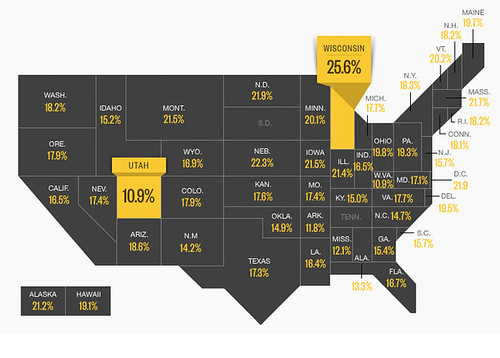
Adult binge drinking is most common in the Midwest, New England, the District of Columbia, Alaska, and Hawaii. On average, however, the number of drinks consumed when binge drinking is highest in the Midwest and southern Mountain states (Arizona, Nevada, New Mexico, and Utah), and in some states— such as Louisiana, Mississippi, and South Carolina—where binge drinking was less common.

But perhaps where this absurdity becomes most evident is in one of the CDC’s suggestions on how to combat binge drinking, which they list under the heading “what you can do.” Here’s the suggestion: “Follow the U.S. Dietary Guidelines on alcohol consumption; if you choose to drink, do so in moderation — no more than one drink per day for women and no more than two drinks per day for men.” Except those are NOT the most recent USDA dietary guidelines. Not even close. The 2010 guidelines “defines ‘low-risk’ drinking as no more than 14 drinks a week for men and 7 drinks a week for women with no more than 4 drinks on any given day for men and 3 drinks a day for women.” So that’s two government agencies that can’t agree on safe levels of consumption, and one that’s essentially lying about it to bolster their own point of view. The UK has had similar problems with their guidelines, when it was revealed a few years ago that their government just made up the safe guidelines, which then became carved in stone for the next twenty or more years, despite being literally plucked out of thin air.

Before the angry comments start flooding in again, I should point out that I don’t believe that binge drinking is always a good idea, or that people should do it all the time. I’m not arguing in favor of it. However, I do believe one does have the right to go on a binge if they feel like it (and as long as they’re being safe and aren’t doing so frequently enough to alarm those people closest to them). I do believe that how the CDC and others define binge drinking is ludicrous and does more harm than good. By making almost everyone a binge drinker through their ever-narrowing definition, they’re avoiding dealing with the serial binge drinkers who really are hurting themselves, and possibly others around them. This does nothing to combat the people who really need help. All it does is demonize all alcohol drinkers, making us all the same, which even the most jaded neo-prohibitionist has to admit, we’re not. It’s not how many drinks one has, or over what period of time, it comes down to how one handles themselves in that situation. If you’re a safe and responsible drinker, none of the rest of that even matters. Drink by example, that’s my new motto.

UPDATE: One of the biggest problems with studies like this is how uncritically they’re reported by the mainstream media. The most common way a press release like this one is used is by taking it and maybe changing around the words slightly but essentially just regurgitating it wholesale, not doing any follow up or critically examining it, and accepting all of it without question. That’s not what journalism should be, but in many cases that’s what it’s become, sad to say. Case in point is The Daily’s piece on it, Binge There, Done That. On the plus side, there’s this cool infographic they created based on the data from the telephone polls that the CDC conducted. On the negative side, there’s no key to the data, but the report mentions that it’s the “percent of the population” that are binge drinkers.

120112-binge-drinking

Filed Under: Editorial, Politics & Law Tagged With: Anti-Alcohol, Prohibitionists, Statistics

Hammurabi: First King Of Beer

December 23, 2011 By Jay Brooks

hammurabi
I kept forgetting to post this nice piece about King Hammurabi, the Babylonian ruler responsible for mankind’s first set of laws, known as the Hammurabi Code. It ran in the San Francisco magazine Drink Me, in their October 2011 issue. The article, Hammurabi: The King Of Beers, goes into some deatil about the laws in the Hammurabi Code dealing with beer:

The Code contains dozens of edicts concerning the growing, harvesting, and sale of grain. Thus it pertains to beer, since grain had been domesticated and farmed for only two reasons:beer and bread. But the laws which deal specifically with those happy suds are numbers 108 through 111.

Law 108 reads as follows: “if a tavern-keeper (female) does not accept corn according to gross weight in payment of drink, but takes money, and the price of the drink is less than that of the corn, she shall be convicted and thrown into the water.” There are a couple of important things to clarify here. First, it is of interest that the regulation goes out of its way to specify that the hypothetical tavern-keeper is female.

In ancient Babylon, almost all tavern-keepers (not to mention brewers, generally) were women.

Men hunted and made war; women grew food and made beer. And second, “shall be… thrown into the water” does not mean that the offending tavern-keeper was merely tossed in the nearest river and left to sputter. It meant that the guilty party was thrown into the nearest river and held there until she stopped sputtering. Additions to Babylonian law made after Hammurabi’s death did away with the drowning of offending barkeeps and replaced it with mutilation of the woman’s breasts. Sheesh…

Like most despotic rulers, Hammurabi was seriously paranoid that his subjects were plotting against his authority. One of the central meeting places for average citizens in Babylon was the beer hall. These were, or were thought to be, hotbeds of sedition, which inevitably led to the creation of Law 109: “if conspirators meet in the house of a tavern-keeper, and these conspirators are not captured and delivered to the court the tavern-keeper shall be put to death.” The method of execution favored here was to drown the wrongdoer in a barrel of her own beer. Given the amount of political sniping that goes on in our bars today, we can be thankful (I think) that Law 109 has gone the way of the dodo bird.

And then there were the nuns. Called “sisters of god,” they were holy women dedicated to one of the numerous gods that populated Babylonian mythology. The nuns were expected to behave according to a quite rigid set of moral protocols, and the punishments for failing to do so were, to say the least, horrifying. As an example we need look no further than Law 110: “if a sister of a god open a tavern, or enter a tavern to drink, then shall this woman be burned to death.” Given that the Law specifically prohibits the sisters from not only drinking in a beer house, but going into business as a beer entrepreneur, we can only imagine that these actions were routinely undertaken by Babylon’s holy ladies. And the menfolk must have really hated them for breaking with the norm. Burning a woman alive for having a drink? Wow.

The final Law governing alcohol is 111, and it reads thusly: “if an inn-keeper furnish sixty ka [a unit of measure similar to a bushel] of drink to the city, she shall receive fifty ka of corn at the harvest.” It is a rather dull little edict; Babylonian capitalism in action. But at least no one gets drowned or burned.

Filed Under: Beers, Just For Fun, Politics & Law Tagged With: History, Law

David vs. Goliath: Jester King Wins Partial Victory

December 20, 2011 By Jay Brooks

texas
You may recall that in late October Jester King Sued Texas Over Antiquated Beer Regulations. I just got a press release from Jester King Craft Brewery that the judge in the case has ruled in their favor on their first amendment claims, though he did reject their claims under the Equal Protection Clause and the Commerce Clause. Here’s the news:

Yesterday afternoon, Judge Sam Sparks of the United States District Court for the Western District of Texas issued his final judgment on the case that Jester King Brewery and our two co-plaintiffs, Authentic Beverage Company and Zax Restaurant & Bar, filed against the Texas Alcoholic Beverage Commission. With respect to all of the First Amendment challenges to the current state law, he ruled in our favor, declaring the statutes and TABC rules in question unconstitutional and therefore invalid. Congratulations and many thanks to our attorneys, Jim Houchins of Houchins Law and Pete Kennedy of Graves Dougherty Hearon & Moody for taking on this case and for all of the hard work that they put in. Thanks also to Pete’s firm for supporting his efforts and to Jim’s associate, Rachel Fisher, for all of her hard work and diligent research.

As of result of yesterday’s ruling, beer in Texas may now be labeled as “beer” and ale may now be labeled as “ale”, regardless of alcohol content. Breweries and distributors are also no longer prohibited from independently telling consumers where their products may be purchased, or from communicating truthful and accurate information about their alcohol content. That means Jester King will now be able to add a “Where to Buy” section to our website, as will all other breweries selling beer in Texas.

“In a remarkable (though logically dubious) demonstration of circular reasoning” Judge Sparks writes in his ruling, “TABC attempts to defend the constitutional legitimacy of the Code through an appeal to the statutory authority of the Code itself.” Referring to the required use of the terms “beer”, “ale”, and “malt liquor”, he writes “TABC’s argument, combined with artful legislative drafting, could be used to justify any restrictions on commercial speech. For instance, Texas would likely face no (legal) obstacle if it wished to pass a law defining the word ‘milk’ to mean ‘a nocturnal flying mammal that eats insects and employs echolocation.’ Under TABC’s logic, Texas would then be authorized to prohibit use of the word ‘milk’ by producers of a certain liquid dairy product, but also to require Austin promoters to advertise the famous annual ‘Milk Festival’ on the Congress Avenue Bridge.’”

We were disappointed, but not too surprised, that Judge Sparks ruled against our claims that Texas’s disparate treatment of breweries and brewpubs violated the Equal Protection Clause and that its treatment of foreign breweries violated both the Equal Protection Clause and the Commerce Clause. The TABC never gave any reason why Texas should be able to prohibit craft brewers from selling beer to customers on-site, while allowing wineries to do so, or why Texas should be able to favor foreign wineries over foreign breweries, and Judge Sparks did not speculate on why that might be. But the legal standards are different and more demanding for challenges brought under the Equal Protection Clause than the First Amendment, and we were unable to persuade Judge Sparks to strike down these discriminatory laws. We were encouraged, however, by Judge Sparks’s observation that “The State of Texas is lucky the burden of proof was on [the Plaintiffs] for many of its claims, or else the Alcoholic Beverage Code might have fared even worse than it has.”

We’re pleased to have helped to bring about at least a few long overdue changes in the antiquated and often inconsistent Texas Alcoholic Beverage Code, but small brewers still face many unjust and unnecessary obstacles that need to be removed before we can stand on equal footing with Texas winemakers and brewers in other states. Measurable progress was made with yesterday’s decision, but much more is still needed. We don’t yet know what, if anything, will happen next on the legal front. That’s something that we’ll need to discuss with our attorneys. In the meantime, though, it’s not too early to start thinking about the 2013 legislative session, with the hope that this case will help to bring some momentum for further change. For the first time, Texas consumers finally have a well-organized grassroots organization that’s working to modernize the Beverage Code. We, at Jester King Craft Brewery, will continue to do everything we can to support the efforts of Open the Taps and we encourage everyone who is reading this to do the same.

It’s a start. Congratulations to Jester King.

Filed Under: Breweries, News, Politics & Law Tagged With: Law, Texas

Occupy Pubs: A Glass Roots Movement

December 16, 2011 By Jay Brooks

beer-mug
My good friend and colleague, Lisa Morrison — a.k.a. The Beer Goddess — just let me know about her latest project, and just in time for Christmas. She’s created a line of t-shirts, hats, stickers, iPhone cases, and so much more with a humorous nod to the Occupy Wall Street movement to show support for our favorite cause: the good beer movement. In this case, she’s calling it “Occupy Pubs: A Glass Roots Movement.”
occupy-pubs

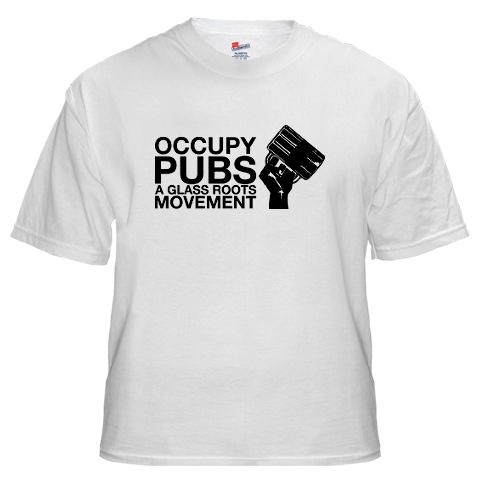
You can order all manner of things with the Occupy Pubs logo at her Cafe Press page. The basic t-shirt shown below will run you $19.19, with fancier ones a little more. There are also styles for women, children and infants.

occupy-pubs-t
“We are the 5%!”

Filed Under: Beers, Just For Fun, Politics & Law, Related Pleasures Tagged With: Gift Ideas, Humor, Portland

Snacking Between Meals Leads to Alcoholism & Death

December 14, 2011 By Jay Brooks

target-alcohol
Before Prohibition became a reality, the prohibitionists used shameless propaganda to advance their cause, and it became increasingly absurd as time went on. When the temperance movement began in the 1830s, it was primarily against hard liquor, and beer was thought of as a drink of moderation, which by comparison it was. But over time, the movement became more and more intolerant of not just all alcohol, but many other things, such as coffee, pickles, pie, sugar, tea, and even meat. Abstinence itself became a goal. It became entirely fanatical, and in many cases was backed by religious factions and led by preachers. This transition is chronicled nicely in Jessica Warner’s “All or Nothing: A Short History of Abstinence in America.”

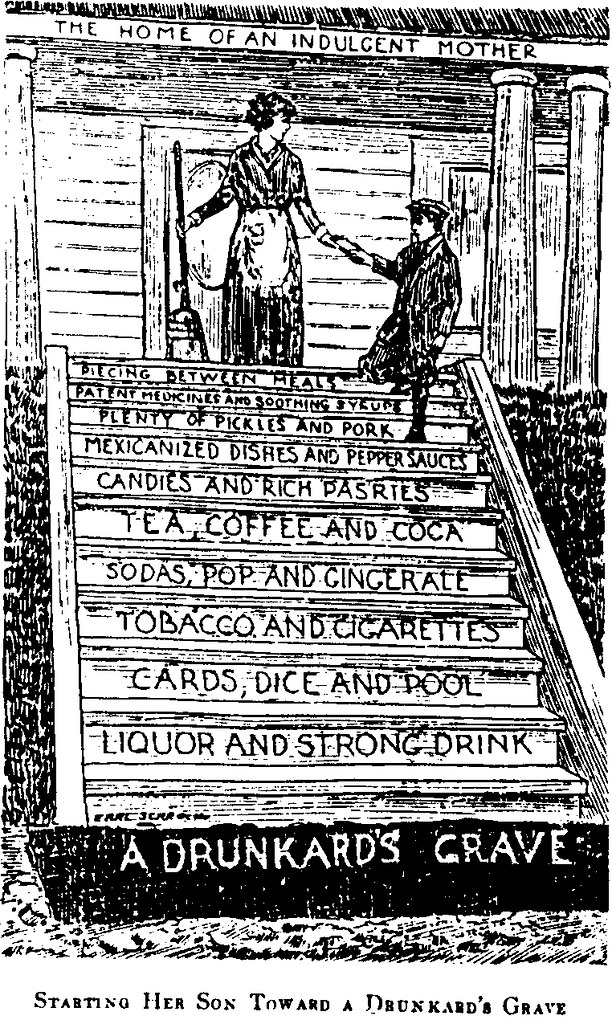
So by 1915, when this piece of propaganda was published, the prohibitionists were in the full flower of absurdity. It’s from a temperance program by evangelist Thomas F. Hubbard, published by the Wagoner Printing Company of Galesburg, Illinois. It’s showing how you could destroy the life of your son by being an “indulgent mother,” leading them down the path (or stairs) to “a drunkard’s grave.” So remember; never, ever be nice to your children. Just look what might happen.

gateway

See if you can follow the logic. If you allow your son to have a little food between meals, a.k.a. “a snack,” it will undoubtedly make him ill, causing you to ease his pain by giving him — gasp — medicine and “soothing syrups.” That, in turn, will undoubtedly lead you to let him eat too many pickles and pork (it’s always bacon’s fault) and “Mexicanized Dishes and pepper sauces,” you know … spices! But once he’s got a taste for flavor, he won’t be so easily satisfied anymore. Hot foods and the “other white meat” will, of course, lead your son to an indulgent life of rich pastry and candy, damn the luck. He’ll want to wash down all those sweet confectionaries with “tea, coffee and coca” (sic). And you know that can’t be good. It’s a slippery slope from there. He’ll then want to drink “sodas, pop and ginger ale.” After that, your son will need to relax with a cigarette or other tobacco. What else could he possibly want? He had no choice, really. You can’t really blame him. After soda pop, everyone needs to light up. It’s only natural. And once you begin smoking, you can’t really help but start gambling. It’s inevitable. Once you light up that ciggie, playing cards, throwing dice and picking up a pool cue can’t be far behind. It just can’t be helped. And you know what every gambler on the face of the Earth does, right? You got it: drink “liquor and strong drink.” And he can’t just drink it on occasion, but he keeps on drinking it, never stopping until he reaches “a drunkard’s grave.” And all because you gave him some Goldfish or Cheez-Its between meals. It’s so obvious. One unbroken chain from snacking to death, with no possible way to break the cycle. It’s like walking down the stairs. Gravity takes over and you can’t help but keep taking each successive step until you have one foot in the grave.

It is, of course, completely absurd, but one has to assume prohibitionists really believed it, just as some people today actually believe that one drink makes someone an alcoholic. And while I can’t imagine today’s anti-alcohol groups rising to this level of evangelical disinformation, they are, sad to say, moving in that direction. Alcohol Justice, for example (who insist they’re not neo-prohibitionists), has hardened their position of late and now takes the position that there are no safe levels of moderate drinking. They no longer take issue with whether one drink, or two drinks or however many drinks is appropriate for moderate consumption. They’re now proselytizing that zero is the only number of drinks that will keep you from falling into a life of ruin and becoming a burden on society, costing the teetotalers many millions of dollars. Total abstinence is now the only way to save yourself. That sure sounds like history repeating itself to me. With MADD, the Robert Wood Johnson Foundation and many others turning toward this position and using increasingly absurdist propaganda, often in the form of “pseudo-scientific studies,” to further their agenda how long can it be before we see this sort of thing in the present. So remember mothers, keep beating your children and never indulge them anything, no matter how much pain they’re in or how much pleasure it might give them. Compassion and love are for sissies. If you want to keep your son out of the drunkard’s grave, you’ll need to crack the whip. After all, it’s for their own good. I’m sure the neo-prohibitionists would approve.

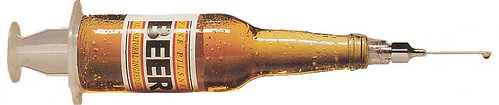
beer-syringe-white
Modern anti-alcohol propaganda: beer leads directly to heroin, or beer is the same as heroin.

Filed Under: Editorial, Politics & Law Tagged With: History, Prohibition, Prohibitionists, Propaganda

« Previous Page
Next Page »

Find Something

Northern California Breweries

Please consider purchasing my latest book, California Breweries North, available from Amazon, or ask for it at your local bookstore.

Recent Comments

  • Bob Paolino on Beer Birthday: Grant Johnston
  • Gambrinus on Historic Beer Birthday: A.J. Houghton
  • Ernie Dewing on Historic Beer Birthday: Charles William Bergner 
  • Steve 'Pudgy' De Rose on Historic Beer Birthday: Jacob Schmidt
  • Jay Brooks on Beer Birthday: Bill Owens

Recent Posts

  • Historic Beer Birthday: Joseph Bramah April 13, 2026
  • Beer In Ads #5219: Good Old Point Special Bock Beer April 12, 2026
  • Beer In Ads #5218: The “Butter-In” Of The Season April 12, 2026
  • Beer In Ads #5217: The King Of All Beers April 11, 2026
  • Historic Beer Birthday: Gambrinus April 11, 2026

BBB Archives

Feedback

Head Quarter
This site is hosted and maintained by H25Q.dev. Any questions or comments for the webmaster can be directed here.