Brookston Beer Bulletin

Jay R. Brooks on Beer

  • Home
  • About
  • Editorial
  • Birthdays
  • Art & Beer

Socialize

  • Dribbble
  • Email
  • Facebook
  • Flickr
  • GitHub
  • Instagram
  • LinkedIn
  • Pinterest
  • RSS
  • Twitter
  • YouTube

Powered by Genesis

An Open Letter To “The Session”

December 11, 2008 By Jay Brooks

session-the
Dear Session,

We’ve been going steady now nearly two years, and it’s probably time to start seriously considering taking our relationship to the next level. Unfortunately, I think you’ve changed and I think perhaps it’s time to “talk.”

When Stan at Appellation Beer first proposed The Session back in January of 2007, he started out with “Stouts,” writing:

There aren’t many rules. Simply pour yourself a stout (or stouts) and post on the topic March 2, looking ahead to St. Patrick’s Day or not and writing about any stout that isn’t Guinness, Murphy’s or Beamish (the Irish old guard – good beers but we’re writing about others). Should you worry about style? About getting the opinion of friends, about writing an official tasting note, about food? About the history of the beer or how its made? All optional.

In fact, the first three Session were particular beer styles. Five of the first ten were likewise beer styles as were four of the second ten we’ve done but none since we passed our teens and entered our twenties. So that means of 22 completed Sessions, only 9 (or about 40%) have been about beer but only 2 of the last ten (20%) have been about a particular kind of beer. And Session 23 will likewise be more of the same, though I want to be clear I don’t want to single anyone out for criticism. Most of the topics have been interesting on their own, I’m just starting to feel like we’re all trying to be too clever and veering away from our original purpose or vision.

As for me personally, it was my hope that with The Sessions, “a record will be created with much useful information about various topics on the subject of beer.” But lately it seems as if we’ve been spending more time talking about ourselves than the beer. Not that we’re not all incredibly interesting, but I’d like to suggest that we return to the subject that brought us together in the first place, our common interest: beer.

One of the strengths of doing something without a clear leader or overarching plan is that it allows for much creativity and individual writers’ personalities to shine through. That can also be a weakness, too, if we don’t keep our eyes on the prize. I don’t really know if there was an actual “goal” when we started or how many people will agree with me, but I’m going to throw this out there and see where the prevailing winds blow us.

So I’d like to suggest that beginning with February’s Session (our two year anniversary) and going forward, we all follow a few simple rules when choosing a topic for a Session. I’m also going to be so bold as to suggest that we do come up with a goal for The Sessions. While not strictly necessary, having a stated purpose I believe will make it easier to not stray in the future and keep us all focused on what we’re trying to accomplish with The Sessions. Here’s my first draft then. Feel free to join the discussion and offer your thoughts, criticisms (civilly, please) and suggestions.

Goals For “The Sessions”

  1. Encourage a lively discussion about beer.
  2. Educate people about some aspect of beer.
  3. Have fun.

Though not necessarily a goal, I think it’s important to remember that our audience isn’t (or at least shouldn’t be) just one another, but people we’re hoping to draw into appreciating beer more fully and each topic more specifically. If each post is written in such a way that it causes the reader to seek out more information on the same topic and that extended story is there for the taking throughout the other Session posts, then that I would consider a successful Session. That is to say, anything that ignites the passions of a reader to read more on a particular subject should be the measure of success for this project, at least in my opinion.

But that’s it, simple and concise; encourage, educate and have fun.

Rules For Choosing A “Session” Topic or Theme

  1. Review past topics to avoid duplication.
  2. Closely review the last three Sessions to avoid choosing a topic too close to those recent ones.
  3. Restrict topic types, to the following per calendar year:
    (if limit is reached, choose something different)
    1. Philosophical Topics (2 per annum)
    2. Memories & Nostalgic Topics (1 per annum)
    3. Beer & … (e.g., food, music; 1 per annum)
    4. Beer styles, type of beer, or beer-related (no limit)
  4. For Topic Types a, b & c above, they should never follow one another, that is they should always be bookended by a more beery theme.
  5. Consider the audience.

It is not my intention to stifle creativity in any way with trying to propose a few simple rules to follow. I’d like them to make each Session more meaningful. Hopefully, these rules should encourage all of us to simply think carefully about our topics when we try to come up with a theme. And my goal with trying to limit certain types of topics is merely to keep them diverse throughout the year and also maintain an interesting mix for anyone who happens by to see what the beer blogging community is up to. But the upshot is, I’d really like to see us talk about beer more often than not. If nothing else, that should be a goal in and of itself.

So that’s it, have at me. What do you all think? Goals? Topic Rules?

Filed Under: Editorial, The Session Tagged With: Beer Styles

Session #22: 75 Years Demonizing Alcohol

December 5, 2008 By Jay Brooks

demon
This is our 22nd Session a.k.a. Beer Blogging Friday and today’s topic is quite relevant for the day, as this is the 75th anniversary of the repeal of the 21st Amendment to the U.S. Constitution ending thirteen years of our national prohibition. Our host today, naturally, is the 21st Amendment Blog, written by Shaun O’Sullivan and Nico Freccia, co-founders of the 21st Amendment Brewery & Restaurant in San Francisco, California. Here’s how they put their approach to this month’s topic:

In 1920, there were thousands of breweries across America making unique, hand-crafted beer. The passage of Prohibition wiped out this great culture. On December 5, 1933, the states ratified the 21st Amendment, repealing the 18th Amendment, thus ending 13 years of Prohibition in America. At the 21st Amendment Brewery, the repeal of Prohibition means we can celebrate the right to brew beer, the freedom to be innovative, and the obligation to have fun.

What does the repeal of Prohibition mean to you? How will you celebrate your right to drink beer?

session_logo_all_text_200

I confess I’ve been struggling mightily for something to write about Prohibition, as I feel like I’ve written about it so much lately that there’s really not much left to say. But then my friend and colleague, historian and author Maureen Ogle sent me a link to an Op-Ed piece she did for U.S. News & World Report. Her unique and fresh take on the ramifications of Prohibition’s end was a revelation for me. It was like getting in the bathtub of cheap hooch with Archimedes himself. It was a real “Eureka,” “a-ha moment” and “epiphany” all rolled into one. The wheels started turning. Maybe there’s another way to look at this.

Most of us have taken it as a given that the repeal of Prohibition was a victory for the pro-alcohol majority and a denunciation of the anti-alcohol sentiments that had brought it about. But maybe not. Despite its obvious failures on many fronts, it was the depression that really hastened its end. The economy needed a shot in the arm, and legalizing alcohol created jobs, tax revenue and good will. In the end, it was money, not morals that brought down Prohibition.

For just one example of how bad Prohibition was, check out Prohibition and the Rise of Crime, a blog post by J. Michael Jones, a retired police chief.

That’s not to say I won’t be celebrating today. I will. I’ll be in downtown San Francisco later marching in a Repeal Day parade. I’ll be enjoying some legal beer and toasting how good the American beer scene is today. And I won’t be alone, of course. There are numerous celebrations throughout the country today. But I wonder if we’re celebrating the right things? Or celebrating the right way?

The NBWA (National Beer Wholesalers Association) released a press release today extolling the virtues of the three-tier distribution, a system created out of whole cloth as a way to return alcohol to the public arena after passage of the 21st Amendment.

“This anniversary is a great time to recognize the success of the past 75 years of effective, state-based alcohol regulation since the ratification of the 21st Amendment,” said NBWA President Craig Purser. “A ‘one size fits all’ approach to alcohol regulation during Prohibition was a failure. The 21st Amendment allows individual states to regulate alcohol as their citizens see fit.”

Their celebration is understandable, of course, since after Prohibition an entirely new segment of the beer industry was created — The Distributor. But while understandable, it’s hard not to view their celebration as little too self-serving. They’re not really celebrating alcohol being legally available again so much as their own success in creating a new business model. This new system created a lot of wealth for a number of people and organizations. I’m not saying they haven’t worked hard for it or that they don’t deserve to celebrate their success, but it just feels a little too much like self-congratulatory patting themselves on back. To be fair the Distilled Spirits Council of the United States had a similar press release.

Many other mainstream writing about today’s anniversary is likewise self-congratulatory. Many gave very standard accounts, such as the Illinois Telegraph, the San Francisco Chronicle (which also has some interesting local info and photos), USA Today and even the UK’s Independent. There’s nothing whatsoever wrong with any of these or the countless other similar articles that will be published around the world today.

alcohol-squares

In the Independent, author Rupert Cornwell reflects on the fact that in America “the mindset that produced Prohibition lives on. The cocktail, it is said, is enjoying a new golden age. But a third of American adults don’t drink at all, and the country ranks only 40th in the international league table of alcohol consumption. Indeed, since the late 1970s, consumption per head in the US has been falling steadily.”

The great “war on alcohol” between 1920 and 1933 may have ended in resounding defeat. But an American belief that human vices can be eradicated, and human nature perfected, persists, visible in the continuing, scarcely less futile “war on drugs” declared by Richard Nixon in 1971 and, who knows, maybe in George Bush’s “war on terror” as well. But don’t let such somber thoughts spoil the party tonight.

He’s not the only one to notice the comparison between Prohibition and our current drug policy, such as Stop the Drug War. Even the Wall Street Journal has an article today entitled Let’s End Drug Prohibition. Are we finally starting to realize as a culture that regulating is better than outlawing? Sadly, probably not. The neo-prohibitionists are still running amuck.

But as Maureen Ogle points out in yet another Repeal Day article, this one in the Philadelphia Inquirer, it’s really our Constitution that was saved by ending Prohibition. As she details, Prohibition led to corruption, conspiracy and contempt for the law by not just citizens, but which also — and I just can’t put it better than Ogle — “oozed into and out of every level of government, from Washington to the smallest municipality.” And that’s not just hindsight, a report in 1931 by federal commission that had studied Prohibition for two years, concluded that it was an abject failure and as “the more flagrantly authorities disregarded citizens’ rights, the more cynical Americans became. Young adults in particular — the very people who would become “leaders in the next generation” — demonstrated overt ‘hostility to or contempt for the law.'”

As the Patriot Act (not to mention our current lame duck administration) similarly disregards the Constitution and the rights of American citizens, and we appear to be heading into another protracted recession (if not an actual depression), the conditions seem eerily similar to those of seventy-five plus years ago. As they worried then, what might a continuing disrespect for the Constitution lead to? I’m worried. Aren’t you? Don’t get me wrong, I’m thrilled that “change” may be on the horizon, but I can’t help but continue to be apprehensive that our swing to the right and the threats to democracy that that entailed will so easily be undone by good intentions. Movement Conservatism may be in a weakened state right now, but it’s hardly on life support.

And speaking of beer and elections, did you know that in seven states, it’s still illegal to sell or serve alcohol on Election Day? Weird, huh? In Alaska, Kentucky, Indiana, Massachusetts, South Carolina, Utah and West Virginia alcohol and voting apparently still don’t mix. According to TriState, these [s]o-called “Blue Laws” date back to the 1930s and make it illegal to sell alcohol on certain important religious or political days. Blue laws were meant to protect the integrity of the voting process in a time when many saloons also served as polling places. In the past 70 years, most states have either relaxed their Election Day bans or repealed them altogether.”

demon-beer

But finally, back to Maureen Ogle’s devastating insight into what the end of Prohibition has wrought. Though she finds the term clumsy, I like it. She asserts that repeal “institutionalized the demonization of alcohol.” For some, that may be hard to swallow (yes, intended) but for me it made perfect sense and made me look at the issue from a different perspective.

To summarize what Ogle means by that, here’s her introductory paragraph:

Prohibition ended on Dec. 5, 1933, not with a bang but with the thud of thousands of pages of new city, state, and federal laws that dictated when, where, and how Americans could make, buy, sell, and drink alcohol. Ratification of the 21st Amendment, repealing Prohibition, was neither a green light to drink nor a victory over the “dry” crusade that had produced Prohibition. Seventy-five years later, we’re still captives of that crusade.

Indeed, the 21st Amendment heralded the age of regulating alcohol like never before. It created new rules and regulations, label approval procedures, licensing requirement, all manner of new taxes and previously unheard of restrictions on all aspects of how alcoholic beverages could be made, sold, marketed, packaged and even consumed. At every step from grain to glass, there was the watchful eye of the government to tell everybody what role they were to play and within what parameters the game would take place.

I can only imagine that people were so happy to have alcohol back that it was scarcely even noticed by the ordinary public. I’m sure the breweries were keenly aware, but they were undoubtedly thrilled to be back in business under any conditions and more likely figured being regulated in business was far better than not being in business at all.

Before Prohibition, there were around 1,500 breweries, but less than half reopened afterward. And for a variety of reasons, the number of breweries continued to decline sharply. By the year I was born, 1959, there were only about 200 left. At least one of the reasons that the re-opened breweries struggled was the maze of new federal and state regulations imposed on how alcohol companies operated their businesses.

After Prohibition, the original message of the temperance movement was not only alive and well, but became internalized and institutionalized — essentially set in stone — by the very laws created to regulate it. That message is still with us today. Simply put, it is this:

Alcohol is evil. No one can be trusted with it.

demons-three

That message permeates all discussions of alcohol policy and any “issues” about alcohol. That message has been communicated by the laws passed seventy-five years ago and generations of new adults have soaked up that message almost completely. That’s it’s thoroughly untrue goes not only unchallenged but the notion isn’t even considered as a topic for discussion, so embedded is it in our collective psyche. Every aspect of how we treat alcohol has this false message looking over our shoulder, refusing to go away.

Alcohol is not inherently evil, we just treat it as if it were. People can be trusted with it, and in fact most people who drink alcohol are responsible adults, we just treat them like children in our over-paternalistic society. And we do this because we’ve assumed the temperance propaganda message to be true and we’ve created alcohol laws under that same mistaken assumption.

Ogle sums up:

It’s a vicious, and lethal, cycle: As long as we remain addicted to demonization, we avoid serious discussion about those values. The longer we avoid that conversation, the longer we pass on the booze-is-bad message to our kids, who grow up to pass the message on to their kids. And as long as we teach children to fear rather than respect alcohol, we’ll interrupt the silence with periodic spasms of hand-wringing and finger-pointing about campus drinking, binge drinking, underage drinking, and the like. But here’s the truth: The “alcohol problem” is of our own creation. We’ve got the drinking culture we deserve.

I agree with everything Maureen says with the possible exception of that last sentence. I’m not entirely persuaded that we “deserve” the drinking culture we have today. If our present “drinking culture” had been arrived at by an ongoing open, fair and honest public debate about alcohol, then I’d wholeheartedly agree that we got what we deserve. But I believe that what we’re stuck with today is the result of subterfuge, conspiracy, propaganda and out and out lies by people and organizations with a Carrie Nation-style axe to grind.

I prefer an image of prohibitionists having slunk away to lick their wounds in defeat but the truth is they’ve never really gone away. They’ve never stopped trying to keep their message alive. That they’ve been so successful while at the same time convincing us they’d lost is deviously clever. They’re like the tortured, evil protagonist in every horror movie who refuses to die, no matter how many times he’s shot, sliced or garroted. They always come back, don’t they? To me, that’s the unfortunate message of this 75th anniversary. It’s certainly worth celebrating 75 years of beer in America. But it’s perhaps more important to recognize that the battle didn’t end December 5, 1933. It merely changed the terms of engagement from above ground prohibition to underground demonization. Happy Repeal Day everybody. Drink up.

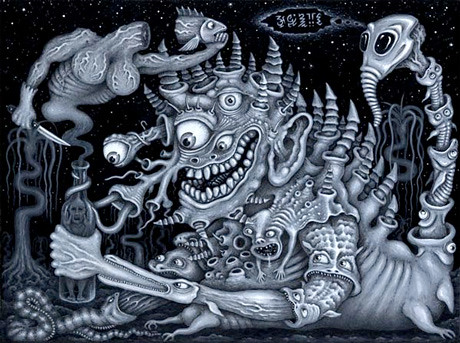
demon-alcohol

The Demon Alcohol, by Robert Steven Connett.

This is a nicely imagined vision of how we view alcohol today, in a Hieronymus Bosch sort of way.

For a lot more great information about Prohibition, check out Prohibition Repeal.
celebrate-repeal

Filed Under: Beers, Editorial, Politics & Law, The Session Tagged With: Law, Prohibitionists

Session #17: Drinking Anti-Seasonally

July 4, 2008 By Jay Brooks

This is now our 17th Session, and the topic is another thoughtful one, albeit a little rebellious. Our host, Rob DeNunzio, from Pfifft, titled the Session theme Going Against the Grain Bill. In his announcement, Rob described what he means thusly.

Drinking anti-seasonally. Think of this as the unorthodox cousin of such topics as “beer and food” and “beer and music”. Beer and weather, perhaps? More like beer despite the weather, I guess. Cracking open a Guinness on the beach, finishing a day of yardwork with a Speedway Stout, or whatever else you do that raises an eyebrow, do us all a favor an take a few moments to share your non-conformist tale.

Hmm, seasons out of time. Beers out of season. How often do I drink a beer better, or at least traditionally thought to be better, suited to a particular season? All the time. When I reflect on my own drinking patterns, I discover that I give almost no thought to seasonality.

Beer followed the seasons out of necessity for centuries, perhaps millennia, prior to the age of refrigeration and air conditioning. Because it was difficult — or in some cases impossible — to get cool enough temperatures during certain warmer times of the year to brew. So brewing cycles evolved to follow rising and falling temperatures throughout the year and became traditions. As a result, various beers became available only at specific times of the year. These were in effect the first seasonal beers, driven not by marketing, but by the limitations of technology. But this was obviously not a bad thing. Anticipation created excitement and celebrations were held to mark the return of these beers throughout the year. The beers themselves were also well-suited for their time of the season, with heavier stronger beers to warm those hearty cockles and lighter ones to beat the heat of a sweltering summer.

Over a century ago, in 1859 to be exact, refrigeration was invented, and by 1876 the relatively portable refrigerator was created by a German inventor, Carl Paul Gottfried von Linde. He received a U.S. patent for his process on May 12, 1903. But earlier than that, brewers were trying to figure out how to apply the scientific learning commercially to keep their breweries cooler. In 1856, for example, “James Harrison was commissioned by a brewery to build a machine that cooled beer.” That brewers were so far ahead of the technology and in fact were instrumental in providing motivation to solve the cooling problem illustrates just how important they thought it was to the modernization of brewing techniques.

But even after the problem was largely solved, the traditions held sway for decades. Even today, there are many beers which are released only seasonally. Usually this is for marketing reasons rather than technological ones. With only one exception I can think of — fresh hop beers — every known beer style can be brewed year-round. For example, some breweries release a marzen (a.k.a. Oktoberfest) beer in the fall while many others make the style throughout the year.

Christmas or holiday beer, to take another example, are often styles suited to winter but there is no reason they could not be made at any other time of the year. Holiday beers are an interesting example of marketing in modern times. There have been, of course, beers released to celebrate the holidays nearly as long as there have been breweries. But the modern era of Christmas beers undoubtedly begins — as so many new beers inevitably do — with Anchor Brewing. Their Christmas Ale, Our Special Ale, was first released in 1975. As recently as 10-15 years ago, what breweries there were who then made a holiday beer called it a Christmas beer, but a curious thing began happening.

With the exception of Anchor’s Christmas Ale, along with Sierra Nevada’s Celebration and Noche Buena (which Modelo has since stopped importing), holiday beers with the word “Christmas” on the label would literally stop selling on December 26. Like fireworks on July 5 or Halloween candy on the first of November, fickle consumers would shun these beers like they’d suddenly become poisonous. So many breweries removed the word “Christmas” and started referring to them as “holiday” beers or even “winter seasonals” in order to extend their shelf life. And remarkably, it worked. After that, many savvy breweries began having a year-round seasonal program with four or six seasonals — one after the other — such that there was always at least one seasonal beer at any given time. The seasonal segment, as tracked by IRI and Nielsen is now the number one category, even in grocery stores.

But that’s seasonal beers, what about anti-seasonal. At the same time seasonal beers are on the rise, for every seasonal release you could probably find dozens of examples of that same style available from other breweries all year long. So the reality of seasonality is that it’s largely market-driven, any bows to tradition are now mostly coincidental or at best a convenient story to sell the beer. With the original reason that created the traditions of certain beers at specific times of the year gone for a century or more, only the romance of those bygone days remain.

We live in a time when seasonality has lost its meaning, and not just with respect to beer. Any fruit, regardless of its growing season is available at the average supermarket, flown from around the world so that our every whim not go unfulfilled. Let no sales opportunity go to waste. Convenience is king. As consumers we believe that whatever we want should be available whenever we want it, because that’s the bill of goods we’ve been sold. Remember those bothersome watermelon seeds. Gone. Strawberries in the winter? Thank you Guatemala. We don’t like to wait for anything anymore. And usually we don’t have to, because there’s someone willing to sell us whatever we fancy, regardless of the season.

Philosophically, I may not like this fact, but I’m as guilty as anyone. Pandora’s box is wide open and hope is cowering in the corner hoping greed doesn’t beat her to a bloody pulp again. I drink whatever I want, whenever I want. And thanks to air-conditioning, fans and refrigeration, that means any beer, any time. I rarely even think about seasonality when I choose a beer. I rarely even consider the weather, because unless I’m in the woods camping, I can control my environment, at least to some degree.

seasons-tree

The only factors I use are mood, food and ‘tude. Food is obvious, I’ll select a beer I think will go with what I’m eating, regardless of the season. If an imperial stout works, so be it. That leaves mood and attitude. They’re similar states, but different in a crucial way. My mood is how I’m feeling at a particular moment in time, whereas my attitude is how I feel toward the people around me, where I’m at, what I’m doing, etc. Mood is inward, attitude is outward.

But put a gun to my head, and the beers I’ll choose time and time again, regardless of the weather, are the complex ones: barley wines, sour beers, saisons and biere de gardes. I’m usually keen to try anything preceded by the designation “Imperial.” But I also love a delicate Mild or a refreshing Dunkelweiss. I like a good unfiltered Zwickel anything, but especially pilsners. The point is, I think, that without realizing it, I haven’t been drinking seasonally for a long time, if indeed I ever did. Do any of us, I wonder? Certainly I’m pleased when new seasonal releases arrive on my doorstep, but mostly because I’m always keen to try something new or different.

Clearly — as usual — my finger is nowhere near the pulse of America. Because lighter beers definitely do experience spikes in sales during the summer and darker, stronger beers sell better in cooler weather. But most sell well enough at all the other times of the year to justify them being on stores shelves year-round. So perhaps it’s simply driven by the bigger beer companies and retailers who create endless promotions based on holidays, backyard barbecues and what they believe people want. Consumers, of course, do react to products on sale, on endcaps or as a part of specific promotions and thus buy those beers at the times of year that they’re offered to them, perhaps putting no more thought into it than I do. Could seasonality be simply a self-fulfilling prophecy perpetuated by marketing? It seems likely, at a minimum. Because for everyone I know who chooses their beer carefully, weather is only occasionally a factor. Only when we can’t control it — at the beach, on the golf course, camping, places like that — are beers chosen because of the prevailing weather. And notice those are specific places, suggesting that may be the more important factor than weather or seasonality. Even as I sit here typing this, I’ve got a nice glass of Anchor Porter next to me, even though the thermometer is tipping 90°. I peered inside the refrigerator, and pulled it out without a moment’s hesitation. It just looked tasty. And so it is.

Filed Under: Beers, Editorial, Related Pleasures, The Session Tagged With: Seasonality

Session #15: How Did It All Start For You?

May 2, 2008 By Jay Brooks

For our 15th Session, the topic remains personal, but instead of profiling another person, the goal is to hold up a mirror to see ourselves. Mirror, mirror, on the wall, how did you get started in this all? Our hosts, Boak and Bailey, want to know “the moment when you saw the light. At what point did you realise you were a beer lover / geek / enthusiast? What beer(s) triggered the conversion? Did someone help you along your way, or did you come to it yourself?”

I’ve actually written about this before, two years ago. And if you think I’ve been long-winded before, you ain’t seen nothin’ yet. There’s a collective writing exercise known as NaNoWriMo, which is short for “National Novel Writing Month.” During the month of November, whoever wants to participate is challenged to write a 50,000-word novel in thirty days. That works out to just under 1,700-words per day.

The first NaNoWriMo took place in November of 1999 with under two dozen friends of founder Chris Baty trying to write a novel in his apartment. Last year, it’s ninth, over 100,000 people gave it a shot. Of those, 15,000 people managed to finish writing 50,000 words, which is the equivalent of a short novel of around 175 pages.

I’ve done NaNoWriMo three times, and managed to complete it each time. I skipped last year because I was in Bavaria for almost two weeks in November, but the previous three years I spent my Novembers writing even more than I usually do. It was a terrific experience each time and one I heartily recommend. It made me a much faster writer. When you have such daunting deadlines, you learn to just keep going and write through any blocks. You get into a zone where it just pours out of you, akin to a runner’s high. And that’s proved quite valuable as I take on more and more writing assignments. Plus it’s a lot of fun just to see what comes out.

The NaNoWriMo website puts it like this:

Valuing enthusiasm and perseverance over painstaking craft, NaNoWriMo is a novel-writing program for everyone who has thought fleetingly about writing a novel but has been scared away by the time and effort involved.

Because of the limited writing window, the ONLY thing that matters in NaNoWriMo is output. It’s all about quantity, not quality. The kamikaze approach forces you to lower your expectations, take risks, and write on the fly.

Make no mistake: You will be writing a lot of crap. And that’s a good thing. By forcing yourself to write so intensely, you are giving yourself permission to make mistakes. To forgo the endless tweaking and editing and just create. To build without tearing down.

So why bring this up? Because in 2006, I wrote a literary memoir about growing up with beer. It was called Under the Table and subtitled A Fictional Memoir of Growing Up With Beer. What I meant by that I wrote about in a foreword, but essentially I combined events and characters, moved some dates around and changed a few details in order to make the story work better, a perfectly acceptable practice in the genre. Since I was writing on the fly, I organized it into twenty-four chapters, a case of chapters. I chose two dozen beers that I remember from my childhood and used each one as a jumping off point to trigger remembering incidents in my life, similar to the way Proust did with pastry in Remembrance of Things Past. The story is filled with underage drinking, teen sex and violent alcoholic psychopaths. Almost all of it is true, but I’m not saying which is which.

The question of how it all started for me with better beer is largely answered in Chapter 24, Jazz in the Dark. The beers were Bass Ale and Guinness that introduced me to beer with flavor. I was stationed on Staten Island with an Army Band and many of the Manhattan jazz clubs I frequented in New York City in the late 1970s had begun carrying the two. They were as different as night and day from the regional lagers that all tasted the same I had grown up on. They were the catalyst that drove me to learn more about beer and discover what else beer could be. That was exactly thirty years ago and I’ve never looked back.

The whole novel is online if you’re feeling really bored or have a long wait ahead of you in the emergency room. Be warned, it is a rough draft, literally written in one take — extemporaneously — eighteen months ago. At the end of November 2006, I crossed the finish line at 55,622 words. But although I met the challenge of 50,000 words in thirty days, I had stopped in the middle of the second to last chapter. It’s hard to explain, but once the peer pressure and self-imposed routine has ended I’ve found it near impossible to keep going on December 1. But that was okay, because there was only one person who really wanted me to finish it. Shaun O’Sullivan, from 21st Amendment, got pneumonia that same November, and was stuck at home, bored. So he ended up reading — and apparently enjoying — Under the Table. He continued to pester me for months afterwards to finish the last two chapters and it became a running gag between us. So Shaun, I’m happy to tell you the wait is over and it’s finally done, or at least the first draft is.

Since this is a post about ourselves, I pulled out this old label. It’s for a private label brand we were developing at Beverages & more shortly before I left the company. It wasn’t my idea. The VP of marketing, who himself was a Brit, came up with it and the plan was to have a line of English-style ales to complement some of the others we were working on, like Coastal Fog, Brandenburg Gate and Truman’s True Blue. I guess he thought my name sounded sufficiently English. The initial styles were to be an IPA and an ESB. Anyway, it got scrapped but I still have a few labels left and they’re fun to see. I like the fact that not only am I bitter, but Extra Specially Bitter. That’s me, alright.

To read Under the Table, follow this link to the home page. You can either just scroll down as you read or use the chapter numbers in the sidebar to move from chapter to chapter. I confess I’m more than a little nervous that it’s too self-indulgent or just plain crap, but you only learn by doing and this is definitely me just going for it and giving it a try. If you do actually give a read, even just part of it, please let me know what you thought. But please do go easy on me. Not only is it as rough a draft as I could imagine, but it’s very personal, too. Constructive criticism is always appreciated but let’s not be too insulting or harsh. This is my life we’re talking about, after all. My life with beer. Cheers!

Filed Under: The Session Tagged With: Personal

Session #11: Doppelbocks

January 4, 2008 By Jay Brooks

It’s time once again for our eleventh Session, and this time around we’re highlighting Doppelbocks courtesy of this month’s host, Wilson at Brewvana. I recently spent two weeks in the home of Doppelbocks — Germany — when many breweries I visited were just debuting their winter seasonal, which more often than not was a doppelbock.

Their history is, of course, reasonably well settled, with the Pauline Monks of Munich making the first example of the style around 1780. By the Napoleonic Era, the brewery had become secular and brewmaster Franz-Xaver Zacherl began selling his strongest beer around Easter-time each year, calling it “savior,” which in German is “Salvator.” Other breweries began adopting the name and it was in danger of becoming generic when, in 1894, trademark law made Paulaner the only brewer legally allowed use the name. As a result, countless other doppelbocks renamed their beers but continued using the suffix “-ator,” possibly to denote strength, but more likely to continue associating themselves with Salvator. The traditional reason for brewing this beer at this time of the year was for the forty days — not counting Sundays — of fasting just prior to Easter, known as Lent. The monks wanted something heartier to drink while they weren’t able to eat. This period also became known as “strong beer season.” This year, strong beer season will begin February 6.

As fate would have it, last night was the bimonthly blind panel tasting at the Celebrator Beer News and one of the two styles we tasted was doppelbocks. Of the seven we sampled, I decided to write about three common German examples, the original Paulaner Salvator, Spaten’s Optimator and Aying’s Celebrator.

So let’s drink some doppelbock, shall we?
 

Paulaner’s Salvator bright amber in color with a tan head. It has sweet, toffee aromas with alcohol quite evident in the nose. The alcohol — at 7.9% abv — carries over into the taste profile and bites tartly against the malt backbone, which has a hint of candied sweetness. The finish lingers and continues to bite back long after it’s left.


Ayinger’s Celebrator Doppelbock was a very dark brown, almost black, with a rich tan head. The nose was predominantly sweet malt with touches of earthy, herbal aromas. Creamy and chewy, with a gritty effervescence that dances on the tongue, the flavor is a big wallop of malt with a restrained smokiness hiding underneath. The finish is clean with a touch of tartness.


Spaten’s Optimator was dark brown with a thick ivory head. The nose was dry with aromas of lightly sweet malt with just a touch of smoke or roasted toffee. The flavors were likewise sweetly malty. At only 7.2% abv, the alcohol was somewhat less evident in the taste and there was a little astringency, possibly from the hops. Overall it was full-bodied and rich and the finish clean.


Filed Under: The Session Tagged With: Europe, Germany, Tasting

Session #10: Winter Beers

December 7, 2007 By Jay Brooks

This month’s Session, sponsored by Barley Vine, is Let It Snow: Winter Beers. Of all the seasonal beers, the ones released during winter are my favorites; the ones I look most forward to sampling each and every year. The category of winter beers lacks the tradition of, say for example, oktoberfest beers or springfest beers, both of which owe their existence to the seasons, a lack of technology and brewers having to adapt themselves to the weather. And, of course, even calling them winter beers is a modern conceit to be politically correct and, perhaps more importantly, to try to insure they will continue to sell beyond December 25. Because for the most part, whether we say so or not, most of the “winter beers” are really Christmas beers. And they are, like Christmas itself, largely a modern invention.

For centuries, the most important Christian holiday was Easter, because — as I remember it being explained — the redemption and resurrection it represented was the miracle that made Christianity different from other religions and so it was the centerpiece of an ecumenical year filled with celebrations Sunday after Sunday. Our present calendar system, the Gregorian calendar (named for Pope Gregory) was created precisely to more accurately predict the date when each year’s Easter would be because under the prior system, the Julian calendar (which is still used today by some Christian denominations) had allowed the year to drift by several days because it did not accurately reflect the true length of a year. (For a riveting account of the history of our calendar, read David Ewing Duncan’s Calendar: Humanity’s Struggle to Determine a True and Accurate Year.) The calendar geek in me could go on and on about this but the point is simply that for the majority of Christian history, Easter was the big day. Beginning in the 1840s, things gradually shifted toward Christmas so that now most people would say Christmas is the number one holiday.

The first Christmas beers were most likely brewed in medieval times by monks making a special beer — and stronger — at Christmastime to celebrate the birth of Jesus Christ. But it would take far longer for commercial breweries to begin making and bottling seasonal beer. And while there were breweries in decades past that made a holiday beer (I have, for example a full bottle of Ballantine Christmas Ale that was brewed in 1946 but not bottled until 1957), it was not the big business it is today. In my experience, here in the U.S. Christmas beers were more the exception than the rule until somewhat recently.

Germany has a rich tradition of Weihnachtsbier, as do several other Scandinavian countries. So does Great Britain with winter warmers and Belgium with beers like Delirium Noel and many others. My friend and colleague Don Russell (a.k.a. Joe Sixpack) is currently working on a book about Christmas beer which will be published next year. I can’t wait for it to come out, it should be a very interesting read.

For a time, there were only a few holiday beers, and most of them were quite obviously Christmas beers. Sierra Nevada’s Celebration, Samuel Adams’ Winter Lager and even Noche Buena (from Mexico’s Grupo Model) were all early favorites. Little by little, more breweries began making a holiday beer and by around 1996 practically every brewery made one and a large number bottled it, too. And they all sold pretty well. But oddly enough, the day after Christmas sales would abruptly stop. With the exception of the most popular two or three brands, you could barely give away a Christmas beer once the holiday was over. This made it tricky for retailers trying to balance not running out before Christmas but not wanting any inventory immediately thereafter. When I was a beer buyer, I can’t tell you how many offers at rock bottom bargain prices I would get in the weeks after Christmas by breweries trying to unload their remaining Christmas beer.

So what most breweries did was secularize the beers, calling them names like winter ale or holiday beer. Whatever the name, it de-emphasized Christmas in the hope that the fickle consumer would continue to buy them after December 25. And for the most part the strategy worked and eventually led to many breweries having a seasonal beer year-round, whether four different ones quarterly or more often. The reason for this is more business-related than you might assume at first blush. Most grocery stores have very specific beer sets (which is a schematic layout of what beers they carry and where they will be put on the shelves).

Breweries work very hard to get a slot on a grocery store’s beer set. No one wants to put in the effort to get their Christmas beer in the beer set over the holidays only to lose it as soon December ends. So what many did was get a seasonal sku authorized in the set that would be filled with whatever the seasonal beer happened to be. In other words, the same hole would be filled in summer with a summer seasonal beer, etc. throughout the year. One seasonal release would follow the last so that all year long there would be a rotating beer in that same slot on the store shelf. In that way the brewery would not lose it’s spot on the shelf and as a result, today we all have much more diversity on the shelf, a boon for consumers and breweries alike. Nielsen and IRI data confirms that the category “seasonal beer” is one of the fastest growing and best-selling categories of craft beer today. And this all grew out of Christmas beers and trying to figure out how best to sell them.

In modern times, one of the first and to my mind still one of the best is Anchor’s Christmas Beer. Technically, the name of this beer is not Christmas Ale as it is usually called but it’s more proper name is actually Our Special Ale. The first one was brewed in 1975. While there are certainly many other truly great holiday beers, this is always the one I look most forward to each year. It used to be released the Monday before Thanksgiving each year, making it one of the last Christmas beers to come out. A few years ago they bowed to market pressure and it’s now available in early November, usually the first week. I can’t say I don’t like getting it earlier now, but there was something grand about having to wait for it that built up your anticipation and made it somehow more special.

To me, there are two (or three) other factors to this beer that make it so great. First, they change the recipe each year. So not only is there anticipation about its release generally, but also about what it will taste like this year. How much time have I spent sitting around with friends trying to figure out just what spices are in each year’s version? I know there a lot of people, including many beer enthusiasts and the entire nation of Germany, who don’t like spice in their beer. I am not one of those people. I love spicy beers. Not every day, of course, but the more different types of beer loose in the world, the better off we are. The more choices, the better we can experiment and decide what works best when and with what. And there are times when spices in beer work perfectly. I usually pair my Thanksgiving meal with Anchor Christmas, for example, because the spices work so well with turkey’s modest flavors, making both taste better. In addition, the mashed potatoes, cranberry sauce and stuffing all benefit from being lubricated with a spicy beer.

Second, they change the label each year. Each year it’s a new mini-work of art featuring a different tree (which I confess I’ve always had a thing for: trees, that is). They’re beautiful labels and each year they create a new poster featuring all of the labels from 1975 up to the current year. I have one from a couple of years ago framed and hanging in my kitchen. You can see this year’s poster at Anchor’s website and you can even buy one in their gift shop. That also adds to the anticipation, finding out what tree will be featured on each year’s incarnation. They also do a kick-ass neon sign. But there’s one more thing about this beer that I love. It can be aged.

Despite it’s modest strength and most likely due to the spicing, Anchor’s Christmas Ale can be laid down, usually for almost ten years and still be drinkable. For a time during the late 1990s, when the beer was more heavily spiced, it actually seemed to taste better after being aged for at least a year and I would lay down quite a bit of it to take advantage of that phenomenon. I still have several Magnums from year’s past in one of my beer refrigerators, as well as at least a case of 12-ounce bottles from various years stretching back to the early 1990s. There’s nothing more enjoyable than doing a vertical tasting of Anchor Christmas beers. I’ve done a few myself, at least one at the Celebrator and twice at Anchor Brewing with older beers from their private cellar. It’s great fun to compare both the different year’s recipes and also what the aging process has done to the beer.

Last night was Anchor’s annual Christmas party and it was my first chance to have this year’s Christmas Ale on draft, though I’d had bottles several times. To my mind, this year’s tastes quite similar to last year but I haven’t yet had a chance to do a side-by-side comparison. The spicing is mild, as has been typical in recent years. As a result, it has a wider appeal — though for myself I miss the heavily spiced days — and is still a wonderful beer. I won’t even try to speculate on what spices are there, that’s a better thing to do with friends over a shared pint or bottle.

One last thing about winter ales that is somewhat different from most traditional seasonal beers. Unlike springbocks or marzens, which are distinct styles, holiday beers can be any style that the brewer chooses. This has led to much more diversity in Christmas beers than in any other kind of seasonal. Even summer ales, which have no style attached to them, still tend to be lighter so they’re more appropriate during that season’s warmer weather. This makes tasting all of the holiday beers the most enjoyable one each year, because you never know what you’re going to get. It’s fun seeing what a brewery decided to brew when left to do whatever they fancied. Since brewers under such circumstances tend to make what they like, you can learn different brewers’ personal tastes, which can be useful in evaluating their other efforts. Plus, it’s just plain fun, the best time of the year to try different beers is without question the winter when strong, full-flavored beers of striking diversity are king. It’s the most wonderful season of all.

Holding a cup of Christmas Ale by the Anchor “tree” at their annual Christmas party last night.


Filed Under: The Session Tagged With: California, Ingredients, San Francisco, Seasonal Release

Session #9: Music & Beer

November 2, 2007 By Jay Brooks

Our ninth Session, hosted by Tomme Arthur at the Lost Abbey Brewer’s Log, involves the pairing of beer with music, another subject near and dear to my heart. My original aspiration was a career in music, preferably writing, and once upon a time I played the saxophone and clarinet. What’s interesting about that is how common it is. There are so many brewers and beer people who are musicians that it’s harder to not find a brewing musician than it is to find one.

It’s almost five in the morning on Friday, and I have to get on a plane in a few hours for a trip to Germany. Couple that with the lost days in Pennsylvania to attend my great aunt’s funeral earlier this week and I’ve gotten myself more behind than usual. So instead of something new, I’m instead going to quote myself from a piece I did on beer and music for Beer Advocate magazine’s May issue.

Music has a way of getting under the skin and directly into our soul. It touches us in ways that seem almost magical. Hearing an old tune can transport us back in time and allow us to relive memories. A new song can infect us with a desire to dance, commune with friends or shout to the heavens. As German philosopher Friedrich Nietzsche quipped, “Without music life would be a mistake.”

Only beer can make this experience more intense. Alcohol is called a social lubricant for good reason. When enhanced by the inhibition-releasing power of beer, music comes alive and worms its way into our very being. As Nietzsche later wrote, “For art to exist, for any sort of aesthetic activity or perception to exist, a certain physiological precondition is indispensable: intoxication.” So it is that brewers provide an invaluable service to humanity’s progress and spiritual evolution. They create the catalyst that allows great music to flourish and they give all of us a simple way to enhance life’s pleasures. For this reason, music and beer go together like no others and create a combination that’s bigger than the sum of its parts. A good beer makes the music sound better and a good song cries out for a brew.

To the outsider, both beer and music seem to flow chaotically, yet both are very ordered and mathematical. The best of brewing is both art and science, and brewers who make a consistent beer are fastidiously organized. There is a precision integral to the process from how long the boil lasts to at what exact moment to add the hops and in what amount. So, too, music can be endlessly ordered into time signatures and tempos. For each, measures are very important. Both musicians and brewers express themselves as artists by putting a lot of themselves into their craft, be it a new stout or a new song. But beyond that, because of the nearly infinite combination of 12 notes and four basic ingredients, both pursuits are a kind of ordered chaos. It’s no surprise then, given these fundamental similarities, that many brewers are also musicians and many breweries have their own band. The same type of person is drawn naturally to both pursuits.

So no specific tasting this session for me, but really every tasting involves music as a backdrop so perhaps it’s not necessary. As no doubt will be shown time and time again in the posts that will appear for this session, beer and music are inextricably linked. My iPod is loaded with beer drinking songs and my brain is loaded with beer memories that are triggered by music. All I need is a beer to complete the cycle. But of course that will only make me thirsty for more music.


Filed Under: The Session

Session #8: Food and Beer

October 6, 2007 By Jay Brooks

+

Our eighth Session, hosted by Captain Hops at Beer Haiku Daily, involves the pairing of beer with food, a subject near and dear to my heart. I have been persuaded by extensive testing — better known as eating — that beer and food go together far better than wine will for the average meal. Oh, I’ll grant you that there are fine pairings that can be made with wine, but a diet of heavier flavors, potent seasonings and meat dishes will yield to beer’s superior ability to cut through this complex and thickly rich mélange of tastes. There are many people to thank for that awareness, from Michael Jackson to Garrett Oliver to Bruce Paton.

Friday night, I was happy enough to be invited to the 10th annual beer dinner at the Northern California Homebrewers Festival held at Lake Francis Resort in Dobbins, California. It was put on by Sean Paxton, the Homebrew Chef and ran to six courses. And many of the courses had several dishes, too, so the amount of food was truly staggering. Sean went all out for his tenth anniversary dinner. And with eight great beers being paired, it was sure to be a memorable evening. I had come with the entire family and because the weather had grown quite cold, we were all bundled up and brought our appetities, ready to eat. We were not disappointed. Chef Sean Paxton deserves much praise for not only his pairings, but also using the beer in the dishes, as well. When you consider the entire dinner was accomplished by amateurs, the achievement is all the more impressive. But enough praise, here’s a nutshell account of the evening’s culinary and fermented delights. But before we can begin, a haiku is both necessary and appropriate:

Pairing food and beer
To compliment or contrast
That is the question

Our chef for the evening, Sean Paxton, addresses the hungry and thirsty crowd.

The beer paired with our first course, a Belgian endive salad, was Watermelon Funk, a collaboration between 21st Amendment Brewery and Russian River Brewing. This is perhaps the fourth time I’ve had this beer and it just keeps getting better, it’s too bad it’s virtually all gone. Here Vinnie Cilurzo from Russian River tells the beer’s story in humorous fashion. They took a barrel of Shaun O’Sullivan’s popular Watermelon Wheat and aged it in an oak barrel, sparking it with brettanomyces. It worked nicely with the crisp flavors of the salad, especially the pomegranate seeds.

I sat with Vinnie Cilurzo at the dinner and happily he brought along a few extra beers for the table. Here my wife Sarah holds up one my personal favorites: The Damnation Batch 23.

A bit unusual for the typical beer dinner, but — and I can’t stress this enough — Frittes should become de rigeur for every beer dinner. You can just never have enough frittes for my tastes. Served with two kinds of aioli sauce (Duvel Shiso Aioli and Fou’ Foune Aioli), Sean’s frittes were spectacular.

Two of the other beers served at the dinner were brewed by these two gentlemen, Peter Hoey, from Sacramento Brewing, and Todd Ashman, from Fifty Fifty Brewing.

We weren’t the only ones thrilled that Vinne brought some of his beers along with him. Matt Bryndilson, from Firestone Walker Brewing, kisses a bottle of Russian River’s Toronado 20th Anniversary Ale.

Piping hot steamed mussels, steamed in beer that is. They were Prince Edward Island mussels, with shallots and thyme steamed in homebrewed wit, which was also the beer paired with them. Delicious!

For the vegetarians among us, pumpkin steamed in beer topped with spinach, sorrel, parsley and a Japanese mint (that Sean had grown in his garden). Yum.

At this point I got too busy eating and drinking and forgot to keep taking pictures of the food. The next beer was one of the GABF Pro-Am beers for this year. It was brewed at 21st Amendment Brewery and was Jamil Zainasheff’s award winning Belgian Strong Dark, which he named The Beer Hunter. It was paired with a thick stew of a dish, Les Carbonnade Flamandes, which Sean described as a Flemish stew cooked with beef, lamb, dark candy syrup cured bacon, leeks, shallots, thyme and, of course, the Belgian Strong Dark beer. It was piping hot and very rich. In the cold October night air, it warmed our souls.

An extra treat, Sean created a sorbet-like dish at our table using liquid nitrogen.

Much to the delight of my daughter Alice.

Sean stirring the sorbet looked more like a scene from Halloween than a restaurant. But the sorbet was delicious.

The fourth course paired Peter Hoey’s sour mashed farmhouse style saison with a Waterzooi, described as a classic Ghent milk stew made with cod, leeks, fennel, onions, shallots, saison, milk and herbs. A very nice saison, it worked well with the complex and diverse flavors of the stew.

The fifth course paired two beers from Russian River, Sanctification and Temptation, with two amazing dishes, duck legs cooked in a brett blonde and beer-braised veal cheeks. These were served with Brussels sprouts cooked in brown butter and nutmeg and cauliflower gratin, which had been blanced in an ale and topped with a Gruyere cheese sauce. Also, there was a bier risotto made with heirloom tomatoes and pearl barley served with a sauce made up of Temptation, lobster mushrooms and roasted thyme shallots. There were just so many different tastes going on here it made your head swim. Luckily the two Russian River beers cleared your head as they cleansed your palate so that each subsequent bite could be enjoyed as much as the first one.

Finally, the dessert course had two sweet pairings. First there was Todd Ashman’s Trifecta Belgian Style Tripel, from his new brewery in Truckee, California, Fifty Fifty Brewing. It went with a vanilla bean tripel infused pot de creme, a very creamy dessert using Todd’s beer along with vanilla beans infused into cream and slowly cooked in a water bath. If that sounded too light, then there were the dark chocolate framboise truffles. Sean took a Brendan’s wisky barrel and filled it with porter and dark chocolate, spiked it with Brettanomyces and let it age for seven months before blending it with Thirsty Bear’s Golden Hallucination and Brown Bear. It was served with Brendan Dobbel’s Thirsty Bear Menage a Framboise. I could have eaten these all night, as full as I was, because they were so damn good. I just kept telling myself with each one, “they’re wafer thin,” which, though a lie dead surely, allowed me eat as many as I possibly could guilt free.

After the dinner, chef Sean Paxton and my wife, Sarah, share a hug.
 

Filed Under: Events, Food & Beer, The Session Tagged With: California, Homebrewing, Northern California

Session #7: The Brew Zoo

September 8, 2007 By Jay Brooks

This month’s Session, hosted by Rick Lyke at Lyke2Drink, is another clever one. The theme is the Brew Zoo, meaning beers with animal names or labels, of which the beer world is replete with examples. Today was my son Porter’s birthday party (his actual day is Monday) and so I wasn’t able to blog yesterday because there was just too much to do to get ready for the party. So instead I decided to have something furry today.

In honor of Porter’s birthday, I decided on an English Porter I picked up somewhere during my recent travels. It’s from Nethergate Brewery, which is in Suffolk, England. It’s called Old Growler and is, of course, a porter. I tried it with my friend Sean Paxton, The Homebrew Chef, who was at the party to help celebrate Porter’s birthday with his wife and new baby girl, Olivia.

The beer had a beautiful color, black with reddish purple streaks, a very appropriate color which I’ll explain later. It also had a thick tan head with great lace and silky rich aromas of milk chocolate and dry powdered cocoa. Silky smooth and rich, thick with milk chocolate flavor and just a touch of vanilla and hazelnut. The hops are nicely restrained. They’re like finding a black hole, we can’t really perceive them but know they’re there by the obvious balance. The finish is very dry. There’s a lot going on in this complex porter and it would make a wonderful dessert beer.

Here’s how the brewery describes the beer:

Our famous porter has won at the CAMRA winter festival twice, the only brewery to do so, first in 1998 and again in 2003, also winning the highest accolade Supreme Champion in 2003. Also Supreme Champion at the Chicago International Beer Festival in 2004, in the porter category. A complex, satisfying porter, smooth and distinctive. Roast malt and fruit feature in the palate. The finish is powerfully hoppy with a hint of liquorice.

But back to the story of the reddish purple color.

Before my son Porter was born, my wife and I came up with a list of five boys’ names and girls’ names that we both liked. We had to do both since we didn’t know whether we were having a boy or girl. As perhaps the most anal-retentive couple on the planet we went through months of perusing baby name books and compiling lists, which we would then compare and knock each other’s out until at long last we came up with ones we could each live with to name our child. The idea was that armed with a few names we both liked, we’d see which one best fit after he or she was born. At one point, I even tried to get Bullwinkle on the list, but that didn’t last long. Brewer also made the short list, and I still like the sound of it for a name. Porter, of course, was on the final list, but I honestly didn’t expect it to be the winner. But then my son was born. At our Lamaze classes and in my reading, somehow I missed the information that there’s a point in the birth where the baby isn’t getting any oxygen before it takes its first breath.

So I was quite alarmed when my new son was a dull purple when he first made his entry into the world. As the doctor carted him off for his initial testing, I didn’t even know if he was breathing and was very nearly panicking. My first thought naturally was “is he okay?” After being assured that this was normal and that he was just fine, I began to calm down and drink in the sight of my first born child: the wiggling fingers and toes, the bleating cries and gasps of first breaths, and odd purple discoloration on reddish pink skin. My second thought then was “wow, he’s the color of a nice robust porter.” Later, after we were moved into a room, I was recounting these thoughts to my wife. She just looked at me, smiling, and said “well … I guess we know what his name is.” And that’s how my blond-haired, blue-eyed boy became a Porter.

Porter at his 6th birthday party, in the midst of his own zoo.


Filed Under: Reviews, The Session Tagged With: Europe, Great Britain

Session #6: Fruit Beer

August 3, 2007 By Jay Brooks

fruit
This has been a brutal month for me, in the last few weeks I’ve been to Denver, Portland and am writing this from Mammoth Lakes, California, where I’m attending a CSBA meeting and beer festival. So the Bulletin has suffered, but I didn’t want to miss this month’s Session because it’s an idea that I strongly believe in. I’ll try to be brief for this one (at least brief for me) since I have a speaking engagement in a few hours. Our host for the month, Greg Clow, chose fruit beers for this month’s topic and it’s another worthy one.

session_logo_all_text_200

The use of fruit in beer, of course, is not a new phenomenon by any stretch of the imagination. The Belgians, for example, have been using fruit in lambics for centuries. I always chuckle to myself when people make allusions to fruit beer not being for men, without having the foggiest notion what their talking about. I’d love to see their face when they try their first sour cherry lambic and can no longer sustain that argument. Fruit beers are, according to taste, for everybody. It’s probably a good idea to like the fruit used in a particular beer, and to have it be not too sweet or not too sour, depending on your own tolerance and preferences. But there’s such a wide range and variety of fruit beers that there’s undoubtedly one to suit any person’s tastes.

Off the top of my head, here’s just a few different fruits that are or have been used in beer:

  • Apple: Jack Russell Harvest Apple, New Glarus Apple Ale, Unibroue Ephemere
  • Apricot: Alpine Apricot Nectar, Cantillon Fou’ Foune, Pyramid Apricot Ale, Valley Apricot Ale
  • Banana: De Troch Chapeau Banana Lambic, Wells Banana Bread Beer
  • Blackberry: Coast Range Blackberry Wheat, Jack Russell Blackberry Abbey Ale, Oregon Trail Blackberry Porter (Jim Koch’s Oregon Brewing also made a blackberry porter)
  • Black Currant: Lindemans Cassis Lambic, Unibroue Ephemere
  • Blueberry: BluCreek Blueberry Ale, Jack Russell Blueberry Beer, Marin Blueberry, SLO Blueberry Ale
  • Cherry: Bell’s Cherry Stout, Cantillon Kriek, Melbourn Bros. Spontaneous Fermentation Cherry, New Glarus Belgian Red, Samuel Adams Cherry Wheat
  • Cranberry: Samuel Adams Cranberry Lambic
  • Elderberry: Ebulum Elderberry Black Ale (I also once had an Elderberry Barleywine at a CAMRA festival in Peterborough that knocked me for a loop)
  • Gooseberry: Grozet Gooseberry and Wheat Ale
  • Grape: Cantillon St. Lamvinus, Cantillon Vigneronne, Concord Grape Ale
  • Grapefruit: Groslch 2.5 Pink Grapefruit, St. Peter’s Fruit Beer
  • Honeysuckle: Barrel House Honeysuckle Blond
  • Kiwi: Bube’s Kiwi-Strawberry Wheat
  • Lemon: Magic Hat Hocus Pocus, Saxer Lemon Lager, Stiegl Lemon Beer
  • Lime: Lakeport Brava Lime, Viking Lime Twist
  • Orange: Buffalo Bill’s Mandarin Hefeweizen, Caldera Dry Hop Orange, Craftsman Orange Grove Ale, Dogfish Head Blood Orange Hefeweizen, Triple Rock Orange
  • Peach: Four Peaks Arizona Peach, Lindemans Peche Lambic, Unibroue Ephemere
  • Pear: Hopper’s Pear Lambic
  • Pineapple: Maumee Bay Pineapple Wheat
  • Plum: J.W. Lee’s Plum Pudding, Watch City Jack Horner’s Plum Wit
  • Pomegranate: He’Brew Genesis Ale (original recipe), Moylan’s Pomegranate Wheat
  • Prickly Pear: Real Ale Brewing Prickly Wit, Sleeping Giant Prickly Pear Pale Ale
  • Raspberry: Undoubtedly the most popular fruit in beer, probably because it works so well. Great Divide Wild Raspberry, Lindemans Framboise, Marin Raspberry Trail Ale, New Glarus Raspberry Tart, Purple Haze Raspberry Wheat Brew
  • Strawberry: Melbourn Bros. Spontaneous Fermentation Strawberry, Pete’s Wicked Strawberry Blonde
  • Tomato: Pizza Beer, Uehara Shuzou Tomato Bibere
  • Watermelon: 21st Amendment Watermelon Wheat

This list is merely to show the amazing diversity of different fruits used in beers. No two are alike, and so saying you don’t like fruit beer is like saying you don’t like people. There’s just too many variables to make such a blanket statement. I think it comes down to perception again of some weird prejudice in the U.S. where fruit in beer is seen as unmanly, as ridiculous a notion as I can imagine. There’s just too many good flavors here to ignore them over masculinity. But I guess that’s more for the rest of us.

When fruit beers became trendy fifteen years ago, there were certainly some that were better than others and a few used too much extract, in my opinion. But at some point there seemed to be something of a backlash for reasons unknown, and a lot of breweries quietly dropped their beers made with fruit. Today, breweries that still make fruit beers are generally the ones where their popularity never waned and they just continued making them without worrying too much about how they were perceived. Customers were buying them, and that was really all that mattered. Happily, new breweries are also venturing into fruit beer and seems pretty clear to me that they’ll always be around, at least as long as people care about flavor and how things taste.

The Plumcots Are Coming, The Plumcots Are Coming!

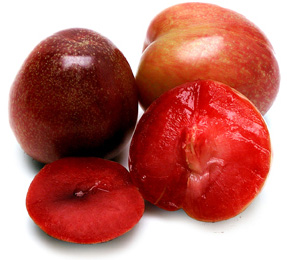
Russian River Brewing recently added another fruit to the list of fruit beers, the plumcot, which is a hybrid cross between a plum and apricot. It was crossbred by none other than Luther Burbank right in Santa Rosa, just a few blocks from the brewery. That’s why brewer Vinnie Cilurzo chose it, because he could use a local ingredient created right in his own backyard.

Plumcots are also called Pluots, but the two are not interchangeable. Pluots are a variation on Burbank’s Plumcot created by Floyd Zaiger. Pluots are three-quarters plum and one-quarter apricot whereas plumcots are closer to 50-50. Pluots are also a registered trademark owned by Zaiger, a practice that I understand but loathe on many levels.

plumcots

The beer is Compunction, a blonde ale brewed with plumcots. It had an original gravity of 1048 and is 5.8% abv. It’s slightly cloudy with golden color and a thin white head. Brett is the first aroma that hits you with fruity esters coming closely behind. The sweetness is puckering and works nicely as a contrast for the Brettanomyces. It’s surprisingly refreshing and light, given its strength. The beer is also aged in wooden barrels, but the beer’s strong flavors don’t allow much barrel characteristics to come through, really only a touch. Another interesting beer from Russian River Brewing.

Filed Under: Editorial, The Session Tagged With: History, Ingredients, Tasting

« Previous Page
Next Page »

Find Something

Northern California Breweries

Please consider purchasing my latest book, California Breweries North, available from Amazon, or ask for it at your local bookstore.

Recent Comments

  • Bob Paolino on Beer Birthday: Grant Johnston
  • Gambrinus on Historic Beer Birthday: A.J. Houghton
  • Ernie Dewing on Historic Beer Birthday: Charles William Bergner 
  • Steve 'Pudgy' De Rose on Historic Beer Birthday: Jacob Schmidt
  • Jay Brooks on Beer Birthday: Bill Owens

Recent Posts

  • Historic Beer Birthday: Conrad Pfeiffer March 7, 2026
  • Beer In Ads #5148: Ach Himmel Mr. Goat March 6, 2026
  • Historic Beer Birthday: Conrad Windisch March 6, 2026
  • Historic Beer Birthday: Samuel Wainwright March 6, 2026
  • Beer In Ads #5147: Frankenmuth Is Michigan’s Largest Selling Bock March 6, 2026

BBB Archives

Feedback

Head Quarter
This site is hosted and maintained by H25Q.dev. Any questions or comments for the webmaster can be directed here.