Brookston Beer Bulletin

Jay R. Brooks on Beer

  • Home
  • About
  • Editorial
  • Birthdays
  • Art & Beer

Socialize

  • Dribbble
  • Email
  • Facebook
  • Flickr
  • GitHub
  • Instagram
  • LinkedIn
  • Pinterest
  • RSS
  • Twitter
  • YouTube

Powered by Genesis

Beer In Ads #208: Every Glass of Schaefer Tastes the Same

October 4, 2010 By Jay Brooks

ad-billboard
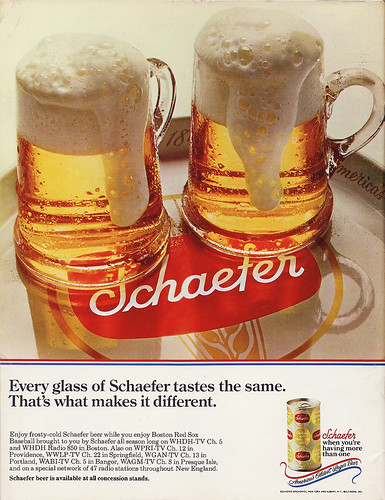
Monday’s ad is for Schaefer Brewing from 1970. The ad is promoting the idea of consistency with the curious tagline, “Every Glass of Schaefer Tastes the Same. That’s What Makes It Different.” The ad was for the Boston and New England market, suggesting enjoying your Schaefer beer while watching the Red Sox play baseball, and also mentioning that it was sold at the concession stands of, presumably, Fenway Park.
Schaefer-1970

Filed Under: Art & Beer, Beers Tagged With: Advertising, History, New England, New York

The Most Dangerous Things & The Duckworth Scale

October 4, 2010 By Jay Brooks

duck
Over the weekend I was perusing a book I picked up during my last trip to England, The Book of General Ignorance, a trivia book based on a British TV show, QI, which stands for Quite Interesting. There’s a whole series of QI books, and I was drawn to it initially because Stephen Fry was involved, and I’m a big fan of his work. One of the entries I read recently was entitled “What’s three times more dangerous than war?” It was the first sentence that leapt out at me. “Work is a bigger killer than drink, drugs or war.”

Many anti-alcohol organizations begin their press releases, policy papers, etc. with the eye-catching statistic that alcohol-related deaths account for a higher number of deaths than another kind. But this seems to fly in the face of that. It claims that “around two million people die every year from work-related accidents and diseases, as opposed to a mere 650,000 who are killed in wars.” While I might quibble with the adjective “mere,” it’s clear that far more die at work or in war than from alcohol. You can read the entire entry on the bottom of page 69 through Google Books.

Of course, some recent studies insist that two million die worldwide each year due to alcohol-related causes. Still others insist it’s involved in 1 in 25 deaths, which would mean that if it were really 2 million, then total world mortality for a given year would be 50 million. According to the UN, about 62 million people die each year. In the World Health Organization’s top 10 causes of death worldwide, alcohol is not among them. In 2001, a study by the CDC claimed 75,754 deaths were attributable to alcohol, but added that “low consumption has some beneficial effects, so a net 59,180 deaths were attributed to alcohol.” I could keep going citing study after study with different results, because the way you structure the statistics leads to the ultimate results. And that’s why who does the study and/or their motives are so important. And that’s why you shouldn’t believe such statistics without finding out where they came from, not even mine.

duck-scale

Somewhat off-topic, but quite interesting — at least to me — is the statistics behind the QI’s pronouncement of what’s safe and what’s dangerous were based on The Duckworth Scale, a “scale for assessing the risks involved in various activities” created in 1999. It takes its name from its creator, Dr. Frank Duckworth, a retired statistician. The scale is logarithmic, like the Richter scale for earthquakes. It grades one’s risk of death from activities ranging from washing up to playing Russian Roulette. It starts at zero for living on planet earth for a year, to a maximum of eight for certain death.

The Duckworth Scale

  • 8.0 Suicide Russian roulette (six bullets)
    Jumping off Eiffel Tower
    Lying in front of Flying Scotsman
  • 7.2 Russian Roulette (one game)
  • 7.1 Continuing smoking cigarettes (male aged 35 – 40 a day)
  • 6.9 Continuing smoking cigarettes (male aged 35 – 20 a day)
  • 6.7 Continuing smoking cigarettes (male aged 35 – 10 a day)
  • 6.4 Deep sea fishing (40 year career)
  • 6.3 Rock climbing over 20 years
  • 5.5 Accidental falls (new born male)
    Lifetime car travel (new born male)
    Dying while vacuuming
    Dying while washing up
    Dying while walking down the street
  • 4.6 Murder (new born male)
  • 4.2 Rock climbing (one session)
  • 2.0 Riding fairground rides (100 times)
  • 1.9 100 mile car journey (sober middle aged driver)
  • 1.7 100 mile flight
  • 1.6 Destructive asteroid impact (in the life-time of a new born male)
  • 0.3 100 mile rail journey

Those are the only ones I could find on the scale, but I’d love to see where more activities fall on the scale. Has anyone seen a more comprehensive list?

Filed Under: Beers, Editorial, Politics & Law Tagged With: Prohibitionists, Statistics

Next Session To Clear Up Wheat Beers

October 4, 2010 By Jay Brooks

session-the
Our 45th Session will be hosted by Bruce Tichnor, who runs the Canadian BeerTaster.ca. He’s taking us back to our roots, to spend a cloudy afternoon with wheat beers, or has he describes it:

We wanted to get back closer to the roots of the Session and pick a topic which was simple and yet gives a wide range of interpretations so we chose, simply (or perhaps not so simply), Wheat Beers.
Feel free to take this topic in any direction you like, specific reviews, historical information, or any other twist you’d like to use. Wheat beers are a pretty wide topic and actually cover German style Weizen, Heffe Weizen, etc. along with Belgian style Witbier and even Flavoured Wheat beers.

There are very few guidelines here, just have some fun drinking Wheat Beers in the fall instead of the summer.

So see if you can clear up the cloudy subject of wheat beers with your own post for the next Session, on Friday, November 5.

Filed Under: Beers, Just For Fun, News, The Session Tagged With: Announcements, Canada

Calling The Brew Kettle Black

October 4, 2010 By Jay Brooks

marin-institute
In an irony apparently lost on the Marin Institute, their latest missive to the faithful accuses Big Alcohol of doing “anything” to protect their business. The exact headline is Big Alcohol will do anything to avoid paying for alcohol-related harm. This is related to the industry’s recent support of California Proposition 26, which is attempting to close the loophole created by the California Supreme Court that allows “fees” to be imposed under certain conditions with just a majority vote rather than the 2/3 vote required for ordinary taxes. This has led to a spate of taxes pretending to be fees being imposed throughout the state. The proposition seeks to expose those hidden taxes and subject them to the same standard as any other taxes.

As I wrote before in Trash Talking Prop 26, this proposition was not started by the alcohol industry, or even the oil or tobacco industries, but was a grassroots effort sponsored by the California Chamber of Commerce and the California Taxpayers’ Association, and is supported by nearly sixty chambers of commerce and tax organizations. There is also support from trade organizations in a wide range of businesses and industries. It wasn’t until August that alcohol donations were made and that’s a significant point the Marin Institute is conveniently ignoring. It was at that time that “every company who makes alcohol, distributes alcohol and sells and serves alcohol realized they were under attack by the Marin Institute, who was pushing [San Francisco supervisor John] Avalos and supplying him him with all the resources for the test case to add a new tax to alcohol in San Francisco. That’s when most of us even became aware of Prop 26. Before that, I’d wager, hardly anyone in the alcohol industry had paid it much attention. When you’re being attacked, you tend to defend yourself.”

So at a minimum, the Marin Institute is mis-characterizing Prop 26 and at worst is using the results of its own actions to claim that the alcohol industry will go to great lengths to “avoid paying for alcohol-related harm.” But first of all, the notion of “alcohol-related harm” is something that the Marin Institute made up themselves. Alcohol companies, like any business, are simply trying to protect themselves from having to pay more taxes. This is something every company in every industry would do, in fact has to do, indeed is mandated to do by their corporate charter. Shareholders would be right to revolt if they didn’t take those steps. That the Marin Institute is using this very reasonable and understandable reaction to being attacked by the Marin Institute to paint the industry as going too far is more than a little hypocritical as it shows the lengths that they will go to in bending reality to their service. The rest of the missive also misstates what the proposition is really about, further showing how far they’ll go to further their agenda. If that’s not the pot calling the brew kettle black, I don’t know what is.

Filed Under: Editorial, Politics & Law Tagged With: California, Prohibitionists

Beer In Art #96: Charlene Audrey’s Four Beer Nations

October 3, 2010 By Jay Brooks

art-beer
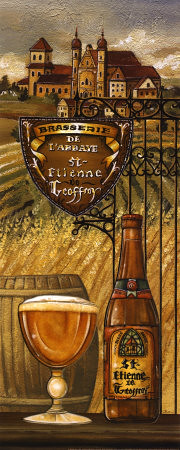
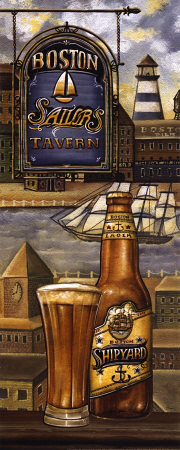
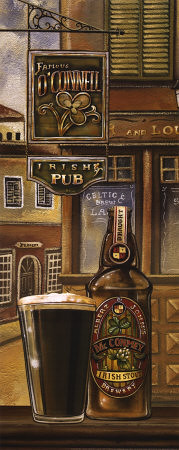
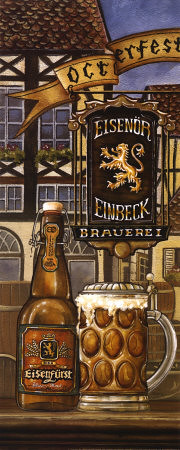
Today’s art is by Charlene Audrey, a freelance illustrator born in Syracuse, new York, but raised in Quebec, Canada. She’s done high-end wallpaper and decorative arts but more lately does painting. She created these four paintings which are sold as posters on most of the popular poster websites. Each one depicts the beer of a specific country; Belgium, the U.S., Ireland and Germany. Why these four? I couldn’t tell you. Each painting shows a bottle of beer and a glass filled with the beer in the foreground. The backgrounds include a sign for the pub or brewery and a landscape from the country, too.

Charlene_Audrey-Belgium
Belgium.

Charlene_Audrey-America
America

Charlene_Audrey-Ireland
Ireland.

Charlene_Audrey-German
Germany.

Filed Under: Art & Beer, Beers, Breweries Tagged With: Canada, New York, Quebec

Beer Drinkers Are Normal, Study Derisively Claims

October 3, 2010 By Jay Brooks

pint
In yet another hatchet job by the National Institute on Alcohol Abuse and Alcoholism, a new study they sponsored declares “Alcohol Consumers Are Becoming The Norm,” as if that’s a bad thing. The longitudinal study using data almost two decades old from the NIAAA’s 1991-92 National Longitudinal Alcohol Epidemiologic Survey and the 2001-02 National Epidemiologic Study on Alcohol and Related Conditions was conducted by researchers at the UT Southwestern School of Health Professions. The results are being be published this month in Alcoholism: Clinical and Experimental Research, a journal of the National Council on Alcoholism and Drug Dependence. To say the study is most likely biased, without even having to look at it, is something of an understatement.

The press release for the study begins with this eye-catching pronouncement. “More people are drinking than 20 years ago.” But that’s not correct. A more accurate statement would be that more people are drinking eight years ago than were doing so twenty years ago. Not quite as sexy, or alarming, but correct based on the actual data the study examined.

But really, even if true, if more people are indeed drinking today than twenty years ago, so what? The statement completely ignores context. We know mass-produced beer is down. We know craft beer is up. Couldn’t an equally valid explanation be that more people are drinking less, but better beer. That would mean more moderate drinking, which has shown to cause people to live longer than either abstaining or over-drinking. Shouldn’t that be considered be excellent news? But when the people studying the data owe their careers and paychecks to the study of “alcoholism,” it’s always bad news. The glass is quite literally, always half empty.

half-empty-2

Just look at how they define drinkers vs. non-drinkers. For purposes of the study, someone who has had twelve drinks of at least “0.6 ounces” in the last year is considered a drinker. That’s a total of 7.2 ounces in an entire year and you’re a “drinker.” That’s less than half a pint in a year, for chrissakes. Less than that and you’re a non-drinker. Talk about just saying no. But an increase in the number of people who’ve had less than a half pint is on the increase, apparently, and that’s cause for alarm? Are you kidding me? That would be laughable if lead researcher Dr. Caetano didn’t sound so serious. He thinks “that continuous monitoring of alcohol consumption levels is needed to understand better the factors that affect consumption. Monitoring also would help to detect as early as possible signs that rates of risky drinking behaviors such as binge drinking or drinking to intoxication may be increasing.” And he’s worried about people who’ve consumed as little as 7.2 oz. in one year. Is it just me, or is that the proverbial tempest in a pint glass?

But wait, it gets better. Based on what any reasonable person would consider almost no drinking at all, he has the following recommendations.

“This suggests to us that a variety of public-health policies such as restrictions on alcohol advertising, regulating high-alcohol-content beverages, increasing taxes on alcohol, as well as treatment and brief interventions may be needed to reduce alcohol-related problems,” he said.

How? How does that suggest these draconian measures? To them, the “reasons for the uptick vary and may involve complex sociodemographic changes in the population, but the findings are clear: More people are consuming alcohol now than in the early 1990s.” But that’s not even true from their own findings. First of all, as I said before, this compares a study from 1991-92 to another one conducted in 2001-02. That was eight years ago, not “now” as he states. Then with such flimsy increases using as their base amount less than 8 oz. of alcohol consumed in an entire year, they think it’s appropriate to make recommendations calling for more regulation, higher taxes and more medical intervention. That’s completely absurd and utterly disproportional to the findings.

This seems so obviously an agenda in search of a study. The suggestions were already in place. It’s the same nonsense that neo-prohibitionist groups have been pushing for years. This study was just shamelessly shoe-horned into that agenda.

But again I think part of what bothers me about these type of studies is that they take the view that any drinking is bad, no matter how small or moderate. They don’t take into account the context of the drinking. Is it with food? Is it with friends over a long period of time? Is it a few times a week or all at once? Even the Federal government increased their recommendations of safe drinking from two to four drinks a day, assuming the weekly intake stays below their recommendations. And they’ve acknowledged the numerous studies that show moderate drinking is part of a healthy lifestyle and will also most likely mean you’ll live longer. But these anti-alcohol funded studies just add up the amounts people drink and say it’s all bad for you, no context necessary. It’s just self-serving propaganda. If an alcohol industry group had sponsored this, it would have been dismissed immediately. But anti-alcohol groups get no such scrutiny. Their studies are embraced by the medical community, such as Medical News Today, which ran the study’s press release as a news story almost verbatim. Also, Science Daily reprinted the press release as news, disclosing its source at the bottom, well after the average reader stopped reading it. They also provide a link to the press release and the original journal article, something that Medical News Today can’t be bothered to do.

Though the headline is Alcohol Consumers Are Becoming The Norm, the title of the study itself is Sociodemographic Predictors of Pattern and Volume of Alcohol Consumption Across Hispanics, Blacks, and Whites: 10-Year Trend (1992–2002), the headline bears very little resemblance to the study itself.

Here’s the abstract:

Keywords: Ethnicity; Race; Binge Drinking; Drunkenness; Intoxication; Whites; Blacks; Hispanics

Background:  There have been limited trend studies examining variations on the patterns of alcohol consumption among Whites, Blacks, and Hispanics in the United States. The current paper reports national trends in drinking patterns, volume of drinking (number of drinks per month), binge drinking, and drinking to intoxication among Blacks, Whites, and Hispanics over a period of 10 years and identifies sociodemographic predictors of these behaviors across the 3 ethnic groups.

Methods:  Data are from the 1991 to 1992 National Longitudinal Alcohol Epidemiologic Survey (NLAES; n = 42,862) and the 2001 to 2002 National Epidemiologic Study on Alcohol and Related Conditions (NESARC; n = 43,093). Both surveys used multistage cluster sample procedures to select respondents 18 years of age and older from the U.S. household population.

Results:  Trends varied across different dimensions of drinking and ethnic groups. There were no statistically significant differences in the mean number of drinks consumed per month among men and women in any of the 3 ethnic groups between 1992 and 2002, but there was a significant rise in the proportion of current drinkers in both genders and in all 3 ethnic groups. Multivariate analysis indicated that, compared to Whites in 1992, Blacks and Hispanics did not increase their volume of drinking, but Whites did. Drinking 5 or more drinks in day at all did not increase between 1992 and 2002, but drinking 5 or more drinks at least once a month was more likely for all groups in 2002 compared to Whites in 1992. Drinking to intoxication at all was more likely among Whites in 2002 than 1992, but drinking to intoxication at least once a month was more likely among Whites and Blacks in 2002 than 1992.

Conclusion:  The only common trend between 1992 and 2002 across both genders and 3 ethnic groups was a rise in the proportion of drinkers. There was also a rise in drinking 5 or more drinks in a day (Whites, Blacks, and Hispanics) and drinking to intoxication (Whites and Blacks), but this was limited to those reporting such drinking at least once a month. The reasons for these changes are many and may involve complex sociodemographic changes in the population. It is important for the field to closely monitor these cross-ethnic trends in alcohol consumption.

I don’t see a reference to the headline, Alcohol Consumers Are Becoming The Norm, anywhere in either the press release or the abstract. Nothing in the abstract addresses normalization of any kind. After the headline, it’s never mentioned again. I don’t understand what it even means, becoming the norm? Alcohol has been consumed since the beginning of civilization. It hasn’t suddenly become anything. It’s been perfectly normal for adults to drink alcohol since at least 1933, when it became legal again in the U.S. It’s pretty hard to take the whole thing very seriously, when the headline itself is nothing but sensationalist propaganda.

Filed Under: Beers, Editorial, News, Politics & Law Tagged With: Prohibitionists, Science, Statistics

Guinness Ad #37: The Kinkajou

October 2, 2010 By Jay Brooks

guinness-toucan
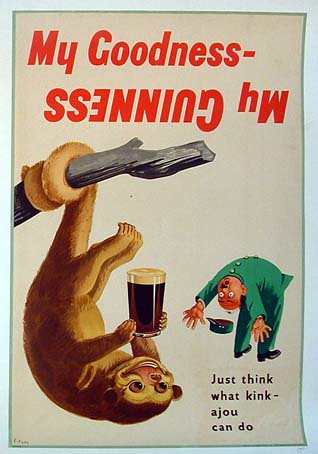
Our 37th Guinness poster by John Gilroy features an upside-down Kinkajou holding a pint of Guinness upside down, too, causing the zookeeper to tilt his head back. It also features the tagline “My Goodness — My Guinness,” with the second part upside-down. In the corner is also the following text. “Just think what kinkajou can do.”

guinness-kinkajou

Filed Under: Art & Beer, Beers Tagged With: Advertising, Guinness, History

Original AA Bible More Religious

October 2, 2010 By Jay Brooks

bible
I’ve been somewhat suspicious of Alcoholics Anonymous for many years. I grew up with an alcoholic stepfather, and had some experience with AA when I was younger, which you can read about in an earlier post. One of my big issues has been the idea of powerlessness and giving yourself over to a “higher power.” Though AA has been careful to use the non-denominational “higher power,” it always felt like a thinly veiled religious god, and more specifically one of the monotheistic sky-gods (of Christianity, Islam and Judaism).

But the idea that you can’t rely on yourself, your own will, has always troubled me. I know it seems to work for a lot of people, but it never felt like a cure, just a lifelong band-aid over a wound that never heals because the wound itself is never even treated. And I know I’m not the only one. There are treatment centers in Japan whose patients are able to drink in moderation without immediately becoming “alcoholics” after one sip. And a controversial book last year by Harvard psychology professor Gene M. Heyman, Addiction: A Disorder of Choice, punched further holes in AA’s insistence of powerlessness in alcoholics.

Why that matters, I think, is for this reason. As Science-Based Medicine reminds us, that makes AA a faith-based treatment, not a scientifically sound method of treating anyone. They write: “Alcoholics Anonymous is the most widely used treatment for alcoholism. It is mandated by the courts, accepted by mainstream medicine, and required by insurance companies. AA is generally assumed to be the most effective treatment for alcoholism, or at least “an” effective treatment. That assumption is wrong.”

And there are plenty of other critics out there, such as Sober Without Gods, Stinkin’ Thinkin’ and this particularly interesting essay, I Was An AA Nazi, at When they tell you to ‘Keep Coming Back’, run for your life!!! Escape from Alcoholics Anonymous. And there’s at least two Yahoo groups, Escaping the Cult of AA and 12-Step Free. And that, I assume, just skims the surface. Reading some of those, AA comes off more like a cult than anything else. As many of its critics also point out, many former alcoholics replace their addiction to booze with an addition to AA or religion more generally. I realize many people will argue that the latter is safer and healthier than the former, but isn’t obvious that trading one addiction for another is no cure and does nothing to address any underlying causes?

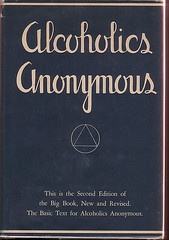
Now, more evidence is coming to light that even the “higher power” dodge in AA wasn’t always there. As a recent article in the Washington Post reported, founder Bill Wilson’s original manuscript from before 1939, which is being published for the first time, shows that the original document was nakedly Christian in its tone. But before it was published, Wilson had a number of people help him edit his manuscript, and how to characterize religion in it became a hotly debated topic. Eventually all references to a specific god were generalized and changed so they could be essentially anything. That was a calculated decision.

According to the Post, “AA historians [whatever that means] and treatment experts say” claim the edits were made to “adopt a more inclusive tone was enormously important in making the deeply spiritual text accessible to the non-religious and non-Christian.” Frankly, that sounds like apologetics. The changes were largely semantical, the tone of the program remained deeply religious, only the names were changed so it could be claimed it was not. That allowed it to be spread farther and wider than if it had remained true to its roots, and I’m even willing to believe that in 1939 their heart was in the right place. The idea of religious freedom has been in our Constitution almost since the beginning, but we’ve been a mostly-Christian nation for the majority of our history. It’s really only been in recent decades that the promise of the First Amendment is beginning to be addressed and enforced.

But in 1939, they decided not to address the role of religion in treating addiction, instead opting to essentially try to hide its “spirituality” or at least tried to couch it in non-denominational platitudes.

But the crossed-out phrases and scribbles make clear that the words easily could have read differently. And the edits embody a debate that continues today: How should the role of spirituality and religion be handled in addiction treatment?

They also take readers back to an era when churches and society generally stigmatized alcohol addicts as immoral rather than ill. The AA movement’s reframing of addiction as having a physical component (the “doctor’s opinion” that opens the book calls it “a kind of allergy”) was revolutionary, experts say.

Maybe, but today AA’s Big Book (a.k.a. its “Bible”) has changed little since those initial edits. It’s remained almost exactly the same, only a few of the stories have been updated. But the world has not stayed the same as it was in 1939. People’s approach to religion has changed dramatically. We’re a more diverse nation spiritually than we were then, I’d wager, and more tolerant (I continue to hope) of other points of view. I’m sure AA seemed revolutionary at the time, 70+ years ago, but remaining the same while the world changed around it has turned it into an antiquated cult. Not to mention, much more has been learned about addiction, much of contradicting AA’s original premises and methods. And while some claim AA has incorporated these newer insights into the program, it seems to me it’s remained largely unchanged at its core. Certainly its bible has remained the same, as religious as the day it started.

aa-2nd-ed

The 4th edition of AA’s Big Book, which is the most current, is available online.

Filed Under: News, Politics & Law Tagged With: Health & Beer, Prohibitionists, Science

Beer In Ads #207: New Lebanon Brewing

October 1, 2010 By Jay Brooks

ad-billboard
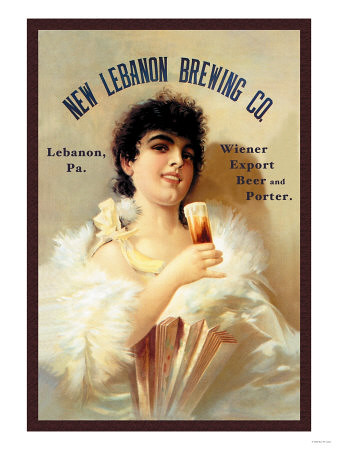
Friday’s ad is a turn of the century ad for a Pennsylvania brewery, New Lebanon Brewing. The brewery was first founded in 1874 and went through a variety of name changes. It was Lebanon Brewing from 1884 to 1893 and Lebanon Valley Brewing from 1934 until it closed in 1959. But it was New Lebanon Brewing from 1893 to 1920, so this ad has to have been from those years.

new-lebanon-brewing-company

Filed Under: Art & Beer, Beers Tagged With: Advertising, History, Pennsylvania

Session #44: Frankenstein’s Beers

October 1, 2010 By Jay Brooks

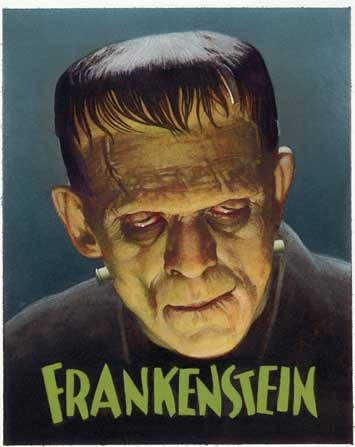
frankenstein-march
Our 44th Session is an appropriately scary one, with Halloween at the end of the month. The Session is hosted by Ashley Routson a.k.a. The Beer Wench. She’s chosen “Frankenstein Beers” as her topic, which Ashley likens to Frankenstein’s monster, a creation that was “constructed of human parts and various other inanimate objects,” defying nature’s laws and ultimately “unlike anything the world had ever seen before.” She continues.

Many craft brewers are like Frankenstein. They have become mad scientists obsessed with defying the laws of brewing and creating beers that transcend style guidelines. These “Frankenstein Beers” challenge the way people perceive beer. They are freaks of nature — big, bold and intense. The ingredients resemble those of a beer and the brewing process might appear to be normal, but some aspects of the entire experience are experimental, unorthodox and insane.

An altercation with these beers produces confusion in the eye of the taster … is it a beer, or a monster?

“I do know that for the sympathy of one living being, I would make peace with all. I have love in me the likes of which you can scarcely imagine and rage the likes of which you would not believe. If I cannot satisfy the one, I will indulge the other.” — The Monster.

Your mission, should you choose to accept it, is to write a blog post on “Frankenstein Beers.” There are no rules about how to write about this topic — feel free to highlight a Frankenstein brewer, brewery, beer tasting notes … or just your opinions on the concept.

session_logo_all_text_200

To me, it’s not the beers that have become like Frankenstein, but the brewers themselves. In the same way that many people often mistake Dr. Frankenstein’s monster for Frankenstein himself, his creation actually had no name and was always referred to euphemistically in the original novel. Although once, in a letter, author Mary Shelley referred to Frankenstein’s monster as “Adam.” Perhaps that means Alan Sprints’ Hair of the Dog Adambier is the original Frankenstein beer?

A Modern Prometheus. Prometheus was the Titan who stole fire from Zeus and gave it to mankind. “Zeus then punished him for his crime by having him bound to a rock while a great eagle ate his liver every day only to have it grow back to be eaten again the next day.” Modern brewers also damage our livers each day, but luckily it’s still intact when we wake up with only a hangover the next day.

But Frankenstein is also considered an allegory for the dangers of messing with nature and the idea that science can be bad, a common theme at the dawn of the industrial revolution. But Frankenstein’s monster only became so monstrous because his creator couldn’t bear the thought of being his father and banished him. The monster reacted badly to being abandoned along with people not being able to see the good inside of him, his ugly exterior was all they could see. That’s what caused him to become violent and seek revenge on Dr. Frankenstein. His creation could have been quite positive had it not been for the way he was treated. And so Frankenstein is considered a cautionary tale, though it really didn’t have to turn out that way. And it’s for that reason that I consider the notion of Frankenstein beers as a very positive development in the world of brewing.

In the last thirty years of craft beer, brewers as confident and skilled as Dr. Frankenstein eschewed traditional styles either by building on them or simply ignoring them to create their own monster beers. But they loved them and nurtured them, and never abandoned them. And I think that’s why we love them, too. No pitchforks necessary. The American craft beer scene, and more recently the world beer scene, has become a landscape filled with Frankenstein-like beers, unique and unusual and beloved. Unlike Mary Shelley’s Frankenstein, today’s monster beers are quite wonderful and prove the science of brewing in a post-industrial age doesn’t pervert nature but raises it to an art form. To me, the best of today’s beers can be described as a balance between art and science. Some breweries are overly scientific and create bland, tasteless beers that are very well-crafted. Others are artistic leaning endeavors that are ambitious and creative but are often inconsistent and/or technically flawed. But the best hit that Goldilocks sweet spot that balances the two.

They also don’t follow traditional styles, preferring their own path. And the best of those new ideas are copied — the sincerest form of flattery — creating new kinds of beer and driving many Brits and others who hate the explosion of new beer categories absolutely bonkers. But at the Great British Beer Festival, the American export booth is one of the most popular spots at Earl’s Court. People may complain about the new monster beers, or at least the American predisposition to categorize them, but they’ll line up to drink them all the same.

It may be Halloween month, but when it comes to beer, Frankenstein is alive and well throughout the entire year. I just think of him as a friendlier monster, more like the 60s cartoon Frankenstein Jr.

frankenstein-jr

Filed Under: Beers, Editorial, The Session Tagged With: brewers, Science of Brewing

« Previous Page
Next Page »

Find Something

Northern California Breweries

Please consider purchasing my latest book, California Breweries North, available from Amazon, or ask for it at your local bookstore.

Recent Comments

  • Bob Paolino on Beer Birthday: Grant Johnston
  • Gambrinus on Historic Beer Birthday: A.J. Houghton
  • Ernie Dewing on Historic Beer Birthday: Charles William Bergner 
  • Steve 'Pudgy' De Rose on Historic Beer Birthday: Jacob Schmidt
  • Jay Brooks on Beer Birthday: Bill Owens

Recent Posts

  • Historic Beer Birthday: Joseph Bramah April 13, 2026
  • Beer In Ads #5219: Good Old Point Special Bock Beer April 12, 2026
  • Beer In Ads #5218: The “Butter-In” Of The Season April 12, 2026
  • Beer In Ads #5217: The King Of All Beers April 11, 2026
  • Historic Beer Birthday: Gambrinus April 11, 2026

BBB Archives

Feedback

Head Quarter
This site is hosted and maintained by H25Q.dev. Any questions or comments for the webmaster can be directed here.