Brookston Beer Bulletin

Jay R. Brooks on Beer

  • Home
  • About
  • Editorial
  • Birthdays
  • Art & Beer

Socialize

  • Dribbble
  • Email
  • Facebook
  • Flickr
  • GitHub
  • Instagram
  • LinkedIn
  • Pinterest
  • RSS
  • Twitter
  • YouTube

Powered by Genesis

Historic Beer Birthday: George Klotter

March 4, 2025 By Jay Brooks

bellevue-ohio
Today is the birthday of George Klotter (March 4, 1805-July 29, 1882). He was born in Baden, Germany, but moved to Cincinnati, Ohio and established the Hamilton Brewery with partner Johann G. Sohn in Cincinnati, Ohio in 1846. Klotter left that brewery, while Sohn continued alone, and Klotter started another brewery, the George Klotter Brewery in 1866 The following year George Jr., and his brother Louis, joined the brewery, and it was renamed the George Klotter and Sons Brewery, which it remained until 1888. Unfortunately, there’s very little information I could find about Klotter or his brewery.

Here’s a short biography from Find-a-Grave:

Clyffside Brewing Company (242 McMicken) is a defunct brewery in Cincinnati, located on the site of Hamilton Brewery, founded in 1845 by Johann Sohn and George Klotter as the Hamilton Brewery. By 1853, the company became known as the Klotter, Sohn and Company. In 1866, Sohn bought out Klotter, and Klotter went on to establish his own brewery on Klotter Street.

And this is his obituary, also from Find-a-Grave:

klotter-obit

Bellevue-postcard

It 1888, it was renamed the Bellevue Brewery until finally closing in 1919.

bellevue-beer-picture

bellevue-tray

Filed Under: Birthdays, Breweries, Just For Fun Tagged With: History, Ohio

Beer Birthday: Lucy Corne-Duthie

March 4, 2025 By Jay Brooks

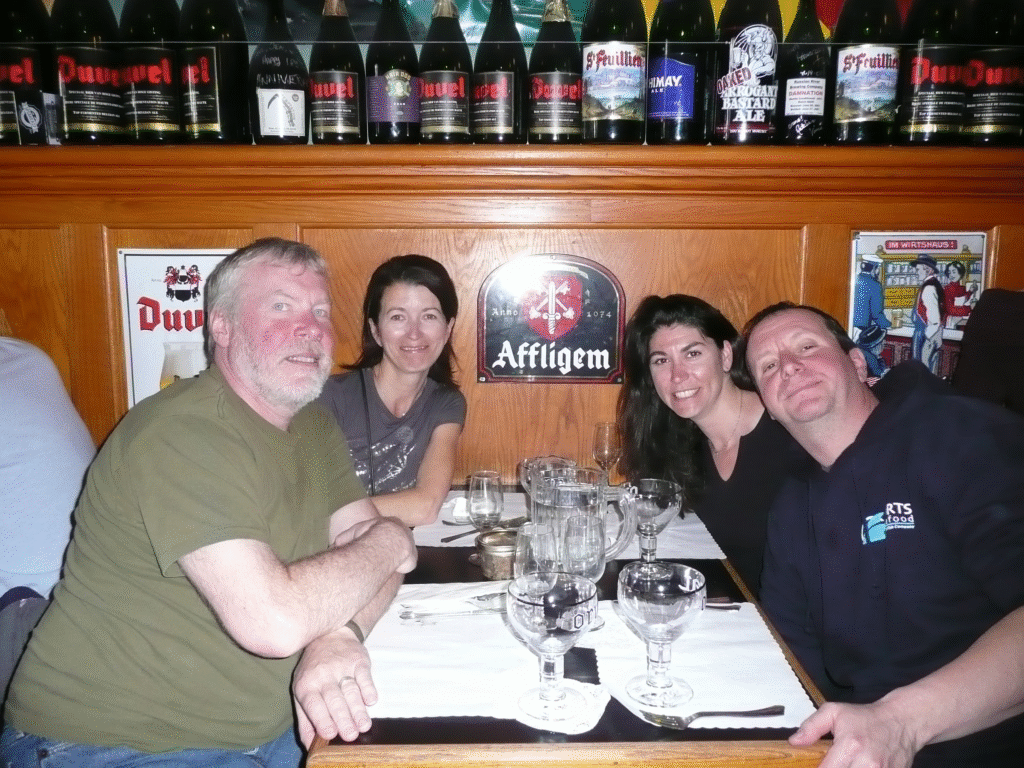
Today is the 46th birthday of Lucy Corne, a.k.a. Lucy Corne-Duthie, who’s a beer writer in South Africa, although she was originally born in Great Britain. She first began writing travel books, before moving on to beer in her adopted home of South Africa, writing African Brew: Exploring the Craft of South African Beer and Beer Safari: A journey through the craft breweries of South Africa. She also used to go by the moniker Brewmistress. I first met Lucy in Nashville during World Beer Cup judging when she attended one our beer writers guild seminars. We also worked together on Flagship February, and last year I was happy to join her in South Africa to judge the African Beer Cup, a continent-wide competitions she co-founded and helps to run. But I spent even more time with her in Germany and Belgium for the Brussels Beer Challenge and a press trip directly afterwards through Flanders. She’s a great ambassador for craft beer, not only in South Africa but the world. Join me in wishing Lucy a very happy birthday.

Lucy and me at Banana Jam.
Lucy with Emily Sauter (whose birthday is also today) and me in Belgium last year.
Lucy, with Pete Slosberg, Greg Casey, and me at the judge’s after-party at the Afro-Caribbean Brewery.
On our to way to Eupen, we stopped for a quick look-see in Maastricht with Marek Kaminski, Em Sauter, me, Lucy and Jan Lichota
At the very end of our press trip through Flanders. From left: Edu Villegas, me, Lucy, Stijn Van Houdt, Jaime Ojeda Selamé, Stephen Beaumont, and Andy Crouch.

Filed Under: Birthdays, Just For Fun Tagged With: Great Britain, South Africa, UK

Beer Birthday: Tonya Cornett

March 4, 2025 By Jay Brooks


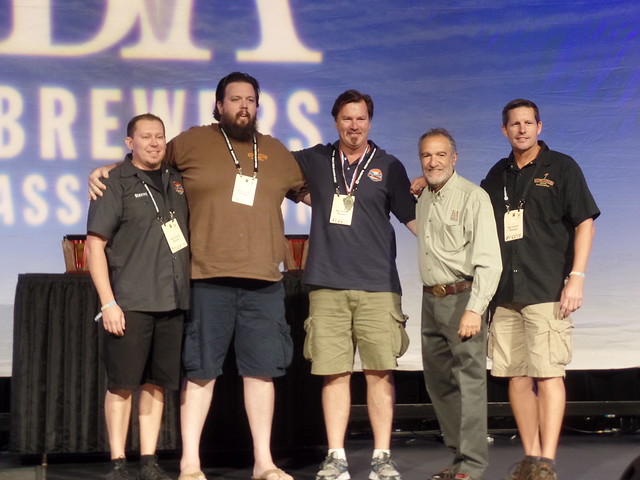
Today is Tonya Cornett’s 56th birthday. Tonya was the brewmaster of Bend Brewing in Oregon, for a number of years, but several years back moved to another Bend brewery — 10 Barrel Brewing — to become their R&D brewer. She was featured prominently in the film, The Love of Beer, and more recently Beers of Joy. Tonya’s a great brewer and, of course, being born 1 day and ten years after me makes her a terrific human being, too. Join me in wishing Tonya a very happy birthday.
P1070571
Tonya and me during a visit to Bend a couple of summers ago.

tonya-cornett-1
Tonya at GABF in 2008.

Tonya Cornett, from Bend Brewing, with Larry Horwitz from Iron Hill
Tonya with Larry Horwitz from Iron Hill at the 2009 GABF.

tonya-cornett-2
With Tomme Arthur of Port Brewing/The Lost Abbey at Falling Rock in Denver.
(Special thanks to Sage from the Lost Abbey for photos 2 and 4.)

P1200477
Elva Ellen Kowald, Tonya and Teri Fahrendorf at the Craft Brewers Conference in Chicago.

P1010378
Tonya and Megan Flynn, former publisher of Beer West, then-Beer Northwest, at GABF in 2010.

tonya-and-me-in-bend
Meeting for a quick beer in Bend a few years back.

Filed Under: Birthdays, Just For Fun Tagged With: Oregon

Beer Birthday: Emily Sauter

March 4, 2025 By Jay Brooks

emily-sauter-50

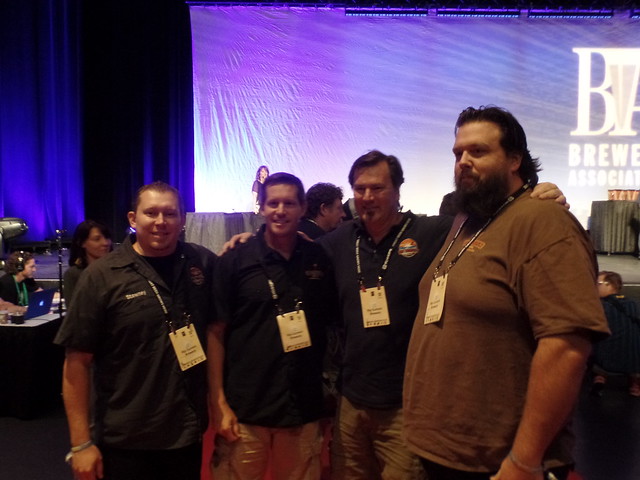
Today is the 42nd birthday of the extraordinary Emily Sauter, who used to work at Two Roads Brewing as their Social Media and Communications Manager, where on Two Roads’ website she reveals an intense love of soup but an equally powerful dislike of broccoli. I wonder how broccoli soup fits in with that? She now works part-time at the Fox Farm Brewery, but at night dons the cape and cowl to draw Pints and Panels, her blog of beer reviews, done in a comic strip style, putting to good use her education from Vermont’s Center for Cartoon Studies. And she’s written and drawn two books, Beer is For Everyone!: Of Drinking Age, and Hooray for Craft Beer!” Emily is one of my favorite people to hang out with at beer events, a kindred spirit. Join me in wishing Emily a very happy birthday.
DSCN1635
Stan Hieronymus and Emily at GABF a few years ago.
DSCN1222
At the Beer Bloggers Conference in San Diego, opening a bottle of Crazy Pucker.
Sam-Emily-Me
Sam Calagione, Emily and me at Belmont Station in Portland during CBC a few years ago.
emily-me-pliny
In 2018 at Russian River for the release of Pliny the Younger.
Em with her husband Matt in Connecticut when I visited them last summer.
Lucy Corne-Duthie (whose birthday is also today), Em, and me in Belgium last year.

Filed Under: Birthdays, Just For Fun Tagged With: Cartoons, Connecticut

Beer In Ads #4898: Schaefer Beyond Bock Beer

March 3, 2025 By Jay Brooks

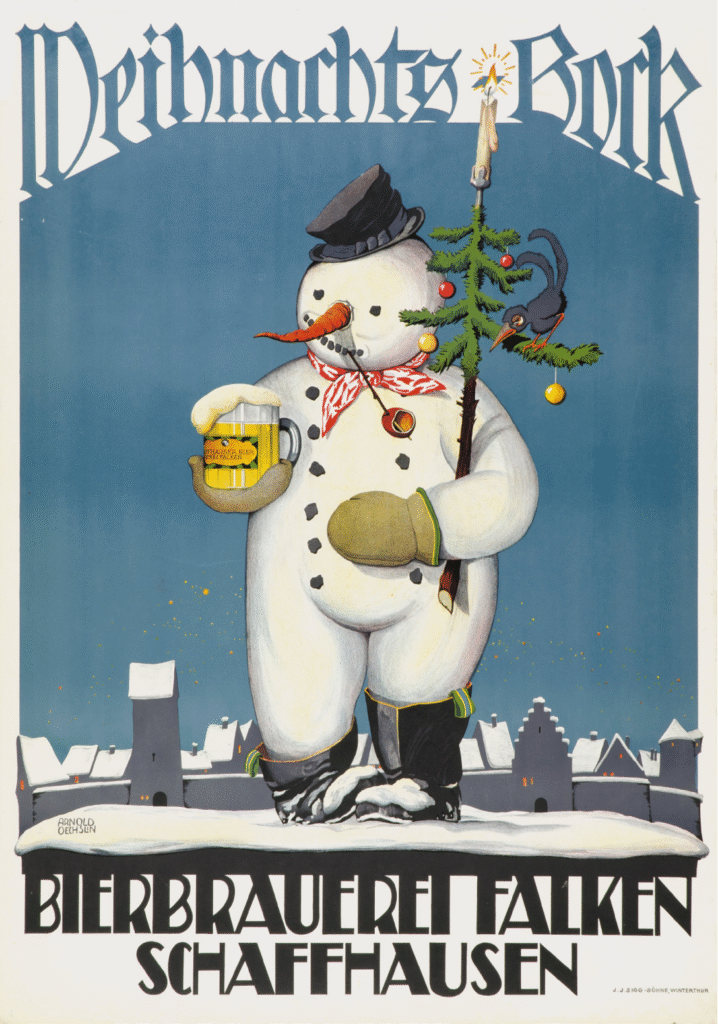
Last year I decided to concentrate on Bock ads. Bock, of course, originated in Germany, in the town of Einbeck. Because many 19th century American breweries were founded by German immigrants, they offered a bock at certain times of the year, be it Spring, Easter, Lent, Christmas, or what have you. In a sense they were some of the first seasonal beers. “The style was later adopted in Bavaria by Munich brewers in the 17th century. Due to their Bavarian accent, citizens of Munich pronounced ‘Einbeck’ as ‘ein Bock’ (a billy goat), and thus the beer became known as ‘Bock.’ A goat often appears on bottle labels.” And presumably because they were special releases, many breweries went all out promoting them with beautiful artwork on posters and other advertising.

Monday’s ad is is for Schaefer Bock Beer, and is not from 1940, but is undoubtedly is a fake someone made over the last few decades based on the Dr. Seuss’ book, “On Beyond Zebra!,” which was published in 1955. But keeping in the spirit of Theodor Geisel‘s birthday yesterday, I thought why not. It’s pretty well done.vThe brewery was the F. & M. Schaefer Brewing Co. originally of New York, New York, which was founded in 1842. Today is the birthday of Theodore Geisel, better known as Dr. Seuss. Before he started writing popular children’s books, he worked for a number of years doing illustrations and art for various company advertising campaigns, including for a couple of beer companies, like the one I shared yesterday for Schaefer.

Filed Under: Art & Beer, Beers, Breweries, Just For Fun Tagged With: Advertising, Bock, History, New York

Historic Beer Birthday: Geörg Ziegelmaier

March 3, 2025 By Jay Brooks

Today is the birthday of Geörg Ziegelmaier (March 3, 1852-December 27, 1908). He was born in Württemberg, Germany, but emigrated to the U.S. on July 2, 1854. He was originally trained as a baker and a miller, but became a brewer and founded the George Ziegelmaier Brewery in 1966, which was located in Boscobel, Wisconsin. He ran the brewery for nearly twenty years before selling it to William Bruer. It then went through a series of owners before becoming the Boscobel Brewing Co. in 1920, before closing for good in 1942.

Here’s his biography from Tavern Trove:

He became a farmer in New Hartford, Connecticut, then opened a milling business after the first harvest. In 1856 he established a farm in Crawford County, Wisconsin, but moved away after only one season. History next finds Ziegelmaier forty miles to the west, in McGregor, Iowa, a port city on the Mississippi River.  He stayed long enough there to get married, to Mary Koss, and have two children.

In 1857 he moved his family back to Wisconsin to the town of Boscobel, where he opened a brewery and bakery shop. The brewery burned soon after, and he returned once again to McGregor. He came back to Boscobel in 1866 where he purchased the old brewery property and rebuilt it.  He ran the brewhouse until 1884, when he sold it to William Bruer.

By 1890 Ziegelmaier had relocated to Milwaukee. The next decade saw him follow several of his children, now numbering an even dozen, to Washington state. Geörg died there on December 27th, 1908. He was 76 years old.

This is from another history of Boscobel beer that discusses the early history of the brewery.

This short biography is from “The History of Grant County, Wisconsin,” by Willshire Butterfield, and published in 1881.

Filed Under: Birthdays, Breweries, Just For Fun Tagged With: Germany, Wisconsin

Beer Birthday: Jeff Cioletti

March 3, 2025 By Jay Brooks

beverage-world
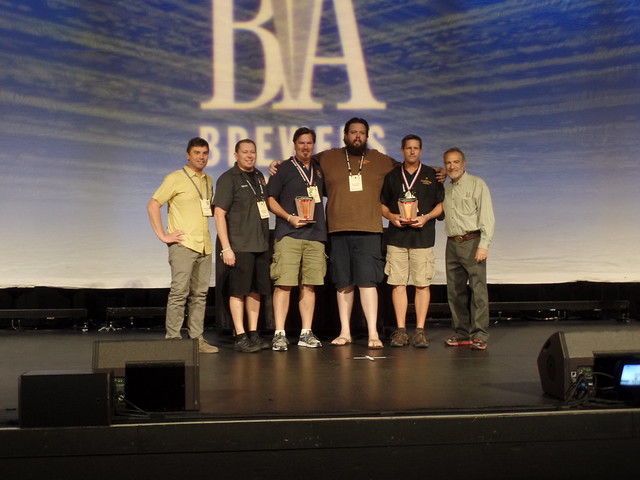
Today is the 53rd birthday of Jeff Cioletti, president of Drinkable Media and Editor-at-Large for Beverage World magazine. He’s been covering the business of beer for quite a long while. I run into Jeff at numerous industry events, and we’ve taken a press trip to Belgium. Join me in wishing Jeff a very happy birthday.
Jeff-John-Jay
Three J’s at CBC in San Diego: Jeff, John Holl and me. (Photo by Win Bassett.)
DSCN0595
Jeff (on the left just above Lew Bryson) at our table inside the barrel room at Samuel Adams in Boston during an anniversary dinner there last year, when we opened every vintage of Utopias, plus Triple Bock and Millennium Ale.
DSC_8231
Ace reporter: “we just want the facts, ma’am, just the facts.”
DSC_8133
Jeff, in the center with a camera around his neck, during a visit to Brouwerij Huyghe during a press trip to Belgium in 2013.
DSC_8200
A night on bald mountain, or at least a table.

Filed Under: Birthdays, Just For Fun Tagged With: New Jersey, Virginia

Beer In Ads #4897: Schaefer Bock Beer

March 2, 2025 By Jay Brooks

Last year I decided to concentrate on Bock ads. Bock, of course, originated in Germany, in the town of Einbeck. Because many 19th century American breweries were founded by German immigrants, they offered a bock at certain times of the year, be it Spring, Easter, Lent, Christmas, or what have you. In a sense they were some of the first seasonal beers. “The style was later adopted in Bavaria by Munich brewers in the 17th century. Due to their Bavarian accent, citizens of Munich pronounced ‘Einbeck’ as ‘ein Bock’ (a billy goat), and thus the beer became known as ‘Bock.’ A goat often appears on bottle labels.” And presumably because they were special releases, many breweries went all out promoting them with beautiful artwork on posters and other advertising.

Sunday’s ad is is for Schaefer Bock Beer, and is from 1940. The brewery was the F. & M. Schaefer Brewing Co. originally of New York, New York, which was founded in 1842. Today is the birthday of Theodore Geisel, better known as Dr. Seuss. Before he started writing popular children’s books, he worked for a number of years doing illustrations and art for various company advertising campaigns, including for a couple of beer companies, like this one for Schaefer.

Filed Under: Art & Beer, Beers, Breweries, Just For Fun Tagged With: Advertising, Bock, History, New York

Historic Beer Birthday: Henry Gund

March 2, 2025 By Jay Brooks

gund
Today is the birthday of Henry Gund (March 2, 1859-July 2, 1945). He was the son of John Gund, who co-founded what would become the The G. Heileman Brewing Company with Gottlieb Heileman. They formed a partnership in November 1858 to operate the City Brewery in La Crosse, but “after nearly fifteen years in business together, Heileman and Gund dissolved their partnership in 1872.” After leaving City Brewing, Gund immediately “established a new brewery on the southern edge of La Crosse that he named the Empire Brewery, and which was incorporated in 1880 as the John Gund Brewing Company.” Gund employed all three of his sons in his new venture, and eventually Henry Gund became president of the brewery after his father’s death.

henry-gund

There’s not much biographical information on Henry, and I couldn’t find a photo of him, either. But there was a short write-up in the Biographical History of La Crosse, Trempealeau and Buffalo Counties, Wisconsin, published in 1892, when Henry was still alive, and so was his father. This biography starts with John Gund, and then has limited information about each son.

gundbrewery1892

henry-gund-bio-1
henry-gund-bio-2

gund-letterhead
Immigrant Entrepreneurship, under German-American Business Biographies, has a lengthy tale of both John Gund and Gottlieb Heileman

In May 1910, John Gund passed away a few months shy of his eightieth birthday. Fifty-one-year-old Henry Gund assumed control of the firm, which had expanded significantly to become the largest brewery in the Old Northwest outside Milwaukee. It employed 450 workers and owned numerous saloons throughout the region that carried Gund beer exclusively. Despite the firm’s success, the second decade of the twentieth century would be a trying time for Gund Brewing. The First World War fueled the prohibitionist movement in the United States and denunciations of German-American brewers became commonplace. In November 1918, shortly after the armistice ending the war had been signed, Congress passed the curiously misnamed Wartime Prohibition Act banning the production of intoxicating beverages starting in May 1919 and the sale of such beverages starting on July 1. Legal wrangling in the federal courts regarding the definition of “intoxicating beverages” occupied much of the spring of 1919. Many brewers including Gund held that beer with an alcohol content lower than 2.75 percent was non-intoxicating and resumed low-alcohol beer production. Later in the fall, Congress ratified the Volstead Act enacting national Prohibition and set January 16, 1920, as the start date.
gund-brewery-1902
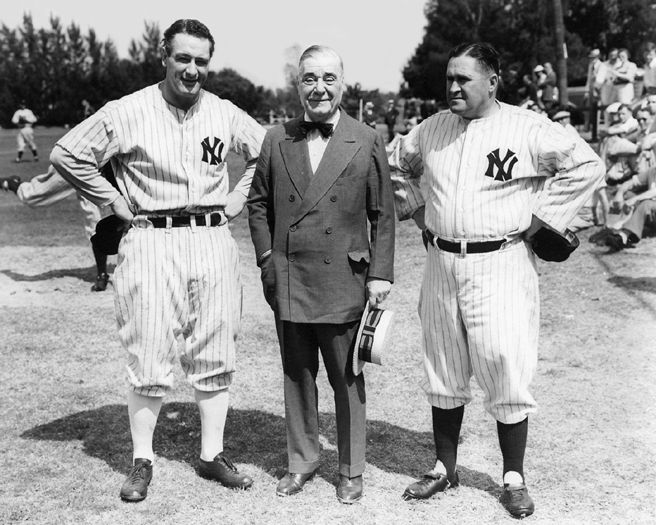
The Gund Brewery in 1902.

Despite the enactment of national Prohibition in early 1920, Gund and many other breweries continued producing 2.75 percent beer as various lawsuits made their way through the federal courts challenging the legality of the law and the meaning of various provisions. While the officers of the Gund Brewery awaited the outcome of the national legal battles, they faced a more immediate crisis. Local 81 of the International Brotherhood of Brewery Workers went on strike against local La Crosse breweries to ban open shops. Henry Gund refused to negotiate with the strikers and instead hired replacement workers to fill the vacant positions. The situation remained unresolved when the United States Supreme Court upheld the Volstead Act in the summer of 1920 and reinforced the complete ban on sales of alcoholic beverages. The ongoing labor unrest combined with the ban on beer production eventually led Henry Gund and the other corporate officers of the company to shutter the brewery. The corporation was dissolved in 1938 and the Peerless trademark was sold to the Michel brothers who resumed production of the brand. The Heileman Brewery later purchased Gund’s brew house.

John-Gund-Brewing-Co-Workers

John Gund’s vision of his brewery evolving into a major shipping brewery did not come to pass, and La Crosse did not emerge as a major rival to Milwaukee, St. Louis, or Cincinnati. Nevertheless, Gund had a major economic impact on the community and he influenced the entrepreneurial path of his sons. All three pursued careers in brewing: George in Washington and Ohio, John Jr. in Illinois and Kentucky, and Henry in Wisconsin. They also diversified their business activities into other fields. George entered the financial and mining sectors and earned a fortune through banking and real estate. John Jr. operated a malting facility in Chicago, the Lexington Brewery in Lexington, Kentucky, eventually became head of the Swiss Oil Company and the president of the First National Bank of Lexington. Henry stayed in La Crosse and became a director and later president of the National Bank of La Crosse (later the First National Bank La Crosse) and the president of the Pioneer Real Estate Company, a holding company for the defunct Gund Brewery’s real estate.

gund-brewery

Filed Under: Birthdays, Breweries, Just For Fun Tagged With: History, Wisconsin

Historic Birthday: David G. Yuengling

March 2, 2025 By Jay Brooks

yuengling-eagle
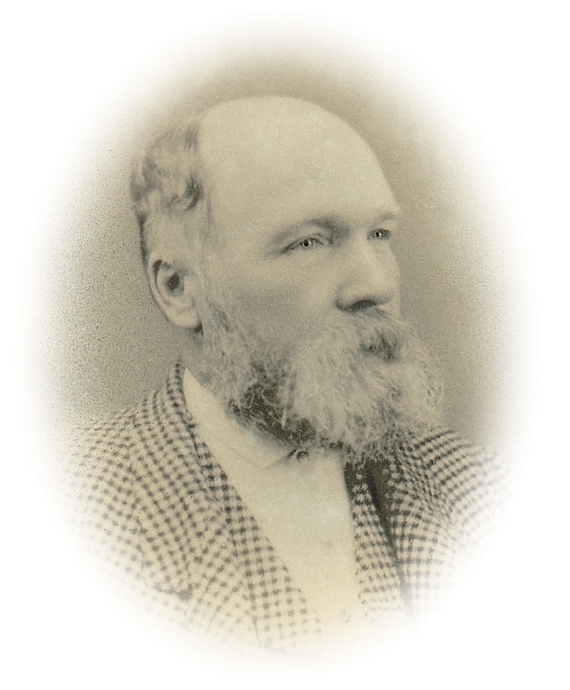
Today is the birthday of David G. Yuengling (March 2, 1808-September 27, 1877) who founded the Eagle Brewing Co. in 1829, and today it’s “America’s oldest brewery.” The name was changed in 1873 to D. G. Yuengling and Son when David’s son Frederick joined the company. He was born in Aldingen in what today is Germany — but then was the Kingdom of Württemberg. He was born David Gottlob Jüngling, but anglicized his name after emigrating the United States in 1828.

Yuengling-DG

100 Years of Brewing has a short summary of D.G. and the brewery’s early years.

yuengling-100-years
Yuengling_Brewery_Illustration

Immigrant Entrepreneurship, under German-American Business Biographies, has a lengthy one of David Gottlob Yuengling.

David Gottlob Jüngling was born in the village of Aldingen (today part of the town of Remseck in the German federal state of Baden-Württemberg) into a family that is listed as operating Aldingen’s first brewery by 1816. A passport application from 1862 describes the 56-year old David Gottlob as having blue eyes and black hair and standing five feet six inches (168 cm) tall. His father, Friedrich Jüngling, operated Aldingen’s brewery in the Neues Schloss (“New Palace”), a baroque manor of which he owned one quarter, including the brewery and livestock pens. Prior to starting the brewery in Aldingen, Friedrich Jüngling’s profession is listed as butcher, and he served on the town council. Both positions reflected a degree of wealth and social status within the community. Although Friedrich Jüngling was born in nearby Erdmannhausen, his wife Anna Maria Jüngling (née Wildermuth) was born in Aldingen. D.G. Yuengling had three brothers and four sisters, one of whom, Christiane, also immigrated to Pennsylvania. D.G. Yuengling may have apprenticed in his father’s brewery during his youth, or he may have acquired skills as a brewer through an apprenticeship at another brewery in the region. However, his older brother, Jakob, inherited their father’s brewery and reportedly continued operating it until his death in 1878. With Jakob in charge of the Jüngling family brewery, and economic opportunities in the 1820s somewhat limited, particularly in Württemberg, D. G. Yuengling chose to immigrate to Pennsylvania in 1829 via Rotterdam. Yuengling landed in Baltimore and quickly moved on to the towns of Lancaster and Reading in Pennsylvania, both of which were at the time heavily populated by German immigrants and Pennsylvania Germans whose demand for beer was already served by local entrepreneurs. Yuengling likely sought a location with fewer brewers and a steady demand for fresh, locally produced beer.

The boomtown of Pottsville, deep in the anthracite coal belt of Eastern Pennsylvania, offered one such location. The town had been named for John Potts, who founded it after purchasing the first anthracite furnace along the Schuylkill River in 1806. The furnace had been in use since 1795. The demand for hard coal in Philadelphia and the surrounding region led to skyrocketing prices for anthracite coal land, with one parcel selling for $33,000 more than it had been purchased for five years earlier, and another increasing by $15,000 within months. Yuengling arrived in this rapidly-changing community in 1829 and set up a brewery shortly thereafter.

yuengling-1873
D.G. Yuengling (front and center) with the brewery employees in 1873.

Upon his arrival in the United States, David Gottlieb Yuengling carried with him his skills as a brewer, as well as possibly some startup money (Startkapital). In 1829, when Yuengling established the Eagle Brewery in Pottsville, the town was experiencing a building boom related to land speculation and increasing anthracite coal production. The daytime population, including mine workers, had jumped to over 3,700. In 1832, some twenty-five taverns prospered in Pottsville and, along with numerous inns and hotel, served the drinking needs of the growing population. By comparison, in 1825, “Pottsville [had] contained only fifteen houses, three taverns, three stores, a printer’s shop, a post office, and the shops of a few craftsmen.”

In addition to its increasing population, Pottsville formed an important node in an expanding regional transportation network. Trails, roads, and turnpikes linked it with other nearby communities including Schuylkill Haven, which lay along the Schuylkill River. The Schuylkill flowed in a southwesterly direction and met the Delaware River at Philadelphia. It offered an early means of waterborne transportation between interior Pennsylvania and the port of Philadelphia. The discovery of coal in Schuylkill County in 1790 spurred the construction of the Schuylkill Canal and subsequently the founding of the influential Philadelphia & Reading Railroad. Both of these enterprises transported anthracite coal from Pottsville and the surrounding coal fields to Philadelphia and later New York City and improved access to materials produced outside the region. While these new transportation facilities played little to no role in beer distribution at the time due to the highly localized nature of unpasteurized beer consumption, they brought about an increase in demand for labor in the region and supported local business activities, which provided fertile ground for Yuengling’s new brewery venture.

Yuengling’s 1829 Eagle Brewery was located on Centre Street near the Schuylkill County Courthouse, which during the economic depression of the 1870s became known for the trial of striking coal miners who were decried as Molly Maguires and executed for murder. During the brewery’s early years of operation, Yuengling likely produced beer almost exclusively for the local market. Yuengling started brewing on a small scale, perhaps due to limited financial resources and access to credit, or possibly because he did not want to risk overextending himself. The brewery’s production totals reflect the precarious nature of his small business. Furthermore, he likely performed most, if not all, of the brewing and distribution process himself. His beer would have been made in open kettles and vats and the production process would have been physically arduous. Brewing involved boiling a mash of grain and water to convert complex starches into simple sugars. Boiled grains would then be sparged (i.e. rinsed) with hot water in order to extract all the sugars from the grain. The resulting sweet and sticky wort would be boiled with hops and then cooled so that yeast could be added to ferment the sugars and produce alcohol. Depending on the type of beer produced, primary fermentation could take one or more weeks. In all, the demanding process required heating water, lifting heavy supplies, pumping hot liquids between vats, and transporting barrels of finished beer via hand truck or horse cart to nearby taverns and inns.

yuengling-poster

After a fire destroyed the original brewery in 1832, Yuengling quickly rebuilt his enterprise at its present location on Mahantongo Street. His new Eagle Brewery was situated in a location that took advantage of both natural geography and manmade features. The site at the intersection of Fifth and Mahantongo Streets lay near a freshwater spring that provided water for the community of Pottsville. The new brewery made use of this water for all brewing operations. Yuengling contracted with local laborers, possibly coal miners, to build tunnels into a mountain behind the new facility. The tunnels extended underneath the brewery and kept finished beer cool, though not cold enough to prevent spoilage without the addition of ice. When Yuengling began brewing lager, the tunnels provided an ideal area for lagering the beer during cooler months. The site’s location near the local road and canal system facilitated shipment of brewing supplies to the brewery. Malt deliveries arrived from Philadelphia by horse and cart, as well as via canal boats, and Yuengling obtained ice shipments in a similar manner. By 1842, the company was receiving malt shipments by railroad, and it began distributing its beer the same way as the rail network improved during the 1850s and 1860s. These transportation facilities also enabled beer to be transported to nearby communities, many of which contained large numbers of German immigrants among their beer-drinking populations.

In 1841, thirty-three-year-old David Yuengling married seventeen-year-old Elizabeth, daughter of John George and Rosine Elizabeth Betz from nearby Schuylkill Haven. Census records hint that John G. Betz, like his son-in-law, may have been a brewer by trade and the family may also have operated an inn in Schuylkill Haven. Also like Yuengling, the Betz family had emigrated from the Kingdom of Württemberg. Elizabeth had been born in Stuttgart, fewer than ten miles from David Yuengling’s family home in Aldingen, on September 26, 1823. Perhaps the two families had known each other in the Old World. By 1850, federal census records show that David and his then twenty-seven-year-old wife Elizabeth had five children: Elizabeth (age 6), David (age 8), Mary (age 5), Teresia (age 4), and Frederick (age 2). Eventually, the couple had a total of three sons and seven daughters.

David Yuengling dealt with numerous challenges during the early decades that his business was in operation. He faced competition from fellow brewers in Pottsville. At least three other breweries operated in the city in 1830. The Orchard Brewery opened around 1831 and brewed beer in Pottsville and later nearby Port Carbon until the late 1870s. Likewise, the Rettig Brewery opened at the end of the Civil War and survived until the Prohibition era. Numerous other breweries opened, brewed beer briefly, and then folded due to fires and financial difficulties. Yuengling also faced a threat from prohibitionist forces in Pennsylvania. Following the passage of prohibition legislation in Maine in 1851, “dry” advocates secured the passage of a law in Pennsylvania banning Sunday sales of alcohol in 1852. Two years later, a full ban went before state voters and was narrowly defeated, in large part due to heavy turnout by beer-drinking voters, including substantial numbers of German immigrants.

DG_Yuengling

As David Yuengling’s three sons came of age in the 1850s and 1860s, he introduced them to the craft of brewing and put them to work in the brewery. His oldest son David Jr. apprenticed under his father and later served as a foreman for his uncle, John Frederick Betz, at Betz’s brewery in New York City. He also visited the German lands and studied the brewing craft in Munich, Stuttgart, and Klein-Schwechat, a town near Vienna in the Austrian Empire. Middle son Frederick obtained a college education and studied business at the Eastman Business School in Poughkeepsie. He later studied brewing in the German lands and Austria, as well as at the Berger and Engel Brewing Company in Philadelphia, and eventually went to work in his father’s brewery. Less is known about the education of William Yuengling, who died at the age of thirty-six in 1898.

After the Civil War, David Jr. decided to strike out on his own and established a new brewing enterprise in Richmond, Virginia, in 1866. Startup capital for the new Betz, Yuengling & Beyer Brewery (later James River Brewery, D.G. Yuengling and Company) came from the Yuengling family and John Betz, David Jr.’s uncle, as well as another brewer, Louis Beyer. This small expansion project was presumably planned with input from the elder Yuengling and is typical of a careful venture into secondary markets. The Richmond brewery remained under David Jr.’s oversight until it was sold in 1878.

As the senior David Yuengling neared his mid-60s, he chose to make middle-son Frederick a minority partner in the business. The legal foundation for the future of the family firm was solidified when the brewery became D.G. Yuengling and Son in 1873. That year also marked a high point in the number of breweries in the United States with over 4,000 in operation. Following the 1873 financial panic, however, the industry began to consolidate as the resulting business depression put numerous local and regional breweries out of business and ambitious and well-capitalized breweries such as Anheuser-Busch began to make inroads in regional markets outside the Midwest by taking advantage of railroad transportation and new technologies for keeping beer fresh such as pasteurization and refrigeration, both of which required significant capital investments. Consequently, the number of breweries fell by over a thousand by the mid-1870s and continued a precipitous decline through the beginning of the twentieth century, when about 1,500 remained in operation.

Unlike a few of the wealthy, American “beer barons” of the late nineteenth century, Yuengling did not retire to his native Germany, not even part time. His was a privately-held, midsize business (Mittelstand), and conditions may not have allowed him to retire abroad. He may simply have decided against withdrawing too much capital from his life’s work, or perhaps he also felt a strong sense of allegiance to his community. David Gottlieb Yuengling passed away after falling on the stairs of his home after a day of working in his brewery’s office on 29 September 1877, at the age of 70. Hundreds of Pottsville residents and brewery workers gathered to pay their final respects. The responsibility for continuing the Yuengling brewery legacy rested with D.G. Yuengling’s sons, because women typically did not own and lead businesses enterprises. Nevertheless, the founder’s widow, Elizabeth, who lived until 1894, inherited his shares in the firm and Frederick acted as minority owner.

Yuengling-1855
The brewery in 1855.

Throughout his life in the United States, David G. Yuengling was an active member of the Pottsville community. He was the first president of the Pottsville Gas Company and later a director of the Pottsville Water Company. Yuengling also supported the German Lutheran Church in Pottsville and contributed $10,000 for the construction of the church building, and served as a vestryman (council member). His posts with the gas and water companies illustrate Yuengling’s concern with encouraging progress in Pottsville, as well as securing the supply of resources necessary for his brewing business. Unlike the Forty-Eighters, German immigrants who had escaped reactionary monarchies in Europe and who tended to vote Republican, Yuengling was a Democrat. Whereas the Democratic Party had embraced the nativist and anti-immigrant cause by 1848, the Republican Party and its rising star Abraham Lincoln had been founded by anti-slavery Whigs and Free Soilers. Yuengling, however, had immigrated to America twenty years prior, during the era of Jacksonian democracy with President Andrew Jackson, a Democrat, at the helm in the White House. Jackson’s message had been one of economic opportunity and democracy for the common, white man, as well as the preservation of the Union. At the same time, though he was a Democrat, David Yuengling also belonged to two secret societies, the Masons and the German Order of the Harugari (Der Deutsche Orden der Harugari), a mutual aid society founded in response to nativist actions against German immigrants. Like his father, Frederick Yuengling also served the community of Pottsville as president of the Pottsville Gas Company, as well as a “director of the Safe Deposit Bank and of the Pottsville Water Company.”

In addition to his engagement in the Pottsville community, which served the development of the town as well as his own business interests, David Yuengling committed time, skills, and experience to establish and further the brewing careers of a number of fellow German immigrants. His brother-in-law, John F. Betz, himself the son of a brewer, served an apprenticeship in the Yuengling brewery before participating in a grand brewing tour in Europe and establishing a brewery in New York City and later Philadelphia. Betz went on to build a brewing empire in the City of Brotherly Love and later, as previously noted, helped bail out David Yuengling Jr.’s failing brewery in New York City in the late 1890s. Henry C. Clausen Sr. was a second prominent brewer who started as a Yuengling apprentice. Clausen and John Betz co-owned a brewery in New York City and the former founded the H. Clausen and Son Brewery in the 1870s, which was for a time one of the largest breweries by production total in the nation. His son, Henry C. Clausen Jr., later founded and served as president of the U.S. Brewers’ Association.

As an immigrant entrepreneur, David Yuengling Sr. drew on his background in the Old Country while embracing new opportunities available in the U.S. His participation in the local Lutheran community and his membership in the German Order of the Harugari attest to his desire to sustain elements of his German ethnic heritage even after living in the United States for many years. His craft training in the German lands provided him with the technical skills necessary to produce quality beer in a new environment. He began brewing English-style beers, both because they were popular with the local drinking public in Pennsylvania and also because his training in the 1820s would have involved brewing ales. He proved open to new innovations in brewing, however, and began working with lager beer as the style became popular both in Central Europe and in the United States in the middle of the nineteenth century. Today, D.G. Yuengling & Son’s flagship beer harkens back to the lager beers brewed by David Yuengling during the Civil War era.

eagle-brewery

There are also a couple of books on the Yuengling family and brewery. There’s Yuengling: A History of America’s Oldest Brewery and D.G. Yuengling & Son, Inc., part of the Images of America series. And there’s also a Yuengling Fan website with quite a lot of information.

Filed Under: Beers, Birthdays, Breweries, Just For Fun Tagged With: History, Pennsylvania

« Previous Page
Next Page »

Find Something

Northern California Breweries

Please consider purchasing my latest book, California Breweries North, available from Amazon, or ask for it at your local bookstore.

Recent Comments

  • Steve 'Pudgy' De Rose on Historic Beer Birthday: Jacob Schmidt
  • Jay Brooks on Beer Birthday: Bill Owens
  • Steve 'Pudgy' De Rose on Beer Birthday: Charles Finkel
  • Steve 'Pudgy' De Rose on Beer Birthday: Bill Owens
  • Steve "Pudgy" De Rose on Beer Birthday: Pete Slosberg

Recent Posts

  • Beer In Ads #5141: Eichler’s Holiday Bock Beer December 14, 2025
  • Historic Beer Birthday: Simon Fishel December 14, 2025
  • Beer Birthday: Vic Kralj December 14, 2025
  • Historic Beer Birthday: John Frederick Wiessner Sr.  December 14, 2025
  • Historic Beer Birthday: Jim Parker December 13, 2025

BBB Archives

Feedback

Head Quarter
This site is hosted and maintained by H25Q.dev. Any questions or comments for the webmaster can be directed here.