Brookston Beer Bulletin

Jay R. Brooks on Beer

  • Home
  • About
  • Editorial
  • Birthdays
  • Art & Beer

Socialize

  • Dribbble
  • Email
  • Facebook
  • Flickr
  • GitHub
  • Instagram
  • LinkedIn
  • Pinterest
  • RSS
  • Twitter
  • YouTube

Powered by Genesis

Session #41: Craft Beers Inspired By Homebrew

July 2, 2010 By Jay Brooks

homebrewing
Our 41st Session about how homebrewing has, and continues, to influence and inspire commercial brewing. Hosted by the Wallace Brothers, Jeff and Tom, at Lugwrench Brewing. Jeff describes their topic, Craft Beers Inspired by Homebrewing, as follows:

Session topics typically come from the host’s area of passion — something they have a strong affinity towards. For Tom and I, the real pathway in our appreciation of Craft Beer has been through the hobby of homebrewing. Not only has this hobby fostered yet another reason for two geographically-separated brothers to collaborate (the core concept for the Lug Wrench blog being “a fraternal bond over beer”), it was through homebrewing where we learned what makes a marginal beer and what makes an exceptional beer. It was the lauching pad for how we came to admire (and sometimes fanaticize) about “good” beer. So during our discussions of potential topics, the debate kept coming back to homebrewing and how craft beer is connected to the amateur brewing community.

The chosen topic: Craft Beers Inspired By Homebrewing. How has homebrewing had an affect on the commercial beer we have all come to love? Feel free to take the topic in any direction your imagination leads you.

Write about a beer that has its roots in homebrewing. Write about a commercial beer that originated from a homebrew.

Write about a professional brewer you admire who got their start in homebrewing before they went pro. Write about a professional brewer who still homebrews in their free time.

Write about a Pro-Am beer tasted either at a festival or a brewpub. Write about an Amateur / Professional Co-op you’ve had the pleasure of experiencing (such as The Green Dragon Project).

Write about commercial brewers using “Homebrewing” as part of the marketing. Write about the Sam Adams LongShot beers, whether good or bad.
session_logo_all_text_200

While there are many, many positive contributions I think homebrewing has made to commercial brewing and the wider beer community, the one that always resonates with me is the way in which the sharing of knowledge and technical assistance that is the hallmark of the homebrewing community has translated to commercial brewing, as well. It’s something I think we take for granted, but which is almost unique around the world. A few years ago, I did an article about collaboration beers, Brewing Togetherness, for All About Beer magazine and a little later took a trip to New Zealand, which resulted in another article, Kiwi Kerveza. One thing I learned while working on those two pieces is that one of the factors that allowed the rapid growth of our microbrewery scene stems from the fact that many, if not most, of the brewers who entered the field early on came to it from being homebrewers themselves. So they were used to the homebrew culture — and especially homebrew clubs — that invite and encourages people to share with one another, offer constructive criticism and assistance and simply be supportive. When those same homebrewers turned pro, so to speak, they continued to be as open with their fellow commercial brewers as they’d been in their homebrewing communities.

That was nearly a unique situation where in most other places that did not happen. In nations with older, more traditional brewing heritage, like Germany or England, most breweries were larger and their brewers came out of trade schools. They acted like most industries do, and trade secrets and other proprietary information was protected, and not freely shared. In New Zealand, I learned that its remoteness itself served to make people distrustful and unwilling to take or give advice or help. The effect of that in those places is it seems to have stunted a vibrant small brewery explosion. Those explosions are now taking place in most countries, especially those with rich brewing heritages. Any many I’ve spoken to credit the American craft beer scene for inspiration or influence. And that leads back to the openness of our craft brewers.

One brewer I interviewed for the collaboration article related a story from the Craft Brewers Conference, when it was in San Diego two times ago. He presented a seminar in which he shared brewing techniques with the audience, and the audience participated openly sharing their own experiences with the same techniques. After the seminar, a couple of German brewers came up to him and explained that such openness would never happen in Germany. Of course, they don’t have the homebrewing culture that America does.

So while homebrewing was the path most took to starting a craft brewery, it was that very culture of homebrewing that made them successful. Almost without exception, the early breweries that have not only lasted, but flourished, are the ones that were the most open and helped out their fellow small brewers. While counter-intuitive for most industries, it is one of the most important factors in turning our brewing reputation as a nation from laughingstock to one of envy in less than three decades, a remarkable achievement. And I believe it was thanks to homebrewing that it happened, and that it continues to be true. Thank you, homebrewers.

Filed Under: Beers, The Session Tagged With: Homebrewing

Beer In Ads #142: The Boogie Cup

July 2, 2010 By Jay Brooks

ad-billboard
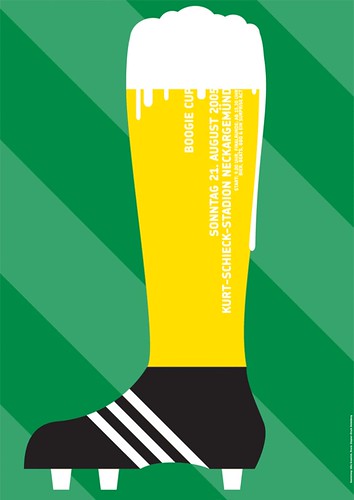
Friday’s ad is more for a specific event, the Boogie Cup, than a beer or brewery. But as the World Cup resumes today, I thought it was appropriate. It was created by GGGrafik Design in 2005 for “Heidelberg’s Boogie Cup amateur soccer championship, infamous for the amount of beer consumed both on the pitch and on the terraces.” Here’s how they describe the creative process. “It’s also a deliberate homage to the great Herbert Leupin. It was voted one of the 100 Best Posters in 2005 from Germany, Switzerland and Austria and was the Gold Winner at the Graphis Poster Annual 2006.” I just thought it was cool.

boogiecup

Filed Under: Art & Beer, Beers Tagged With: Advertising, Sports

Errors of Opinion

July 2, 2010 By Jay Brooks

san-francisco
I got an e-mail a couple of days ago from San Francisco Chronicle columnist C.W. Nevius asking for my perspective on the proposed alcohol fee for his next column. He indicated he knew my position and disclosed that he was “in favor” of it. He also added this. “But due diligence says we need to represent both sides.” Reading that, I felt that he wasn’t really prepared to listen to anything I might say, but simply felt he had to talk to someone from the opposition so the paper could keep the illusion of being “fair and balanced.” So I wrote him back and said so, about an hour or so later.

I mean no disrespect and I don’t mean to criticize, but it sounds like you want to talk to me and get my opinion just because you have to, which is never the best way to begin a conversation, if I may be so bold as to say so. We may both be entrenched in our opinions but I look forward to giving you my side of the issue and having a lively discussion.

He wrote me back and thanked me for my time, but told me he’d found an alternative for his due diligence.

His column was published yesterday, and was titled Supervisor’s fee on alcohol a terrific idea, hardly conveying even a whiff of impartiality. That’s not necessarily a bad thing. It’s a column after all, he’s not writing a report on the proposed ordinance. Nevius’ opinion is his stock in trade, it’s why he has a job. I’m not convinced that all reporting should give equal weight to both sides, and columnists especially are more free to express their own opinions. In the days when most towns had two newspapers, bias was nakedly on display. You bought the paper that most closely reflected your point of view. Bias is inevitable, at least to some degree. Journalists are human, after all, and even if the writing manages to mask that fact, the way the story is framed, structured and even the headline chosen all can convey bias to the observant reader.

And for many stories, that’s not a problem. If you’re doing a story on the roundness of the Earth, you shouldn’t have to make sure the Flat Earth Society is represented. Not every story on the Holocaust needs a comment from some wingnut who doesn’t believe it really happened. But many stories, especially those that involve creating public policy that effects everyone, should have an even higher standard of informing the public about both sides. Unfortunately, in those circumstances — when it’s most important — is when it most often doesn’t happen.

Case in point is the proposed alcohol fee ordinance. I think that this issue is one of enough importance that both sides should get an opportunity to voice their points of view equally, but so far every story I’ve seen in the mainstream and local media is completely lopsided, presenting only the side of the Marin Institute, who’s been pushing this scheme for some time now, and have finally gotten some traction with San Francisco Supervisor John Avalos. The Marin Institute, despite their protestations to the contrary, is an anti-alcohol group. In their rhetoric they claim otherwise, but it in their actions it’s completely obvious.

So while I don’t begrudge C.W. Nevius his opinions, I think they are based on propaganda and misinformation, since that’s virtually the only information out there. He’s made up his mind, and it’s obvious my arguments fall on deaf ears, since he’s read at least some of what I’ve written on the subject and still believes what he does. But that doesn’t mean I won’t try to point out why I think his opinions are based on false assumptions and errors, mostly the ones that come from the Marin Institute.

So if you haven’t already, go ahead and read Supervisor’s fee on alcohol a terrific idea. It’s not too long. I’ll wait here. …. Done, okay, let’s continue.

He begins with the assumption, that “Supervisor John Avalos is as progressive as they come, but he’s crafted a terrific proposal.” I don’t know if he’s read it, but it’s a mess of vagueness, undefined processes and unanswered questions. It’s nothing if not poorly written. But perhaps most importantly, Avalos didn’t “craft” it, the Marin institute spoon fed it to him. Their propagandist language is all over the ordinance. Just compare their press release and what’s written on their website to the proposed ordinance and you can’t help but realize that fact.

Next up: “It is focused on a serious problem in the city, it targets very real costs, and it makes specific recommendations that will make a positive difference.” I’m sure there are problem drinkers in San Francisco, but has anyone seen any statistics that support how “serious” the problem really is? I haven’t. None have been cited in connection with this ordinance. It’s just stated and everybody seems to believe it. Show me the numbers, and let’s have them be from a neutral source for a change. The Nexus Study that’s required for the ordinance has not been made public yet, as far as I know. And that means nobody can really say that the ordinance “will make a positive difference” with any certainty. People can believe that, but until it’s put into place, it’s merely conjecture. I don’t believe it will, and I don’t think a fair Nexus Study will predict the effect will be positive. But that aside, even if there are people who abuse alcohol (as I’m sure there are) it’s still not everyone who drinks. Why is punishing the majority of drinkers who do so safely and responsibly so acceptable?

“Avalos is proposing a ‘charge for harm’ fee on liquor wholesalers and distributors that could amount to as much as a nickel a drink in San Francisco.” Okay, the “charge for harm” phrase is all Marin Institute. It’s propaganda and it’s absurd. As the Pillsbury Tax Page points out, “virtually every industry can be found to place some type of burden on society.” Should bullet manufacturers and gun makers have a “fee” imposed on them because of every crime that’s committed using a gun, including any trips to the hospital from gunshot wounds? Should every heart attack victim have the burden on emergency rooms mitigated by fees on red meat and other foods that increase the risk of heart attacks? It’s a slippery slope; where do you stop? Why is alcohol the only one targeted for this notion of “charge for harm.”

Then’s there the statement that the fee will be “as much as a nickel a drink.” He’s obviously not done the math. It will be different for each kind of alcohol and each package it comes in. A nickel is the low end of the spectrum, in many cases it will be much more than a nickel. And he’s also failing to recognize that because the fee will be imposed on “wholesalers and distributors” that it will be marked up, in some cases twice, meaning it will be more than five cents across the board.

Next it’s the “city’s ambulance and fire services, clogging San Francisco General Hospital’s emergency room, and using up valuable resources.” First of all, that’s what the resources are there for, but that aside, isn’t that a failure of our health care system? It isn’t the alcohol company’s fault if people abuse it and act irresponsibly. Not everyone who drinks alcohol is a burden on the system. The vast majority are not using up the city’s “valuable resources.” But they’ll have to pay just the same.

And here’s his alternative source for due diligence so he could appear to cover both sides of the issue.

“A tax is a tax, is a tax, is a tax,” said Matt Klink, spokesman for the California Alliance for Hospitality Jobs. “The restaurant and hotel industries are already getting pummeled in San Francisco because of the downturn in the economy. This would put San Francisco businesses at a significant disadvantage.”

Actually, it’s simply a straw man. He basically used that quote just to dismiss it, knock it down, without really addressing the very real concerns of any opposition. But, unfortunately, his dismissal is incorrect, or at least ignores important facts. Nevius argues that the concerns of the California Alliance for Hospitality Jobs are a “stretch” because “Avalos’ bill only targets wholesalers and large distributors, not restaurants or hotels.” First of all, that it “only targets wholesalers and large distributors” may itself be a stretch, because the ordinance in its incompleteness fails to address how fees will be collected from self-distributing companies outside the city and also distributors who sell to businesses in San Francisco but who themselves are outside the jurisdiction of the city. But more importantly, Nevius again fails to take into account that because the fees are imposed on the distributor, they’ll be marked up. Then the restaurant and hotels that he so blithely dismisses will also mark up what they buy from the wholesaler based on the new, higher price that includes the fee. That will mean San Francisco will have the highest price booze in the state, bar none. If he thinks that’s not going to effect business — especially convention business — when there are cheaper alternatives across the bridges, in the East Bay and South Bay particularly, then he’s seriously divorced from reality.

He’s then turns his thinking over to the Marin Institute, who he quotes. “Most alcohol production is controlled and profited by corporations based in Europe,” said Bruce Lee Livingston of the Marin Institute, an alcohol watchdog agency. “This fee is trivial to San Francisco consumers and negligible to businesses.” Okay, for the millionth time, so what? An unfair fee is rendered fair because the companies are headquartered outside the U.S.? Such jingoism reminds me of the people who used to insist people buy American cars because (say it with a hick accent) them foreign ones was bad for GM and the other U.S. car companies, ignoring the fact that most employed thousands of American employees along with countless indirect businesses created for parts, sales, repairs, and on and on. Take a look at Beer Serves America to get an idea of how just beer adds jobs to the U.S. economy, not including wine and spirits. It’s a lot. And saying it’s acceptable to further tax an entire industry just because the major players are owned by multinationals seems ludicrous to me.

But even conceding that the two biggest beer companies are not primarily owned by U.S. shareholders, that still ignores over 120 small California breweries that are most definitely owned by Americans, and the majority are owned by American families. Add to that all the other American craft breweries who sell their beer in California. There are over 1,500 breweries in the U.S. today and all but two of them are owned by Americans. But the Marin Institute thinks it’s okay to target them too. Talk about collateral damage. Then there’s how many small wineries in California? Small micro-distilleries? American-owned restaurants and bars and liquor stores? Doesn’t matter, f@%k ’em all.

Nevius concludes that “[a]ll in all this is a great idea” and the fee ordinance is a “thoughtful, reasonable proposal.” How he can come to that conclusion is beyond me.

He also never addresses the fact that because the people who supposedly cause all this harm represent only a tiny fraction of adults who legally drink alcohol, the ordinance effectively punishes the majority of drinkers who consume alcohol responsibly. So you and me have to pay more for a beer because some other yahoo couldn’t handle his drink and couldn’t be bothered to get his own health insurance. How is that fair, could someone please explain? That personal responsibility is completely ignored is also more than a little troubling. People should be responsible for their actions. But let’s not blame them, let’s instead go after the people who make the alcohol, or distribute the alcohol, or sell the alcohol. Let’s tax them more and risk more loss of jobs and revenue in a shaky economy. Let’s not try to build a more effective mass transit system so people can actually get around safely without a car. That might help ameliorate problems caused by people who drink too much. Let’s also continue to ignore the fact that alcohol is already the most heavily taxed substance sold in America. Without factoring in this new fee, of the cost of a beer, fully 44% is for taxes of one kind or another. According to a 2005 study by Global Insight and the Parthenon Group, “the total tax burden [on beer alone] adds up to nearly 70% more than the average amount of tax paid in the U.S. on all other purchases. That represents well above $10 billion in extra taxes paid on beer.” You can assume it’s as much or more on wine and spirits, too.

The Marin Institute, and similar neo-prohibitionist groups, all over the country are seizing on the poor state of our economy to further their agenda and persuade politicians that they can raise money by going after alcohol. It has nothing to do with taxes for them and in every instance I know of it comes nowhere close to fixing budget deficits even though that’s how it’s always sold. Alcohol is a handy target because it’s been so demonized throughout our history. Without knowing the facts, people accept that drinking is evil and that it’s okay to punish people who drink because they’re committing a sin anyway. It sounds crazy, but people really still believe that. But alcohol also has a myriad of health benefits and in moderation is part of a more enjoyable and healthier lifestyle, both physically and mentally.

There’s no doubt that the economic problems being faced by governments at all levels, from the federal to the local, are serious and need to be fixed. But taxing — yes, taxing — one of the few industries holding its own and keeping people employed and paying its already hefty taxes cannot be the right answer. It targets the wrong people, it punishes the innocent indiscriminately, it won’t fix the problem it’s purported to fix and it’s done for all the wrong reasons. What about that sounds like “a terrific idea.”

Filed Under: Editorial, Politics & Law Tagged With: California, Mainstream Coverage, Prohibitionists, San Francisco

Beer In Ads #141: Pabst Smiling Waiter

July 1, 2010 By Jay Brooks

ad-billboard
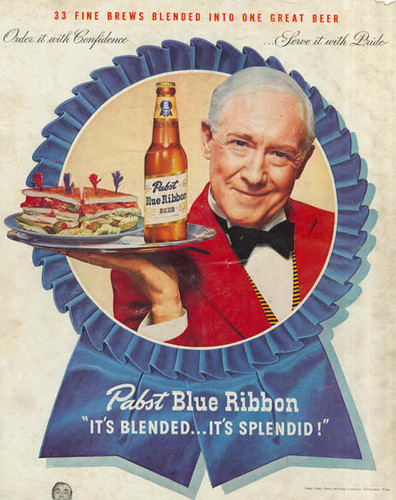
Thursday’s ad is again for Pabst, from 1940. It’s one of a series from around that time period that were all inside of a blue ribbon. I love the slogan at the bottom: “It’s Blended … It’s Splendid!” The opening tagline is priceless, too. “Order it with Confidence … Serve it with Pride.” I love that smirk on the waiter. But how about the elaborate sandwich — 4 fancy toothpicks! And why is there no beer glass on that tray, just the bottle?

pabst40

Filed Under: Art & Beer, Beers Tagged With: Advertising, History, Pabst

Beer In Ads #140: Rheingold’s 10 Minute Head

June 30, 2010 By Jay Brooks

ad-billboard
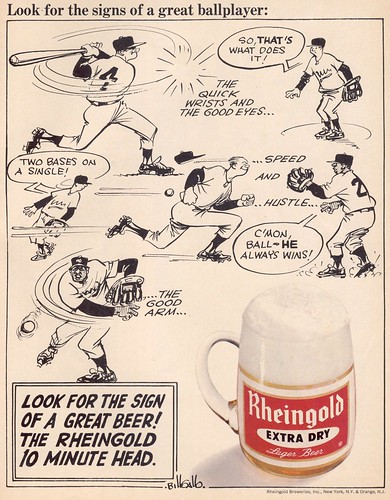
Wednesday’s ad is for Rheingold from 1969 and uses baseball and the signs of a good player, showing a few of the qualities one might look for in a good ballplayer. Then it applies the same idea to beer, saying “Look for the sign of a great beer! The Rheingold 10 minute head.” Look at that mug, it’s all head. A generous head, yes, but one that takes 10 minutes to subside (which is my presumption as to what they mean) seems like suspect advice to me. Two fingers is pretty much ideal for most beers, but more than that and you’ll lose too much carbonation and flavors, and Rheingold at that time probably didn’t have much to spare.

Rheingold-baseball-1969

Filed Under: Art & Beer, Beers Tagged With: Advertising, History, New York

Soccer, Beer & Art

June 30, 2010 By Jay Brooks

soccer
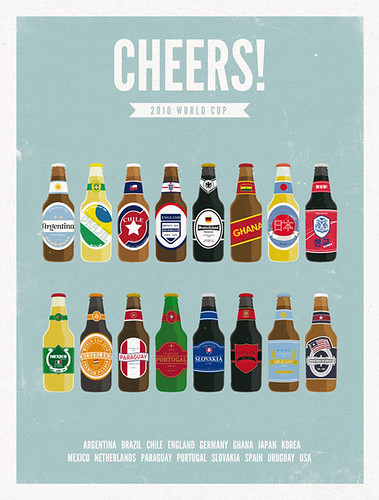
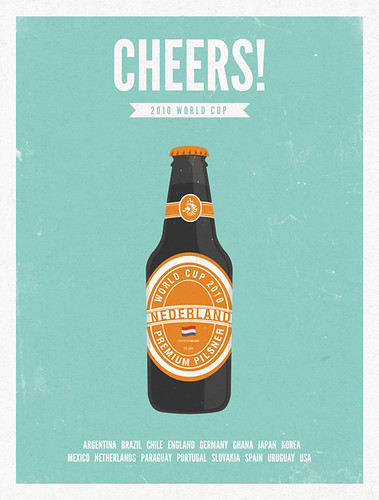
As the Round of 16 is now over and there’s a couple of days break until the quarter-finals of the World Cup, I though I’d share some pretty cool artwork involving beer and the World Cup. A new design firm in Toronto, Moxy Creative House, has created a series of seventeen posters called Cheers! For the 2010 World Cup.

cheers-all

They design sixteen beer bottles to reflect each of the sixteen countries that made it to the semi-finals, including one showing all sixteen teams.

usa

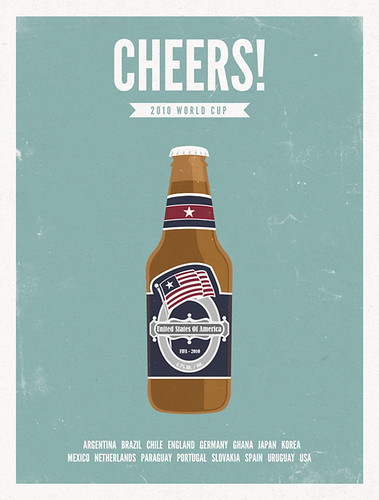
Then there’s one each for every nation, like this one for the U.S.A.

netherlands

And here’s the Netherlands.

I asked Moxy president Danial Eckler why they used beer for the posters, and here’s what he told me. “The reason we chose beers is obvious, everyone loves to sip on one for soccer.” Also, they chose the retro look “because of soccer’s and the respective countries rich history” and the “minimalist style is a trademark of our creative company.” I just think they’re pretty cool.

Each of the posters is for sale, 11.75″ x 15.5″, for $25. Or you can get your favorite team plus the poster with all of them for $40, plus $5 shipping and handling.

Embedding is still not working, but you can see all 17 posters in my Flickr Gallery.

Filed Under: Art & Beer, Beers, Just For Fun Tagged With: Sports

The Science Of Parenting & Drinking

June 30, 2010 By Jay Brooks

science
Often times, science conducts studies that test theories that most of us pretty much take for granted. A few recent examples include the fact that too many meetings cause stress and unproductive employees (Group Dynamics, March 2005), objects are harder to see when they’re farther away (Psychonomic Bulletin & Review, Feb. 2005) and it’s harder to remember stuff and concentrate when you’re older (Journal of Experimental Psychology, May 2005). [From PopSci’s Science Confirms the Obvious.] I’ve always referred to such studies as “d’uh” studies, because the results are often so head-smackingly obvious. But they do have value since they do confirm and quantify things we take for granted and even occasionally disprove cherished beliefs.

A new d’uh study has just been published by the Journal of Studies on Alcohol and Drugs. The study, entitled Parenting Style, Religiosity, Peers, and Adolescent Heavy Drinking, was conducted by two sociology professors, Steve Bahr and John Hoffmann, at Brigham Young University.

Here’s part of the press release they sent out:

Parents may be surprised, even disappointed, to find out they don’t influence whether their teen tries alcohol.

But now for some good news: Parenting style strongly and directly affects teens when it comes to heavy drinking — defined as having five or more drinks in a row — according to a new Brigham Young University study.

The researchers surveyed nearly 5,000 adolescents between the ages of 12 and 19 about their drinking habits and their relationship with their parents. Specifically, they examined parents’ levels of accountability — knowing where they spend their time and with whom — and the warmth they share with their kids. Here’s what they found:

  • The teens least prone to heavy drinking had parents who scored high on both accountability and warmth.
  • So-called “indulgent” parents, those low on accountability and high on warmth, nearly tripled the risk of their teen participating in heavy drinking.
  • “Strict” parents – high on account ability and low on warmth — more than doubled their teen’s risk of heavy drinking.

About.com’s Alcoholism page added the handy chart below.

Researchers at Brigham Young University asked 4,983 adolescents between age 12 and 19 about their drinking habits and their relationship with their parents. As a result, the researchers identified four parenting styles:

  • Authoritative Parents: Rank high in discipline and monitoring (accountability) and high in support and warmth.
  • Authoritarian Parents: Rank high in control, but low in warmth and support.
  • Indulgent Parents: Rank high in warmth and support, but low in accountability.
  • Neglectful Parents: Rank low in support, warmth, and accountability.

It’s apparently only the first parenting type — Authoritative — that is effective in reducing binge drinking in teens. And that’s where the d’uh comes in. I’m going to guess that the authoritative style of parenting is more effective in a wide range of behaviors, because we’ve all seen or experienced the effects of other kinds of parents. Extremes are rarely a good idea. Too strict is bad, and so is too lenient. What a revelation! Goldilocks had it right after all.

But I would also suggest that such parents would teach their children about alcohol, possibly sampling them on it it a controlled environment, such as at dinner, teaching them about it, and modeling the behavior of moderate and responsible alcohol use. And these are exactly the kinds of steps that so many anti-alcohol groups are dead set against and have even made illegal in some states.

Anti-alcohol groups instead use fear and scare tactics to keep kids from drinking, a notoriously ineffective method. They preach abstinence and just saying “no.” MADD runs a program, with local law enforcement, where schools pretend a popular kid has been killed by a drunk driver and then use the grief (which is real to the kids) to scare them into pledging not to drink, causing all manner of emotional harm. These are not the actions of parents who are “supportive” and show “warmth” toward their children.

Curiously, while most news sources that picked up the press release titled their piece something along the lines of Parenting Style Influences Teen Binge Drinking, Parenting Style Can Prevent Teen Binge Drinking , Parenting style can prevent heavy drinking or Teens and Alcohol Study: After a Few Drinks, Parenting Style Kicks in, anti-alcohol groups ran a very different headline. For example the Mormon Times used the headline BYU study finds indulgent parents may aid binge drinking, ignoring entirely the fact that the study also showed that strict parents were similarly ineffective. In fact, not once in the entire article does the author ever even mention that “strict” parents — high on accountability and low on warmth — more than doubled their teen’s risk of heavy drinking.” Draw your own conclusions.

Likewise, the neo-prohibitionist organization Join Together titled their take on the study Being a Strict Parent Doesn’t Protect Against Youth Drinking, Study Says. As one commenter on their website points out, “shouldn’t the headline of this article REALLY read: ‘Kids with loving, engaged parents less likely to drink’? In other words, the STRICT-NESS of parents is not where fault lies. The headline is a bit misleading.”

But it makes sense in terms of such anti-alcohol policy and rhetoric, where the emphasis is always on the negative. Their whole focus was on what parenting styles didn’t work in keeping kids from binge drinking, ignoring entirely what was effective, at least according to the study. Why does that matter? I think it matters because it shows where the priorities lie with such organizations. They’re not interested in kids becoming responsible adult drinkers of alcoholic beverages. They want everyone to stop drinking, by force, coercion and whatever means necessary.

In the study’s abstract, the authors conclude as follows:

Authoritative parenting appears to have both direct and indirect associations with the risk of heavy drinking among adolescents. Authoritative parenting, where monitoring and support are above average, might help deter adolescents from heavy alcohol use, even when adolescents have friends who drink. In addition, the data suggest that the adolescent’s choice of friends may be an intervening variable that helps explain the negative association between authoritative parenting and adolescent heavy drinking.

In other words, it’s an upbeat attempt to figure out how to stop kids from binge drinking, suggesting what parental behaviors might be employed effectively. But having known my fair share of authoritarian parents (as well as overly indulgent), this is not something such people would respond to and it’s unlikely that many could change their behavior accordingly. As George Lasker explored in his book Don’t Think of an Elephant?, such parenting styles are fundamental to the values of various political groups and he believes a majority of conservatives follow the “strict father model,” which often (though no always) includes a lack of warmth — essentially what Bahr and Hoffmann describe as the authoritarian parent. Is there a connection? I would say “yes,” though I hasten to add that it’s probably not cut and dried. But in my own experience I would argue that many people who are politically and especially socially conservative are often the same people who are against drinking and are most likely to belong to a neo-prohibitionist group or at least be susceptible to their rhetoric, and that such group members disproportionately fall into that category.

So perhaps the real takeaway from all of this is that we should all be nicer to our kids, while not ignoring the obvious firm disciplines that are often necessary to teach important life lessons. If the findings in the ground-breaking NurtureShock: New Thinking About Children, by Po Bronson and Ashley Merryman, teach us anything, it’s that many of our cherished beliefs about how kids develop and learn are wrong. So it’s not a stretch to suggest that the conventional wisdom being used to stop kids from drinking is not working either. Kids are drinking and, if anything, are drinking more because they’re drinking underground and unsupervised. What we need to do is both model responsible drinking behavior and proactively teach our kids about alcohol in a warm and loving environment. D’uh.

Filed Under: Beers, Editorial, Politics & Law Tagged With: Science

Sam Calagione To Star In Discovery Channel Show

June 30, 2010 By Jay Brooks

discovery
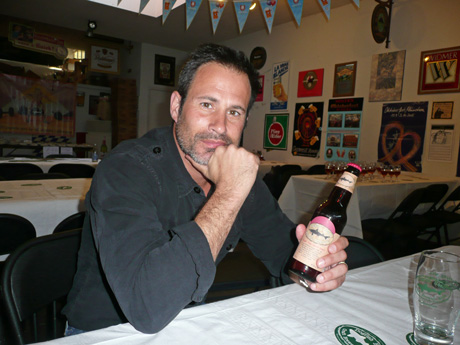
It’s been all over the series of tubes that is the interwebs all morning, but in case you missed it, Sam Calagione from Dogfish Head Craft Brewery in Delaware, will be starring, along with Patrick McGovern from the University of Pennsylvania, in a new series on the Discovery Channel this fall. The show will be called BREWED.

Below is a portion of the press release.

Beer is the drink of the masses. If you look into a glass of beer you can see the past, present and future of mankind. Cicero lauded it, Genghis Khan fought for it and now Discovery Channel celebrates it with a world premiere series, BREWED, exploring the culture, history and variety of beer.

Meet Sam Calagione: maverick entrepreneur, family man and owner of Dogfish Head Brewery in Rehoboth Beach, Delaware. As an ambassador to the world of craft beer, Sam travels the world to experience what every culture brings to its own special brew.

In BREWED, Sam shows viewers the other side of the bottle, sharing the stories of beer sub-cultures as well as exploring life inside The Dogfish Head Brewery. BREWED goes behind the scenes at Dogfish Head as Sam’s merry band of creative brewmasters concoct new taste varieties.

“BREWED taps more than just kegs and barrels, it unlocks a fascinating history of beer making, showcasing the ingenuity and passion behind our love affair with those alluring suds and how it played a role in building civilizations,” said Clark Bunting, President and General Manager of Discovery Channel.

Running a successful business also requires inspiration, so BREWED hits the road for the ultimate beer tasting road trip. Along with archeologist and beer expert Pat McGovern, Sam sets out to recreate “ancient ales” that have been discovered at sites around the world from Egypt to Peru. He travels to Rome to research old world Italian beers as inspiration for a new site in New York with Mario Batali. A visit to New Zealand introduces the idea of making the “first tomato based beer.” And back home, Sam is tasked to come up with a commemorative beer called “Bitches Brew” to celebrate the 40th anniversary release of Miles Davis’ famous recording.

“Beer has always been my passion. It is so much more than what you see in the glass. I’m excited to share the diligence, daring and creativity that we pour into our work,” said Calagione.

The show is being produced by Zero Point Zero Production, the company responsible for Anthony Bourdain No Reservations and Diary of a Foodie. I like the fact that Pat McGovern is involved. His book, Uncorking the Past: The Quest for Wine, Beer, and Other Alcoholic Beverages, is fascinating and he has a very interesting take on the history of beer. It’s certainly great to see beer finally getting a high profile television show.

sam-toro-1
Sam Calagione in the back room of the Toronado when I interviewed him for an Uncorked piece I wrote for the San Francisco Chronicle two years ago, and I also posted some questions that didn’t make the newspaper article.

Filed Under: Beers, Breweries, News, Related Pleasures Tagged With: Television

Beer In Ads #139: Pabst Pick O’ The Picnic

June 29, 2010 By Jay Brooks

ad-billboard
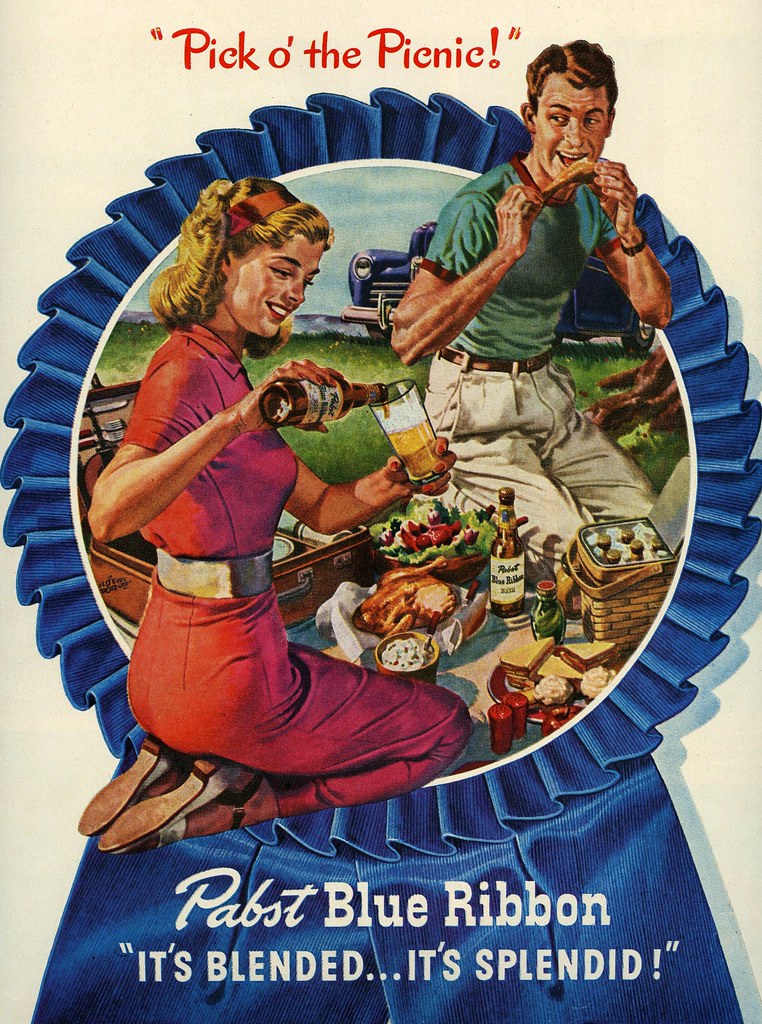
Tuesday’s ad is for Pabst, from 1947. It’s one of a series from around that time period that were all inside of a blue ribbon. I love the slogan at the bottom: “It’s Blended … It’s Splendid!” Also, check out the expression on the guy’s face as he’s about to bit into that fried chicken leg. Is it the beer he’s leering at, or could it be the gal in the tight red dress? Take a look. What do you think he’s looking at?

PBR-1947-picnic

Filed Under: Art & Beer, Beers Tagged With: Advertising, History, Pabst

The Math Behind Beer Goggles

June 29, 2010 By Jay Brooks

math
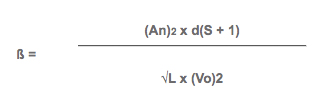
This isn’t exactly news, the effect known as “beer goggles” — where after a few pints people appear more attractive — was confirmed in 2002 and the mathematical formula was announced in 2005. Whether Matt Damon wrote it out on a hallway blackboard one late night is still not known. But How Stuff Works (under the TLC Cooking imprimatur) has a nice summary of the formula.

The first study I recall seeing was in 2002, and was conducted by the University of Glasgow. Both the BBC and the Daily Collegian had the story. Then, in 2005, researchers at the University of Manchester stumbled upon the formula for how it all works. They also discovered that “alcohol is not really the only factor affecting the drunken perception of beauty. Other factors, according to their research, include:

  • How brightly lit the area is
  • The observer’s eye-sight quality
  • The amount of smoke in the air
  • The distance of the observer from the observed

The formula is laid out below.

goggles-formula

Here’s how to decode the formula:

  • An is the number of servings of alcohol
  • d is the distance between the observer and the observed, measured in meters
  • S is the smokiness of the area on a scale of 0 – 10
  • L is the lighting level of the area, measured in candelas per square meter, in which 150 is normal room lightning
  • Vo is Snellen visual acuity, in which 6/6 is normal and 6/12 is the lower limit at which someone is able to drive

The formula works out a “beer goggle” score ranging from 1 to 100+. When ø = 1, the observer is perceiving the same degree of beauty he or she would perceive in a sober state. At 100+, everybody in the room is a perfect 10.

And one last odd finding of the second study. “A nearsighted, sober person who isn’t wearing his or her glasses can experience a beer-goggle effect equivalent to drinking eight pints of beer.”

Filed Under: Beers, Just For Fun, Related Pleasures Tagged With: Math, Science, Statistics

« Previous Page
Next Page »

Find Something

Northern California Breweries

Please consider purchasing my latest book, California Breweries North, available from Amazon, or ask for it at your local bookstore.

Recent Comments

  • Bob Paolino on Beer Birthday: Grant Johnston
  • Gambrinus on Historic Beer Birthday: A.J. Houghton
  • Ernie Dewing on Historic Beer Birthday: Charles William Bergner 
  • Steve 'Pudgy' De Rose on Historic Beer Birthday: Jacob Schmidt
  • Jay Brooks on Beer Birthday: Bill Owens

Recent Posts

  • Beer In Ads #5218: The “Butter-In” Of The Season April 12, 2026
  • Beer In Ads #5217: The King Of All Beers April 11, 2026
  • Historic Beer Birthday: Gambrinus April 11, 2026
  • Beer In Ads #5216: The Finest Bock, As Usual April 11, 2026
  • Historic Beer Birthday: Anton Heeb April 11, 2026

BBB Archives

Feedback

Head Quarter
This site is hosted and maintained by H25Q.dev. Any questions or comments for the webmaster can be directed here.