Brookston Beer Bulletin

Jay R. Brooks on Beer

  • Home
  • About
  • Editorial
  • Birthdays
  • Art & Beer

Socialize

  • Dribbble
  • Email
  • Facebook
  • Flickr
  • GitHub
  • Instagram
  • LinkedIn
  • Pinterest
  • RSS
  • Twitter
  • YouTube

Powered by Genesis

Historic Beer Birthday: Michael Edward Ash

December 17, 2025 By Jay Brooks

guinness-new
Today is the birthday of Michael Edward Ash (December 17, 1927–April 30, 2016). He “was a British mathematician and brewer. Ash led a team that invented a nitrogenated dispense system for Guinness stout, which evolved to become the beer now sold globally as Draught Guinness. As the manager in charge of the Easy Serve project, Ash is credited as the inventor of nitrogenated beer (sometimes known as “nitro beer” colloquially).”

Michael E. Ash
Michael Ash in the 1950s.

“Following graduation from Cambridge, Ash lectured in mathematics at The Bedford College for women for three years before joining Guinness & Co. at their London Brewery in Park Royal in January 1951.

After training as a brewer by 1954 Ash also had experience of running two departments (Brewing and Forwarding) and in 1955 he was given his own department the ‘Sample Room’, which had facilities for experimentation. The ‘Draught problem’ was given to Ash as part of his briefing from the managing Director, Hugh Beaver. At the time, Guinness used a convoluted draught system in which highly conditioned beer was blended with aged, nearly still beer. It was a slow, arduous process that limited the ability of draught dispense to reach a more global market.

Guinness had for years been looking for a system in which a barman with no special training could pour a glass of draught in a matter of seconds to settle quickly with a head (3/8″ in a normal ½ pint glass).

Ash realized the solution lay in the use of a blend of nitrogen and carbon dioxide (beer typically just uses the latter), but it took years to figure out a mechanism to dispense nitrogenated beer. Inside Guinness, Ash’s quest was regarded as quixotic, and other brewers chided it as “daft Guinness” and the “Ash Can.” Eventually, working with a keg designer, Ash hit on a revolutionary, self-contained two-part keg, with one chamber full of beer and the other full of mixed gas under pressure, and the introduction of nitrogen.[5] Nitrogen is less soluble than carbon dioxide, which allows the beer to be put under high pressure without making it fizzy. The high pressure of dissolved gas is required to enable very small bubbles to be formed by forcing the draught beer through fine holes in a plate in the tap, which causes the characteristic ‘surge’.

Ultimately called the “easy serve system,” it began to replace the old “high and low” taps used in Ireland and spread to Great Britain and beyond beginning in the 1960s. The invention, which made for a smoother, less characterful beer, was not without controversy, and for years a minority of Irish drinkers complained about the change. Eventually, nitrogrenated stout became a standard, not just at Guinness but among all Irish makers of stout.

Ash left the brewing side of Guinness in 1962 to become managing director of Crooks Laboratories in Park Royal (owned by Guinness). Crooks moved to Basingstoke in 1965. At Crooks Ash was responsible for acquiring the licence for the anti-depressant Prothiaden (Dosulepin) in 1967. From 1970 onwards Ash followed various interests including business education and was a founding governor of Templeton College Oxford.”

ash-brown
Ash with Pete Brown.
Pete Brown, who’d met Ash recently, wrote his obituary for the Morning Advertiser after he passed away in April of this year at 88 years old, entitled The man who created the nitro stout.

Michael-Ash-Guinness
A photograph of Ash taken by Jeff Alworth during his visit to Guinness in early 2016.

Similarly, Jeff Alworth wrote a piece for All About Beer Magazine, The Man Who Invented Nitro the month after he passed away.

Alworth’s article online includes an audio clip of Michael Ash describing the process he used to create Draught Guinness using nitrogen.
http://allaboutbeer.com/wp-content/uploads/2016/05/Michael-Ash.mp3

And this biography of Ash was prepared by Guinness’ marketing department:

Michael read mathematics at Trinity College, Cambridge and was awarded a triple first in his studies – top scholar that year in Cambridge. Between 1948 – 1950, Michael was allowed to reduce his national service conscription by teaching Maths at a University (other than Oxbridge). He taught at Bedford College. Up to the end of World War Two, the Guinness Company had a policy of recruiting only first class honours science graduates from Oxford or Cambridge. Michael was the first non-brewer to be recruited into Guinness.

It was in this role, he led a team of over 20, and their primary role was to seek to improve the shelf life of bottled Guinness. However, Michael felt that the real prize was in developing a proper system for Draught Guinness and began dedicating his time to the ‘Draught Problem’.

The rise of lagers available on draught, especially in the UK in the 1940s and 1950s, was encroaching on traditional Guinness sales, and Michael felt that there was a great opportunity for Guinness, should the stout be available in Draught format. However, the essential problem was with the gas. Carbon dioxide was used to pressurise kegs of bitter and lager, and it was easy and effective for everyone concerned. Guinness, though was too lively to be draughted with carbon dioxide alone.

Of the 20 plus men on his Sample Room team, he could only afford to assign 2 people to work part-time with him on ‘Daft Guinness’ as it became known with the Park Royal Brewery. Michael talks about working weekends and late nights over a long period of time to eventually come up with a nitrogen gas solution.

He worked hand in hand with Eric Lewis, of Alumasc, who supplied Michael with prototype after protoype of metal kegs with different experimental gas chambers. The fact that nitrogen is an inert gas meant that they bubbles lasted longer and were smaller. The right amount of nitrogen, created the ‘surge’ and allowed for a controlled, creamy head that lasts for the whole pint.

The eventual solution was a ‘mixed gas dispense’ system. Known initially as ‘The Ash Can’, The Easy Serve Cask was a self-contained, two-part keg, with one chamber full of beer and the other full of mixed gas under pressure.

Having seen the possibilities, [the company] was in a hurry to get Draught Guinness out into the market place, and he demanded that it should be launched in 1959 – the year of the Guinness bicentenary. At a board meeting of 9 December 1959 – Viscount Elveden (later 3rd Lord Iveagh) reported that about half the draught Guinness outlets had now been changed to the Easy Serve system, and the changeover of the remainder should take place by mid-January 1960.

Here’s a short video that Guinness made about Michael Ash. Unfortunately, apparently you can’t even WATCH a video about beer unless you’re old enough, whiuch is maddneingly stupid, so go watch it on YouTube.

Filed Under: Birthdays, Just For Fun, Related Pleasures Tagged With: Guinness, History, Ireland, Science, Science of Brewing

Historic Beer Birthday: Balthas Jetter

December 17, 2025 By Jay Brooks

jetter-2
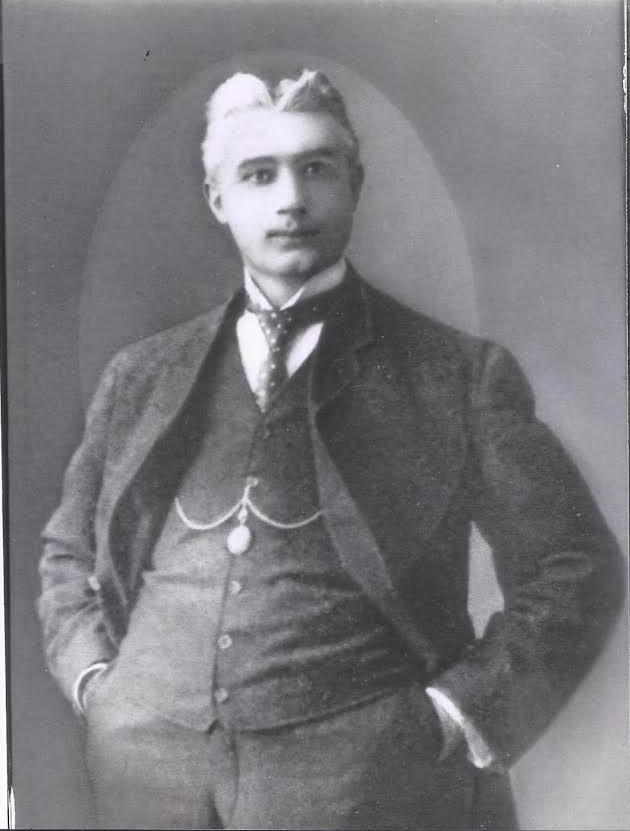
Today is the birthday of Balthas Jetter (December 17, 1851-May 9, 1915). He was born in Engstlatt, Zollernalbkreis, Baden-Württemberg, Germany, but moved with his family to Omaha, Nebraska when he was nine, in 1860. In 1887, he and a partner founded the Jetter & Young Brewery in South Omaha. In 1890, Jetter bought out Young, the brewery was renamed B. Jetter, although it also traded under the name South Omaha Brewing Co. In 1902, it became the Jetter Brewing Co., which it remained until prohibition. It reopened in 1933 and remained in business util 1994, when it closed for good.

balthas-jetter-portrait
Here’s Jetter’s obituary from the Omaha Daily Bee, published May 11, 1915:

Balthas Jetter, founder of the Jetter Brewing company of South Omaha, died Sunday at 11:20 o’clock from a paralytic stroke sustained Saturday morning.

Mr. Jetter was 64 years of age. He was in his usual good health up to Saturday, when he sustained a stroke. He was found Saturday forenoon in a semi-conscious condition in the brew house by William Hoffman, son of an employee. Physicians were summoned and the stricken man was removed to his home on South Thirtieth street, but he never regained consciousness.

Mr. Jetter is survived by his wife, one son, Henry, and three daughters, Misses Alma, Hulda and Edith Jetter, of this city. Martin Jetter, head of the Jetter Brewing company, is a nephew.

Balthas Jetter was born in Engsclat, Germany, December 17, 1851. He came to the United States in 1871 and was employed on the Union Pacific railroad as a bridge builder. He helped build the Union Pacific bridge at Omaha.

In 1873 he entered into the brewing business in Omaha, where he continued as an employee until 1887, when he removed to South Omaha and launched out for himself on a plat of land now covered by the Armour packing plant. He gradually increased his business until May, 1914, when he retired in favor of his nephew, Martin Jetter, present head of the Jetter Brewing Company. From the penury of a raw immigrant he gradually accumulated a large fortune.

Balthas Jetter was married in Omaha July 7, 1878. His family consists of his wife and four children. One son, Henry Jetter, is interested in the brewing company.

When Balthas Jetter determined to retire from active business a few years ago he made a tour of Germany in company with Fred Drew, vice president of the Jetter company, in order to study the manufacture of German beer. Even after his retirement as active head he continued to manifest interest in the affairs of the company.

His wealth never changed him and his friends say that he lived as simply in his old age as in the days of his early struggle. He was friendly and companionable with his family and friends, but cared nothing for society.

Jetter-Brewery-postcard

Here’s a short history of the Jetter Brewery from “Nebraska Beer: Great Plains History by the Pint,” by Tyler A. Thomas:

Jetter-nebraska-beer

Jetter-brewers
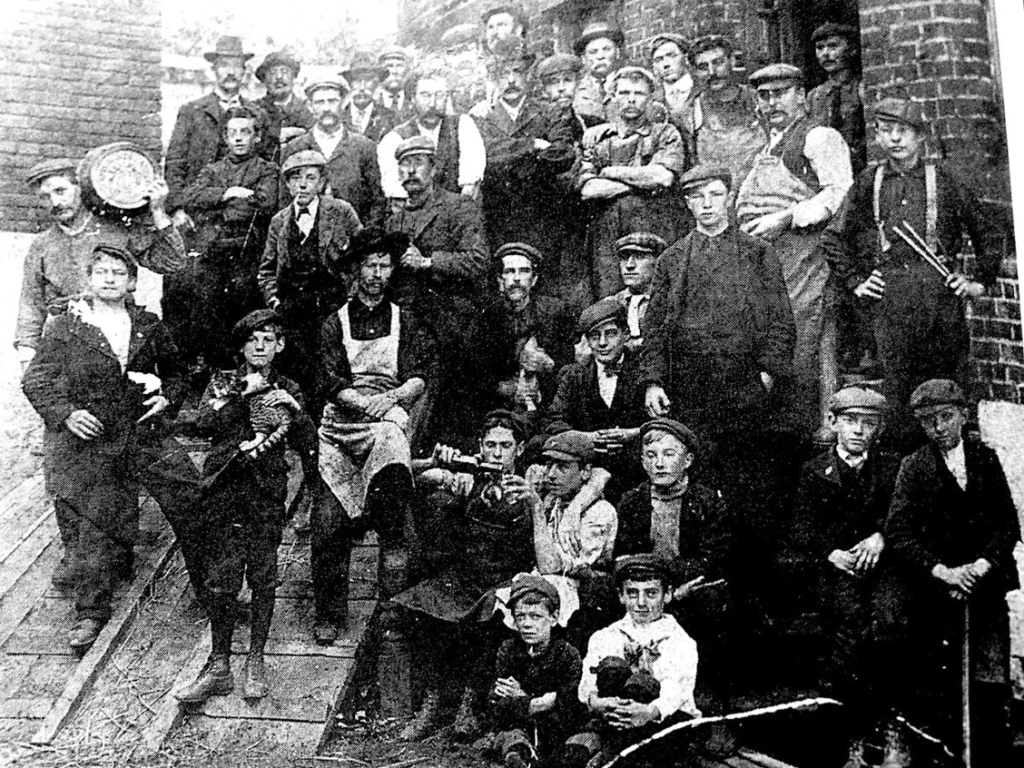
An undated photo of the Jetter brewery employees. I can’t be sure, but it looks like Balthas may be in the top row, fifth from the left.

Here’s a lengthier history of the brewery from Jetter Brewing Company website, which seems to suggest the beer may be making a comeback, and began planning last year:

South Omaha, for many years, has been famous for being the home to one of the nation’s largest stockyards. Along with the stockyards were many very large packing houses. Wilson, Hammond Bros., Swift, Armour & Cudahy were the big five. In their heyday they employed thousands of immigrants from Germany, Poland, Czechoslovakia, Lithuania and many other Middle and Eastern European countries. Immigrants who had settled in Omaha to find their dreams in America. One such immigrant was a German by the name of Balthas Jetter. Jetter found his way to Omaha in the later part of the nineteenth century with the full intention of establishing a brewery to help quench the thirsts of those packing house workers.

In 1887 along with a partner, Mr. Young, Jetter established the Jetter and Young Brewery at 30th & “Y” streets in the heart of South Omaha. Annual capacity at the time was an impressive 10,000 barrels. By 1890 Jetter had purchased his partner’s stake in the brewery and had taken on the name South Omaha Brewing Co., B. Jetter prop. An advertisement in the 1890 Omaha city directory shows an artist’s rendition of the brewery, with the Jetter home in the foreground, the large brewing operation in the center and a small lake to the south. The lake was on land that is now known as Upland Park.

Production at the brewery continued to keep pace with the bustling community of South Omaha. The packing house industry was booming and the Jetter Brewing Company kept pace by increasing their production to 30,000 barrels annually by 1902.

In 1905 the brewery became more simply known as the Jetter Brewing Company. During those years after the turn of the century, Jetter’s flagship brand was “Gold Top”. An ad from 1902 touts Gold Top as a beer that “…always snaps and sparkles, that never leaves a bad effect, that is a good beverage and a better tonic, that is Gold Top”.

Jetter’s, as well as the other Omaha breweries, prospered during the early part of the century. Expansion and modernization of the brewery continued. The brewery was now an all brick, concrete and steel structure.

Sometime around 1909, the brewery dropped the Gold Top brand in favor of the brand name “Old Age”. The Old Age label featured three elderly gentlemen conversing while hoisting steins of Old Age beer. A loaf of bread adorns the table the three are sitting around. Those three gentlemen became well known to beer drinkers. The three adorned every bottle of Old Age and appeared on nearly all pieces of advertising used by the brewery.

The Jetter Brewery continued to produce Old Age beer all the way up to Prohibition. At the height of production, the brewery turned out in excess of 100,000 barrels annually. In 1919 when the production of real beer became illegal, the brewery was forced to halt the brewing of Old Age. Jetter’s turned to the production of soda pop and near beer. Soda pop went under the label “Sahara” and featured a scene right out of the desert. Near beer was marketed under the Old Age name as well as St. Regis brew. Production continued well into the twenties, but with prohibition dragging on the brewery was very underutilized and only maintained a skeleton crew of employees. By 1930 the brewery had ended the production of any type of beer or soda. The brewery sat idle for the first time in 43 years.

You can pick up their more recent story at the history page.

jetter-export

Jetters-Old-Age-Beer-Labels-Jetter-Brewing-Company
jetter-bock-label

Filed Under: Birthdays, Just For Fun Tagged With: Germany, History, Nebraska

Historic Beer Birthday: George Frey

December 17, 2025 By Jay Brooks

eagle-erie
Today is the birthday of George Frey (December 17, 1826-1872). He was born in Ober-Saulheim, Germany, but moved to Buffalo, New York when he was fourteen, in 1840, and worked for a brewery there, before moving to Erie, Pennsylvania, to build his own there. Most brewery history, especially breweriana-focused sources, claim the George Frey Brewery was only called by that name in 1855, and the following year became known as the Eagle Brewery. But “One Hundred Years of Brewing” states that Frey built the brewery in 1842 but sold it to Henry J. Kavelage in 1854, who sold it to Jackson Koehler in 1883, and in 1899 it was bought by the Erie Brewing Co. And the breweriana brewery lists say it was known as the Eagle Brewery through all of its changes in ownership, at least through prohibition. Although it appears to have also been known by “Jackson Koehler’s Eagle Brewery” after Koehler bought it.

More evidence that he was brewing in Pennsylvania long before 1855 can be found in “The Brewing Industry and the Brewery Workers’ Movement in America,” by Hermann Schlüter, which was published in 1910. In a chapter on “Lager Beer,” it casually mentions Frey’s contribution. “George Frey, who brewed the first lager beer in Erie, Pa., in 1847, had helped in the first brewing of “lager” in Buffalo in 1843.

But I also found another listing in Erie for another George Frey Brewery that opened in 1861, but was renamed the Erie City Lager Brewery two years later, in 1863, then in 1870 dropped “Lager” to become known as the Erie City Brewery. It 1872, it was renamed the Joseph F. Seelinger Brewery, which would suggest it was sold to that person, which especially makes sense since that’s the apparent year Frey died.

It seems a shame after those accomplishments, that what happened to Frey after he sold his brewery is unknown, and I even had a hard time finding out when he passed away. This is also the first instance where I could find not one piece of breweriana or photograph online of George Frey or his brewery, except for this modern image of the decaying building where the brewing used to be done.

koehlers-eagle-brewery-erie-pa

Filed Under: Birthdays, Just For Fun Tagged With: Germany, History, Pennsylvania

Beer In Ads #5142: It’s Bock Beer Time!

December 16, 2025 By Jay Brooks

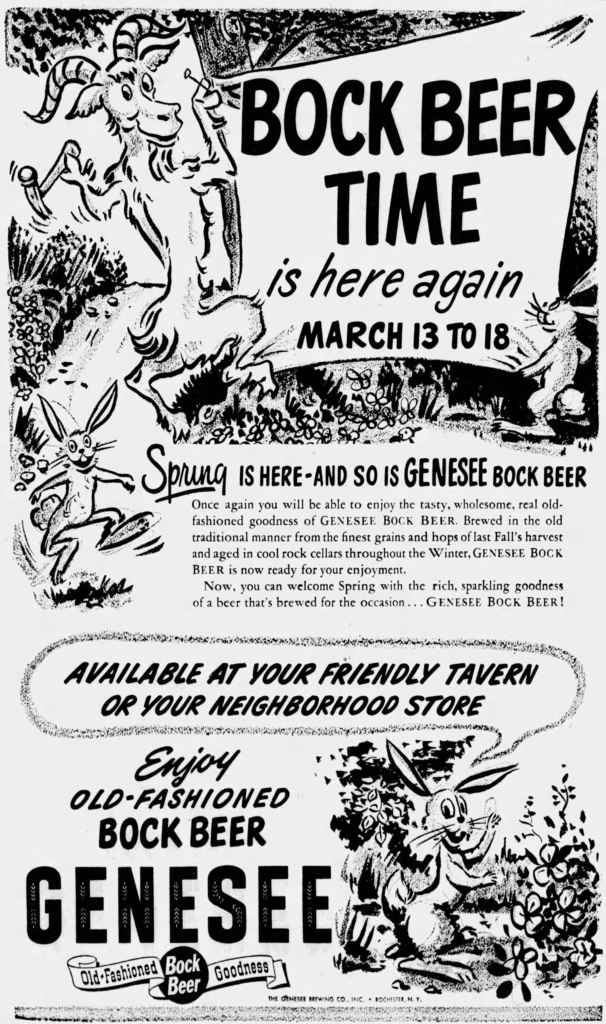
Last year I decided to concentrate on Bock ads for awhile. Bock, of course, may have originated in Germany, in the town of Einbeck. Because many 19th century American breweries were founded by German immigrants, they offered a bock at certain times of the year, be it Spring, Easter, Lent, Christmas, or what have you. In a sense they were some of the first seasonal beers. “The style was later adopted in Bavaria by Munich brewers in the 17th century. Due to their Bavarian accent, citizens of Munich pronounced ‘Einbeck’ as ‘ein Bock’ (a billy goat), and thus the beer became known as ‘Bock.’ A goat often appears on bottle labels.” And presumably because they were special releases, many breweries went all out promoting them with beautiful artwork on posters and other advertising.

Tuesday’s ad is for Genesee Bock Beer, which was published on December 16, 1977. This ad was for Genesee Brewing Co. of Rochester, New York, which was originally founded in 1878. This ad ran in The Asbury Park Press of Asbury Park, New Jersey.

Filed Under: Art & Beer, Beers, Breweries, Just For Fun Tagged With: Advertising, Bock, History, New Jersey, New York

Beer Birthday: Bryan Selders

December 16, 2025 By Jay Brooks

dogfish-head-green
Today is the 51st birthday of Bryan Selders, who until 2011 was lead brewer of Dogfish Head Craft Brewery and one-half of the hip hop duo The Pain Relievaz, before leaving the industry temporarily to do web design at Inclind. He later returned to brewing, and became the brewmaster at Post Brewing in Colorado. But more recently, he’s returned to Dogfish Head as their brewing ambassador. I first met Bryan at Hop School in Yakima, Washington years ago and he’s a terrifically talented and fun person. Join me in wishing Bryan a very happy birthday.

Bryan and me at GABF in 2024.
bryan-selders-1
Bryan with his boss Sam on picture day at the brewery.
bryan-selders-2
Bryan with some of his “fans.”
bryan-selders-3

The cover of the latest CD, Awesome = Yes, the Pain Relievaz Greatest Hits, available nowhere as far as I can tell. But below is Bryan and Sam in the video “Pinchin’ Pennies.”

Note: All but first photo purloined from Facebook.

Filed Under: Birthdays, Just For Fun Tagged With: Colorado, Delaware, Music, Video

Beer Birthday: Nicole Erny

December 16, 2025 By Jay Brooks

cicerone-circle
Today is the 42nd birthday of Nicole Erny, a certified Master Cicerone and passionate beer lover, who used to work at The Trappist and as a “Beer Ambassador” at the CommonWealth Cafe & Public House, both in beautiful downtown Oakland. She also used to work with Ray Daniels’ Cicerone program, but left that position and is currently doing QA/QC lab work at Faction Brewing. Nicole and I almost worked together on a great-sounding beer project, but alas it fell apart. She is also working on the side as a consultant. She’s a great advocate for better beer and has more energy than any three people I know. Join me in wishing Nicole a very happy birthday.

Rodger Davis, Nicole and Claudia Davis at Triple Rock’s Sourfest during SF Beer Week in 2010.
At an event, though I can’t for the life of me remember when or where.
Dan Shelton & Nicole Erny
Dan Shelton and Nicole during GABF in 2009.
Nicole Erny & Matt Brynildson Toasting the End of GABF Week
Toasting the End of GABF Week with Matt Brynildson at the Falling Rock in 2009.
Me,, our host, Shain O’Sullivan,, and Nicole after we were on. KQED radio show.

Filed Under: Birthdays, Just For Fun Tagged With: Bay Area, California, Oakland

Beer In Ads #5142: Quiet Please! It’s Dec. 15 Today Bock Goes To Bed At Leisy’s

December 15, 2025 By Jay Brooks

Last year I decided to concentrate on Bock ads for awhile. Bock, of course, may have originated in Germany, in the town of Einbeck. Because many 19th century American breweries were founded by German immigrants, they offered a bock at certain times of the year, be it Spring, Easter, Lent, Christmas, or what have you. In a sense they were some of the first seasonal beers. “The style was later adopted in Bavaria by Munich brewers in the 17th century. Due to their Bavarian accent, citizens of Munich pronounced ‘Einbeck’ as ‘ein Bock’ (a billy goat), and thus the beer became known as ‘Bock.’ A goat often appears on bottle labels.” And presumably because they were special releases, many breweries went all out promoting them with beautiful artwork on posters and other advertising.

Monday’s ad is for Leisy’s Bock Beer, which was published on December 15, 1948. The brewery was The Leisy Brewing Co. of Cleveland, Ohio, which was originally founded around 1858 by Jacob Mueller but Isaac Leisy and a partner bought it and rebranded it in 1873. This ad ran in The Plain Dealer, also of Cleveland, Ohio.

Filed Under: Art & Beer, Beers, Breweries, Just For Fun Tagged With: Advertising, Bock, History, Ohio

Historic Beer Birthday: Joseph Fallert

December 15, 2025 By Jay Brooks

joseph-fallert
Today is the birthday of Joseph Fallert (December 15, 1841-July 4, 1893). He was born in Achern in Western Baden-Württemberg, Germany in 1841 (though at least one source claims it was 1842, and was December 16), but moved to New York City when he was fifteen, in 1856, and worked for several different breweries in Brooklyn, before buying a building from his employer, brewer Otto Huber, and founded the Joseph Fallert Brewery in 1878. Incorporating in 1884, he renamed it the Joseph Fallert Brewing Co. Ltd. but it closed in 1920 for good when prohibition began.

I couldn’t find very much information about Fallert, not even when he passed away, although it appears possible that he may have outlived his son, who ran the brewery until his own death in 1919.

joe-fallert-bio-plus
Joseph-Fallert-Brewery-1888
Joseph-Fallerts-Brewery-Calendar-1896

Take a look at this amazing newspaper ad from 1897, extolling the virtues of Fallert’s Alt-Bayerisch and especially its “family use.” “It’s a food.”

joseph-fallert-bottle Fallert-newspaper-ad-1897

Joseph-Fallerts-4
The Joseph Fallert Brewery at 52-66 Meserole Street in Brooklyn.

Filed Under: Birthdays, Breweries, Just For Fun Tagged With: Brooklyn, History, New York

Historic Beer Birthday: John Fritsch

December 15, 2025 By Jay Brooks

pennsylvania

Today is the birthday of John Fritsch (December 15, 1827-July 2, 1906). He was born in Germany, but came to America, settling in Philadelphia, Pennsylvania, in 1846, when he was 19 years old. He became foreman of the Blaess & Burgman Brewery, and later married the boss’s daughter, Elizabeth Blaess. He thereafter opened his own brewery, John Fritsch Brewing, but when his son Emile joined him in the business, changed the name to the John Fritsch and Son Brewery. The brewery closed for good a year after his death, in 1907.

john-fritsch

Here’s his obituary from the Western Brewer and Journal of the Barley, Malt and Hop Trades:

john-fritsch-obit-1
john-fritsch-obit-2

I wasn’t able to find very much additional information about Fritsch or his brewery. He did, however, sue a newspaper editor for libel in Harrisburg. This short article is is from the Harrisburg Telegraph, from Harrisburg, Pennsylvania on March 16, 1879:

john-fritsch-libel-1

Then two days later, the Harrisburg Telegraph for March 18, 1879 had this fuller report:

john-fritsch-libel

Filed Under: Birthdays, Just For Fun Tagged With: Germany, History, Pennsylvania, Philadelphia

Beer In Ads #5141: Eichler’s Holiday Bock Beer

December 14, 2025 By Jay Brooks

Last year I decided to concentrate on Bock ads for awhile. Bock, of course, may have originated in Germany, in the town of Einbeck. Because many 19th century American breweries were founded by German immigrants, they offered a bock at certain times of the year, be it Spring, Easter, Lent, Christmas, or what have you. In a sense they were some of the first seasonal beers. “The style was later adopted in Bavaria by Munich brewers in the 17th century. Due to their Bavarian accent, citizens of Munich pronounced ‘Einbeck’ as ‘ein Bock’ (a billy goat), and thus the beer became known as ‘Bock.’ A goat often appears on bottle labels.” And presumably because they were special releases, many breweries went all out promoting them with beautiful artwork on posters and other advertising.

Sunday’s ad is for Eichler’s Holiday Beer, essentially the same as their Bock Beer, which was published on December 14, 1934. Apparently, this was the first time they’d made it since Prohibition. The brewery was The John Eichler Brewing Co. of New York City, New York, which was originally founded around 1862 as Kolba’s Brewery, but Eichler took over in 1865. This ad ran in The Mount Vernon Argus, of White Plains, New York.

Filed Under: Art & Beer, Beers, Breweries, Just For Fun Tagged With: Advertising, Bock, History, New York

« Previous Page
Next Page »

Find Something

Northern California Breweries

Please consider purchasing my latest book, California Breweries North, available from Amazon, or ask for it at your local bookstore.

Recent Comments

  • Ernie Dewing on Historic Beer Birthday: Charles William Bergner 
  • Steve 'Pudgy' De Rose on Historic Beer Birthday: Jacob Schmidt
  • Jay Brooks on Beer Birthday: Bill Owens
  • Steve 'Pudgy' De Rose on Beer Birthday: Charles Finkel
  • Steve 'Pudgy' De Rose on Beer Birthday: Bill Owens

Recent Posts

  • Beer In Ads #5183: Like From The Fountain Of Youth Is A Glass Of Leidiger Bock Beer January 26, 2026
  • Beer Birthday: Bob Uecker January 26, 2026
  • Historic Beer Birthday: Carl Dinkelacker January 26, 2026
  • Beer Birthday: Ralph Olson January 26, 2026
  • Historic Beer Birthday: Frederick Yuengling January 26, 2026

BBB Archives

Feedback

Head Quarter
This site is hosted and maintained by H25Q.dev. Any questions or comments for the webmaster can be directed here.